Home Blog Page 68

A Secret Lost In The Water – Short Story Analysis

The short story A Secret Lost In The Water implies the impact of losing personal identity due to environmental circumstances and factors that heavily changes the way individuals think about their sense of self when placed with others hence what differentiates them to be different. When children are young, their parents are usually whom they look up to for all the answers and resolutions when challenges and obstacles occur in their lives. The parents act as guides who lead them on the path to a successful life and often the past of children is reflected upon the previous lessons the parents spent their time on teaching them. In the short story A Secret Lost In The Water, Carrier implies that traditional values are at risk of fading away in modern society due to the lack of communication between parents and children thus leading to regrets and guilt throughout generational gaps. 

In the course of the story, relationship divisions between the life experiences of the father and son lead to a sense of segregation impacting the connection of the two individuals present in two cohorts of different generations. Evidence of this was shown in the passage of the short story when the narrator stated that he and his father “scarcely talked anymore” (Pg.1). The son was “very intoxicated by the new game of spelling” (Pg.1) which led to the dispassion of his father’s lessons but rather, he was interested in the world’s way of teaching which involved words and numbers. Generational gaps lead to a disconnection of the father-son relationship and the father’s presence of his strange gifts was no longer inclusive in the life of his son. From the father’s perspective, Arithmetic numbers and English letters are not what he embraces to be the most important when it comes to the importance of living. “But he can never get along without water”(Pg.1).

The son strives for a completely different perspective on what he thinks will lead him to the ideal successful life his mind wanted to shape his future into. The different outcome of standards eventually causes the father to embrace the idea that his son no longer had an initial interest in listening to his personal experiences that he wanted to pass on to the future generation of children. This failure was the first stage of dislocation impacting the relationship, causing a fade of personal identity within the son. When the narrator declares that he was “no longer interested” (Pg.1) and he didn’t want to “hear him [the father] talk about his adventures during the long weeks when he was far away from the house”(Pg.1), the passage evidence illustrated the detachment of the relationship chain between the father and son. The father understood the risk of losing the only inheritance of the secret to his abilities when his son refuses to be taught. His last attempt on getting the interest of his son to reappear is by showing him the secret gift of finding a spring underwater. The father chooses to do this in order to keep his son on the designated path he wanted his son to look towards and pursue forwards. 

Alternatively, the son chooses to pursue his understatement of what success is and was enrolled into school. While he was learning complicated writing and arithmetics, the old traditional lessons taught by his father were carried away by time, and soon they faded away. As years passed by, the narrator had already learnt, adapted and positioned himself in his generation of adults; he no longer understood the significance of his father’s previous lessons and tricks. Simultaneously, the link between his father and him was finally broken when the father encountered death. The presence of this problem was only determined when the son came in touch with the alder branch a farmer handed him. The alder never dried out after his father used it to find water and the motif of this branch indicates the symbolic meaning behind the traditional values passed onto generations after generations. The negligence of the son’s actions in appreciating the valuable lessons once taught by his father showed the once vivid relationship between them has now completely disappeared.

 A Secret Lost In The Water declares the narration of a son growing up in the experience stories his father surrounded him with during the early ages of his childhood. The son lived his whole life failing to realize the importance of those experiences and stories that his father attempted in trying to pass onto him and how much it was worth compared to what the world would give him. After years passed by, the son realized the missed opportunity he had lost in gaining utilized time with his deceased father. “I had forgotten my father’s knowledge” (Pg.2), as many grow up without understanding the heavy amount of importance that occurred in their life until they have lost it and it faded away with time. It reveals the sad truth behind the unavoidable disconnection of relationships as time steps in and creates the risk of losing connection. 

Personal Experience:

Personal experiences connecting to the overall theme of this story introduces my background of having a mixed heritage of both Canadian and Chinese. The harsh reality of having to prioritize one cultural identity over another leads to a difficult process of which one to choose. Having to be fully exposed to two different cultural backgrounds yet still holding a tight grip onto both, creates internal conflict in my life as well as my family. Over the past few years, the development of my Chinese cultural identity started to decrease and the culture itself is starting to slowly lose its position in my sense of self. The little time and effort that has been put into practicing and acknowledging the significance of my Chinese heritage caused that part of me to slowly fade away. Environmental factors persuade my personal thoughts of who I strive to become in order to fit in with the rest of society and how my overall identity should be shaped and structured. As years pass by, English became my dominant use of language either throughout school or at home, the mandatory need of using Mandarin Chinese is rare and often forgotten. The Chinese cultural identity within me no longer holds its high position and the needs to be prioritized. 

The stuttering of words and the difficult process of sentences makes that special part of my identity collapse even further. The fearful thoughts of what the consequences may eventually lead to forces me to form a sense of precautionary and outline the possible attempts to shift myself away from the risk of losing something I value heavily. The numerous video calls with the close ones I have back in China embraces me to face the harsh reality of understanding that part of me losing a connection to my current self. Throughout the current years, breaking the language barrier that’s stopping me from communicating with my family living back in China is what I want my future endeavors to complete and gain success in.  

The History of Eugenics in Canada

While Canada may pride itself on its multicultural identity as well as its reputation of being a country of polite and friendly people, the country has also slowly been coming to terms with the darker parts of its history. Canada’s history with the immoral belief in eugenics is one of these so-called ‘darker parts’ of this nation’s past. However, when the science of eugenics came to prominence in the early 20th century, it affected the world and left a lasting impact that can still be seen today. 


What is Eugenics

Eugenics is the scientifically erroneous set of beliefs and practices aimed at improving the human population through controlled breeding. During its height of popularity, eugenicists worldwide believed that they could ‘perfect’ human beings and eliminate so-called social problems through genetics and heredity. Methods such as involuntary sterilization, segregation, and social exclusion were believed to be able to rid society of individuals deemed by them to be unfit. 

Eugenics as a whole included “negative” eugenics (which focused on discouraging or limiting the procreation of people considered to have undesirable characteristics and genes) and “positive” eugenics (focusing on encouraging the procreation of people considered to have desirable characteristics and genes). 


How did Eugenics begin

The word “eugenics” is actually derived from the Greek word meaning “well-born.” The term was first coined by Francis Galton, an English statistician and ethnologist (and cousin of Charles Darwin) in 1883. Galton defined eugenics as “the study of agencies under social control that may improve or impair the racial qualities of future generations either physically or mentally.” He claimed that issues such as health and disease, as well as intellectual and social characteristics, were based on the concept of race and hereditary. During the late 19th century, discussions on “human improvement” became increasingly common. Many so-called experts used eugenics as a way to scientifically back racist ideologies.

The movement mainly focused on ‘“negative” eugenics, pursuing this through several different methods aimed at limiting the opportunity for procreation, including sexual sterilization, marriage prohibition, and segregation. This, once again, was all based on certain social and scientific assumptions. One such assumption was that certain characteristics were hereditary. Another assumption was that some of these characteristics were believed to be socially undesirable, so eugenicists thought it would be best to reduce the spread of these traits for society’s best interest. Some of these “undesirable” traits were anything from intellectual disabilities, mental illness, and alcoholism, to even poverty and criminality. 


Eugenics across the globe

By the 1920s, eugenics had peaked in popularity becoming a global social movement. There was popular, elite, and government support across the world for the movement in places such as Germany, the United States, Canada, Italy, and many other countries. One of the most well-known applications of eugenics took place in Nazi Germany during the lead up to WWII and the Holocaust, where Nazi German racial state used its resources to “cleanse” the German people and the Nazi state of those they deemed “unworthy of life.” In Germany, Austria, and other occupied territories, Nazis euthanized at least 70,000 adults and 5,200 children. Their campaign of forced sterilization claimed at least 400,000 victims. Not only did this culminate to the near destruction of the Jewish people, but it was done in an effort to eliminate other marginalized ethnic groups, as well as individuals with disabilities. Their justification for the latter was that any individuals that had severe psychiatric, neurological, or physical disabilities were believed to have represented both a genetic and a financial burden on German society and the state and thus should be killed. 

However, while the eugenics movement in Nazi Germany is one of the most well-known, the movement gathered a particularly large following in the United States much before World War II began. Led by Charles Davenport and Harry Laughlin, the Eugenics Record Office (ERO) was created “to improve the natural, physical, mental, and temperamental qualities of the human family.” The movement spread across America and even gave birth to “fitter family” and “better baby” competitions at fairs and exhibitions. Due to the types of legislation that eugenicists were pushing, Nazis even turned to California for advice in perfecting their own efforts. Hitler proudly admitted to following the laws of several American states that allowed for the prevention of reproduction of the “unfit.” Fortunately, the US eugenics movement began to lose power in the 1940s and was wholly discredited following the horrors of Nazi Germany.

Eugenics in Canada

Canada has it’s own dark history involving eugenics, particularly in the provinces of Alberta and British Columbia where, for a number of years, the government sterilized mentally ill men and women without their consent. For the most part, eugenic policies were considered progressive among many Canadians, including some socialists, feminists, farmers, and psychiatrists; they were under the assumption that Canadian society could be improved by encouraging reproduction among certain groups — particularly Anglo-Saxon Protestants — and discouraging or limiting reproduction among other groups, including Eastern European immigrants and, increasingly, Indigenous people. 

Alberta’s 1928 Sexual Sterilization Act created a Eugenics Board that was empowered to recommend sterilization as a condition for release from a mental health institution. An amendment in 1937 even permitted the sterilization of “mental defectives” without their consent. It was only until decades after that this act was eliminated, however, this still remains a dark stain on Canada’s history. 


Modern Eugenics?

While many Canadians may assume eugenics is a thing of the past, this ignores the fact that sexual sterilizations continued in Canada, even after sterilization legislation was repealed in the 1970s. Some experts even warn that the world is sliding into a new form of eugenics in the 21st century. A professor from the University of Victoria, Tanis Doe, argued that prenatal testing of fetuses is akin to Nazi-style eugenics, a purging of the disabled from society. According to the professor, there has been a widespread acceptance among western societies that disabled fetuses should not be brought to term. Many parents nowadays may choose to abort fetuses diagnosed with genetic disorders such as Down Syndrome and spina bifida. With new advances such as the Human Genome Project (HGP) and, more recently, advances in genomic screening technologies, there is some concern about whether generating an increasing amount of genomic information in the prenatal time would lead to new societal pressures to terminate pregnancies where the fetus is at heightened risk for genetic disorders. Of course, whether genetic screening and genetic engineering actually should be labeled as “new eugenics” is a matter of debate, it is a topic that raises pressing questions about human rights, scientific ethics, and (dis)ability. 


“If any one age really attains, by eugenics and scientific education, the power to make its descendants what it pleases, all men who live after it are the patients of that power.” 

– C. S. Lewis


Featured Image

Sources: [1] [2] [3] [4] [5] [6] [7] [8] [9] [10] 

A Quick Rundown Of The 2022 Filipino Election

The 2022 Filipino general election occurred on May 9th, 2022. The general election includes both executive and legislative branches of government in the Philippines. This event was crucial for not only myself but Filipinos all around the world. As the daughter of Filipino immigrants, my parents have been watching every Filipino news outlet for the past two weeks to see who will become the 17th President of the Philippines. The current president, Rodrigo Duterte, is ineligible to run for a second term ( one term in the Philippines is six years ), however; Leni Robredo, the current vice president, is eligible to run for another term but chose the presidential route instead.

Although the informal presidential election results are out, this post is a quick rundown of the four presidents.

Ferdinand “Bongbong” Marcos Jr.

Ferdinand Marcos Jr. is a member of the PFP ( Partido Federalista ng Pilipinas, the federalist party of the Philippines ) and is also a Filipino senator. He is the son of a previous president, Ferdinand Marcos Sr. His father was very controversial because there were many cases of corruption and kleptocracy that the Marcos family were accused of during their 20-year reign in the Philippines. Although the negative past of his parents’ reign exists, Bongbong is the projected president of the Philippines as he has the majority of the votes. He is running alongside the current president’s daughter, and the mayor of Davao city, Sara Duterte.

Leni Robredo

The current vice president of the Philippines, Leni Robredo, and she is running independently. Before entering politics after the death of her husband, Jesse Robredo, she was a human rights lawyer and an economist. She is at the forefront of the “pink revolution”, where all her supporters wear pink in support of her campaign. She is against the current president’s “war on drugs” which influenced the deaths of many Filipinos. She is Bongbong Marcos’ main opponent in the election. She is running alongside Francis “Kiko” Pangilinan.

Isko Moreno

Isko Moreno, the mayor of Manila and a member of Aksyon Demokratiko ( Democratic Action ). Isko Moreno was an actor before entering politics in 1998. He ran as a city councillor and held his spot for three consecutive terms. In 2007, he ran for the position of Vice Mayor of Manila, which he held for another three items. He was elected Mayor of Manila in 2019, winning a landslide victory against previous president, Joseph Estrada, and Alfredo Lim, the previous mayor of Manila. HIs website contains his platform ( which is all in Tagalog ). His running mate is Willie Ong.

Manny Pacquiao

Famous Boxer and Senator of the Philippines, Manny Pacquiao is running for presidential candidacy in the Philippines. Affiliated with PDP Laban, Pacquiao has been a senator since 2016. His main initiative is to start a massive housing program, that could potentially stimulate the economy due to thousands of jobs being created in the construction industry in the Philippines. Manny Pacquiao is running alongside Lito Atienza.

Although I am pretty late to writing about the election, and the vast majority of the votes have been counted ( Bongbong Marcos is the projected winner of this election ), I feel that it is important to note that this event is still evolving everyday, and what I’ve written isn’t the full extent of this political event.

sources | featured image 1 ,212 | 1,212 |


This Week In Entertainment: A Friday Night Doubleheader & A Nostalgic Blockbuster Film

One of the most exciting experiences for an entertainment enthusiast is the arrival of a new season, a new show, or a new movie. This weekend, fans will be getting all three. With both the fourth season of Stranger Things and the new Star Wars series Obi-Wan Kenobi out on Friday, many fans – especially sci-fi lovers – are in for a treat. In addition, Top Gun: Maverick has just hit theatres, and is a sequel to the 80s classic. While Star Wars and Top Gun fans have likely been around for a little bit longer than the flurry of Stranger Things aficionados, all three productions have been long-awaited. After all, Stranger Things does take place in the 80s anyways, so we’ll give them that one. The comeback of the 80s continues to be a source for pop culture buzz with the arrival of these three shows and films, and is already creating excitement for fans on a global scale.

Obi-Wan Kenobi

Perhaps the most exciting thing about this new release is that both Ewan McGregor and Hayden Christensen are returning to play the same roles that many loved watching in the Star Wars prequel trilogy, playing Obi-Wan Kenobi and Anakin Skywalker, respectively. The six-episode series is now streaming on Disney+.

McGregor and Christensen are not the only prequel stars currently making a noise – Natalie Portman, who played Padmé Amidala alongside the other two, is starring in the upcoming movie Thor: Love and Thunder

Obi-Wan Kenobi takes place about a decade after Star Wars: Episode III – Revenge of the Sith, and about a decade before Star Wars: Episode IV — A New Hope.

Stranger Things (Season 4)

Almost three years after the release of season 3, fans finally have new Stranger Things content. While the show’s stars have aged since the last season in 2019, the events of the show itself take place less than a year after, with season 4 starting in the spring of 1986. 

Season 4 has two volumes, with the first already streaming on Netflix, and the second coming out on July 1st. Volume 1 consists of seven episodes, and Volume 2 has two – but those two episodes will be considerably longer in time than a regular TV show episode.

The last time a new season came out, the Calgary Stampede had a Stranger Things themed “Hawkins Fun Fair”. While that probably won’t happen again this year, the hype for Stranger Things 4 will likely be no less, both locally and beyond.

Top Gun: Maverick

Revisiting the idea of past stars returning to iconic roles, Tom Cruise is most notably returning in Top Gun: Maverick as Pete “Maverick” Mitchell. Alongside Cruise, the film features Jennifer Connelly, Miles Teller, Val Kilmer, and more. 36 years after the original, Top Gun: Maverick is back on the big screen and already attracting audiences from multiple generations.

This movie is just one of many that are coming out as we head into the summer. Jurassic World Dominion, Lightyear, and Minions: The Rise of Gru are among the variety of choices that moviegoers will have as summer break draws near. But for now, whether it’s Obi-Wan Kenobi, Stranger Things 4, or Top Gun: Maverick, the world of entertainment has much to enjoy.

Featured Image

Thanks Gen Z!

Before I jumped into my post, I wanted to give you all some information about the Calgary Reads Book Sale! This is a wonderful organization that allows Calgarians to purchase books at accessible prices for all to enjoy. My favorite part about this organization is its goal to improve literacy among young children. The fact that you can even understand what I am conveying right now, is a reason for you to be grateful and appreciative. As our world becomes more reliant on communication and technology, literacy is a must to ensure a successful, innovative, and inspiring future for us, specifically, Gen Z. The sale ended earlier this month, but keep the name in mind for next year!

In this post, I am going to touch on the primary points I find the most relevant to understanding Gen Z (for your reference, Gen Z is referred to as the generation of people born from 1997 to 2012) and looking to the future of our malleable community. Hopefully, this doesn’t feel like too much of a rant, but if it does, then I hope you enjoy it!

An older perspective…

Do you remember when all of those statistics about mental health concerns in Gen Z started to rise? Or maybe articles about how Gen Z is too sensitive? Although there may be a bit of truth to some of these claims, I am often frustrated by the ignorance and lack of understanding we receive. 

The other day, I saw an Instagram post that claimed that Gen Z points out everything that’s wrong with the world, but doesn’t want to change it. From an outside perspective, I can understand this thought process. Our development/enhancement of cancel culture is a perfect example of this. Issues like climate change were, and still are, very important to the younger generation, but it seems like all we do is advocate for these issues instead of actually addressing them. 

As Roe V Wade is being targeted, we are once again seeing the influence of Gen Z regarding societal issues older people may not think involve us. Despite the constant bombardment of degrading and invalidating comments we face from older generations, we continue to advocate for issues we feel passionate about. We foster close knit communities for each other to innovate and share ideas for the future. 


Our dilemma: The stress and obligations of it all. 

Here’s the big question: Contrary to popular belief, if we aren’t spending all our time simply complaining about the “political and socio economic state of the world” (sorry, Jaden Smith reference), what are we doing? If we are really trying to make an impact behind the scenes, why don’t older generations realize this? 

The mental state of Gen Z is more fragile than most, and to some, this is a sign of weakness and laziness for the future. For those of us holding up posters and making angry Instagram posts, millennials, Gen X, and Boomers are to blame.

Rather than spending our teenage years partying and making memories at an arcade every weekend like many of our parents did, we young advocates are busy stressing about the future of our world. 

Instead of worrying about whether our shirt matches our pants, we worry about what changes to Roe V Wade, climate change, imbalances in the Senate, and many more issues will mean for our world. Most of us are literally carrying the weight of the world on our shoulders.

To adults: Forgive us for not running for political office each time we see injustice on the streets. At our age, advocating, addressing, and living normal teenage lives do not easily go hand in hand. 

Boo hoo! We’re Misunderstood. What next?

Wallowing our sorrows isn’t going to do anything. Instead, it will further prove all the doubts and assumptions older generations make about us. I know it’s hard to think about the future of the world and that someday and that we’ll be the ones to run it, but I believe wholeheartedly that we have the potential to make the world a better place than any generations before us. 

In short: a community of anxious teenagers to not make a group of even worse ones. Instead, it fosters a community that values growth, problem solving, and support. These factors, and many more, are why I am so grateful to be a part of Gen Z.

Featured Image

How to Make Perfect Boxed Cake Mix Every Time

All right, all right…

I get it. This may sound crazy, but boxed cake mix is one of the best things to have in your kitchen. Like many other bakers, I used to believe that cake mix pales in comparison to cakes made from scratch. When done right, this is simply not true. Boxed cake mixes are a great way to make fluffy, light cakes in less time and at a fraction of the cost of scratch. Without further ado, here are four tips for how to make the perfect cake from boxed cake mixes every time.

1. Add extra eggs

Most boxed cake mixes call for two or three eggs. Adding one or two extra makes for a richer and moister cake.

2. Substitute water for milk

Boxed cake mixes will always call for a liquid. Using milk instead of water adds fat, improving flavour.

3. Substitute oil for melted butter

Doubling the amount of oil a recipe calls for and replacing it with butter is a great way to add rich flavour, and make it taste more homemade.

4. Add extracts and flavouring

One of the greatest downfalls of boxed cake mixes is that they often lack flavour. A great way to add a kick into your cake mixes is by adding extra flavouring or extracts! (Ex. Adding extra vanilla extract in a vanilla cake).

I hope you give these tips a try!


Sources: 1 

My Top 5 Favorite Restaurants in Calgary

Over the years, I have begun discovering foods that excite me. As a result, I have tried numerous restaurants throughout Calgary. However, while I enjoy experimenting, I often visit the same 5-10 restaurants repeatedly. In today’s blog, I compiled a list of my top 5 favorite restaurants within Calgary.

1. Pure Modern Asian Kitchen & Bar

Pure Contemporary Vietnamese Kitchen + Bar Restaurant - Calgary, , AB | OpenTable

Address: 815 8 Ave SW

Price: $$

Serving Asian fusion, this restaurant is one of my favorites! Located in downtown Calgary, this restaurant has great ambiance and wonderful service! Not only does Pure serve exceptional food, it recreates classics with a twist. When I go, I normally order the Vietnamese iced coffee and Crispy Chicken Noodle Soup (Pho) with a side of chicken wings.

2. Chianti Café

Order Chianti Café and Restaurant Delivery Online | Edmonton | Menu & Prices | Uber Eats

Address: 10816 444 Macleod Trail (1 location)/ 300 Crowfoot Crescent NW (another location)

Price: $

With large portions and a casual, homey interior, Chianti serves amazing Italian food! This restaurant has countless options to satisfy any of your cravings. Furthermore, the staff are extremely accommodating and understanding, making the overall experience even better.  I always experiment and order a new dish each time I go, however, I have never once been disappointed!

3. White Elephant Thai Cuisine & Sport Bar

White Elephant Thai Cuisine - 1808 19 St NE, Calgary, AB T2E 4Y3, Canada

Location: inside Airports Travellers Inn, 1808 19 St NE

Price: $$

White Elephant serves delicious and authentic Thai food. With great portion sizes and reasonable prices, this restaurant is my go-to when I am in the mood for Thai. When we go, my family and I usually order the Thai Red Curry with rice along with a few other dishes. Regardless, this is the perfect restaurant if you are in the mood for authentic and tasty Thai food!

4. Indian Flavors

Indian Flavors

Address: 4307 130 Ave SE

Price: $$

Serving amazing Indian food, this restaurant is one of my favorites! Like many of the restaurants featured in this blog, Indian Flavors has great portion sizes with delicious food. All the dishes that I have tried are filling, creamy and seasoned to perfection. In addition, the restaurant has a beautiful interior that features photos from all over India. Lastly, the staff are extremely understanding and friendly!

5. Namo Cafe | Bistro Breakfast, Brunch, Lunch

Order Namo Cafe Bistro Delivery Online | Calgary | Menu & Prices | Uber Eats

Address: 824 Edmonton Trail

Price: $$

The last restaurant on this list is one that will not disappoint! With a variety of options for individuals of all ages, this family-owned restaurant serves delicious dishes with a twist. Serving food with locally sourced ingredients, all the dishes have great portion sizes and taste delicious. With a cozy ambiance and amazing staff members, this restaurant is a must try!


That’s it! These were 5 of my favorite restaurants in Calgary! I hope you try at least one of these and love it as much as I do.

Featured Image

1/2/3/4/5

On Typography

There’s an adage about design that goes something like, “we only notice good design when it’s no longer around.” And no more is this true than in the design of readable materials: typography.

Amateur typographers and typesetters have a whole host of options these days for mucking about with how their documents and papers look. Word processing has allowed many to fancy themselves typographical aficionados with its ease of use.

Today, more than ever, documents end up in readers’ hands poorly typeset. And that’s probably because people now skip a crucial stage of typesetting. Just a few decades earlier, someone had to manually ready a draft—likely handwritten or from a typewriter—to be printed properly.

This process would fix several unattractive elements that we see in modern documents. Today’s Microsoft Word documents are akin to the memos that someone would type on a typewriter in the past.

That, of course, does not suit readers, especially ones whom one would want to impress. Indeed, professional typesetters generally favour software like Adobe InDesign for publishing or perhaps LaTeX for mathematical pieces.

These are generally not practical for daily use, but there are some changes we all can make to our current Word documents or Google Docs to make them more aesthetically appealing.

Change the Spacing

Double spacing may be what your teachers want—or even what editors require, but it is not the standard for final documents. That’s because it can sometimes be difficult to follow the end of each line to the next: our eyes have to move quite a bit vertically. The main purpose of double spacing is to make it easy to add edits.

Instead of 200% spacing, try 115% to 135% spacing.

Do Not Underline

This is a poor typewriter habit. When it was difficult to switch from roman typeface (normal text) to italics or bold, people would use underscores to emphasize text.

Use italics instead in standard text. Use bold for headings. Underline is only appropriate for URLs and hyperlinks.

Make the Text Smaller

Once again, this is a remnant of typewriter and editing practices. We are too often encouraged to use 12 point font. That’s fine for many digital documents, but if you’ve ever printed out a 12-pt document—it pretty huge.

Try 10 or 11 point size for most fonts. Depending on the typeface, however, this advice may not apply.

Use a Different Typeface

There are plenty of great typefaces out there. Don’t just stick with Arial or Times New Roman or Calibri.

Take a look at this webpage for some good font recommendations. A personal serif favourite of mine is Charter.

Make the Margins Larger (or, if you feel fancy, use two columns)

This will single-handedly make the most difference. Our eyes can find it quite difficult to jump back to the start of the next line when the lines are long. The standard one-inch margins on letter size paper are too small to allow for comfortable reading.

There are two remedies to this: use a larger margin (e.g., 1.5 to 1.875 inches) or try a multi-column layout. Don’t be afraid of whitespace: it often eases a reader when they find lots of margin space.

If you’re concerned about not being able to fit enough text, you can experiment with making the top and bottom margins a bit shorter. However, no matter what, do not compromise on the left and right margins.

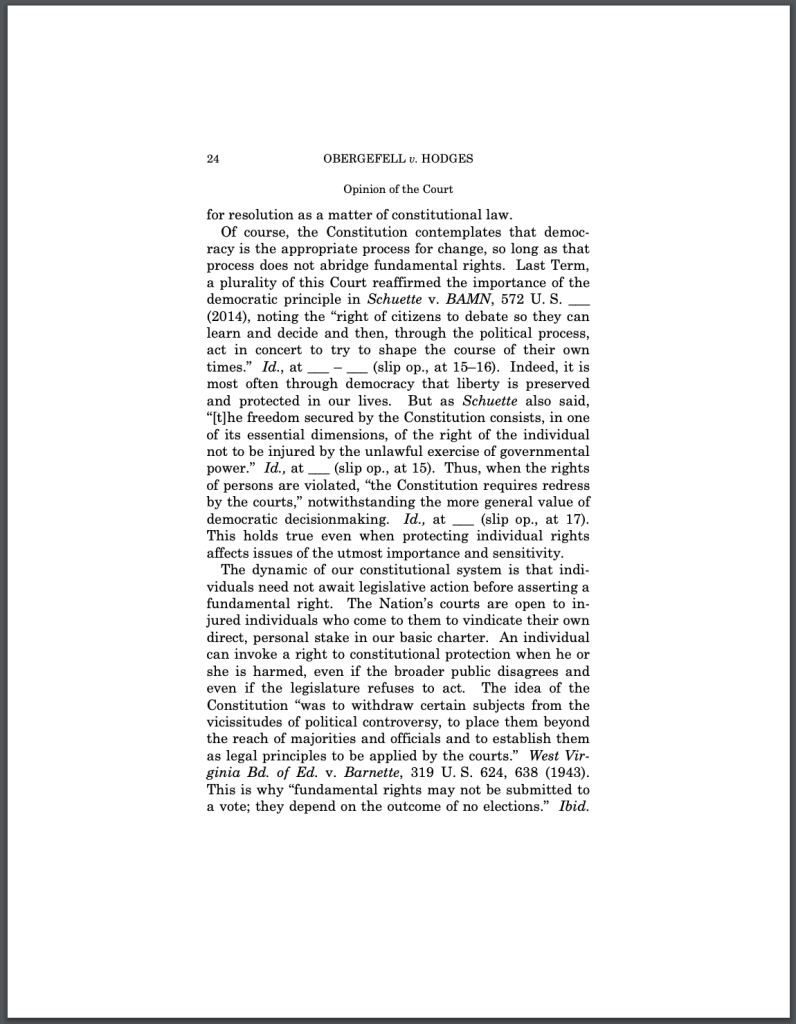
For some examples for good typography, take a look at some U.S. Supreme Court Opinions, like this one:

For more resources on typography, I highly recommend Butterick’s Practical Typography, which can be found here.

Image Sources: Featured

5 Tips for Success On Your Final Exams

0

With the end of the year and final exams steadily approaching, I wanted to share five tips in order to be successful in your final exams.

  1. Schedule Your Time                                                                                                                                                                                                                      It can be difficult to start studying for your final exams one month or even a couple weeks earlier, due to the number of other assessments stacked up at the end of the school year. However, despite this, if you schedule your time, you can study effectively for your exams in even a week. For example, you could organize your exams dates in one schedule, and layout your priorities deciding on how much time each day you are going to take to study each subject. This way, you will be able to spread out your week’s time on multiple subjects throughout the exam season, instead of cramming for one test, the night before.
  2. Write a Brief Overview & Set Study Goals                                                                                                                                                                         For each subject, you can also quickly jot down a brief outline on what the units are, and what topics you would like to focus on for each subject. This way you will be organized on what you need to accomplish for each subject and be able to plan ahead on the areas you may need to focus on or give importance to when you are studying. Setting study goals/deadlines for specific topics/units, may help you stay on track with your schedule.
  3. Notes for Key Points                                                                                                                                                                                                                   Passively reading the textbook, or even your old notes may not be a very effective technique to study, especially when you are going through a whole course worth of content. Instead, you can make notes for some of the key points that you think may be useful or important. If you do not like notes, you can even prepare flashcards or any other study method that works for you, to keep you fully concentrated and focused when you are studying. Also, if/when you are making notes (or flashcards, etc.), you should try to budget your time -the notes do not have to fully comprehensive, key points would be more useful.
  4. Review Old Exam Papers                                                                                                                                                                                                 It is always recommended that you try to find old exam papers online for your subject in order to test yourself on the material. This can give you a rough idea of what you can expect for your final exam, as well as, help you prepare for similar questions that may be on your exam. If you are given a review booklet, it is also recommended that you do that as well- teachers usually try to put similar questions in the review as in the final exam.
  5. Take regular breaks                                                                                                                                                                                                          All this being said, it is still important to take care of your mental health and wellness during exam season. It is important to keep taking regular breaks so that you can be refreshed – research shows that taking breaks while studying can actually increase your energy, productivity and ability to focus.

Hope this helps! Good luck to everyone on your final exams!

Sources: Featured Image/1/2

Alberta: Lights-camera-action?

Everyone knows how famous Hollywood, Bollywood, and other film industries around the world are for making movies that leave an impact on viewers. Eye-catching scenery paired with the phenomenal acting of the cast yield a captivating movie that people enjoy. New York City, California, and countries in Europe are popular spots for moviemakers. But did you know that Alberta isn’t too far behind on this list? Hollywood has filmed several movies in this province because of its versatility in terms of nature, the weather (for snow shots), and the environment.

Here are a few movies you didn’t know about (or maybe you did) that were filmed in Alberta:

Interstellar: This sci-fi movie, starring Matthew McConaughey and Anne Hathaway, is the second time director Christopher Nolan has shot in Alberta. Locations filmed include Okotoks, Fort Macleod, Longview, and Canmore.
Superman (plus Superman II and Superman III): Christopher Reeve starred as the Man of Steel, and Clark Kent’s childhood hometown, Smallville, was recreated in rural Alberta. Filming eventually moved to Calgary for scenes in Superman III (1983), and the recognizable façade of the St. Louis Hotel in East Village can be seen.
The Revenant: The second movie Leonardo DiCaprio filmed in Alberta and the one that finally got him an Oscar. The film was shot in Kananaskis Country using entirely natural light, and First Nations communities around Alberta were part of the movie, lending their cultural perspectives and talents to filming.
Ghostbusters (2020): the movie was primarily filmed in and around the Calgary, Alberta area.

These are all amazing movies that I didn’t know were made in Alberta until I did some research. I personally love watching a good movie, so I was delighted to learn that my city and province were popular spots for filmmaking. Are there any others you know of that I missed? Let me know in the comments! Until then, lights, camera, action!

Sources: 1, 2, 3

3 Films To See in June 2022 (+Late May)!

0

So many movies are coming out in late May and June! I am very happy to share upcoming movies with you. I hope you enjoy your summer with exciting films!

Top Gun: Maverick (2022)

Trailer:

https://www.youtube.com/watch?v=g4U4BQW9OEk

After more than 30 years of service as one of the Navy’s top aviators, Pete “Maverick” Mitchell is where he belongs, pushing the envelope as a courageous test pilot and dodging the advancement in rank that would ground him. Training a detachment of graduates for a special assignment, Maverick must confront the ghosts of his past and his deepest fears, culminating in a mission that demands the ultimate sacrifice from those who choose to fly it.

Release date: May 24, 2022 (Canada)

Director: Joseph Kosinski

Music by: Lady Gaga; Harold Faltermeyer; Hans Zimmer; Lorne Balfe

Distributed by: Paramount Pictures Studios


Jurassic World Dominion

The future of mankind hangs in the balance as humans and dinosaurs coexist following the destruction of Isla Nublar.

 Trailer:

https://www.youtube.com/watch?v=_atu3Gl4-AY

Release date: June 10, 2022 (Canada) Trending

Director: Colin Trevorrow

Distributed by: Universal Pictures


Elvis

Trailer:

https://www.youtube.com/watch?v=wBDLRvjHVOY

Elvis Presley rises to fame in the 1950s while maintaining a complex relationship with his manager, Colonel Tom Parker.

Release date: June 24, 2022 (Canada) Trending

Director: Baz Luhrmann

Music by: Elliott Wheeler

Produced by: Baz Luhrmann; Gail Berman; Catherine Martin; Patrick McCormick; Schuyler Weiss

Distributed by: Warner Bros. Pictures


featured image

Image sources: <1> <2> <3>

Knitting for beginners

I’ve often heard that knitting is a hobby that our grandmas have. My grandma made me a really cute beanie and a pair of socks, and I was intrigued by her ability to make something so warm and cozy from a pair of needles and yarn. So, I asked her to teach it to me. With a little bit of practice, time, and yarn, I was able to knit my own sweater! Here’s how I did it:

My mom got me a pair of needles and some yarn from Michaels, and then I watched a bunch of how-to videos that helped me visualize the project. I would not suggest starting such a big project like a sweater right away, but instead making smaller things that take less time and help you practice different patterns or designs. My first practice piece was a small coaster, where I practiced the purl stitch on one side and the regular knit stitch on the others. Then I made a bunch of these with different patterns.

Here are a couple of blogs and videos I watched along the way:
https://sheepandstitch.com/how-to-knit/ – a blog with all the basics
https://www.marthastewart.com/854324/how-knit – another beginners blog
https://www.youtube.com/watch?v=p_R1UDsNOMk – a video that teaches you all the basics
https://www.youtube.com/watch?v=Egp4NRhlMDg – this video teaches you the most basic stitch: the knit stitch. This is the best way to practice knitting and it’s the backbone of basically every other design.

Personally, I found casting on the hardest, but there are a ton of resources to help you do that.

Here are a few sample projects you can get started on:
https://blog.nobleknits.com/blog/small-knitting-projects-free
https://cutediyprojects.com/diy/25-incredibly-easy-awesome-knitting-projects/
I personally don’t understand how to use premade knitting patterns and I haven’t found a good resource to help me understand it, so I usually resort to YouTube videos to help me learn the different patterns.

Finger knitting is also an option if you really don’t want to use needles, but that’s another blog for a different day.

Knitting is one of those hobbies that takes time and commitment. I made my sweater in the summer of last year, so I had lots of time. I listened to music while I did it, which helped me pass time quicker. I would suggest putting your needles down occasionally to give your eyes, hands, and brain a break, and do something else (I used to go biking since it was summer). You can start off with a small project, like a baby blanket or a scarf, and move on to bigger things. They also make really cute gifts! Let me know how it goes if you try it!

Sources: 123456

Doctor Strange

The newest M.C.U film has been released quite recently. As most Marvel fans are excited, the trailer has given us a lot of things to talk about.

First, everything is consistently being taken away from Wanda and leaving her broken. Every person she cares about is taken away within the snap of two fingers. In the trailer, Wanda does say something that breaks the heart of every M.C.U fan; “you break the rules you become the hero. I do it and I become the enemy.” When Elizebeth Olsen was speaking about the movie she said, “It will surprise fans and that it has strong ties to WandaVison.” Therefore, Strange and Wanda fans, will most likely, be satisfied.  

Second, M.C.U fans are starting to see a pattern with the other versions of the characters. We had the newest Spider-Man movie featuring all three spidermen, and that made theaters go wild, we have Moonnight (Steven and Marc). Now, we see two Doctor Stranges. We are unsure if Doctor Strange 2 is a part of the multiverse or if it will follow the What If episode. 

Third, within the first 24 hours of the presale, the movie made 700 Million dollars (just from presales alone). The movie broke Fandango’s 2022 ticket sale records. If you try and book this late, you are going to have to suffer from all the spoilers because there are no more tickets (or they are really hard to get). And can we just talk about that cover? This is an amazing piece of art. Out of all Marvel, movie covers, this has to be my favorite.

If you haven’t seen the trailer yet (hopefully you have!) here’s the video!

1, 2, 3

Formula 1: An Introduction to the World’s Fastest Cars 

0

What is Formula 1?

Formula 1 is a series of car races held at different venues around the world. It originated from the European Championships of Grand Prix races, which occurred before World War II. During this time competitions were extremely unfair because there was no limit to the car’s power and size. In 1946 the Federation Internationale De L’Automobile (FIA) introduced new rules which aimed to create equality and focus on the efficiency of the vehicle and proficiency of the driver. These rules have changed dramatically over time, and they are constantly being adjusted to fit the safety and quality standards of F1. 

Besides that, Formula 1 cars are the fastest open-wheel/open-cabin, four-wheel autos in the world. (Open-wheel/open-cabin means that the car does not have a fully closed top, which exposes the wheel and driver). In comparison, a NASCAR car goes approximately 320 kilometers per hour, whereas F1 cars can go closer to 400 kph. 

In this article I want to explain some of the basic things to help guide your understanding of motorsport. The world of Formula 1, however, is so extremely diverse that I know this cannot even begin to cover all of it. I hope that I can give you some inspiration to look further into this amazing sport, and maybe you’ll fall in love with it just like I did. 

Introduction to the Current Teams and Drivers

Here I’d like to introduce you to the current teams and drivers, in order of the present (Post Spanish Grand Prix – May 2022) standings. It is written in order of the winning constructors, which refer to the teams (ex. Ferrari, McLaren, etc). I’ll also include all the points individual drivers have received so far. Points are awarded as follows; the winner gets 25 points, second place gets 18 points, third place gets 15 points, and so on for the top 10 places. Anyone below that does not get points. There are also additional rules and extra points to earn, but I won’t go into too much detail.

Basics of Grand Prix Races and the F1 Season

The number of Grand Prix races in a season varies from year to year, in the 1950s it had about 7 races, but now it is closer to 19 or 20. The winner of the season can be concluded before all races are completed, but they are not officially announced until the FIA Prize Giving Ceremony at the end. This happens if it is not mathematically possible for another team to beat the top. However, when the top 2 teams are extremely close in points, it can all depend on the very last race. This happened last season when Lewis Hamilton (Mercedes) and Max Verstappen (Red Bull) were tied in points right up until the last race. Max Verstappen ended up winning the world title, but many people did not agree with how things were handled. To avoid controversy I won’t ramble about that, but if you want to read more you can click here.  

Grand Prix races are hosted by different countries, and are named after that country. For example, the race hosted in Monaco is called the Monaco Grand Prix. The minimum distance of a race track used in a GP must be 300 kilometers. This is calculated by adding up the distance of all laps, meaning each GP has a different amount of laps depending on how many it takes to reach the minimum. A race can only last 2 hours, or 3 hours if there have been suspensions due to road conditions, crashes, etc. A race will usually continue after the problem is taken care of, unless it is a serious condition where drivers cannot continue. In this case, the results from the race up to that point will be used. If 75% of the race has not been completed and the race cannot be resumed, half points are rewarded. 

The top 10 teams, listed above, each get 2 cars in the race, so there are 20 cars on the grid in total. Before each race, a qualifying session is held to determine the order of the cars on race day, with the fastest driver being at the front and the slowest in the back. The qualifying session is 1 hour long, which is divided into 3 parts with small breaks in between. In Q1 all 20 drivers get 18 minutes to drive on the track to set the fastest record. The slowest 5 cars are knocked out and take places 16 to 20 on race day. In Q2 the remaining 15 drivers go on the track for 15 minutes, and the bottom get knocked out. They fill positions 11 to 15. The last 10 drivers go for another 12 minutes, and they fight for pole position. This is the ideal starting position as it is first place. There is also something called the 107 percent rule, which states the slowest 5 cars must drive a lap within 7 percent of the fastest recorded lap that session, otherwise they are disqualified. 

On race day, everyone starts with a warm-up lap. This is a 30 minute time period where pit lanes, tracks away from the actual grid, are opened for cars to drive on. This is important because the engine needs time to warm up, plus the tires need to get warmer as they stick better to the track that way. This is why you see cars swerving back and forth during the warm -up.

When the warm-up time is finished cars drive to the grid and line up in qualifying order, which was determined the day before. The race begins with starting lights. Each column lights up one after the other, once all 5 columns are lit up they stay that way for a few seconds, and when they are extinguished the race begins.

Race Rules

As said before, there are many rules in F1 to ensure there is a fair chance for all competitors. Constructors have many rules they must adhere to while making the cars, and the drivers themselves also have regulations to follow when on the track. The biggest thing in F1 is overtaking, because of all the rules (mostly due to safety concerns), this is extremely difficult. That is why the start positions are so incredibly important. The following are some of the basic concepts to this idea: 

One move rule: When a driver feels like they are at risk of losing their position they can make one defensive move against the other drivers. They can’t do this too late as it can put the others in danger. With this comes a lot of controversy, so it is dealt with on a case by case basis. Once this move is made they cannot make another move, or start weaving back and forth. However, if there is a corner ahead they may make extra moves as this can be classified as preparation for the corner. They must leave at least one car’s width between themselves and the edge of the track. 

Side by side rule: When two cars are side by side they have to respect each other’s space and make sure not to “bully” the other driver into a difficult situation. There are also different rules when it comes to braking zones, which are located in the corners. It is highly dangerous to change places in this zone because it gives other drivers little time to react, so they need to be extra careful during this time. The rule is that a car must be directly side by side with another car when taking over, and not just partially beside them. Again, this creates a lot of controversy in terms of who is entitled to what space, so these things are also judged on a case by case basis. 

Safety is Important 

F1 contains many special safety features to keep drivers, teams, and spectators safe. For example, there are crash barriers along the tracks in case a car shoots off. This is because in 1961, during the Italian Grand Prix, 15 bystanders were killed when 2 cars collied and one went into the audience. On the track there are also kerbs, the red and white lines on the edges, which allow drivers to see upcoming corners. When they go too much over the curb it slows them down, and decreases their chance of crashing into the guard rails. 

Besides that, the car itself also has multiple safety features. Because the driver’s head is exposed, most of the important aspects are built around this area. One of the biggest things is the survival cell, which is the section that surrounds the driver. It’s made of carbon fiber, which is highly durable, and ensures no debris can hit the driver. There is also something called the Halo, which is a small piece located by the driver’s head. While the piece only weighs 15 pounds, it can support the weight of a double decker bus, which weigh about 27,000 pounds. It is there in case a car lands on top of another car, or if a crash occurs where a driver’s head is in a dangerous position. When the Halo was first introduced in 2018, many people criticized it because the car had to undergo major reparations to fit this structure. However, after it saved the lives of multiple drivers, the Halo became universally accepted. Another thing that helps in case of a crash is the roll hoop. This structure basically keeps space between the driver and the ground in case a car is flipped, and without this the weight of the car (which is at least 750 kg) would crush them. Lastly, the cockpit, where the driver sits, is completely padded, including the head rest. It also has a harness that has 6 to 7 points, covering the shoulders, pelvis, and legs. These sit perfectly as the seats are custom fitted. 

Lewis Hamilton and Max Verstappen Crash during the 26th lap of the 2021 Italian Grand Prix. It ended both of the driver’s involvement in the race. Verstappen claimed it was Hamiltion’s fault for not giving him enough space, but at the end he was given a time penalty for braking erratically. 

I also quickly want to mention the importance of Kevlar fuel tanks, (Kevlar is the material used in bulletproof vests), which make sure no fuel gets out during the race. Because mid-race refueling is no longer allowed, the cars have to carry 100 kg of fuel each race. This can be extremely dangerous because fuel is highly flammable, and a car crash containing fire is the most fatal kind. In 2020, during the Bahrain Grand Prix, Romain Grosjean’s car hit the rails and caught fire, he was lucky enough to survive, but it was later confirmed this had happened because of a malfunction with the fuel tank. 

Another thing that saved him was his suit, which is fireproof. It is remarkable that even though he was in the fire for 28 seconds, he came out relatively fine. The only place where he still has burn marks are his hands, which he needed to put directly in the fire in order to push himself out of the car. This, plus the drivers helmet, which undergoes extensive testing and must be approved by the FIA, are probably the 2 most important and lifesaving things a driver must wear. 

That’s it! I hope you learned something new, or this sparked your interest in F1 or the vast world of motorsport. Before concluding this article, I’d like to show you some interesting things about F1 I didn’t get to talk about. 

Lewis Hamilton’s interview on the Graham Norton Show, talking about the impact of driving an F1 car, and how much weight he loses per race due to the intense high pressure. Watch here.

A complete explanation of how a Formula One race car works. This is confusing even for me. Interested? Click here.  

And finally, the fastest NASCAR pit stop vs the fastest F1 pit stop. I think this is incredible. Click here

Featured Image  

Image references: 1/2/3 

Information references: 1/2/3/4/5/6/7/8//9/10/11

All about stem cells!

0

Experts from the medical field say studying in stem cells is the hope for our various diseases in the future. Let’s investigate what stem cells are!

What are stem cells?

The human body is made up of hundreds of different types of cells that play an important role in our day-to-day health. These cells are responsible for maintaining our body every day. Like making our heart beat, making our brain think, purifying the blood in the kidneys, and replacing flaky skin cells. The unique role of stem cells is to create these diverse cells. Stem cells are a supplier of new cells. When a stem cell divides, it can make its own or other types of cells, for example, a stem cell in the skin can make more skin stem cells, and it can produce a specific type of melanin that is present in the skin. It can even create differentiated cells that do the job.

Why are stem cells important to your health?

When we get hurt or sick, our cells also get hurt or die. In this case, the stem cells are activated. Stem cells are responsible for healing our wounded tissue or replacing cells that are routinely dying with new ones. In this way, stem cells keep our bodies healthy and prevent the body from aging too soon. Stem cells are like our body’s army of tiny doctors that can be seen under a microscope.

What is possible in the future, and how can stem cells change the way doctors treat you?

Since stem cells are fundamentally replacing sick or old cells, scientists have been thinking of ways to use stem cells as treatments for patients with various types of diseases. In other words, the idea is that by treating a patient with stem cells or cells differentiated from them, we can use the natural abilities of stem cells to bring the patient back to a healthy state. For example, if you have a heart attack, you can transplant stem cells to that patient so that they can heal the damage to the heart. The common stem cells that exist in our bodies have limited ability to heal damage to our bodies. Back to the example of a heart attack, the stem cells in the original heart are not enough to heal the damage caused by a heart attack. However, transplanting millions of stem cells can be even more powerful. So, by transplanting stem cells into patients, we can increase the healing power of our bodies beyond what a limited number of naturally present stem cells can show. In order for stem cell therapy to become common, there are still tasks such as the safety of stem cells and immune rejection that must be considered due to the possibility of forming cancer. Even so, stem cells will change the framework of the medical community. Maybe within a few decades, someone around us will get a stem cell transplant, and someone will be us. Stem cells are giving hope that they will be able to treat the important diseases people face, including cancer, heart disease, Parkinson’s disease, multiple sclerosis, stroke, Huntington’s disease, and spinal cord injury. Especially in Parkinson’s disease, experts are looking forward to finding treatment from a stem cell.  Parkinson’s disease occurs damaging to a specific class of neurons located in the midbrain which robs the brain of dopamine (a neurotransmitter that helps to control movement). In a new study, published in the journal npj Regenerative Medicine Trusted Source researchers reveal that they reversed motor symptoms of PD in rats by implanting induced pluripotent stem cells.

You can find more information at these links: Mayo Clinic/Medical News Today 

Image source: <1>

Featured image: <1>