Home Blog Page 8

A Doll’s House – Summary and Symbols

Henry Ibsen’s iconic play “A Doll’s House” follows the life of a Victorian age housewife as she discovers and navigates the restrictions of societal expectations. Known for its controversy as one of the first feminist dramas, the play asks important questions about relationships, social norms, and independence.

It’s a short read, but there is so much to unpack. Whether or not you are reading the play for enjoyment, I hope you find this analysis helpful!

Plot Summary

Act 1: The main character, Nora, comes home after Christmas shopping for her family and is visited by her friend, the widow Christine Linde, who is looking for work. She is also threatened by Krogstad, the man who secretly loaned her money years ago when she needed it to save her husband, who was ill at the time. Krogstad threatens Nora to reveal the loan as a way of blackmailing Nora’s husband, Torvald, who is also Krogstad’s employer. This is because Torvald is planning on firing Krogstad and hiring Christine in his place. Krogstad wants to keep his job in order to save his reputation, and by extension, the reputation of his sons.

Act 2: Dr. Rank, one of Nora’s closest friends, confesses to Nora that he is dying and that for the past few years he has loved Nora. Confused, she continues to treat him as a close friend only.

Meanwhile, Krogstad’s threat of exposure continues to terrify Nora because she fears passing on immoral ideas to her children and her home. She desperately confesses to Christine, who tells her to come clean to her husband; begs Torvald not to fire Krogstad, but he does so anyway in order to exert his power over her; and she begs Krogstad not to reveal her secret to Torvald, but having been fired, Krogstad writes a letter exposing Nora and delivers it to their home. In an effort to distract Torvald from the letter in the letterbox, Nora asks Torvald to correct her dance, which she is to perform at a dinner party later that evening.

Act 3: While the couple was at the dinner party, Christine sought out Krogstad to explain why she had left him so many years ago. She needed the money to support her family, and marriage was the only way for her to obtain it. She and Krogstad get together, and she tells Krogstad not to rescind the letter from Torvald and Nora’s home but rather write something else.

After coming home from the dinner party, Torvald reads the letter in the letter box condemning Nora. Enraged, he blames her for the shame he faces and yells that she has ruined his life. He then reads Krogstad’s second letter, with his apologies, and promptly switches to a mild, patronizing, and forgiving mood. He claims to have forgiven Nora and acts as though he had not been screaming at her moments ago. Nora leaves her home, for the first time, after explaining to Torvald that she no longer knew who she was and that she did not love him anymore. After being under Torvald’s control, Nora had lost her sense of self.

Symbols

The Macaroons

At the beginning of the play, Nora brings macaroons home after her day out shopping. She hides them and lies when Torvald asks if she has had any sweets. Torvald does not allow Nora to eat any sugar because he is afraid that it will ruin her teeth and her smile will not be pretty anymore.

Later, when Christine and Dr. Rank are in the living room with Nora, she shares the macaroons with them. In response to Dr. Rank asking where she had gotten them, Nora tells him that Christine brought them, and that she could not have known they were forbidden.

The macaroons represent Nora’s desire for independence from both Torvald’s strict rules and the expectations of society. In a world where she is expected to follow her husband’s every word and act as his pretty accessory, the macaroons are a strong symbol of her own rebellion against the roles prescribed to her. They start off the play’s theme of deceit to gain independence.

The Christmas Tree

Like her Christmas tree, because her relationship lacks authenticity, depth, and roots, Nora is slowly dying from the inside. Regardless of how prettily she dresses and how nicely the tree is decorated, it does not change the fact that it is slowly and invisibly withering away. This foreshadows the ending of the story, where Nora realizes that she has spent so much time altering herself and appealing to Torvald that she hasn’t noticed her own identity slipping away.

The Tarantella

Nora is meant to perform the flirty dance at the dinner party they are attending in the evening, but during the afternoon, Krogstad’s incriminating letter arrives, and she pretends that she has forgotten the entire dance to distract Torvald from opening the letter. Her dancing gets progressively wilder with Torvald attempting and failing to control her rash movements.

Later, she puts on her fancy costume and performs the dance at the dinner party perfectly.

The Tarantella represents the growing tension and realization Nora develops. She begins to realize the true power imbalance; she is incapable of communicating clearly, and she sees how Torvald tries to control her. Her marriage isn’t a partnership, and she’s treated like an object. Wanting more but not daring to ask, her awareness, combined with her feelings of dread toward the moment Torvald inevitably opens the letter cause Nora’s internal state to spiral.


Behind Mexico’s Most Dangerous Cartel – El Mencho

0

South America has been facing political crises, first with the capture of Venezuela’s president, Nicolas Maduro, by U.S. military forces, and now, Mexico is experiencing a brief era of violence. 

As of February 22, 2026, El Mencho or Nemesio Rubén Oseguera Cervantes, a drug lord who led the Jalisco New Generation Cartel (JNGC), has been killed by Mexican security forces.

The cartel had caused political and social unrest through setting vehicles on fire and blocking roads, especially after Mencho’s death. This drew the attention of the Canadian government, in that a new travel warning was sent to caution citizens about dangerous public shootouts. If a flight was not essential, it would be best to be on your way. On Sunday, 14 people, who included members of the National Guard, were killed across the states of Jalisco, Michoacán, and Guanajuato. Now the count has reached 73.


Cartels have stayed put instead of moving out to the United States and control territory inside the nation through force and their own militarization. El Mencho‘s lover lured forces in, and they shot him, dying before receiving medical aid. The plan was to kidnap Cervantes, which crept between secrecy, considering the monopoly it has worked through, but it has denied Mexicans peace in return. The murder has marked a wave of violence intrinsically tied to the quality of life and international affairs. The United States were alongside Mexico on this investigation in the hopes that it would improve cross-border business, but what does this event mean for Brazil and its already built-up partnerships in the world?


The 2026 FIFA World Cup is set on the stage of Guadalajara, a current loophole that deals with the larger world. People hide waiting for an announcement that makes them feel safe. Experiencing it firsthand was a first for Canadians. Vincent La Pointe, travelling back to Calgary, mentioned that it was surreal eating your food at a resort while people are dying. The significance of this statement is more telling of the impact on those who have no other choice than to lie on cardboard in the airport, or to simply stay isolated in their homes, praying that they are not another victim.


El Mencho spent time in between the U.S. and Mexico building an empire by expanding territory and managing to get their way into more illegal activities. Wars were normal for cartels and Mencho, the opportunities he used to cement the reputation of JNGC in terms of danger, crime rate, and threatening public safety. Since Mencho progressively became a rising force, some questions go beyond the surface – will there be another event in the chain reaction, or a completely different reaction, or could this go well for Mexico to settle under control? The death and its purpose entail the rights of the citizens of Mexico as a powerful move. Although unsettling to do, the only thing to say the least, is we’ll have to see.


Tell me, dear reader, what is on your mind when you hear about lockdowns or travel measures regarding international safety, and what about the times have made you think of the same thing, and what was it? Should we just stay in and forget what has happened, once things may finally settle? Share your thoughts respectfully and be more accepting of other views without discrimination. Thank you for reading!


Sources:

https://www.cbc.ca/news/world/mexico-el-mencho-9.7103578

https://www.theguardian.com/world/2026/feb/23/who-was-el-mencho-drug-cartel-boss-killed-mexico

https://www.theguardian.com/world/2026/feb/22/mexican-security-forces-reportedly-kill-drug-cartel-boss-el-mencho

https://www.cbc.ca/player/play/video/9.7103450

https://en.wikipedia.org/wiki/Nemesio_Oseguera_Cervantes

Black History Month: More Than a Chapter in the Past

0

The Past Isn’t as Distant as We Think

Every February, Black History Month invites us to reflect on the past. We see black-and-white photographs of marches, segregated buses, and powerful speeches echoing through crowded streets. These images are importnt. They document courage, resistance, and change, but they also quietly shape how we think about racism.

Because the photos are in black and white, we subconsciously associate this specific kind of injustice as a long time ago. It can begin to feel like racism belongs to another era, something that our great-great-grandparents experienced, not a lived experience of inidivudlas today.

This Black History Month, I challenge you to learn something new. Black history is not distant. It is recent, and it is ongoing.

The Power of the Images We’re Showin

When we learn about the Civil Rights Movement, we often focus on leaders like Martin Luther King Jr. and Rosa Parks. We see powerful black and white images of sit-ins, bus boycotts and speeches. What we dont always pause to consider is how recent this history trule is. The 1960s were not centuries ago. Many of our grandparents today were teenagers during segregation. Some parents even grew up during a time when schools were still struggling to desegregate fully. The injustice captured in those black-and-white photos did not just dissapear as soon as some of our cameras turned to colour.

The Present Is Part of the Story

In 2020, after the killing of George Floyd, millions of people marched around the world demanding justice. These protests were not historical reenactments, but they were current events. They unfolded in full colour, flooded across our social media feeds, on the same phone we use every day.

Black communities today continue to face disparities in healthcare, housing, education, and the justice system. Students still report experiences of discrimination. Conversations about race remain present in classrooms, workplaces, and churches.

Black history did not end with the Civil Rights Movement. It did not freeze in time with a photograph. Instead, it got less easy to spot, and it got easier to slip into the cracks.

Why This Perspective Matters

When we try to convince ourselves that racism is “over” simply because the images that circulate every February are in black and white, we risk becoming complacent. If injustice feels distant, responsibility, accountability, and actions that we can take, feel distant too.

Learning something new this Black History Month means challenging the idea that equality is complete. It means recognizing that progress has been made, but that work remains. It means understanding that history is not just a record of what happened, but it is a foundation that shapes what is happening now.

Black History Month is not only about honouring the courage of the past. It is about developing awareness in the present.

The photos may be black and white.
But the reality has always been in colour.

Spring Is a Better Reset Than January

0

January is supposed to be the month where everyone gets their life together. New year, new habits, new routines, new everything. But if we’re being honest, January kind of sucks. It’s dark early, it’s freezing, and school is already heavy before you’ve even found your footing again. Everyone talks about “fresh starts,” but most days in January just feel like survival mode.

Spring, on the other hand, actually feels like a reset. Not the motivational-poster kind, but the kind that sneaks up on you. The first day you leave the house without your biggest jacket. The first time it stays light a little longer than you expect. The moment you realize you’re not dreading going outside as much. None of this is dramatic, but it changes your mood in a way January never does.

I always notice it in small ways. Walking somewhere and not being mad about it. Wanting to sit by a window instead of hiding under a blanket. Feeling like texting people again instead of ghosting everyone for a week. It’s not that life suddenly becomes perfect in spring, it just feels… lighter. Like there’s more room to breathe.

That’s why spring feels like a better time to try again. Not even in a big, life-changing way. More like trying to show up to things you’ve been avoiding. Starting something you told yourself you’d “do later.” Picking something back up after you dropped it because you were tired or overwhelmed. January asks you to change your whole life when you’re already running on empty. Spring doesn’t ask for that. It just gives you a little energy back and lets you decide what to do with it.

There’s also way less pressure attached to spring resets. No one’s making dramatic resolution lists in March. No one’s expecting you to reinvent yourself because the calendar flipped. You get to make quieter choices. The kind that don’t look impressive but actually stick. Like going for a walk instead of rotting in your room. Or finally joining that thing you said you would. Or just deciding to take one small step instead of promising yourself a whole new personality.

Something about spring also makes it easier to believe that starting late isn’t the same as failing. Winter drags on, and it’s easy to feel behind when you’re tired all the time. Spring doesn’t magically fix that, but it reminds you that timing matters. You don’t have to force change when everything feels heavy. Sometimes you wait for the season to shift, and that’s okay.

I think we put too much pressure on January to be meaningful. As if the only “real” fresh start is the one that happens on January 1st. But most change doesn’t happen because of dates. It happens because something in you finally feels ready to move. Spring just happens to be really good at making that feeling show up.

So if your New Year reset didn’t work, that’s not a failure. Maybe it was just bad timing. Spring is still here. You’re still allowed to start again.

From Stomach Pouches to Pizza: A History of Cheese

Cheese. That glorious, gooey, sometimes stinky miracle we sprinkle on pizza, melt into sandwiches, or snack on straight from the block. But have you ever stopped to wonder where did cheese even come from? 


The Accidental Invention

Believe it or not, cheese might have been ‘discovered’ by pure accident. Around 8000 BCE in the Fertile Crescent or Central Asia, humans were trying to store milk. If you keep milk in a stomach pouch (yes, literally an animal’s stomach), it naturally curdles thanks to an enzyme called rennet. Now you have curds (cheese) and whey (leftover liquid). 

So technically, the first cheesemakers were experimenting with something that sounds disgusting to modern standards, but was a genuine hack for ancient storage problems. 


Cheese Around the World

Once humans realized milk could be transformed into something magical, cheese spread like wildfire.

In Greece, they made feta, salty and crumbly, perfect for topping olives and salads. In France, Camembert and Roquefort were invented: soft, smelly cheeses that may sound scary but taste heavenly. Italy gave us parmesan, mozzarella, and gorgonzola, basically a buffet of cheeses that dominate pizzas and paste dishes worldwide. Cyprus has halloumi, which you can fry without melting (it actually squeaks when you bite it).

Some cheeses were so pungent that European cities actually banned them from public transport. Imagine riding the bus and a wheel of stinky cheese is right next to you…yeah, no thanks.


Medieval Cheese Madness

Fast-forward to the Middle Ages, and cheese was everywhere. Peasants relied on it for survival, and royalty couldn’t get enough. Cheese was sometimes so valuable it was used as currency or given as gifts to kings and nobles (some cheeses are still used today as collateral for bank loans). 

And if you’re the type of person who thinks modern festivals are fun, try cheese rolling in Gloucestershire, England. For centuries, people chased huge wheels of cheese down steep hills, often tumbling after it themselves. 


Weird Cheese Facts

Cheese history isn’t just about the food, it’s full of bizarre, hilarious, and at times gross facts.

  • Some cheeses, like Casu Marzu from Sardinia, require live maggots to ferment. The worms are considered ‘part of the flavour’
  • Cheese wheels are once used as mock weapons or in fun village competitions
  • The world’s most expensive cheese comes from donkey milk, costs hundreds of dollars per pound, and is apparently worth it if you’re extremely rich…and extremely brave
  • The term ‘cheddar’ isn’t just a style of cheese, but comes from the village of Cheddar in England, where cool caves are perfect for aging cheese


Cheese in Pop Culture

Of course, cheese didn’t just stay in history books. It’s everywhere today. 

Pizza wouldn’t exist without mozzarella, mac and cheese owes its existence to cheddar, and who hasn’t had a grilled cheese sandwich straight out of a childhood dream? 

Cheese even sneaks into weird pop culture corners. The “cheese touch” in Diary of a Wimpy Kid? Or infamous scenes where cartoon characters get stuck with stinky cheese? Cheese has wormed its way into both our stomachs and our funniest moments.


Cheese is more than just a food. It’s history, science, culture, and a little bit of chaos rolled into one. From accidental curds in a goat’s stomach to viral TikTok food combinations, cheese has surpassed wars, revolutions, and centuries of changing taste buds. So next time you bite into a piece of cheddar, gouda, or brie, you can take a moment to remember how humans accidentally curdled milk, medieval peasants chasing rolling cheese wheels, and the countless ways people around the world have celebrated this wonderful food. And to think, this all started from an accident.


Sources:

The Backbones of Physics: Newton, Maxwell and Einstein

0

It is always easy to flip through a physics textbook and see laws and concepts as if they were always there. But physics was not figured out from the start. Our current understanding of physics came from centuries of research, theorizing and testing. In this blog post, we will be taking a deep dive into the field of physics and the major contributions made by physicists. This blog post will explore the developments made by the pillars of physics: Isaac Newton, James Maxwell, and Albert Einstein.

Isaac Newton – Universal Gravitation

Universal Gravitation is a fascinating discovery made by Isaac Newton in a time period dominated by plagues and superstition. During his early stages of life, Isaac Newton is said to have observed an apple falling from a tree, which caused him to wonder why objects always fall straight down. He was very curious and determined that there must be a force that causes this. 

He then connected this force to the moon and discovered the idea that the force of gravity is what holds the moon in orbit around the Earth. Using complex mathematics and discovering calculus, Isaac Newton was able to come to the conclusion that this force weakens with distance.

He also came up with Newton’s three laws of motion, which are shown here:

Newton’s First Law of Motion: This law states that “An object at rest stays at rest, and an object in motion stays in motion with the same speed and in the same direction unless acted upon by an unbalanced force.” This law describes the fundamental ideas of inertia.

Newton’s Second Law of Motion: This law states that “The acceleration of an object depends on the mass of the object and the amount of force applied.” Mathematically, this law establishes that force is equal to mass times acceleration.

Newton’s Third Law of Motion: This law states that “For every action, there is an equal and opposite reaction.”

James Maxwell – Classical Theory of Electromagnetic Radiation

Electromagnetic waves are produced by an acceleration of charged particles. This change in the electric field, for example, induces a changing magnetic field perpendicular to the electric field, which induces a changing electric field perpendicular to the magnetic field and so on. These waves propagate in a direction that is perpendicular to both the electric and magnetic fields. 

James Maxwell is the first physicist to discover electromagnetic waves theoretically in the 1860s by combining Gauss’s Law, Faraday’s Law, and Ampere’s Law. He even calculated the speed of electromagnetic waves to be approximately 300,000 km/s. Maxwell also came to the conclusion that light was also a form of electromagnetic waves. Maxwell also used various equations, existing laws and differentiation to create Maxwell’s Laws, which are laws that explain how electric charges create electric and magnetic fields and how they propagate as waves.

Albert Einstein – Quantum Mechanics and Relativity

Albert Einstein contributed immensely to the world of physics in various topics such as quantum mechanics, relativity, thermodynamics, mass-energy equivalence, cosmology and much more. He is most famously known for his discovery of mass-energy equivalence, which is mathematically expressed as E=mc². 

Albert Einstein’s mass-energy equivalence states that mass and energy are equivalent and are different forms of the same thing. He put forth the idea that mass can be converted to energy and vice versa, breaking the classical understanding that they are two different entities. This explains how nuclear fission and nuclear fusion release large quantities of energy, where the products have less mass than the reactants. This missing mass, also known as mass defect, is released as energy.

Sources: 1, 2, 3

The Race to Build Nuclear Fusion on Earth

One of the most fascinating areas of STEM right now is nuclear fusion. Not nuclear fission, which is used in today’s power plants, but fusion. Fusion is the same process that powers the Sun and every other star in the universe. Scientists are working to recreate that reaction on Earth as a clean, high-output energy source that could fundamentally change how we power the planet.

Fusion happens when two light atomic nuclei, usually isotopes of hydrogen called deuterium and tritium, combine to form a heavier nucleus. When they fuse, a small amount of mass is converted into a huge amount of energy according to Einstein’s equation E = mc². The science behind it is elegant. The engineering required to make it happen is extremely difficult.

To get atoms to fuse, they must be heated to temperatures over 100 million degrees Celsius. At that point, matter becomes plasma, a superheated state where electrons separate from nuclei. This plasma cannot touch the walls of a normal container because it would instantly cool down and damage the structure. Instead, scientists use powerful magnetic fields to confine it inside donut-shaped machines called tokamaks.

Facilities such as the National Ignition Facility have made major breakthroughs. In 2022 and again in later experiments, researchers achieved ignition, meaning the fusion reaction produced more energy from the fuel than the energy delivered directly to it. While the total system still consumes more power overall, this was a critical proof that controlled fusion is physically possible.

At the same time, the ITER project in France is building one of the largest and most ambitious fusion reactors ever attempted. It represents collaboration between dozens of countries and thousands of scientists and engineers. The goal is not immediate commercialization, but demonstrating sustained, stable fusion at scale.

What makes fusion so exciting is its potential impact. It produces no carbon emissions during operation. It does not rely on fossil fuels. The primary fuel sources can be derived from seawater and lithium, which are relatively abundant. Compared to current nuclear fission plants, fusion also produces far less long-lived radioactive waste and carries no risk of a runaway chain reaction.

However, there are still major challenges. Containing plasma for long periods is extremely complex. Even small instabilities can disrupt the reaction. The materials used inside reactors must withstand extreme heat, neutron bombardment, and mechanical stress. Scaling from experimental success to commercial power plants will require advances in materials science, superconducting magnets, and energy conversion systems.

Even so, progress over the last decade has been faster than many expected. Private companies are now entering the field alongside government research labs, accelerating innovation. Fusion is no longer just theoretical physics. It is becoming an engineering problem that scientists are actively solving.

If fusion becomes commercially viable, it could provide a stable, high-density energy source without the environmental costs of fossil fuels. That possibility alone makes it one of the most important scientific efforts of our time. It shows how deep physics research can eventually translate into solutions for global challenges like climate change and energy security.

Sources:

https://www.iaea.org/newscenter/news/what-is-nuclear-fusion?utm_source

https://world-nuclear.org/information-library/current-and-future-generation/nuclear-fusion-power?utm_source

https://www.livescience.com/fusion-ignition-scientists-skeptical-explained?utm_source=

ICE: What We Know So Far

The US Immigration and Customs Enforcement, better known as ICE, is a deportation sector you might have heard about recently. This article serves as a brief overview for people new to the concept of ICE’s mission and what they’ve done so far in the US.

Why was ICE created?

ICE was formed as a result of the tragedy on September 11th, 2001 as a way to remove illegal undocumented immigrants from the country and prevent any more disasters from happening. They were heavily reinforced after Trump’s 2025 reelection to carry out his mass deportation initiative and can be found even in major cities in Canada today such as Calgary, Vancouver, Toronto, Montreal, and Ottawa.

What rights does ICE have?

Agents are allowed to arrest and detain people who are suspected of illegal immigration, but these suspects are protected from detainment as long as they don’t interfere with an arrest, assault an agent, or “ICE suspect the person of being in the US illegally.”

Furthermore, law enforcement “can only use deadly force [such as gunfire] if the person poses a serious danger to them or other people, or the person has committed a violent crime.”

ICE reports they have detained 605 000 people between January 20th to December 10th 2025.

When a person is detained, they are either released after questioning or sent to a larger detention facility. During this process, their location is often unknown to their family and lawyers for a matter of days. 

What Has ICE Done? 

Many people have been severely affected by ICE’s administration under ambiguous adherence to law enforcement.

Renee Good

In Minneapolis on January 7th 2026, ICE agents surrounded Good’s SUV and demanded her to exit the vehicle. After an angry exchange with the officers and refusal, Good began to drive away before Jonathan Ross, an agent, released fire. Good was shot three times and didn’t survive.

Homeland Security Secretary Kristi Noem accused Renee of being a terrorist with no evidence to justify that her coworker’s shooting was correct. The US department of justice agrees with her saying that the ICE agent was “justified” in shooting, killing Renee Good.

Alex Pretti

Pretti and a female were ordered to move out of the roadway, to which they refused. An ICE agent was ordered to pepper spray them and attempted to detain Pretti. After realizing Pretti had a gun on his legally gun-licenced person, agents proceeded to shoot him ten times in defense for his gun being “dangerous and unpredictable.” 

Later on national TV, treasury secretary Scott Bessent was asked if he wanted to retract his take on Pretti’s death being “justified because he had a gun on him.” Bessent said no, proceeded to change the topic, and started to deny his original claim after being interrogated more. 

Liam Conejos Ramos

While leaving preschool with his dad, 5 year old Liam was stopped and detained by ICE agents and used as “bait” as more officers pursued his father. 

Department of Homeland Security assistant secretary Tristia McLaughlin says that ICE did not target the child, but rather was performing a “targeted operation” on his father, who was referred to as an “illegal alien from Ecuador.” 

Despite having multiple families who offered to take custody of Liam while his father was away, ICE arrested the preschooler anyways. 

Sources

Sources: 1, 2, 3, 4, 5, 6, 7

The Ultimate Study Technique Showdown!

During these past few weeks I tried 6 different study techniques for each quiz and test I had coming up! I tried a new technique on each test or quiz I had and ranked the techniques based on the result I got. Not every technique works for everyone so this ranking really just based on what worked for me.

6.Feynman Technique

The main idea of this is pretty simple, pick something you want to learn, for me in this case it was electricity. Then I teach it in simple and easy words to literally anyone, I taught it to my sister in grade five, but you can even teach it to a stuffed animal or a clueless parent! Then find your gaps, if you get stuck in explaining something clearly, it shows you need to study that topic more. After fixing those gaps go back to that person or thing and explain it all over again clearly, including the ones you were strong on.

Some of the pros from this technique is that you do get a strong memory from teaching it and explaining it to someone and you can find your weak spots fast. It also builds your confidence and makes you feel way more prepared. The cons of this were that it does take a lot of time, especially if you are reviewing three to five topics at a time. It also does require a lot of patience and effort so if you need a quick and easy technique like me, this may not be the one for you.

5. Mind Mapping

This is probably not the most ideal technique for everyone. How it works is writing the main topic in the center, for me it was a social test on economics. Then you draw branches from the center and put the main ideas of that topic. For example I wrote the invisible hand, types of markets, and more. Then around those main ideas you add smaller branches around it for the details of it. For example, for types of markets I wrote mixed market, planned and command market, etc. To help my brain connect a bit better, I decorated it with colored arrows and small drawings.

The thing with this technique was that it help me see the connections between each idea and improved my memory a little about this topic better because it uses color and structure. The drawbacks of this is that it can get pretty messy if the topic is really big like mine, and takes time and patience to create it properly. As you can see I am not a patient person and it didn’t really help me much on the test either.

4. Spaced Repetition

This was a technique I was comfortable with but also a bit hard for me to get used to. Here’s how it works, first learn something new, like a lesson from school you just learned, then review it shortly after the next day. After 2 to 3 days review it again and review it a week later, then 2 weeks after that. The purpose of this technique is each time you review it right about your brain will forget it and then your brain starts to strengthen your memory of that idea. Each time you review it, you do it for 20-30 minutes, instead of a long period of time like 3 hours.

This works great for memorizing vocabulary, definitions, formulas, etc. It prevented cramming and procrastination so I didn’t study it all a night before the quiz and made studying for me more time managed overall. The most challenging drawback for me was how much planning and consistency this method required. It was not as helpful since it didn’t give me a deeper understanding of the stuff I learned but it will probably work great for memorization. This kind of method is something you have to keep up with regularly so if you are up to the task this may be a great method for you.

3. The Pomodoro Technique

This is another kind of method that requires a lot of time management. Pick one task to focus on and set a timer for 25 minutes when you know what you are going to learn. While the 25 minute timer is on work with full focus and no distractions. I get distracted easily so I ended up switching my phone off and use the computer as a timer. Once the timer is up take a five minute break. After each 25 minute session I increased my breaks by five minutes, I tweaked the method a bit and also kept increasing my work periods by five minutes.

I actually didn’t despise this one very much and it did help me based on my results for my quiz. This method prevents burnout so if you are a person who doesn’t take much breaks while they study (like me), this could be a good study method for you. For me it made big tasks feel manageable and helped me work through the workload smoothly. However, 25 minutes might feel too short to get into a deep focus.

As I mentioned the breaks could become distractions. For me I ended up doom scrolling for 20 minutes on a 10 minute break…

2. Active Recall

This method was actually a pretty popular I saw on Instagram and I decided to try it out. This was a really good method for me and it’s a study method I will use again for sure. This method includes making flashcards, covering your notes and writing what you remember on another piece of paper, doing practice test questions, and more! I used flashcards since this is what helps me best. This method is like basic memorization: study a topic once and close your notes, then ask yourself questions about what you learned and write or say answers from memory. Check your answers and fix the mistakes — I usually fix my mistakes with a pen or highlighter so I don’t get mixed up of what I got wrong.

Active recall is very effective for long-term memory and it can prepare you for tests very well. This method is much stronger than just rereading your notes or textbook. I also tried this method with spaced repetition to see how well it would work and it worked me miracles. It took me a lot of effort and discipline to actually get through studying without doom scrolling and distractions. Make sure you understand the topic you are reviewing otherwise active recall may not be as helpful.

1.The Blurting Method

The winner is clear in this one and let me tell you why it is my favorite method. I knew about this study method a while ago but got too lazy to try it. In this technique you will quickly write down everything you know and remember about a lesson or topic without looking at your notes and then check what you missed. If you despise writing essays or paragraphs like me, then just write bullet points or short sentences. This is only a rough sketch and it doesn’t have to be very organized. I recommend looking over your notes first though so you aren’t completely lost while writing.

I tried this on my final exams a while ago and it worked really well. I will probably use it every time I have exams. It points out exactly what you don’t know and strengthens your memory too. My patience did not test me on this method and just became a very quick and efficient thing to pull out when I procrastinated too much.

It did feel overwhelming when I first tried blurting out and it may not be ideal when you are learning brand new topics. It may not help with deep understanding unless you plan on combining other study techniques.

Conclusion

I loved testing out new techniques and I am even happier to be sharing about it! Once again, this is based on my opinions and what worked best for me. As I said before, combining some of these techniques might be even better for you as well. I hope one of these techniques works for you, maybe one of my least favorites could be your favorite!


The Art of Memorizing Music Quickly

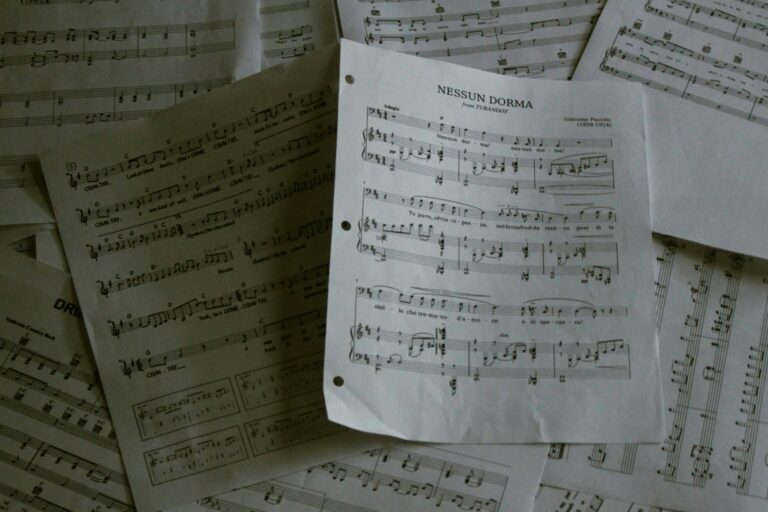
Whether it’s for a performance, music exam, or just for fun, memorizing a piece is the pinnacle of mastering it. It is said that you never fully learn a piece until it’s memorized, but how exactly do you take on an endeavor like that?

From concertos to bagatelles, all music can be memorized no matter how long it is by using efficient memorization strategies and enough effort. If you’re still relying on muscle memory to memorize your pieces, I’m impressed, but also incredibly scared for you.

If you’re looking your stack of sheet music and feeling overwhelmed, keep reading and put some of the tips below into practice!

Memory & The Human Brain

When it comes to the “how” of memory, it’s helpful to think of your brain like a phone with barely any data and a battery that’s constantly at 2%. Most of us try to download a massive 4K movie (your entire concerto) all at once, and then we’re shocked when the download fails and the phone crashes.

The secret to how our memory actually works is “chunking.” Since your short-term memory can only handle about seven tiny bits of info at a time, you have to break that movie into 10-second clips. But the real solidifying of your memory doesn’t happen while you’re staring at the sheet music, but it happens when you’re asleep. Your brain uses that downtime to consolidate everything you practiced, moving those notes from your fragile short-term memory into the vault of your long-term memory.

So, if you want to stop the “I knew it yesterday but forgot it today” cycle, stop trying to memorize the whole piece in a day. Practice in small bursts, take a nap, and let your brain’s background processing do the work for you.

Recognize Patterns/Associations in the Music

This technique is called “Memorizing with Associations” (Huntington Beach School of Music), and it consists of looking through your music and identifying patterns and groups of notes that work together. Take a look at your music and identify the arpeggios, broken chords, and chord progressions you’re familiar with from your technique practice. Find repeating phrases and other patterns, and talk to yourself about each one. For example, you could tell yourself, “Here is an ascending E major arpeggio in 2nd inversion, I notice its a repeating motif at the beginning of each measure”. Saying each pattern out loud as you find it and telling yourself about it is vital, as it forces your brain to remember it faster.

When you play the piece without the score, it’ll be easier to remember each grouping of notes. Instead of memorizing 6 individual notes, you will only have to memorize one “group”.

Say the Notes Out Loud

This one gets tedious pretty quickly, but comes in handy for beginner musicians especially. It’ll train your brain to lock in the notes more securely. If you’re playing piano, always memorize hands separately, and try to say the names of the notes you always seem to make mistakes on or ones that slip out of your memory the most often out loud.

At the end of the day, the goal is to memorize a piece well enough that any mistakes you make on performance day are easy to bounce back from. By saying the notes out loud, you’ll be able to recognize your mistake and move on quickly to the next one during your performance.

Write Out the Difficult Measures 

Similar to the previous one, this one is also quite tedious, but has great results. Pick a few measures, or even just one, to memorize completely. Set your sheet music somewhere out of your view, and write out these measures from memory. This tip uses a different medium of communication (pencil and paper) to achieve similar results as the previous one. By the time you write out the hardest parts of your piece, they’ll be burned into the back of your mind, and you’ll be able to master these sections in record time.

Memorize in Tiny Sections

Students who rely on muscle memory for memorization tend to run through their entire piece, stumbling through the notes until they find the one that “sounds the most right”, making mistakes that won’t be fixed on the next run through and will most likely show up on performance day. The problem with running through the entire piece multiple times is that you never actually target your weak areas, and these will prove to be detrimental to your performance.

When you begin to memorize your music, take a few measures at a time to completely master before you move on. This tactic gives you better results faster and prepares you better. Additionally, once the whole piece is memorized, practice starting at random spots throughout the song, and play random sections without looking at the music. This prepares you for quick recovery after making potential mistakes during a performance, while solidifying the notes into your brain.

Repeat, Repeat, Repeat

This one is pretty self explanatory. Take the tiny sections from the previous tip and go through them over and over until they feel secure! Once again, don’t go through your entire piece to try and memorize it.

Change Up the Articulations

If the repetition is getting boring, and you feel like you’re making no progress with your memory, consider changing the articulations of the notes. For example, even if there is no accent written in, play the first note of each group of 16th notes with an accent. Use your sheet music to practice this for a line, and then take the music away and try playing the same line with these new articulations. This way, you’ll remember the first note of each 16th note grouping, and you won’t rush when you play through them without the metronome.

Speaking of the metronome- USE IT!

TL;DR

For that upcoming recital that was once months away and is now approaching faster than you thought, don’t panic and try some of these strategies below to memorize your piece quickly:

  • Memorize in Small Sections: 2-4 measures at a time is the golden ratio
  • Find the Patterns: Call out arpeggios, chords, and scales for what they are. Talk to yourself about the music
  • Say Your Music: Call out the note names out loud (especially the tricky ones)
  • Write Your Music: Literally grab a pencil and write out difficult measures from memory
  • Stop the “Run-Through” Habit: Don’t just play the whole piece and hope for the best. Target tiny sections, master them, and practice starting from random spots so you can recover if you make a mistake on stage
  • Change It Up: Use a metronome and change up your articulations (add accents where there are none) to keep your brain engaged during repetitions

In conclusion, stop praying to the muscle memory gods and start locking in!

Source: 1

The Mother of the Female Gaze

TW: Mention of Sexual Assault and Rape

Teenage Mutant Ninja Turtles?

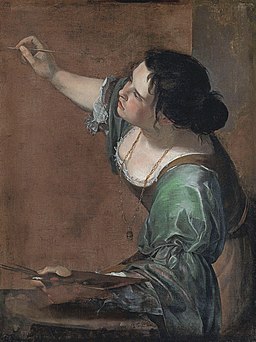
When I was in the 8th grade, my Humanities teacher assigned my class to form a debate on who we thought should be the fifth Teenage Mutant Ninja Turtle. It was up to us to decide who, amongst all the greats of the Renaissance, was the most worthy of fighting alongside Michelangelo, Donatello, Leonardo, and Rafael. I decided that it was time to introduce a female turtle to the gang, and thus began my search for the most impactful woman of the Renaissance. In this journey, I discovered Artemisia Gentileschi.

An Artist’s History

Artemisia Gentileschi was a prodigal Italian Baroque Painter who began her professional career at the young age of 15 after studying under her father, Orazio Gentileschi. In the 17th century, there were very few prolific female artists. Artemisia was one of the first to break barriers and was the first woman to obtain membership in the Accademia di Arte del Disegno in Florence.

Perfecting the Feminine Beauty

Artemisia frequently portrayed women in her art, inspired by figures from mythology and biblical references. Furthermore, her art pushed boundaries because she was unafraid to show women bearing dominance over men. Many speculate this was her way of liberating herself after she was sexually assaulted by painter Tassi at the age of 18.

Gentileschi is renowned for her ability to accurately and beautifully represent femininity without depriving them of power, a theme frequent in the Renaissance. By presenting these women in power and in unconventional scenes for women at the time, Gentileschi not only provided herself a reprieve from her own trauma but created art that resonated with women, past and present.

An Important Legacy

While it’s a little silly that I discovered this amazing artist through quite unconventional means, I’m grateful that I was able to experience her art. Many years later, Artemisia Gentileschi remains one of my favourite artists because of her deep romantic colour palettes and emotional composition. I believe her works deserve to be even more recognized. Often, Gentileschi’s traumatic past is at the forefront of discussions about her art, and while it unequivocally played a role in her career, we should focus on the artist rather than her oppressors.

Artemisia is a symbol of feminism, a woman who refused to be silenced during a time when men were praised for having half the skills and talents that women did. Her legacy lives on today whenever a young artist picks up a paintbrush and decides to speak of their story rather than letting it fade away. 


Why Feminism Still Matters Today!

0

Throughout the late 19th and early 20th century, the women’s movement challenged prior established societal structure and gender roles, by demanding political representation, and equality under the law. The emergence of the earliest feminist movement, the push against gender roles within the suffragette movement challenged ideals of domesticated women, and the belief that a woman’s place was simply in the home.

Women’s increasing role within the workplace from the Industrial Revolution, allowed such change. The transition from the prior cottage industry, allowed for the rise of women being involved in the same workplaces as men in order to generate enough product for rapid demand, allowing for women to be essential in production. 

Similarly, the rise of educational reform, and the technological advancement of the bicycle further challenged a woman’s role beyond a life beneath spouse. The bicycle itself, for feminism, became a symbol of independence, provided women the freedom of movement, and eventually transitioned into the car (that we recognize today!) , and the mobility that arose with it.

The invention of the bicycle served as a causation for a change in symbolic wardrobe choices, such as corsets and rather impractical dressing senses, that had prior been the expectation for women, now transitioning to revolution in dressing, with the ability of choice, and freedom. Allowing us to slowly transform into the modern wardrobe of today’s women, that would have once been viewed as manly or not ‘women-like’.

Society viewed this as a threat to the deeply rooted patriarchy that had been established, being met with resistance from the government, churches, and other holders of conservative values. As these institutions continuously preached obedience, and a maintenance of family values, that they believed were threatened with the women’s movement. 

Today, centuries later the discussion of women’s rights is still prevalent, with many individuals rejecting the origins of feminism or its necessity overall. Often what individuals forget, is that the rights we take so lightly, such as the right for a woman to speak her mind, or express her opinion (even if it is that feminism was not needed) is a result of the efforts of the original feminist movement. The bicycle or change in wardrobe for women was the first step to independence because of feminism. 

Here is your sign, to acknowledge feminism as a tool to allow women and girls to work, play and learn, and realize that this effort is still a work in progress with many countries still not allowing such rights today. Even if you believe you have access to the same rights as all other genders, many don’t, this is why the fight of feminism isn’t even close to over. 

Sources:

1, 2

The Little Things (or Places) In life

0

I believe that many things in Calgary have a talent for going unnoticed. They slip through the cracks of our thoughts and rest in the quiet corners of our minds that go untouched. However, there are those of us who train ourselves to appreciate the unappreciated. I take pride in being one of them. Through this article, I hope to open your hearts to places that deserve a little more love. (please note: The pictures are not the real places!)

  1. Viet Spice Deli Restaurant (16 Panatella Blvd NW): This Vietnamese restaurant is sure to win your heart if you’re willing to give it a chance. Their food is rich in flavour and seems to suit almost everyone’s taste. The menu ranges from Vietnamese subs to pho and fried rice, making it easy to find something comforting and familiar. Their drinks—including boba—may be a little too sweet for some, but for others, it’s the perfect treat to pair with a warm meal.
  2. Nanao Kimono Gift Shop (215A 10 St NW): This quiet little shop leaves a lasting impression. Inside, you can find everything from stationery and clothing to delicate vases and small trinkets imported from Japan. Every item feels thoughtful and unique, making it the perfect place to find meaningful gifts. Although I’ve only had the pleasure of visiting once, I hope that when the weather improves, this shop will see me again.
  3. Loophole Coffee Bar (1040 8 Ave SW, Calgary AB T2P 1J2 ): Here’s a quick anecdote: two years ago, I discovered this café by accident during the heat of July because it sat along the Stampede Parade route. With fairy lights glowing outside and carefully crafted coffee inside, this café feels like a place meant for quiet reflection. It’s the kind of spot you visit when you’re feeling down and need to romanticize your life for an evening.

That’s all for today! Even if these are the only places I had in mind today, our city is littered with many comforting places just like them. Give them some love, the next time you find yourself welcomed and impressed, and share them with those who also wish for a tiny adventure!

Photo by David Vives on Unsplash


Rewiring Minds : The Neuroscience of a Better World – Issue 3

0

Edition III – Emotional Contagion and the Architecture of Collective Feeling

If attention is the currency of consciousness, then emotion is its amplifier. 

We do not simply think our way into the future. We feel our way there. Long before a belief becomes an ideology or a policy becomes law, something subtler happens beneath awareness. The nervous system reacts. A pulse quickens. A story resonates. In the attention economy, it is not only focus that is engineered, but feeling. Often, more than not, feeling spreads faster than fact. 

The Neurosicence of Emotional Contagion

Emotions are biologically contagious. Research in affective neuroscience shows that minor neuron systems and limbic circuits allow us to unconsciously synchronize with the emotional states of others. When we observe anger, fear, or joy, our own neural patterns partially replicate that state. 

The amygdala rapidly evaluates threats and emotionally charged stimuli, often before conscious reasoning intervenes. Meanwhile, the anterior insula and anterior cingulate cortex help us internalize the emotional experiences of others. 

In this day and age, a new factor has been introduced. Digital networks. Algorithms prioritize emotionally activating content because it increases engagement. High-arousal emotions, such as outrage, fear, and indignation, spread more quickly than calm reflection. A single emotionally charged post can ripple across millions of people, millions of nervous systems in hours, synchronizing stress responses at scale. 

In this sense, social media does not just transmit information. It coordinated physiology, resulting in a world where collective mood can shift overnight. 

When Emotion Overrides Deliberation

The prefrontal cortex, responsible for reasoning and impulse control, requires cognitive space and time. High emotional arousal reduces its regulatory influence, allowing reactive circuits to dominate. 

Under chronic stimulation, this can cause nuance to feel exhausting, patience to feel unnatural, and complexity to feel threatening. We begin to equate intensity with importance. This dynamic helps us explain why polarization deepens in hyperconnected environments. Emotional salience hijacks attentional networks, reinforcing identity-protective reasoning. The brain becomes more motivated to defend belonging than to evaluate truth. 

In such conditions, we are not necessarily thinking less. We are just feeling first and thinking afterward. A society governed by unregulated emotional contagion becomes unstable, not because of a lack of intelligence, but because collectively, our shared nervous systems are continually dysregulated. 

The Biology of Calm as Power

However, just as fear spreads quickly, so does regulation. The vagus nerve plays a central role in calming psychological arousal and restoring social engagement. When individuals practice emotional regulation through a variety of strategies, they can strengthen neural pathways that inhibit impulsive reactions. Through breathwork, mindfulness, and reflective dialogue, calm does not become passive, but becomes a neurological strength.

Co-regulation, the process by which nervous systems stabilize through safe connection, allows groups to recover from emotional spikes. When leaders try to communicate with steadiness rather than panic, they tend to dampen collective stress responses. In a digitally amplified world, emotional steadiness becomes revolutionary. 

Designing Environments for Emotional Literacy

If we understand that emotion is contagious, then the question shifts from “How do we stop feeling?” to “How do we cultivate wiser feelings?” 

Education systems rarely teach emotional regulation alongside cognitive skills. Yet the ability to notice an emotional surge without being consumed by it may be one of the defining competencies of the future. 

Practices that build emotional literacy include :

  • Pausing before sharing emotionally charged content
  • Engaging in long-form conversation rather than reactive exchange
  • Reflecting on bodily reactions during conflict. 
  • Seeking complexity rather than certainty

Each of these actions strengthens regulation and reduces amygdala dominance. Over time, neural pathways reorganize. Reactivity becomes reflection. 

Collective Emotion and the Future

Movements do not succeed solely because they are rational. They succeed because they inspire. Hope, like fear, is contagious. When collective attention aligns with an emotionally resonant narrative of possibility rather than catastrophe, neural synchrony can produce resilience rather than division. The same networks that amplify outrage can amplify courage. The difference lies in intentional design. If platforms engineer outrage for engagement, communities can engineer empathy for endurance. 

The question is not whether emotion will shape the future. It always does. The question is whether we will consciously shape the emotional environments we inhabit. 


Coming Next In This Series

If you found this edition meaningful, stay tuned for the next article in Rewiring Minds: The Neuroscience of a Better World.

To build a better world, we must first understand the mind that shapes it.

The Creation of a Founder: What A True Entrepreneur Requires

All of us have seen the aesthetic Instagram business pictures with formal dresses, coffee, cool architecture and a laptop. Most people think of owning a business as an aesthetic lifestyle. While social media isn’t incorrect, that is only the tip of the iceberg of what it takes to be a business person. Let’s dive into some of the individual traits you need to be successful in a business!


1. Having Curiosity:

Unsplash. By D Z. Published on December 26, 2021. Curiosity

Successful businesses are created when the company has a purpose associated with a problem. Being curious and investigating the issues faced around the world will help jumpstart your entrepreneurial mindset. Curiosity is a vague trait, but if you are the person who will question situations and investigate the causes of events, you are curious.


Quote: “Curiosity is one of the great secrets of happiness.” — Bryant H. McGill


How Can I Develop This?:

Being observant is the best way to stimulate curiosity. You can start with simple habits such as closely observing two things everyday which you normally overlook. For example, the next time you look at the pair of Nike shoes your friend is wearing, you should ask yourself: How did this business profit? What did they do differently?, etc.


 2. Identify Your Passion

Unsplash. By Ben Sweet. Published on November 22, 2017. Passion

Oftentimes, we think that making a random business which does not align with our passion and interests will still succeed. The bitter truth is that a business will only succeed if the cause aligns with the values of the creator. People think that they will earn money when they invest thousands of dollars into a business; however, if your values don’t align with the purpose of the business, it will fail when you face obstacles.


Quote: “Follow your own passion—not your parents’, not your teachers’—yours.” —Robert Ballar


How Can I Develop This Trait:

Now, you might be wondering, how do I identify my passion? The answer isn’t simple, but it involves experimenting with your likes and dislikes. Put yourself in different situations and reflect on whether you genuinely enjoy the tasks. Passion is a feeling built over multiple years of consistency, perseverance and dedication. Your passion doesn’t have to be a hard skill; it can be as simple as caring for the environment. ——


3. Being Adaptable

Unsplash. By Chris Lawton. Published on October 25, 2016. Adaptability

Being able to adapt to changing circumstances and employing strategic thinking to move forward is a crucial business skill. Whether you’re starting your business or trying to sustain one, being adaptable is crucial to surviving in the market.  Businesses face obstacles at every step of the way, from initiating an idea to manufacturing products or offering services. Without adaptability, your business will remain stagnant, and innovation will not occur.  Individual adaptability is equally important for business owners; this means persevering through obstacles, being prepared for unexpected challenges, etc.


Quote: “Intelligence is the ability to adapt to change.” – Stephen Hawking


How Can I Develop This Trait:

You might think adaptability is often dependent on the circumstances you face, but adaptability has more to do with your reaction to the circumstances. In other words, using decision-making and managing stress under pressure are ways you can enhance your adaptability skills. Most of the time, we already practice adaptability, whether it be using a different bus when your bus doesn’t come on time, or deciding what paragraph you want to focus on in a timed essay assessment.


4. Discipline

Unsplash. By Brett Jordan. Published on April 28, 2021. Discipline

Without discipline, there is no consistency to follow through on an idea. Oftentimes, businesses fail when there is no routine which stimulates productivity and actions. Starting a business can be overwhelming, whether it be convincing people to invest or obtaining permits. Without discipline, it is easy to fall behind on your schedule. While many of us think owning a business means we are in control of our time, it also means managing our time in an organized manner. Discipline can be as simple as setting aside at least 2 hours daily to work on your business, whether it be doing market research or setting up systems.


Quote: “Discipline is the bridge between goals and accomplishment.” – Jim Rohn


How Can I Develop This Trait:

Discipline is a skill not only beneficial to entrepreneurs, but it’s also useful to excel in academics and your career. A big part of instilling adaptability is to create a schedule for yourself. This can be as simple as giving yourself allocated time to do homework for each unit. This will help develop consistency, which is extremely useful for entrepreneurs.


5. Embracing Leadership

Unsplash. By Markus Spiske. Published on November 10, 2018. Lead

Leadership is a crucial trait you need to be successful as a business owner. Leading isn’t limited to making decisions on behalf of the company; it is an attitude towards your contribution. In other words, guiding your partners, taking initiative to progress, creating short-term and long-term goals and identifying the problems your business is facing are all a part of what it takes to be a true leader.


Quote: “There are leaders, and there are those who lead. Leaders hold a position of power, but those who lead inspire us”-Simon Sinek


How Can I Develop This Trait:

Leading is a trait that is developed through taking initiative. Think of developing leadership like developing math skills; the more you practice, the better you get! You can start by performing acts of leadership in school groups, clubs, or in the community. Remember, having the position of a leader and performing acts of leadership are extremely different. For example, you do not have to be the leader of your local club to offer a new idea, change the regular methods or inspire others.


TL;DR

  • Being a business owner is far beyond what Instagram and Pinterest show it to be
  • Be Curious: Questioning the world around you helps you find true purpose in your business
  • Identify Your Passion: Passion = Cause = Purpose —> Successful Business
  • Adaptability: Being able to respond effectively to unexpected situations is the nature of business
  • Discipline: Most Businesses require you to manage your time independently; therefore, maintaining consistency is key
  • Embracing Leadership: Being in a position of leadership is different from leading. Leading requires initiative, consideration and dedication


1,2,3,4,5,6