Home Blog Page 9

The Assad Regime – What’s going on?

0

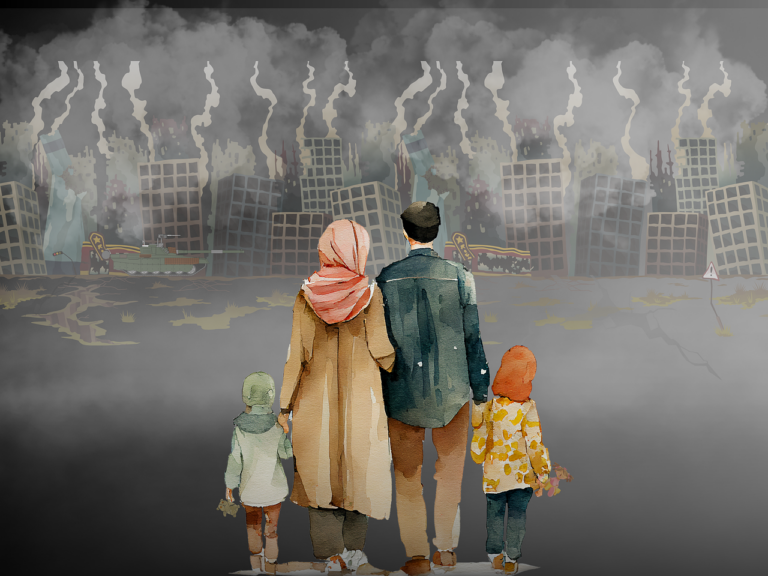
Over the past century, Syria has experienced significant political and economic instability and faced major conflicts involving their government. These recurring crises created conditions in which dynastic dictatorship and authoritarian leadership could take hold. The rule of the Assad regime represents the latest and most controversial chapter in Syria’s modern political history. 

Hafez al-Assad served as the totalitarian dictator of Syria from 1971 to 2000, when he passed away due to a heart attack, his son succeeding him as the new president. During this time, Syria was run by an extremely military and centralised government, and civilians had little to no human rights or freedom of speech. Dissent and protest were suppressed with brutal force, and thousands were killed. The state was heavily guarded and surveillance based, and the majority of the population (specifically the Sunni Islamic people in the Alawite based government) were seen as opposition. 

When Bashar al-Assad assumed power, he initially presented himself as a moderniser and reformer, implementing new laws that would revitalise the stagnant economy, reduce corruption and liberalise the media. As his goals went unachieved with the numerous economic barriers holding back the country, he turned to his father’s violent and authoritarian tactics. With growing distaste for the Assad regime and environmental issues pushing the population towards the capital, protests were becoming more and more common and by 2012 Syria had erupted in full civil war. Violence, torture and military power were used to stifle demonstrations and prevent the world from hearing about the condition of the conflict, and communities that had become hubs of resistance were surrounded by soldiers and tanks.

Furthermore, the religious tension between the distinct groups in Syria was augmented, as Assad and the majority of his followers were Alawite Islamic and many protesters were Sunni Muslims. Thousands of refugees were seeking asylum in neighbouring countries, which were, along with global powers, dividing into pro and anti Assad. The US (at the time led by President Obama) , the EU, Qatar, Turkey and Saudi Arabia supported the rebels and offered asylum to refugees, while Iran and Russia became some of Assad’s strongest allies. After the government’s use of chemical weapons (mustard gas and sarin in aerial bombs, missiles and artillery rockets) became known and identified as a clear violation of the OCPW’s international regulations, powerful organisations worldwide called for Assad to step down and release political prisoners. A partial and short-lived ceasefire took place in April 2012, but violence resumed quickly and soon reached even higher levels. 

It wasn’t long after Syria began receiving equipment and artillery from other countries, the rebels from the ones nearby and Assad from Hezbollah and forces in Iran, escalating the situation and causing new political tensions. Russia began deploying air troops to Syria, and Western forces started to attack chemical facilities.

The civil war began to decline in intensity about a year before Assad’s downfall, as involved countries backed out, dealing with their own regional conflicts. Russia withdrew as they invaded Ukraine, and Iran retreated with the Israel-Hamas war. Many refugees were forced back to Syria as other parts in the Middle East also became unsafe. 

However, as governmental support waned, the HTS (or the Hayat Tahrir al-Sham, a Sunni militant and/or terrorist group) forced Assad (who fled to Russia) to release his hold on the country and began the reform of a fractured society. Ahmed al Sharaa, the interim president, stated he intended the careful construction of a constitution to take place over the next few years and called for all armed factions (including the HTS) to dissolve to prevent further violence. 

Today, despite a reduction of violence in Syria, the new government and country as a whole are facing immense challenges. Severe economic collapse, needed political reform and widespread humanitarian needs. The situation is undoubtedly lighter, but Syrians are confronting new hardships, and contributions to charities like UNICEF can help provide the support they urgently need.

Sources:

1, 2, 3

When Winter Actually Feels Alive in Calgary

Right now, Chinook Blast is happening across downtown Calgary, and it is one of the few things that genuinely makes February feel less routine.

Chinook Blast is a winter festival that runs for a few weeks and brings together outdoor art, light installations, live music, skating, food vendors, and cultural events. Instead of being in one single location, it spreads across different parts of downtown like Olympic Plaza and Stephen Avenue. At night especially, the light installations stand out. They are interactive, creative, and honestly give people a reason to walk around even when it is cold.

There are also free performances and community events, which makes it accessible. You do not need to buy expensive tickets to participate. You can show up with friends, skate for a bit, grab something warm to eat, and listen to live music. It feels casual but still meaningful. The city feels busier in a good way. There are more people outside, more conversations happening, and more local artists getting attention.

What makes it exciting is that it breaks up the usual winter pattern. February can feel slow and repetitive, but this adds something different. It changes how downtown feels. Instead of rushing through it, people actually stay.

Festivals like this are worth appreciating because they support local artists, small businesses, and performers who rely on community engagement. They also create shared experiences. Not everything meaningful has to be huge or dramatic. Sometimes it is just about giving people a reason to step outside and feel connected to where they live. Events like this remind us that cities are not just buildings and roads. They are shaped by the moments we choose to show up for.

Top 4 Text Recommendations to Ace High School English

High school English can be a tough subject to master, whether it be the timed essays, reading comprehensions, or the deep analysis of texts. Despite having some struggles with English, it is still one of my favourite subjects since I love having the chance to expose myself to various genres of texts. Taking IB English, the opportunity to do so is even greater!

Here are 4 of my favorite literary works that contain a ton of literary techniques, themes, and authorial choices to unpack.

  1. Death and the Maiden by Ariel Dorfman

This is a 1990 play by Chilean playwright Ariel Dorfman set in a post-dictatorial country (most likely Chile, but it is never specified, wonder why that may be?) that is slowly transitioning into democracy. The plot follows a young woman, Paulina Salas who seeks to punish a man whom she believes was her torturer when she was kidnapped by the dictatorship regime.

The play explores themes of seeking justice, gender based power dynamics, and the unreliable nature of truth. It also features a great load of literary techniques, my favorite being the leitmotif of classical music that you can analyze with different interpretations for days!

2. The Metamorphosis by Franz Kafka

I’m sure many high school English courses require students to read this, but even if your course doesn’t, I still recommend this novella written by German Speaking Czech author Franz Kafka. Kafka’s “The Metamorphosis” is an absurdist fiction novella with the plot revolving around the main character, Gregor Samsa, who wakes up one morning to find himself inexplicably transformed into a bug. Yep, you read that right!

Although seemingly ridiculous at first, upon close reading, this text carries deep themes about isolation, identity decay, hierarchical nature of communities, and existential dread. It is also even more powerful given the context behind Kafka’s background as a Jewish person raised in Prague, and his estrangement with his father.

3. Macbeth by William Shakespeare

I can feel you rolling your eyes at me. I know, I know, no one enjoys reading Shakespeare. But…Shakespeare’s plays are an essential part of most high school English courses, and it doesn’t hurt to expose yourself to them beforehand. Out of all the Shakespearean plays I’ve read, I genuinely enjoyed Macbeth and I believe many of the themes explored within it are relevant even today. Plus, it has sooo many literary techniques to analyze for that CRT!

As you might know, Macbeth is about the violent rise and fall of Scottish noble Macbeth. Packed with TONS of historical allusions, imagery, structural choices, this play examines themes of pride, societal pressures and expectations, jealousy, and self-awareness.

4. The Woman Who Could Not Live With Her Faulty Heart by Margaret Atwood

Poetry can be daunting to many, and I am no exception. However, I’ve found that if you take the time to sit down and analyze poems, they are so beautifully written, and there are so many hidden easter eggs that you can uncover. Pretend you’re a literary detective!

Atwood poetry in general is very rich with meaning, but “The Woman Who Could Not Live With Her Faulty Heart” is probably my favorite out of all the ones I’ve studied in class. It has a great deal of visceral imagery characterizing the speaker, a woman’s relationship with her physical body and her heart. She uses personification of the heart to create a sense of detachment and isolation. Featured themes include bodily decay, struggle for identity, and isolation.

TL;DR

Those are just 4 of many wonderful texts that I believe you should go and read, even if it is in your own free time and not necessarily for school work!

Would You Survive a Zombie Apocalypse?

0

Science says…probably not.

Be honest for a second. If a zombie apocalypse started tomorrow, you might think you’d survive. You’d grab supplies, you’d run, you’d be smart. You wouldn’t be one of those people who trip in the first five minutes.

Unfortunately, science has been watching humans for a while now, and it’s not exactly optimistic.


What kind of ‘zombie’ are we talking about? 

Reanimated corpses? Unlikely. Dead tissue doesn’t magically restart: without oxygen and glucose, neurons die permanently. No brain activity = no movement.

But a zombie-like outbreak is actually disturbingly realistic. 


There are already real biological mechanisms that could create something close:

  • Rabies: aggression, paranoia, biting, fear of water
  • Prion diseases: misfolded proteins that destroy brain tissue and cause loss of coordination and judgment
  • Parasites like Ophiocordyceps that control host behaviour 


A fast-mutating virus that:

  • Spreads through bodily fluids
  • Causes neurological impairment
  • Increases aggression

That’s not sci-fi. That’s epidemiology having a bad day.


The Real Threat: Exponential Growth

Movies sometimes show infections spreading linearly, one person at a time. Real outbreaks wouldn’t work that way. 


They follow exponential growth, modelled by reproduction numbers (R0).

  • If R0 = 1, the outbreak stays stable
  • If R0 > 1, cases explode


Let’s say a zombie pathogen has an R0 of 3 (which is lower than measles).

1 person infects 3, 3 infect 9, 9 infect 27, and 27 infect 81. That’s 120 infected in just four cycles.

Now add delayed symptoms, asymptomatic carriers, misinformation, and people hiding bites or symptoms because they ‘feel fine’. By the time society realizes what’s happening, it’s already math, not panic, doing the damage.


Your Brain Under Threat is…Not Helpful.

Humans love to imagine calm, strategic, planned survival. Neuroscience disagrees.

Under extreme stress, the amygdala hijacks the brain’s decision-making. The prefrontal cortex, responsible for logic, planning, and impulse control, gets suppressed.

That’s why people may freeze instead of running, run towards danger, or make catastrophically bad choices with full confidence.

This is called cognitive tunnelling. Your attention narrows, and you lose situational awareness. So no, you probably won’t be carefully calculating escape routes. You’ll be reacting. Badly.


Running will not save you.

Let’s talk physics and physiology.

Humans are endurance animals, not sprinters. We’re more built for long-distance jogging, not repeated bursts of speed. Sprinting relies on anaerobic respiration, which produces lactic acid, causing muscle fatigue and eventual collapse. You could sprint for 10-20 seconds at max effort, maybe a minute if adrenaline is carrying you.

Zombies, fictional ones, don’t feel fatigue, muscle pain, oxygen debt, or fear. Even slow zombies could win by not getting tired. Physics doesn’t care about your motivation.


Infrastructure Failure: The Quiet Apocalypse

Here’s the part movies might skip.

Even if people don’t die from the initial outbreak, they’ll die when systems collapse. No electricity means no water treatment. No clean water? Disease. No refrigeration leads to spoiled food.

Modern survival depends heavily on interconnected systems, not individual toughness. When such systems fail, survival becomes a logistics problem, not just a combat one.


So who actually survives?

Statistically, survival depends less on strength and more on:

  • Access to clean water
  • Medical knowledge
  • Community cooperation
  • Adaptability

Lone-wolf survival is a myth. Groups survive better, and that’s supported by anthropology, disaster science, and history. The best apocalypse skill isn’t fighting. It’s systems thinking. 


Final Answer: Would you make it?

According to biology, physics, neuroscience, epidemiology, and thermodynamics…probably not. 

So, if someone says, “I’d definitely survive a zombie apocalypse,” you can just nod politely and think: That confidence will last about three missed meals. Science approved. Vibes intact.

Sources:

The Special Valentine


Ok so Valentines day was just yesterday and if you’re somebody reading this who’s sad that you didn’t have a special valentine, I think that this post is for you. 

Yes, Valentine’s day is the epitome of love, where people have grand celebrations to celebrate their partners. However, not everyone has a valentine to celebrate, which is 100000% ok. In fact, since Valentine’s Day is all about love, I think that celebrating your friends can be just as fun too. Today I’m introducing a concept called, “Galentines”. 

Essentially, Galentines is a celebration for women where you honor platonic friendships (and if you’re a boy reading this don’t worry you can also have your own special version of this too). It typically involves meeting up with your closest friends, dressing up in fancy clothes (preferrable pink, red, and white), exchanging gifts, eating food, or basically just doing whatever you want while having fun. The whole purpose if it is to appreciate your friends and showing that love isn’t all about romance. 

I actually did a Galentines with some of my friends, where we dressed up, went out for brunch to eat a million pounds of food, and did a cute little gift exchange. Laughing until my stomach hurt and I couldn’t breathe, I realized how lucky I am to have people who I love just as much as they love me. It served as a gentle yet super fun reminder that even if you don’t have a Valentine, it’s 100% ok because you can appreciate your friends just as much if not more. Your friends are the people who you express your most authentic self to. The ones who are there for you when you’re going through hard times. The ones who you laugh with and cry with and feel comfortable and just happy around. Ultimately, all of this is love in itself too. 

I think that we grow up with the idea that love is something that is supposed to be “found” like a special treasure or winning the lottery, but in reality it can actually just be sitting right in front of you. 

So even though Valentine’s Day just passed, make sure to appreciate the friends in your life, and love them with all your heart. Get out your phone, or if you’re reading this on your phone once you’re done, go text your friends and tell them how much they mean to you. You don’t need to do this in a cheezy way like we’re in an 80s romance movie, but you can make it super silly instead (which I think is even better). 

Happy Valentines Day!

Thank You to Our Younger Selves

0

It is common to have a negative view of our past selves, one that criticizes our previous mannerisms, behaviors, and possibly even our worldviews. We look back at old photos, old messages, or memories and often wonder, Why did I say that? Why did I act like that? At times, the embarrassment becomes so overwhelming that we attempt to distance ourselves completely from the person we used to be.

However, what if we paused for a moment and tried to look at our younger selves a little differently? What if we thanked our younger self?

Growth Happens in Stages

Growing up always equates to changing. It means outgrowing mindsets, habits, and even people. Yet somewhere along the way, many of us start treating our past selves like mistakes instead of milestones. We forget that every version of us existed for a reason. That younger version of you wasn’t trying to be awkward, dramatic, or wrong, but, on the contrary, they were trying to figure life out with the limited knowledge and experience they had.

Lessons from Our Cringe Phases

It’s very easy to judge your past from the comfort of the present. You know more now. You’ve learned lessons. You see situations differently. But your younger self didn’t have that advantage, as they were navigating friendships, school, expectations, and emotions for the first time, in those moments. They were learning how to cope, how to belong, and how to be heard.

And they were doing the best they could.

Think about it: the person you are today exists because of who you were before. Your younger self got you through days you thought you couldn’t handle. They faced fears, tried new things, and survived moments that felt world-ending at the time. Even your mistakes taught you something. Even your “cringe phases” helped shape your confidence and identity.

Instead of saying, “I was so embarrassing,” we should learn to say, “I was learning.” That small shift in wording changes everything. It replaces shame with compassion.

Practicing Gratitude Toward Your Past Self

It is important to note that an appreciation for your younger self doesn’t mean pretending you were perfect. Instead, it means recognizing your growth without insulting your journey. One way to practice this is by looking at old memories with kindness. When you see an old photo or remember an awkward moment, try asking: What was I feeling back then? What was I trying to learn? You might realize that past-you was braver than you give them credit for.

Some people even write letters to their younger selves, thanking them for holding on during hard times. It sounds simple, but it can be powerful. Gratitude toward your past can build confidence in your present, which will only continue to bring joy to moments that were traditionally associated with humiliation.

Moving Forward with Compassion

As a society, we are more inclined to celebrate future goals and “better versions” of ourselves, but we rarely celebrate the versions that carried us there. Growth isn’t about erasing who you were. It’s about understanding that every stage mattered and continues to influence us into tomorrow.

Your younger self isn’t someone to mock or criticize. They are someone to appreciate. They are proof that you can grow, adapt, and keep going.

With that in mind, the next time you cringe at a memory, try smiling instead. That younger version of you was trying, hoping, and learning, just as you are now.

And one day, your future self might look back at you with the same gratitude.

3 Tips to Ace a CART Essay: Critical Writing For Alberta ELA 30-1


1. Create an Outline

A good CART comes from writing with purpose. Make sure that you plan your CART according to the prompt before you delve into writing. Starting straight-out sentences can be difficult; it makes rambling and going off topic very easy. So take your time planning. I usually spend about 30 minutes when I plan.

Planning an Essay Structure

1. Thesis statement

This comes before everything else! Write out your answer to the prompt, and be specific to what your chosen novel supports. Your thesis is the backbone of your entire essay so don’t be afraid to give it a little complexity. It can be multiple sentences if that makes it easier to read, or you can use a semicolon (if you know how to use one properly).

2. Topic Sentences

When planning, write these out in full sentences for each body paragraph.

From your thesis statement, draw the main points that you are going to prove in your essay and reword each one into a topic sentence. Your topic sentence should discuss your argument, not a plot point. Don’t get into evidence yet, because that happens after.

Here is where you make what teachers like to call your “claim” that you’re going to back up. At this point, it should have nothing to do with the story you’re analyzing and more to do with what you are trying to say.

3. Evidence

When planning, put these in bullet points.

This is where you choose quotations from the text or brief summaries of a plot point. If you are using a plot point, be very careful not to go off on a tangent. Stay on topic – your summary should be no more than two sentences.

One of my teachers once said evidence is something that you should be able to put your finger on. Literally. If the quotation or the plot point is too long for your thumb to cover up, you have too much. Many students go off on tangents because evidence requires no thought; you just chuck in what someone else wrote. I’ve fallen into this trap way too many times. Remember – put a finger on it!

4. Explanation

This is arguably the most important part of writing a CART. It only takes a bullet point but will save you points.

Evidence is useless without explanation. When planning, use a bullet point or two to briefly relate the evidence and the claim you make in your topic sentence. Explore what the author’s intention was, why the evidence was a good example, and ultimately how it relates back to the thesis statement and answer to the question.

5. Intro and Conclusion Paragraphs

These are usually the least useful to plan, but it can help to have a little starting point. Plan out your ending statement in full – should connect your point with the world and the general human condition – and make a note that your thesis statement should make an appearance in both. Reword it when you put it into your conclusion paragraph.

2. Avoid Blocks of Quotations

YUUUUUCKK. Keep giant quotations OUT of your essays. If you need evidence in the form of quotations, pick the best quotes instead of choosing all of them. But what makes a quote better than another?

Here’s a couple things to look for in a well-selected quotation:

  • literary/rhetorical devices – great to break down and explain, shows understanding and nuance especially when you have an extended metaphor
  • dialogue – especially that which showcases a character’s defining traits at the time, which can then be contrasted with quotations from after a character changes and analyzed for character dynamic
  • short and sweet – nobody wants to read a massive chunk of writing that they’ve already read before. As long as it makes the same point, pick the shorter quotation.

3. KISS – Keep It Simple, Stupid!

I used to be one of the students who thought they were a spiritual descendant of Shakespeare. I wrote long and grandiose sentences laced with fancy fluffy phrases, and it took a while to get to the point. My word count was triple that of my peers, yet my grades tended to be lower. I was always told to be more concise, but I never knew how to do it. If this sounds like you, read on.

Planning is one of the best things you can do if you ramble. Keep each section around two sentences when you write. Although I was flexible with this rule, it got easier to do once I got used to writing more. And you will get to your point I promise.

More importantly, leave the editing to the end. It’s so tempting to edit as you go, but often you will get stuck rewriting a sentence until it becomes incoherent mush. It’ll make sense to your anxiety-riddled mind in the moment and you’ll keep the incoherent mush, and you will also spend far too much time writing more incoherent mush until you realize there’s ten minutes left and you are only on your second body paragraph. Then you will type like your life depends on it.

Understanding vocabulary also helps greatly. Avoid using the thesaurus unless you know what the word really means, but oftentimes there’s a better wording choice that will save you a whole sentence. Expand your vocabulary by reading and writing more!

Main-Character Syndrome: Cringe or Confidence?

Scroll through TikTok for five minutes and you’ll see it everywhere: slow-motion coffee walks, “POV: you’re the main character” captions, people narrating their lives like they’re in an indie film. This phenomenon, often called main-character syndrome, gets clowned constantly. But is it actually embarrassing… or is it just confidence with a new aesthetic?

First, let’s clear something up. Main-character syndrome doesn’t literally mean thinking everyone else is an NPC. At its core, it’s about seeing your life as meaningful, intentional, and worth paying attention to. In a world where routines blur together and burnout is basically a personality trait, that mindset can feel kind of empowering. Romanticizing your walk to class or your late-night study session can be a small act of self-respect. You’re telling yourself: my life matters, even in the boring parts.

That’s where the confidence argument comes in. Treating yourself like the main character can push people to take risks, set boundaries, and stop waiting for permission to exist loudly. It encourages people to dress how they want, chase goals that actually excite them, and stop minimizing themselves to make others comfortable. For a lot of people, that’s not cringe at all. That’s growth.

But (and this is a big but), main-character syndrome has a tipping point.

When confidence turns into performative self-obsession, the vibe shifts fast. Filming strangers without consent, acting like social rules don’t apply to you, or dismissing other people’s experiences because they don’t fit your “plot” is where the syndrome earns its bad reputation. At that stage, it’s less “I value myself” and more “only I matter,” which is… not cute.

Social media makes this worse. Platforms reward dramatic storytelling, aesthetic suffering, and exaggerated individuality. Everyone’s trying to be the most interesting person in the room, which ironically makes everything start to feel the same. The pressure to constantly be “that girl” or “him” can turn self-confidence into anxiety disguised as empowerment.

So is main-character syndrome cringe or confidence?

Honestly, it depends on who the story centers–and who gets erased. If being the main character helps you care about your life, enjoy small moments, and move with purpose, that’s confidence. If it turns into ignoring others, seeking constant validation, or treating real life like content, that’s where it crosses into cringe.

Maybe the healthiest take is this: be the main character of your life, but remember everyone else is starring in their own story too. Confidence doesn’t need an audience and it definitely doesn’t need to step on other people to feel real.

And if you still want to romanticize your walk home with headphones on? Go for it. Just don’t forget to let others have their montage moments too.

Future Uncertainty: A Youth Perspective

0
Have you ever had a thought about how we, the youth of today, will survive in the next ten years with the current economy? Every day on the news, there are statistics about unemployment, affordability, inflation and job insecurity. While we might dismiss the concern with the hope of “it will get better,” the concern remains unanswered. Our doubts and fear is buried beneath the stress of achieving below our standards. The struggle to uphold our academic and career-related skill set becomes the only goal as we work our way into the reality of adulting. In this article, we will address the concerns that are often times dismissed or suppressed, yet hold a bitter truth about the future.

The Feeling:

Unsplash. By Ahmet-Olcum. Published on September 26, 2025
Oftentimes, the thought of the future is discouraging, especially when we have high expectations of ourselves. Throughout high school, many of us are working on building our resumes and gaining skills that will help us excel in our careers. Ambition, commitment, passion and anticipation are all the wonderful things that drive youth towards doing well in school and extracurriculars. We have been told by social media, older generations, and the school systems that doing well in school will pave the path for financial freedom and comfort.
While this perspective isn’t wrong, it does not encompass the entire picture of reality.
All of a sudden, when we open the news channel and overhear young adults talking about the ridiculous increase in the cost of living, we feel betrayed. Betrayed by the system, manipulated by our own expectations and hopeless for the future. This is the exact moment we think to ourselves, “Is it really worth the hassle?”

You Are Not Alone:

If you could relate to the slightest bit of this feeling, you are a part of the ” 80% of Canadian youth are overwhelmed by stress” (quoted by Mental Health Research Canada (MHRC) in November 2025).
Oftentimes, we convince ourselves that we need more qualifications to dodge unemployment and affordability. However, whether or not you get a job in the current economy isn’t solely dependent on qualification, but rather it is a combination of many other factors. For example, landing a job in your dream company isn’t only about having a degree, but it involves your interview skills, executive presence, job availability, soft skills, and future scope of the position (will it be replaced by AI?).
At this point, the most important thing to understand is that it is not impossible to get a job; however, the global economic situation does create barriers for the young working population.

So What Should We Do:

Unsplash. By Jeremy Bishop. Published on March 14, 2016. Mindset
Many of the current solutions offered are to work harder and adapt; however, that is NOT the advice we need. Working harder doesn’t change economic uncertainty. As youth, we already face pressure from school, extracurriculars, and our personal lives, which consistently result in mental health issues across the global youth population. Instead of creating more pressure by focusing on the unpredictability of the future, we need to redefine our mindset.
Awareness is more effective than pessimism. Losing hope and quitting because of the situations does not benefit anyone; however, being able to address such discrepancies in society is the only way we can move towards a resolution.
We cannot control our future. While this may sound philosophical, the future is unpredictable regardless of how we shape our present. This means we should focus on what we can control and strive towards a goal to the best of our abilities. Identifying the distinction between devising and controlling can eliminate self-blame and negativity.
At last, while the answer to economic uncertainty might seem vague or blurred, we must understand that the issue is multifaceted. As we try to understand the future of the global economy and what that means for the youth of today, we will be able address the issue with more focus. Above all, we need to remember that the issue isn’t individual but rather systemic; therefore, this issue does not define our worth and capabilities.
Sources:

Making Memories Now So I Don’t Regret It Later

0

Lately I keep thinking, “I’m only 16 once,” which sounds dramatic, but it’s more just… a thought that keeps popping up. I’m in Grade 11 now, so university and whatever “adult life” is supposed to be feels way closer than I’m ready for. Some days it hits me that this version of life — high school, random plans, walking around with nowhere to be — isn’t going to last forever. And I don’t want to look back and realize I spent all of it waiting for something better to happen.

I think a lot of this started when I began going downtown more, probably around ninth grade, mostly because of volunteering at first. Somewhere between standing on the train platform in the cold, walking around with my headphones in, and just killing time in the city, I started to really love it. Not in a movie way, but in a small way. Like when you’re walking with music and everything feels quieter in your head for a second. Or when you’re with friends and a random walk turns into a long conversation you didn’t plan on having. Even being alone can feel nice sometimes — not lonely, just calm — as long as you’re being safe about it.

Some memories are just staying out way longer than you meant to because no one wanted to be the first person to go home. Other days it’s literally just me, my earbuds, and taking the long way somewhere for no reason. Both feel important. Being around people matters, but so does learning how to be okay with yourself. Not everything has to be loud or exciting to count.

I used to think “making memories” meant everything had to look good. Cute outfit, good lighting, actual plan. Very Pinterest, very curated. But the stuff that sticks isn’t like that at all. It’s the blurry photos you don’t post. The after-school snack runs. The bus rides where everyone’s exhausted but still laughing at the dumbest things. The walks home that were supposed to be five minutes and somehow turned into an hour.

Being in Grade 11 makes everything feel closer. Closer to the end of high school. Closer to new routines. Closer to a life that probably won’t have this much free time or this many unplanned moments. It’s not scary exactly, but it does make things feel more real. It makes me want to stop saying “maybe next time” and start saying “sure, why not” a little more.

That’s kind of my thing lately: saying yes. Yes to plans I almost cancel. Yes to going out even when I’m tired. Yes to doing things even if they’re not perfectly planned or perfectly aesthetic. Not in a reckless way—just in a “I don’t want to miss this” way. I don’t want my memories of being 16 to just be stress, homework, and waiting for the next phase of life to start.

There’s so much pressure to always be productive, like every moment has to be useful. But some moments are just meant to be lived. Walking around. Laughing too loud. Staying out a bit later than you meant to. Sitting somewhere with a coffee and pretending your life is a movie for five minutes. These aren’t things you put on a resume, but they’re the things that make life feel full.

I don’t have some big plan for how to make memories. I just don’t want to keep saying “later” all the time. Sometimes that means saying yes when it would be easier to stay home. Sometimes it means doing something even when it’s not a whole thing.

I know this phase of life isn’t going to last. That’s kind of the point. I just want to be able to say I actually lived it while I was here.

Lack of Youth in Policy

0

Youth in 2025 are becoming increasingly interested and active in politics. This trend has been amplified through various areas today, including increased engagement with information via social media and early exposure to political rallies. Most importantly, it is driven by the impact of politics on young Canadians. 

This raises the question: why aren’t youth voices more sought after, given the significant impact current-day politics will have on them? When you look at youth engagement in politics and policymaking, it is easy to stereotype youth as apathetic and unresponsive; however, when you look at how governments consistently undervalue young people’s opinions and ideas, it is no wonder youth often choose to opt out of politics. 

Historically, youth voter turnout between ages 18-24 has been one of the lowest demographics to actually cast a ballot. In 2019, according to Elections Canada, only fifty-four percent of young people aged 18-24 actively participated in the federal election compared to over eighty percent of people aged sixty-five or older. If you feel your voice will be simply ignored and your opinions will be written off due to your age and perceived lack of experience, it is easy to fall into a cycle of hopelessness, which breeds apathy. 

To combat this, current policymakers need to make room for young people and not just use youth symbolically while consistently undermining youth’s concerns and desired pathways. 

Youth voter turnout is not reflective of youth engagement; youth are out in the community hosting rallies, walkouts, and trying to present their ideas over social media. It is clear that in the current day, policymakers view youth as idealistic, inexperienced, and naive. 

If you want students and youth to participate in elections at higher rates and become more politically literate, ensure that the sense of hopelessness they feel is combated by representative and utilized programs. This, in turn, would motivate students to more actively participate in political decision-making as they see both the ramifications of these decisions and also proper avenues where they can take action. This is how you make room for the future: by seeing that they are also citizens of the present and deserve equal respect.

So… What Is Bitcoin Anyway?

1. Bitcoin: The Basics

Bitcoin (BTC) was the first cryptocurrency ever created, and it’s still the most famous and valuable one today. The concept of digital money has been around for decades, but Bitcoin officially went live in 2009, completely changing how people think about money.

Since then, Bitcoin has been a wild ride, marked by huge price jumps, big crashes, intense hype, and numerous debates.

2. How Bitcoin Started

  • 1983: A cryptographer named David Chaum came up with an early idea for digital money called eCash. It didn’t take off, but it inspired future tech.

  • 2008: Someone using the fake name Satoshi Nakamoto released a paper explaining Bitcoin.

  • 2009: Bitcoin officially launched. The first block (called the Genesis Block) was created.

  • 2010: Someone spent 10,000 BTC on two pizzas. This day is now known as Bitcoin Pizza Day.

  • 2011: Bitcoin hit $1 for the first time and started getting serious attention.

  • 2013: Forbes called Bitcoin the best investment of the year.

  • 2014: Bloomberg called it the worst investment of the year.

  • 2020: PayPal started supporting crypto, making Bitcoin easier to buy and use.

  • 2021: The first U.S. Bitcoin ETF got approved.

  • 2022: The crypto exchange FTX collapsed, shaking trust in crypto.

  • 2024: The U.S. approved spot Bitcoin and Ethereum ETFs, making crypto more “official.”

  • 2025: The U.S. passed major crypto laws and even created a national Bitcoin reserve.

3. What Even Is Blockchain?

Bitcoin runs on something called blockchain. Think of it as a public online record book that keeps track of every Bitcoin transaction.

The cool part?

  • No banks needed

  • No government control

  • Anyone with internet can use it

  • Once a transaction is added, it can’t be changed

That’s why people say Bitcoin is decentralized.

4. Bitcoin Terms You Should Know

  • Bitcoin (BTC): The main currency

  • Satoshi (SAT): The smallest unit of Bitcoin

  • Transaction: Sending Bitcoin from one person to another

  • Block: A group of transactions

  • Mining: Computers verify transactions and get rewarded with BTC

  • Wallet: Where you store your Bitcoin

  • Public key: Like your username (used to receive BTC)

  • Private key: Like your password (lose it = lose your Bitcoin forever)

Fun fact (but painful): About 20% of all Bitcoin is lost because people forgot their private keys.

5. How Bitcoin Is Used Around the World

Bitcoin isn’t just for investing — it’s used in real situations:

  • El Salvador made Bitcoin legal money in 2021

  • Crypto has been used to send aid during wars like Russia–Ukraine

  • Countries like Iran use Bitcoin to get around financial sanctions

  • Sadly, bad groups have also misused crypto, which is why regulation matters

Some countries ban crypto, others fully support it.

6/ Why Do People Care About Bitcoin?

People like Bitcoin because it:

  • Gives more control over money

  • Doesn’t rely on banks

  • Works globally

  • Challenges the traditional financial system

Whether Bitcoin becomes the future of money or just stays a big investment, one thing’s clear: it already changed the world.

Source: [1], [2], [3]

What Is Surgeons’ “Best Friend”?

Have you ever seen the brown liquid doctors or surgeons use to clean wounds? That’s povidone iodine, also known as Betadine!

Povidone iodine is one of the most powerful and commonly used antiseptics. It is used in hospitals for cleaning skin before surgery, treating cuts and wounds, and it can even be found in ointments and mouthwashes. It works by killing bacteria, viruses, and fungi, and unlike many antiseptics, germs rarely become resistant to it.

1. A bit of history:

Iodine was discovered in 1811 and quickly became popular for cleaning wounds. However, pure iodine caused skin irritation and staining, so its use decreased over time.

In 1955, scientists discovered povidone-iodine, which combines iodine with a substance called polyvinylpyrrolidone (PVP). This new form kept iodine’s strong germ-killing power while making it safer and gentler on the skin.

2. How does it work?:

PVP acts like a carrier that slowly releases iodine. This slow release helps kill germs effectively without damaging the skin. That’s why povidone iodine is both strong and safe.

3. Why is it so special?:

  • Kills many types of germs

  • Causes less irritation

  • Does not stain skin as much

  • Used worldwide in healthcare

  • Only used on the skin (not absorbed into the body)

Povidone iodine is a great example of how science improves everyday healthcare: simple, effective, and life-saving.

Sources: [1], [2], [3], [4]

What Is Different About the Bilingual Brain?

Many people think being bilingual means having a “different kind of brain.” Some even believe bilingual kids get confused, or that bilinguals are automatically smarter than everyone else. But what does science actually say? Based on research by Dr. Ping Li and a major neuroscience review by Albert Costa & Núria Sebastián-Gallés, here’s what we really know about the bilingual brain, explained simply.

1. First things first: bilingual and monolingual brains are more similar than different

Whether you speak one language or five, you’re still human, and humans all use the same brain structures to process language.
There is no such thing as:

  • a “bilingual brain area”

  • a “monolingual cortex”

  • or a special “language gene”

The brain doesn’t assign one language to one location. Instead, the same brain networks are reused, but they’re trained differently depending on language experience.

Think of it like this: Everyone uses the same gym, but bilinguals train more muscle groups, more often.

2. Language is processed across the whole brain

Language is not handled by just one small area. Research shows it involves:

  • the frontal lobe (planning, grammar)

  • the temporal lobe (sounds and meaning)

  • the parietal lobe (word connections)

  • both hemispheres of the brain

This is why learning a language takes time, you’re training many systems at once.

3. Do bilinguals use the left or right brain differently? Not in a simple way

In the past, scientists thought bilinguals might be more “right-brained.”
New research shows this idea is too simple.

For example:

  • When English speakers first learn Chinese tones, they treat tones as sounds → more right hemisphere

  • Once they become fluent, tones become meaningful → more left hemisphere

So the brain changes as learning progresses.
It’s not about being bilingual vs monolingual, it’s about experience and proficiency.

4. Learning two languages physically changes the brain

Bilingualism is a powerful example of neuroplasticity, the brain’s ability to change with experience.

Studies show that bilinguals often have:

  • stronger connections between brain regions

  • more gray matter in areas related to language and control

  • stronger white matter pathways that help different brain areas communicate

Even students learning a new language for just a few weeks show measurable brain changes.

5. Bilingual babies are not delayed, they just adapt differently

A common myth is that bilingual infants are “slower.” Research shows:

  • Bilingual babies learn sounds, words, and grammar on a similar timeline as monolinguals

  • They can tell languages apart from a very young age

  • They develop special attention skills to manage two systems

Bilingual infants don’t get confused, they become better at noticing patterns and differences.

6. Bilinguals may know fewer words in one language, but more overall

Because vocabulary is split across two languages:

  • A bilingual child may know fewer words in each language

  • But their total vocabulary across both languages is similar to that of monolinguals

This is not a weakness, it’s a different distribution.

7. Managing two languages trains the brain’s control system

Here’s one of the most interesting findings:

Bilinguals constantly:

  • choose which language to use

  • suppress the other language

  • switch depending on context

This trains the brain’s executive control system, which helps with:

  • attention

  • task switching

  • conflict resolution

That’s why bilinguals often perform better on tasks that require focus and flexibility, even when language isn’t involved.

8. Bilingualism and aging: a surprising benefit

Research suggests bilingualism may:

  • delay symptoms of Alzheimer’s and dementia by 4–5 years

  • increase cognitive reserve, helping the brain cope with damage longer

This doesn’t mean bilingualism prevents disease, but it may help the brain stay resilient.

9. Important warning: bilingualism only helps when both languages are supported

Not all bilingual experiences are equal.

If a child:

  • loses their first language

  • or doesn’t get enough meaningful input

Some benefits may disappear. Balanced, rich language exposure is key, especially for immigrant and minority communities.

10. So, what’s the real takeaway?

Science shows that:

  • Bilingual brains are not confused

  • They are adaptable

  • They are trained by experience, not magically different

Bilingualism doesn’t make you automatically smarter, but it reshapes how your brain works, from infancy to old age.

And most importantly, it proves that the human brain is incredibly flexible.

Source: [1], [2]

Beyond Borders – Universal Human Rights

0

We often take for granted the basic human rights that allow us to obtain education, live in a safe and secure environment and freedom to have an opinion. However, many people across the world have their fundamental rights stripped away from them for a variety of reasons. In this blog post, we will take a deep dive into the details of the Universal Declaration of Human Rights, including examples of its implementation, instances of its violation, and what we can do to advocate for and promote human rights.

What is the Universal Declaration of Human Rights?

The Universal Declaration of Human Rights is a document which outlines the fundamental rights and freedoms to which all humans are entitled, regardless of race, religion, nationality, or gender. This document was adopted by the United Nations on December 10, 1948.

This document comprises a total of 30 articles that serve to explain these fundamental rights and serve as a standard for all countries and governments to follow. The Universal Declaration of Human Rights was created after World War 2 to prevent future atrocities and severe human rights violations from happening again. The Universal Declaration of Human Rights is recognized as a symbol of peace as it is viewed as a guideline for a peaceful, free, and civil society that prioritizes the dignity and equal rights of all people.

The core principles of the Universal Declaration of Human Rights include:

  • Universality: These human rights are universal and apply to everyone regardless of nationality, religion, gender and any discrimination is not tolerated.
  • Inalienability: These human rights and freedoms are guaranteed for all humans and are not something that is earned or given away. This means that even if a person commits a crime, they still possess these fundamental rights.
  • Indivisibility: Emphasizes that all rights are equally important and interdependent.

Examples where UDHR principles are upheld?

There are some examples around the world where the principles and articles of the Universal Declaration of Human Rights are followed. Here are some examples: 

  • Charter of Rights and Freedoms, Canada: Grants the majority of the human rights stated in the Universal Declaration of Human Rights, including the freedom of expression, religion, and equality.
  • European Court of Human Rights (ECHR): Allows individuals to file complaints against states for violations of human rights. This ensures that these rights are protected and established everywhere.

Examples Where UDHR Principles are Broken

Though in an ideal world, all articles of the Universal Declaration of Human Rights should be protected, in the real world, there are many cases in history where the articles have been violated. Here are some examples:

  • Discrimination: In some countries around the world, citizens are significantly discriminated against based on race, lacking the fundamental principle of equality before the law.
  • Inequality: In various countries around the world,  regime Loyalty is prioritized over equality. In this system, many citizens are systematically targeted on the basis of social, political or gender grounds.

How can we promote Human Rights?

Human rights and the principles outlined in the Universal Declaration of Human Rights are violated in a lot of places across the world where humans are commonly persecuted and discriminated against. In this day and age, there are lots of steps that we can take to promote human rights and advocate for our views. First and foremost, we can spread awareness about incidents which violate human rights and explain what the Universal Declaration of Human Rights is to others through social media. You can also volunteer with local organizations that promote basic human rights and donate money or items to various non-government organizations aimed to solve issues faced by many across the world.

Sources: 1, 2