Home Blog Page 7

The Hidden Cost of Chocolate: Ethics, Globalization, and Responsibility

0

Ethics is a concept with several definitions, but one common idea appears repeatedly: ethics involves responsibility and fairness. The critical debate surrounding production ethics has grown dramatically since the early 2000s, following a wave of major scandals and fraudulent practices among large corporations. Ethics is therefore a widely discussed topic in large-scale industries. Without ethical practices, trust erodes and negative outcomes such as exploitation and disappointment emerge.

But beyond the fundamental value of fairness and justice, why are ethics crucial in the business world?

Some companies—especially multinational corporations—use “greenwashing”, creating an environmentally friendly and ethical image without truly changing their practices. This allows them to maintain good reputations with consumers while avoiding financial losses. There is increasing pressure from consumers, media, and legislation to adopt more ethical practices, yet many companies still avoid meaningful change. Because these companies are deeply embedded in consumers’ daily lives and ethical alternatives are often more expensive, they can maintain their power and influence. In many cases, corporations can also avoid strict regulations thanks to their economic, social, and political influence.

Ethics is based on the systematic study of moral principles, but business ethics rely on three key elements: respect for the limits of our planet, respect for workers, and political accountability. To explore these issues, two chocolate companies can represent the vast contrast between production models in the chocolate industry. Through this discussion, the major gap between ethical and unethical production will become clear.


Chocolate: Sweetness with a Bitter Reality

Chocolate is often associated with pleasure and luxury, but its production tells a much less sweet story. Behind the familiar products on store shelves lies a world full of contradictions related to globalization and production.

One company that represents the ethical side of chocolate production is Askinosie Chocolate, a small company based in Springfield, Missouri. It was founded by Shawn Askinosie and his daughter, Lawren Askinosie.

Shawn was previously a defense attorney who felt unfulfilled by his work and increasingly threatened by his clients. After leaving his job, he began volunteering at a hospital with patients nearing the end of their lives. Seeing their suffering, but also the love and meaning in their lives, profoundly changed his perspective. He realized that “a full life is full of lost loves.”

With a renewed vision for his life, Shawn did what he jokingly described as “what any man coming out of a mid-life crisis would do”—he started a chocolate company.

Working with his daughter, they built their business around the Bean-to-Bar movement. This production method emphasizes limited production, environmental responsibility, and ethical relationships with cocoa farmers. Bean-to-bar chocolatiers purchase small quantities of cocoa beans and process them entirely themselves—cleaning, roasting, crushing, sieving, and grinding the beans. This approach prioritizes high-quality chocolate, ethical sourcing, and transparency—practices that are often absent in mass production by multinational corporations.

Shawn and Lawren later wrote a book titled Meaningful Work: The Quest for a Thriving Business, Finding Your Calling, and Personal Fulfillment, which was featured by Forbes. They also give TEDx talks about discovering one’s purpose and creating meaningful work.

Through their ethical approach to farming and their recognition of cocoa farmers, they believe consumers can almost “taste the stories” behind the chocolate they eat. The company even organizes trips for high school students to places such as the Amazon and Tanzania so that they can witness cocoa production firsthand and interact with farming communities.

Transparency reports on the company’s website demonstrate their commitment to improvement and accountability. Askinosie Chocolate pays farmers on average 45% more than the world market price and 35% more than the Fair Trade price, demonstrating a strong commitment to fairness and equity.


Labor Exploitation in the Chocolate Industry

Despite these positive examples, the chocolate industry has serious issues regarding worker treatment and respect for human rights.

Ghana and Ivory Coast are the two countries where the majority of child labor in cocoa production occurs. Approximately two million children work in cocoa-growing families due to the large agricultural industry and constant pressure to reduce prices and wages. Brazil has also recently emerged as another country where child labor has been documented.

The industry is extremely secretive, making it difficult for journalists to gather information and inform the public. In fact, one journalist was reportedly killed in Ivory Coast for exposing government corruption linked to the cocoa trade.

Large multinational companies such as Hershey, Mars, and Nestlé rely on cocoa supplied by farms where exploitative labor conditions often exist. Many farmers earn less than one dollar per day, far below the extreme poverty line. Some workers are not paid at all, a form of modern slavery.

Children are sometimes trafficked from small villages and sold to farms where they endure physical abuse, extremely long working hours, and exposure to dangerous chemicals used to kill insects. Many suffer injuries from machetes while harvesting cocoa pods high in trees.

In one town in Burkina Faso, nearly every mother has had a child trafficked to cocoa farms. These conditions trap families in a cycle of poverty that is almost impossible to escape.

Although several former child slaves from Mali have sued major chocolate companies, many corporations continue to distance themselves from responsibility. They often express concern but fail to implement meaningful changes.

Meanwhile, companies such as Askinosie Chocolate prioritize building relationships with farmers and their communities. Their programs allow students to travel to cocoa-producing regions, where they learn about local cultures and work alongside farmers. Activities include harvesting cocoa, visiting schools, and participating in cultural exchanges such as singing, dancing, and learning Swahili.


Environmental Consequences of Cocoa Production

Environmental sustainability means meeting present needs without compromising the ability of future generations to meet their own needs. This requires preserving ecological balance and natural resources.

Unfortunately, cocoa production has significant environmental impacts. Large areas of tropical forest have been cleared to make room for cocoa plantations, leading to major biodiversity loss and habitat destruction.

In West Africa, deforestation has become particularly severe. Approximately 90% of forests in the region have been destroyed over the last century, and Ivory Coast alone lost 50% of its forests between 1999 and 2015.

Farmers facing pressure to produce more cocoa at lower prices often rely on pesticides and monoculture farming. Monoculture, where only one crop is grown repeatedly in the same area, depletes soil nutrients and reduces biodiversity.

Cocoa crops are also highly sensitive to changes in rainfall and temperature. As climate change increases the frequency of floods and droughts, farmers may resort to even more unsustainable practices to maintain production.

In contrast, Askinosie Chocolate produces chocolate in small batches, reducing the environmental impact of mass production. The company also uses environmentally friendly paper packaging.

Farmers who work with Askinosie sign agreements committing to responsible agricultural practices. Although many cannot afford formal organic certification, company managers verify that sustainable farming methods are used. For example, in Davao in the Philippines, farmers use natural mixtures such as goat urine and fish waste to protect cocoa trees from insects and fungal diseases.


Globalization and the Chocolate Economy

Economic globalization refers to the growing integration of national economies through trade, capital flows, technology, and labor. While globalization can create opportunities, it also raises significant ethical concerns.

One potential benefit is that countries can specialize in industries where they have a comparative advantage. This can create jobs and stimulate economic growth.

Globalization has also led to innovation, including experimental solutions such as laboratory-grown chocolate and carbon-neutral production methods. Although these alternatives remain expensive and uncommon, they represent steps toward a more sustainable future.

However, the disadvantages of globalization often outweigh these benefits. Income inequality continues to grow, and many jobs in developing countries are poorly paid and offer unsafe working conditions. The relocation of production to poorer countries in pursuit of profit has contributed to slavery, child labor, and dangerous work environments.

Globalization has also encouraged a culture of mass consumption and materialism, where identical products are sold around the world regardless of their environmental or social impact.

Environmental damage is another major consequence, including deforestation, habitat destruction, pollution, and greenhouse gas emissions from global transportation networks.

In many cases, globalization also weakens government power. International financial institutions such as the IMF sometimes require heavily indebted countries to cut spending and privatize services, which can weaken social protection systems.


What Can Consumers Do?

Consumers also play an important role in promoting ethical production.

Choosing Fair Trade or direct trade chocolate brands, looking for certifications such as the Rainforest Alliance, and supporting transparent companies can make a difference. Dark chocolate may also produce fewer emissions than milk chocolate due to reduced dairy production.

Resources such as the Food Empowerment Project provide lists of chocolate companies that avoid child labor and slavery. Consumers can also contact companies directly to demand transparency or even boycott unethical brands.

Ultimately, ethical consumption requires awareness. By understanding the true impact of the products we buy, consumers can help balance economic prosperity with ethical responsibility. Conscious choices and increased awareness can help create a more sustainable and fair chocolate industry.

Sources:

foodindustryexecutive.com/2025/01/why-sustainability-is-key-to-the-future-of-chocolate-and-business/ 

www.theguardian.com/global-development/2021/feb/12/mars-nestle-and-hershey-to-face-landmark-child-slavery-lawsuit-in-us

www.humanium.org/en/the-dark-side-of-chocolate-child-labour-in-the-cocoa-industry/

www.international.gc.ca/trade-commerce/trade-agreements-accords-commerciaux/agr-acc/nafta-alena/fta-ale/sme-pme.aspx?lang=fra

askinosie.com/collections/all?srsltid=AfmBOooaEU4ak77pkTfbhznII9lppg103-Wx3sUEc2zaxlBIYjt1aju

unctad.org/news/cocoa-industry-reform-needed-stop-farmers-being-left-behind

geopoliticsunplugged.substack.com/p/sweet-power-the-geopolitics-of-chocolate

ksapa.org/sustainable-cocoa-cultivation-securing-a-fair-future-for-farmers/

www.theglobalist.com/cocoa-production-agriculture-chocolate-pollination-climate-change-globalization-just-the-facts/

www.wastefreeplanet.org/blog/how-does-chocolate-production-affect-the-environment

diplomatie.belgium.be/en/policy/policy-areas/highlighted/how-can-we-make-cocoa-farming-truly-sustainable

environmentamerica.org/resources/how-environmentally-friendly-is-your-chocolate/

3D Printing in Medicine and Construction

0

3D printing is one of the most exciting innovations in modern STEM. What started as a tool for making small plastic prototypes has grown into a powerful technology that is transforming entire industries. Today, it is being used to improve patient care in hospitals and to change how buildings are constructed around the world.

In medicine, 3D printing allows doctors to create highly customized solutions for patients. Prosthetic limbs can now be printed to perfectly match a person’s body, making them more comfortable and affordable. Surgeons can also print detailed models of organs using data from CT or MRI scans. These models help them plan complex surgeries with greater accuracy and confidence. Researchers are even working on bioprinting, which uses living cells to create tissue structures for testing new treatments. Although fully printed organs are still being developed, the progress so far shows how powerful this technology could become in the future of healthcare.

In construction, 3D printing is reshaping how buildings are designed and built. Large printers use layers of concrete and other materials to create walls and structural components directly from digital blueprints. Some companies have successfully printed entire houses in just a few days. This process reduces labour costs, shortens construction time, and minimizes material waste. Because it uses only the necessary amount of material, it is often more sustainable than traditional building methods.

As materials and printing techniques continue to improve, 3D printing has the potential to make healthcare more personalized and construction more efficient. It is a clear example of how engineering, technology, and creativity can work together to solve real-world problems.

Sources: https://link.springer.com/journal/41205

Top 10 Youtube Videos of March

Long-form content has often been credited as superior to its short-form counterpart, mainly due to its tendency to improve one’s attention span and gain more information. At least, that’s what I tell myself when watching YouTube videos.  


Without further ado, here’s a list of 10 videos that you can watch on YouTube to put on in the background and maybe even learn something new as you go about your day! 


POV: You’re a Black Market Surgeon 

Top-notch storytelling and animation. Just a heads up that there is blood in the beginning, but all the characters are stickmen. It felt like I just read an entire crime fiction book in 15 minutes!


Intrusive Thoughts 

I love this guy’s sense of humour and style of animation! 


Cat drinking water loudly 

Is it really a YouTube playlist without cats? 


Do Chairs Exist?  

Best video to stimulate an existential crisis


Are You Still There When You’re Unconscious? – Vsauce

Atheist and VSauce sit down to continue philosophical talk


Teen torture camps 

I really recommend watching it just to raise awareness about what happens in these terrible camps and what they call themselves in real life, because yes, parents send kids to these. 


How To Get an A* in A-Level Maths

This man spills all the secrets. 


ANYONE can be mentally tough. It’s easy.

Watching this one left me so motivated. Very peak! 


I Asked 100 Guys on a Date (I’m Straight)

The creator of this is a guy, by the way. Such a wholesome watch


Real, authentic high schoolers talk about actually interesting subjects! Very entertaining


Youth Central Alumni Spotlight: Gurmol Sohi

Stay tuned for more articles where we interview Youth Central alumni as part of our alumni spotlight!

Since graduating from Youth Central, Gurmol has taken a path that reflects curiosity, exploration, and community impact. What began as a high school student volunteering while preparing for medical school eventually evolved into a career in technology, data, and education. Today, Gurmol works as a data developer, consultant, and educator, applying many of the teamwork, communication, and leadership skills he first developed through volunteering.

When Gurmol first joined Youth Central, he was a high school student enrolled in Advanced Placement classes and focused heavily on academics. At the time, he believed his future would lead him to medical school. However, he also wanted to become more involved in the community. Through Youth Central’s Youth Volunteer Corps, he began spending his weekends helping at festivals, events, and community organizations around Calgary—including volunteering at the Calgary Zoo. What started as a way to gain volunteer experience quickly became a meaningful introduction to community engagement.

Through these experiences, Gurmol met peers from different schools and backgrounds and learned the value of collaboration, adaptability, and mentorship. Watching youth leaders—many of whom were university students—coordinate projects and support volunteers showed him what leadership could look like and inspired him to grow into similar roles.

Undoubtedly, Gurmol’s experience with Youth Central helped shape his mindset about growth, community, and career exploration. He explains more below:

What is his favourite Youth Central memory?

One moment that stayed with Gurmol was volunteering at a large community festival. He remembers watching youth leaders manage the event with calmness, confidence, and kindness despite the busy and sometimes chaotic environment. Seeing young people only a few years older than him leading teams, solving problems, and supporting the community made him realize what was possible. It shifted his mindset from simply helping out to believing he could grow into a leader himself.

How did he become involved with Youth Central?

At the time, Gurmol was a high school student balancing Advanced Placement classes while preparing for what he thought would be a future in medical school. He wanted to gain volunteer experience and meet other young people who were driven and community-minded. He joined the Youth Volunteer Corps and began volunteering regularly on weekends at events and festivals across Calgary.

What is his biggest takeaway from your time volunteering with Youth Central?

Before volunteering, Gurmol was primarily focused on school and academic achievement. Youth Central introduced him to a diverse community of peers and mentors that helped him become more outgoing and confident. The experience taught him that building relationships and collaborating with others can be just as important as academic success.

What is one piece of advice he has for current Youth Central volunteers?

“Say yes to opportunities, even the ones that feel a little intimidating,” Gurmol says. “Youth Central is one of the best places to experiment, grow, and discover what you’re capable of. Don’t worry about having everything figured out—focus on learning, connecting with others, and enjoying the experience.”

Gurmol’s journey reflects this advice. While he initially joined Youth Central to gain volunteer hours and strengthen his future medical school applications, the experience opened his mind to many new possibilities.

How did his experience with Youth Central shape his future?

Through Youth Central, Gurmol developed skills that he still uses every day, including communication, teamwork, adaptability, and leadership through service. Volunteering taught him how to work with diverse groups, adjust when plans change, and support others in meaningful ways.

Most importantly, Youth Central helped him realize that career paths are not always linear. While he once believed he would follow a strict path toward medicine, volunteering helped him discover a passion for solving problems, collaborating with people, and contributing to communities in different ways. This mindset later made it easier for him to pivot into technology, data science, and education.

As a final reflection, Gurmol encourages young people to remain open to exploration and change. He believes every experience contributes to personal growth, and that curiosity, courage, and community are powerful forces that shape where our journeys ultimately lead.

Spring Reset: New Shows, New Music, New Vibes

0

Spring always feels like a reset. After months of cold weather, grey skies, and staying inside more than usual, the shift in seasons brings a completely different energy. The days get longer, the weather slowly warms up, and people naturally start looking for new ways to spend their time. That same reset happens in entertainment too. Spring is the perfect time to switch up what you watch, what you listen to, and how you spend your free time.

Instead of sticking to the same routines from winter, spring encourages people to explore something new. Whether it’s starting a new show, discovering new music, or spending more time outside with friends, entertainment starts to feel a lot more exciting once the season changes.

Starting Fresh with New Shows

One of the easiest ways to refresh your entertainment habits in the spring is by starting a new TV show. During the winter months, many people fall back on comfort shows they’ve already seen before. It’s easy to rewatch the same series when the weather is cold and the nights are long. While that can be relaxing, it can also start to feel repetitive after a while.

Spring is a great time to finally start something new. Maybe it’s a show that everyone has been recommending, or a series you saved to your watchlist months ago. With the extra daylight and better moods that often come with spring, it feels easier to get excited about a new story or new characters.

Watching new shows can also become more social. Instead of watching everything alone, people might start discussing episodes with friends, watching together, or recommending their favorite new series. It creates something fun to talk about and share with others.

A New Soundtrack for the Season

Music changes with the seasons more than people realize. Winter playlists often feel slower and calmer, which matches the quieter, colder atmosphere outside. When spring arrives, the type of music people gravitate toward usually changes too.

Spring playlists often feel lighter, more upbeat, and more energetic. People start making playlists for walking outside, driving with the windows down, or hanging out with friends. Songs that might have felt ordinary before can suddenly feel perfect for the season once the weather improves.

This is also a time when many artists release new music, which makes it easier to discover something fresh. Finding a new favorite song or artist can instantly make the season feel even more exciting. Music becomes the background for everything people do during spring, from studying to spending time outdoors.

Entertainment Becomes More Social

Another big difference between winter and spring entertainment is how social it becomes. During the winter, it’s common for people to spend their free time alone indoors watching movies, shows, or videos online. Cold weather makes staying inside the easiest option.

Once spring arrives, people naturally want to spend more time around others. Entertainment starts to include more group activities. Movie nights might turn into outdoor hangouts, and music becomes something everyone listens to together rather than alone with headphones.

Even simple activities become more fun when the weather improves. Watching a show with friends, sharing music recommendations, or just sitting outside while listening to a playlist can feel like a small event. The shift from isolation to social interaction is part of what makes spring entertainment feel refreshing.

New Releases and New Trends

Spring is also a time when the entertainment industry starts introducing new content. New seasons of popular shows often begin around this time, and many movies are released leading up to the summer blockbuster season. Music artists frequently release singles or albums in the spring as well.

Because of this, people are constantly discovering new entertainment during this time of year. Conversations about new shows, trending songs, or upcoming movies become more common. Social media also plays a role, as people share recommendations and reactions to what they’re watching or listening to.

This constant flow of new content makes spring feel exciting. Instead of feeling stuck with the same entertainment options, there’s always something new to try.

Breaking Out of the Winter Routine

One of the biggest reasons spring entertainment feels so refreshing is because it breaks the routine that builds up during winter. After months of doing the same things inside, the seasonal change encourages people to mix things up.

Trying a new show, discovering new music, or simply changing where you spend your free time can make a big difference. Something as small as watching a movie with the windows open or listening to music while sitting outside can make entertainment feel new again.

Spring reminds people that entertainment doesn’t have to stay the same all year. Just like the weather changes, the things we watch, listen to, and enjoy can change too.

A Fresh Start

In the end, spring entertainment is really about fresh starts. It’s a chance to update your playlists, start a new show, and spend more time enjoying things with other people. The longer days and warmer weather create the perfect environment to explore new interests and rediscover old favorites in a different way.

Sometimes the best way to enjoy spring is simply by pressing play on something new, stepping outside, and letting the season bring a little extra energy to the things you already love.

Youth Central Alumni Spotlight: Connor Lang

0

When Connor Lang looks back on his journey from Youth Central volunteer to master’s student in neuroscience, he sees a journey of learning and growth that began with a simple decision to volunteer alongside a friend. Today, Connor spends his days in a lab at the University of Calgary, where he examines brain slices under microscopes and makes different cells glow to study the effects of Parkinson’s disease. But the skills that make him successful there, such as collaboration, empathy, and adaptability, were honed years earlier through volunteering experiences that taught him to be a much more thoughtful human being.

Throughout his academic journey, Connor has continually returned to the lessons he learned as a volunteer. When an unexpected surgery interrupted his undergraduate studies and forced him to extend his degree by a year, he was initially frustrated. But volunteering had taught him to think about and reflect on the experiences of others, developing empathy. That same empathy, he realized, desperately needed to extend inward. The experience forced him to be patient with himself, to be versatile in his thinking, and taught him that flexibility with others ultimately starts with flexibility with yourself.

Undoubtedly, Connor’s experience with Youth Central has been pivotal in shaping his current path. He explains more below:

How did you first get involved with Youth Central?

A friend of his from school was volunteering and wanted company. He then signed up, thinking they would do projects together, but unfortunately, their schedules never aligned. Even though that plan didn’t work out, he was able to become a part of a community that would shape so much of what came next.

What is your favourite Youth Central memory?

Connor’s favourite Youth Central memory is the summer he spent with Camp Bonaventure. He poured hours into something meaningful while working alongside friends. There was one camper in particular that he supervised who had communication disabilities, and over time, they built a genuine connection. Seeing that he could make a profound difference in someone’s experience was profoundly impactful and equally highlighted the importance of community and friendship.

What is your biggest takeaway from your time volunteering?

“Youth Central taught me to be mindful.” He noted how it is always so easy to go through the motions, be it through stacking hours or checking boxes, but instead of that, “The program pushed me to think about why I was doing things and how I was doing them.” This illustrates the difference between someone who simply volunteers and someone who thinks deeply about how their actions ripple outward.

How did your experience with Youth Central help shape the path you’re on today, especially as you explored neuroscience and research?

Connor found Youth Central to be fundamental in shaping his path by serving as the foundation for his introduction into teamwork, given his research roles. “My research at the University as a student has definitely benefited from that previous experience with collaboration and working toward something common.”

What is one piece of advice for youth who feel unsure about their future?

“Plans are supposed to change. It’s impossible to accurately plan even one year in the future what you will do after university. Until you have collected all the information, you don’t know what the best decision will be.” Connor noted how his unexpected surgery reinforced this message in his life and how life is full of moment-to-moment decisions. This highlighted how essential it is to allow ourselves to shift directions as our interests evolve, as that is not a display of failure, but instead, growth.

What are you most excited about right now?

Connor is most excited about his work and school life, as he is working towards his master’s. He is equally keen on learning various techniques in the field of neuroscience, such as a technique called immunohistochemistry. This is where researchers can make different parts of brain tissue glow at specific wavelengths, so under a microscope, they can see exactly where certain cells are. Outside the lab, he plays hockey with the Calgary Inclusive Hockey Association, and he is helping organize the Western Cup this April, which is a tournament celebrating inclusivity for the queer community.

A Final Reflection

Connor sees Youth Central as something irreplaceable, as a program that offered leadership opportunities to Calgary youth in a way that nothing else does. For him, it built the foundation for almost every area of his adult life. His advice to current volunteers is simple: be mindful of your time in the program. Pay attention to what you’re learning, not just what you’re doing. Whether you end up in neuroscience or somewhere you haven’t imagined yet, those lessons will follow you, and they’ll make whatever you build that much stronger.

Crash Course of Canada’s Supreme Court!

The Supreme Court in Canada serves as the highest level of authority within the judiciary system across the country, allowing them to only service a limited number of cases, but still aid in all areas of law. Cases reach the Supreme Court through appeals, and allow for the case to first be heard through lower courts on city and provincial levels. Then the appellant’s request for their case to be heard at the highest level, and is chosen based on the significance of the case at a national level, allowing for them to ensure the fair usage of the law as well. 

One of the most essential power held by members of the Supreme Court is the Judicial Review, a power that allows for them to evaluate the legitimacy of laws that may violate the Charter or Constitution, and further releases rulings to amend such to make it legal under the Canadian system. This power allows for the protection of people’s rights, by evaluating rulings that may possibly infringe on them. 

Members of the SC, are from across all ten provinces and three territories. It is essential that the Supreme Court holds representatives from across Canada to represent the diverse and unique challenges and perspectives from different types of individuals in regards to their location, and taking such into account when formulating decisions, aiding in creating fair decisions for all Canadians. This geographic diversity allows for no alienation for provinces, and for everyone across Canada to feel united under the judiciary system.

Furthermore, these nine Supreme Court judges are chosen through a set list of candidates from the Prime Minister’s office who fulfill the requirement holding more than ten years of experience as a lawyer or judge, with a age limit of 75. Such appointments attempt to maintain independence of the judiciary and keep them free of political pressure, as they are not elected. 

That’s your crash course on Canada’s Supreme Court! Civic engagement starts with knowledge, and learning small pieces and components of our democracy allows you to actively participate!

Source: 1

Chase The Future, Learn From The Past, But Live In The Present

0

At our last Health and Wellness meeting for the Calgary Mayor’s Youth Council, we had actually finished everything on the agenda. Once we were done with the meeting, we kind of just sat there for a second, not really sure what to do next. We had time left, no more tasks to complete, and somehow that felt unusual. After a while, boredom turned into random conversation. Laptops closed.

Someone asked a simple question: what is your dream?

One of our members shared that she wanted to study political science and travel the world. She spoke about wanting to understand global systems, cultures, diplomacy, and people. Then she paused and laughed a little. She called it unrealistic.

That word stayed with me.

Unrealistic. At sixteen, seventeen years old, already measuring our dreams against practicality. Already shrinking them to fit what feels acceptable or safe. It made me realize how quickly we move from dreaming freely as children to calculating outcomes as teenagers. Somewhere between elementary school and high school, we start filtering our aspirations through stress, university applications, comparison, and fear of failure. We spend so much time chasing the future that we forget we are living in something meaningful right now.

In that moment, sitting around the table with people who care deeply about their city and their impact, I realized how ironic it is. We are youth leaders. We advocate for wellness. We talk about youth inclusivity. Yet even we struggle to fully live in the present without worrying about what comes next.

Chasing the future is important. Ambition pushes us forward. It helps us grow. Learning from the past is just as important. Our experiences shape our resilience and perspective. But if we are constantly analyzing yesterday and planning tomorrow, we risk missing today.

Today is where friendships form during side conversations after meetings.
Today is where confidence builds when you share an idea out loud.
Today is where passion quietly develops, even if you are not sure what it will become yet.

There is something powerful about allowing yourself to dream without immediately labeling it as realistic or unrealistic. The world changes because someone once believed in an idea before it made sense on paper. At our age, we should be exploring possibilities, not limiting them.

Pressure convinces us that every choice must be strategic. Every class must align with a career. Every extracurricular must build a resume. But growth is not linear. Sometimes the most meaningful parts of our lives are the unplanned ones. The spontaneous conversations. The random interests. The risks that do not guarantee a result.

Living in the present does not mean abandoning goals. It means appreciating the process. It means recognizing that who you are becoming is just as important as where you are going. That meeting reminded me that wellness is not only about managing stress. It is about protecting our ability to dream. It is about allowing ourselves to be young, curious, and hopeful without apology.

So yes, chase the future. Work hard. Set goals. Reflect on the past and learn from it. But do not forget to live fully in this moment. Because one day, the present we rush through will become the past we wish we had slowed down to enjoy.

What is OCD?

Many people say, “I’m so OCD” when they like things neat or organized.
But OCD is not a personality trait. It is a serious mental health disorder that can deeply affect someone’s daily life.

1/ What is OCD?

Obsessive-compulsive disorder (OCD) is a condition where a person gets stuck in a cycle of:

  • Obsessions: unwanted, intrusive thoughts, images, or urges

  • Compulsions: repetitive behaviors done to reduce anxiety

This cycle can take up more than an hour a day, cause strong distress, and interfere with school, work, or relationships.

2/ What Are Obsessions?

Obsessions are thoughts that:

  • Keep coming back

  • Feel hard or impossible to control

  • Cause anxiety, fear, or discomfort

  • Do not match what the person truly wants or believes

People with OCD usually know their thoughts don’t make sense, but they still feel very real and scary.

3/ Common types of obsessions:

  • Fear of germs or contamination

  • Doubts (e.g., “Did I lock the door?”)

  • Fear of harming someone by accident

  • Need for things to feel “just right”

  • Unwanted sexual or religious thoughts

  • Fear of making mistakes

These thoughts are called ego-dystonic, meaning they go against the person’s true values and identity. That’s why they feel so upsetting.

4/ What Are Compulsions?

Compulsions are actions people feel forced to do to reduce anxiety caused by obsessions.

They may give short-term relief, but the anxiety usually comes back, and the cycle continues.

5/ Common compulsions:

  • Washing hands over and over

  • Checking doors, stoves, or homework repeatedly

  • Counting in certain patterns

  • Repeating words or prayers silently

  • Arranging things until they feel “right”

  • Asking others for reassurance again and again

Compulsions are not enjoyable. People with OCD often wish they could stop.

6/ OCD Is NOT Just Being “Obsessed”

Everyone has random intrusive thoughts sometimes.
For example, you might briefly worry about getting sick or forgetting something.

The difference is:

  • A person without OCD can move on.

  • A person with OCD feels stuck, anxious, and driven to perform rituals.

OCD affects about 1 in 40 adults and also many children and teens. It can begin in childhood or adolescence.

7/ Is There Treatment?

Yes, and it works. The most effective therapy for OCD is:

  • Exposure and Response Prevention (ERP): a special type of Cognitive Behavioural Therapy (CBT)

ERP helps people:

  • Face their fears slowly and safely

  • Resist doing compulsions

  • Teach their brain that the fear will pass

Doctors may also prescribe medications called SSRIs, which can help reduce symptoms.

With proper treatment, many people with OCD improve greatly.

8/ Why Awareness Matters

Many people misunderstand OCD.
Because of this:

  • It can take years to get diagnosed.

  • People may feel ashamed or embarrassed.

  • They may hide their symptoms.

OCD is not about being neat or liking things organized.
It is a real mental health condition that deserves understanding, support, and proper treatment.

9/ Final Message

If you or someone you know is struggling with repeated unwanted thoughts and rituals that interfere with daily life, reach out to a doctor or mental health professional.

OCD is treatable. You are not “crazy.” You are not alone.

Source: [1], [2], [3]

Falling Asleep: How to Support Our Body Into Mindfulness

0


Have you ever started to count sheep when you couldn’t fall asleep? Did it work? Well, if it didn’t, here are four sleep techniques you could try to support your rest.

  1. Creating a Healthy Sleep Environment

Treating yourself to a comfortable sleep environment could be the solution. Yes, you do not need to go fully overboard with plush king-sized beds and feathered pillows, but you could find a blanket that isn’t itchy and overly uncomfortable. Maybe you could try sleeping in the dark or sleeping with a lamp, depending on how you normally sleep.

  1. Distractions

Trying to read a boring book so boring that you fell asleep in the first sentence is not an unlikely scenario. However, in this case, we want this to happen; boredom is often a main source for sleep, and if you attempt to think about boring things, read boring books, or look at boring things, sleep may occur easily.

  1. Physical activities

Doing more active and physical activities during the day can help your body fall asleep more efficently. When our bodies are more tired, we tend to fall asleep faster, because our energy is all used up, leaving us tired. Better get running!

  1. Limits

Limiting certain things also may be a good idea, such as limiting

– Caffeine,

– Worry/ anxiety,

This can disturb your rest into a fitful sleep.

– Eating and drinking directly before bed.

When fluids and food enter your digestive system as you lie down to rest, your sleep may be disorganized by the active system.

Link: https://www.aarp.org/health/healthy-living/how-to-fall-asleep-fast/

What Would Happen If Earth Stopped Spinning?

It sounds like science fiction, but it is a real physics question. What if Earth suddenly stopped rotating?

Right now, Earth spins at about 1670 kilometers per hour at the equator. We do not feel this motion because everything around us is moving at the same speed. But if the planet stopped instantly, the results would be catastrophic.

The Immediate Effect

If Earth stopped spinning suddenly, the atmosphere, oceans, buildings, and people would keep moving at the original speed due to inertia. According to Newton’s First Law of Motion, objects in motion stay in motion unless acted upon by an external force.

That means everything not firmly anchored to bedrock would be flung eastward at extreme speeds. Winds would exceed the force of the strongest hurricanes ever recorded. Entire cities would be destroyed within minutes.

The Oceans Would Reshape the Planet

Earth’s rotation causes a bulge around the equator. Because of centrifugal force, the equator is about 21 kilometers wider than the distance between the poles. If Earth stopped spinning, that bulge would disappear.

Water would gradually migrate toward the poles, creating massive polar oceans and exposing land around the equator. Entire continents would change shape. Many regions would become permanently dry, while others would be submerged.

Days and Nights Would Change

Currently, Earth completes one rotation every 24 hours, giving us day and night. If the planet stopped rotating but continued orbiting the Sun, one side of Earth would face the Sun for six months while the other side would face darkness for six months.

Temperatures would become extreme. The sunlit side could become scorching hot, while the dark side could freeze. Weather systems as we know them would collapse.

The Magnetic Field Problem

Earth’s magnetic field is generated in part by the motion of molten iron in its outer core. While rotation is not the only factor involved, dramatic changes in planetary motion could affect the geodynamo. A weakened magnetic field would expose Earth to higher levels of solar radiation.

That would increase risks to satellites, power grids, and potentially living organisms.

Could This Actually Happen?

A sudden stop is essentially impossible under known physics. It would require an enormous external force, such as a collision with a massive astronomical object. Even then, total stoppage is extremely unlikely.

However, Earth’s rotation does slow down very gradually due to tidal friction caused by the Moon. Over millions of years, days become slightly longer. Dinosaurs experienced shorter days than we do today.

Why This Question Matters

This thought experiment is interesting because it connects multiple STEM fields at once. Physics explains inertia and motion. Earth science explains planetary structure. Climate science explains atmospheric consequences. Astronomy explains orbital dynamics.

Asking extreme what if questions helps scientists understand why our planet behaves the way it does. Sometimes the most fascinating STEM topics are not about new inventions, but about reimagining the rules that keep our world stable.

Sources:

https://sciencenotes.org/what-would-happen-if-the-earth-stopped-rotating/

Debunking 3 Beginner Misconceptions about the Gym

Disclaimer: All information provided here is based on personal experience and meant for entertainment purposes. Not medical advice or research backed.

As we grow older, physical activity is often less integrated into our daily routines. Especially if you work a sedentary job, study for most of your day, or don’t take transit, movement can be difficult to get. P.E. classes are no more, and suddenly the dreaded gymnasium becomes a nostalgic memory because now it’s difficult to get yourself moving on a regular basis.

Enter, one solution of many, the gym.

Regardless of your gender, size, and strength, there’s a lot of ideas that hold people back from exercising in public spaces. Here, I’d like to address some of those misconceptions.

1. People will judge me

When we’re just starting out, we’re bound to get things wrong. This can feel especially humiliating when we’re in a public space. Especially if you’re not confident about your appearance, fear of judgement can hold you back because you’re afraid that others might make fun of you.

It’s important to note that imperfect movement is better than no movement at all. Exercise has a plethora of benefits, and you won’t be able to reap any of them if you’re afraid of others potentially judging you.

Also, if you’re hesitant to go to the gym because you don’t like how you look, then how will you ever improve that? You can’t change your appearance by losing weight or gaining muscle if you never go to the gym because you want to lose weight or gain muscle or gain strength… it’s a vicious cycle. Your best bet is to start.

Furthermore, this phobia of judgement has only increased since the boom of social media caused people to film in the gym.

I’ve been to a couple gyms before, and most gyms have a no-film policy. If you’re uncomfortable, you can always speak to a staff member, politely ask them to stop, or move out of the frame.

People are really nice

Most gymgoers understand the intimidation of going to the gym the first couple times. After all, we were all beginners once. If you ask questions politely while someone is resting, chances are they will be happy to help you! Be careful not to interrupt them when they’re in the middle of something though, because that could be dangerous.

2. I don’t know how to use the machines

The machines in the gym can look incredibly intimidating at first. There’s so many handles, weights, extra add-ons, and plates. There’s diagrams and labels and really long names for muscles you didn’t know existed, and there’s people who seem to know what they are doing.

To challenge this fear, I’d like you to remember that everyone was once a beginner. Nobody was born knowing how to lift weights with the perfect form, and most people don’t have personal trainers to show them how.

If you’d like to get started lifting, there’s thousands of Youtube tutorials for people of all abilities. You can also install a workout app like Hevy, which will not only track your workouts but also show you the proper form for each machine.

Psst… you don’t have to use the machines or the weights!

I’ve been going to the gym for about 3 years now, and I was so overwhelmed by the buff gymbros in the weight section that I didn’t touch a dumbell until I was about a year and a half in. I rotated between the treadmill and the bicycle because they were the most self-explanatory. Not ideal, not perfect, but better than the alternative which was nothing.

While I have full confidence in your ability to start off lifting and enter the realm of buff gymgoers, you don’t need to lift if you don’t want to or are too scared to. You can always start off small and build a habit, because movement doesn’t have to be perfect. Even a little walking on the treadmill is better than nothing at all.

3. The gym is the only form of exercise to get fit, and I hate it

Sometimes the gym just isn’t for you, and that’s okay. Indoor training is not everyone’s jam.

Going to the gym is one of the more common ways to get fit and stay active, but there are tons of others out there. Perhaps you would prefer:

  • swimming
  • jogging
  • walking
  • jumprope
  • cycling
  • ball sports
  • so many more options!

There’s a plethora of different forms of movement to try, so if the gym isn’t for you or you’d like to build a bit more strength before entering, give some of these other forms a shot. Remember, even a couple baby steps is better than nothing!

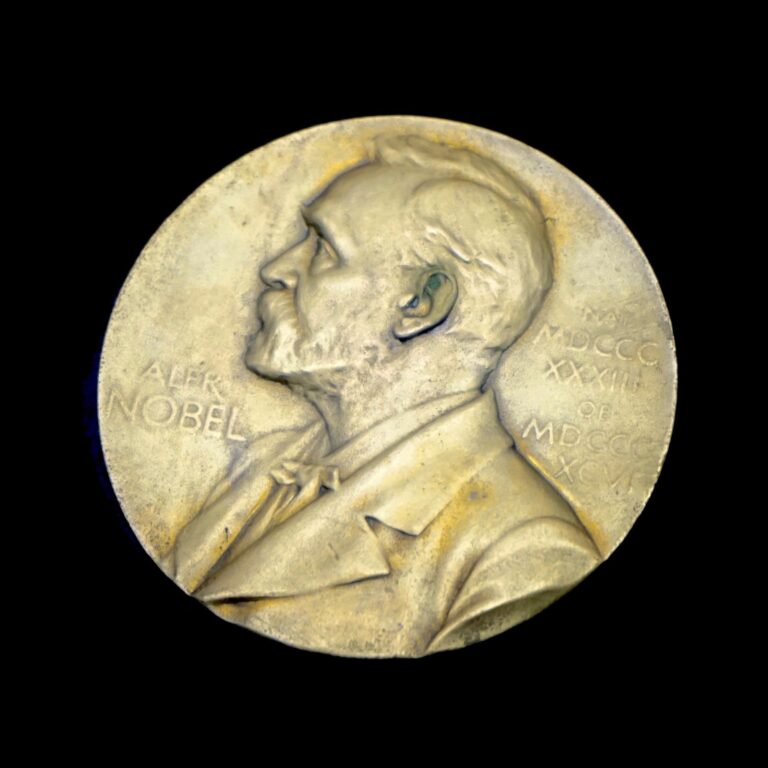
A Nobel Prize Refused for the Sake of Justice

1: Pierre Curie Once Refused the Nobel Prize Without Marie’s Name

In 1903, a significant event occurred in the history of science. Pierre Curie was nominated for the Nobel Prize in Physics. However, there was a problem. His wife, Marie Curie, was initially excluded.

Pierre refused to accept the prize unless Marie received credit too.

He believed that their discovery was the result of both their hard work. He knew that Marie had led the research and worked just as hard as he did, if not more. Because of Pierre’s strong stand, the Nobel Committee changed their decision. In the end, both Pierre and Marie Curie received the 1903 Nobel Prize in Physics, together with Henri Becquerel.

This moment was not only about science. It was about fairness, respect, and recognizing women’s contributions in a time when women were often ignored.

2: Who are Pierre and Marie Curie?

Marie Curie was born in Poland in 1867. She later moved to Paris to study at the Sorbonne University. She was passionate about science and focused on studying radioactivity, a term she actually created. She discovered two new elements: polonium (named after her homeland, Poland) and radium.

Pierre Curie, born in France in 1859, was also a brilliant physicist. Before meeting Marie, he had already made important discoveries in magnetism and crystals. When they met, they shared the same love for science. They got married in 1895 and became research partners for life.

Together, they worked in a small, simple laboratory under very difficult conditions. Despite limited money and equipment, they made groundbreaking discoveries that changed science and medicine forever.

After Pierre’s tragic death in 1906, Marie continued their work. In 1911, she won another Nobel Prize in Chemistry, becoming the first person ever to win two Nobel Prizes.

3: What We Can Learn About Women in Science?

  • Women deserve equal recognition for their work in science.

  • Talent and intelligence are not defined by gender.

  • Many women in history were overlooked: we must not repeat that mistake.

  • True progress in science happens when everyone is given a fair chance.

  • Supporting women in STEM is not just kindness: it is justice.

Pierre’s decision reminds us that equality in science is not automatic. It requires courage, fairness, and people who are willing to speak up.

Source: [1], [2], [3]

Plot Twist to Podium: Alysa Liu

As you know, the 2026 Olympics has officially come to an end! There were so many memorable performances and moments that no one is going to forget anytime soon. Today, I want to tell you about a person who has been become all the rage on social media: Alysa Liu.

Alysa Liu is a 20 year old American figure skater, and is now the 2026 Olympic Champion for women’s figure skating. However, she didn’t just become an insane figure skater now, because when she was just 13 years old the youngest US national champion. She was the first woman to successfully complete a quadruple jump and triple axel in a competition. 

After this win (and many more), people expected her to compete more and win more. What she did next came as the ultimate shock. 

She retired at 16 years of age. 

She explained how even though she loved figure skating, she hated the expectations and pressure that came along with it, so she decided to quit. She experienced life for the first time as a normal student as she went to college and behaved as she wished. 

Unsurprisingly, she returned to the sport. How could someone stay away from something they loved so much? Fast-forward to 2024 and she’s back on the ice! And she didn’t just return, she actually dominated. 

During the 2026 Olympics, people weren’t impressed that she took a break and came back and won, nor that she landed some crazy moves, but just the way she skated was what made everyone’s jaws drop. As she was skating, you couldn’t tell that this was a competition, because it looked more like a performance. She looked calm and excited and just so at-ease as she freely skated for everyone across the world to see. 

However the reason she looked like she was having such a good time being back on the ice was that now she did things her own way. She picked out her costume, songs, and moves and made sure that she was happy and comfortable doing it all. Because she was doing what made her happy in her own way, she was able to truly showcase her true potential and wow the audience. People online have not just been going crazy for her personality, crazy hair and lip piercing, but for her story. Her story shows 2 valuable lessons that everyone should keep in mind. The first of them being that you should not only do what you love, but do it in a way that satisfies you. The second is that it’s ok to take a break and find yourself, because in the end you can come back stronger than ever before. 

So even though the Olympics are finished, Alysa Liu is just getting started once again! 

Sources: 1 


What I Wish I Knew Before Applying to University in Canada

1

Applying to university in Canada sounded simple at first. Fill out some forms, upload transcripts, wait for decisions. Easy, right?

Not exactly.

Looking back, there are so many things I wish someone had told me before I started the application process. If you’re about to apply (or even just thinking about it!) here’s what I wish I knew.


1. It’s More Stressful Than You Expect

People sitting on chair with brown wooden table photo – Free Office Image on Unsplash
Image Taken by Luis Villasmil on Unsplash

No one really talks about how emotionally draining application season can be. You’re constantly checking portals, refreshing emails, comparing averages, and wondering if you’ve done enough.

It’s not just paperwork… it’s your future. That makes everything feel heavier.

I wish I had known that feeling overwhelmed is normal. It doesn’t mean you’re unprepared. It just means you care.


2. Your Average Isn’t Your Entire Identity

When you’re applying in Canada, especially to competitive programs like business, health sciences, or law pathways, everything feels numbers-based.

You start calculating:

  • “If I get an 88 in this class…”

  • “What if my midterm drops?”

  • “Am I competitive enough?”

I wish I had understood earlier that your grades matter, but they don’t define your intelligence, work ethic, or potential. Universities are evaluating you academically, not measuring your worth as a person.

That distinction is important.


3. Deadlines Sneak Up Fast

Between OUAC (for Ontario schools), Alberta Apply, scholarships, transcript submissions,

A calendar with red push buttons pinned to it photo – Free Meeting Image on Unsplash
Image Taken by
Towfiqu barbhuiya on Unsplash

and program-specific requirements, there are more deadlines than you think.

I wish I had created a master document earlier with:

  • Application deadlines

  • Scholarship deadlines

  • Transcript requirements

  • Supplementary application details

Organization reduces stress more than motivation ever will.


4. Scholarships Require Effort (But They’re Worth It)

I used to assume scholarships were mostly for “perfect” students.

They’re not.

Many scholarships look for leadership, involvement, resilience, and community impact, not just a 95% average. But you do have to apply. They don’t just automatically appear.

I wish I had started researching entrance awards earlier instead of assuming I wouldn’t qualify.


5. You Don’t Need Your Entire Life Figured Out

This might be the biggest one.

At 17 or 18, it feels like choosing a program is choosing your entire future. But programs change. Majors change. People transfer. Interests evolve. University is a direction, not a life sentence.

I wish I had given myself permission to see it as a starting point instead of a final decision.


6. Comparison Will Steal Your Peace

Someone will get accepted before you.
Someone will have a higher average.
Someone will seem more “put together.”

If you constantly measure yourself against everyone else, you will never feel secure, even if you get into your top choice.

Focus on your path. It’s the only one you can control.


7. It’s Okay to Feel Both Excited and Terrified

No one prepares you for the weird mix of emotions:

  • Pride

  • Anxiety

  • Doubt

  • Hope

You can be grateful for the opportunity and still scared. Those feelings can coexist.

That doesn’t make you weak. It makes you human.


Final Thoughts

Man delivering speech on graduation photo – Free Uni Image on Unsplash
Image Taken by
Patricia Beatrix Villanueva on
Unsplash

If I could tell my pre-application self one thing, it would be this:

You are more than a portal status. More than a conditional offer. More than a percentage.

The university application process feels like everything in the moment, but it’s just one chapter of a much bigger story.

And you’re going to be okay.