Home Blog Page 62

Career Day! – Awesome opportunity for Calgary students

Hello! I brought some exciting news for you!
If you want to investigate various careers or learn more about specific careers, I have a fantastic opportunity for you!

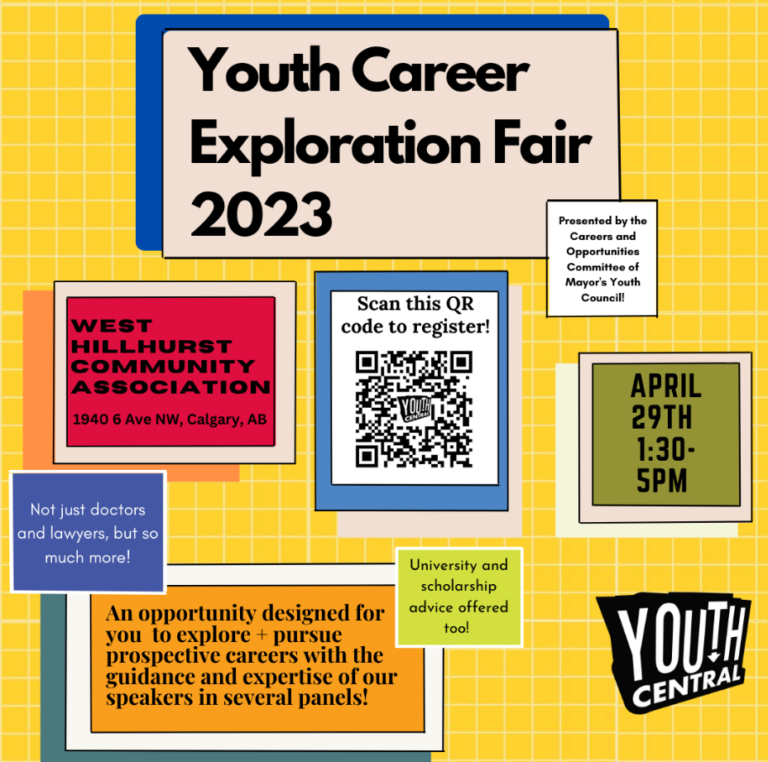
“Career Day” represented by the Calgary Mayor’s Youth Council, Careers and Opportunities subcommittee!

As a part of the MYC Careers and Ppportunities subcommittee, I am more than excited to introduce this opportunity.

This event will be held on Saturday, April 29, 1:30 PM – 5:00 PM at Westhillhurst Community Center (1940 6 Ave NW, Calgary, AB T2N 0W3), with various panels, including medicine, art/humanities, STEM, and miscellaneous. Exciting careers such as doctors, engineers, entrepreneurs and more!

If you are a youth in Calgary and want to get informed about career paths and discover what you are passionate about, please complete this form to register: https://docs.google.com/forms/d/e/1FAIpQLScubQFoZFQT-z47I9lbA678f0n7IbMcsajiHWclinU2HE2u8g/viewform

We hope to see you there!


Quantum Electrodynamics; A In-Depth Overview

Introduction

Should we describe our universe in classical terms or quantum terms? This question has sparked a lot of debate and the correct answer varies drastically depending on who you ask. But what if we could find the perfect middle? A way to describe our world with a mix of classical and quantum physics. This is called Quantum Field Theory (QFT). QFT is the blanket term used to describe the theories that combine elements of quantum mechanics with those of relativity and that aim to describe the interactions and behaviors of subatomic particles and force fields. 

Arguably one of the most precise and successful QFTs is quantum electrodynamics (QED). QED was the first QFT developed and its aim is to mathematically describe interactions of charged particles with themselves, with the electromagnetic field and light with matter. The theory’s foundation is the idea that there is not a continuous field but instead charged particles interact by the exchange of virtual photons. These photons are called virtual because they cannot be seen or detected as that would violate conservation of energy and momentum. The exchange of photons is a “force”. This idea of virtual particles has also been carried over into other theories that deal with fundamental interactions of matter. 

QED has a rich history, effective and simple mathematics, and a plethora of useful applications. 

History

In 1925 Paul .A.M. Dirac, an English physicist, read a paper by Werner Heisenberg that initiated the change from the Bohr atomic model to a new idea, quantum mechanics. This led him into his fascination with the quantum world and in 1926 Dirac’s Ph.D. thesis was all about his additions and developments on Heisenberg’s theory. In a few years he published a groundbreaking equation, one that would do something that had never been done before. He discovered a wave equation that incorporated both special relativity and quantum mechanics. We now call this equation the Dirac equation and it helps us study the motion and spin of electrons. This event kicked off the discovery of QED.

Along with helping in the creation of QED, in the 1940’s and ‘50s Feynman created a tool that has helped us visually explain particle interactions. He created the Feynman Diagrams. In quantum electrodynamics it helps us to visualize and calculate interactions between electrons and photons. 

The Dirac equation was discovered in 1928 and in the late 1940’s three scientists, Richard Feynman, Julian Schwinger, and Tomonaga Shin’ichirō, independently built a quantum theory of electromagnetism with the help of his equation. There were some faults in Dirac’s equation so all of these scientists found different ways to look at the problem so that they could solve it. They were awarded a shared Nobel Prize.  

Mathematics

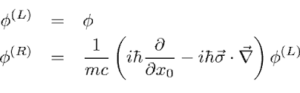
Figure 1


The Dirac equation (see Figure 1) laid the ground for QED. Its main purpose is to explain the spin of electrons. He said that spin emerged as a property of an electron, a property that is both a quantum particle and a relativistic one. His equation also predicted the positron, what Dirac called the “anti-electron”. If an electron meets a positron the two positive and negative charges cancel, the pair annihilates, and the mass turns into radiation, an exact representation of Einstein’s E = mc2. The equation has four wave functions. 

Julian Schwinger was a participant of a meeting where data was presented that contradicted Dirac’s equation. From there Schwinger made a calculation that incorporated notions of mass and charge re-normalization, a calculation that connected both theory and experimental data. This breakthrough was vital. Tomonaga Shin’ichirō and Richard Feynman also discovered and carried out calculations similar to this and in 1965 all three of them shared a Nobel Prize.

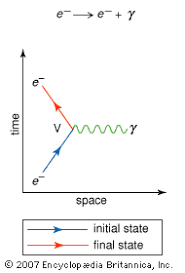
A Feynman diagram has one axis that represents space, the horizontal one, and the other axis, this one being vertical, represents time. Straight lines depict fermions–particles with half-integer values of spin, like electrons–and wavy lines represent bosons–particles that have integer values of spin, like photons. An interaction of particles is shown as a vertex of three lines. For example, the path of a basic electron as two straight lines intersected with a wavy line where the electron emits a photon (see Figure 2).

Figure 2

Applications

The most notable use of quantum electrodynamics is to explain the world around us. It helps us understand how light and matter interact, and how electrically charged particles interact with each other. It is a widely taught subject as the joining of classical and quantum is our future and many other quantum field theories have been modeled after QED. 

If we dissect the elements of QED then each of them have various other uses like, for example, the Dirac equation also helps scientists predict the existence of antiparticles. Like mentioned before the Feynman diagrams help explain all particle interactions and along with that give physicists a way to make very precise calculations on the probability of any process. 

Conclusion

Quantum electrodynamics is an amazing tool to help us look at and understand the world in a new way. It shows us that electrons and positrons–or any other charged particle–interact by emitting and absorbing photons. It is one of the most successful, simple and accurate quantum field theory so far devised. It is clear that quantum electrodynamics is a vital part of quantum physics. 


Featured Image

How to Expand Your Writing Vocabulary

“All of us possess a reading vocabulary as big as a lake but draw from a writing vocabulary as small as a pond.”

– Roy Peter Clark

Have you ever caught yourself using the same words over and over again in a single piece of text? Or perhaps you’ve been wanting to write and speak more eloquently, but don’t know where to start? Well fear not, for I have some vocabulary building tips that may just help you out!

Save New Words

Over the years, as we’ve all grown closer to the language, there have probably been less and less instances of coming across a word which you don’t know. However, in cases where that does happen, it can help to save the word. A quick search online or in a dictionary will give you the context you need when reading, and if it seems like a word that you’d use in your own writing or speech, take a screenshot or write down the definition. It really can come in handy when you least expect it!

Create a Vocabulary Journal

When I first heard of a vocabulary journal, I didn’t quite know what to expect of it. However, I’ve found that it has helped me quite a lot. Somewhat drawing on the previous point, you may eventually gather a massive pool of words that you don’t really know what to do with. Maybe you’ve gotten into the habit of using a handful of words, but have forgotten most. That’s completely fine — in fact, it would be absurd to expect you to immediately memorize every single new word. That’s where a vocabulary journal can come in handy.

A vocabulary journal can really be customized in any way to suit each individual. Personally, I don’t only stick with words that I do not know, but also use words that I do know, but would like to further ingrain into my daily vocabulary. Take, for example, the word ‘archaic.’ By the time I had added it to my journal, I had a vague idea of its appropriate use and meaning. To me, it is a fascinating word that can be used in awe striking and chilling ways. 

An entry to my vocabulary journal essentially looks like this:

Archaic – adj.
Very old or old-fashioned, no longer in everyday use.
Example sentence: “A term with a rather archaic ring to it” – Oxford Languages
Practice sentence: “Her eyes swept over the grand buildings, dusty and archaic in a way that should not be tainted by modern-day greed. They looked just as they had in her memories, and her chest clenched with something painful as she surveyed the landscape.”

Essentially, I write down the word and definition, then find a use of it, usually from a dictionary. Finally, I write one or two sentences using the word, and then occasionally come back to it to really familiarize myself with the word.

Make a List of Synonyms

Often, I find myself unintentionally using the same word over and over again in my writing. More specifically, I tend to use the term “as though” and similar iterations of it multiple times in one paragraph alone. In a situation like this, I’ve found that a list of synonyms helps. Ever since I learned how to use one, the thesaurus has been my best friend, more so than even a dictionary.

However, to prevent yourself from having to pause in your writing to look up synonyms for a word online, it may just help to put together a list. The first thing you should do is to go through your writing, and identify those words and terms that you seem to use repetitively. Take my example of “as though.” My synonym list for that term consists of words like similarly, akin to, evidently, such as, and namely. These lists have sped up my writing speed by taking away the time when I have had to stop to search up synonyms.

Download Vocab Apps

The last piece of advice that I have for expanding your writing vocabulary is to download a word of the day app, or even one with flashcards so that you can practice the vocabulary that you already know. In a way, this trick is similar to learning a new language.

A word of the day app can introduce you to new words and meanings within a relevant context, and you can take screenshots to use later in a vocabulary journal, or put into flashcards and sentences.

Enjoy the Writing Process

Though it is a sentiment that has become somewhat of a cliché, it is still very true. Expanding your vocabulary and practicing with sentences, entries, and other methods are all things that help you to further enjoy and immerse yourself into your writing. Never forget that practice is the best way to improve, and through understanding the context that a word belongs in, and the time and place to use each synonym, you can become better spoken, better received, and considered more cogent.


Featured image

Let’s self-appreciate today!

Self-appreciation is an essential aspect of our lives that often goes overlooked. It is the act of recognizing our worth and value as individuals, regardless of external validation or accomplishments. While self-appreciation may seem trivial, it can have a significant impact on our mental and emotional well-being. In this blog, we will explore the importance of self-appreciation and offer some tips on how to practice it, specifically for teenagers.

As teenagers, it is common to feel like we don’t measure up to the expectations set by society, our parents, or even ourselves. We may struggle with low self-esteem, self-doubt, and a negative self-image. However, it is important to remember that our worth and value are not determined by external factors, such as our grades, social status, or physical appearance. We are all inherently valuable and deserving of love and respect, regardless of our achievements or circumstances.

One of the first steps towards self-appreciation is to practice self-compassion. This means treating ourselves with the same kindness, understanding, and empathy that we would offer to a friend who is struggling. When we make mistakes or fall short of our goals, it is important to remind ourselves that we are only human and that it is okay to make mistakes. We can offer ourselves words of encouragement, such as “I am doing my best,” or “I am proud of myself for trying.”

Another way to practice self-appreciation is to focus on our strengths and accomplishments. While it is easy to dwell on our shortcomings, it is important to celebrate our successes, no matter how small they may seem. This can include academic achievements, personal goals, or even acts of kindness towards others. By acknowledging and celebrating our accomplishments, we can boost our self-confidence and reinforce a positive self-image.

It is also important to practice self-care as a form of self-appreciation. This includes taking care of our physical, emotional, and mental well-being. This can involve getting enough sleep, eating a healthy diet, exercising regularly, and engaging in activities that bring us joy and relaxation. When we prioritize our own needs and well-being, we send a message to ourselves that we are deserving of love and care.

One of the most challenging aspects of self-appreciation is learning to accept ourselves as we are, flaws and all. It can be tempting to compare ourselves to others or strive for an unattainable standard of perfection. However, it is important to remember that everyone has their own unique strengths and weaknesses. By accepting ourselves as we are, we can cultivate a sense of self-love and self-respect.

Another way to practice self-appreciation is to surround ourselves with positive influences. This includes spending time with friends and family who support and encourage us, seeking out mentors or role models who inspire us, and consuming media that promotes self-love and body positivity. By surrounding ourselves with positivity, we can counteract the negative messages and societal pressures that can erode our sense of self-worth.

Finally, it is important to remember that self-appreciation is an ongoing practice. It is not something that can be achieved overnight, but rather a mindset that we must cultivate and reinforce over time. It is important to be patient and compassionate with ourselves as we work towards a healthier and more positive self-image.

In conclusion, self-appreciation is a vital aspect of our mental and emotional well-being. As teenagers, it can be especially challenging to cultivate a positive self-image in the face of societal pressures and personal insecurities. However, by practicing self-compassion, celebrating our strengths and accomplishments, prioritizing self-care, accepting ourselves as we are, surrounding ourselves with positivity, and being patient with ourselves, we can begin to cultivate a sense of self-love and self-respect.

featured image

Image 1

Welcome to Calgary, Matt Coronato!

On Sunday, March 26th, 2023, Matthew Coronato signed a 3-year entry-level contract with the Calgary Flames. Coronato, who flew to join the team on Monday, was drafted 13th overall by the Flames in the 2021 NHL Draft.

In his draft year, Coronato scored 48 goals in 51 games for the Chicago Steel in the USHL. After being drafted, he spent two seasons at Harvard University – tallying 72 points in 68 games over that span. Coronato also represented Team USA at the 2022 World Juniors, putting up seven points in five games.

Matt Coronato carries the puck up the ice for Harvard University.

Matt Coronato, a right-handed shot, has played at both center and right wing throughout his career – and he hasn’t failed to produce at either position. Given his position, handedness, and nature as a pure goal scorer, Coronato resembles the likes of Tyler Toffoli and Elias Lindholm, the latter of whom has also served as both a center and right wing during his time in Calgary. During an interview that followed Coronato’s signing, Calgary Flames Head Coach Darryl Sutter compared his play style to Andrew Mangiapane, another young winger with a knack to find the back of the net. 

Defenseman Rasmus Andersson (left) at practice with Matt Coronato (right).

In past years, the Flames have been short of goal-scoring talent, especially on the right side. While players like Tyler Toffoli have recently stepped up in that regard, Coronato’s value to the Flames shouldn’t be underestimated. In addition to his similarities in play style to the players mentioned above, Coronato’s path towards the NHL closely resembles that of the greatest star in recent Calgary Flames history – Johnny Gaudreau.

Both Coronato and Gaudreau are regarded as smaller players, at 5’10” and 5’9”, respectively. However, this hasn’t hindered their ability to produce in the slightest, and they have each had very successful college careers in the NCAA. 

Johnny Gaudreau won the Hobey Baker Award in 2014 as the NCAA’s best player. This year, Coronato has been nominated for the same honour.

Johnny Gaudreau after winning the 2014 Hobey Baker Memorial Award as the nation’s top college hockey player.

In the 2011 NHL Entry Draft, Johnny Gaudreau was drafted with the 13th pick in the fourth round. Ten years later, Coronato was drafted with the 13th pick in the first round. Safe to say there’s plenty of potential upside when it comes to the 20-year-old product of Harvard.

Coronato is the Calgary Flames’ highest draft pick since Matthew Tkachuk went 6th overall in 2016. And the last time the Flames drafted a “Matthew” who wore number 19, it went pretty well. Until 2022 free agency, that is. Like Gaudreau and Tkachuk, Coronato is a U.S.-born player – and fans can only hope that he won’t head south to play closer to home down the road, like the Flames stars that came before him. For now, Coronato seems pretty excited to get started in front of the C of Red.

Matt Coronato skating in his very first practice as a Calgary Flame.

Coronato will initially be wearing number 39 as he begins his NHL career with the Calgary Flames, rather than his usual number 19. Similarly, Gaudreau started out wearing number 53 before switching to his iconic number 13.

Gaudreau joined the Flames a few years after being drafted, and made his NHL debut in April of 2014 after his season ended at Boston College. Coronato’s season ended at Harvard a couple days ago, and he could potentially make his NHL debut this upcoming April.

While many NHLers choose to go pro right after being drafted – either making their NHL squad or being assigned to its minor league affiliate – both Gaudreau and Coronato chose to stay in school for a few years. Gaudreau earned a communications degree after graduating from Boston College, while Coronato has been studying psychology at Harvard.

According to General Manager Brad Treliving, the Flames are planning to take things slow, in order to ease Matt Coronato into his role in the National Hockey League. It’s easy to get caught up in comparisons between past stars and future prospects – I’ve been a victim to this very temptation – but it is equally as important to acknowledge that Coronato’s development will be a steady journey that takes time. However, one can certainly dream – and in the meantime, all Flames fans can do is support Coronato throughout the process, as the Flames gear up for a late-season push towards the Stanley Cup Playoffs.

Image Source 1/2/3/4

Featured Image

A Flashback Into Time: The Relationship Between Scents and Memories

The sun is beginning to peak from the horizon, filling the adamant blue sky with its orange hue. Around, morning dew leaves its mark on leaves, and the petrichor emanates from the grass, a reminder that a new season of life is yet to commence. For a moment, you are transfixed back into time, lost in the memories of your childhood. Drifting between the comfort and nostalgia from the lingering scent of the first rain and the softness of the grass, you find yourself amidst a distant memory. Transfixed, you lose sight of the present moment as you fall into a pleasant flashback and one that you may never experience again. 

You may have gone through a moment such as this many times, as scents have the ability to suddenly trigger vivid memories in our brains. Moreover, our brains can associate life experiences with certain odours. These scents transport one back into time, bringing along with it a reflection of the moments that established an individual’s existence in the world.

Protuesian Moment

… I carried to my lips a spoonful of the tea in which I had let soften a bit of madeleine. But at the very instant when the mouthful of tea mixed with cake crumbs touched my palate, I quivered, attentive to the extraordinary thing that was happening inside me.

-Marcel Proust

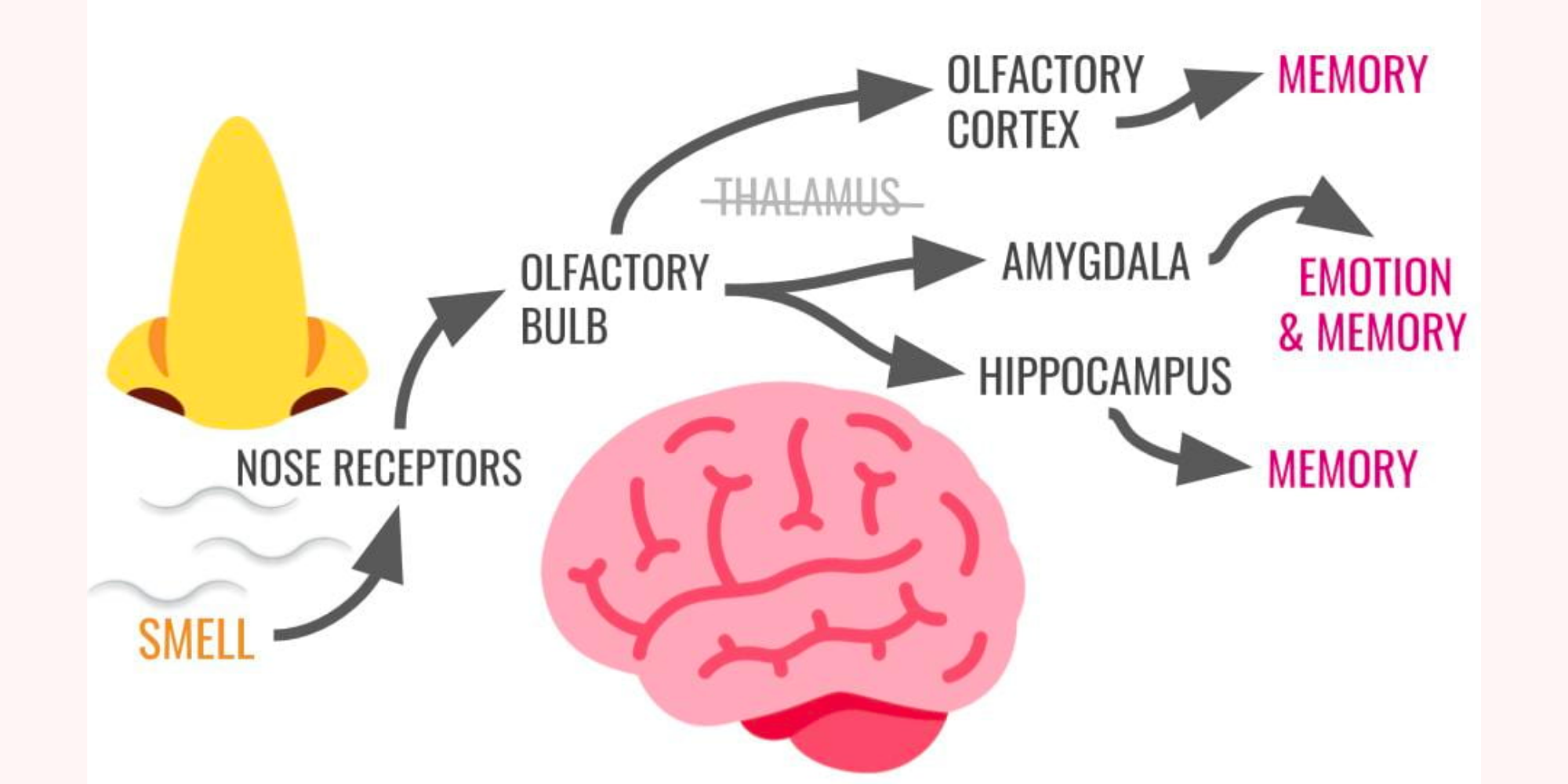
This interesting phenomenon has been categorized in literature as the Protuesian Moment, which comes from the excerpt above found in Marcel Proust’s “À la recherche du temps perdu.” It is used to describe a sensory experience that triggers a rush of memories that seem to be long forgotten. However, as surprising as this may seem, smell and memory are closely related to the brain’s anatomy, which makes this entirely plausible. More specifically, scents are up taken by the brain’s olfactory bulb. The olfactory bulb is a structure at the front of the brain that sends out information to the body’s central command for processing. Humans have around 400 types of different olfactory receipts, and our nervous systems categorise inputs from those receptors. This justifies the idea of why certain smells can only correlate to specific recollections that are otherwise forgotten in your daily life. Furthermore, odours also go to the limbic system, which includes the amygdala and hippocampus, which contribute to emotion and memory.

Why Do We Link Scent With Memories? – Olivia's Haven

Scents and Brain Function

Flavours are another factor that an individual may associate with flashbacks into the past. On the contrary, those flavours are made tangible to the brain through smell, or rather one’s nose. When food is consumed, its particles reach the nasal epithelium. Thus, much of what your brain may process as “flavours” are actually aromas of certain ingredients in the food you are consuming. Additionally, our brains track the distinct smells we are subjected to in our daily lives. Sandeep Robert Dutta, a neuroscientist, and his team at Harvard Medical School have done a variety of tests that show the connection between smell and memory. His experiences suggest two main outcomes: 

  • Exposure to odours prompts smell-sensing cells to heighten the activity of genes that attenuated their responses to scents they were exposed to
  • Memories from smells are coded in the brain

In the first outcome, when neurons pick up a scent, their sensitivity to the second decreases in that present moment. As a result, individuals become unaware of that certain scent when they are in a specific environment. In the second outcome, researchers witnessed how the brains of mice would change the location of where specific odours are mapped in the cortex when exposed to different smells at the same time.

A Deeper Dive into the Olfactory Bulb

It can be concluded that the olfactory receptors play a vital role in associating our senses with the brain. However, researchers in 2017 discovered that memories may be saved in the olfactory bulb itself, which is the piriform cortex. The piriform cortex connects to other sensory response regions in the brain. More specifically, this structure is called the orbitofrontal cortex, and its function is to make deductions about sensory inputs. Christina Strauch and Denise Manahan-Vaughan from Ruhr University Bochum used electrical impulses to stimulate this region, which consequently led to memory changes in the piriform cortex. The takeaway from this is that the piriform cortex can act as a long-term storage for memories, but it needs instruction from the orbitofrontal cortex. The orbitofrontal cortex indicates to the piriform cortex which memories need to be stored long-term.

Unfortunate Duality

Up until this point, memories triggered by scents were stated in a positive context. However, for some people, aromas can lead to past negative recollections or PTSD. War veterans are susceptible to this as fragrances of food can remind them of traumatic war zones. Some researchers suggest that other scents, such as coffee grounds or vanilla, can be used to counteract this emotional response. But, it should be noticed that this process would be subjective to each person. In recent research projects, scientists have also attempted to use the power of scent to aid people in recalling information. Advances in research studies such as this can lead to astounding new revelations in how smells can impact one’s test performances and memory processing abilities. More specifically, can associating scents with patterns or other images cause people to remember them more distinctly when compared to other traditional memorising techniques?

Sources [1]/[2]/[3]

Image [1]

Featured image [1]

Coming To Terms With My Koreanness

0

I first started to resent my Koreanness when I was six years old.

It wasn’t some kind of falling out within my family, or the revelation of something huge and controversial. In fact, it happened during the lunch hour at school, as many things tend to happen. I was surrounded by my fellow six-year-old classmates, just as excited as they were, if not more, for the thirty minute break. You see, that day my mother had prepared my most favourite food ever — jajangmyeon. A very delicious noodle dish with black bean sauce, often topped with pork. It was very popular in Korea and many other parts of Asia, yet you’d be hard pressed to find anyone who knew the dish in Canada in the early 2010s. However, there was no way for little-me to know that, nor would I have cared.

So, beyond excited, I retrieved my lunch kit from the depths of my backpack, opened up my Tupperware container, and—

Ewwwww. What is that?” a girl to my right scrunched up her face and plugged her nose, pointing to my food with her free hand. “That looks disgusting.”

Shocked, I stumbled to defend my favourite dish, but before I could get a single word in, another girl butted in.

“Yeah, ewww. They look like worms! Are you really going to eat that?”

“Yes,” I said earnestly, pushing the dish towards the girls, convinced that if they at least tried it, they’d love it. “It’s really good, I promise. Not worms.”

But instead of the reaction I was hoping to get, the girls began to shriek.

“Ew, gross! Get that away from me! It smells disgusting! Eugh!” they said, scrambling away from me, and drawing the attention of everyone in our vicinity, including one Korean girl. The moment I saw her, I stood up, calling out for her.

“Hey,” I desperately drew her attention, switching to speaking Korean amidst my hurt and confusion. “Hey, you know this, right? You know jajangmyeon, right? Please tell them it’s not gross, please stop them. You understand me, right?”

But instead of responding to my Korean, like I knew she could because my mother knew her mother, she just backed away. She turned to her friends, and in English, proceeded to berate me for speaking Korean and pretend that she didn’t understand. She validated the girls who had made fun of my jajangmyeon, saying that she didn’t know what it was, but it sure did look disgusting. 

Back then, I didn’t cry. I didn’t yell, or try to defend myself anymore. I didn’t hate that Korean girl for what she did, and nine years later, I still don’t blame her. I now understand why she said those things, and I understand that she was already going through what I would soon go through. But to six year old me, none of it made sense. I wasn’t mad, because of the way they made it seem like I was in the wrong. No, I was worse than mad. I was sad, and scared, and confused, and felt utterly, completely alone.

That day marked the first time that I didn’t eat my jajangmyeon. I have a vague memory of coming home that day and unpacking my bag. My mother, who couldn’t understand why I did not eat my favourite meal, became angry at me for not eating anything. I, not wanting to tell her what had happened, let her believe that I had just had too many snacks to be hungry.

Eventually, I must have repressed or forgotten about that memory. I would not mull over it, or try to understand what had happened until many, many years later, by which time there would have been no point in confronting my classmates about what they had said to me. However, even when I had forgotten it, the effects of that day continued to affect me in many different aspects of my life. By age eight, I had lost nearly a third of my Korean skills due to an insistence to speak only English and Spanish, languages that I regularly used in school. By age ten, I became overwhelmingly proud of my Canadian identity, proudly posting a Canadian flag on my wall and bellowing the Canadian anthem at any chance I got. Perhaps it was a coping mechanism, or perhaps it was my way of rebelling against my Korean mother. All I know is that I would beg my mother to pack me “Canadian” lunches and refuse to listen to Korean music. 

What must have devastated my mother the most occurred in late-2018, just before I turned 11. She announced to me that, come February 2019, we would be visiting South Korea. My first reaction, much to her dismay, was an open reluctance and annoyance. It was only made worse when I learned that I would be attending school while in Korea. I did not understand why I had to go to school, nor did I understand why we had to visit again, despite having visited multiple times throughout my life. I was convinced that it would be the worst experience of my life. And oh, how utterly wrong I was.

By the time we left Canada in 2019, I had already warmed up to the idea of going to Korea, as well as toned down the flag-waving and anthem-singing that I had had going on the past year. Upon landing in Incheon Airport, near Seoul, I enthusiastically greeted my grandmother, who had driven out to pick us up. Although she didn’t show it, I’m sure my mother was relieved that I wasn’t being petulant and rude.

The first month in Korea was to re-familiarize ourselves with the country after not having been there for a couple of years. We explored the city, made some friends among the neighbourhood children, and drove out to Lotte World and a couple close cities. By the second month, my mother had managed to enroll me into an elementary school a few neighbourhoods down, and I learned how to take the bus. Luckily, all of my new classmates were amazing and kind and very welcoming. It didn’t hurt that they were endlessly curious about Canada and my ability to speak both English and Spanish. I made many new friends, and my Korean began to improve in strides. I helped out during English class, and experienced a whole different way of learning Phys Ed. Ironically, I loved lunch time and couldn’t imagine not eating Korean food every single day. In fact, being in Korea helped improve my rocky relationship with food, although that is a whole other story.

Without me even realizing it, my visit to Korea began to chip away at the unconscious bias and anger that I had harboured against my Koreanness. I was having fun, speaking in Korean, learning in Korean, singing in Korean, and blissfully surrounded by Korean culture and traditions. However, that wasn’t the end of my journey to accepting my Koreanness. In fact, it was only the beginning. 

Years of hurt and bias did not disappear that easily, especially not when I wasn’t even aware that I was hurting and biased. When I returned to Canada later that year, I went right back to speaking English and having my mother pack me “Canadian” lunches. The only minor differences were that I enjoyed bringing Korean food to school sometimes, and delighted in my friends’ fascination with my chopsticks. I did not know it then, because I wasn’t yet online or on social media, but by the late 2010s, the Western world had warmed up considerably to the idea of Korean culture. Through its cuisine, music, movies, and TV shows, South Korea had begun to take the world by storm, giving it no choice but to pay attention to its remarkable beauty and people. In fact, it was exactly that that pulled me through to the most important stretch of my journey.

The events of 2020 are fresh in all of our minds. The sudden, chaotic hold that Covid-19 had on our world, the control that slipped from between our fingertips. The protests, controversies, and tragedies that took place, and the devastating events that happened one after the other. Amidst all of that was us, the children and teenagers who were robbed of some of the most fun, precious years of our lives. It wasn’t easy on any of us, but the world’s children experienced the pandemic through very, very different eyes than the adults.

To ignore everything that was happening, many of us found outlets and new hobbies to take up our time. For me, that outlet served as not only an outlet, but a huge source of comfort, happiness, and connection to my Koreanness. The South Korean band that had previously taken the world by storm: BTS.

BTS is a group made up of seven members, whose stage names are RM, Jin, Suga, J-hope, Jimin, V, and Jungkook. They debuted in June of 2013, and at the time of writing this, is nearing their 10-year anniversary. In the summer of 2020, when I was first introduced to them, they had just celebrated their seventh anniversary, which was supposed to be huge, as seven is a very important number to them. However, because of the pandemic, all of their plans and their entire world tour had to be postponed, until eventually, cancelled. It was rather hard on them, and they didn’t attempt to hide that. They openly talked about their concerns, confusion, and struggles while coming up with things to do in their spare time. 

But most relevant to what we’re talking about today is how much BTS has acted as a bridge between me and my Koreanness. Since 2020, my mother hasn’t been in my life as much as she used to, which has led me to feel very detached from my Korean side. I’ve lost a lot of the language, and begun to feel like I’m just not Korean enough to call myself Korean. That is not helped at all by the fact that I take after my father in that I have a very brown-skinned, Filipino complexion. However, BTS’ presence in the media that I consume has really helped to ensure that I remain proud of my Koreanness.

The fact that BTS sing and speak in Korean while doing things like attending the Grammys, speaking at the United Nations multiple times, topping the Billboard charts, and many other activities in the west is absolutely amazing. They have amassed a fanbase of tens of millions of people from all over the world, who love and respect them, regardless of their Koreanness. Despite receiving hostility and being faced with racism and xenophobia more than once since their American TV debut in 2017, they have stayed true to their roots and their culture, and have introduced many people to the Korean culture and language. All of these factors, and more, have instilled a sense of pride in me regarding my Koreanness. The three years that I have spent as an Army, or a BTS fan, have benefited and helped me to accept and love me for who I am and where I came from. Finally, to top it off, I have had a huge amount of growth in my ability to read and write in Korean, and even my vocabulary has grown to include many more words.

As I grow older, I know that my relationship with my identity and Koreanness will not stay the same. Identity is not something that remains stagnant, because as you grow and age, you experience and learn new things that change your perspective. But if there’s one thing that I’m certain of, it is that I will forever have pride in the fact that I am Korean. This struggle that I have with my ethnicity is a very common one among children of immigrants or second and third generation Canadians. I only hope that each and every one of them — of us — will one day be able to connect and reconnect to our roots and cultures, and learn to love and appreciate who we are, and where we came from. Because if nothing else, it sure feels good to tell people that I am a Korean-Filipino who was born in Canada, and that I can speak multiple languages.


Special thanks to Mr. Joon Lee, whose February 2022 article led me to reflect upon my own journey with my Koreanness:

How BTS helped me bridge my Korean and American identities


Featured Image

15 Jokes to Make You Smile!

0

Sometimes days can be a bit tiring or heavy, but a funny joke always manages to bring a smile. That’s why I love telling jokes, and to make your day better, I spent my time gathering a plethora of jokes that I hope you enjoy.

  1. I sold my vacuum the other day.

All it was doing was collecting dust…

      2. Did you hear the story about the claustrophobic astronaut?

All he needed was just some space…

      3. Why did the M & M go to school?

To be a smartie…

      4. Why are skeletons so calm?

Because nothing gets under there nerves…

     5. Can February march?

But April may…

     6. Why are ghosts such bad liars?

Because they are so easy to see through…

     7. How do trees get online?

They just log in…

     8. Why is 6 scared of 7?

Because 7 eight (ate) 9…

     9. Why couldn’t the leopard play hide and seek?

Because he was spotted…

      10. What did a fish say when he swam into a wall?

Dam…

       11. Why do we tell actors to “break a leg”?

Because every play has a cast…

       12. What do you call a bagel that can fly?

A plain bagel…

       13. What do you call a bagel that can fly?

A plain bagel…

       14. What do you call a fake noodle?

An impasta…

       15. Why did 0 and 2 break up?

Because some 1 came between them…

Featured Image / Sources

Behind the Non-Profit Curtain: An Interview with Ros at Youth Central

With over 600 volunteer opportunities and 8 full-time programs, Youth Central has risen exponentially in its influence over Calgary’s youth since it was founded in 1992. Today, it is one of Calgary’s leaders in providing team-based volunteer opportunities for youth. By incorporating team building and reflection activities, Youth Central provides a unique experience for youth to not only volunteer, but to be active participants in learning about their communities and about societal issues. 

In the heart of downtown Calgary lies the Youth Central Office; the Kahanoff Center – a hub for many of the nonprofit organizations in Calgary. One busy Monday afternoon at the office overlooking the Calgary skyline, Ros Doi, program director at Youth Central, relays her experience working in the nonprofit industry. The following are excerpts from conversations with Ros, edited and paraphrased for clarity.

Ros posing with Lucy Choi, a long time volunteer

What was your upbringing like and how does it influence your work today?

So I grew up in a small town, like really small, called Spirit River in northern Alberta. Our town was so small that everyone kind of grew up knowing each other, which formed a really tight knit community. I also really enjoyed highschool, but because our town was so small, I never really had many volunteer or extracurricular opportunities. So, coming here for university and being able to offer these opportunities for youth has been especially rewarding.


What motivated you to work for Youth Central?

So originally I moved here for university. I went to school for business, hated it, switched to sociology with a minor in business which I found much more rewarding. I think generally what pulled me to it was that I enjoy people and working with people. So I took a summer job at a youth program and eventually ended up as a receptionist here at Youth Central, got a bunch of promotions and now I’m the program director. In my experience, I never had a lot of volunteer opportunities as I mentioned before, so getting to work with and mentor youth is my favourite part of the job and it’s something I love. The best part of my job is getting to work with youth afterschool and in the office, and it definitely beats sitting at a desk all day.


In a perfect society, do you think nonprofit organizations would exist?

That’s an interesting question, but I think it depends on the organization. Some services and programs like Calgary’s plan to end homelessness will likely never be fully realized under our current organization of society, and when the goals are bigger it can be hard to see an impact regularly, or the goal is too ambitious to be feasible. Organizations like Youth Central will always be around because their goal is to empower generations of youth and that’s something that doesn’t necessarily have an end date because its focus is on uplifting the community.


How does a capitalist framework benefit or inhibit your work in community aid?

I think one of the biggest challenges we face in this regard is the mindset that charities don’t need to pay their staff, some people who donate to charity don’t see the value in their funds going towards staff time and therefore don’t see community aid as valuable labour because you it’s mutual aid, which is against capitalist systems and the idea of ‘pulling yourself up by the bootstraps’. I think people also expect these problems to be able to solve themselves. Elements of overhead and mission support are often overlooked or  disrespected in regards to nonprofits because some people don’t value those items for charities. 


What sort of limits do societal stigmas place on charities that inhibit your work?

I think there’s a lot of stigma around who charities benefit as well, this includes the stigma around those who are unhoused, require mental health resources, indigenous peoples or marginalized groups that are perhaps overlooked by society. I think the biggest issue with that is that some people don’t think these groups are deserving of quality aid and resources, or even help at all, when in fact these circumstances are often caused by society itself.


The Five Stages of the Sun Burning Out

0

It wasn’t a bad way to die. Car smashed to the point of unrecognition by a big truck, an easy and simple death. From the amount of blood around him he must have lost a limb, but the blow to the head is what really killed him, fast and easy. He died before he even knew what was going on. That’s what the coroner’s report said at least. With the lack of a body a proper burial couldn’t be held but it didn’t matter, no one would have shown up. 

Honestly, he didn’t really care that he was dead. Everyone dies one day, it made life worth living. He was, however, worried for his wife. He had made sure that if he ever died young and alone, while his wife lived on, she would be able to live comfortably, the only burden perhaps the grief of his passing. His hard work paid off! Yes, she cried and grieved, almost tore herself apart when she found out he was dead, but she was still alive and well and that’s all he cared about. 

Then things started to go wrong. Late night pacing, locking herself into her room, talking to herself more and more frequently. He grew increasingly worried as each day passed. Too late he realized what she was planning to do. He watched his sun dim, slowly and painfully, and he could do nothing to stop it. 


He had heard that when a person was experiencing grief it came in five stages, denial, anger, bargaining, depression and acceptance. Denial came quickly. Not even a second after the police had come to her door telling her the horrible news was she yelling that they were lying and threatening them with a lawsuit if they didn’t leave right then and there. He knew it would be hard on her when he was gone but it still hurt to see her so unhinged. Even after she had calmed down and invited the policeman inside she fervently denied all they were telling her, instead rambling over them how he was coming straight home from work and how she should probably put the chicken in the oven and asking how they liked their tea. Her denial stage never left.

Next was anger, an emotion that he knew she was well acquainted with. She wasn’t sure who she was angry at, but the burning feeling still grew in her chest, growing hotter and harder to ignore with every sentence the policeman spoke. It came to him in a sudden realization that she wanted to kill that policeman. She wanted to tear him apart for speaking of his death with such nonchalance like half her existence wasn’t in the car with him when he crashed. She was ready to seize him by the throat and watch the life leave his eyes if it meant he would stop talking about all the details of his crash. The rage she was experiencing swallowed up his own heart but he fought back against it, he refused to be bitter about his death and was going to do everything in his power to make sure that his wife accepted it too. A sun never shares warmth without burning the ones who come too close but he was not going to let her burn. Still, this stage also failed to leave her. 

Bargaining. This stage developed differently, he noted. It festered silently in her skull, taking its time to plant the seeds of its revolt in her mind. She lived only in denial and anger for months all throughout his funeral and into the days after, refusing to believe he was really dead and threatening to gut anyone who said otherwise. Still, it didn’t take long for it all to come to a head. The habit started slowly, a night or two every week she’d disappear into their attic and not come out until it was morning. Then she started going up to the attic four or five nights a week until one day she went every night and never stopped. It was unclear to him what she did up there. His ghostly form was tied to the main and second floors so going to the attic was impossible, but from what he saw when she came down every morning–it was so wicked, so terrible, so repulsive he wouldn’t be able to explain the nausea he felt every time she came downstairs covered in blood and carvings she had etched into her skin with their own kitchen knife. She was bargaining with the Devil. He was sure of it. She would never hurt herself in such a way, never lock herself into a room for hours doing nothing but chanting and carving into her own flesh, everyday being ripped of her warmth and brightness and replaced with a person as hollow and cold as the moon. If only he could help her, if only he could make her stop. The bargaining stage persisted. 

Depression had no mercy on his lover. He was quite sure that the depression started long before but he only started documenting it when he lost hope that the bargaining stage would stop. She was sad in the usual way of course, crying often, eating less, losing contact with friends and family, but the hollow tiredness she carried around with her was subtler, woven into the way she climbed the stairs, painting her face when she carved, covering her like a blanket if she slept, danced in her eyes if she looked to long at their balcony on the top floor. Never in his life had he seen someone so empty, so void of life. He would be willing to carve himself raw if a smile graced her face just one last time, ready to starve a whole continent if she ate a full plate again, wanted to stand by the Devil and watch worlds burn if only in the name of her happiness. While he understood now why she locked herself into the attic every night he refused to let her be this tired because of her love for him. Yet still he still couldn’t figure out a way to help her and it was eating him up inside. Depression had no mercy on her or him.

Acceptance was a fluke. Acceptance being the last stage of grief was a goddamn lie. Revenge was the true last stage he decided. You’re torn apart from the reason you breathe and thrust back into the world the next day, expected to function as if your heart isn’t lying six feet under with the corpse of your beloved and you expect that to end in acceptance? Unfortunately, though it was heartbreaking on both sides, for him the roles were switched. He had to watch as the love of his life, his sun, was sacrificing her humanity so that he could live. 


She sat in the living room, a circle of unrecognizable writing the exact copies to the ones carved onto herself etched into the ground around her. A book splattered with her own blood lay in her lap. He tried in vain to get her attention, screaming, jumping up and down, even trying to pry the book from her hands though he knew he wouldn’t be able to. A crushing weight made home in his gut as she started the ritual. She was doing all this because of him. She was destroying herself just so he could come back to life. 

He couldn’t let her do this to herself. He wasn’t going to let do this to herself. He was going to stop her and then he was going to hunt down the reason his wife was in so much pain. Luckily his plan for vengeance wasn’t with a faceless target, he knew exactly who to blame for this. Himself. If he hadn’t gotten into that accident she would be standing beside him happy and sane. He was to blame for all his wife was suffering right now, the sleepless nights, dark magic and mostly the grief that had cut out her warmth. 

Acceptance might be a lie, a sorry attempt at acting like everything will turn out fine, just a word to cower behind and worship while your life falls apart around you from the anger and denial and depression and bargaining; but revenge? Revenge was sick and cruel and so, so, satisfying. It burned everything in its path making it the perfect tool for madmen, and lovers. Its greed knew no bounds but it was still graceful in the way it took more and more until you were nothing but the shadow of your dignity. He was going to get his revenge on the man that had torn apart his wife come hell or highwater. He wasn’t sure if his plan was really going to work but it had too, he had no other choice. 

He waited quietly in the corner of the room right by the window overlooking their garden. It might not be high enough but if he threw himself with enough force it would surely end him, he mused. 

The effect started small, an electric tingling in his fingers growing up his arms and spreading, coating his whole body in a tingling sensation. All the colors in the room became a little sharper and for the first time in months he could clearly see the gold in his wife’s eyes. She was looking straight at him. Her chanting grew frenzied and louder as she realized the ceremony was working. All too soon the exhilaration of coming back to life was over and his humanity was handed back to him quietly in the form of a hug from his beloved. He was alive! 

Only faintly hearing the sobbing of his wife as she desperately clung to him he went over the plan again in his head. It was still perfect.  

Slowly he put his hands on her shoulders and peeled her off of him. Her eyes were old, older than they should be for someone so young. It made his heart clench and breath catch. He was the reason for that, he was the reason the sun was burning out. 

“I’m so sorry for hurting you, my dearest. I’m going to fix it, okay? I’m going to make sure I’m never able to come back so that way you can live in peace.” he grinned and his wife’s eyes widened. 

Without a second thought he began to throw himself out the window, but a firm hand on his shoulder stopped him in his tracks. “Don’t you dare.” she stated firmly. “You’re back. You’re back and if I let you die again I won’t be able to live with myself. Stay. You’re staying, okay?” she was pleading now, tears on the verge of escaping from her eyes. He felt the shame and vengeance that had been woven into his ribs so tightly only moments ago starting to loosen. He still didn’t fully understand or even believe her but the way she was looking at him was enough to make him fall to his knees. 

He was right. Acceptance never came but revenge also wasn’t the full answer. Add in bargaining, however, and the combination was deadly. Give a man a tragedy and watch how he eluded destiny, he supposed. But all that didn’t matter now. All that mattered was the way she sank down to the floor with him, her blood smearing his suit jacket and bony hands caressing his cheek. They held each other until the sun started to come up from the window behind them but he couldn’t care less, he had his own sun wrapped in his arms.

Featured Image

Challenge Yourself.

In the midst of high school, exams, tests and homework piles a burden on top of us. To finish these tasks by their deadlines we often forget to take time out and develop ourselves. And one way to develop, is to challenge yourself to invest time in learning outside of school and try to learn something new every day. Over time, these new skills will indefinitely become an asset towards your future, whether in the workplace or in general life.

Below, I have complied a list of websites you can use to learn a new skill. The titles are hyperlinked to their website, so you can access them easily.

1.TED-ED

TED-ED is a great website that offers insightful knowledge about different topics. With the motto, of “Stay Curious,” its videos are very interesting and engaging to learn new things from. This is definitely my favorite website to challenge my thinking and invest time in my learning.

2. Khan Academy 

Khan Academy is an amazing academic resource. However it can also be utilized to learn new things about topics you were curious about. Perhaps, you want to learn more about the human body, just search it here and you will be amazed at what you will learn in the just 15 minute videos. It could be life-saving one day (pun-intended)!

3. Codecademy

Coding is a much-sought after skill in the world today. One of the best sites to learn coding is from Codecademy, which offers introductory courses to different programming languages. It is a great site to kick-start your coding skills from.

4. 7-min

7-min is a website that offers easy to go to workout routines and exercises that require just 7 min. If you want to conveniently pick up some workout skills and exercise, this is a perfect resource to refer to.

5. CALM

Another skill that I have always wanted to learn is meditation and yoga. CALM offers guided meditations to your screen that only require a couple of minutes. It’s a very great resource some meditation skills on.

6. Big Think

Big Think offers knowledge about different topics from the “world’s biggest thinkers.” All the articles and videos on the platform are very insightful to learn from; it quite impressive ideas you can learn from in just 5 minutes.

I hope this inspires you to broaden your horizons and learn new skills. Keep on challenging yourself.


Sources 1/2

Featured Image

This Month in Entertainment: February 2023

0

February 2023 in the entertainment world has been headlined by an iconic return to the big screen among exciting releases and events in TV, gaming, sports, and beyond. Let’s take a look at five of the most notable entertainment occasions of the month, ranging from features which are already out to upcoming releases in the near future.

Titanic (25th Anniversary)

Widely regarded as one of the greatest films ever made, Titanic won 11 Oscars in 1998, including Best Picture. 25 years later, Titanic has been brought back to theatres, taking hold of the box office once again. It was re-released in grand fashion – “remastered in 4K 3D” – and the telling of Jack and Rose’s iconic romance would call for no less.

Hogwarts Legacy

Like the re-release of Titanic, Hogwarts Legacy was released on February 10th. Hogwarts Legacy is most notably playable on PlayStation, Nintendo Switch, and Xbox, and it is wasting no time in becoming one of the most popular new games on those platforms. Described as an action role-playing game set in the Wizarding World universe, Hogwarts Legacy is the perfect gaming experience for Harry Potter fans.

OBX3

Outer Banks Season 3 comes out on Netflix on Thursday, February 23rd, 2023. Usually released around the summer, this third instalment of OBX will bring its summertime vibes to winter – once again focusing on the Pogues’ search for gold. Season 3 of one of the most popular Netflix Originals has been long awaited, but no time was wasted in announcing the show’s renewal for an upcoming 4th season.

NHL+NBA All-Star Weekend, Super Bowl LVII

In the sports world, February was an action-packed month as well. Both the NHL and NBA held their annual All-Star weekend, which saw former classmates Matthew Tkachuk and Jayson Tatum take home All-Star game MVP for the NHL and NBA, respectively. Tatum broke the NBA record for most points in an All-Star game with 55, while Johnny Gaudreau and Dylan Larkin joined Matthew Tkachuk in becoming some of the only players to record a hat trick under the NHL’s 3-on-3 All-Star format. In the NFL, Patrick Mahomes and the Kansas City Chiefs won the Super Bowl on a night that was also highlighted by Rihanna’s performance during the halftime show.

Ant-Man and the Wasp: Quantumania

Finally, Quantumania was released as the third part to a trilogy that began in 2015. Since its release on February 17th, it is projected to be the most successful Ant-Man film, already having the best box office opening of the three. The film stars Paul Rudd, Evangeline Lilly, and Kathryn Newton, among other big names. Quantumania is the first of many exciting Marvel films set to release in 2023. Throughout the year, it will be joined by films such as Guardians of the Galaxy Vol. 3, Spider-Man: Across the Spider-Verse, and The Marvels.

It is also worth noting that February is Black History Month –  a great opportunity to learn about the figures who have not only shaped Black culture, but the history of our entire world.

Image Source: 1/2/3/4/5

Featured Image

A look into Podcasts

Social media in the modern age is a constantly evolving force, influenced by the changing new trends that shift how we consume content and media. Podcasts, although having been a concept for quite some time, have only recently reached record-breaking download figures and emerged with new popularity. Now available across multiple platforms such as Spotify and Youtube, this form of audio entertainment has far progressed beyond being downloadable radio shows.

The Science Behind It

By a dictionary definition, podcasts are simply digital audio files you can download or listen to over the Internet, but as previously mentioned, they have changed as the years have gone by. The digital audio “show” or program usually comes in a series created by a host, and then published episode-by-episode on the internet where anyone can download and stream it on their device. One of the greatest appeals of this type of entertainment is this same accessibility compared to more traditional methods of content such as radio or TV shows, where the creator can connect with their audience but the listener can also have instant access wherever they are. Users can listen to podcasts without needing to watch a screen, making them a great use of time while on walks or driving home from school and work. Additionally, podcasts instantly provide a community of like-minded people if you do find one you enjoy. Whether you are a bookworm seeking in-depth discussions of different books, or simply a student trying to learn a foreign language, there is a podcast for everyone and communities everywhere. 

This form of content’s boom in popularity can be reflected by the numbers as well. In 2006, only 22 percent of the adult population in the United States was aware of podcasting. Last year, this figure had risen to 79 percent. With over 82 million people actively listening to podcasts, it has shown to be a viable commitment for both the creators and the users. In her article on Wired, Miranda Katz wrote that “People are really listening and want to consume all of the content that is there and available. There’s a level of dedication from podcast listeners you don’t otherwise find. And now the numbers prove it. Podcasts aren’t a bubble, they’re a boom—and that boom is only getting louder.”

In terms of actual recommendations, there exists thousands of podcasts scattered across platforms probably fitting every single genre there is to name. Beginner-friendly podcasts like ‘This American Life’ and ‘Revisionist History’ are great places to start (or perhaps listening to a Duolingo podcast to finally get that owl off your back), but simply going on Spotify and trying to find something you are interested in is just as good of a place to start.


Featured Image

Sources: [1] [2] [3] [4] [5]

School-Life Balance and it’s Significance to a Healthy Lifestyle

0

Whether it’s parents, teachers or other authority figures in life, we all have people who care enough about us to push us to succeed. But where do we draw the line between a “good work ethic” and a constant and unhealthy need to be productive? How do we know what to prioritize in our lives with so many responsibilities and expectations? 

In today’s society, there is a very high expectation, particularly aimed towards teenagers, to be hard-working and future driven. And while it is true, as during your time in adolescence you acquire life skills that will be vital in adulthood, the pressure doesn’t seem to become lighter as you get older.

So how do we understand when our work ethic becomes unhealthy? It can be a difficult realization if everyone around you is also acting in the same ways and even promoting it to you. This perception can become even more dangerous when you are validated on your unhealthy habits. For example, if you find yourself staying up late all the time to finish assignments at the last minute, and in return, you receive parental praise or amazing marks, it proves to you that you can indulge in this sort of lifestyle and still succeed in the end, further internalizing the need to work like this.

If you don’t have a proper school-life balance, over time, you can find yourself being physically and mentally tired, and even have a loss of motivation for life. Having time and stress management is key to so many parts of our lives, and it can be miserable if you can not build this skill early on.

Fighting the Problem at Its Root

Though it may take a while for you to realize your damaging tendencies, just by acknowledging the problem, you have already taken a large step in helping yourself become better at managing your life. Throughout my own life, I have struggled with my own school-life balance because of my stress managing skills and my need to be a perfectionist. I would put too much time and attention into my school work for the sake of “good grades” and prioritize everything else regarding my personal life at the bottom. This sort of mindset is tiring, both mentally and physically, and it is not at all sustainable. After all, “good grades” look different for everyone anyway.

Personally, I have found that this issue stems from the way we perceive life and ourselves. We all have aspirations and expectations for ourselves, and regarding those expectations, we will do things that we think will fulfil them, and will put these tasks as the first priority. When this happens, we can compromise everything else and use the excuse of being too busy. Well to offer perspective, no one really is busy, it is simply how we prioritize our life. If something is truly important to you, you will find the time to invest in it. 

And that is why you need to want to improve. If it is not you who wants to change, no improvements can be made to your own life. 

So, how can we become better at managing a school-life balance? To create a balanced lifestyle you need to make changes both at school/extracurricular activities and at home.

At school, try to…

  1. Plan out your day
    1. Keep a planner or checklist so that you know what to expect of the workload for the day/week/month
  2. Create efficiency with your work
    1. Be productive in class and try to stay as focused as possible so that you have less work to complete at home
  3. Take the necessary steps to be successful
    1. If you know that you work better while listening to music, in a noisy or quiet environment, etc. let teachers or your authority figures know and make use of the opportunities given to you 
  4. Communicate if struggling and need extra assistance or need extensions on assignments 
    1. If you are struggling with subjects/topics get the teacher’s attention beforehand so that you can work on what you are lacking
    2. If you know a particular day or week is not convenient for you or that big life events are getting in the way of your schedule, communicate that to teachers clearly

At home, try to…

  1. Take a break after getting home
    1. Right after getting home try to get some deserved rest by doing a relaxing activity to wind down. This can be reading, going for a walk, listening to music etc. but be mindful of time. And remember, it isn’t a break if 
  2. Get chores out of the way
    1. If you have any simple chores like laundry or organizing your desk, try to get them out of the way so that you don’t keep pushing them for later on
  3. Designate time to work on assignments/study
    1. If you find that blocking out time for work and studying is inconvenient (a lot of the time you can underestimate how long something takes, or how difficult it is) you can try designating a work period for every day. For example, “I will work on anything school related for two hours every night from 5pm to 7pm”. This way you still take care of your academic responsibilities while still having time for other activities.
  4. Lessen the workload on busy days
    1. Don’t try to overpack a day with activities if you already have many things to do. Try your best to alleviate workload by distributing tasks as evenly as possible over the week/month
  5. Take action to involve yourself
    1. Try to find other activities to involve yourself in that you know you will enjoy like picking up a sport you have always wanted to try. Finding an outlet will help you feel more motivated, and help relieve any stress
  6. Get proper amounts of sleep and don’t skip meals

Final Words

The key to a good school-life balance is being able to manage our time effectively and prioritize the right tasks. Regardless, I hope you gained some insight into how you can improve your time management skills, what a well-balanced lifestyle looks like and how important it is for your health! If you have been feeling overwhelmed with your life lately, remember that there is a solution and that better days are ahead.


Featured Image: 1

Understanding the “Ma” of Studio Ghibli

It is no secret that we live in a fast-paced world. Present-day urban centres in the West are all about the hustle, the bustle, and the absolute non-stop. Naturally, that translates into the media that we create and consume every day.

Our action-movies are filled to the brim with fight-scene after fight-scene, and when those aren’t taking up the screen, we’re watching dialogue scenes that are heavy with crucial revelations and are overwhelmed with information-dumping montages. The fantasy stories are packed full of worldbuilding and curious, never-before-seen characters, and our romances have after reason for why the characters can’t be together just yet. Now, that is not a bad thing. It keeps the audience interested and engaged, never turning away for one second, lest they miss an important detail. However, that sort of fast pacing is not the only way to go about it. Studio Ghibli is one of the most brilliant examples of how different can be spectacular.

What Makes Studio Ghibli Different?

Since the release of Studio Ghibli’s first movie, Castle in the Sky in 1986, multiple generations have grown up with these movies that explore the quirks and beauties of nature, spirituality, and humanity. Studio Ghibli does this in a way that is easy for both children and adults to grasp, absolutely enthralling in their well-rounded characters, smooth animation, and next-level soundtracks. However, the element that I want to zoom into today is something that people don’t often think about. The still, reflective moments, the introspection – the Ma.

Ma is a Japanese concept that essentially means “empty or negative space”.  In a 2002 interview, Roger Ebert brings it up as “gratuitous motion”. He describes it as a moment when a character does not let the plot dictate their movements. Instead, the character just sits or stands there, letting themselves feel the present moment and bask in it, often surrounded by nature. Hayao Miyazaki responds by clapping his hands a few times, and explains, “We have a word for that in Japanese. It’s called ma. Emptiness. (…) The time in between clapping my hands is ma. If you have non-stop action with no breathing space at all, it’s just busyness. But if you take a moment, the tension building in the film can grow into a wider dimension.”

“Ma” in Kiki’s Delivery Service

This is something that is present in all Studio Ghibli films, and a huge factor in separating them from our western movies and TV shows. It is unique in that it gives both the character and the audience reflect on what has happened: to think about all the plot points so far, the characters, and perhaps some predictions. Even if we do not wish to reflect, we can sit there and bask in the visceral beauty of the animation.

“Ma” in Spirited Away

In an iconic scene from Spirited Away, which could be argue as Studio Ghibli’s best-known film, there is a sequence of nothing but a train ride. Yes, that’s right – this movie takes minutes out of its play time to spend on a completely silent, no-dialogue sequence that does nothing but re-familiarize us to this fictional world. And it is absolutely brilliant.

We see snapshots of the world passing by, sometimes paired with the spirit inhabitants of Spirited Away’s strange world. In a way, its strategic placing near the end of the film acts as a sort of climax that preludes the actual climax – the tension has bubbled up throughout the entire film, but with the symbolic sunset that comes with the train ride, that tension goes out with a gentle little pop. It helps to prepare Chihiro, the main character, for the last stretch of her journey, where she will reach the final stage of her character development and maturity.

This is a perfect representation the the ma that has been a constant in Studio Ghibli, and Miyazaki’s, films for the last decades. In both a literal and symbolic way, it delivers the message and core ideas in the story. Ideas of leaving home, maturity, responsibility, and the passage of time, all reflected back in this little girl’s journey on a train, far, far away from home.

In a world where everything from daily life to the media we consume is fast-paced and never-ending, stories like these and moments of ma have never been more relevant. Sometimes, amidst the hustle and bustle of our cities, we can start to feel suffocated and overwhelmed. In those moments, it may do us some good to remember the lessons that Studio Ghibli has taught us, and take a moment to look around and ground ourselves into the world around us. And of course, you should never forget that nature is the best remedy.


Images: featured, 1, 2,

Sources: 1, 2