
Calgary’s entertainment scene is always filled with amazing options, and one of the most exciting additions to the city’s movie landscape is Taylor Swift’s latest project “The Eras Tour”. If you’re a fan of Taylor’s music, storytelling, and dazzling stage performances, this cinematic experience is a must-see.
Directed by Sam Wrench, The Eras Tour is a spectacular experience. Having seen it recently, I can definitely confirm that this musical film might be one of the best ever made.
Although I wasn’t able to see the concert live, viewing this film felt as if I was practically there. This film encased all of Taylor’s eras, and I would say that my favorite era would have to be reputation. While this film was definitely a cinematic masterpiece, I would argue that its real magic comes from her ability to connect with her audience on an emotional level. Her ability to put all of her emotions into a single verse helps the audience resonate with her and allows for the experience to feel as if I were actually at her concert. Her decision to categorize her life into distinct “eras” symbolizes a deeper understanding of the value of each phase of our lives. This allows us to experience nostalgia about our previous chapters and simultaneously progress in life to embrace the new chapters.
Whether you’re a devoted swiftie–much like myself–or simply someone who appreciates the magic of a live performance captured on film, The Eras Tour promises a captivating experience. It’s a remarkable blend of music, artistry, and storytelling that offers a unique insight into Taylor’s musical journey. Calgary’s entertainment scene continues to shine, and The Eras Tour testifies to that. If you catch yourself with a free weekend, don’t miss the opportunity to immerse yourself in the world of Taylor Swift’s music.
Keep an eye on our entertainment section for more recommendations and reviews, ensuring you make the most of your leisure time in our vibrant city.
The Ultimate Swifte Experience: The Eras Tour
Larches: The Conifer/Deciduous Debate

Larch trees are a popular autumn sightseeing event. Every year, thousands of people hike into the Rocky Mountains to see these magnificent trees as their needles turn from green to gold. Have you ever wondered why?
We all know from elementary school that the leaves change their colors in autumn. Then the wind whisks them off their branches and deposits them on the forest floor. This is because the tree is entering dormancy, which is almost like plant hibernation. The tree slows down its living functions because the living conditions of winter are too harsh. It is common to see this in all perennial leafy plants, but have you ever seen the spindly needles of a conifer blush orange and drop to the ground? Such is the case of the larch tree, which sheds its needles just like any leafy plant.
Coniferous vs Deciduous
“Coniferous trees have needles that stay on all year, and deciduous trees have leaves that fall.” This common elementary textbook definition does apply in most cases, but it does have some exceptions like the larch tree.
However, larch trees have needles that make the annual descent to the soft forest floor along the leaves of the aspens, birches, and poplars. In order to categorize this popular autumnal hiking attraction, it is necessary to define these terms further than the quick elementary school lesson that teachers gave before going on a community walk around the neighborhood.

Coniferous trees are characterized by their sharp needles and are also known as evergreen trees (although not all evergreens are “ever green”). A layer of waxy material coats the needles, which helps prevent transpiration (the evaporation of water through leaves). Conifers also have a lower surface area, which reduces their wind resistance. Since their outer layers are so dense and thick, it is easier for conifers to live in harsh climates such as the mountains.

In stark contrast, deciduous trees have broad leaves that help them catch the sunlight in order to undergo photosynthesis. However, these trees have a hard time living in harsher climates like the mountains. This is due to high water and nutrient requirements for leaf maintenance.
Although it is far more common to find fallen foliage (plant leaves) in autumn from deciduous trees, the ability to shed is not exclusive to these leafy greens (or should we say, leafy orange-yellow-red-browns). Losing leaves has many advantages, and the larch certainly uses some of these to help it survive in its mountain habitat.
Why do larches lose their needles?
Some plants shed their leaves every fall in order for the tree to enter dormancy. It takes less energy to maintain a bare tree in the winter, especially a harsh Canadian one where the temperature can dip below -30°C. New leaves or needles bud and unfold in the springtime, when the environment is warm and suitable enough for leaves to grow again. But what are the advantages of doing this for larches specifically?
- Less wind resistance
- It is extremely windy in the winter, especially in the mountains where larch trees are found
- It is crucial for these trees to have small surface areas and be very streamlined. Otherwise, the trees would be blown over like dominoes!
- Losing the needles allows more wind to blow between the branches.
- There’s less water
- In the Rockies, it snows during winter. Water reaches the mountains in a frozen form, which cannot be absorbed into the soil or the trees.
- The winter climate is dry and cold, which makes it difficult for larches to maintain moisture conditions. These conditions are required for their needles to function.
- It snows a lot in the mountains
- The weight of nearly five months of continuous snow accumulates. Unlike rain, snow doesn’t slide off surfaces.
- Trees need a lot of structural strength to be able to hold up so much weight.
- If larches lose their needles, they avoid the extra surface area for snow to land on. This helps prevent branch breakage.
So… are larches deciduous or coniferous?
So all these advantages are fine and wonderful, but at the end of the day, we still haven’t determined which category a larch falls into: deciduous or coniferous?
The answer is… both!
Larches are considered deciduous conifers. So they fall (no pun intended) into a little bit of both categories. These hiking attractions have coniferous needles but they do turn colors and drop from branches in autumn. This deciduous characteristic is the larch tree’s adaptation to its harsh environment.
TL;DR
Larch trees are deciduous conifers – that is, they’re coniferous trees that shed their needles in the fall as an adaptation to their climate. Shedding their needles helps: prevent the whole tree from getting blown over by winds; prevent branches from snapping from the weight of snow caught by leaves; and maintain moisture in the tree required for it to continue living through dormancy.
Get some sleep!
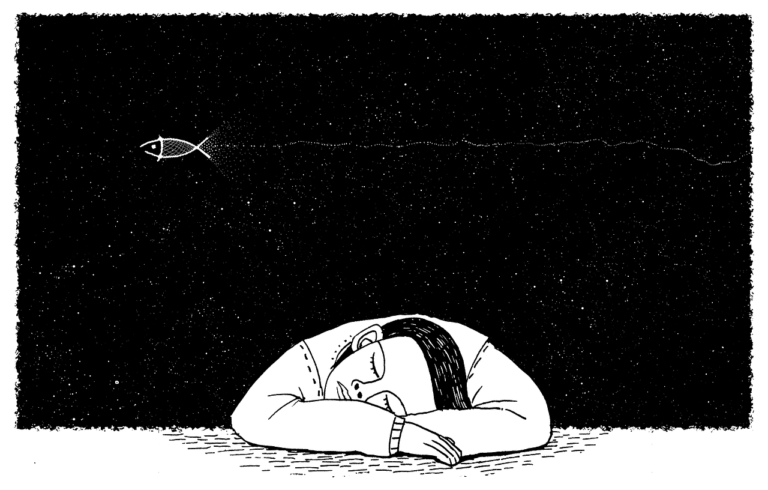
According to Stanford Medical Children’s Health, 70% of teens aren’t getting enough sleep!
That statement may sound extreme- but in reality, it’s true. The pace of today’s world is so fast that getting a good night’s sleep every day sounds impossible. Balancing school, homework, extracurriculars, a healthy social and family life, and sleep is like a non-stop cycle of work, work, and more work. So where do we get the energy to do all that again the next day? Through sleep.
The dictionary definition of the word “sleep” can be found here:
Sleep. (n.d) In Merriam-Webster’s collegiate dictionary. https://www.merriam-webster.com/dictionary/sleep
But in simpler terms: Sleep is when your mind is unconscious and your body repairs itself.
Most of us aren’t getting enough sleep which may not seem like a big problem. But as we continue to lack sleep more and more throughout our lives, our health will slowly deteriorate. Some problems that come with extreme sleep deprivation are a weaker immune system and an unhealthy cardiovascular system. On the flip side, getting enough sleep can come with countless benefits that will aid us in performing our best in our day-to-day lives. Such as a clearer head, more energy, and a happier state of mind.
Here are some tips that could help you fix your sleeping habits:
- Don’t use electronic devices for at least an hour before you sleep
- Stay consistent with the time you wake up and the time you go to bed
- Block out any external noises that could irritate you
- Slightly reduce the temperature in your room (it helps you fall asleep faster)
- Keep electronic devices in a different room so you aren’t distracted by them. But if you use your phone as an alarm, try to put it on the opposite side of the room so you aren’t distracted by it.
- Keep your devices on silent mode
- Relax yourself before going to bed. For example, read a novel or take a hot bath. Don’t do anything that would overstimulate yourself. Such as drinking Red Bull before sleeping
- Wear soft attire. You don’t want to be sleeping in clothes that aren’t comfortable
It may take a lot of extra time and effort to fix your bad sleeping habits, but it’s worth it in the end.
If a healthy and happy life is a lock, then, a good night’s rest is the key. So get some sleep!
The Ten Stages of Genocide – Condemning Merciless Killing
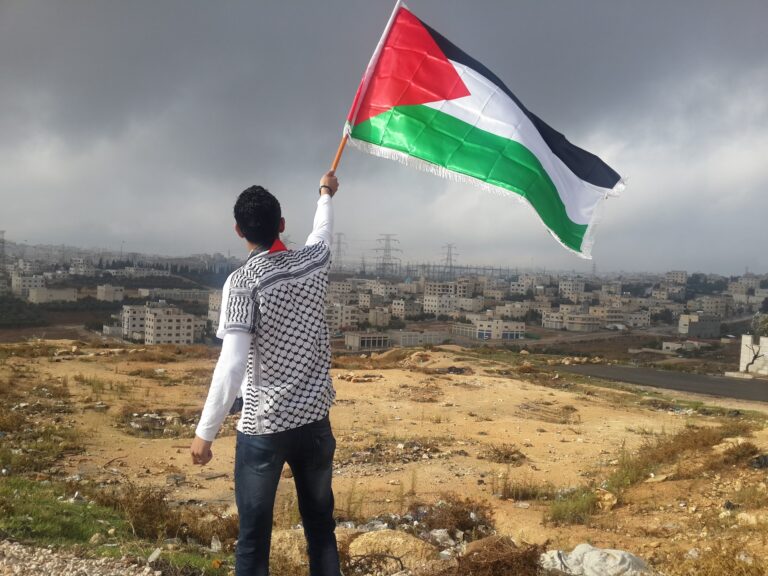
Genocide | (noun) ‘the deliberate and systematic destruction of a group of people on the basis of their race, nationality, religion, or ethnicity.’
The word “genocide” was coined in 1944 by Raphael Lemkin, a Polish-Jewish lawyer. He created this word by combining genos (Greek, meaning “race”) and -cide (Latin, meaning “killing”). It has since been expanded upon and has become a concrete word and definition as well as condemned and illegal in international law.
The ten stages of genocide were first proposed by Gregory H. Stanton, founding president of Genocide Watch. He outlines genocide as:
A process that develops in ten stages that are predictable, but not inexorable. At each stage, preventive measures can stop it. The later stages must be preceded by the earlier stages, though earlier stages continue to operate throughout the process. (Stanton 1)
The ten stages are not necessarily linear and can coexist at the same time. Additionally, there are measures that can be taken in order to stop and/or prevent a genocide from happening, however there will come a time when the damage has been irrevocable. It is the responsibility of the international community to step up when victims cannot, however that has not been happening with the situation in Gaza. Some of the most powerful nations in the world are actively endorsing a genocide by providing the perpetrators with weapons and military aid, while many others have opted to remain passive bystanders — something that can be likened to turning your back to those in need or refusing to act when you have the power to act.
Before looking at the ten stages, it is important to clear up the situation. The situation in Gaza as of writing this, is a genocide. When Hamas fighters attacked Israel and killed an estimated 1400 people, it is fair to say that Israel was in the right to defend itself. However, according to the Red Cross, self-defense is “the use of force to repel an attack or imminent threat of attack directed against oneself or others or a legally protected interest.” This does not align with Israel’s actions. In fact, they have long passed the line of self-defense and onto that of genocide.
Following the attack on October 7, 2023, Israel has killed over 9,000 innocent civilians in the Gaza strip. It has bombed hospitals, schools, mosques, ambulances, refugee camps and many other places with the excuse that Hamas members have hidden themselves there when it knows plain well it is just attacking innocents. It has cut off water, electricity, WIFI, and fuel, while preventing necessary aid from coming into Gaza. It has used white phosphorus, something that ignites on contact with oxygen and sticks to skin and clothing, against civilians in Gaza. It has staged a full ground invasion against Gaza, which has no military. It has even gone so far as to threaten to use atomic bombs on Gaza. This is nowhere near everything that Israel has done to the civilians of Gaza and all the while, Israel has known exactly what they are doing and who they are murdering, because they run the census in Gaza, and they know where everybody lives.
Murdering innocent civilians in retaliation to an attack by a militant group could hardly be considered self-defense, which is why it is absurd to label the Israeli military and governments actions as such. Being backed with billions of dollars and weapons of murder by the international community while the other side has no access to food, water or electricity is not self-defense. This is a genocide which falls into many of the same categorizations as the Holocaust and the Rwandan Genocide.
Stage 1 & 2: Classification and Symbolization
Classification:
All cultures have categories to distinguish people into ‘us and them’ by ethnicity, race, religion, or nationality: German and Jew, Hutu and Tutsi. If societies are too segregated they are most likely to have genocide.
Symbolization:
We give names or other symbols to the classifications. We name people “Jews” or “Gypsies”, or distinguish them by colours or dress; and apply the symbols to members of groups. Classification and symbolizations are universally human and do not necessarily result in genocide unless they lead to dehumanization. When combined with hatred, symbols may be forced upon unwilling members of pariah groups: the yellow star for Jews under Nazi rule, the blue scarf for people from the Eastern Zone in Khmer Rouge Cambodia.
Israel has committed apartheid against Palestinians in and around its borders for many years. Apartheid is the forcible separation and severe discriminatory treatment against people based on race or ethnicity. It is an example of systematic oppression and abuse, where one demographic is put at a disadvantage within institutions such as government, court and schools.
Time and time again, Israel has created laws, policies, propaganda and statements that harm Palestinians and elevate Jewish Israelis. For decades, Israel has forcefully displaced and relocated Palestinians, deprived them of economic and social rights, and even gone so far as to unlawfully murder Palestinians.
Shockingly, Israel maintains a two-tier system within its society. One that designates Jewish Israelis as first-class citizens, and Palestinians as second-class residents. Under this system, Jewish Israelis are afforded the rights and privileges of Israeli citizens while Palestinians must live under severe discrimination, oppression and military rule.
“Israel is not a state of all its citizens… [but rather] the nation-state of the Jewish people and only them”
Israeli Prime Minister Netanyahu
Another thing worth mentioning is the language often used regarding Gazans. We have all heard the words “open-air prison” in reference to the Gaza Strip, but those words are rooted in problems. The insinuations of the word “prison” naturally makes us ask, “What did they do wrong in order to be in prison?” But the people of Gaza did nothing wrong. They have been condemned to live in a state of siege for the mere crime of being born there. For being of a different race, religion, ethnicity and skin colour. They are not criminals to be allocated to a prison. They are human beings who were born into a state of being hostages. Israel has controlled every aspect of their lives, leaving them no means of escape or retaliation.
If that wasn’t enough, on October 16th, Netanyahu’s X account (formerly known as Twitter) made a now-deleted post, about how Israel’s actions are a “Struggle between children of light and the children of darkness, between humanity and the law of jungle.”
This is hugely problematic, as it heavily implies that Israelis (a majority of whom are Jewish and/or of European descent) are the “children of light” and “humanity” while calling Palestinians (who they are predominantly Arabic and/or Muslim) the “children of darkness” and designating them as living by “the law of jungle.”
Considering that a large part of Islamophobia is the perpetuation of harmful stereotypes regarding how it is a “dirty religion” and the depiction of Muslim people as uncivilised, aggressive, barbaric, sexist and terrorists, it would not be inaccurate to say that Netanyahu’s statement is rooted in racism. Furthermore, it creates further division between the “us” (Israel) and “them” (Gaza) in this situation; celebrating and encouraging one group while stripping the other of their humanity. Creating justifications to commit genocide.
Stage Three: Discrimination
A dominant group uses law, custom, and political power to deny the rights of other groups. The powerless group may not be given full civil rights or even citizenship. Prevention against discrimination means full political empowerment and citizenship rights for all groups in a society. Discrimination on the basis of nationality, ethnicity, race or religion should be outlawed.
Palestinians are treated as an inferior racial group — sub-human, so to speak. They are denied the aforementioned rights and freedoms that Jewish Israelis are unconditionally provided and are even denied a nationality in the eyes of Israel. They have control over the population registry for Palestinians in the West Bank and Gaza, just as the Nazis did to the Jewish people, and deem them stateless, creating more obstacles for them to be able to live, work and participate in legal, political and judicial systems.
Israel also controls electricity, transportation, education, healthcare, water, food and other things in the Gaza strip (as demonstrated by them depriving the Gazans of just that throughout the last month) which they use in discriminatory ways.
Similar things happen to Palestinians in Jerusalem and the West Bank, with forced ethnic displacement, home demolitions, police brutality and blatant oppression running rampant and serving as obstacles that exist for the seeming crime of being different.
This treatment of Palestinians has been happening for the past 75 years, and it is only now that it has escalated. It is appalling how long this has been going on, and how little the Western world knew (and frankly, still knows) about the unfair circumstances that Palestinians have been forced to live under. This is nothing if not discrimination on the basis of religion and ethnicity and is a root cause in the current situation.
Stage Four: Dehumanization
Dehumanization is when one group treats another group as second-class citizens. Members of a persecuted group may be compared with animals, parasites, insects or diseases. When a group of people is thought of as “less than human” it is easier for the group in control to murder them.
Regarding the siege on Gaza, Yoav Gallant, the Israeli Defense Minister, said, “No electricity, no food, no fuel. We are fighting animals, and we will act accordingly.”
This is a disgusting example of Israel’s dehumanization and desensitization of Palestinians. For a significant figure in the Israeli government to compare the innocent civilians they are massacring to animals on national television and to be met with little backlash is downright abominable. It demonstrates just how deep Islamophobia runs in our world, and just how effective propaganda, misinformation and ignorance have been in enabling the genocide.
These words, among others, are what these people have used to justify genocide with the label of self-defense. When we see a group of people as a mass of statistics, as sub-human, or otherwise dehumanized, it helps to desensitize us to the atrocities committed against them. It is for these same reasons that the Ukraine-Russia war rightfully sparked so much sympathy and outrage, yet people are arguing over whether or not Palestinians deserve to be treated as human beings. One group is distinctly more humanized by the world, and it is blatantly obvious.
Stage Five: Organization
Genocide is always organized, usually by the state, though sometimes informally or by terrorist groups. Special army units or militias are often trained and armed. Plans are made for genocidal killings.
It is said that a Gazan child born in 2006 has lived through 5 wars. 2008, 2011, 2014, 2018, and 2023. In addition to these, there have been countless massacres, murders, and acts of violence committed against Palestinians by Israelis for the past 75 years. These are all organized attacks against Gaza, wreaking havoc on the already destabilised people.
Additionally, there are the inevitable plans required to carry out the attacks and invasions that Israel has on Gaza. They have done this while knowing the Gazans’ inability to defend themselves, considering they don’t have a military, over half of them are children, and they have been in a siege with no access to basic human rights.
Finally, the Israeli government has purchased and distributed firearms to “civilian security teams” in the West Bank. These actions, instead of properly addressing the situation, enables Israeli citizens’ rage and resentment for what they endured on October 7th by handing out weapons in the name of self-defense while restricting movement for Gazans and actively massacring them.
Stage Six: Polarization
Extremists drive the groups apart. Hate groups broadcast propaganda that reinforces prejudice and hate. Laws may forbid intermarriage or social interaction between the groups. Extremist terrorism targets moderates, and intimidates them so that they are silent. Moderate leaders are those best able to prevent genocide and they are often the first to be assassinated.
There has been polarization not only among Israelis and Palestinians but throughout the rest of the world as well.
Within Israel, there have been many extremists appointed in high-level government jobs who are given full reign to spread harmful, racist ideology and ideas, especially about Palestinians. Some examples are Ayelet Shaked, former Justice Minister, who had previously called for the genocide of Palestinians and the rampant and open use of dehumanizing language within Israeli media. Additionally, deeming all Gazans and Palestinians members of Hamas or terrorists creates fear and justification around the actions of Israel.
Around the world, many news outlets and people in positions of power have adopted these same tactics of extremism and propaganda, spreading misinformation and blind hate. They demonize the religion of Islam and its people, weaponize history and ignorance in order to accuse people of anti-semitism when they are simply speaking out against a genocide, and ultimately, normalize and vindicate violence against Palestinians. As a result, reports of Islamophobia in the past month have sky-rocketed and tensions have grown. While people argue and defend their positions as political or religious opinions, real people suffer real casualties, like the six-year old Palestinian boy who was stabbed to death by a landlord in the US and the millions of people trapped and dying in the Gaza Strip.
Stage Seven: Preparation
National or perpetrator group leaders plan the “Final Solution” to the Jewish, Armenian, Tutsi or other targeted group “question.” They often use euphemisms to cloak their intentions, such as referring to their goals as “ethnic cleansing,” “purification,” or “counter-terrorism.” They build armies, buy weapons and train their troops and militias. They indoctrinate the populace with fear of the victim group. Leaders often claim that “if we don’t kill them, they will kill us,” disguising genocide as self-defense. There is a sudden increase in inflammatory rhetoric and hate propaganda with the objective of creating fear of the other group.
Disguising genocide as self-defense is exactly what Israel has done. Over and over again, they spread the claim that they have no choice, that it is a kill or be killed situation. They have wielded the collective grief of the Israelis after the October 7th attack and directed it to fester into hate and fear. Every time they target and bomb something like an ambulance, hospital or school in Gaza they use the excuse that Hamas militants have been using and hiding in them, and every time there is an uproar regarding the death toll of Palestinans, they justify it by saying they have successfully eliminated a Hamas militant who had posed a threat. Since being accused of using tunnels to hide under hospitals, Hamas has issued an official statement asking the UN to conduct an investigation to prove Israel’s claims. Israel, who would only benefit from having their claim confirmed if it is true, has said nothing on the matter but is not allowing foreign journalists and professionals inside Gaza. They have even gone so far as to blame the Gazans for crimes they themselves have committed. For example, Israel accused Hamas militants of beheading 40 babies, but when asked for proof, a Israeli military spokesperson only replied with, “We cannot confirm but you can assume it happened.” Even without conclusive evidence, Israel has used this claim to stoke the anger and horror of its own citizens and millions of people around the world. Meanwhile, there are videos surfacing every day of Palestinians being murdered, abused, and even found headless on the internet.
Stage Eight: Persecution
Victims are identified and separated out because of their national, ethnic, racial or religious identity. The victim group’s most basic human rights are systematically violated through extrajudicial killings, torture and forced displacement. In state sponsored genocide, members of victim groups may be forced to wear identifying symbols. Their property is often expropriated. Sometimes they are segregated into ghettos, deported to concentration camps, or confined to a famine-struck region and starved. They are deliberately deprived of resources such as water or food in order to slowly destroy the group. Genocidal massacres begin. All of these destructive acts are acts of genocide outlawed by the Genocide Convention. They are acts of genocide because they intentionally destroy part of a group. The perpetrators watch for whether such massacres are opposed by any effective international response. If there is no reaction, they realize they can get away with genocide. The perpetrators know that the U.N., regional organizations, and nations with powerful militaries will again be bystanders and permit another genocide.
The existence of the Gaza Strip itself is proof of this. It is a besieged land with limited resources, where millions of people are condemned to live under a state of full control where their food, water, electricity, gas, transportation and freedom itself is controlled by a colonizing power such as Israel. The aforementioned forced ethnic displacement and classifications of being secondary citizens are also examples of persecution. The massacres have been going on not for a month, but regularly for the last 75 years — it is only now that there is open discourse and international media coverage over them. In the Gaza Strip, people have already been deprived of resources and are dying not only of bombings and military attacks but of disease, hunger and thirst.
As for the latter part regarding international response, the world has already made clear where they stand. Mass-protests or not, a multitude of governments have already declared their siding with Israel and endorsed their genocide. If not a bold declaration of solidarity like the US, countries have conceded to stand by and do nothing to prevent this genocide from fully being carried out.
Stage Nine: Extermination
Extermination begins, and quickly becomes the mass killing legally called “genocide.” It is “extermination” to the killers because they do not believe their victims to be fully human. When it is sponsored by the state, the armed forces often work with militias to do the killing. The goal of total genocides is to kill all the members of the targeted group. Destruction of cultural and religious property is employed to annihilate the group’s existence from history (Armenia 1915 – 1922, Da’esh/ISIS 2014 – 2018).
Over 9,500 people have already been killed in the Gaza strip. These people have been targeted uncompromisingly, regardless of age, gender or affiliation with Hamas. People in Gaza have resorted to using freezers in ice-cream trucks to preserve bodies until they can bury them, because they have run out of other ways to preserve them. There are mass graves of unidentifiable bodies. There are countless unidentified and orphaned children, some so young that they will never know the name that their families gave them. It is nothing if not a genocide.
Stage Ten: Denial
Denial is the final stage that lasts throughout and always follows genocide. It is among the surest indicators of further genocidal massacres. The perpetrators of genocide dig up the mass graves, burn the bodies, try to cover up the evidence and intimidate the witnesses. They deny that they committed any crimes, and often blame what happened on the victims. Acts of genocide are disguised as counter-insurgency if there is an ongoing armed conflict or civil war. Perpetrators block investigations of the crimes, and continue to govern until driven from power by force, when they flee into exile. There they remain with impunity, like Pol Pot or Idi Amin, unless they are captured and a tribunal is established to try them.
This stage, like all the others, has been happening before our very eyes. We are seeing a genocide happen right before our very eyes, and instead of doing something to prevent it, officials are refusing to acknowledge Israel’s wrongdoings and people are having debates on the definition of a genocide. We are arguing over the importance of human lives. We are arguing over whether or not 2+ million human beings deserve to exist.
This started out as what seemed to be a collective punishment against Gaza for the actions of a few, and quickly spiralled into a genocide that people continue to deny, a month after the 7th of October and 75 years after the colonization of Palestinians by the Israelis began. However, it has been justified as self-defense and a myriad of other things that can never truly justify genocide.
Ultimately, it has proved that the world is so blinded by hate, prejudice and ignorance that we are willing to sit back and watch a genocide happen. Not only one genocide in Gaza either. But multiple other ones, like those in Sudan, Congo, Azerbaijan and Myanmar. Ultimately, our countries, governments and people are failing humanity.
And so we must fight not to continue with this.
We must fight for human lives, against misinformation, colonization and genocide by educating ourselves and wielding our voices when others cannot. Please fact-check and bias-check all of your sources. Please listen to Palestinian voices speaking out about what is happening. Please open your hearts to change and fight ignorance. Please denounce hate, fear mongering and prejudice. Our desires to avoid guilt and responsibility do not outweigh the lives of millions of people.
“From the river to the sea, Palestine will be free.”
Sources: 1, 2, 3, 4, 5, 6, 7, 8, 9,
Further Reading/Watching (Remember to do your own fact-checking and bias-checking!!): 1, 2, 3, 4, 5
Why You Should Watch Yuri on Ice
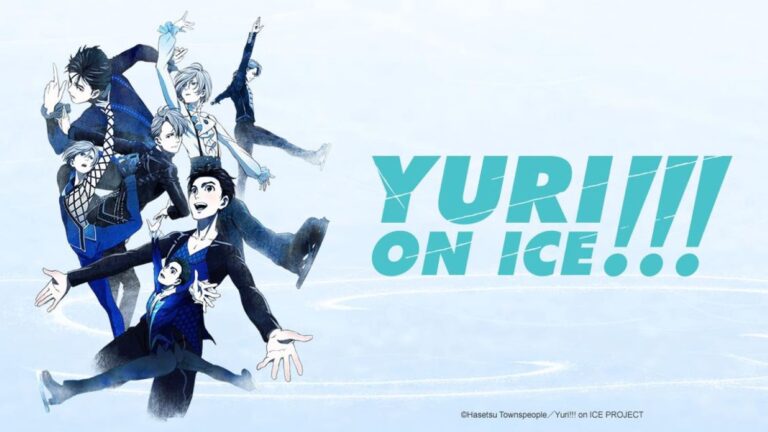
Yuri on Ice centers around Yuri Katsuki, a 23-year-old figure skater and his journey with his anxiety, as well as his relationships with the characters around him—most notably, his relationship with his skating coach and love interest, Victor Nikiforov.
Despite what you may think, Yuri on Ice is a show full of nuance and depth that deals with casual queer representation and heavier themes like mental health and self-confidence. Yet, at other times, the show’s humour and lighthearted scenes are absolutely on point.
So, here are some of the biggest reasons why you should watch Yuri on Ice.
The Animation, Music and Choreography
Fundamentally, what makes anime anime is, well… the animation. Yuri on Ice doesn’t always have flawless, outstanding animation. Some would even say that its animation is simply average more often than it is excellent. But for the most part, Yuri on Ice is a light hearted anime, and the animation style reflects that—it doesn’t take itself too seriously, unless it needs to. That’s why when it does, it is all the more breathtaking.
It is during the skaters’ performances that they go all out. The flawless animation is paired with excellent music and routines that were choreographed by Japanese figure skater, Kenji Miyamoto. Even if you do not have any prior knowledge of or interest in figure skating, the show explains everything in simple, easy to understand terms that help you to understand the stakes of the competitions, and you will be able to appreciate the beauty of it all.
Mental Health and Self-Confidence
From the get-go, Yuri on Ice doesn’t shy away from telling us that Yuri, the main character, struggles with things such as anxiety and self-confidence. In fact, more than the romantic aspects or the athletics aspects, it is these, more stigmatized topics that the show tends to center on. Yuri never truly “gets rid” of his anxiety, or his confidence issues, but that is never portrayed as the goal. Instead, the show portrays Yuri’s healthy development towards learning to live with these things and succeed despite them. He learns from them and creates healthy, give-and-take relationships with the people in his life who help him through the tough times.
The anime does not portray Yuri as someone who is just his mental health issues. Instead, it portrays Yuri as a nuanced human being who has mental health issues that he must live with, but it never lets those things define him.
Portrayals of Health Relationships
One of Yuri on Ice’s best qualities is that it portrays healthy, give-and-take relationships as the norm. Even between the figure skaters who are competing for first place, the environment is encouraging at best, and highly competitive at worst. Most of the athletes respect and admire each other, and portray great sportsmanship even when faced with great losses and high-pressure situations.
Between the main couple, Yuri and Victor, there are even more examples. When we are first introduced to the two characters, Yuri idolises Victor and looks up to him as a mentor, which could have led to a dynamic with a power-imbalance between them. However, as the series goes on, Yuri gets to know Victor as a person with flaws just as much as him, and by being there for each other and helping one another through rough patches, their relationship levels out into a more balanced one.
Queer Representation
One of the most well known things about Yuri on Ice is its queerness. In fact, this can be one of the reasons that some people are averse to the show; however, this is where the show truly shines.
One of the biggest complaints about Yuri on Ice is that the relationships in the story are simply queerbait. This take is something that I fundamentally disagree with.
There is a quote that a writer I know once told me. They said, “If your characters must kiss or be physically intimate with one another in order for the audience to understand that they love each other, then you aren’t writing the romance right.” Yuri on Ice embodies this sentiment through its casual yet serious portrayal of a queer relationship.
The development of Yuri and Victor’s relationship is realistic and believable. They go from practical strangers who know each other only through their careers, to two people who help each other grow and develop. In their dynamics, there is an absence of the explicit portrayals of sexuality that many people (especially in the West) have come to associate with romance and often, those of the LGBTQ+ community. Yet it is obvious how much they come to care for each other—in the grand moments like when they exchange promise/engagement rings and publicly share their first kiss, but also in the way that they are able to admit that they have grown as human beings thanks to each other. The writers of this story did not need to put these characters in an overly sexualized or stereotypical setting, because the characters were so well rounded-out.
Yet another factor that contributes to the excellent representation in the anime is that Yuri and Victor aren’t gay characters who just happen to be human beings—they’re human beings who just happen to be gay. Their queerness does not encompass their entire identities, nor does it invalidate their other experiences. The show does not flaunt the fact that they’re queer, they simply let the characters exist as people whose queerness is simply one part of their identities; one piece of the puzzle.
Finally, Yuri on Ice portrays gender identity as the nuanced, personal journey as it is. For one thing, when Yuri is practicing his skating routine, he struggles to fit the mold of the playboy that has been assigned to him. Despite practicing and trying his best, he ultimately discards the entire idea that he must embody traditional forms of masculinity in order to create a successful, true to himself performance. Instead, Yuri turns towards a significantly more feminine persona where he can truly express his sexuality and identity. He relates more to the feminine role than he ever could the masculine one, and the series portrays it as completely normal. Yuri is allowed to be himself and explore his identity without being held back by gender norms and other such labels.
Additionally, throughout the show, many of the male characters opt to dress and perform in more androgynous or feminine outfits. It is even shown that in the past, Victor had very long hair and presented himself in a more gender nonconforming way than he does in the present timeline. These parts of a character’s identity are delivered to the audience in a very real way that never feels forced or out of character. Ultimately, these are just different parts of a character’s identity that add up to define who they are, and that, in and of itself, is the causal representation that we all need.
Thank you for taking the time to read this, and I truly hope that you’ll give this anime a chance! Here is a link to a well-done video by queer youtuber, James Somerton about Yuri on Ice. He covers every point that I mentioned in the “queer representation” section of the blog, as well as exploring each topic in an in-depth way.
The Rise in Climate Technologies
As our society becomes more focused on advances in technology, we can begin to consider the many ways it can help the challenges we are facing with climate change. Many individuals have found innovative means to counter negative environmental issues through green energy, sustainable agriculture, and artificial intelligence. According to the United Nations, advancements in climate technologies will play an immense role in our efforts to create a sustainable future. Climate technologies help humanity reduce greenhouse gas emissions and adapt to some aspects of climate change, such as the use of sea walls. In this blog, I want to specifically focus on how agricultural climate technologies can positively impact the environment.
Climate Technologies and the United Nations
To promote advancements in climate technologies, member countries in the United Nations established the technology transfer framework. The framework covers five key technology themes:
- Technology needs and needs assessments
- Technology information
- Enabling environments for technology transfer
- Capacity-building for technology transfer • Mechanisms for technology transfer
Four sub-themes were later added, they are:
- Innovative financing
- International cooperation
- Endogenous development of technologies
- Collaborative research and development
*Bullet points are from the United Nations Framework Convention on Climate Change*
Agriculture and Climate Technologies
Nemo’s Garden
This interesting technological endeavour is the world’s first underwater cultivation system for plants that we find in various terrestrial ecosystems. The primary goal of this project was to provide an alternative source to farming, given the economic and environmental factors that can restrict the productivity of farming. Furthermore, this project is sustainable and environmentally friendly as it uses renewable energy harnessed from the sun, and the desalination of seawater creates an optimal freshwater system for plant growth. It also has minimal contact with the surrounding aquatic life.

Autonomous tractors
With the rising demand for food due to a surge in the global population, efficient means of crop cultivation are necessary. Thus, autonomous tractors are the future of farming due to their increased productivity, reduced labour costs and improved sustainability. Allowing autonomous tractors to do repetitive tasks for farmers, they can shift their primary focus onto planting, planning, and maintenance. These AI-powered tractors have integrated systems, computers, and processors that transform electrical impulses into a controlled to perform tasks. Navigation consists of GPS, cameras, radars, sensors, and robotic features to scan and monitor the environment. Additionally, each one has an emergency stop feature.

AeroFarms’ Vertical Farming
These vertical towers are an impressive technological achievement as they grow plants using LED lights without sunlight and soil. As a result, it is the future of indoor farming in urban areas. So how do they work? As you may already know, plants require water, sunlight, and carbon dioxide for photosynthesis to create glucose molecules. Additionally, plants need nutrients from the soil, such as nitrates, to grow. Vertical farms can mimic this process by using smart sensors to monitor temperature, pH, humidity, lighting, carbon dioxide levels, and other factors. Furthermore, an automated-dosing system provides nutrients to the plants, and this system is attached to a nutrient source by a peristaltic pump that brings the required nutrients to the reservoirs from which it is transferred to the plants. LED lights replace the role of sunlight and consume 85% less energy, which reduces costs associated with vertical farming. Carbon dioxide is supplied by burning propane or natural gas and compressed carbon dioxide systems that convert it from liquid to gas and then inject it into the growing chamber with the support of pressure stabilizers. This system also considers sterilization methods, UV sterilization, chemical disinfection, and ozone sanitization. Overall, it is a highly specialized process.

Science and technology coupled with improved human capital have been powerful drivers of positive change in the performance and evolution of smallholder systems.
– From the Food and Agriculture Organization of the United Nations
Featured image: [1]
The Event of The Year: Iron Maiden is Coming to Calgary

Us lovely folks of Calgary are lucky to be having multiple musicians and bands coming to see us this year including an absolutely legendary band.
Iron Maiden is coming to Calgary.
If you’re a fan of metal, and especially metal from the ’80s, this is the most fantastic news. I was overjoyed when I found out.
Iron Maiden – The Future Past Tour is coming to Calgary this September 28th. They will be here for one night only in the Saddledome. Tickets are still on sale ranging from $73.50 to almost $500 per person! This is a price that is definitely inaccessible to most but if you have the means to go then you 100% should. They have a 15 song setlist consisting of classics all from their album “Somewhere in Time” and also has unperformed songs from their most recent album “Senjutsu”. Their encore has amazing bangers such as “Hell on Earth” and “Wasted Years”.
I might be a bit biased as a personal Iron Maiden fan but this concert will be genuinely epic. We are super lucky this year to be having the most talented musicians visit us and I hope that everyone who goes has a wonderful time.
BTS: The Cost of Nonconformity
Two times out of three, telling somebody that I am a fan of the seven-member Korean boy band, BTS, elicits a reaction rife with judgement, disdain, and snideness. Mostly, in these instances, I can know what assumptions these people harbour, because I have come face to face with it many times before, both online and offline. Things like oh, it’s just another boy-crazed teenage girl chasing after their silly pop songs and shallow, feel-good lyrics. It’s unlikely that she can even understand those lyrics, so why does she bother? But so what, it’s entirely in vain since they don’t even know she exists. Oh, and they’re probably gay anyway, I mean, what man flaunts around in that kind of makeup and acts like a girl? Hopefully, it’s just a phase.
All in all, these assumptions stem from many, many prejudices that have been built up about the Korean part of BTS, about the boy band part of BTS, about the they wear makeup part of BTS, and many, many more. Most of these factors relate to the fact that BTS do not necessarily conform with people’s ideas of what should be taken seriously, or even be respected. That is what I want to talk about today.
Because this post is about the fact that yes, it could just be a phase, but who are you to claim that impermanence equates to insignificance when everything about life contradicts the existence of a permanent state of self? On what grounds can you claim to define what masculinity is or is not for a stranger, and what right do you have to wield queerness as if it is a weapon against others? Why do you assume you know what their lyrics are like when you obviously don’t respect their Koreanness enough to read through their Korean lyrics? Finally, why do you insist on viewing things that teenage girls and women enjoy as nothing but insignificant? These are all questions that I intend to explore through this post.
It’s Not Just a Phase — or is it?
Throughout much of history and pop culture, things that teenagers have shown interest in have been brushed off as insignificant by adults, as just a phase. Oftentimes, a teenager, who may feel as though they are not taken seriously enough will respond with defensive hostility.
However, an overlooked idea is one that proposes that maybe, just maybe… the fact that something is a phase does not make it insignificant. After all, if you truly think about it, one of the biggest lessons that many people have to learn is that as scary as it is, change is inevitable. Life is about phases, about different chapters, and about learning and growing from each of them. So who is to say that it is any different, or less important, because the person going through it is a teenager? Just because we are a little more confused, and a lot less experienced in life, does not mean that there isn’t something to be taken away from our experiences.
So to those who try to ridicule teenagers for liking certain things, or Armys (the official name for BTS fans) for liking BTS on the grounds that it is a phase, consider the following:
Perhaps we will continue to like this for many years to come, and perhaps we will lose interest in it very soon. However, regardless of the amount of time someone spends on something, the lessons, opportunities, and even just instances where they felt an open, inclusive community, will not disappear. Often, the most impactful of events happen in the briefest of moments, so it is about time for us to retire the idea that it is just a phase means it is unimportant, and it will pass soon. If we all adopt the idea that impermanence is not insignificant, I believe that a lot of unnecessary judgement, regret, and clashes can be avoided.
An Outdated Definition of Masculinity (And Queerness is Not Your Weapon)
One of the ways that people most often try to ridicule BTS and their fans is through insults relating to their identities and masculinity. They ridicule them for the makeup and outfits that they wear, the way they carry themselves, and even things like their vulnerability in talking about things like mental health and self love in their music. Above all, the problem lies in the fact that people will stick labels such as “girly” and “gay” onto them, as though those are derogatory terms.
The issue lies within things like the perpetuation of toxic masculinity, misogyny, and the harmful stereotypes that lead to the emasculation of Asian men in the Western world.
Through the lens of toxic masculinity, BTS are treated as “less than” because they do not embody the harmful expectations that men should be physically strong but emotionally closed off, as well as aggressive, anti-feminist, and even discriminatory against those who are not cishet. This leads to the reasons why people slap the label “gay” onto BTS members; because through toxic masculinity and heteronormativity, gayness is seen as an insult. Through these standards, stereotypes like makeup and certain manners of dressing are immediately equated to queerness. Of course, if any of the BTS members happen to be queer, that is entirely alright and entirely their own, private, business. That is not the problem at hand. The problem at hand is that a bunch of people have it ingrained into their minds that being queer is a bad thing, and that is what we need to fix. Not to mention, slapping a label onto people that assumes that they are queer is a whole other problem regarding harmful assumptions, the loss of autonomy and their voice, and the possibility of outing someone when they are not ready or not in a safe environment to be outed.
Similarly, people jump to insult BTS with the use of misogyny, harming not only them, but many others in the process. The use of the word “girly” in a derogatory manner perpetuates the idea that girls and women are less than men, which is why being girly is seen as an insult. Though unfair to them, this has less of an effect on BTS themselves, who are entirely comfortable in their identities, and is more harmful to the public audience who may be conditioned into thinking that it is an insult to be girly.
Finally, there is the issue of the emasculation of Asian men. This dates back to the mid-19th century, when there was an influx of Asian, mostly Chinese people immigrating to North America. These Asian immigrants were seen as a threat to Western, eurocentric culture, and thus, the depiction of Asian men as emasculate, effeminate, and even asexual was started. This idea has evolved and faded somewhat throughout the last 150 years, but has still stuck in North America, especially in depictions of Asian men in media. In the 20th century, Asian men were often portrayed as weak or villainous, and even in our present-day media, there are long lasting stereotypes that paint Asian men as emasculate and unattractive. These issues are present in the lives of many Asian-American and Asian-Canadian men today, and when these same stereotypes are used as insults against figures like BTS, they only serve to do more harm.
The Implications of a Boyband
Throughout the last few decades, boy bands have risen and fallen in different parts of the world. However, if there is one thing they all have in common, it is that they are not taken very seriously within the music world. Even a legendary, world-renowned band like the Beatles were originally not taken seriously by most people.
Why, you may ask? Well, that is because boy bands historically have female-dominated fan bases, and that is the exact reason why people do not tend to take them seriously. I’m sure we’ve all heard, somewhere or another, the idea that boy band fans are just some crazed-teenage girls who only follow the bands because they are made up of attractive boys and men. These assumptions and implications were there when the Beatles became famous because of young women, and they are here now when BTS have become famous. Despite the fact that the majority of BTS’ fan base is made up of adult women in their 20s and 30s, they are stuck with the label that all their fans are hysterical, screaming teenage girls. Within that lies a few problems.
Essentially, the problem of teenage girls showing their enthusiasm and gratitude at, say, a concert in the only way they can, through screaming and shouting lyrics, is all but reduced to the idea that they are hysterical and not to be taken seriously. This idea of hysterical girls and women goes back to the idea that women are overly-emotional, and should not be taken seriously. This can be harmful in that when a woman or girl tries to voice her feelings and emotions, or tries to have a serious conversation about anything that she feels the slightest bit emotional about, she can be dismissed with the idea that she is merely hysterical, or her concerns being reduced to something like, “it’s probably her just time of the month.
As a last thought, here is an interesting observation. There are many, many similarities between boy band fans and sports fans. These are things such as a strong sense of community, screaming fans (at concerts or games), buying and collecting merch, intense passion and loyalty, and being emotional over teams, athletes, idols and bands. In most parts, both are similar, except for one interesting factor: sports fans tend to have a prevalence for violence. However, these shows of violence, such as rioting when a team loses, are dismissed even when a little screaming from boy band fans are deemed as hysteria. This is because while boy band fans are mostly made up of females, sports fans are mostly made up of males. And that, ladies, gentlemen and nonbinary folks, seems to make all the difference in the world.
Dismissal on the Grounds of Foreignness
Finally, the last topic I would like to talk about is the impact of BTS’ Koreanness. BTS are a Korean band, as we all know. All seven members of the band; RM, Jin, Suga, J-hope, Jimin, V and Jungkook (their stage names, not their given names. You can think of them like pen names that authors give themselves) were born and raised in South Korea. Their native language is Korean, and so they speak, write, sing and rap mainly in Korean. This seems to have an effect on the way people view them—namely, through lenses of thinly veiled racism and xenophobia, not that many even attempt to hide it in the slightest.
In February 2021, German radio host Matthias Matuschik commented on BTS’ cover of Coldplay’s song, “Fix You,” calling it “blasphemy” and proceeding to compare BTS to the coronavirus.
Just a few months later, in April 2021, a comedy program from Chile did a parody where they dressed up as BTS and took it upon themselves to mock the Korean language by speaking gibberish, compare BTS to the North Korean dictator, Kim Jong-un, and yet again, joke about their connection to the coronavirus.
These are not the first, nor the last times that BTS have been victims of racism and the like. BTS are proud of their Koreanness, which they have spoken about in depth. In fact, in 2018, they were even the recipients of the Order of Cultural Merit, an award given out by the Korean government to those who have spread and promoted Korean languages, culture and customs around the world. However, these two examples out of many instances of hostility and racism speak to the fact that there is a long way to go. With the surge in anti-Asian hate crimes in the last few years, triggered in great part by the pandemic, it is more pressing than ever that we do not dismiss any of these issues.
As we have seen in this entire vlog, problems that affect BTS such as toxic masculinity, misogyny, racism and xenophobia do not only affect them, but the rest of the world as well. And by looking at the way that the members of BTS have approached these topics and issues through their music and their advocacy, we can all learn a few valuable lessons. It does none of us any good to dismiss something on such trivial grounds like stereotypes that are hardly grounded in facts. I do not think that everyone should love BTS and their music, in fact, I believe that that is impossible. Each individual has a different preference, and some do not even listen to music. It is unfair to ask that everyone feel the same way about something as I do. However, through acknowledging their presence in the world and the things they go through without the barrier of assumptions and stereotypes, I believe that we can grow as people and a society.
Hopefully, through this blog post, you have learned something new. Thank you for reading!
Book Recommendation: The Life of Pi
Do you want a “story that will make you believe in God?”
Then, read Life of Pi, which delivers exactly this motto, promised at the beginning of this story. I won’t spoil the book for you, but let’s just say its about a boy surviving in the middle of the Pacific Ocean on a lifeboat, with an adult Bengal Tiger. And you won’t be disappointed.
Here’s a summary of the first part:
At the beginning of the story, we are introduced to an author who presents the very interesting story of how he ran into the story of Pi’s life with a man in a coffee house who says it is, “a story that will make you believe in God.” Then immediately after Chapter 1 begins, where the author interviews Pi and the actual book starts from hereon.
Pi, fully named Piscine Molitor Patel, is brought up in Pondicherry, India, to parents embodying perspectives of a “modern India.” His father is the owner and is the zookeeper of Pondicherry Zoo, where Pi often spends his time and gets to learn new life lessons. Oftentimes, Pi observes the animals in the zoo and their nature; for example, goats and hippopotamus live together in the zoo in the form of companions, zoomorphism, which is one the instances demonstrating the peculiar interactions between animals.
Throughout his childhood, Pi is also a person with very diverse, somewhat unconventional interests in different books, philosophies, and religions. He comes across all three religions, and becomes a practicing Hindu, Muslim, and Christian, all while he struggles with understanding the concept of God. Despite the objections from the priest, pandit, and the pope, who requests he chooses only one, Pi begins to practice all of these religious paths.
Towards the end of this section, Pi talks about the political turmoils occurring in India due to Indira Gandhi, and his family having to leave Pondicherry due to it. He talks about all the processes that occur in transferring the Zoo (the paperwork, files, and letters) and the emotions involving moving from somewhere that he has been all his childhood. Eventually on June 21st, 1977, Pi and his family leave from Madras to Canada, sailing through the cargo ship Tsimtsum, in an experience he calls “terribly exciting.”
The rest of the adventure continues from here.
Read or watch Life of Pi to find out more…
The Art of Show, Not Tell
Most of us, whether during a school class that you reluctantly sat through, or as an aspiring novelist or creative writer, have heard the saying “show not tell.” You may find these three words largely unimportant to your everyday life, or think that they are the most fascinating, useful piece of writing advice that you have ever heard. However, regardless of all of that, the idea of showing instead of telling is a vital part of creative writing of any kind. So, here are some useful little tidbits that I have learned about show not tell throughout my (admittedly short) journey as a creative writer.
What is “show not tell,” and how can we better understand it?
When seeking writing advice, one of the most common things that people hear is to show not tell. However, that idea can be difficult to understand at first, especially when no one takes the time to elaborate on the concept. Hence, here is a quick rundown of show, not tell.
Show not tell is a writing technique where the writer describes what is happening in a story, using descriptions to evoke emotions and lead the audience to conclusions and assumptions, without telling them point blank what is going on, or how they should be feeling.
Another way to look at it could be through the idea, “describe, don’t explain.” I first came across this through published writer and Youtuber, ShaelinWrites’ video, “My Top 12 Writing Tips! | Advice That Changed How I Write.” Although it is essentially just a simple rewording of the more well known phrase, it can help to see things in another perspective. Additionally, for someone who struggles more with things such as forming images in their heads or imagining scenarios, “show not tell” can be very confusing, whereas “describe, don’t explain” can make everything finally click, just as it did with me.
Now that we hopefully have a better understanding of show not tell, let us move on to the tidbits!
The Bigger the Issue, the Smaller You Write
There is a quote from American novelist Richard Price that can give a valuable insight into writing. He said: “The bigger the issue, the smaller you write. Remember that. You don’t write about the horrors of war. No. You write about a kid’s burnt socks lying on the road. You pick the smallest manageable part of the big thing, and you work off the resonance.”
Think about some of the most revealing or impactful moments that you have seen or read. Did they come from some vague description of overthrowing an evil oligarchy that dominates over the kingdom, or a drawn out explanation of how the protagonist’s mother was absent throughout a large part of her life? No, that was likely not the case. In fact, the things that tend to stick with an audience are more likely to be the satisfaction of seeing that one vile, overpowered antagonist finally being thrown over. Or that devastating moment when there is a wholesome interaction between a mother and child, and the camera pans over to the protagonist who is happy for them, yet is recalling painful, lonely memories of her own mother, and yearning for that kind of a relationship herself.
Essentially, the key in making an audience emphasize and feel engaged with your story is to give everything a face. Yes, it is bad to have characters and scenes that do not help move the story forward, but even worse than that is to explain to your audience that they should care about something without actually making them care. They will know what you, the author, want them to feel, but they won’t actually feel it. In fact, they are more likely to feel that the author underestimates their ability to infer and pick up on things, or disengage them from the story entirely, which is the absolute opposite of what you want to happen. It is much easier said than done, but you must find a balance between giving a character enough of a face and purpose to get your audience engaged, but do not try to explain the story to them as if they are children. Once again, show not tell. Describe, don’t explain.
Matching Perspective and Experience With Description
Understandably, while you are writing an exciting, fast-paced scene, you may want to describe all the exhilarating scenes in great detail, and not risk your audience not knowing every single thing that happens. Similarly, when writing a slower, more boring scene, you may feel the need to speed things up so that you can get to the exciting parts as quickly as possible. However, my advice is that you do the exact opposite of that.
You see, if you want your audience engaged, you must carry them away, and make them feel as if they were truly a part of your story. A valuable thing to keep in mind is that if you want to sweep people off their feet and straight into your fictional tale, you must be believable on all levels. This includes things that are significantly less obvious than thrilling descriptions of action and moving declarations of unconditional love. To match the level of description to the perspectives and experiences of your narrator.
Think about this: what kind of person is your narrator? What kind of things would they notice, and what would they be oblivious to? If your narrator is someone who is a little clumsy, always in a hurry, and with their heads in the clouds, would they be the sort of person to notice minimal changes in someone’s body language that could indicate interest or attraction? If your character’s survival or career has depended on observation skills and manipulating people, would they really be ignorant of as many things as the average citizen? Descriptions of a scene should tell people what is going on, but they should also very much stay in character. A 12 year old child will have an inner voice that differs from a 16 year old athlete, and one that is not even close to the inner voice of a two thousand year old god.
Additionally, the amount of description in a scene should fit the experience. If your character is frantically fleeing from an authority figure, trying not to panic or make a slip up, they are more likely to notice the sparsest details of their surroundings. Perhaps how cold the air is as they sprint through the field, but not necessarily the suspicious nature of a young man, looking on from an alley. If your character is sitting alone in the brief “calm before the storm” period of the story, they have the time, space and interest to mull over the littlest details of the story. They are likely to reflect on what has happened so far, notice what is going on around them, and even stress over what may happen in the future.
Practice Descriptions Without All Five Senses
On another note, something that can really help improve your more descriptive scenes is to describe the entire thing without the use of one of the five senses. Often, the most widely used sense in writing is visual description, so we can use that as an example. You can write something from the perspective of a blind character. How would they notice things, or feel them, without the aid of a sense that most of us take for granted, not only in real life but also in media? How would a blind character react to the stimuli of the world around them? How would they notice the sounds, tastes, smells and feels of the world around them? This exercise can teach you to describe something, instead of seeing it and explaining it. You can polish up your ability to show things through the use of your select few senses, instead of telling the audience what is happening.
Write Around the Egg
Say someone gives you a sheet of standard white paper and a box of coloured pencils. Say they ask you to draw them an egg. You may have some concerns, such as if you don’t feel very confident in your drawing skills, or if they set a time limit that you don’t think you can match. However, a concern that you likely wouldn’t have is that you do not have a white pencil. To draw a white egg on a white paper, you do not need a white pencil. Instead, all you need is the colours to draw around the egg. The dark shadow that a light casts on one side of the egg. The yellow luminance of said light shining on the egg, and the reflection of a checkered cloth that you can see in it. You don’t need to colour the egg in with white, because we all know that the egg is white. Not to mention, the details around the egg tell us all that we need and more.
Writing is similar to this. We will know that having a boyfriend makes our character happy. So don’t tell us how much he loves his partner, or how overjoyed he is to have patched up an argument. Show us how he lights up when his boyfriend walks into the room. How his worries and concerns seem to melt away in the presence of his partner. How his eyes shine, and he becomes more determined than ever to achieve his goal, and how the boys express their love in tender, unspoken gestures. If you must have your characters kiss, or be intimately affectionate for the audience to understand that they are in love, you haven’t described it very well. Because through descriptions of a comfortable banter, or the way one looks at the other, you can write around the relationship and describe the love. It is a writer’s way of drawing around the egg.
Clear Before Clever
Finally, the last thing to keep in mind is that the most important thing is for your audience to understand the story. Yes, using big, fancy, “fifty cent words” is fun and appealing. However, big words are not what make you sound more intelligent, or what engages the reader. Those things are achieved by clarity, and clarity only. Knowing what you want to write, having a distinct author’s voice, and other such things are what really keeps a reader engaged. In fact, if your reader needs to put their book down every few paragraphs in order to look something up in a dictionary, it takes away from the experience of feeling like they are truly within the story. So, never forget the importance of show not tell, but never give up your clarity for cleverness.
Cover Me In Ambrosia: A Poem
Cover me In Ambrosia: A Poem
A diverging river flows through my delicate fingers,
tracing the lines of my palm like my mother once did.
On one side the river turns to silky gold,
gliding slowly along the imperfections of my skin.
 I like to imagine this river pooling into a kantharos,
filling it to the brim with its rich golden hue.
I wish it would flow through my body like ambrosia,
Mend the wounds in my soul, and call upon my youth.
The diverging river flows from my hands to my body,
but the river of gold leaves only a trickle behind.
The larger side of the river turns to a murky sludge
and wraps me deep within its tainted liquid.
I wish this river would evaporate into the air,
leaving its role as a stifling Shirt of Nessus.
Instead I wait…

I wait trapped under a slurry of mud-stained hemlocks,
longing to be something more healing,
something more admirable,
something more like the very ambrosia,
we covered up and suffocated.


The Gender Inequality Crisis in Sports
With the FIFA Women’s World Cup just on the horizon the discussion around gender inequality in sports has become more and more popular, and for good reason. Women’s sports teams and players have faced discrimination for decades. They have been given less funding them men’s teams, less advertising and less opportunities.
The effort to bringing girls and women into sports has only started recently. In some places sports are still seen as something only men can do, more needs to be done to fix this way of thinking.
Another huge problem is the difference in wage gap for female athletes. Many people use the argument that men’s sports are watched more so from this they get more money but what they don’t consider is that women’s sports aren’t advertised as much as men’s sports so they receive less coverage and this results in a smaller paycheck. A study from USC/Purdue University found that the major sports broadcasting network, ESPN, has only 5.7% of their program consisting of women’s sports. This was in 2021! Sports new is almost always showing men’s sports. Discrimination like this is common and something needs to be done about it.
Luckily advocacy for change has been happening and with Women’s March Madness bringing in more fans then ever and the Women’s World Cup starting soon we’ll get to see talented female athletes thrive in a equal, welcoming environment.
The Rise of Violent Crimes on Calgary Transit
On April 12, a man was taken to a hospital in a near-death condition after a shooting on a Calgary Transit bus. On March 28, at the Lions Rail LRT, two women were stabbed after a dispute with several people. On March 15, police found a man and women with stab wounds at an LRT station in downtown Calgary. These are only three of many violent acts that have been on the rise in Calgary for the past few years.
For many people traveling on public transit, especially through the downtown fare free zone, a single trip has become a dangerous risk. For more vulnerable demographics, such as women, disabled folks, Indigenous people and other POC, an already lingering fear for their safety has only sky-rocketed.
As a brown, teenage girl who relies on public transit to get to places like school, libraries and volunteering opportunities, it is impossible to relax, even during the 1.5 to 2 hour rides that I must take sometimes.
For many people, taking transit it not a choice, as Calgary is a massive city, and not everyone has access to a car. For these people, the best solution is to tackle the problem at its core.
These problems arise due to things like gun violence and drug abuse, but the core of the problem truly lies within Calgary’s homeless crisis, largely related to critical gaps in mental health care.
Violence within Calgary’s public transport system is relevant to every Calgarian, despite the fact that it may seem distant to those who have access to cars. It is up to us all to work together to tackle these issues, and speak up about how they may be fixed.