Home Blog Page 80

Black History Month

During Black History Month (February), Youth Are Awesome writers will be posting articles related to Black History Month with the purpose to educate ourselves and our readers about Black history. At Youth Are Awesome (YAA) we believe it is very important to educate yourself always, not only during the month of February, so we encourage to check out the resources located at the end of the article to find books, articles and more to further educate yourself.

We asked our youth bloggers “What does Black history mean to you?” and here are some of their awesome answers!

“A reminder for all of the dedication, courage, creativity, and innovation from Black individuals that has lead to the successes of today.” – Mckale, Awesome Blogger

“To me, Black History Month is a way to spread awareness on the history of Black people in Canada and America. It is a way in which we can fight harmful stereotypes held about African Americans, and tell stories and share information about the role that Black Canadians have had in our history.” – Natasha, Awesome Blogger

Celebrating diversity” – Steven, Jr. Editor 

“Acknowledging the past and creating a better future through education.” – Alexander, Awesome Blogger
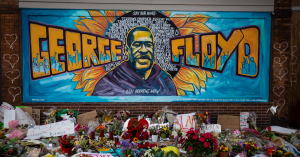
                                                                (George Floyd Memorial) 

“To me, Black History Month is a stepping stone. It is great that the month of February is dedicated to the topic – but further, it enables this recognition to be present all the time, all 12 months of the year. From past to present, our society has grown significantly in regards to cultural inclusiveness. However, current awareness is only a start to reconciliation, and does not account for past events. For these reasons, Black History Month is a great opportunity to learn about certain cultures, and also their contributions to our society. Once we begin to appreciate these past contributions, we can take as step forward into being a better society in the future and beyond. For me, Black History Month presents the opportunity to understand and value unique history, and lays down a foundation to carry the same awareness all the time.” – Daniyal Sait, Jr. Editor

“Black History Month is a time to not only acknowledge the successes and achievements of Black people, but it is also a time to recognize the hardships that they’ve faced in order to make these achievements happen. In February, we focus on the contributions that Black people have had on history and culture. A lot of things I enjoy, whether its the styles of dance I train in (such as House, Popping, Hip Hop, etc) or listening and creating music, they would’ve never existed without Black people.”
Gabrielle, Awesome Blogger

“A sign of change in the future for other minorities” – Jesun, Awesome Blogger

“It’s the day that recognize the racism that Black people face. It’s an opportunity to really realize that this has been ignored too long and we need to change that.” – Jaida, Awesome Blogger

“Black History Month means taking the time to explore a distinct history—and culture—and its achievements. Although Black history cannot be contained by a single month, it is still an important reminder for us to recognize this past, take a closer look at society today, and find new avenues of connection for the future.”            – David, Awesome Blogger

“As a marginalized human being, it means a lot. Not only in the direct implications of helping educate others about past injustices and issues that everyone has faced, but the fact that they are able to learn about it in a judgement free context is incredibly important. Exploring exactly what happened in history and why it was wrong is how we make sure it never happens again. I hope everyone has a month full of learning and understanding. Let Black voices speak.” – Laiba, Awesome Blogger
“Black History Month is a very special and important part of the year where we acknowledge the Black individuals who have made such an influential impact in our lives. To me, Black History Month is a symbol of hope and resilience that portrays, that we consider the past of racial segregation as a mistake, and want to make the world a better place together. Today, we recognize all Black individuals, whether they were scientists, authors, change-makers, and all who have today led the world to become a better place. Altogether, Black History Month represents a diverse and better future.” – Harshita, Awesome Blogger

For me, Black History Month is a time to reflect upon and celebrate the Black community. It is a time to understand Black history going beyond the racial discrimination and injustices, to highlight many of the inspiring Black achievements. I believe this month is very special in that we are all given a specific opportunity to celebrate Black accomplishments, and continue our efforts in changing systemic racism rooted in history. ” – Claire, Awesome Blogger

“To me, Black History Month means remembering and honour the people who stood up against the racism and prejudice they faced in their lives and paved the way for a more diverse world. It gives us the opportunity to understand their struggles and learn from their stories” – Zainab, Awesome Blogger

To me, Black History Month is about education and appreciation surrounding the importance and beauty of Black culture, as well as about spotlighting Black achievements and contributions to society.” – Lara, Jr. Editor

“Honouring is a huge word to describe what should be done not only in this month, yet throughout the 365 days of the year. There have been many of us who may have observed through countless articles, videos, and teachings the life and accomplishments of the black community. Despite the accomplishments achieved, they have been neglected due to their race, background, and commonly known as their skin color. There is a statement I like to believe is true, as it doesn’t matter how educated man shall be, if they are not respectful to those around them and create prejudiced assumptions makes you no more educated than someone respectful to everyone. I believe Black History Month reflects upon actions that should have been made in the past, yet weren’t. The black community was never honoured due to their skin color, and society never was seen to show any sense of appreciation towards their work and talents. On the contrary, they have seen to contempt the work of the black. With that being said, I believe that Black History Month is a special time of the year, that black individuals both of the past and present, are commemorated and recognized. Despite this, it’s vital to understand that the black community should be commemorated throughout the year and should be respected, despite it being the month of February. Let’s unite and create a world where we can recognize everyone as equal, and not place individuals into a hierarchical standpoint.” – Diya, Awesome Blogger

(Breonna Taylor Memorial)

“Black History Month means reflecting upon how racism affects the world and appreciating the different cultures/races around the world. It also means taking a step back and looking at how African Americans have been mistreated throughout history, and becoming educated so that we do not repeat past mistakes.” – Yuri, Awesome Blogger

“Black History Month is a chance for all of us to learn, understand and celebrate the history of this culture. It means going above learning about their history by celebrating the tremendous achievements that they have had. Furthermore, it’s about taking the time to hear their stories and experiences in order to educate ourselves. It is a time to be there and to be allies!”
– Shraanvi, Jr. Editor

“To me, Black History Month acts as a reminder to all people of the injustices Black people have endured, but it also celebrates their contributions to making our world better. Therefore, I think it vital that we educate ourselves on Black History Month to honour the positive impacts Black people have on society and recognize the resilience and perseverance that is needed to overcome the racism that is sadly still prevalent today.” – Pareen, Awesome Blogger

“To me it is a celebration of black history and achievements. A recognition of black excellence and a month to bring awareness to current and past issues.” Maria, Awesome Blogger

“Black History Month means recognizing, appreciating, and celebrating all the Black people who helped our world get to where it is today. Black History Month also means spreading awareness about their culture, the impacts they have on history, and their contributions to society.” – Chloe, Awesome Blogger

Make sure to tune in all month to read our youth voices about Black History Month and if you’d like to get further educated, check out these links below:

Black Historical Figures in Canada

Black History in Canada

Black History Month with the Calgary Public Library


Image: 1 2 3


Renewable Energy Systems in Calgary

What is humanity’s biggest concern currently? This question sparks a great deal of controversy. Some believe it is the COVID-19 pandemic or political tension, but I can argue otherwise. Climate change is a rising issue that requires immediate action to resolve. It was first discovered over a century ago and was only formally addressed in the late 1900s.

By definition, “Climate change refers to long-term shifts in temperatures and weather patterns. These shifts may be natural, such as through variations in the solar cycle. But since the 1800s, human activities have been the main driver of climate change, primarily due to burning fossil fuels like coal, oil and gas.” (United Nations, n.d.) Electricity, along with carbon dioxide (a greenhouse gas), are produced through the burning of fossil fuels. The energy supply sector (including electricity and heat) contributes to 35% of the world’s greenhouse gas emissions. Since energy production is such a large contributor to climate change, it goes without saying that we should focus on reducing these emissions. How can this be achieved and what, specifically, can Calgary do to help? Two words: renewable energy.


WHAT IS RENEWABLE ENERGY?

Renewable energy is energy derived from natural processes that are replenished at a rate that is equal to or faster than the rate at which they are consumed.” (Government of Canada, 2017) In other words, renewable energy is energy from natural, infinite sources and is self-sustaining. For instance, a wind turbine is a renewable energy source that is powered by the wind. The wind is natural, plentiful, and will never “run out”. Other popular examples include solar power (from sunlight) and hydropower (from water currents).


WHY RENEWABLE ENERGY?

Renewable energy systems provide numerous benefits other than being environmentally friendly. This includes being extremely dependable, positively impacting our economy, and improving the general well-being of humans. This is already proven in Canada, one of the cleanest countries in the world, where wind and solar renewable energy are the fastest growing electricity sources. Recent growths in the use of solar and wind renewable energy systems followed the sharp decline of fossil-fuel-powered electricity generation. In addition, the cost of renewable energy systems has rapidly decreased. 


CALGARY + RENEWABLES?

In 2020, renewable energy provided 14% of the total electricity generated in Alberta, with the “capacity” being 23%. However, this data is subject to change with more funding and investments in the near future. The Canada Energy Regulator (CER) anticipates that the capacity will reach 26% by 2023 (next year!), with an emphasis on solar energy. Believe it or not, Calgary is the sunniest city in all of Canada, with roughly 2 396 hours (333 days) of sunlight every year! With that in mind, Calgary is the perfect candidate for solar panel usage. Advantages of installing a solar panel system include (but are not limited to):

  • Carbon emissions are reduced by 5 to 10 times
  • After the initial cost, the system will pay for itself (and even gain you profit!)
  • You will be helping the economy and creating more jobs
  • Just like putting cash into a savings account, you could make use of your roof by installing solar panels
  • The appearance and aesthetics of your home will be improved, and you can boast your cutting-edge technology
  • Providing your own energy will give you a sense of self-sufficiency
  • The value of your home will increase

Therefore, if you live in Calgary and want to reduce your environmental footprint while lowering your energy bill, consider installing a solar panel system!


I HAVE BEEN PERSUADED. NOW HOW DO I GET STARTED?

First, the amount of exposure to sunlight in Calgary varies with location. To determine the feasibility of installing a solar panel system at your location, visit this interactive Calgary Solar Potential Map: Solar Potential Map. Once that has been figured out, the next step is to contact a solar panel company. They will lead you through the entire process. More information can be found in this thorough, informative guide to installing a solar panel system: Guide.


Sources: 123 / 4 / 5 / 6 / 7 / 8 / Solar Potential Map / Guide / Featured image

Instructions for Dancing: A Review

In the month of January, I picked up a novel by Nicola Yoon called Instructions for Dancing. After reading and thoroughly enjoying both of her previous novels (Everything, Everything and The Sun is Also A Star), I had nothing but high expectations for this one. Now, I have to say, this is one of the most profound novels I have picked up in a while. So today, I wanted to share my thoughts and feelings about this book and convince you to read it.

Synopsis

Instructions for Dancing follows the story of a teenage girl named Evie Thomas as she copes with her parent’s divorce. While going through this drastic change, she realizes that she has the ability to see the beginning, the middle and the end of a relationship when she sees a couple kiss one afternoon. While understanding her newfound ability, she finds herself dancing with a boy named X at La Brea Dance Studio. X is adventurous, optimistic and believes in saying yes to everything. This leads the two to enter a ballroom dancing competition, forcing the two closer and closer together. However, as Evie sees the ending of more and more relationships thanks to her ability, she begins to question whether love is worth the risk.

My Thoughts

***spoiler free***

Upon reading the synopsis and looking at the cover, I truly thought that this was a light rom-com. However, this book is so, so much more than that. Not only does this book feature a relatable main character, a great writing style but it gives you a truly important lesson that I believe is vital in all aspects of life.

Characters

First of all, Yvette (who goes by the name Evie) is a teenager who is learning to cope with her parent’s divorce. As a result, she is closed off, hesitant and guarded in many aspects of her life. As a reader, diving into a story with the main character who had their own imperfections and struggles was truly refreshing. Evie was portrayed as a real individual who had her own struggles and conflicts with those around her. Not only was this relatable, it made for a more interesting and enriching read.

Furthermore, this book truly has great representation. This not only provided variety, but representation is an important aspect to any novel in my opinion.

Writing Style

One thing I adore about all of Nicola Yoon’s novels is her writing style. Her chapters are often short and in my view, more informal. For example, some chapters may be a page long while others may be several pages. Some chapters may consist of entire events while others will simply have a poem. This writing style provides variety and truly makes you want to keep reading. Not only did this make Instructions for Dancing a quick read, but it allowed me to get different perspectives into Evie’s life.

A Profound Lesson

This book teaches you a lesson that I believe is crucial in all aspects of life. As Evie learns to cope with her parent’s divorce, she has a pessimistic view on many things. She’s afraid of getting hurt once again and as a result, she is hesitant and guarded in many aspects of her life. However, by the end of the book, she learns that despite the heartbreak or outcome of an experience, the experience and the joy it brings you is what truly matters. Essentially, this book stresses the importance of the journey rather than the final destination. This is something that can blindside many of us, but is a vital lesson nonetheless. Therefore, this book truly taught me something I had forgotten and this combined with several other factors made this a truly profound and meaningful book in my eyes.

Final Thoughts

Thanks to its great character development, beautiful writing style and most importantly, the message it was trying to convey, this book has become one of my favorites. I truly hope that you give this book a chance and love it as much as I did!

Featured Image

Sources: 1

A Personal Memorandum

0

To the person I will be tomorrow:

You inherit these memories of mine and every fibre of my physical self.

You are like me. I too have inherited the persona and body of my predecessors, and my experiences will become your experiences in a mere few hours.

Yet you—and subsequent you’s—will have experiences I—and preceding I’s—cannot fathom. You will be different from me, but still the same.

Good morning.

I hope when you step outside you too will embrace the brisk air and try to pluck the snowflakes out of the air as they drift toward the earth—get a closer look at them, breathe and love. They won’t last.

I too am transient.

I have it easy today, but you will have to brave the next day. It will surely be daunting with all its tumult and fire—walk through. And you too will disappear amidst dreams mid-night, a peaceful death in which we succumb to nothing but our own fatigue.

That is one life.

I was reborn in the morning, revitalized. But I was loath to do what I should have done, too quick to say yes, too afraid to say no—there seems not to be enough time to complete it all and end.

I’ve wasted my life doing other things.

There’s so much left unfinished.

So to the person I will become tomorrow:

I am sorry I could not muster the strength to finish what I started and wanted to finish. I pass on the baton to you, the existence who wakes up groggily from my bed—now yours—in irate frustration with me for having gone to bed so late.

It’s enough for me to say “become”.

Falling into slumber, I know you will still be me at heart, but I hope you will be different—better, even.

I wish you all the best.

Good night.

Featured Image

The Study of International Relations: A Crash Course pt. 3

We’ve finally come to the final instalment of this series! It’s been something like three months in the works, but please enjoy these last three theories.

If you haven’t already read them, click to read Part One and Part Two first. Then, without further ado, let’s jump into it!

Constructivism, aka “The Self Help Book Of IR Theory”

Constructivism is a theory often associated with the end of the Cold War, arguing that the social world is of our own making. Actors, usually those with power, continually shape and reshape the nature of international relations through their actions and interactions. We create our own reality.

For example, imagine the UK has 500 nuclear weapons, while North Korea has only one. Which country is more dangerous to the US?

This relationship between the three countries is perceived the same way by all three of them; this is called intersubjectivity. This intersubjectivity, or shared understanding, informs the basis of interaction between the three countries.

This example also shows that the nuclear weapons themselves have no meaning without their social context.

Constructivism sees the world and everything we know about it or think we can know about the nature of the world. This refers to the nature of reality, or ontology, and the nature of knowledge, or epistemology. Constructivism goes beyond the material reality, including the effects of ideas and beliefs on world politics. Reality is always under construction, and meanings can change over time depending on beliefs and ideas.

Feminism, aka “Smash The Patriarchy, Baby!”

I know what you’re thinking. Feminism? An IR theory? It’s more likely than you think.

From the outset of human history, women have been almost completely absent from both the theory and practice of international relations. Women are largely kept out of decision-making and institutional structures, “high politics,” the state, and the military. Keep in mind, we cannot point to the isolated “great women” of history to refute this claim—heroes though they are, they were usually the exception rather than the norm, and often succeeded and were applauded due to taking on traditionally masculine traits. International relations has always been, in this sense, a highly masculine discipline. It has also long been “gender-blind,” failing to acknowledge the impact of gender on our world. Further, international relations historically has tended to operate on the assumption that women’s day-to-day lives are neither impacting or impacted by international relations. The domestic sphere where women “belong,” after all, cannot possibly have to do with the work of the big, important bureaucrats.

That’s sarcasm, by the way. I would like to see a world where society can continue to function without its domestic sphere.

In any case, feminism as an IR theory seeks to challenge the historical bases of international relations, taking women and gender seriously as factors which have long shaped our world. It also places an emphasis on intersectionality, and seeks to deconstruct gender roles in society—who decided that the domestic sphere was an inherently feminine , anyway? And furthermore, who decided that femininity was the inferior end of the spectrum?

Feminist IR theory makes women visible and gives them agency, but it also exposes gender-based violence for the normal state of affairs that it is in our society. Violence against women is seen in some cases as a currency even—to rape the women of a city was and is as disgustingly normal for a conquering army as to loot the homes of the inhabitants. Further, domestic and sexual violence have been constants in society, not aligning with traditional periods of stability and peace. While states and men are at peace, women are constantly at war. This is what feminism seeks to rectify.

Post-colonialism, aka “The West Projects Its Insecurities. Again.”

Post-colonialism is first an foremost an examination of how formerly colonized regions experience IR. It posits that Western perceptions of the non-West are a result of the legacies of colonization and imperialism.

Like feminism, post-colonialism interacts heavily with other theories, asking questions which have previously gone ignored. It draws attention to IR theory’s traditional neglect of the intersections of empire, race, ethnicity, gender, and class.

Like constructivism, post-colonialism is somewhat tied to the idea that society perpetuates itself. Post-colonialist theory operates around discourses, both written and spoken. These discourses—i.e. the way we talk about the world—have built the narrative of Western superiority and have been used to justify colonialism in the name of progress. For example, they paint non-Western societies as primitive, hyper-masculine, effeminate, aggressive, or childlike, when this is the farthest thing from the truth.

If you’ve read this far, thank you for sticking around for this series! I hope you learned something interesting.

References: 1/2/3

International Baccalaureate (IB)

0

It’s the time of year now, when Grade 9 students are completing their registration for High School, and one question that is often posed at this time is “What is the IB Program, and should I take it?” As a guide for those students, here is a complete blog post dedicated to discussing the IB program, to help them choose the right path for high school.

International Baccalaureate (IB)

IB stands for International Baccalaureate. IB is an academic program (for typically two years in Grades 11 and 12) based on a more rigorous international curriculum. It works to provide a well-balanced education and foster personal and academic development for students. IB offers a variety of courses that you can choose from, and two program choices, either a full IB Diploma or IB Certificate.

In order to obtain a full IB Diploma, you require a total of 6 IB courses; three of which have to be taken on a Higher level (and the remaining can be taken at Standard Level). Higher Level is a subdivision within IB courses, it implies harder content, more rigorous examinations, and usually more hours of learning. Standard Level, on the other hand, is still rigorous and difficult, but it may not be as academically challenging as a higher level. Here is a list comprising of all the IB courses offered. However, these may vary according to schools, and certain schools may require you to pursue certain subjects for completion of the IB diploma.

In addition to this, the IB diploma also comprises of three core elements:

  1. TOK – Theory of Knowledge is a course that all IB Diploma students are required to take, “in which students reflect on the nature of knowledge and on how we know what we claim to know.”
  2. Extended Essay is a self-directed research paper composed of 4000 words, that students need to write in order to graduate the IB Program (usually in Grade 12).
  3. CAS – Creativity, Action, Service is where students have to complete a project related to these concepts (sometimes there is a certain number of volunteer hours you need to complete).

Including these elements overall, you are given a mark out of 45. A grade out of 7 is awarded for each of the courses you finish in IB, since there are 6 courses in the IB Diploma, you get 42 marks. Furthermore, three marks in combination may be awarded for the Extended Essay, TOK, and CAS requirements, resulting in a total grade of 45.

If you do not want to pursue the IB Diploma, another option is the IB certificate program (also known as Partial IB). In this program, you may choose to take certain IB courses that you are interested in, with a minimum of two courses. After completion, you are awarded a mark out of 7 and a certificate of IB in those courses. Depending on your school, you may be required to still complete some of the requirements of CAS and TOK.

Why take IB?

There are many reasons why an individual may want to take the IB program, including:

  1. University Acceptance – Although it is not required that a person should take IB in order to get into university, taking the IB program may result in easier acceptance, as colleges are aware of the more challenging, rigorous course load in IB. This holds true for especially international university acceptance.
  2. More Challenging Workload – Another reason why people take IB is to challenge themselves to take more difficult and rigorous courses (and learn more in-depth content) to help them better prepare for university.
  3. Earning College Credits – Some colleges recognize IB courses as credits in their university. For example, if you take English IB, some universities recognize this as equivalent to a first-year English course, so you will not have to do the course; this can save money and time in college.

TL;DR (A Summary)

In this blog post, I discussed the foundations of the IB program and the reasons why the IB program may be beneficial. In the end, it is your choice whether you think the IB program is the right fit for you. Nevertheless, I hope this information helps!


Sources (& Good Resources that have information on the IB Program): IB Website/1/2/3

Featured Image

A Beginner’s Guide to Pilates

As defined by Healthline, Pilates is a challenging low impact exercise method that balances strength with mobility, aligns the body, fine-tunes movement patterns, and strengthens the deeper muscles of the core. It works the deep muscle layers, creating long and lean muscles. Because it is also low impact, pilates is suitable for those with injuries or health problems. However, just because it is low impact, it does not mean low intensity. In fact, because you are engaging the deep muscle layer, the exercises are often very challenging. Although pilates is often promoted by females, it is important to know that pilates is for everyone, regardless of gender, age, or lifestyle. If you are still hesitant to try pilates, here are some benefits to persuade you.

1. Increased flexibility and mobility

Pilates uses a wide range of motion, and engages the full body. This helps improve your flexibility and mobility. As teenagers, we are often found sitting all day in front of our screens. By doing pilates, you can gain more flexibility and mobility. 

2. Decreased Stress

Pilates, similar to yoga, puts an emphasis on body awareness. By connecting with your body, you can decrease your stress. It also incorporates deep breathing techniques, which can also help decrease your stress levels. 

3. Improved Posture

Pilates works the small, deep muscles in your body. It is crucial to strengthen these muscles in order for your body to be properly aligned. Like mentioned before, this is important for teenagers, who are often criticized for having bad posture. 

4. It prevents injuries

Pilates works to balance the muscles in your body. Balanced muscles, meaning that they are neither too loose or tight, lessens the likelihood of injury. It also helps you build dynamic strength so you are able to stabilize your joints when performing. This makes pilates very beneficial for athletes. 

5. Improves sleep

We’ve all spent restless nights where our eyelids are drooping yet we can’t seem to fall asleep. Pilates can help with that. Studies have found that pilates can improve your sleep, and helps make you fall asleep faster. This was found to be especially true for those under 40 years of age. 

Are you ready to try pilates now? Well, lucky for you, Calgary has many excellent pilates studios! Here are a few to get you started. 

1. Junction 9 Yoga & Pilates

A joint yoga and pilates studio, Junction 9 offers both group and private classes. They also have pilates workshops for you to try. Visit them online at https://junction9.ca/ .

2. Calgary Pilates

Calgary Pilates is one of the few STOTT PILATES certified studios in Calgary. They also have physiotherapy, which is perfect for athletes! Their website is https://calgarypilates.com/

3. Club Pilates

Club Pilates has something for everyone. It has nine programs with different levels, so you can choose which level you would like to try. Find them online at https://www.clubpilates.com/en-us/


Sources [1][2][3][4][5][6]

Art Therapy: Can it Improve Mental Health?

We do art in our everyday lives whether it is journaling, painting, drawing or any other fun medium. Sometimes we like to do art as a hobby, or other times it becomes our passion and profession. But, what we don’t know is that it has a deeper implication. Art has the power to spark creativity, help to relax and calm, and most importantly improve mental health.

Why is it Relevant?

Especially during the current times of the pandemic, mental health needs to be addressed. According to the Government of Canada, there has been a 4-5% increase in anxiety and depression-related disorders over the course of the pandemic. Currently, “one in four (25%) Canadians aged 18 and older screened positive for symptoms of depression, anxiety or post-traumatic stress disorder (PTSD)”. Although, some might say that a 4-5% increase is a minor change; however, the change should not be inclined because more people are suffering. In order, to improve mental health amongst individuals, we must integrate art as therapy into the daily lives of mental health patients and replenish them with the benefits that art offers. 

Wait for a second… What is Art Therapy?

Art therapy is a way to practice visual arts in a therapeutic mindset. This method establishes a state of calm and self-reflection in our minds. Since art therapy is open to any person it helps us find our way through art. There are also no borders to the art forms, where we just need some art supplies and a blank canvas. This could either be splashing paint or abstract representation. Also, art therapy doesn’t have to be done with an actual therapist, instead, we could easily do it at home. All that is needed is a calm setting, any art supplies of your choice, and you! Furthermore, Art therapy allows us to spill our emotions out with creativity, so there is no right or wrong. This is why art therapy could be so useful to convey our deepest emotions while receiving relaxation. This method is a great way to feel light so don’t forget to enjoy the process!

Methods of Art Therapy

There are so many mediums of art therapy to acquire its benefits. These include

Art Mediums - What Are the Different Types of Art Mediums?

  • Collage/Scrapbooking
  • Journaling
  • Finger Painting
  • Drawing/ Colouring
  • Doodling/Scribbling
  • Painting
  • Photography
  • Sculpting
  • Working with Clay

Mental Health Benefits From Art Therapy

Emotional Release: One gets to reflect their emotions through art and tries to make themselves feel lighter. Strong emotions such as sadness, anger, or timidness which are complicated to express as words, could be voiced conveniently with art.                                                                                                         Self-Discovery: When trying different forms of art therapy, patients usually display self-expression thus discovering their potential, or passion.
Stress Relief: Art therapy will help relax the mind and distract it from stress. Art is usually referred to as a stress-buster.   

Reduce Trauma Reactions: Art therapy is known to have reduced trauma symptoms in many. Mediums such as finger-painting or scribble art could help people spill their deepest fears onto a paper and reduce their trouble.
Lower Depression: Usually art is a way to experiment with colours and play around with different mediums. This develops happiness in one’s mind and helps reduce sadness.                                              Self-Esteem: When doing art therapy there is no limit and right or wrong. When we complete an artwork we feel confident or self-achieved, therefore boosting our self-esteem.

There are many more ways art therapy is helping patients improve mental health, especially at a time like the pandemic where everyone is isolated from their social life. 

Sources: Feature Image, 1, 2, 3

Keto: Good or Bad?

0

Keto has its effects, it could cause low blood pressure, constipation, kidney stones, and more. Some doctors wouldn’t recommend keto to patients because it is not sustainable nor is it realistic. So, what do we really know about Keto? How did people feel after trying it? And would they do it again?

Top Tip!


Always make sure to do your research and discuss with a doctor before trying a new diet.

What is Keto and what do we know about it?

We know that the Keto diet is short for Ketogenic. This diet does involve a high amount of fat, an ordinary protein intake, and, of course, only a little intake of carbs. This does mean no fruits, starchy veggies, juices, honey/syrup, chips/ crackers, and any baked goods (including bread).

Adults that have tried keto lost 10% of their weight in a year without regaining any of it again. The initial weight that you may lose at first is just water weight. Water weight is just extra water stored in your body showing up as extra pounds on the scale. Water weight is a natural thing and everybody has it, so this is not something to concern yourself about. When starting the loss of weight is not actually from fat loss but the water as well as muscle loss.

I asked someone who went through with keto a couple questions:

Did you like it? Would you do it again? Would you recommend it?                 

She said “I would do it again but it requires a lot of motivation. It’s mostly easy to follow and I only recommend it if you are otherwise healthy and do not have any pre-existing conditions.”

In conclusion Keto is a good diet if you can handle it. If you can motivate yourself and have talked to your doctor then you are golden!  

Research sources 12

Image sources 1,2

Wisdom Teeth Removal – My Experience and Tips

0

Wisdom teeth removal is one of the most common oral surgeries performed. After having experienced this procedure myself, I wanted to document my experience to hopefully give some tips to anyone who will go through this surgery in the future!

First off, why do we have to get our wisdom teeth removed?

Wisdom teeth, also known as our third molars, often come in between the ages of 17 and 25. (However, you can definitely see them appear on an x-ray much earlier. For example, mine came in when I was only fourteen!)

They are removed for a few possible reasons:

  • They are impacted. This means that the wisdom teeth are trapped in the jawbone, and cannot come in normally. 
  • They may grow in at the wrong angle which can be both painful and damaging to other teeth.
  • There isn’t enough room in your mouth for more teeth.
  • Other problems such as gum disease and cavities. 

Before the procedure day:

  • I met with my oral surgeon during a consultation, where we discussed health details, questions, and decided what type of anesthesia to have.
  • My surgeon and I decided on intravenous sedation (IV sedation).

Types of Anesthesia:

  • Local anesthesia: numbing or freezing of the mouth and gums. Often accompanied with laughing gas to further relax the patient during surgery. Patients are alert very shortly after their procedure.
  • IV sedation: intravenously administered drugs. Patients might be semi-awake during the procedure, but won’t experience any sort of pain. (Some people may sleep through the entire operation).
  • General Anesthesia: administration of strong intravenous medication and/or inhaled gas. General anesthesia does compress the respiratory and cardiovascular systems, causing some patients to be at risk for complications.

Day of Surgery: What I can recall

  • My mom and I arrived at the oral surgery room where we filled out forms, and met with the surgeon, anesthesiologist, and many nurses. 
  • The nurses prepared me for surgery by taking my blood pressure, pulse, and connected me to a pulse oximeter (through a finger clip).
  • The anesthesiologist tied my upper arm with a tight band and placed the IV needle into my arm. (For me, this part went by super fast!)
  • The next thing I knew, I was having a conversation with the anesthesiologist about volleyball, when I suddenly noticed the ceiling looking a little blurry.
  • After that, I only remember waking up in a separate room! It felt bizarre that the surgery had happened so fast, since the IV sedation caused me to sleep through the whole procedure.
  • I was sent back home with medication prescriptions, and a kit with gauze, syringes, and instructions.

My Tips for Recovery!

  • For the first few hours after you arrive home, you should bite on gauze to stop any bleeding.
  • Prepare lots of soft foods and drinks in advance! Trust me, it makes life so much easier when you have a variety of options for things you can drink/eat.
  • For example, smoothies, protein shakes, mashed potatoes, soups, juice, yogurt, etc.
  • Avoid brushing your teeth around the area where wisdom teeth were removed for the first couple of days. (This can cause blood clots to become dislodged, leading to a dry socket.)
  • Do not drink through a straw, smoke, suck on hard candies, or agitate the area.
  • Follow your doctor’s instructions on cleaning your wisdom teeth extraction sites! This often looks like gently rinsing your mouth with salt water and filling a syringe with salt water to fill/clean your extraction area. 

Conclusion:

Wisdom teeth removal can be very nerve-racking, but goes quite well for a majority of people! Plus, (if you have parents like mine) you can watch some hilarious videos of your loopy self afterwards! 

I hope my experience helps some of you know what to expect when you get your wisdom teeth out! Remember, embrace the chipmunk appearance! (Even if your brother does decide to change your profile photo to an actual chipmunk in his phone).

Featured Image

Sources:  1/2


Becoming the Main Character

I don’t know about you all, but I have an obsession with Emma Chamberlain’s podcast called “Anything goes with Emma Chamberlain”. In one advice dedicated episode, she briefly touched on the importance of being the main character. I could no agree more with this and  concluded that there are infinitely many simple things we can do to feel like the main character.

Why?

Before I convince you all to sing at the top of your lungs or make a “fool” of yourself in public, I should explain why I believe acting like the main character can do wonders. As teenagers in the 21st century, we constantly ignore our stress and forget to treat ourselves with the gratitude we deserve. We all need little breaks to put a smile on our faces, and we can easily obtain this by taking a few tips from our favourite protagonist’s, it other words, becoming the main character”. For those of you who are a little confused, being the main character means you may do certain things that seem weird or cringey to do in real life, but make a protagonist charismatic and unique in a movie or novel.

How?

1. Seize the Opportunity

Life is too short for us to wait for the perfect opportunity to present itself (it rarely happens). If you have a passion or goal, don’t let your fears get in the way of your future success. Examples of this may be acting like a leader, being assertive, NOT being a people pleaser, etc. Sometimes we have to put our well being and interests first instead of shying away form potentially inconveniencing others.

2. Take Time for Yourself

Sometimes you just have to take a moment to be with yourself and relax. Settle down with a good book and cup of tea or blast music to your favorite song. Whatever it is, take the time to tune in 100% and give yourself a break. Remember, it’s ok be ok with being alone!

3. Embrace your surroundings

Often times, we forget to notice small, but incredible, things around us. The next time you sit in the car or take a walk, make a conscious effort to observe what’s happening around you. Is there a cute dog walking by? Maybe a beautiful rainbow has painted the sky. The other day as a peered out of my car window, I observed a lady who was strolling past a shop and she noticed that a potted plant had fallen over outside because of the wind. With genuine care, she took the time to set the planter straight and even rearrange the flowers before she continued walking. Witnessing that simple act of kindness made my entire day and truly makes me think about how much good we miss by simple not being present.  Please DO NOT do this if you are driving or sometime that required attentiveness for your safety.

4. Be Yourself!

I think this goes without saying, but being comfortable with yourself is the #1 key to achieving a “main character” persona. Wear want you want, pursue things that interest you, find friends that you love to be around!  It’s your choice how you want to live your life, so I would highly suggest embracing the little things that make you you and make the most of it!

Featured Image

After The Rain – A Short Story

0

The twinkling starry night was obscured by numerous grey cotton balls from above.

Crystal water droplets gently separated themselves from the crying clouds as it tapped the ocean water lightly. Each droplet cascaded from the dark sky as thousands of crystal liquids reflected the majestic ocean. The sun rose from the horizon once again, pouring it’s warm and bright light down to Earth like a molten pot of lava. The sky underneath the grey clouds turned into a pleasant orange, making the atmosphere more comfortable than ever.  Under the crystal clear waters, a huge figure was gliding itself through the endless ocean. Indeed, it was a whale, a humpback whale by the name “Finn.” The emptiness in Finn’s soul matched the lifeless sky and the salty formless arms that surrounded him. For his whole life, he’d  been swimming inside this endless tank of water. 

The ocean was silent, but the whale wasn’t.

Singing gave Finn the words and emotion that healed his lonely soul; it was the very key to his locked door. His voice was like a bass in a choir, echoing across the ocean and hoping for a reply he knew he would never get.  After another few hours of pointless swimming through the waters, a wave of sudden excitement chimed into Finn’s mind after he saw an unknown body of land. The island was like an illusion of beauty in Finn’s mind. His eyes blinked numerous times, wishing it wasn’t an actual illusion. Thankfully, once his vision returned, he knew that he had tightly grasped that hope and didn’t let it fall. The small island stood in the middle of the ocean, like a cupcake on a sugared plate. The rising sun painted the small tropical island gold, making it shimmer under the pleasant sky. Green trees stood tall like soldiers ready for a battle. The mountains were crouched in the shadows like a hibernating bear. The crisp touch of the golden sand slid naturally under Finn’s stomach.  The refreshing smell of newly grown coconuts pleased Finn’s nostrils and his mouth began to water. He felt his body unconsciously move a bit closer to the unknown island. A flock of seagulls came with a flash of silver, their wings hugged the air tightly as they drifted away from the dark sky and landed on the branch of a coconut tree. 

“I wouldn’t go any more closer to that island if I were you,” one seagull insinuated, “but don’t misunderstand anything, I’m not trying to help you.” Finn’s senses told him that the seagull had flashed a sharp glare at him, a glare filled with cold emptiness. The displeased seagull never waited for an answer and flew away without taking one more look. 

The whale sighed in despair, he was never treated well in the region of the southeastern Alaskan Ocean. If this had taken place in the human world, he would be considered as an interloper, someone who stepped into someone else’s territory without their permission. 

Finn was torn away from his parents due to the destruction of the Pacific ocean. Humans decided to not appreciate the kindness this world has given to them and crushed the environment with their plastic pollution. Garbage and pollution now sat on top of the ocean like a second layer of unnecessary skin. The surface of the ocean moved in an oily slick way with a rainbow sheen that held no beauty. Finn still remembered the foul smell of the chemicals that were scattered throughout the mucky waters and the stinging pain in his eyes due to the inescapable toxins. 

He drifted his mind away from the meaningless thoughts and onto the new island. 

The heavy brown balls of coconuts were like heavy weights, making the slim trees act as liftweighters. A small coconut plopped down a tree and gracefully rolled to a stop 3 feet in front of Finn. A thought approached into his mind. All he needed was to shift himself forward for 3 feet and he would be able to taste the coconut. Success settled right in front of him. 

Simultaneously, a small part of the sun beamed outside the grey clouds and flashed it’s bright light down to the coconut seating 3 feet away from Finn. Finn could no longer hold himself back from the desperate thoughts and the refreshing taste of the coconut. He felt his body pulling himself towards the coconut. His tongue came sliding out of his mouth, scooped up the coconut out from his mouth and bit hard. White liquid came rolling out of the coconut and on to his chin. The unknown liquid tasted sweet with a sense of nutty and a tint of vanilla. The sand under his stomach felt more dry than before, Finn knew that he was a step further from the ocean, but also another step closer to danger. He drifted his mind away from those unwilling thoughts and started further into the island. His eyes landed on a triangular looking large evergreen structure. 

The colossal mountains in the background were like the shadows to a piece of art. Even though the mountains decided to remain unexposed in the sunlight, they still stayed bold in the shadows as if they was the very soul of this island. The coconut trees blocked a part of Finn’s sight and he couldn’t enjoy the full view of the masterpiece. 

Shift another few feet, a small voice inside Finn’s head whispered to him. Without any hesitation, Finn’s mind hooked himself closer to the island, dragging his body with him. The sand under his stomach felt like the scales upon a dragon’s spine, one who had chosen to sleep for centuries. 

Soon, the sun started to set and the pleasant color of the sky soon disappeared. Finn’s view darkened, and the island turned into a dangerous black, the kind that makes you instantly shiver in terror. Finn’s body flinched slightly when a small voice came crawling into his mind. 

You’re stuck, aren’t you?

The whale’s eyes widened with panic and his tail anxiously flapped twice. He put all his strength down on the bottom of his body as he struggled to slide back down into the ocean. A sudden wind grasped into Finn’s face, making his lungs burn in pain. The image of the seagull appeared once again into his mind, haunting him like an unwoken nightmare. The moon hung eerily on the horizon, looking down at the dying whale with unpleasant eyes as if it was mocking it’s foolish efforts. The coldness of the atmosphere deepened itself into Finn’s bones until all 250 bones felt like sharp ice. The wind howled past the trees, each wave of coldness froze his cheeks until he felt like he’d been stabbed by a million spears. The waves no longer felt friendly, instead, they rose like great mountains, turbulent and unforgiving. The strength in Finn’s eyelids decreased and his consciousness started to vanish. The whale slowly started to dissipate away from this universe, and fell into a never ending sleep. 

NFTs: Millions of dollars in the form of pixels

I am by no means a tech guru. But I, like practically everyone else, have noticed the increase of technology replacing everyday necessities, and even luxuries. When I ask my parents about life without the internet and smartphones as a commonality, I’m shocked that they functioned like normal kids, especially in their teenage years.  It is undeniable that the last 20 years has been filled with numerous technologies that life has become dependent on. I loved reading this list: https://fee.org/articles/the-20-biggest-advances-in-tech-over-the-last-20-years/. Although, we have made seemingly infinite technological developments in the last century, we absolutely should not expect its speed to falter. As a matter of fact this brings me to a specific new appearance that I find especially intriguing: NFTs.

NFT stands for “non-fungible-token.” Unlike other currencies or goods, NFTs cannot be replaced with anything else. For example, you can trade an Apple Stock (I swear I’m not a basic finance bro) for another Apple Stock and they would be equal in worth (obviously if they are being bought and sold at the same time). The ability to trade something for the same thing is a simple way of explaining what a fungible good is. This is why stocks are considered fungible. For a more definite explanation: “Fungible things are items that can be easily replaced with another item that is practically the same.”3. Some examples would be dollar bills, crypto currency, pens, etc. 

Examples of non-fungible things would be practically any form of art like music, literature, paintings, sculptures, etc. Another popular example is one of a kind baseball cards. All of these items cannot be traded or replaced with something the same as it; just think opposite of fungible. For an extreme example: although the Mona Lisa and The Starry Night are extraordinary pieces of art by renowned artists, they cannot be traded for each other as if they were the same.

OK, now that all of that boring clarification is over with, I would like to actually touch a little on NFTs and why I find them so interesting. NFTs allow people to acquire digital assets; they are like digital non-fungible items. The other day, I brought up NFTs with my mom and she was truly perplexed as to why people would want to buy millions of dollars worth of digital art/content instead of purchasing a painting. Although it might be difficult to understand the appeal of NFTs for the everyday person, with a little thought, their popularity can be explained with the slightest bit of practicality. It gives artists the opportunity to share their ideas and talent in an unconventional (at least for now) way and gives buyers the opportunity to support these artists while expanding their collections in a distinctive manner. I’m the epitome of an art armature so there are probably far more reasons to explain NFTs’ popularity than that.

A few examples of NFTs:

This piece called, ” The First 5000 days” sold for $69.3 million. Considering that the artist made a collage out of 5000 days worth of photos he took himself, I can understand the appeal of wanting to own this original piece. But, I do think paying millions of dollars for it is a bit of a stretch.

For a more controversial comparison…

This piece sold for $7.5 million. There’s a reason my Elementary school art grades were questionable, so I’m probably not the most qualified to judge this piece. I’ll let all of you take your own stance on whether this piece’s price tag is justified. But either way, it sold (not for a measly amount either), so there’s definitely something special about it.

Although, a $10,000 piece of art accessible and shareable with the click of a few buttons is a little boggling right now, it seems like something that is going to stick. Who knows? Maybe it will become just as common as hanging a painting in your house in the future.


PHEW! This is a longer post, so hopefully you found it somewhat interesting. Stay safe and continue embracing the exciting things our crazy world has to offer!

Sources:

1/2/3/4/5

Gym tips for beginners

The gym is a great place to try new things and challenge yourself, but that can be difficult if you feel like you don’t know what you’re doing. The fear of being stared at and judged is hard to overcome, but it will get better once you realize that people are usually too busy focusing on themselves to be looking at you. For now, here are some tips and tricks that will help you understand a bit more about gym memberships and workout routines so you can feel more comfortable when you go to workout. 

Tip 1: Getting a gym membership

The first step is actually getting a membership, and the best way to do that is do some research. Some gyms are pretty expensive, but there are some affordable ones out there, so just take a look at all of your options. Something you should also take into consideration is transportation. If one gym costs less per month but is further away, another gym closer by might be better as taking the bus or driving a car costs money and time. Another thing to look at is the amenities gyms offer, you can then compare them to the location and cost. A lot of gyms also offer extra circuits and classes, tanning, massage, and so on, usually with premium memberships. If you don’t want any of the extra things you know you can get the basic membership. Lastly, note that some places only accept people 18+, although most gyms let in young adults sometimes parental supervision or safety training is needed. 

Tip 2: Gathering the essentials

Now that you have a membership the next step is actually going to the gym. For this, you’ll need some supplies. Obviously, you’ll need gym clothes, while this can be really anything you’re comfortable in, lots of people say working out in cute gym clothes makes them more motivated because they feel more confident in themselves. This is one of those things that can be hard to do, but again, try to push yourself, and over time it will get easier. Shoes are also really important, running shoes are good for cardio as they have a softer bottom, but with weights people tend to wear flat shoes as it gives them more balance and support. There are also special weightlifting shoes, but unless you want to focus solely on heavy lifting, your normal sneakers should be fine. 

In this time personal safety supplies are essential, so you should always carry around hand sanitizer, wipes, and extra disposable masks. Covid protocols may vary from location to location, but usually you can have your mask off while you’re working out and you need to have it on when you move to a different machine. However, you’ll still be sweaty and out of breath in between your sets, so personally I would recommend the medical masks because they feel lighter. If you do use a cloth mask make sure to regularly wash it, even if you only wear it for a couple of seconds at a time. Other essential things are a water bottle, deodorant, shower stuff (if your gym has that), and so on.

Tip 3: Creating a routine 

Staying consistent with the gym is one of the hardest parts, but creating a routine is known to help with this. There are different ways to split up the week, depending on how many days you plan to workout. If you are quite busy, you can try to go 2 times per week, doing full body for both of those days. If you go 3 times per week, you can do a push and pull split. This means one day of upper body with push movements, which works things like chest, shoulders, and triceps, and the other with pull movements, working the back and biceps. The third day will be for legs. If you go around 4 days you can do 2 upper body days and 2 lower body days. 

Once you get to know your gym you’ll be able to plan exactly which machines you’ll use on what day. This helps save time plus you’ll totally look like a pro. Besides that, on all of your days you should have a proper warmup and cooldown to help soreness and prevent injury. Some good warm ups can be the cardio machines such as the treadmill or cross-trainer, or dynamic (moving) stretches. Afterwards you can do some static (still) stretches. You should do dynamic stretches before your workout because it warms up your body and gets your blood flowing, plus it helps increase the range of motion in your muscles and tendons. Static stretches should be performed after a workout because it helps prevent muscle aches and lactic acid buildup (thanks sports med class for teaching me these important benefits). 

I hope some of this helped, and just a reminder that it’s okay to not know what you’re doing, and yes you’ll probably make some mistakes, but it’s all part of the journey. Focus on you and it will all be okay. You got this 🙂

Featured Image

January 29th: A Day of Remembrance

As we approach the end of January 2022, an important day reaches our midst. The fast approaching event near the end of January is an important development that was made last year. The liberal government officially announced in 2021 that January 29th would be the day that Canada remembered the mosque shooting that occurred in Quebec, 2017.  It has been almost 5 years since the event has occurred and the sorrow is not yet lost on the people. Living in Canada, which is ranked number 6 on the safest countries to live, no one expected such a tragedy. The reality of the issue is that people will continue to face violence for things they believe in by people who fear differences as things that will destroy our world. Though we haven’t had an event such as the shooting take place again in the last 5 years: Islamophobia isn’t an issue that is completely gone. Canada is only one of many countries to deal with these issues. In fact, many hijab (head covering) wearing and niqab wearing (face covering) women all over the world still face violence for their open alliance with their beliefs.

To delve deeper into the actual event, January 29, 2017 was when Alexandre Bissonnette shot 6 men, mid-prayer in the mosque. The mosque in question, the Islamic Cultural Centre of Quebec City, also harboured another 19 injured. The deaths of 6 men: Mamadou Tanou Barry, Azzedine Soufiane, Abdelkrim Hassane, Ibrahima Barry, Aboubaker Thabti and Khaled Belkacemi were the result. Families mourned the loss of their fathers, and brothers and the community mourned the reality of what had occured. The man who shot them was under heavy influence of  anti-immigrant and Islamophobic voices in the media. The misconception that immigrants would be dangerous to his own family drove him to take action – action that was embedded in physical violence. This shooting was not the first act of open violence against Muslims and would not be the last.

Last year, the Liberal government took action to raise awareness, marking January 29th as a day for remembrance. The day was chosen to raise awareness around modern issues people still face today. Islamophobia affects a large amount of the Muslim population. Little acts of hate speech and physical violence have left the hearts of many Muslims shattered, have left many families without members that were valued. And left the Muslim community in anxiety of possible reactions from their communities everywhere. While Canada’s constitution advocates diversity and acceptance, the willingness to harm those who do not fall under distinguishable norms is still a reality. The government has addressed the reality and is taking action to help the cause.  As stated by the Ministry of Canadian Heritage: “Islamophobia is a concrete and daily reality for Muslim communities everywhere. We have an obligation to remember the victims and a responsibility to combat discrimination and continue to build a more inclusive Canada.”

The development in the movement against violence as demonstrated by the shooting is pivotal in addressing issues. Muslims are targets for many people who fear change and the unknown values of the faith and the people. Many misconceptions portrayed in the media around us implicitly encourage fear of the people. Allowing a day for remembrance for the loss of people for their beliefs is important in addressing issues. Racism, though a common issue that many people face, is slowly being diminished as people are becoming more aware. Likewise can be said for many other issues for minorities.  Islamophobia is an issue that springs out from misconceptions and wrongful impressions –  thus, as the masses gain understanding and perspective, hate speech and violence can be diminished.

Amira Elghawaby, a human rights advocate, past founding board member of the Canadian Anti-Hate Network and currently the Director of Programs and Outreach at the Canadian Race Relations Foundation, says: “I think it’s difficult to say that things have gotten better, but I do believe that after the Quebec City mosque attack, and various hate crimes across the country, there’s been more acceptance of the fact that Islamophobia and everyday discrimination against Muslims is very real.”

In order to move past inherit systemic and social discriminations, education of the masses is the goal. If people who experience the effects of such discrimination can speak out and help to raise the cause and help to address the issues, we may truly find change. That’s why, January 29th will build a change for the Muslim communities and help the cause for change. In remembrance of the event, people can learn the reality of the issues minorities face for simply being different in a society dominated by the majorities. In order for such awareness around Islamophobia to take charge, people died. It is an unfortunate reality of the event that we faced. But let their deaths not be in vain. It’s time to educate and to remember and advocate for change around us. It’s time to hear about people who face the realities of the harsh world everyday and those who face it devastatingly as well.

The Green Square Campaign is actively working to raise awareness and remember the victims of the shooting. They aim to stimulate the minds of the people to remember the tragedy that occured before our eyes, a product of misconception and misinformation about a group. That ultimately lead to violence against them. In their manifesto, they state: “The National Day of Remembrance of the Quebec City Mosque Attack and Action Against Islamophobia serves as a reminder of the work we must do as a nation to eradicate Islamophobia, hate and racism in Canada.” The green square portrays the places where the men stood to pray before they were shot and killed. The symbol of the green square has been donned by many as a reminder of the horrific events. The square serves a motivation to everyone to raise awareness around the movement to eradicate the violence that is the result of ignorance and a lack of knowledge.

That’s what I’m here to do as well. Raise a cause to care. Now, I won’t educate people about what it means to be a Muslim and the basis of the Islamic religion. There are people out there, far better to speak out on giving education regarding the subject. I’m simply another person who’s willing to call out the issue we face. To draw attention so that the masses can at least think twice before going solely based on media portrayals of issues. Things are not always as they seem. The cake isn’t nearly always as good as it looks. Canada is not always the safest country for everyone. And Muslims are definitely not always terrorists.

I aim to urge people to hear out their Muslim neighbours. To understand that the reality of a country like Canada is that we are, as protected under the Charter of Rights and Freedoms: given the right to practice our religions without cause of judgement and violence for doing so. This applies to people practising Judaism, Hinduism, Sikhism. Buddhism, Christianity and Catholicism. And it so happens, that it applies to those practicing Islam. This is Canada on paper. This is Canada as designed by the government and by our historical governmental forefathers. This may not always be the Canada on paper, but it is the Canada we hope to achieve.

I’m a Muslim girl in Canada, and I have something to say about all this. I haven’t faced explicit Islamophobia but the reality of the world is that I may as well deal with it in the future. The most I can say is that I feel for those people who have experienced harsh comments and have been attacked. I wear the hijab, and I get my fair share of looks and side glances. I’ve gotten unnecessary comments on how I dress. I am my religion, and a symbol of it. But equally so, I go to school in Canada. I earned my citizenship and my family lives and grows up in its cradle. Sure, we did not exactly inherit citizenship by birth and by heritage. But so too did not many of the people who are Canadian today. But we are all citizens nonetheless.

And to people who believe otherwise, I’d like to say: “I am a Muslim girl in Canada, and I am not a terrorist.”


For more information and input:

CBC News: https://www.cbc.ca/news/politics/national-rememberance-mosque-shooting-1.5892033

Cult MTL: https://cultmtl.com/2022/01/being-muslim-in-quebec-five-years-after-the-mosque-shooting/

Al Jazeera: https://www.aljazeera.com/news/2021/7/19/canada-muslim-group-sets-recommendations-to-tackle-islamophobia

The Green Square Campaign: https://www.nccm.ca/greensquare/