Home Blog Page 81

Mathematics of Happiness

0

There is a formula to lead a happier life? While scrolling through the internet after I finished my finals, I came across a very interesting article. It talked about a study by Robb Rutledge and his colleagues in Max Planck University College conducting a study looking at the relationship of rewards and happiness.

Beforehand, researchers had already determined that happiness depends on expectation (whether things are better or worse than was expected). In this study, this data was quantified into a mathematical equation, as seen below.

happiness formula

Since this is a very complicated topic, here is a brief summary explaining the equation:

“Happiness depends on safe choices (certain rewards, CR), expectations associated with risky choices (expected value, EV), and whether the outcomes of risky choices were better or worse than expected. This final variable is called a reward prediction error (RPE), the difference between the experienced outcome and the expectation.”

This may be better illustrated by an example:

If you are planning to meet a friend that you have not met in a long time, then your happiness should increase, as a result of the pleasure of the want to meet your friend. However, if your reservations get cancelled last-minute at the restaurant that you meant to meet your friends at, your happiness should theoretically decrease. But, if you have a great time with your friend, then your happiness shall increase again. 

Basically, this takes the expectation of what you expect something to give you, and calculates the outcome (whether it will be better or worse than expected), to give you a prediction of how happy you shall be. It is important to note that although this equation takes expectation into a big account, low expectations are not necessarily the way to be happy.

I know while it may not be entirely true our happiness can be quantified or predicted in the real world (and happiness may necessarily not be based upon expectation), it is still a very interesting way to look at a physiological aspect such as happiness in a more analytical manner. This just shows how far our understanding of mathematics has gone, and how many aspects of our world can be literally and figuratively calculated.

Sources 1/2/3

Eternals Movie Review

0

Eternals just broke an M.C.U record! For the lowest rated Marvel movie. This movie was very unnecessary, and it had nothing to do with the Avengers. It was probably the slowest action movie that I personally have ever seen.

“It’s like the person who made this only wanted to make it to see if they could get away with it.”

   – viewer comment

There are 27 Marvel movies out there. The Marvel movie ranked number 27 is Eternals. So, not only is this movie last but it also made a very bad reference or two. They mention Superman which is a character from D.C comics and the second reference is to Thor when he was a boy, they said, he followed a character from Eternals around. The only thing wrong with that is that Thor was not on Earth when he was a kid. He never been to Earth until  Odin, his father, stripped him of his powers and sent him to Earth for exile. 

The movie’s hype, before it came out, involved Harry Styles but boy did it not last. We all awaited Harry’s arrival to the screen, but the producers really let us down. What I mean by this is that Harry was only in one out of the two endings. 

In conclusion this movie was a waste of time and effort. If you are planning to watch this movie, just don’t. It is not worth it!

12

Julius Caesar, and My Favourite Stories About Him.

Gaius Julius Caesar’s familial name thrives as a massive influence on the political world in the Greco-Roman society. Caesar’s political genius extends into his impressive speeches and poems, whether or not you realize they are for propaganda. His charisma, intellectual aptitude, generosity, and another host of impressive traits solidified his great position (despite his, as Britannica calls it, ‘unlovable personality’). However, I don’t want to talk about his political achievements, but rather share some other interesting stories. 

Pirates

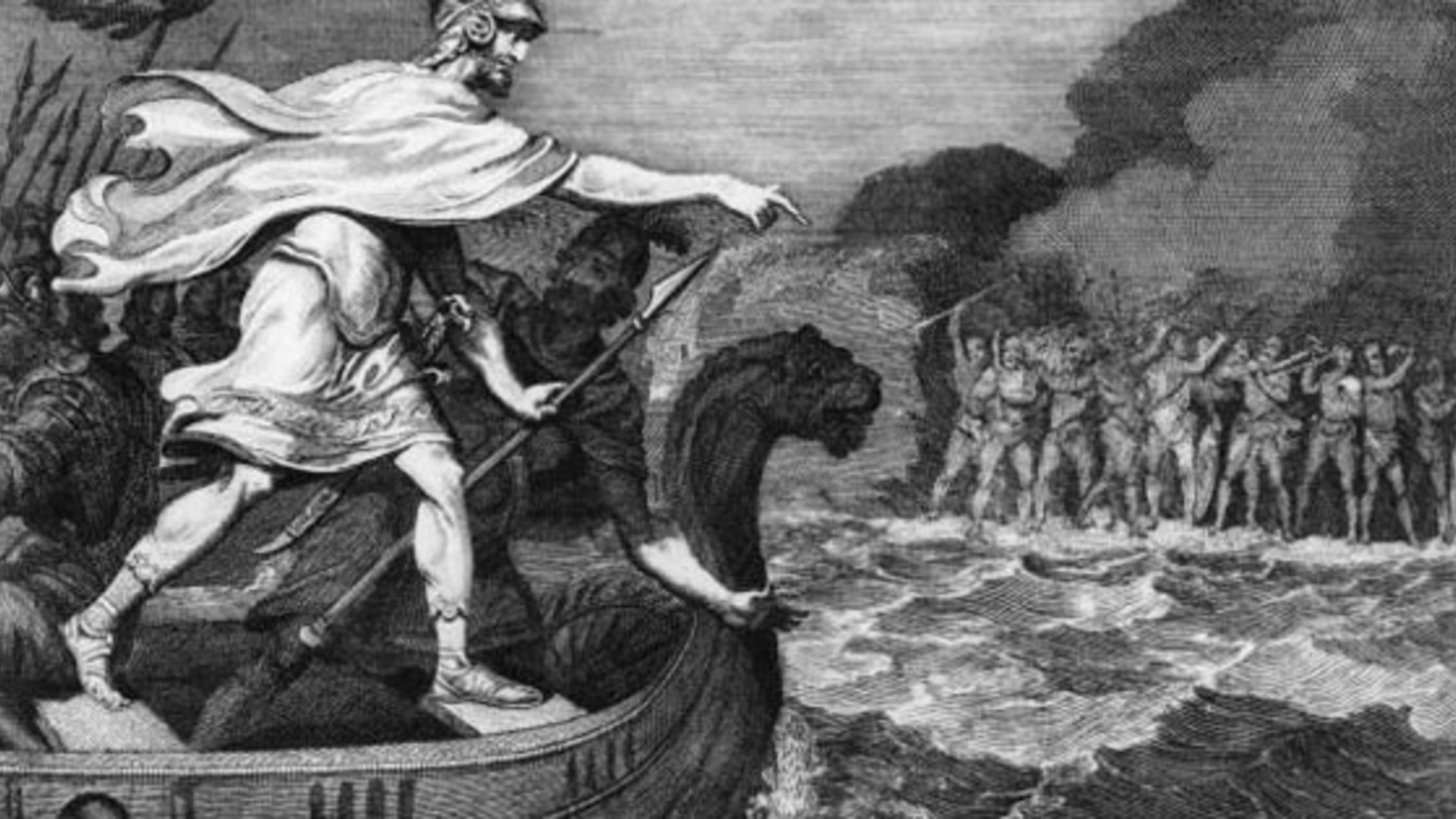
 In 75 BCE, a group of Sicilian pirates captured the 25-year old Julius Caesar, unknowing of their distant bad luck. Caesar raised his ransom from 20 talents to 50 talents, humouring the pirates for not knowing who the great Caesar was. And so this great commander took to bossing the Pirates, forcing them to listen to his speeches and poems, joining in on their activities, and acting as if he were their leader. 

Despite threatening to crucify them, the pirates thought their prisoner was merely jesting. Once the ransom was paid, Caesar gathered a naval force, hunted the pirates down, and non-jestingly crucified them. 

Nicomedes

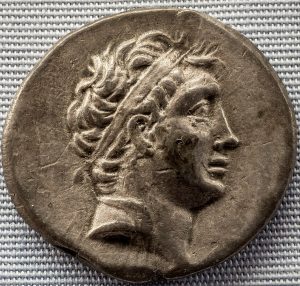
Five years following the Pirate escapade, Caesar travelled to Bithynia to fetch a naval fleet from the king, Nicomedes. Accordingly, Caesar spent a little too much time at the kings court, and so a rumour bloomed that the two had sexual relations. This is completely unproven, though the rumour sat in Caesar’s reputation for far too long. HIs enemies and comrades would often jest. However, Caesar had legitimate reasons to grow his public reputation at the king’s court, to give speeches and form those connections. 

The leap year

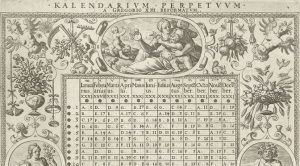
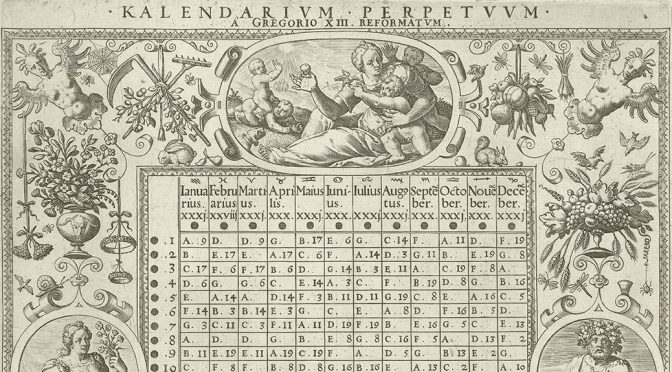
Prior to 45BC, the Romans used a calendar based on the lunar cycle, dictating that there were approximately 355 days in a year. Consulting with the Astronomer Sosigenes, Caesar implemented the somewhat prideful Julian Calendar, following the solar cycle. Although Pope Gregory XIII improved on it (creating the also prideful Gregorian calendar we use today) this implemented the base of our current model, and accounted for the additional quarter of a day in every solar cycle. Thus, they created a calendar with 365 days, with every fourth year a leap year. 

Camelopard

With images, we have the fortune to see pictures of almost anything. The Europeans in 46BC in fact did not have pictures, especially when Ceasar brought a giraffe. Creatively, the Romans believed this appeared as a mix between a leopard and camel (and perhaps four extra necks). Some also called the giraffe a (roughly translated) ‘wild sheep’, and “the tallest, the most gentle, and the most useless of the large quadrupeds”.

Also unlike today, the Romans saw killing a rare uncharted species as a display of power. So Caesar had this useless quadruped killed in the arena by a group of not-so useless lions. 

Links:

Featured Image/1/2/3/4

Britannica Article, Julius Caesar

Caesar and Nicomedes Article

The Beauty of the Impressionism Art Movement

Art has always been an essential aspect of our lives as it has the ability to describe the human condition and connect with our emotions that at times cannot be verbally expressed. But, throughout time, art has also been subjected to a series of changes and evolutions. One of my favourite art movements is impressionism, as it embodies both texture and the nuances of light in a landscape. That’s why today, I want to tell you a little bit about what impressionism is and its lasting impact on society.

What is Impressionism?

The impressionist movement began in France during the late 19th century, and it is heavily credited to artists such as Claude Monet, Camille Pissarro, Alfred Sisley, and Edgar Degas. Unlike realism, impressionist artists explored how a landscape could be objectively portrayed through various textures, colours, and the effects of light. Therefore, the objective behind the paintings was not to portray something as accurately as possible but to rather manipulate colours and light in an aesthetic and calming way. As a result, a lot of the artwork appears mysterious and provokes emotion. Another notable aspect of impressionism is the patterns that can be found in the artwork, whether that be in the brushstrokes or the way the objects are painted. Impressionist artists also stopped using greys and blacks in shadows, which made their paintings not have clear, dark outlines. This was done to mimic the way sceneries look as they are first seen by an individual. 

The Influence of the Impressionism Art Movement

Impressionism had its height of popularity during the late 19th century and early 20th century. Therefore, many of the paintings we are influenced by today are the product of this art movement. Impressionist artists have contributed to the modern art scene, as they were one of the first to use mixed colours and undefined brush strokes to create an art piece rather than sticking to the distinct line work and bright colours prevalent at that time. Today, many artists still use impressionist techniques to create their pieces. Additionally, techniques that are associated with impressionism can be used with acrylic, oil, and mixed media paintings, which makes its influence more common in the modern era. 

Notable Artists

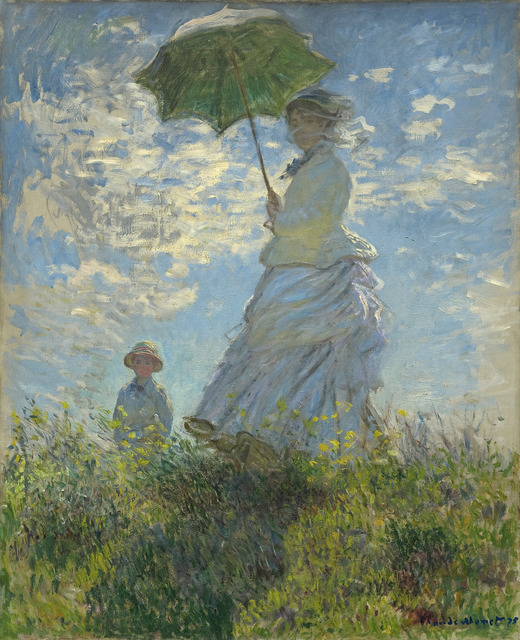
The beauty of impressionism comes from talented artists who could portray vivid sceneries through undefined brush strokes and unique colours. As mentioned previously, Claude Monet and Camille Pissarro are some of the most popular Impressionist artists. Claude Monet is recognized for painting landscapes as he perceived them, whereas Pissarro is known for helping impressionism be recognized as an actual art movement through his series of exhibitions. One of Claude Monet’s most famous paintings is the Woman with the Parasol. This painting depicts Monet’s wife and son on a stroll during a bright day. The casual setting of the day alongside the spontaneous brushstrokes give the painting character. At the same time, the grass and the wind are shown to have similar movements, which are further accentuated with bright shadows. One of Pissarro’s most recognized artworks is The Boulevard Montmartre at Night. This painting explores the effects of artificial light rather than other Pissarro landscape paintings that are set in natural lighting. At the same time, Pissarro’s artwork presents the essence of Parisian streets, which are illuminated by bright lights and vibrant shops.


Ten Most Famous Monet Paintings You Should Know - iTravelWithArt  Claude Monet - 187 Artworks, Bio & Shows on Artsy


In the end, the Impressionism art movement created a new era of art styles that is not defined by conventional art, but rather explores the effects of nature on human eyes. This goes to show that individuals have many ways to showcase their emotions either objectivity or subjectivity and creating art provides for the means to express that effectively. Thus, art connects people around the world and will continue to change as time goes on.

[1]/[2]/[3]/[4]/[5]/[6]/ featured image

A month of music: January

I’d consider myself a ‘music connoisseur.’ A lot of my days consist of listening and discovering new songs, creating new playlists whenever I’m feeling a particular emotion or experiencing something specific. Therefore, I do believe that music has played a big role in my life. Now, I am not here to review music (I don’t think I am qualified enough to do so), but rather write a short recap about every new album and song that has dropped in January.

2022 (like any other year) has called for many highly anticipated albums from many different musical artists. From rappers to pop music, I’ve written a short summary below about some of the new albums and singles that dropped in January.

Albums that dropped in January

In no chronological order, listed below are some albums that dropped in January, as well as some favorites from each album (if I have listened to it)

CAPRISONGS by FKA twigs

CAPRISONGS by FKA twigs was released on January 14th, 2022. I have been a big FKA twigs fan for quite some time, discovering her through her 2019 album “MAGDELENE.” CAPRISONGS is an album completely different from what FKA twigs has released in the past. Her angelic, falsetto voice is tied to a plethora of contrasting vibes that the album offers. With many guest features, like Daniel Caesar, The Weeknd, Jorja Smith, and Rema, this entire album makes me want to dance around in my room.

Some of my favourite songs from the album: 

  • tears in the club FKA twigs (feat. The Weeknd)
  • darjeeling by FKA twigs  (feat. Jorja Smith and Unknown T)
  • oh my love by FKA twigs

Dawn FM by The Weeknd

Dawn FM By The Weeknd, was released on January 6th, 2022. One of the most highly anticipated albums of 2022, Dawn FM explores themes of retro 80s, psychedelic, dance, and synth-pop all meshed into one album. I would say that Dawn FM is completely different than what The Weeknd’s old musical works sound like. Originally, I didn’t enjoy listening to the album. However, it grew on me after listening to it on repeat for a few hours. Jim Carey is also featured on both the intro and outro songs of the album, which I think was a pretty cool touch.

Some of my favorite songs from the album: 

  • Here We Go… Again by The Weeknd (feat. Tyler, The Creator)
  • Less Than Zero by The Weeknd
  • How Do I Make You Love Me by The Weeknd

From a Birds Eye View by Cordae

From A Birds Eye View by Cordae, was released on January 14th, 2022. Another highly anticipated album in 2022, From a Birds Eye View by Cordae raised the bar high for January 14th’s new music Friday. Cordae’s lyrical fluidity, style and mix between old school and new school rap is evident in his newest album. On the day of the album’s drop, Cordae encouraged his fans to listen to the album from start to beginning (the post can be found here). In the post, he mentions that each individual song were inspired by real-life events, emotions, and experiences. With guest features from Eminem, Stevie Wonder, H.E.R., Gunna, and many others, Cordae sets the bar high for music in 2022.

Some of my favorite songs from the album:

  • Chronicles by Cordae (feat. H.E.R and Lil Durk)
  • Westlake High by Cordae
  • Want From Me by Cordae

Brightside by Rich Brian

Brightside by Rich Brian, was released on January 20th, 2022. The Indonesian rapper, a member of 88Rising (a musical company that serves as a platform and record label for many Asian creatives) dropped the album on January 20th, surprising many. A ‘rap-heavy’ album, Rich Brian mentions in an article by Pitchfork that the album is meant to be a ‘mental note’ of how the past year accelerated his ‘growing-up’ process as an artist and a person.

My favorite song from the album:

  • Sunny by Rich Brian

Singles that have dropped

In no chronological order, listed below are some of my favorite singles that have dropped in January.

  • Light Switch by Charlie Puth
  • Don’t text me when your drunk by Stacey Ryan and Zai1K
  • Rapture in Blue by Cautious Clay
  • Grateful by DHRV
  • All my Ghosts by Lizzy McAlpine
  • Vickie by Peach Pit
  • dejavu by lullaboy
  • Call Me Your Hope by Tobias Dray 
  • Lost on Me by Eric Nam 
  • Cowboys Don’t Cry by Oliver Tree
  • Love It When You Hate Me by Avril Lavigne (feat. Blackbear)
  • squares by cavetown
  • Love Me More by Mitski
  • Ride or Die by Hippo Campus


Overall, for the start to the new year, the music industry did not disappoint with what has been released thus far. When this post gets published, it’ll be a week earlier than the last NMF of January, so I’m assuming that there will be a lot more amazing songs that’ll be released nearing the end of the month. If you want to stay updated on new music that drops on Fridays, feel free to check out the Spotify playlist New Music Friday and the Apple Music equivalent, Best of the Week.

Music in 2022 has started off on the right foot, and I’m excited to see what the rest of the year has in store, music-wise!


sources | featured001,002003


Why You Should Read ‘When Breath Becomes Air’

When Breath Becomes Air by Paul Kalanithi is an autobiography published in 2016. I only recently had the opportunity to get back into reading after finishing my finals for this semester, and this was the first book I read—it was indeed an unforgettable read.

Brief Summary of When Breath Becomes Air

Dr. Kalanithi was a multifaceted individual. At a young age, he had diverse interests in both STEM and the Humanities. Later on, he described one of the toughest decisions in his life as choosing between becoming an English Literature Professor or a neurosurgeon. This multifacetedness led Paul to fall in love with the nuances of science, its intersections with more abstract concepts, as well as all the aspects of death. In fact, pursuing a deep understanding of death and the true meaning of life was one of the driving forces of Paul’s choices in education and courses in university.

Ultimately, after graduating from Stanford’s undergrad, Paul attended Yale medical school, then returned to Stanford for his neurosurgical residency. Unfortunately, tragedy struck as he was finishing his last year of residency. After nearly a decade of training to perfect his skills and sharpen his mind, Paul Kalanithi was diagnosed with stage IV lung cancer. In an instant, his life was flipped upside down. Within a week, Paul Kalanithi found himself not conducting surgery on others, but strapped to an operating table himself.

After the diagnosis, Paul learned much about the intricate nuances of medicine, that even medical school did not cover, as he was able to experience for the first time what it was like to be on the other side—a patient. He wrote When Breath Becomes Air in the final months of his life to preserve his legacy and provide his baby daughter a way to connect to a father she would never remember otherwise.

Why You Should Read When Breath Becomes Air

I picked up this book after my brother recommended it to me. “You have to read it. You just have to,” he said. And I will spend many years echoing his statement. I have never before read a book that tackles death—a complex, mysterious, and often euphemized topic—in such a detailed and down-to-earth style. The ill-timing of planning years and years of education to finally work as a neurosurgeon alongside a loving wife only to be diagnosed with a terminal illness serves as a reminder that, at the end of the day, our health is what is most important. And even for those of us who seem healthy, we can never take our health for granted—Paul teaches us that anything can happen, and most often, we will not see it coming. Ultimately, When Breath Becomes Air is a memoir that highlights the tragic yet fruitful life of Paul Kalanithi and explores human nature when we are at our most vulnerable.

In a time when death and disease are more prominent in our young lives than ever with the coronavirus pandemic, Paul Kalanithi’s When Breath Becomes Air is an unforgettable book that tackles death from the dichotomous perspectives of both doctor and patient. I could not recommend this book more. Read it—for yourself, and for Paul.

Featured Image

Extended Winter Break: Thoughts and Perspectives

Alberta’s extension of its winter break all the way through to the 10th left some people- and minds- reeling. With the loss of approximately a week of school, the missing time meant that for many students, a lot of things were left unaccomplished by the end of the semester. In this article, I look at the extended winter break through selected lenses and perspectives of different students across Calgary. 

“I really enjoyed winter break. I had enough of school for a bit, and I didn’t want to go the week of [January 4th] at all. What I did mind, however, was Alberta cancelling finals as a result of the extended break.” 

“I found it really stupid that they extended the break to quote ‘assess and consider staffing and operational impacts’ allowing schools to plan for a ‘successful startup,’ but a lot of those operational impacts weren’t even that impactful. For example, the masks/rapid testing kit rollout was delayed by about a week; the school cancelled exams because of the extended break which was meant to prepare masks that didn’t come until school was basically over for exam break.” 

“I hate being stuck at home, it’s pretty cold and lonely there. I was super bored at home too.” 

  • Brahm Wongwandanee, Edward Tao, and Georgia Zhang, IB students at Henry Wise Wood School. 

“I thought the winter break extension was cool because I was sick during that time and I didn’t have to miss anything, which I guess was sort of the point of them cancelling that week. It was pretty great for me, and I had a lot of fun at home.” 

  • Damon Yee, student at Westmount Charter Mid-High School

With the winter break extension, some had fun at home, while others were cooped up and missing in-person. However, pretty much universally, students had trouble adapting to the idea that finals would be cancelled; many students were counting on finals for their final grade adjustment. Furthermore, most were not impressed by the way the government handled the mask/rapid testing kit distribution. 

New Year, New Routines?

Its the first month of 2022! I don’t know about you, but with the fresh start of a new year, I find that it is a great time to revisit those important habits and routines. Oftentimes, we start off the new year with tons of hope, goals, and wishes, but whether or not we achieve them can sometimes be a struggle. Let’s start by just setting a morning routine.

With the “that girl” trend that began in 2021, its important to remember that not everyone needs to (or wants to) wake up at 5 am. Your morning routine should be focused uniquely on you and take into consideration what your goals are!

1. Waking Up

This may seem pretty self-explanatory. But what is really important is what you do immediately after you wake up. This one action single-handedly sets the tone for the day ahead. Keeping this in mind, it may not be the best option to scroll through your notifications first thing in the morning. The best way to ensure that you are using your morning in a mindful way is by being prepared the night before. Maybe you set your alarm and put your phone across the room, where you can’t immediately access it. This way, you can remind yourself to stretch and allow your body to truly wake up.

2. Make your bed

Now, I don’t intend to sound like your parents, but making your bed can actually have a lot of benefits for you. Once you’ve made your bed, you’ve already achieved one task for the day. This can help you fully get into the mindset of being productive. Not only this, but coming home to a bed that is made can definitely make you feel a lot better.

3. Get a little sunshine

Sunshine is super great in the morning. You get a little shot of Vitamin D, and of course it can help you wake up so that you don’t crawl into bed again (I may or may not do this).

4. A Healthy breakfast

What you eat in the morning can really have an impact on you. Not just this, but making sure you actually have breakfast is important. It kick-starts your metabolism, and gives you the energy to focus throughout the day. Furthermore, make sure to plan a meal that is packed with vitamins and nutrients, and includes health foods such as grains, dairy, and fruits.


As for the rest of your morning routine, I would take a look at Sleep Doctor, Michael Breus’ book, “The Power of When” which discusses an individuals biological predisposition to being either a “morning person” or a “night owl” or anything in between. Based on these chronotypes, he has designed a morning routine that is designed to fit you best and help you make the most of your time.

If you want to find out what your chronotype is, take his official test here. Then you can take a look at the ideal morning routine for your type, here.

Let me know if you try updating your morning routine!


References: 1/2

Checking In: Semester Transitions & A New Sensational Internet Game

0

For many, these weeks can be very stressful due to exams. Often, an effective way to deal with the tension that is caused by our busy lives can be to pause and check in with everything that is going on around us. It always feels as though our schedules are moving terribly fast – even faster than we are, sometimes. As a result, taking the opportunity to slow down and absorb your surroundings can be very beneficial. At this point in time, there are many things that have just happened, many things that are going on right now, and much to look forward to in the near future. Taking note of all of these matters is a great way to get a grasp on “now” as a whole.

Just Happened

The first semester of the 2021-2022 school year has come to an end. It may just seem like a bridge that facilitates the connection between the two halves of the year, but there’s more to it than just that. For those in Grade 10, it means that you’ve just made it through your very first semester of high school. For those in Grade 12, it’s a sign that you’re heading into your final semester of high school. And if you’re in Grade 11, then it’s an indication that you’re exactly halfway through your high school journey. It might not seem like much, but it can be fun to realize that these annual transitions are actually major milestones in our lives.

Right Now

There are far too many current events to summarize in a single paragraph – but there is a trending online word game worth describing. “Wordle” is one of the hottest internet games right now, and it might even help lift some of the stress off of your shoulders. Limiting each player to guessing one universal word per day, this game prevents an excessive waste of time. It gives you six attempts to guess the word, and provides a quick, fun way to take a break that still keeps the brain going.

Upcoming

In addition to semester 2, there are many things going on in the coming weeks. February 1st marks the beginning of Black History Month, which takes place every year during the month of February. The 2022 All-Star games and events for both the NHL and NBA are also coming up, which is something to look forward to for sports fans. Finally, there are many notable movies coming out in February, including ‘Uncharted’, ‘The Desperate Hour’, ‘Moonfall’, and ‘Death on the Nile’.

Featured Image

Leaving Paradise; an ethical qualm

One of my favourite short stories of all time is “The Ones Who Walk Away From Omelas,” by Ursula K. Le Guin. Within the book, it starts off as a rather dystopian society, with a beautiful description of what seems to be the perfect city. It’s described as a paradise, a utopia, where there is no woe nor qualms, and where your able to live a comfortable life with no stress. They tell us about fantastic celebrations with imagery that makes you feel like you’re partying too.


Then the story takes a twist, and they tell us the cost of the happiness of the people of omelas. The cost being very simple, there is a child, being neglected and abused, and kept in inhumane conditions, for what’s defined as the greater good. All citizens of omelas are aware of this child and their condition.


This begs a very interesting ethical question, as a citizen of omelas, is it ethically okay if you stay? We have a few things we need to establish before we can make a judgment. The first is that, even if you walk away, it’s unlikely the circumstances of this child will change since not everyone is as ethically driven. The second is that as a citizen, you are benefitting from this child’s suffering, it is guilty by association. The last is that everyone is going along with it, if you leave, there is no certainty to what could happen to you. 


The next questions we have to explore are simple, do you leave? Do you leave a life in paradise into uncertainty because you’re benefiting off this child’s suffering? Do you stay and live with the guilt of the harm you’re causing this child? Is it okay for you to try and lobby everyone to leave? Can you set the child free?


What would you do?


Featured image

Crochet Away!

Many forms of handwork have been popular all around the world and throughout history. Knitting, embroidery and weaving have been useful to people all around the world as a means to produce clothes to wear or sell. Crocheting as we know it today was known during the 16th century as “crochet lace” in France, or else “chain lace” in England. The true origins of crochet can be traced back to Arabia where along the silk road it was able to spread to Tibet and Spain. It has also been traced in the works of the Chinese and South America. The history is not super specific and does not provide accurate depictions of when exactly it was discovered nor where. The most we can decipher is that it was an ancient practice that has been used for ages.

In the past many materials have been used: grasses, reeds and animal furs were all fair game in the skill that took many forms throughout the world. Today the common material we use is yarn. Like the yarn, the hooks were initially not how they look today. While today we have at our disposable a variety of plastic and metal ones in many different sizes. Many techniques have followed the same pattern of evolution to adjust to what people needed to make. The skill in of itself has also changed to be able to make more than just clothes but as well expand to a wider variety of plausible projects. Today, there are thousands of projects that can be scoured through youtube and many books that provide the opportunities to learn the skill.[huge_it_gallery id=”1″]

Covid has been rampant in taking the society with a chokehold in recent years. People have turned to exercising, reading and even a healthy shot of netflix to calm their anxieties and find a pastime that suits them.  One that has become popular is crocheting. It was increasingly common on the social media platform of Tiktok. People were able to use their time to crochet stuffed animals or sweaters. However it takes more than just the desire to create to learn the skill. It requires focus and plenty of practicing before people can use it as a means to relieve stress.

There are a few basics that need to be mastered. To begin practicing those a few basic tools are important as well.

    1. Choosing a yarn with a light colour that enables you to see your stitches is important.
    2. Make sure to note the yarn size on your yarn, because you want to match your crochet hook to your yarn size. This will make it easier to work with the tools.
    3. Master the basic chain. The basic chain makes up the beginning and basis for many of the patterns that you will want to make. Practicing it over and over again is important until you get the hang of the basic stitch.
    4. Start a project. The most important thing is to attempt an easy to do project to really put your skills to use. Following a simple project using the easy to follow youtube videos. This will take a few tries but to begin your exploration of the crocheting world, you must dive in head first.
    5. Keep Practicing. Though the stitches may come and go and though the projects are challenging if you are new to yarn work, it is rewarding to complete a project. Making mistakes is all a part of the process of learning a new skill.

I don’t consider myself as very adept at knitting, or else pursuing the art of making clothes. However, I came across many posts on Tiktok about crocheting. People making projects on road trips or on the go and the idea of it appealed to me over the summer when I was excited to try something new with a lack of something more to focus on. I asked my mom and I was surprised to find out that crocheting wasn’t some new concept for her. She explained that as kids they learned it from my grandmother and would crochet pillow cases and hats and mitts, even flowers that they used as decor. It only seemed right that I give crocheting a try too. As I started researching more about the art of crocheting, I was enlightened but not surprised to find that crochet was hardly a traceable practice. It has been used many times over the course of history and in many cultures as a means for people to make clothes and materials for domestic use.

To learn more about crocheting:

The History of Crochet: https://www.crochet.org/page/CrochetHistory

Tiktok:  @crochettutorials1

Learning to Crochet:                                https://www.crochet.com/learning-center/learn-to-crochet


The Cobra Effect: A Government’s Planning Gone Wrong

Given a chance, we humans will exploit loopholes, especially to gain an unfair advantage. This is the Cobra Effect, a delve into the abuse of poorly planned incentives, and a massive showcase of poor government planning.

Here’s The History.

At one point during Britain’s rule in India, they faced an imposing cobra overpopulation issue within Delhi. 

The British government placed a sum on every dead cobra shown to the officials. The initial project ran successfully, with a mass amount of cobras killed each day. The issue was that the bounty for each dead cobra offered more than the price of breeding and raising the snakes. So thus, the people found a loophole to farm cobras, get rich, and exploit the poor-risk analysis of the government. 

In the end, the government cancelled this initiative, and all of those Cobra farmers were left with far too many cobras for one person. Therefore, they released their monetarily-worthless Cobras, resulting in an imposing cobra overpopulation issue within Delhi. 

The Cobra Effect

Now this story is potentially ahistorical, only known through the anecdote of economist Horst Siebert. But I’ll focus on the result of this potentially misconstrued story, as Siebert then coined the Cobra Effect.

In short, the Cobra Effect is any situation where a given incentive directly rewards people for making the issue worse. It is the most direct example of a pervasive incentive, which is an umbrella that covers any situation with unintentional consequences from the intent of the designers. 

These are mostly used in business, but a show of how people always will exploit loopholes. 

So, How do we avoid this?

The main issue is poor risk analysis. That is the process of identifying and analyzing potential issues that could negatively impact key business initiatives or projects. Put simply, always plan ahead. However, that’s an oversimplified look at this.

Some basic strategies are: 

  • Consider thinking about the who, what, where, when, and why about your full choice. 
  • Look at your incentive, and put yourself in the position of the people you’re incentivising. See can you could take advantage of whatever system you’re creating. 
  • Look at related examples to see the mistakes in other people’s decisions. 

This is simply a surface-level look at these concepts, and the methods of avoidance go far deeper than what I’ve covered. Regardless if you ever have to do risk analysis, I think this is an interesting look into this section of psychology. 

If you’d like to learn more, I’ve linked an interesting article below. It covers the cobra effect, but goes into other examples, and the thinking of prevention. 

Links

Farnam Street Blog Article


Images: Featured Image/1 / 2 / 3

Must-Read Science Fiction Books For Teens!

0
Being an avid bookworm for most of my life, I have already explored a spectrum of genres in young adult literatureHowever, today I will be focussing on the modern craze⁠—science fiction. Science fiction has been on the rise since the mid-nineteenth century due to rapid developments in science and technology. The imaginations of many were ignited, put onto paper, and spread like wildfires across the Western world. Regardless of whether it’s the mind-bending dystopias/utopias, the infinite possibilities brought to light, or the sheer realism of it all, science fiction is a genre that will captivate readers far into the future
 
I will be sharing my top (5/5 stars) science fiction book recommendations for teenagers ages 12 to 16. Note that the books are NOT listed in order from favourite to least favourite. Mark my words, these books will stick with you for a lifetime!
  • Legend (by Marie Lu)

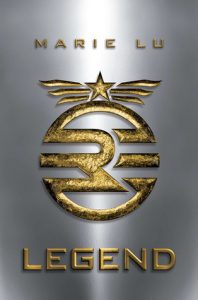
A legendary (and indelible) read! “Legend” features two main characters both fifteen years old, June (female protagonist) and Day (male protagonist). They lead polar opposite lives in their dystopian world—one is the totalitarian country’s prodigious, prestigious darling and the other is in poverty, constantly battling to keep his family alive. Throughout the book, trust is broken, and secrets are uncovered. The two protagonists struggle to understand their past and what it means for their future. A unique aspect of “Legend” is that the narrator alternates between June and Day for every chapter, giving readers comprehensive perspectives into the plot. Character development was also outstanding in “Legend”. More information about the book can be found on this link. This book is part of a trilogy.


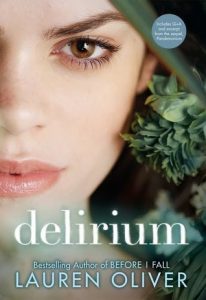
  • Delirium (by Lauren Oliver)

This book truly is an emotional rollercoaster! Set in a dystopic future, love is proclaimed a dangerous disease and it is mandatory to undergo treatment to “cure” it when they turn eighteen. The “Wilds” are the wilderness outside the borders of the tyrannical government’s control, and the “Invalids” are the supposed people living there. Discussing, thinking about, or being associated with the Invalids is considered taboo. The yearnings of a teenage girl, Lena, contradict what she has known to be correct all her life when she meets a mysterious boy named Alex. The characters in “Delirium” are well-rounded, and the plot was exhilarating as well as moving. More information about the book can be found on this link. This book is part of a trilogy.


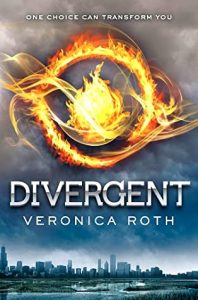
  • Divergent (by Veronica Roth)

“Divergent” meets all the requirements for a fast-paced, thrilling YA dystopian trilogy. Sixteen-year-old Beatrice lives in a society split into five factions. Each faction focuses on a specific virtue: Candor for honesty, Abnegation for selflessness, Dauntless for bravery, Amity for peacefulness, and Erudite for intelligence. Beatrice makes an astonishing decision on the day that she chooses which faction she will belong in for the rest of her life. As a result, she fights hard to land a spot in her faction. Throughout the book, Beatrice (renamed “Tris”) struggles to find who she is, while complicated relationships emerge in her personal life and all around her. Tris’ society, as well as her own identity, starts to diverge as she uncovers more and more. More information about the book can be found on this link.


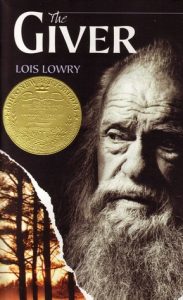
  • The Giver (by Lois Lowry)

If you’re new to the world of dystopian books, know that The Giver Quartet is one of the most distinguished, evocative, and popular series—and for good reason. At age twelve, each member of the society receives their life “assignment”—the job/role that they will dedicate their entire life to. Assignments range from Birthmothers (responsible for giving birth to children that are not theirs to keep, then doing labour work when they are finished), to Nurturers (childcare), to Engineers. However, twelve-year-old Jonas receives a peculiar assignment, one that only a single person in the entire community holds: the Reciever of Memory. As Jonas delves deeper into the past, he begins to see his seemingly perfect world through darker lenses. One of the reasons I enjoyed this series so much is because each of the four books has a different main character, and as you progress through the books, all the characters, plots, and details start to come together. It’s like a game of connect-the-dots—everything is linked in some way or another to form a picture on its own. More information about the book can be found on this link.
 

  • Partials (by Dan Wells)

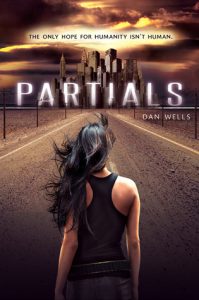
Action-packed, thought-provoking, and finished with underlying moral, social, and political philosophies, “Partials” will captivate you right from the start. After a catastrophic war with the superintelligent AI human beings known as the Partials (“partially” human, “partially” robot), the human survivors gathered together on one side of the United States, while the Partials created a society on the other. Immunity to a genetically-engineered virus, which kills newborns within the first few days of life, wavers in the human population, but the Partials face problems of their own. Living in Long Island with the vast majority of humanity eradicated, sixteen-year-old Kira, along with the tens of thousands of humans remaining, desperately cling to life while trying to find solutions to the deadly virus. As Kira journeys through her country’s past and present, she finds convoluted relationships, twisted moral values, and information that builds into a prospective future. At the same time, she navigates through her personal life, with an arising conflict of interest and multiple emotions clashing. More information about the book can be found on this link. This book is part of a trilogy.


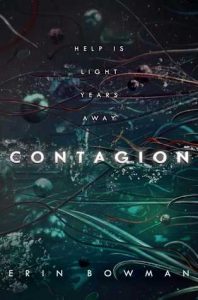
  • Contagion (by Erin Bowman)

Don’t turn your lights off while reading this book! A gripping mixture of sci-fi, horror, and mystery, “Contagion” is definitely unforgettable. Right off the bat on page one, a chilling prologue hooks you in for a fast-moving and wild ride. After receiving a critical message from a base, a crew must perform an investigation mission on the questionable and ominous planet. When they arrive, the crew finds a deserted ship scattered with dead bodies, leading to a growing sense of fear, apprehension, and curiosity. As the book speeds on, you will be met with a mysterious boy and a terrifying, infectious threat, while the crew descends into chaos. “Contagion” reminds us of the perils of space exploration, while also teaching us the extent of greed, government corruption, and the true nature of humans. More information about the book can be found on this link. This book is part of a series of two books.


BONUS – HONOURABLE MENTIONS:
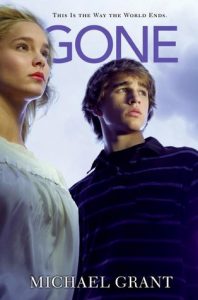
 

  • Gone (by Michael Grant)

Pretty much a modern version of William Golding’s “Lord of the Flies”. “Gone” has a well-developed plotline and interesting characters with distinctive personalities. “Gone” is part of a series of nine books. More information about the book can be found here.


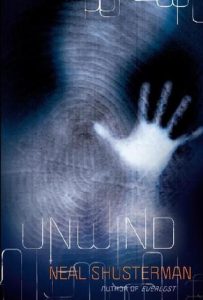
  • Unwind (by Neal Shusterman)

“Unwind” has appearances of gore and somewhat disturbing characters and actions. The overall plot was quite intense and intriguing, but the topics mentioned in these books may be sensitive or upsetting to some readers. “Unwind” is part of a quartet. More information about the book can be found here.


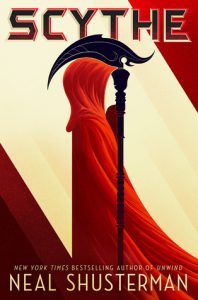
  • Scythe (by Neal Shusterman)

The plot of “Scythe” is focused around scythes (the “bringers of death”) so there is a ton of violence involved. Many moral and ethical dilemmas are posed, making “Scythe” a fascinating and stimulating read. More information about the book can be found here.

I really hope you try at least one of these books and love them as much as I do! Enjoy!!

Sources (writing): 1/2/3/4/5/6/7/8/9/10

Sources (images): Featured image/2/3/4/5/6/7/8/9/10

Colour Psychology: How Colours Affect You

What is colour psychology?

Colour psychology is a study of the relationship between human behaviours and colours. Colours can cause certain emotions in people, perceptions that are not obvious, like a taste of food and, it can change their daily mood, like wearing a bright colour. As colour psychology can affect people’s minds, it is widely used in marketing and branding. Customers’ emotions and perceptions toward goods and services will likely change. Therefore, colour works importantly in many brands.
An example of this is, red and yellow can stimulate hunger as many fast-food brands such as “Burger King,” “McDonald’s,” and “Wendy’s” use red and yellow as the prime colour of their logos. Also, research shows that blue gives people an impression of trustworthy, dependable, and wholesome. From this characteristic of blue, a lot of financial industry companies like “Allstate,” “JP Morgan,” and “American Express.” Many big companies use colour psychology for their logo to grab more people’s attention, and studies by experts explain that colour psychology mentally affects humans.

The Meaning of Different Colours

1.Red

-Attracts most attention: strong emotions (ie. love, passion, anger)       

-Signifies strength, power, courage, and danger

-Energies, excites and motivates people to act

-Warm and positive usually associated with most physical needs 

2.   Orange

-Evokes encouragement, optimism, and self-confidence (extrovert)

-Signifies warmth and happiness, the combination of physical energy of red and cheerfulness of yellow

-Inspires courage, enthusiasm, rejuvenation, and vitality

-More feminine energy and the energy of creation

3. Yellow

-Creative (ie. colour of  post-it notes and legal pads is yellow)

-Results in uplifting and illuminating characteristics as it is the lightest hue of the spectrum

-Creates a sense of cheerfulness and playfulness, brightening people’s spirits

-However, too much yellow can cause anxiety, nervousness, apprehension etc. 

4. Green

-Symbolize nature => harmony, healing, and stability

-Represents security and self-reliance

-Darker green usually relates to money, wealth and prestige

-Lighter green usually relates to rebirth, growth, and freshness

-In business, green gives the impression of health and healing, safe, organic, etc.

5. Blue

-Color of trust, serenity, and peace

-Opposite effect on the brain than red=> calming, reducing tension and fear

-In business, it is normally used as uniforms (for example, airlines have blue uniforms)

-Relates to trust, honesty, maturity, and dependability

6. Purple

-Creative, immature, and impractical

-Symbolizes imagination and spirituality

-Implies wealth, and royalty as well as, fantasy, and creativity

-In business, it is often used to represent a high-quality or superior product or premium service

Resources: 1/2/3

Image sources: 1/2/3/4/5/6

Did COVID Affect Productivity?

The more time we spend at home during the pandemic, the more anxiety-inducing news and suggestions we get about using our extra time. It is expected that we will be as productive as we were at the beginning of the pandemic; however, this is not the case.

Emotional Hurdles

Fear, grief, and uncertainty are emotions that have been normalized by the pandemic. In addition to that, anxiety and depression diagnoses have skyrocketed during this uncertain time. In our daily lives, we have to manage work, life and navigate through huge emotional hurdles with uncertainty that people have never really experienced before. It’s bound to be challenging.

Self-Isolation

For many people, the most distressing part of the coronavirus pandemic is the idea of self-isolation. If we get ill, we quarantine ourselves to protect others. Humans are naturally social animals, so having to isolate for days at a time can be challenging for us to process. To a degree, we are dependent on social interaction to properly function. Therefore, suddenly switching between working in an office to working at home can be difficult. The first few days are usually enjoyable, then the harsh reality sets in. ‘Home’ is seen as a space for leisure and comfort, hence why productivity is lower. Whether you’re an adult or child, you’re usually only home at the beginning or end of the day, resting. It is engraved in your brain to see a home as a relaxing place. Not a place of work.

At the end of the day, everyone is different and copes in distinctive ways. It may be easy for you to be productive, but incredibly challenging for others. Don’t feel pressured to be productive. It’s okay to take a few days off doing nothing. What might work for one person might not work for the other.

Stay safe! <3

✧・゚: *✧・゚:*   *:・゚✧*:・゚✧  ✧・゚: *✧・゚ :*  *:・゚✧  *:・゚✧✧ ・゚: *✧・゚ :*    *:・゚✧*: ・゚✧✧・゚: *✧・゚:*   *:・゚✧*:*:


Resources:

Kids Help Phone

Canadian Mental Health Association

Sources: 1 / 2 / 3 / 4 / 5

Featured Image: 1

Want to support us? Check out our other blogs:

Barbados Bades Bye-Bye!

Male “Birth Control” is Becoming a Reality