Home Blog Page 77

The Rise of Kdramas

0

The rise of BTS and the Kpop industry in the US has made a drastic effect on many people. Expanding music taste was the basis of what Kpop has accomplished. However, so has the need for Kdrama. The increased consumption of Korean and east asian based media has caused an increase in the available selection for consumers. As well, the success of Squid Game and Parasite has furthered the exposure to reach the majority, and rightfully so. The impeccable production of each kdrama and the complex plot all within a typical 16-20 episodes.  Kdramas have rightfully become a popular genre and thus Netflix has added a vast variety of available Kdramas.

To start off with and here are some of my favourites, on Netflix or other streaming services:

1.Vincenzo 

Vincenzo is an enticing thriller Kdrama that focuses on a consigliere for an Italian mafia family. Vincenzo Cassano, returns to South Korea to retrieve gold hidden under a building complex that is awaiting being seized by a larger company by the name of Bale that seeks to use the area. Vincenzo, for his pursuit of the goal aims to fight Babel and secure the land before he can retrieve the gold that’s hidden under.

The kdrama is thrilling and funny, a perfect mix of character establishments and a good hefty plot to keep you intrigued. Without spoiling too much, I can say that it was intriguing to see Vincenzo’s character interact with others and fight the other company in a court platform all while using his past as a Mafia to counter the corrupt Babel. A shocking ending leaves the character of Vincenzo to come full circle. It was incredibly satisfying to watch and accompanied with the humorous cast, it made the kdrama my favourite.

2.Hometown Cha Cha Cha

City slicker Hye-Jin opens a dental clinic in Gongjin and sparks flying when she meets resident favourite handyman Hong Du-Sik . The story is a classic of two opposites clashing at first while Hye-Jin adjusts to the small town life and all its repercussions.    Du-Sik works a variety of odd jobs while insisting on only earning the minimum wage. Du-sik believes she is capable of letting her hair down and stopping to smell the roses on occasion. The other Gongjin residents are also thrown into the mix; they’re wry, yet welcoming of Hye-Jin, and the show devotes its first episodes to how they warm up to each other.

The chemistry between the two leads was to die for. Du-sik brings a comfort and ease to her life and Hye-Jin is the type of support that he’s never had. The character development portrayed for their characters is impeccable to witness and and it doesn’t hurt that the setting is absolutely beautiful. It’s the perfect summer show, relaxing and funny and a romance that is so comfortable to witness.

3.Weightlifting Fairy Kim Bok Joo

Kim Bok-Joo is a promising female weightlifter at the collegiate level. Her father owns a small chicken restaurant, and her uncle aspires to be an actor. She has a strong sense of justice and a bright personality. Kim Bok-Joo and her female weightlifting team friends aren’t popular with the guys, and they don’t have boyfriends. The weightlifting team and the rhythmic gymnastics team are also at odds. Meanwhile, Jung Joon-Hyung is a collegiate swimmer who has been disqualified numerous times for false starts. He is 21 years old and has an outgoing personality. His uncle and aunt, as well as his cousin Jung Jae-Yi, raised him. The two main leads meet for the first time on campus and realize that they’d known each other back when they were kids. They navigate through the strains of being athletes with big goals and their own personal ambitions to enjoy normal lives.

If I were to give any Kdrama a kudos for nailing down the chemistry it would be this one. The two main leads are incredibly fun and loving and go through supporting each other through each others lives, all while harbouring a friends to lovers trope. It’s fun loving and light hearted to witness two ambitious college kids navigate their lives and troubles in such an optimistic manner. Definitely a must watch.

4.Strong Woman Do Bong Soon 

Bong-Soon was endowed with superhuman strength at birth. Her strength is inherited and only passed down to the women in her family. Her ambition is to create a video game in which she is the main character. One day, Bong-Soon comes to the aid of a bus driver who is being assaulted by a thug. Soon after, a swarm of thugs attacks Bong-Soon, but she easily dispatches them. During this time, Min-Hyuk (arrives at the scene where Bong-Soon is beating up the thugs. Min-Hyuk is the CEO of Ainsoft, a video game company. He recently received anonymous threats and was even followed by an unknown individual. Min-Hyuk believes Bong-incredible Soon’s strength would make her an excellent bodyguard. He not only offers Bong-Soon a high salary, but also the opportunity to work in the planning department of his gaming company if she performs well. Meanwhile, crimes against women are committed in Bong-neighborhood. Soon’s Detective Kook-Doo (Ji Soo) is also a resident of the same area. They’ve known each other since they were children. Bong-Soon is madly in love with him as well, but he already has a girlfriend. Kook-Doo attempts to solve the mystery, and Bong-Soon and Min-Hyuk are drawn in.

The characters navigate around the threat of crime with the kidnappings going on and Bong Soon aims to get put onto the team to create video games at Minhyuk’s company. Both, slightly exasperated with each other aim to help each other out while dealing with family troubles and a love triangle. The editing in the show gives it a very comical aspect that contends with the harsh witnessing of the crimes. The incredible Kdrama is a roundabout favourite among many beginners.

5.The Devil Judge 

Kang Yo Han is the “Devil Judge,” the chief justice of the land’s highest court. His word is the law in a dystopian South Korea of the future, but his courtroom is also a television studio, and the court has become the ultimate TV reality show, with viewers invited to participate in a live, self-styled “people’s court.” Greed and corruption appear to be exposed for all to see here, and punishments are meted out accordingly. The public is divided over whether Kang Yo Han is a true popular hero or a malicious force sowing the seeds of chaos in his court.

Jung Sun Ah, on the other hand, is a stern, clever, and ambitious lady with a desire for power. She has a savage rivalry with Kang Yo Han and has worked her way up from poverty to become the director of a corporate social responsibility foundation. She wields a great deal of authority behind the scenes, maintaining tight ties with politicians and corporate leaders alike, and is hellbent on promoting her own vision of the future. She’s also on the hunt for the “Devil Judge” himself, hoping to learn more about her foe’s deepest secrets.

The drama follows two powerful and deceptive characters through times of manipulation and uncertain fates. The concepts of found family and manipulation and power struggles are dealt with aptly all while keeping watchers on the edge of their seats.


All of these and plenty more are a great way to start your journey to the world of new and improved content. Enjoy!
Is A 4 Day School Week Really Helpful To Students?

3 hours

A four-day school week is ineffective, inauspicious and probably one of the worst ideas ever created. A four day school week does not help students and it’s an idea designed to fail. It creates a very long day for students of all ages, parents will be struggling to find daycare for their younger ones, and students will not be able to fully participate in extracurricular activities.

Too much school hours

A three day weekend may sound like a dream for most students, but spending 8 – 10 hours at school everyday, it’s just a nightmare. School days will start at 8am and won’t end until 5pm. Students will learn less because their concentration will fade away by the end of their extended days, especially younger students. Keeping children seated for more than two hours is already hard enough, so why struggle to keep them seated for 10 hours when the results are just nothing? Many students will be forgetting the things they’ve learned due to a three day weekend, so that basically makes the stressful 10 hours spent at school all worthless. Schools still have to give students the same amount of work as before, but now they only have less time to do so. Compressing one hundred eighty five days of work into one hundred forty days will only add pressure to the students. The school days are so long that finding any time to study is extremely difficult. The shorter the study time, the higher the proportion of students who fail. The school’s role is to bring each student to their maximum academic potential, not to make their grades drop. With the amount of pressure students have to handle, many will be dealing with serious consequences connected to mental and physical health issues. Spending 10 hours at school and going home just to spend another two to four hours to finish your homework? Even adults can’t take that amount of pressure. With the pressured hours students have to spend at school, these long days may negatively affect student’s learning attitudes and their achievements. Student attitudes on learning determine their ability and willingness to learn. If students cannot maintain a good learning attitude, they are unlikely to continue their education beyond what is required and that may influence their future career opportunities. Despite the amount of hours students spend at school, the struggle also goes to the parents.  

Child care fees are not relevant to some families

Since most parents work five days a week, they must now spend money on childcare for their younger children. But finding childcare is not easy. Childcare for just one day may be very difficult and extremely costly. Parents who have more than one child can easily solve that problem, but think about the lower – income families. Paying for childcare may not be a relevant option for them. The average cost for one day of childcare is anywhere from $30 to $40, but that can add up quickly throughout the school year. This new schedule may force some families into serious problems like having to move to a new place just for a suitable school or simply have their kids drop out. Either situation is bad and all families want to avoid those problems. Longer weekends can also increase the risk of teens being involved in drugs, smoking, drinking and other illegal actions, especially when their parents aren’t around to watch them and help them make better decisions. In Colorado, United States, the percentage of juvenile crime increased by 73% whenever a school changed their school schedules from five to four days. These crimes occurred mostly on weekends when students were out of school and away from their parents.  “When students have additional unsupervised time, it may facilitate opportunities to engage in risky sexual behaviors. Although not all teens will capitalize on these opportunities for risk-taking, the weekly absence of parents or guardians during the Monday workday may afford students with extended time to fraternize with members of the opposite sex without supervision.”  

– (Dian Cai, 2012, April 30). Teenagers may not realize how risky their behavior is and the long-term impact it could have on their health. Many suspects that three-day weekends could contribute to the rebound of the teen pregnancy rate because of the insufficient adult supervision on Fridays. “Around 20 teens aged 15 to 18 visit health clinics, the majority of them are seeking services including birth control and STD testing and treatment.”  – (Dian Cai, 2012, April 30). Lack of adult supervision is the main reason for risky behaviors among teenagers and a four day school week is the main reason for the lack of adult supervision. In addition to the amount of parents struggling to find daycares and teens making bad choices, the number of extracurricular activities will also be decreased due to time constraints. 

No chances for extracurricular

Longer school days mean less time for after school extracurricular activities. The four-day school schedule will not leave time for additional activities throughout the week. This idea would force children to either start their extracurricular activities late in the day at the end of school, or participate early in the morning before school.  Extracurricular activities usually happen after school, which means some students wouldn’t make it back home until 8pm that night. Sleeping late and waking up early will negatively affect students’ health and may eventually lead to sleeping disorders. Sleeping disorders can poorly influence students’ performance at school, cause strain in relationships, and impair their ability to perform daily activities. Extracurricular activities offer students the opportunity to learn something that could stay with them for a lifetime and gives students a good opportunity to blend in with their peers in something they all enjoy and love. It provides a great opportunity to develop their social skills, meet new friends and become more confident communicating in groups. “According to a study by Steven Wesley Craft from the University of Southern Mississippi, students who immerse themselves in carefully selected school activities are more likely to outperform their peers academically, even beyond high school.” – (Steven Wesley Craft, April, 8th, 2020). Extracurricular activities help students to expand their networks, which can be beneficial when finding career opportunities after graduation.  “Extracurricular activities can add more personality to a resume and improve the quality of the student’s overall job application.” – (WES Advisor, October 14, 2019). Lack of participation will interfere with some students getting into college or applying for future career jobs. Extracurricular activities are also important for personal satisfaction, and a motivation for students to go to school. 

It should now be clear that the four day school week idea should be rejected because of the extended time students have to spend at school, the amount of struggle parents have to overcome, and the lack of extracurricular activities. Research has shown that compressing the school week to four days has little to no impact on students’ academic performance and only affects negatively on their learning. The education system needs to think more consciously about their ideas next time, and be sure to not create another outrageous idea like the four day school week. 


References: 

Long weekends risky for teens? (2012, April 30). Retrieved November 25, 2020, from http://www.georgiahealthnews.com/2012/04/long-weekends-risky-teens/

Why Extracurricular Activities Are Important While Studying. (n.d.). Retrieved November 29, 2020, from https://www.wes.org/advisor-blog/extracurricular-activities-for-education-abroad/

Benefits of Participating in Extracurricular Activities for Students. (n.d.). Retrieved November 29, 2020, from https://www.marlborough.org/news/~board/student-life/post/benefits-of-participating-in-school-activities

A Journey to Self-Acceptance

“Love yourself in every possible way” are the littlest words that could teach us a lot about the significance of reflecting on our capabilities and strengths. I believe a lot of people sometimes underrate their potential as their minor flaws become dominating in their thoughts. I have experienced this feeling before various times, but now I have understood that those thoughts were wrong and that we need to be appreciative of ourselves. At the end of the day, you will always be with your unique self, and it’s best to be respectful and grateful for what you are. Today, self-acceptance has led me to realize my abilities, which in turn has led me to achieve higher.

Why should we be Self-Accepting?

Self-acceptance could be described as unconditional since along with embracing your strengths, you also recognize your weaknesses. Self-accepting does not mean comparing yourself to others, rather celebrating who you are as an individual.

  • Decreases depressive thoughts and symptoms
  • Boost in self-confidence and gain positive emotions
  • Sense of freedom and self-esteem
  • The ability to create healthier relationships
  • A gesture of gratitude and acts as inner peace
  • Great for mental well-being 

Self-confidence is the key to the door of acceptance. – Unknown

How to Become Self-Accepting: Tips and Ideas

  • Embrace the unique aspects of you and appreciate your proud moments.
    • Think about the accomplishments and positive qualities you hold like your talents. Ask yourself how far you have come and how your future will be benefited from the values and passions you hold. Lastly, celebrate your special self.
  • Let go of things you can’t change
    • Most of the time we overthink our embarrassing moments or past mistakes. It is crucial that we don’t do this. A way to overcome this feeling is writing a letter to yourself about all the negative parts of life and spilling all your emotions on it. This way you could feel lighter and let go of the things that bothered you.
  • Set goals and plan your future
    • Make sure to create smart goals that could be completed and help you reach an objective. This helps with boosting-your self-esteem and giving you conditions to reach success. Also, it’s best to reward yourself after you complete each goal. Moreover, avoid people or thoughts that interfere with your goals and pathway to self-acceptance.
  • Be kind to yourself every time, every day!
    • Remember to self-care and take timely breaks to reflect and relax. In addition, you could also go in front of the mirror and give yourself positive affirmations throughout the day. This builds a sense of gratitude and self-confidence in one.
  • Get involved and participate in what is around you
    • Don’t be afraid of what others might say or think. The more you will interact with others the more positive conversations you are going to engage in. This naturally creates a better understanding of yourself, of how you are worthy, and people look up to you.

Sources: 1, 2, Featured Image


Influential Black Female Scientists

Science has always been a fascinating topic to the human mind. Therefore, I believe it is important to recognize some amazing scientific contributions made by Black women this February. Many of these scientific contributions have been quite influential to society and have allowed mainstream projects, such as NASA missions, to be possible. All of these Black female scientists are very inspirational, and their dedication and determination towards their field will always be remembered.

Katherine Johnson

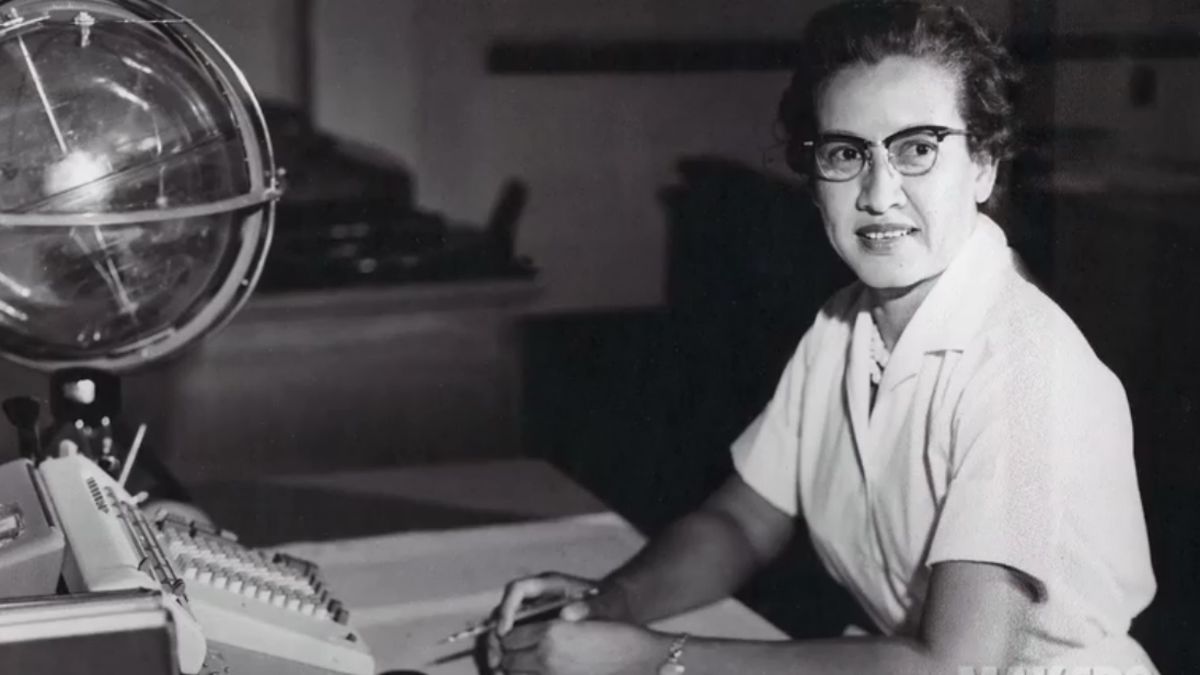
Katherine Johnson was an extremely bright American mathematician whose calculations played an influential role in the Apollo 11 mission, the Mercury program, and Freedom 7. Additionally, she analyzed and calculated flight paths for the U.S. space program. In 1937, she graduated with the highest honours from West Virginia State College and eventually moved on into teaching before enrolling in a graduate program at West Virginia University. After some time, she started working at the National Advisory Committee for Aeronautics (NACA) alongside other African American women who manually calculated complex math problems for the engineers. Thus, these calculations were essential to the success of many of the early U.S. space missions. By now, some of you may recognize this story from the movie Hidden Figures as it was inspired by Johnson’s life alongside other African American women working in NACA. Today, Katherine Johnson is regarded for her intelligence and passion for mathematics and aeronautics. She also helped overcome racial prejudices and gender stereotypes by working in a predominantly white department. Over her career, she was a part of 26 research reports, and she even received the Presidential Medal of Freedom, one of the highest honours an individual can get.

“Like what you do, and then you will do your best” ~ Katherine Johnson


Katherine Johnson dead at 101: The NASA mathematician and inspiration for 'Hidden Figures' - CNN

Roger Arliner Young

The next Black female scientist I want to highlight is Roger Arliner Young. Young is recognized for being the first Black woman in U.S. history to hold a doctorate in zoology. As you can imagine, Young was a brilliant zoologist and her paper on discovering Paramecium gained national prestige. Despite all of her accomplishments, racial prejudice was common in American society, and that caused her achievements to be undermined. However, Young did not let that stop her from pursuing her dreams as she eventually became the acting head of Howard Unversity’s zoology department. Throughout her career, Young also experienced a series of hardships. The stress and pressure that came alongside acting as lead and pursuing a doctorate caused her to fail her first doctoral qualifying exam at the University of Chicago. Even after experiencing this failure, Young persevered and finished her degree at the University of Pennsylvania. At this time, she also started advocating for Black rights and was even arrested for doing so. Young’s genius was sadly often lost due to the segregation of Black people, racial stigma, and preference of male scientists over females. But, her legacy continues to remind us that failure does not correlate to lost hope but only acts as a starting point for success.

Alma Levant Hayden

Another inspirational Black female is Alma Levant Hayden. She was an American chemist and is regarded as the first Black female to hold the position of a scientist at the National Institutes of Health (NIH) in Washington. Hayden graduated with a master’s degree from Howard University. Her research was around the ideas of spectrophotometry, which is a type of electromagnetic spectroscopy to measure the number of chemicals in a solution and light absorption. During this time, Hayden’s work was published several times, and she continued to conduct studies relating to pharmaceutical chemistry. Her greatest contribution to science is uncovering the Krebiozen scam. Krebiozan was thought to be a drug that “cured” cancer and relieves pain. Hayden discovered the drug was a scam by using an infrared spectrometer to study the white compound’s chemical composition. She soon realized that Krebiozin was just creatine,  an amino acid found in the human body. This means the Krebiozin was not curing cancer for those taking the drug. Sadly, Hayden’s contributions towards uncovering this scam are unrecognized, and her name is not listed on documentation. Black women in science faced discrimination, which caused their accomplishments to be overlooked and not mentioned in official documents. But, Hayden’s life remains inspiring and reminds us that one may achieve success even in moments of adversity.


Alma LeVant Hayden's Contributions to Regulatory Science | FDA


In the end, I hope you gained inspiration and empowerment from these incredible Black female scientists. All of them left highly influential legacies that promote dedication, perseverance, and strength. I also consider these women pioneers of women’s involvement in major scientific research and publication, and they continue to motivate me in my pursuits.

Sources: [1]/[2]/[3]/[4]

Pictures: [1]/[2]/[3]/featured image

The Importance Of Martin Luther King, Jr.’s “I have a dream” Speech

Martin Luther King Jr was an influential person in Black history. He led the movement to end segregation and counter prejudice in the United States through the means of peaceful protest, and his speeches have left a lasting impact on many people. His “I have a dream” speech is his most famous speech. It called for civil and economic rights and an end to racism in the United States. It was delivered on August 28, 1963, during the March on Washington. He expressed his desire for equal rights for Black and non-Black citizens, and how everyone deserved the same rights and treatment regardless of skin colour. King spoke about the Emancipation Proclamation, which was issued by Abraham Lincoln on January 1st, 1863 and demanded that “… all persons held as slaves” within the rebellious states “are, and henceforward shall be free.” (The National Archives), and noted how despite this, African Americans were still not free and that they were “crippled by the manacles of segregation and the chains of discrimination” (Britannica).

Here is an excerpt from his speech:

“I say to you today, my friends, so even though we face the difficulties of today and tomorrow, I still have a dream. It is a dream deeply rooted in the American dream.… I have a dream that my four little children will one day live in a nation where they will not be judged by the colour of their skin but by the content of their character. I have a dream that…one day right there in Alabama, little Black boys and Black girls will be able to join hands with little white boys and white girls as sisters and brothers.” (Britannica)

Many people believe that this speech was a major part of the passing of the Civil Rights Act in 1964. Martin Luther King expressed his feelings about the unfair treatment of African Americans even after the abolition of slavery, and his words still have a lasting impact today.

References: 1234

Honouring the Dark Roots of Jazz Music

Music is your own experience, your own thoughts, your wisdom.

– Charlie Parker, legendary jazz saxophonist

Introduction

If you listen to music, you would have definitely encountered jazz sometime in your life, whether it be in the form of rock, R&B, hip-hop, or pop music. Perhaps you were even in the Jazz Band at school. By itself, jazz is a peculiar genre of music. It must follow a general composition, but you are free to improvise (otherwise known as making stuff up on the spot). This is what gives jazz its freelancing and upbeat melody characteristics.

However, the true origins of jazz music are far from free. In fact, jazz music was born in the early stages of African-American slavery in the United States. Although that may seem contradictory at first, you will see that there are other factors in play as you dive deeper into the history of jazz. Understanding the dark background of jazz is crucial to appreciating music as we know it today. Reflecting on these events also ties in with Black History Month, where we honour the Black community that has helped shape our world.

Early History Of Jazz

The creation of jazz initially began during the rise of slavery from 1790 to 1860. American slave owners used inhumane ways to control the slaves, making the conditions that they lived in extremely harsh. African-American slaves were forced to develop coping mechanisms due to the oppression they experienced and their terrible quality of life. Music, along with spirituality, were effective outlets for these slaves. Without any resources, they developed ways to use their bodies and voices to produce music. Two defining types of music arose from slavery — field hollers and work songs. Field hollers were encrypted information communicated with rhymes during their labour. Work songs were steady beats to make their work less tedious. From here, this music formed spirituals (religious folk songs), which in turn, led to the blues. The blues are a genre of music that laid the foundation to jazz.

Other Information About Jazz

New Orleans is recognized as the official birthplace of jazz music, but as stated earlier, jazz actually started with slaves in the fields. It was also the result of merging African cultures with European cultures in America. African music characterized the rhythm, blues, and expression of jazz, while the harmony and jazz instruments stemmed from European music. 

Impacts On Our World

Jazz has its influence everywhere in our world, from modern music genres to poetry. In fact, you will find remnants of jazz hidden in the elements that create your favourite song. Pop, rock, hip-hop, and freestyle rap are all similar in the composition and rhythm of jazz. Surprisingly, jazz is even found in literature more specifically, in poetry. The two forms of art rose to prominence together in the 1900s, and as a result, jazz poetry was born. In the world of fashion, jazz music inspired the drop-waist dress and the bob hairstyle. Women were affected in other ways as well, such as being able to find jobs in the music industry while still being “accepted” in society. The same goes for black musicians. Jazz also lifted the status of black culture due to its booming popularity.

Benefits Of Jazz

Believe it or not, jazz is actually extremely beneficial for your mental health. Experts have found that jazz reduces your stress level while improving your memory. Physically engaging with jazz stimulates many areas of your brain. Connecting this back to the history of jazz, these melodies were effective for the oppressed slaves to cope, both mentally and emotionally. Thus, jazz music is a great way to get you through hard times and keep you motivated!

Conclusion

To conclude, although jazz music originated from a cruel and deeply traumatic situation, it has had tremendous impacts on our modern world. Jazz has certainly impacted the lives and livelihoods of many around the globe. As February is Black History Month, we should take this time to cherish, honour, and appreciate jazz music while also understanding the dark road that led us to these energetic tunes.

SOURCES: Featured image / 1 / 2 / 34 / 5

The Reading Slump: Art Of Getting Back On The Horse

“There’s just no time anymore!” “I wish I could read more!” “High school English ruined reading for me!” “I used to read trilogies in a single night, and now I go months without so much as touching a book!”

Any of this sound familiar? If so, this post is for you.

It is, regrettably, a rite of passage among bookworms to grow up and realize that we simply can’t read as much as we used to. In the words of Jay Kristoff: “Too many books, too few centuries.” Even when we have “free time” to read, there are so many things constantly demanding our attention in this age of information that we may even end up not reading by accidental choice, or by incidence.

Further, if you’re like me and used to devour books in one sitting as a habit, rather than as an occasional thing, you’ll know the pain of realizing that it just isn’t practical to consistently carve out two to eight hour time slots to read a book from cover to cover anymore. I’ve personally struggled with this as I don’t have an established reading habit (i.e. some of my friends always read for fifteen minutes before bed) so I will sometimes read four books in a weekend and then not read again for four months.

The other problem which many readers face is the infamous reading slump, where you just can’t seem to get yourself in the mood to read. Whether it’s because a book you’d anticipated let you down or because your brain chemicals have spontaneously decided to give you a hard time, this can be another leading cause of *Wants To Do Thing* *Finds Time To Do Thing!* *Doesn’t Do Thing* syndrome in relation to reading.

All of which is ridiculous, because despite my brain’s destructive machinations to the contrary, I love reading and I want to do it more. If you’ve made it this far, presumably so do you. So here are some tips that I have gleaned from attempting to actually start reading regularly again.

1. Set A Manageable Goal.

This is coming from someone whose Goodreads profile records 198 books read for the year 2017. Maybe you will eventually be able to build yourself back up to the reading level of your tween years (or whenever your peak was), but personally 198 books in a year is a little out of my league and probably will be for a while. My reading goal for that year was actually 150 books, a fun suggestion by my mom for Canada 150. The following year, I thought it would be fun to set my goal at 151, and increase by one every year following.

Predictably, that strategy immediately crashed and burned. I apparently managed to squeeze out a solid 138 in 2018, but even though that’s a wacky high number for me now I felt disappointed at not reaching my goal. I set my 2019 goal at 152, thinking I could do better. Wrong. I only managed 50 books that year.

Don’t get me wrong; 50 books is a good amount. But I felt like my identity as a reader was in jeopardy. How come I hadn’t managed to do better? Why was everyone else reading 100 or 200 books when I couldn’t?

Obviously, this comparison is a total fallacy. You shouldn’t compare yourself to others any more than you should unfairly compare yourself to your past self. And most of us know this, but it’s a little hard to internalize.

I get it. Just focus on taking one step at a time, and you will eventually reach your goal.

2. Focus On Habit Building

This is for all my binge readers consumed by guilt at not reading regularly anymore. Make reading part of your routine (every night before bed, for example), or read in little sprints and force yourself to put the book down after 10 or 15 or 20 minutes. That may keep you interested enough in reading that you’ll want to continue doing the sprints the next day and the next, until reading is integrated into your life again.

This is a good one for when reading seems like a chore, too (because let’s be honest—everyone dreads their hobbies sometimes). If you’re in a reading slump, just pick up a book and read ten pages or even just one.

If you’re like me and you’ll probably end up finishing the book if you sit down and start it, pick up either really long books or really short books. One way or another, you may find the reading habit more manageable this way. Ultimately, this tip is about discipline and finding what works for you.

2. Read Stuff You’re Actually Interested In

Don’t fall into the trap of thinking you have to arbitrarily read classics or nonfiction or the hottest new #TrendingOnTiktok romance because it seems like everyone else is. Find books that you’re interested in; there are lots of platforms to help you do this, including Goodreads, which I use to track my reading and find books that I’m interested in. You could also just go to the library or bookstore and give the shelves a good old fashioned browse.

There really are books out there on every conceivable topic. It can seem overwhelming at times, but “there’s just nothing I’m interested in right now” really isn’t a good excuse if reading is something you actually want to do.

4. At Some Point, It’s About Your Priorities.

As much as I wish it weren’t true, it just isn’t possible for most older bookworms to read as much as they did when they were carefree little tots. If you want to read, you have to intentionally make it a priority in your life to do so.

I hope this post finds someone out there who, like me, as been struggling to read as much as they used to lately. Happy Reading!

Featured Image

Phillis Wheatley: The First Published African-American Female Poet And Why She Matters

Phillis Wheatley was born circa 1753 in the Gambia, named by the slave-owners which bought her for the ship which forcibly took her to the Americas in 1761. She was a remarkable young girl; the family which had bought her educated her after recognizing her potential and within sixteen months of her arrival she was reading Greek and Latin classics in addition to English literature and the Bible. She published her first poem, “On Messrs. Hussey and Coffin,” on 21 December 1767 at the age of 13. After publishing her next poem (often erroneously cited as her first) in 1770—”An Elegiac Poem, on the Death of the Celebrated Divine George Whitefield”—she garnered quite a bit of attention, which then helped her gain the financial support she needed to publish her book Poems on Various Subjects, Religious and Moral.

I stumbled upon her work through the mobile game Dear Reader, and soon learned that it was the first book written by a Black woman in America, and the second published work of poetry by any woman in the North American colonies. As suggested by the title, it includes poems on all subjects, including one addressed to President George Washington when he was a general, applauding his appointment as leader of the Continental Army:

Proceed, great chief, with virtue on thy side,
Thy ev’ry action let the Goddess guide.
A crown, a mansion, and a throne that shine,
With gold unfading, WASHINGTON! Be thine.

Following the publishing of her work, Phillis Wheatley made friends in London, England who eventually saw her emancipated. Though she was never able to publish her second book of poems and died in poverty, working as a servant, her work endured. She came to be frequently cited by abolitionists as an argument against that of Black people’s supposed intellectual inferiority, promoting educational opportunities for African Americans. And that aside, her poems are quite wonderful and stand as works of art even independent of their existing social context. She writes frequently in iambic pentameter and heroic couplets, and uses beautifully evocative language and personification.

Had the soft gliding Streams of Grace been near,
Some favourite Hope their fainting hearts to cheer,
Doubtless the Fear of Danger far had fled:
No more repeated Victory crown their Heads.
Had I the Tongue of a Seraphim, how would I exalt thy Praise; thy Name as Incense to the Heavens should fly, and the Remembrance of thy Goodness to the shoreless Ocean of Beatitude! – Then should the Earth glow with seraphick Ardour.

Society has come a long way since Phillis Wheatley’s work was published, but in many ways the generational trauma inflicted by systemic racism remains a major influencing force on communities at every level up to the international. To discuss race, in policy-making or in art or even around the dinner table, is still relevant and immensely important. Further, it is more important now than ever to uplift and amplify Black voices and creators.

February is Black History Month, but consuming and promoting art by Black creators should not be a February-exclusive activity. Amanda Gorman, Toni Morrison, and Maya Angelou are household names in North America, but there are also many other amazing Black poets whose work you should know about. Phillis Wheatley may have been the first, but she is now one among many. In addition to picking up a copy of Wheatley’s Poems if you get the chance, I’d recommend doing your own research or checking out the list below for some more contemporary recommendations as well!

Black Girl Call HomeJasmine Mans

Build Yourself A BoatCamonghne Felix

Bloodstone CowboyKara Jackson

The Poet X Elizabeth Acevedo

Sources: Featured Image, 1/2/3/4/5

I Am Not Discoloured – A Poem

0

My skin is metal bronze.

it is made from ashes and fire and the breath of the Earth.

it Iron forged

rigid and sweet

People say it is the color of Filth.

They call me “colored”,

as if to say I am discolored.

But I am the face of my ancestors,

I carry their nose

their tranquil eyes

their stern resolve

I am my mother’s child.


She is the color of a Winter’s Blizzard,

her cheeks are made of Rose and her hair of Gold.

But I am Earth.

I am its child.

It was the mud of the Earth that shaped me,

in the beginning

I am the product of the world’s forge.

And I am not discolored.


I am caramel and chocolate and coffee and raw sugar.

your skin may have been touched by the flowers and the faeries

But mine has been dipped in honey and hardened by the sun

you are slender birch tree and I am a Mighty Oak.

We are not alike, but we are both beautiful.

You are the snow that covers the earth,

And I am the the first coming of spring.

And we are not discolored.


Featured Image source: 1

Lonnie Johnson and A Niche History of The Super Soaker

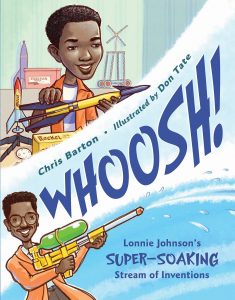
Lets talk about the super soaker; the 2011 toy of the year and member of the Toy Hall of Fame. 

The Creation

Lonnie Johnson grew up as the epitome of those insanely skilled kids you see innovating from childhood. He later became an Airforce and NASA engineer. While working on a water-based refrigerator system for the Galileo project, he hooked up a nozzle to his bathroom sink and immediately had a stroke of genius. 

Simply put, Johnson said the following, “I was working on a heat pump that used water as a working fluid, and I made some jet pumps for it. I accidentally shot a stream of water across a bathroom where I was doing the experiment and thought to myself, ‘this would make a great gun.’

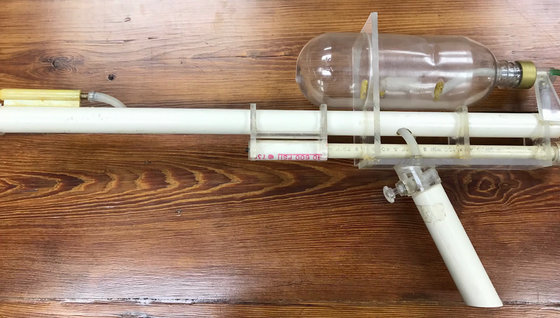
He then went back to the Airforce to work on the B-52 Stealth bomber, creating the super soaker in his basement on his own. He eventually finished it out of PVC pipes, plexiglass, O-ring seals, and a two-litre soda bottle. This started his hunt to commercialize it. These guns were separate from the typical other water guns of the time, using manually pressurized air. It had beaten all competition in power, range, and accuracy. Despite this, the hunt was an immense struggle. 

Commercializing the Super Soaker

It took 7 straight years to find a company willing to shelve the super soaker. At the 1989 International Toy Fair, Johnson met the vice president of Larami. As such, this VP offered Johnson a business opportunity, should he find himself in Philadelphia. Johnson took that chance, demonstrating the super soaker in his successful pitch, and put out the first line of the gun in 1990. It started out with the name “Power Drencher” but then was later changed to its current name, and sold 2 million versions in the following summer. 

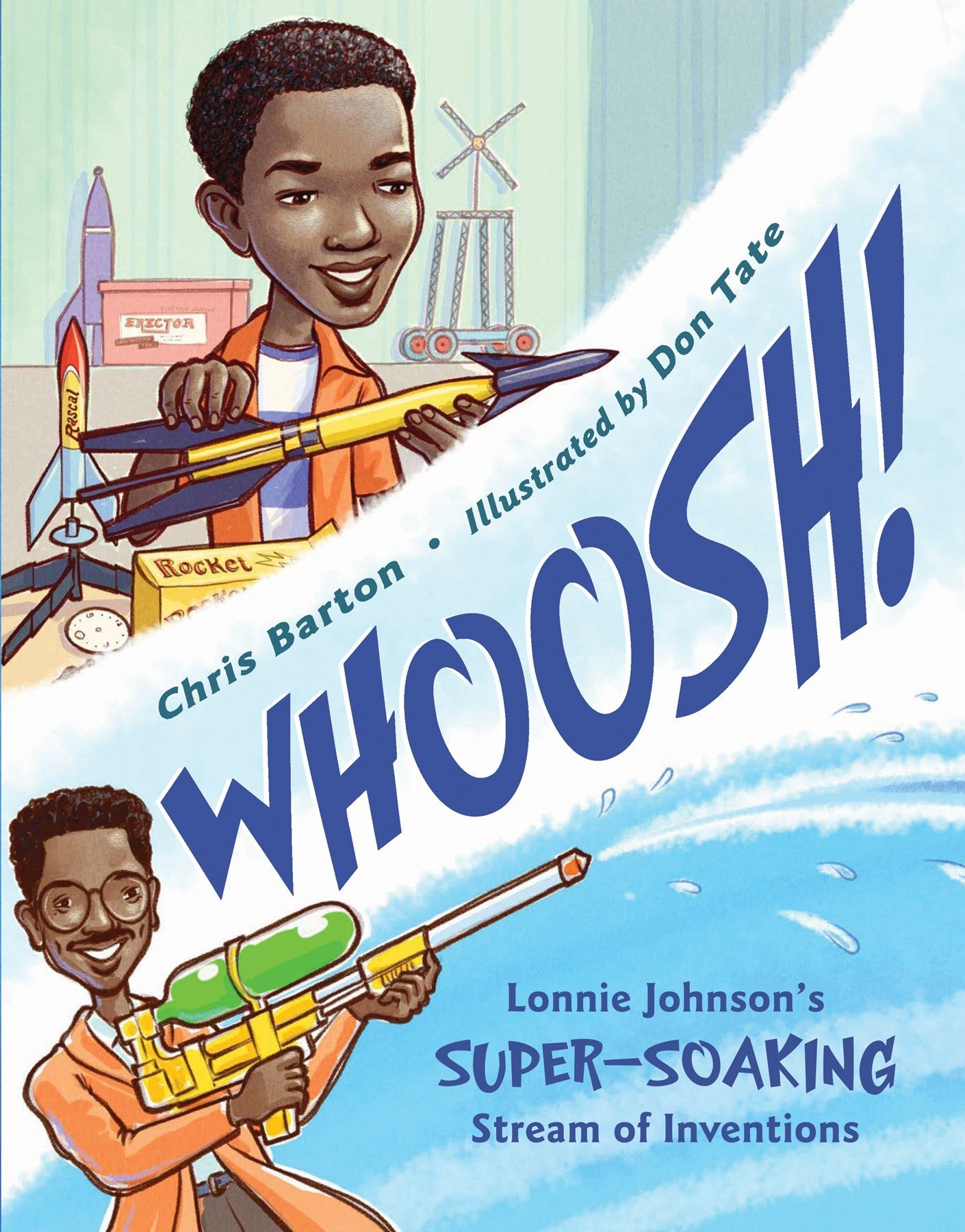
Afterward, Johnson went back to NASA briefly, then joined Hasbro to work on their nerf line. He has since earned over 100 patents, and currently mentors our generation of scientists. He places a focus on POC youth, such that every individual gets a chance to contribute and innovate to our advancing society. 

More Niche Information about the Super Soaker

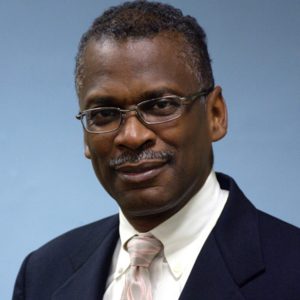
  • If you search up Lonnie Johnson, most of the pictures are just of him holding a Super Soaker. Like this!

  • There are 20 total series of Super Soakers (as listed on the Nerf Wiki) and then 5 more sub-series. The most recent are the Dinosquad and Bunkr Series. 
  • Each gun uses one of the technologies as follows to shoot. 
    • Piston Pumper: Triggerless guns that you shoot by pumping a pump
    • Air Pressure with Pressurised Reservoir: A system in which the user pumps a pump to pressurise the reservoir. They then pull the trigger to open the reservoir and release a stream of water. 
    • Air Pressure with Separate Chamber: First used for the Super Soaker 100, it is similar to the above. Pumping the pump pushes the water into a separate container, which increases its air pressure. Pulling the trigger releases the water. 
    • Spring Powered: Uses springs to propel the water stream forward
    • Motorised: Simply any gun that uses electric motors to push water out
    • Constant Pressure System (CPS): The user pumps water into a rubber bladder, which places constant pressure on the water inside. Pulling the trigger releases the water in a heavy stream. This is the most powerful system. The earlier models had recoil. 
  • The original super soaker was initially numbered in increments of 10 ( I will be abbreviating “Super Soaker” as SS in the context of product model. ie SS 10, SS 20 …). The exceptions are SS 25, the only Super Soaker that used a number that was not a multiple of 10, and SS MDS (which I guess is also not a multiple of 10). After SS 60, the number jumped to 100, and ran in increments of 100 until SS 300. 
  • Super Soaker 300 and CPS 3000 are the only two backpack water gun systems.
  • The super soaker has grossed over $1 billion USD. 

Links:

Lonnie Johnson’s Invention Biography on Biography.com

Lonnie Johnson’s Wikipedia

The Nerf Wiki Page if You’re Interested. 

Featured Image

First Image

Second Image

Third Image

Fourth Image

Fifth Image

Recipe: The Best Mochi Brownies

The past two years have been difficult and unprecedented. One thing that can help is finding joy in small things. These mochi brownies are perfect for chocolate lovers looking for a simple recipe. This recipe is modified from @Michaelligier’s “Squishy Mochi Brownies” on Instagram.

Ingredients:

5 tbsp butter

2 eggs

1.5 tsp baking powder

1 tsp vanilla extract (can be adjusted to taste)

1.5 cups milk (whole milk is recommended)

1 cup sugar (can be reduced to taste)

1 cup glutinous rice flour (mochiko is recommended for the best texture)

0.5 cup unsweetened cocoa powder

1 tsp espresso powder 

Pinch of salt

Dark chocolate (roughly chopped)

Recipe:

  1. Gently melt the butter in the microwave and preheat the oven to 350F.
  2. Mix the flour, sugar, cocoa powder, espresso powder, salt, and baking powder until combined.
  3. Whisk together the eggs, milk, melted butter, and vanilla extract until combined.
  4. Add the mixed dry ingredients to the wet ingredients and whisk until combined and smooth.
  5. Pour into a parchment paper-lined 9×9 baking tray and top with the chopped dark chocolate
  6. Bake for 60 minutes or until a toothpick inserted into the brownie comes out clean.
  7. Let the brownies cool for 30 minutes.
  8. Cut brownies and serve! Pairs well with milk or vanilla ice cream.

I hope you try this recipe! For more like this, I highly recommend you check out @michealligier on Instagram!

Sources: 1, Featured Image

Calligraphy 101: the basics of calligraphy

Calligraphy can be a creative way of brightening up a handmade card, adding a bit of spice to your bullet journal, or personalizing a gift. Although it takes a bit of practice, with the right tools and a bit of time, you’ll be a calligraphy expert in no time!

Things you’ll need to get started:
Crayola markers or brush pens
A piece of paper

Calligraphy is all about the pressure on the tip of the marker. From experience, I believe the best tool for beginners to learn calligraphy is Crayola markers because they’re easy to use and are available almost anywhere. I started by learning calligraphy with the Crayola Supertips because they’re sold in many different colours. I got to experiment with ombre designs, solid colours, and I was able to adjust the width of my strokes. Another option could be brush pens. Similar to Crayola markers, the tip is flexible and easy to work with. They also come in many different colours but can get a bit pricey. Depending on the things you have already, you could get started with calligraphy in no time!

Another thing I’ve seen some people do is print out calligraphy practice sheets. They’re similar to the ones we did when we were younger to practice our handwriting. They help you get a feel of your tool, play around with the width of your strokes, and experiment with different styles. One important thing to remember is that your tool has to have a cone-like tip (like Crayola markers and brush tip pens do). This is so that you can achieve a perfectly thin and thick line every time.

It’s hard to explain how to do calligraphy in words, so I’ll link some videos below that I found helpful when I was learning. Remember, practice makes perfect!

Brush pen tutorial:
This video gives a quick overview of the different pens/markers you can use as a beginner and also runs you through some practice exercises. She classifies all the letters of the alphabet into different categories (timestamp: 2:48) and emphasizes the importance of practicing every letter of the alphabet before moving on to create words.

Crayola markers tutorial:
This video does a good job of explaining the importance of angles, and also gives you some practice exercises to do. She also links her letter sheets in the description, which is a good place to start if you’re really stuck!

References: 12 (image credits)

Art from Black Artists

February is Black History Month! This is such an amazing time to educate ourselves and to learn more. Some of my fellow bloggers have already written about the pioneers of the music industry and dance styles that have their roots in Black culture, but today I want to highlight some amazing wall art from black artists.

1. Monica Ahanonu

Screen Shot 2021-11-25 at 8.55.40 AM.png

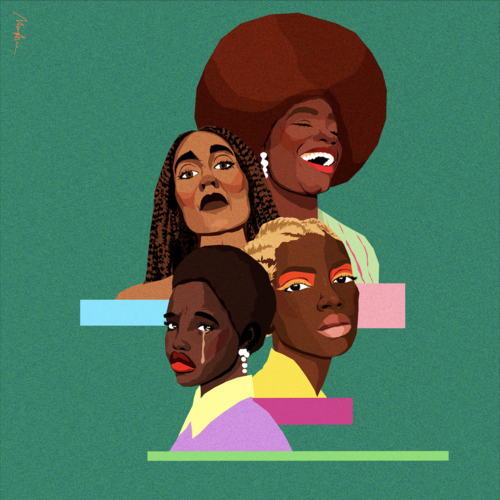
This is Monica Ahanonu’s work, “Strong Black Girls”. I personally, really love the art style and the colors. Even the placement of each face really adds to the piece. Monica has tons of artwork on her page, and each one is unique and really interesting. You can check them out, here. I personally really loved that Monica has her own oracle deck, fit with her artwork.

2. Adrian Brandon

Adrian Brandon’s Stolen Series.

Adrian’s series ‘Stolen’ is a series of portraits focusing on Black Lives that have been lost at the hands of the police. The concept is that Adrian gives himself only 1 minute to color for every year that the person had been alive, giving many of his pieces an ‘unfinished’ look to portray the unfinished lives of these people. While the ideas behind these pieces are incredibly difficult, I believe they highlight how important it is to recognize Black History Month. I haven’t included any images of his pieces directly in this article, but I highly recommend you go and scroll through the series.

3. Keith Mallett

Canvas Art Prints by Keith Mallett | iCanvas

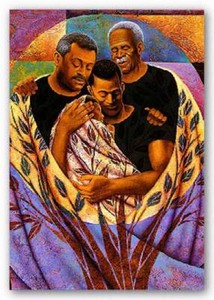
From Strong Roots by Keith Mallett Signed and Numbered Limited Edition Art Print | eBaySwing by Keith Mallett

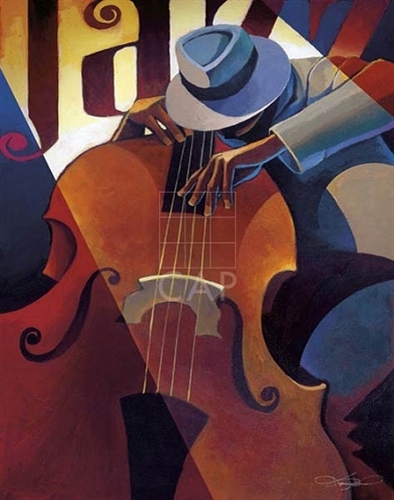
When I came across Keith Mallett’s art, I was awestruck. I absolutely loved the style. He is an American painter, etcher, and ceramic artist. His art ranges from figurative to still live and abstract. I have included a couple pieces that I found really interesting, but I hope you check out some of his other art, here.

I hope you enjoyed looking at some of these fantastic pieces of art. If you want to read more about Black History Month, I would check out the rest of the blog posts to learn more!


Sources: Featured Image/Monica Ahanonu /Adrian Brandon/Keith Mallett

The Psychology in Economics

Basic economic theory as we know it today is based heavily on a series of generalizations about how people act. That looks like describing the movement of prices in response to changes in supply. It also looks like looking at how government spending would affect the unemployment rate.

Today, the models economists use to predict behaviour are, in most cases, mathematically complex and highly precise. However, over the past few decades, studies have repeatedly shown that they often fall apart in the real world.

This is the intersection between economics and psychology: behavioural economics.

The thesis of this field is that real people do not behave with perfect rationality and optimization. We’ll call this perfectly rational economic agent Homo economicus—or “econs” for short (as Richard Thaler, a leading behavioural economist, does in his book Misbehaving).

Humans are fallible to psychological tricks and their own biases. Econs are not.

An Exploration of Human Behaviour

Sometimes, humans behave in at-first inexplicable ways. Below are a few well-known examples that behavioural economics has explored over the past few decades.

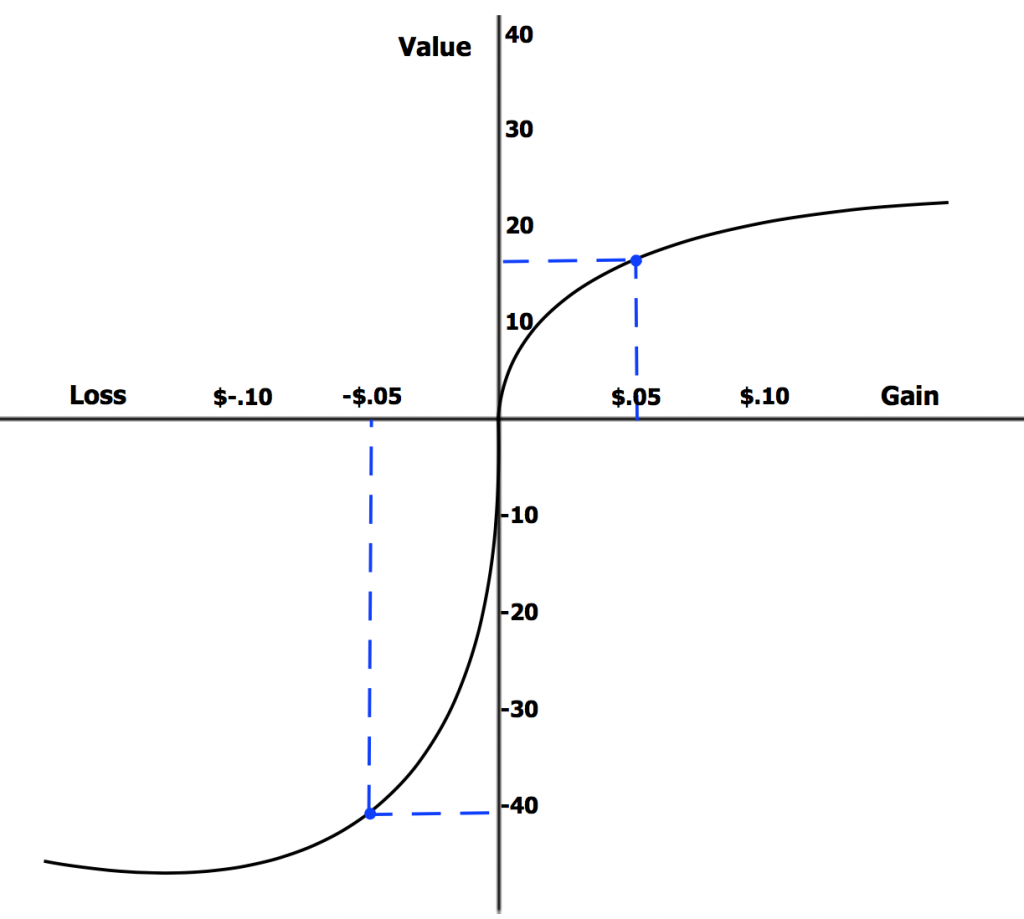
  1. The Endowment EffectPeople value things that they already own more than things that could become theirs. In one classic study, participants who were given a mug would only accept an offer to sell the mug that was roughly twice what they would pay for it themselves. The idea here is that individuals’ willingness to pay is generally lower than what people would accept to sell the same item once they already have it. One explanation of this is the idea of loss aversion—that although people like gains, they hate losses disproportionately more.

    A loss of $0.05 may be perceived as a greater loss of value than a gain of $0.05.
  2. Just-Noticeable DifferenceThe human mind is used to thinking in terms of proportions. And when talking about prices, for instance, certain absolute differences don’t mean much if they are proportionally unnoticeable. Consider this thought experiment: how far would you go to get a $5 discount on a $10 item? How about a $5 discount on a $1000 item?
  3. The Sunk Cost FallacyHere, the idea is that an econ would always make a decision based on present opportunity costs, not how much has already been “sunk” into an endeavour. For example, continuing to buy, say, a Costco or Amazon Prime membership, even though it may not be worth it, is illogical. However, due to the principle of payment depreciation, people often continue the membership so that they can get their worth out of their previous sunk costs.

Heuristics

These examples, and numerous others, demonstrate a principle that pervades psychological behaviour: the idea of a heuristic.

Heuristics are rules-of-thumb for making decisions. When humans choose to buy something, we aren’t meticulously calculating the expected utility we would gain and comparing it to the cost. We frequently make split-second decisions based on personal knowledge and past experiences, which may not be very precise. These are heuristics.

The extent of our own knowledge and experience limits the usefulness—and optimality—of heuristic-based decisions.

For example, goods and services we don’t buy very often—weddings, for example—are often very difficult to pinpoint in terms of value vs. price. It’s very difficult for us to judge whether something is too expensive or a good deal if we aren’t already familiar with it.

Moving forward, behavioural economics continues to expand. To better understand economic behaviour on a large scale, economists increasingly recognize the importance of psychology in individual decisions.

After all, humans are not econs, and we can’t expect ourselves to act like them either.

Image Sources: Featured/1

Gladys West: Black Mathematician Who Helped Invent GPS

Who is Gladys West?

Gladys West is a Black American mathematician. She is well known for her contributions to the mathematical modelling of the shape of the Earth. Also, she worked on developing satellite geodesy models that helped the development of the Global Positioning System (GPS).

Early life:

She was born in 1930 in Virginia and always wanted to escape rural life. She noticed that education was the only way to help her. She earned top grades and won a full scholarship to Virginia State College. In 1956, she graduated with a master’s in mathematics and got into the U.S. Naval Surface Warfare Center. At that time, she was the second Black woman ever to be hired at the facility.

Career:

When the very first computers arrived, she quickly learned how to program to analyze satellite data. After showcasing her skills working on award-winning studies about Pluto’s motion relative to Neptune, she became project manager for the Seasat Radar Altimetry Project, the first satellite designed to remote sensing the Earth’s ocean.

Next, she created a detailed mathematical model of the shape of the Earth. This encountered gravitational and tidal forces that changed the Earth’s shape.

After she retired, her journey wasn’t finished yet. She went back to school to earn her Ph.D. at 70. However, only in 2017, after the release of the film “Hidden Figures,” she started to receive recognition for her role in revolutionizing navigation as a Black scientist. West was inducted into the United States Air Force Hall of Fame in 2018. In addition, she was awarded the Webby Lifetime Achievement Award at the 25th Annual Webby Awards for her contribution in developing satellite geodesy models.


Sources 1/2

Image: Featured Image/1/2