Home Blog Page 72

My Identity Poem

Sometime around April 1996, the Academy of American Poets declared April as the National Poetry Month. This month is made in order to remind the public that poets contain a powerful role that’s meant to be played in society’s cultural aspects. High levels of participation are meant to be present thus, I’ll be sharing a poem I have recently written that contributes to my personal identity. 

My Identity

Sally Wang


My identity is what the reflection shows in the mirror,

A full piece puzzle containing the life choices given to me.

My genetic footprints first began in China,

It’s vivid in colour and filled with childhood memories.

Those footprints then led me to the path to Canada,

In which a new masterpiece was added to my identity.


I am bilingual,

I’m able to communicate with 2 languages effortlessly.

One is what formed my childhood fantasies,

While the other is what I mostly use to speak.


I’m an only child in the family tree,

Which greatly influences my identity.

No siblings to fight over gives me a advantage,

But I do often feel lonely.


Each and every small piece of my personality,

Is something that contributes to making me unique. 

Reliable, thoughtful, and trustworthy,

Traits that fit in perfectly into my identity. 


The style that’s attached,

The comfortable sweatpants and hoodies.

Although jeans look quite fashionable,

They don’t tend to fit me greatly. 


Each and every one of us carries our own unique stories,

They shape our physical,

Emotional,

And mostly importantly,

Our overall identity.

Food Waste: A Global Issue

According to the United Nations, about 17% of the total global food production is wasted. Upon close inspection, 11% of this number accounts for waste in households, 5% in the food service and 2% in retail. Therefore, food waste is a crucial issue in today’s world. In this blog, I wanted to cover the relevance of food waste, ways to reduce this problem and an initiative that many stores across Canada have taken to reduce food waste!

Relevance

Food waste is an important issue throughout the world. However, a large portion of this problem is completely avoidable. When food is wasted, all of the resources that were required to place the food on the table also go to waste. For example, water, land, energy, labour, capital and more are all wasted as a result of food waste. Furthermore, the disposal of food waste in landfills leads to greenhouse gas emissions that can further contribute to climate change. According to the City of Toronto, “Canada’s 2.2 million tonnes of avoidable food waste is equivalent to 9.8 million tonnes of CO2 and 2.1 million cars on the road.” Therefore, reducing food waste and addressing this problem is vital.

Our role

There are countless sways that we can reduce this problem. Some of these include:

  • Meal planning. Take a few minutes out of your week in order to plan your meals and the food you will require. During this time, check the amount of food you may have in your cupboards and refrigerator, and plan around it. Consider expiration dates and the freshness of the product.
  • Shop smart. During grocery shopping, create a list of foods you require for the week beforehand. Most importantly, check the expiration dates and avoid ones that expire soon.
  • Proper storage. Many of us often throw food away after it goes bad. However, storing food properly and regularly checking expiration dates can counteract this issue. By keeping your refrigerator at a good temperature, properly maintaining the humidity of certain foods and freezing a few items, we can increase shelf life and prevent them from going bad.
  • Use it. Conduct some of your own research and find ways to use leftovers and parts of food that are often disposed. For example, by soaking wilted vegetables like celery, lettuce and broccoli in cold water for 5-10 minutes, we can restore some of their freshness. Secondly, using fruits and vegetables in smoothies or in other baked goods is a great way to use them before they go bad. In addition, pickling vegetables will allow them to last for longer periods of time and still remain tasty. Therefore, finding ways to use leftovers and food that is past their prime will further prevent them from ending up as waste.
  • Be mindful. Whether you are eating at home or out, take a portion of food that you will be able to finish. You can always hep yourself to seconds or thirds, however, it is important to take an amount of food that you can finish. Therefore, think before you serve yourself and be mindful of food waste.
  • Most importantly, think before you throw. While mouldy food should most certainly be thrown out, foods that are a little older may still be good to eat. For example, while some vegetables may wilt after a few days, they can still be used to make delicious dishes. Therefore, before throwing food away, think about it. Do you really need to throw it away, or can it it be used in some way?

Too Good to Go

Now that we’ve covered ways that you can help with food waste, let’s discuss what stores around Canada are doing to counteract this issue. Countless stores in Canada have joined a movement that aims to reduce food waste caused by restaurants, bakeries and grocery stores. Too Good To Go is a mobile app that allows users to purchase bags of mystery food items that would have otherwise ended up as waste. While the food is still good to eat, it can be purchased at a third of its regular price. In addition, the company helps support the Calgary Food Bank by allowing users to donate through the app. All of the donation money goes towards helping the Food Bank. Therefore, while all of us have a part to play in reducing food waste, there are countless initiatives already taking place around us!

That’s it! While food waste is an issue that must be addressed today, there are countless ways that individuals, organizations and cities can reduce this problem.


Featured Image

Sources: 1/2/3/4

Underrated Korean Musical Artists

We all know big K-pop names such as BTS, Blackpink, and Stray Kids, but there are countless other talented yet not widely known Korean musical artists. With the rapid spread of K-pop in western countries, people have become more open towards listening to music in another language. This is a great way to experience new cultures and to perhaps even learn a new language. What many people don’t know though, is that Korean music does not solely consist of the flashy outfits and dances of the K-pop world. There are rock musicians, indie artists, and even a rising hip-hop scene in Korean music. Today, we will be spotlighting some underrated yet amazingly talented Korean musical artists. 

Seori

Seori is a 25 year old indie artist that made her solo debut in 2020. Although she is relatively new to the music scene, she has quickly gained popularity for her unique vocals. She also collaborated with the popular K-pop boy band Tomorrow X Together on the song ‘0X1=LOVESONG’, as well as Jae Park of DAY6 on the song ‘Dive With You’. Her sound is very smooth and dreamy, and has a very relaxing feel to it. She is also very good at speaking English, and many of her songs have English lyrics in them. Some of my favourite songs of Seori’s are ‘Lovers In The Night’ and ‘Really High’.

Ash Island

After finishing in 4th place on Mnet’s season 2 of High School Rapper, Ash Island signed to a music level and released his debut album in 2019. Although he is only 22, Ash Island is quickly making a name for himself in the Korean hip-hop scene. While he does have the classic aggressive voice of many rappers, he is also able to rap very soft and melodically, which makes him stand out. Even though I am very picky when it comes to hip-hop music, I found myself instantly loving all of his songs. I recommend you check out the songs ‘Over’ and ‘Because’.

JUNNY

JUNNY was actually born and raised in Vancouver, but moved to Korea to pursue his music dreams. This is actually quite common, many foreign born Korean musical artists move to Korea because of the huge music scene there. JUNNY has a very chill, youthful vibe to his songs. He also has a crystal-clear voice, which complements his songs very well. Being Korean-Canadian, he also incorporates a lot of English into his songs. For those of you hesitant about trying out a song in a different language, maybe listen to some of JUNNY’s songs to get you started. My personal favourites are ‘Nostalgia’ and ‘By My Side’.

I hope you try some of these artists out and happy listening!

Sources [1][2][3]

Pomodoro and Flowtime for Efficient and Focused Productivity

0

There’s a line that separates productive efficiency with diminishing productivity in any work session. My personal favourite method to limit that diminishing productivity, to capture my optimal attention and focus is the Pomodoro technique. 

Pomodoro has 5 Steps.

  1. Ready a to-do list and a timer.
  2. Set the timer for 25 minutes, and completely focus on completing / working on your tasks until the timer rings
  3. After it rings, mark down what you completed
  4. Have a 5 minute break
  5. Repeat steps 2 – 4 for four times, then have a longer break, for around 15-30 minutes.

Pomodoro is built for deliberate and focused bursts of productivity. 25 minutes is the typical length of a pomodoro block, but it differs for each person. The purpose is to avoid distractions entirely. Created by Francesco Cirillo, this technique helps break larger projects into simpler steps. This creates a less daunting experience to start whatever task you’ve been dreading. 

Sometimes it’s not the larger projects I’m anxious about, but the small ones I absolutely do not want to do. In this case, you group all of these together, and use a Pomodoro block to rapid-fire finish as many of these that you can. Once I set a specific time block for them, I find tasks such as responding to emails or cleaning a lot easier.

Also note, Pomodoro means “Tomato” in Italian. That’s why so many visuals of Pomodoro depict tomatoes. These fruit are the names of the Pomodoro time blocks.

Flowtime, Modified Pomodoro for Different Tasks

Pomodoro is gated to the timer. This is effective because you guarantee 25 minutes of productivity (so long as you avoid distractions), but that could be an interruption in itself. Flowtime is a different take on Pomodoro, where you work for as long as you can focus, in your flow state. 

For as long as you work, you rest for a corresponding amount of time. 

  • If 25 minutes or less, you would still rest for 5 minutes. 
  • If you do 25 – 50 minutes, you could rest for 8 minutes. 

This is especially powerful for tasks where you could be cut off in the middle of some sheer creative moment. Say you’re writing, and you’ve just struck gold for some world building ideas. You’d want to keep writing so as to not forget those. 

I find myself starting the day with Pomodoro for tasks such as studying, then moving or switching to Flowtime as I see fit. If I notice myself unable to focus properly, or realize I’m in the flow state when my timer rings, I’ll just switch over and continue working. This is usually valuable with my schedule, where I’ll mainly study after school, then move over to my more problem solving heavy tasks such as programming. 

Regardless, its Time Management.

Pomodoro and Flowtime effectuate the value of breaks and time blocking. If you’re the type of person who struggles with productivity, I’d recommend you try these techniques. They might not be the best for you, but it’s definitely a good idea to experiment so you can figure out what is the best for you.

Links

Learn more about Pomodoro

Learn more about Flowtime

Featured Image

First Image

Second Image

Third Image

A Fuel Tax Break Is Not What Consumers Need Right Now

0

Last Friday, a new fuel tax break came into effect in Alberta. The policy, championed by Premier Jason Kenney, would dispense with the existing 13 cent per litre provincial tax on gasoline and diesel.

It seems like a straightforward strategy: help reduce the burden of soaring fuel prices from consumers. It’s also immediately visible.

Perhaps that’s why so many governments, including those of the UK, Japan, and France, have done the same.

However, the tax cuts are fundamentally at odds with basic economic principles and the status quo of the cost of living.

On Taxes and Energy Supply

Firstly, the tax break will only offer temporary relief.

A slightly lower gasoline price tomorrow will only encourage further spending on fuel, with an increase in consumer demand.

It’s important to recognize that the actual supply of oil, natural gas (in the case of heating bills), and their refined products does not change. Even a slight increase in consumer demand furthers the increase in prices at the pump.

The price of gasoline in the end will likely fluctuate before arriving back on the trajectory it was already headed in—up.

Moreover, in the long run, it’s difficult to see how a fuel tax break helps discourage a reliance on non-renewable energy.

Such a transition away from gasoline and natural gas is on its way. Fuel taxes serve to disincentivize unnecessary trips in the car, pushing people toward carpooling and public transport.

The government ought to be trying to reduce the consumer—and commercial—usage of fuel, not elicit more.

The fuel tax break is but a band-aid solution to a problem that cannot be solved from the parking lot of a Co-op gas station.

Everything Costs More

On Friday, Kenney said, “We need to take real action to reduce the cost of living.”

Yet the results on consumers’ wallets from a fuel tax break will be marginal at best. Other actions, such as targeting demand for fuel, would likely fare better.

However, these target only one part of the inflationary pressures consumers are experiencing on a daily basis.

Prices are rising and will continue to rise—at least in the short-term—with little recourse from wage growth.

Indeed, the effects of energy markets in turmoil will spread to not just the gas pump or heating bill, but also to electricity prices, shipping costs in e-commerce, and grocery aisles.

Support for the people who are most affected is doubtless necessary.

But how we go about that and where we go from there is shaky or simply unfeasible, if not uncertain.

References: 1

Image Sources: Featured

Thinking about getting a tattoo? Here are some things to know beforehand!

Since I was little I have been talking about getting a tattoo, so naturally I got my first one as soon as I could. I was 16 years old, which some tattoo parlors allow if the parent is present. I chose something that was very meaningful to me, so I still like what I got, but I have to admit that 16 is really young. I also made the mistake of getting a spontaneous tattoo as soon as I turned 18, which is the legal age, and now I am stuck with something I do not totally love. It definitely isn’t as bad as some of the tattoo fails I’ve seen, but it also wasn’t my proudest moment. Obviously, I’ve always known tattoos are permanent, but after this it really hit me, and I am still living with the consequences of it. Getting a tattoo is a really big step, so in this article I want to talk about my experience, give some tips, and really stress the importance of taking time to think before getting something done for the first time. 

Choosing the Right Tattoo

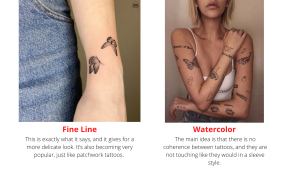
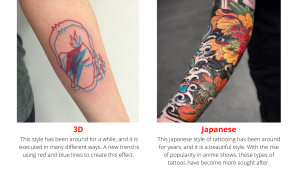
The first step of getting a tattoo is actually choosing one. Like I said, I chose something really important to me, which is why I still really like it. I do not think a tattoo needs to have a deep story behind it, a lot of people see tattooing as an art form and choose a piece based solely on beauty, but you still need to be sure you are in love with your choice. Below are some different styles of tattooing for you to research, to get a better sense of what you like and what you don’t. 

Choosing a Place and Size 

After choosing what tattoo you want to get, you have to decide on the placement. Remember that not all tattoos fit well on all parts of the body, plus we move, and lose or gain fat in different areas in our lives. Our tattoos will stretch with us, but they might not look the same afterwards. Other than that, when thinking about placement and sizing, you should also keep in mind how easy it will be to cover up. While tattoos have become more acceptable in today’s society, many places still require employees to cover them up. This includes most healthcare professionals, law enforcement, teachers, bank employees, people who work in the government, and so on. Also, if you want to go into an acting role, having a tattoo can hinder your ability to get roles. For example, the tattoos you have might not fit the character you are auditioning for. A fun fact is that when you do see tattoos on screen they are usually licensed, as showing another artist’s artwork without credit can lead to a copyright suit. 

Another thing to think about is pain levels, as certain areas are much more sensitive than others. While everybody is different, some of the most painful places are the wrists, ribs, back of the knee, and the neck. This is because these places have the thinnest portion of skin, and expose many nerve endings. The type of tattoo also affects pain levels and sensitivity, especially ones that have a lot of shading or black spots, because they are going over the same piece of sensitive skin multiple times. 

On the brighter side, some of the least painful places to get tattooed are the outer shoulder and arm, calves, buttocks, and so on, as they have more fat and overall thicker skin. I got my tattoo done on my back, which is known to be a low to moderately painful spot. Surprisingly, the first hour did not hurt at all. When my tattoo artist started tracing the dragonfly wings over my shoulder bones I started to feel it, and the worst part was the last 30 minutes, which was shading. 

Choosing a Shop and Artist

The next step is finding a shop and an artist. There are many excellent places here in Calgary and beyond, and with a little research you’ll find the perfect place for you. Here I’ll talk about some of the key things like pricing, what to look for in a shop and in an artist, plus my experience with everything. 

Pricing 

Yes, tattoos are expensive, but it’s better to invest in a pricier artist to get the best results. Going the cheaper route is an option, but there is a high possibility that you end up with something you dislike permanently on your body. 

Laser tattoo removal exists, but there are many downsides to it, and should only be used as a last resort. It is way more expensive than the actual tattoo, plus people say it is also extremely painful. For example, my tattoo, which fits directly between the straps of a cami, cost about $350. I contacted a tattoo removal clinic in Calgary for my other tattoo, which is about 3 inches in height and width, and it would cost about $700 to remove. ($60 dollars per session, 12 times.) This would be spread over 2 years as you need to wait 6 to 8 weeks between sessions. There is also a small risk of scarring after the process is done. So to reiterate, yes it exists, but it is not a good option, and it’s better to deliberately think about your tattoo than to risk having to remove it.

To get to the point, all tattoo artists and shops have different pricing arrangements, but usually you will need to pay a down payment to get your design drawn up, and then you pay the rest after your session. They will charge you based on how many hours it takes, and with small tattoos they will charge you at least one hour, which is usually part of your down payment, even if it takes less time. The last thing is tipping, as always, it is not mandatory, but a courtesy based on how well your tattoo artist does. You should have an approximate cost calculated before getting the tattoo done so you can budget the tip into that amount. 

What to Look for in a Shop and Artist 

Here I want to highlight some of the red flags many people, including other artists, tell people to watch out for when going to get a tattoo. This is to help you decide on a place to go, and avoid going somewhere that has potentially dangerous situations. 

  1. A shop should be clean and sanitary, if you see anything out of place, like garbage, stations, supplies, and so on, it is not a high quality shop. 
  2. Same goes for the artist, they should be hand washing regularly, wearing gloves, properly getting rid of needles, and so on. Some people bleed during their appointment, and you definitely do not want any cross contamination. 
  3. If artists do not have a good portfolio it might be a sign that they do not have a good history and steady clientele. Even apprentices should have some work to show potential clients. 
  4. If the price is super cheap, it probably means the quality of the tattoo isn’t great. Like with most cases in life, if it’s too good to be true, it probably isn’t true. 
  5. An artist should be willing to work with you and your design, and not get frustrated if you change your mind about small details or placement. It is their job to create something you’ll love, as you have to live their work for the rest of your life. 

My Experience

I asked around and looked at multiple different shops before deciding on one of them. When researching I looked at their social media pages, customer reviews, and artist portfolios. I then sent them an email with my tattoo idea, how big I wanted it, some of the artists that I was interested in, and when I was looking to get it. Not too long after I got an email from the tattoo artist they thought best fit my style. I went in to the shop and she showed me her first draft, which was combining multiple aspects of different tattoos I saw online. I asked her to make some changes for my appointment, which she gladly did. The day of I changed something last minute, and we had to lay the stencil down multiple times. At first, I felt bad about making her do all that extra work, but luckily my mother reminded me that it is her job to make my idea come to life, and I needed to be 100% sure before saying yes to the final design. The environment of the shop was super clean, my artist was professional, nice, and open to listening to my ideas and concerns, and I overall had a good experience. 

Right before your appointment 

Some of the biggest things to know before your appointment.

  1. Figure out what’s best to wear, which depends on where you’re getting the tattoo done. When I got mine I wore a tank top, exactly where I wanted it to be placed. The only mistake I made was wearing the color white, which got stained with ink and a bit of blood. If you are getting a leg piece done, wearing shorts under your outfit is a good plan. 
  2. Eat well and get a good night’s sleep. Also bring a snack and water to your appointment. Water will make your skin firmer and cause it to bleed less, and food will stop you from feeling nauseous and lightheaded. 
  3. Lastly, you can use numbing cream if you would like. You will need to let your tattoo artist know, and apply it about an hour beforehand. 

After Your Appointment 

The last part is aftercare, which is crucial. The best advice I can give you on this is to listen to your tattoo artist, as they know best. My artist used a special sterilized bandage that I left on for a couple of days until my tattoo fully healed. If you use any lotion make sure it is unscented to avoid irritation, and lastly, DO NOT scratch your tattoo. This is super difficult as it can get really itchy the first few days, but scratching can lead to scabbing and infection. 

After reading this I hope you understand that getting a tattoo is a big step, and you should do extensive research and think clearly before getting anything done. I also hope these tips helped, and that my experience gives others a better idea of what to expect when getting tattooed. 

Featured Image

Research sources: 1/2/3/4 

Image Sources: 1/2/3/4/5/6/7/8 created with the help of Canva

Fasting in the World of Sports

As you may know, people around the world fast from sunrise to sunset during the month of Ramadan. This means that no food or water can be consumed during the daytime. Despite this physical challenge, many athletes who follow Islam fast while training and competing. Some athletes also practice intermittent fasting, which is a method used for health purposes rather than religion. In both forms, fasting has a unique effect on athletes. First, you have the obvious impact that results from a lack of food and drink over extended periods of time – hunger and occasional fatigue. However, when fasting, people usually set aside time to eat prior to the period of fasting, so that they still get the nutrition they need. When diving deeper into the scientific aspect, professionals and experts have found that fasting has positive effects for blood sugar control, brain function, heart and cardiovascular health, and disease prevention. Many athletes who fast also perform very well when doing so – though a connection between fasting and performance has not scientifically been established – and whether athletes fast due to their religion or because of health purposes, it can be seen as a pretty impressive athletic feat. Let’s take a look at five athletes who fasted while competing over the course of their careers.

Kyrie Irving

Brooklyn Nets guard Kyrie Irving has said that fasting during games has been an “adjustment” for him. With that being said, his performance hasn’t seemed to take a hit at all. He has been continuing his high level of play, while also spreading awareness about fasting in the NBA. Below is a video of Kyrie Irving breaking his fast mid-game.

Mo Salah

Liverpool’s Mo Salah also fasts while competing – even during the most important parts of the season. There is some controversy over whether or not he fasted during the Champions League final at its time, but regardless, Salah has fasted for many games over the course of his career. He has adapted to this challenge by waking up around 3:00 AM to train, rather than the regular training times. Training while the sun is down means that he can do it on a full and energized stomach, before eventually fasting in the daytime.

Kareem Abdul-Jabbar

The NBA’s all-time leading scorer, Kareem Abdul-Jabbar, also fasted during his career. He is regarded as one of the league’s greatest players of all time, with a highly decorated career. The Hall of Famer played from 1969 to 1989, and paved the way for countless future Muslim athletes.

Hakeem Olajuwon

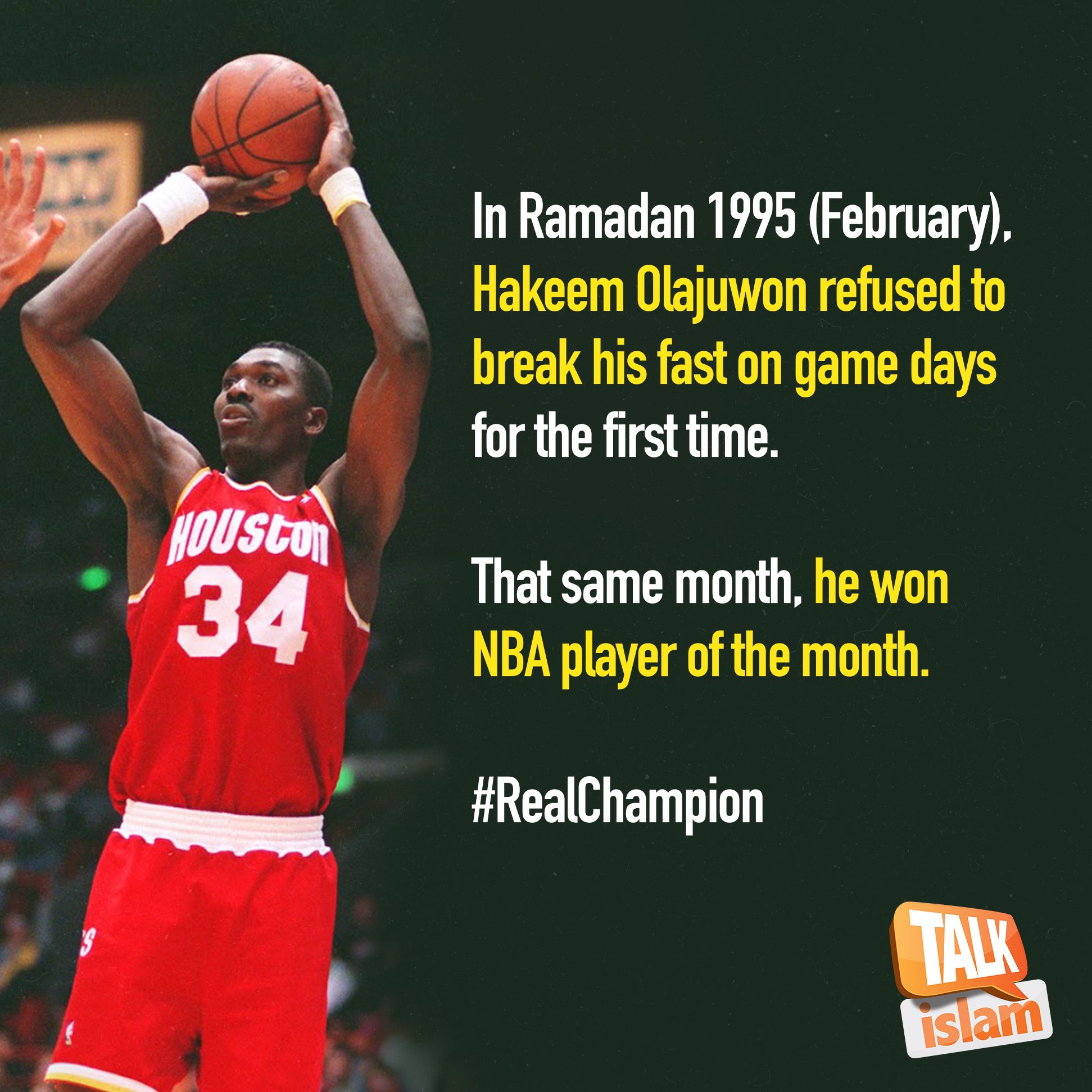
Former Houston Rockets center Hakeem Olajuwon has had some of the best fasting performances by any athlete in sports history. When fasting in 1995, Olajuwon said, “I feel like the sacrifices I’m making now will make me stronger mentally when there is much more on the line.” That year, he went on to win the NBA Championship.

Karim Benzema

Just a few days ago, Karim Benzema of Real Madrid scored a hat-trick in the Champions League quarter-finals. This itself was quite the performance, as it earned the team a ticket to the next stage of the tournament after a 3-1 win. However, he did all of this after an entire day of fasting as well! Benzema said that he feels good while fasting, and that it makes him stronger – and his recent performance has proved that more than anything.

Featured Image

Source 1/2/3/4/5

Expectations

0

As time progresses and we all suddenly find ourselves in high school or as adults, something that never changes is expectations. It seems as if they follow us everywhere, always lingering at the back of our heads as a quiet voice. Those expectations are set by ourselves or come from our parents, friends, teachers, and peers. At times they can be motivating, but I often find them to be stressful and difficult to deal with. Therefore, today I wanted to talk about how to manage expectations in order to deal with stress, a lack of motivation, and even burn-out.

Hear Yourself Out

I can say that we all set expectations for ourselves. It is part of being human. But, try to understand where these expectations stem from and why they are so important in your life. Is it academic-related or something more behavioural? Depending on your answer, your approach to dealing with those standards will also change. I know that many of my expectations in my life come from what I want from myself. But, I have learned that constantly demanding “perfection” from yourself becomes tiring and sucks out the joy from once-loved activities. Therefore, give yourself the chance to reflect and listen to your needs and wants. Ask yourself why you are setting such prospects for yourself. Is it to achieve your goals or something related to what others think about you? The psychological aspect of expectations suggests that setting expectations is related to gaining motivation to achieve success and limit confusion. We can establish low or high expectations for ourselves. For instance, I have a bad habit of having low expectations of getting a good grade after tests even if I have studied well to avoid the feeling of disappointment if I get a low mark in a situation I anticipated a higher one. I am trying to say that do not undermine your hard work and accomplishments by always being afraid of failure and disappointment. Just like many other things, expectations can be taken as helpful or negatively. But that choice is up to you.

Expectations Don’t Control You

The perception others have of an individual can pressure one to pursue tasks that are of no interest to them and consequently creates an endless cycle of stress and self-doubt. Thus, you must approach tasks in your life with the certainty that you enjoy them; instead of trying to hold up aspirations, others expect of you. From my personal experience, it is better to make your goals clear rather than deal with the regret that comes when you find yourself in activities and classes that you have no passion for. I understand that it is difficult to make your ideas and choices clear with parents and others. It can be nerve-racking when you are received with disappointment and confusion when communicating your thoughts and emotions. Facing adversity is common, so it is key to be prepared for facing difficult situations or adapting to unexpected situations. Moreover, it is a vital aspect of dealing with expectations in a personal and work setting. 

Communicate

High expectations from family members and others can feel like burdens as you endlessly try to meet them. In situations where you feel as if you are not ready or need a break, be honest with yourself and others. One of the biggest lessons I have learned is realizing when you mentally cannot push yourself anymore and taking time to have a break. Reaching a breaking point should not be your reason to listen to your body, so stay in touch with your thoughts and emotions. Talking to trusted individuals and writing down and recording what you feel can help you figure out what you want and need. Furthermore, it can be a huge relief to get worries off your chest by just saying them aloud. Thus, communicating with your teachers, employers, and family is essential to managing expectations. Let them know of your boundaries and current plans. At first, being vulnerable is scary, but do not be afraid to tell the truth, and prioritize your well-being by asking for extra assistance. This may sound cliche, but communication is key!

A Shift in Perception

Prioritizing your health and safety is extremely important. From my personal experiences, I remember thinking it is more important that I finish an assignment instead of getting proper sleep or spending time with my family. Therefore, it is important to maintain a balance instead of having to sacrifice your well-being in pursuit of academic validation. However, staying dedicated and passionate about your projects is also just as important, so remember to keep an open mindset and stay positive regarding any challenges along the way. To achieve a healthy work and life balance, explore ways that bring you peace, excitement, and joy. Some simple ways could be to watch your favourite movie, have a conversation with friends, or journal your thoughts. Spending time doing what you love and connecting with others and nature can create a shift in your perception, providing you with a more positive outlook that can tackle stress and frustration. Also, give yourself credit for what you have achieved and be proud of your accomplishments. Sometimes I feel like many of my expectations come from the fear of failure. With that in mind, it is normal and acceptable to experience failure, as it is how you grow and further develop your character. Failure does not define you, and use it to improve your skills and come back even stronger next time!

[1]/[2]//featured image

Starting To Appreciate My Own Company

Grade eleven has been pretty stressful for me thus far. I’ve been stressed about meeting deadlines, not falling behind and staying ahead ( since going to a self-directed high-school has caused me to not be on track with my school work ), and getting the high grades I want to achieve. At the start of every school year, I set myself some goals to help improve my mental health for the year, and one of these goals was to start appreciating my own company.

Covid isolation challenged my social life tremendously. I saw my mental health decline with the lack of social interaction I was experiencing. For the 2021-2022 school year, I wanted to start appreciating my own company and my time alone.

There are many benefits to appreciating your own company, some of which include:

  • Encouraging creativity
  • Becoming more productive
  • Getting to know yourself
  • Increased empathy with others

With this in mind, I began to treat myself in the manner in which I desired others to regard me. I slowly started exploring and discovering things about myself that I enjoyed. I used my mental breaks to enjoy my own company. Although the stress of school piled ( and still piles on me ), I found that taking numerous mental breaks helped me to not drown myself in stress. Taking breaks from working and doing things that I enjoyed ( going on walks, running myself a warm bath, going to a dance class ) supported me in my quest to start appreciating my time alone.

For me, here are some of the ways I started appreciating my own company:

  • Realizing that showing appreciation for myself was crucial to appreciating my own company – Discovering parts about myself that I found interesting ultimately aided me in being at peace with spending my own time alone. I started appreciating parts about myself, whether it was how I was dressing that day, or acknowledging the work that I did for the day, self-love/appreciating my time alone supported me in appreciating my own company.
  • Starting to do things you enjoyed by yourself – One of the things I enjoy doing is exploring. I enjoy just exploring with no destination. I’d usually go on a walk, whether that was in a park ( like Fish Creek ) or going downtown. I also enjoyed cooking, playing dress-up in my room, listening to music, writing, et cetera.
  •  Avoiding distractions – Whenever I was doing something for my own sake, I would try and remove some distractions, an example would be my phone. Depending on what I was doing to enjoy my time alone, I would just put my phone down and focus, or listen to music/watch a show. It was very dependent on what I was focusing on.
  • Reflecting on my day – At the start of the school year, I kept a journal and I tried to write in it every day. Obviously, I didn’t keep up my promise to write every day, however, I just started writing down some things about my day that I enjoyed on post-its. I recognized what I enjoyed and what went wrong that day and how I could improve/fix my days moving forward. Another tool that helped me reflect on my day was the chrome extension “coffeelings”, which is a daily check-in tool that I used to reflect on my day.

Obviously, these are not all of the things I focused on when appreciating my own company, however, I felt like these were some tips that I felt were worth sharing, as these were the crucial points I used to assist me in appreciating my own company. Different people use different ways to appreciate/start to appreciate their time alone. It’s a learning process, almost like a trial and error to see what you enjoy and what you do not enjoy.

It’s crucial to note, though, that enjoying your own time alone is not the same as embracing loneliness. I was convinced that I was during the entirety of 2020 and it caused my mental health to decline significantly during this time. To appreciate your own company, you want to be at peace with realizing that sometimes you need to take time for yourself and not allow the thought of being alone to stop you from enjoying and living your own life. If you ever need anyone to talk to, reach out for support from friends or family. Calgary also offers numerous services that can assist you if you need any help. You do not need to feel lonely when appreciating your time alone. Ask for support from your peers when it is needed.

It can feel very awkward and strange if you aren’t used to doing things on your own account, however; it could be the beginning for you to become the best version of yourself. I feel eternally grateful to be able to appreciate my time alone, and I find that it is a crucial skill to have. Taking advantage of your time and enjoying parts about yourself ultimately can support you in becoming the better version of yourself.

sources |  featured image1,

Letting go of the Past

0
Do you feel frequently that you can’t move on? It’s so difficult to overcome your past as it has a significant impact on our daily lives and decisions. We look at the past when figuring something out or when trying something new. BUT, what if you want to let go of something in the past? Not everything in the past is something we want to remember. Those tough moments become this dreadful feeling that can act as an obstacle in our life. This blog is going to help you find a way to get rid of your feelings of hurt, regret, anxiety, depression, or any other obstacles which stop you from working towards your happiness. I know this can be tough at times, but you have to try it some day or another in order to live in the present moment. LETS START!

Why is it good to let go of the past?

First, we have to understand the importance of letting go of the past. To begin with, everyone makes some sort of mistakes or has painful memories, and sometimes they are engraved into our minds. It’s so strenuous to get rid of them and we end up walking around with those mistakes, memories, failures, disappointments, and our hurts. Therefore, taking the time to ease our minds and let go of the past is vital.

The way you look at things, like your perspective, will change for the better once you begin letting go of the past. Talking about positivity, we can make the bad experiences from our past into something we can learn from. For example, by discussing the situation that weighs on our minds with someone else that you may trust. Doing this will help you see different perspectives, and how others view the situation. Yet, this may not solve the problem completely, however, it’s a step! That’s way better than leaving the situation where it is. Finally, when letting go you will feel like a load has been lifted off of your shoulders, encouraging you to move forward with only the lessons you have learned. The feelings of failure, disappointments, and our hurts, we won’t have to face. We will live in the present moment, focusing on making it the best!

Steps to stop struggling with the past and to let go of it:

  1. If you want to really let go of the past, you have to make it your top priority. Now it’s not only a want to let go of the past it is a “must.” You have to acknowledge the fact that what you are holding back is why you must move on. Changing the letting go goal to a “must” will help you to stay focused and determined.

  2. We all know that life doesn’t give you second chances. However, we can make a list of things that we want to “re-do” (something that you would have done differently). We make lists for so many things, for instance grocery lists, packing, to-do lists, and so many more. Likewise, we can also make a list for things we want to “re-do”. It can help us learn from the mistakes that we have made and help us correct the situation moving forward. In addition, this will help us develop our planning skills and shape us for future events and our life goals.

  3. Practicing mindfulness is another way that can help us let go of the past. If making lists don’t help you, then try meditating or practicing mindfulness. Mindfulness motivates people to concentrate on what’s happening in the present. One fact – 2016 paper advice that people who are more mindful encounter less sad/dark thoughts which are occurring continuously (also known as rumination). Meditation doesn’t even have to take long, there are videos online that will guide you through 5 minutes of meditation. In addition, you can do it anywhere and anytime.

  4. Something as simple as enjoying the present will help us let go of the past. Try to find things you are grateful in your life right now. Not enjoying your present life can lead you to have regrets in the future making the goal of letting go of the past more difficult. Overall, you should go out with friends and family, enjoy what life has in store right now. Accomplish what you want to right now. The past is done, now it is time for the present.

  5. One of the best things you can do is try to talk about it. The worst feeling is when those painful emotions or situations are stuck with you and won’t leave. When talking about it, you give yourself a feeling of relief. As a matter of fact, it is also important because “people can’t let go because they feel they aren’t allowed to talk about it,” says Durvasula. “This may be because the people around them no longer want to hear about it [or the person is] embarrassed or ashamed to keep talking about,” she explains. To summarize Durvasula suggests in finding someone who is patient and accepting, such as a friend or a therapist to talk about it.

Holding onto the past can limit you

“You can’t start the next chapter of your life if you keep re-reading the last one.” – This is a very famous quote and can’t be more true then it already is. One question I want to ask is: Do you reference and use your past experiences when you make decisions or when finding a justification for your current actions? If your answer is a yes then it clearly states that the past is limiting you.

Moving forward is very important as it’s advancing who you are. It takes a lot of energy to be holding onto the past, but what if you use that energy in moving yourself forward. The energy that can keep you running, why use it for something that has already happened? For example, when running a race, we use all our energy to keep moving forward, not wanting to waste it on anything else. In the middle of a race, you won’t start jumping up in the air since it’s not moving you forward, it’s keeping you where you are and instead, wasting your energy. That’s kind of the general idea of holding onto the past.

How Can You Tackle Climate Change?

One of the most pressing global issues that we face today is climate change. And, although many of us are aware of this, we often wonder, “do I really have the power to mediate climate change?” This inquiry is rooted in agency—the ability to believe in and accomplish the goals that one sets for themselves. As such, the impacts of global warming can be resolved or fueled, depending on how each individual exercises their agency.

It is evident that human intervention has led to a dramatic increase in global temperatures, however, they can also reverse the effects of climate change by reducing the emission of greenhouse gasses. While the sand in the hourglass continues to run out, we can still avert the effects of climate change. Although contemporary society has given way to many technological advancements, our biggest obstacle is the lack of psychological agency or the belief in one’s ability. According to a study conducted by the British Medical Journal, the Lancet, within the ten countries that were surveyed, over half of the youth population feel afraid, anxious, helpless, and discouraged about mediating climate change.

As greenhouse gasses amass in the atmosphere due to the burning of fossil fuels, global temperatures rise, sea levels, heat waves, and storms continue to worsen. The Intergovernmental Panel on Climate Change highlights some of the current consequences of global warming, and how they affect the global population and environment. However, just as we can drive polluting vehicles, we can also act in a way to improve upon the issue.

An important aspect of psychological agency is self efficacy, or believing in oneself. This is because those who exercise agency are more perseverant and resilient when tackling a challenge, and this is true with climate change. This is supported by various studies which suggest that climate change can be best mediated by volunteering, donating, conserving energy and water, and communication with elected officials. In order to exercise agency to conquer such a daunting issue, we can begin by educating ourselves on the subject. And, agency is brought about by three key aspects.

Delivering on the Urgency of Climate Change: nowhere left to hide | European Economic and Social Committee

  1. Intentionality

In this phase, you first need to commit to the particular cause, and  understand the significance of their goal and why you wish to accomplish it. This mindset is more valuable than merely believing that you are open-minded and simply need to find time to tackle the challenge. Although the biggest contributor to global warming is the burning of fossil fuels, you can still mediate the issue by conserving water and energy within your own households.

     2. Action Plan

After understanding your goal, develop a strategic action plan that includes quantifiable goals, a precise schedule to follow, and a source of accountability. For instance, some goals can be achieved by adapting a different lifestyle: traveling less frequently, taking public transit on less active days, and setting timers on lights and sprinklers. Once you are comfortable with your short-term goals, you can establish long term goals to follow. These may include advocating for policies and regulations to monitor and control climate change, or organizing community-based activities to raise awareness about the issue.

      3. Reflection: 

After you accomplish your goals, reflection is the most important stage as it allows you to understand the impacts of your actions and how you can improve upon any future goals. While individual initiatives can help to avert the impacts of global warming to a certain extent, large-scale polluters also need to adopt environmentally-friendly practices to resolve the issue. As such, reflection and psychological agency can be valuable tools for organizing group efforts to better tackle climate change. 

This ties in with another form of agency called collective agency. Collective agency refers to the ability of creating large-scale impacts by engaging in a group or assembly. These groups can persuade companies and officials to implement safe and effective policies to tackle climate change. 

In conclusion, psychological agency and collective agency can improve our ability to tackle this issue, and it is at the discretion of the individual to resolve climate change. 

Sources:

1, 2

“La Corrida de Toros” – Animal Cruelty or an Important Cultural Tradition?

0

Spanish Bullfighting is one of the most traditional activities and events in Spain, Colombia, Mexico, Peru, Ecuador, France, and Portugal. The event consists of a performance by the “torero,” a highly trained bullfighter, and the “toro,” a large bull. 

What is Spanish Bullfighting? 

“La Corrida de Toros,” Spanish Bullfighting, has been one of the oldest cultural traditions in the world. Bullfighting often takes place during spring and autumn, and is most popular in the cities Seville and Ronda. In the most traditional form of bullfighting, that is, Spanish-style bullfighting, three “toreros,” each fight two bulls which weigh around 460 kilograms or more. Traditionally, a picador would also enter the arena while riding a horse. Often the bull would viciously kill the horse, but due to public concerns, horses now wear protective gear. However, the main part of the bullfighting act is when the picador stabs the bull’s neck to eventually kill the bull. This means that the show often involves stabbing a bull multiple times, then finally performing a killing thrust to end the bull’s life. 

The controversy:

Concerns regarding animal cruelty have arisen, as people voice their opinions regarding the prolonged and painful death of the bull. As a result, many people refuse to attend “La Corrida de Toros,” due to the violent death of the animal. However, there have also been concerns regarding the safety of the bullfighters as well. It is not uncommon for bullfighters to be killed or severely injured, since performing with large bulls is very dangerous. 

Cultural significance and potential alternatives:

Although these concerns have caused bullfighting to be banned in certain places such as Catalonia, bullfighting is still allowed and supported in most European countries due to its cultural importance. Bullfighting traces its roots all the way back to around the 10th century. Fighting bulls for sport began in Ancient Rome, and quickly spread to the Iberian Peninsula during the expansion of the Roman Empire. Since then, it has been a tradition to celebrate and enjoy the act in many countries. Because of animal right activists, bullfights are experiencing diminishing popularity. The main question to take away is whether or not we should prioritize the safety of the animals and people involved, or continue preserving a longtime tradition. However, it is important to consider that many other forms of this event have also emerged. “La corrida sin sangre,” is a violence-free form of bullfighting. Many people think it is a great alternative to traditional bull fights as it allows for cultural preservation without violence. 

Featured Image

Sources: 1/2/3

YVC Day 2022

0

In a big world, @youthvolunteercorps volunteers know how impactful it can be when addressing community issues and taking steps to make a change. Calgary’s YVC youth know just how important volunteering is for their community.⁠⁠ This year, YVC (Youth Volunteer Corps) Day was on March 5th. The theme was “One World, Many Voices.”

YVC Steering Committee members Ranya, Amrit, Tanisha, Sophie, Yujin, Avery, Steven, Jen, Timilehin, and Faith worked hard over the month of February to plan and publish 2 videos on Youth Central’s YouTube channel where youth volunteers could share their ideas about bridging the connection between immigrant families and Canadian Culture.

Leading up to YVC Day, the Steering Committee also posted daily Instagram stories on @youthcentralyyc showcasing different cultural backgrounds in celebration of YVC Day and the theme of One World, Many Voices. The diversity of YVC volunteers was clear, with ethnic backgrounds ranging from Ukraine to China to Mexico and even to Nigeria.

The videos that the YVC Steering Committee published for YVC Day ’22 are both linked below. I strongly encourage you all to give them a watch!

Featuring Chinese, Indian, Pakistani, Korean, and Filipino Food in Calgary, and more!

Food is a huge part of culture, and having ethnic food is definitely essential to feeling more at home in a brand new city.

Featuring the Calgary Stampede, Lilac Festival, Esker Foundation, and more!

Visiting various places in Calgary will help new families grow more accustomed to a foreign environment while also learning more about the traditions, customs, and celebrations of their new home.

Featured Image

Choosing the Perfect Instrument for Yourself

It all comes down to what you will actually like and feel comfortable playing when choosing the ideal instrument for you. You should also choose an instrument that will drive you to improve. Consider some of these questions before committing to an instrument to help you make your decision.

What musical styles do you enjoy?

This may sound simple, but consider this: if you love listening to acoustic folk music, drums, as entertaining as they may appear, may not be the best choice. But truly get into this question. A musical instrument is a significant time and financial investment, so make sure the type of music you’d be playing meets the bill. Some instruments are more adaptable than others; for example, after you’ve mastered fundamental violin fingering and bowing, you may specialize in one genre or dabble in many, but the sitar is more limited. ​​

Does it project a positive image of you?

You’re more likely to play an instrument that you fantasize about playing. If you fantasize about plucking your fingers along a guitar, you should concentrate on the instrument. Alternatively, you might try out a range of other stringed instruments to see what works best for you.

True happiness isn't about being happy all the time

How much time do you wish to devote to the instrument?

All instruments will take a significant time commitment if you want to become a very exceptional musician, but with less time, you may become a reasonably competent or passable player, depending on your needs. Don’t bother with something like the kora unless you’re willing to put in substantial hours; instead, something like basic rhythm guitar would be a better fit.

If you truly want to compose music but don’t have a lot of time to practice, a simple rhythm instrument like the djembe is a perfect option.

What are your physical constraints?

Don’t try to play upright bass if you can’t lift something heavy. If you don’t have a lot of lung capacity, you should reconsider playing the saxophone. You can certainly transcend just about anything if you have the drive to play something that will be physically demanding for you, but be prepared for some struggle.

Timeline History of the Saxophone

Does it pave the way for other instruments?

When you study piano, you will also discover the fundamentals of music theory, sight reading, ear training, and finger skill, which will help you learn any other instrument much more easily. Learning to play the guitar may lead to learning other stringed instruments such as the ukulele, bass, mandolin, and banjo. All other percussion instruments become second nature after you’ve mastered the drums.

We hope you found this information useful. Here is a fun fact! People used to play with animal horns in ancient times.


Image References: 1/2

Featured Image: Youth Are Awesome, uploaded June 2016, accessed March 2022

Spectacular Volunteering Opportunities You Would Love to Know: Part 1

Calgary has provided youth with many opportunities that allow them to develop new skills, meet diverse people, interact socially, and become a helping hand to their community. If you believe you want to impact your community or want to utilize your time during the summer break, volunteering is a great option to choose. I personally have volunteered with many organizations in Calgary, and have obtained many experiences, which have shaped and opened new possibilities in life for me. Not only do you get the skills, but also get many perks, such as discounts, workshops, and many more exciting rewards. But, one of the best rewards is the feeling of gratification and selflessness because you get to help others and make someone’s day awesome each time you volunteer. That is why I have listed a few of my personal favourite volunteer opportunities in Calgary that offer the best of both experiences and teaching for youth. 


Youth Central (Youth Volunteer Corps)

Youth Central is an organization that has been empowering youth since 1992, through its diverse range of activities both virtual and in-person. Places available to volunteer include the Drop-In Center, Inn from the Cold, Salvation Army and other exciting positions under your interests, such as arts and culture, sports, special events, social issues, and environment-related projects. All of these activities lead to the development of new friendships, gaining leadership skills, and serving the community back for its betterment. I personally, consider Youth Central’s Youth Volunteer Corps program as an amazing opportunity to help you get started at volunteering because through one platform you could branch out to various volunteering opportunities of your interest. They are accepting volunteers year-long between the ages of 12-18.

Mission: We engage youth in team-based service experiences that build life and work skills while inspiring a lifetime ethic of service.”

Goal: Our goal as an organization is to change the perception of youth in our communities by giving youth the tools and support they need to become engaging, empathetic and caring citizens with a sense of ownership and responsibility. We support youth in building valuable skills for future employment, give youth a voice, and grow youth’s understanding of their community. We are building Calgary’s leaders of today and tomorrow.”

What’s in it for you:

  • Develop new skills and interests
  • Opens new opportunities and career development
  • Meet new people and engage in fun activities 
  • Access to more programs under Youth Central
    • Youth Are Awesome
    • Calgary Youth Foundation
    • Mayor’s Youth Council
  • Reference letter upon 20 hours completion of volunteer hours
  • Your own Youth Central Youth Volunteer Corps T-shirt 

Telus Spark

This non-profit and science-oriented organization is an amazing opportunity to learn exciting STEM skills, in an engaging environment, while enduring the experience of volunteering. You will experience public-facing and behind the scene roles, through their projects that involve welcoming guests, engaging them in workshops, and helping participants in summer camps. Moreover, not only are you exposed to a vast range of programs, but also are welcomed into a science community where you can build strong relationships, and develop your future career. It is convenient and free to volunteer at Telus Spark, which could be possible by submitting their application form, available on their website. 

What’s in it for you

  • STEM and Science oriented environment to form connections
  • Join others who are passionate about spreading the love of science
  • Earn credits for school and work purposes 
  • Understand develop career possibilities and obtain assistance
  • Be a part of exclusive events with other volunteers and employees
  • Participate in the activities and ongoing workshops
  • Earn free parking 
  • Get a 25% discount on all eatery spaces and Spark Stores
  • Can request a reference letter after 60+ hours of volunteering at Spark
  • After committing 100+ hours you get an annual membership to Spark 
  • Gain two free entrance tickets upon 250+ hours and every subsequent 250+ hours (ex. 500+ hours)

Qualifications

  • You are eligible if you are 16+ years of age (14+ is eligible for summer camps)
  • Passionate about the place where creativity, conversation, and science intersect
  • Interested in welcoming and reflecting people of all ages, cultures, and orientations
  • Open to learning new things
  • Committed to providing a high standard of service in a collaborative environment

*More info at Telus Spark website 


**I have provided two of my top opportunities for volunteering above. I would definitely recommend these to all teens who believe they have a passion for shaping their community and creating a difference for the better. This is only part one of what opportunities I want to share but would like to share more. If you want more information on other volunteering positions, make sure to tune in for Part 2.