Home Blog Page 59

Not Blood as in Family, But Love as in Choice

0

_______________

I am borne

of love and of sacrifice;

forged from pain and resilience

·

I say, it is not in jest

but in epiphanic confession

that I tell you: I am beholden

Not to the blood of my ancestors

but to the actions of those around me

·

It is the way that

I am my father’s daughter

who taught me resilience above resentment

and change above passivity

They told me 

fall seven times, and stand up eight. 

He showed me 

fall seven times, and stand up eight

·

It is in my mother

whose sacrifices I recall

with more clarity than her face

by night I weep for her embrace 

but by day I rejoice the life she forged for me

From her I learned strength,

the power of a smile and 

the treasure in our words

·

I see it in he

who was obligated only to do his job

yet noticed a sad girl

who had built towering walls

She needed to be noticed

and he was the first to listen.

From him, I learned compassion

and to harness power in gentleness

·

I point you to the boy,

who has known loneliness like no other

who bore a lifetime of hurt

before knowing warmth

He chooses to smile day after day,

embraces laughter and tears,

for the expression that they are.

·

I declare to the world, and you

I denounce the way 

they weaponize my blood,

and demand worship,

for my respect shall be equal

but my reverence must be earned

·

Cruelty is not unique

when kindness is so hard

Immorality is not different

when they sway you to be cynical

·

yet I stand by my words

for there are those who held me close

whispering, “It is okay to let go,

You are worthy of your own love.”

Not Blood as in family,

but love as in Choice

_______________


Feautured Image 

Phineas Gage: Neuroplasticity in Action

0

In the field of Neuroscience, few case studies have left as permanent a mark as that of Phineas Gage. Phineas Gage–a 19th-century railroad construction man–survived a horrific accident that dramatically altered his behavior, and has continued to fascinate researchers and the general public for over a century. This case had a profound impact on our understanding of the intricate relationship between the brain and human behavior.

What Happened to Phineas Gage?

On September 13, 1848, 25-year-old Phineas Gage was working as a railroad construction foreman in Cavendish, Vermont. During a routine procedure, a seemingly catastrophic accident occurred. An iron rod, weighing over 13 pounds and 3.5 feet in length, was propelled through his left cheek and out the top of his head, damaging significant portions of his brain in the process. Remarkably, Gage survived this seemingly unsurvivable accident, and shortly after regained consciousness and was able to speak and walk, although he exhibited severe changes in his personality and behavior. Friends and family reported that the once responsible, polite, and soft-spoken Gage had transformed into an impulsive, rude, and unpredictable individual, causing his colleagues to even state that he was “no longer Gage”.

How Did the Accident Affect the Brain?

Gage’s dramatic behavioral change piqued the interest of his physician Dr. John Harlow. Harlow documented Gage’s case and noted that the iron rod had damaged a significant portion of Gage’s frontal lobe–this realization became a pivotal moment in the history of neuroscience. The frontal lobe, a region at the forefront of the brain, is associated with complex cognitive functions, such as decision-making, social behavior, and personality. Gage’s case offered profound insights into the role of the frontal lobes in regulating behavior, as damage to this region had a profound impact on his personality. 

Results of His Accident

His case sparked decades of research and inquiry into the relationship between brain injuries and changes in behavior and has prompted significant advances in our understanding of neuroplasticity–the brain’s ability to adapt to injury and recover some functions. Gage’s story demonstrated that while some damage is irreversible, the brain has the capacity to compensate for loss and develop new neural pathways. His accident and its consequences continue to inspire research and exploration, reminding us of the resilience of the human brain in the face of adversity. Phineas Gage, a man forever changed by a tragic accident, has forever changed the way we think about the brain and its role in shaping our lives.

Bibliography:

Magazine, S. (2010, January 1). Phineas Gage: Neuroscience’s most famous patient. Smithsonian.com. https://www.smithsonianmag.com/history/phineas-gage-neurosciences-most-famous-patient-11390067/

Teles, R. V. (2020, December). Phineas Gage’s great legacy. Dementia & neuropsychologia. https://www.ncbi.nlm.nih.gov/pmc/articles/PMC6933139/

Encyclopedia Britannica, inc. (2023, October 10). Phineas Gage. Encyclopedia Britannica. https://www.britannica.com/biography/Phineas-Gage 


The Five Main Sources of Stress Amongst Youth


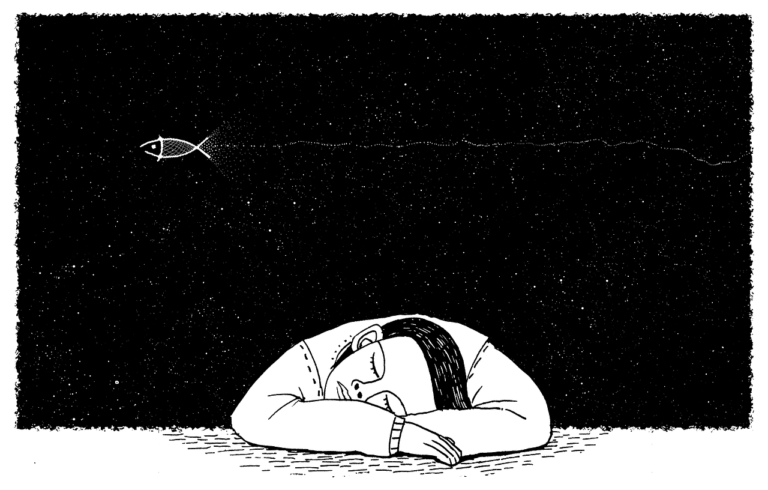
Employee sitting on a chair in front of a table with a laptop and a coffee mug on it. The employee's head is faced down with his forehead on the keyboard. This picture is intended to act as an example as a stressful moment, hence why the caption is made up of the word "Stress"
Stress

In our lives, the feeling of stress is not a strange feeling; it is a familiar feeling that we face in the countless amount of situations that we have to go through. Stress can come to us unexpectedly, and sometimes it may even get us startled. After all, Segal et al. (2023) highlighted that:

“Stress is your body’s way of responding to any kind of demand or threat.”

Our everyday lives are filled with surprises, and thus, it is filled with a myriad of situations that gives us this “demand or threat.” While adults are more experienced, youth face more stress because of more surprises coming at them when they have less experience. Although there are countless amount of situations that gives us stress, they all come back to five main sources of stress. In this article, these five main sources are listed below. Along with these five sources, there certainly are ways to minimize stress, which are also shown below!


Source 1: School

First, school is the most common and dominant source of stress for most youth. From balancing between school work and life, to dealing with material that takes time to learn, there are many scenarios that can make the school experience stressful. There are two powerful factors that cause school to become stressful for students, especially with youth. These two factors are: procrastination and assessments.

  1. Procrastination is a huge factor that leads to a stressful school experience. For most students, their exhaustion and anxiety may outweigh their encouragement to do their tasks, and cause them to decide to do it another time. However, there will always come a time where they would have to do their tasks, and usually by then, they will find themselves in a time crunch. By pushing off their tasks to a later time, students will have much more stress when they find that time is running out to do their tasks.
  2. Assessments can be very daunting as students are looking forward to achieve a grade they wish to achieve. While this factor is not very evident in earlier grades, students usually become stressed when the learning material seems difficult. When a topic seems to not be clear to students, there is often that stress for what would happen if it appeared on an assessment. From this, students are rightfully stressed to study, but then, if the material seems to be too much, students can become too stressed. These assessments can vary from quizzes to tests to exams. When something seems to threat “more,” students are more stressed because of it.
Ways to minimize stress from school:
  • Create a healthy schedule and try to stick to it (Make sure it is flexible for school and other things)
  • Decide when and where you study best
  • Ask for help when needed
  • Break your harder tasks into easier steps instead
  • Allow room for error in your learning


Source 2: Pressure from friends and family

Second, peer pressure from friends and family is another common source of stress amongst youths. Especially when it comes to trying to fit in with the group, peer pressure can bring demand or threat to you. The influence of other people plays a role with, or maybe against, someone’s identity. As youths start to adapt to new environments, like in school, neighbourhoods, or hobbies, being accepted is a common goal in these new environments. Achieving these goals are sometimes easy, but when they are not easy, feeling pressured to achieve them causes you to feel stressed instead. Peer pressure usually comes from two things: friends and family. There are differences in the peer pressure that these two different things provide:

  1. In the pursuit of trying to be accepted, youths are often pressured by friends to do things that are beyond what they would want to do. Friends can positively pressure you to do good and comfortable things. However, they could also pressure you to do things you would not wish to do and reduce your self-esteem. Stress usually occurs from these “demands,” and pressure youths to live up to these expectations from friends. While positive peer pressure is good and not very stressful, negative peer pressure often leads to stress.
  2. The pressure we experience from our family is almost always from the idea of living up to someone’s expectations. Especially when it comes to school work, family expectations can bring a lot of stress for it. When youths fall into procrastination or misunderstanding, the pressure from family contributes to more stress for youth. Other pressures from family can be from taking care of any siblings, aiming for a major they want, but the youth doesn’t, etc.. . Living up to family expectations can become a very stressful goal to achieve.
Ways to minimize stress from friends and family:
  • Learn to say NO when you do not want to do something
  • Choose friends wisely
  • Isolate yourself when you are too stressed from friends and family
  • Enjoy what you’re doing
  • Take care of yourself


Source 3: Negative perspective on themselves

Third, a negative perspective on themselves is another common source of stress amongst youth. Similar to feeling pressured from others, a negative perspective on yourself leads to the fear to change who you are. Being hard on yourself always leads to the “demand” to change the person that you are. While the only thing that can cause this source of stress to occur is yourself, this source is often underestimated. The stress of changing yourself always comes from the self-talk of excessive negativity. When this stress becomes too much, devastating things could happen to a person, especially to youth with a young age.

Ways to minimize stress from a negative perspective of yourself:
  • Allow room for error and imperfection (humans are not perfect!)
  • Think of good things that you have done instead
  • Let your inner-critic also be a friend, not just an enemy (“you are your own worst enemy”)


Source 4: Adapting through big changes

Fourth, having to adapt through a big changes can cause stress amongst youth. Obtaining stress from this source will vary between adults and youths because of their differences in experiences. When a youth has to adapt through a new experience, it is likely that is not easy for them at first. Especially when a big change happens suddenly, like the death of a family member, stress challenges our ability to adapt. There are countless amount of different scenarios of changes that all youths go through. However, with youths, there are two dominant areas of change that they face in their childhood. These two areas are: social and family.

Note: When youths grow up, they are guaranteed to experiences more areas of changes, but these two are the main areas in childhood.

  1. Socially, a big change for youth can be a situation like moving homes, schools, or even cities. The uncertainty of the new setting forces youths to be “on edge,” and become stressed instead of welcomed. In a social change, stress comes from having to adapt to a new place. On a social and emotional view, adapting to a new place can cause loneliness at first and/or people to miss old friends.
  2. With family, a big change for youth can happen when a relationship “breaks off.” With divorce rates increasing since the 1970s, there are also more youth facing the big change from these divorces. Along with parents, siblings can also cause stress in the family. While having siblings alone could cause stress, having to separate into your own lives can cause stress to occur too. Adapting through these family changes can cause an immeasurable amount of stress as family is often a huge part of the lives of individuals.
Ways to minimize stress from having to adapt through big changes:
  • Build resilience for yourself
  • Understand that it is acceptable if you cannot handle it yet
  • Focus on yourself (For example: a deceased family member would want you to keep being yourself)


Source 5: Unrealistic expectations

Fifth, setting unrealistic expectations can cause stress amongst youth. Setting expectations is a necessary asset for someone to improve themselves. However, when someone does not seem to achieve their expectations, it is easy for them to blame themselves. Youth can be impatient and wish to achieve their goals in a quick manner, blaming themselves when they can’t. When youth set an unrealistic expectation for themselves and keeps trying to achieve it, more stress comes due to being impatient, especially when they expected themselves to master it very quickly. Youth setting unrealistic expectations for themselves can cause stress from trying to live up to their own expectations when they realistically cannot.

Ways to minimize stress from setting unrealistic expectations:
  • Be aware of the time and energy you would have to make (If it is too much, then beware)
  • Break your expectation down into goals instead (For example: If you want to climb a mountain, reach the bottom of it first)
  • Allow room for error with your abilities


For youth, stress is a big part of their lives. In fact, according to survey from the American Psychology Association teenagers reported higher stress levels than adults. When an individual experiences something new for the first time, stress is common to occur. The five sources mentioned were: school, pressure from friends and family, negative perspective on themselves, adapting through big changes, and unrealistic expectations. These five sources are almost guaranteed to have happened in an individual’s childhood. While stress is a necessity to move forward and adapt in life, youth experience a lot of stress. The only actual problem with stress is only when it is too much for a person. When there is too much stress for a person, it is very easy for them to suffocate because of it. As humans, stress is natural, but it is our duty to watch over it and ensure it is still a healthy amount, especially amongst youth.

Featured Image: 1

Sources: 1, 2, 3, 4, 5, 6, 7, 8, 9

Celiac Disease and Dieting

0

Diets have a major impact on all of our lives.

From eating disorders to allergies and diseases, someone’s advice or ‘tips’ can have a major impact on how our physical and mental health looks on a day-to-day basis. However, not every tip you see on social media works for your body, and some ‘tips’ (eg. fasting for a certain period), could be detrimental to your health and how you look at yourself in the mirror. For this reason, I deeply respect and appreciate my dietitian and my family, as I found out I have celiac disease.

What is Celiac Disease?

It is a serious autoimmune condition, triggered by gluten, that prevents one from absorbing the nutrients they need from their food. This disease is often misdiagnosed; according to the Celiac Disease Foundation, “only about 30% are properly diagnosed” and it “affects about 1 in 100 people worldwide”¹. That’s because celiac disease can be associated with many other conditions or diseases since nutrition deficiency is not only present in celiac disease. To have celiac disease, the individual usually possesses a hereditary predisposition called human leukocyte antigen (HLA) DQ2 and or DQ8, passed down from your parents². Then, the individual will be tested by blood work and or an endoscopy, to confirm if their small intestine is inflamed and if it’s due to their gluten intake. If it is, then the reason is mostly likely due to the individual’s immune system attacking and flattening the small villi in their small intestine (finger-like projections in small intestine; which are responsible for absorbing nutrients when digesting food), when they eat gluten. 

What are its symptoms?

If it is not being treated, symptoms can range from almost none to many and or severe. Here are some of the many³;

  • Iron deficiency anemia 
  • Vitamin deficiency 
  • Fatigue 
  • Low bone density
  • Skin rashes
  • Bloating
  • Constipation
  • Diarrhea
  • Weight loss
  • Lack of growth
  • Cancer (Only in the most severe cases, if not treated for a long time.)

Treatments and Cures

Unfortunately, there is no cure for celiac disease yet, but constant research is being done. However, there is an effective and simple treatment; a strict, life-long, gluten-free diet. If an individual adheres to a gluten-free diet for the rest of their lives, then gluten cannot get into their body in the first place, so the whole autoimmune reaction will not happen, preventing the small (finger-like) villi in their intestine from being attacked. Thus, their small villi will be able to absorb nutrients from their food better as time goes on and their small intestine starts to heal. However, due to the gluten-free diet lacking fibre, it is recommended that celiacs eat more leafy green vegetables and other high-fibre food, to combat this. Therefore, so long as they follow through with this diet, they should see a significant decrease in their symptoms in their first year or so (may take longer, depending on their severity), hence leading a happier and healthier life.

What to be Careful of as a Celiac

Since gluten is present in wheat, barley, and rye, which are widespread ingredients that we see everywhere, it is important to be aware of cross-contamination. Since many products and fast-food restaurants make their food in the same areas that food with gluten is made, it is important to check the labels on the products and ask many questions to the chefs at the restaurants, to make sure no gluten is being contaminated in their ‘gluten-free’ products and dishes. An important label to look for is the following;

My Dietitian’s and Family’s Importance

So, if all I have to do is follow a gluten-free diet, why is my dietitian that important to me? Well, because many foods you used to like contain and eat daily, have gluten in them, and if you are a picky eater like me, it can be a very hard transition to make, which can result in a bad relationship with food. That’s why my dietitian and my family help me find options that I will enjoy as well so that I do not get turned off by the idea of food. Thus, resulting in a healthy, life-long, and enthusiastic relationship with my food instead of trying to avoid the idea of food completely and damaging my health in the long term.

Thank you for your time reading this!

I hope it made you feel that you are not alone when it comes to dieting hardships and that it was informative! But for more information, check out Celiac Canada


Sources:

¹ https://celiac.org/about-celiac-disease/what-is-celiac-disease/

² https://www.massgeneral.org/children/celiac-disease/genetic-testing-for-celiac-disease

³ https://www.celiac.ca/gluten-related-disorders/signs-symptoms/

⁴ https://www.celiac.ca/living-gluten-free/gf-product-finder/

⁵ https://www.celiac.ca/

Gardening for Beginners

A fun and productive pastime and hobby!

The opportunities for gardening aren’t only available for people who live in the countryside; many people residing in large urban areas can also benefit hugely from the important asset of having the skill to garden. In general, gardening is available in the methods of planting in the backyard or the house, truly opening up possibilities to everybody.

Image by eko pramono from Pixabay

A personal connection

When I was extremely young (still in my early elementary school years), I was always fascinated by my grandpa’s gardening activities. Growing up in China, I often visited my grandparents, delighted when I would find crops, such as tomatoes, peppers, and beans grown in the “sun-room” area of their apartment. Even though there wasn’t too much space in my grandparents’ living quarters, they had no difficulty fitting the various pots containing different types of crops in them and greatly enjoyed watering and fertilizing their plants as a way to reduce stress and pay dedication. My grandparents gardening greatly boosted my interest in this hobby and is the reason why I am thinking about starting it myself now.

The purpose of gardening

The are so many benefits to gardening. For example, you can enjoy naturally-grown food that is fresher to eat. They also tend to be better-tasting than most products that were stored long-term in stores. Tomatoes are juicier, carrots sweeter, and peppers more brightly colored. Most importantly, you would know if the crop had been polluted or not, making it extremely safe to consume. Most importantly, it is awesome to enjoy all the delicious products you grew after months of dedication and hard work from your family! This would certainly be something nice to share with friends as well.

Image by Jill Wellington from Pixabay

The steps

Starting to garden can be a difficult task for many people. Many tend to think that the process is overly difficult and quit before taking action toward it. In reality, this is not entirely true. As I am sharing the steps that I gathered from various instructional sources to gardening, please keep in mind that I am learning all of these at the same time as you are! Just like many of you, I am also a “rookie” at gardening, and I am personally planning to start next season.

  • Set out an undisturbed space to plant your crops. Whether it will be indoors or outdoors, you have to make sure that doing gardening will not overly disturb your day-to-day life of moving through your living spaces. The plants also need much space to themselves so that they can grow healthily.
  • In Calgary, the city where I’m currently residing, many live in houses with backyards. If you choose to grow produce in the backyard, make sure to find a place with abundant sunlight and soil, that is protected from torrential rainfall or strong winds.
  • If you choose to grow produce indoors, make sure to set up an indoor planting bed that you can store dirt in. You can find some inspiration by clicking on this link (DIY-made indoor gardening beds), but basically choose an area with enough sunlight (preferably near windows. The soil bed can be constructed by purchasing wood blocks and assembling equipment, generally found in warehouse stores.
  • For growing plants outdoors, one does not necessarily need a raised bed; just clearing the grass in the area is enough. However, make sure that the plot of cleared land isn’t too large (try to keep it under nine square meters, optimally). Upon learning from a friend of mine, I have decided to personally make the shape of the plot to be very long, but thin. This would allow easy access to all of the crops I will be planting.
  • Crops like lettuce, zucchini, peas, kale, and tomatoes are all extremely easy to grow and tend to be relatively hardy. However, to plant each type, make sure that the purchased seeds are quality. Also, each type of plant thrives in different conditions regarding temperature and watering. For example, peas prefer colder weather, while tomatoes prefer warmer weather. Especially in Calgary, with snowfall usually lasting from October to April, it is highly important to check with the gardening schedule to plan for potentially moving some crops indoors.

Protecting the environment

Protecting nature is always important; when growing crops outside, remember to follow these guidelines (Environmental protection measures). If you reside outside of Canada, be sure to check with your local government’s regulations. Fertilizer runoff, the spread of pollen from certain crops, and other issues are very common in the community, destroying the natural ecosystem and habitat. As we are using the land to grow crops, we should also respect it and appreciate the wonders of Mother Nature!

Thank you for reading my blog post, and I hope that each and every one of you will succeed in your gardening journey!

A Introduction into Infinity

0

What is Infinity?

Infinity is a concept or idea that is boundless and endless. 

Consider the Infinite Hotel or Hilbert’s Hotel:

The infinite hotel is a hotel with infinite rooms and infinite guests, meaning that every room is occupied. One day, a new guest arrives at the hotel and wants to get a room. The manager decides to accommodate this new guest by telling everyone in the hotel to move one room down. The guest in room 1 moves to room 2, the guest in room 2 moves to room 3, and so on. This leaves exactly one new room for the guest, that being room 1. 

Why would we make everyone go through the hassle of moving to the room next to them, instead of just moving the person at the end?

With infinite rooms, it would be impossible to find a room for that person as there is no end to the number of guests and the number of rooms. 

The next night, infinite new guests want to stay at this hotel. How would you accommodate these infinite guests? 

Here’s how the manager did it: The manager tells everyone to move to the room that is double their room number. So the room 2 guest moves to room 4, the room 3 guest moves to room 6, and so on. If you write this down, you’ll quickly see a pattern. The rooms that are vacant are the ones that are odd. There are infinite odd numbers and therefore these new infinite vacant spots accommodate for the infinite new guests. 

Consider a Circle:

Why are wheels shaped as a circle? 

If your bicycle had a square shaped wheel, your ride would be pretty bumpy. If you increased the number of sides, such as a pentagon, your ride would become less bumpy. As you add more sides, the ride becomes smoother. What if we had infinite sides? With infinite sides, that would form a circle. Notably, a circle has no sides or corners, adding an interesting twist to the concept of infinity. 

Sizes of infinities: 

This section will investigate the size of infinities, but first, here are a few concepts to know before understanding sizes of infinities: 

  • A set is a collection of objects. For example, {1, 2, 3, 4, 5, 6} is a set, and {apple, pear, banana, broccoli} is also a set.
    • In terms of infinite sets, can you think of any?
    • Natural numbers, real numbers, integers, even and odd numbers are all infinite sets. 
  • One-to-one correspondence: How can you tell if the sizes of sets are the same?
  • Matching each element in Set 1 to each element in Set 2 without having extra elements means that the size of the sets are the same.
  • For example, if one set contains objects that are pineapples, and another set contains objects that are dragon fruit, by one-to-one correspondence, you can match a pineapple to a dragon fruit to create as many pineapple-dragon fruit pairs as possible. If there is no leftover pineapple or leftover dragon fruit, then these sets are equal in size. 

How can we apply one-to-one correspondence to infinite sets? In other words, how can we compare the sizes of infinite sets to one another? 

Natural Number Infinite Set Compared to Integer Infinite Set:

Natural numbers and integers are both infinite sets. Let’s try to compare the sizes of the natural number infinite set and integer infinite sets. As mentioned earlier, we can use one-to-one correspondence. So if each object in the natural number set matches each number in the integer set, then these sets are equal in size. Here’s how we could do this:

Showing the one-to-one correspondence between natural numbers and integers.

The list would go on for infinity. This conclusion of the natural and integer number sets isn’t intuitive. How could their set size be the same? Integers encompass negative numbers, positive numbers and zero while natural numbers only contain positive numbers and zero. However, when thinking about these infinite sets, we must remember that infinity is not an amount and it is endless. Therefore, even though it seems that there are many more integers, because they are both infinite and because of one-to-one correspondence, their infinite sets are the same size. 

Natural Number Infinite Set Compared to Real Number Infinite Set: 

Is the real number infinite set the same size as the natural number infinite set?

When looking at real numbers, we can narrow down our

Two columns including the natural numbers and the real numbers.

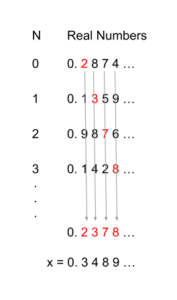
scope to all the real numbers between 0 and 1. As mentioned previously, we need to use one-to-one correspondence to show whether the infinite sets are of the same size. In other words, we need to see if we can match our natural numbers to real numbers. First, we can just simply choose a couple real numbers that are in between 0 and 1 (the numbers chosen do not matter and you can try this at home):


As marked in this photo, the second digit of the first line is marked, then the third digit of the second line, and so on. 

The arrows point down where x = 0.3489. x is formed by simply adding 1 to each digit. So in the first line with the second digit of 2, we add one to get three which we place as the first digit after the decimal. We continue adding one, so the 13 turns into a 4, the 7 into a 8, and so on. This resulting number, x, is a new real number. This is because it is not the same as any of the lines. Because it takes one digit from each line and changes that digit, it will not be the same as any of the lines and therefore, it will be a real number that has not been listed. 

So when we list these real numbers and try to match them to a natural number, {0, 1, 2, 3, 4, …}, we will find that not every real number will be ever listed, because there can always be a new real number that is formed. Therefore, there is no one-to-one correspondence. Finally, this shows that the real numbers infinite set and natural number set are different size infinities. 

If you found this topic interesting or you would like to explore it some more, I really recommend the sources I looked at to write this post. Many of the sources explain what I talked about in greater depth and clarity, with much more credible sources. Thank you for reading and have a great week! 


Sources: 


Elephants: Soon to be History?

The elephant: You’ve probably read about them in books or seen them in movies. They are the world’s largest land animals, and it is said that they never forget. Unfortunately, there are only 400,000 African Elephants remaining. If action is not taken, the African Elephant will be extinct by 2040! Asian elephants on the other hand, are even more scarce, with less than 40,000 remaining worldwide.

The Role of Elephants

Elephants play a big role in their environment. They are seed dispersers. When they eat plants and fruits, the seeds often emerge undigested. This helps plants spread. Because of their huge size, they make clearings in areas of the forest, letting new plants grow. Without them the environment they live in will suffer.

Elephants also have the largest brain of any land animal. Have you ever heard the saying “an elephant never forgets”? This refers to their amazing memory, empathy and delicate feelings. They even recognize and respond to the sadness of other elephants. They are one of the most intelligent animals on the planet! The loss of the elephant will be a loss to the environment, but it will also mean the loss of a remarkable species from which we have a lot to learn.

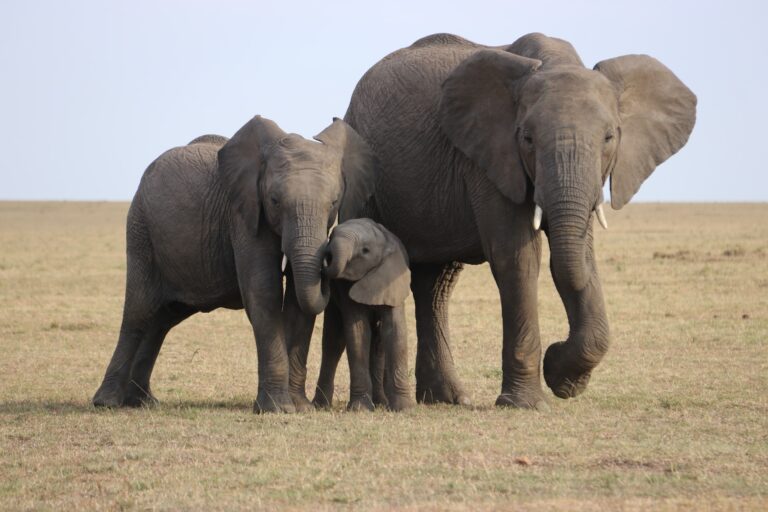
mother and baby elephant on a grassy plain.
Photo by Hu Chen on Unsplash

So what is happening to the elephants?

Even though there is an international ban on ivory trade, elephant poaching persists. The international ban was enforced when elephant poaching for ivory skyrocketed. In  the 1980s, approximately 100,000 elephants were killed every year. The ban helped restore some of the population. Recently, there has been an upsurge in the demand for ivory, especially in Asian countries. Thousands of elephants are being killed for their ivory tusks, which are often used to make ornaments and jewelry.

A close up of an elephants tusks
Photo by Bisakha Datta on Unsplash

Elephants are also losing their habitat. As the human population continues to grow, more and more of their land is taken away and used for agriculture. This is causing more contact and conflict between humans and elephants. Elephants may damage crops, and may even injure or kill people. They are often killed as a result. The Asian elephant suffers from habitat loss, living in one of the most densely populated locations in the world. According to worldelephantday.org, their habitats have been destroyed in order to build highways, and plantations of crops such as palm oil and rubber tree.

As well, a lot of baby Asian elephants are taken from their homes and sold in the tourism industry. These elephants are trained and used for entertainment in places such as circuses, where they receive poor veterinary care and inadequate living conditions.

Imagine having to tell future generations about an animal called an elephant that once existed. That’s what I first thought of when I learned about this issue.

If elephant poaching for ivory, habitat loss, and the use of elephants for entertainment continues, we might lose this amazing species forever.

Sources

1, 2, 3, 4, 5, 6, 7, 8

The Ultimate Swifte Experience: The Eras Tour

0

Calgary’s entertainment scene is always filled with amazing options, and one of the most exciting additions to the city’s movie landscape is Taylor Swift’s latest project “The Eras Tour”. If you’re a fan of Taylor’s music, storytelling, and dazzling stage performances, this cinematic experience is a must-see.

Directed by Sam Wrench, The Eras Tour is a spectacular experience. Having seen it recently, I can definitely confirm that this musical film might be one of the best ever made.
Although I wasn’t able to see the concert live, viewing this film felt as if I was practically there. This film encased all of Taylor’s eras, and I would say that my favorite era would have to be reputation. While this film was definitely a cinematic masterpiece, I would argue that its real magic comes from her ability to connect with her audience on an emotional level. Her ability to put all of her emotions into a single verse helps the audience resonate with her and allows for the experience to feel as if I were actually at her concert. Her decision to categorize her life into distinct “eras” symbolizes a deeper understanding of the value of each phase of our lives. This allows us to experience nostalgia about our previous chapters and simultaneously progress in life to embrace the new chapters.

Whether you’re a devoted swiftie–much like myself–or simply someone who appreciates the magic of a live performance captured on film, The Eras Tour promises a captivating experience. It’s a remarkable blend of music, artistry, and storytelling that offers a unique insight into Taylor’s musical journey. Calgary’s entertainment scene continues to shine, and The Eras Tour testifies to that. If you catch yourself with a free weekend, don’t miss the opportunity to immerse yourself in the world of Taylor Swift’s music.

Keep an eye on our entertainment section for more recommendations and reviews, ensuring you make the most of your leisure time in our vibrant city.

Larches: The Conifer/Deciduous Debate

0

Larch trees are a popular autumn sightseeing event. Every year, thousands of people hike into the Rocky Mountains to see these magnificent trees as their needles turn from green to gold. Have you ever wondered why?

We all know from elementary school that the leaves change their colors in autumn. Then the wind whisks them off their branches and deposits them on the forest floor. This is because the tree is entering dormancy, which is almost like plant hibernation. The tree slows down its living functions because the living conditions of winter are too harsh. It is common to see this in all perennial leafy plants, but have you ever seen the spindly needles of a conifer blush orange and drop to the ground? Such is the case of the larch tree, which sheds its needles just like any leafy plant.

Coniferous vs Deciduous

“Coniferous trees have needles that stay on all year, and deciduous trees have leaves that fall.” This common elementary textbook definition does apply in most cases, but it does have some exceptions like the larch tree.

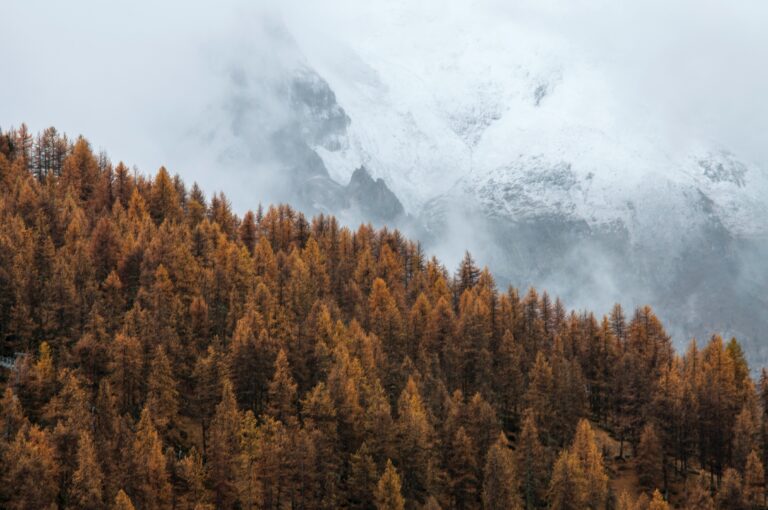
However, larch trees have needles that make the annual descent to the soft forest floor along the leaves of the aspens, birches, and poplars. In order to categorize this popular autumnal hiking attraction, it is necessary to define these terms further than the quick elementary school lesson that teachers gave before going on a community walk around the neighborhood.

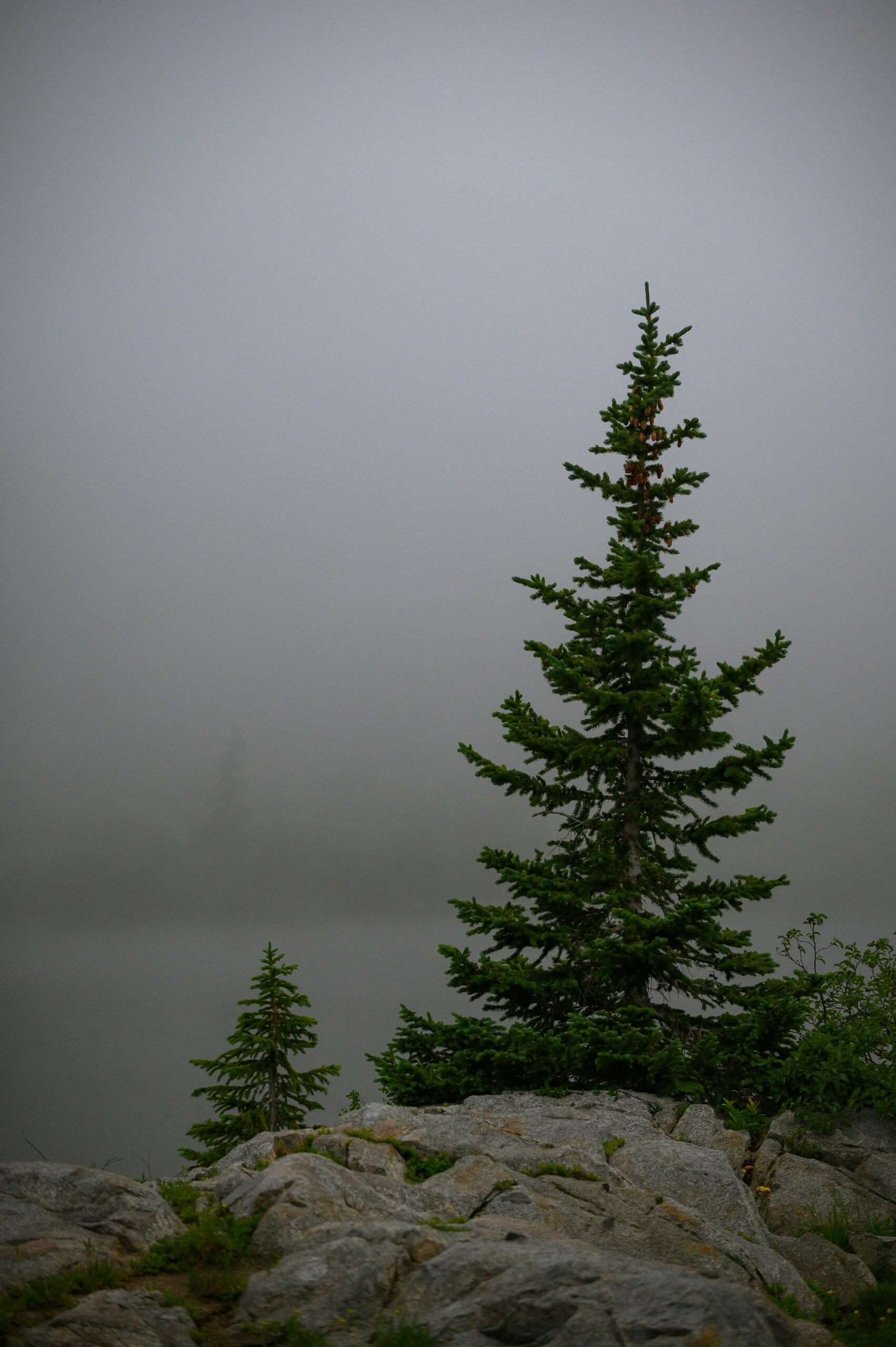
Coniferous forest against foggy background
Conifers are characterized by their sharp needles.


Coniferous trees are characterized by their sharp needles and are also known as evergreen trees (although not all evergreens are “ever green”). A layer of waxy material coats the needles, which helps prevent transpiration (the evaporation of water through leaves). Conifers also have a lower surface area, which reduces their wind resistance. Since their outer layers are so dense and thick, it is easier for conifers to live in harsh climates such as the mountains.

In stark contrast, deciduous trees have broad leaves that help them catch the sunlight in order to undergo photosynthesis. However, these trees have a hard time living in harsher climates like the mountains. This is due to high water and nutrient requirements for leaf maintenance.

Although it is far more common to find fallen foliage (plant leaves) in autumn from deciduous trees, the ability to shed is not exclusive to these leafy greens (or should we say, leafy orange-yellow-red-browns). Losing leaves has many advantages, and the larch certainly uses some of these to help it survive in its mountain habitat.

Why do larches lose their needles?

Some plants shed their leaves every fall in order for the tree to enter dormancy. It takes less energy to maintain a bare tree in the winter, especially a harsh Canadian one where the temperature can dip below -30°C. New leaves or needles bud and unfold in the springtime, when the environment is warm and suitable enough for leaves to grow again. But what are the advantages of doing this for larches specifically?

  • Less wind resistance
    • It is extremely windy in the winter, especially in the mountains where larch trees are found
    • It is crucial for these trees to have small surface areas and be very streamlined. Otherwise, the trees would be blown over like dominoes!
    • Losing the needles allows more wind to blow between the branches.
  • There’s less water
    • In the Rockies, it snows during winter. Water reaches the mountains in a frozen form, which cannot be absorbed into the soil or the trees.
    • The winter climate is dry and cold, which makes it difficult for larches to maintain moisture conditions. These conditions are required for their needles to function.
  • It snows a lot in the mountains
    • The weight of nearly five months of continuous snow accumulates. Unlike rain, snow doesn’t slide off surfaces.
    • Trees need a lot of structural strength to be able to hold up so much weight.
    • If larches lose their needles, they avoid the extra surface area for snow to land on. This helps prevent branch breakage.

So… are larches deciduous or coniferous?

So all these advantages are fine and wonderful, but at the end of the day, we still haven’t determined which category a larch falls into: deciduous or coniferous?

The answer is… both!

Larches are considered deciduous conifers. So they fall (no pun intended) into a little bit of both categories. These hiking attractions have coniferous needles but they do turn colors and drop from branches in autumn. This deciduous characteristic is the larch tree’s adaptation to its harsh environment.

TL;DR

Larch trees are deciduous conifers – that is, they’re coniferous trees that shed their needles in the fall as an adaptation to their climate. Shedding their needles helps: prevent the whole tree from getting blown over by winds; prevent branches from snapping from the weight of snow caught by leaves; and maintain moisture in the tree required for it to continue living through dormancy.

Sources: 12

Get some sleep!

0


According to Stanford Medical Children’s Health, 70% of teens aren’t getting enough sleep!

That statement may sound extreme- but in reality, it’s true. The pace of today’s world is so fast that getting a good night’s sleep every day sounds impossible. Balancing school, homework, extracurriculars, a healthy social and family life, and sleep is like a non-stop cycle of work, work, and more work. So where do we get the energy to do all that again the next day? Through sleep.

The dictionary definition of the word “sleep” can be found here:

Sleep. (n.d) In Merriam-Webster’s collegiate dictionary. https://www.merriam-webster.com/dictionary/sleep

But in simpler terms: Sleep is when your mind is unconscious and your body repairs itself.

Most of us aren’t getting enough sleep which may not seem like a big problem. But as we continue to lack sleep more and more throughout our lives, our health will slowly deteriorate. Some problems that come with extreme sleep deprivation are a weaker immune system and an unhealthy cardiovascular system. On the flip side, getting enough sleep can come with countless benefits that will aid us in performing our best in our day-to-day lives. Such as a clearer head, more energy, and a happier state of mind.

Here are some tips that could help you fix your sleeping habits:

  • Don’t use electronic devices for at least an hour before you sleep
  • Stay consistent with the time you wake up and the time you go to bed
  • Block out any external noises that could irritate you
  • Slightly reduce the temperature in your room (it helps you fall asleep faster)
  • Keep electronic devices in a different room so you aren’t distracted by them. But if you use your phone as an alarm, try to put it on the opposite side of the room so you aren’t distracted by it.
  • Keep your devices on silent mode
  • Relax yourself before going to bed. For example, read a novel or take a hot bath. Don’t do anything that would overstimulate yourself. Such as drinking Red Bull before sleeping
  • Wear soft attire. You don’t want to be sleeping in clothes that aren’t comfortable

It may take a lot of extra time and effort to fix your bad sleeping habits, but it’s worth it in the end.

If a healthy and happy life is a lock, then, a good night’s rest is the key. So get some sleep!


The Ten Stages of Genocide – Condemning Merciless Killing


Genocide | (noun) ‘the deliberate and systematic destruction of a group of people on the basis of their race, nationality, religion, or ethnicity.’

The word “genocide” was coined in 1944 by Raphael Lemkin, a Polish-Jewish lawyer. He created this word by combining genos (Greek, meaning “race”) and -cide (Latin, meaning “killing”). It has since been expanded upon and has become a concrete word and definition as well as condemned and illegal in international law.

The ten stages of genocide were first proposed by Gregory H. Stanton, founding president of Genocide Watch. He outlines genocide as:

A process that develops in ten stages that are predictable, but not inexorable. At each stage, preventive measures can stop it. The later stages must be preceded by the earlier stages, though earlier stages continue to operate throughout the process. (Stanton 1)

The ten stages are not necessarily linear and can coexist at the same time. Additionally, there are measures that can be taken in order to stop and/or prevent a genocide from happening, however there will come a time when the damage has been irrevocable. It is the responsibility of the international community to step up when victims cannot, however that has not been happening with the situation in Gaza. Some of the most powerful nations in the world are actively endorsing a genocide by providing the perpetrators with weapons and military aid, while many others have opted to remain passive bystanders — something that can be likened to turning your back to those in need or refusing to act when you have the power to act. 

Before looking at the ten stages, it is important to clear up the situation. The situation in Gaza as of writing this, is a genocide. When Hamas fighters attacked Israel and killed an estimated 1400 people, it is fair to say that Israel was in the right to defend itself. However, according to the Red Cross, self-defense is “the use of force to repel an attack or imminent threat of attack directed against oneself or others or a legally protected interest.” This does not align with Israel’s actions. In fact, they have long passed the line of self-defense and onto that of genocide.

Following the attack on October 7, 2023, Israel has killed over 9,000 innocent civilians in the Gaza strip. It has bombed hospitals, schools, mosques, ambulances, refugee camps  and many other places with the excuse that Hamas members have hidden themselves there when it knows plain well it is just attacking innocents. It has cut off water, electricity, WIFI, and fuel, while preventing necessary aid from coming into Gaza. It has used white phosphorus, something that ignites on contact with oxygen and sticks to skin and clothing, against civilians in Gaza. It has staged a full ground invasion against Gaza, which has no military. It has even gone so far as to threaten to use atomic bombs on Gaza. This is nowhere near everything that Israel has done to the civilians of Gaza and all the while, Israel has known exactly what they are doing and who they are murdering, because they run the census in Gaza, and they know where everybody lives.

Murdering innocent civilians in retaliation to an attack by a militant group could hardly be considered self-defense, which is why it is absurd to label the Israeli military and governments actions as such. Being backed with billions of dollars and weapons of murder by the international community while the other side has no access to food, water or electricity is not self-defense. This is a genocide which falls into many of the same categorizations as the Holocaust and the Rwandan Genocide.

Stage 1 & 2: Classification and Symbolization

Classification:

All cultures have categories to distinguish people into ‘us and them’ by ethnicity, race, religion, or nationality: German and Jew, Hutu and Tutsi. If societies are too segregated they are most likely to have genocide.

Symbolization:

We give names or other symbols to the classifications. We name people “Jews” or “Gypsies”, or distinguish them by colours or dress; and apply the symbols to members of groups. Classification and symbolizations are universally human and do not necessarily result in genocide unless they lead to dehumanization. When combined with hatred, symbols may be forced upon unwilling members of pariah groups: the yellow star for Jews under Nazi rule, the blue scarf for people from the Eastern Zone in Khmer Rouge Cambodia.

Israel has committed apartheid against Palestinians in and around its borders for many years. Apartheid is the forcible separation and severe discriminatory treatment against people based on race or ethnicity. It is an example of systematic oppression and abuse, where one demographic is put at a disadvantage within institutions such as government, court and schools. 

Time and time again, Israel has created laws, policies, propaganda and statements that harm Palestinians and elevate Jewish Israelis. For decades, Israel has forcefully displaced and relocated Palestinians, deprived them of economic and social rights, and even gone so far as to unlawfully murder Palestinians. 

Shockingly, Israel maintains a two-tier system within its society. One that designates Jewish Israelis as first-class citizens, and Palestinians as second-class residents. Under this system, Jewish Israelis are afforded the rights and privileges of Israeli citizens while Palestinians must live under severe discrimination, oppression and military rule.

“Israel is not a state of all its citizens… [but rather] the nation-state of the Jewish people and only them”

Israeli Prime Minister Netanyahu

Another thing worth mentioning is the language often used regarding Gazans. We have all heard the words “open-air prison” in reference to the Gaza Strip, but those words are rooted in problems. The insinuations of the word “prison” naturally makes us ask, “What did they do wrong in order to be in prison?” But the people of Gaza did nothing wrong. They have been condemned to live in a state of siege for the mere crime of being born there. For being of a different race, religion, ethnicity and skin colour. They are not criminals to be allocated to a prison. They are human beings who were born into a state of being hostages. Israel has controlled every aspect of their lives, leaving them no means of escape or retaliation. 

If that wasn’t enough, on October 16th, Netanyahu’s X account (formerly known as Twitter) made a now-deleted post, about how Israel’s actions are a “Struggle between children of light and the children of darkness, between humanity and the law of jungle.”

This is hugely problematic, as it heavily implies that Israelis (a majority of whom are Jewish and/or of European descent) are the “children of light” and “humanity” while calling Palestinians (who they are predominantly Arabic and/or Muslim) the “children of darkness” and designating them as living by “the law of jungle.” 

Considering that a large part of Islamophobia is the perpetuation of harmful stereotypes regarding how it is a “dirty religion” and the depiction of Muslim people as uncivilised, aggressive, barbaric, sexist and terrorists, it would not be inaccurate to say that Netanyahu’s statement is rooted in racism. Furthermore, it creates further division between the “us” (Israel) and “them” (Gaza) in this situation; celebrating and encouraging one group while stripping the other of their humanity. Creating justifications to commit genocide.

Stage Three: Discrimination

A dominant group uses law, custom, and political power to deny the rights of other groups. The powerless group may not be given full civil rights or even citizenship. Prevention against discrimination means full political empowerment and citizenship rights for all groups in a society. Discrimination on the basis of nationality, ethnicity, race or religion should be outlawed. 

Palestinians are treated as an inferior racial group — sub-human, so to speak. They are denied the aforementioned rights and freedoms that Jewish Israelis are unconditionally provided and are even denied a nationality in the eyes of Israel. They have control over the population registry for Palestinians in the West Bank and Gaza, just as the Nazis did to the Jewish people, and deem them stateless, creating more obstacles for them to be able to live, work and participate in legal, political and judicial systems.

Israel also controls electricity, transportation, education, healthcare, water, food and other things in the Gaza strip (as demonstrated by them depriving the Gazans of just that throughout the last month) which they use in discriminatory ways.

Similar things happen to Palestinians in Jerusalem and the West Bank, with forced ethnic displacement, home demolitions, police brutality and blatant oppression running rampant and serving as obstacles that exist for the seeming crime of being different.

This treatment of Palestinians has been happening for the past 75 years, and it is only now that it has escalated. It is appalling how long this has been going on, and how little the Western world knew (and frankly, still knows) about the unfair circumstances that Palestinians have been forced to live under. This is nothing if not discrimination on the basis of religion and ethnicity and is a root cause in the current situation.

Stage Four: Dehumanization

Dehumanization is when one group treats another group as second-class citizens. Members of a persecuted group may be compared with animals, parasites, insects or diseases. When a group of people is thought of as “less than human” it is easier for the group in control to murder them.

Regarding the siege on Gaza, Yoav Gallant, the Israeli Defense Minister, said, “No electricity, no food, no fuel. We are fighting animals, and we will act accordingly.”

This is a disgusting example of Israel’s dehumanization and desensitization of Palestinians. For a significant figure in the Israeli government to compare the innocent civilians they are massacring to animals on national television and to be met with little backlash is downright abominable. It demonstrates just how deep Islamophobia runs in our world, and just how effective propaganda, misinformation and ignorance have been in enabling the genocide.

These words, among others, are what these people have used to justify genocide with the label of self-defense. When we see a group of people as a mass of statistics, as sub-human, or otherwise dehumanized, it helps to desensitize us to the atrocities committed against them. It is for these same reasons that the Ukraine-Russia war rightfully sparked so much sympathy and outrage, yet people are arguing over whether or not Palestinians deserve to be treated as human beings. One group is distinctly more humanized by the world, and it is blatantly obvious.

Stage Five: Organization

Genocide is always organized, usually by the state, though sometimes informally or by terrorist groups. Special army units or militias are often trained and armed. Plans are made for genocidal killings.

It is said that a Gazan child born in 2006 has lived through 5 wars. 2008, 2011, 2014, 2018, and 2023. In addition to these, there have been countless massacres, murders, and acts of violence committed against Palestinians by Israelis for the past 75 years. These are all organized attacks against Gaza, wreaking havoc on the already destabilised people.

Additionally, there are the inevitable plans required to carry out the attacks and invasions that Israel has on Gaza. They have done this while knowing the Gazans’ inability to defend themselves, considering they don’t have a military, over half of them are children, and they have been in a siege with no access to basic human rights. 

Finally, the Israeli government has purchased and distributed firearms to “civilian security teams” in the West Bank. These actions, instead of properly addressing the situation, enables Israeli citizens’ rage and resentment for what they endured on October 7th by handing out weapons in the name of self-defense while restricting movement for Gazans and actively massacring them. 

Stage Six: Polarization

Extremists drive the groups apart. Hate groups broadcast propaganda that reinforces prejudice and hate. Laws may forbid intermarriage or social interaction between the groups. Extremist terrorism targets moderates, and intimidates them so that they are silent. Moderate leaders are those best able to prevent genocide and they are often the first to be assassinated.

There has been polarization not only among Israelis and Palestinians but throughout the rest of the world as well.

Within Israel, there have been many extremists appointed in high-level government jobs who are given full reign to spread harmful, racist ideology and ideas, especially about Palestinians. Some examples are Ayelet Shaked, former Justice Minister, who had previously called for the genocide of Palestinians and the rampant and open use of dehumanizing language within Israeli media. Additionally, deeming all Gazans and Palestinians members of Hamas or terrorists creates fear and justification around the actions of Israel.

Around the world, many news outlets and people in positions of power have adopted these same tactics of extremism and propaganda, spreading misinformation and blind hate. They demonize the religion of Islam and its people, weaponize history and ignorance in order to accuse people of anti-semitism when they are simply speaking out against a genocide, and ultimately, normalize and vindicate violence against Palestinians. As a result, reports of Islamophobia in the past month have sky-rocketed and tensions have grown. While people argue and defend their positions as political or religious opinions, real people suffer real casualties, like the six-year old Palestinian boy who was stabbed to death by a landlord in the US and the millions of people trapped and dying in the Gaza Strip.

Stage Seven: Preparation

National or perpetrator group leaders plan the “Final Solution” to the Jewish, Armenian, Tutsi or other targeted group “question.” They often use euphemisms to cloak their intentions, such as referring to their goals as “ethnic cleansing,” “purification,” or “counter-terrorism.” They build armies, buy weapons and train their troops and militias. They indoctrinate the populace with fear of the victim group. Leaders often claim that “if we don’t kill them, they will kill us,” disguising genocide as self-defense. There is a sudden increase in inflammatory rhetoric and hate propaganda with the objective of creating fear of the other group.

Disguising genocide as self-defense is exactly what Israel has done. Over and over again, they spread the claim that they have no choice, that it is a kill or be killed situation. They have wielded the collective grief of the Israelis after the October 7th attack and directed it to fester into hate and fear. Every time they target and bomb something like an ambulance, hospital or school in Gaza they use the excuse that Hamas militants have been using and hiding in them, and every time there is an uproar regarding the death toll of Palestinans, they justify it by saying they have successfully eliminated a Hamas militant who had posed a threat. Since being accused of using tunnels to hide under hospitals, Hamas has issued an official statement asking the UN to conduct an investigation to prove Israel’s claims. Israel, who would only benefit from having their claim confirmed if it is true, has said nothing on the matter but is not allowing foreign journalists and professionals inside Gaza. They have even gone so far as to blame the Gazans for crimes they themselves have committed. For example, Israel accused Hamas militants of beheading 40 babies, but when asked for proof, a Israeli military spokesperson only replied with, “We cannot confirm but you can assume it happened.” Even without conclusive evidence, Israel has used this claim to stoke the anger and horror of its own citizens and millions of people around the world. Meanwhile, there are videos surfacing every day of Palestinians being murdered, abused, and even found headless on the internet. 

Stage Eight: Persecution

Victims are identified and separated out because of their national, ethnic, racial or religious identity. The victim group’s most basic human rights are systematically violated through extrajudicial killings, torture and forced displacement. In state sponsored genocide, members of victim groups may be forced to wear identifying symbols. Their property is often expropriated. Sometimes they are segregated into ghettos, deported to concentration camps, or confined to a famine-struck region and starved. They are deliberately deprived of resources such as water or food in order to slowly destroy the group. Genocidal massacres begin. All of these destructive acts are acts of genocide outlawed by the Genocide Convention. They are acts of genocide because they intentionally destroy part of a group. The perpetrators watch for whether such massacres are opposed by any effective international response. If there is no reaction, they realize they can get away with genocide. The perpetrators know that the U.N., regional organizations, and nations with powerful militaries will again be bystanders and permit another genocide.

The existence of the Gaza Strip itself is proof of this. It is a besieged land with limited resources, where millions of people are condemned to live under a state of full control where their food, water, electricity, gas, transportation and freedom itself is controlled by a colonizing power such as Israel. The aforementioned forced ethnic displacement and classifications of being secondary citizens are also examples of persecution. The massacres have been going on not for a month, but regularly for the last 75 years — it is only now that there is open discourse and international media coverage over them. In the Gaza Strip, people have already been deprived of resources and are dying not only of bombings and military attacks but of disease, hunger and thirst.

As for the latter part regarding international response, the world has already made clear where they stand. Mass-protests or not, a multitude of governments have already declared their siding with Israel and endorsed their genocide. If not a bold declaration of solidarity like the US, countries have conceded to stand by and do nothing to prevent this genocide from fully being carried out.

Stage Nine: Extermination

Extermination begins, and quickly becomes the mass killing legally called “genocide.” It is “extermination” to the killers because they do not believe their victims to be fully human. When it is sponsored by the state, the armed forces often work with militias to do the killing. The goal of total genocides is to kill all the members of the targeted group. Destruction of cultural and religious property is employed to annihilate the group’s existence from history (Armenia 1915 – 1922, Da’esh/ISIS 2014 – 2018).

Over 9,500 people have already been killed in the Gaza strip. These people have been targeted uncompromisingly, regardless of age, gender or affiliation with Hamas. People in Gaza have resorted to using freezers in ice-cream trucks to preserve bodies until they can bury them, because they have run out of other ways to preserve them. There are mass graves of unidentifiable bodies. There are countless unidentified and orphaned children, some so young that they will never know the name that their families gave them. It is nothing if not a genocide.

Stage Ten: Denial

Denial is the final stage that lasts throughout and always follows genocide. It is among the surest indicators of further genocidal massacres. The perpetrators of genocide dig up the mass graves, burn the bodies, try to cover up the evidence and intimidate the witnesses. They deny that they committed any crimes, and often blame what happened on the victims. Acts of genocide are disguised as counter-insurgency if there is an ongoing​ ​armed conflict or civil war.  Perpetrators block investigations of the crimes, and continue to govern until driven from power by force, when they flee into exile. There they remain with impunity, like Pol Pot or Idi Amin, unless they are captured and a tribunal is established to try them.

This stage, like all the others, has been happening before our very eyes. We are seeing a genocide happen right before our very eyes, and instead of doing something to prevent it, officials are refusing to acknowledge Israel’s wrongdoings and people are having debates on the definition of a genocide. We are arguing over the importance of human lives. We are arguing over whether or not 2+ million human beings deserve to exist.

This started out as what seemed to be a collective punishment against Gaza for the actions of a few, and quickly spiralled into a genocide that people continue to deny, a month after the 7th of October and 75 years after the colonization of Palestinians by the Israelis began. However, it has been justified as self-defense and a myriad of other things that can never truly justify genocide.

Ultimately, it has proved that the world is so blinded by hate, prejudice and ignorance that we are willing to sit back and watch a genocide happen. Not only one genocide in Gaza either. But multiple other ones, like those in Sudan, Congo, Azerbaijan and Myanmar. Ultimately, our countries, governments and people are failing humanity.

And so we must fight not to continue with this.

We must fight for human lives, against misinformation, colonization and genocide by educating ourselves and wielding our voices when others cannot. Please fact-check and bias-check all of your sources. Please listen to Palestinian voices speaking out about what is happening. Please open your hearts to change and fight ignorance. Please denounce hate, fear mongering and prejudice. Our desires to avoid guilt and responsibility do not outweigh the lives of millions of people.

“From the river to the sea, Palestine will be free.”

Featured Image

Sources: 1, 2, 3, 4, 5, 6, 7, 8, 9,

Further Reading/Watching (Remember to do your own fact-checking and bias-checking!!): 1, 2, 3, 4, 5


Why You Should Watch Yuri on Ice

0

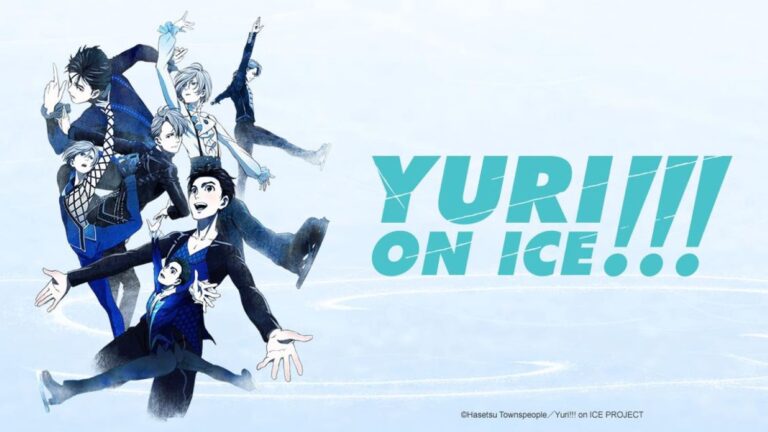
Yuri on Ice centers around Yuri Katsuki, a 23-year-old figure skater and his journey with his anxiety, as well as his relationships with the characters around him—most notably, his relationship with his skating coach and love interest, Victor Nikiforov.

Despite what you may think, Yuri on Ice is a show full of nuance and depth that deals with casual queer representation and heavier themes like mental health and self-confidence. Yet, at other times, the show’s humour and lighthearted scenes are absolutely on point.

So, here are some of the biggest reasons why you should watch Yuri on Ice.

The Animation, Music and Choreography

Fundamentally, what makes anime anime is, well… the animation. Yuri on Ice doesn’t always have flawless, outstanding animation. Some would even say that its animation is simply average more often than it is excellent. But for the most part, Yuri on Ice is a light hearted anime, and the animation style reflects that—it doesn’t take itself too seriously, unless it needs to. That’s why when it does, it is all the more breathtaking.

It is during the skaters’ performances that they go all out. The flawless animation is paired with excellent music and routines that were choreographed by Japanese figure skater, Kenji Miyamoto. Even if you do not have any prior knowledge of or interest in figure skating, the show explains everything in simple, easy to understand terms that help you to understand the stakes of the competitions, and you will be able to appreciate the beauty of it all.

Mental Health and Self-Confidence

From the get-go, Yuri on Ice doesn’t shy away from telling us that Yuri, the main character, struggles with things such as anxiety and self-confidence. In fact, more than the romantic aspects or the athletics aspects, it is these, more stigmatized topics that the show tends to center on. Yuri never truly “gets rid” of his anxiety, or his confidence issues, but that is never portrayed as the goal. Instead, the show portrays Yuri’s healthy development towards learning to live with these things and succeed despite them. He learns from them and creates healthy, give-and-take relationships with the people in his life who help him through the tough times.

The anime does not portray Yuri as someone who is just his mental health issues. Instead, it portrays Yuri as a nuanced human being who has mental health issues that he must live with, but it never lets those things define him.

Portrayals of Health Relationships

One of Yuri on Ice’s best qualities is that it portrays healthy, give-and-take relationships as the norm. Even between the figure skaters who are competing for first place, the environment is encouraging at best, and highly competitive at worst. Most of the athletes respect and admire each other, and portray great sportsmanship even when faced with great losses and high-pressure situations.

Between the main couple, Yuri and Victor, there are even more examples. When we are first introduced to the two characters, Yuri idolises Victor and looks up to him as a mentor, which could have led to a dynamic with a power-imbalance between them. However, as the series goes on, Yuri gets to know Victor as a person with flaws just as much as him, and by being there for each other and helping one another through rough patches, their relationship levels out into a more balanced one.

Queer Representation

One of the most well known things about Yuri on Ice is its queerness. In fact, this can be one of the reasons that some people are averse to the show; however, this is where the show truly shines.

One of the biggest complaints about Yuri on Ice is that the relationships in the story are simply queerbait. This take is something that I fundamentally disagree with. 

There is a quote that a writer I know once told me. They said, “If your characters must kiss or be physically intimate with one another in order for the audience to understand that they love each other, then you aren’t writing the romance right.” Yuri on Ice embodies this sentiment through its casual yet serious portrayal of a queer relationship.

The development of Yuri and Victor’s relationship is realistic and believable. They go from practical strangers who know each other only through their careers, to two people who help each other grow and develop. In their dynamics, there is an absence of the explicit portrayals of sexuality that many people (especially in the West) have come to associate with romance and often, those of the LGBTQ+ community. Yet it is obvious how much they come to care for each other—in the grand moments like when they exchange promise/engagement rings and publicly share their first kiss, but also in the way that they are able to admit that they have grown as human beings thanks to each other. The writers of this story did not need to put these characters in an overly sexualized or stereotypical setting, because the characters were so well rounded-out.

Yet another factor that contributes to the excellent representation in the anime is that Yuri and Victor aren’t gay characters who just happen to be human beings—they’re human beings who just happen to be gay. Their queerness does not encompass their entire identities, nor does it invalidate their other experiences. The show does not flaunt the fact that they’re queer, they simply let the characters exist as people whose queerness is simply one part of their identities; one piece of the puzzle.

Finally, Yuri on Ice portrays gender identity as the nuanced, personal journey as it is. For one thing, when Yuri is practicing his skating routine, he struggles to fit the mold of the playboy that has been assigned to him. Despite practicing and trying his best, he ultimately discards the entire idea that he must embody traditional forms of masculinity in order to create a successful, true to himself performance. Instead, Yuri turns towards a significantly more feminine persona where he can truly express his sexuality and identity. He relates more to the feminine role than he ever could the masculine one, and the series portrays it as completely normal. Yuri is allowed to be himself and explore his identity without being held back by gender norms and other such labels.

Additionally, throughout the show, many of the male characters opt to dress and perform in more androgynous or feminine outfits. It is even shown that in the past, Victor had very long hair and presented himself in a more gender nonconforming way than he does in the present timeline. These parts of a character’s identity are delivered to the audience in a very real way that never feels forced or out of character. Ultimately, these are just different parts of a character’s identity that add up to define who they are, and that, in and of itself, is the causal representation that we all need.


Thank you for taking the time to read this, and I truly hope that you’ll give this anime a chance! Here is a link to a well-done video by queer youtuber, James Somerton about Yuri on Ice. He covers every point that I mentioned in the “queer representation” section of the blog, as well as exploring each topic in an in-depth way.


Featured Image

The Rise in Climate Technologies

As our society becomes more focused on advances in technology, we can begin to consider the many ways it can help the challenges we are facing with climate change. Many individuals have found innovative means to counter negative environmental issues through green energy, sustainable agriculture, and artificial intelligence. According to the United Nations, advancements in climate technologies will play an immense role in our efforts to create a sustainable future. Climate technologies help humanity reduce greenhouse gas emissions and adapt to some aspects of climate change, such as the use of sea walls. In this blog, I want to specifically focus on how agricultural climate technologies can positively impact the environment.

Climate Technologies and the United Nations

To promote advancements in climate technologies, member countries in the United Nations established the technology transfer framework. The framework covers five key technology themes:

  • Technology needs and needs assessments 
  • Technology information 
  • Enabling environments for technology transfer 
  • Capacity-building for technology transfer • Mechanisms for technology transfer 

Four sub-themes were later added, they are: 

  • Innovative financing 
  • International cooperation 
  • Endogenous development of technologies
  • Collaborative research and development 

*Bullet points are from the United Nations Framework Convention on Climate Change*

Agriculture and Climate Technologies

Nemo’s Garden

This interesting technological endeavour is the world’s first underwater cultivation system for plants that we find in various terrestrial ecosystems. The primary goal of this project was to provide an alternative source to farming, given the economic and environmental factors that can restrict the productivity of farming. Furthermore, this project is sustainable and environmentally friendly as it uses renewable energy harnessed from the sun, and the desalination of seawater creates an optimal freshwater system for plant growth. It also has minimal contact with the surrounding aquatic life. 

Look inside Nemo's Garden, a surreal underwater farm

Autonomous tractors

With the rising demand for food due to a surge in the global population, efficient means of crop cultivation are necessary. Thus, autonomous tractors are the future of farming due to their increased productivity, reduced labour costs and improved sustainability. Allowing autonomous tractors to do repetitive tasks for farmers, they can shift their primary focus onto planting, planning, and maintenance. These AI-powered tractors have integrated systems, computers, and processors that transform electrical impulses into a controlled to perform tasks. Navigation consists of GPS, cameras, radars, sensors, and robotic features to scan and monitor the environment. Additionally, each one has an emergency stop feature. 

Future of farming: Driverless tractors, ag robots

AeroFarms’ Vertical Farming

These vertical towers are an impressive technological achievement as they grow plants using LED lights without sunlight and soil. As a result, it is the future of indoor farming in urban areas. So how do they work? As you may already know, plants require water, sunlight, and carbon dioxide for photosynthesis to create glucose molecules. Additionally, plants need nutrients from the soil, such as nitrates, to grow. Vertical farms can mimic this process by using smart sensors to monitor temperature, pH, humidity, lighting, carbon dioxide levels, and other factors. Furthermore, an automated-dosing system provides nutrients to the plants, and this system is attached to a nutrient source by a peristaltic pump that brings the required nutrients to the reservoirs from which it is transferred to the plants. LED lights replace the role of sunlight and consume 85% less energy, which reduces costs associated with vertical farming. Carbon dioxide is supplied by burning propane or natural gas and compressed carbon dioxide systems that convert it from liquid to gas and then inject it into the growing chamber with the support of pressure stabilizers. This system also considers sterilization methods, UV sterilization, chemical disinfection, and ozone sanitization. Overall, it is a highly specialized process.  

Vertical Farming Has Found Its Fatal Flaw | WIRED


Science and technology coupled with improved human capital have been powerful drivers of positive change in the performance and evolution of smallholder systems.

– From the Food and Agriculture Organization of the United Nations


Featured image: [1]

Sources: [1]/[2]/[3]/[4]

Pictures:[1]/[2]/[3]

The Event of The Year: Iron Maiden is Coming to Calgary

0

Us lovely folks of Calgary are lucky to be having multiple musicians and bands coming to see us this year including an absolutely legendary band.

Iron Maiden is coming to Calgary.

If you’re a fan of metal, and especially metal from the ’80s, this is the most fantastic news. I was overjoyed when I found out.

Iron Maiden – The Future Past Tour is coming to Calgary this September 28th. They will be here for one night only in the Saddledome. Tickets are still on sale ranging from $73.50 to almost $500 per person! This is a price that is definitely inaccessible to most but if you have the means to go then you 100% should. They have a 15 song setlist consisting of classics all from their album “Somewhere in Time” and also has unperformed songs from their most recent album “Senjutsu”. Their encore has amazing bangers such as “Hell on Earth” and “Wasted Years”.

I might be a bit biased as a personal Iron Maiden fan but this concert will be genuinely epic. We are super lucky this year to be having the most talented musicians visit us and I hope that everyone who goes has a wonderful time.

The Cowherd and the Weaver Girl

Our world is full of myths. Every culture in every part of our world has conjured up vibrant, brilliant myths to explain the constellations, the universe, and ourselves. This is one of my favourites.

This Chinese myth is about the doomed romance between two of the stars in our very own sky, Vega and Altair. Niulang (who represents Altair) is a lonely cowherd, his only companion a bull. Zhinu (who represents Vega) lives in the celestial court with her six sisters, each with a special skill. Zhinu is able to pluck the clouds from the sky and weave them into delicate fabrics but her work leaves her unsatisfied. Filled with longing she goes to the Queen Mother and begs, finally she is granted permission to visit Earth. She and her sisters are granted robes that give them the ability to travel between Earth and the Heavens. When they reach Earth they are struck by the beauty of the land and the water. They decide to swim in one of the many majestic lakes. It is while they are doing this that the cowherd approaches. He comes by the water often so sweep his parents grave and meet with his only companion, the bull. But as he was approaching he caught sight of the princess and her beauty made him stop and forget all that he was supposed to do. The thing he wanted most in that moment was to approach her but he hesitated. His friend noticed and gifted him with advice. He told him about Zhinu’s origin and how she longed to stay on Earth forever, however, she could only do so if she gave away her robe and never returned to the Heavens again.  This gave him the confidence he needed and he started is approach to the lake shore. Upon seeing the cowherd the sisters fled, leaving Zhinu all alone. She had hidden her robe so he offered his to her. Thus began their unlikely bond.

As they travelled the countryside, they both fell deeply in love. They got married and their farm prospered. Before long they had two healthy children. But their bull was getting old. However, before he died he requested for the princess and the cowherd to keep his hide and use it when they needed. As one of her own family members died she started to remember her other family, her family in the heavens. She decided to pay a visit. But when she came into her old home she realized that no one was surprised to see her. She had forgotten that a year on Earth amounted to barely a day in Heaven. When she told her family about her love and the new life she had built on Earth they were enraged. She tried to escape back to Earth, but the Queen Mother pulled a golden hairpin from her head and tore through the sky. A chasm of stars was created in-between the Earth and the Heavens. 

Back on Earth the cowherd stood petrified, watching this unfold. He knew he had to do something. Then he remembered his friends last words. With each child in a basket and the hide on his back he leapt into the sky. On each side the lovers struggled to reach each other. For years they kept going, searching for each other in the stars, their only company being the magpies soaring high in the sky. Finally, their immense love for each other moved the Queen Mothers heart. Once a year the magpies will form a bridge from the Heavens to the Earth so that Zhinu can reunite with Niulang and her children.

I adore this myth because it shows just how powerful love can be. Zhinu and Niulang love each other so much that they are the reason for the Milky Way.

Myths and legends give us a new way to look at and explore the world. You might not believe all, or any, of them but they are vital and teach us about different cultures, life, love and loss.