Home Blog Page 58

When Given a Voice- The Impact of Brain Computer Interface

0

A person’s ability to express themselves is key to their identity. Everyday, we communicate to each other through our voices, actions, and emotions. How would life be without individuality and expression? For many people with conditions that limit their mobility, such as spinal cord injuries or cerebral palsy, expression and voice are often taken away by physical limitations. Specifically, many people who have cerebral palsy are fully aware of their surroundings and the people around them, but cannot engage with the world. Sometimes doctors and researchers describe this situation as “being trapped inside one’s own body.” Thankfully, with the importance of self-identity and expression, researchers have worked on using Brain Computer Interface to help certain disabled individuals communicate with the world.

What is Brain Computer Interface?

Brain Computer Interface is a technology that takes in brain signals and translates them into commands. With Brain Computer Interface, people are able to carry out actions using only their mind. How does that work? Our brains are composed of billions of cells called neurons, which communicate with one another through electrical signals. These signals help control your body’s actions such as speech, breathing, movement, etc. The combined electric signals from the neurons in your brain are strong enough to be detected and measured outside the brain. Here is where Brain Computer Interface (BCI) technology comes in. Using a device called an electroencephalogram (EEG), sensors are able to record and display your brain’s signal activity. BCI is used to describe the process where another computer is taught how to interpret these detected electric signals and execute a command.

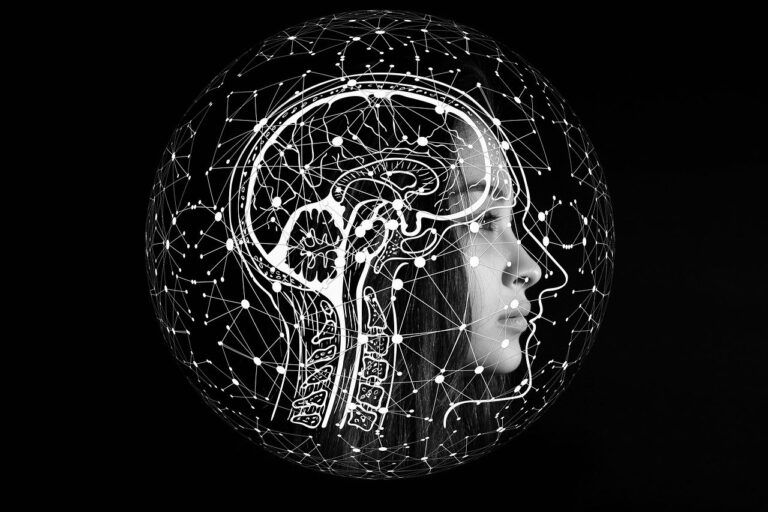
Free Artificial Intelligence Brain illustration and picture

There are three main components of a BCI that explain how it functions:

  1. A device to measure your brain activity. (Usually an EEG and sensors attached to the scalp are used to record brain activity.)
  2. A computer to translate and interpret your brain activity. (This computer interprets brain signals, recognizes key electric signal patterns, and translates signals into a desired action)
  3. A Connected Application. This application is connected to the computer and the EEG to carry out specific actions. For example, this could be a speaker where brain activity can be used to control the music volume. Other times, a connected application could be the remote to control one’s wheelchair.

Impacts of Brain Computer Interface Technology:

Brain Computer Interface Technology can give people who are severely impacted by their health conditions the power of communication and expression. From allowing children with limited mobility to create drawings and play games, to giving adults the opportunity for independence through controlling their own wheelchair and other devices, BCI has offered a new chance for expression and a greater sense of self identity to several patients across the world.

Brain Computer Interface Use in the Alberta Children’s Hospital:

At the Alberta Children’s Hospital, the BCI4Kids program led by Dr. Kirton and his team is utilizing BCI to help younger children reach new levels of independence and communication. While BCI has been researched around the world, there has been limited focus on adapting this technology for children. The Children’s Hospital in Alberta is giving children with conditions like cerebral palsy a new opportunity to interact with their parents, siblings and doctors, while also engaging in fun activities such as playing music, turning on disco lights, drawing with an online painting platform, etc.

To read more about specific BCI stories at the Children’s Hospital, such as Nina’s story, you can visit: https://www.childrenshospital.ab.ca/your-impact/stories/the-kids/meet-nina/

Future Possibilities for Brain Computer Interface:

While Brain Computer Interface currently enables people to control simple devices like music speakers, wheelchairs, and various interactive games, there are endless possibilities for BCI in the future. Currently, researchers are working on advancing BCI to allow brain signals to be rapidly translated into words. For example, a research team from Stanford University has tested a new BCI that can translate minor facial movements and neural activity into words at a speed of 62 words per minute. While the error rate was found to be around 20%, their findings suggest great possibilities for the future of BCI. Will people all over the world with health conditions such as amyotrophic lateral sclerosis (ALS) and cerebral palsy be given a greater chance to express themselves and their thoughts? More research and trials will have to continue, but the future is looking bright for Brain Computer Interface possibilities!


Featured Image/Source 1/2/3

The Evolution of Game Strategy in the NBA


INTRODUCTION

Ever since the introduction of the 3 point line in 1980, the act of being able to review in-game footage in critical moments, and the clear path foul, the NBA has evolved drastically. If you’ve ever gone back to study old basketball film, you would notice that their lineups, their playstyles, and moves differ greatly from how more recent players like Ja Morant or Stephen Curry play.

DIFFERENCE IN LINEUPS

Different trajectories in modern basketball can firstly be seen in our lineups. Coaches have been showing a pattern of putting more athletic, younger, and smaller players into the bigger positions such as power forward or center. This is because playing at a high pace in modern basketball has been emphasized more and more. This is due to the fact it creates more efficient scoring opportunities, especially with the 3 point line.

Lineups are also starting to be changed based on the offensive capability of the other teams lineup. Let’s say one team is bringing in the “big guns”; going all out offense with their best offensive players, then the other team would counter this by putting in their best defensive lineup. This helps balance out the flow of the game to make sure neither team is becoming too outscored.

DIFFERENCE IN PLAYSTYLES

Different and unique playstyles are what revolutionized and continue to change the NBA, but how? To answer this question we need to talk about the pick & roll. This play has been used in major basketball leagues for a long time. Bigger players have forced smaller ones  to create small adjustments to their pick & roll game such as double teaming and creating guard to a big connection.

A different play that players have been taking advantage of is the Iso-ball play. Players who are efficient at scoring on 1v1 situations use this play mostly to play to their strengths. They do this by telling their team to get out of the way, which a strategy called “iso”, short for “isolate the ball”. With only the player and the defender, the player can go all out without any double teams of that sort.

Source: https://theanalyst.com/na/2021/03/the-modernization-of-nba-offenses-and-why-small-ball-is-here-to-stay/

The Art Behind The Works of Art


An artwork of a girl's head with scattered flowers around it. While the background is white, the flowers extend beside the girl's head acting like as if her hair (made of flowers) is being blown by the wind.
Image by jiao tang from Pixabay

Almost everywhere in our lives, we see art. Whether the artwork exists on the side of a building, as a monument, or simply as a digital picture, etc… there are many pieces of artwork that catch our attention. Between every work of art that you may have seen, there is always a different perspective of “art” associated with it.

An artwork with a knight's silhouette looking over a series a mountains, clouds, and the moon.
Image by Yuri from Pixabay

Our biases towards artworks

We all have a different rubric for how we judge art. For example, some people look more into originality than the arrangement of colours in the picture. Some individuals look into the artwork’s message and hidden details. Some also look and admire the creativity and work put onto the artwork. In our own way, we are all biased towards the artwork we admire and artwork we don’t find interesting.

Dark and yellow abstract art.
Photo by Victor Grabarczyk on Unsplash

Art can be anything!

Art does not have to be visual; it can be anything! It can be abstract or it could be simple. Likewise, art can be very simple or it can incredibly difficult and heavy in details. Even then, art does not even have to be visual. All the songs/music we have heard in our lives, the dances and performances we have done by our actions or watched by our eyes, the poetry that we had read, or more, are all part of art. When the word “art” is spoken, it is very common to refer them to drawings. However, art is really just humans expressing their creativity and creating harmony in the way they wish to conduct it with. There is no limit to the works of art that humans can create.

A blue light bulb lighting over a book in a dark room
Photo by Clever Visuals on Unsplash

Why do we do art?

Similarly, an artist can come from anywhere. After all, we all have a natural talent in some parts of art. Some people may be a born a good dancer/singer, and others can have good visualization and imagination. Because art can be anything, there are always new things to try out and old things to relax ourselves from the world. While the world seems very stressful, art is one of the ways to give the world some colour and imagination. Art is a free world where our creativity and imagination can run wild, allowing us to feel relaxed when we do art.

Space themed objects are scattered around a canvas.
Image by pencil parker from Pixabay

What is the “art” behind the works of art?

In my opinion, and with support from the sections above, art is a freedom that we all have. The “art” behind every work of art is the artist’s freedom to express their creativity. We all have our own biases towards artwork, preferences of how to express art, and talent to do an artwork. Looking deeply into all of those, creativity and originality is manifested from art because of them. Out of every creative artwork, so every work of art made, comes the artists’ creativity and originality. Behind every art, there is the always the “art” of the artists freely allowing their imagination to run wild.

A crystal lattice (from Chemistry) over a dark background.
Image by Kristina0000 from Pixabay

Blogger’s note: There is speculation going on wondering if pictures from AI are considered art. My answer: I do not consider these AI pictures as art because where exactly is their creativity coming from? Similarly, where is their imagination coming from? And if yes, is it really running wild or is it aligned with its programming only? As of right now, I am not sure about any of these questions. However, it is these unanswered questions that convinces me that their AI pictures are not really art. Nonetheless, I hope you learned something new from this blog!

Artwork picture sources: 1 , 2 , 3 , 4 , 5 , 6


Isn’t the cosmos beautiful?

I love writing- it is a hobby that allows me to express myself in a beautiful manner. One fun activity that I do, whenever I have time, is chose an image prompt to inspire a creative writing piece. Oftentimes, I love to express it through different perspectives- putting myself through other peoples shoes, and express what perhaps others may being thinking about.  I hope you enjoy!

The silence of the universe scares me. To think that stars exist thousands of light years from us, and there are different galaxies in the world is surreal. We have no idea about what is in the cosmos, or even more, we cannot even fathom how large it is. It is absolutely bizarre to think about how we are the only inhabitants of it, let alone if we are the lonely species that exist within it. But, perhaps, what should scare me more is the silence in my own world. The loneliness that exists surrounding me, within and around. For the better or the worse. 

I am not lonely right now, but have become more lonely than before. The pandemic era, ofcourse, was the catalyst into that descent. I was in online school, I did my work, and seldom chatted with my friends. The rest of my time was spent doing absolutely nothing. And repeat. My world was quite silent. 

I began to forget the feelings of being alone, and focus on something more tangible during this time, which happened to be my studies. Growing fascinated with the studies of astrophysics, galaxies, stars, and black matter, I fixated on the loneliness of our species in the universe, rather than within it. I grew a new world in my bedroom, involving just myself with no human interaction whatsoever. It involved gaining new knowledge, and personal perspective; however it was hard to distinguish when I went from being alone to being lonely. 

The side-effect of this condition was that I grew quiet. I talked, but only when it was necessary. Most of the time, I liked to observe. And observe. This observation is a problem that most people had with me. “You are so quiet,” they remarked. Not only that, but they also had a predicament with my lack of relationships. At that point my parents have given me a lecture so often, that relationships and friends are so much more important than grades. But alas, this loneliness had eaten me up, to the extent I did not realize that it consumed me into such despair. 

It was not that I was alone, but rather that I was trying to find comfort in my state of loneliness. Being in a confined shell, continuing in my own business, alone. This was until, the main peak of the pandemic had struck it. I had to do an assignment about the togetherness of people. Needless to say, I absolutely despised it. 

As I said before, whenever I indulge in something, I love to do it with detail. While I was studying, I realized the real importance of relationships. Seeing millions of people dying is never a great experience. But, observing how many millions of deaths were prevented, that’s what inspired me. In a world, where we were isolated, some people like me took solace in books, and growth in their personal development. It was the 2 metre distance that split us apart, but it was also the distance that brought us closer as we began to find out how relationships matter so much in our lives. And how often we take it for granted. 

It wasn’t easy, but  I was able to break out of the shell of being lonely. Not completely, but just enough to realize and recognize the beauty of togetherness.  This process was gradual, of course, when in-person school resumed its regular routine and I had to make some new friends, I got to value their importance. People and togetherness had become my support system to get me through the rigorous nature of the advanced classes I was taking. 

Snow falls by small little snowflakes, but eventually blankets the landscape into a trance of whiteness. With it, it also engulfs the animals into hibernation, and the plants to rest. This barren landscape of winter, and the loneliness that it causes puts me into unrest. But it is this loneliness and feelings of isolation, that allow us to emerge more connected as a human species. Just like how the snow melts, and springs blooms for a new start. Like, the stars continue to twinkle in the sky. And how the universe is so vast and silent, yet here we are together as a human species. Isn’t the cosmos beautiful?

Sources 1

How Oil-Eating Bacteria Is Making a Difference in the Oceans

0


A unique solution to the rising problem of oil spills

Any type of human-made disturbances in the ocean poses a big threat to the natural ecosystem. Although we might not all picture the marine habitat with lush biodiversity, like a tropical rainforest, it is still filled with precious and dynamic forms of life and is very fragile to human disturbances.

One extremely serious form of disruption in the oceans is oil spills; most of the time, this happens from accidents occurring on drilling vessels. Sudden increases in the amount of free-floating oil in one specific location of the sea cause big upsets to all organisms living in the region. Many species can go extinct, and a larger number will see their population undergo mutations and be severely diminished. Oil-digesting bacteria, however, is a very good approach to at least mitigate the negative consequences, although it is by no means able to completely solve the problem of oil spills from the root.

General Information about the bacteria

According to the NOAA, some families of bacteria that can consume oil are Marinobacter, Oceanospiralles, Pseudomonas, and Alkanivorax. Contrary to what most people might think, oil-eating bacteria are not all genetically modified, or man-made. They can occur naturally, as oil is present as a natural substance in oceans even before humans had begun to harvest it. However, when oil spills occur, the specific hydrocarbon compound that was spilled may be somewhat incompatible with the digestion machinery of the bacteria.

This means that the naturally-occurring bacteria probably won’t reproduce to generate enough of itself in time at the site of the spill, and won’t be efficient in processing the breakdown of oil before it spreads to a very large area. However, it is very important to contain every spill at its core as soon as possible.

Genetical Engineering

Scientists have genetically engineered some of the naturally-occurring bacteria, and have also added man-made strains to increase the number of options for treatment. The most common way to go about this is to exploit the bacteria’s simple DNA structure. Bacteria tend to have a single round piece of DNA that contains all its information. However, it is simpler to add more genes for them than for more complex organisms like humans. Scientists can use additional circular genetic material the bacteria already has, called plasmids, to cut open and insert the genetical code. The codes correspond to creating enzymes that are specifically directed toward eating oil at a very quick pace.

After the new plasmid is inserted back into the bacterial cell, the bacteria is said to have undergone recombination. The stronger enzymes produced from the newly introduced gene increase the efficiency of the bacteria at digesting the oil. As well, scientists can also include other genes that help the bacteria to adapt quickly to the physical environment of the oil spill zone. Proteins only work at certain temperatures and pH (measuring the acidity of the environment), so scientists have to pick their enzymes wisely. With the correct genetic modifications, the bacteria can even rely solely on the hydrocarbon compounds of oil for food and reproduction!

The increased use of these bacteria

The 2010 Deepwater Horizon oil rig accident was one of the worst of its kind in modern history. The oil rig was destroyed in a horrible accident, spilling hundreds of millions of gallons of oil into the Gulf of Mexico. Accidents like these not only disrupt the marine ecosystem but also greatly harm the coastal saltwater marshes and estuaries and impact human coastal communities. In addition, the factories that draw saltwater from the ocean face economic pressure; now they have to find alternative, non-polluted sources of water. As the fishing and tourism industries also go down because of health concerns in the region, some businesses will face extreme pressure as well. You can learn more about the spill here

Most importantly, the long-lasting effects of oil spills are not yet well-known, as oil spills only started happening recently. It is because of these reasons that bioremediation is important. Bacteria would break down petroleum into harmless carbon dioxide and water, helping to protect marine life. The good news is that, with biotechnologies becoming increasingly developed and sophisticated, genetic modifications are becoming cheaper and faster every year.

With all these in mind, I am glad to hear about this new biological creation that aids in solving one of the world’s most serious problems! Marine life is very important to protect, and we should all appreciate its diversity and be engaged in our current-day issues.


Image 1: Image by C Morrison from Pixabay

Image 2: Image by shadi6454 from Pixabay

The real history behinds Black Friday

0

writing time- 3HR

The Gold Market Crash of 1869: The Origins of “Black Friday”

When the term “Black Friday” was initially used, it wasn’t about the post-Thanksgiving holiday shopping spree but rather the financial crisis, namely the September 24, 1869, crash of the US gold market. Jay Gould and Jim Fisk, two infamously brutal Wall Street businessmen, banded together to purchase as much gold as they could in the country in an attempt to skyrocket the price and sell it for phenomenal gains. The scheme ultimately came to light on that Friday in September, plunging the stock market into complete collapse and bankrupting Wall Street titans and farmers.


Retailers and the “Red to Black” Myth

The most frequently recounted explanation of the Black Friday ritual associated with Thanksgiving shopping links it to retailers. According to the legend, stores purportedly achieved a profit (or “went into the black”) on the day following Thanksgiving after operating at a loss (or “in the red”) due to holiday consumers spending heavily on discounted goods. While retail organizations historically recorded earnings in black and losses in red during their accounting, this official, albeit fictitious, origin tale for Black Friday constitutes the genesis of the tradition.

Debunking the Southern Plantation Myth

A recent myth suggests that Southern plantation owners could purchase enslaved workers at a discount on the day after Thanksgiving in the 1800s, prompting some to call for a boycott of Black Friday. However, this version of the holiday lacks any basis in fact.

Chaos in Philadelphia: The True History of Black Friday

However, the real history behind Black Friday is not as optimistic as retailers might lead you to believe. In the 1950s, when crowds of suburban shoppers and tourists descended upon the city the day after Thanksgiving to prepare for the annual Army-Navy football game, police in Philadelphia coined the phrase to characterize the mayhem that ensued. Police in Philadelphia had to work extra shifts to handle the increased traffic and crowds, in addition to being unable to take the day off. To exacerbate matters for law enforcement, shoplifters also took advantage of the chaos in stores and stole merchandise.

Attempts to Rename and Reimagine

By 1961, “Black Friday” had become so popular in Philadelphia that business owners and supporters attempted unsuccessfully to change its name to “Big Friday” to shed its negative connotations. However, the term didn’t gain traction in the rest of the nation until much later, and as late as 1985, it wasn’t widely used. However, retailers managed to reimagine Black Friday sometime in the late 1980s, transforming it into a positive rather than a negative reflection on them and their clientele. As a result, the previously mentioned “red to black” holiday and the idea that America’s stores finally turned a profit on the day after Thanksgiving were born.

Evolution of Black Friday: From One Day to Four-Day Event

Black Friday, a one-day sales event, has evolved into a four-day event, giving rise to other “retail holidays” like Small Business Saturday/Sunday and Cyber Monday—stores open earlier that Friday, allowing dedicated shoppers to shop after the Thanksgiving meal.

Sources:

Article: (1)

Image: (1) (2)

Can we reverse aging? – The Potential of Telomerase Enzyme Research

0

Aging – a natural process we all experience. From simply growing up to embracing old age, aging can include anything from changes in health conditions, height, hair colour, muscle mass, and even cognitive abilities. While aging is a process that brings significant (and often difficult) change, I used to viewed it as a somewhat inevitable process we should try and embrace in others and in ourselves. After all, isn’t it a natural part of life that we all experience? What if I told you that there might be a way to reverse aging? What could this mean for the future of geriatrics medicine?

Well, with such big questions, we should first look into aging as a biological process:

What are some things that cause aging? 

While most scientists can agree that aging remains a complex process with many unknown factors, there are a few well-established causes of aging that almost all researchers can agree on. For example, mitochondrial dysfunction, altered intercellular communication, epigenetic alterations, and external factors like chemicals and toxins are all known to change the function of the body’s molecules and cells, thus contributing to changes associated with old age. However, one of the more interesting hallmarks of aging include our telomere length, which is often thought of as our body’s own molecular clock.

What are telomeres?

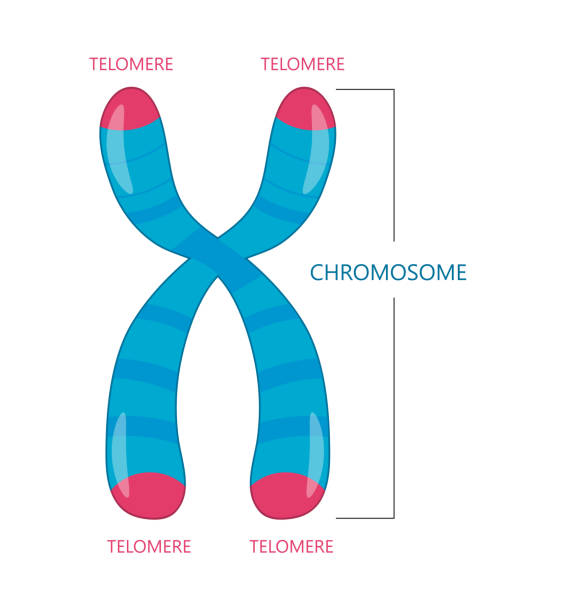
Telomeres, in short, are the DNA-protein structures found at the two extremities of a chromosome. These telomeres act as protective regions, preventing nucleolytic degradation and unnecessary recombination or fusion of chromosomes. Essentially, telomeres preserve the information in our genes. As our bodies’ somatic cells divide through mitosis, our telomeres shorten with each cell division. This occurs due to the inability of DNA polymerase to completely replicate the end section of the lagging strand of DNA. When telomeres become too short, the cell will undergo apoptosis, and cell division will cease. In this sense, telomere length can be an indication of a person’s age. However, although not present in most human somatic cells, there is an enzyme called telomerase that has the ability to extend telomeres and further a cell’s ability to continue dividing. This has been especially important in cancer research, as many cancer cells have reactivated telomerases. Normal somatic cells in the human body have very low (almost undetectable) levels of telomerase activity. This is partly why human somatic cells have telomeres that continue shortening until cell apoptosis. The effects of decreasing telomere length are even more evident in people diagnosed with Dyskeratosis Congenita, a genetic disorder caused by accelerated telomere shortening. In these individuals, the rapid decrease in telomere length causes age-associated disorders to emerge significantly earlier, causing a decreased life span.

Potential of Telomerase in Reversing Aging:

Ever since scientists have discovered several cancer cells with reactivated telomerases, researchers have begun to look at the possibility of slowing or stopping aging with telomerase enzymes. For example, in one study by Bodnar et al., telomerase-negative normal human cells were transfected with human telomerase subunits, creating telomerase-expressing clones. These clones had longer telomeres and a greater life span compared to the negative control clones without telomerase. This shows how the addition of telomerase enzyme in human cell studies has revealed the ability for telomerase to slow aging and increase longevity. Further studies have also been done on lab mice where the introduction of telomerase enzyme caused partial reversed aging. More specifically, a study led by Ronald A DePinho at Harvard Medical School found that older mice with an engineered telomerase gene (that could be switched on and off) saw improvements in brain growth, fertility, and recovery from lost cognitive function. More importantly, the scientists noted that these mice did not develop cancer, despite telomerase being a key component of some cancer cells that allows continuous cell division. DePinho and researchers believe that the ability to switch telomerase activity on and off for short increments of time in the mice prevented the development of cancer. The results of their experiment offer incredible insight into the potential of introducing telomerase in humans to reverse serious aging-related conditions.

What do these studies tell us?

With the current and past research on telomeres and telomerase enzymes, it is clear that these discoveries offer remarkable potential to the field of aging-related disease research. Although several more studies in this area will have to be done, this field sheds a bright light on the future of human aging. Would such treatments only be applied to those with early-aging conditions such as Dyskeratosis Congenita, or should we start thinking about whether reverse aging is truly a possibility for everyone? Although this area of research will continue to progress for many years, we now know that reverse aging could truly be a possibility one day.

Sources: 1/2/3/4

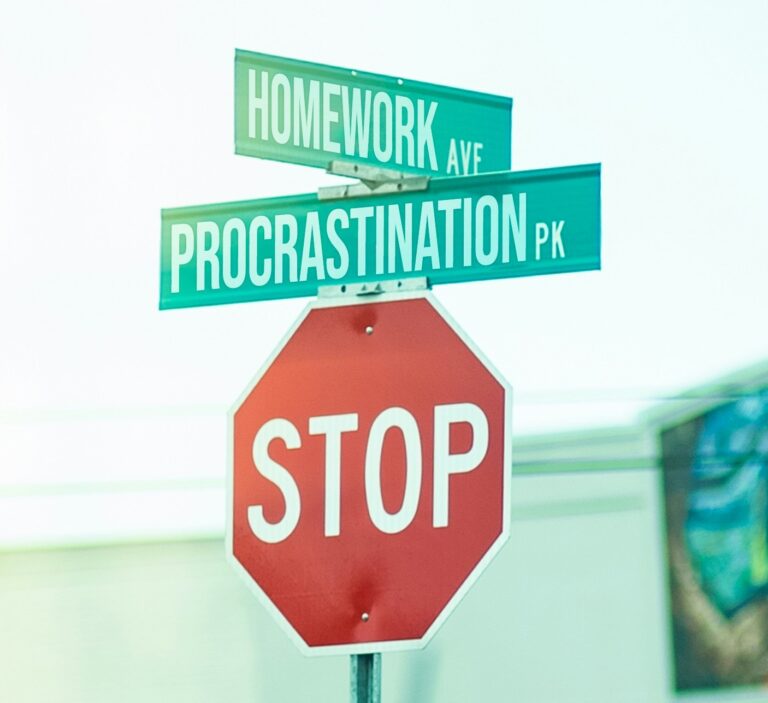
5 Tips for Students to Stop Procrastination

0

After binging a whole season of your favourite TV show, you check the time and notice that it’s 11:30pm. Your essay is due at midnight, and it currently has a singular line that consists of your name. You know you should have begun writing it a while ago. You know that you should probably start writing it while you still have thirty minutes. But suddenly, you find your finger hitting the “Next Episode” button, and you’re sucked into the riveting world of zombie apocalypses and alien takeovers, dramatically romantic trips to Paris, and coloured unicorns defeating other magical creatures with the power of friendship.

It’s okay though. The episode is short – only 25 minutes. The remaining 5 minutes should be enough to write a 5000-word essay on the true meaning of life.

…right?

We’ve all been through the awful realization that we haven’t left ourselves enough time to complete whatever tasks we’ve put off. But despite swearing to never procrastinate again, many of us remain in the cycle of leaving things to the very last minute anyway.

So why do we do this? Procrastination is detrimental to the quality of our work, our mental health, and can even cause anxiety.

Here we will break down five reasons for procrastination, as well as how to finally stop the cycle.

1. You’re overwhelmed


Photo by Chris Greenhow on Unsplash

Staring at a task (or many) can seem very daunting, especially if it’s new to you or not your forte.  However, having to do these kinds of tasks is inevitable. It is important to break out of your deer-in-the-headlights pose and just… start.

A way we can overcome being overwhelmed by tasks is to use the 5-Minute Rule. This rule is simply to set a five minute timer and try to focus on your task until the timer rings. If it’s truly that terrifying, move on to something else and try it again in a bit. But most of the time, five minutes is the perfect excuse for us dive in the task headfirst.

It’s only five minutes, right?

2. Boredom

Girl sitting on school campus, leaning against bench with a book lying open, facedown on her face
Photo by Tony Tran on Unsplash

Nobody likes doing things they find bland and mundane. It’s easy to do something more interesting (watching magical rainbow ponies) over something a little less fun (writing a multi-paged essay about the meaning of life). However, sometimes the mundane task is more important, and therefore putting it off has pretty negative effects.

The solution? Make it enjoyable.

It might sound stupid, difficult, or even impossible to make something as dull as essay writing fun and engaging. But it’s not actually that hard. Try to find something positive about the task that you might enjoy.

If you like games, challenge yourself to finish it within a certain time frame. Game-ify everything. Split the task up into levels and turn on some fast paced music. How many chores can you finish within fifteen minutes? Can you beat your high score from last time?

If you’re a daydreamer, attempt to romanticize what you’re doing. Watch yourself from a third person perspective and make what you’re doing seem rosy and interesting. Sometimes just imagining having fun is enough to push yourself into doing the task.

Try to tailor the task into something fun and interesting, whatever that may look like for you. We tend to be more welcoming to tasks that we find more engaging.

3. Perfectionism-Procrastination

It doesn’t seem like a very likely cause of procrastination – in fact, wouldn’t a perfectionist want as much time as they can get in order to do a task to the best of their ability?

In reality, perfectionism is one of the most common underlying reasons for procrastination. Perfectionists tend to spend an obnoxious time in the planning phase for the “grand scheme”. Extreme organization is one of the most common examples of spending too long planning. This often looks like spending a lot of time rewriting and colour coding notes, creating schedules, and making complex lists of everything that needs to be accomplished. While organization is important, over-organization is a form of subtler procrastination that is difficult to overcome.

Photo by Alvaro Reyes on Unsplash

To combat perfectionism-procrastination, we can try to set more achievable goals. It’s critical that we recognize that it’s not realistic to do everything perfectly. Trying to show ourselves compassion and understanding is important. Instead of trying to do everything to the utmost of our abilities, perhaps picking just a parts to do as well as you can is more realistic. It doesn’t have to be the best, or the shiniest, or the most put together.

It just needs to be done.

4. Distraction

Man scrolling through phone, turned away from computer and monitor.
Photo by Nubelson Fernandes on Unsplash

Why would anybody ever choose to study the differences between potential and kinetic energy when their favourite automotive forum is causing their phone to have a seizure? Especially with the rapid evolution of social media and technology generally, there are more distractions than ever. But despite the interesting debate between manual transmission and automatic transmission, you still need to study.

The solution to distractions is simply just to remove them. Change your notification settings to DND (do not disturb), switch the ringer off, chuck your phone down the stairs (don’t actually do that). Draw the curtains closed around the window. Close the door. Play some lofi beats and try to focus on your task.

5. Burnout Fatigue

Disassembled LEGO figure on lime green background
Photo by Jackson Simmer on Unsplash

Burnout is so easy to fall into, especially as youth. Ambition fills us, and all of a sudden we want to do everything with seemingly endless determination and stamina. Eight hours of sleep? Ha! Who needs to spend a whole third of their lives sleeping when coffee exists?

Spoiler alert: the determination and stamina are not endless, and eight cups of coffee are a poor substitute for hours of sleep that you missed. The fatigue catches up so fast, and afterward it can seem that focusing on anything just seems somehow even more exhausting. Therefore, we’ll just do it “later”, when we have enough energy. “Later” tends to be a few moments before the deadline, and then we’re burnt out again in the time crunch to finish. Tada! We’re stuck in a vicious cycle.

The easiest way to avoid burnout fatigue is just to avoid burnout. Set realistic goals for yourself, pace your work, and try to maintain your health both physically and mentally. Check in with yourself periodically for signs of burnout.

However, sometimes burnout is inevitable, especially as a student. So how can we deal with it if we’re already burnt out?

While there isn’t a perfect solution to continuing work during burnout, some things that can help are to split up your work and to add mindfulness periodically  throughout your day. Try to give yourself small breaks in order to recuperate and give yourself enough energy to continue. Do your best to prioritize your health; burning out more will only make everything more difficult.

TLDR;

Procrastinating can stop us from doing important tasks. Some reasons for procrastination might include overwhelment, boredom, perfectionism, distractions, and burnout. We can help ourselves focus and avoid procrastination with a multitude of strategies, including removing distractions and the 5 Minute Rule.

If you’re here, you’re probably procrastinating by reading this entire article about procrastination. So use this as a reminder to go do whatever it is that you’re putting off! Try to use the strategies we’ve discussed. You might be surprised at how fast you can finish!

Aesthetic Notes 101


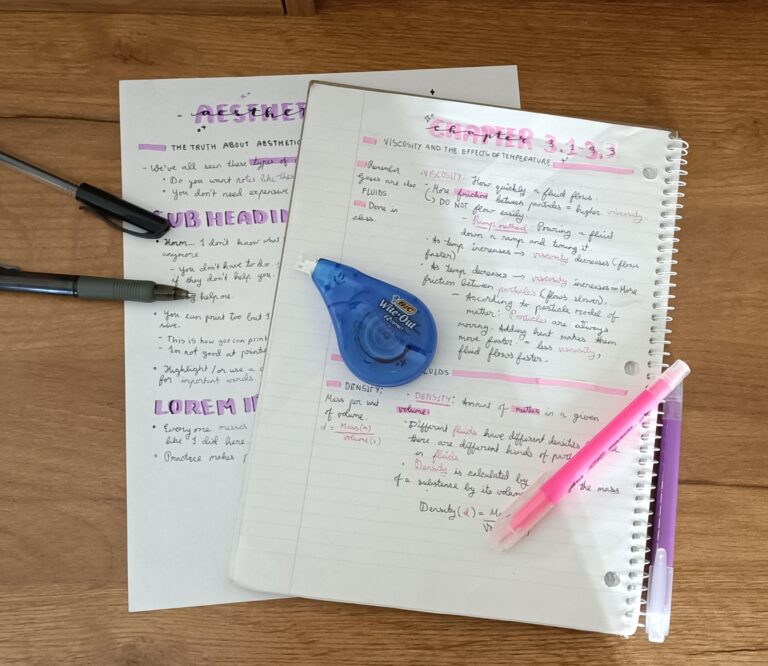
We’ve all seen aesthetic note taking trends on social media, crisp white pieces of paper with perfect handwriting, decorated with pastel highlighters and headings that look like they were designed by professional hand lettering artists rather than the school or university students who actually did them. These short videos and pictures have been trending for a long time, often showcasing an array of fancy highlighters, brush pens and other stationary. In this blog post, I’ll tell you about some note-taking methods and an easy way to make your notes aesthetic.


But first, will pretty notes improve your grades?

Though it depends from person to person, neat, color coded notes often encourage people to study them whereas messy notes make it difficult to focus. My notes are far from perfect, though I try to make them pretty as this encourages me to study them but also makes the note taking process fun instead of long and dull. It helps me remember the concepts when I draw diagrams and use different colors. You don’t have to have aesthetic notes to get good grades. All you need to get good grades is a pencil, a computer if needed, and your brain. If you don’t mind messy notes or you are a perfectionist and it will bother you if your notes do not turn out perfect, you don’t need to have aesthetic notes. Everyone is different and some methods don’t work very well for some people when they may work really well for others.

A simple way to make your notes more aesthetic.

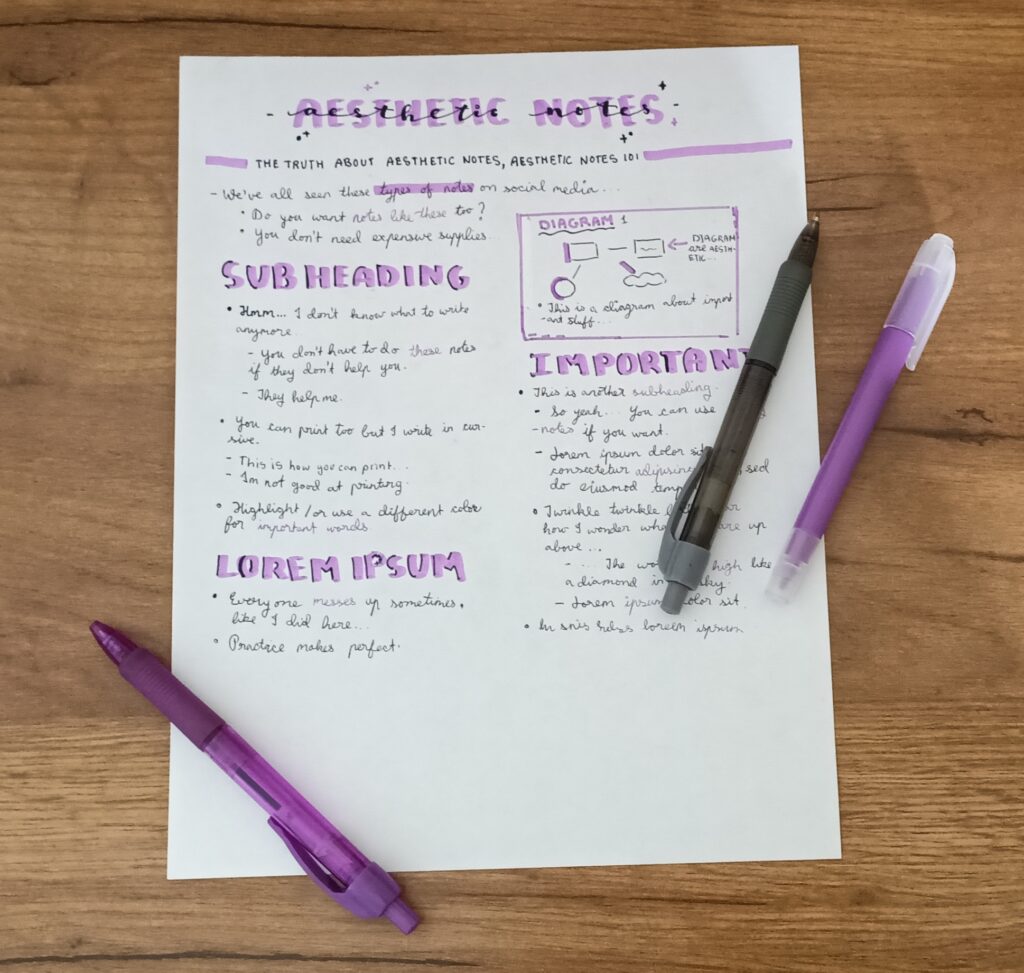
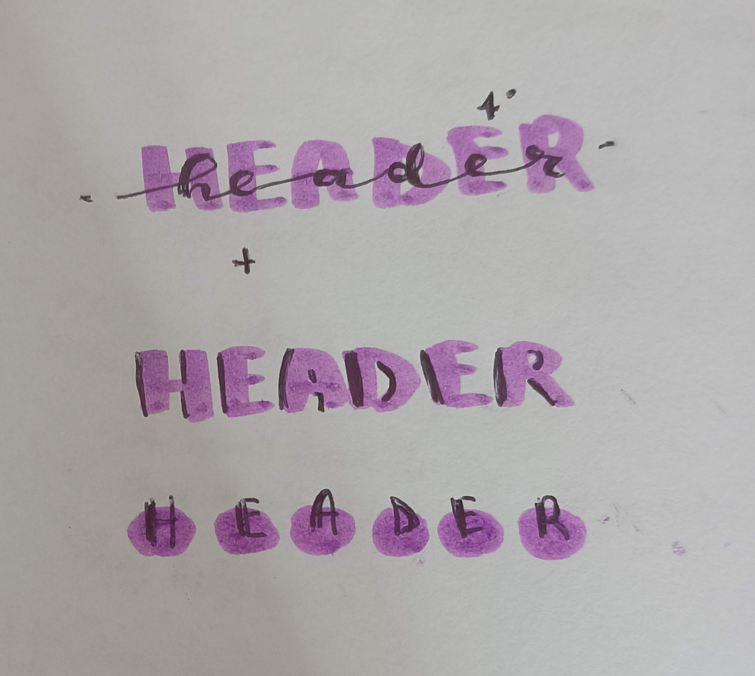
Now I’ll show you what I do to make my notes more organized and visually appealing. First, I pick one color to use for that section of notes. All you need is a black pen, a highlighter in the color you have chosen and a pen in that same color. The titles may seem a bit complicated but as they say, “practice makes perfect”. For the title I have a couple different methods that you can see in the picture below. It’s a good idea to do your titles after you take your notes especially if your taking them while the teacher is talking.


I take my notes in bullet points, just a simple dot and then a dash for a sub bullet. All you have to do is write down your text in black pen, write any important words or phrases that you come across using the colored pen. You can add definitions to these terms in the end if you like. I sometimes highlight a part of the text and add a note or question about it in the margin. Simply doing this makes your notes a lot more visually appealing. You can also add diagrams.


Other methods:

One popular note-taking method is the Cornell method. The page is divided into four sections, the header section which you probably already have in your notebook, two columns and one section at the end of your notes. One of the two columns is a smaller column to the left of the page, kind of like the margin. The larger column takes up most of the page. You take all of your notes in this column. Then you use the section at the end to write a summary about the notes. The smaller column is used to write down any questions that you may have or any details that seem important.

Remember, at the end of the day your notes are going to benefit you. So take them in a way that’s going to work for you. If aesthetic notes don’t work for you, you don’t have to have them even though they’re trending. I hope this post helps!

Spreading Holiday Cheer: 3 Reasons To Share Small Acts of Kindness

0

With holiday cheer slowly dispersing in the month of November, we are given the opportunity to create a chain of positivity through our communities. Using this season as a reminder of our fortunateness and our impact on those around us, the holiday season is an opportunity to rekindle our excitement and to remind us how far kindness can go. Through regular life, we often forget how meaningful a small act of kindness can be and instead get caught up in our own or surrounding negativity. To commemorate the season, here are three reasons to share some holiday cheer with small acts of kindness!

  1. Creating and Connecting Community

One of the most breathtaking things about the holiday season is the sudden change in atmosphere and outlooks. For many, this time can be a turning point in the year. The warmth of home and the ability to spend time at home with friends and family can bring out the best in us all. Extending this sense of gratitude and thankfulness beyond our homes, we as a community could be amazed at what we could do. Creating community means creating accommodation and doing random acts of kindness for those around us. This helps us foster a sense of belonging within the community and allows us all to make a collective impact on each other.

2. Compassion and Inclusion

While the holidays evoke feelings of joy and family for some, others, unknowingly to us, may be reminded or associate this season with loss and exclusion. This may stem from a different set of beliefs or the absence of a valuable family member. We should practice inclusive practices to encourage inclusion in our community. This can include acknowledging or sending messages to celebrate the diversity of holidays during the Christmas season. As someone who celebrates less popular holidays, it has a profound impact for someone to take spare time from their day to celebrate your holiday with them. Additionally, this could mean creating welcoming spaces within our communities, making it easy for people to access and enjoy the festivities without barriers.

3. Inspiring Others

Many times we find ourselves fascinated and inspired with other choices, in this case with others’ acts of kindness. Constantly learning and appreciating others’ actions, we can implement these own principles in our lives. With this in mind, encourage yourself to be this person, the person who is able to inspire others to help others. To be this person means doing what’s right (I know, cliché) and putting others before yourself for the time being. If we all started putting others in front of our immediate needs, our communities would flourish. Though it may feel these actions have nuanced impacts initially, your action will create a web of interconnected positivity that can be traced through small acts of kindness. In our world that is often characterized by negativity, these acts of kindness serve as proof of how far ‘small’ acts can go.

After understanding how acts of kindness cannot be underestimated, we can realize the lasting impact of our actions. Each smile shared, door held, hand held, we can set off a positive chain of events. By recognizing this power, we are given the ability to create an everlasting ripple effect that can transform our communities. By embracing this simplicity and power of acts, we can help to start creating a large and profound impact on our communities!

Spread some holiday cheer!

A Beginners Guide to Alzheimer’s

Alzheimer’s is one of the most common types of dementia. It is a progressive disease that begins by affecting the parts of the brain that control memory, language, and thought. In medical terms, it can start out by affecting the entorhinal cortex and hippocampus but can later start affecting the cerebral cortex as well. Did you know that around 55 million people worldwide live with this disease? Alzheimer’s is commonly aimed at people of an older age but some rare cases prove that younger people can get it too. It is predicted by Alzheimer’s Disease International that by 2050, around 139 million people will be affected.  Basically, Alzheimer’s is a type of dementia that affects the brain’s ability to properly function in society. 

The most popular symptoms of early Alzheimer’s are: 

  • memory loss
  • poor judgment 
  • taking longer than usual to complete daily tasks
  • mood/personality changes
  • increased anxiety or depression

Some more moderate signs of Alzheimer’s could include:

  • Difficulty with language and articulation
  • Increased memory loss and confusion (such as forgetting personal history)
  • Difficulty organizing thoughts and thinking logically
  • Hallucinations and impulsive behavior

The most severe symptoms could include:

  • The inability to communicate,
  • Seizures
  • Loss of bladder control
  • Zero awareness of one’s surroundings

At the moment there is no proper cure for Alzheimer’s. But doctors still can prescribe medicine that can temporarily reduce the symptoms. The main medicines are Acetylcholinesterase (AChE) inhibitors and Memantine. AChE is used to increase levels of acetylcholine, which is a substance in the brain that helps nerve cells communicate with one another. Memantine is different from AChE. It operates by blocking the effects of an excessive amount of a chemical in the brain called glutamate. Glutamate is a chemical inside your brain that sends messages between nerve cells in the brain. But if those cells are damaged by Alzheimer’s, a whole lot more damage could be done. 

Researchers have made significant progress in developing, testing and validating biomarkers that indicate signs of the disease’s process. Scientists have also made advances in blood-based tests that can be used to screen volunteers for further research. In the future, it is hoped that these methods can and will be used to screen patients for both Alzheimer’s and dementia before the symptoms even appear. Other research includes population studies and precision medicine. By looking at large groups of diverse populations, researchers can discover which behaviour, genes, and lifestyle choices can lead to Alzheimer’s and dementia in the future. Some other possibilities they are looking into include “Lifestyle Interventions”, “Disease Pathways”, “Drug Discovery” and “Infrastructure Development”. Hopefully, researchers and scientists can figure out a cure for this disease before more and more have to suffer from it. 

Mayo Clinic – https://www.mayoclinic.org/diseases-conditions/alzheimers-disease/symptoms-causes/syc-20350447

Centers for Disease Control and Prevention https://www.cdc.gov/aging/aginginfo/alzheimers.htm#:~:text=Alzheimer’s%20disease%20is%20the%20most,thought%2C%20 memory%2C%20and%20language.

Alzheimer’s Disease International https://www.alzint.org/about/dementia-facts-figures/dementia-statistics/#:~:text=There%20are%20 over%2055%20 million,and%20139%20 million%20in%202050.

National Institute of Aging (USA)

https://www.nia.nih.gov/health/what-are-signs-alzheimers-disease

Alzheimer’s Association

https://www.alz.org/help-support/i-have-alz/treatments-research#:~:text=Research%20into%20future%20treatments,-Researchers%20are%20conducting&text=These%20changes%20offer%20potential%20%22targets,response%2C%20metabolic%20changes%20and%20more.

Alzheimer.gov (USA)

https://www.alzheimers.gov/taking-action/research-activities

Got some free time? Learn how to echo-locate!

0

Have you ever dreamed of manifesting a super power like invisibility, super strength, or maybe…”seeing” in the pitch dark? Well, maybe magic won’t enhance your vision, but the science of echolocation sure will!

What is echolocation?

We all have some idea of what echolocation, maybe through learning about bats from school field trips to the zoo, or perhaps from reading “did you know” fun facts about nocturnal animals. Echolocation is a mechanism that some animals, most commonly bats and dolphins use to communicate and pick up information about their surrounding environment. Instead of using their eyesight to do this, these animals use their hearing. Bats, for example, contract their larynx to make high-pitched sounds emitting high frequency waves. These emitted waves rebound off of objects, producing echoes which tell the animal the distance and location of an object.

A huge part of echolocation is tuning into the surroundings and listening to the small and subtle changes in sounds and other sensory details around us.

Echolocation in humans:

Experts have found that the human brain has areas that are dedicated to receiving and processing echoes, and it is also estimated that 20-30% of blind people learn how to echo locate at some point in their lives. Echolocation is a skill that anyone can learn, and it comes with several benefits such as being more focused, and aware of the changes that are happening all around us.

Like every skill, echolocation takes practice and everyone has a different way of going about tackling this, but the following are a few tips that are recommended by scientists and experts:

  • Learn how to lose yourself in your surroundings: As I mentioned before, learning how to tune into the environment around you is key to echolocation. It is important to develop the ability to pick up on the change in sounds. For example, when you are going out on a walk to Nose Hill park on a snowy day in Calgary, you can listen to the sound of the snow crunching beneath your feet, or if you are sitting near the Bow River on a beautiful and picturesque autumn evening, you can look out for the churning of the water or the sound of the water rushing downstream. According to Daniel Kish, who has been blind since he was 13 months old, and uses echolocation to communicate, “everything we pass reflects sound differently.”
  • Picking an echolocation sound that you are comfortable with: Every individual has a different sound that they use to help them locate their position and the position of objects around them. These sounds can include tongue clicking, finger snapping, or cane tapping. Experts say that it is important to choose a sound that you can reliably reproduce, but for beginners it is usually a clicking sound that sounds like tsk-tsk.
  • Take it easy first, and later, level up the difficulty: Since echolocation is a hard skill to master, it is important to start training yourself with easy exercises. These exercises can include blindfolding yourself, walking up to a wall, and trying to stop at the appropriate time with only using your sounds and your senses of hearing. As you feel comfortable with this, start moving onto harder exercises such as moving into a room with different acoustics or adding more objects in the room for the sounds to bounce off of.
  • Learn when to take breaks: For beginners, it can be disorienting to be without their visual senses and to only rely on their hearing for direction. Experts suggest that beginners cannot practice echolocation without taking breaks after every 30-45 minute time interval.

Echolocation is a difficult skill to master as we are not accustomed to being without our visual senses for long periods of time. However, even if we cannot become perfect at this, it is worthwhile to try this out as it can make us feel more confident and empowered as we strengthen one of our senses. This skill, also teaches us that every small detail in our lives can make a difference in how we perceive the sounds and positions of objects surrounding us.

I, for one, am excited to try out this new skill, and I hope that you will join me in this journey of learning something new!

Sequences + Series

What are sequences and series?

A sequence is a list of numbers, such as: 1, 2, 3, 4, 5, 6. Each number in the sequence is a term.

Later, we can name these terms such as  

for the first, second, third, fourth, fifth term.

By adding the terms in a sequence, this results in a series:

1 + 2 + 3 + 4 + 5 + 6

Arithmetic Sequences:

There is a common difference between each of the terms:

  • 1, 2, 3, 4, 5, 6: the common difference between each term is 1.
  • 2, 5, 8, 11, 14: the common difference between each term is 3.

General Term:

The general term is a formula for finding any term in a sequence. This continually addition is a pattern -we can turn that into an equation to find the nth term in a sequence, whatever n may be.

General Term of an Arithmetic Sequence:

  • d = common difference between terms
  • n = index of term you want to find – if you want to find 3rd term, then n is 3

We can start by writing out an arithmetic sequence and then converting it to an sequence with only variables:

1, 3, 5, 7, 9

We note that the first term is 1, the common difference d = 2, and let’s say that we want to find the 6th term, so n = 6.

If we were to convert the above sequence to only have variables:

If we look at how to get from 1 to 11, we note that we need to add 2 five times, where 11 is the 6th term of the sequence. We can notice to get the nth term (6th) of a sequence, we need to times the common difference by n – 1 (2 times 5) and add the first term (1):

forming the general term of an arithmetic sequence.

Calculating the sum of an arithmetic series:

As we mentioned before, a series is the addition of a sequence:

1 + 2 + 4 + 8 + 16

Therefore, an arithmetic series is the addition of an arithmetic sequence:

1 + 3 + 5 + 7 + 9

To find the sum of an arithmetic sequence, once again, we can create a formula to compute these sums regardless of which numbers are the first and last terms. A famous problem for calculating the sum of an arithmetic series is finding the first 100 integers:

1 + 2 + 3 + 4 + 5 + … + 99 + 100 = ?

You could simply brute force through this problem; add each number individually, but there is a much simpler and efficient method. By adding the first and last term, then the 2nd term and the 2nd last term, and so on, you get:

1 + 100 = 101

2 + 99 = 101

3 + 98 = 101

Clearly, each pair added together equals 101 –so to find the sum– how many pairs are there in total?

There are 100 numbers, and therefore 100/2 = 50 pairs. So 50 * 101 = 5050 – the sum of the first 100 integers.

I hope you enjoyed this week’s post, thank you for reading, and I hope you have a great day!

Sources:

  • Introduction to Algebra: Art of Problem Solving

What Makes the Companionship of Our Pets So Irresistible?


Konrad Lorenz, an Austrian zoologist and ethologist, is considered to be one of the founders of the study of animal behavior, known formally as ethology. He became widely known for his development of the ‘imprinting’ theory, a captivating concept that brings attention to instinctive bonds between animals. An animal goes through a crucial stage called imprinting shortly after hatching or birth. Lorenz theorized that the first moving object the infants perceive, generally their mother, elicits an instinctual, maternal attachment in them. Scientists claim that imprinting can happen in as little as 30 minutes in some species.

So.. why do I love my dog so much?

Soon after Lorenz’s work, researchers found that oxytocin, the “feel-good” hormone, plays a major role in imprinting. It’s called the “feel-good” hormone because it’s released in response to social or romantic bonding, which triggers happiness. For instance, oxytocin levels spike while nursing which contributes to the creation of a mother-child bond in both parties. Most people regard their pets as members of their family, and according to the brain, we bond with our pets in the same way. Recent studies show that mutual gazes with one’s dog induce an increase in oxytocin levels in both parties. Consequently, our affection for our family and pets is interpreted by our brains via the same neural route. According to studies, people’s brains light up in the same areas when they view pictures of their dogs vs. their children.

Science tells us that the human-dog bond is mutual 🙂

Sources: 1 / 2 / 3 / 4 /

Understanding the Current Israel-Palestine Crisis: A Closer Look

0


In the complex tapestry of the Middle East, the ongoing conflict between Israel and Palestine has once again taken a distressing turn, capturing the world’s attention. As the region grapples with a ground invasion, humanitarian crisis, and geopolitical tensions, the latest chapter in the Israeli-Palestinian saga demands our focus. In this article, we delve into the historical roots, current dynamics, and international implications of the conflict, aiming to provide a comprehensive understanding of the multifaceted challenges unfolding in the heart of the Middle East.

Israel’s Ground Invasion and Humanitarian Crisis in Gaza City

Israel’s ground invasion against Hamas has given rise to a severe humanitarian crisis in Gaza City, where approximately 400,000 people find themselves trapped. The complex situation has been exacerbated by Hamas positioning itself within and below civilian infrastructure, leading to significant collateral damage from Israeli strikes on civilian locations.

Regional Dynamics: Israel, Hezbollah, and Syria

Simmering regional tensions have prompted the United States to engage in shuttle diplomacy. Meanwhile, Israel is engaged in a dual conflict scenario, exchanging rocket fire with Hezbollah in Lebanon and conducting strikes on alleged Iran-linked targets in Syria.

Historical Context: The Israeli-Palestinian Conflict

The roots of the Israeli-Palestinian conflict trace back to the late nineteenth century, culminating in key events such as the first Arab-Israeli War in 1948 and the Six-Day War in 1967. Although the Camp David Accords in 1979 improved relations between Israel and neighboring countries, the question of Palestinian self-determination persisted.

Factionalism and Political Shifts

Factionalism among Palestinians heightened when Hamas won the parliamentary elections in 2006, which displaced the long-standing majority party, Fatah. Furthermore, this has resulted in Hamas gaining control of the Gaza Strip, a region under the semi-autonomous Palestinian Authority since 1993. Also, western governments, including the United States and the European Union, did not acknowledge Hamas’ electoral victory due to its designation as a terrorist organization.

Previous Escalations and Global Influences

Previous escalations in 2014 and 2018 witnessed military confrontations between the Israeli military and Hamas, with a cease-fire brokered by Egypt in 2014. The Trump administration’s policy shifts, including canceling funding for the UN Relief and Works Agency and brokering the Abraham Accords, marked significant changes in the dynamics of the conflict.

Escalation in 2023: Biden’s Support and International Concerns

The Israeli-Palestinian conflict escalated in October 2023, with President Joe Biden expressing support for Israel and the United States sending renewed arms shipments. The UN Security Council failed to reach a consensus on the renewed violence, causing international concerns for civilian safety and a hostage situation.

Humanitarian Impact and Displacement

The conflict has resulted in a significant increase in casualties, with approximately 1,300 Israelis and 10,000 Palestinians killed in the first month alone. Iran’s patronage relationship with Hamas and other extremist groups raises concerns about the potential expansion of the war to the north. In addition, this has displaced millions of Palestinians, posing a dilemma for Egypt and Jordan, which have absorbed large numbers of Palestinians in the past but are resisting accepting them during the current war. Negotiations have led to only 1,100 people exiting Gaza through the Rafah border crossing to Egypt, leaving 1.5 million displaced Gazans facing dire living conditions and security risks.

International Responses: Who Supports Israel, and Who Doesn’t?

In the current conflict, the U.S., EU, and other Western countries have condemned the Hamas attack on Israel, providing over $260 billion in military and economic aid. Russia and China have maintained contact with both sides, with Russia blaming U.S. policy for the lack of peace in the Middle East. Also, Israel’s arch-enemy, Iran supports Hamas and Hezbollah but, denies direct involvement in the attack.

Article sources:

Israel Gaza war: History of the conflict explained. (2023, November 15). BBC News. https://www.bbc.com/news/newsbeat-44124396

Israeli-Palestinian Conflict | Global Conflict Tracker. (n.d.). Global Conflict Tracker. https://www.cfr.org/global-conflict-tracker/conflict/israeli-palestinian-conflict

Image sources:

Pixabay. (2023). Pixabay. Pixabay.com. https://pixabay.com/

Unsplash. (2022). Beautiful Free Images & Pictures. Unsplash; Unsplash. https://unsplash.com/