Home Blog Page 58

Outside Our Window – A Poem

0

After the sun sets,

there is art behind every window:

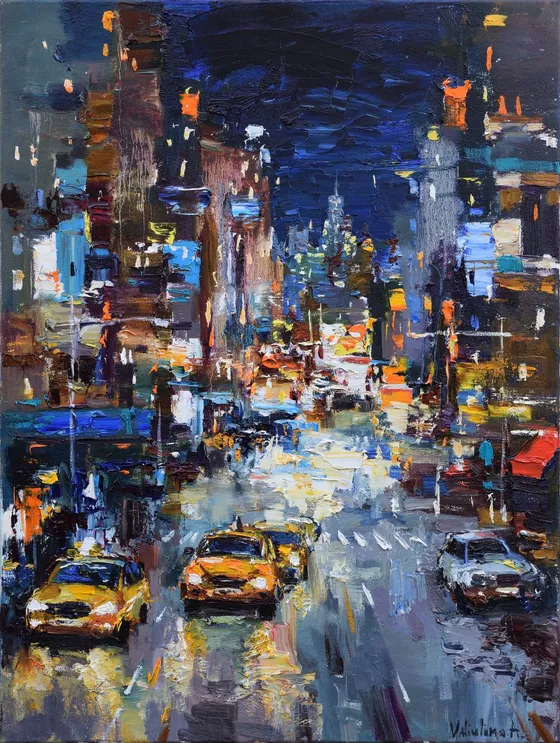
A canvas of flickering street lights;

A medley of moving cars.


With every warmly lit house,

There are families eating dinner;

Children laughing and singing;

People gathered together


But the windows stay the same;

Their artwork never changes. 


The same flickering lights,

Blink through the heavy sky;

Keeping workers in buildings

And families apart


When the city falls to sleep,

The painters keep painting;

A canvas with thick heavy layers

of the same chemical smell


A boy from a yellow lit house 

Gazes through his window,

And dreams of driving

A shiny bright car


But the windows stay the same;

Their artwork never changes


A girl from across the street

Stares at the peeling artwork,

And wonders if her distant family

Will ever come home.

My Thoughts on Finishing The Maze Runner

0

*No spoilers ahead*


First of all, what is The Maze Runner?

The first book in The Maze Runner trilogy is about how a group of boys living in a dystopian world have to learn to escape the maze that lies outside of the walls around courtyard they live in. The boys memories are all gone except for general knowledge and their names. The author of this series is James Dashner.


Initial thoughts


I was first introduced to The Maze Runner to one of my oldest friends, who said that he watched the entire series on a sleepover. I thought that the series had to be really good if somebody had watched the entire series in one night. So, next day when I was with friends in Chinook Mall, I picked it up. Just from the cover I could tell that the book was set in a dystopian environment, much like The Hunger Games. The cover itself had a very ominous and chilling theme about it.

Key characters

After diving in a little bit, I began to take note of some of the main and supporting characters:

Thomas: He is the main character of the book, in his first few scenes he is extremely scared about where he is and where his memories have gone. Thomas is seemed to be around 16-17 years old.

Chuck: He is a major supporting character in this book and aids Thomas throughout most of his journeys in this book. He is one of the youngest boys there and is around 12-13 years old.c Chuck acts as a little brother figure to Thomas that he never knew he needed.

Alby: He is also around 16-17 and is basically the leader out of all of the boys. He supports Thomas in learning his surroundings a bit.

Gally: He is a major antagonist who is the age of 15 and is shown as a bully to Thomas and Chuck.

Emotional appeal

This book appealed much to me emotionally with all of it’s heartfelt moments between Chuck and Thomas. It also appealed to me with some of its scary/suspensive elements like the plot of the maze and how to get out.

Writing style

The story often maintains a fast-paced style, with a twist or turn at the end of each chapter, which is often around 5 pages. James uses a great job of creating images in the readers mind with all of his vivid descriptions. The author also often uses dialogue to convey information to the reader and it drives the plot. Additionally, dialogue helps the reader to be familiarized with these characters and understand their personalities, which I know has helped me. Overall, the books writing style is very suspenseful and maintains an unnerving aura about it.

Wrap-up

Overall, The Maze Runner was a very enjoyable read from the start to end. It’s fast pace is what kept me entertained and it never slowed down. Many aspects of this book can be comparable to that of The Hunger Games. The protagonists are likeable and the antagonists are dislikeable. The amount of info the book doesn’t show the reader at the start just makes them yearn to read more, which I enjoy a lot. I recommend this book to anybody who enjoys the genre of dystopian, mystery, thriller, and action.


My K-Drama Recommendations of the Year!

0

It’s almost the end of the year! Good luck to everyone writing finals, and Merry Christmas! I’m coming to you with my top five k-dramas that I watched this year on Netflix. I’ve provided some details on the show, a rating, as well as a bit of reasoning on my rating.


K-Drama Title: Summer Strike

Description: Romantic, Intimate

Synopsis: A drama about voluntary unemployed Lee Yeo-reum and librarian Ahn Dae-beom, who declared a life strike, leaving a complex city and looking for themselves in a strange place.

Rating: 8/10

Reasoning: Summer Strike was a really mellow and quiet show. What I found so striking about this show was the relationships– the friendships and this quiet intimacy between the characters. The setting of the show added to its charm – the peacefulness of the empty library and the quaint countryside town. All around, the plot towards the end was really interesting and I liked the calm vibe of the show.


K-Drama Title: King the Land

Description: Swoonworthy, Romantic

Synopsis: King the Land tells the story of Goo Won (Lee Jun-ho) who is the heir of The King Group, a luxury hotel conglomerate, who was thrown into an inheritance war, and Cheon Sa-rang (Im Yoon-ah), a hotelier who always has a smile on her face till she meets Goo Won.

Rating: 8/10

Reasoning: King the Land is just a sweet, classic rom com. It is so lighthearted and wholesome, it’s funny, honestly– just a great escape from anything you don’t want to do. If you are looking for something short and sweet, a light-hearted romantic comedy– I would recommend this!


K-Drama Title: Daily Dose of Sunshine

Description: Heartfelt, Emotional

Synopsis: Determined to provide a ray of light for those under her care, a young nurse navigates the world of mental health and the diverse stories surrounding it.

Rating: 10/10

Reasoning: I binge-watched Daily Dose of Sunshine in one night. What I really liked about this show was how it showed mental health. It was an eye-opening show – the stories of people who struggled with mental health disorders made you sympathize with them and realize just how much stigma there is. Frankly, I was crying so much throughout the show– the stories of the patients could be so heartbreaking and what makes it crazy was that it was based on real stories. For me, the best part of this story was the main character, I related to her, I rooted for her, and I loved her story with mental health. Overall, an incredible show that I would recommend to anyone.


K-Drama Title: Celebrity

Description: Ominous, Drama

Synopsis: A young woman finds herself an overnight success and soon she’s a part of the exclusive world of celebrity influencers. But all is not what it seems, and she has a plan to reveal the deep, dark secrets around her fame… if she survives.

Rating: 9/10

Reasoning: The show was very ominous— I was second-guessing myself the whole time. The main character is amazing; she’s cunning and well-spoken- honestly really cool overall. What kept me watching this show was the plot twists- the layers of this influencer illusion being revealed was really cool- the betrayals, the back-stabbing, really tied this into a mystery/thriller.  


K-Drama Title: Hometown Cha-Cha-Cha

Description: Charming, Intimate, Feel-Good

Synopsis: A big-city dentist opens up a practice in a close-knit seaside village, home to a charming jack-of-all-trades who is her polar opposite in every way. Yoon Hye-Jin (Shin Min-A) works as a dentist. She is mostly a realist, but due to her rightfulness, which is only a tiny part of her mind, her life changes.

Rating: 9/10

Reasoning: Hometown Cha-Cha-Cha is similar to King the Land – a classic sweet romantic comedy, except with the big city to small town romance. That wasn’t what really kept me watching though, it was the stories- the stories of the townspeople and the story of the male lead – I cried so much and it just made the show absolutely exceptional. 


Currently, I’m watching Welcome to Samdal-ri – let me know your thoughts on it and any of the other k-dramas on this list. Thank you for reading, and enjoy your winter break! Merry Christmas!


Sources: 

The Ultimate Vacation: Parrotfish Poop Beaches

2.5hrs

With winter break coming up, I’m sure many of us have vacations planned to go somewhere nice, like Hawaii or the Caribbean, to avoid the harsh winter weather. We’ve all heard the typical luxury tropical vacation – wooden cabins, warm and humid climate, tropical fruit, clear skies, and most importantly, spending the days on a white sand beach.

Ahh, feel the salty ocean breeze graze your face as your toes curl around the warm grains of white sand. The purest form of luxury there is!

But did you know that white sand is made partially from fish poop?

Yes, those fine grains of white luxury under your feet, swept up by wind around your ankles. It’s the poop of a fish. A parrotfish, to be specific.

An Analysis of Natural White Sand

Many components, including as quartz mineral and calcium carbonate, make up the sediments we know as white sand. It is a mechanical heterogeneous mixture, or in simpler terms, a mixture of visibly different things. One of the main components, calcium carbonate, makes up to 70% of white sand, while the rest of it consists mostly of sediments of quartz and silica.

The 70% of calcium carbonate is the sand that comes from the rear-end of the parrotfish. The rest of the sediments are the result of crashing waves eroding away at nearby rock.

So… How Does it Happen?

Parrotfish spend the majority of their time feeding off algae growing on rocks and inside corals. This is a mutualistic symbiotic relationship because the parrotfish gains a consistent food source, and corals stay healthy and thriving.

The parrotfish is special in that its teeth are attached to each other, which allows it to scrape off algae tissue off of rocks and coral. In this process, it often also scrapes off pieces of rock and corallite (coral skeleton) and ingests it. To adapt, the parrotfish has a set of special tooth plates, called the pharyngeal mill, in its throat that helps it grind up the harder pieces.

These pieces of coral and rock are passed through the digestive tract, and since the parrotfish cannot absorb solid rock into its body, it excretes the ground up sediment into the water. This sediment makes up the calcium carbonate that we find in white sand.

Since parrotfish feed constantly, they produce a lot of sand. It’s estimated that a full-grown parrotfish poops out one ton of sand annually.

How Does This Affect Humans?

Parrotfish contribute to the well-being of the corals, which host up to 25% of the entire ocean’s diversity. Because we still don’t understand the vast majority of marine life, it is essential for us to preserve the diversity of the oceans to study the connections between different food webs. One in every four people depend on fish as a source of protein, so understanding marine biology on a deeper level is crucial in order to help sustain both human and marine populations.

As gross as it might sound, the parrotfish poop sand is also incredibly important to sustain land forms. Rising ocean levels force people living on tropical islands and in coastal regions to move progressively further and further inland. The sand that parrotfish produce help absorb the impact of coastal erosion and replenish foreshores that have been washed away.

The Effects of Ocean Acidification

Ocean acidification is a deadly side effect of climate change. Humans release massive amounts of carbon dioxide from our transportation, energy, and manufacturing industries. The carbon dioxide is eventually deposited into the ocean, changing its chemical structure and forming carbonic acid with the carbonate ions in the ocean.

Apart from the fact that this chemical reaction causes the acidity levels in the oceans to rise, killing millions of organisms, it also reduces the amount of carbonate ions available for different marine organisms to build their shells and skeletons with. Among these organisms are coral reefs. They build their skeletons from a chemical called aragonite, which is a crystallized form of calcium carbonate. They pull the calcium carbonate from the ocean’s natural contents of carbonate, but because the formation of carbonic acid has reduced the amount of carbonate available, there is less carbonate available to the corals. Their skeletons become weaker, which eventually causes them to release the algae inside of them in distress. The corals eventually die.

This has a disastrous effect on the parrotfish, which depends on the algae found in the corals as a food source. Not only will the parrotfish starve, but they will also not be able to produce as much calcium carbonate sand from ingesting the corallite since the coral skeleton is so much weaker.

What We Can Do

To mitigate the effects of ocean acidification on our marine ecosystems, food sources, and our beautiful white sand beaches, we must decrease the amount of carbon dioxide that we release into the atmosphere. Some ways we can do to reduce our emissions include:

  • reducing transportation by car
    • using public transit, biking, and walking are more eco-friendly!
  • saving electricity use!
    • turn off your lights when they’re not being used
    • unplug your devices from their charging ports when they don’t need to be charged
  • reduce use of single-use plastics
    • I know… nobody likes floppy paper straws. But they are much better for the environment than plastic ones. If they bother you that much though, why not just ditch the straws altogether and drink with your mouth?
    • do your best to avoid plastic cutlery. It tastes bad, it’s sharp enough to cut your mouth, it’s not financially intelligent, and it’s bad for the environment. Try to avoid it!
  • reduce idling cars
    • it’s so wasteful to have your car on idle when you’re only taking a ten minute trip to the grocery store. Why not just keep an extra blanket in there instead of using more gas to heat up your car than you do while driving it?

TL;DR

Parrotfish produce sand by scraping off pieces of rock and coral skeleton and grinding them up in their throats. The sediments then move through their digestive track and are eventually excreted. The sand that they produce is wildly beneficial to humans in the fight against coastal flooding and erosion, but thanks to ocean acidification, both the parrotfish population and their sand-production rate are dropping rapidly. Help protect our ocean life and our white sand beaches by reducing your carbon-dioxide emissions!

Sources: 1234

3 Must-Visit Spots in Calgary for Holiday Fun with Your Family

0


The holiday season in Calgary is a magical time filled with festive lights, joyful celebrations, and a plethora of activities for families to enjoy together. If you’re looking for memorable experiences in the city, here are three must-visit spots that promise to make your holidays merry and bright:

1. Zoolights at the Calgary Zoo

Winter wonderland at the Calgary Zoo’s annual Zoolights extravaganza. Every year, this amazing event turns the zoo into a twinkling paradise covered with over a million lights. Stroll through the enchanting displays, look at illuminated animal sculptures, and sip on hot chocolate as you explore the vibrant pathways. Keep an eye out for Santa, who often makes appearances to spread cheer among visitors. Zoolights is a perfect family-friendly outing that captures the spirit of the season and guarantees smiles.christmas lgihts

2. Heritage Park Historical Village

Experience the holidays in a nostalgic setting at Heritage Park Historical Village. This living history museum takes you back in time to the old-fashioned charm of an authentic western town. During the festive season, the park showers itself with festive decorations, offering visitors a chance to celebrate Christmas as it was  in the past. Take a horse-drawn wagon ride through snow-dusted streets, visit Santa’s workshop, and delight in seasonal treats like roasted chestnuts and warm apple cider. The Heritage Park’s holiday festivities are a delightful blend of history and holiday magic.3. The Calgary Winter Wonderland

Gather your family and head to the Calgary Winter Wonderland, a seasonal attraction that brings together the best of winter activities and family! From ice skating to snow tubing and even a charming holiday market, this event offers various activities suitable for all ages. Glide across the ice hand in hand, race down snow-covered slopes, and browse through stalls brimming with unique gifts and delectable treats. The Winter Wonderland is a hub of festive entertainment that promises a day filled with laughter, joy, and cherished memories.

The holiday season in Calgary is a time of togetherness and merriment, and these three spots display the spirit of the season perfectly. Whether you’re admiring the dazzling lights at Zoolights, stepping back in time at Heritage Park, or enjoying the winter festivities at Calgary Winter Wonderland, each location offers an unforgettable experience for you and your family.

Credits

Pixabay


Check Out These Exciting Movies Coming to Theatres in December!

As we come in the month of festivals and lights, it is also important to take care of yourself and relax after a long year of hard work. With that being said, going out to the cinema with your friends and family is the perfect time to unwind and enjoy some of the most exciting movies coming to theaters this December. You may all remember the craze surrounding the recently released The Hunger Games: The Ballad of Songbirds and Snakes. The public’s reaction to movies such as that helps us realize the power that visual art has in terms of creating connections with others, reflecting on important world ideals, and representing some of the greatest works of fiction on the big screen. Thus, here is a list of movies in December that you should definitely check out!

The Boy and the Heron 

Fans of Studio Ghibli will be thrilled to know that director Hayao Miyazaki has created another masterpiece filled with creative world-building and intriguing metaphors. The movie centers around the experiences of 12-year-old Mahito Maki, who is coping with the emotions associated with his mother’s death and the changes in his life when his father re-marries his mother’s younger sister. Set in Japan during the Pacific War, Mahito encounters a grey heron, Iago, who eventually descends him into an eccentric fantastical world. Filled with planes, a reference many other Studio Ghibli movies also have, thought-provoking narratives, and mystical characters such as a wizard and Parakeet King, this is a well-crafted coming-of-age movie riddled with the impacts of loss on an individual’s perception.

Wonka 

One of my favorite childhood activities was re-watching Charlie and the Chocolate Factory during winter break with my sister. From Willy Wonka’s mysterious origins to the Oompa Loompas’ catchy songs, being immersed in this storyline was always a magical experience. Regardless of which movie version of this story you enjoy, the recently released Wonka stars Timothée Chalamet, Hugh Grant, and others to tell you the backstory behind Willy Wonka’s career. Wonka presents a different side to Willy Wonka by depicting him as a young, sweet, and imaginative individual ready to conquer the chocolate empire, rather than the “mad-hatter” style person other versions show. Therefore, consider checking out this creative film if you would like to see the events leading up to Willy Wonka’s memorable personality and business endeavors!

The Colour Purple (2023)

Coming to theatres on December 25th, The Colour Purple is a profound musical about love and the hardships endured by African-American women in the South in the 1900s. It also comments on the importance of sisterhood and individuals’ journeys to independence. Based on the novel, The Colour Purple by Alice Walker is a powerful story that reveals harmful constructs in society and overcoming oppression.

Image Source:[1]

[1]/[2]/[3]/[4]/[5]

Got a lot of schoolwork?

0


We’ve all felt that surge of panic, that feeling, when it seems like the pile of schoolwork you have is starting to bury you alive. You want to start working on it, but there’s just so much. You start to sort through and prioritize your work, but then the thought of that interesting series you really want to watch enters your brain. The idea tugs at your mind. And you contemplate it because almost all of us would rather submerge ourselves in the problems and worries of someone else while letting our own sit in some dusty, forgotten corner of our brain. Then, something else enters the situation and starts to take over completely. A big blob of stress and alarm, none other than the Panic Monster. In the end, we end up getting barely anything done. In this post, I’m going to show you a few things you can do to motivate yourself to get your schoolwork done and avoid the Panic Monster as much as you can.

1. Pomodoro

This method sometimes works for me, but other times it doesn’t. Different things work for different people, so if you think this method will work for you, you should definitely try it. For this technique, you basically work for 25 minutes, and try to stay as concentrated and on task as you can during this time. Then take a five-minute break. When you reach your fourth break, make it longer, take a 10-15 minute break. Feel free to adjust these timings according to what is best for you. There are lots of Pomodoro timers online that you can use. Some are even connected to Spotify, so you can listen to music while you work.

Make sure you are a little strict with yourself. The thought of extending the break just a little longer may cross your mind. Instead, try to use this feeling to fuel yourself to finish your work as fast as you can.

2. Organization tools

If you’re someone like me, then sorting through all of your tasks, prioritizing them, and creating schedules and deadlines for yourself will motivate you to finish your work and help shove that Panic Monster back where it came from. I use Taskade (chrome extension) to do this, but you can use any deadline and time management app or extension. Notion is also a great tool. Though some of these tools may seem a bit complicated at first, after some time of using them, you’ll be able to navigate them easily. If you’re looking for simple, minimalistic software that’s easy to use, try the Todoist Chrome extension.

These are just a few ways to help motivate you to get your work done. Remember, everyone is different, but if you think these will be helpful, you can try them out. In the end, it’s up to you to figure out what works best for you. I hope this helps!

A Spectacular Sunrise

Do you like the sunrise? Personally, I think that they’re glamorous but ironically, I hate waking up early in the morning.

Try your best to imagine this: 

The sky is a mix of crimson red, pastel yellow, and vibrant orange, with a few white puffy clouds here and there. The red is a rich shade of blood while the orange pierces through the darkness like opening the blinds on a sunny winter afternoon. The beaming sun starts rising up and up and up making all the vibrant colours seem dull and soon begins to share some of its warmth with us. The sky is painted with every single warm shade from the colour wheel and is then slightly blended to make a gradient scene. Oh, look! A flock of birds is flying away in their special triangle formation. Look at them flap their wings and soar across the sky like ancient airplanes. Now try and feel the crisp, fresh wind rushing through your beautiful locks of hair. Feel it as it glides across your cheek, onto the bridge of your nose, and off the other cheek. Now use your nose. Do you smell the sharp aroma of pine trees in the distance with a mix of the sweet dewy air? Now add whatever you want to this scene to make it your own personally unique sunrise. 

When I think of sunrises, I think of them as a visual representation of motivation. When I see the beautiful mix of colours with the sun rays beaming down onto the moist green grass, I feel grateful for the opportunity to witness such beautiful, yet simplistic events with my own 2 eyes. I feel grateful that I can wake up to such a beautiful sight every morning, and start my day with the beauty of nature. Of course, each morning is not perfect – but that’s what makes each specific day so special. With each flaw and minor misfortune, we can differentiate the events of our lives. Of course, I hate it when something doesn’t go my way- but that’s what makes my life so much more memorable. 

I’m glad that I have a different day every day because repetition makes life boring. And who wants a boring life? So when you go to bed tonight, I want you to set an alarm for the early morning. When you wake up, open your window and witness the extraordinary events that take place outside of your window. Try and see if that imaginative story that I described above is true.

The beauty of nature is what makes our lives so much more beautiful.


CRISPR Cas9: The Gene Editing technology to treat Sickle Cell Disease

0

What is sickle cell disease?

Sickle cell disease is a type of inherited blood disorders which affects more than 20 million people worldwide. Sickle cell disease (SCD) is caused by a mutation in the amino acids which leads to a mutation in the individual’s hemoglobin. Hemoglobin is a protein that is found in red blood cells (RBCs) and helps to transport oxygen to different tissues and organs in the body. The abnormal and mutated hemoglobin caused by SCD results in the usually curved and round RBCs to turn into sickle or crescent shapes. These sickle cells have a reduced capacity to hold on to and deliver oxygen, so many organs and tissues in the body end up being oxygen deprived. The sickle cells also clog up the blood vessels and restrict blood flow which can lead to episodes of severe pain known as vaso-occlusive events (VOEs). The recurrence of these VOEs can lead to life threatening disabilities or sometimes early death.

Some already existing treatments for SCD include stem cell transplants or blood infusions, but these do not correct the underlying, genetic cause for SCD.

A new hope for patients with sickle cell disease:

On November 16, the United Kingdom (U.K.) approved a gene-editing therapy known as CRISPR-Cas9 to treat sickle cell disease. This therapy is known as Casgevy. Clinicians would administer this by taking blood-producing stem cells from the bone marrow, and use the CRISPR-Cas9 gene editing tool to target the part of the DNA in these stem cells that codes for the abnormal hemoglobin. The CRISPR-Cas9 gene editing tool uses an RNA (ribonucleic acid) molecule to locate a specific section of the DNA known as the BCL11A gene and uses an enzyme known as Cas9 to deactivate this section. The BCL11A gene is responsible for restricting the production of a type of hemoglobin that is only found in fetuses known as fetal hemoglobin. By deactivating this gene, CRISPR Cas9 boosts the production of fetal hemoglobin which is not affected by the sickle DNA mutation.

Before these genetically edited stem cells are infused back into the body, the patient undergoes a type of therapy that makes room in their bone marrow for these edited stem cells to go into. These stem cells then can produce red blood cells which carry fetal hemoglobin instead of sickle hemoglobin, and increase the supply of oxygen to the tissues.

Side effects of this therapy and cost:

Patients enrolled in this trial experienced side effects such as nausea, fatigue, fever and an increased risk of infection, but notable and major side effects were not reported.

The cost of this CRISPR Cas9 therapy for sickle cell disease, however, $2 million USD per patient, makes it unaffordable as of now for many people. The high price is likely because this is a new therapy. As more companies begin to manufacture this therapy, the higher competition would allow for the cost to decrease.

Conclusion:

I believe that CRISPR Cas9 has a great potential and provides hope for many patients who have sickle cell disease, and who until now, had no option but to live with the disease with only temporary medications. Even though CRISPR Cas9 gene editing is still a new therapy and there is yet a lot to discover of its potential, it can provide a cure for individuals living with sickle cell disease.

Sources:

https://www.nature.com/articles/d41586-023-03590-6

https://www.fda.gov/news-events/press-announcements/fda-approves-first-gene-therapies-treat-patients-sickle-cell-disease

Who Is a “Real” Santa Claus?

0

St. Nicholas, the real Santa Claus

The origin of the Santa Claus legend can be traced back several centuries to a monk known as St. Nicholas. Born around A.D. 280 in Patara, near present-day Turkey, St. Nicholas was highly revered for his piety and benevolence. He became the central figure in numerous tales. According to legend, he selflessly relinquished his inherited wealth and embarked on a mission to aid the underprivileged and ailing in the countryside. One particularly well-known story recounts how St. Nicholas rescued three destitute sisters from the prospect of being sold into slavery or prostitution by their father. He intervened by supplying them with a dowry, enabling their marriages to take place.

Throughout the years, Nicholas’ fame grew, earning him the title of the guardian of children and sailors. Celebrated on December 6, the anniversary of his death, his feast day was traditionally seen as an auspicious time for significant purchases or marriages. During the Renaissance, St. Nicholas rose to become the most widely esteemed saint in Europe. Despite the decline in saintly veneration during the Protestant Reformation, St. Nicholas continued to enjoy a positive reputation, particularly in Holland.

The Arrival of Sinter Klaas in New York: A St. Nicholas Tale in American Culture

St. Nicholas made his initial impact on American popular culture in the late 18th century. In December 1773 and 1774, New York newspapers documented Dutch families gathering to commemorate the anniversary of his death.

The moniker Santa Claus originated from Nick’s Dutch nickname, Sinter Klaas. It is a shortened form of Sint Nikolaas (Dutch for Saint Nicholas). In 1804, John Pintard, a member of the New York Historical Society, distributed woodcuts of St. Nicholas during the society’s annual meeting. The engraving’s background featured familiar Santa images, such as stockings filled with toys and fruit hung over a fireplace.

Washington Irving played a role in popularizing the Sinter Klaas stories in 1809 when he referred to St. Nicholas as the patron saint of New York in his book, The History of New York. As Sinter Klaas’s prominence increased, descriptions ranged from a “rascal” donning a blue three-cornered hat, red waistcoat, and yellow stockings to a man sporting a broad-brimmed hat and a “huge pair of Flemish trunk hose.”

A Global Celebration of Santa Claus

In the 18th century, Santa Claus in America wasn’t the sole St. Nicholas-inspired gift-bringer during the Christmas season. Similar figures and festive traditions abound across the globe. Christkind or Kris Kringle, believed to bring presents to well-behaved Swiss and German children, is a term meaning “Christ child.” This angelic figure often partners with St. Nicholas on holiday missions. In Scandinavia, the cheerful elf Jultomten was thought to deliver gifts in a sleigh pulled by goats. According to English legend, Father Christmas visits every home on Christmas Eve, filling children’s stockings with holiday delights. Père Noël takes on the responsibility of filling the shoes of French children. Meanwhile, in Italy, the tale revolves around La Befana. She is a benevolent witch who rides a broomstick down Italian chimneys, delivering toys into the stockings of fortunate children.


Article sources

Image sources


5 Exciting Things About The Holidays

At the end of every year, we have our well-deserved holidays. While we could all celebrate different things, the holidays are a very enjoyable time for all. In fact, two of the most popular holidays around the world are Christmas and New York. There are many exciting things that make a holiday as memorable as possible. However, in my opinion, these five things below make the holiday season one to remember.

1. Vacation

First, vacations are very common during the holiday season. For almost everyone, there is no work on Christmas day. Whether you and your family spend your vacation at home or somewhere else, having time away from the stress of normal activities is great for the holiday season. Having time off for the holiday season allows everyone to enjoy their well-deserved free time.

2. Gifts

Second, giving gifts and receiving gifts make holidays more memorable. Remember, the exchange of gifts is not a one-way road. While receiving gifts seems rewarding and pleasurable, giving gifts is just as fun. It not only shows that you care, but, almost always, there are some great reactions when giving gifts to a loved one. Embrace yourself during the gift-giving season!

Teddy bears around the bottom of a Christmas tree
Image by Juri Kivit from Pixabay

3. Time with family/friends

Third, spending the holiday season with family and friends allows all of you to spend quality time together. Ranging from feasts, movie nights, to simple board games, there is much to do with family and friends. The holiday season is the best time to spend quality time with loved ones!

4. Fireworks

Fourth, especially for the New Year, fireworks are often displayed in cities. Similarly to watching comets in the night sky, fireworks provide an incredible performance for everyone to watch. If you have the chance, watch the fireworks go the second as the New Year arrives!

Fireworks
Image by PublicDomainPictures from Pixabay

5. Food

On top of all of that, do not forget about the food. As everyone celebrates the holidays, having a feast with others is very common during the holiday season. The holidays are an excellent time to try new goods and/or throw huge parties. After all, the holidays are different compared to normal days.

Christmas cookies scattered on a plate
Image by Jill Wellington from Pixabay

With even one of these five exciting things, the holiday season is much more fun. The holiday season only happens once a year! Don’t let time pass by and enjoy the holidays!

Images: 1, 2, 3, 4

Source: 1

We Should All Be Feminists | Chimamanda Ngozi Adichie

0

Hello, I hope you are having a good day! This blog post is a summary of a recent TEDx Talk that I listened to, “We should all be feminists”, presented by Chimamanda Ngozi Adichie. She is a Nigerian novelist who has written internationally acclaimed works such as Half of a Yellow Sun, The Thing Around Your Neck, and Americanah. 

I’ve divided up the post into a couple of chapters; a summary of the talk, quotes that stood out, and further resources/readings on feminism. 

Summary: 

Stories from her childhood: 

Adichie recollects the memories with her childhood friend, Okuluma, whom she shared a deep relationship with. When arguing with Okuluma, it was the first time someone called her a feminist–but it was said with a negative connotation. In another story, Adichie recalls her childhood ambition to be the class monitor. Her teacher said that the person with the highest score would be the class monitor. Adichie obtained the highest score, however, the role of class monitor was given to a boy–with the second highest score, because he was male and she was female. 

Biological Differences,  Now and Then: 

Adichie observes historically, being physically stronger was a coveted attribute, where men would naturally take on leading roles. However, in this modern society,  she notes that this premise should be challenged.  Leadership roles are not acquired by the physically stronger individual, but by the individual who is more creative, intelligent, or innovative. Moreover, these characteristics are not affected by someone’s gender. 

What society has taught boys: 

Adichie eloquently states that society has made masculinity a cage, and boys are restricted inside of this metaphorical cage. She states that society has told boys to be afraid of vulnerability and that they must be strong and “manly”. Moreover, Adichie brings up the example of going on a date. Even with the same amount of money, the boy must pay for the girl to prove his masculinity. Even though the girl may have more money, society expects the boy to pay. Furthermore, Adichie says that society has created men with fragile egos; the more masculine someone is, the more their ego is inflated by society. When that is challenged, they are compelled to cling to it. 

What society has taught girls: 

Adichie surmises that this results in women catering to the delicate egos of men. Society pressures women to be smaller, to be less than men so they do not threaten the man. Adichie challenges the presumption– why should a man be threatened by a woman’s success? Adichie highlights common societal messages to girls such as maintaining their virginity, the fulfillment of marriage, and being quiet and modest. Adichie sums this up as teaching girls shame, teaching them being born female is something they are guilty of. As a result, Adichie notes that girls grow up unable to see their desires, grow up to silence themselves and make themselves smaller for others. 

Men and Women in Society: 

Adichie states that societal expectations have exaggerated the supposed roles of men and women. Adichie uses the example of cooking, where women are expected to know this essential skill but men are not. She questions this assumption and states that we should focus on the capability of a person rather than their gender and that we should focus on the interests of that person instead of their gender. 

Gender Expectations: 

Adichie brings up a personal anecdote, where she recalls a time when she wanted to wear something that was stereotypically proclaimed “girly” and feminine. She recalls that she was worried she would not be taken seriously if she dressed more feminine. Adichie compares the person she was before to the person she is now. She states that she will not subdue her femininity. She states that she has interests that are conventionally more masculine or feminine that make her happy. For that reason only, she chose to make choices on what she wears, and what she likes. Adichie strikingly notes, “The male gaze, as a shaper of my life’s choices, is largely incidental.”.

Key Quotes:  

  • “Human beings lived then in a world in which physical strength was the most important attribute for survival. The physically stronger person was more likely to lead, and men, in general, are physically stronger. […] But today we live in a vastly different world. The person more likely to lead is not the physically stronger person, it is the more creative person, the more intelligent person, the more innovative person, and there are no hormones for those attributes. A man is as likely as a woman to be intelligent, to be creative, to be innovative. We have evolved; but it seems to me that our ideas of gender have not evolved.”
  • “Each time I walk into a Nigerian restaurant with a man, the waiter greets the man and ignores me. The waiters are products of a society that has taught them that men are more important than women. And I know that waiters don’t intend any harm. But it’s one thing to know intellectually and quite another to feel it emotionally. Each time they ignore me, I feel invisible. I feel upset. I want to tell them I’m just as human as the man, that I’m just as worthy of acknowledgment. These are little things, but sometimes it’s the little things that sting the most. ”
  • “I am angry. Gender as it functions today is a grave injustice. We should all be angry. Anger has a long history of bringing about positive change; but, in addition to being angry, I’m also hopeful. Because I believe deeply in the ability of human beings to make and remake themselves for the better. ”
  • “We must raise our daughters differently. We must also raise our sons differently. We do a great disservice to boys on how we raise boys, we stifle the humanity of boys. We define masculinity in a very narrow way, masculinity becomes this hard, small cage and we put boys inside the cage. We teach boys to be afraid of fear. We teach boys to be afraid of weakness, of vulnerability. ”
  • “The problem with gender is that it prescribes what we should be, rather than recognizing how we are. Now imagine how much happier we would be, how much freer to be our true individual selves if we didn’t have the weight of gender expectations. ” 

To end this post, I provided a few resources on feminism. Every day, gender’s nuance and complexities affect everyone’s life. So please take the time to learn more about it to gain awareness and contribute to positive transformations in our society and culture. Thank you for reading and have a nice day!

Further Resources and Reading: 

Books: 

  • Bad Feminist by Roxane Gay
  • This Bridge Called My Back by Multiple Writers
  • The Handmaid’s Tale by Margaret Atwood

Films: 

  • On the Basis of Sex
  • Little Women
  • Thelma & Louise

Prominent Feminists: 

  • Emma Watson
  • Alexandria Ocasio-Cortez
  • Tarana Burke

Source:

The History of Science

A field of study that dominates more than thinking

Science is a field that everybody comes into contact with, in one way or another. For example, in the winter, people living in most countries require furnaces to heat their homes. The furnaces all undergo combustion reactions, which require extensive study into various chemical reactions to invent the products that meet people’s needs. Chemistry backs simple concepts such as baking cakes, creating bubbling shampoos, and powering homes through electricity. On the other hand, Physics accounts for the seamless integration of the modern world’s technology, only achievable through our geo-locating satellites. Today, we are going to dive deeper into the historical development of Science, and how it emerged to be such a fundamental branch of study.

The Historical Emergence of Scientific Thinking

People haven’t always thought in the modes of rationality or believed in the practical usage of new scientific inventions or discoveries. The development of what we think as modern science first developed in Europe, with England and France being the major players. The period in which scientific thinking became dominant in day-to-day life was known as the Scientific Revolution.

Before the Scientific Revolution and throughout most of the Middle Ages, Europe was especially subject to only believing in the ideas of the Catholic Church. Concepts regarding predestination, as well as bureaucratic rules and rituals stressing the practice of religions, suppressed any effort to promote change to the system. Some classical figures, like Aristotle and Ptolemy of the Roman Empire, dominated university studies even as late as during the Renaissance, with their pre-established “theories” about the world. Such theories are often considered as being downright silly by us today, like the Geocentric model of the universe, or the belief that organisms appear out of thin air. 

The Early Scientific Revolution

Historical events like the Renaissance and the Christian Reformation movement of the 1600s created reverberating effects across Europe, bringing about newer modes, and the freedom, of thought. The first Science area of massive new development was in astronomy, with Copernicus taking the lead in challenging the Geocentric model with the radical idea of the planets revolving around the sun instead. Later on, physicists like Newton broadened humanity’s perspectives of Physics and Calculus.

With the coming of the 1600s, we see more and more nations actively supporting the development of scientific ideas. At the time, science was viewed as a high-end field of practice, and organizations like the Royal Society of London were established to foster communications between groups to debate new and exciting discoveries. The conflicts between France and England were what largely drove this scramble for discovery, as both  countries wanted to gain the upper hand in the field. 

Concepts of the Scientific Revolution

A widely accepted concept of Science in its early stages of development was mechanism, or the belief that there are logical, rational patterns in the universe that adhere to undisputed laws. It challenges the notion that the world was created by God and is relatively young. An example of mechanism being demonstrated is that astronomers like Galileo did  experiments, laying groundbreaking work about the acceleration of physical objects. Also, early Scientific Revolution figures like Francis Bacon and René Descartes established the concept of the Scientific Process together, through their works. Like mechanism, the Scientific Process also stresses experimentation, and the usage of human observation to make sensible conclusions and theories about our world. 

Galileo, one of the early pioneers of scientific thinkers.

Image by Gordon Johnson from Pixabay.

The breakaway of the Church is also paired with the independence many scientists sought from their governments as well. With this, the theory of political science emerged, questioning and critiquing the different methods of governing. Political scientists, like John Locke, examined the nature of humans and attempted to draw reasonable conclusions from social environments and political situations. It is, therefore, highly important to note that science is not just about exploring the natural world, but the human society as well. This branch of Science will eventually make its way into the Enlightenment, influencing practical reforms made in other fields, like economics and law. 

As Science broadens in support, making its way into the middle and lower classes of thinking, it also finds itself being spread to many other places around the world, like the Americas, where the Europeans have established colonies. Today, Science is truly one of the strongest forces that lead to cooperation between nations toward a common goal. If you are interested in learning more about the historical development of Science, check out this link: Britannica Article

Some Last Words

All in all, Science is a subject that ties in with all other fields, because its method of rational thinking, trained toward making advancements for the human society, can be applied to all other branches of study. Personally, I am both satisfied and glad that the Scientific Revolution happened and can produce the dynamic world we have today, much unlike the uniform, traditional world of the 1500s. Science is a field that is continuing to grow, but perhaps, by looking at how it originated in the relatively modern world, we can understand it better and appreciate it more. 


(Featured image source: Image by Arek Socha from Pixabay)

A True Friend – A short poem

They’re the ones who laugh and giggle with you

They’re the ones who weep and whine with you

They’re the people who you talk for hours and hours to

The ones who are always there for you

Friends make life worth living

For they make any boring time enlightening

A friend is like a treasure, for friendship is a gift

A friend is someone who fills your life with happiness and grace

They’re the ones who make our world a better place

A friend is like a star that twinkles and glows

Or like a serene ocean that gently flows

A friend can even be like a roller coaster of excitement

Because they can make your life so much more magnificent

But it takes much more than “caring” to be a friend

It required a careful blend of love and compassion and trust until the end

A friend is someone you can be your true self around 

You can say stupid things and be dumb and silly instead of acting like you’re profound

They’re the ones who will fight and scream and argue for you

The ones who will be right by your side when you’re feeling blue

A friend is someone who won’t throw me under the bus

A friend is someone who won’t leave me in the dust

A friend is someone who I can truly, truly trust


Let’s appreciate our true friends for they’re the ones who will stay with us until the end.


Where Thoughts Control Machines Via Brain-Computer-Interface

While growing up, did you ever dream of a world where your thoughts could go beyond the boundaries of your mind and seamlessly control the devices around you? Perhaps you envisioned a scenario where, while watching a Minecraft YouTube video, you could effortlessly skip that one tiresome ad with the sheer power of your thoughts. Well, the future has arrived, and it’s not just the stuff of childhood fantasies. Welcome to the realm of Brain-Computer Interface (BCI) technology, where the extraordinary has become a reality, allowing us to tap into the incredible potential of our minds in terms of interacting with the digital world.

The allure of BCI technology began with the idea of controlling machines through thoughts, evoking the sci-fi charm that resonates with our childhood dreams. My fascination traces back to my first time watching the film Matilda, and seeing her wield telekinetic powers–effortlessly toggling lights, flipping book pages, and instilling fear in Ms. Trunchbull. This childhood desire for extraordinary abilities stayed with me. As my childhood contained an unhealthy amount of PopularMMO videos, I remember sitting at my television watching one, when a persistent ad disrupted my viewing. In an attempt to skip it with just a thought, my eyes strained in hopeful anticipation, yet the ad continued–I sheepishly picked up the remote and skipped the ad, and this short moment of embarrassment was shared with none other but myself. While my initial interest in mind-machine connection took a backseat along with that story, it has now managed to reach its peak as I recently delved into the fascinating realm of BCI Technology, which I’m more than excited to share.

BCI technology is a research topic that is quickly growing due to its potential to help people who have mobility difficulties due to conditions such as cerebral palsy, stroke, or spinal cord injury by either replacing or restoring useful functions. Essentially, Brain-Computer-Interfaces capture signals from the brain, figure out what they mean, and then use that information to control devices so they can perform specific tasks–it has been very useful as it enables individuals who cannot speak or use their limbs to communicate or control devices that may assist them. By decoding neural signals associated with language and commands, these BCIs open doors to a world where thoughts are translated into words through devices, enabling individuals to express themselves and communicate their needs effectively. 

The first applications of BCIs relate to Locked-In Syndrome by providing a means for communication and interaction for individuals with complete paralysis. Locked-In Syndrome is a neurological condition that is characterized by complete paralysis of voluntary muscles in nearly all parts of the body, however are typically still cognitively aware. These BCIs enable users to convey thoughts and express themselves through brain signals, addressing the communication challenges associated with Locked-In Syndrome. 

Another benefit of BCIs is their ability to allow users to receive real-time information about their brain activity–this form of cognitive training is extremely promising for enhancing attention, mitigating anxiety, and improving overall cognitive function.

BCIs come in diverse forms, each tailored to specific needs and applications. Non-invasive BCIs, such as those utilizing EEG, allow for mind-machine communication without the need for surgical procedures. On the other end of the spectrum, invasive BCIs which employ implanted electrodes offer extreme precision, which brings us closer to the seamless integration of mind and machine. While Brain-Computer-Interface is a cool thing to say, it isn’t just about fancy words and technology–it’s about giving power back to people who need it most.

In the realm of mind-meets-machine, Brain-Computer Interfaces are rewriting the script. From childhood dreams of mind-controlled gadgets to the reality of today, BCIs are not just tech; they’re a lifeline to some individuals. The ability to decode and interpret brain signals for communication and control of devices has already proven to be a transformative force. However, it’s important to acknowledge that the field of BCIs is still growing, and the potential of this field along with the numerous challenges ahead are a lot. As scientists continue to explore and refine this technology, there is a huge amount of research, innovation, and collaboration to be done. So while we may not yet have the ability to skip a Youtube ad with a mere thought, the high likelihood of such a thing underscores the exciting potential that lies ahead.

Bibliography:

Kübler, A. (2019, May 29). The history of BCI: From a vision for the future to real support for personhood in people with locked-in syndrome – neuroethics. SpringerLink. https://link.springer.com/article/10.1007/s12152-019-09409-4#:~:text=In%20the%201970s%2C%20Jacques%20J,build%20a%20working%20BCI%20(Fig. 

Shih, J. J., Krusienski, D. J., & Wolpaw, J. R. (2012, March). Brain-computer interfaces in medicine. Mayo Clinic proceedings. https://www.ncbi.nlm.nih.gov/pmc/articles/PMC3497935/ 

What is BCI?. Cumming School of Medicine. (2023, July 10). https://cumming.ucalgary.ca/research/pediatric-bci/bci-program/what-bci