
Home Blog Page 54

PAWS for Thought: Science Behind the Mental Health Benefits of Pet Ownership

0

As a dog owner, I am very grateful for the unconditional love that my dog provides me and that, sometimes, it emotionally helps me by decreasing my stress and sadness. However, is it scientifically supported that pets offer mental health benefits?

In the past decade, NIH partnered with Mars Corporation’s WALTHAM Centre for Pet Nutrition, funding studies on human-animal relationships. Dr. Layla Esposito, overseeing NIH’s Human-Animal Interaction Research, emphasized variability in pet benefits. No one-size-fits-all solution exists due to diverse animal traits and individual needs. Research aims to gauge subjective bond quality. Yet, numerous studies reveal pets’ positive impacts on stress, ADHD, autism spectrum disorder, and even diabetes management.

Stress and Anxiety

A well-known fact is that animals can serve us with comfort and support. Therapy dogs are often brought into nursing homes or hospitals to decrease the stress and anxiety levels of the patients.

The physician and researcher at the NIH, Dr. Ann Berger, quoted that “Dogs are very present. If someone is struggling with something, they know how to sit there and be loving,” and “Their attention is focused on the person all the time.” As Berger works with people who have cancer and terminal illnesses, she teaches them about mindfulness. She highlights that mindfulness can be formed with attention, intention, compassion, and awareness to help decrease stress and manage pain. Consequently, these foundations are all found in animals, and she emphasized that while people have to “learn” mindfulness, animals learn naturally.

The decreased levels of cortisol (a stress-related hormone) and lower blood pressure resulted from the interaction between humans and animals. Reduced loneliness, increased feelings of social support, and boosted mood from human-animal interactions from other studies, too.

ADHD

A study showed that children with Attention-Deficit / Hyperactivity Disorder (ADHD) can focus their attention more with the help of dogs. Researchers divided children diagnosed with ADHD into two groups; the first group read to a therapy dog once a week for 30 minutes, while the second group used dog-looking puppets for a 12-week group therapy session. The results determined better social skills, more sharing, cooperation, volunteering, and fewer behavioural problems in the first group, where children read to real animals.

Autism Spectrum Disorder

Another study showed that calmer attitudes resulted from children with autism spectrum disorder while playing with guinea pigs. Their anxiety levels decreased when they spent a supervised group playtime with guinea pigs in the classroom for 10 minutes. Researchers observed better social interactions and more engaging attitudes with their peers as well. The researchers emphasized that the calm comfort to the children came as animals offered unconditional acceptance.

Diabetes

Unexpectedly, a study shows that teenagers with diabetes can manage their disease better by caring for fish. The research process consisted of a group of type 1 diabetes-diagnosed teenagers feeding, checking water levels twice daily for a pet fish, and changing the tank water weekly. They paired this process with  reviewing blood glucose logs with their parents which maintain their health.

Many studies have shown that animals can positively influence human health. However, NIH/Mars funds also highlighted that animals can feel stressed and tired. Knowing these signs of stress and their importance in a private space is critical.


Article Sources: 1 / 2 / 3 / 4

Image Sources: 1 / 2 / 3

A Moral Freeze – On the Rainy River

In life, we have certain situations that are beyond our control. However, the choices that we are able to make on the forefront of these situations determine the rest of our journey. Therefore, it’s the ability of choice that develops our life – but how are we able to discern the right one?

That’s what leads us to “a moral freeze” or an inability to make a definite decision. What if we do, or what if don’t? Or as Shakespeare puts it, “To be or not to be, that’s the question.” We will never know the right answer, but literature is one of the only means to be able to explore this sense of moral confusion.

“On the Rainy River,” is a short story by Tim O’Brien, which explores a young man’s story on choosing between being drafted into the Vietnam War or fleeing to Canada to evade it. His conviction wants him “to make a break for it.” He feared being in a war that he did not believe in, and he could not “chose his own wars.” At the climax, he comes just feet away from the shoreline of Canada on the Rainy River, but he ultimately cannot make the move to go to the other side. The author ends the story on the lack of courage the narrator had, he “was a coward. [He] went to war,” and telling the story untimely 35 years later. The sense of a lack of courage and moral paralysis that the narrator faces, is exactly what models real-world dilemmas today – the conflict between doubts and convictions, and the strength of emotional courage in determining decisions.

The powerful quotes in the book really allowed the readers to explore this journey alongside the narrator. Having said this, here are a couple of key quotations apart of understanding the story:

  • “The only certainty that summer was moral confusion “
  • “an ordinary kid with all the ordinary dreams and ambitions, and all I wanted was to live the life I was born to”
  • “My conscience told me to run, but some irrational and powerful force was resisting like a weight pushing me toward the war. What it came down to, stupidly, was a sense of shame.”
  • “My whole life seemed to spill out into the river, swirling away from me, everything I had ever been or ever wanted to be.”
  • “I saw faces from my distant past and distant future. I tried to will myself overboard. I did try. It just wasn’t possible”
  • “I would go to war – I would kill and maybe die – because I was embarrassed not to.”
  • “look on in absolute silence as we live our lives, as we make our choices or fail to make them.”
  • I survived but it wasn’t a happy ending. I was a coward. I went to war.

As you reflect on these moments, I would like to leave you with one last quotation for understanding the “moral freeze” or “paralysis of the heart” that comes in these situations. The author does this by trying to pull the audience into the story, “Would you jump?” I will leave you to think what your choice would be.

Sources: 1

Bullying: “He Held a Knife to My Throat”

He was in Grade 8 when his fellow student put a knife towards him. 

“He held a knife to my throat.”

Bullying in Schools

According to Indicators of School Crime and Safety: 2019 and 2017 Youth Risk Behavior Surveillance System, around 20% of youths between the ages of 12 to 18 experience bullying. For students between Grade 9 to 12, around 19% of them reported being bullied in school. 

Bullying refers to the action of humiliating or insulting others intentionally. This can include physical insult, mental humiliation, or social exclusion. For example, one of the most common ways that one can be bullied is being hit or punched by the bullies. Physical, mental, and social bullying are equally unacceptable in their malicious intent to hurt someone repeatedly. In the research from the US government, it is shown that the bullies are more often perceived as “having more money”, “having more social influence”, “having the ability to influence others’ perception” of the victims, and “having stronger physical stature or abilities.” 

flat screen computer monitors on table

Bullying can happen anywhere. It can happen in the hallways, in the washrooms, in the corners of a street, or even online on the internet. It is important to notice that anyone is under the risk of being bullied, even though the victims themselves may not even notice it – they may be, out of no reason, become excluded from social cliques and groups in the school. 

As an experience that can severely harm an individual’s self-esteem, other self-perceptions, and even their social stance in their schools, bullying is certainly not a pleasant phenomenon to be seen. 

In the example in the start of this blog, this bullying incident was reported in October 2019 by CBC News. The victim was Austin deBussac, who appeared to be one of the many – many – victims of bullying. According to this report by CBC News, “13 percent of survey respondents said they were threatened with physical violence involving a weapon at least once from kindergarten to Grade 8.” More shocking to see was the prevalence of bullying in the province of Alberta: “In Alberta, it was 15 per cent. And among male students in Alberta, it was 22 per cent — more than one in five.”

white and red car illustration

As for the incident where his schoolmate put a knife to his throat, as Austin himself reflected after growing up, he “honestly didn’t believe him at the time when he said he was joking around.” 

This event left, in Austin’s memory, an almost traumatizing mark ingrained in his heart. Terrifyingly this was not a single case – as shown by the statistics, it is about time for all of us to raise our attention towards bullying as a widespread problem in our schools. 

a red sign that says no to bullying

What should you do when you are bullied?

Throughout recent years, public attention to bullying has risen significantly.

Now victims and parents of victims can reach out to a variety of support sources to help them combat the traumatizing effects bullying does. For example, the Alberta government has a website dedicated towards providing help for bullying victims. With this supportive program, victims can chat with a professional to learn information such as how to stay safe and the correct measures to take when being bullied. 

The website link is here: https://www.alberta.ca/bullying-find-supports

Whenever an individual feels sad, depressed, or even desperate because of bullying, it is important to remember that there are always help and support that are available.

Sources 1/2

Scientifically Proven Most Effective Study Method

0

Many subjects in school require memorization to succeed in that course. However, we often question whether we use an “effective” memorizing method. If you clicked to see this post, no worries! I have got you a “scientifically proven” most effective method for memorization in studying.

Active Recall

Scientific research analyzing the efficiency of ten different study methods determined that re-reading, highlighting, and summarizing notes, also known as passive study techniques, showed that this method barely engages memory retrieval during the test. Specifically, they found that re-reading the notes ranks as one of the most ineffective ways to study and retain long-term memory (Dunlosky et al., 2013). 

Active recall, also known as active retrieval, is an effective study method that retrieves information from your brain. It involves creating questions based on certain units and repeatedly testing yourself on those questions. This process will force your brain to recall the information and ensure you retain the information in long-term memory. Along with increasing the possibilities to memorize certain information, it also makes you aware of topics that you are weak in.

Scientific evidence

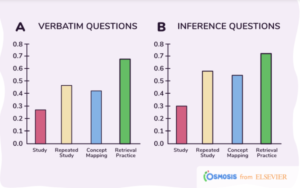
These three studies show that the active recalling method resulted in the most successful scores from various types of questions as shown in below graph (Dunlosky et al., 2013; Karpicke & Blunt, 2011; APA PsycNet, n.d.).

(Owen, 2022)

How to Active Recall?

Flashcards:

Through the use of flashcards that have the answer on one side and a question on the other, students push themselves to try to remember the material. They can still go over the required content if they don’t succeed in doing so. According to scientists, making an effort to recollect information strengthens and develops memory pathways. Later on, it will be simpler to remember the details, thanks to this.

Writing questions when note-taking:

Writing questions that refer to the contents while taking notes will allow you to actively recall instead of just passively reading the notes. The format of the “Cornell note-taking method” will help you make a note for active recall as you can write questions in the left column of your notes. I have already written about some note-taking methods, including Cornell methods, on my past blog. So, I hope you can check this out, too!

Practice questions:

This also gives you an opportunity to test your brain and help commit things to memory through active recalling. The purpose of this is not to get everything right but rather to make your brain get used to the process of recalling certain information. 

Become a teacher:

Act like you are a teacher who has to teach students who do not know anything about this topic. By doing so, you will be able to access the information and even small details through active thinking. If you think you are lacking in some parts of information, or your audience thinks some parts are lacking, encourage them to explain more about those certain parts. This process will make you actively think about your weaknesses and retain them in your memory for your exams. Along with this active recalling, by speaking out like a teacher, the study by Lafleur and Boucher determined that oro-sensory (the feeling when speaking) review improved the memory of spoken forms and resulted in repeating words aloud memorized better than studying the words silently. Thus, we actively recall and use our oro-sense, which can help you enhance your memorizing skills. 

Of course, these methods may not work for everyone, and each person might have the best studying method that they have. If you do, trust in yourself and follow them! I hope that this blog post helped people who are searching for a new effective studying method or who want to explore other studying methods to just try! Who knows, this scientifically proven way of studying might help you in semester 2!!

Image Sources:1 / 2 / 3 / 4

Article Sources: 1 / 2 / 3 / 4 / 5 / 6 / 7


Malnutrition in Our World

0

Featured Image by Petra from Pixabay

A Serious Problem in Our World

According to the World Health Organization, a department of the United Nations, Malnutrition is defined as “deficiencies or excesses in nutrient intake, imbalance of essential nutrients or impaired nutrient utilization.” It has been reported that about 1.9 billion adults around the world are currently overweight, which is even more than the 462 million that are underweight. Malnutrition affects people of all age groups, particularly children, as about 149 million children less than 5 years of age are not tall enough for their age. This is a result of the lack of food required for the body’s positive development and growth. 

Because malnutrition is such a serious problem in our world and is not resolved even in the present times, I have decided to write about it to inform the broader public about its serious consequences for all those it affects. 

The Different Types of Malnutrition

The four general groups of undernutrition are wasting, stunting, underweight, and deficiencies in vitamins and minerals, as clearly defined on the WHO website. Note that all of these terms are scientific, and none of them is meant to be derogatory to those who have malnutrition.

Wasting refers to the severely low weight a person may have, most likely caused by an infectious disease that caused them to lose the ability to absorb nutrition, such as diarrhea, and instead quickly lose body weight. If such conditions are not treated, there is a relatively high risk of death. 

Stunting refers to the low height that a child has when compared to the average in their age group. This type of malnutrition is more related to poor socioeconomic conditions, and the constant, chronic lack of access to food. The saddest part of this type of malnutrition is that children are often prevented from growing a healthy body (which is totally within their rights), and often will be cognitively impaired. 

Obesity as a Form of Malnutrition

Believe it or not, malnutrition not only happens through the form of being underweight. As long as a person lacks any form of nutrition at all, they are considered to have the condition of malnutrition. For example, people who are obese often consume an excess of carbohydrates and fats, but sometimes not enough vitamins or minerals like iodine or iron. People who are obese, but lack such minerals also are considered as having malnutrition. 

Response to the Malnutrition Crisis

Locally, many food banks can be found in each major Canadian city. On a more international scale, the WHO listed out the 2016-2025 goals in its initiative of the Decade of Action on Nutrition. It calls for many goals, including preparing health systems so they can better account for nutrition needs and taking steps to make sure that trade and investment policies are supporting growing nutrition. Of course, the United Nations alone isn’t able to solve all of the problems in our world. The Canadian Government Canadian Malnutrition Task Force also holds regular meetings and establishes work groups specifically developed to support kids in our nation. It truly takes the effort of everyone and all organizations to make breakthroughs to counter the serious crisis of malnutrition.

Body Shaming: “With your size, you’re never getting a date.”

It seems like a societal trend, almost, for girls and boys from popular media platforms such as social media and magazines to be following some kind of invisible standards: girls slim and fit, boys muscular and strong. 

Yet as most of us already notice in our everyday lives, this cannot possibly be the case for most in real life. However, such invisible and unexplained, yet popularized standards are often placed on many individuals. 

Shaming one for not having the “perfect” shape, stigmatizing individuals for not fitting into the “correct” size… the phenomenon of fat-shame bullying is increasingly appearing in a variety of scenarios – on the internet, on social media, and even at home.

topless woman with black panty

What is Fat Shaming (or Body Shaming)?

Fat shaming, or body shaming, is the act of humiliating someone for their body shapes and physical appearance – this can include negative and insulting comments and statements about someone’s shape and body size. 

As a common misunderstanding, body shaming not only occurs to individuals who look overweight; those who look underweight are also at risk of bullying and stigma. 

person's left hand wrapped by tape measure

Why is body shaming harmful?

Body shaming is, undoubtedly, a type of bullying. Bullying is any intentionally malicious act towards anyone. Some may argue that by body shaming someone, this means this person is constantly receiving reminders of his or her body size or shape and therefore can be motivated to change their weight. However, instead of being a form of motivation, this body shaming, as suggested by an increasing amount of scientific and psychological evidence, is extremely harmful. When individuals consistently receive the message “my body is terrible”, they will become increasingly ashamed. This might make victims more inclined to consume an increased amount of food and calories. 

For the victims who have to face a situation of body shaming, this experience is certainly very humiliating. It can even lead to mental health disorders.

a woman with a tattoo on her back saying skinny shaming is not okay

Conclusion

Regardless of whether or not it’s well-intended health reminders or simply commentary for body sizes and shapes of others, there exists an ultimate bottom line that serves as the border between statements that are kind and discriminative.

It is immensely important for us to be clearly aware of the fact – that body shaming, being a type of bullying, has the potential to create a traumatizing experience for others. Keep this in mind – that body shaming is a form of bullying that should not be tolerated in any case. 

If you’re ever unsure of whether or not your comments might be any kind of bodyshame, even if your words are well-intended, just remember: it’s best to just choose not to comment on others’ body shapes because you never know what someone else is going through.

On the other hand, if someone starts a body shaming commentary towards you, it is also significant to keep in mind that the bully – not you – should be ashamed.

bathtub with water and flowers


Society of the Snow: The Story of Uruguayan Flight 571

0

Viewer discretion is advised: This film contains references to cannibalism, graphic images, and mild sexual content.

Plot:

Based on a true story, ‘Society of the Snow’ depicts the gripping story of Uruguayan Flight 571. In 1972, carrying 45 passengers and crew, flight 571, en route from Montevideo, Uruguay, to Santiago, Chile, crashed in the Andes Mountains.

The movie follows the survivors’ struggle to survive. Stranded in the alpines, the survivors battled extreme cold and high altitudes, leading to desperate measures for survival, including cannibalism. This is the story of Uraguyan Flight 571 and their 72 days in hell.

Opinions:

Unlike most other aviation movies, ‘Society of the Snow’ is a glimpse into the horrid experience endured by the passengers of flight 571. The general movie and actors were able to successfully embody the panic, stress and struggle of the survivors. The actors have demonstrated a significant achievement by skillfully portraying such complex emotions associated with survival and human instincts, which for victims of a plane crash became apparent during their most challenging moments. Watching the movie alone brings you to a state of panic for the characters and allows you to travel with them through the experiences, as well as making you feel immensely grateful for your own surroundings. Overall personally, this movie was a 10/10 experience, while educating me about a tragic and unfortunate event. Highly recommended!

Photo Credits: Unsplash

The Beauty of Winter

0

Can you believe it’s already 2024? I can’t. I can’t believe its almost spring. I know a lot of people detest the winter, and I get where they’re coming from. Arctic winds and biting cold temperatures that can give you frostbite? Yeah. Not the most pleasant thing ever. But as someone who only moved to Canada about a year and a half ago, I love the winters. Despite the freezing conditions, there is beauty to it, like every other season. Just looking outside at the layer of snow calms me down. Untouched snow is even better, a blanket of shimmering white, coating everything, even the rooftops and the trees. I even go out of my way to avoid stepping on snow that hasn’t been touched yet. Is it just me or does anyone else do this too? And to think snow is just some frozen water. But now wondering about it, every form of water is beautiful, from puffy clouds to aqua waves on golden sand.

Winter has its fun to it, of course. Sledding and other outdoor activities in the winter are nice. And curling up in a fuzzy blanket while sipping a warm drink is just a whole other feeling. But it also has a deeper meaning behind it. Winter is often associated with hardship and sorrow. Animals stock up on food and prepare themselves, some hibernating, others migrating to warmer places. Snow falls, snowflake by snowflake, engulfing everything in a sea of white. It seems as though all signs of life have disappeared. But just like the winter, any difficulties and hardships we face in life are not permanent. Slowly and slowly, the snow melts away, and the landscape grows into something more beautiful than ever. With flowers blooming from every tree and the grass a lush green. Just like we will learn from those challenges and emerge from them stronger.   

If you’re one of those Calgarians that wished they lived somewhere warmer, as someone with experience, I can tell you that people who live in sweltering hot places and barely ever see snow, are wishing for the Calgary winter we have. In just some time, it’ll be summer again, and we’ll be burning under the Calgary sun, and maybe even wishing for the snow to come back. Which is why it’s important to appreciate right now, and also appreciate every season, because each one brings a different kind of beauty and a different kind of joy with it. 

The Silence of the World – A Creative Memoir

0

A single breath; the brush of an olive branch; the peace after a rainstorm. Have you ever heard the sound of silence? 

The sound of empty thoughts and eyes that wander? The everlasting echo of earth’s lullaby? It’s a beautiful song only you can find. 

Take a walk in the rain at night, and feel each step sink into the ground. Feel the grass and mud beneath your boots. Listen to the raindrops that drip down your coat. Can you hear the sound of silence?

It’s a moment where your thoughts explore your surroundings, and your eyes wander the depths of the earth. You’re left to roam, explore, and breathe. Find yourself here once in a while. Listen to the silence of the world.

Take a walk in a busy city. New York, maybe. Or perhaps downtown Toronto. Or even Calgary during the Stampede. Let yourself pause for a moment. Hear the medley of distinct voices mix into one buzzing sound. Watch the people walk in clusters – their bright and dull colors shining against one another. Grim and cheerful faces mixed within the crowd—the old and the young; the tired and the lively. 

What do you perceive? As you watch them move, you must stay silent. Let your thoughts focus on only what you see. Now you can hear the earth’s song of silence.

When we stop to hear our surroundings, we let go of our worries for a moment. We feel the fresh air fill our lungs. We breathe a little deeper. 

The silence of the earth is a melody of sounds. Trees bristling against a cold winter wind, or the distant chatter of a crowded street. It’s silence because you let it be. You observe. You listen. You learn. 

I want you to hear the sound of silence. 

Inside out: Unpacking the Message of Empathy

0

Introduction:

Welcome to the story of Inside out, an animated movie released in the year of 2015. This movie highlights different emotions through a cast of characters set in the main characters brain, Riley. In this post I will talk about the role of empathy in the movie and how it can relate to viewers.

Characters:

Riley: An 11 year old girl who used to live in Minnesota but has now moved to the Golden State (San Francisco), she has a deep passion for the sport of hockey

Joy: One of the five characters who control Riley’s emotions and is a representation of happieness in Riley’s life

Sadness: Sadness is a representation of grief in Riley’s life controls all her emotions relating to it

Fear: One of the five characters who controls Riley’s emotions of fear and apprehensiveness

Disgust: A character who lives inside Riley’s mind and protects her from things that can be disgusting eg. eating brocolli

Anger: The fifth and final character who lives inside Riley’s mind and voices her judgement in angering situations

Bing Bong: Riley’s old imaginary friend who is portrayed as a stuffed elephant, Bing Bong plays a big role in the plot line and in the message of empathy.

Explanation: Riley who used to live in Minnesota now lives in San Francisco due to her parents decision to move. She is having a hard time fitting into the new community and the story centers around the conflicting emotions in her mind. All the emotions in Riley’s mind live in what is called the headquarters.


Examples of empathy:

  1. During the story, Joy and Sadness are taken out of headquarters through a tube and are stuck on one of the 5 islands that represent Riley’s personality, Goofball island. Through their journey of trying to get back, they come across Bing Bong who helps them along their journey. Unfortunately, during the adventure, Bing Bong loses one of his treasured possessions and is devastated. Joy, the representation of sympathy in this situation, tries to tell him that its okay and shes sorry for him. This doesn’t help Bing Bong at all until sadness (representation of empathy) comes along and tell him that she knows how he feels and how she’s been in the same situation before. She takes him in for a hug and a few minutes later, Bing Bong is all fresh and ready to go. This example shows how empathy and sympathy are 2 seperate things and how opting for empathy is the most effective solution.
  2. Throughout the journey back to headquarters, Joy begins to realise that Sadness’s role is crucial in Riley’s life and learns that it is okay to be sad sometimes. Because of this, Joy does not try to diminish Sadnesses role in Riley’s life anymore. This shows the empathy of understanding different perspectives.
  3. In headquarters when Disgust and Fear watch an embarasing memory of Riley doing a presentation in front of the class, they react strongly and feel second-hand embarassment. Although it is different, this type of empathy shows how they can put themselves in Riley’s shows and understand how she feels.

Summary: All in all, This movie is a great representation of the idea of empathy and even sympathy. The idea of empathy in this movie is very relatable and resonates with viewers easily. Thank you for taking the time to read this post!

Social media : The bad and the ugly

In this day and age, it’s common for most teenagers to have at least one social media platform and electronic device- such as a phone. This UK study in 2023, found that 97% of children (starting at age 12) are on social media. Of those children, 70% say that social media is causing them to have increased feelings of depression, anxiety, loneliness, self-harm, and even suicidal thoughts. These numbers are slowly increasing day by day, post by post, and we need to strive to ensure the safety of our child’s psychological well-being. 

Social media can be a menacing place for minors as they are often targeted because they are innocent and don’t know the possible dangers. It appears to be that some apps that are “meant for kids” (such as YouTube Kids),  intentionally target children and expose them to toxic, disgusting situations. Many predators can contact naive children on social media and trick them into doing things that they will regret later, such as sending inappropriate messages or photos.

A recent trend that has taken place is “ElsaGate”. It featured people dressing up as popular fictional characters on YouTube Kids and doing some incredibly inappropriate and/or unethical things. Although there is an unimaginable amount of useful knowledge on all those websites across the internet, there is much that you wouldn’t want your child to know. Both children and adults can easily get exposed to extremely inappropriate content no matter how cautious a person may be. Many parents need to be cautious of the websites their children visit because inappropriate media is everywhere. A study, 1, found on the website Internet matters.org, has shown that most young kids have come across many inappropriate media through video games and funny videos. Many sites say that they are safe for kids but on almost all of those websites there is at least one video displaying content not suitable for children. An unhealthy amount of children have been exposed to visual content that can and has scarred many for life. 

As you should understand by now, children on social media aren’t old enough to be able to handle the many risks that social media and cell phone use can cause. Another threat that is becoming much more popular is cyberbullying. Cyberbullying is a type of virtual “attack” method that bullies a person through a virtual device. When done to a great extent, it extremely damages the psychological well-being of the person being bullied. It can be done to anyone anywhere, from anyone in the world. 

Along with all these mental issues that are gained through social media- hacking cases are rising day by day. For example, a child may click on a link that appears to be a new online video game. Turns out that link just made their device extremely vulnerable to being attacked and now all their personal information is being leaked to the world for their twisted uses.

Blackmailing is another topic that arises when hacking is brought up. Photos, videos, emails, texts, and all sorts of things can be used against you. Everything you send can be shared with anyone from anywhere. Blackmailing has caused kids to do things they would never dream of doing and has caused a great deal of harm to their parents.

Did you know that children under the age of 16 are extremely prone to being addicted to their phones and social media? A study from the National Library of Medicine, in the United States,  showed that nearly 70% of teens have some sort of addiction to social media/their phones. The Netflix documentary “The Social Dilemma”, focused on how common social media apps were used to control and impact the decisions of its users. The creators of these apps are looking for one thing, YOUR ATTENTION, as you use an app more, for example, YouTube, the app gets to know you more and tries to steal your attention by filling your pages with things you would generally enjoy. You can see this on Instagram (non-stop scrolling), Snapchat, and YouTube. Social media creates such a distraction to a child’s mind that they forget to live their life. 

Because they are so addicted to their screens, they do not put time into the things that matter, such as relationships, friendships, school, sports, etc. Due to all this addiction, attention span, or in this case, the lack of it, is clear evidence of the dangers to a child’s mental well-being. A CNN article reports that in the past 20 years, there was a decrease in attention span from 2.5 minutes to just 47 seconds.

Using the internet as a tool to learn and help people is amazing, please take as many precautions and safety measures as possible when doing so. You never know if you could be the next blackmail target, or who knows what else.

Other Sources:

https://en.wikipedia.org/wiki/Problematic_social_media_use

https://www.ncbi.nlm.nih.gov/pmc/articles/PMC4183915/

https://www.makeuseof.com/tag/negative-effects-social-media/

https://www.simplilearn.com/real-impact-social-media-article

https://www.apa.org/news/press/releases/2023/02/harms-benefits-social-media-kids

https://www.ncbi.nlm.nih.gov/pmc/articles/PMC4183915/#:~:text=In%20this%20research%2C%20the%20authors,feelings%20of%20depression%20and%20loneliness.


The Future of Aviation Technology

With technology advancements and availability happening regularly, so does our innovation towards aviation technology. If you do not know what aviation technology is, it is essentially scientific advancements towards aircraft (any vehicle capable of flight). As our population is growing, the need for transportation for both people and goods is also becoming more imperative. The most important transportation, which achieves this very efficiently, especially over longer distances, is aircrafts. Not only are aircrafts efficient when it comes to transporting people and goods, but they also benefit economies, safety, and environments. Because the aviation industry continues to revolutionize, the industry and its innovation will continue to create more ever-lasting impacts on a global scale. There are many roles that revolutionize the industry, including Artificial Intelligence (AI), hybrid and electric airplanes, and lastly, the workforce.

Russian plane drawings
Image by OpenClipart-Vectors from Pixabay

How Artificial Intelligence will play a role on the aviation industry

Think back to the Apollo moon landing, an event that happened during the year of 1969. Back then, Artificial Intelligence was not very recognized, let alone the phones that we now use everyday. However, today, Artificial Intelligence now plays a huge role, especially with assisting humans with regulating data. With Artificial Intelligence becoming more involved, it does so in the aviation industry by improving safety and performance in aircrafts from automated drones to pilot assistance systems, as well as helping future pilots themselves train in simulations. By having Artificial Intelligence help regulate data, performances, and safety procedures, the aviation industry will not only become more smarter and automated, but aircrafts and pilots will also benefit with Artificial Intelligence by their side.

Aircraft Fighter Cockpit
Image by 2427999 from Pixabay

Robot head (AI) attached to a computer
Image by Mohamed Hassan from Pixabay

Why hybrid and electric airplanes will revolutionize the industry

When it comes to revolutionizing technology, there is also the valid point to consider our environment. With hybrid and electric airplanes, it obviously will benefit our environment due to their low carbon emissions and higher efficiency.

Turbine
Photo by Gonz DDL on Unsplash

However, the question is why will hybrid and electric airplanes revolutionize the industry? Along with their benefits to the environment, they also allow us to better manage our energy. In fact, hybridization (of an aircraft) leads to reducing fuel consumption by 5% when compared to a standard flight. A 5% less fuel consumption may seem little at first, but keep in mind, we use millions of airplanes on a yearly basis. For example, in 2017, 37 million commercial flights were done, and commercial flights are mainly for people. With a 5% reduced fuel consumption, our hybrid and electric airplanes will not only benefit our environment, but they also allow us to manage our energy better, making these airplanes, and also the industry itself, more efficient as the years go by.

As a little extra note, as climate change progresses, the industry will definitely not stop at hybrid and electric airplanes. The industry is currently exploring alternative fuels and energy sources for there aviation technology. Especially in the aerospace engineering sector, they are also looking into aircraft efficiency and aerodynamics. Above all, there are a lot of methods that the aviation industry is testing in order to limit climate change. The future where aircrafts are as eco-friendly and efficient as possible is yet to come. With hybrid and electric airplanes as possibly the beginning, the aviation industry can significantly contribute to eliminating climate change.

Airplane above powerlines on top of water
Photo by Dongsh on Unsplash

The role of the workforce towards the future of aviation technology

Finally, we have the workforce engaged in aviation technology. There are a lot of workforces engaged in aviation technology, including, but not limited to, airlines, engineers, and navigation service providers.

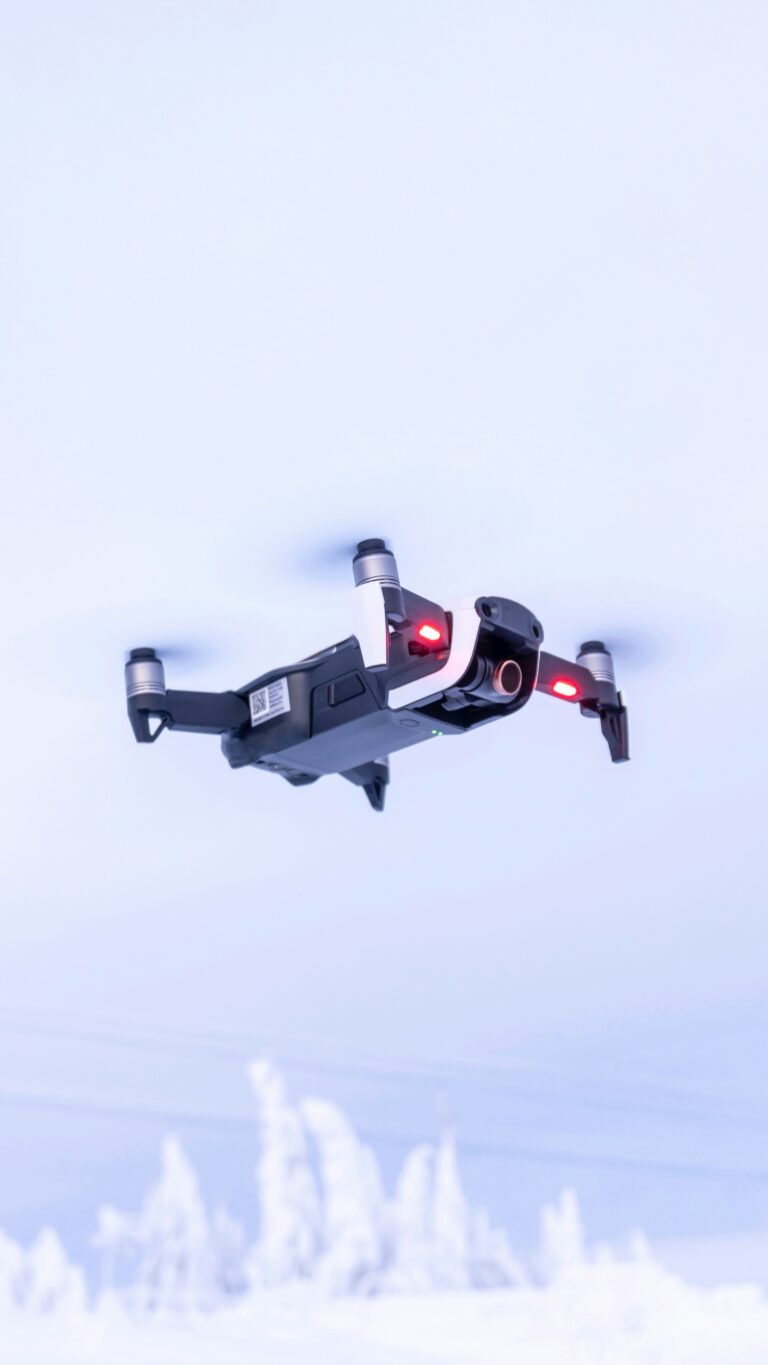
Automated drone flying through the air
Photo by Gabriel Alenius on Unsplash

Although the growing development of aviation technology is causing future workers to require more training, the entirety of the future of aviation technology depends on the workforce, especially the engineers that research, create, and test them. From the Apollo moon landing in 1969 to today, there is an incredible difference in all of the workforces. Because of this difference, innovation and adaptability is absolutely necessary for the future towards aviation technology. The role that the workforce holds is to not only allow the technology to become more automated by AI or more efficient, but to also create and test more ideas to how they are to be used, and also how else they can be used in a safe manner. An open-minded workforce always leads to technological advancements.

People working together
Photo by Jason Goodman on Unsplash

Closing Section

The future of aviation technology is very promising. With AI-assisted technology and more efficient, as well as eco-friendly, technology, the idea of transportation has a strong possibility of changing in the future. Similar to every workforce, the reality is that without a workforce, there is no future or promise to society. The reason why society is as advanced today is because of ideas from everyone. Regardless if its part of the aviation industry or not, every idea matters. You will never know if the craziest ideas works if you are not open-minded with others. In my opinion, I have always been fascinated by how aircrafts and spaceships come to life. It is very exciting to wonder exactly what revolutionized aviation technology will come in the future!


Sources: 1 , 2 , 3 , 4 , 5 , 6 , 7

Images: 1 , 2 , 3 , 4 , 5 , 6 (Featured Image) , 7

Fun Facts About Formula 1 Racing

Formula 1, the pinnacle of motorsport, is a world where speed, precision, and cutting-edge technology converge. As fans around the globe eagerly await each race,.

  1. Speed Demons: Unleashing the Power of Formula 1 Cars

Formula 1 cars are engineering marvels designed for one purpose: speed. These high-performance machines can reach insane speeds, with current cars topping out at over 230 mph (370 km/h) on the fastest tracks.  The acceleration of an F1 car is equally impressive, capable of going from 0 to 60 mph in just under two seconds. All F1 cars use the DRS (drag reduction system) to overtake their opponents with ease. Lightweight materials and powerful hybrid power units that seamlessly blend internal combustion engines with electric power.

  1. Aerodynamics: The Art of Precision Engineering

Aerodynamics plays a pivotal role in the performance of Formula 1 cars. These sleek racing machines are designed with precision to cut through the air with minimal resistance, enhancing speed and maneuverability. Every curve, winglet, and surface is meticulously crafted to optimize airflow and generate downforce, which is crucial for maintaining traction on the track.

  1. Global Grand Prix Circuit: A Calendar of Prestigious Races

Formula 1 is a truly global phenomenon, boasting a calendar that spans the continents. The season comprises a series of Grand Prix races held on iconic tracks around the world, from the historic Monaco Grand Prix with its narrow streets and tight corners to the high-speed straights of Monza in Italy. The diversity of tracks adds an extra layer of challenge for teams and drivers, testing their adaptability and versatility.

4. The halo

2 cars colliding

The halo is an important part of every F1 car. The halo, as shown in the picture above, is a ring-like head protection made out of carbon fiber and metals to prevent damage to the head in a collision. Lewis Hamilton, the eight-time world champion of Formula 1, was involved in an accident where Max Verstappen’s rear wheel went on top of his car (in the picture above). If it wasn’t for the halo, the crash could have ended horribly.


Credits: Pixabay

Sky sport

Would You Choose Infinite Happiness? The Experience Machine

Most people enjoy happiness. It’s a common belief that happiness and pleasure are good things. Sometimes, one might say that they live to experience joy and peace. However, is experiencing this kind of pleasure all that matters?

This is the question at the root of the thought experiment called “The Experience Machine.”

In this experiment, hypothetically psychologists were able to create a machine that can induce whatever happy or pleasurable experience that you want. You would not be able to distinguish these ideas from reality, and it would be able to exactly simulate whatever happy experience that you wanted, for as long as you wished. In other words, if you plugged into the machine, you could experience infinite happiness.

Given the choice, would you plug into this machine? If you would, would you prefer the machine to reality?

Most people would choose not to. The philosopher who came up with this experiment, Robert Nozick, determined with a few reasons as to why someone might choose not to plug into the machine:

    1. Instead of just experiencing things, we all have a human instinct to want to DO things
      • For example, I could offer you the choice between eating a slice (or multiple) of your favorite cake, or to plug you into a machine that would simulate the feeling of eating it. Most people would choose to actually eat the cake rather than experience eating.
    2. We all fear the loss of identity
      • If one chooses to sit under the simulated experiences of a machine that would only ever make them happy, does this person have an identity? Do they have personality traits? If one does not encounter conflict and adversity, they would not have character. Would a complete lack of personality make this human more of an inanimate object?
    3. We are limited to what we can make
      • One would not be able to make contact with the concept of reality. Everything that one creates and experiences, despite being simulated to seem real, is an illusion.

Personally, I agree with Nozick’s arguments and I would not choose to plug into the machine. I also think that, although the concept of infinite happiness is nice at first, it makes one wonder – without negative emotions, struggles, and conflict, can one really experience happiness? Without real experiences of sadness and adversity, is it possible to experience positive emotion?

If emotions are more or less relative to one another, and we were to completely remove all negative emotion and feeling, we would also be removing the feeling of happiness and pleasure. This would leave us with no emotion left to feel. The alleged “happiness” would just be emptiness. Infinite emptiness and apathy that we wouldn’t choose to change because that would be all of the experiences we were having.

Nozick says that “plugging into the machine is a kind of suicide.” If we subject ourselves to a world of emptiness, is that not the same thing as experiencing death? To not allow ourselves to develop in the world that we were born in, to choose to exist in a state of endless void… how is that any different than dying?

However, a counterargument that many who choose to come up with, is that if an experience makes one incredibly happy and has the ability to make someone happy forever, does it matter if it’s real? This is a theme in the classic film, The Matrix, where one of the colleagues of the main character betrays the protagonist because he is able to get placed back into the happy utopia where he is successful and contented. Some argue that if a device has the ability to make someone happy forever, why would they choose to live in a world filled with harsh reality? Would ignoring reality for a very long time eventually become a relief instead of a burden?

And now that you’ve read this article, I’m curious to know.

Would you choose to plug into the Experience Machine?

If you’d like to read more, here’s where I got my information: https://en.wikipedia.org/wiki/Experience_machine


Academic Rhythms and Social Beats: Crafting a Harmonious Lifestyle

0

It can be difficult for many students to learn how to manage the demands of both their social lives and their studies. People struggle with the necessity to manage their time well because they want to have a busy social life but still strive for academic achievement. Striking a healthy balance between the demanding demands of academic obligations and the equally vital need for social ties and personal well-being is crucial for students. We’ll look at useful tactics in this book to assist you in striking a balance between your academic obligations and the enjoyable experiences that come from social connections.


  1. Create a Schedule
    1. Using a planner or a digital calendar to schedule your classes, study sessions, social activities,  
    2. Allocate specific times for different studying and social events and if possible have those specific times as often as possible to create an easy routine. 
  2. Prioritze Tasks by Urgency
    1. Identify your most important tasks and prioritize THEM!! 
    2. To avoid unnecessary stress and overwhelming feelings, break large tasks into more small and manageable tasks. 
  3. Set Realistic Goals
    1. Don’t put more weight on your shoulders than you can take. 
    2.  Be realistic about what you can achieve, and don’t commit to social activities during busy periods of the academic year. 
  4. Use Productivity Techniques 
    1. Use these techniques to minimize time spent on academic requirements and events
  5. Communicate with your friends and family 
    1. Communicate about your academic life to your friends and family, as it will help to cut down on a few invitations here and there during busy times. 
    2. Plan social events well in advance, so they can seamlessly fit into your schedule.
  6. Stay Organized
    1. Keep your materials and assignments well-organized. This will save time and energy.
    2. Regularly review and update schedules so that you are on track with all events. 
  7. Take Care of yourself
    1. Keep yourself healthy and happy by regularly getting enough sleep, eating well, and engaging in activities and habits that can help you recharge and rejuvenate yourself
    2. Reeber to keep a healthy balance, you have to be the focal point, and the focal point itself has to be evem. 


In the ever-evolving landscape of student life, finding the perfect balance between academics and social engagement is a dynamic process. As you implement the strategies outlined in this guide, keep in mind that flexibility and adaptability are key. Each individual’s journey is unique, and the ability to harmonize academic pursuits with social fulfillment is a skill that evolves over time. By conscientiously managing your time, setting realistic goals, and prioritizing self-care, you not only enhance your academic performance but also contribute to the development of a well-rounded and fulfilling college experience. Striking this delicate balance will not only lead to success in your academic endeavors but also enrich your social connections and contribute to your personal growth.