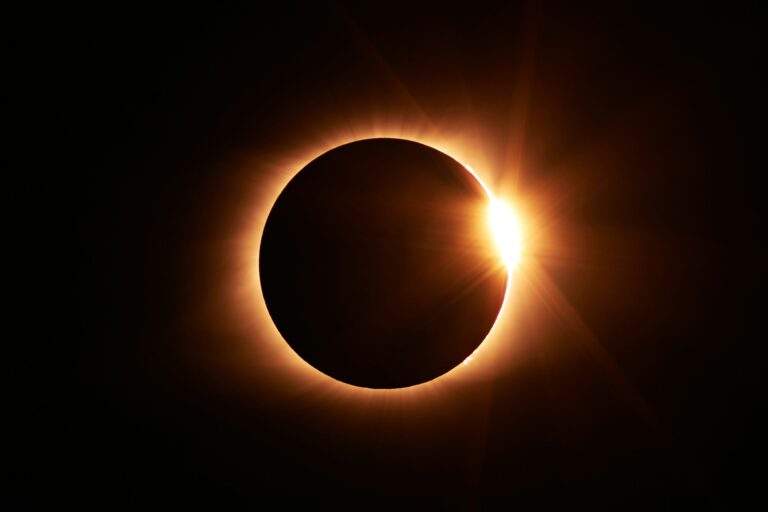
As we know it, one of humanity’s greatest goals to achieve in life is the expansion of space travel. Just like how Neil Armstrong reached the moon in 1969 and how Elon Musk is desperate to reach Mars, space exploration remains important in discovering the world above the sky. At this point, scientists have realized how the universe is expanding, which greatly increases the chances of finding something “other”. Whether that’s establishing contact with aliens or discovering a brand-new habitable planet not many light years away. The point is, that space travel remains to be a pivotal subject for humanity to ponder upon.
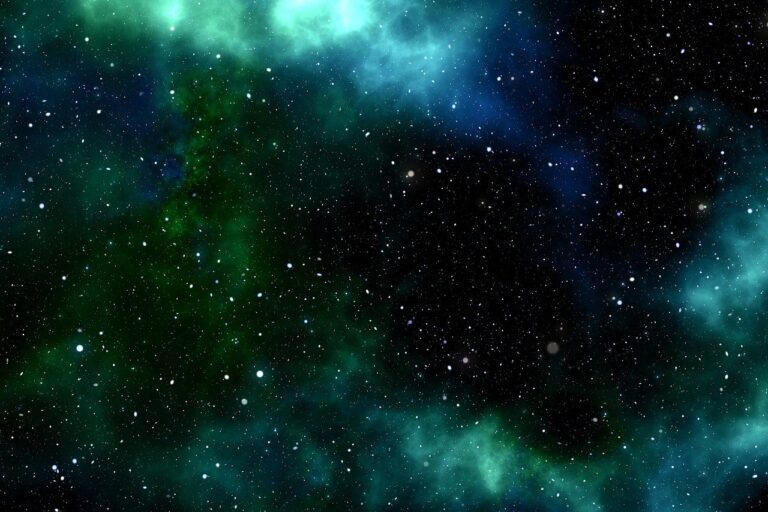
To reach this understanding we have of space today, humanity has sent humans out into the great unknown. Conducting experiments and documenting their observations has led us to learn more about our habitat way above the atmosphere. From what has been documented, we have learned that space is “zero-gravity”, but not actually zero because there can never be “no gravity” in space. We have also learned that space is only 1 degree warmer than absolute zero (which is -273.15 degrees Celsius). in 1995, astronomers Raghvendra Sahai and Lars-Åke Nyman said that absolute zero is the lowest temperature that is theoretically possible!
Since we now know that space has proven itself to be a deadly and scientifically rich area, are the human space travellers affected by it?
There are many long-term issues that correlate with the human anatomy and space travel, mainly the fact that many of the organs in the body may slightly deteriorate. Some examples of these negative health conditions include balance disorders, muscle atrophy, and immune system deterioration. All these complications may occur because of the radiation levels, weightlessness, long-term confinement, and even loneliness (well confinement and loneliness may play a part in psychological conditions rather than physical issues).
One of the most prominent of these apparent psychological issues is located with sleep patterns. All humans have an inner biological clock that helps us keep in check with our sleep patterns during time changes and season changes. In space, this biological clock becomes quite messed up due to the drastic change of habitat and atmosphere. Another factor is because of the lack of gravity travellers face whilst in their spaceships, they become fatigued and their sleep schedule deteriorates even more. Isolation is another issue they have to deal with. Astronauts may have to work with an extremely small team for many months, and of course, as expected, conflict may arise.
Monotony occurs in space travel too. As most people probably know, monotony is the quality of wearisome consistency, routine, and lack of variety. Because they are cooped up in a small place, for months, at a time, and probably do the exact same thing every day, boredom is inevitable, which will obviously negatively impact the emotional state of the astronauts.
The radiation that circulates around in space also factors into the well-being of the astronauts. This may lead to a negative interference with the astronaut’s executive functions. Furthermore, increased levels of exposure may lead to neuroinflammation which can lead to Parkinson’s or Alzheimer’s disease.
Overall, although space exploration may be a beautiful subject area to learn more about, the astronauts will unfortunately pay the price of their health. So for all you readers out there who are aspiring to be an astronaut, keep in mind the small price you have to pay.









 lotches decorating across the plane of the paper. He was a ruined artist, devoid of creativity or inspiration. His hands strangled locks of his hair in frustration, strands floating to the floor. He should give up. In the reflection, his face was filled with contempt and malice for himself. As the image of his grandfather crystallized in the reflection, his eyes widened in shock. Was he hallucinating? The familiar wrinkled lines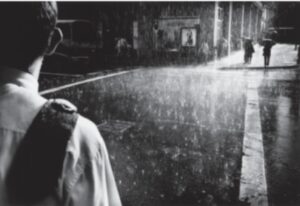
 ure and humankind. A butterfly within a lightbulb. Passerbys wondered about this mystery. Was the butterfly trapped? Was the butterfly content in its solitude? Even as the seasons changed, the people changed, the butterfly in the lightbulb was a constant. It was an anchor in an ever-changing world. The rhythmic beating of its wings never eased and the small flicker of light never faded.
 ld only hear the sound of cicadas and the occasional lap of the water. Her last possession left of the shipwreck was a lamp, untouched and dry. Her fingers thumbed the carefully crafted ridges and the smooth curve lamp shade. The light flickered over her head, casting a faint glow over her features. The acrid smell of the sea clutched to her hair and clothes, bringing up the haunting memory of the shipwreck. She wondered when she would be saved. When someone notices her. Only time will tell. She sat there, waiting patiently.
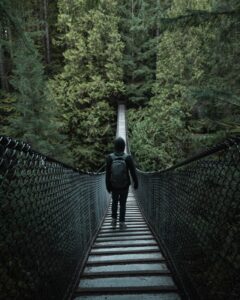 shing in the sky. Lush green pine trees towered over her, the branches spreading out like fractals over her head. She shouldn’t be here. A closed-off area, with a forbidden bridge. Exhilaration pulsed through her at the thought of the intrigue. The rhythmic thump of her backpack accompanied each step, the creak of the hanging bridge adding to the suspense. Each step was a climax in a story– will the bridge break or will it stay? Her hands ran along the chains of the bridge, a metallic smell coating her hands. And with the next step, the rusty chains broke, collapsing in on themselves, the bridge unfurling under her feet. That smell coated her body, before that that was all she could sense anymore.