
Home Blog Page 2

Referees: Should They Judge or Should They Be Judged?

0

In an intense tournament, stakes are high and the pressure is deafening, unfairness is like bait on a stick, dangling in front of you, and urging you to snap. Sports have an unfathomable way of subconsciously sparking a stubborn fire within you that no one can extinguish except for maybe the referees. They can be biased, appeared in many situations while doing so, and we should address this circumstance because it is not nearly as inconsequential as we believe.

Referees often express bias towards a particular organization or individual, which naturally gives the other party an unfair disadvantage. 

No individual can be truly indifferent and calculating in their references. Therefore, an uproar arises within the audience and fans, planting a seed of frustration, and when something is planted, it will take root. On account of this, many individuals fail to acknowledge that referees cannot possibly hold no opinion. To hold no opinion is not to care, and to judge, we need to care.

An eagle’s eye in the storm, they need to be focused and nurturing. However, they should strive to be fair because everyone deserves a chance to win. Furthermore, referees are also given ultimate power, the will to bend the game, and the capacity to easily hand over a win with a blow of a whistle and a single raise of a hand. Power is corruptible; they influence you and allow you to do whatever you want. This is seemingly light; however, this can influence you to make rash decisions and bend the game entirely because the sense of power often overfloods our other senses. Revealing how powerful the referees are and why they can be so biased at times.

Individuals have regularly felt the unfairness of a game or the prejudice of a referee, and occasionally fail to realize how their judgment has impacted others. 

Due to unfairness, many individuals lose significant tournaments and matches that are important for their future. Take the 2022 Figure skating Salt Lake Olympics incident for instance, often referred to as the ‘skategate.’ Figure skating Canadian pairs performed a flawless performance with no penalties and received a silver medal. While the Russian athletes who won gold had a major error, a fall.

It is later revealed that the main France foundation was pressuring the French judge to vote for the Russian pair. If this event was as inconsequential as we believe, it would have ended right there and now. However, the whole sports rating system developed into a points system and resulted in the firing of two referees and a reward of dual golden medals presented to both Canadian and Russian pairs. Therefore, the bad judgment of referees can result in a more impactful consequence than what we constantly recognize.

Truth to be told, conjecture and opinions can’t fully disappear from our conscience; therefore, perhaps there are situations when AI is essential. 

To reduce the constant lack of fairness and accountability of these referees, perhaps robots should take their place. Robots possess so many skills that fit the role of refereeing and judging perfectly, they are not favoured for learning and academic education, however, criticism and potential can be achieved with a little prescience and a shift in perception.

First and foremost, AI can’t mentally feel anything, they have an emptiness, they follow coordinates and do what they are programmed to do, so no bias can possibly be present with complete indifference. Another thing is that they seldom make mistakes and see things humans typically miss. This increase in accuracy will profoundly benefit the fairness for the players and the games, resulting in a more balanced society.

Consequently, taking an act into acknowledging the prominent impacts unfair refereeing can cause will strengthen recognizing the problems that are classified as “small.” This acknowledges that referees can be biased towards a certain party and have been biased in many circumstances with witnesses. This should be solved by the appropriate use of AI and both individuals and referees should strive to avoid unfairness, because even if you throw a small stone in the sea, no one realizes how far it might sink.

Source: 1

The People Who Never Clock Out

0

Healthcare workers are the backbone of our communities, showing up every day to care for others even in the most challenging situations. Whether in hospitals, clinics, or emergency settings, they dedicate their time, energy, and compassion to helping people heal and feel safe. Yet, their hard work or appreciation often goes unnoticed or underappreciated. Taking their time to recognize and thank these individuals is more important than ever, as even acts of small gratitude can make a meaningful difference in their lives. These 3 meaningful ways of appreciation can be your first step to showing appreciation to these workers.

1. Thank You Notes and Cards

Starting off simple and small, but still one of the most meaningful ways to show appreciation is to write a thank you note. Taking just a few minutes to write a heartfelt message can have a lasting impact, especially for the workers who deal with long hours, high stress, and emotional situations daily. A handwritten notes can feel personal and genuine, it reflects that you took the time to recognize their effort rather than just saying a quick “thanks.” For healthcare workers, this small act can make them feel valued and worth the long hours they work.

2. Provide Care Packages

Because healthcare workers have long and tiring hours and demanding shifts, having a small collection of useful and comforting items helps make their day easier. A well prepared care package can show consideration. Its not just about giving something, but about understanding what they might actually need during a busy shift.

Some practical items you can put could be healthy snacks, protein bars, tea bags, or instant coffee for a quick energy boost. Since healthcare workers wash their hands often, items like hand lotion, lip balm, and gentle skincare products can especially be helpful. Small comfort items like stress balls, handwritten notes, or even cozy socks can also bring a sense of relaxation and remind them to take care of themselves too. The key is to keep the items simple and easy to grab during a break.

3. Volunteer

Volunteering is a meaningful way to show appreciation and it directly supports them in their daily environment. Whole volunteers may not be involved in medical tasks, you can help with many non-clinical responsibilities that make a big difference. For example, you might be able to assist with organizing supplies, guiding visitors, delivering items within a facility and so much more. In addition, volunteering can also lead to a more positive and welcoming atmosphere. Such as helping visitors around the hospital, or just being a calming presence to a patient or a member of the staff. Healthcare settings can often feel stressful or overwhelming, so having volunteers who bring kindness and patience into the environment can make a noticeable impact. This type of support shows healthcare workers that the community values not only their work but also the environment they work in.

Conclusion

Showing appreciation to healthcare workers is not only important but necessary in recognizing the dedication and care they provide every day. Whether through thank-you notes, care packages, volunteering, or simple acts of kindness, even small efforts can have a meaningful impact. These gestures remind healthcare workers that their hard work does not go unnoticed and that their community truly values them. By taking the time to express gratitude, we help create a more supportive and respectful environment for those who spend their lives caring for others.


The Condition Millions of Women Live With but Few Truly Understand

0

What is PCOS?

For many people, that question does not have an immediate answer. And that is exactly the problem.

Polycystic Ovary Syndrome (PCOS) is one of the most common endocrine disorders in the world, affecting about 1 in 10 women globally. Despite how widespread it is, a large number of people who have it remain undiagnosed or unaware for years. It is not a rare condition. It is just frequently overlooked.

PCOS is often referred to as a “silent” condition, not because it has no symptoms, but because its symptoms are so commonly misunderstood or treated separately that the underlying cause is missed.

At its core, PCOS is a hormonal and metabolic disorder. It is linked to an imbalance in androgens, which are hormones that all women naturally produce in small amounts. In PCOS, these hormone levels are higher than normal, which disrupts the regular function of the ovaries.

Instead of releasing an egg each month as part of a regular ovulation cycle, the process becomes irregular or may stop entirely. Over time, the ovaries may develop multiple small follicles. These are not true cysts, but fluid-filled structures containing immature eggs that were not released. This can lead to enlarged and inflamed ovaries.

However, PCOS is not only about the reproductive system. It is also a metabolic condition, which means it affects how the body processes insulin and regulates energy. Because of this, it is linked with a higher risk of other health complications beyond reproductive health.

One of the most frustrating parts of PCOS is how long it can take to be diagnosed. For many women, it takes years. This delay often happens because symptoms like irregular periods, acne, weight changes, or fatigue are treated individually rather than being recognized as part of a larger pattern.

There is currently no cure for PCOS. Treatment mainly focuses on managing symptoms. This can include hormonal birth control, lifestyle changes such as diet and exercise, or medications that help regulate insulin levels and menstrual cycles.

In more severe cases, medical procedures may be considered, but they are not suitable for everyone and can come with long-term risks. As a result, many people with PCOS manage the condition throughout their lives rather than fully resolving it.

Beyond the medical definition, PCOS also highlights a larger issue in healthcare. Conditions that affect women are still not researched, understood, or diagnosed as efficiently as many other medical conditions. This leads to delays in care, confusion, and a lack of awareness about something that is actually very common.

PCOS is not rare. It is not new. And it is not insignificant.

It is simply underrecognized.

Sources:

https://www.ncbi.nlm.nih.gov/books/NBK459251/

https://www.frontiersin.org/journals/endocrinology/articles/10.3389/fendo.2022.1030353/full

Why Young People Should Learn the Difference Between National Pride and Harmful Nationalism

In today’s world, we hear the word nationalism a lot. It appears in politics, history classes, social media, and even daily conversations. But what does it really mean, and why should young people care?

Nationalism is the belief that people who share the same culture, language, history, or identity belong together as a nation and should have the right to govern themselves.
At its best, nationalism can bring people together. It can create pride, unity, and a strong sense of belonging.

However, history has also shown that nationalism can become dangerous when it turns into exclusion, discrimination, or hatred toward others.

That is why I believe young people need to learn how to build healthy national pride while also protecting inclusion and diversity.

The Good Side of National Identity

Loving your country is not always a bad thing.

National identity can help people feel connected to their community. It can inspire citizens to work hard, vote, volunteer, and improve society. Many independence movements around the world were built on nationalism because people wanted freedom and self-determination.

For young people, this can mean feeling proud of our city, province, or country and wanting to make it better.

For example, as youth in Canada, we may feel proud of values like multiculturalism, equality, and opportunity. That pride can motivate us to create change in our schools and communities.

When Pride Becomes Exclusion

The problem starts when national pride becomes the belief that one group is more important than others.

Sometimes nationalism can lead people to reject immigrants, minorities, or anyone seen as “different.” History gives us many examples where extreme nationalism caused conflict and division. Britannica even points out that nationalism has been a major factor in several wars.

This is especially important for youth because social media can quickly spread harmful ideas.

If we are not careful, pride in identity can turn into stereotypes, hate, and exclusion.

What We Should Advocate For

As young people, we should advocate for inclusive patriotism instead of harmful nationalism.

This means loving our country while also respecting people from different backgrounds.

We can be proud of where we come from without putting others down.

Schools should teach students more about the history and ethics of nationalism so that we can recognize both its strengths and its dangers. The Stanford Encyclopedia explains that nationalism is not only about feelings but also about political beliefs and moral responsibilities.

By understanding this, youth can become better leaders and more responsible global citizens.

A Call to Youth Voices

Our generation lives in one of the most connected times in history.

We are shaped not only by our nation but also by global communities online and in real life.

That is why I want to encourage youth to speak up for a future where identity creates belonging, not division.

Be proud of who you are.

Be proud of where you come from.

But also stand up for kindness, diversity, and inclusion.

National pride should build bridges, not walls.

Source: [1], [2], [3]

The Evolution of Colour

0

From a young age, one of the first preferences people make is their favourite colour. Such a simple choice becomes a conversation starter, an ice breaker, and a part of one’s self-identity. This goes to show how pigments are an essential part of our daily lives, influencing our personal style and how we decorate our spaces.

Though colours are easily available to us now, it was not always that way. Which raises the question of how colours and pigments have become so accessible in modern life?

Early Uses of Colour

Natural Pigments

Over 40,000 years ago, the first recorded pigment was created on an Indonesian island. Using accessible items such as chalk, soil, animal fat, and coal. This combination was used as a foundation to create five specific colours, such as red, black, yellow, white, and brown. These colours were limited but played a significant role in storytelling, animal depiction, and rituals.

Advancements in Early Civilizations

As civilizations came into play, pigments began being manufactured. Using fruits, vegetables, and animal secretions to produce dyes. One of the first examples of manufactured pigments was Egyptian blue. Created by quartz sand, copper, lime, and high temperatures. This discovery was a stepping stone in the development of pigments, revealing how malleable colour can be.

Symbolism of Colour

During the medieval era, colours became a notable indicator of wealth. It came with strict rules deciding who could wear certain colours based on status. Certain colours that were harder to get hold of were exclusively reserved for nobles’ and royals’ use. Such as Tyrian purple.

The modernization of Colour

Scientific Work on Colour

The study of colours began to emerge more in the 17th century. One of the most significant was Isaac Newton’s. In the 1660’s his work on light and pigments became a massive stepping stone to the scientific study of colour. By discovering that white light could be split into seven different visible colours. These seven colours consist of red, orange, yellow, green, blue, indigo, and violet. He found that colour was not inherent in objects but a result of how light interacts with it. This work of his—called Opticks- led to many other major discoveries across a variety of fields to come.

Colours Today

Through the next centuries, the advancements in chemistry began revolutionizing colour production. Leading to a diverse range of new colours being made. This new abundance and versatile selection of colour started leaving huge impacts on fashion, trends, and pop culture as we know them.

Finding Meaning in COVID-19: Different Perspectives


When COVID-19 forced the world into lockdown, most people focused on the negative impacts like stress, isolation, and uncertainty. This article in no way is meant to undermine such feelings, or disregard the awful loss of life during this time. However, looking at it from different perspectives shows that the experience was not the same for everyone, highlighting the ambiguity and sheer diversity within the human experience. Some people were able to find positive change, while others struggled more, and this can be understood by looking at how society and individuals responded.

From one perspective, society works as a system where different parts support each other. During the pandemic, institutions like healthcare, government, families, and workplaces all had to adjust. Lockdowns were used as a way to protect people and keep things stable. Even though the main goal was to reduce the spread of the virus, there were also some unexpected positive outcomes. Many people became more appreciative of their daily lives, had more time for activities they enjoy, and spent more time outside. With normal routines disrupted, people created new ones that improved their sleep, physical activity, and overall well-being. This shows that when routines are broken, people have the ability to adapt, creating new ways of living that have the potential to improve their quality of life.

At the same time, not everyone experienced these positive changes. Different groups of people were affected in different ways. Some people had this time and resources to improve their lives, while others faced isolation, poor health, and or financial stress. Older individuals living alone often had a harder time during lockdown, while younger people, employed individuals, and those in stable relationships were more likely to experience positive changes. Highlighting the unequal effects of the pandemic. People with more support and stability were better able to take advantage of the situation, while others struggled just to get through it.

Another important perspective is how individuals created meaning during lockdown. When everyday routines disappeared, people started to see normal activities differently. Things like cooking, walking, or spending time outside became ways to feel in control and stay balanced. Even going to public places later on became a symbol of this freedom. By giving new meaning to these simple actions, people were able to stay more positive and cope with the situation.

COVID-19 affected people in very different ways. Some found growth and positive change, while others faced major challenges. These different experiences show that people respond to situations based on their environment, resources, and mindset.

Best Life Advice Quotes to Remember

0


Sometimes the simplest advice is the most powerful. A short quote can stick in your mind and guide your decisions when things get confusing or overwhelming. Here are some great life advice quotes to remember 🙂


“In the middle of difficulty lies opportunity.” – Albert Einstein

Even in hard situations, there’s always something to gain or learn. This mindset can help you stay positive and look for growth, instead of giving up.


“Do. Or do not. There is no try.” – Yoda, Star Wars: The Empire Strikes Back 

Commitment. If you only ‘try,’ you leave room to quit; but commitment gives a better chance of success.


“It always seems impossible until it’s done.” – Nelson Mandela

Things often feel overwhelming at first, but once you push through, they become achievable. It’s a reminder not to judge too quickly. 


“You miss 100% of the shots you don’t take.” – Wayne Gretzky

Opportunities only matter if you act on them. Taking risks is necessary if you want results.


“Not all those who wander are lost.” – The Lord of the Rings (J.R.R. Tolkien)

Feeling unsure or taking a different path doesn’t mean you’re failing. It’s just a part of figuring things out.


“Happiness can be found, even in the darkest of times, if one only remembers to turn on the light.” – Albus Dumbledore, Harry Potter and the Prisoner of Azkaban (J.K. Rowling)

Even in difficult moments, small shifts in perspective can make a big difference.


“Whether you think you can or you think you can’t, you’re right.” – Henry Ford

Mindset can shape everything. Believing in yourself is often the first step to success.


“Fear is the mind-killer.” – Dune (Frank Herbert)

Fear can stop you from thinking clearly or taking action. Learning to manage it is a big key to growth.


“Success is not final, failure is not fatal: it is the courage to continue that counts.” – Winston Churchill

Both success and failure are temporary. What really matters is persistence.


Good advice can come from almost anywhere: history, fiction, or personal experience. What makes it powerful is how easily it sticks in your mind and influences your actions. Even one small reminder can make a big difference over time.


Sources:

Do We Inherit Memories? A 10 Year Old’s Breakthrough in Science


Is it possible for us to be born with a predetermined memory engrained in our minds? Can we inherit recollections our parents experienced before they had us, some sixth sense that transcends beyond words? These are the questions that 10 year old Jo Nagai’s audience pondered in awe as they listened attentively to a tiny elementary school student presenting his science project about butterflies.


Curiosity Educates the Cat 

Jo has always been fascinated by insects, his favourite by far being the swallowtail butterfly. Instead of being a short lived admirer like most of his peers, he would document their life cycle and strange behaviours often overlooked. He would dedicate entire school projects into researching butterflies; whether it was a question of what they would do if stuck in their own chrysalis or exploring obscure caterpillar species. By the second grade, Jo had accumulated hundreds of pages of notes and two awards for his research and dedication. 

Yellow Swallowtail butterfly
Photo by Alan Emery on Unsplash


As Jo spent more time researching and looking after his butterflies, he began to notice something strange. Even when trying to free his catered insect children into the wild, they would fly back to him. This curious circumstance brewed up a thought inside the young Japanese child: Is it possible that butterflies retain their memories even after metamorphosis?


Skill Based Matchmaking

Coincidentally, Martha Weiss was a scientist that had answered this exact same question, but instead of butterflies, she tested moths. Her results demonstrated how moths indeed remembered their caterpillar lives before sprouting wings. This finding was considered highly controversial, as past literature had continued to insist that insects undergo a complete brain reset after metamorphosis. Obviously, this sparked Jo’s interest. Could his butterflies fly under the same umbrella? This excitement resulted in the 4 page long letter Martha received in her mailbox during spring 2022. 


Despite Martha’s initial skepticism, the two eventually started working side by side as transnational scientist PenPal hybrids bound together for their love of insects. They regularly exchanged ideas on how Jo could recreate a house-material friendly setup and how to optimize the methodology, using Martha’s experiment as a baseline. By fall 2022, Jo sent Martha back a letter announcing his study was finished, tied up with a whopping 33 pages of how and what. 


Inside the 33 Pages 

The question was simple: If a caterpillar associates something unpleasant with a smell, would it still find the same smell unpleasant after it becomes a butterfly?


A group of butterflies received a mild electric shock every time they smelled lavender oil (the experimental group), while another group did not receive any shocks (the control group.)

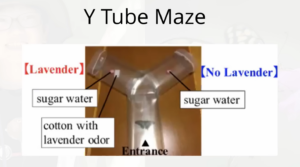
After metamorphizing, the two groups were placed into a Y shaped tube maze. One arm served as the butterfly’s entrance, and the two other arms offered sugar water. One of them contained a cotton pad with a lavender odor.

Butterfly experiment diagram
https://www.youtube.com/watch?v=nhESxrqPjfU


Jo first tested the control group. The untraumatized butterflies split between the lavender and no lavender arm evenly. Hypothetically, if the experimental shocked group had erased their caterpillar memories after metamorphosis, the results would parallel the control group. 


However, Jo’s findings for the experimental group was surprising. 7 out of 10 butterflies avoided the arm with the lavender fragrance, a statistically significant finding. 


Instead of ending it off right there, Jo decided to continue his research further. After breeding his butterflies, he noticed that the same ratio of lavender avoiding butterflies still appeared compared to the experimental group; despite receiving zero training. 


Jo decided to breed his butterflies the third time. Low and behold, even the grandchild generation displayed parallel tendencies to their lavender-hating grandparents, Thus, with all due evidence, the conclusion was made that memories indeed persisted through one singular generation. 


“I thought it was amazing that memories can be inherited, because they’re so small. And I thought the caterpillars are so cute when they’re young and they’re so cute even when they become adults. So when I found out these memories can be inherited, I fell in love with them even more.” – Jo Nagai


Sources

1, 2 (Martha’s study)


Pictures

1, 2


Why Growing Up Takes so Long : Inside the Developing Brain

0


We’ve all had someone tell us our brains aren’t fully developed until age 25… but have you ever wondered why the process is so long and grueling? What about why 25 is the chosen age- or if this “fact” is even correct? The truth is, humans are remarkable in our mental complexity, but adolescence and the transition to adulthood can be difficult, especially when our brains seem to be throwing a tantrum in the supermarket while we’re just trying to live our lives.

What?

Human brains take muc374h longer to “grow up” than those of any other known species due to their complexity, our reliance on learning, and the evolutionary advantages this gives us. One part of the brain can be blamed for this slower pace: the prefrontal cortex, the forward-most section of the frontal lobe. This area is the last to develop, often still maturing well into adulthood.

The frontal lobe is responsible for a lot of important functions, including decision-making, impulse control, planning, critical thinking, judgment, self-control, voluntary movement, problem-solving, social interaction, attention, speaking, learning, reasoning, and creativity.

Basically, anything you do with conscious action is supported by this part of the brain. The prefrontal cortex handles the most complicated parts of these abilities, while more basic regions- like those controlling movement- develop earlier. More advanced regions that deal with emotional regulation and social behavior come later, which means the most complex things your brain can do take the longest to fully develop.

The prefrontal cortex is mainly made up of two things: neurons (cells that send and receive signals) and glial cells (basically the neuron support team- they provide nutrients and clear waste).

Why?

As humans, we rely heavily on learning rather than instinct, unlike many other species. This means that during brain development- and well beyond- we depend on other people for social cues and reasoning.

Slower development also allows for more neuroplasticity, meaning that when you’re younger, your brain is more flexible. It’s easier to adapt to different environments and to learn new skills, languages, and cultures.

Think of childhood and adolescence as a training period for your brain- it’s setting you up for the future while you’re still figuring out who you are. In a way, this slower development is evolution favoring intelligence and adaptability.

How?

Between birth and early adulthood, the brain goes through a lot of changes. The frontal lobe grows and reorganizes as connections between cells increase. The brain also changes in its balance of gray and white matter.

Gray matter processes information and contains neuron cell bodies (used for thinking and memory), while white matter acts more like communication cables, allowing signals to travel efficiently. As you get older, more white matter forms, helping different parts of your brain communicate better.

This is why younger people are often more influenced by reward and social acceptance, while older people are generally better at thinking things through logically.

Different types of intelligence also peak at different times. Fluid intelligence- like pattern recognition, abstract reasoning, and multitasking- tends to peak in the late teens to early twenties. Crystallised intelligence- like vocabulary and knowledge- peaks later, often around middle age.

During adolescence, the brain goes through a process called pruning, where excess gray matter is reduced to make room for stronger white matter connections. This helps the brain work more efficiently.

At the same time, processes like segregation (forming thoughts) and integration (connecting them) become more complex, allowing for more advanced thinking. Later on, the brain starts reinforcing the most-used pathways to make them more stable.

When?

The idea that your brain is still developing can actually be reassuring when you make mistakes or feel unsure- it’s a reminder that you’re still growing. But the idea that everything is complete at 25 is a big oversimplification.

The age 25 came from earlier research that didn’t fully track development past young adulthood. Newer studies suggest brain development continues into the 30’s and sometimes even longer.

What I’ve been calling “brain adolescence” is really the period from around age 9 into the early 30’s. Your teens and 20’s are mostly about building connections, while your 30’s are more about stabilising and maintaining them.

This is one of the best times for growth and adaptability, but it’s important to remember that development never really stops- you keep learning and changing your whole life.

Caring for Your Developing Brain

Many conditions affect the frontal lobe, including Alzheimer’s disease, autism spectrum disorder, ADHD, brain injuries, infections, and mental health conditions. Some of these are just differences in how brains work, while others are more serious.

So how do you take care of something as complex as your brain?

The good news is, you’re probably already doing some of it. Eating a balanced diet supports your circulatory system so nutrients can reach your brain. Staying active helps overall health and supports brain function.

Safety matters too. The frontal lobe sits right behind your forehead, which makes it vulnerable to injury. Things like seat belts and helmets can make a big difference.

Activities that challenge your brain- like learning languages, playing chess, or problem-solving- can strengthen connections and support long-term brain health.

Finally, because the brain is more plastic during development, substances like alcohol, caffeine, and drugs can have stronger effects. For example, alcohol can interfere with the maturation of the prefrontal cortex and damage the hippocampus (which is responsible for memory and spatial awareness). During your brain’s youth, it’s best to avoid these substances.

So…

At the end of the day, your brain is unique, and it’s meant to take its time. If things like emotional regulation or decision-making don’t feel fully there yet, that’s part of the process.

Even people who seem like they have everything figured out are still learning. The best thing you can do is take care of your brain, build good habits, and treat your mind with a bit of patience.

Sources: 1 2 3 4

The Whale Alphabet: AI’s Role in Decoding Animal Languages

0


For decades, we’ve dreamed of talking with animals. From Dr. Dolittle to science fiction, the idea has captured our imagination. Now, off the coast of Dominica, that dream is edging closer. Scientists have discovered that sperm whales communicate using a complex “phonetic alphabet”, a “whale alphabet” of sorts, and now, artificial intelligence is helping us crack the code.

A Click Language with Hidden Depths

Sperm whales are highly social creatures. They live in tight‑knit family units, raise calves together, and make group decisions. For years, researchers knew they communicated with short bursts of clicks called codas, identifying about 21 distinct types in the Caribbean. But whale society is too rich for only 21 “words.” Something must have been missing.

In 2024, a team from Project CETI and MIT analyzed nearly 9,000 codas recorded over more than a decade. They identified a surprising discovery, whereby whales don’t just repeat fixed patterns. Instead, they combine smaller features, such as a human alphabet, to create a vast range of possible vocalizations.

A Phonetic Alphabet for Whales

The researchers uncovered four key building blocks that work together:

  • Rhythm – the overall click pattern, independent of speed.

  • Tempo – how fast the pattern is, falling into five distinct categories.

  • Rubato – smooth speed‑ups or slow‑downs that whales mirror during conversation, almost like a musical duet.

  • Ornamentation – extra clicks that act like punctuation, often appearing when a conversation is about to shift from one whale to another.

Through the mix of these elements, including 18 rhythms, 5 tempos, optional rubato, and optional ornamentation, whales can generate hundreds of distinct codas. This initially perceived limited vocabulary is actually a flexible combinatorial system, capable of carrying far more information than previously thought.

How AI Helped Crack the Code

Machine learning was the primary driver of this discovery. AI sifted through thousands of hours of recordings, spotting subtle patterns human ears might miss, such as how whales match each other’s rubato across conversational turns. The algorithms helped cluster codas into rhythm families, revealing the hidden, underlying structure beneath the clicks.

Scientists then validated the AI’s findings against real whale behavior, ensuring the patterns were meaningful. This formed the grounds for a powerful partnership: AI-driven heavy lifting and meaningful human context. As Project CETI founder David Gruber told ABC News, the goal isn’t just limited to whales, but learning to understand non‑human intelligence on Earth, an understanding that may one day help us recognize it elsewhere.

Why This Matters to Us

This discovery changes how we see animals. Intelligence isn’t a ladder with humans at the top. Whales evolved a rich communication system built from clicks, different from ours, but no less sophisticated.

It also matters for conservation. If we understand whale culture through their clans, traditions, and social bonds, we can protect them more thoughtfully. Currently, conservation focuses on numbers. But understanding their social world could lead to deeper, more respectful protection.

And it’s a proving ground for AI. Decoding the “whale alphabet” teaches us how to decode signals from other species, and perhaps one day from beyond our planet.

What Comes Next

We’re not quite at “talk to whales” yet. We’ve decoded structure, not meaning, and we don’t know if they have names for each other, tell stories, or have words for the ocean. Answering those questions will require more data, more AI analysis, and eventually interactive experiments where we try to “speak back.”

But we now know the “whale alphabet” is rich and structured. It is not limited to a fixed list of calls, but a flexible system capable of expressing a huge range of ideas. That’s an invitation to listen closer.

With AI as our tool, we’re finally starting to hear what whales have been saying all along.

Sources:

For the Love of Reading

0

Reading is a habit that is very useful in life. Many people like different types of genres including: Action, fantasy, comedy, drama, horror, science fiction, dystopian, mystery, thriller, and many more. However, all books have one thing in common: they are words written by a person on a page.

Benefits of Reading Books

Reading helps increase your vocabulary. A poll, conducted by Cengage, in 2019 said that 69% of employers are more likely to hire people who can communicate beneficially. You should read to increase your vocabulary.

Reading is a stress buster! A study discovered that 25 – 30 minuets of reading a day helps reduce heart rate and blood pressure. Some people say reading is stressful but that is just their beliefs. If you are stressed out then you should read books.

Reading is your best friend. Books are loyal companions which provide us with knowledge, comfort, and much more. If you are lonely then you should read books. Also you can tell books anything you want and they will listen. Sometimes friends aren’t willing to listen, however, that is never the case with books.

Planting Hope in Unlikely Places: An interview with Anne Johnson

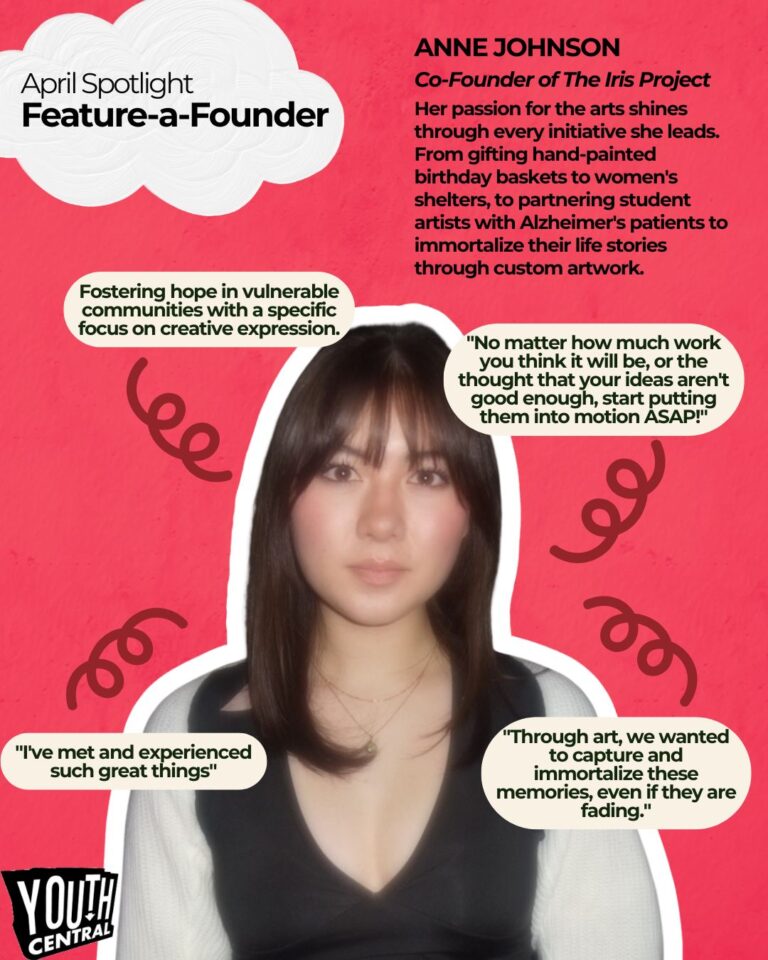
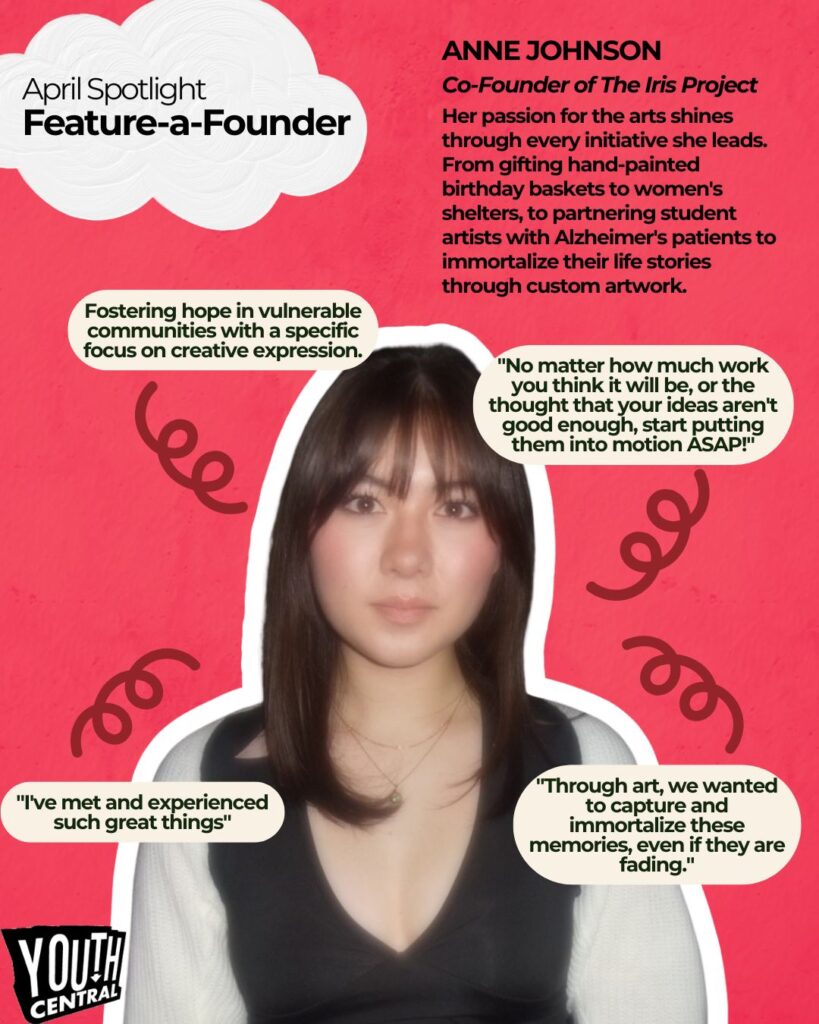
Presented by the Mayor’s Youth Council (MYC), our Feature-a-Founder spotlight is designed to highlight youth-led initiatives in Calgary making a positive impact. This month, we’re featuring Anne Johnson, the co-founder of The Iris Project.

Have you ever stopped to look at an iris? Aside from it’s vibrant petals, there is something remarkably resilient about this flower. You’ll find them in the most unlikely places clinging to the cracks of a sidewalk, bordering a forgotten pool, or blooming where most people assume life isn’t meant to thrive. To Anne Johnson, the co-founder and president of The Iris Project, this flower is more than just a wonder, it is a symbol of hope and a reminder that “warmer days are coming,” even in the toughest environments.

At an age when most students are just beginning to navigate the pressures of high school, Anne has built a movement. With active chapters in both Calgary, Alberta, and Temecula, California, The Iris Project is a student-led non-profit dedicated to supporting the community’s most vulnerable members through the power of the creative arts.The Iris Project Anne

Her Vision

The seeds of the Iris Project were planted during Anne’s 9th grade year. Alongside her co-founder, Michelle, Anne was already a frequent volunteer with Youth Central. However, they felt a calling to do something more personalized to bridge the gap between their love for the arts and the tangible needs of their community.

“I have always played various instruments, and all my extracurriculars revolve around the arts,” Anne shares. When she and Michelle saw an opportunity to apply for a micro grant, they jumped at it. They didn’t just want to start a club, they wanted to create a mission: fostering hope in vulnerable communities with a specific focus on creative expression. 

For Anne, the organization is important not just for the impact it makes but also for the community it builds among youth. “I’ve met and experienced such great things, working alongside some of the most intelligent and wonderful people in my peer group,” she says. Today, she leads a dedicated team of women, delegating tasks and heading initiatives that prove youth are changemakers.

Art as a Bridge Between Generations

While The Iris Project has launched several successful programs including distributing over 100 hand-painted “Birthday Baskets” to women’s and children’s shelters and creating “Affirmation Chairs” for cancer centers there is one initiative that holds a particularly special place in Anne’s heart: Capturing Memories.

In collaboration with Club 36, an Alzheimer’s support program, Anne recruited student artists from her school to partner with seniors. The goal was simple yet profound: spend time together. Once a week, the pairs engaged in conversation and shared activities, allowing the students to truly “see” the person behind the diagnosis.

The students then translated the seniors’ life stories into custom artworks. At the end of the program, a showcase was held where these pieces were gifted to the seniors and their families as “keepsakes”.

“The creative fraction of the brain is often the last to deteriorate,” Anne explains. “I’ve worked with patients who might not remember who they are with, but they know every single lyric to their favorite song. Through art, we wanted to capture and immortalize these memories, even if they are fading.”

For Anne, this wasn’t just about the art, it was about breaking the stigma surrounding Alzheimer’s. She wanted to ensure these seniors didn’t feel “othered” or distanced from society. Seeing the intergenerational bonds form was, in her words, “heartwarming” a testament that we should never distance ourselves from common human experiences, no matter how difficult they may seem.

Defending the Arts in a STEM-Focused World

One of the most profound lessons Anne has learned through this journey is the essential role the arts play in our personal and social lives. In a world where high schoolers are often pressured to prioritize STEM (Science, Technology, Engineering, and Math), Anne noticed a disheartening trend.

“It’s clear that STEM subjects are held at a higher value, and people are sometimes made fun of for considering the arts in post-secondary education,” she observes. Through The Iris Project, Anne is actively challenging the idea that creativity is just a “frivolous hobby.”

She believes that every creative has something valuable to contribute to the world. Her work has shown her that art isn’t just about aesthetics, it’s a tool for empathy and a way to communicate when words fail.

Navigating the Difficulties of a Youth Founder

Running a nonprofit while still in school isn’t all showcases and flower-themed branding, it comes with significant logistical hurdles. For Anne, the biggest obstacle has been funding. “It’s difficult getting funding when you aren’t a registered charity or if you don’t have of age board members,” she admits. Most traditional grants are gatekept by age requirements. However, Anne’s resourcefulness has been her greatest asset. She has successfully secured youth-focused grants through Youth Central and the City of Calgary, while also looking into partnerships with registered charities to gain more access to resources.

Her journey proves that while the system may not always be built for young founders, there is always a way through if you are willing to look for “cracks” in the sidewalk.

Advice for the Next Generation

If you’re a student sitting on a big idea but waiting for the “right time” to start, Anne has a message for you: The right time is right now.

“No matter how much work you think it will be, or the thought that your ideas aren’t good enough, start putting them into motion ASAP!” she urges. “The fear of doing something new is absolutely nothing compared to the regret of never trying.”

Final Thoughts

Meeting Anne makes you realize that being a “founder” isn’t about having a fancy office or a decade of experience. It’s about having the empathy to see a need in your community and the courage to use your unique talents, whether that’s painting, music, or leadership to fill it. Anne Johnson isn’t just planting irises, she’s planting a legacy of compassion that will bloom for years to come!

Next Steps
Started a project? Apply to Feature-a-Founder to be featured and share your impact – submit your story here!

Need help getting your idea off the ground? Explore our grants and funding opportunities: youthcentral.com/grants.

How Did April Fools’ Day Begin?

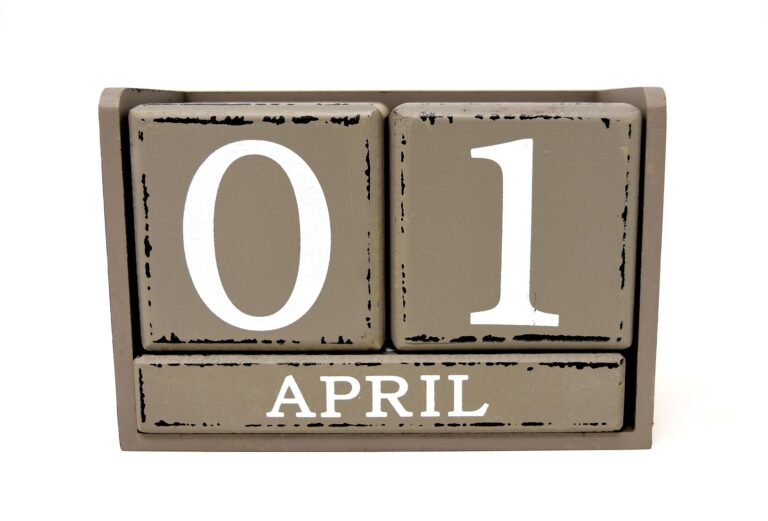
Every year on April 1, people around the world play harmless jokes and funny tricks on each other. This special day is called April Fools’ Day. But have you ever wondered where it came from?

Even historians are not completely sure how it started. There are a few popular stories about its origins.

A Popular Story from France

One of the most famous explanations goes back to France in the 1500s.

At that time, many people followed the Julian calendar, where the new year began around April 1. Later, France changed to the Gregorian calendar, which moved New Year’s Day to January 1.

However, news did not spread quickly in those days. Some people did not know about the change and continued celebrating the new year on April 1.

Because of this, others made fun of them and called them “April fools.” Over time, this became a tradition of playing jokes on that day.

Other Theories

Some historians believe April Fools’ Day may be even older.

One theory connects it to spring festivals in ancient Rome, where people celebrated with fun and playful activities.

Another possible origin comes from England in the Middle Ages. Some scholars believe the writer Geoffrey Chaucer may have mentioned an April 1 prank in one of his stories.

Because there is no clear proof, the true beginning of April Fools’ Day remains a mystery.

Why Do People Play Pranks?

April Fools’ Day is all about lighthearted fun.

People often play small jokes on friends, family, classmates, or coworkers. These jokes should be harmless and funny, not hurtful.

Some famous organizations, such as news channels and companies, have even created clever April Fools’ jokes that fooled many people.

Final Thoughts

Although no one knows exactly how April Fools’ Day began, it has become a fun tradition celebrated around the world.

Whether it started in France, England, or even earlier, one thing is clear: it is a day for laughter, surprises, and harmless fun.

Just remember to stay a little extra skeptical on April 1!

Source: [1], [2], [3]

5 Ways to Make This Summer Unforgettable Without Spending a Fortune

0

Summer is almost here and it’s the perfect time to slow down, have fun, and make memories that last. You don’t need to spend a lot of money to make it feel special. With a little creativity and planning, even the simplest days can turn into unforgettable moments. Here are five ways to make this summer one you will always remember.

  1. DIY Fun at Home
    You can turn your home into a little summer haven with easy DIY projects. Try making your own room decor, creating a summer photo wall, or even starting a small craft project like friendship bracelets, painted plant pots, or homemade candles. These projects are not only fun but also give you something tangible to show for your summer creativity. Plus, spending time making something with your own hands feels surprisingly satisfying.
  2. Backyard Picnics and Sleepovers
    You don’t need to go far to make a day feel special. Grab a blanket, some snacks, and your friends or family for a picnic in the backyard. Add some fairy lights, portable speakers, or a simple homemade dessert for extra fun. If you want to go a little further, turn it into a mini backyard sleepover with movies, star-gazing, and late-night storytelling. It’s amazing how a little effort and imagination can turn a familiar space into a magical summer hangout.
  3. Creative Challenges
    Keeping your brain and hands busy can make summer feel exciting and fulfilling. Start a 30-day photo challenge to capture something beautiful every day, sketch a little each morning, or try cooking a new recipe every week. Even small goals like writing in a journal, learning a few words in a new language, or experimenting with music can give your summer structure while keeping it fun. By the end of the season, you will be amazed at how much you created and learned.
  4. Explore Free Local Events
    Your city or neighborhood probably has more to offer than you realize. Keep an eye out for free concerts, workshops, art exhibits, or community festivals. These events are a great way to try something new, meet people, and discover hidden gems around you. Even a simple trip to a local park for a free yoga session or a street performance can turn an ordinary day into a memorable adventure.
  5. Mini Experiments and Adventures
    Adventure doesn’t have to mean traveling far or spending a lot of money. Take small risks that feel exciting. Go for a morning hike, try a new sport, explore a nearby trail, or even experiment with a little science or tech project at home. These tiny adventures make each day feel like a new experience. Sometimes, the small discoveries like finding a secret park, trying a smoothie recipe that actually works, or nailing a skateboard trick, can make the entire summer feel memorable.

Summer is almost here, and it’s the perfect chance to slow down, enjoy the little moments, and make memories that you will look back on with a smile. With a little imagination, creativity, and a sense of adventure, this summer can be your best one yet.

Wellness Through Games

Generally, when we think of wellness, we think of meditation and yoga practices, but that might sound boring, especially for youth. Most people associate silence and boredom with well-being activities, but what if someone told you that improving your mental health can come alongside fun!. Many games are mood boosters that also sharpen cognitive thinking. While gaming for several hours isn’t beneficial for the mind, here are the top 5 popular games that can be played as a way to reduce stress, refresh your mind and improve cognitive functions.


Sudoku:

Pixabay. By franzl34. Published on December 1st 2014. Sudoku

Sudoku Puzzles lower stress levels by allowing users to enter a “flow state”. Through playing, you are training your brain to analyze patterns and create focus. Sudoku can help cope with anxiety through creating a distraction-free environment. It also improves your self-esteem through creating a sense of accomplishment. Many health professionals suggest incorporating 5-10 minutes of Sudoku into your routine as a way to take a mental break. Oftentimes, when individuals are overwhelmed, they cannot focus on meditation techniques; therefore, isolating from distractions through puzzles becomes an effective alternative.


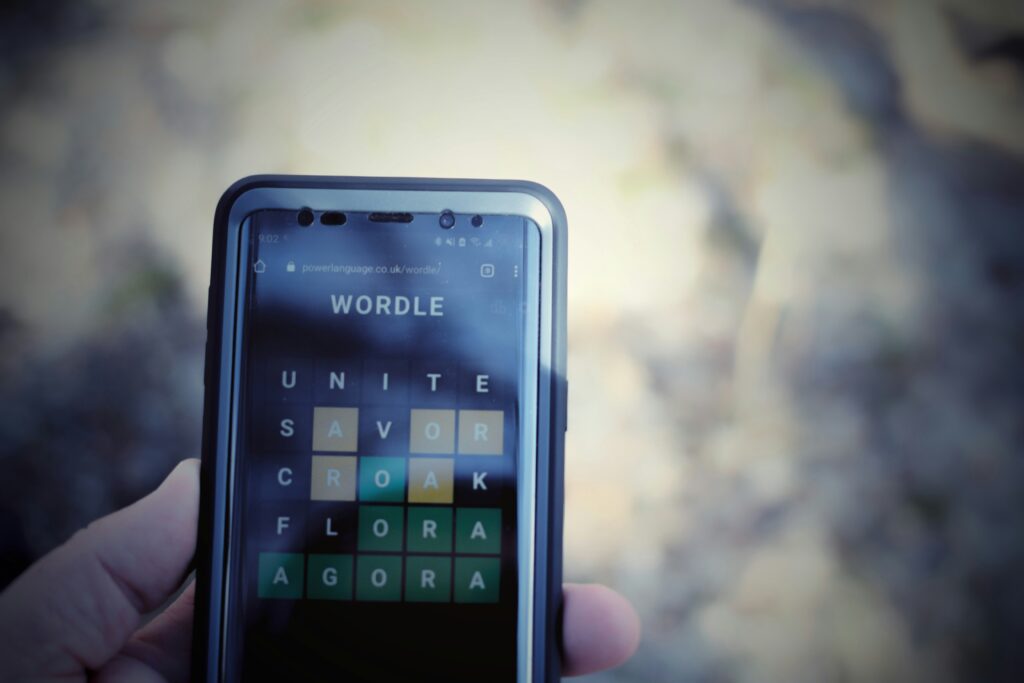
Wordle:

Unsplash. By Joshua Hoehne. Published on March 30, 2022

Whether it be for well-being or for fun, Wordle is a popular game that only takes 5-10 minutes to complete. Wordle helps with identifying patterns similar to other puzzle games. Wordle allows users to use creativity and strategic methods to solve a puzzle. Not only is it a daily dopamine booster, but it also improves cognitive health. On top of all the well-being benefits, you are strengthening the part of your brain responsible for language interpretation!


Tetris:

Pixabay. By MusicTobi. Published on November 23, 2017

Tetris is a game that has been around for multiple decades, and while it was an arcade game when it first came out, recent research proves that it actually improves mental health. Specifically, Tetris can reduce immediate involuntary memories for individuals who have been exposed to trauma. While it isn’t an independent cure to PTSD, playing the game does help with managing trauma flashbacks. Other research claims that Tetris helps with visuospatial processing, specifically through mental rotation and recognizing shapes. Similar to other games for improving well-being, incorporating 5-10 minutes of Tetris in your routine will help reduce overwhelming thoughts.


Flowy:

Unsplash. By Fabian Moller. Published on October 4, 2017

FLowy is a game designed for individuals struggling to manage panic attacks. This game uses your breathing patterns to control the puzzle you will encounter. The interactive game helps keep your breath under control in stressful situations. Plus, the game has a low-stress and engaging visual layout that helps create a calm environment. While this game does not replace treatment or professional therapy, it is a great way to manage the symptoms of anxiety and panic.


Just Dance:

Unsplash. By Vitaly Gariev. Published on September 22, 2025

Last but not least, Just Dance is a wonderful way to improve your well-being. The music, social interaction, and engaging movements in just dance create a stress-free atmosphere. Dance allows people to express themselves, leading to the release of positive emotions. Research shows that Just Dance and other forms of dance release neurotransmitters like serotonin and dopamine. Altogether, these neurotransmitters help reduce symptoms of anxiety and depression. The best part is, you don’t have to be great at dancing to start a Just Dance. Just call a few friends and follow along!


As we approach World Health Day (April 7th) and International Wellness Day (April 15th), remember that maintaining good mental health doesn’t have to be a serious task. Playing games, spending time outdoors and doing what benefits you most are all a part of well-being.


1,2,3,4,5,6,7,8,9,10,11,12