


Is it possible for us to be born with a predetermined memory engrained in our minds? Can we inherit recollections our parents experienced before they had us, some sixth sense that transcends beyond words? These are the questions that 10 year old Jo Nagai’s audience pondered in awe as they listened attentively to a tiny elementary school student presenting his science project about butterflies.
Curiosity Educates the Cat
Jo has always been fascinated by insects, his favourite by far being the swallowtail butterfly. Instead of being a short lived admirer like most of his peers, he would document their life cycle and strange behaviours often overlooked. He would dedicate entire school projects into researching butterflies; whether it was a question of what they would do if stuck in their own chrysalis or exploring obscure caterpillar species. By the second grade, Jo had accumulated hundreds of pages of notes and two awards for his research and dedication.
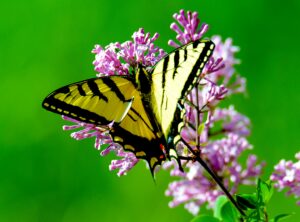
As Jo spent more time researching and looking after his butterflies, he began to notice something strange. Even when trying to free his catered insect children into the wild, they would fly back to him. This curious circumstance brewed up a thought inside the young Japanese child: Is it possible that butterflies retain their memories even after metamorphosis?
Skill Based Matchmaking
Coincidentally, Martha Weiss was a scientist that had answered this exact same question, but instead of butterflies, she tested moths. Her results demonstrated how moths indeed remembered their caterpillar lives before sprouting wings. This finding was considered highly controversial, as past literature had continued to insist that insects undergo a complete brain reset after metamorphosis. Obviously, this sparked Jo’s interest. Could his butterflies fly under the same umbrella? This excitement resulted in the 4 page long letter Martha received in her mailbox during spring 2022.
Despite Martha’s initial skepticism, the two eventually started working side by side as transnational scientist PenPal hybrids bound together for their love of insects. They regularly exchanged ideas on how Jo could recreate a house-material friendly setup and how to optimize the methodology, using Martha’s experiment as a baseline. By fall 2022, Jo sent Martha back a letter announcing his study was finished, tied up with a whopping 33 pages of how and what.
Inside the 33 Pages
The question was simple: If a caterpillar associates something unpleasant with a smell, would it still find the same smell unpleasant after it becomes a butterfly?
A group of butterflies received a mild electric shock every time they smelled lavender oil (the experimental group), while another group did not receive any shocks (the control group.)
After metamorphizing, the two groups were placed into a Y shaped tube maze. One arm served as the butterfly’s entrance, and the two other arms offered sugar water. One of them contained a cotton pad with a lavender odor.
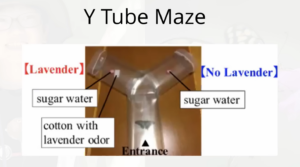
Jo first tested the control group. The untraumatized butterflies split between the lavender and no lavender arm evenly. Hypothetically, if the experimental shocked group had erased their caterpillar memories after metamorphosis, the results would parallel the control group.
However, Jo’s findings for the experimental group was surprising. 7 out of 10 butterflies avoided the arm with the lavender fragrance, a statistically significant finding.
Instead of ending it off right there, Jo decided to continue his research further. After breeding his butterflies, he noticed that the same ratio of lavender avoiding butterflies still appeared compared to the experimental group; despite receiving zero training.
Jo decided to breed his butterflies the third time. Low and behold, even the grandchild generation displayed parallel tendencies to their lavender-hating grandparents, Thus, with all due evidence, the conclusion was made that memories indeed persisted through one singular generation.
“I thought it was amazing that memories can be inherited, because they’re so small. And I thought the caterpillars are so cute when they’re young and they’re so cute even when they become adults. So when I found out these memories can be inherited, I fell in love with them even more.” – Jo Nagai
Sources
Pictures