Youth Are Awesome, commonly referred to as YAA, is a blog written by youth for youth.
YAA provides the youth of Calgary a place to amplify their voices and perspectives on what is happening around them.
Youth Are Awesome is a program of Youth Central.
Any views or opinions expressed on this blog belong solely to the author and do not represent those of people or organizations that the blog may be associated with, unless explicitly stated. All content is for informational purposes only.
In most objects we use, from cell phones to mirrors that we take for granted, electromagnetic waves play a major role. Even the visible light we see is a type of electromagnetic wave. The discovery of electromagnetic waves and our ability to harness them to send data across large distances is a notable advancement in humanity. In this blog post, we will be taking a look at how electromagnetic waves are produced, the electromagnetic wave spectrum, the history of electromagnetic waves, and some notable applications of electromagnetic waves.
How Electromagnetic Waves are Produced
Electromagnetic waves are produced by an acceleration of charged particles. The key is that there needs to be some changing and oscillating electric or magnetic field around a specific area. This change in the electric field, for example, induces a changing magnetic field perpendicular to the electric field, which induces a changing electric field perpendicular to the magnetic field and so on. These waves propagate in a direction that is perpendicular to both the electric and magnetic fields.
The Electromagnetic Spectrum
The electromagnetic spectrum is the full range of all types of electromagnetic waves that is organised by wavelength and frequency. The types of electromagnetic waves that are a part of the spectrum are: radio waves, microwaves, infrared, visible light, ultraviolet, X-rays, and gamma rays. All of these waves travel at the speed of light and are a form of electromagnetic waves.
History
Years ago, many philosophers and scientists believed that light appeared instantaneously rather than as a wave propagating across space. The theory of electromagnetic waves was first predicted and developed by the scientist James Maxwell. Years later, these predictions were validated by Heinrich Hertz, who was the first person to produce and detect an electromagnetic wave. In this experiment, Hertz used a spark-gap transmitter to accelerate charged particles to produce a radio wave and was able to detect it using a receiver with an antenna.
These developments later paved the way for scientists to determine the speed of light. The first accurate measurement of the speed of light was made by Albert Michelson. He used a rotating octagon-shaped mirror, with 8 sides, to shine a beam of light and reflect it to another mirror located a large distance away, and reflect it back to the next side of the mirror. Michelson rapidly spun the mirror to determine the time it took for the light beam to travel to the separate mirror and reflect back. He was able to find the time by determining the frequency of rotation of the mirror, finding the period and dividing it by the number of mirror sides. With some more calculations, he determined the speed of light to be 299,940 kilometres per second, which is extremely close to the modern accepted value of 299,792.458 kilometres per second.
Applications of Electromagnetic Waves
Currently, electromagnetic waves are used in a variety of different applications, ranging from telecommunications to optics. Radio waves are used to transmit signals over long distances, while microwaves are used for Wi-fi and satellite communication. The visible light we see is also a type of electromagnetic wave produced by the transition of electrons in atoms. The concept of electromagnetic waves is also the reason behind the function of mirrors and lenses. Another example of electromagnetic waves used in modern technology is the science behind fibre optics. This system uses the total internal reflection of light rays to send data long distances.
I think that one of the scariest choices a teenager faces is deciding what university they plan on making their future home.
Given that it’s application season right now, I’m sure a lot of us feel the same way: conflicted, scared, confused. So really, this all boils down to one question: How do I make the right choice?
To figure out what post-secondary institution fits you best, you need to understand yourself first. What kind of degree are you drawn to? How much does prestige matter to you? What kind of environment brings out the best version of you? Because sometimes, it isn’t the university itself that ends up mattering most. It’s the life surrounding it. Ask yourself: Do I want to live in a quiet or loud city? Do I prefer smaller classes or huge lecture halls? Do I want to stay close to home … or is my home waiting for me somewhere new?
And beyond just those logistics, there’s the pressure. Expectations from family, friends, and even your school can shape your decisions more than you realize. There are grades to think about, reputation, rankings, all of it swirling around until it feels like you’re one wrong choice away from ruining your life. But the truth is, there’s no such thing as a “perfect” university. It might feel like there’s one obvious answer right now, but people grow, and who you are today isn’t necessarily who you’ll be next year. Going to a smaller campus has never made you lesser. People may outgrow prestige, but they will never leave behind knowledge. Be smart with your finances, because in the long run? Your life is so much more than just a bunch of accomplishments put together.
Your path doesn’t have to look like anyone else’s. And whatever choice you make, it doesn’t define your worth or your future success. It’s just your next step.
What does matter is how honest you’re willing to be with yourself. A lot of us spend more time scrolling through Reddit threads and TikTok campus tours than actually imagining what we want our lives to look like for the next four years. It’s easy to get caught up in the aesthetics, the merch, the picture-perfect campuses. But eventually the excitement fades, and what remains is your everyday reality: the cafeteria food, the professors you see three times a week, the way campus feels when you’re walking alone at night or dragging yourself to an 8 a.m. class.
And remember: grades aren’t everything, even if it feels like they are right now. The right university should offer more than a name on a degree or diploma. It should help you grow, support you, and give you an environment that feels healthy for who you’re becoming.
So take the pressure off. Focus less on making a perfect decision, and more on making an informed one. Trust that you’ll grow into your path, even if it feels uncertain today 🙂
Once again, the Alberta Government has invoked the Notwithstanding Clause, a decision that has sparked controversy and ignited passion in the hearts of young people across Alberta.
What is Bill 9 and the Notwithstanding Clause?
Bill 9
You may have noticed that some students and parents/guardians were required to sign extra forms at the beginning of the school year. This was the work of three pieces of legislation that Premier Daniel Smith’s government passed that targeted trans youth. Bill 26 banned gender affirming care, such as sex reassignment surgery and hormone therapy. Bill 27 made permission from parents or guardians for a minor to use a preferred name or pronoun besides the ones assigned at birth, and lastly, Bill 29, which only allows for cisgender females to play in women’s sports. Now, on November 18th, Bill 9 was tabled in the Legislature. Bill 9 seeks to suspend court challenges against these bills by utilizing the Notwithstanding Clause, which was already imposed in late October with the Back to School Act.
Notwithstanding Clause
In Alberta, the Notwithstanding Clause has been used only twice prior to Premier Smith’s term. The Notwithstanding clause, section 33, was added to the Canadian Charter Rights and Freedoms as a way for governments to pass laws that would otherwise infringe on Canadian’s inherent rights during times of drastic measures. Premier Danielle Smith has stated that this action was necessary to protect children. Meanwhile, others have starkly different opinions on the matter.
Fighting Back
Many people, including the young people these bills are affecting, are speaking up against Bill 9. Previously, many people were outraged by Bills 26,27, and 29; athletes refusing to sign gender confirmation forms, school walkouts and protests. But now, students are rallying as they believe Bill 9 not only harms Trans Youth, but also bypasses democratic principles.
I had the opportunity to speak with Sammy Brigden, a Grade 11 student at Westmount Charter School, who organized a walkout on Thursday, November 20th, in protest against Bill 9. Later that day, over 1000 supporters rallied at McDougall Centre in downtown Calgary.
I decided to hold this walkout now specifically because Bill 9, which is likely to be passed by the government, uses the notwithstanding clause to prevent any consequential legal challenges to these three pieces of legislation that affect trans rights.
When they were first passed around two years ago, I was going to walkouts and protests then, but I feel like the cause has really become more important for more people to take part in because the government has started this pattern of using the notwithsatnding clause to override people’s rights and force things through parliament or through the legislature, and obviously that’s dangerous for everyone’s rights. What I said to people was, regardless of whether trans rights are an issue that you’ve been following, this is setting a dangerous precedent that we all need to pay attention to.
Is there a specific moment or person that inspired you to rally for change?
I was just in a silent rage for a long time, I think. In terms of being inspired to do the walkout when I was in grade nine at my previous school, there was a student in grade 12 who had organized a walkout to protest the legislation the first time it was passed, without the use of the notwithstanding clause. I was also really inspired by how students in public schools have been standing up recently through the walkout to protest the other use of the notwithstanding clause to prevent teachers from striking. Those two instances were specific walkouts that I could look to.
I expressed this when I spoke to the news, but I have just been tired of sitting down. Adults and people who are not a part of the trans community need to be doing more to stand up for trans kids right now, and I figured that this would be a visible way to encourage that.
Is there any advice you would give to fellow youth who would like to organize a walkout or protest?
It’s kind of like an experiment, because I’ve never done this before, but I feel like the things that we did were successful. Once we got the news that this was likely going to happen-that the legislation was likely going to be passed. We organized as fast as possible,
I worked with GSA leaders (of Westmount Charter). We made 400 pamphlets and just distributed them early in the morning. Regardless of how many people came to the walkout, it was a really good opportunity to talk to other students. Trying to start conversations with people is really important.
The last thing was just like, you know, and we checked with administration to say like, hey, if a walkout were to happen, wink, wink, what would the consequences be? Because I think having that clarity is really important, because, you know, it’s a scary thing to stand up and walk out of class, you know, because you’re putting yourself out there. I was so impressed by the bravery of lots of students because they were like, “My parents don’t support this at all. They, you know, like they like Trump and stuff like that”. And still they were there. So I think having that clarity is really important.
What are some final takeaways you would like readers of the blog to leave with?
For me, the walkout was super heartening because I was just so impressed by, you know, Westmount’s students’ courage and articulation and how willing they were to do something that is scary and even for some of them dangerous, to stand up for themselves and their peers. I think I was really heartened by how people really came together as a community to support one another, because I think that is a really important thing to do when your government isn’t helping you out equally.
Likely, this legislation will pass, and so the next phase, in addition to trying to fight the legislation, is trying to find ways to support one another because it’s a difficult time. I really hope that people who haven’t been involved in this already start to get curious because, from the beginning, it has never just been about trans kids’ rights. And especially now, we can see that pattern of behaviour of the government of encroaching upon people’s rights for political gain.
As early as possible, people need to start standing up for charter rights. I also think it’s important to just stand up for people in your community who are being legally disadvantaged right now. And that might just be being like, hey, I care about you, I see you. That’s important too.
Final Remarks
Bill 9 is not only threatening to the Transgender community, but it is a brutal awakening of the collapse of Canadian democracy. In times like these, when the government is adamant on steamrolling over our charter rights, we must work together. But also simply support each other. As the next generation, it is our duty to speak up when we see injustices; political action does not begin when you turn 18, and you gain the ability to vote. Citizenship and participation in democracy are rights that, try as they might, they cannot strip from us.
This past week, the Alberta Government has tabled Bill 9, a piece of legislation that, if passed, will utilize the notwithstanding clause to protect Bill 26, 27 and 29, which restrict the Trans Community. Students of Wetsmount Charter organized a walkout on Thursday, November 20, to show that they are not willing to sit by and watch idly as the government makes these decisions for trans children. Later that day, supporters and advocates gathered in downtown as well to show their support.
In an interview with Sammy Brigden, organizer of the protest, we spoke about the importance of youth standing up for our democratic rights and the effects of this legislation that will affect the future of the trans community and Albertans everywhere.
New Years resolutions are notorious for being short-lived goals, and with 2026 coming up fast we’re beginning to think about them again. How can we reinvent ourselves in the new year? What are some goals that we want to achieve?
While self-improvement can be motivating and fun, it can be hard to stick to the promises we make ourselves at the beginning of each year. As a normal human being, I have also created many New Years Resolutions that I ultimately never kept up with. 2025 is my first year that I have stayed true to my New Years Resolution, and I could only maintain this because I changed a few key aspects of my goal-setting. In this post, I’ve compiled a few tips that I found useful in this year thus far that have helped me stick to my 2025 Resolution.
Why do you want to change?
When you set out your goals, be sure to have a clear reason why you want to achieve them. Although motivation is fickle, having a strong motive will help you get started and stay with your goal throughout the year.
For example, my New Years Resolution in 2025 was to build muscle. I had many reasons:
prevent cognitive decline and reduce chances of dementia, something I learned in my psychology class
reduce muscle atrophy as I age
increase cardiovascular health (my family has a bad history)
reduce chances of diabetes (my family has a bad history with this too)
increase endorphin release and happiness
increase focus
help joint stability
reduce chances of injury
The more reasons you have and the more they resonate with your core values, the harder it is to put the goal down.
How will you accumulate?
Self-improvement and growth are incredibly important, but the end destination often holds us in a chokehold and prevents us from answering the important question: how are you going to achieve these goals?
For example, it’s easy to say that you want to get 100% in your Physics 20 class because you want to be an aerospace engineer someday. But how will you do that? Will you study for an hour every day after school and 3 hours on weekends solely on physics? Will you attend each tutorial time?
Pick something that is easy to do on most days. Remember, you don’t rise to the level of your goals, you fall to the level of your systems. In order to create a system you can stick with, you need to make sure that it’s so easy to maintain that you could do it on your worst day. When you feel better, you can add on more.
For my 2025 goal, I chose to go running for 15 minutes at least twice a week, and to weightlift for 5 minutes after. I already really liked running, but it was hard to keep up every day when I was used to running only during PE class. Starting small and then gradually building up when I felt like I was ready significantly helped me keep to this resolution. I changed speeds, I changed inclines, and I increased time, but I did all of that on top of the bare minimum. 15 minutes was just feasible enough for the worst version of me to do, which made it easy to stick with.
For reference, I could barely keep running for 15 minutes total in January and I can now run 5k in 30 min.
When will you do this?
Another important aspect of goal setting is clearly envisioning yourself accumulating to reach the end goal. When will you fulfill your bare minimum days?
Make it flexible, and make it fit your schedule. Add a “most of the time” to your goal. This means that even if you miss a day or a week, it doesn’t ruin your consistency because you were flexible enough with the initial plan.
In my example, my goal was “to run 15 minutes and weightlift 5 minutes twice a week most of the time”. I sprained my ankle in March and couldn’t walk for a month and a half, but I was able to get back up when it healed and continue with my goal because I could still achieve “most of the time” if I ran for the rest of the year.
Measuring Progress
What is your measurement of progress? How will you know if you’re making any at all if you don’t track this?
Progress is another major motivator. Again, although motivation is fickle, a little bit of it here and there after the initial January push happens never hurts. It keeps you on track. Try to track quantitatively so that your mood won’t affect your results.
For example, if you want to drink 2L of water every day to improve your energy levels, you can track the amount of time you focus for. Maybe you can only focus for 10 minutes at the start of the year, and maybe at the end of the year your hydration helps increase your forcus to 30 minutes. Or, if you want to get better grades by studying a few hours every day, track the amount of knowledge you can retain through apps like Anki and Quizlet and how your grades reflect your effort.
I measured my progress through my speed and the time I could run consistently for. I gave you some numbers – that’s not just to show my progress but also to help motivate me because there’s a clear “before” and “after” that comes from my hard work.
You can set a target to meet this way as well. You will have a way of actually measuring how close you are to the end goal.
TL;DR
Setting goals and constantly improving ourselves is important. But sticking to those goals is the reason we make them, so sometimes we need to take a step back to reevaluate. Here are some key things to keep in mind as we take on 2026:
Lucky numbers have fascinated people for centuries. From the number seven being considered lucky in Western cultures to eight being seen as lucky in China, numbers have often been linked to fortune, fate, and chance. Many people pick lottery numbers, make important decisions, or even schedule events based on these beliefs. But when we look at it through the lens of mathematics, the idea of lucky numbers is more about perception than probability.
In reality, numbers themselves do not have inherent luck. Every number in a fair game, like a lottery or dice roll, has the same chance of being selected as any other number. Seven might feel lucky because of tradition or culture, but mathematically it has no better chance of appearing than any other number.
Probability myths often extend beyond just lucky numbers. People tend to see patterns where none exist, a phenomenon known as the “gambler’s fallacy.” For example, if a coin lands on heads five times in a row, many believe tails is “due” next. In truth, each flip of a fair coin is independent, meaning past results do not affect future outcomes. Similarly, in games of chance, numbers that appear less frequently are not more likely to appear in the next round. Probability is always based on the rules of the system, not on past patterns or personal beliefs.
Cultural associations with numbers also shape our perception of luck. In some cultures, certain numbers are avoided because they sound like words associated with misfortune, while others are celebrated because of positive associations. While these beliefs can influence behavior, they do not change the underlying mathematics. Probability and statistics operate independently of superstition, relying only on chance and measurable outcomes. Understanding this distinction is important, especially when making decisions that involve risk. Believing in lucky numbers or patterns can lead to overconfidence or poor judgment, especially in gambling or financial decisions.
The truth is that probability is predictable and measurable, but luck is not. Each event in a fair system has defined odds, and no number is inherently more likely to occur than another. Recognizing the difference between superstition and mathematics can help people make better decisions, avoid common mistakes, and understand the real role of chance in everyday life. While it can be fun to pick a “lucky number” or follow traditions, it is important to remember that probability is governed by laws, not beliefs. Understanding probability myths allows us to see beyond superstition and appreciate the patterns and fairness that mathematics shows, giving a clearer picture of how chance really works.
When should one begin to indulge in the Christmas spirit? Many stores would agree on right after Halloween is over. Some find anything before December 1st premature. Me personally, I think anything before the first week of December is obnoxious – but as I walked through downtown Calgary this weekend, I couldn’t help but feel excited seeing mini Christmas trees in shops and colorful lights strung on walls.
As November drags on in Calgary, temperatures get colder and skies get grayer. Perhaps it is through this dreary limbo of slush and gray frost that we all start looking forward to Christmas time. A marshmallow world of hot chocolate, snowmen, Christmas carols, and of course, good food. You know, maybe I can get behind Winner’s stocking Christmas items on November 1st. Because honestly, I wish it would come sooner too.
So, as we approach the Christmas season, here are some fun activities/events to check out in Calgary. As Mariah Carey might say… it’s timeeee!
ZOOLIGHTS
Where: The Calgary Zoo
When: November 14th – January 4th (tickets available)
What: Enjoy a fun night with family or friends at the Calgary Zoo, under twinkling lights, with good food, doing various fun, and with interactive activities. Visit themed areas like the Festive Forest, Sugar Plum Station, and the Rocky Mountain Trail. You can also enjoy interactive activities such as carousel rides, axe throwing, and cozy fire pits, while sipping hot chocolate and exploring festive animal themed displays. Santa and his elves make appearances for meet and greets, and dining options include festive buffets and private “snow globe” experiences.
MARKET COLLECTIVE HOLIDAY MARKET
Where: The BMO Center
When: December 5 – 7, 12 – 14 (check website for specific times)
What: The Market Collective Holiday Market in Calgary is a creative holiday bazaar held over two weekends at BMO Centre Hall D. With more than 160 local artisans (many brand new-to-MC), the market offers a curated mix of handmade goods, art, food, and vintage finds. You can also find interactive workshops (like card making and pottery), live performances, a kids’ zone, and even Santa portrait sessions. Admission is $10 for the weekend and free for kids 12 and under.
HERITAGE PARK’S “ONCE UPON A CHRISTMAS”
Where: Heritage Park Historical Village
When: December 6–7, 13–14, 20–21, and 22–23, 2025, daily from 10 a.m. to 4 p.m.
What: “Once Upon a Christmas” at Heritage Park is a charming, old world holiday celebration where visitors can wander through a historic village decked in festive decor. The event features horse drawn wagon rides, roaming carolers, a Christmas market, and visits with Santa. New for this year is a Heritage Holiday Train ride a winter train trip around the park to soak in the holiday magic.
Often, politics feels like a game of those in power, with consequences for the public. Political donations help parties run campaigns, which in turn shape public messaging and influence the attention given to various issues.
But with all the talk about big donors and party fundraising, young people are left to wonder: Who’s really shaping the policies that affect our futures?
“Political Parties and the Power of Fundraising” Inevitably, every political party in Canada will rely upon donations to survive; advertising, outreach, staff, and research cost money. While Canada does have strict laws ensuring the limitation of big-money influence, parties with stronger fundraising teams can build louder, broader campaigns. That means the groups that donate the most, whether it is individuals, unions, or community networks, it can help spotlight certain issues over others. The louder the funding, the louder the message is.
Youth Voices vs. Deep Pockets Young Canadians have invariably conveyed feelings of being sidelined in political conversations, even though issues like climate action, housing affordability, and mental health support hit us the hardest.
When wealthy donors or organized interest groups dominate political fundraising, youth priorities may slip to the bottom of the pile. But here’s the catch: youth engagement, such as voting, volunteering, and advocating, can completely shift the political agenda just as powerfully as donations and create change for the better.
Politicians shouldn’t go where the money is; rather, their duties rely on representing the public, so they have to follow the action. Right now, much of the youth don’t vote in elections, especially municipal elections, which can skew the resources and accessibility available to us on a local level. If you want to learn more about the importance of municipal voting, check out my previous blog here.
If Money Talks, Then So Can We While yes, money shapes politics, it doesn’t control the whole story and doesn’t have to be this way. Young people have numbers, passion, and lived experience on their side.
So let’s use it. Register to vote, research and hold representatives accountable, learn how party platforms are built, show up at town hall, and support candidates who reflect your values.
If we speak loudly and consistently enough, politicians will listen. Your voice is worth more than any donation. Use it.
Nowadays, women have the right to vote. However, when we look back into the history book, women didn’t get their voting rights until the 19th to 20th century [1]. During that period, many powerful pioneering ladies stood up and fought for the voting rights for women. The first lady to bring voting rights to women is Kate Sheppard.
Background information:
Catherine “Kate” Wilson Sheppard (née Malcolm) was born on March 10, 1847, in Liverpool, England, to a Scottish family. After her father’s death in 1862, she lived with her uncle, who influenced her with Christian socialist values. In 1869, her family moved to Christchurch, New Zealand. [2]
Activities and achievements:
She started by joining the Leader of the Women’s Christian Temperance Union (WCTU) in 1885 and became a powerful political force for suffrage, education, and social reform for women. She also founded and served as the first president of the National Council of Women of New Zealand in 1896 to fight for equal pay, women’s legal rights.
Sheppard held three huge petitions between 1891-1893. The 1893 petition was massive and influential: 32,000 signatures and over 270 meters long. The impact of the petition was huge and pressured the government to take action. Her advocacy won the right for women to vote in New Zealand in 1893, which made New Zealand the first democratic country in the world to allow women to vote (1893 Electoral Bill).
Sheppard also spoke strongly for divorce law reform, women’s financial rights, education for girls, and better working conditions, with a wish for equality in all parts of society. [2]
Legacy
Kate Sheppard becomes New Zealand’s most iconic and influential feminist figure. Her impact is acknowledged by appearing on the New Zealand $10 banknote. People build statues and coordinate exhibitions in museums to honour her. Plus, there are countless books and documentaries about Sheppard, too. What’s more, she inspired women around the world to continue to fight for their rights as a successful pioneer. [3]
Conclusion:
We’re grateful for the lasting impacts of her contributions and legacy in fighting for women’s rights, especially the right to vote. Her dedications and activism transformed New Zealand’s electoral landscape and encouraged women to rise up and fight for their rights. Her story reminds us to always stand up to protect and fights for our rights and others’ to make our society a better place.
Before you start reading, I want you to look at the little robot guy in the featured image of this article. He looks so cute, and you want to be nice to him, maybe even be friends with him. But it’s important to remember he isn’t real; his “feelings” or “thoughts” are a general amalgamation based on the data of a hundred thousand human feelings and thoughts. Now imagine (you don’t really even have to) AI creating lifelike imitations of your favorite characters or celebrities you could directly chat with, even call. Consider this as you read.
AI in Social Media
We’ve all seen those videos circulating social media platforms at the moment. Those fever dream, hyper-realistic videos of the Youtuber/boxer Jake Paul showing us how to get glam, debriefing a Sephora haul, or trying on various flamboyant outfits. It was quite jarring to see this on my feed for the first time, in the way that I was very confused.
I understood that it was generated content, but the context and the realism scared me. AI’s ability to create such lifelike videos felt terrifying. It feels like just weeks ago when we all became enthralled with the viral clip of Will Smith shoving spaghetti into his ever distorted mouth.
AI generated content, in both writing and media, goes beyond Jake Paul doing GRWMs. It seems to be everywhere. Making the distinction between human and not has become an increasingly difficult skill (which is very uncanny, very dystopian). You’ve seen it – even if you haven’t realized it (which is kind of the point). Those videos of bunnies or raccoons jumping on trampolines, ASMR – type videos asking what plate of food you would devour in 24 hours (personally, Italian), and even in advertisements for notable brands? Those are AI generated. AI content is quite everywhere, and it’s getting hard to tell what’s real and what’s not.
To help, I decided to compile a list of tips to hopefully help you better navigate our AI ridden digital landscape.
Real life, or imitation?
Ways to know:
On people, look for:
misplaced or body parts
unnaturally smooth skin, or smooth textures in general
bizarre, unnatural, or impossible positioning
inconsistent shadows or highlights
unnatural or uncanny movements
blurred backgrounds, or movements that blur/blend together
conventionally attractive people (just that AI tends to generate conventionally attractive people), or people missing many unique characteristics or subtleties
On other images/videos, look for:
unnaturally vibrant colors
audio that doesn’t match the video
backgrounds that simply do not make sense in the context of the image
background text or text that is gibberish or nonsense
an uncanny sheen or glossy quality to an image
a defiance of physics
watermarks (typically Sora), or a blurred area where a watermark may have been edited out
Trust your gut. We often have a sense that something is not right.
Although it’s kind of funny that we’re using this incredibly powerful technology to generate Jake Paul as a femboy, it’s important to realize the dangerous potentials and uses of it as well. With a still image of your face, or just a short clip of your voice, you can essentially be cloned online. And your clone can do things, or say things you never did. I hope everyone reading can try utilizing these tips, and is reminded to stay vigilant and safe in their online endeavors.
Seeing isn’t believing anymore. Please, if you can, try and go outside, experience things genuinely and away from a screen. Support other humans, connect with real people. Now, more than ever, is this so very crucial to the condition of our society.
We were all little kids once, and most of us still feel like one sometimes. Childhood is a beautiful thing, but can be extremely frustrating at times…
Raw, uncontrollable emotions, social difficulties, constant new environments and situations to process. One of the most frustrating things to deal with… Adults and the things they say that sometimes just don’t make sense or feel dismissive and unhelpful. To interact meaningfully with a kid, you must get on their level – so, coming from someone who has worked with tons of kids and is also one herself, here are what (most) kids just don’t want to hear.
“Last time I saw you, you were just a baby!”
“Sure, but I’m this big now, so why are we talking about the last time you saw me?” It simply has no meaning (accept it, they don’t know who you are). Don’t get me wrong, it’s perfectly fine to seek a connection, but this isn’t the best way…
It’s irrelevant to whatever is happening (and most kids are more interested in what is currently in front of them anyways) and awkward because they don’t know what to say to that (think about it for a second – what do you say?) “Cool. I don’t remember.” Kids want to be seen for the person they are now, not measured and compared to a past version.
“Kids these days…”
Kids these days are different from kids in your days. They don’t use outdated systems like cursive writing, morse code or even analog clocks. Whether they are learning how to hem a skirt in school or not isn’t a reflection of the education system or the child’s potential and success, because they need to learn about concepts and tools that will be prominent in parts of their lives and future, like computer literacy, artificial intelligence, digital footprint and climate change.
“Aww, what a big word! How cute.”
Laughing or teasing a kid for their earnestness only hurts. They feel judged and misunderstood and might refrain from expressing their ideas and experimenting with more complex concepts and language. Just because they were babbling babies once doesn’t mean they will always be.
“Calm down, you’re fine. / My problems are much worse.”
It is crucial to validate a kid’s experience and show them you care and understand why they are upset. It isn’t helpful to boss them around or tell them what to feel, but it is to have a conversation about their emotions and then plan together so you can solve the problem as a team. Kids don’t just have a shorter emotional scale; they have a different scale entirely. You are at a completely different point in your life- this problem, this moment, is that kid’s whole world right now. Trust me, we remember how others responded far better than we do what we were unhappy about.
“Soon…”
This one is obviously not a long-term issue – just something that always annoyed me as a little kid. How soon is soon? I had no idea, so naturally I would keep asking when x was going to happen. In my opinion it’s best to give kids an actual number and stay true to that number so they start to develop the self control to wait, and awareness of how long the wait is.
“You should be happy for them!”
You could talk about why winning the Lego tower competition can be a happy thing for someone else even if it isn’t for you, but again: forcing emotions isn’t good.
“Because I said so.”
I’ve never met a kid whose blood doesn’t start to boil when they hear this phrase. It shuts down curiosity, refuses an answer and doesn’t explain why a rule exists. Don’t make kids feel annoying just for wanting to learn. It’s important to question why something happens so they can become caring, inquisitive individuals, rather than having communication be shut down in their face every time they wonder.
“We can talk about it later.”
Later = never. Kids know this. It feels like their concern is being dismissed, even if that is rarely the intention.
“You’re too young to understand.”
Then help me understand…? Kids feel underestimated or excluded when adults use this around them. They might feel patronized, because they live in the present, not the vague future like adults always seem to be. They want to feel included and will probably understand the concept better than you think.
Conclusion
Kids deserve respect, recognition, clarity, and validation. They should never be underestimated or compared, because those tiny humans who can’t find backpacks in the morning often have big ideas that will change the world. Give them the love, the patience, and the credit they deserve—they might just surprise you with wisdom that’s way beyond their age (or bedtime).
While unknown to a majority of Canadians, Canada actually does have a senate. Within Canada’s political structure and systems, an often forgotten part of it, that is glaringly undemocratic is the Senate. The senate composed of 105 seats, distributed from throughout the country, are individuals appointed by the governor general, on the advice of the Prime Minister, and completely not elected, undermining democratic representation needed for a true democracy.
As well as the fact, they can serve from the moment of appointment till the age of 75, with an incredibly slim way of exiting such a role, no matter their personal interference with the democratic processes through big corporations, or influence within the election.
Why Is It Undemocratic?
Sitting in powerful chambers within Parliament, majority of Canadians neither are aware that Canada has a senate and neither that they have absolutely no say in who is to present their province. Meant to serve as a method of obtaining a ‘second-thought’ on bills being passed, senators obstruct passing of bills that reflect the will of citizens, as they are not held accountable to any citizens and are free to pursue their own self-interest.
Philosophical Lens
Philosophers such as Rosseasu, argued through his works, that a true democracy must be rooted within the will of the people it is meant to represent, which cannot occur if Canada has Senators appointed to spew their oligarchy-like influence, separating the public from decisions and governance.
Many have called for the removal of this process, such as former NDP leader, Jack Layton, who recognized the senate as a massive contradiction to Canada’s identity as a democratic nation. It is institutions and processes, such as the Senate, that slowly chip away at the influence of the true will of Canadians, and encourages disengagement within a system that is meant to run on the people
TL;DR
It is impossible for the entire will of Canadians to be continued to be recognized with the Senate.
Imagine an early morning when you’re on the train, battling the noise of several groups of people. The urge to just go back into bed to feel peace and silence. The overflow of words and weird sounds makes your mind. Everything starts feeling irritating until the moment you put your earpods in. Boom, all the sound disappeared in a split second. All of a sudden, the only thing you hear from your noise-cancelling headphones is the audiobook you have been wanting to listen to for ages.
Wanting to experience peace and silence among the rushed and noisy city is a desire almost all of us have experienced. The only thing protecting us from having to tolerate the clamour is a pair of noise-cancelling headphones. Have you ever wondered how this magical feeling of muting out the world occurs? In this article, we will explain the wonderful magic that your headphones can perform with the simple switch of a button!
Sound Explained:
Unsplash. By Pawel Czerwinski. Published on April 9, 2021
For starters, sound is an energy which reaches your ears in the form of a wave. As many of us may have learned in elementary school, sound is essentially vibrations which force air particles to move, creating different wavelengths. The stronger the speed of the vibrations, the further sound travels. The human ear only catches vibrations of certain wavelengths, wherein the slowest it can hear is 20 vibrations per second or Hertz.
What Is Noise Cancellation?
Unsplash. By Ilyuza Mingazova. Published on March 6, 2020. A Loud Public Place
The most basic level of noise blocking, which occurs, is passive noise cancellation. This is essentially any physical barrier preventing sound waves from reaching your eardrums. While this seems simple, it is unique in headphones because companies assess how noise is effectively blocked to design earpods which will fit into various ear types. While passive noise cancellation works for some situations, the true technology behind active noise cancellation involves more technology.
Active Noise Cancellation Explained:
Pixabay. By Yuxin Huang. Published on June 10th 2020.
More specifically, there are microphones placed outside the headphones to pick up any external sounds coming from your environment. Based on these sound waves, your headphones create the opposite sound waves to mute out the external sound. This is known as destructive interference. Your earpods have a mini circuitry which produces the opposite sound by reversing the troughs and crests (lowest and highest points) interpreted in the wave. Interpretation occurs in a digital signal processor(DSP). This processor is multifunctional, in which it produces spatial audio sensation and maintains balance among the bass, mids and treble. Altogether, destructive interference zeroes out the noise, creating a noise cancellation effect which allows you to listen to your music in peace.
Other Questions About Noise Cancellation?
Pixabay. By StockSnap. Published on August 4, 2017
Is Noise Cancellation Harmful for Your Ears?
The noise cancellation feature does not harm your ears as it is just enhancing the clarity of the sound you are listening to and not raising the volume in any way. Nevertheless, you must maintain an optimal volume when listening to music since loud music can damage your eardrums if listened to for long periods of time.
Why does Noise Cancellation not block off sounds completely?
While noise cancellation is effective in most situations, earpods with ANC might not be able to use destructive interference in loud environments. This can occur if sound isn’t being interpreted properly by the DSP, if loud sounds are occurring suddenly, and if sounds are at extremely high frequencies.
Which Companies make noise-cancellation earpods?
While many companies produce different types of Active Noise Cancellation headphones, the most common is the AirPods. Other companies include Bose, Sony, Samsung, and Beats, among others.
Which is Better, ANC Headphones or Earbuds?
While both have pros and cons, headphones are more effective in noise cancellation considering their size and ability to deliver enhanced sound quality. Earpuds are the convenient option for many people, thinking that they can be wireless and portable.
Can I Wear ANC Earpods All Day?
Like most other devices, excessive use is discouraged because it can lead to ear damage. While ANC itself doesn’t cause damage, your ear needs a break. A common rule for headphones is 60/60, wherein you take breaks every 60 minutes and listen to audio at no higher than a 60% volume.
Gold has always been seen as a safe place to store wealth, especially when the economy feels uncertain. In 2025, many experts think gold will stay strong and may even rise higher before the year ends. But what exactly are analysts predicting, and what would those prices look like in Canadian dollars?
Gold has already been doing well in 2025, partly because central banks and investors are buying more of it. When the economy faces inflation, rising debt, or conflicts around the world, people often turn to gold as a “safe” investment. The price of gold is mostly measured in U.S. dollars, but for Canadians, it’s important to convert those prices to see the real impact here.
Speculative Estimates
According to J.P. Morgan, the price of gold could average around US $3,675 per ounce by the end of 2025. Goldman Sachs recently raised its forecast to about US $3,700 per ounce, while HSBC predicts an average closer to US $3,355. A poll by the London Bullion Market Association (LBMA) found that most analysts expect gold to sit near US $3,324 per ounce by the end of the year. These predictions suggest that gold could continue its upward trend, especially if interest rates begin to fall or if uncertainty in global markets continues.
If we convert those numbers into Canadian dollars, using an exchange rate of about 1 U.S. dollar = 1.35 Canadian dollars, that means one ounce of gold could cost between CAD$4,450 and CAD$5,000 by December 2025. That’s a significant value, showing how the Canadian dollar exchange rate can affect how expensive gold feels locally.
Experts point to a few key reasons for these higher forecasts. First, central banks around the world are buying more gold to diversify their reserves and rely less on the U.S. dollar. Second, lower interest rates make gold more appealing since investors don’t lose out on interest earnings by holding it. Third, global uncertainty, such as wars, elections, or debt concerns, pushes more people toward safe assets like gold. Finally,investor demand is growing, not just from jewelry buyers but also from technology companies and gold-backed funds.
Associated Risks
However, there are also risks that could hold gold back. If the U.S. Federal Reserve decides not to cut interest rates or if inflation cools faster than expected, gold prices might not rise as much. A stronger U.S. or Canadian dollar could also make gold less attractive in local currency. And if global markets calm down, investors might shift money away from gold and back into stocks or other assets.
For young Canadians, this trend is a great lesson in how global events affect prices. Watching gold helps you understand how economics, currencies, and investor confidence all connect. Even if you’re not investing yet, knowing why gold moves up or down can help you make smarter financial choices in the future.
By the end of 2025, gold is expected to sit somewhere between CAD $4,500 and CAD$5,000 per ounce if current predictions hold. Whether it rises higher or levels off will depend on what happens with interest rates, inflation, and the global economy. Either way, gold remains a fascinating example of how the world’s money systems are linked.
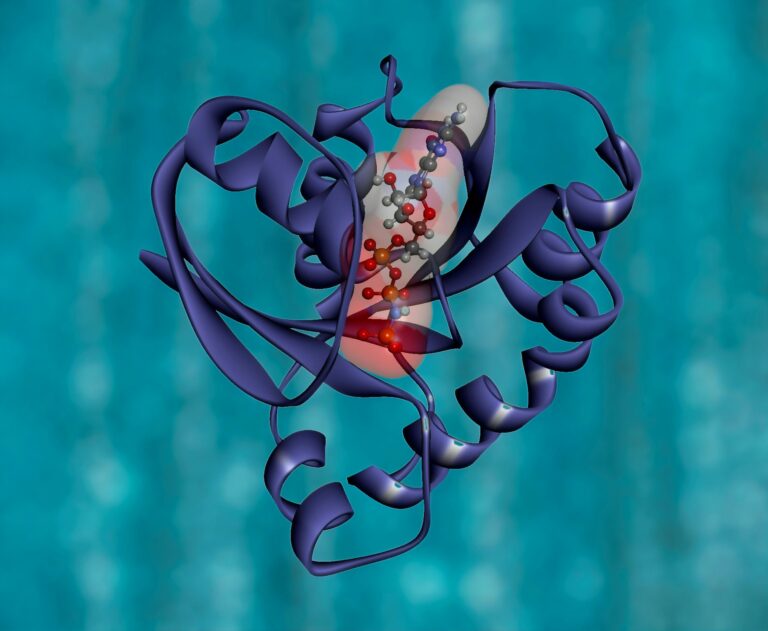
For decades, humanity could not find the answer to one of the most interesting queries: the manner in which proteins fold. These essential building blocks of life are the scripts that determine everything – from your muscles to your organs, and even the minuscule enzymes that digest the food you eat! However, the proper function of a protein is entirely dependent on precise folds that transform it into a particular 3D shape. Predicting that shape from its sequence of amino acids was once dubbed the “protein folding problem”, as no one could discover the magic formula that allows them to twist into such shapes.
Then came the arrival of AlphaFold, an artificial intelligence created by DeepMind, a research company owned by Google, the search engine we all know that surprisingly owns many other ventures outside of web browsing. In 2020, AlphaFold did something scientists had struggled with for over 50 years – it successfully predicted the structures of proteins at an accuracy never seen before. This moment was so groundbreaking that many experts compared it to the groundbreaking discovery of the DNA double helix, all the way back in 1953.
Why Protein Folding Matters
To understand the significance of AlphaFold, imagine proteins as tiny, yet powerful machines inside your body. Each protein’s shape determines its specific purpose: whether it builds tissues, breaks down food, or fights viruses. If a protein folds incorrectly, it can cause grave diseases like Alzheimer’s or cystic fibrosis because these misfolded proteins can clump together to form deadly plaques and tangles that affect the function of various body parts.
Before AlphaFold, figuring out a single protein’s shape could take scientists years of experiments using extremely expensive equipment, such as X-ray crystallography. However, with the aid of AI, the timeline of this research is reduced all the way to the span of minutes!
How AlphaFold Works
AlphaFold uses a unique subset of machine learning called deep learning – the same kind of technology that helps AI recognize faces or play chess. It was trained on thousands of known protein structures and learned to “see” or recognize how amino acid chains fold into their final forms.
Using this training, AlphaFold is now able to predict the 3D shape of nearly any protein with remarkable precision. It doesn’t guess the shapes randomly, hoping for the best. Instead, it uses data, physics, and pattern recognition to make logical predictions that rival real-world lab results.
The success of AlphaFold was proven in an international challenge called CASP (Critical Assessment of Structure Prediction), where it outperformed nearly every other method by an unimaginably huge margin! It scored at a near-perfect rate, a feat that scientists stipulated would arise decades later.
Why It’s a Big Deal
AlphaFold’s breakthrough has completely revolutionized biology as we know it today, and probably as we will know it for a couple of years. In 2022, DeepMind released the AlphaFold Protein Structure Database, which now includes structures for nearly every protein known to science — over 200 million of them, hundreds of millions more than science just a few years ago was aware of. This means scientists around the world can instantly study how a protein looks and behaves without waiting months or years for lab results, saving lots of time as well as dramatically cutting the costs of expensive resources.
Conclusion
AlphaFold is a powerful example of how ethical AI use can alter the course of humanity for our good. What took human scientists decades, a machine learned in just a few years – not to replace humans, but to help us explore life at a level we’ve never seen before, and most likely wouldn’t have seen for a while.
So, the next time you hear about artificial intelligence, remember: it’s not just changing technology — it’s changing how we understand life itself!
Everybody knows about the legend of Frankenstein – a stormy night, a green corpse, and a cry that pierces the darkness. For centuries, that story lived within the confines of fantasy. But today, advances in biotechnology are bringing us closer than ever to creating life’s most complex systems – not from stitched-together limbs, but from lab-grown organoids.
What Are Organoids?
Organoids are miniature, lab-grown versions of human organs, capable of mimicking the structure and function of real tissues. They are built from stem cells, cells that can recreate functional tissues, and they transform what was once a flat petri dish into a tiny, living model of human biology.
The uniqueness of organoids lies in their technical advancement over simple cell cultures. They are three-dimensional and self-organizing, unlike their 2D cell culture counterparts. These attributes allow for increased functionality, as with the right chemical signals, stem cells can fold, layer, communicate, and specialize into tissues resembling the brain, liver, kidneys, retina, and even the gut. A single organoid might be no larger than a minute grain of rice, yet it has the power to sparkle with electrical activity like a developing brain or detect light like a miniature eye.
Where Did This Begin?
The roots of organoid science and the creation of miniature body parts stretch surprisingly far back. In 1907, biologist H.V. Wilson separated the cells of a sponge and discovered the powerful ability the cells possessed: their ability to reassemble. Detached from their original structure, they still “knew”, in a sense, how to rebuild through adhesion proteins and chemical signals.
Over the course of time, this idea has evolved significantly, naturally due to increased understanding of how stem cells develop and how chemical cues guide them. Today, researchers use pluripotent stem cells, master cells capable of becoming any tissue in the human body, unrestricted by structure or function. By carefully controlling various factors such as nutrients, temperature, and growth factors, scientists are able to successfully guide these cells to form complex structures that succeed in replicating their designated organ. What once seemed like wild fantasy has now become a cornerstone of modern biomedical research!
How Organoids Are Transforming Medicine
Organoids are highly impressive, but the marvels don’t end just yet. They are equally reshaping the way in which we study diseases. Due to the fact that they can be grown from a patient’s own cells, organoids allow researchers to test treatments on a personalized model, instead of relying on generalized results. This permits doctors to directly see how your biology reacts to the treatment, giving rise to the further advancement of personalized medicine – treatment that represents the individual over the collective.
From Fiction to Compassionate Science
In the past, Mary Shelly envisioned the reanimating of the dead with lightning, but today, our story is very different. Instead of creating monsters, scientists are cultivating hope, pushing the boundaries of what is possible. Though this goal was parallel to that of Mrs. Shelly, modern science reaches it not through the fear of the dead and complex experiments, but through precision, compassion, and an understanding of the human body that continues to deepen.
Though they might be tiny, their impact is truly profound, giving hope to millions of patients and families all over the world, one tiny organ at a time.




 What does matter is how honest you’re willing to be with yourself. A lot of us spend more time scrolling through Reddit threads and TikTok campus tours than actually imagining what we want our lives to look like for the next four years. It’s easy to get caught up in the aesthetics, the merch, the picture-perfect campuses. But eventually the excitement fades, and what remains is your everyday reality: the cafeteria food, the professors you see three times a week, the way campus feels when you’re walking alone at night or dragging yourself to an 8 a.m. class.