In the new millennium one of the biggest issues we face is the rising sea levels and melting of the ice caps. Island nations are predicted to be fully submerged if sea levels continue to rise at their present rate. Global Warming a phenomenon with the average global temperature rising since the 1880; has progressively worsened as industrial powerhouses like China and the United States try to meet demands and CO2 emissions increase as a consequence. The immediate effects of pollution from factories and automobiles can be observed in China with vast amounts of smog covering the Beijing skies affecting the respiratory health of the citizens. Unfortunately, these dangerous health problems plaguing the Beijing people has not deterred the government of China to reduce carbon dioxide emissions anytime soon. However, a new method to generate electricity known as Nuclear Power has gained popularity in China. As of today, China has 37 nuclear reactors operating and 20 more are under construction. Nuclear power generated 3% of the electricity in China in 2015. Nuclear Power could be an alternative to burning coal and fossil fuel to generate electricity in the future.

Nuclear power plants use heat produced from the splitting of uranium atoms, Nuclear Fission creating steam which drives turbines and generates electricity. Nuclear power has its own pros and cons that make it both a viable and non-viable method for generating electricity.
Reduces output of Greenhouse Gas Emissions
Proponents of using nuclear power as an alternate energy source argue that less quantities of fossil fuels are burned and less toxic by products such as CO2 and SO2 are released. The burning of fossil fuel releases toxic pollutants that harm lung health and cause cancer. Greenhouse gases are released into the atmosphere to be breathed in by people damaging their internal respiratory system. Long-term exposure to air pollution causes premature death and accounts for 5.4% of all deaths worldwide. Ultimately if drastic measures and standards are in placed to prohibit the burning of fossil fuels Global Warming would cease to exist. A alternative method such as nuclear energy would replace fossil fuel without creating toxic pollutants. Unlike burning fossil fuel, nuclear power does not release any emissions into the atmosphere and produces nuclear waste instead.

Nuclear Waste
Opponents of Nuclear Power argue of the waste produced from spent nuclear fuel which is highly radioactive and contains toxic chemicals such as plutonium. The radioactive waste must be cautiously stored as it poses a threat on humans until it naturally decays. Exposure to radiation can cause changes in DNA and long term exposure has been associated with cancer. Ocean disposal and simply burying the toxic product have been implemented throughout the years. If properly disposed nuclear waste does not pose a threat and will eventually become safe as it decays over thousands of years. Nuclear waste can be safely disposed of without inflicting permanent health damages on the citizens unlike CO2 emissions which are regularly inhaled as it is part of the air we breath.
Accidents
Over the years of generating electricity through nuclear energy, a few accidents have occurred leaving the surrounding areas of the facility completely inhabitable. Chernobyl and Fukushima are some of the most disastrous nuclear accidents in the late 20th century and early 21st century. Examining Chernobyl’s case one of the reactors experienced an accidental power increase resulting in an explosion in its core. Radioactive isotopes were released into the atmosphere causing an open-air fire. Evacuation of nearby cities such as Pripyat took place as the radioactive contamination spread. Today the area contaminated with high levels of radiation is known as the Exclusion zone stretching an area of 2,600 km2 . Nuclear accidents like the one in Chernobyl are dangerous to all forms of life with high levels of radiation that can cause cancer. Making the area inhabitable for humans in the next 20,000 years estimated by Ukrainian Officials.
Nuclear power will most likely be the energy of the future as it solves the 21st centuries’ major problem Global Warming. With the current rate that the average global temperature is rising at, it will leave irreversible and devastating effects on the people and the environment. Substantial reduction in our greenhouse gas emissions must be implemented to reduce the effects of climate change. Nuclear power will generate the electricity of the future as burning fossil fuel will be limited or restricted and a alternative method of providing energy to the people will be required.
https://en.wikipedia.org/wiki/Radioactive_waste
https://en.wikipedia.org/wiki/Chernobyl_disaster
https://en.wikipedia.org/wiki/Chernobyl_Exclusion_Zone
http://www.nationalgeographic.com/environment/global-warming/global-warming-effects/
http://www.un.org/climatechange/blog/2014/11/climate-change-threatens-irreversible-dangerous-impacts-options-exist-limit-effects/







 This is my favorite podcast of all time, hands-down. Writer and narrator Dan Carlin delves into history from a “storyteller” perspective, by breaking down the past in such a way that makes history just as interesting to listen to as any audiobook of your favorite novel. Carlin sets the stage for all of his stories extremely well, and by the time he is really starting to explain the narrative and the events that happen, you don’t realize that two hours have already gone by. In my opinion, the real beauty of this show is that there is no need for Carlin to “dumb down” or exaggerate history to make it more interesting or easier to understand, but over the course of listening to him, you will actually realize that history really isn’t super complicated in the first place. Motives lead to actions which lead to consequences, and Carlin presents these events in a way that is super entertaining. I’d highly recommend the WWI episode arc “Blueprint for Armageddon” as a great place to start with this podcast.
 how frequently concepts of economics will appear in issues that you would not think have anything to do with economics, as the podcast itself also argues with its tagline of “Exploring the Hidden Side of Everything.” This podcast will definitely change the way you think about certain issues, and you’ll have a lot of fun listening in the process.
 mines the effects that designs can have on your life without you even knowing it, and it does this through great analysis as well as fun little stories from both history and today. It’s really actually quite difficult to explain, just because of how many different topics it covers, so the only thing I can do is highly recommend you try it out! “Used to Be a Pizza Hut,” is a great episode to start with.
 correctness, which turns out to be absolutely hilarious. His podcast is essentially the same thing, with Bill speaking off-the-cuff and without any reservations about various issues and his thoughts on them. He also frequently invites celebrities and other comedians onto the podcasts for interviews as well. Overall, if you’re looking for something that is easier to listen to and might require less attention, but can still be fiercely entertaining, I would say this podcast is a great choice. (However, I would say that it may not be for everyone, as some people may not be super comfortable listening to Bill as he really doesn’t have much of a “filter.” However, if you are unfazed by that type of thing you probably will enjoy his podcast.)
 n I say that this podcast looks into economics, I really mean economics. In fact, this podcast is even used at some universities as a supplement for micro and macro economics courses. But hopefully that isn’t too discouraging, as it is still great to get into if you start from the first episode and really follow the overall narrative that the podcast establishes. If you want to learn more about economic systems and the way that money really works, I’d highly recommend this show.








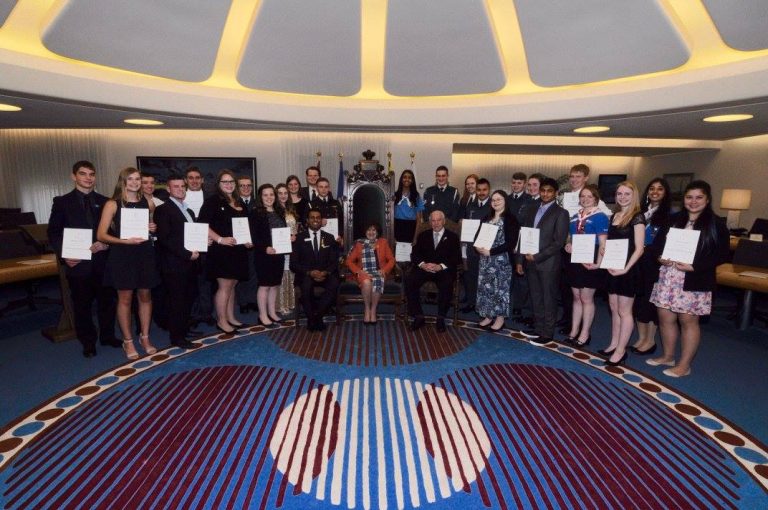

 would have had no idea what you were talking about. In only the past several months, I have been introduced to the Award, and have thrown myself right off of the deep end into the Gold program, the highest level of the award, which demands the longest time commitment and amount of dedication in order to complete. My journey with the Award is only just beginning, but on Friday, April 28th, I had the opportunity to attend the Silver Awards Ceremony, and take part in celebrating the successes of twenty-five young people from twenty different communities across Alberta. They have already attained a greater level of personal achievement than I, until quite recently, even knew was possible for young people in Canada.
 intimate, but I was pleasantly surprised. I arrived well in advance of the ceremony, and was invited to attend the VIP Reception which took place before the ceremony was to commence. I was there to attend the ceremony, but to be completely honest, the part of the evening that had the most personal impact on me was this reception. The room was filled with people, all of whom had some form of connection to the Award, whether they were former participants, council members, or others whose lives have been touched by the Award in one way or another. The reception gave me a completely different perspective on the Award; as much as participants or those looking at getting involved might tend to be focused on what the Award can do for them right here and now, the impacts are long term and far reaching. What is often forgotten is that
  the influence that such a program has on one’s life does not end at the award ceremony, but is still only just beginning.
 award recipients that made the ceremony, and the Award in and of itself, so significant.