

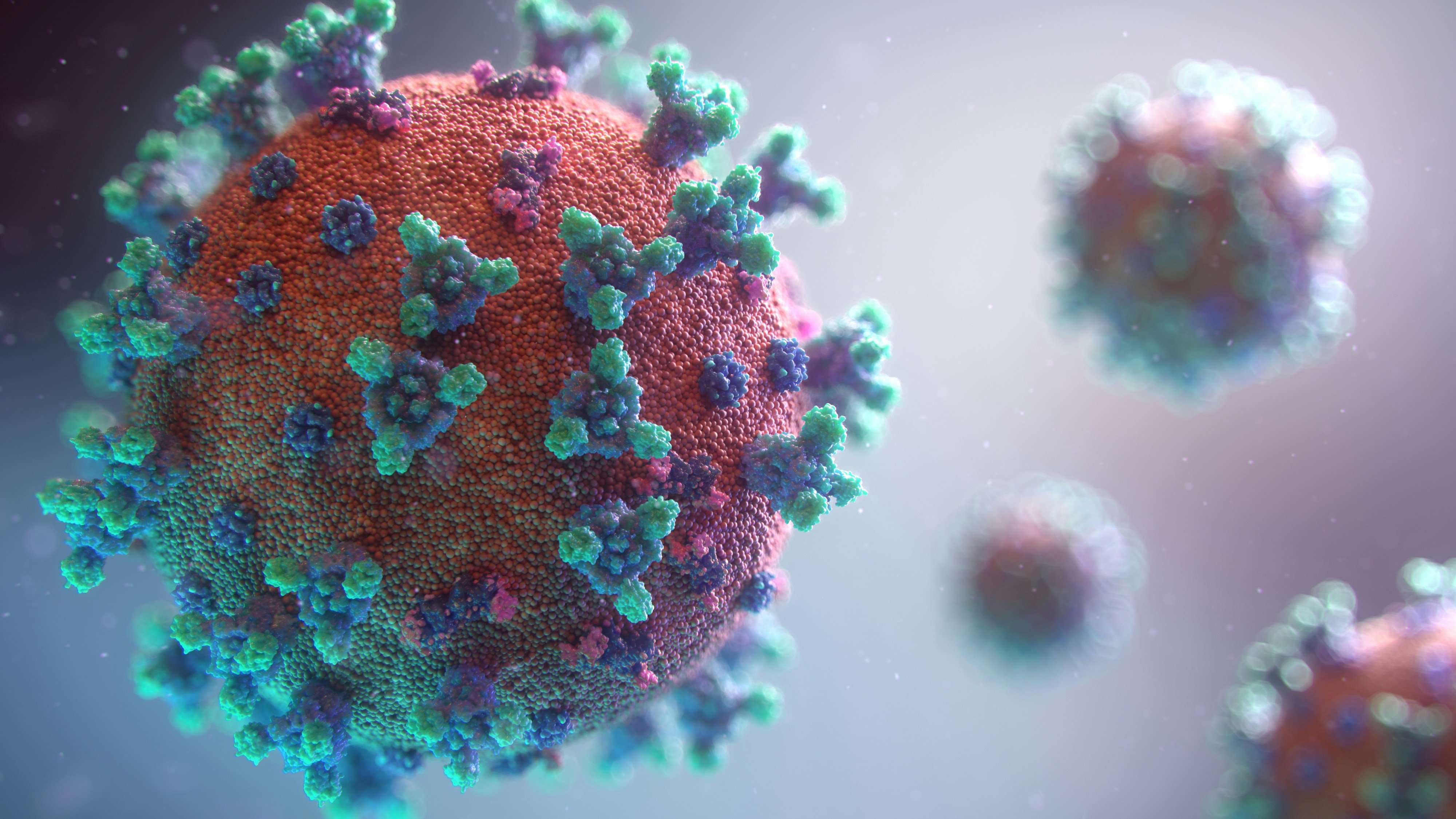
Viruses are constantly changing, and this ability to evolve is one of the main reasons they remain such persistent challenges in medicine. While vaccines are highly effective at preventing many infections, they sometimes need to be updated. This is not because vaccines “stop working” in a simple sense, but because the viruses they target can change over time. Understanding how viral mutation works helps explain why diseases like influenza and COVID-19 require updated vaccines.
What it means for a virus to mutate
A virus is not a living cell, but a small packet of genetic material (DNA or RNA) surrounded by a protein coat. To reproduce, it must enter a host cell and hijack its machinery to make copies of itself. This copying process is not perfect.
Every time a virus replicates, it makes thousands or even millions of copies. During this process, small “copying errors” can occur in its genetic code. These errors are called mutations. Most mutations are either harmful to the virus or have no effect at all, but occasionally, a mutation gives the virus an advantage.
For example, a mutation might:
- Help the virus enter human cells more easily
- Allow it to spread faster between people
- Help it partially evade the immune system
When a mutation improves survival or spread, that version of the virus is more likely to become dominant. Over time, this leads to new variants.
Why viruses like influenza or COVID-19 mutate quickly
Not all viruses mutate at the same speed. RNA viruses, such as influenza and coronaviruses, tend to mutate more rapidly than DNA viruses. This is partly because RNA replication is more error-prone, and also because these viruses produce large numbers of copies in a short time.
Influenza is a classic example. Its surface proteins, called hemagglutinin (HA) and neuraminidase (NA), are constantly changing. These proteins are what the immune system recognizes, so even small changes can reduce how well previous immunity works. This is why seasonal flu vaccines are updated regularly.
COVID-19, caused by the SARS-CoV-2 virus, also mutates, although in a slightly different way. Over time, variants such as Alpha, Delta, and Omicron emerged, each with changes in transmissibility or immune evasion. Some of these changes affected how well existing vaccines matched the circulating strains.
How vaccines work and why they need updating
Vaccines train the immune system to recognise specific parts of a virus, often proteins on its surface called antigens. When the immune system encounters these antigens, it produces antibodies and memory cells that allow it to respond quickly if the real virus appears later.
However, if a virus mutates significantly, those surface antigens can change shape. This is similar to changing the appearance of a “target” that the immune system was trained to recognise. The immune system may still respond, but it may not be as fast or as effective. This is why vaccines are often described as being “well-matched” or “less well-matched” to circulating strains, rather than simply effective or ineffective.
Vaccines are updated when viral mutations accumulate enough to reduce how well existing immunity protects against infection or disease. This does not usually mean vaccines stop preventing severe illness, but their effectiveness against infection may decline.
A good example is the influenza vaccine, which is updated every year. Global health organisations monitor circulating flu strains and predict which ones are most likely to spread in the upcoming season. Vaccines are then reformulated to match these strains as closely as possible. COVID-19 vaccines have also been updated to target newer variants. Instead of completely redesigning the vaccine from scratch, scientists often modify the existing vaccine to better match the spike protein of newer variants.
Mutation and Immunity
Even when viruses mutate, vaccines still play a crucial role. This is because the immune system has multiple layers of defence. While antibodies may become less effective at preventing infection, memory T-cells and other immune responses often continue to reduce the severity of illness.
This means that vaccination still provides protection even when a virus evolves. The goal of updated vaccines is not always to prevent every infection, but to ensure strong protection against severe disease and hospitalization.
Virus mutation is a natural and continuous process driven by replication errors and evolutionary pressure. When mutations accumulate in important viral proteins, they can change how well the immune system recognizes the virus. This is why some vaccines need to be updated over time, especially for rapidly evolving viruses like influenza and coronaviruses. Rather than showing a failure of vaccines, this process highlights how dynamic the relationship is between pathogens and the immune system. Vaccines evolve alongside viruses, helping maintain protection in a constantly changing biological environment.
Sources: