

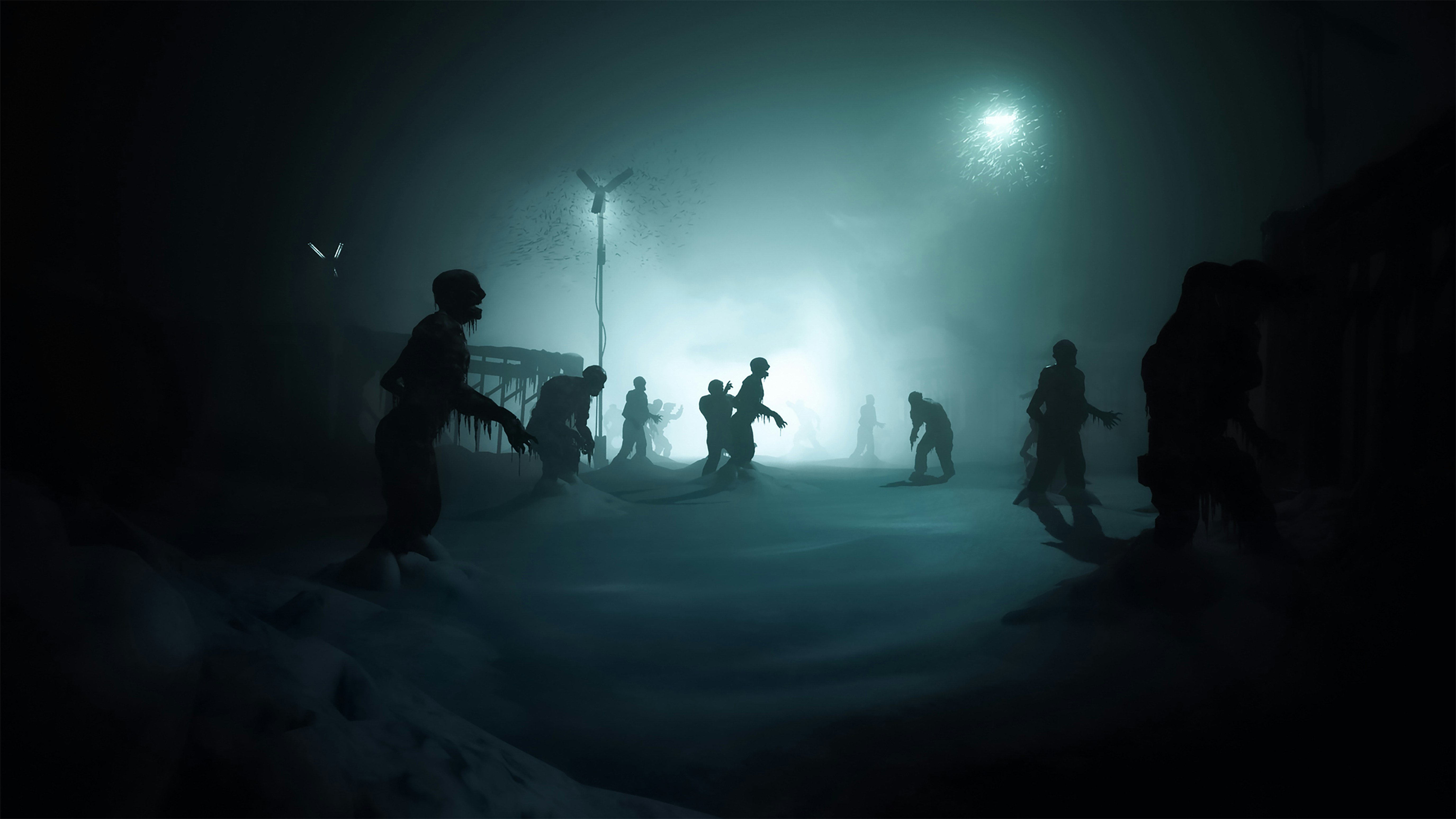
Science says…probably not.
Be honest for a second. If a zombie apocalypse started tomorrow, you might think you’d survive. You’d grab supplies, you’d run, you’d be smart. You wouldn’t be one of those people who trip in the first five minutes.
Unfortunately, science has been watching humans for a while now, and it’s not exactly optimistic.
What kind of ‘zombie’ are we talking about?
Reanimated corpses? Unlikely. Dead tissue doesn’t magically restart: without oxygen and glucose, neurons die permanently. No brain activity = no movement.
But a zombie-like outbreak is actually disturbingly realistic.
There are already real biological mechanisms that could create something close:
- Rabies: aggression, paranoia, biting, fear of water
- Prion diseases: misfolded proteins that destroy brain tissue and cause loss of coordination and judgment
- Parasites like Ophiocordyceps that control host behaviour
A fast-mutating virus that:
- Spreads through bodily fluids
- Causes neurological impairment
- Increases aggression
That’s not sci-fi. That’s epidemiology having a bad day.
The Real Threat: Exponential Growth
Movies sometimes show infections spreading linearly, one person at a time. Real outbreaks wouldn’t work that way.
They follow exponential growth, modelled by reproduction numbers (R0).
- If R0 = 1, the outbreak stays stable
- If R0 > 1, cases explode
Let’s say a zombie pathogen has an R0 of 3 (which is lower than measles).
1 person infects 3, 3 infect 9, 9 infect 27, and 27 infect 81. That’s 120 infected in just four cycles.
Now add delayed symptoms, asymptomatic carriers, misinformation, and people hiding bites or symptoms because they ‘feel fine’. By the time society realizes what’s happening, it’s already math, not panic, doing the damage.
Your Brain Under Threat is…Not Helpful.
Humans love to imagine calm, strategic, planned survival. Neuroscience disagrees.
Under extreme stress, the amygdala hijacks the brain’s decision-making. The prefrontal cortex, responsible for logic, planning, and impulse control, gets suppressed.
That’s why people may freeze instead of running, run towards danger, or make catastrophically bad choices with full confidence.
This is called cognitive tunnelling. Your attention narrows, and you lose situational awareness. So no, you probably won’t be carefully calculating escape routes. You’ll be reacting. Badly.
Running will not save you.
Let’s talk physics and physiology.
Humans are endurance animals, not sprinters. We’re more built for long-distance jogging, not repeated bursts of speed. Sprinting relies on anaerobic respiration, which produces lactic acid, causing muscle fatigue and eventual collapse. You could sprint for 10-20 seconds at max effort, maybe a minute if adrenaline is carrying you.
Zombies, fictional ones, don’t feel fatigue, muscle pain, oxygen debt, or fear. Even slow zombies could win by not getting tired. Physics doesn’t care about your motivation.
Infrastructure Failure: The Quiet Apocalypse
Here’s the part movies might skip.
Even if people don’t die from the initial outbreak, they’ll die when systems collapse. No electricity means no water treatment. No clean water? Disease. No refrigeration leads to spoiled food.
Modern survival depends heavily on interconnected systems, not individual toughness. When such systems fail, survival becomes a logistics problem, not just a combat one.
So who actually survives?
Statistically, survival depends less on strength and more on:
- Access to clean water
- Medical knowledge
- Community cooperation
- Adaptability
Lone-wolf survival is a myth. Groups survive better, and that’s supported by anthropology, disaster science, and history. The best apocalypse skill isn’t fighting. It’s systems thinking.
Final Answer: Would you make it?
According to biology, physics, neuroscience, epidemiology, and thermodynamics…probably not.
So, if someone says, “I’d definitely survive a zombie apocalypse,” you can just nod politely and think: That confidence will last about three missed meals. Science approved. Vibes intact.
Sources:
- https://www.sciencefocus.com/science/the-thought-experiment-how-can-i-survive-a-zombie-apocalypse
- https://aggietranscript.ucdavis.edu/articles/ophiocordyceps-how-zombie-ant-fungus-manipulates-host-behavior#:~:text=The%20fungus%20hijacks%20the%20ant’s,%2C%20summiting%2C%20and%20mandibular%20contraction.
- https://biomedicalodyssey.blogs.hopkinsmedicine.org/2018/09/the-puppets-of-parasites/
- https://wwwnc.cdc.gov/eid/article/19/5/ad-1905_article
- https://www.pbs.org/newshour/health/an-epidemiologist-explains-how-zombies-are-a-metaphor-for-public-health