
Home Blog Page 71

Fasting in the World of Sports

As you may know, people around the world fast from sunrise to sunset during the month of Ramadan. This means that no food or water can be consumed during the daytime. Despite this physical challenge, many athletes who follow Islam fast while training and competing. Some athletes also practice intermittent fasting, which is a method used for health purposes rather than religion. In both forms, fasting has a unique effect on athletes. First, you have the obvious impact that results from a lack of food and drink over extended periods of time – hunger and occasional fatigue. However, when fasting, people usually set aside time to eat prior to the period of fasting, so that they still get the nutrition they need. When diving deeper into the scientific aspect, professionals and experts have found that fasting has positive effects for blood sugar control, brain function, heart and cardiovascular health, and disease prevention. Many athletes who fast also perform very well when doing so – though a connection between fasting and performance has not scientifically been established – and whether athletes fast due to their religion or because of health purposes, it can be seen as a pretty impressive athletic feat. Let’s take a look at five athletes who fasted while competing over the course of their careers.

Kyrie Irving

Brooklyn Nets guard Kyrie Irving has said that fasting during games has been an “adjustment” for him. With that being said, his performance hasn’t seemed to take a hit at all. He has been continuing his high level of play, while also spreading awareness about fasting in the NBA. Below is a video of Kyrie Irving breaking his fast mid-game.

Mo Salah

Liverpool’s Mo Salah also fasts while competing – even during the most important parts of the season. There is some controversy over whether or not he fasted during the Champions League final at its time, but regardless, Salah has fasted for many games over the course of his career. He has adapted to this challenge by waking up around 3:00 AM to train, rather than the regular training times. Training while the sun is down means that he can do it on a full and energized stomach, before eventually fasting in the daytime.

Kareem Abdul-Jabbar

The NBA’s all-time leading scorer, Kareem Abdul-Jabbar, also fasted during his career. He is regarded as one of the league’s greatest players of all time, with a highly decorated career. The Hall of Famer played from 1969 to 1989, and paved the way for countless future Muslim athletes.

Hakeem Olajuwon

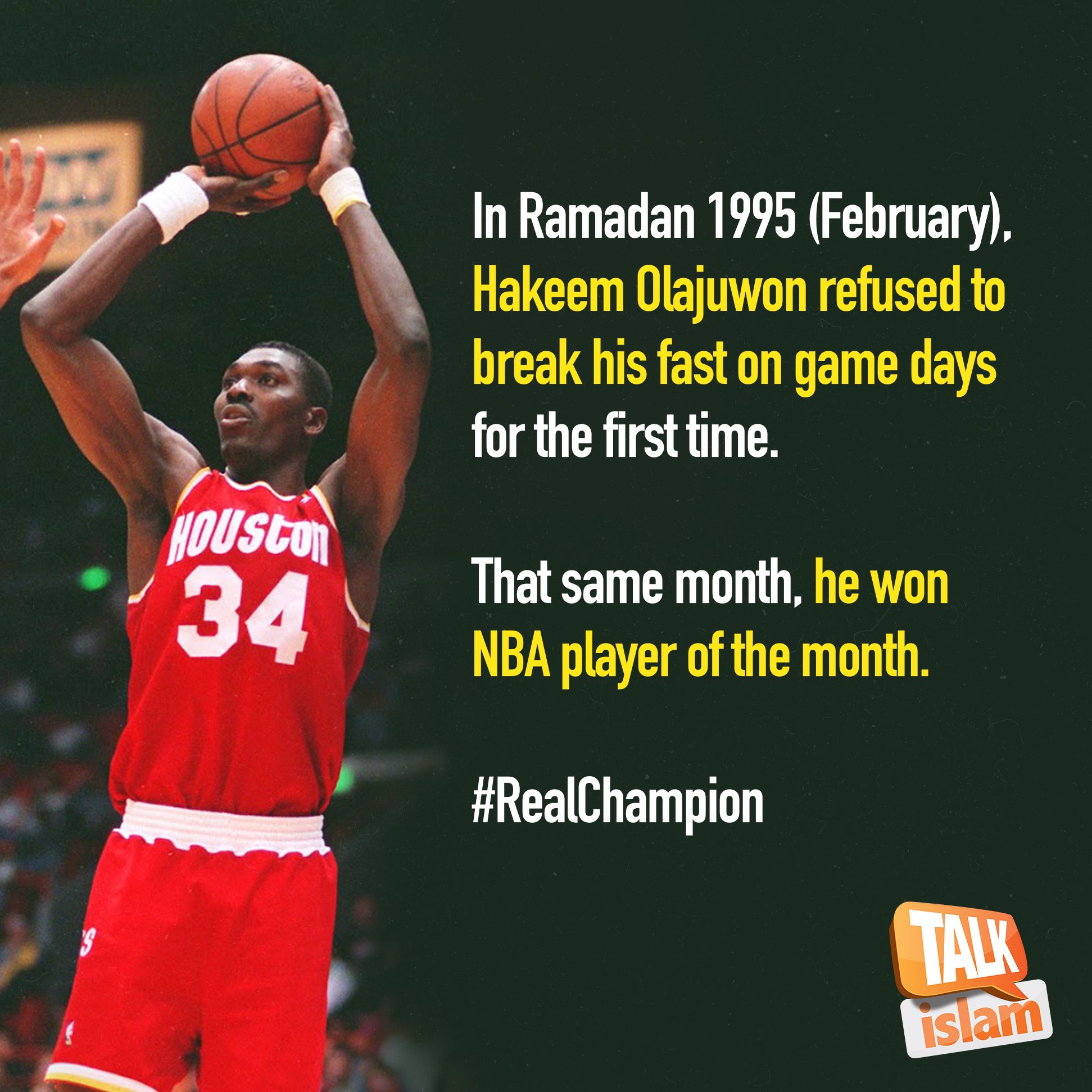
Former Houston Rockets center Hakeem Olajuwon has had some of the best fasting performances by any athlete in sports history. When fasting in 1995, Olajuwon said, “I feel like the sacrifices I’m making now will make me stronger mentally when there is much more on the line.” That year, he went on to win the NBA Championship.
Karim Benzema

Just a few days ago, Karim Benzema of Real Madrid scored a hat-trick in the Champions League quarter-finals. This itself was quite the performance, as it earned the team a ticket to the next stage of the tournament after a 3-1 win. However, he did all of this after an entire day of fasting as well! Benzema said that he feels good while fasting, and that it makes him stronger – and his recent performance has proved that more than anything.

Featured Image

Source 1/2/3/4/5

Expectations

0

As time progresses and we all suddenly find ourselves in high school or as adults, something that never changes is expectations. It seems as if they follow us everywhere, always lingering at the back of our heads as a quiet voice. Those expectations are set by ourselves or come from our parents, friends, teachers, and peers. At times they can be motivating, but I often find them to be stressful and difficult to deal with. Therefore, today I wanted to talk about how to manage expectations in order to deal with stress, a lack of motivation, and even burn-out.

Hear Yourself Out

I can say that we all set expectations for ourselves. It is part of being human. But, try to understand where these expectations stem from and why they are so important in your life. Is it academic-related or something more behavioural? Depending on your answer, your approach to dealing with those standards will also change. I know that many of my expectations in my life come from what I want from myself. But, I have learned that constantly demanding “perfection” from yourself becomes tiring and sucks out the joy from once-loved activities. Therefore, give yourself the chance to reflect and listen to your needs and wants. Ask yourself why you are setting such prospects for yourself. Is it to achieve your goals or something related to what others think about you? The psychological aspect of expectations suggests that setting expectations is related to gaining motivation to achieve success and limit confusion. We can establish low or high expectations for ourselves. For instance, I have a bad habit of having low expectations of getting a good grade after tests even if I have studied well to avoid the feeling of disappointment if I get a low mark in a situation I anticipated a higher one. I am trying to say that do not undermine your hard work and accomplishments by always being afraid of failure and disappointment. Just like many other things, expectations can be taken as helpful or negatively. But that choice is up to you.

Expectations Don’t Control You

The perception others have of an individual can pressure one to pursue tasks that are of no interest to them and consequently creates an endless cycle of stress and self-doubt. Thus, you must approach tasks in your life with the certainty that you enjoy them; instead of trying to hold up aspirations, others expect of you. From my personal experience, it is better to make your goals clear rather than deal with the regret that comes when you find yourself in activities and classes that you have no passion for. I understand that it is difficult to make your ideas and choices clear with parents and others. It can be nerve-racking when you are received with disappointment and confusion when communicating your thoughts and emotions. Facing adversity is common, so it is key to be prepared for facing difficult situations or adapting to unexpected situations. Moreover, it is a vital aspect of dealing with expectations in a personal and work setting. 

Communicate

High expectations from family members and others can feel like burdens as you endlessly try to meet them. In situations where you feel as if you are not ready or need a break, be honest with yourself and others. One of the biggest lessons I have learned is realizing when you mentally cannot push yourself anymore and taking time to have a break. Reaching a breaking point should not be your reason to listen to your body, so stay in touch with your thoughts and emotions. Talking to trusted individuals and writing down and recording what you feel can help you figure out what you want and need. Furthermore, it can be a huge relief to get worries off your chest by just saying them aloud. Thus, communicating with your teachers, employers, and family is essential to managing expectations. Let them know of your boundaries and current plans. At first, being vulnerable is scary, but do not be afraid to tell the truth, and prioritize your well-being by asking for extra assistance. This may sound cliche, but communication is key!

A Shift in Perception

Prioritizing your health and safety is extremely important. From my personal experiences, I remember thinking it is more important that I finish an assignment instead of getting proper sleep or spending time with my family. Therefore, it is important to maintain a balance instead of having to sacrifice your well-being in pursuit of academic validation. However, staying dedicated and passionate about your projects is also just as important, so remember to keep an open mindset and stay positive regarding any challenges along the way. To achieve a healthy work and life balance, explore ways that bring you peace, excitement, and joy. Some simple ways could be to watch your favourite movie, have a conversation with friends, or journal your thoughts. Spending time doing what you love and connecting with others and nature can create a shift in your perception, providing you with a more positive outlook that can tackle stress and frustration. Also, give yourself credit for what you have achieved and be proud of your accomplishments. Sometimes I feel like many of my expectations come from the fear of failure. With that in mind, it is normal and acceptable to experience failure, as it is how you grow and further develop your character. Failure does not define you, and use it to improve your skills and come back even stronger next time!

[1]/[2]//featured image

Starting To Appreciate My Own Company

Grade eleven has been pretty stressful for me thus far. I’ve been stressed about meeting deadlines, not falling behind and staying ahead ( since going to a self-directed high-school has caused me to not be on track with my school work ), and getting the high grades I want to achieve. At the start of every school year, I set myself some goals to help improve my mental health for the year, and one of these goals was to start appreciating my own company.

Covid isolation challenged my social life tremendously. I saw my mental health decline with the lack of social interaction I was experiencing. For the 2021-2022 school year, I wanted to start appreciating my own company and my time alone.

There are many benefits to appreciating your own company, some of which include:

  • Encouraging creativity
  • Becoming more productive
  • Getting to know yourself
  • Increased empathy with others

With this in mind, I began to treat myself in the manner in which I desired others to regard me. I slowly started exploring and discovering things about myself that I enjoyed. I used my mental breaks to enjoy my own company. Although the stress of school piled ( and still piles on me ), I found that taking numerous mental breaks helped me to not drown myself in stress. Taking breaks from working and doing things that I enjoyed ( going on walks, running myself a warm bath, going to a dance class ) supported me in my quest to start appreciating my time alone.

For me, here are some of the ways I started appreciating my own company:

  • Realizing that showing appreciation for myself was crucial to appreciating my own company – Discovering parts about myself that I found interesting ultimately aided me in being at peace with spending my own time alone. I started appreciating parts about myself, whether it was how I was dressing that day, or acknowledging the work that I did for the day, self-love/appreciating my time alone supported me in appreciating my own company.
  • Starting to do things you enjoyed by yourself – One of the things I enjoy doing is exploring. I enjoy just exploring with no destination. I’d usually go on a walk, whether that was in a park ( like Fish Creek ) or going downtown. I also enjoyed cooking, playing dress-up in my room, listening to music, writing, et cetera.
  •  Avoiding distractions – Whenever I was doing something for my own sake, I would try and remove some distractions, an example would be my phone. Depending on what I was doing to enjoy my time alone, I would just put my phone down and focus, or listen to music/watch a show. It was very dependent on what I was focusing on.
  • Reflecting on my day – At the start of the school year, I kept a journal and I tried to write in it every day. Obviously, I didn’t keep up my promise to write every day, however, I just started writing down some things about my day that I enjoyed on post-its. I recognized what I enjoyed and what went wrong that day and how I could improve/fix my days moving forward. Another tool that helped me reflect on my day was the chrome extension “coffeelings”, which is a daily check-in tool that I used to reflect on my day.

Obviously, these are not all of the things I focused on when appreciating my own company, however, I felt like these were some tips that I felt were worth sharing, as these were the crucial points I used to assist me in appreciating my own company. Different people use different ways to appreciate/start to appreciate their time alone. It’s a learning process, almost like a trial and error to see what you enjoy and what you do not enjoy.

It’s crucial to note, though, that enjoying your own time alone is not the same as embracing loneliness. I was convinced that I was during the entirety of 2020 and it caused my mental health to decline significantly during this time. To appreciate your own company, you want to be at peace with realizing that sometimes you need to take time for yourself and not allow the thought of being alone to stop you from enjoying and living your own life. If you ever need anyone to talk to, reach out for support from friends or family. Calgary also offers numerous services that can assist you if you need any help. You do not need to feel lonely when appreciating your time alone. Ask for support from your peers when it is needed.

It can feel very awkward and strange if you aren’t used to doing things on your own account, however; it could be the beginning for you to become the best version of yourself. I feel eternally grateful to be able to appreciate my time alone, and I find that it is a crucial skill to have. Taking advantage of your time and enjoying parts about yourself ultimately can support you in becoming the better version of yourself.

sources |  featured image1,

Letting go of the Past

0
Do you feel frequently that you can’t move on? It’s so difficult to overcome your past as it has a significant impact on our daily lives and decisions. We look at the past when figuring something out or when trying something new. BUT, what if you want to let go of something in the past? Not everything in the past is something we want to remember. Those tough moments become this dreadful feeling that can act as an obstacle in our life. This blog is going to help you find a way to get rid of your feelings of hurt, regret, anxiety, depression, or any other obstacles which stop you from working towards your happiness. I know this can be tough at times, but you have to try it some day or another in order to live in the present moment. LETS START!

Why is it good to let go of the past?

First, we have to understand the importance of letting go of the past. To begin with, everyone makes some sort of mistakes or has painful memories, and sometimes they are engraved into our minds. It’s so strenuous to get rid of them and we end up walking around with those mistakes, memories, failures, disappointments, and our hurts. Therefore, taking the time to ease our minds and let go of the past is vital.

The way you look at things, like your perspective, will change for the better once you begin letting go of the past. Talking about positivity, we can make the bad experiences from our past into something we can learn from. For example, by discussing the situation that weighs on our minds with someone else that you may trust. Doing this will help you see different perspectives, and how others view the situation. Yet, this may not solve the problem completely, however, it’s a step! That’s way better than leaving the situation where it is. Finally, when letting go you will feel like a load has been lifted off of your shoulders, encouraging you to move forward with only the lessons you have learned. The feelings of failure, disappointments, and our hurts, we won’t have to face. We will live in the present moment, focusing on making it the best!

Steps to stop struggling with the past and to let go of it:

  1. If you want to really let go of the past, you have to make it your top priority. Now it’s not only a want to let go of the past it is a “must.” You have to acknowledge the fact that what you are holding back is why you must move on. Changing the letting go goal to a “must” will help you to stay focused and determined.

  2. We all know that life doesn’t give you second chances. However, we can make a list of things that we want to “re-do” (something that you would have done differently). We make lists for so many things, for instance grocery lists, packing, to-do lists, and so many more. Likewise, we can also make a list for things we want to “re-do”. It can help us learn from the mistakes that we have made and help us correct the situation moving forward. In addition, this will help us develop our planning skills and shape us for future events and our life goals.

  3. Practicing mindfulness is another way that can help us let go of the past. If making lists don’t help you, then try meditating or practicing mindfulness. Mindfulness motivates people to concentrate on what’s happening in the present. One fact – 2016 paper advice that people who are more mindful encounter less sad/dark thoughts which are occurring continuously (also known as rumination). Meditation doesn’t even have to take long, there are videos online that will guide you through 5 minutes of meditation. In addition, you can do it anywhere and anytime.

  4. Something as simple as enjoying the present will help us let go of the past. Try to find things you are grateful in your life right now. Not enjoying your present life can lead you to have regrets in the future making the goal of letting go of the past more difficult. Overall, you should go out with friends and family, enjoy what life has in store right now. Accomplish what you want to right now. The past is done, now it is time for the present.

  5. One of the best things you can do is try to talk about it. The worst feeling is when those painful emotions or situations are stuck with you and won’t leave. When talking about it, you give yourself a feeling of relief. As a matter of fact, it is also important because “people can’t let go because they feel they aren’t allowed to talk about it,” says Durvasula. “This may be because the people around them no longer want to hear about it [or the person is] embarrassed or ashamed to keep talking about,” she explains. To summarize Durvasula suggests in finding someone who is patient and accepting, such as a friend or a therapist to talk about it.

Holding onto the past can limit you

“You can’t start the next chapter of your life if you keep re-reading the last one.” – This is a very famous quote and can’t be more true then it already is. One question I want to ask is: Do you reference and use your past experiences when you make decisions or when finding a justification for your current actions? If your answer is a yes then it clearly states that the past is limiting you.

Moving forward is very important as it’s advancing who you are. It takes a lot of energy to be holding onto the past, but what if you use that energy in moving yourself forward. The energy that can keep you running, why use it for something that has already happened? For example, when running a race, we use all our energy to keep moving forward, not wanting to waste it on anything else. In the middle of a race, you won’t start jumping up in the air since it’s not moving you forward, it’s keeping you where you are and instead, wasting your energy. That’s kind of the general idea of holding onto the past.

How Can You Tackle Climate Change?

One of the most pressing global issues that we face today is climate change. And, although many of us are aware of this, we often wonder, “do I really have the power to mediate climate change?” This inquiry is rooted in agency—the ability to believe in and accomplish the goals that one sets for themselves. As such, the impacts of global warming can be resolved or fueled, depending on how each individual exercises their agency.

It is evident that human intervention has led to a dramatic increase in global temperatures, however, they can also reverse the effects of climate change by reducing the emission of greenhouse gasses. While the sand in the hourglass continues to run out, we can still avert the effects of climate change. Although contemporary society has given way to many technological advancements, our biggest obstacle is the lack of psychological agency or the belief in one’s ability. According to a study conducted by the British Medical Journal, the Lancet, within the ten countries that were surveyed, over half of the youth population feel afraid, anxious, helpless, and discouraged about mediating climate change.

As greenhouse gasses amass in the atmosphere due to the burning of fossil fuels, global temperatures rise, sea levels, heat waves, and storms continue to worsen. The Intergovernmental Panel on Climate Change highlights some of the current consequences of global warming, and how they affect the global population and environment. However, just as we can drive polluting vehicles, we can also act in a way to improve upon the issue.

An important aspect of psychological agency is self efficacy, or believing in oneself. This is because those who exercise agency are more perseverant and resilient when tackling a challenge, and this is true with climate change. This is supported by various studies which suggest that climate change can be best mediated by volunteering, donating, conserving energy and water, and communication with elected officials. In order to exercise agency to conquer such a daunting issue, we can begin by educating ourselves on the subject. And, agency is brought about by three key aspects.

Delivering on the Urgency of Climate Change: nowhere left to hide | European Economic and Social Committee

  1. Intentionality

In this phase, you first need to commit to the particular cause, and  understand the significance of their goal and why you wish to accomplish it. This mindset is more valuable than merely believing that you are open-minded and simply need to find time to tackle the challenge. Although the biggest contributor to global warming is the burning of fossil fuels, you can still mediate the issue by conserving water and energy within your own households.

     2. Action Plan

After understanding your goal, develop a strategic action plan that includes quantifiable goals, a precise schedule to follow, and a source of accountability. For instance, some goals can be achieved by adapting a different lifestyle: traveling less frequently, taking public transit on less active days, and setting timers on lights and sprinklers. Once you are comfortable with your short-term goals, you can establish long term goals to follow. These may include advocating for policies and regulations to monitor and control climate change, or organizing community-based activities to raise awareness about the issue.

      3. Reflection: 

After you accomplish your goals, reflection is the most important stage as it allows you to understand the impacts of your actions and how you can improve upon any future goals. While individual initiatives can help to avert the impacts of global warming to a certain extent, large-scale polluters also need to adopt environmentally-friendly practices to resolve the issue. As such, reflection and psychological agency can be valuable tools for organizing group efforts to better tackle climate change. 

This ties in with another form of agency called collective agency. Collective agency refers to the ability of creating large-scale impacts by engaging in a group or assembly. These groups can persuade companies and officials to implement safe and effective policies to tackle climate change. 

In conclusion, psychological agency and collective agency can improve our ability to tackle this issue, and it is at the discretion of the individual to resolve climate change. 

Sources:

1, 2

“La Corrida de Toros” – Animal Cruelty or an Important Cultural Tradition?

0

Spanish Bullfighting is one of the most traditional activities and events in Spain, Colombia, Mexico, Peru, Ecuador, France, and Portugal. The event consists of a performance by the “torero,” a highly trained bullfighter, and the “toro,” a large bull. 

What is Spanish Bullfighting? 

“La Corrida de Toros,” Spanish Bullfighting, has been one of the oldest cultural traditions in the world. Bullfighting often takes place during spring and autumn, and is most popular in the cities Seville and Ronda. In the most traditional form of bullfighting, that is, Spanish-style bullfighting, three “toreros,” each fight two bulls which weigh around 460 kilograms or more. Traditionally, a picador would also enter the arena while riding a horse. Often the bull would viciously kill the horse, but due to public concerns, horses now wear protective gear. However, the main part of the bullfighting act is when the picador stabs the bull’s neck to eventually kill the bull. This means that the show often involves stabbing a bull multiple times, then finally performing a killing thrust to end the bull’s life. 

The controversy:

Concerns regarding animal cruelty have arisen, as people voice their opinions regarding the prolonged and painful death of the bull. As a result, many people refuse to attend “La Corrida de Toros,” due to the violent death of the animal. However, there have also been concerns regarding the safety of the bullfighters as well. It is not uncommon for bullfighters to be killed or severely injured, since performing with large bulls is very dangerous. 

Cultural significance and potential alternatives:

Although these concerns have caused bullfighting to be banned in certain places such as Catalonia, bullfighting is still allowed and supported in most European countries due to its cultural importance. Bullfighting traces its roots all the way back to around the 10th century. Fighting bulls for sport began in Ancient Rome, and quickly spread to the Iberian Peninsula during the expansion of the Roman Empire. Since then, it has been a tradition to celebrate and enjoy the act in many countries. Because of animal right activists, bullfights are experiencing diminishing popularity. The main question to take away is whether or not we should prioritize the safety of the animals and people involved, or continue preserving a longtime tradition. However, it is important to consider that many other forms of this event have also emerged. “La corrida sin sangre,” is a violence-free form of bullfighting. Many people think it is a great alternative to traditional bull fights as it allows for cultural preservation without violence. 

Featured Image

Sources: 1/2/3

YVC Day 2022

0

In a big world, @youthvolunteercorps volunteers know how impactful it can be when addressing community issues and taking steps to make a change. Calgary’s YVC youth know just how important volunteering is for their community.⁠⁠ This year, YVC (Youth Volunteer Corps) Day was on March 5th. The theme was “One World, Many Voices.”

YVC Steering Committee members Ranya, Amrit, Tanisha, Sophie, Yujin, Avery, Steven, Jen, Timilehin, and Faith worked hard over the month of February to plan and publish 2 videos on Youth Central’s YouTube channel where youth volunteers could share their ideas about bridging the connection between immigrant families and Canadian Culture.

Leading up to YVC Day, the Steering Committee also posted daily Instagram stories on @youthcentralyyc showcasing different cultural backgrounds in celebration of YVC Day and the theme of One World, Many Voices. The diversity of YVC volunteers was clear, with ethnic backgrounds ranging from Ukraine to China to Mexico and even to Nigeria.

The videos that the YVC Steering Committee published for YVC Day ’22 are both linked below. I strongly encourage you all to give them a watch!

Featuring Chinese, Indian, Pakistani, Korean, and Filipino Food in Calgary, and more!

Food is a huge part of culture, and having ethnic food is definitely essential to feeling more at home in a brand new city.

Featuring the Calgary Stampede, Lilac Festival, Esker Foundation, and more!

Visiting various places in Calgary will help new families grow more accustomed to a foreign environment while also learning more about the traditions, customs, and celebrations of their new home.

Featured Image

Choosing the Perfect Instrument for Yourself

It all comes down to what you will actually like and feel comfortable playing when choosing the ideal instrument for you. You should also choose an instrument that will drive you to improve. Consider some of these questions before committing to an instrument to help you make your decision.

What musical styles do you enjoy?

This may sound simple, but consider this: if you love listening to acoustic folk music, drums, as entertaining as they may appear, may not be the best choice. But truly get into this question. A musical instrument is a significant time and financial investment, so make sure the type of music you’d be playing meets the bill. Some instruments are more adaptable than others; for example, after you’ve mastered fundamental violin fingering and bowing, you may specialize in one genre or dabble in many, but the sitar is more limited. ​​

Does it project a positive image of you?

You’re more likely to play an instrument that you fantasize about playing. If you fantasize about plucking your fingers along a guitar, you should concentrate on the instrument. Alternatively, you might try out a range of other stringed instruments to see what works best for you.

True happiness isn't about being happy all the time

How much time do you wish to devote to the instrument?

All instruments will take a significant time commitment if you want to become a very exceptional musician, but with less time, you may become a reasonably competent or passable player, depending on your needs. Don’t bother with something like the kora unless you’re willing to put in substantial hours; instead, something like basic rhythm guitar would be a better fit.

If you truly want to compose music but don’t have a lot of time to practice, a simple rhythm instrument like the djembe is a perfect option.

What are your physical constraints?

Don’t try to play upright bass if you can’t lift something heavy. If you don’t have a lot of lung capacity, you should reconsider playing the saxophone. You can certainly transcend just about anything if you have the drive to play something that will be physically demanding for you, but be prepared for some struggle.

Timeline History of the Saxophone

Does it pave the way for other instruments?

When you study piano, you will also discover the fundamentals of music theory, sight reading, ear training, and finger skill, which will help you learn any other instrument much more easily. Learning to play the guitar may lead to learning other stringed instruments such as the ukulele, bass, mandolin, and banjo. All other percussion instruments become second nature after you’ve mastered the drums.

We hope you found this information useful. Here is a fun fact! People used to play with animal horns in ancient times.


Image References: 1/2

Featured Image: Youth Are Awesome, uploaded June 2016, accessed March 2022

Spectacular Volunteering Opportunities You Would Love to Know: Part 1

Calgary has provided youth with many opportunities that allow them to develop new skills, meet diverse people, interact socially, and become a helping hand to their community. If you believe you want to impact your community or want to utilize your time during the summer break, volunteering is a great option to choose. I personally have volunteered with many organizations in Calgary, and have obtained many experiences, which have shaped and opened new possibilities in life for me. Not only do you get the skills, but also get many perks, such as discounts, workshops, and many more exciting rewards. But, one of the best rewards is the feeling of gratification and selflessness because you get to help others and make someone’s day awesome each time you volunteer. That is why I have listed a few of my personal favourite volunteer opportunities in Calgary that offer the best of both experiences and teaching for youth. 


Youth Central (Youth Volunteer Corps)

Youth Central is an organization that has been empowering youth since 1992, through its diverse range of activities both virtual and in-person. Places available to volunteer include the Drop-In Center, Inn from the Cold, Salvation Army and other exciting positions under your interests, such as arts and culture, sports, special events, social issues, and environment-related projects. All of these activities lead to the development of new friendships, gaining leadership skills, and serving the community back for its betterment. I personally, consider Youth Central’s Youth Volunteer Corps program as an amazing opportunity to help you get started at volunteering because through one platform you could branch out to various volunteering opportunities of your interest. They are accepting volunteers year-long between the ages of 12-18.

Mission: We engage youth in team-based service experiences that build life and work skills while inspiring a lifetime ethic of service.”

Goal: Our goal as an organization is to change the perception of youth in our communities by giving youth the tools and support they need to become engaging, empathetic and caring citizens with a sense of ownership and responsibility. We support youth in building valuable skills for future employment, give youth a voice, and grow youth’s understanding of their community. We are building Calgary’s leaders of today and tomorrow.”

What’s in it for you:

  • Develop new skills and interests
  • Opens new opportunities and career development
  • Meet new people and engage in fun activities 
  • Access to more programs under Youth Central
    • Youth Are Awesome
    • Calgary Youth Foundation
    • Mayor’s Youth Council
  • Reference letter upon 20 hours completion of volunteer hours
  • Your own Youth Central Youth Volunteer Corps T-shirt 

Telus Spark

This non-profit and science-oriented organization is an amazing opportunity to learn exciting STEM skills, in an engaging environment, while enduring the experience of volunteering. You will experience public-facing and behind the scene roles, through their projects that involve welcoming guests, engaging them in workshops, and helping participants in summer camps. Moreover, not only are you exposed to a vast range of programs, but also are welcomed into a science community where you can build strong relationships, and develop your future career. It is convenient and free to volunteer at Telus Spark, which could be possible by submitting their application form, available on their website. 

What’s in it for you

  • STEM and Science oriented environment to form connections
  • Join others who are passionate about spreading the love of science
  • Earn credits for school and work purposes 
  • Understand develop career possibilities and obtain assistance
  • Be a part of exclusive events with other volunteers and employees
  • Participate in the activities and ongoing workshops
  • Earn free parking 
  • Get a 25% discount on all eatery spaces and Spark Stores
  • Can request a reference letter after 60+ hours of volunteering at Spark
  • After committing 100+ hours you get an annual membership to Spark 
  • Gain two free entrance tickets upon 250+ hours and every subsequent 250+ hours (ex. 500+ hours)

Qualifications

  • You are eligible if you are 16+ years of age (14+ is eligible for summer camps)
  • Passionate about the place where creativity, conversation, and science intersect
  • Interested in welcoming and reflecting people of all ages, cultures, and orientations
  • Open to learning new things
  • Committed to providing a high standard of service in a collaborative environment

*More info at Telus Spark website 


**I have provided two of my top opportunities for volunteering above. I would definitely recommend these to all teens who believe they have a passion for shaping their community and creating a difference for the better. This is only part one of what opportunities I want to share but would like to share more. If you want more information on other volunteering positions, make sure to tune in for Part 2.

Fantastic Mr. Fox – Film Analysis

0

Brief Summary:

A wild animal seeks to find its true self; Mr. Fox finds himself stuck in between identities in which he cannot choose which one to favor more than the other. He steals chicken as living, hiding this secret behind his wife and son. Conflict of the farmers and relationship between resident animals, Mr. Fox takes us through the journey of growth and acknowledgement of who you are. The stages of broken promises and the acceptance of your true self, Mr. Fox goes through character development to learn what it truly means to be a husband, a father. 

Animation style:

Overall, this movie develops a good understanding of shortcut animation through its own unique scenes. It’s filled with vivid details and focuses greatly on the facial expressions of characters. Although its animation may seem a bit glitchy at times, its overall transitions between the motions of characters are quite smooth. The thoughts of the characters are also thoroughly expressed and gives the audience a clear understanding of what their motives are. Overall, the acting throughout the film is pretty close to perfection. As well as the plot lines, the charm and humor mix in together very comfortably and sets a standard mood throughout the film.

Graphic and Fashion Design:

The basic fashion design of the characters clothing also portrayed a great amount of golden autumn vibes. We can clearly see that the 2 main characters (Mr. and Mrs. Fox) wore outfits that connected to the yellow tone.  Although not all characters had the same color set, all outfits blended in well with the overall tone of the film. 

Music Style:

The music throughout the film brings out a special style and fits really well with the theme colors. Mainly,  a lot of string music mixed with a small piece of piano. The music made various scenes come out to be humorous with the help of sound effects. Its western style blends in perfectly with the golden shades and matches with plots as well. The actions of the wild animals were portrayed as  fast beats of music as for, the intelligence and evil of the human farmers came out as suspenseful music (although some parts came out as cheerful). The overall music style throughout the film is also tilted towards the lighthearted and happier vibes that give out a lively tone. Although it changes pace every once in a while, it still holds a strong sense of upbeat music. Throughout certain action scenes, the music pace is fast. Meanwhile, the music drops to a lower beat when suspense scenes are present. 

More about Wes Anderson:

Wes Anderson was able to really make this film unique by using the ideal golden shade to portray the settings of a farm with contrast of wild animals. The overall color tone of this film consists of an autumn mixed with yellow shades. Other Wes Anderson films also consist of similar color palettes and style. “Bottle Rocket” is a great example of a Wes Anderson film that contains tons of primary colors such as yellow. They all correlate an autumn, yellow-ish mood. His saturation degree is also unique and tends to be very high. It increases contrasts between characters or objects and makes things really stand out. In the “Fantastic Mr. Fox” film, the background blends in really well with the characters’ outfits. But simultaneously, its camouflage effects are low, which gives the audience an easier time to identify characters right through a scene. 

Sources:

Fantastic Mr. Fox Film Analysis – ruehro01 (wordpress.com)

Symbolism In Wes Anderson’s Film Fantastic Mr. Fox | ipl.org

Is Greed an Ethical Dilemma?

For many people, greed does not pose an ethical dilemma, as the answer is greed serves as the downfall of the human condition. Greed can cause one to become obsessed with the idea of personal benefits and luxury. However, there are multiple aspects to any concept in life. Therefore, the idea of greed can also be approached in two ways. Greed is an unethical concept as individuals are guided by a selfish desire to gain more without considering the impact their motives may have on others. On the other hand, greed can act as motivation for one to achieve their aspirations, which at times is even “encouraged” in society. But, at what cost does one choose to put their benefits at the price of another’s loss? Should this type of motivation be rewarded or not?

What is Greed?

Greed is when an individual has a strong desire to continue to gain something in abundance. Thus, it is the pursuit of one’s self-interest. When one’s actions are driven by greed, the methods of fulfilling those desires can become selfish and obsessive. In movies and books, greed is centred around money. However, greed comes in many forms and impacts both the individual and their surroundings. Additionally, greed has existed as an idea for centuries through its presence in old philosophical and religious texts.

Why Are People Lured Towards Greed?

At times it seems like large corporations are motivated by greed to generate more profit while jeopardizing the well-being of their staff or the quality of their products. With that in mind, people can be driven by greed to gain more power, influence, and money. In society, power and money are desirable as power gives an individual a sense of influence over others and the ability to have their opinion recognized by more people. While money is what essentially runs society, and with more money comes more possibilities and opportunities. Additionally, it is part of human nature to want something that we cannot have. Therefore, what lures people towards greed is having an over-attachment to material possessions and being unsatisfied with what they already have. 

Is Greed Ethical?

It is up to each person to individually decide if they view greed as ethical or unethical. As mentioned before, greed is one’s ignorance of others in pursuit of self-interest. So, it is up to a person to decide if they have enough or want more. In a business sense, greed is a common concept that drives economic growth and profit incentive. But, the repercussions of greed often outweigh its benefits. In some cases, as one gains more wealth, their actions become increasingly unethical in an effort to gain more wealth. On the other hand, economists would probably view greed as ethical as it is what creates further economic development. But, that economic development comes at the cost of the exploitation of the underprivileged, which becomes unethical. In the end, it is truly a dilemma whether greed can be seen as ethical or not. 

[1]/[2]/[3]/[4]/feature image

The Paris Agreement: From a Liberalist’s Perspective

0

To what extent does the Paris agreement reflect the principles of Realism and Liberalism? The Paris Agreement is an international accord that was issued and signed by 196 countries on December 12, 2015. The agreement came into effect on November 4, 2016. This agreement was proposed in Paris during the 21st Conference of the Parties, held by the United Nations Framework Convention on Climate Change. The purpose of the treaty is to combat the ineffectiveness of the Kyoto Protocol and reduce greenhouse gas emissions to ensure that global temperatures do not rise more than two degrees Celsius in this century.

4 Reasons The Paris Agreement Won't Solve Climate Change| CountercurrentsAdditionally, the Paris Agreement strives to ensure that all countries are committed to its policies by evaluating their commitments on an annual basis. The agreement also provides financial aid to underdeveloped countries to help them reduce their carbon emissions and adopt environmentally friendly practices, making it more effective than the Kyoto Protocol. The Paris Agreement is a milestone because it was the first time that nations across the globe were committed to a multilateral agreement that encourages all countries to pursue a common goal: reducing greenhouse gas emissions and combating climate change. Due to the magnitude of the event, the theories of Realism and Liberalism can be used to determine the motive and effectiveness of the Paris Agreement. The Paris Agreement reflects the principles of Liberalism to a great extent as the agreement encourages international cooperation and the exercising of state sovereignty and power in a democratic manner through diplomatic negotiations.

Realism, proposed by Hans J. Morgenthau, is a theory that is rooted in empirical evidence such as observable and tangible evidence. Realism is characterized by the belief that individuals are fundamentally self-centered and greedy, and will travel to any extent in pursuit of power and influence. And, it argues that the state is the central actor in international affairs because it is autonomous and acts with a single voice in the global platform. According to the principles of Realism, the state operates by utilizing anarchical principles: the goTOP 9 QUOTES BY HANS MORGENTHAU | A-Z Quotesvernment issues and enforces laws and policies as the state sees fit, to manage interactions between citizens with and outside the state. More importantly, anarchy refers to the absence of a superior authority to govern state affairs; as such, nations mediate their own conflicts and enforce their own laws. In an anarchical state, the state is primarily concerned with security, survival, and self-interest which can sometimes present a challenge to international cooperation. And, because of this, it is often believed that morality and ethics are not factors that are considered in the survival of the state. In the eyes of a Realist, if the state is not accumulating power and influence by strengthening their military and increasing their wealth, they are vulnerable to invasion and are not competitive participants in the global stage. In other words, if a state feels secure because of its economic and militaristic standing, another state will be insecure of its status. Realism suggests that a nation is interested in maintaining a balance of power: it ensures its security by accumulating the same amount or more power than the competing nation. Concisely, the theory of Realism is focused on conflict in international relations, and suggests that to protect the state, the state must obtain more power and wealth through any means necessary, and must not concern itself with the affairs of other states. The Paris Agreement can also be examined by another lens: Liberalism.

Like Realism, Liberalism, a theory suggested by John Locke, is also based upon empirical evidence. However, in many ways, its principles oppose that of Realism. Liberalism is defined by the assumption that individuals primarily make decisions through rationality and morality; therefore, they will consider the ramifications of their actions before they act on them. It explains that there are other global actors, aside from the state, to hold the state accountable for its decisions. Some of these actors include non governmental organizations such as the World Health Organization, United Nations, and North Atlantic Treaty Organization; they support individual liberty and encourage limited government involvement in the state. Under the principles of Liberalism, the state is one voice in the global stage but it is influenced by other states and organizations as well. Unlike Realism, Liberalism argues that history is progressive and suggests that states have understood the importance of fostering international cooperation and peace. In addition, they have engaged in international trade and are economically interdependent, factors which reduce the probability of a large-scale conflict. International trade and economic interdependence allows countries to access a wide variety of goods and services that may otherwise not be available within their own borders. Because of this, under the circumstance that countries were to engage in conflict, they would strive to mediate it efficiently to prevent economic challenges. International laws and policies also hold the state accountable. For instance, if the laws that are devised by a non governmental organization are violated, other states may limit their interactions with that particular state, which could be devastating to the state’s economy and military. And, Liberalism supports the principles of democracy as they are both interconnected. Like Liberalism, democracy has several controls to ensure that government rule is legitimate. For instance, in a democratic society the leaders of government are elected by the citizens of the state, and can be re-elected as necessary, and the power of the government is balanced by different branches: Executive, Legislative, and Judicial. Thus, democracy reduces interstate and intrastate conflict. In short, the theory Liberalism provides a positive outlook on international affairs, encouraging international cooperation; it argues that conflict is unlikely due to international trade, economic interdependence, and democracy.

The Paris Agreement can be best explained by the principles of Liberalism. This is because it is the first climate change treaty that fosters international cooperation to achieve a common goal, and requires states to exercise their power collectively in a diplomatic manner. Additionally, the Paris Agreement, unlike the Kyoto Protocol, strives to include underdeveloped countries in the effort as well. The treaty encourages developed nations to provide financial assistance to underdeveloped countries to help them mitigate the struggles of adopting environmentally friendly practices, hoping to maximize benefits for all. As expected, these efforts are not necessarily economically friendly, and because the treaty emphasizes the inclusion of underdeveloped countries, international cooperation is demonstrated. Secondly, it holds countries that have signed the treaty accountable to international goals for reducing greenhouse gas emissions, by creating a transparent structure which allows all countries to monitor the progress. For instance, all participating nations are obligated to submit greenhouse gas emission inventories which are indexes that contain the source and amount of emissions per annum.

Locke | Lapham's QuarterlyThese submissions will be reviewed by specialized government officials, and under the circumstance that a country does not meet their expected goal, these officials will help the state to reach their goal, and penalties will not be imposed upon the state. As such, in relation with the principles of Liberalism, states are held accountable by other global actors such as these government officials, and the United Nations. Because the treaty focuses on supporting countries rather than penalizing them, it is clear that the agreement was designed under the belief that the leaders of countries are rational and moral. The United Nations believes that because leaders are fundamentally righteous, they will act in a socially responsible manner and strive to reach the standard to combat climate change. Additionally, it is evident that the United Nations is committed to resolving conflict in a diplomatic manner to avoid economic and trade disputes amongst countries. Therefore, the theory of Liberalism best supports the Paris Agreement because it encourages international collaboration to combat climate change, and holds states accountable for their actions, while still maintaining a positive outlook on conflict mediation and international relations.

References

1, 2, 3, 4, 5, 6, 78

Strolling and Scrolling with Intent

Ever since I was young, I have adapted my stride to keep up with my older brother and dad, both of whom are taller than 6 ft. So naturally, whether I’m at school or the mall, my biggest pet peeve is when people, who can walk fast, strolling lazily to their destination at the pace of a snail. 

One core memory I have is my mother telling me, “When you’re walking, always walk with a purpose. Walk like you are trying to get somewhere.” Since then, taking a slow stroll seems like something I would never do. Every time my feet hit a sidewalk or a tiled hallway floor, no matter if I’m in fuzzy slippers or stiletto heels, the word intent replays in my head over and over. 

In Relation to Intent for Social Media

The other day, I woke up and immediately checked my phone before rolling out of bed. This got me thinking: Our generation’s reliance on phones has just amplified the importance of intent.

TikTok is an app that perfectly tests my ability to do things with intent and self-control. Despite what I would like to think, almost every time I open up TikTok, or practically any social media, there’s no real reason I chose to open it at that moment. I used to tell myself, “But you learned how to chop an apple more efficiently!” or “Well that video was really funny!” These reassurances would flood my mind and all mean the same thing: “it was worth it, wasn’t it?” The truth is, in order to get to these videos, I spent an equal amount of time mindlessly scrolling, most videos failing to produce a giggle or even a slight eyebrow raise out of me. 

Well great, I’ve just pointed out how unproductive most of us are being, but that won’t do you all much good. I could tell you to delete all social media, but that’s like telling someone to live their life off the grid. Many of us are heavily connected to our extracurriculars and relationships through social media and it gives us a break from the stresses of teenage life, so taking that away would just do more harm than good. 

Although it’s near impossible for us to perfect the art of intent on social media, we can do little things to achieve this goal. Here are some ideas to make your time on social media a little less wasteful:

  • Check your socials on your computer. Having to open your laptop instead of pulling out your phone forces you to think a little more. When you check your laptop, most of the time there’s going to be a reason for doing so instead of robotically or absently scrolling as you would on your phone. 
  • Set a designated time to scroll on your phone, but make sure the time stays set!
  • Depending on the type of phone you have (iPhones definitely have this), you can set a time limit for certain apps. 
  • Check the amount of time you spend on certain apps.

Intent doesn’t only apply to walking and our phones. Intent is a crucial building block for success. It may not be what inspires you to set a goal, but it is what allows you to achieve it and embrace any challenges along the way. That is why I challenge you: take a few hours, a day, maybe even a week, and pay attention to how much you are doing with intent. If you find yourself doing something without this key to success, figure out how to incorporate it into your task.

The next time you take a walk, let intent repeat in your mind with every step. If you can help it, don’t be the source of my irritation at the mall and walk with intent! Live every day with intent!

Featured Image

Don’t Let The Time Pass You By; Write Things Down!

0

I started my first official diary in 2011, fresh off the Royal Diaries and Dear Canada book series. I took it very seriously, detailing in colourful language the games and false scenarios I’d made up, the events of my day, and even occasionally roleplaying as one of the characters in books I’d read. One entry details my pretending to be Catherine the Great on the eve of her wedding; I went on at length about how scary it was that my fiancé Peter had contracted some form of the pox.

Unfortunately, I couldn’t keep the habit up. I kept a diary on and off for years, but never built the habit.

Then, when I started to take creative writing more seriously in 2016, I started my first writing book, and the difference was immediate. I took that sucker with me everywhere I went. I planned stories, made character profiles, kept a list of my favourite names in the back, and, most importantly, I was writing regularly. As I began to build this habit, I realized something essential; I was able to write more because I was doing so casually, without putting pressure on what I was writing. Keeping a diary with a strict format with a “Dear Diary” and a “Love, Lara,” and a mandate to write every day inevitably failed. But I wondered how I could bring this new casual approach into recording my own life—not just the lives of my fictional characters.

It’s 2022 now. I’m in grade 12, about to graduate high school, and I’ve finally figured out a system. I’m on my fifth writing book, as it were, with countless other notebooks on the go for varying purposes. I also use an agenda and keep a daily account of my life in Spanish, because I’ll be darned if I let six years of high school Spanish go to waste! Although it doesn’t always feel that way, I have by most accounts succeeded in my goal of writing things down—be that random shower thoughts, important memories, bits of creative writing, or just an interesting fact or cool song lyric I heard that day.

The Secret

So, what’s the secret? In fact, I mentioned it earlier on. The top three steps to learning to write habitually (and these tips apply to most every habit) are as follows:

1. Know Why You’re Doing It

We’ll cover some good reasons to write things down shortly, but the most important thing for building any habit is to set your intentions and be aware of your motivation. Write it in a visible place or just remind yourself. This will help you keep going.

2. Quit Putting Pressure On It

If you skip a day, who cares! (And don’t say you do, because no you don’t, stop it.) I often go back to retroactively fill in my Spanish journal based on my agenda and photos etc. from that day. And sometimes when I’m feeling tired, I will literally just write “Today I feel tired.” And leave it at that. One sentence—that’s enough! The habit you’re trying to build, at least initially, is about writing casually, so don’t forget that.

3. Tailor Your Experience

As your writing habit builds, consider what you need to feel satisfied and successful. For me, having several notebooks with different purposes and a healthy amount of crossover works really well. For others, one or maybe two notebooks do the job. Others still use apps like Day One or their built-in Notes or Calendar apps.

Find what works for you, and don’t be afraid to experiment. If one thing fails, it doesn’t mean you can’t do it. It just means you haven’t found your solution yet.

Why Do It?

There are a number of scientific and also purely vibes-based reasons to write things down. But for me, aside from the practical purposes of honing my craft, I’ve found that the number one thing that keeps me motivated to keep writing down the little things in life is this: time actually slows down.

Do you ever feel like the days blur together, and you look up and realize that a whole month has passed? Or do you get the sense that you trek from day to day without accomplishing anything meaningful?

Writing will ensure that you’ll have something to look back on for months or years to come, but more importantly it will affect you in the present as you’ll be able to see what you’ve done and learn to practice self-forgiveness and mindfulness when you maybe don’t do everything you were planning to?

How Do I Get Started?

It’s simple, really. It doesn’t take much. A notebook will probably serve your purpose best rather than loose sheets of paper, but it doesn’t have to be anything fancy—you can pick one up for two dollars at your local Dollarrama. And once you have that, tell yourself that you’re not limited in what you can write in this book. It’s your book, for your eyes only, and you can use it however you want.

Then, don’t hesitate to branch out! If your notebook isn’t around, use your hand and transfer later, or keep it in that good ol’ Notes app on your phone, or write it in the margins of your physics notes.

Thank me later.

Featured Image

Cookies: Best Bake ever

Do you ever feel like baking? Let me describe the perfect scenario when baking. You decide to bake, but you are not sure what to bake. You are craving something sweet, but not too sweet, and something that has a wow factor. As you look for an easy recipe, you stumble across a simple cookie recipe with a twist.

cookies

Here’s the recipe:

1/2 cup – Brown Sugar

1 cup – Sugar

1 cup – Melted Butter

MIX

2 – Eggs

2 tsp – Vanilla Extract

MIX

3 cups – Flour

1 tsp – Baking soda

1/2 tsp – Salt

MIX

2 cups – Chocolate Chips

MIX

Set oven to 350 degrees, after preheating, put cookies in for 8-10 mins. Separately, put marshmallows on a parchment paper lined pan. Then, put the marshmallows in when only 1 or 2 minutes are left for your cookies. Once you take the cookies and marshmallows out, allow them to cool for thirty minutes. Once they have cooled, take the marshmallows off the paper, poke a hole in the bottom, and stick them on your cookie. Finally, enjoy!