Home Blog Page 61

Coming To Terms With My Koreanness

0

I first started to resent my Koreanness when I was six years old.

It wasn’t some kind of falling out within my family, or the revelation of something huge and controversial. In fact, it happened during the lunch hour at school, as many things tend to happen. I was surrounded by my fellow six-year-old classmates, just as excited as they were, if not more, for the thirty minute break. You see, that day my mother had prepared my most favourite food ever — jajangmyeon. A very delicious noodle dish with black bean sauce, often topped with pork. It was very popular in Korea and many other parts of Asia, yet you’d be hard pressed to find anyone who knew the dish in Canada in the early 2010s. However, there was no way for little-me to know that, nor would I have cared.

So, beyond excited, I retrieved my lunch kit from the depths of my backpack, opened up my Tupperware container, and—

Ewwwww. What is that?” a girl to my right scrunched up her face and plugged her nose, pointing to my food with her free hand. “That looks disgusting.”

Shocked, I stumbled to defend my favourite dish, but before I could get a single word in, another girl butted in.

“Yeah, ewww. They look like worms! Are you really going to eat that?”

“Yes,” I said earnestly, pushing the dish towards the girls, convinced that if they at least tried it, they’d love it. “It’s really good, I promise. Not worms.”

But instead of the reaction I was hoping to get, the girls began to shriek.

“Ew, gross! Get that away from me! It smells disgusting! Eugh!” they said, scrambling away from me, and drawing the attention of everyone in our vicinity, including one Korean girl. The moment I saw her, I stood up, calling out for her.

“Hey,” I desperately drew her attention, switching to speaking Korean amidst my hurt and confusion. “Hey, you know this, right? You know jajangmyeon, right? Please tell them it’s not gross, please stop them. You understand me, right?”

But instead of responding to my Korean, like I knew she could because my mother knew her mother, she just backed away. She turned to her friends, and in English, proceeded to berate me for speaking Korean and pretend that she didn’t understand. She validated the girls who had made fun of my jajangmyeon, saying that she didn’t know what it was, but it sure did look disgusting. 

Back then, I didn’t cry. I didn’t yell, or try to defend myself anymore. I didn’t hate that Korean girl for what she did, and nine years later, I still don’t blame her. I now understand why she said those things, and I understand that she was already going through what I would soon go through. But to six year old me, none of it made sense. I wasn’t mad, because of the way they made it seem like I was in the wrong. No, I was worse than mad. I was sad, and scared, and confused, and felt utterly, completely alone.

That day marked the first time that I didn’t eat my jajangmyeon. I have a vague memory of coming home that day and unpacking my bag. My mother, who couldn’t understand why I did not eat my favourite meal, became angry at me for not eating anything. I, not wanting to tell her what had happened, let her believe that I had just had too many snacks to be hungry.

Eventually, I must have repressed or forgotten about that memory. I would not mull over it, or try to understand what had happened until many, many years later, by which time there would have been no point in confronting my classmates about what they had said to me. However, even when I had forgotten it, the effects of that day continued to affect me in many different aspects of my life. By age eight, I had lost nearly a third of my Korean skills due to an insistence to speak only English and Spanish, languages that I regularly used in school. By age ten, I became overwhelmingly proud of my Canadian identity, proudly posting a Canadian flag on my wall and bellowing the Canadian anthem at any chance I got. Perhaps it was a coping mechanism, or perhaps it was my way of rebelling against my Korean mother. All I know is that I would beg my mother to pack me “Canadian” lunches and refuse to listen to Korean music. 

What must have devastated my mother the most occurred in late-2018, just before I turned 11. She announced to me that, come February 2019, we would be visiting South Korea. My first reaction, much to her dismay, was an open reluctance and annoyance. It was only made worse when I learned that I would be attending school while in Korea. I did not understand why I had to go to school, nor did I understand why we had to visit again, despite having visited multiple times throughout my life. I was convinced that it would be the worst experience of my life. And oh, how utterly wrong I was.

By the time we left Canada in 2019, I had already warmed up to the idea of going to Korea, as well as toned down the flag-waving and anthem-singing that I had had going on the past year. Upon landing in Incheon Airport, near Seoul, I enthusiastically greeted my grandmother, who had driven out to pick us up. Although she didn’t show it, I’m sure my mother was relieved that I wasn’t being petulant and rude.

The first month in Korea was to re-familiarize ourselves with the country after not having been there for a couple of years. We explored the city, made some friends among the neighbourhood children, and drove out to Lotte World and a couple close cities. By the second month, my mother had managed to enroll me into an elementary school a few neighbourhoods down, and I learned how to take the bus. Luckily, all of my new classmates were amazing and kind and very welcoming. It didn’t hurt that they were endlessly curious about Canada and my ability to speak both English and Spanish. I made many new friends, and my Korean began to improve in strides. I helped out during English class, and experienced a whole different way of learning Phys Ed. Ironically, I loved lunch time and couldn’t imagine not eating Korean food every single day. In fact, being in Korea helped improve my rocky relationship with food, although that is a whole other story.

Without me even realizing it, my visit to Korea began to chip away at the unconscious bias and anger that I had harboured against my Koreanness. I was having fun, speaking in Korean, learning in Korean, singing in Korean, and blissfully surrounded by Korean culture and traditions. However, that wasn’t the end of my journey to accepting my Koreanness. In fact, it was only the beginning. 

Years of hurt and bias did not disappear that easily, especially not when I wasn’t even aware that I was hurting and biased. When I returned to Canada later that year, I went right back to speaking English and having my mother pack me “Canadian” lunches. The only minor differences were that I enjoyed bringing Korean food to school sometimes, and delighted in my friends’ fascination with my chopsticks. I did not know it then, because I wasn’t yet online or on social media, but by the late 2010s, the Western world had warmed up considerably to the idea of Korean culture. Through its cuisine, music, movies, and TV shows, South Korea had begun to take the world by storm, giving it no choice but to pay attention to its remarkable beauty and people. In fact, it was exactly that that pulled me through to the most important stretch of my journey.

The events of 2020 are fresh in all of our minds. The sudden, chaotic hold that Covid-19 had on our world, the control that slipped from between our fingertips. The protests, controversies, and tragedies that took place, and the devastating events that happened one after the other. Amidst all of that was us, the children and teenagers who were robbed of some of the most fun, precious years of our lives. It wasn’t easy on any of us, but the world’s children experienced the pandemic through very, very different eyes than the adults.

To ignore everything that was happening, many of us found outlets and new hobbies to take up our time. For me, that outlet served as not only an outlet, but a huge source of comfort, happiness, and connection to my Koreanness. The South Korean band that had previously taken the world by storm: BTS.

BTS is a group made up of seven members, whose stage names are RM, Jin, Suga, J-hope, Jimin, V, and Jungkook. They debuted in June of 2013, and at the time of writing this, is nearing their 10-year anniversary. In the summer of 2020, when I was first introduced to them, they had just celebrated their seventh anniversary, which was supposed to be huge, as seven is a very important number to them. However, because of the pandemic, all of their plans and their entire world tour had to be postponed, until eventually, cancelled. It was rather hard on them, and they didn’t attempt to hide that. They openly talked about their concerns, confusion, and struggles while coming up with things to do in their spare time. 

But most relevant to what we’re talking about today is how much BTS has acted as a bridge between me and my Koreanness. Since 2020, my mother hasn’t been in my life as much as she used to, which has led me to feel very detached from my Korean side. I’ve lost a lot of the language, and begun to feel like I’m just not Korean enough to call myself Korean. That is not helped at all by the fact that I take after my father in that I have a very brown-skinned, Filipino complexion. However, BTS’ presence in the media that I consume has really helped to ensure that I remain proud of my Koreanness.

The fact that BTS sing and speak in Korean while doing things like attending the Grammys, speaking at the United Nations multiple times, topping the Billboard charts, and many other activities in the west is absolutely amazing. They have amassed a fanbase of tens of millions of people from all over the world, who love and respect them, regardless of their Koreanness. Despite receiving hostility and being faced with racism and xenophobia more than once since their American TV debut in 2017, they have stayed true to their roots and their culture, and have introduced many people to the Korean culture and language. All of these factors, and more, have instilled a sense of pride in me regarding my Koreanness. The three years that I have spent as an Army, or a BTS fan, have benefited and helped me to accept and love me for who I am and where I came from. Finally, to top it off, I have had a huge amount of growth in my ability to read and write in Korean, and even my vocabulary has grown to include many more words.

As I grow older, I know that my relationship with my identity and Koreanness will not stay the same. Identity is not something that remains stagnant, because as you grow and age, you experience and learn new things that change your perspective. But if there’s one thing that I’m certain of, it is that I will forever have pride in the fact that I am Korean. This struggle that I have with my ethnicity is a very common one among children of immigrants or second and third generation Canadians. I only hope that each and every one of them — of us — will one day be able to connect and reconnect to our roots and cultures, and learn to love and appreciate who we are, and where we came from. Because if nothing else, it sure feels good to tell people that I am a Korean-Filipino who was born in Canada, and that I can speak multiple languages.


Special thanks to Mr. Joon Lee, whose February 2022 article led me to reflect upon my own journey with my Koreanness:

How BTS helped me bridge my Korean and American identities


Featured Image

15 Jokes to Make You Smile!

0

Sometimes days can be a bit tiring or heavy, but a funny joke always manages to bring a smile. That’s why I love telling jokes, and to make your day better, I spent my time gathering a plethora of jokes that I hope you enjoy.

  1. I sold my vacuum the other day.

All it was doing was collecting dust…

      2. Did you hear the story about the claustrophobic astronaut?

All he needed was just some space…

      3. Why did the M & M go to school?

To be a smartie…

      4. Why are skeletons so calm?

Because nothing gets under there nerves…

     5. Can February march?

But April may…

     6. Why are ghosts such bad liars?

Because they are so easy to see through…

     7. How do trees get online?

They just log in…

     8. Why is 6 scared of 7?

Because 7 eight (ate) 9…

     9. Why couldn’t the leopard play hide and seek?

Because he was spotted…

      10. What did a fish say when he swam into a wall?

Dam…

       11. Why do we tell actors to “break a leg”?

Because every play has a cast…

       12. What do you call a bagel that can fly?

A plain bagel…

       13. What do you call a bagel that can fly?

A plain bagel…

       14. What do you call a fake noodle?

An impasta…

       15. Why did 0 and 2 break up?

Because some 1 came between them…

Featured Image / Sources

Behind the Non-Profit Curtain: An Interview with Ros at Youth Central

With over 600 volunteer opportunities and 8 full-time programs, Youth Central has risen exponentially in its influence over Calgary’s youth since it was founded in 1992. Today, it is one of Calgary’s leaders in providing team-based volunteer opportunities for youth. By incorporating team building and reflection activities, Youth Central provides a unique experience for youth to not only volunteer, but to be active participants in learning about their communities and about societal issues. 

In the heart of downtown Calgary lies the Youth Central Office; the Kahanoff Center – a hub for many of the nonprofit organizations in Calgary. One busy Monday afternoon at the office overlooking the Calgary skyline, Ros Doi, program director at Youth Central, relays her experience working in the nonprofit industry. The following are excerpts from conversations with Ros, edited and paraphrased for clarity.

Ros posing with Lucy Choi, a long time volunteer

What was your upbringing like and how does it influence your work today?

So I grew up in a small town, like really small, called Spirit River in northern Alberta. Our town was so small that everyone kind of grew up knowing each other, which formed a really tight knit community. I also really enjoyed highschool, but because our town was so small, I never really had many volunteer or extracurricular opportunities. So, coming here for university and being able to offer these opportunities for youth has been especially rewarding.


What motivated you to work for Youth Central?

So originally I moved here for university. I went to school for business, hated it, switched to sociology with a minor in business which I found much more rewarding. I think generally what pulled me to it was that I enjoy people and working with people. So I took a summer job at a youth program and eventually ended up as a receptionist here at Youth Central, got a bunch of promotions and now I’m the program director. In my experience, I never had a lot of volunteer opportunities as I mentioned before, so getting to work with and mentor youth is my favourite part of the job and it’s something I love. The best part of my job is getting to work with youth afterschool and in the office, and it definitely beats sitting at a desk all day.


In a perfect society, do you think nonprofit organizations would exist?

That’s an interesting question, but I think it depends on the organization. Some services and programs like Calgary’s plan to end homelessness will likely never be fully realized under our current organization of society, and when the goals are bigger it can be hard to see an impact regularly, or the goal is too ambitious to be feasible. Organizations like Youth Central will always be around because their goal is to empower generations of youth and that’s something that doesn’t necessarily have an end date because its focus is on uplifting the community.


How does a capitalist framework benefit or inhibit your work in community aid?

I think one of the biggest challenges we face in this regard is the mindset that charities don’t need to pay their staff, some people who donate to charity don’t see the value in their funds going towards staff time and therefore don’t see community aid as valuable labour because you it’s mutual aid, which is against capitalist systems and the idea of ‘pulling yourself up by the bootstraps’. I think people also expect these problems to be able to solve themselves. Elements of overhead and mission support are often overlooked or  disrespected in regards to nonprofits because some people don’t value those items for charities. 


What sort of limits do societal stigmas place on charities that inhibit your work?

I think there’s a lot of stigma around who charities benefit as well, this includes the stigma around those who are unhoused, require mental health resources, indigenous peoples or marginalized groups that are perhaps overlooked by society. I think the biggest issue with that is that some people don’t think these groups are deserving of quality aid and resources, or even help at all, when in fact these circumstances are often caused by society itself.


The Five Stages of the Sun Burning Out

0

It wasn’t a bad way to die. Car smashed to the point of unrecognition by a big truck, an easy and simple death. From the amount of blood around him he must have lost a limb, but the blow to the head is what really killed him, fast and easy. He died before he even knew what was going on. That’s what the coroner’s report said at least. With the lack of a body a proper burial couldn’t be held but it didn’t matter, no one would have shown up. 

Honestly, he didn’t really care that he was dead. Everyone dies one day, it made life worth living. He was, however, worried for his wife. He had made sure that if he ever died young and alone, while his wife lived on, she would be able to live comfortably, the only burden perhaps the grief of his passing. His hard work paid off! Yes, she cried and grieved, almost tore herself apart when she found out he was dead, but she was still alive and well and that’s all he cared about. 

Then things started to go wrong. Late night pacing, locking herself into her room, talking to herself more and more frequently. He grew increasingly worried as each day passed. Too late he realized what she was planning to do. He watched his sun dim, slowly and painfully, and he could do nothing to stop it. 


He had heard that when a person was experiencing grief it came in five stages, denial, anger, bargaining, depression and acceptance. Denial came quickly. Not even a second after the police had come to her door telling her the horrible news was she yelling that they were lying and threatening them with a lawsuit if they didn’t leave right then and there. He knew it would be hard on her when he was gone but it still hurt to see her so unhinged. Even after she had calmed down and invited the policeman inside she fervently denied all they were telling her, instead rambling over them how he was coming straight home from work and how she should probably put the chicken in the oven and asking how they liked their tea. Her denial stage never left.

Next was anger, an emotion that he knew she was well acquainted with. She wasn’t sure who she was angry at, but the burning feeling still grew in her chest, growing hotter and harder to ignore with every sentence the policeman spoke. It came to him in a sudden realization that she wanted to kill that policeman. She wanted to tear him apart for speaking of his death with such nonchalance like half her existence wasn’t in the car with him when he crashed. She was ready to seize him by the throat and watch the life leave his eyes if it meant he would stop talking about all the details of his crash. The rage she was experiencing swallowed up his own heart but he fought back against it, he refused to be bitter about his death and was going to do everything in his power to make sure that his wife accepted it too. A sun never shares warmth without burning the ones who come too close but he was not going to let her burn. Still, this stage also failed to leave her. 

Bargaining. This stage developed differently, he noted. It festered silently in her skull, taking its time to plant the seeds of its revolt in her mind. She lived only in denial and anger for months all throughout his funeral and into the days after, refusing to believe he was really dead and threatening to gut anyone who said otherwise. Still, it didn’t take long for it all to come to a head. The habit started slowly, a night or two every week she’d disappear into their attic and not come out until it was morning. Then she started going up to the attic four or five nights a week until one day she went every night and never stopped. It was unclear to him what she did up there. His ghostly form was tied to the main and second floors so going to the attic was impossible, but from what he saw when she came down every morning–it was so wicked, so terrible, so repulsive he wouldn’t be able to explain the nausea he felt every time she came downstairs covered in blood and carvings she had etched into her skin with their own kitchen knife. She was bargaining with the Devil. He was sure of it. She would never hurt herself in such a way, never lock herself into a room for hours doing nothing but chanting and carving into her own flesh, everyday being ripped of her warmth and brightness and replaced with a person as hollow and cold as the moon. If only he could help her, if only he could make her stop. The bargaining stage persisted. 

Depression had no mercy on his lover. He was quite sure that the depression started long before but he only started documenting it when he lost hope that the bargaining stage would stop. She was sad in the usual way of course, crying often, eating less, losing contact with friends and family, but the hollow tiredness she carried around with her was subtler, woven into the way she climbed the stairs, painting her face when she carved, covering her like a blanket if she slept, danced in her eyes if she looked to long at their balcony on the top floor. Never in his life had he seen someone so empty, so void of life. He would be willing to carve himself raw if a smile graced her face just one last time, ready to starve a whole continent if she ate a full plate again, wanted to stand by the Devil and watch worlds burn if only in the name of her happiness. While he understood now why she locked herself into the attic every night he refused to let her be this tired because of her love for him. Yet still he still couldn’t figure out a way to help her and it was eating him up inside. Depression had no mercy on her or him.

Acceptance was a fluke. Acceptance being the last stage of grief was a goddamn lie. Revenge was the true last stage he decided. You’re torn apart from the reason you breathe and thrust back into the world the next day, expected to function as if your heart isn’t lying six feet under with the corpse of your beloved and you expect that to end in acceptance? Unfortunately, though it was heartbreaking on both sides, for him the roles were switched. He had to watch as the love of his life, his sun, was sacrificing her humanity so that he could live. 


She sat in the living room, a circle of unrecognizable writing the exact copies to the ones carved onto herself etched into the ground around her. A book splattered with her own blood lay in her lap. He tried in vain to get her attention, screaming, jumping up and down, even trying to pry the book from her hands though he knew he wouldn’t be able to. A crushing weight made home in his gut as she started the ritual. She was doing all this because of him. She was destroying herself just so he could come back to life. 

He couldn’t let her do this to herself. He wasn’t going to let do this to herself. He was going to stop her and then he was going to hunt down the reason his wife was in so much pain. Luckily his plan for vengeance wasn’t with a faceless target, he knew exactly who to blame for this. Himself. If he hadn’t gotten into that accident she would be standing beside him happy and sane. He was to blame for all his wife was suffering right now, the sleepless nights, dark magic and mostly the grief that had cut out her warmth. 

Acceptance might be a lie, a sorry attempt at acting like everything will turn out fine, just a word to cower behind and worship while your life falls apart around you from the anger and denial and depression and bargaining; but revenge? Revenge was sick and cruel and so, so, satisfying. It burned everything in its path making it the perfect tool for madmen, and lovers. Its greed knew no bounds but it was still graceful in the way it took more and more until you were nothing but the shadow of your dignity. He was going to get his revenge on the man that had torn apart his wife come hell or highwater. He wasn’t sure if his plan was really going to work but it had too, he had no other choice. 

He waited quietly in the corner of the room right by the window overlooking their garden. It might not be high enough but if he threw himself with enough force it would surely end him, he mused. 

The effect started small, an electric tingling in his fingers growing up his arms and spreading, coating his whole body in a tingling sensation. All the colors in the room became a little sharper and for the first time in months he could clearly see the gold in his wife’s eyes. She was looking straight at him. Her chanting grew frenzied and louder as she realized the ceremony was working. All too soon the exhilaration of coming back to life was over and his humanity was handed back to him quietly in the form of a hug from his beloved. He was alive! 

Only faintly hearing the sobbing of his wife as she desperately clung to him he went over the plan again in his head. It was still perfect.  

Slowly he put his hands on her shoulders and peeled her off of him. Her eyes were old, older than they should be for someone so young. It made his heart clench and breath catch. He was the reason for that, he was the reason the sun was burning out. 

“I’m so sorry for hurting you, my dearest. I’m going to fix it, okay? I’m going to make sure I’m never able to come back so that way you can live in peace.” he grinned and his wife’s eyes widened. 

Without a second thought he began to throw himself out the window, but a firm hand on his shoulder stopped him in his tracks. “Don’t you dare.” she stated firmly. “You’re back. You’re back and if I let you die again I won’t be able to live with myself. Stay. You’re staying, okay?” she was pleading now, tears on the verge of escaping from her eyes. He felt the shame and vengeance that had been woven into his ribs so tightly only moments ago starting to loosen. He still didn’t fully understand or even believe her but the way she was looking at him was enough to make him fall to his knees. 

He was right. Acceptance never came but revenge also wasn’t the full answer. Add in bargaining, however, and the combination was deadly. Give a man a tragedy and watch how he eluded destiny, he supposed. But all that didn’t matter now. All that mattered was the way she sank down to the floor with him, her blood smearing his suit jacket and bony hands caressing his cheek. They held each other until the sun started to come up from the window behind them but he couldn’t care less, he had his own sun wrapped in his arms.

Featured Image

Challenge Yourself.

In the midst of high school, exams, tests and homework piles a burden on top of us. To finish these tasks by their deadlines we often forget to take time out and develop ourselves. And one way to develop, is to challenge yourself to invest time in learning outside of school and try to learn something new every day. Over time, these new skills will indefinitely become an asset towards your future, whether in the workplace or in general life.

Below, I have complied a list of websites you can use to learn a new skill. The titles are hyperlinked to their website, so you can access them easily.

1.TED-ED

TED-ED is a great website that offers insightful knowledge about different topics. With the motto, of “Stay Curious,” its videos are very interesting and engaging to learn new things from. This is definitely my favorite website to challenge my thinking and invest time in my learning.

2. Khan Academy 

Khan Academy is an amazing academic resource. However it can also be utilized to learn new things about topics you were curious about. Perhaps, you want to learn more about the human body, just search it here and you will be amazed at what you will learn in the just 15 minute videos. It could be life-saving one day (pun-intended)!

3. Codecademy

Coding is a much-sought after skill in the world today. One of the best sites to learn coding is from Codecademy, which offers introductory courses to different programming languages. It is a great site to kick-start your coding skills from.

4. 7-min

7-min is a website that offers easy to go to workout routines and exercises that require just 7 min. If you want to conveniently pick up some workout skills and exercise, this is a perfect resource to refer to.

5. CALM

Another skill that I have always wanted to learn is meditation and yoga. CALM offers guided meditations to your screen that only require a couple of minutes. It’s a very great resource some meditation skills on.

6. Big Think

Big Think offers knowledge about different topics from the “world’s biggest thinkers.” All the articles and videos on the platform are very insightful to learn from; it quite impressive ideas you can learn from in just 5 minutes.

I hope this inspires you to broaden your horizons and learn new skills. Keep on challenging yourself.


Sources 1/2

Featured Image

This Month in Entertainment: February 2023

0

February 2023 in the entertainment world has been headlined by an iconic return to the big screen among exciting releases and events in TV, gaming, sports, and beyond. Let’s take a look at five of the most notable entertainment occasions of the month, ranging from features which are already out to upcoming releases in the near future.

Titanic (25th Anniversary)

Widely regarded as one of the greatest films ever made, Titanic won 11 Oscars in 1998, including Best Picture. 25 years later, Titanic has been brought back to theatres, taking hold of the box office once again. It was re-released in grand fashion – “remastered in 4K 3D” – and the telling of Jack and Rose’s iconic romance would call for no less.

Hogwarts Legacy

Like the re-release of Titanic, Hogwarts Legacy was released on February 10th. Hogwarts Legacy is most notably playable on PlayStation, Nintendo Switch, and Xbox, and it is wasting no time in becoming one of the most popular new games on those platforms. Described as an action role-playing game set in the Wizarding World universe, Hogwarts Legacy is the perfect gaming experience for Harry Potter fans.

OBX3

Outer Banks Season 3 comes out on Netflix on Thursday, February 23rd, 2023. Usually released around the summer, this third instalment of OBX will bring its summertime vibes to winter – once again focusing on the Pogues’ search for gold. Season 3 of one of the most popular Netflix Originals has been long awaited, but no time was wasted in announcing the show’s renewal for an upcoming 4th season.

NHL+NBA All-Star Weekend, Super Bowl LVII

In the sports world, February was an action-packed month as well. Both the NHL and NBA held their annual All-Star weekend, which saw former classmates Matthew Tkachuk and Jayson Tatum take home All-Star game MVP for the NHL and NBA, respectively. Tatum broke the NBA record for most points in an All-Star game with 55, while Johnny Gaudreau and Dylan Larkin joined Matthew Tkachuk in becoming some of the only players to record a hat trick under the NHL’s 3-on-3 All-Star format. In the NFL, Patrick Mahomes and the Kansas City Chiefs won the Super Bowl on a night that was also highlighted by Rihanna’s performance during the halftime show.

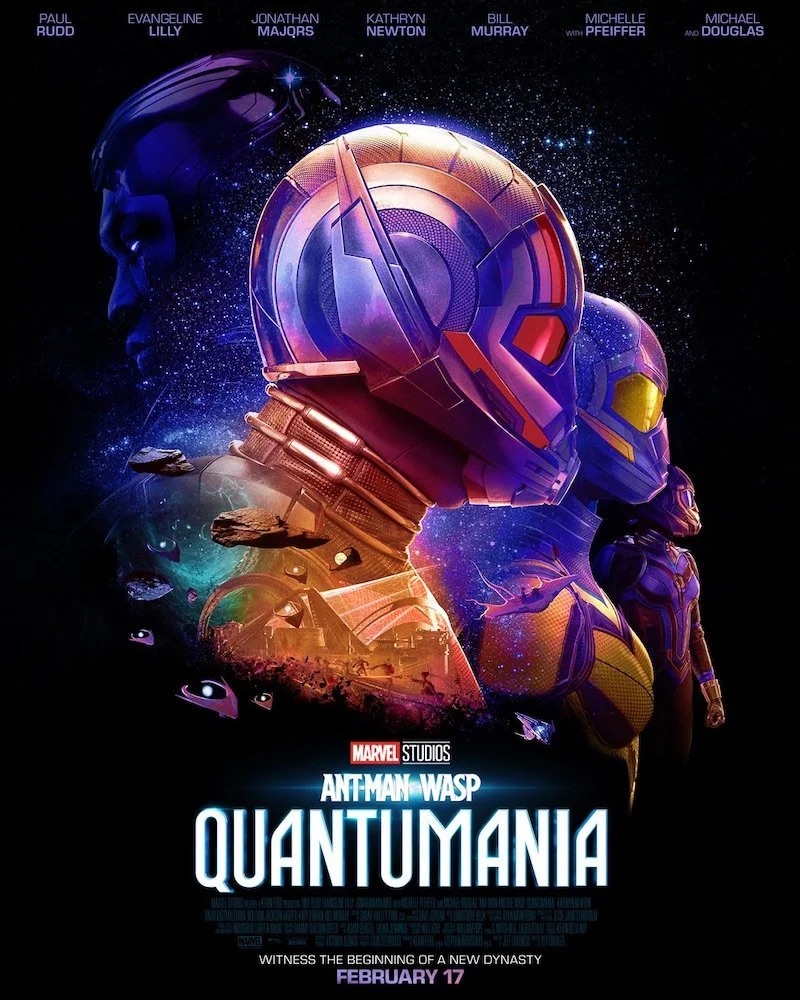
Ant-Man and the Wasp: Quantumania

Finally, Quantumania was released as the third part to a trilogy that began in 2015. Since its release on February 17th, it is projected to be the most successful Ant-Man film, already having the best box office opening of the three. The film stars Paul Rudd, Evangeline Lilly, and Kathryn Newton, among other big names. Quantumania is the first of many exciting Marvel films set to release in 2023. Throughout the year, it will be joined by films such as Guardians of the Galaxy Vol. 3, Spider-Man: Across the Spider-Verse, and The Marvels.

It is also worth noting that February is Black History Month –  a great opportunity to learn about the figures who have not only shaped Black culture, but the history of our entire world.

Image Source: 1/2/3/4/5

Featured Image

A look into Podcasts

Social media in the modern age is a constantly evolving force, influenced by the changing new trends that shift how we consume content and media. Podcasts, although having been a concept for quite some time, have only recently reached record-breaking download figures and emerged with new popularity. Now available across multiple platforms such as Spotify and Youtube, this form of audio entertainment has far progressed beyond being downloadable radio shows.

The Science Behind It

By a dictionary definition, podcasts are simply digital audio files you can download or listen to over the Internet, but as previously mentioned, they have changed as the years have gone by. The digital audio “show” or program usually comes in a series created by a host, and then published episode-by-episode on the internet where anyone can download and stream it on their device. One of the greatest appeals of this type of entertainment is this same accessibility compared to more traditional methods of content such as radio or TV shows, where the creator can connect with their audience but the listener can also have instant access wherever they are. Users can listen to podcasts without needing to watch a screen, making them a great use of time while on walks or driving home from school and work. Additionally, podcasts instantly provide a community of like-minded people if you do find one you enjoy. Whether you are a bookworm seeking in-depth discussions of different books, or simply a student trying to learn a foreign language, there is a podcast for everyone and communities everywhere. 

This form of content’s boom in popularity can be reflected by the numbers as well. In 2006, only 22 percent of the adult population in the United States was aware of podcasting. Last year, this figure had risen to 79 percent. With over 82 million people actively listening to podcasts, it has shown to be a viable commitment for both the creators and the users. In her article on Wired, Miranda Katz wrote that “People are really listening and want to consume all of the content that is there and available. There’s a level of dedication from podcast listeners you don’t otherwise find. And now the numbers prove it. Podcasts aren’t a bubble, they’re a boom—and that boom is only getting louder.”

In terms of actual recommendations, there exists thousands of podcasts scattered across platforms probably fitting every single genre there is to name. Beginner-friendly podcasts like ‘This American Life’ and ‘Revisionist History’ are great places to start (or perhaps listening to a Duolingo podcast to finally get that owl off your back), but simply going on Spotify and trying to find something you are interested in is just as good of a place to start.


Featured Image

Sources: [1] [2] [3] [4] [5]

School-Life Balance and it’s Significance to a Healthy Lifestyle

0

Whether it’s parents, teachers or other authority figures in life, we all have people who care enough about us to push us to succeed. But where do we draw the line between a “good work ethic” and a constant and unhealthy need to be productive? How do we know what to prioritize in our lives with so many responsibilities and expectations? 

In today’s society, there is a very high expectation, particularly aimed towards teenagers, to be hard-working and future driven. And while it is true, as during your time in adolescence you acquire life skills that will be vital in adulthood, the pressure doesn’t seem to become lighter as you get older.

So how do we understand when our work ethic becomes unhealthy? It can be a difficult realization if everyone around you is also acting in the same ways and even promoting it to you. This perception can become even more dangerous when you are validated on your unhealthy habits. For example, if you find yourself staying up late all the time to finish assignments at the last minute, and in return, you receive parental praise or amazing marks, it proves to you that you can indulge in this sort of lifestyle and still succeed in the end, further internalizing the need to work like this.

If you don’t have a proper school-life balance, over time, you can find yourself being physically and mentally tired, and even have a loss of motivation for life. Having time and stress management is key to so many parts of our lives, and it can be miserable if you can not build this skill early on.

Fighting the Problem at Its Root

Though it may take a while for you to realize your damaging tendencies, just by acknowledging the problem, you have already taken a large step in helping yourself become better at managing your life. Throughout my own life, I have struggled with my own school-life balance because of my stress managing skills and my need to be a perfectionist. I would put too much time and attention into my school work for the sake of “good grades” and prioritize everything else regarding my personal life at the bottom. This sort of mindset is tiring, both mentally and physically, and it is not at all sustainable. After all, “good grades” look different for everyone anyway.

Personally, I have found that this issue stems from the way we perceive life and ourselves. We all have aspirations and expectations for ourselves, and regarding those expectations, we will do things that we think will fulfil them, and will put these tasks as the first priority. When this happens, we can compromise everything else and use the excuse of being too busy. Well to offer perspective, no one really is busy, it is simply how we prioritize our life. If something is truly important to you, you will find the time to invest in it. 

And that is why you need to want to improve. If it is not you who wants to change, no improvements can be made to your own life. 

So, how can we become better at managing a school-life balance? To create a balanced lifestyle you need to make changes both at school/extracurricular activities and at home.

At school, try to…

  1. Plan out your day
    1. Keep a planner or checklist so that you know what to expect of the workload for the day/week/month
  2. Create efficiency with your work
    1. Be productive in class and try to stay as focused as possible so that you have less work to complete at home
  3. Take the necessary steps to be successful
    1. If you know that you work better while listening to music, in a noisy or quiet environment, etc. let teachers or your authority figures know and make use of the opportunities given to you 
  4. Communicate if struggling and need extra assistance or need extensions on assignments 
    1. If you are struggling with subjects/topics get the teacher’s attention beforehand so that you can work on what you are lacking
    2. If you know a particular day or week is not convenient for you or that big life events are getting in the way of your schedule, communicate that to teachers clearly

At home, try to…

  1. Take a break after getting home
    1. Right after getting home try to get some deserved rest by doing a relaxing activity to wind down. This can be reading, going for a walk, listening to music etc. but be mindful of time. And remember, it isn’t a break if 
  2. Get chores out of the way
    1. If you have any simple chores like laundry or organizing your desk, try to get them out of the way so that you don’t keep pushing them for later on
  3. Designate time to work on assignments/study
    1. If you find that blocking out time for work and studying is inconvenient (a lot of the time you can underestimate how long something takes, or how difficult it is) you can try designating a work period for every day. For example, “I will work on anything school related for two hours every night from 5pm to 7pm”. This way you still take care of your academic responsibilities while still having time for other activities.
  4. Lessen the workload on busy days
    1. Don’t try to overpack a day with activities if you already have many things to do. Try your best to alleviate workload by distributing tasks as evenly as possible over the week/month
  5. Take action to involve yourself
    1. Try to find other activities to involve yourself in that you know you will enjoy like picking up a sport you have always wanted to try. Finding an outlet will help you feel more motivated, and help relieve any stress
  6. Get proper amounts of sleep and don’t skip meals

Final Words

The key to a good school-life balance is being able to manage our time effectively and prioritize the right tasks. Regardless, I hope you gained some insight into how you can improve your time management skills, what a well-balanced lifestyle looks like and how important it is for your health! If you have been feeling overwhelmed with your life lately, remember that there is a solution and that better days are ahead.


Featured Image: 1

Understanding the “Ma” of Studio Ghibli

It is no secret that we live in a fast-paced world. Present-day urban centres in the West are all about the hustle, the bustle, and the absolute non-stop. Naturally, that translates into the media that we create and consume every day.

Our action-movies are filled to the brim with fight-scene after fight-scene, and when those aren’t taking up the screen, we’re watching dialogue scenes that are heavy with crucial revelations and are overwhelmed with information-dumping montages. The fantasy stories are packed full of worldbuilding and curious, never-before-seen characters, and our romances have after reason for why the characters can’t be together just yet. Now, that is not a bad thing. It keeps the audience interested and engaged, never turning away for one second, lest they miss an important detail. However, that sort of fast pacing is not the only way to go about it. Studio Ghibli is one of the most brilliant examples of how different can be spectacular.

What Makes Studio Ghibli Different?

Since the release of Studio Ghibli’s first movie, Castle in the Sky in 1986, multiple generations have grown up with these movies that explore the quirks and beauties of nature, spirituality, and humanity. Studio Ghibli does this in a way that is easy for both children and adults to grasp, absolutely enthralling in their well-rounded characters, smooth animation, and next-level soundtracks. However, the element that I want to zoom into today is something that people don’t often think about. The still, reflective moments, the introspection – the Ma.

Ma is a Japanese concept that essentially means “empty or negative space”.  In a 2002 interview, Roger Ebert brings it up as “gratuitous motion”. He describes it as a moment when a character does not let the plot dictate their movements. Instead, the character just sits or stands there, letting themselves feel the present moment and bask in it, often surrounded by nature. Hayao Miyazaki responds by clapping his hands a few times, and explains, “We have a word for that in Japanese. It’s called ma. Emptiness. (…) The time in between clapping my hands is ma. If you have non-stop action with no breathing space at all, it’s just busyness. But if you take a moment, the tension building in the film can grow into a wider dimension.”

“Ma” in Kiki’s Delivery Service

This is something that is present in all Studio Ghibli films, and a huge factor in separating them from our western movies and TV shows. It is unique in that it gives both the character and the audience reflect on what has happened: to think about all the plot points so far, the characters, and perhaps some predictions. Even if we do not wish to reflect, we can sit there and bask in the visceral beauty of the animation.

“Ma” in Spirited Away

In an iconic scene from Spirited Away, which could be argue as Studio Ghibli’s best-known film, there is a sequence of nothing but a train ride. Yes, that’s right – this movie takes minutes out of its play time to spend on a completely silent, no-dialogue sequence that does nothing but re-familiarize us to this fictional world. And it is absolutely brilliant.

We see snapshots of the world passing by, sometimes paired with the spirit inhabitants of Spirited Away’s strange world. In a way, its strategic placing near the end of the film acts as a sort of climax that preludes the actual climax – the tension has bubbled up throughout the entire film, but with the symbolic sunset that comes with the train ride, that tension goes out with a gentle little pop. It helps to prepare Chihiro, the main character, for the last stretch of her journey, where she will reach the final stage of her character development and maturity.

This is a perfect representation the the ma that has been a constant in Studio Ghibli, and Miyazaki’s, films for the last decades. In both a literal and symbolic way, it delivers the message and core ideas in the story. Ideas of leaving home, maturity, responsibility, and the passage of time, all reflected back in this little girl’s journey on a train, far, far away from home.

In a world where everything from daily life to the media we consume is fast-paced and never-ending, stories like these and moments of ma have never been more relevant. Sometimes, amidst the hustle and bustle of our cities, we can start to feel suffocated and overwhelmed. In those moments, it may do us some good to remember the lessons that Studio Ghibli has taught us, and take a moment to look around and ground ourselves into the world around us. And of course, you should never forget that nature is the best remedy.


Images: featured, 1, 2,

Sources: 1, 2

What’s Going On in Turkey and Syria?

0

If you’ve been in tune with the news this week, you have probably heard of the massive earthquakes hitting Turkey and Syria the past couple days. These two countries lay on geographical regions known as “fault lines,” which are essentially fractures between tectonic plates. These regions are highly prone to earthquakes as tectonic plates scrape past each other, explaining why these natural disasters are hitting Turkey and Syria.

Deadly Turkey earthquake exposes dangers of major fault lines below - National | Globalnews.ca

Thousands have been killed and many more have been injured as a result. Turkish president Recep Tayyip Erdogan faces heavy criticism from all angles, due to the government’s lack of meaningful response and evidence of previous corruption. Erdogan, in the 2010’s, supported and oversaw a construction boom which intended to bolster Turkey’s economy. A lot of money was put into this economic project; money that may not have truly gone towards the Turkish people. Infrastructure built during this period of time shows evidence of cut corners and shoddy building standards – implying corruption in Erdogan’s administration.

Erdogan is an authoritarian ruler who’s grip over Turkey is in danger due to recent events coupled with a history of economic crisis. Turkish elections are due in only a couple months: May 14th, 2023. As both the Turkish people and the international community put pressure on Erdogan, this may pave way for political changes in Turkey.

Erdogan Pledges Turkey Central Bank Rate Cuts Before Presidential Elections - Bloomberg

Many relief efforts have been launched for the Turkish and Syrian people, and the situation remains to be sorted. For more information on the situation:

Deadly Turkey earthquake exposes dangers of major fault lines below

https://www.bbc.com/news/world-middle-east-64608535

https://www.cnn.com/middleeast/live-news/turkey-syria-earthquake-updates-2-11-23-intl/index.html

https://www.wsj.com/video/series/news-explainers/the-science-behind-the-massive-turkey-syria-earthquakes/4F79BEEF-2D9C-47E3-8F2B-B3A7198C83CE

https://www.redcross.ca/donate/appeal/earthquake-in-turkiye-and-syria-appeal#14bf71f5-0d57-497d-acd2-9b372e8a543a

Featured Image: Mustafa Karali/AP

Image Sources:

Erdogan Image: Adem Altan/AFP/Getty Images

Fault Lines


The Two Faces of the Garment Industry

Fashion has always been an integral part of self-expression. However, we are often unaware of the costs associated with buying fashion from many famous retail brands in terms of their ethical and human rights violations. It often makes me wonder why governments and big corporations continue to operate and support sweatshops when they have the ability to treat their workers fairly in Western countries but exploit workers in under-developed countries by taking advantage of their lack of labour rights and safety regulations. I am well aware of the fact that a lot of us cannot afford to always buy from sustainable brands. But, I believe the overarching idea to take away from this situation is that influential corporations should not normalize hazardous working conditions in the first place. Unfortunately, our society has prioritized monetary gains over human rights many times and that will likely continue to happen as we are susceptible to greed. Countless individuals lose their lives or get injured working daily in garment factories, and it is important to advocate for their rights as we wear the products of their hard work and creation every day.  

Rana Plaza

To understand the gravity of the situation, we can look at the Rana Plaza accident as a testament to the horrible working conditions imposed on individuals, irresponsibility from factory owners and operators, and safety violations. The Rana Plaza incident occurred in Bangladesh and is considered one of the deadliest collapses in the garment industry. More specifically, it led to the death of over 1,100 people and disabled others. It should also be noted that the owners and operators of this garment facility, which produced clothes for brands such as Joe Fresh, knew about the structural issues and the problems with the building material. Furthermore, the building’s owner, Sohel Rana, illegally added floors to the building, ignored structural advice from engineers, and made plans to flee after the incident. To further elaborate, large power generators shook the whole building, especially the top floors. This incident brought international attention to unsafe working conditions and the exploitation of workers for profit motives. Bangladesh continues to be one of the main producers of this industry, and these industries also make up a large portion of the country’s economy. However, I do not think economic reasons should justify the mistreatment of individuals, especially when these conditions do not exist in many Western factors, which further highlights the double standard within this industry. Rana Plaza produced clothes for Walmart, Gap, Adidas, Joe Fresh, and many other brands. After this accident, some companies donated money to relief efforts, but none of these reimbursements would have occurred if this case did not receive global attention. To further add, in light of recent events, the COVID-19 pandemic has made this industry even more vulnerable as employees have been laid off and are made to find work at places that have conditions that worse than the ones at the factories. 

Ethical Dilemma

Unfortunately, there is an immense ethical dilemma associated with this situation, and it is essential to understand all perspectives. From my perspective as a buyer, I often feel guilty for buying from brands that support sweatshops, but it is also difficult to buy from sustainable brands as a student because they are more expensive. On the other hand, many workers in Bangladesh still want to maintain their role in the garment industry due to the economic factor I mentioned previously. My perspective may be that human rights should be prioritized instead of solely economics. On the contrary, it is vital to understand that people in developing countries main goal is to provide for their family, and they are willing to go to any length to achieve that. With that being said, our generation prioritizes sustainability over fast fashion, and that may lead to transformations within the industry. In terms of ethics, should companies place their benefits ahead of those of the workers when the workers are the ones keeping the company in business through their crafts? This question is posed in direct correlation to Rana Plaza because unethical treatment was motivated by conflicts between profit goals and safety. Every company has the ethical obligation to ensure that their employees have appropriate suitable working conditions, but it seems that this line is blurred in this specific industry far too many times. How many deaths will it take before transnational corporations realize the effects their self-interest has on others?

Can Change Happen?

In a highly globalized world, pre-existing societal constructs make it ever more difficult for positive change to occur in the garment industry in developing countries. Changes in labour laws and prioritizing worker safety should be one of the main goals I think we should expect to see in the future as more people globally advocate for these changes to be made. One of the United Nations’ sustainability goals is no poverty, and it is a fact that many people in those countries are forced to work in factories due to their financial state and lack of support from other government infrastructures. Furthermore, sustainability is one of the main problems because the mass creation of clothing we see from fast fashion companies consumes many resources and contributes to rising pollution. Another UN goal is gender equality, and even in 2023, this goal is yet to be achieved in the textile industry. Women are paid less than men in Bangladesh for the work they do. At the same time, these women are subjected to horrible working conditions, have to work overtime, and receive little to no education due to being sent to these factories starting from a young age. To highlight the seriousness of the lack of human rights in this industry, I want to elaborate on the working conditions. In Bangladesh, garment factories are overcrowded, there is a lack of air ventilation, and workers are exposed to toxic gasses that can lead to diseases such as cancer. Additionally, there are no exhaust fans for ventilation, and workers are not provided with face masks to deal with this issue, an effort made by factory owners to save money despite making millions. At the same time, there are no fire exists or fire alarms, and there are an inadequate number of bathroom facilities that can accommodate all of the employees. Rana plaza was a monumental moment for the garment industry and brought to the surface all of the issues hidden away for years to light. It cost the lives of over one thousand workers for some companies to realize that change is needed. Despite the lives lost to Rana Plaza, Walmart has rejected proposals of increasing product prices to improve electrical safety and working conditions for the factories. The reasoning for this was that it would be too costly to implement; keep in mind that the company’s annual gross profit is around $129B. H&M decided to follow a different route, making around 1000 unannounced factory visits to ensure worker safety in terms of their code of ethics. Furthermore, the Accord on Factory and Building Safety in Bangladesh was signed by companies to ensure that retailers would be required to help finance safety and building improvements. The two faces of the fashion industry are truly reflected when on one hand, companies promote and foster acceptance and kindness campaigns in developed countries and on the other, violate countless human rights of their factory employees.

Demand quality, not just in the products you buy, but in the life of the person who made it.

– Orsola de Castro


Sources: [1]/[2]/[3]/[4]

Featured image: [1]

The King of Literature, Edgar Allen Poe

Edgar Allen Poe is one of the most famous gothic and horror writers ever known. He practically invented the gothic literature genre and his most known works, ‘The Tell-Tale Heart’ and ‘The Raven’, have changed how people look at short stories forever. And it doesn’t stop there, he’s influenced multiple genres like science fiction, detective and whodunit stories. Overall, it’s clear that Poe has changed literature forever.

Gothic Literature And Poe

Poe’s macabre tales are a staple of gothic literature. He had a mastery of all aspects of gothic fiction; dark and descriptive scenery, his use of fear as the main catalyst in almost all his stories, a underlining tone of supernatural elements and, albeit dark, with a touch of romance. His stories ‘The Tell-Tale Heart’ and ‘Murder in the Rue Morgue’ highlight his talent extremely well. This paragraph from ThoughtCo. explains the influence of Poe amazingly:

“The supernatural elements in the story, though, launched a whole new genre, which took off in Europe. Then America’s Edgar Allen Poe got ahold of it in the mid-1800s and succeeded like no one else. In Gothic literature, he found a place to explore psychological trauma, the evils of man, and mental illness. Any modern-day zombie story, detective story, or Stephen King novel owes a debt to Poe. There may have been successful Gothic writers before and after him, but no one perfected the genre quite like Poe.”

His Influence On Other Authors

As mentioned in the quote above Poe has affected a lot of our current literature. From H. P. Lovecraft to Stephen King to Ambrose Bierce, many authors have drawn inspiration from Poe and his imaginative storytelling. Being crowned “the originator of both horror and detective fiction” it isn’t a surprise so many writers have looked to his writing for inspiration and guidance. Undoubtedly his work will continue to teach, inspire and terrify people for years to come.

Annabel Lee, One of His Most Famous Poems

In 1849 Poe’s poem Annabel Lee was published in the New York Tribune, two days after his death. It is a tale depicting a beautiful young woman who, unsurprisingly, dies. While this may be one of his shortest poems it is one of my favorites for its simplicity (which makes the story even more chilling) and how his words paint a picture in your mind but, most importantly, for the love that Poe clearly depicts for the woman who he calls Annabel Lee. It is theorized that when he speaks of Annabel Lee he is actually talking about his wife (and cousin…) Virginia who died only a few years prior. Annabel Lee is truly a staple in poetry and everyone should read it at least once in their life.

All in all Edgar Allan Poe is an amazingly talented writer, poet and literary critic. He has rocked the foundations of the world of literature and still continues to do so as he lives on in our awe and stories.

Sources: 1, 2, 3, 4, 5, 6, 7,

Featured Image

The Cult of Andrew Tate: The Dangerous Spread of the Alt-right Online

Over the last few years with the rise of Tik Tok and short-form video content on the internet, a certain man has since risen to an absurd level of fame despite his outdated and controversial views. Andrew Tate, professional MMA fighter and human trafficker began his rise to fame after being featured in a select few TV shows following his winning of several MMA awards. His debut as a TV personality was cut short, however, after a video of him beating his girlfriend at the time with a belt began to circulate. Rather than public outcry, it was this exact abuse of women that led to his rise as an internet celebrity. His career began with abusing women which was readily accessible and consumed by his legions of fanboys. Now with his arrest by the Romanian government, his career is hopefully slated to end, all as a cause of his own hubris.

Who is Andrew Tate?

After his initial debut onto the internet, Tate introduced a ‘university’ to his audience, formerly known as Hustler’s University and currently known as the ‘Real World’. This online course was introduced to not only make money, but also distract from his human trafficking organization, in which he would manipulate and trap women into being webcam sexworkers. It can also be noted that this online business model fits many of the qualifications of a cult, namely the simultaneous exclusivity and belittling of its members as well as the recruiting and behaviour driven aspects of the program. In addition to this, Tate would often encourage his fans to promote him on various social media sites, namely TikTok and Instagram. Most of the work in his rise to fame was therefore perpetuated and maintained by his online audience, where clips of his podcast would be uploaded and garner millions of views. The result of this is clear; millions of men now feel comfortable enough to vocalize their misogynistic views, at least online. 

Another factor in Tate’s success is the reason so many men rationalize and support his ideas- despite Tate’s proven record of sexual and physical assault against women. With Tate’s rise in popularity, we must consider what type of person is capable of falling prey to his manipulation tactics. Millions of men (and some women) have been convinced of Tate’s righteousness. This is because the structures of patriarchy provide an ideal of what it is to be a man, and they have been told that society is structured around them. However, the true masculine ideal can only be fully achieved in combination with extreme wealth. This ‘strongman’ image is only available to the elites of society, therefore to the average man it is completely unattainable. Yet at the same time, society expects them and bases their value as a human by their ability to be attractive, strong, and financially successful. This is essentially what Andrew Tate is selling – an image of ideal masculinity. His Hustler’s University is a prime example of this, as he teaches men how to be financially and personally successful by  telling them how to be more like them – minus the international crime. These vulnerable and often young men want to improve on their life, and Tate’s lifestyle is something they deem desirable. But because they are not and likely will never be able to achieve it, they turn their lack of self-esteem into a hatred of those they perceive as the ones holding them down – such as women and leftists. Ultimately, this sense of entitlement they feel over perceived ‘lesser people’ turns into an undermining of the civil liberties and very humanity of others. 

TikTok and the Alt-right Pipeline

The Alt-right in contemporary politics is often synonymous with the far-right, often encompassing ideologies such as fascism and anarcho-capitalism disguised as ‘libertarianism’. If you spend a lot of time on the internet, you’ve likely heard some of their slang, such as ‘redpilled’ ‘blackpilled’ in reference to the matrix, which is terminology adopted by the Alt-right with the explicit intent to use things like movie references to draw you further into what can be called a ‘decentralized cult’. This is a specifically online phenomenon fuelled by sites like Youtube (and later TikTok) in which people all over the world become manipulated into forming a cult-like community – only online. The leaders of this cultlike following are people like Andrew Tate, Ben Shapiro, or Stephen Crowder, and their followers are slowly fed increasingly reactionary content by algorithms until they finally stumble upon explicitly racist, misogynistic, or homophobic content. To learn more about this process in the early days of the internet, click on this link.

Now however, the Alt-right pipeline has found a new way of radicalizing youth through TikTok. It starts off seemingly innocuous, with niche content like ‘gymtok’ – but soon it turns sinister, with even seemingly harmless content leading to content recommending an increasingly toxic and harmful mentality which prioritises adhering to traditional standards over all else.

In just a few scrolls, seemingly harmless content such as this: 

*Profanity disclaimer in second clip (specifically in the audio)*

https://www.tiktok.com/@dailyjlh/video/7110840981955579142?is_from_webapp=1&sender_device=pc&web_id=7089871630029276678

Can lead to much more damaging ones such as this:

https://www.tiktok.com/@llucxo/video/7052764295834209541?is_from_webapp=1&sender_device=pc&web_id=7089871630029276678 

With Andrew Tate specifically, fans use hashtags such as ‘inspiration’ ‘advice’ ‘life advice’ to market to vulnerable people – who soon get pulled into the TikTok pipeline of reactionary content. This is ultimately a spread of dangerous ideas and the result of it can be seen in an increasing number of domestic terrorism – specifically ones committed by white supremacists radicalized by internet hate groups against minorities. The damaging and hateful ideologies advocated for by people like Andrew Tate directly result in these crimes. These people have blood on their hands, and sites like Youtube, TikTok and Instagram only help the spread of their hate by not being more strict in stopping the spread of misinformation. 

What we can do

It can be hard for individual people to independently recognize implicit bigoted bias in the media we consume, especially when we are consuming a lot of it and are not aware of the sort of content that could be potentially damaging or misleading. Therefore, it is important that we are all contentious consumers of the content we find online. Critically thinking about media is an important part of modern media consumption. When you learn a new concept ask yourself, where did this source get their information? What bias could this media have? And most importantly, what does my reaction to this information say about myself and society at large? Always be sure of the reliability of your sources and if you see something, say something. Report any misinformation or hateful content you see online. For example, when Andrew Tate says women are bad drivers, ask yourself where you have seen this information to be true. Just a simple Google search would reveal that in fact, women are on average better and more cautious drivers than men, and often pay lower insurance rates because they are less accident-prone. Being sure of the reliability of the media you consume is the best way to avoid the manipulation tactics of the extreme right.

Source(s): 1, 2, 3, 4, 5, 6, 7, 8, 9, 10

Image source: 1

Where Do Phobias Come From?

0

We have all encountered scenarios that have struck fear within us. When scared, it is normal to experience slight anxiety, fight or flight responses, and instinctive reactions. However, when our fears of objects or situations become persistent and excessive, they may be diagnosed as phobias [1]. In line with the symptoms of an anxiety or panic disorder, the symptoms an individual experiences when they have a phobia include sweating, trembling, hot flushes and chills, shortness of breath or difficulty breathing, rapid heartbeat, and the feeling of tightness in the chest. Phobias can be categorized into five main types: animal type, natural environment type, blood-injection-injury type, situational type, and other type [2].

Most Common Phobias

Agoraphobia

Agoraphobia is known as the fear of open spaces [3]. At a psychological level, it is a panic disorder that inhibits an intense fear of becoming overwhelmed and not being able to escape situations. Approximately one third of individuals who suffer from panic disorder are subject to experience agoraphobia, as well. People with this phobia avoid situations like mingling with crowds, going to spaces outside of their home, and using public transportation.

Acrophobia

Acrophobia is the fear of heights [4]. Depending on the severity of the condition, individuals fear different height levels. For example, someone may fear being on a high floor of a building as much as they would fear climbing onto a step-stool.

Claustrophobia

Known as the fear of enclosed spaces, claustrophobia encompasses the taking of extreme measures to avoid confined spaces such as lifts, tunnels, tube trains, and public toilets [5]. Research has suggested that many individuals who suffer from claustrophobia experienced a traumatic event revolving around confinement and enclosed spaces during their childhood.

Entomophobia

Entomophobia is the fear of insects [6]. Historically, insects have been thought of as unknown creatures, stirring up a feeling of disgust within individuals. This is referred to as the “rejection response” because people tend to avoid unknown or foreign matter. Additionally, insects and critters have negative connotations attached to them due to the potential diseases they carry. For instance, in many countries, specifically tropical ones, cockroaches are known to cause illness when they dislodge bacteria onto foods. From an evolutionary standpoint, as a species, we may have evolved to be aware of infectious insects. Finally, many individuals feel threatened by colonies of insects because of an inferiority response. By nature, individuals believe that they are strong enough to complete tasks on their own; however, when they observe colonies of insects working together and supporting one another, their beliefs of what they can accomplish on their own are undermined. These are all possible reasons to support the development of entomophobia.

Achluophobia

Achluophobia is the fear of the dark [7]. This phobia may be evolutionary in nature, as many predators hunt at night or within darkness. Some psychoanalytical researchers also believe that achluophobia is related to separation anxiety from a primary attachment figure. Commonly known as “being left in the dark”, when a primary attachment figure suddenly exits an individual’s life without explanation, the individual may never know the reasons for their leaving. Another association with achluophobia is a lack of confidence and security. Individuals who lack confidence may have experienced dark points in their lives that are suppressed. They are fearful of the dark because they are afraid of uncovering personal insecurities and weaknesses. Commonly, individuals with achluophobia become nervous in a darkened environment, are reluctant to going out at night, and prefer to sleep with the lights on.

Causes of Phobias

Although it is difficult to pinpoint the origin of phobias, as everyone has individual experiences and symptoms attached to them, researchers agree that they arise from aspects related to both genetics and the environment. In other words, both nature and nurture have a role to play.

Genetics

Many studies have shown that children will develop the same phobias as their parents, suggesting that the cause of phobias are due to genetic connections [8]. In addition, the biological vulnerability of being startled can predispose individuals to naturally develop fears.

Environment

Phobias most commonly develop as a result of negative or traumatic experiences, occurring when fear produced by an originally threatening situation is transferred to other similar situations.

Changes in Brain Function

Phobias can arise from changes in brain functioning which alter sectors of the brain that control emotion and fear. The primary structure that comes into play here is the amygdala.


Sources: [1], [2], [3], [4], [5], [6], [7], [8]

Images: [Featured Image]

Is Earth’s Heaviest Organism Dying?

0

When thinking about the world’s heaviest organism, many of us might picture the blue whale or perhaps a large elephant. However, interestingly enough, the heaviest organism is a single aspen called Pando. Situated in the high-altitude area of Utah’s Fishlake National Forest, Pando–a colony of quaking aspen trees–is known as one of the oldest and largest organisms to ever exist on Earth. Although there are 47000 individual Pando tree trunks in Utah, these trees are actually one large colony connected by an extensive underground root system. In summary, Pando, also known as the Trembling Giant, takes the metaphor, “the forest is a single organism,” and makes it literal.

With Pando being just one organism, every tree is genetically identical–reproduction occurs asexually through a process called “suckering.” This process occurs when one trunk (which is really just a stem) grows lateral roots that emerge out of the ground to become new “trunks.” Researchers like to describe this process as cloning. Another interesting attribute of this organism is its ability to “quake.” Similar to quaking aspens, Pando’s flat leaves tremble in the wind, creating the soothing sound of rustling leaves. 

What is happening to Pando? 

Research suggests that Pando is one of the oldest organisms on Earth. Its survival can be attributed to Utah’s past environmental conditions. In the last 80,000 years or so, Utah experienced frequent low intensity burns and climate shifts, prohibiting the successful growth of rival aspen trees to compete with Pando. Nonetheless, recent changes in ecosystems around Utah’s National Forests suggest that Pando’s growth is declining due to organisms that graze on premature trunks. Some of these organisms include deer, elk, sheep, and cattle. The deer, one of the most concerning Pando-eaters, used to have several predators in the Utah area. However, hunting activities have disrupted the balance of predators and prey, which ultimately led to a significantly greater number of deers in the Fishlake Forest. 

Not only are animals such as sheep, deer, and elk restricting the growth of a new generation of Pando trunks, but the mature trunks have also been dying at higher rates. As observed by researchers at Utah State University, Pando’s size has been decreasing for decades, suggesting that the organism may be at risk of extinction. However, hope is not lost for these trees as scientists have been working to build fences around them to prevent other animals from eating premature trunks.

Featured Image

Sources: 1,2,3,4,5