
Home Blog Page 6

Why We Can’t Get Enough of Enemies to Lovers

There’s something almost addictive about watching two people go from barely tolerating each other to being completely, undeniably in love. The enemies-to-lovers trope isn’t just popular, it’s everywhere, and for good reason. When it’s done right, it hits a mix of tension, emotion, and payoff that’s hard to beat.

At its core, the trope is exactly what it sounds like: two characters start off in opposition. That could mean actual enemies on opposite sides of a conflict, rivals competing for the same goal, or just two people who clash so badly it feels impossible they could ever get along. But that friction is the whole point.

Step One: The Tension

The early stage is all about conflict. These characters misunderstand each other, challenge each other, or just genuinely don’t like each other. Think of the constant back-and-forth between Kaz and Inej in Six of Crows or the sharp, competitive dynamic in Pride and Prejudice.

This part works because it’s not random. The conflict usually reveals something deeper about both characters, their values, their fears, or their past. It’s not just “they hate each other,” it’s “they see the world differently.”

Step Two: Forced Proximity

At some point, the story pushes them together. Maybe they have to work on the same team, survive the same situation, or chase the same goal. Whatever it is, they don’t have the option of avoiding each other anymore.

This is where things start to shift. They begin to see sides of each other they didn’t expect. The person they thought was arrogant might actually be guarded. The one they saw as cold might just be careful.

Step Three: The Cracks Appear

This is the turning point. The insults soften. The arguments start to feel less like hatred and more like tension. There’s usually a moment, small but important, where one character realizes they care. Not fully, not openly, but enough that things feel different.

This stage is what makes the trope work. The transition doesn’t happen all at once. It’s gradual, messy, and a little confusing, just like real emotions.

Step Four: Vulnerability

Eventually, one or both characters open up. Maybe it’s about their past, their fears, or something they’ve been hiding. This is where trust starts to build.

And trust is everything here. Without it, the shift from enemies to lovers feels rushed or unrealistic. With it, the relationship feels earned.

Step Five: The Breaking Point

Almost every enemies to lovers story has a setback. A betrayal, a misunderstanding, or a moment where old assumptions come rushing back. It’s frustrating, but it’s necessary.

This conflict tests whether their connection is real or just temporary. It forces them to confront their feelings instead of avoiding them.

Step Six: The Payoff

When they finally get together, it feels deserved. That’s the difference between this trope and something more straightforward. You’ve watched them fight, grow, and change. The relationship isn’t just romantic, it’s built on understanding.

And that’s why people love it.

Why It Works So Well

Enemies to lovers taps into a few things at once. It gives you tension, which keeps the story interesting. It gives you character growth, which makes the relationship meaningful. And it gives you a strong emotional payoff, because you’ve seen how far they’ve come.

It also plays with a simple but powerful idea: first impressions aren’t always right. People are more complicated than they seem, and sometimes the person who challenges you the most is the one who understands you best.

When It Doesn’t Work

Not every enemies to lovers story lands. Sometimes the characters are just mean to each other without any depth. Sometimes the shift to romance happens too quickly, without enough development.

The key difference is whether the relationship evolves. If the characters don’t grow or learn anything, it doesn’t feel like a transformation, it just feels forced.

Why We Keep Coming Back to It

At the end of the day, enemies to lovers isn’t just about romance. It’s about change. It’s about seeing someone differently than you did before. And maybe, in a small way, it’s about the idea that people can surprise you.

That’s what makes it stick.

The Science Behind Spring

Spring is by far my favourite season; the smell of fresh rain in the morning, the beautiful flowers blossoming, and the sound of songbirds serenading you. I always know my favourite season is upon us from these cues, but how do the plants know when to start blooming? Despite their simple appearances, plants are complex organisms with receptors and chemicals all working together to assist in the blossoming of spring.

Photoperiodism

One of the ways a plant can “tell the time” is by using a mechanical response called photoperiodism. Receptors in plants can determine whether to start blossoming based on the duration of light they can detect. Some species start flowering when the hours of daylight increase, others when the hours of daylight decrease.

Plant Growth Regulators

PRGs are chemicals released by plants to stimulate different types of growth, whether it be suppressing or increasing growth, based on the surrounding environment.

Auxins

Auxins increase growth in the shoots of plants. However, at high concentrations, auxin can also inhibit bud growth.

Gibberellins

Gibberellins are primarily used for cell elongation, and are used to increase plant height, germinate seeds and make fruits larger.

Cytokinins

This hormone promotes cell division (cytokinesis)  in roots and shoots of plants, aiding in growth.

Why This Matters?

These were just a brief overview of some of the complex systems involved in the growth of plants, but why are they needed in the first place?

Many plants require very specific conditions for growing; these regulations can ensure they grow at the right times to ensure maximum productivity and efficiency. For example, some seeds require a period of dormancy and exposure to coldness so they can properly grow; this is called vernalization. Additionally, determining the proper time to grow is essential, as there are many other factors that contribute to plant growth. For example, pollinators are vital to plant reproduction, so plants must accurately time their growth for when pollinators are available.

Spring into the Ending

Knowing the systems involved in the blossoming of plants, as well as the intricacy of our environments, provides a deeper appreciation of the beauty and complexity of it all. The next time you’re admiring a beautiful flower, be thankful for all the steps that had to be completed correctly for this beautiful masterpiece in front of you!

Resources

1,2, 3

Regency Era Fashions

Regency Era Fashions

The Regency era refers to a period between 1811 and 1820 in which Prince George IV ruled as Prince Regent during King George III’s mental illness and absence from royal life. However, the fashion of this period can be extended from about 1795 to 1837, later influencing Victorian styles. 

This period is defined by its extravagance and how divided the classes were during the Napoleonic Wars and the beginning of the Industrial Revolution. This period also saw the rise of great literary figures like Jane Austen, who remains extremely relevant today. The “Regency” period was marked by elaborate balls and social etiquette, with the era being coined as the most romantic period in history. 

This correlated with an emphasis on and progression of women’s fashions. With trends consistently being modified, and gowns being incredibly well-made. This era was a time of immense growth and general comfort for the aristocracy, which translated to more elaborate and well-made styles coming into fashion. 

Towards the beginning of the 19th century, women had begun to abandon heavier styles that had defined previous eras, electing for flowy and lighter fabrics. The skirts that used panniers for their large structure were gone, and so were the rigid corsets made of whalebone. Gowns of the 19th century used lightweight fabrics that exaggerated the natural female figure. This was done in part due to the new skirt of the time, the column skirt. This development contrasted with earlier styles, in which skirts were voluminous and accompanied by elaborate petticoats. The column skirt maintained a straight silhouette from the hips to the ankles. 

The straight silhouette was also achieved through the empire waist cut. This cut resulted in the skirt beginning right beneath the underbust. 

To achieve the desired “shelf bust,” the chest was pushed upwards with the help of early brassiere prototypes like the divorce corset. The empire waist and vertical emphasis of these new gowns created longer lines designed to make the individual appear taller. 

Additionally, the construction and detail of these garments featured delicate fabrics and subtle embellishments like embroidery. This is reminiscent of classical Greek and Roman details like drapery and gold embroidery, which the Regency era took much influence from.  Originally, these details referenced their classical influences, which signalled intelligence and refinement. This represented a broader cultural shift towards more “natural” based beauty over the enhanced and extremely structured beauty of the 16th and 17th centuries. 


Unboxing the TEMU Package: a narrative uncovering the reality of forced labour

Letter from Masanjia

One of her daughter’s fifth birthday wishes was for the party to be Halloween themed. Julie Keith scavenged the attic, her memory giving way to a spooky tombstone kit she bought years back. After a bit, her eyes laid on a dusty cardboard box with Kmart’s logo written on it. 

As Julie unpackaged the tombstone, a crumpled sheet of lined paper rolled out with it. Neat blue handwriting was on it, though with grammar and spelling issues. 

“Sir, if you occassionally buy this product, please kindly send this letter to the World Human Right Organization. Thousands people here who are under the persicution of the Chinese Communist Party Government will thank and remember you forever.” 

Julie read on. The note said that the graveyard kit had been produced in unit eight, department two of Masanjia labour camp in Shenyang, China. Inmates were subject to work 15 hours a day seven days a week; “Otherwise, they will suffer torturement, beat and rude remark. Nearly no payment (10 yuan/1 month).” 10 yuan in Canadian dollars nowadays are $2.00.

Prisoners were detained on average for one to three years without a formal court sentence. Some identified as Falun Gong practitioners. “They often suffer more punishment than others,” 

Julie was shocked, what could she even do? Desperately, she started trying to contact peers on Facebook for advice and started making many phone calls and messages to human rights organizations, which were all unanswered. 

Months passed by, nothing. Julie’s husband told her maybe she should give this thing up, maybe it was some sort of prank. But just before December 2012, Julie’s phone started ringing. TV networks and newspapers were eager to hear her perspective. The letter was in the headlines.

Imprisoned and Enslaved

Like many others, Sun Yi enjoyed practicing Falun Gong; a spiritual movement that combines elements from Taoist and Buddhist beliefs. This practice became popular among Chinese citizens, and the Chinese Communist Party decided that it was becoming too popular. The more people there are, the likelihood of government pushback increases. 

As a result, the CCP deemed Falun Gong as an “evil cult,” implementing mass detention centers framed as prisons or refinement camps as well as wide-spreading media censorship and propaganda. 

Once Sun Yi was discovered to be a practitioner of Falun Gong, the authorities started to keep an eye on him. One day, police barged into his small apartment and forcefully took him, binding him blind and unable to move until he arrived at the “laogai” (reform through labor) camp in Masanjia. 

There, workers were obliged to work 15 to even 20 hours a day if demands called for it. Everything was filthy and cold, as if the whole place was abandoned. Torture would be the result of disobedient labourers. There were only 15 minute breaks to use the washroom and to eat food. Many committed suicide before discharge from these camps. 

For months, Sun Yi’s biggest hope was to see his wife’s face again, so he held on. At one point during the sentence, Sun Yi started to write SOS letters and sneak them into packages that he knew were going to be delivered to English-speaking countries. He had to do it with caution, the punishment would certainly be death. Four years and twenty letters, and eventually, it worked. 

Sources

*This information was mainly pulled from Amelia Pang’s Made in China

1, 2, 3

What You Are In Charge of, And How Does This Mean Change?

0

Introduction

There is no easy way to put it out there; you have to change something about your life to achieve happiness, or at least, a stable state of mind. But first, we have to understand what it means to change.

According to Google, one may define change as: 

to replace (something) with something else, especially something of the same kind that is newer or better; substitute one thing for (another). 

But obviously, there has to be something seriously good about the other option that makes us want to choose change. Humans are obviously not naturally open to change, although we experience it in the circumstances and people we meet. 

Even the slightest habits you have can impact your thoughts, but I am not here to talk about the psychology behind who you are, what you do, and why. I want to offer a solution, or even the slightest revelation about the mind you woke up today and will sleep with tomorrow. 

——————————————————————————————————

 
First, start with understanding what got you here. Did it come in all of a sudden, or have you been consistently desiring something? Write your answers down on paper. Sometimes, all someone needs is clarification on what they have been looking into.

The next thing is not finding out why necessarily, but painting a picture of how your life looks now without it and after with it. Describe what that thing does for you. By describing, I mean, really seeing what it does for you, what noticeably changes for you. Make sure that it is all in first-person before you see it through someone else‘s eyes.

Lastly, is this something that you can do tomorrow, or would it take more time? Most of the time, it is usually the latter rather than the former. But why exactly? Does it have to do with the task itself? Does it require more than from the energy than you have at the moment? Do you think about what interferes with you having it? Everything is in possession, and whatever you think this thing can do for you, you want it to be in your possession. Or is that truly the case? Your thoughts are not in your possession, it is not something you own. Just something you were born with… something you are not entitled to believe in, blah, blah, blah.

The time we take to ponder can either be a waste of your time as you are catching up with the rest of the day, or lead you onto the kind of journey you think best fits your ideals, emotions, life experiences, etc. But most of those things are shaped by your environment, so there may be no point in discussing possession: peace of mind, academic success, a plane ticket, a new wardrobe. These desires are constantly warped by what you think you are in charge of and therefore can change. An illusion most of us have been living under, as we are rotten to the core by systems that only challenge plain hormones and natural responses. Just as smart and capable as we can be, we have the characteristics of animals. But we always think it is something more than that. 


See, for myself, I always used to wonder how people could manifest or say they want something and could easily get it. It is not because of what they have or because I  constantly experience self-doubt and cannot manifest; it could have been something that day that led me to that thought. Perhaps I got a mediocre grade, and that was it. It was done. And so, I could gamble on how well I do on another test, and everything can go back to normal. Normal, meaning my grades could be as high as ever, but this is exactly what messes with the way we process our emotions and how we decide the next goal or objective. We are strategists who never take the time to watch things unfold before wanting the next best remedy. This leads us to times when we can feel hopeless or that we have gotten ourselves into doing something irreversible. There was no sign of me choosing the reversed option back then to understand why I even got that grade.


Thoughts are not bad. They are important, even if it reveals unhappy or apparently undesirable situations. But they also help us forget how to take charge of a situation. Like now, I could have just gone to talk about capitalism stealing everything from the human spirit. But it would also never dig deeper into the paradox of free will and a dream life. I would be stuck in the same web of consciousness versus the life I want. 


Both things can interfere with each other, but not every time at 2 am when I want to change my life. Balance is integral to achieving a life you are happy with. Even doing good things and building character is essential for the same reason, so that you remember you are capable of making an impact, and therefore, progress. All that we see in the world could include all the things that we have but cannot see in ourselves. How we may look at the scientist who made an interesting invention can point to how we can truly challenge ourselves and the world in innovatively approaching a problem. I like to watch movies and consume art as a whole because of it, to look through a window or into a mirror to understand what could be blocking me or something I really need to accept. 


You do get lost, but that is a part of it. Your clarity only fits with what you deem is fair and reasonable. You should not be blinded by what you cannot see, but live through it. Holding onto what we think belongs to us will only ever reduce the chances of being happy; that takes pursuit and uncertainty. I do not prefer to quote things, but a similar definition made by the author Bill Burnett from his book Designing Your Life, “Dysfunctional Belief: Happiness is having it all. Reframe: Happiness is letting go of what you don’t need.”


Reframing your thoughts is a method that works, but methods are only methods. Seek to accept what you may not understand or have not completely acknowledged. Seek does not mean do right away. It means taking your time and going at your own pace.


I cannot judge you on your journey; the process is as unique as my own and should not be comparable. But we are all travelling through the same tunnel, desiring light at the end, as if that is the only symbol of hope. And from what I have learned, I hope we may all defy ourselves to achieve peace and happiness. 


Nuclear Energy – How Tiny Atoms Can Power the World

0

For centuries, humans have relied on fossil fuels like coal and natural gas for energy and power on our planet. However, these energy sources have numerous impacts on our ecosystems and our planet. After years of research, we have developed various clean and green energy sources, from solar energy to nuclear. In this blog post, we will take a deep dive into the world of nuclear energy. You will learn how nuclear energy is used to generate electricity on a large scale, what the benefits and drawbacks of using nuclear power are, and its future.

Source of Nuclear Energy and How it is Used

Nuclear Energy is produced from the nucleus of atoms, primarily through nuclear fission. Nuclear fission happens when a neutron strikes an atom, commonly uranium, causing it to split, releasing immense heat and more neutrons, starting a chain reaction. The mass of the products is smaller than the mass of the reactants, where the missing mass (mass defect) is released as energy. This energy can be calculated using Einstein’s mass-energy equivalence formula E = mc². Power plants use nuclear fusion to produce heat, which produces steam to drive massive turbines to generate electricity. There are different types of reactors, each of which has slightly different processes.

Here are some advantages of using Nuclear Energy:

  • Low Carbon Emissions: Unlike traditional energy sources, Nuclear energy production produces zero harmful greenhouse gases.
  • Highly efficient and Reliable: Nuclear energy is highly efficient due to its extreme density, and it can be operated at any time. Nuclear energy is also considered to be the most efficient energy source.
  • Small Land footprint
  • Can be produced on a large scale
  • Affordable for long-term

Here are some disadvantages of using Nuclear Energy:

  • Expensive to build power plants and set up generators: Though Nuclear energy is very affordable for production, the initial setup process is very expensive.
  • Risk of rare catastrophic accidents: Though rare, there have been a few catastrophic incidents that have caused nuclear meltdowns, like Fukushima, which is a major fear of nuclear energy.
  • Requires careful waste management
  • Energy can be used to create nuclear weapons, posing a global threat.

Nuclear energy is preferred over traditional sources of electricity as it is a zero-emission, highly efficient and consistent power source that contributes to sustainability. Though nuclear power plants are initially expensive to set up, they is very economically friendly for long-term power generation.

Feasibility, Future and Nuclear Fusion

Nuclear energy, in the form of nuclear fission, is highly feasible and is already a dominant source of energy in various countries. Another form of nuclear energy is through nuclear fusion, which involves combining two light atoms into one, releasing large quantities of energy. Nuclear fusion is how the sun produces vast quantities of energy. Though nuclear fusion is much more sustainable than nuclear fission, the production of energy using nuclear fusion is still under research by scientists, and we have yet to build the first nuclear fusion power plant. Overall, nuclear energy in the form of nuclear fission is a highly sustainable method of producing electricity and is considered to be a green energy source.

Sources: 1, 2

Not everything is as it seems: AI taking over technology

Last week, my mom sent me a video on Instagram Reels. It showed a baby talking to its parents, and she thought it was real. Plot twist (well, not really), the entire video was AI-generated.

Like her, many people today are being fooled by what they see online, especially those who are a bit older. This includes simple AI videos, edited images, and even fake news. The problem is only getting worse as technology continues to advance every day. However, one of the main reasons behind this isn’t just that “they’re old and bad at technology.” It’s also about how they were raised and the environment they grew up in.

First of all, they didn’t grow up with this kind of technology. Even the creation of the iPhone felt groundbreaking to many of them, and the pace of innovation back then was much slower compared to today. Now, there are constant developments across multiple fields including AI, medicine, and almost every area of technology imaginable. It’s just like a completely different landscape.

Second, they tend to trust what they see online because they were never taught to question it in the same way. They had no real reason to doubt what they saw. Technology was introduced as something meant to improve lives, and the idea that it could be used to deceive or manipulate people wasn’t as prominent. As a result, the instinct to question digital content didn’t develop as strongly.

This becomes a bigger issue because it starts to affect how people understand the world around them. When it’s difficult to tell what’s real and what’s fake, it’s easier to believe misinformation or be misled by false content. This can shape opinions, create confusion, and even impact important decisions people make in their daily lives. As technology continues to improve, the line between real and fake is becoming less clear, making it harder for anyone (not just older adults) to fully trust what they see online.

Here are some tips for anyone in general to not get scammed by what they see online:

  • Don’t blindly trust everything you see. Check for the source of information and decide whether or not it is credible
  • Look for odd movements. Like an audio that doesn’t line up with the mouth or just wording and grammar that feels off
  • Extra caution when dealing with emotional content. Fake content usually tries to cover itself in emotional wording and create urgency such as through saying “Act now to save a life”
  • Don’t click random links. You usually can click links but never do it when you get it from an unknown sender
  • Ask someone else: a second opinion usually helps a lot for this (and in pretty much any decision in life)

Stay safe!

Your Light in the Pitch-Black Eclipse

Your Light in the Pitch-Black Eclipse

Who do you rely on the most? Who stabilizes your balance while you walk the tightrope? Who supports you as you face the thin line you must cross every day without falling into the dark abyss? Who brings you laughter and comfort packaged into a box with pink wrapping paper on your bluest days? Your sole bright star in the dark night. Who shows you guidance and love? Individuals who fit these traits do not have to be your closest; sometimes they can be unexpected. For me, there is a small number of people that I want to thank.

You notice when others just ignore

Thank you for being aware when I am down; you are truly one of the few who give me a thumbs-up from across the room and care about how I feel. You don’t brush it aside; you set it as a priority.

I feel safe around you

Thank you for allowing me to relax in your presence, to lean on you, and to rant about any subject in the world. I could be rumbling how unicorns should not be extinct, and you still listen intently.

You smile for me during my hardest times. 

Thank you for sending me your giddy smiles and ridiculous statements filled to the brim with unnecessary laughter. You include me in anything, and the sound of your joy is permanently embedded in me at this point.

For me, personally, my light is a couple of friends to whom I can tell anything, and I feel the need to express it here. Thank you for being the first to notice when I tremble or lose balance. Thank you for holding my hand and squeezing it tight so I know you’re here.

Thank you.


The Celebration of Persian New Year; Nowruz

0

While for many of us, it has been 3 months into the new year of 2026, for Iranians across the globe it has been 2 days since the new year of 1406. This unique new year is a special holiday celebrated for over 3,000-4,000 years, making it one of the world’s oldest and most cherished festivals.

What is Nowruz?

Nowruz meaning “new day”, is an essential part of Iranian culture. It marks the beginning of the year on the Iranian calendar unlike the gregorian calendar, and takes place during the spring equinox, marking the beginning of spring.

Nowruz is also regarded as more than just a new year. It is a celebration of rebirth and the conquest of light over darkness.

This holiday originally dates back to Zoroastrianism, which was one of the main religions of ancient Persia. It is also why Nowruz is considered a holy day alongside it being a festival, for those that practice Zoroastrianism.

How is Nowruz celebrated?

The celebration of Nowruz starts 2-4 weeks before the spring equinox. Most people begin the season with deep cleaning their house to get “rid of the dust of the past,” and continue with shopping and setting up their table.

An essential part of Nowruz is the “Haft-Sin” table. Made up of 7 items starting with the Farsi letter “S”, the Haft-Sin represents essential aspects of life.

The 7 Haft-Sin table items are made up of:

“Sabzeh”(sprouts)- representing renewal

“Samanu”(wheat pudding)- representing abundance

“Somagh”(sumac)-representing the triumph of good over evil and the sunrise

“Serkeh”(vinegar)-representing patience and wisdom

“Senjed”(dried oleaster)- representing love

“Seer”(garlic)- representing good health

“Seeb”(apple)- representing beauty

Other items with strong symbolism and/or that start with the Farsi letter “S” might be put on the Haft-Sin depending on the person. Some of the extra items are; “Sham”(candles), “Shirini”(sweets), “Ayne”(mirror), and more.

“Tahvil-e Sal”

On the spring equinox, the new year which is called “Tahvil-e Sal” happens. Although, there is no specific time set for it since it is calculated astronomically every year. The calculation takes in factors such as when the sun crosses the equator, movements from south to north, and making day and night equal.

After Tahvil-e Sal happens, for the next 13 days, Iranians visit their families, starting from the eldest members to the youngest.

On the 13th day, which is called “Sizdah Bedar,” people go outside with family and friends. During this time, people also throw the sprouts from their Haft-Sin into the water to let go of bad luck.


How To Do Homework After School

Apart from extracurriculars, after school activities look different for a lot of people. Youth often doomscroll or binge TV after school to cope with the overstimulation of social interactions and mental overload. However, this delay and avoidance can lead to procrastination and increasingly later bedtimes.

Doing homework right after school will likely fix two of the problems I see in myself and in my peers: sleep schedule, social media addiction, and procrastination. By breaking the cycle, we can effectively kill three birds with one stone. That’s the ideal goal of time management.

The Benefits of Doing Homework Right After School

Homework can seem gruelling or daunting, but reading some of these benefits may encourage you to continue reading this post and completing your homework in a punctual manner! Here’s a brief list:

Academic Benefits

  1. Work is completed on time
  2. Teachers are more likely to give extensions and better letters of recommendation to students who are consistently punctual
  3. New knowledge is reviewed the day of, reinforcing and embedding it into long-term memory and beginning the spaced-repetition cycle
  4. Active recall will be easier in the future since the first repetition is out of the way
  5. You can ask follow-up questions the next day!

Physical Health Benefits

We feel familiarity with the individuals who are chugging energy drinks like they can afford to gamble with their cardiovascular health. Perhaps you are one of these individuals. In any case, doing homework directly after school can help save your physical health in numerous ways:

  1. Less procrastination means earlier bedtimes
  2. You can finally move your sleep schedule a couple minutes earlier
  3. …which in turn also means that you don’t have to chug caffiene every morning or down multiple energy drinks in the span of an hour
  4. …which saves your heart health and drastically decreases your chances of cardiac arrest at the ripe age of 20.

Mental Health Benefits

Apart from the academic mental benefits, there are a myriad of mental health benefits you achieve after finishing your homework early, including:

  1. Less academic anxiety
  2. Increased mood
  3. Better relationships – because you will actually interact with people during daylight hours and talk to your family

The Process

Getting to homework directly after school can take quite a bit of habit building, but don’t let that deter you! It doesn’t have to be hard if we take the process one step at a time. Just remember that the benefits far outweigh the avoidance, and that if you value your health and well being this will happen sooner or later.

This guide is made for students who procrastinate their work like they have unlimited time. If you have better time management skills and already do some of these things, you might find that only some of these apply. If you don’t do any of these things, then you probably fall within the former group of procrastinators.

1. Night Before Setup

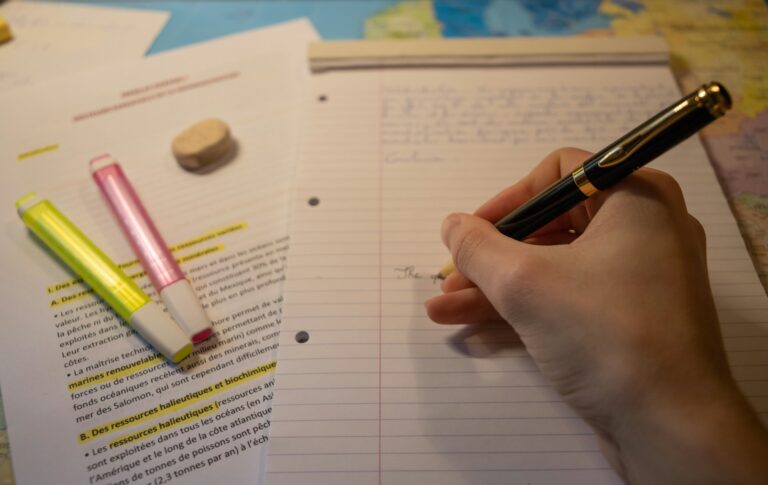
Prime your workspace for when you arrive home the day you get back. Clear your desk, or if you’re a slob, make sure there’s enough room on your desk to place one sheet of paper down on a flat surface.

Take out a single writing utensil, and place it on the flat surface. Pack your bag so that you won’t forget anything tomorrow morning when you leave for school.

Setting your materials up for success creates an environment where learning is the expectation. At the very least, it reduces distraction. Which brings us to our next step.

2. Put Away Your Phone

Easier said than done? Fine. Turn your phone to grayscale and Do Not Disturb, and place it outside the room you’re going to study in after you get home from school. If you need to use your phone, name what you need it for out loud, do what you need to do, and place it back in its designated area. It should never enter the room you are studying in.

3. Find an easy transition activity

It’s incredibly difficult to transition directly from school to studying at home, especially if you have no commute time. Find something you can do to transition yourself away from school and into homework that you can do if you commute, or if you don’t. Examples include:

  • podcasts
  • physical activity
  • reading
  • doodling
  • hobbies

Be sure to pick something that is easy and pleasant enough to be a break from the overstimulation of school, but also not engaging enough to be distracting or totally absorbing.

Decrease Transition Time

Begin with doing this activity for an hour. Every day, decrease the time by 7 minutes. In one month, you will be able to transition to homework after 25 minutes!

If this feels slow, remember that you can always start with a smaller interval of transition time but also that even the smallest decreases in transition time are progress from the probable hours you spend scrolling.

Top 3 Benefits of Rewatching Kids’ Shows

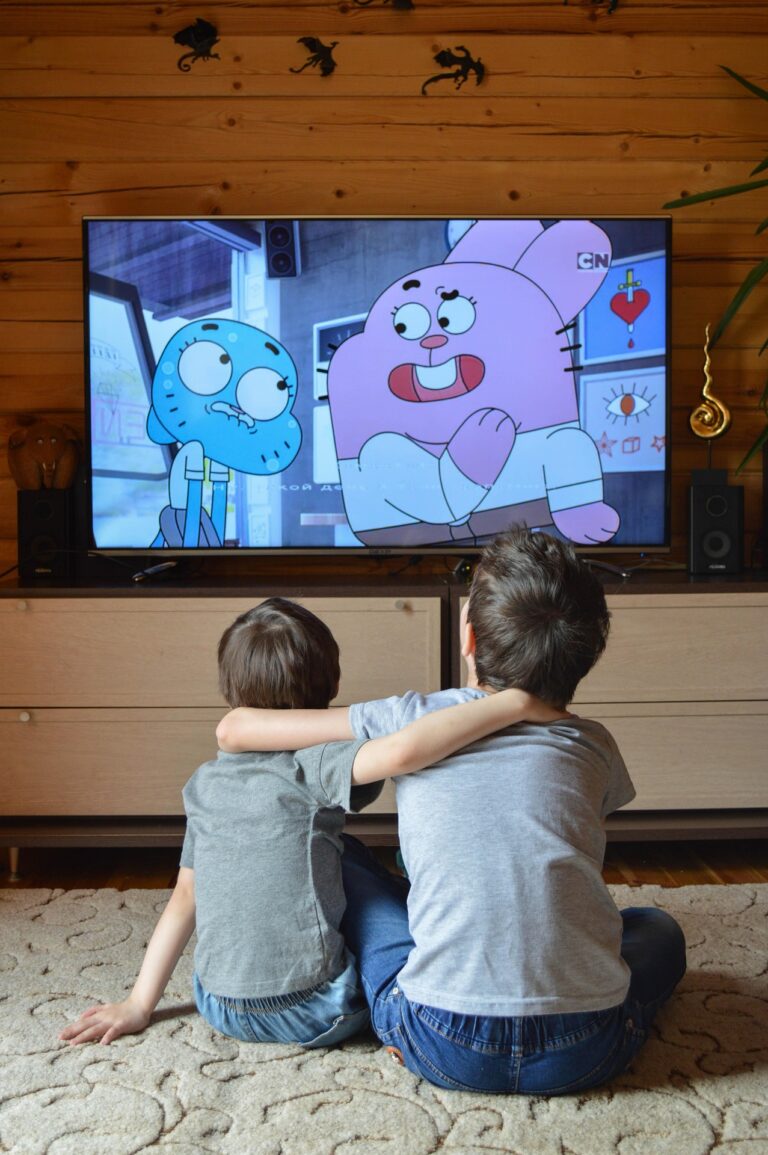
Sometimes, we all get drawn to those TV shows we used to watch as little kids, whether that be Paw Patrol, Peppa Pig, or whatever else it is we enjoyed. It can often feel embarrassing to reveal this ‘childishness’ to others, but here are three reasons why there is no shame in rewinding to the past.

  1. Soothing Sense of Predictability

In a busy world filled with unexpected twists and turns, whether that be in school or elsewhere, it can be a great source of stress. When you watch a show that you’ve already enjoyed and loved, it gives you a sense of familiarity. This predictability is a great stress and anxiety buster, especially after an exhausting day at school or work. If you know what’s going to happen, your brain does not have to spend the extra energy to navigate through complicated plot twists. You just watch, laugh, and enjoy!

2. Seeking companionship through TV

Binging some episodes of a loved TV show can also foster a sense of warmth and connection. That sense of familiarity not only reduces stress but also allows us to revisit the characters, oftentimes treating them as old friends. This is especially so with sitcoms. Sometimes, you don’t need to watch action-packed, emotionally straining content for entertainment. Saying hello to the nostalgia from old shows is also great for this!

3. Quick Dopamine Boosts

Studies show that the wave of nostalgia received by watching old shows can increase levels of dopamine, the neurotransmitter responsible for uplifting your mood. Oftentimes, kids’ shows have very short episodes, which you can watch quickly without chewing up your precious time. If you have a long ride home from school or work, for example, you can easily watch an episode on the train ride!

Beware of the dangers:

While revisiting our childhood through TV shows can be a great way to unwind after an exhausting day, it’s important to know when to stop. For example, if you notice that you heavily depend upon these shows to escape from reality rather than just taking a break, that can be a red flag. If this happens, it might be a good idea to use a different stress-relieving strategy or talk to a trusted friend/adult for support.

TL;DR

If a part of you wants to rewatch an episode of Peppa Pig, then I say go for it, but cautiously!

‘Sinners’ Best Cinematography Winner: Autumn Durald Arkapaw

0

In honour of Women’s History Month, the vampire horror-filled-with-the-blues, Sinners, broke records at the 98th Academy Awards. First, with having the most nominations for any movie ever, sixteen. But also for having Best Cinematography being won by a woman for the first time, specifically a woman of colour. While this is absolutely fascinating, it is equal parts annoying and frustrating that out of 98 years of history, a woman wins an award for cinema for the first time in 2026.


The winner is Autumn Durald Arkapaw. She worked with Ryan Coogler to create stunning shots that form the lively colour palette of Sinners–from colder, darker blues that are interwoven into the blues songs in the movie to warmer and more vibrant yellows and browns. The movie was a box-office hit and from then given criticism specifically on its commentary around relationships between race, culture, identity, and aspects of colonialism. This became especially intriguing through the establishment of vampires, and so, if one were to view this as simply a horror flick, then they would need to watch it again for the opposite effect. Sinners was not just a movie to be enjoyed and critiqued by movie critics; it was supposed to represent the same, universal impacts of colonialism and racism, but give enough room for its viewers to be sucked into its world that involves soulful and powerful melodies and lyrics to well-built and dimensional characters. 


Many times, it becomes more difficult to be happy for success around records at places like the Oscars because they always come down to one exact reason. That is when the truth becomes convenient; it can be sold. Sinners winning four Oscars is not just groundbreaking, but it stands for another time when movies connecting identity and culture to heavy bouts of symbolism finally become digestible to famous shows like the Recording Academy. A tiktok user @glass__museum analyzed more on this effect and how it is damaging in many parts. However, winning major awards becomes a testament to how often women, especially of colour, can do the impossible in the name of something outstanding and incredibly well done. That is the cinematographer of Sinners, Autumn Durald Arkapaw.


Born in California to a Filipino mother and a Black Creole father, she gradually gained more experience in advertising and camera assisting. Sinners was shot on 65 mm film, using IMAX 15-perf and Ultra Panavision 70 cameras, becoming the first female director of photography to shoot any movie on large IMAX film. But while we can attach the word female to this achievement, what can this mean for more significant implications affecting the movie industry in years, even decades? 


It might not always be easy to say that a door has opened, because we do not know if that means another door will open after another. It may take another record broken for everything to fall into place more consistently. As for Autumn, she took another step that gained her recognition. Many directing choices go into the immersion of its audience into the world and its characters, and her talent and artistic vision aligned with that of the team. All we do know is that this is not the first time it has happened, but it has been recognized for the first time. Women are a part of making and splitting up history with such skill and craftsmanship, and we see this through every barrier broken, as well as the confidence and the belief in themselves. Autumn asked all the women in the room to stand up, “as this wouldn’t have been possible without them.” I think it will be easier to say that we will see more women being represented against the will of others; it can just mean that a moment may be looked at more differently. That women altogether can create behind-the-scenes and know how to better and more precisely work through their characters in their world. 


But as for Sinners, many scenes—including the one that featured dancers at different times in the presence of music- will truly be highlighted in cinema for years to come. The easiest thing we can do is cheer and be hopeful for the future of younger women who are filmmakers and are inspired to bring their direction to the stage. Sometimes an Oscar for this reason may not be so valuable, as people are awed by the brush sweeping through the canvas in smaller trudges to larger and louder remarks that complement each other, a full picture that is only elevated by its parts. The future is in women, and perhaps can only be.


3 Women in History Who Revolutionized Medicine

With March being dedicated to celebrating women’s history and empowerment, we can take this month to reflect on revolutionary female contributions throughout history, in fields like medicine, engineering, and policy.

In healthcare history, female innovators have pioneered the creation of life-saving medications, treatments, and technologies, while battling suppression and having their rights compromised. Modern-day medicine would be insufficient without the work carried out by the female scientists discussed in this post, and history tells us that doing so was no easy feat for them.

The hurdles they had to jump through were endless, fighting for their right to practice medicine and receive education. It is essential for us to reflect upon the women who paved the way for medicine today, while empowering the incoming generation of future female physicians.


Photo by Sweet Life on Unsplash

Gerty Radnitz Cori

Gerty Cori is the first woman to be awarded the Nobel Prize in Physiology or Medicine. A professor in biochemistry at Washington University, Cori received her M.D. degree in Prague and moved to the U.S. soon after. Her extensive research did not prevent her from being faced with misogyny and discrimination in her field. She and her husband worked together to discover the Cori Cycle, depicting how glucose is converted into glycogen in the human body.

Cori’s work transformed diabetes treatment, and as she continued to study enzymes in the human body, she discovered the connection between missing enzymes and gene defects. Gerty Cori set the stage for the development of diabetes treatments and brought studies on genetic defects to light.


Photo by Filip Mroz on Unsplash

Virginia Apgar

Virginia Apgar was an anesthesiologist, surgeon, and advocate in the field of women’s health and neonatal care. She is known for breaking stereotypes and standing her ground against discrimination, breaking the stigma around birth defects in babies and educating parents on a global scale.

Apgar conducted research after graduating with her anesthesiologist’s certification from Columbia, working to find the underlying cause of the constant rate of death in newborns, despite mortality going down. She developed the Apgar Score, a method of assessing a newborn’s health and identifying at-risk babies with underlying conditions as soon as they exit the womb. The method was named after the inventor, but was also a mnemonic, standing for Appearance, Pulse, Grimace, Activity, and Respiration. The Apgar Score is used by physicians worldwide and has allowed for a decrease in the rate of death for newborn babies.


Photo by National Institute of Allergy and Infectious Diseases on Unsplash

Francoise Barre-Sinousi

The 2008 Nobel Prize recipient in Physiology or Medicine and French virologist, Barre-Sinousi is credited with her and her companions’ work in discovering HIV (human immunodeficiency virus), and in turn, AIDS (acquired immunodeficiency syndrome). She was a core member of the research team tasked with finding the cause of AIDS, and did so by dissecting the lymph node of an infected patient, leading to the discovery of HIV.

She is a modern pioneer and continues to be an inspiration for many young women and girls entering the field of medical research. Her work today led to the creation of revolutionary treatments for AIDS and HIV, allowing for faster diagnosis of the disease, as well as the development of antiviral drugs.


TL;DR

Medicine would be nowhere near as developed without the contributions of the following researchers:

  • Gerty Radnitz Cori: Nobel prize winner, professor in Biochemistry, revolutionized diabetes treatment
  • Virginia Apgar: An anesthesiologist and surgeon, created the Apgar score, which allowed for faster diagnosis of birth defects in newborn babies
  • Francoise Barre-Sinousi: Nobel prize recipient, discovered HIV and AIDS

March is the month of female empowerment. Advocating for women’s rights and celebrating female accomplishments is important now more than ever, given the current state of affairs, especially in rapidly developing fields like STEM.

Sources: 1, 2, 3

Your Brain’s Little Glitch: Understanding Déjà Vu

Have you ever walked into a place or experienced a moment and felt like you’ve already lived it before?  That strange, almost eerie feeling is called déjà vu, and it leaves many people questioning what’s really going on in their minds.

Bigger Than Just A Simple Memory Glitch

Déjà vu is a unique and mind puzzling experience. It happens when a strong feeling of familiarity clashes with the clear awareness that this situation shouldn’t even feel familiar at all. That strange mix is what makes déjà vu so different from normal memories and highlights just how complex it really is.

Inside The Brain During Déjà vu

Déjà vu isn’t just your brain messing up, it actually shows how your brain processes stuff. It can feel a little like a delusion, where your brain makes you believe something is real even though it’s not. Basically, your brain tricks you into thinking you’ve been somewhere or done something before, even if you haven’t.

It’s kind of like an illusion, where your senses make things seem real at first, but then you realize they’re not. Scientists say it happens because different parts of your brain send mixed signals. The temporal lobe might tell your brain “hey, this feels familiar,” while the frontal part checks if that’s actually true. When your brain realizes it’s not real, you get that weird déjà vu feeling.

Even though it’s kind of creepy, déjà vu is actually a good thing, it means your brain is checking itself and making sure you don’t confuse made up memories with real ones.

What Makes Déjà Vu Happen?

A bunch of things can make déjà vu happen. Being tired or stressed can increase the chances because your brain’s neurons don’t work as smoothly when it’s worn out.

Dopamine, a chemical in your brain that helps signal when something feels familiar, also plays a part. This might be why some medicines or drugs that change dopamine levels can make déjà vu happen more often.

Age matters too. Younger people usually get déjà vu more than older people because their brains are more active and better at checking memories. As we get older, our brain’s ability to notice these little glitches may slow down.

Déjà vu is more than just a weird memory mistake, it shows just how complicated and amazing our brains really are.

Wrapping It Up

Déjà vu is one of those weird experiences that makes you stop and wonder how your brain works. It’s not just a memory mistake, it’s your brain sending signals, checking itself, and sometimes getting a little mixed up. Things like being tired, stressed, or even your age can make it happen more often, and chemicals in your brain, like dopamine, play a role too.

Even though it can feel strange or creepy, déjà vu actually shows how smart and complex your brain really is. It’s a small reminder that our minds are constantly working, fact checking, and keeping us aware of what’s real. So next time it happens, just know it’s your brain doing its job just in a really weird and fascinating way.

1


Ada Lovelace: The Girl Who Imagined the Future of Computers

When we talk about computers today, we often think about coding, apps, and artificial intelligence. But did you know that the idea of computer programming started almost 200 years ago? And it was imagined by a young woman named Ada Lovelace.

Who was Ada Lovelace?

Ada Lovelace (full name Augusta Ada Byron) was born on December 10, 1815, in London, England. She was the daughter of the famous poet Lord Byron, but she did not grow up with him. Her parents separated when she was a baby.

Ada’s childhood was very different from that of most girls at that time. She was often sick and could not go to regular school. Instead, she studied at home. Her mother believed strongly in education and made sure Ada learned mathematics and science—subjects that were unusual for women in the 1800s.

Her Big Idea

Ada met a mathematician named Charles Babbage, who designed a machine called the Analytical Engine. It was an early idea of a computer, but it was never fully built.

Ada did something amazing. She translated an article about this machine and added her own notes. In those notes, she explained how the machine could follow instructions to solve problems. She even wrote a step-by-step method (an algorithm) to calculate special numbers called Bernoulli numbers.

Because of this, many people call her “the first computer programmer”.

Why is she important?

Ada was the first person to understand that machines could do more than just calculate numbers. She believed computers could one day create music, art, and more. This idea was far ahead of her time.

Her work helped shape the future of modern computing, even though people did not fully recognize her contributions until many years after her death.

Her Life and Legacy

Ada married William King and had three children. Sadly, she struggled with illness throughout her life and passed away in 1852 at the age of 36.

Today, she is remembered as a pioneer in technology. Every year, Ada Lovelace Day is celebrated to honour women in science, technology, engineering, and math (STEM).

Final Thoughts

Ada Lovelace did not build a computer, but she imagined what computers could become. Her ideas changed the world, and they continue to inspire young people, especially girls, to explore science and technology.

Source: [1], [2], [3]