
Home Blog Page 55

Webtoon Jumpstart: My Top 5 Picks for Beginners!

Webtoon: What is it?

If you are not a fan of reading novels, but rather watching films instead, then Webtoon is the perfect blend for you! Webtoon is an online app where you can read many different comics. You can choose from a variety of different art styles, genres, and plots, where a new chapter (or episode-as it is called on the app) comes out every week for most stories. Here are my top 5 recommendations for 5 different genres to get you started. The best part? It is FREE!

1. Mystery/Thriller: Chasing Tails

A group of 9 college students met together for a group project, but the building suddenly collapsed on them! By the time they were rescued, only 6 were alive, and some of them were too traumatized to speak. But the real question is; Did the other 3 die because their body couldn’t hold on? Or did someone do it to them? Were they the only students on that building? After the detectives and the psychiatrist receiving mixed testimonies from the survivers, someone is clearly lying. Or are they? And doesn’t anyone notice, the ‘psychiatrist’ seems a bit… off? If your a fan of pschycological thrillers and mysteries, buckle up, because you’re in for a ride!

2. Romance: My In-Laws are Obssessed with me

If your into a slow-burn and non cliche type romance, this webtoon is for you! The protagonist, Pereshati is the daughter of a count. After her father passed away, her stepmother and her half-siblings plotted together to kill Pereshati for their own gains. However, what happens when Pereshati is sent back into time after her ‘death’? How will she react when she sees her family again? What happens when she meets the Grand Duke in hopes of seeking safety? What happens when she finds out the truth behind the Grand Duke’s bloodline? This story, is not the typical falling into love straight away type plot, but the author takes a rather realistic approach. Exploring the realms of trauma (of both men and women), mental health, acceptance, being an outsider, and familial bonds along the way. So, if you love slow-burn with a touch of mystery and fantasy, this one is for you!

3. Superhero: unOrdinary

With over 1.2 Billion views on Webtoon, follow the journey of an ordinary student’ named John, attending a presitigous highschool for students with superhero powers. Except, what happens if not everything is as it seems? With tons of action fights between students and outside of students, and a touch of mystery. Follow John’s journey navigating through school hierchy, fights, friends, enemies, frenemies, and his journey for acceptance of himself.

4. Action: Omniscient Reader

It was just an ordinary day for protagonist Dokja Kim. He was riding on the train while reading, when all of a sudden, the charcaters and the story merges comes to life and merges with HIS world! If you love gaming, then you will love this book! Can Dokja bring peace to his words along with his friends? Why exactly did this happen in the first place? With Dokja’s comedic dynamic,  and the internal anecdote, as well as the TONS of actions packed scenes with a variety of different villains with unique backstories which different readers can relate to, this one is definitely an action-packed hit!

5. Fantasy: The Lazy Lord Masters the Sword

Dealing with procrastination like many of us? Need motivation and feeling like your not enough? Always daydreaming of someone you want to be but feel like you can never? Then you will have no problem feeling motivated by Airen Farreira. After falling into depression (though not explicitly stated), and not doing anything but sleeping all day, he suddenly gets a reoccurring dream. One day, he has the stength, even if only for 5 minutes, to get up a pick up a Sword! Follow Airen’s journey, to becoming a stronger swordsman despite starting off at the very bottom.

I hope you like one of these recommendations! ALSO, if you don’t want to wait a whole week to read the new chapter/episode, you can either watch a limited number of ads, or pay with coins once you have reached that limit. Unfortunately, those coins cost money (very cheap for the amount however), so here is a first-come first-serve referral code for the first person use it within 7 days of creating their new webtoon account; to get some FREE COINS! (Note- you can get free coins when webtoon holds certain events!): V12G77G

Thank you for your time! Enjoy reading!

Blurry Vision On the Rise

0

Photo by Will on Unsplash

The numbers are on a steep rise. Myopia is growing at a faster rate than ever! Also known as nearsightedness, myopia is a vision condition that causes the blurriness of distant objects while objects closer to the eye appear just fine. This phenomenon occurs due to the elongation of the eyeball. That is to say the inaccurate refraction of light due to the irregular shape causes the light to refract before it hits the retina. With the recent spike in myopia, a study has estimated an average of 30% of the global population being myopic and predicts a 20% increase in the next 25 years! In other words that is 50% of the global population by the year of 2050 who is struggling to see. Unfortunately in most cases this vision impairment is irreversible without surgery leaving those unaware at a severe loss. 

What Causes Myopia?

Myopia has multifactorial causes ranging from genetic to environmental factors. Research shows how genetics can predispose individuals to myopia. However the recent search in myopicness cannot be blamed solely on this reason. Environmental influences such as prolonged screen time, lack of outdoor activities and excessive near work are some major contributions. Excessive screen time has been linked to an increased risk in myopia for children and adolescents. The blue light emitted by these devices can cause the eye to dehydrate causing low quality of vision over a large period of time. Similarly, urbanization has changed our modern day activities to become much more indoors, limiting our exposure to natural light and fresh oxygen. Moreover, staying indoors increases the amount of time an individual decides to spend looking at objects within a close proximity. This causes an individual’s eyes to adjust to looking at a certain close distance, resulting in the eye changing its shape to adjust to the individual’s everyday habits. While these all may seem insignificant factors of our daily life they have proven critical for healthy eye vision.

Why does it Matter?

Despite having such serious consequences many people seem to underestimate the impact of this condition. High myopia prescriptions indicate a severe degree of nearsightedness, which increases the risk of complications such as retinal detachment, cataracts, and glaucoma. In addition myopia can lead to visual impairment and decrease of quality of life. The only way out of it is early detection prevention and regulated checks minimizing the severeness the myopia can progress to.

What are some Preventative Strategies?

Optometrists and ophthalmologists play a crucial role in slowing and reducing the progression of myopia. They help patients find suitable glasses and contact lenses and provide guidance and warnings. Additionally, they introduce treatment options like atropine eye drops, multifocal lenses, and orthokeratology therapy. Orthokeratology involves wearing specialized lenses at night that are made from a harder material. These lenses reshape the cornea by applying pressure, flattening its surface and correcting vision for the majority of the following day. The effectiveness of orthokeratology depends on the severity of myopia. High degrees are harder to maintain and correct as they require more time to adjust and react to the lenses.  therapies like such help raise awareness about the causes and consequences of myopia.

In short, the increase in myopia cases globally demands attention and action. By understanding the concept of myopia and its impacts on the younger generation we can raise awareness together. This collective effort should change the way people respond to vision related illnesses. By promoting outdoor activities, healthy eye health and visual habits, the youth of tomorrow can work towards clearer vision and reduced myopia rates at the global scale.

Article Sources- 1/2/3/4

Image Sources- 1

Imagination in the Life of Pi

Imagination is irrational. It is dreaming of the ‘impossible’ and the ‘unknown,’ and has unlimited possibilities, continuing to any place that a person comprehends it to be. With this imagination, an individual can embrace any idea or prospect that they dream of, or want to achieve. The possibilities only stop at a place that a person wants it to end. As the idea or state of mind of possibilities increases, uncertainty increases, which leads to the saying that imagination can also increase an individual’s willingness to embrace an uncertain future. Oftentimes, it can be of best interest to embrace uncertainty through imagination and reject reality, as it can help lead individuals to achieve what is best for them. Yann Martel’s novel, Life of Pi, follows the story of Piscine Patel, who is a young boy that has to survive on a ship for 227 days, following a shipwreck on his way to Canada. Even though he has almost nothing at stake, his imagination is what propels him through surviving in the sea. Through Pi’s survival, Martel presents the idea that those who have imagination may be more willing to accept an uncertain future. A person’s imagination determines the extent of uncertain future they are willing to embrace. Pi embodies this idea by maintaining his sense of imagination, which is the ability that allows him to survive at sea. This is shown through Pi’s character development throughout his journey at sea, and his determination to reach Canada. 

From his childhood, Piscine Patel’s imagination was seen to reach no end. This starts out with his name which was nicknamed as Pi, a letter of the Greek alphabet used to represent the irrational number found from the ratio of diameter to circumference of a circle.  Like his name suggests, Pi was a person with an infinite and irrational sense of imagination. Growing up in a zoo, he felt a connection to animals, and imagined them in various sizes, shapes, and forms. His imagination was so vivid that he “may have anthropomorphized the animals till they spoke fluent English.” Pi could imagine an uncertain future, one that knew  no bounds, with him, the animals, and the world he had created. This imaginative sense of Pi also came from him practising three different separate religions Hinduism, Catholicism, and Islam. When faced with the prospect of choosing between the three religions, Pi begins to assert that “all religions are true.” With this saying, Pi shows that his imagination allows him to accept all religions, even if there are people mocking it or reprimanding against it; it allows him to accept the idea of an uncertain future which he envisioned. The idea of animals and religions he indulges in allows Pi to have this sense of imagination that begins to lead him into a future of uncertain possibilities and ideas. 

The premise of reality faces Pi, after he is stranded in a lifeboat at sea, suffering the loss of his family and beloved zoo animals. From here forth, he tries to avoid reality through this imagination he developed of animals and religion. After the shipwreck of Tsimtsum, Pi had lost all his family members, and was stranded alone in the middle of the Pacific Ocean, with violent ‘zoo animals’ and “impending death” looming over him. In this situation, his future in Canada is uncertain, there is nothing or no one to see him there, or no prospect of any rescue. However, his imagination comes to save him, providing an ability to survive in these tough circumstances, and pursue an uncertain life in Canada. The imagination that he uses mainly resides in his zoo animals and religions that he held onto from his childhood. He said “I felt like the sage Markandeya, who fell out of Vishnu’s mouth while Vishnu was sleeping and so beheld the entire universe.” Through this comparison, Pi transcends himself to a spiritual level, and this imagination allows him to put his surroundings into perspective, among the universe. While this is unsettling, the imagination of religion allows Pi into the willingness to survive in such an environment. In addition to this, Pi’s appreciation and imagination of his surroundings allows him to keep occupied out of his routine life at the ocean. He describes the ocean underneath him as “highways, boulevards, streets, and roundabouts, bustling with submarine traffic.” The commotion given to him by this view allows him companionship, and some sort of will to survive. He explains these emotions through the words of “lucky in some way,” showing that the animal background in the ocean is another element in his willingness to survive, no matter where his future may lie. The imagination of animals and religion does not fail Pi during his tiresome journey through the Pacific Ocean, and keeping on to it, allows him to continue the will to live. 

The strength of imagination in propelling one to embrace an uncertain future, even at some points by rejecting reality is shown by Pi in his determination to survive. At the end of the book, during an interview with Japanese investigators, when asked for a more realistic story, something which Pi describes as a “dry, yeastless faculty,” we find out that there are two versions of the story Pi can tell. In the more “realistic” and “rational” form, it is discovered that the animals in Pi’s journey were zoomorphized humans, with Pi representing the Bengal Tiger, Richard Parker, himself. The connections in the book to Richard Parker and Pi are very evident on the second read; Pi was using his imagination of animals to make up a story that he preferred. It gave him the outlet to separate his cannibalistic animal behaviour (which Pi described as a “[descent] to a level of savagery no one imagined possible,”) and his humane form. The works and acts that he had to do at sea, were better characteristics of an animal like Richard Parker. Earlier in the book, Pi was seen saying, “stories are highly recommended,” during his time at the boat, which represents exactly what Pi was doing, not only to pass time, but also to survive. Essentially, this indicates that Pi was able to come to terms with what he had to do for survival as Richard Parker, as he even mentions, “If I had the will to live, it was thanks to Richard Parker.” By this particular quote, Martel makes the direct reference that imagination gave Pi the willingness to survive and embrace his upcoming future. As Pi did not lose his sense of imagination, he was able to continue in the prospect of his uncertain journey, and ultimately survive, without comprising his moral values, and essentially accomplishing the impossible. 

In Life of Pi, Yann Martel uses the main character to convey that imagination gives a person the willingness to embrace an uncertain future. He depicts this by showing how imagination can be vital in giving a person the will to be able to accept situations, and see what is waiting for them in the future, even though it may be uncertain. In Pi’s case, he was able to survive the desperate circumstances he faced at sea through his use of imagination in religion and animals, and continue in the prospect of living. In times where his Pi is faced with a harsh reality, the more certain option of dying came across multiple times throughout his journey. However, his imagination leads him into the uncertainty of an nearly impossible survival and exciting future in Canada. Allowing his imagination to guide him enabled him to embrace uncertain future. It is Pi’s irrationality that allows him to survive in the middle of the Pacific Ocean for 227 days and leads him to a happy ending.

While reality may be rational, sometimes people need to pursue the uncertain future hidden in the irrationality of imagination to be able to achieve what’s best for them. 

Understanding O.J. Simpson Through CTE

0

Warning: This post references suicide and death in reference to the O.J. Simpson case.

Essential Question: Would OJ Simpson still have mens rea (intent) or be deemed a criminal for murdering his wife if it was found after his death for him to have the disease CTE?

* OJ was found innocent of this crime in the initial trial, but later was found guilty in civil court and was ordered to pay damages to the families of the victims. For the sake of this post, we will assume he did commit this crime and see how his actions line up with common CTE symptoms.

O.J. Simpson is known for many things, one being his sensational and captivating career as a running back for the Buffalo Bills, but more infamously known for the murder of his ex-wife. Orenthal James Simpson, a two-time All-American, started his career at the University of Southern California as a star running back, earning numerous awards recognizing his outstanding achievements, such as the Heisman Trophy. He played eleven seasons for the Buffalo Bills, concluding his career in 1979 after spending a single year with the San Francisco 49ers. Throughout the 135 games O.J. Simpson played in his lifetime, he experienced numerous incidents of possible head trauma, leading many medical researchers, such as Dr. Bennet Omalu and even O.J. himself, to believe he sustained injuries severe enough to develop Chronic Traumatic Encephalopathy, otherwise known as CTE. CTE is a brain disorder caused by multiple, constant traumatic head injuries and is associated with symptoms such as impaired judgment, impulse control, aggression, and other behavioral issues. To diagnose CTE, medical examiners need a post-mortem autopsy, meaning it is only to be diagnosed after the individual’s death. Out of the deceased NFL players examined, 345 out of 376 were found to exhibit signs of CTE in their autopsy. If, following his death, it is determined that O.J. Simpson suffered from Chronic Traumatic Encephalopathy, this would negate his mens rea in the crime of murdering Nicole Brown-Simpson and Ron Goldman. This means that if O.J. Simpson is found to have CTE, in the most pure legal sense, he would not be a criminal because of his clouded state of mind, lack of reasonable judgment, and unpredictable behavior.

The presence of a clouded and unclear state of mind can provide us with insights and potential reasoning into O.J.’s actions. Among the frequently associated symptoms with CTE, depression stands out as one of the most commonly observed. Despite their legendary careers, former NFL players Junior Seau, Dave Duerson, Aaron Hernandez, and Andre Waters all tragically committed suicide and were then later found to have CTE, linking their acts to a continuous battle with depression and unhappiness. In retrospect, these emotions were attributed to their extensive brain damage. In 1994, before Simpson’s arrest/surrender, the police extended his time to see a mental health specialist due to signs of ‘suicidal depression.’ Simpson’s attempted escape and potential suicide further underlined the impact of depression on his state of mind. During the infamous Bronco chase, another symptom, possible confusion, became apparent, once again prompting questions about Simpson’s mental state. His actions and impulses during the chase might lead an outsider to believe that Simpson was seemingly distraught and confused. Despite understanding the potential consequences and his role as a public figure, Simpson engaged in a dangerous, spontaneous, and erratic chase with the police. Such actions are impossible to pursue with a clear state of mind. Overall, both depression and confusion contribute to the understanding of O.J.’s unclear state of mind.

The inability to make reasonable judgments can cause individuals to act on impulse, emotion, and on a whim. Throughout the incident, from the murder to the Bronco chase, O.J. Simpson exhibited signs of this. Two key symptoms of CTE that may be connected to his actions are impulsivity and a lack of executive function in the brain. Firstly, examining O.J.’s actions through the lens of executive dysfunction provides potential physical damage affecting his actions. Executive dysfunction refers to the inability of the brain to make and manage one’s thoughts, emotions, or even actions. When O.J. made the irrational decision to murder his ex-wife and her ‘supposed affair,’ he did it out of pure spite, revenge, and anger. This action exhibits signs of the inability of the brain to make clear, and reasonable judgments and assumptions. This action illustrates a clear difficulty in the brain to make logical and reasonable judgments, as encountering an ex-wife post-divorce logically shouldn’t trigger such extreme reactions. Unfazed by this, he decided to take their lives. Related to the lack of executive functioning, impulsivity proves itself relevant. He impulsively took Nicole and Ron’s lives, he impulsively tried to escape through a car chase, and he impulsively attempted to commit suicide. All these actions, all committed on a whim, allow us to conclude that these actions could be attributed to a significant condition such as CTE. Both these symptoms are further evident when examining why O.J. was at Nicole’s in the first place. He found himself at Nicole’s place, as he was stalking and surveilling her. This wasn’t out of the ordinary for O.J. as he was frequently stalking and following her around. Impulsivity often involves acting without careful consideration of possible consequences, and stalking behavior can be driven by these same impulsive and obsessive tendencies. The repetitive and intrusive nature of stalking suggests that the brain is struggling to manage and control its thoughts and actions properly.

From the beginning of O.J. and Nicole’s relationship, O.J. was constantly exhibiting signs of unpredictable behavior. Nicole, before following through with the divorce, had called 911 twice to express feelings of fear and call him ‘crazy’. In the transcripts of one of Nicole’s calls, we listen to her sobbing and explaining to the dispatcher how O.J. had broken into the back door and was ‘ranting and raving’. This alone displays O.J. ‘s unpredictable and senseless behavior through aggression toward Nicole. Another incident that allows us to see Simpson’s unpredictable behavior is the Bronco chase and the shocking and sudden change of events throughout it. When police initially called Simpson for questioning, he was compliant, relaxed, and cooperative. Later, when law enforcement discovered he had written a suicide note and was attempting to flee with a gun to his temple, it was a shock and completely unpredictable as he wasn’t deemed a ‘flight risk’. The complete 360-degree shift in  Simpson’s behavior is not only alarming but confusing, and can only be explained through the consequences of brain damage.

By referring to these three reasons, we can conclude behavioral recurrences between them all, reveal deeply stemmed issues and flaws in O.J. Simpson. Throughout the time of O.J.’s life after football including his marriage, murder, and trial, he exhibited signs of Chronic Traumatic Encephalopathy. The clouded state of mind, lack of reasonable judgment, and unpredictable behavior can be traced back to the damage he sustained through playing in the NFL. By no means should these reasons lessen the actions of O.J. Simpson, but allow us to see that his intent (or mens rea) wasn’t present. The consistency of these actions allows us to conclude that if O.J. Simpson is found to have CTE, he would not be considered a criminal. 


Sources: 

https://scholarlycommons.law.northwestern.edu/cgi/viewcontent.cgi?article=7274&context=jclc

https://www.espn.com/nfl/story/_/id/22795470/oj-simpson-says-worried-cte

https://www.profootballhof.com/players/oj-simpson/

https://abcnews.go.com/US/concussion-doctor-bet-medical-license-oj-simpson-degenerative/story?id=36587331

https://www.mayoclinic.org/diseases-conditions/chronic-traumatic-encephalopathy/symptoms-causes/syc-20370921#:~:text=Chronic%20traumatic%20encephalopathy%20(CTE)%20is,an%20autopsy%20of%20the%20brain.

https://www.bu.edu/cte/about/frequently-asked-questions/#:~:text=The%20symptoms%20of%20CTE%20include,end%20of%20active%20athletic%20involvement.

https://en.wikipedia.org/wiki/Murder_trial_of_O._J._Simpson#:~:text=The%20police%20agreed%20to%20delay,and%20one%20to%20the%20public.

https://en.as.com/nfl/what-are-the-most-famous-cte-cases-in-nfl-history-n-2/#

http://simpson.walraven.org/911-1993.html#:~:text=The%20following%20are%20excerpts%20from,DISPATCHER%3A%20What%27s%20the%20problem%20there%3F

Image:

Photo by Robina Weermeijer on Unsplash

“From Labs to History Books: The Intersection of Science and Social Studies in High School”

0

In the vast landscape of high school education, the academic disciplines of science and social studies often appear as distinct realms, each with its unique focus and methodologies. However, beneath the surface, an intricate web of connections exists, weaving together the empirical foundations of science with the analytical lenses of social studies. This article seeks to unravel the interplay between these subjects, illustrating how their connections enrich the educational experience for high school students, fostering a holistic understanding of the intricate tapestry of our global society.

1. Scientific Inquiry and Historical Analysis:

In the seats of science classrooms, students undergo a comprehensive journey where they are not merely recipients of information but active participants in the scientific method. Here, they learn to formulate hypotheses, design experiments, and meticulously analyze data, cultivating a nuanced understanding of the empirical foundations that underpin scientific knowledge.

These processes of scientific inquiry mirror the same analytical rigor demanded by the historical analysis undertaken in social studies classrooms. In the realm of history, students dive into narratives of the past, dissecting figures, events, and societal dynamics through a lens that extends beyond mere facts. In this context, historical analysis transcends a purely factual exploration and embraces the social and emotional dimensions that shape human experiences. This approach involves understanding the motivations, perspectives, and cultural contexts that influenced historical figures and events, thus providing a comprehensive view of the intricate interplay of societies throughout time.

2. Interdisciplinary Topics : 

Certain topics act as organic bridges between the realms of science and social studies, providing students with rich opportunities to peek into the interconnectedness of these disciplines. Environmental science serves as a compelling example, where the intricate dance of ecological principles harmoniously integrates with an in-depth comprehension of humanity’s historical impact on the planet. In exploring environmental science, students not only gain a scientific understanding of ecosystems, biodiversity, and climate but also embark on a historical journey through time. They examine the evolution of human interactions with the environment, from ancient civilizations to modern industrial societies, recognizing the profound implications of these interactions on the Earth’s ecosystems.

The study of epidemics and pandemics offers yet another illuminating intersection, necessitating students to synthesize scientific knowledge about disease transmission with a keen awareness of historical patterns and societal responses. As students look into the scientific intricacies of infectious diseases, they simultaneously trace the historical footprints of past pandemics, understanding how diseases have shaped societies and influenced historical trajectories. This interdisciplinary approach prompts students to consider not only the biological aspects of disease but also the social, economic, and cultural dimensions that contribute to the dynamics of pandemics throughout history.

  1. Global Perspectives :

The exploration of global issues stands as a pivotal juncture where the disciplines of science and social studies seamlessly converge, offering students an immersive and multifaceted understanding of the challenges that resonate across our interconnected world. A prime exemplar of this interdisciplinary intersection is the pressing concern of climate change. The complexities inherent in addressing climate change demand a nuanced approach that transcends the boundaries of individual subjects, necessitating the amalgamation of scientific insights, historical awareness, and societal considerations.

In the realm of climate change within the context of science education, students embark on a journey that extends beyond examining environmental processes. They grapple with intricate scientific principles, exploring the mechanisms of climate systems, the impacts of human activities on ecosystems, and the scientific projections for the future. Through this scientific lens, students gain a profound appreciation for the empirical underpinnings of climate change, reinforcing the vital role of science in understanding the mechanisms that drive global challenges.

Simultaneously, social studies contributes a crucial layer of understanding by contextualizing climate change within the broader tapestry of human history and societal evolution. Students explore the historical precedents of environmental transformations, delving into the societal factors that have contributed to the current climate crisis. This historical awareness fosters an understanding of how human activities, economic systems, and technological advancements have shaped and reshaped the environmental landscape over time.

  1. Ethical Considerations:

In science classes, the ethical discourse delves into the forefront of technological advancements, compelling students to grapple with profound questions surrounding genetic engineering and artificial intelligence. As students look into these cutting-edge fields, they confront ethical dilemmas related to the manipulation of genetic material, the implications of creating life artificially, and the potential consequences of technological innovations on humanity. These discussions challenge students to transcend the technicalities of scientific advancements and ponder the broader ethical implications, encouraging them to consider the moral responsibility accompanying technological progress.

Within the realm of social studies, ethical considerations become an integral facet of the examination of historical events, political decisions, and societal norms. Students are prompted to reflect on the ethical complexities surrounding significant moments in history, such as wars, revolutions, and social movements. Moreover, the exploration of political decisions invites students to scrutinize the ethical underpinnings of policy choices, governance structures, and societal norms that shape the fabric of human societies. This reflective process extends beyond the mere recounting of facts; it involves a critical engagement with the ethical dimensions that influence the course of history and impact the lives of individuals within societies.

5. Critical Thinking Skills:

The cultivation of critical thinking skills emerges as a central and shared objective in science and social studies education, demonstrating a commitment to fostering intellectual depth and analytical understanding among students. In the domain of science, analytical reasoning takes center stage as students grapple with the evaluation of experimental data. Here, they learn not only to interpret results but also to question assumptions, identify patterns, and draw meaningful conclusions from empirical evidence. This rigorous process not only sharpens their scientific acuity but also instills a broader capacity for systematic analysis applicable across diverse contexts.

A parallel emphasis on critical analysis is evident as students navigate the complexities of historical events, political systems, and cultural phenomena. The examination of historical narratives encourages students to question prevailing interpretations, scrutinize biases, and discern the multifaceted factors that shape societal developments. Political systems become not just structures to be memorized, but frameworks to be critically assessed, fostering an understanding of governance that transcends mere rote knowledge. Similarly, the exploration of cultural phenomena encourages students to consider multiple perspectives, challenging them to think critically about the diverse ways in which cultures evolve, interact, and influence societies over time.

In the high school educational landscape, the intersection of science and social studies forms a dynamic tapestry that enriches students’ understanding of the world. By recognizing the interconnectedness of these disciplines, educators can foster a holistic approach to learning, equipping students with the skills and insights necessary for navigating the complexities of our global society. As high school students embark on their educational journey, the integration of science and social studies serves as a guiding beacon, illuminating a path toward a comprehensive and interconnected understanding of the world around them. Through this harmonious fusion, students are better equipped to navigate the intricacies of the modern world, armed with a multifaceted lens that transcends individual subjects.

Nicki Minaj and Megan Thee Stallion Feud

In 2019, the dynamic duo of Megan Thee Stallion and Nicki Minaj graced the music scene with their powerhouse collaboration, “Hot Girl Summer”. During this period, the public perceived them as friends, with both artists expressing nothing but admiration for each other. Megan even went so far as to proclaim Nicki as one of her greatest idols. The exact origins of their feud remain uncertain. Perhaps it was ignited through Megan’s collaboration with Nicki’s rival, Cardi B on the song “WAP”. This collaboration sparked speculation that Megan and Nicki had a falling out. Or, it is possible that this feud stemmed from undisclosed drama that has yet to be released to the public. Regardless, the amicable vibes quickly vanished and their relationship nosedived.

In 2022, Nicki Minaj disclosed a conversation with an individual who allegedly encouraged her to consume alcohol during pregnancy and suggested she should consider an abortion. Notably, when Nicki publicly announced her pregnancy, this individual withheld congratulations until after Beyoncé had already extended hers. Therefore prompting Nicki to refer to the person in question as an opportunist. Her fanbase, the “Barbz,” put two and two together and pointed fingers at Megan Thee Stallion.

Nicki Minaj dropped a new single in March 2023, “Red Ruby Da Sleeze”, in which she took multiple jabs at her former colleague, Megan. She raps “700 on ’em horses when we fixin’ to leave/ But I don’t f*** with horses since Christopher Reeves.” Considering that Megan’s stage name is Megan Thee STALLION, the intended target is unmistakable. The most direct hit comes when Nicki declares, “That .40 cal a make ’em dance like a go-go,” a seeming allusion to the unfortunate incident in July 2020 when rapper Tory Lanez shot Megan in the foot. Reportedly, Lanez shouted, “Dance, b****!” during the incident. (Subsequently, he was sentenced to 10 years in prison).

The most recent segment of Megan and Minaj’s difficult relationship began when Megan released her latest single, “Hiss”, on Friday (26 January). The track opens with Megan’s declaration that she wants to “get this s*** off my chest and lay it to rest”, before later rapping the lines: “These h*es don’t be mad at Megan, these h*es mad at Megan’s Law / I don’t really know what the problem is, but I guarantee y’all don’t want me to start.” The reference to “Megan’s Law” alludes to the US federal law that mandates public access to information about registered sex offenders. This line is a veiled remark aimed at Minaj’s husband, Kenneth Petty, who is a registered sex offender after pleading guilty to attempted rape by force or fear at age 16. Her brother, Jelani Maraj, is also affected by this law as he was sentenced 25 years to life for predatory sexual assault.

Nicki Minaj took severe offense to this lyric and went on a social media tangent that lasted over 72 hours. So much so that it made people question whether she was on drugs (specifically cocaine), or had some sort of manic episode. In retaliation, Nicki released her song “Big Foot” on January 29th, which, despite her claims to the contrary, was widely perceived as a diss track to Megan. Notable lyrics include: “Bad b*** she like six foot, I call her, “Big Foot” / The b**** fell off, I said, Get up on your good foot”. The reference to Megan’s height (5 feet 10 inches) and the mention of her being shot in the foot by Tory Lanez. She also repeatedly accuses Megan of “lying on your dead momma,” a harsh allusion to the passing of Megan’s mother, Holly Thomas, due to a brain tumor.

Megan has yet to respond.

Sources:  1 / 2

✧・゚: *✧・゚:*   *:・゚✧*:・゚✧  ✧・゚: *✧・゚ :*  *:・゚✧  *:・゚✧✧ ・゚: *✧・゚ :*    *:・゚✧*: ・゚✧✧・゚: *✧・゚:*   *:・゚

Want to support us? Check out our other blogs:

Society of the Snow: The Story of Uruguayan Flight 571

Malnutrition in Our World

Movie Review: Wonka

0


Do you have a sweet tooth? Are you looking to escape into a cinematic world filled with magic, joy, love, happy endings, and…chocolate? Then, the perfect movie for you is Wonka!

Wonka is a live-action, fantasy musical directed by Paul King and starring Timothee Chalamet as Willy Wonka. It is the third movie based on Roald Dahl’s children’s novel Charlie and the Chocolate Factory and follows the story of a young Willy Wonka, aspiring to share his one-of-a-kind chocolate with the world by becoming a world-renowned chocolatier. However, Wonka faces obstacles when trying to achieve his dreams as a group of three businessmen who have established a monopoly over the chocolate industry through bribes and other illegal practices and are determined to ensure that the world never eats Wonka’s chocolate. This movie is a journey into Willy Wonka’s adventure-filled life when he was trying to demolish the corrupt aristocracy in society by uniting everyone, rich and poor, through his chocolate which is always full of surprises.

My thoughts/opinions on the movie:

Unlike other film adaptations of Charlie and the Chocolate Factory where Willy Wonka is portrayed as an eccentric and rude person who is crushed by his life experiences, in the movie Wonka, we get to see another aspect of his personality in which he has a hatful of dreams and sees life with optimism. This personality of his made me as the audience of the movie truly admire the character and root for him for the duration of the movie. When Wonka can turn his dreams, which seem far-fetched and unlikely to happen, into reality, I end up sharing some of those feelings of triumph and joy that come with a happy ending!

I also thought that making the movie a musical was perfect! Many songs in the musical, such as the famous Oompa Loompa song were able to bring me the nostalgic feel and memories of my childhood watching the old film adaptations of Charlie and the Chocolate Factory.

Overall, I thoroughly enjoyed Wonka, and would recommend it to anyone who likes a nice musical that would leave them with warm and fuzzy thoughts afterward!!

Electricity in the Air: How Bees Interact with Flowers

0

I revisit a memory every summer when I walk outside: the time I discovered my horrible fear of bees and wasps. I was six years old, sitting in my uncle’s tractor as he showed me around his farm. In my right hand, I was holding a large bouquet of fresh wildflowers I had proudly picked the same day. As I carried these vibrant flowers around, I started to notice a cluster of bees gathering around my hands. No matter how fast I moved or swung my arms, a few bees would always linger around me. At six years old, it took me a while to understand that the bees were attracted to the flowers in my hand. Although I dropped the bouquet on the ground in a desperate attempt to escape potential bee stings, the experience first showed me how fascinating a bee’s attraction to a flower can be.

A few days ago, my biology teacher shared a short video about how bees “talk” to flowers. While I used to believe bees were only drawn by the smell of nectar or the specific appearance of flower petals, there’s actually much more to it!

Introducing a flower’s electric field! Did you know that flowers are slightly negatively charged? At first, it doesn’t seem to make sense as most plants are rooted in the ground, but the air around the plants can carry a high voltage that causes a negative charge to accumulate in flower petals. Bees, on the other hand, have a positive charge. As these buzzing insects fly, the friction from bumping into tiny molecules in the air causes bees to lose electrons, thus becoming positively charged. 

With the flower’s negative charge, bees are able to sense the electric field around flowers, allowing them to gauge what specific type of flower is around them and how much pollen that specific flower has. When a bee hovers around a flower, the negatively charged pollen can actually jump from the flower to the bee! Isn’t that interesting? 

Even more surprising is that bees also change the charge of the flower they land on, typically neutralizing the net charge. This allows other bees to tell whether a flower has been recently visited, or if the flower has sufficient pollen. Even tiny changes in the electric field around a flower can be detected by bees! This actually helps them estimate what kind of flower they land on because different-shaped petals will conduct electricity slightly differently. 

So how exactly can a bee sense an electric field? Well, no one knows for sure. However, there are many great hypotheses. One is that an electric field causes small electric forces that can push on the bees’ bodies or hairs in certain directions, allowing the bee to interpret the strength and direction of the electric field. Regardless of how bees sense an electric field, their ability to interact with negatively charged flowers is amazing. 

Now when I think back to the time I sat in my uncle’s tractor, terrified at the bees gathering around my hands, I reflect on how amazing the interaction between bees and flowers is! Who knew an electric field could play such an interesting role in a simple interaction we see every day? It seems to remind me that so many simple things in our lives are more complex than we perceive them to be! There’s so much left to discover.


Sources 1/2

PAWS for Thought: Science Behind the Mental Health Benefits of Pet Ownership

0

As a dog owner, I am very grateful for the unconditional love that my dog provides me and that, sometimes, it emotionally helps me by decreasing my stress and sadness. However, is it scientifically supported that pets offer mental health benefits?

In the past decade, NIH partnered with Mars Corporation’s WALTHAM Centre for Pet Nutrition, funding studies on human-animal relationships. Dr. Layla Esposito, overseeing NIH’s Human-Animal Interaction Research, emphasized variability in pet benefits. No one-size-fits-all solution exists due to diverse animal traits and individual needs. Research aims to gauge subjective bond quality. Yet, numerous studies reveal pets’ positive impacts on stress, ADHD, autism spectrum disorder, and even diabetes management.

Stress and Anxiety

A well-known fact is that animals can serve us with comfort and support. Therapy dogs are often brought into nursing homes or hospitals to decrease the stress and anxiety levels of the patients.

The physician and researcher at the NIH, Dr. Ann Berger, quoted that “Dogs are very present. If someone is struggling with something, they know how to sit there and be loving,” and “Their attention is focused on the person all the time.” As Berger works with people who have cancer and terminal illnesses, she teaches them about mindfulness. She highlights that mindfulness can be formed with attention, intention, compassion, and awareness to help decrease stress and manage pain. Consequently, these foundations are all found in animals, and she emphasized that while people have to “learn” mindfulness, animals learn naturally.

The decreased levels of cortisol (a stress-related hormone) and lower blood pressure resulted from the interaction between humans and animals. Reduced loneliness, increased feelings of social support, and boosted mood from human-animal interactions from other studies, too.

ADHD

A study showed that children with Attention-Deficit / Hyperactivity Disorder (ADHD) can focus their attention more with the help of dogs. Researchers divided children diagnosed with ADHD into two groups; the first group read to a therapy dog once a week for 30 minutes, while the second group used dog-looking puppets for a 12-week group therapy session. The results determined better social skills, more sharing, cooperation, volunteering, and fewer behavioural problems in the first group, where children read to real animals.

Autism Spectrum Disorder

Another study showed that calmer attitudes resulted from children with autism spectrum disorder while playing with guinea pigs. Their anxiety levels decreased when they spent a supervised group playtime with guinea pigs in the classroom for 10 minutes. Researchers observed better social interactions and more engaging attitudes with their peers as well. The researchers emphasized that the calm comfort to the children came as animals offered unconditional acceptance.

Diabetes

Unexpectedly, a study shows that teenagers with diabetes can manage their disease better by caring for fish. The research process consisted of a group of type 1 diabetes-diagnosed teenagers feeding, checking water levels twice daily for a pet fish, and changing the tank water weekly. They paired this process with  reviewing blood glucose logs with their parents which maintain their health.

Many studies have shown that animals can positively influence human health. However, NIH/Mars funds also highlighted that animals can feel stressed and tired. Knowing these signs of stress and their importance in a private space is critical.

Article Sources: 1 / 2 / 3 / 4

Image Sources: 1 / 2 / 3

A Moral Freeze – On the Rainy River

In life, we have certain situations that are beyond our control. However, the choices that we are able to make on the forefront of these situations determine the rest of our journey. Therefore, it’s the ability of choice that develops our life – but how are we able to discern the right one?

That’s what leads us to “a moral freeze” or an inability to make a definite decision. What if we do, or what if don’t? Or as Shakespeare puts it, “To be or not to be, that’s the question.” We will never know the right answer, but literature is one of the only means to be able to explore this sense of moral confusion.

“On the Rainy River,” is a short story by Tim O’Brien, which explores a young man’s story on choosing between being drafted into the Vietnam War or fleeing to Canada to evade it. His conviction wants him “to make a break for it.” He feared being in a war that he did not believe in, and he could not “chose his own wars.” At the climax, he comes just feet away from the shoreline of Canada on the Rainy River, but he ultimately cannot make the move to go to the other side. The author ends the story on the lack of courage the narrator had, he “was a coward. [He] went to war,” and telling the story untimely 35 years later. The sense of a lack of courage and moral paralysis that the narrator faces, is exactly what models real-world dilemmas today – the conflict between doubts and convictions, and the strength of emotional courage in determining decisions.

The powerful quotes in the book really allowed the readers to explore this journey alongside the narrator. Having said this, here are a couple of key quotations apart of understanding the story:

  • “The only certainty that summer was moral confusion “
  • “an ordinary kid with all the ordinary dreams and ambitions, and all I wanted was to live the life I was born to”
  • “My conscience told me to run, but some irrational and powerful force was resisting like a weight pushing me toward the war. What it came down to, stupidly, was a sense of shame.”
  • “My whole life seemed to spill out into the river, swirling away from me, everything I had ever been or ever wanted to be.”
  • “I saw faces from my distant past and distant future. I tried to will myself overboard. I did try. It just wasn’t possible”
  • “I would go to war – I would kill and maybe die – because I was embarrassed not to.”
  • “look on in absolute silence as we live our lives, as we make our choices or fail to make them.”
  • I survived but it wasn’t a happy ending. I was a coward. I went to war.

As you reflect on these moments, I would like to leave you with one last quotation for understanding the “moral freeze” or “paralysis of the heart” that comes in these situations. The author does this by trying to pull the audience into the story, “Would you jump?” I will leave you to think what your choice would be.

Sources: 1

Bullying: “He Held a Knife to My Throat”

He was in Grade 8 when his fellow student put a knife towards him. 

“He held a knife to my throat.”

Bullying in Schools

According to Indicators of School Crime and Safety: 2019 and 2017 Youth Risk Behavior Surveillance System, around 20% of youths between the ages of 12 to 18 experience bullying. For students between Grade 9 to 12, around 19% of them reported being bullied in school. 

Bullying refers to the action of humiliating or insulting others intentionally. This can include physical insult, mental humiliation, or social exclusion. For example, one of the most common ways that one can be bullied is being hit or punched by the bullies. Physical, mental, and social bullying are equally unacceptable in their malicious intent to hurt someone repeatedly. In the research from the US government, it is shown that the bullies are more often perceived as “having more money”, “having more social influence”, “having the ability to influence others’ perception” of the victims, and “having stronger physical stature or abilities.” 

flat screen computer monitors on table

Bullying can happen anywhere. It can happen in the hallways, in the washrooms, in the corners of a street, or even online on the internet. It is important to notice that anyone is under the risk of being bullied, even though the victims themselves may not even notice it – they may be, out of no reason, become excluded from social cliques and groups in the school. 

As an experience that can severely harm an individual’s self-esteem, other self-perceptions, and even their social stance in their schools, bullying is certainly not a pleasant phenomenon to be seen. 

In the example in the start of this blog, this bullying incident was reported in October 2019 by CBC News. The victim was Austin deBussac, who appeared to be one of the many – many – victims of bullying. According to this report by CBC News, “13 percent of survey respondents said they were threatened with physical violence involving a weapon at least once from kindergarten to Grade 8.” More shocking to see was the prevalence of bullying in the province of Alberta: “In Alberta, it was 15 per cent. And among male students in Alberta, it was 22 per cent — more than one in five.”

white and red car illustration

As for the incident where his schoolmate put a knife to his throat, as Austin himself reflected after growing up, he “honestly didn’t believe him at the time when he said he was joking around.” 

This event left, in Austin’s memory, an almost traumatizing mark ingrained in his heart. Terrifyingly this was not a single case – as shown by the statistics, it is about time for all of us to raise our attention towards bullying as a widespread problem in our schools. 

a red sign that says no to bullying

What should you do when you are bullied?

Throughout recent years, public attention to bullying has risen significantly.

Now victims and parents of victims can reach out to a variety of support sources to help them combat the traumatizing effects bullying does. For example, the Alberta government has a website dedicated towards providing help for bullying victims. With this supportive program, victims can chat with a professional to learn information such as how to stay safe and the correct measures to take when being bullied. 

The website link is here: https://www.alberta.ca/bullying-find-supports

Whenever an individual feels sad, depressed, or even desperate because of bullying, it is important to remember that there are always help and support that are available.

Sources 1/2

Scientifically Proven Most Effective Study Method

0

Many subjects in school require memorization to succeed in that course. However, we often question whether we use an “effective” memorizing method. If you clicked to see this post, no worries! I have got you a “scientifically proven” most effective method for memorization in studying.

Active Recall

Scientific research analyzing the efficiency of ten different study methods determined that re-reading, highlighting, and summarizing notes, also known as passive study techniques, showed that this method barely engages memory retrieval during the test. Specifically, they found that re-reading the notes ranks as one of the most ineffective ways to study and retain long-term memory (Dunlosky et al., 2013). 

Active recall, also known as active retrieval, is an effective study method that retrieves information from your brain. It involves creating questions based on certain units and repeatedly testing yourself on those questions. This process will force your brain to recall the information and ensure you retain the information in long-term memory. Along with increasing the possibilities to memorize certain information, it also makes you aware of topics that you are weak in.

Scientific evidence

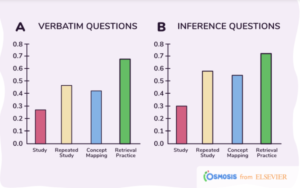
These three studies show that the active recalling method resulted in the most successful scores from various types of questions as shown in below graph (Dunlosky et al., 2013; Karpicke & Blunt, 2011; APA PsycNet, n.d.).

(Owen, 2022)

How to Active Recall?

Flashcards:

Through the use of flashcards that have the answer on one side and a question on the other, students push themselves to try to remember the material. They can still go over the required content if they don’t succeed in doing so. According to scientists, making an effort to recollect information strengthens and develops memory pathways. Later on, it will be simpler to remember the details, thanks to this.

Writing questions when note-taking:

Writing questions that refer to the contents while taking notes will allow you to actively recall instead of just passively reading the notes. The format of the “Cornell note-taking method” will help you make a note for active recall as you can write questions in the left column of your notes. I have already written about some note-taking methods, including Cornell methods, on my past blog. So, I hope you can check this out, too!

Practice questions:

This also gives you an opportunity to test your brain and help commit things to memory through active recalling. The purpose of this is not to get everything right but rather to make your brain get used to the process of recalling certain information. 

Become a teacher:

Act like you are a teacher who has to teach students who do not know anything about this topic. By doing so, you will be able to access the information and even small details through active thinking. If you think you are lacking in some parts of information, or your audience thinks some parts are lacking, encourage them to explain more about those certain parts. This process will make you actively think about your weaknesses and retain them in your memory for your exams. Along with this active recalling, by speaking out like a teacher, the study by Lafleur and Boucher determined that oro-sensory (the feeling when speaking) review improved the memory of spoken forms and resulted in repeating words aloud memorized better than studying the words silently. Thus, we actively recall and use our oro-sense, which can help you enhance your memorizing skills. 

Of course, these methods may not work for everyone, and each person might have the best studying method that they have. If you do, trust in yourself and follow them! I hope that this blog post helped people who are searching for a new effective studying method or who want to explore other studying methods to just try! Who knows, this scientifically proven way of studying might help you in semester 2!!

Image Sources:1 / 2 / 3 / 4

Article Sources: 1 / 2 / 3 / 4 / 5 / 6 / 7


Malnutrition in Our World

0

Featured Image by Petra from Pixabay

A Serious Problem in Our World

According to the World Health Organization, a department of the United Nations, Malnutrition is defined as “deficiencies or excesses in nutrient intake, imbalance of essential nutrients or impaired nutrient utilization.” It has been reported that about 1.9 billion adults around the world are currently overweight, which is even more than the 462 million that are underweight. Malnutrition affects people of all age groups, particularly children, as about 149 million children less than 5 years of age are not tall enough for their age. This is a result of the lack of food required for the body’s positive development and growth. 

Because malnutrition is such a serious problem in our world and is not resolved even in the present times, I have decided to write about it to inform the broader public about its serious consequences for all those it affects. 

The Different Types of Malnutrition

The four general groups of undernutrition are wasting, stunting, underweight, and deficiencies in vitamins and minerals, as clearly defined on the WHO website. Note that all of these terms are scientific, and none of them is meant to be derogatory to those who have malnutrition.

Wasting refers to the severely low weight a person may have, most likely caused by an infectious disease that caused them to lose the ability to absorb nutrition, such as diarrhea, and instead quickly lose body weight. If such conditions are not treated, there is a relatively high risk of death. 

Stunting refers to the low height that a child has when compared to the average in their age group. This type of malnutrition is more related to poor socioeconomic conditions, and the constant, chronic lack of access to food. The saddest part of this type of malnutrition is that children are often prevented from growing a healthy body (which is totally within their rights), and often will be cognitively impaired. 

Obesity as a Form of Malnutrition

Believe it or not, malnutrition not only happens through the form of being underweight. As long as a person lacks any form of nutrition at all, they are considered to have the condition of malnutrition. For example, people who are obese often consume an excess of carbohydrates and fats, but sometimes not enough vitamins or minerals like iodine or iron. People who are obese, but lack such minerals also are considered as having malnutrition. 

Response to the Malnutrition Crisis

Locally, many food banks can be found in each major Canadian city. On a more international scale, the WHO listed out the 2016-2025 goals in its initiative of the Decade of Action on Nutrition. It calls for many goals, including preparing health systems so they can better account for nutrition needs and taking steps to make sure that trade and investment policies are supporting growing nutrition. Of course, the United Nations alone isn’t able to solve all of the problems in our world. The Canadian Government Canadian Malnutrition Task Force also holds regular meetings and establishes work groups specifically developed to support kids in our nation. It truly takes the effort of everyone and all organizations to make breakthroughs to counter the serious crisis of malnutrition.

Body Shaming: “With your size, you’re never getting a date.”

It seems like a societal trend, almost, for girls and boys from popular media platforms such as social media and magazines to be following some kind of invisible standards: girls slim and fit, boys muscular and strong. 

Yet as most of us already notice in our everyday lives, this cannot possibly be the case for most in real life. However, such invisible and unexplained, yet popularized standards are often placed on many individuals. 

Shaming one for not having the “perfect” shape, stigmatizing individuals for not fitting into the “correct” size… the phenomenon of fat-shame bullying is increasingly appearing in a variety of scenarios – on the internet, on social media, and even at home.

topless woman with black panty

What is Fat Shaming (or Body Shaming)?

Fat shaming, or body shaming, is the act of humiliating someone for their body shapes and physical appearance – this can include negative and insulting comments and statements about someone’s shape and body size. 

As a common misunderstanding, body shaming not only occurs to individuals who look overweight; those who look underweight are also at risk of bullying and stigma. 

person's left hand wrapped by tape measure

Why is body shaming harmful?

Body shaming is, undoubtedly, a type of bullying. Bullying is any intentionally malicious act towards anyone. Some may argue that by body shaming someone, this means this person is constantly receiving reminders of his or her body size or shape and therefore can be motivated to change their weight. However, instead of being a form of motivation, this body shaming, as suggested by an increasing amount of scientific and psychological evidence, is extremely harmful. When individuals consistently receive the message “my body is terrible”, they will become increasingly ashamed. This might make victims more inclined to consume an increased amount of food and calories. 

For the victims who have to face a situation of body shaming, this experience is certainly very humiliating. It can even lead to mental health disorders.

a woman with a tattoo on her back saying skinny shaming is not okay

Conclusion

Regardless of whether or not it’s well-intended health reminders or simply commentary for body sizes and shapes of others, there exists an ultimate bottom line that serves as the border between statements that are kind and discriminative.

It is immensely important for us to be clearly aware of the fact – that body shaming, being a type of bullying, has the potential to create a traumatizing experience for others. Keep this in mind – that body shaming is a form of bullying that should not be tolerated in any case. 

If you’re ever unsure of whether or not your comments might be any kind of bodyshame, even if your words are well-intended, just remember: it’s best to just choose not to comment on others’ body shapes because you never know what someone else is going through.

On the other hand, if someone starts a body shaming commentary towards you, it is also significant to keep in mind that the bully – not you – should be ashamed.

bathtub with water and flowers


Society of the Snow: The Story of Uruguayan Flight 571

0

Viewer discretion is advised: This film contains references to cannibalism, graphic images, and mild sexual content.

Plot:

Based on a true story, ‘Society of the Snow’ depicts the gripping story of Uruguayan Flight 571. In 1972, carrying 45 passengers and crew, flight 571, en route from Montevideo, Uruguay, to Santiago, Chile, crashed in the Andes Mountains.

The movie follows the survivors’ struggle to survive. Stranded in the alpines, the survivors battled extreme cold and high altitudes, leading to desperate measures for survival, including cannibalism. This is the story of Uraguyan Flight 571 and their 72 days in hell.

Opinions:

Unlike most other aviation movies, ‘Society of the Snow’ is a glimpse into the horrid experience endured by the passengers of flight 571. The general movie and actors were able to successfully embody the panic, stress and struggle of the survivors. The actors have demonstrated a significant achievement by skillfully portraying such complex emotions associated with survival and human instincts, which for victims of a plane crash became apparent during their most challenging moments. Watching the movie alone brings you to a state of panic for the characters and allows you to travel with them through the experiences, as well as making you feel immensely grateful for your own surroundings. Overall personally, this movie was a 10/10 experience, while educating me about a tragic and unfortunate event. Highly recommended!

Photo Credits: Unsplash