
Home Blog Page 48

Who Is Amy Santiago?- A Deep Dive Into the Main Character From Brooklyn-99

0

Who Is Amy Santiago? 

From the hit television show Brooklyn Nine-Nine, comes one of its main characters, Amy Santiago. Known for her colorful pantsuits and her talent for befriending school administrators, Amy is not just a standout individual; she’s renowned for her unwavering dedication and precision as a detective within the New York City Police Department (NYPD). Amy meticulously organizes every aspect of her professional and personal life, displaying an extreme commitment to perfection that often borders on obsession. Her constant pursuit of success and recognition from her peers and superiors, particularly her precinct captain, Captain Raymond Holt, stems from the external pressures she faced while growing up in a large American-Hispanic family. This highlights her character’s struggle for acceptance in both professional and personal settings. Throughout the series, Amy embarks on a journey of self-discovery and growth through various relationships within her workplace. She experiences personal and professional growth, forming close bonds with her colleagues, especially Detective Jake Peralta, with whom she eventually enters into a romantic relationship. Amy’s character development explores themes of vulnerability and the pursuit of acceptance, making her a beloved and relatable figure in the show.

Childhood

Throughout her childhood, Amy was subject to intense scrutiny from her parents, particularly her father, to follow in his footsteps as a detective. Victor and Camilla Santiago, are the spitting image of stereotypical traditional Hispanic parents, with their high, often unrealistic and damaging expectations. These expectations were further portrayed on Amy through comparison with her other 6 brothers. Amy’s parents brought favourites to another level, by decorating the family home’s mantle with images in order of the performance of the children. This created constant arguments, and competition in their home instead of a loving environment where the children were encouraged to grow. From Amy’s behaviour we see remnants of this trauma, with her constant need to appease her superiors and cater to their demands  that often aren’t her responsibility. Even when Amy and her siblings got older, the desire to remain on the mantle was instilled in them. These siblings were and still are willing to do anything to get the number one position. Amy’s oldest brother, Lieutenant David Santiago, who happens to be the other sibling aside from Amy to follow in their fathers footsteps, is Amy’s biggest opponent to achieve the success of her parents’ affection. In s.6 ep.9, at dinner with David, and her parents, David’s Captain shows up and requests to speak to David. This is when informed that a large quantity of cocaine was discovered in his desk and placed him under arrest. For Amy, this was the best day of her life, she celebrated by doing her cheesy celebratory dance, as the golden child had finally been something other than golden. Later, it was revealed that he had been framed by the Brazilian mafia, completely crushing Amy’s hopes of becoming the golden child.

Personality

As a perfectionist, Amy’s decisions are calculated and expected. Nothing that Amy does is out of the ordinary or out of schedule for her. The time she arrives to work, wakes up, eats, and leaves to go home is all scheduled on a strict timeline that cannot be broken. These choices are all made with perfect precision and adequate consideration for contributing factors. This allows Amy to make deliberate choices, making her an amazing problem solver and decision maker. This demonstrates how Amy solves problems and creates fitting solutions and plans. An episode that exemplifies her meticulous planning and attention to detail is when Amy arrives late in the morning, and everyone speculates about why she is 70 seconds late. If it were any other colleague, this wouldn’t even be remembered, but for Amy, it becomes a spectacle. This incident occurred in Season 2, Episode 6, and Amy was late due to the longer than usual line at her weekly planned bank visit. These behaviours reveal a lot about Amy’s excellent decision-making and planning capabilities.

NYPD

Despite the strain and pressure around her, Amy Santiago perseveres to strive to reach her full potential in multiple ways. Amy is a consistent goal setter, attributed to her dream path planned before joining the NYPD. Throughout the show, we hear her referencing her ‘timeline’ of when she aims to accomplish certain milestones. One significant achievement we witness is her becoming a sergeant and commanding her own squad of officers, due to her demanding work ethic. Early on, she attempts to ask her Captain to become her mentor, showing her willingness to learn and ask for help. However, this sometimes causes her to undervalue herself, as seen when she asks for a letter of recommendation for a mentor-mentee program but is mistakenly written as a mentor instead of a mentee. This highlights her consistency and willingness to grow, even when others already see her in a leadership position.

Impact Of Identity

As a Hispanic-American woman, Amy’s behaviour is significantly influenced by her cultural background and surroundings. Working as a detective in the NYPD, she faces challenges in a male-dominated environment where she and her female colleagues are often marginalized and objectified. Amy confronts daily issues related to gender norms and sexism, which impact her professional life. In Season 6, Episode 8, “He Said, She Said,” Amy recounts a disturbing incident at her previous precinct where a male coworker engaged in inappropriate sexual behavior towards her after her promotion, leading to her transfer to the current precinct. These gender norms and instances of sexualization require Amy and her female colleagues to constantly prove themselves and maintain professionalism, unlike their male counterparts. Amy’s Hispanic heritage plays a significant role in her journey, as highlighted by her husband Jake’s acknowledgment of her inspiring influence on young Hispanic girls worldwide. This recognition deeply moves Amy, underscoring her belief in breaking stereotypes and empowering others to pursue their dreams.

Conclusion

In summary, analyzing Amy Santiago’s character through various perspectives offers valuable insights into her unique personality. These perspectives can each be attributed to certain aspects of her behavior and specific actions she takes. From childhood trauma to perfectionism, all of Amy’s behaviors have been rooted and instilled in her through methods like reward, societal and workplace norms, undervaluation of herself, and willingness to grow. By understanding her and her psyche, we uncover the influences shaping her identity and actions, from early experiences to present-day motivations. Each perspective provides a lens through which we can better grasp Amy’s complexities and the psychological dynamics that drive her behaviour.

Sources:

Brooklyn-99 Show

Photo by Mollie Sivaram on Unsplash



Book Review: Long Way Down

                                             Caution: Mentions of gun violence and murder ahead!

                                                 Introduction:

Long Way Down is a novel written by author Jason Reynolds. It was published in October, 24, 2017. What makes this book so different from others is the fact that it is written in verse. This means that each page is written almost like a poem! The plot of the book is centered around the main character, Will. His brother Shawn has been killed in a shootout and determines to seek revenge for his brother.

                                                   The Rules:

The rules in the neighbourhood where Will lives consists of no crying (1), no snitching (2), and always take revenge (3). The rules are crucial in this story as they drive the choices made by the main character, Will.

Summary:

During one normal afternoon, Will’s brother Shawn is shot in cold blood in the middle of a basketball court. Devasted, Will goes home and searches in Shawn’s secret drawer that he never allowed Will to go into. In there, he finds multiple prized possessions of Shawn’s and most importantly, finds a gun. Will contemplates what to do with the gun and with some guessing, he comes up with the theory that a kid named “Riggs” committed the dirty deed. He comes up with a plan to kill Riggs and leaves his apartment building.

When he goes to the elevator to go down to the lobby, he is met for a long way down. Throughout his ride on the elevator, he is met by a ghost of a dead friend or relative on each floor. Each of the ghosts who go on the elevator have all been victims of gun violence and the rules. The ghosts who hop on the elevator consist of: Buck, Dani, Will’s uncle, Will’s father, Buck’s killer, and Shawn, in this order. Buck, Dani, Will’s uncle, Will’s father, and Buck’s killer, are a group of side characters with no huge role in the story. The role that the ghosts take in this story is to convince Will to not follow the path of gun violence and the reconsider his choices. Some causes for the deaths of some ghosts also help convince Will. An example of this can be shown with Will’s father and Will’s uncle. Will’s uncle loses a camera which he uses to take all of his valuable pictures with family, and decides to get money for a new one. He does this by earning some money illegally and eventually, a person wanting to steal his business, shoots him. Will’s father is furious and decides to track the person down and kill him, shooting him dead in the street 3 times. Only after the killing, does he understand that he killed the wrong person. The death of Will’s uncle can teach Will that he could be getting the wrong person, since he has no hard evidence Riggs did it.

Ending

While nearing the end of the book, Shawn comes on the last floor of the elevator. Will begs Shawn to know if he is doing the right thing and breaks the first rule doing so, no crying. Shawn begins to cry, though his eyes still look dead. Shawn refuses to say a word to Will during this time. The elevator finally stops at the lobby and everybody rushes out, Shawn stays back though, and asks Will.       YOU COMING?


                                                     Significance

The meaning behind the last words of the book is that Shawn is asking Will if he will choose the path of gun violence and join the dead. Hence, him asking if Will is going to come with them.

                                                      Conclusion

Overall, this book was a very dramatic read and I really enjoyed interpreting the different symbolizations and aspects of the story. The fact that it’s written in verse makes the impact sentences much much more impactful. I would almost recommend this book to anyone as almost all people with varying preferences can enjoy it. I would rate this book a 8.5/10


Calgary’s Studio Bell

Featured Photo by David Beale on Unsplash

A Unique Centre Showcasing Music

The Studio Bell, located in downtown Calgary, opened in 2016. It is a massive museum showcasing the National Music Centre’s collections of rare instruments and artifacts, including various Canadian musical artists’ stories of their careers. It truly offers a modern feel for everyone passionate or interested in Canadian musical and cultural heritage.

The National Music Centre (NMC) has a long history of collecting musical artifacts, especially keyboard, electronic, and sound equipment. According to the NMC, their “four pillars” of purpose are, exhibitions, artist development, performance, and education. In fact, one can book to experience live performances in the Studio Bell building, including musical pieces performed by artists with various instruments. Visitors can also learn more about music, through the “diverse range of inclusive and collaborative learning opportunities,” such as certain modules on the history of Canadian musical groups, as well as how the sound acoustics affect one’s perception of music or their emotional health.

Exhibitions

However, Studio Bell is still largely known for its exhibitions, such as the Canadian Music Hall of Fame. This exhibition features the tributes and musical artifacts of many well-known artists, ranging across a long historical period, from Oscar Peterson’s generation to even Nickelback (which was inducted into the Canadian Music Hall of Fame just last year).

Located on the fifth floor of the building, the Hall of Fame recognizes Canadian artists who “have attained commercial success while making a positive impact on the music scene in Canada and beyond.” On the fourth floor, we also have the Canadian Country Music Hall of Fame, dedicated to a more specific musical genre. Additionally, we have the Canadian Songwriters Hall of Fame, and the ADISQ (French: Association québécoise de l’industrie du disque, du spectacle et de la video; English: Québec Association for the Recording, Concert and Video Industries) Hall of Fame, which “promotes the development of the music industry in the province of Quebec and recognizes the achievements of Quebecois musicians.

My Experience

I visited the Studio Bell personally last spring, and the experience left me with sharp memories that I still look back to even today. As I visited the Studio Bell with a few friends, we had a good time trying out the section designed for kids and adolescents, for example. Specifically, there was a room for visitors to create drums, and even guitar strings, from the materials provided. Also, there was wonderful and uplifting music playing throughout many of the exhibitions, helping each of us relax right before a critical exam season. Generally, the Studio Bell costs approximately twenty dollars to explore, but my friends and I certainly had some of the best times we could expect in a museum!

The wonderful thing about Studio Bell is that it is also relatively quiet and not crowded, allowing us to relax and stroll (without any rush) onto each floor, to discover more about Canadian music history. We listened to various songs and observed technicians unboxing antique music equipment, such as drums, guitars, and sound boxes. The overall atmosphere was extremely calm and chill, and the employees were also friendly and approachable. Definitely, I would say it was a worthwhile experience!

Conclusion

Whether you are a youth who is extremely interested in rock-n-roll music, or a senior who wishes to relax pleasingly, I believe that Calgary’s Studio Bell is for you! The Studio Bell is truly a unique museum, with many different features, all in a building with a modern design. If you would like any more information, you could also check their website here. Have fun exploring all the music and fun!

Combating Cruelness: Cyberbullying

0

What is cyberbullying?

As far as we know, cyberbullying is the act of using technology to harass, threaten, embarrass, or target another person. Through threats online, rude and aggressive text messages, and posting personal information (including texts and pictures) the purpose of cyberbullying is to ultimately hurt someone else. 

A lot of cyberbullying revolves around posting things that one wouldn’t want the whole world to lay their eyes on. For example, you may send a picture of yourself to someone you trust, but that person may post that online without your permission. You may then ask them to take it down, but because they are cyberbullying – they refuse. Another scenario may be if you send a picture to someone, they threaten to post it. By blackmailing you into giving them something, you’re trying to save yourself from embarrassment and humiliation. In other words, one form of cyberbullying is through posting and blackmailing, which ultimately aims to embarrass or scare you one way or another. 

Another form of cyberbullying is through personally attacking the individual. By making horrible comments on gender, religion, sexual orientation, race, or any other physical/mental qualities, this type of cyberbullying aims to discriminate against you for who you are. Discrimination is illegal in most parts of the world, and the police could potentially get involved if this went too far. If someone discriminates against you for who you are, through social media and technology, it would also factor into the whole concept of cyberbullying. 

So why do people do it?

There are about 3 possible scenarios for why a cyberbully may do what they do.

Number 1 could be “A joke that went too far”. This may occur when a person didn’t mean to “cyberbully” you, but it just started out as a joke that crossed the line.

Number 2 could be “A bully that was bullied. This may occur when the bully used to be tormented themselves and wanted to retaliate. They may have wanted others to feel as bad as they felt, and to go through all the pain and suffering they did.

Number 3 may be, “Personal Hatred”. This method occurs when the cyberbully has a problem with you in the physical or virtual world. Something you said or did, may have infuriated them, causing a spark of revenge. We never know why people cyberbully or just spread hatred in general, but these are 3 main possibilities. 

So what should we do about it? 

Tell someone. If you ever find yourself as the victim of cyberbullying, one of the most important things to keep in mind is – Do not be afraid to seek help. One of the best and most effective things you can do is to tell someone you trust. Regardless of who it is, whether it is a parent, guardian, friend, coach, teacher,  guidance counselor, or even the police – tell someone who you can trust. Many children and teens who find themselves in this situation may feel embarrassed or reluctant to speak up, but that is why the bullying progresses into something much worse. 

Walk away. Being the victim of a cyberbullying situation can be stressful and alarming. When you see something that personally upsets you online, distress and negativity may fill up inside of you. A great thing that you can do in that situation is to turn off the computer or put down the phone. You should go do something you love, like playing a sport or hanging out with a friend, so that you can take your mind off of the situation. Having a calm mind will definitely help you proceed to take the next steps. 

Report & Block the bully. Many apps on the internet have the option to report and block certain people online. This gives you the prime opportunity to exit yourself from the bullying situation. When you report and/or block someone online, the administrator cuts off all means of communication between you and that person.  

To conclude, let’s summarize. being the victim of cyberbullying can be a distressing situation to find yourself in. Whether it is through posts or threats, this method of bullying aims to ultimately humiliate the individual. There are great ways to combat this negativity;  Such as by speaking up about it, walking away, and blocking the bully. Technology is advancing each and every day, and cyberbullying is one of the negative effects of all these technological advancements.

Source(s): https://kidshealth.org/en/teens/cyberbullying.html#:~:text=Cyberbullying%20is%20the%20use%20of,hurt%20or%20embarrass%20someone%20else.


TTPD – A Review on the Top Songs for Taylor Swift’s New Album

0

A few weeks ago, on April 19th, an incredibly exciting event occurred. Taylor Swift’s long-awaited new album, The Tortured Poets Department, was released at midnight EST. The fact that 258.3 million adults in the US alone consider themselves Swifties, this drop of this album has been anticipated eagerly for months. As a Swiftie myself, I am no exception.

Even if you’re not a Swiftie, give this article and the tracks it discusses a chance. The Tortured Poets Department is truly such a sensation, and this article only breaks 5 of (what I think) are its best tracks.

Two hours after the drop of the new album, Taylor shocked us all with the surprise release of a second part to the album, which she called The Anthology. It included 15 other songs that had not been a part of the tracklist.

Unsurprisingly, the drop of the album broke world records. Within four days, the album had over 1 billion streams on Spotify, becoming the most streamed album on the entire platform. This week, it hit No.1 on Billboard 200 just weeks after its release, and even the physical merchandise sales, including vinyls, were incredibly successful.

In addition, there are so, so, so many details in TTPD and references to different events and underlying messages, but it would take five different blog articles to explain them all. If you’re interested in delving into the rabbit hole and learning about them, visit the Taylor Swift Wiki here, or just spend a bit of time on Swiftie Instagram Reels. You’ll discover just how much of a *mastermind* Taylor Swift really is.

If you’d like to listen to the album but haven’t the time for 31 songs, here are my reviews of the 5 highlighting songs in the album The Tortured Poets Department: The Anthology.

5. The Smallest Man Who Ever Lived

A haunting breakup song, The Smallest Man Who Ever Lived is one of the many songs in the album that Swifties strongly suspect as a reference to her recent breakup with Joe Alwyn after a six-year relationship. Some of the main themes in this song include betrayal, anger, and sadness… along with some biting insults toward her ex. If the rumours are true, Joe, you really messed up.

4. Fortnight

Although it’s one of the most popular songs on the album, I must admit that Fortnight wasn’t one of my favorites. However, it is such an iconic song that I needed to mention in this post, because of both its popularity and its contribution to the musical theme of the album. Mostly with pop synth and percussion, the song almost had the mood of a Midnights track but with less *shimmer*.

Rumour has it that Matty Healy, one of Taylor’s exes, was the inspiration for this song. She casually dated him for a short amount of time, and announced their relationship a month after publicizing her breakup with Joe Alwyn. Perhaps this brief romance sparked the name of the song?

3. The Bolter

Perhaps I’m a bit biased for this highlight. But I really, really do like this track. After listening to most of her more recent music, with its slightly more modern musical style, I really missed the acoustic sound of her guitar that first got her famous. The Bolter gives the acoustic feel and general vibe of her earliest albums, like a mix of Red and Fearless. It’s really almost a mashup of themes from different albums – the strumming guitar from the Fearless album, the storyline lyrics similar to the Evermore album, and the language choice of the Midnights album.

2. Who’s Afraid Of Little Old Me?

There is so much to unpack with this song. But I won’t go into the symbolism or the deeper messages or all the rumours involved behind the song. Let’s get straight into why this song is one of the best ones in the album.

It’s among her collection of tracks across different albums that are really about her and reflect who she sees herself as. It’s mind-blowing to listen to this track and almost feel as if I can see inside the mind of one of the biggest music superstars. I really enjoy the growing theme of pensive self-reflection in more and more of her tracks. They have always existed in the vast majority of her music, but to see her expand the theme into more songs in her recent album and in Midnights.

Almost as if she’s reminding us all that she’s human too. Which honestly I think many of us forget because of how absolutely stunning Taylor Swift really is.

That brings us to the final track…

1. I Can Do It With a Broken Heart

This track is clearly about Taylor’s feelings during the Eras Tour. It is about how she doesn’t fail to paste a smile on and achieve all of her career goals (“hit all my marks”) despite being heartbroken. The last lines in the song are:

Cause I‘m miserable,

And no one even knows!

Try and come for my job.

This is one of her first songs where she incorporates situational irony into music. And it suits the song perfectly. She’s a musical genius.

Taylor pairs up depressing lyrics with a fast paced, cheery tune and a major key. It drives the message that much deeper – that despite her feelings and her mental state, she truly had to fake it ’till she could make it, and she did. Having to go on tour for years singing love songs for people you just broke up with? It must have been so tough… yet nobody could tell, she hid it so well.

This is honestly my favorite song in the album, because it reflects how we never really know what struggles that someone could be hiding behind a set of smiles and happy lies.

TL;DR

Why are you reading this? What do you mean, it was too long? I summarized an album of 31 songs into its 5 best highlights, and minimized all of the TS references. But if you insist, here’s a numbered list of the best songs on The Tortured Poets Department. Give them a listen, even if you’re not a hardcore fan.

  1. I Can Do It With A Broken Heart
  2. Who’s Afraid of Little Old Me?
  3. The Bolter
  4. Fortnight
  5. The Smallest Man Who Ever Lived

The Importance of Problem Solving

In everyday life, we always use the skill of problem solving. From managing chores, making decisions, to arranging yourself to prepare for big events, problem solving is an essential skill that everyone has. Ever since you began to think for yourself, you have the ability to solve problems. Problem solving is a gift that we all have, which should be cherished to the fullest. The art of problem solving is very important, and the main reasons why it is important are that they help you build confidence and become independent, it helps with your career, and last, but not least, it allows societies to evolve.

Problem Solving Maze
Image by Mohamed Hassan from Pixabay


1. It helps you build confidence and become independent

As mentioned before, ever since you were able to think, you had the ability to solve problems. While we all start with solving the easy problems, like deciding what to wear for the day, the problems we face can tend to become harder. The easiest example of this is school. Although the earlier grades are where most of us develop certain things, it is the later grades that challenge us and master those certain things. Especially at a young age, the harder the challenge is, the more problem-solving and independence would be required.

Mirror for Confidence
Image by Mohamed Hassan from Pixabay

In school, with quizzes, tests, and exams, a degree of problem-solving is required in all of them. While studying helps you get prepared, solving questions can eventually become a habit. The more you find success in solving questions and problems, the more confident you can be further on. However, at some point, you may hit a brick wall, but problem-solving and trial and error tactics can help you regain your confidence. Throughout our school lives, our problem-solving skills are challenged and force us to think differently and look at problems from different perspectives. From there, we gain a sense of confidence and individualism as our problem-solving skills are regularly put up to the test.

Independence based on which direction taken
Image by Gerd Altmann from Pixabay


2. It helps With Your Career

In careers, like engineering, lawyers, software developers, etc…, problem-solving is a necessity. Without problem-solving, then the career would feel repetitive and seem perfect, which is never the case in real life. Although some careers may seem like problem-solving is not needed, there are still moments where transportation, clothing, teamwork, etc… matter and problem-solving is still required.  In fact, these moments are the most evident when preparing for interviews, promotions, and being a supervisor. Despite their differences, problem-solving goes hand in hand with how you give impression. Problem-solving does not along help you obtain a career, but it helps you make a nice impression to the career, and not to mention, outside of your career.

Laptop for career
Image by Sara Torda from Pixabay


3. Allows Society To Evolve

Lastly, while the previous two facts are about individuals alone, problem-solving can allow our society to evolve. If you think about it, everyone has a degree of problem-solving skills. That means that everyone can look from any perspective. As a matter of fact, creativity is part of problem-solving.

Creative problem solving
Image by 愚木混株 Cdd20 from Pixabay

The difference between thinking critically and being creative is that thinking critically is about using logic and reasoning. Whereas, in creativity, it’s about being open-minded and making new solutions to problems. While at some point, we need the old-fashioned critical thinking, society craves for more creative people. In a world where scarcity exists, thinking of creative solutions can tackle more than just one problem; it can solve multiple problems all at once. To think about this effect more clearly, imagine a domino effect. When you set all of your dominos in a row, it’s all about tipping one over to tip the rest. In creative problem-solving, this is exactly what happens, but the dominos are potential problems instead. Thanks to creative problem-solvers, society can evolve as less action can tackle more problems.

Community
Image by Gerd Altmann from Pixabay


Closing Section

Ever since we began thinking, we had the ability to problem solving. While there are many more, the importance of problem solving is that it helps us build confidence and becoming more independent, it helps with our careers, and it allows society to evolve with creative thinkers. Depending on the situation, problem-solving could be overrated or underrated. Sometimes, we would get thrown with so many problems and find problem-solving overrated. While other times, we don’t get to solve a lot of problems and find it underrated. Despite this, the importance of problem solving is still dominant everyday. While this seems, every day, we will have to solve a problem, and sometimes they are incredibly easy, whereas they can be the hardest in other times. Problem-solving is a gift that is meant to be used almost all the time. It’s a gift that is not meant to be wasted!

Problem solving with other people
Image by Alexa from Pixabay

Sources: 12 , 3 , 4

Images: 1 (Featured Image) , 2 , 3 , 4 , 5 , 6 , 7 , 8

What are earthquakes?

The ground is suddenly shaking and there you are wobbling left and right to keep your balance. You notice the picture frames on your mantle are shaking and the chandelier above you is swaying back and forth. This unfortunate phenomenon is called an earthquake. 

An earthquake is a natural disaster that happens millions of times per year, across all the different parts of the world. Some earthquakes are huge and cause immense amounts of damage, while others are so small that you can hardly feel them. The damage-causing, more powerful earthquakes can cause many negative after-effects too. Such as tsunamis, landslides, and even flooding! But luckily, the monumental earthquakes don’t occur too often. 

The humble beginnings of earthquakes begin deep down below the surface. Thousands of miles below your feet. Imagine this analogy: The Earth’s core is the yolk, the mantle is the white stuff, and the crust is the shell. All humans and other living things live on the surface of the shell. Below the surface, but still above the crust are huge slabs of rock. These are called the tectonic plates. Across the Earth, there are 7 major tectonic plates: the African, Antarctic, Eurasian, Indo-Australian, North-American, Pacific, and South American. Because there are many bodies of water surrounding and in between these tectonic plates, we can make an educated guess that these plates are not connected. 

When immense amounts of heat escape from the Earth’s core, and creates currents in the crust. These currents then cause the tectonic plates to bump, scrape, or drag across each other (like bumper cars), causing what we now know today as an earthquake. 

Most earthquakes that occur commonly are too small, too far below the surface, or too deep in the seafloor to be felt. But on the other hand, the more destructive ones are so powerful that no matter how deep they are, they can still be felt by us and continue to cause havoc. The spot where an earthquake starts, just above the surface, is called an “epicenter”. This epicenter transmits ripples, called seismic waves, allowing us to feel the earthquake’s vibrations. 

To measure these earthquakes, scientists have involved a scale called the “Richter scale”. The higher the earthquake measures on the scale, the more powerful it is. If it measures in between 3 to 4.9, it would be considered a “minor earthquake”. From 5 to 6.9 would be considered “Moderate” or “Strong”. 7 to 7.9 would be considered “Major”, while anything above 8 is a “Great”  (even though the impact of it would be the opposite of great). 

Knowing what to do is vital if you ever find yourself in the middle of an earthquake. If you are indoors- make sure to stay there. Try to get under a desk or a table and hold onto it until the shaking stops. Or, try and move into a hallway or against an inside wall. You should never go near windows, fireplaces, heavy furniture, or appliances because the risk of injury is too high. Do not rush outside when the building is shaking because you may get hit by falling glass or debris. If you are outside, make sure to get into vastly open areas. Stay clear of buildings, powerlines, chimneys, or anything that can fall on you. If you are driving and an earthquake occurs, make sure to get as far away from traffic as possible and stop driving immediately. Wait inside your car until the shaking stops, and slowly maneuver your way to safety.

After reading this blog post, I hope that you are better educated on what earthquakes are and how to stay safe if you ever find yourself in one!

Resources:

https://kids.nationalgeographic.com/science/article/earthquake#:~:text=When%20heat%20from%20the%20Earth’s,sometimes%20cracks%20like%20an%20eggshell

https://www.usgs.gov/faqs/what-should-i-do-during-earthquake#:~:text=Get%20under%20a%20desk%20or,things%20can%20fall%20on%20you)


Cities On The Silk Road

When we look back in history, being able to understand the role of cities on the Silk Road today is important as it helps us comprehend how historical trade routes influence modern economic and cultural exchanges. Each city had its speciality:

Rome:

Rome was a very significant city within the Silk Road. This was due to its strategic location near the center of the Mediterranean within the Roman Empire. Rome facilitated a long trade interaction, permitting items to be surpassed from the Middle East and Asia. Silk from China, spices from the East, metals, pottery, and greater were traded through Rome. Due to its facilitation and participation with the Silk Road, wealth accelerated in the Roman Empire, calling for higher demand for merchandise including silk. Eventually, Rome even contributed to silk product by dyeing and weaving silk

Alexandria:

As a city in Egypt, Alexandria became well-known for its port that linked the Mediterranean with the Indian Ocean and China. Being a part of land and sea transport, Alexandria efficiently moved Asian items like spices and silk to the Roman Empire. Being close to the Red Sea, Nile River, and Mediterranean, Alexandria turned into the gateway to Egypt and its cultural and economic wealth. Alexandria obtained objects like Chinese Silk, Indian Spices, African Ivory through its port.  Indian gemstones and spices which include cardamom and cinnamon additionally made their way to the Roman Empire through Alexandria and enriched the Roman Empire with Asian culture. Exotic flowers and animals such as elephants and medicinal herbs were also transported from the East making Alexandria an area with highly sought after, specific objects. Through Alexandria’s trade, it quickly became a diverse region with multicultural perspectives and items

Constantinople (now Istanbul):

Constantinople, between Europe and Asia with the Bosporus Strait, was subject to various ideas and goods from both regions allowing Constantinople to be a prominent city. The city of Constantinople’s strategically taxed goods that crossed from Asia and Europe. Eventually this became a source of income for the Byzantine Empire, and allowed them to control and regulate the flow of goods such as black pepper from India. This robust economic growth attracted many merchants and traders to come to Constantinople, and soon this city became home to some of the most famous merchants of Silk Road history, such as Heraclius the Elder.

Mecca (actually Makkah)

Unlike other cities, Makkah wasn’t necessarily an important city trade wise, instead it was known as a city for Muslim pilgrimage (Hajj). Within Makkah, Muslims hold high respect to their holy site called the Kaaba. Due to the immense and majority Muslim population in surrounding areas and along the silk road, this location was often visited by Muslims for pilgrimage. Many traders also stopped in Makkah during their journeys across Africa, Middle East, and Asia. Due to the Islamic pilgrimage, when people converged to perform Hajj ideas and cultural ideas were spread and brought back home. Through Makkah, Islamic values were able to spread and influence other cities with the help of the Silk Road.

Tehran:

Tehran, Iran is a unique location with a setting made for cultural exchange. During the time of the Silk Road, Tehran’s bazaar such as the Grand Bazaar fostered cultural interaction and exchanges within traders. Tehran’s bazaars brought people from far and wide, creating a location that brought unique products and individual perspectives to share with other traders. From bazaars, art, literature, technology and ideas were spread for merchants to  bring home home and encourage others to engage with. Trade wise, Tehran’s specialty item was Persian silk and carpets. These intricate woven designs received lots of traction from merchants and traders from all along the Silk Road.

Samarkand:

Within famous trading routes, laid Samarkand. A city known for its famous architecture, with beautiful standing buildings that were inspired by Perisan, Islamic, and Asian influences. Samarkand was home to some of the greatest architecture within the Silk Road. Some landmarks include the Registan Square, Shah-i-Zinda, and many more.  For trade, Samarkand played a huge role in the Silk and Spice Trade with its strategic location between the East and West, and became an important area with influences from the Timurid Empire, The Middle East and Asia. Samarkand was also home to a famous astronomer named Ulugh Beg who helped Samarkand and the world advance with his findings in astronomy. Overall, Samarkand was home to thinkers, innovators and merchants who created monuments, unveiled discoveries, and facilitated trade.

Lahore:

During the Silk Road Lahore was part of India, whereas now it is part of modern day Pakistan. Even with Lahore’s previous Sikh majority, Lahore’s architecture from the period of the Silk Road was highly influenced by Islamic Moghuls, making it home to one of the most gorgeous mosques in the world. The Badshahi Mosque provided a blend of Islamic culture while including elements of East Asian design. Lahore was very heavily influenced during the time of the Silk Road, and soon became an area with influence from East Asia, Persia, Africa, and other surrounding areas. Lahore contributed to these areas with academic excellence from the University of Punjab, attracting many scholars from the Silk Road to visit and contribute to academic achievements. Lahore was as well as involved with the spice trade, many species emerged from Lahore and were traded all the way to the Roman Empire.

Calcutta (now Kolkata):

Calcutta wasn’t located on main trade routes, but Calcutta still became significant due to its role as a port city on the Bengal Bay. Calcutta connected parts of Asia and facilitated trade to them, due to this Calcutta became a key gateway for all of the Silk Road. Soon Calcutta became home to many merchants, goods and ideas. Specifically, just like Lahore, Calcutta was known for its academic status from the University of Calcutta, leading many scholars to stay in Calcutta and encourage academic growth in the region. Plus like most other Indian cities, Calcutta was part of the spice trade and sent and traded with many merchants for this Indian good.

References

Image:

Photo by Kyle Glenn on Unsplash

The First Contact Between Rome and China

https://en.unesco.org/silkroad/content/alexandria%0A

https://www.worldhistory.org/alexandria/%0A

from https://www.amnh.org/content/download/58875/954343/file/a-silk-road-journey.pdf%0A

https://festival.si.edu/2002/the-silk-road/the-silk-road-crossroads-and-encounters-of-faith/smithsonian%0A

https://www.mitchellteachers.org/ChinaTour/SilkRoadProject/silk_road_rayy.html%0A

https://en.unesco.org/silkroad/content/samarkand%0A

https://en.wikipedia.org/wiki/Cities_along_the_Silk_Road%0A

https://www.econstor.eu/bitstream/10419/216099/1/THE%2520SILK%2520ROUTE.pdf%0A

Constantinople

Constantinople in the Silk Road

https://www.britannica.com/place/Samarkand-Uzbekistan


The Truth About SeaWorld

At first glance, SeaWorld may just seem like a typical theme park, famous for it’s Orca shows. But when you dive deeper, you find the truth about SeaWorld.

As if kidnapping sea creatures such as orcas from their natural habitat just for the sake of entertainment isn’t already evil enough, the animals at sea world face a lot of abuse. So, today I’m going to share with you 5 stories of animals that have faced problems at SeaWorld.

5. Shamu’s Story

A baby orca, Shamu, was captured from her home in the ocean at the age of 3 in 1965. She had refused to leave her mother’s body and had been dragged away, later sold to SeaWorld San Diego. Shamu was confined to a small tank, often deprived of food so that she could learn tricks. Shamu was one of SeaWorld’s first Orcas to perform. Shamu performed in many shows over the years. In one of the shows SeaWorld PR secretary Annette Eckis was assigned to perform with Shamu. In a part of the show Eckis was riding on Shamu’s back for a televised stunt when she slipped and fell into the water. The orca bit down on Eckis’s leg and refused to let go. At last, Shamu let go when another instructor thrust a pole into her mouth and pried it open. Shamu stopped performing after this incident. This isn’t the only incident when an orca intentionally attacked a trainer because of the stress that occurs from being imprisoned in a tiny tank.

Shamu died due to a mix of blood poisoning and pyometra (a uterine infection). She was only 9. An average female orca lives to about 48 years in the wild. Most live to be much older, living as long as 90 years.

By the time of her death, Shamu’s name had been turned into a brand, used to market their famous orca shows. Many Orcas have inherited the name Shamu and perform in Seaworld’s “Shamu Shows”.

4. Szenja’s Story

Two polar bears, Szenja and Snowflake, had been companions for around 20 years when SeaWorld decided to separate them. Ignoring PETA’s warnings, SeaWorld separated the two best friends in order to send Snowflake to the Pittsburgh Zoo so they could breed her. SeaWorld was supposedly in desperate need of a baby polar bear to display. It seemed that Canada and Alaska had refused to send the San Diego Park one of their orphaned cubs, as the park does not meet the minimum standard of polar bear conservation. Seaworld claims to be doing this for conservation of the species, even though conservation is about protecting natural habitats and letting species live a safe and happy life in the wild. It is unlikely that the polar bears will ever be able to experience freedom.

After Snowflake was taken away from her, Szenja without any companions of her own kind. Less than two months after Szenja and Snowflake were separated, one of them died. Szenja died of a broken heart, PETA suggests.

3. Nakai’s story

Nakai, the 44th orca to die at SeaWorld, died in august 2022. The park claimed that Nakai died of an infection and did not specify the kind of infection, however PETA claims that the park visitor sent them a video of an attack between the orcas, causing Nakai a serious injury. Nakai had also been attacked in 2012, as he was housed with other incompatible orcas, which resulted in him losing a chunk of his jaw. In the wild, attacks such as this are quite rare, and when they do occur, orcas are able to flee. In small concrete tanks surrounded by other orcas that may behave in a hostile way, this isn’t a possibility. This attack was probably caused by all the stress the animals face at amusement parks such as SeaWorld.

2. Tilikum’s story

Tilikum’s story was featured in the documentary Blackfish. Just like a lot of other animals at SeaWorld, he was another orca captured from his home in the ocean and brought to the amusement park where he was forced to perform tricks in order to earn food. He was bred many times and confined in a small tank with other animals who could be hostile at times. Tilikum is often known as “the whale who rebelled”. The stress and anguish he faced at the amusement park were so great that he ended up attacking some of his trainers, causing the death of three people. Though fueled by stress, some suggest that his actions were deliberate and that he knew exactly what he was doing. Tilikum died in 2017, still a captive of SeaWorld.

1. Corky

Corky, an orca, was captured in 1969 off the coast of British Columbia. In 1987, she was sold to SeaWorld San Diego. To this day, she is still locked at seaworld, swimming in endless circles in her cramped, concrete tank. Her family still swims freely in the ocean while she endures a life of suffering at SeaWorld. Corky has been bred many times over the years, and none of her babies survived. Orcas in the wild live from 80 to 90 years, and even though Corky is only 48, she is described as an “old whale” by SeaWorld. She is facing a premature aging syndrome and is suffering from cataracts, and has worn teeth and failing kidneys. Corky has had fewer incidents than other whales at SeaWorld and is described as a caring and peaceful soul. Corky is kind and patient with her trainers, and some claim that she has often modified her behavior intentionally so that trainers who are inexperienced would be harmed while learning to perform with her. One example of this is when, rather than taking newer trainers to the bottom of her for a stunt as trained too, Corky would take them just halfway down. And though many people are urging SeaWorld to set Corky free so she can live the rest of her life peacefully in the wild and maybe even be reunited with her family, SeaWorld refuses to do so.

This animal abuse has to stop. Trapping innocent animals and forcing them to perform for our entertainment is just wrong.


Sources:

  • https://headlines.peta.org/day-of-the-dead-honor-animals-who-died-at-marine-parks/
  • https://www.seaworldofhurt.com/60-animals-suffered-seaworld-60th-anniversary/
  • https://www.latimes.com/california/story/2022-08-06/seaworld-killer-whale-nakai-died
  • https://whalesanctuaryproject.org/whales/corky-the-survivor/
  • https://whalesanctuaryproject.org/whales/tilikum-the-whale-who-rebelled/
  • https://www.seaworldofhurt.com/seaworld-separate-polar-bear-best-friends/
  • https://allthatsinteresting.com/shamu

From Everyone to Every Individual

Recently, I was working on a short story called From Everyone to Every Individual. It is a story that stresses the importance of self-reflection, and getting some alone time to align our heart with our mind. During the hustle and bustle of life, I think it is easy to get so busy that we fail to have time for ourselves. This way, being overwhelmed by life leads to many mental health problems, especially in teenagers. I hope this short story provides you inspiration to try and find those precious moments of alone time in your life, where you can reflect upon yourself.

From Everyone to Every Individual

The world began to slow around me. I look around, and I see the faces of people. I tell myself that these are my people. These are friends, family, and people I’ve known for a long time. I try to tell myself that these people are my well-wishers and that they care for me. But that small part of me wonders, do they care? In their eyes, I don’t see a reflection of myself, but rather, that of a girl whom I don’t know. It’s the same girl from the mirror. I see that girl in the eyes of all my people. I don’t like looking at her, but I keep seeing. It’s almost as if the people around me want to torture me by making me feel like the girl from my reflections. No, I tell myself, not from my reflections. I don’t know her. She’s just the girl from the mirror. She looks like me, but is anything but. Or so I tell myself because I need that to be true. I can’t become the girl in the mirror.

I hate looking in the mirror. Looking here, all I see is a state of confusion. I see a person staring back at me through the mirror. That person looks so much like me that some people might even say that we are the same. My “reflection,” they say. Personally, I think that’s an absurd thought. The person in the mirror and I could not be more different. The person in the mirror, her dark brown eyes carries a look of agitation. They keep wandering, all across the room. My dark brown eyes, on the other hand, are steady. There is no reason for my eyes to be anything but steady. The girl’s wrists are writhing and twisting, as though someone has them handcuffed. Poor girl, I certainly hope she slips out of her handcuffs and becomes free. My hands, on the other hand, are adorned with a gold bracelet. My hands are placed firmly on my waist, as though in a picture-perfect stance. The “mirror-girl” is biting her lips so hard that I see dents in her red lips. And her face carries lines that make her seem much older than she is. The lines make her seem as though the world has pushed, pulled, and twisted her around in a game of tug of war, and now thrown her in this state of helplessness and indecision.

I, on the other hand, am not in the pitiful state of the mirror-girl. I live my life with certainty, clear goals and aspirations, and satisfaction. Just like now. Now, I’m getting ready to be the perfect host that everyone expects on the day of a huge community gathering. I add a second coating of lipstick over my already bright red lips. Too much, I think for a second. On second thought, however, I validate my decision by thinking of how the lipstick gives me a friendly, yet mature look when I smile and greet the guests. Perfect, everyone will love me! See? I live my life with certainty, clear goals and aspirations, and satisfaction.

As I stand with my hands resting on the railing of the staircase, I study each one of the guests. Of course, I stand in a place where no one can see me. The last thing I want is for them to think of me as The Creepy Stalker Girl.

I see a woman with curly, dark brown hair, and huge eyes that carry a sort of roguish curiosity, entering our living room. Who is she? I think to myself. It doesn’t matter who she is, it just matters how she sees me. Looking at her, she seems like the type of person who would enjoy gossip and rumors. As long as I listened to her less-than-kind thoughts about people, and I contributed some of my own, we would be best friends.

I started making a mental jot notes list about how I should act with each of the guests.

  • Curly brown-haired woman: Pretend that she’s my best friend

Next, I see my Grade 5 math teacher. Why is he here again? I think, but then I tell myself that he probably lives around the same community as us. I remember him lecturing me and my classmates in Grade 5 about how, in order to succeed, we were supposed to have our entire life planned out by the time we reached high school.

I added a new addition to my list:

  • Grade 5 math teacher: Act like I’ve got the next 20 years of my life planned out. Don’t act like I’m failing at every aspect of life.

I’m NOT failing at life, I assure myself, I am living my life with certainty, clear goals and aspirations, and satisfaction. 

And so, I went on for another 10 minutes, scrutinizing the faces of each guest who felt important to me. By the time I’d inspected all the guests, my list had grown so long that I had a hard time memorizing everything. It was as if adding more and more people to the list was switching around the information about the others.

Who am I best friends with? Oh yeah, it’s the curly-haired woman.

Who do I give high-school advice to? Oh yeah, it’s for the blonde girl who goes to that fancy private school.

Who do I impress with my flattery skills?

Whose jokes do I laugh at?

Who do I show off my scholastic achievements with?

Who, who, who,?

It was as though all the questions were escaping the confines of the list, and were zipping about all over the place. The more I tried to revive the neatness and order of my list, the more the information in the list insisted on adding to the chaos in my already disorderly mind. It was as if my mind and my heart had become two separate entities, and were fighting to take control of me. My heart wished with all its eagerness for my immaculateness and confidence to return. Just a few minutes ago, I was so determined that I would impress everyone at the gathering today, and would be the perfect host that everyone would want me to be. My heart knew this, and it was on my side. My mind, on the other hand, only wished ill for me. It wants me to screw up in front of all the guests and embarrass myself. It wanted me to be dismissed and rejected by all the guests. My mind, which a few minutes ago, had been my source of confidence, had now become the source of uncertainty and doubt for me.

That’s not right, I told myself, I am never uncertain about anything. I live my life with certainty, clear goals and aspirations, and satisfaction. 

With this assurance, I was determined that I was not going to let my mind win. My heart, which was on my side, would be the victor of the battle of leaving a good impression on the guests.

As I walked down the stairs to face the guests, I tried to tell myself that my heart would always have my back, and it would help me to win the love, and affection of the guests. I told myself that the strong will of my heart would overpower my mind’s attempts to instill a feeling of rejection in me. However, no matter what I told myself, I could not bring back the feeling of pride and self-confidence that I initially had in me. A darkness was creeping over, and corrupting the feeling of certainty and steadiness I had before. I kept telling myself that I was in control of myself and was doing what was best for me. This darkness, however, had left me with a feeling that the control that I had in my life was slipping away, and moving into someone else’s hands. Whose hands, I do not know.

Being so lost in my thoughts, I completely forgot that I had a group of guests whose admiration and praise I had to win. I cursed my mind again and silently demanded that it leave me free to do what I wanted. If I did not get my mind on my side again, it could end up becoming the reason for my undoing. But…that problem had to wait. I managed to put forth my biggest, and brightest smile because standing in front of me were a pair of two eyes.

And in those eyes, I did not see myself. I saw the mirror girl.

I did not know what to do. I knew that I should look at the woman whose eyes those were. The woman with the frizzy black hair. Wasn’t that the cook? The doctor? I could not recall her description fitting my mental list of all the guests. I should be worried about that, but I didn’t care. The only thing that I cared about was her eyes and the girl who I could see in those eyes.

It was absurd and nonsensical seeing the mirror girl there. I am supposed to see myself through the woman’s eyes. I am supposed to see a strong, and confident young woman who is in control of her life. Instead, I see her. I see a vulnerable little girl, chewing her lips, her eyes looking as though they were on the verge of tears. She was a broken and helpless little animal. Anyone looking at her would feel sympathy.

But not me. I felt rage, not sympathy. This rage boiled and bubbled up from the depths of my heart, and shook my whole body. The girl did not deserve sympathy for barging into my life and ruining my day to win everyone’s praise. Maybe she was just jealous. No one would admire a broken girl hiding in the mirror. But I had the potential to win everyone’s appreciation. Everyone likes someone like me. Someone who can be an entertaining host, a perfect friend, a thoughtful student, all the time. I can make everyone like me, and it is only natural that the mirror girl would envy me for this.

Yeah, that’s probably just it. She’s just jealous because she can never be me. I tell myself.

And I desperately want to believe what I just told myself. I want to believe that I am doing fine, and am not fretful, nervous, and doubtful like the mirror-girl.

But, I just feel…scared. Staring more and more at the mirror girl in the woman’s eyes, I feel more and more lost. Lost…like I don’t know who I am. The more I think of the mirror girl, the more I feel like I’m losing a part of myself. Looking at her awkward behavior, I start to feel uncomfortable at the gathering that I am at.

The woman with frizzy black hair, whose eyes were carrying the mirror girl was now studying me with a look of concern. She had probably tried talking to me, maybe had asked how I was doing, but I hadn’t responded. I stood frozen, looking at the mirror girl. The other guests had also started turning my way and had begun to look at me with the same expression of concern.

No, it wasn’t concern…it was pity. They were looking at me with pity because I looked like a miserable little girl. A miserable little girl who was too anxious to greet the guests. And this made me mad. I didn’t need their pity. I needed their praise, their approval. I needed them to think that I was strong, powerful, and mature. Pity made me seem weak. Weak was the mirror girl.

It happened again. That mention of the mirror girl sent a second shot of that nervousness from my heart, up my hands and legs, and into my mind. In my mind, I was expecting a frenzy. A frenzy where the names of all the guests were whizzing about. Where the expectations that I had placed upon myself would be hanging. Hanging, like apples from a tree. Hanging low enough so that I could see it, and raise my hands to reach for it, to grasp hold of it. And hanging at a high enough height so that just as my fingers are about to wrap around the fruit, the fruit goes out of my reach.

But surprisingly, as the shot of nervousness and confusion reaches my head, I only hear silence. No lists of people and names running around. No trees of expectations growing. Only silence. And just as the nervousness reaches my head, I see a picture of the mirror girl. Only, this time, in the silence of my mind, I don’t see the mirror girl as a stranger. A small part of my mind is trying to urge me to get back into the defensive mode, where I try to invalidate the possibility of the mirror girl being a part of me. The majority of my mind, however, sees the mirror girl through a different lens. My mind sees beyond her wandering eyes, her bitten lips, and her writhing hands, and sees her as a person full of secrets. A person who has the potential to make her mark on the world. A person who I can be myself with.

I look at the woman with the black frizzy hair. She asked me how I was doing.

I said, “Great, thanks to your mirror.”

Book Review: A Good Girl’s Guide To Murder

0
Warning: Spoilers Ahead!

The main character of this story, Pippa, is doing an investigation into a murder as a project for high school. Five years ago, Andie Bell was murdered in her Pippa’s small town (known as Fairview in the USA edition). Everyone in town knows that Sal Singh, Andie’s boyfriend, murdered her, but Pip isn’t so sure. And the deeper she digs, the more secrets she uncovers, putting herself and her family in danger, but the real killer is still out there and it’s up to Pip to find them.

My Review

I’m not the kind of person who reads a lot of mysteries, this was actually one of the first murder mysteries I read, and I have to say, I really enjoyed it. A lot of the story is narrated in the form of journal entries for Pip’s capstone project which include the transcripts of journal entries and other clues. It took me a little while to get used to this format, but my final thoughts are that it makes it seem more like a murder mystery and actually helps to make the writing less dull, as otherwise, the author would have to narrate all the interviews. It makes it feel more like you are actually solving the murder yourself.

The plot is filled with tons of twists and turns and is completely riveting. None of the twists were expected, which is important for this genre. The plot is pretty believable as well and I think it’s just a great series to binge. It’s very intricate and in the end, the killer is someone you probably would’ve never expected. The plot gets more and more engrossing as each new detail about the the case is uncovered. I think the dynamic between Ravi and Pippa also adds to the plot, I enjoyed reading all the friendly jokes and banter they exchanged.

Overall, I think this book is a really interesting and fun YA read for basically anyone. If you enjoy reading mysteries this would be a great book, and even if you’re just getting into it (like me!) this book is perfect. Definitely recommended!

Hidden Built-In Mechanics of Everyday Items

0


Introduction

We always think know the ins and outs of the objects we use every day. However, some of the everyday objects we use have clever uses behind them! Have you ever noticed the lining on the red party cups we use? How about the hole in the middle of a pasta fork spoon? In this blog, I will be writing about these interesting details and the uses manufacturers incorporate into their products.


                                             1. Red Party Cups

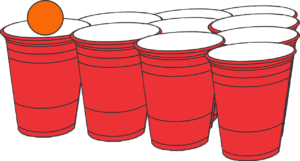
You’ve probably seen these cups, whether at a friend’s birthday or a classic ping pong ball game. You probably might not have put much thought into what the ridges on the sides of the cup are. The ridges on the sides of the cup are used for measuring liquids in ounces (oz). The first ridge you see on the cup is one ounce and the next ridge holds 5 ounces. This is the standard measuring level for beer or any other beverage.

                                                    2. Pasta Fork Spoon

Some households usually dont have this utensil, however, people who don’t have it can still probably recognize it. It is normally used for ladling pasta from a boiling pot into a plate. The secret use behind this object lies in the bottom of the spoon. You will notice that in the bottom of the spoon, lies a hole. The hole is mainly used for draining the water from the pasta. However, another secret use behind this hole is that when you put dry pasta inside it, the hole perfectly measures one serving of pasta! (Sorry I couldn’t find an image for this item, just searched “Pasta Fork Spoon”.)


3. Ridges on Coins

You have probably noticed the size difference between the dimes, nickels, and quarters we use as currency. Despite this, some people dont know that the ridges from each coin also differentiate! The ridges on coins act as a measure to make sure coin counterfeiting is not happening. The dimensions of where the ridges are made are very precise. Therefore, exchanging counterfeit coins can be detected easily.

                                                  Some Small Honorable Mentions:

Tic Tac Lids: If you haven’t noticed yet, there is a small indentation on the bottom of a Tic Tac lid where you pop it open. The indentation on the bottom of the lid is used for taking out exactly one Tic Tac. This is because it is shaped to hold on.

Soda Can Tabs: Most people think that the soda can tabs are for only opening the can. Although, the actual purpose of this tab is to hold a straw in place. This is because there is a hole that fits a straw on top of the tab.

                                                         Conclusion

Thank you so much for reading my blog post! I really enjoy writing these types of blogs as they are both informational to you guys, and myself! I hope you take the time to think about these different uses and try them out yourself next time!

Calgary’s Rezoning Made Simple

0

Calgary, like many cities, faces the challenge of new development with preserving quality of life for residents. With a growing population, especially in the last five years, and evolving needs, the city must adapt its zoning regulations to accommodate diverse housing options.

What is Rezoning?

“Rezoning happens when a property owner wishes to develop something besides what is currently allowed under the existing zoning.” In simple terms, rezoning is to change the purpose of an area and designate areas for specific uses through city regulations. Rezoning allows city planners to strategically allocate land for various purposes, ensuring efficient land use.

How Does Rezoning Affect Us?

Rezoning would lead to several changes and considerations:

“The change, if approved, would mean a homeowner could apply to build a semi-detached house or a row house in areas where only single-family homes are currently allowed.”

– Increased housing options: Rezoning would enable property owners, especially those with properties limited to single or semi-detached homes, to have more development options.

– Replacement of existing homes: Rezoning would allow for the replacement of existing homes with new single-detached homes.

– Permit process: Rezoning passes the development process saving months in the pursuit of new infrastructure

– Limitations on apartment buildings: Rezoning would not permit the construction of apartment buildings on parcels designated for single-detached homes.

Overall, rezoning aims to simplify and hurry the development process while accommodating to the needs of old and new Calgarians.

Sources:

Image: Photo by Jack Carter on Unsplash

https://www.calgary.ca/planning/projects/rezoning-for-housing/about-rezoning.html

https://calgary.ctvnews.ca/calgary-s-proposed-rezoning-plan-not-the-right-solution-creb-says-1.6767141

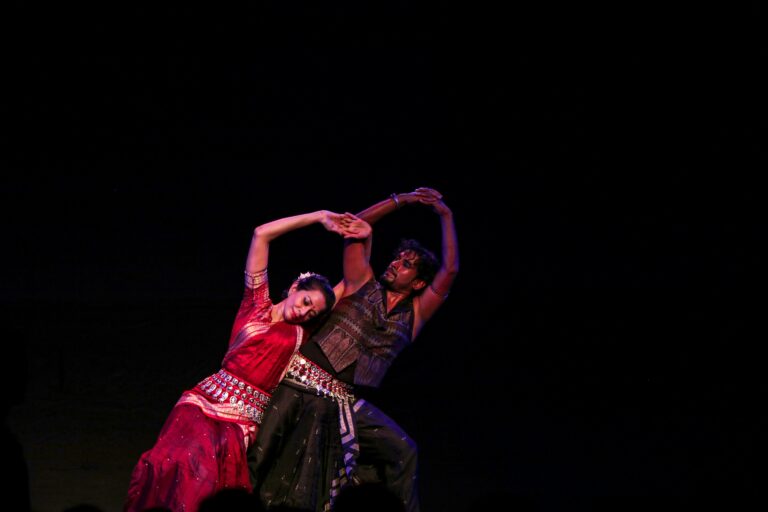
Legacy of Traditional Dances: Pakistan’s Cultural Inheritance Post-Partition

South Asia has long been celebrated for its rich tapestry of traditional dances, which have transcended geographical boundaries to find appreciation worldwide. Dating back to around 2,500 B.C., dance in the region, particularly in what is now Pakistan, has held profound cultural significance. With the partition of India in 1947, however, the landscape of cultural expression underwent a massive shift, leading to significant losses and transformations.

The partition of 1947 stands as one of the most tragic episodes in the history of South Asia, marked by widespread displacement, violence, and loss of life. It resulted in the largest forced migration in history, with approximately 15 million people uprooted from their homes. The poorly executed manner in which the partition done by, with arbitrary state lines drawn without regard for existing communities and cultural identities, heightened  the suffering of millions. Families were torn apart, and communities were shattered, leaving behind a trail of trauma and dislocation.

Amidst this chaos, the cultural heritage of the region faced immense challenges. Traditional dances, which had once thrived as expressions of collective identity and celebration, became fragmented and politicized. The once-unified dance forms, such as Bhangra, Luddi, and Gidda, began to be categorized along religious and communal lines, erasing their shared history and cultural significance. The partition also disrupted the intermingling of cultural influences, leading to a loss of shared traditions and rhythms that had been passed down through generations.

Despite the destruction caused by partition, the spirit of Pakistani dance persevered. The infectious rhythms of traditional music, characterized by instruments like the dhol, tabla, and sarangi, continued to resonate, providing a soundtrack for moments of joy and celebration. The vibrant dance moves, marked by energetic jumps, kicks, and spins, remained a testament to the resilience of cultural expression.

Bhangra, with its roots in the lands of Punjab, embodies the spirit of harvest and abundance. It transcends religious and cultural boundaries, serving as a symbol of unity and celebration. Similarly, Luddi, with its simple yet lively footwork, reflects the enduring spirit of Punjabi culture, passed down through generations despite the challenges of partition.

In essence, while the partition of 1947 may have disrupted the cultural landscape of South Asia, the spirit of Pakistani dance continues to endure, serving as a example to the resilience and adaptability of cultural expression in the face of adversity.

Image:

Photo by Kunal Parmar on

Sources:

https://en.wikipedia.org/wiki/Partition_of_India

https://www.britannica.com/art/South-Asianarts/Pakistan

https://www.britannica.com/art/bhangra

https://www.goldenthreads.uk/blog/pakistan-and-kathak-classica-indian-dance

https://www.cnn.com/videos/travel/2018/11/02/iconic-india-bhangra-vision.cnn

https://www.britannica.com/art/luddihttps://www.manavsinghi.com/2023/10/luddi-dance-of-punjab.html

Tips on working out

0

Featured Image by alba1970 from Pixabay

Truly an important activity

It is widely accepted that individuals generally should exercise for at least half an hour each day to maintain ideal physical conditions. Exercising not only boosts your immune system, but it also helps to maintain a positive overall emotional well-being. Exercising prevents many common diseases, and can even bring individuals to meet new friends and gain insights in the process. If you have not yet begun to exercise, now might be a perfect time! 

A basic guide to the types of exercises

According to healthline, the most common types of exercises include aerobic exercises, strength exercises, and exercises involving balance, stability, or flexibility. Believe it or not, every sport involves a certain combination of the above categories. Sure, when we picture soccer players, we will likely perceive strength to be a major aspect of their games. However, soccer players also generally have great stamina, as soccer games are often treated as marathons, with 90 minutes each game. With many teams playing games multiple times each week during busy seasons, soccer players also train aerobically as well

What to do before picking up exercising as a hobby

The most important step that everyone must take before starting to exercise is to ensure that their current health enables them to pursue the type of exercise they desire to begin. Doing a physical medical examination is always a good choice, and this is often also a prerequisite for joining various sports teams or creating a program with trainers at the gym. 

Many stick with exercises that do not require extra budgeting of money; rather, these sports usually only require time and dedication. Running is a great example: as long as you live near a trail (providing that the trail is not overly dangerous to use), you can take advantage of it. Specifically for running, a common target is 5 kilometers, at least five times a week. However, many find themselves unable to reach 5 kilometers starting from the very first session. A good way to increase the physical stamina would then be to pursue 1 km at the start, then incrementally increasing the distance to eventually 5 kilometers. 

This method is especially effective, especially to cheer up those who are only beginning to exercise. Seeing that one’s capable of following through with mini-steps is crucial to building confidence for more, long-term, exercise plans. 

Implementing rest days

Another good way to work out, but not burn out, is to exercise every other day; throughout the week, be sure to increase the intensity somewhat! For example, a swimmer can maybe swim for 20 laps on Monday, then rest on Tuesday, then swim for 30 more laps on Wednesday. This ensures that we are taking a holistic approach to exercising, and even permitting ourselves to indulge, just a little, in resting our bodies during the rest days! However, it is still effective as a fitness plan. 

Warming up and cooling down

It is recommended that each training session is accompanied by a warm-up and cool-down session. Warming up and cooling down allows a “buffer time zone” which not only helps the body physically transition to and from the exercising state but also increases athletic performance. By warming up, such as doing simple actions like leg kicks and walking lunges, you are setting yourself up for a less painful (from the sudden muscle cramps) workout! 

Conclusion

One of the biggest takeaways for exercising is to be flexible in creating the fitness plan, and improvise whenever it is necessary. This can include the types of exercises you are interested in, how long/much you would like to exercise, and whether to do it alone or with a couple of friends. Regardless, change the fitness plan whenever necessary to fit your priorities, as exercising truly takes place at infinite freedom, with no limits. Here is to a better health!