Home Blog Page 48

Development of mRNA cancer vaccines to treat Pancreatic Ductal Adenocarcinoma

What is Pancreatic Ductal Adenocarcinoma?

Pancreatic Ductal Adenocarcinoma (PDAC) is the most common type of pancreatic cancer. PDAC occurs in the pancreas, which is an organ in the digestive system. It has two main functions, namely the exocrine and the endocrine functions. The exocrine function of the pancreas is mainly responsible for producing pancreatic juices (enzymes) which assist in the digestion of fats, carbohydrates, and proteins. The endocrine function contains special types of cells known as islet cells which release hormones such as insulin or glucagon into the blood stream.

PDAC occurs when cancer cells line a section of the pancreas known as the Pancreatic Duct. It is a type of Pancreatic cancer that occurs in the exocrine section of the pancreas, therefore inhibiting the pancreas’ ability to assist in the digestion of foods. PDAC is lethal in 88% of its patients, and until recently traditional methods of treatment such as chemotherapy has been ineffective against it. The main reason for this is because PDAC tumor cells are insensitive towards chemotherapy treatments.

How do mRNA cancer vaccines work?

The human immune system can protect the body against foreign substances such as infections by using a type of white blood cells known as memory cells which have a memory of every microbe or pathogen that has invaded the body. This memory of the invading organism allows for the white blood cells to develop antibodies that can specifically bind to markers and proteins on invading cells known as antigens. When these antibodies can specifically bind to the antigens, the antibodies can successfully stop the growth of the invading organism or cells.

However, the reason that our immune system is oftentimes ineffective against cancers is because all cancer cells are the mutations of the body’s own cells. This way, the immune system has trouble recognizing them as foreign and cannot successfully suppress the growth of cancer cells. As well, the surveillance capacity of the immune system is gradually weakened as the tumor/cancer cells grow more mutations. Tumor cells which are, in early stages of development, caught by the immune system, eventually are screened out as they develop mutations known as tumor molecules, which are not recognized by the immune system as foreign.

mRNA cancer vaccines recognize a specific type of antigen studded on tumor cells, known as neoantigens. These neoantigens are important, as they are present solely on tumor cells, and not on the body’s healthy immune cells. This way, they act as markers which help the immune system’s T cells to recognize the cancer cells are foreign, and trigger an immune response.

How these mRNA cancer vaccines can be delivered to patients?

In 2023, the Memorial Sloan Kettering Cancer Center in New York USA conducted a Phase 1 clinical trial. This trial tested the ability of the mRNA cancer vaccines to trigger an immune response in the immune systems of the PDAC patients. In this trial, the 16 patients involved initially received a type of immunotherapy drug known as Atezolizumab. This drug assisted in alerting the immune system against the tumors. The patients then received 8 consecutive doses of the mRNA vaccine, followed by a booster dose. Following this, they received an intense form of chemotherapy treatment.

Results of the treatment:

In general, the mRNA cancer vaccine treatment showed positive results in the patients. The vaccine was able to trigger an immune response towards the tumors in 50% of the patients in the trial. These patients also had a higher recurrence free survival rate (RFS rate). This means, that they were cancer free for a longer time than normal.

While the mRNA cancer vaccine treatment has shown hopeful results in the patients, more research has to be done in order to test for its benefits over other treatments. A Phase 2 trial has recently opened, and this would give researchers more information and data to test for the benefits and side effects of mRNA cancer vaccines for Pancreatic Ductal Adenocarcinoma.


Fun Activities To Do During the Summer

Featured Photo by Raphaël Biscaldi on Unsplash

Welcome to June, the start of summer!

Summer is the favorite season for many people around the world. The warm (and often hot) weather means that individuals can choose to partake in a greater variety of outdoor activities than they can in winter. In this article, I will be discussing some fun summer activities for kids and adults alike. Hopefully, we can all have fun this summer! 

Going out and visiting local places

Enjoying summer doesn’t necessarily require going deep into nature; in fact, we can all enjoy the summer vibes close to our homes! Going to local concerts, diners, garage sales, or carnivals are all great choices that do not require a tremendous amount of money. However, the experience and laughter from these activities will surely be remembered in the coming years!

Having a picnic is also a classic, but fun, way to appreciate the beauty of the summer weather! According to this article, picnics are even more fun if more participants are getting involved in them. For example, contacting friends and close family members will make the picnic experience more fulfilling. It is also a great idea to plan a theme for the picnic, which can be as simple as a type of food that is featured (with a spotlight) during the picnic. Therefore, the decorations should also match the planned theme. Getting a proper picnic basket with places to store plates, cutlery, and all of the other necessary little items for the picnic is also advised! For any picnic, it is crucial to prepare sufficient supplies so that everyone can have fun. Truly, the details matter a lot.

Photo by Pascal Debrunner on Unsplash

Exercising

Summer is a great way to pick up exercising, as the fantastic weather signals a welcome outdoor environment to work out muscles and become physically tougher. Exercising often takes place outside of specially designed exercise facilities such as gyms. Some common activities include tree climbing (but stay safe!), kite-flying, fishing, and even a water balloon game! However, please do keep in mind the potential water restrictions that might be ongoing at the moment, and avoid activities involving water if this is the case. Croquet on the lawn, or simply hiking, are all great choices. If you are planning on flying a kite, however, be sure to follow these safety guidelines.

Rainy Days Activities

Summer is not a perfect season, with potentially many rainy days. When this is the case, we can try out some indoor activities, or maybe even choose to go out and get soaked! Some indoor activities can include building a camp in the house, doing origami, or doing certain DIY science or painting projects. Of course, social games, such as charades or board games, are also fantastic choices. The only thing we should avoid is to get bored unless we are specifically enjoying the boredom!

Other activities can include observing lightning bugs, stargazing, or maybe even listening to an audiobook under the stars. If you are looking for even more activity options to do during the summer, be sure to check out this website!

Conclusion

Even though many of us enjoy summer wholeheartedly, always remember that the heat and warmth arrive every year. Therefore, even if we might not partake in every possible experience this year, there will always be more opportunities ahead of us. Summer is truly a wonderful season, filled with energy and vitality. So, let’s all have fun this summer!

What Is Bipolar Disorder?

Disclaimer: This post is for educational purposes only, not for any type of diagnosis

Bipolar disorder, formerly known as manic-depressive illness, is a mental health condition characterized by extreme mood swings, including emotional highs (mania or hypomania) and lows (depression). Although ancient Greek and Roman physicians described symptoms resembling this disorder, it wasn’t recognized as a distinct mental illness until the 19th century. German psychiatrist Emil Kraepelin further classified manic-depressive illness as separate from schizophrenia in the late 19th and early 20th centuries.

The exact cause of bipolar disorder remains unknown, but it is believed to result from a combination of genetic, environmental, and biological factors. Genetics play a significant role, as research shows that bipolar disorder can run in families; however, many people without a family history can still develop it.

Environmental factors such as stress, traumatic events, and substance abuse can trigger episodes, while biological factors include brain structure differences and neurotransmitter imbalances. The signs and symptoms of bipolar disorder include a loss of interest in previously enjoyed activities, fatigue, persistent sadness, sleep disturbances, difficulty concentrating, suicidal thoughts, impulsive actions, changes in appetite, and feelings of worthlessness.

Effective treatment typically involves a combination of medication, psychotherapy, lifestyle changes, and strong support from friends, family, and community resources. For instance, local organizations like the Calgary Mental Health Association and Alberta Health Services provide valuable support and resources for those affected by the disorder.

Stress can exacerbate bipolar disorder by triggering and intensifying episodes, disrupting sleep patterns, interfering with treatment, and creating a cycle of recurrence.

Notable individuals with bipolar disorder include Demi Lovato, Stephen Fry, and Carrie Fisher. Movies like “Silver Linings Playbook” and “Mr. Jones” offer insights into the disorder, although they are fictional and may not accurately reflect every individual’s experience.

Overall bipolar disorder like many other mental illnesses is a disorder we need to learn more about, in order to successfully make ourselves aware.


Sources:

Image: Photo by Marcel Strauß on Unsplash

https://www.webmd.com/bipolar-disorder/history-bipolar

https://www.ncbi.nlm.nih.gov/pmc/articles/PMC5039514/

https://www.healthcentral.com/condition/bipolar-disorder/history-of-bipolar-disorder

https://psychcentral.com/bipolar/history-of-bipolar-disorder

5 Mind Blowing Facts About Outer Space

The dark void of outer space is an astounding and also mysterious place. Though we have made a lot of discoveries about the world around us, there are still so many questions left unanswered and so many more things to explore. Today, we know quite a few facts about outer space and continue to gain more knowledge as new research is conducted and more technology is built. So, without further delay, here are a few recent discoveries about outer space that might blow your mind.

1. The entire human population weighs the same as one teaspoon of neutron star.

Neutron stars are extremely dense with a lot of particles packed together so tightly in a small amount of volume. On earth, just one teaspoon of this material would weigh more than the entire human population. This density actually comes from the star’s formation

2. The moon is shaped like a lemon.

Most believe that the moon is perfectly spherical, and though it may seem this way from earth, research shows that the moon is actually shaped like a lemon. This means that it has a kind of flattened pole shape on both sides around its equator. This odd shape dates back to the time when the moon was first formed, and was created due to it’s interactions with the earth at that stage.

3. Since it’s discovery, Neptune has only made one full orbit around the sun.

As it is the farthest planet from the sun in our solar system, it takes Neptune a whopping 165 years to fully complete an orbit around the sun. Neptune was discovered in 1846 and so has only completed one orbit around the sun since it’s discovery, which was in 2011. Even more shocking is that Pluto, now classified as a dwarf-planet, is nowhere near close to finishing one full orbit, which takes 248 years, since it’s discovery in 1930.

4. Space does have gravity.

Contrary to popular belief, there is actually gravity in space, though in small amounts. Gravity is what causes planets to orbit the sun and what causes the Moon to orbit Earth. The international space station has gravity as well, however due to it’s altitude, the gravity in the ISS is about 90% of the gravity we experience on earth.

5. Our days are getting longer.

Earth’s spinning motion is slowing down every year, though not as quickly as you might expect. Every year it takes the earth a little longer to finish one full turn around its axis. This change is quite small, for every century that passes, the earth slows down around 1/500th of a second.

sources:1, 2

The Global Issue of Climate Change

Introduction: What is Climate Change?

By definition, climate change is a long-term shift in our planet’s average temperatures and weather patterns. With humans being a dominant influence on our planet’s climate, Earth’s average temperature has increased today by an average of 1°C in the past century. As we contribute more greenhouse gases, especially from burning fossil fuels, Earth’s average temperatures and weather patterns have changed drastically. The most important thing to note down from climate change is that it affects everyone and everything on Earth.

Earth being burnt down by climate change
Image by Pete Linforth from Pixabay
Why is it a global issue?

However, climate change is a frightening thing for the world because of how it can affect our average temperatures and weather patterns. Seeing that Earth’s average temperature has increased by 1°C in the past century, that increase in temperature can affect the quality of life for both humans and all species on Earth. When it comes to the changes in weather patterns, that increase in Earth’s temperatures makes extreme and unpredictable weather more common across the world. These drastic impacts are because of how certain places on Earth are now becoming either hotter, wetter, and/or drier. Also, these increased global temperatures can reach to the point where rainforests die, sea levels rise to a dangerous level, and displace up to billions of peoples and species.

Different climates in one picture
Image by Enrique from Pixabay

If these increased temperatures and crazy weather changes are not enough, then understand that these can also affect glaciers, certain species, and sea acidity. Glaciers will melt due to the higher temperatures and cause sea levels to rise. Certain species, like coral reefs, will die off. Lastly, thanks to our greenhouse gases, the added gaseous carbon dioxide in the atmosphere will add liquid acidic carbon dioxide to our oceans, which once again, kills certain species. Because of all this, climate change is a global issue that affects everyone and everything on our planet, and initiatives have to be taken to fight against climate change.

Polar bear stranded on melted ice caps
Image by 鹈鹂 夏 from Pixabay

What is the world doing to fight climate change?

As of right now, the world has agreed to limit the increase in global temperatures to 1.5°C,  since prior to the industrial period. This is because when the increase goes beyond 2°C, the weather patterns would become incredibly dangerous, a lot of species would become extinct, and biomes would be heavily damaged, especially the colder and wetter biomes. When 97% of the world’s greenhouse gases are caused by human activity, the world fights against climate change in many ways with the following are the three biggest actions that the world is taking:

  1. Cut down man-made greenhouse gas emissions Along with drastically cutting down man-made greenhouse gases, the world has also considering switching to using renewable energy. However, the main problem with switching to renewable energy is that it is expensive and requires a lot of space. For example, wind energy requires a large of space of wind turbines.
  2. Tackle deforestation and limit the amount of forests being cut down. Trees are essentially carbon sinks and what is very relevant to climate change is that they absorb and hold carbon dioxide. The problem when deforestation is committed on a large scale is that the carbon dioxide held from the trees will get released from the forests and contribute to the greenhouse gases in the atmosphere, which would ultimately add to climate change.
  3. Eat less meat. Based on research, each meat eater contributes 1.5 more tons of greenhouse gases than a vegan per year. While this does not seem much to a person, a planet of eight billion people switching to vegan eating lifestyles can make a huge difference in the fight against climate change. Although there are other reasons why people may eat less meat, the concern of climate change is another reason to eat less meat and potentially save the world.
A powerplant
Image by catazul from Pixabay

How are organizations and governments responding to climate change?

As mentioned earlier, the international community has agreed to try to cap Earth’s increase in temperature to 1.5°C since prior to the industrial period. The United Nations and many other organizations are working together on the fight against climate change. Their purposes range from limiting greenhouse gas emissions, spreading awareness, to achieving sustainability. With many organizations helping to solve the climate crisis, there is a profound commitment from the international community. In terms of governments, local governments around the world, which represented over a billion citizens, have made Climate Emergency Declarations. These declarations also admits the dangers of climate change and that these governments will accommodate as best as they can to help fight climate change. However, since climate change is a global issue that affects everyone, these governments and organizations heavily encourages all of us to take part in the fight against climate change.

A poster demanding a response to climate change
Image by Gerd Altmann from Pixabay

How well are we fighting against climate change?

The goal that the international community is aiming for is cap Earth’s increase in temperature to 1.5°C since the industrial period. However, assessments have revealed that we are still on course for the temperature to rise to 4°C or higher. These temperatures are once again the point where rainforests could die, sea levels could rise to a dangerous level, and billions of people are displaced. Although we have organizations and governments responding to the fight against climate change, it has also been calculated that if every government in the world acted together, then the temperature rise would lower to 2.8°C. Although that is a bit better, that goes to show that we are currently a long way from achieving our promises.

Words that relate to climate change
Image by Darwin Laganzon from Pixabay

Conclusion Section: What is our role in climate change?

With climate change seeming so serious, and seeing how doomed we are, hope could be lost. However, although statistics tell us that we are far from solving climate change, it is still important to do our part in fighting against climate change. It does seem daunting that the world is in danger, but making a chance to save it is better than nothing. Considering how fossil fuels play a huge role in our daily lives, it is understandable that it is hard to let go, even if we are the reason why 97% of the world’s greenhouse gases. Today, it seems hard to see if you will make a difference in doing your part to fight climate change. However, every last effort, from organizations to governments to you, will matter, and that is most evident with taking the action to eating less meat. Although this blog post focuses on addressing the global issue of climate change, and how the world is promising to respond to it, your efforts towards it also matter and that is why my upcoming post is about “Our Role In The Fight Against Climate Change.” Until then, cherish the Earth that we have right now and decide if you would like to fight climate change for it.

There is only one Earth for us right now
Image by Gerd Altmann from Pixabay

Sources: 1 , 2 , 3 , 4 , 5 , 6 , 7

Images: 1 (Featured Image) , 2 , 3 , 4 , 5 , 6 , 7 , 8

How to get better at chess

0

Over the past little while, chess has become an increasingly popular game. Across the world, many kids, teenagers, and adults are taking part in this activity. Thanks to all the technology we have access to in today’s world, we finally have the opportunity to play chess online! Through many popular platforms such as Chess.com or Lichess, chess enthusiasts from all over the world have bonded over the beloved game of Chess.

This may all sound great, but there is one slight problem, which is: chess is a tough and strategic game, and many of us aren’t good at it. Coming from personal experience, it can be quite challenging to enjoy a game in which you are constantly losing. Therefore, I have carefully curated some of the most popular chess openings, gambits, and a few strategies to help you improve your chess game, and overall chess experience. And by the way, if you didn’t already know what a gambit was, a gambit is basically when a player sacrifices some of their material to seek some kind of compensation or advantage. 

Here are 3 of the most common and popular chess openings that you should have under your belt (from the white player’s perspective). 

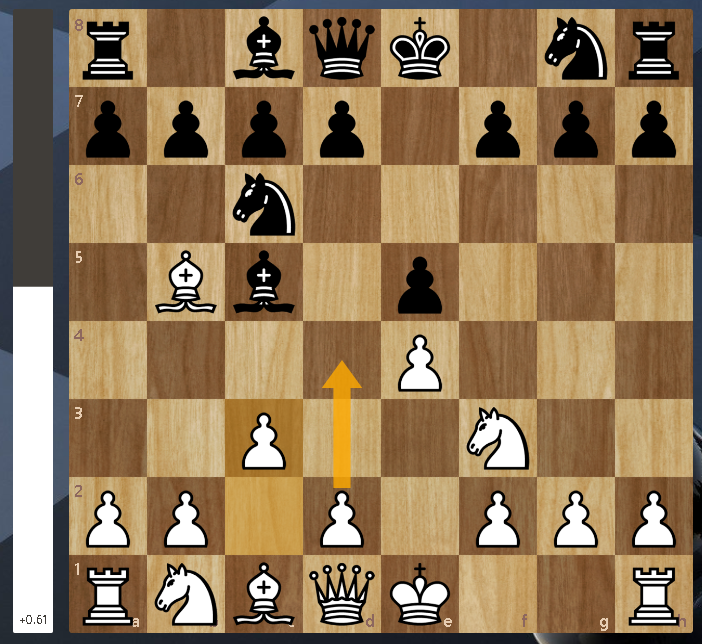
The first one is the “Ruy Lopez” also known as “The Spanish Game”. It is very commonly used as a standard opening because it allows for both players to achieve a decent amount of dominance and good piece positioning on the board. The opening moves for this one are: E4, E5; 2. Nf3, Nc6 ; 3. Bb5 . We can see how the bishop on b5 is targeting the c6 knight, putting some pressure on it. After these preliminary moves are completed, the game can go pretty much anywhere for both the white player and the black player. 

Learn Chess Opening: The Ruy Lopez | by Alfi Futuhi | Medium

Image from: 1

The second one is the “Italian Game”. And although it may sound like some sort of Italian mafia organization, this opening really is simple yet effective. The moves are very similar to the “Ruy Lopez” other than one key difference. The opening moves for this one are: 1.E4, E5; 2. Nf3, Nc6 ; 3. Bc4 . Me personally, I find this opening to be slightly better than the Ruy Lopez because in this case, the bishop is covering more squares diagonally and is more ready to attack. It is also targeting the weak F7 pawn near the black player’s king. 

Italian Game: Ultimate Guide to Winning - 365Chess

Image from: 2

The third one is the “Sicilian Defense”. This opening is played from Black’s point of view. A fun fact about this opening is that it is known to be the most popular form of defense played from Black, at all levels of chess. The move(s) for this opening is quite simple. It is: 1. E4, C5. This diplomatic move played by Black aims to fight for the center of the board while avoiding the exact symmetry from White. This position may lead to a dangerous struggle between the two, where both sides have an equal chance of winning. 

Sicilian Defense Variations & Theory | Chess Pathways

Image from: 3

Apart from those three common openings, it can never hurt to know some of the fun gambits too! But one small aspect about gambits is that they can be either accepted or declined by the opponent, almost like an offer. The two that I will summarize for you are the gambits that are accepted.

One of the oldest and most well-known gambits in the chess world is the Queen’s Gambit. It is designed to make one side gain ultimate control of the center of the board. In many gambits, including this one, sacrificing a piece to unlock a hidden advantage is key. In this case, White would be sacrificing their C-Pawn to gain control of the center of the board. The moves for the Queen Gambit (accepted): 1. D4, D5; 2. C4. Although this sacrifices one of White’s pawns, which is risky indeed, it accomplishes the goal of gaining control of the center.

With every queen, there is also a king. The King’s Gambit is another trick/strategy that you can use to outwit your opponent. The overall goal of this gambit is to make some rapid development and eventually initiate an attack towards the opponent’s king. This gambit also has to sacrifice a mere pawn in order to assert a sense of dominance throughout the game. The moves for the King’s Gambit (accepted) are: 1. E4, E5; 2. F4, Fx4.

Now last but not least, here are some final tips to help accelerate improvement in your chess journey.

  1. Practice
  2. Solve chess puzzles as much as you can
  3. Analyze your losses and wins
  4. Study grandmaster games
  5. Learn many openings, gambits, and tactics
  6. When playing a game, always look at least 2-3 moves ahead
  7. Stay positive and enjoy the journey

Hopefully, after reading this quick post, you will have learned at least one new thing that will really help you become the chess player you aspire to be.

P.S: Here are some funny chess jokes 🙂

  • Why do chess pieces look so uninterested? Because they’re part of a board game
  • Where did the chess player sleep? In a king-sized bed
  • What is the most costly move in chess? The Check

Other sources:
https://www.thesprucecrafts.com/most-common-chess-openings-

lack’s%20pawn.https://www.chess.com/forum/view/general/10-steps-for-getting-good-at-chess-fast


How to become better at public speaking

Public Speaking–Truly an important life skill

Public speaking is a skill that both kids and adults use in their daily lives. In fact, no matter which occupation an individual holds, they will likely need to be able to speak confidently to communicate with a group of others in a public setting. Public speaking can range from casual to extremely formal; therefore, the level of preparation for the speaking will vary as well. In addition, public speaking is always centered around a central focus, or purpose, in the communication between the speaker and the public.

Whenever we give a speech (with or without visual aids), sales pitches, or maybe even accept awards, we employ public speaking techniques and skills. Public speaking is quite challenging for many people, due to the presence of a large audience listening intently to the speaker.

Photo by Priscilla Du Preez on Unsplash

Giving successful speeches

The purpose of giving a speech is to make your central points memorable in the minds of the audience. Believe it or not, the speaker’s posture, facial expression, and voice loudness can be even more important than the points the speaker lays out for the audience. To give a good speech, one must be prepared (unless if the speech is specifically planned as an improvisation speech). Leaving a good impression often requires that the speaker gives their speech fluidly so that in the eyes of the audience, the speaker is very capable of shaping their arguments in their own approach.

Successful speeches often require a powerful opening, or a central hook, that grabs the audience’s attention. Often, starting with a rather uncommon “fact or statistic” is a great way to draw attention. In fact, the detail in the hook can even be somewhat unpleasant, to imprint itself into the audience and allow them to follow the speaker into the next parts. Of course, the degree to which the detail is unpleasant depends largely on the context of the audience, what setting the speech is given, and also to an extent, how well the speaker can use the unpleasant fact with a sense of humor! The speaker never wants to offend anybody in the audience.

Also, whenever it is embraced, the speaker should be conversational, thus demonstrating to the audience the fluidity of their speech. Additionally, the speaker should make it lively and speak with passion. To accomplish this, the speaker must understand the points they are making in-depth and even will go to great lengths to make their points be heard. If the speaker accidentally makes an error or mistake, they should be patient and continue to work on their speech skills to prepare for the next time.

Remember, giving a speech is not easy work. The successful speechgivers make it seem easy, but in reality, they have also gone to great lengths, and spent much effort, to hone their public speaking skills.

Delivering speeches in sad conditions

In events such as eulogies, it can be difficult to deliver the speech. The speaker should speak with their true thoughts and prayers, but at the same time, be tactful, and even keep their own emotions under control. Typically, eulogies should be rehearsed beforehand and should be limited to just a few (two to three) main points. “A eulogy should not be the chronology of a life but a tribute to it.” Be sure to include meaningful anecdotes or quotes of the deceased person, and make it inspiring.

Delivering Sales Pitches

In other public speaking opportunities, such as sales pitches, the main purpose is to persuade. The speaker should be motivated to sell a product or concept; if they are successful, they can “open the door to professional opportunities.” Sales pitches should include important information, support claims with logic, and a call to action.

It is also important to use compelling visual aids, as they clarify sales pitch “speeches.”

As for the question-and-answer period, it is still important to prepare beforehand, so that the most commonly asked questions are expected. If some questions are based on false premises or irrelevant assumptions, be sure to reply with politeness, and ask the questioner to further explain their question. Lastly, it is important to divide complicated questions into multiple simpler sections, in order to give the audience a chance to digest all of the information.

If you would like to learn more about some other contexts for public speaking, please check out this amazing link.

Conclusion

We all use public speaking skills in different settings and contexts in our lives. Regardless of an individual’s role in society, or the occupation they hold, they will likely have to employ public speaking skills in some way. Always remember that public speaking is naturally challenging and not straightforward to master. However, through hard work and dedication, we will most certainly improve ourselves. Lastly, public speaking is always centered around a main theme, or purpose, that the speaker should know very well about.

3 Best Ways to Relax

It’s exam season! Hooray!!!!

Just kidding.

No one likes exams. Even though the reasons why people might detest exams can differ, we all know that exams can be really stressful. Due to this, I want to present a couple of activities that you can do at the comfort of your house to relax!

  1. Make yourself some tea: I, personally, love tea! Whether I’m sick, stressed out, or just looking for something to drink, I make myself some tea. Making tea can be a very easy task, especially if you buy the tea bags. The amazing fragrance, combined with the easygoing activity of making tea, this can be the perfect thing to cheer you up!

  2. Exercise: Exercising doesn’t necessarily mean going to the gym and working out. Taking a walk to the park can be a great form of exercise, and it can be very refreshing too! This way, if you’ve got an hour or too between study sessions, it can be worth it to go on a nice walk outside!
  3. Yoga or Meditation: Again, you don’t need to go to those expensive yoga or meditation classes to do these activities. There are tons of great videos on YouTube that can guide you through step-by-step beginner yoga poses, or meditation exercises. Just a short 15-minute yoga or meditation exercise can do you wonders in terms of stress relief!

That brings me to the end of this short blog post. This is, in no way, a finite list of activities that you can do to relax! You can feel free to go ahead and find something that suits you, and works to make you happy! Have fun, and good luck on your exams!

Auroras: The Lethal Beauty

Hello! Recently, I had a fortunate chance to witness an Aurora Borealis. It was ethereal; ribbons of fluorescent green and hues of purples adorned the sky. It seemed surreal – and it made me wonder how this phenomenon occurs. 

What is an aurora and how does it occur?

Auroras are brilliant lights shining across the Earth’s northern and southern poles. The auroras in the northern hemisphere are called the aurora borealis and those in the southern hemisphere are called the aurora australis.

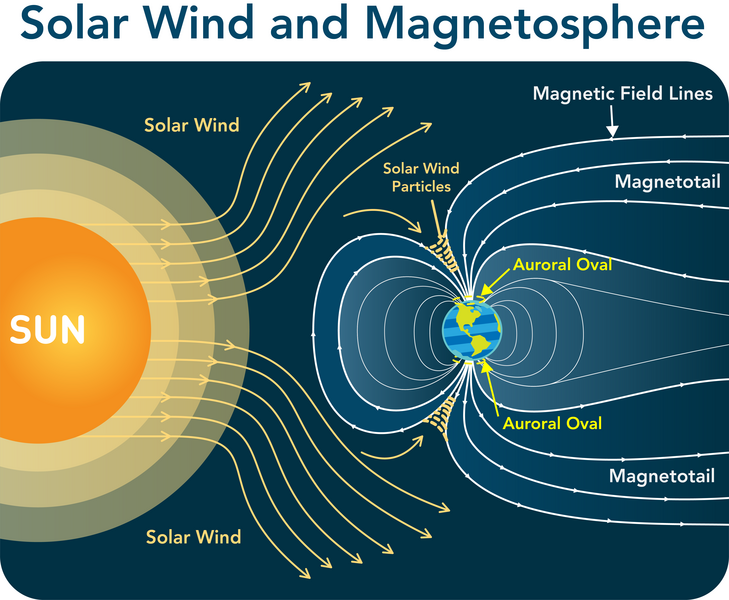
Auroras occur through the interaction of Earth’s atmosphere and solar wind.  The sun is a ball of very hot gasses, composed of charged particles called ions. Everyday, the sun ejects these charged particles (electrons and protons) from its corona — these particles are called solar wind. If the solar wind were to reach Earth, all life would cease to exist. However, the magnetic field around Earth prevents the solar wind from reaching the atmosphere. Due to the shape of the magnetic field lines, some solar wind particles can interact with our atmosphere– at the north and south poles. The ions interact with the atoms, heating them up, and resulting in the fluorescent colors of the aurora.


An interesting thing to note is that the auroras are always present- as the sun is always ejecting solar wind- but it is not visible due to the amount of solar wind. 

Why are there different colors?

The shades of the aurora change due to the altitude and the type of atoms that react with the charged particles. Every atom absorbs and radiates specific colors when they are heated up. When the ions contact oxygen atoms – this produces red. At lower altitudes, ions that contact oxygen atoms result in a typical green color. Ions contacting hydrogen and helium atoms result in blue and purple auroras. 

Sources: 

https://www.space.com/15139-northern-lights-auroras-earth-facts-sdcmp.html

https://www.asc-csa.gc.ca/eng/astronomy/northern-lights/what-are-northern-lights.asp

https://education.nationalgeographic.org/resource/aurora/

https://letstalkscience.ca/educational-resources/backgrounders/auroras-spectacular-light-shows

Top 5 ways to become a Diligent Student

0

We have all experienced procrastination and the brunt of its consequences as a student before, so here are my top 5 tips to stay caught up and make studying more enjoyable!

5. Pomodoro Technique

There are multiple variations of the Pomodoro technique; some are studying for 25 minutes then taking a 5-minute break, and on your 4th break, taking a 15-minute break instead of a 5-minute one. Others may study for 50 minutes and have a 10-minute break. Ultimately, the Pomodoro technique is a tool to overcome procrastination, by rewarding breaks between studying, which makes studying less overwhelming.

4. Feynman Technique

Gone are the days when we had to write empty words repeatedly from our textbooks to understand and memorize them! Instead, the Feynman technique is where you cover up your notes, then attempt to teach/explain what you just learned to an 8-year-old. Of course, it does not have to be an 8-year-old, the idea behind this technique is, that if you can simplify and successfully explain what you have learned even to a kid or someone with relatively little knowledge about the subject, then you have understood it. This is also a great tool to catch gaps in your knowledge, so you can go back and study what you don’t know and try again. That way, you spend less time simply memorizing a list of sentences that you do not understand, and less of a chance of becoming stumped on upcoming tests where your understanding of a subject is based on the notes you took in class.

3. Time-blocking

Allowing there to be a specific time of the day (that is the most productive time of day for you), when you schedule yourself to study, results in you building more discipline, which eventually leads to you studying into a habit rather than a chore that must be done. Furthermore, if you allot time for yourself to study, but also a lot of time for you to enjoy your hobbies or rest, then it will reduce the feeling that you are missing out on enjoying your personal life by studying. Also, if you assign yourself a specific time to stop studying, then it pressures your mind to become more focused and productive since your brain knows that you must finish your task before a particular deadline.

2. Prioritize your tasks

If you have fallen behind in class, then it is important to prioritize your tasks from what affects the most of your grade, to what affects your grade the least. By doing so, if in the worst-case scenario, you do not finish your assignments on time, your grade average will be fine.

1. Do a little Each Day

I know, I know, nobody wants to do work that’s not due soon, especially during their free time. However, suppose you finish the less urgent and relatively small tasks sooner. In that case, that is one less thing to worry about in the future, especially if there are more important exams, presentations, or assignments coming up. 

I hope this helped! Thank you for your time, and get back to work instead of procrastinating by scrolling on the internet!

“I’m a Queen card:” Female Power in Kpop

As the awakening of female power has been on the rise, this trend of feminism can not only be seen with official feminists but also with cultural symbols such as K-pop. K-pop, which refers to Korean popular music, originated in South Korea. Usually in the form of boy and girl band groups, these K-pop music and culture have spread globally, gaining international fanbases and recognition. 

(Source: Official (G)I-DLE Instagram)

Taking the popular girl band group (G)I-DLE as an example. (G)I-DLE is a K-pop band group under the entertainment company CUBE Entertainment. With 5 members – Soyeon, Miyeon, Minnie, Yuqi, and Shuhua – it has gained considerable popularity globally. Especially with the songwriting and producing talent of its leader Soyeon, (G)I-DLE is known for their ear-catching and upbeat melodies in their songs. 

(Source: Official (G)I-DLE Instagram)

Particularly in the album released in 2023, I Feel, the girls from (G)I-DLE won the Golden Disc Award Song Division with the song “Queencard.” Queencard is known for its rhythmic melodies in the chorus and its lyrics that showcase female power: “My beauty doesn’t take time off. It shines from head to toe, I’m sparkling.” 

여자)아이들((G)I-DLE) - '퀸카 (Queencard)' Official Music Video - YouTube

(Source: (G)I-DLE “Queencard” Official Music Video)

Queencard was not the first time the girls have shown off their confidence as females. Previously in 2022, in the album I Love, the song “Nxde” sparked numerous discussions online. The main message of this song was the independent power of women, which extends beyond the stereotype of “sweet and obedient” under the common male gaze. While some men usually consider women in a sexual context when seeing the word “nude,” this song courageously challenged this prevalent viewpoint by emphasizing women’s “nude” being a symbol of a true, undisguised self instead of a medium for sexual fantasies. As women take off their clothing, they are not looking for the nebulous love of men but instead “put[ing] on [their] beautiful sel[ves].” Along with the melodies, the girls blatantly claim how the “prejudice” from male gazes and sexual fantasies “make[s] me sick.” 

(G)I-DLE - 'Nxde' Official Music Video

(Source: (G)I-DLE “Nxde” Official Music Video)

As K-pop culture continues to be influential, especially among young people’s lives, it is very probable that songs like those from (G)I-IDLE will play a significant role in impacting our youths. Perhaps instead of social sciences research papers, popular culture will rise as the more effective and relatable medium for youths to access novel thoughts and perspectives. 

ISFJ – All about the most common MBTI

Introduction to ISFJ Personality Type

According to the Myers-Briggs Type Indicator (MBTI), a pseudoscientific self-report questionnaire that purports to distinguish between various “psychological types,” ISFJ is one of the most prevalent types. Four categories are given binary values by the test: thinking or feeling, sensing or intuition, introversion or extraversion, and judging or perceiving.

Characteristics of ISFJ

Defender Traits

Personality types that are Introverted, Observant, Feeling, and Judging include ISFJ (Defender). These people are kind and modest, productive and accountable, and they pay great attention to the little things in life. ISFJs quietly contribute to the smooth operation of the world in small ways. They are devoted and hardworking individuals who have a great sense of duty to those around them.

Dependability and Support

ISFJs are dependable in terms of meeting deadlines, remembering birthdays and other important events, maintaining customs, and providing love and support to their loved ones. They would rather work in the background, though, and hardly ever look for attention.

Skills and Strengths

This personality type has a multitude of skills and is competent and adaptable. ISFJs are sensitive and compassionate people with strong analytical skills and a keen sense of detail. They typically have solid social connections and well-developed people skills. Their diverse strengths are evident even in the most routine facets of their everyday existence.

Altruism and Loyalty

Genuine Altruists

ISFJs are genuine altruists who give freely and enthusiastically to the causes and people they support. They also respond kindly to kindness.

Loyalty

Loyalty is among the best traits of ISFJs. They work very hard to keep their relationships with their loved ones strong, frequently putting everything on the line to support a friend or relative who is in need. When they’re helping someone in need, they feel most productive and energized. Although such a strong commitment can have drawbacks, they are loyal to their employers, families, and communities.

Challenges Faced by ISFJs

Overwork and Exploitation

ISFJs are helpful by nature, but others may take advantage of this, leaving them overworked and exhausted. When it comes to saying no or making the necessary adjustments in their lives, relationships, or routines, ISFJs may experience feelings of guilt or stress.

Difficulty with Change

The inability of ISFJs to adapt well to change, especially abrupt or unexpected change, is one of their main weaknesses. They are the personality type that is most likely to experience stress from last-minute changes

Article Source 1 / 2

Image source

Terrific techniques to ace your exams!

As the end of the school year approaches, there is only one more thing keeping us away from summer break. Exams. Although they are dreaded and feared by many students worldwide, I have collected some techniques to help you not only do well- but ace your exams!

1. Use class time effectively: Whenever you have some spare time in class, you should use it to your advantage. Pull out any work you have and get started on it right away. By using this spare time now, you will have more time to study for all the exams you have up the road.

2. Spaced Repetition: Spaced repetition or spaced practice encourages your brain to study over a longer period of time rather than cramming all the information into your head the night before the exam. Using this technique, your brain will better be able to recall important concepts and facts, and overall help you get a better grade on the exam. For example, on “Day 1” you would learn the material in class, and on “Day 2&3” you revisit the information that you learned. After one week you would review, and then you would review once more after 2 weeks. After learning and repeating all the material, you should be well prepared for your exam. 

3. The SQ3R Method: This method is basically a reading comprehension technique that will help students retain the material that they learn from their textbooks. Reading a textbook like a novel can be a very good thing, but it can also be very tiresome. Therefore, by using the SQ3R method, you will not only read the textbook but you will also understand it. The “S” stands for “Survey” which means that you have to skim over the chapter and take note of anything that stands out. This includes headings, subheadings, charts, graphs, names, images, and more. The “Q” stands for “Question” which tells us to formulate some good quality questions based on the chapter’s content. Such as “What is the main idea of this chapter?”, or “What do/don’t already know about this chapter?”. The next part is to read, recite, and review the information (or as the title suggests, 3R). Make sure to just thoroughly read the chapter, summarize different sections into your own words, and review the material until you completely understand it. To conclude, the SQ3R method should be a valuable tool to help you in your exam preparation. 

4. The PQR4 Method: This method is very similar to the SQ3R method, but just a tad bit different. By utilizing this active approach before the exam, you will have improved your memory and understanding of the content for sure. The “P” stands for “Preview”. Just like how a movie trailer gives us a preview of the movie, we should skim over the information and get a general idea of what we’re looking at. The “Q”, just like in the SQ3R method, stands for “Question”. Over here, your duty is to formulate good questions about the topic, such as the ones stated previously. The next step is to read, reflect, recite, and review the information, just like the title says (4R). By going deep into the material, you will have answered all your questions and will surely have gained a better understanding of the content before your exam. 

5. The Feynman Technique: This technique has been spreading rapidly across the world coming in clutch for struggling students. The root of the technique tells us that in order to understand the material quickly, you must explain it in plain and simple terms. Almost as if you are explaining it to a 4th grader. Once you have translated the content into your own words, understanding it should be a piece of cake. To start, you should first write down the subject/concept you are studying at the top of a piece of blank paper. Then, you should try and explain it in your own words as if you were explaining it to someone else. After that, make sure to review whatever you scribbled down and make any corrections by double-checking your notes. And lastly, if you used any complicated language and terms, you should try and simplify it as much as possible to ensure prime understanding. 

6. The Leitner System: This system is ultimately based on our old friend flashcards. If the concept you are studying has a whole lot of terms that you need to memorize and understand, this system is the way to go. Start by creating some flashcards with both the term and the definition. Then, keep the cards in a couple of boxes to track when you need to study each set, and with which set you are having the most difficulty with. Each card starts in box one. If you get the question right, you should move it to the next box. But if you get a question wrong, you should move it down one box (or keep it where it is if it is in box one). Here is an example schedule that one using this technique might follow. Each box determines how much you will study each set of cards. Box 1= Every day. Box 2= Every 2 days. Box 3= Every 4 days. Box 4= Every 9 days. Box 5= Every 2 weeks. If you would like to implement this method into your study schedule, you must start studying well in advance before the exams begin. 

7. Colour-coded Note: Everyone loves colour. Our brains are just naturally drawn towards it (no wonder we are all addicted to our screens). So, why don’t we implement this knowledge into our studying techniques? There has been a national study conducted by the National Library of Medicine, indicating that colour can improve a person’s memory performance. They delved deep into the human brain and colour receptors and found that warmer colours can create a more positive and motivating learner environment, which leads to higher attention and excitement toward the topic being studied. Here are some specifics that will help you with your colour study. You should write down key points in red, and important information in yellow, organize topics by colour, and last but not least- not colour code every single line.

8. Mind Mapping: There are 4 main learning styles that are commonly recognized today. These learning styles include visual, auditory, reading/writing, and kinesthetic. While they are all good in their own ways, mind mapping falls under the visual category. Just like how our brains connect pieces of knowledge and information together, a mind map is based on that fact. Basically, using a mind map is an effective method to visually organize your information. To create your own mind map, you would start by placing one keyword in the center of the page. Then you would write down important major ideas and physically connect them to the central word. You would keep on branching out by expanding on your major ideas until you have created yourself a mind map. Instead of writing your notes down in an old-fashioned and boring way, mind maps are a great way to add fun into studying.

Some tips on the day of the exam: Uh oh, the big day has finally arrived. You’re probably stressing out and worrying about how it’s going to go. So on the big day, make sure to eat a good breakfast filled with healthy foods, such as eggs or protein. You should also wear some comfortable clothes so you aren’t squirming around in your seat during the exam. Right before you start, make sure to take some deep breaths and say some positive words of affirmation to yourself (such as “You got this”).

Good luck with all your exams, I know you are going to do great!

Links:

https://www.ncbi.nlm.nih.gov/pmc/articles/PMC6794354/

10 Effective Study Techniques to Try This Year


Advice On How To Study For Final Exams

0

Coming up soon… is finals season! Depending on your experience with that course, that final exam can either be nerve-racking or not bother you at all. When it comes to finals season, there are times where your study methods are challenged. After all, to do well on a final, it’s vital that you avoid procrastination. Although studying seems simple, the main challenge is to avoid procrastination and study regularly. This blog post showcases some advice on how to study for finals.

Taking a final exam
Image by F1 Digitals from Pixabay

1. Make a schedule

You cannot go wrong with a schedule. Having a schedule helps you plan when to study and for how long. Schedules can provide an overview for how your days will go and that gives you the advantage of deciding when you would like to study. If you know what time of the day you study best, then you’ll be able to free that time up so you can study instead. On top of planning when to study, schedules can help you prioritize other things, especially with ensuring that you are healthy, which will be mentioned later on. By giving yourself a designated and optimal time to study, then your only battle is follow your schedule. When it comes to finals season, schedules are vital so you can organize yourself and your study times!

Schedule with plans on it
Image by melinda257 from Pixabay

2. Pinpoint your weaknesses

We all have our strengths and weaknesses. Those courses where we excel in might not need much studying (unless the exam is like a diploma exam where it accounts for universities and a huge chunk of your grades), but those courses where you struggle are the ones that require more support. In each course, there may be certain units, topics, or concepts that may need more attention. Pinpointing your strengths and weaknesses is needed so you can ensure that you are in good shape for your finals. If needed, go in your designated tutorial times and/or go to a friend and ask them for help. After all, filling in those missing gaps in your knowledge ensures that as you know how to answer as many questions in that final as possible. With your schedule, make sure that you have time to tackle and improve upon these missing links!

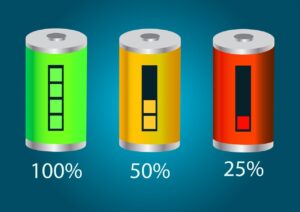
Batteries: one strong, one medium, and one weak
Image by Денис Марчук from Pixabay

3. Ensure that you are healthy

On the day of your final, would you rather be really sleepy and hungry or be refreshed and confident? Hopefully, you would rather be refreshed and confident. Unfortunately, the truth is that we do not have an unlimited amount of time to study for finals. Knowing that you only have this limited amount of time can cause you stress and skip out on your health. If you actually came into the exam room sleepy and hungry, then it would be incredibly difficult to focus. If you can’t focus well, then it’ll be hard to comprehend and answer questions, especially since the exam ends after a certain amount of time. Within your schedule, after scheduling different times to retain those information from your courses, give yourself time to breathe. Your stress is understandable, but taking care of yourself is always a priority, especially to ensure that you can stay focus during your actual final exam.

Dog sleeping under the moon with a dream about bones. A completely healthy setting.
Image by Betidraws from Pixabay

4. As soon as you’re comfortable, go straight to trying practice questions

When you believe you are comfortable with at least some of the content, go straight to trying practice questions. Reading the same definitions over and over again will not get you far. Try practice questions and see if you can apply what you have learned. From experience, while there are barely any questions asking for definitions, the majority of the questions in finals require application and critical thinking. Knowing the content is the first huge step, but applying it to a master’s extent is a marathon. Although going straight to practice questions seems scary, you don’t always have to be right, especially if it is only practice. After all, there is nothing that can teach you better than learning upon your mistakes.

Books with a caption of "Did you know?"
Image by Gerd Altmann from Pixabay

5. Take deep breaths and know your practice was worth it

If you cared to read to this part in this blog post, then you care about studying for your finals. Regardless of how confident you are, having a care puts you at an advantage than those who don’t. If you think about it, the fact that you care motivates you to try and bring efforts to achieving a good grade from your final exams. Once you are in that exam room, take deep breaths and remember that you tried your best to study for that final. When you reach your seat and look at your exam paper, remember that you are better prepared from studying. As your final goes on, take deep breaths, relax, and know that whatever happens, happens because you worked for it.

A dandelion to help you calm down
Image by Orelian from Pixabay

Closing Section

Hopefully, these five tips give you an idea of how you’d like to study for your final exams. From managing your schedule, pinpointing your revisions and breaks, to taking deep breaths, you should be in good shape for your final exams. As mentioned earlier, the fact that you cared to study puts you at an advantage. Taking the time to study, revise, and try practice questions improves your chances of doing well on your finals. Although your stress levels may spike in that exam room, be proud that you studied. You took the time to prepare for that final and have a good understanding of it. Take those deep breaths and believe in yourself. You will do well!

An exam with the writing "Passed"
Image by Harinath R from Pixabay


Sources: 1 , 2 , 3

Images: 1 , 2 , 3 , 4 , 5 , 6 , 7 , 8

The History of Vaccines

An indispensable healthcare tool

Many illnesses and diseases plague humanity as well as other species of organisms in our natural world. Bacteria, viruses, as well as a plethora of other types of pathogens are responsible for harming billions of peoples’ lives all over the world. It is because of this that vaccines have been conceived by many cultures around the world since a very long time ago. We hear about vaccinations in the modern era in many ways: to treat or prevent communicable and non-communicable diseases and to maintain the order of public health in society. Today, we are going to be exploring the history of how vaccines developed to be, and how scientists’ views of them changed as time progressed.

The vaccines against smallpox

Smallpox has been around with humanity since ancient times. According to the U.N., some of the earliest examples of vaccination-like measures were actually public health officials exposing healthy, uninfected people to those who had contracted the disease, but were suffering relatively less severely from it. This process is similar, but is even more basic, to inoculation of the smallpox disease, and evidence shows that they could have been “taking place as early as 200 BCE.” Smallpox has devastated many communities historically, and sadly, anyone catching it without receiving vaccinations would have a thirty percent chance of dying. 

In the early 1700s, smallpox inoculation was practiced in Europe for the first time everPrior to that time, inoculation had already been widespread in places like Turkey.

In the late 1700s, there was a further breakthrough in developing a more effective treatment of smallpox. English physician Edward Jenner decided to inoculate an eight-year-old child suspected of contracting the smallpox virus. However, Jenner used some material related to cowpox to inoculate the boy. Jenner theorized that cowpox infections are milder diseases that can train the human immune system to be more resistant to the smallpox virus, and in doing so, he officially created the world’s first successful vaccine. The boy turned out to make “a full recovery,” even though he had contracted smallpox beforehand.

Louis Pasteur

In the 1800s, a famous microbiologist, Louis Pasteur, created “the first laboratory-produced vaccine” against the fowl cholera disease. In 1885, he also prevented rabies by developing a form of post-exposure vaccination. Even though Pasteur was not a medical doctor, he was still credited for furthering science and developing a crucial new form of treatment for rabies diseases.

The 1900s

In 1918, the Spanish Flu killed approximately “20-50 million people worldwide.” Since it happened right in the middle of World War I, the American military was also devastated by the disease, with many soldiers killed. This spurred government recognition of the production of vaccines, as the U.S. Military made it one of its top priorities. However, in the case of the Spanish Flu influenza vaccines, the final results were somewhat inconclusive, and the vaccines did not prove to be the most capable.

It wasn’t until 1945 was the first influenza vaccine approved for military use. Soon after, in 1946, the first influenza vaccine was approved for civilian use.

In 1960, a new polio vaccine was invented by Albert Sabin, which was administered orally with a weakened form of the virus. Soon after, the vaccine was mass-manufactured in the Soviet Union and Eastern Europe and saw much success in countries like Czechoslovakia (the first country to eliminate polio).

In 1988, the WHO set out a Global Polio Eradication Initiative, demonstrating greater international effort in eradicating various diseases worldwide. This was following the success of eradicating the smallpox virus, which had been achieved a few years earlier. 

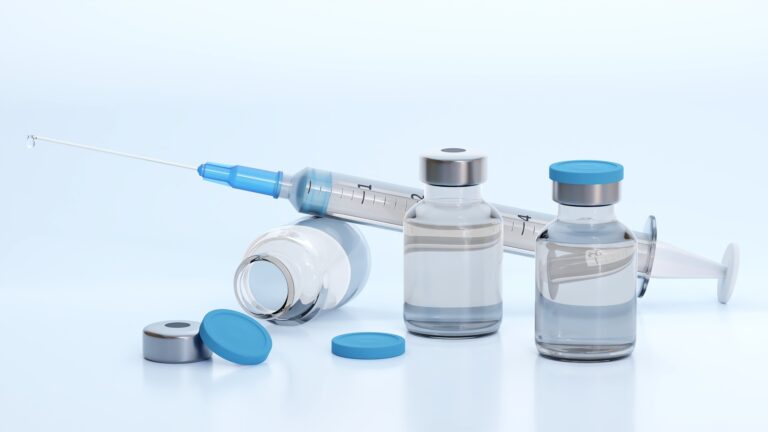
Image by Van3ssa Desiré Dazzy from Pixabay

The 21st century

In 2016, the Meningitis Vaccine Project succeeded, and it marked one of the pivotal cases where there were significant public-private partnerships for developing vaccines. This vaccine helped many countries in Africa, which were suffering from the disease’s spread.

In 2021, coronavirus vaccines were rolled out rapidly in nations around the worldDespite the large number of vaccines administered, critics say that most of the vaccinations took place in more developed countries and that international aid organizations should place more effort into providing vaccines for less developed countries. The coronavirus vaccine was created in record time (only a year since the first case was detected), and it symbolized greater scientific innovation, as well as the greater variety of vaccines that can be developed using modern-day technology.

Conclusion

From even before the times of the ancient Roman empire, to our twenty-first century, vaccines have gone a long way in the methods and quality for treating or curing diseases worldwide. We have seen miracles, such as the eradication of smallpox, and yet there are still diseases (such as AIDS), of which the hunt for developing a working vaccine still yields elusive results. Ultimately, vaccines are powerful, but not all-encompassing. It is still up to each and every one of us to protect our own health, through a variety of different methods, rather than solely depending on vaccines.