Youth Are Awesome, commonly referred to as YAA, is a blog written by youth for youth.
YAA provides the youth of Calgary a place to amplify their voices and perspectives on what is happening around them.
Youth Are Awesome is a program of Youth Central.
Any views or opinions expressed on this blog belong solely to the author and do not represent those of people or organizations that the blog may be associated with, unless explicitly stated. All content is for informational purposes only.
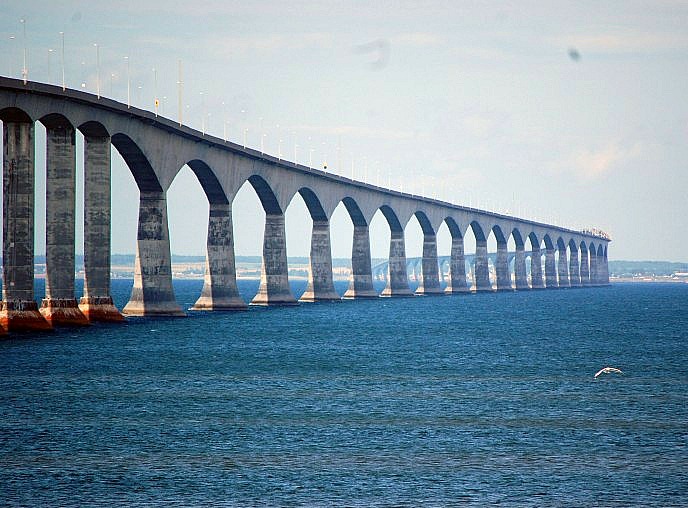
Last summer I visited Charlottetown, P.E.I. and took some shots of the famed Confederation Bridge.
Facts:
1. This 12.9 km (8 mile) long bridge is the worlds longest bridge spanning ice covered waters
2. Inaugurated in May 1997, the Confederation Bridge streches across the Northumberland Strait, linking Borden-Carleton, Prince Edward Island to Cape Jourimain, New Brunswick
When the design of the Peace Bridge was first unveiled to the public, many Calgarians roared with disapproval and haven’t changed their attitude since. The quirky structure certainly did not suit the nature of Calgary, and the hefty price tag ($24.5 million!) left taxpayers reeling. They were also not amused by the fact that this bridge was designed by the famous Spanish architect Santiago Calatrava, who has designed beautiful bridges in many parts of the world. They knew that because he was a renowned architect, the City had to pay more money in order to get his attention. While many Calgarians were in agreement that Calatrava had created distinct bridges that made cities that much more attractive, they just didn’t believe that this bridge would represent Calgary.
After taking a cursory glance of the artist’s renderings in the paper, I came to the conclusion that this bridge looks like a long piece of candy. I did like the uniqueness of the design, its helix-shaped structure which had a futuristic appeal. However, I did not appreciate the strong red colour of the bridge. I believe it was designed this way to catch people’s attention, and to set itself apart from all the other bridges. This is the exact problem, however, because the bridge is so different that it sets itself out as an oddity. It’s certainly a complex piece of work, with the City of Calgary calling it “the largest single-span bridge.”
The controversial Peace Bridge design by renowned Spanish architect Santiago Calatrava
Shortly after the design was revealed, the bridge needed a name. With careful consideration, the bridge that caused the most stir had a new name- the “Peace” Bridge (the name could not have been more ironic). As construction went underway last Spring, the City was hopeful that everything will go as planned and Calgary would have a brand new bridge to celebrate in the coming months.
Fast-forward a year later and the so-called “Peace” bridge unfortunately did not bring any peace to the city, as the Council continues to scratch their heads as to where all that money went. As the construction continues for this bridge, I am left to wonder if this $24.5 million structure will ever be finished. This bridge will continue to be the subject of criticism until the day of its unveiling. When everything is said and done, this bridge will be remembered as not only coming with an expensive price tag, but a handful of Aspirin as well.
For those of you that have been to the Stampede this year, you may have seen one of the performances by human cannonball David “The Bullet” Smith Jr. Currently the world record holder for the longest human cannon ball shot, Smith Jr. launches himself 46 metres (about 150 feet) across the Saddledome Plaza everyday at 1pm and 5pm. In this picture, Smith Jr. is about 20 metres off of the ground. To put things into perspective, that’s about as high as a 6 storey building!
During this time one year ago, the BP Deepwater Horizon well in the Gulf of Mexico was finally sealed completely, after 17-39 million gallons of oil had been spilled. I want to commemorate this occasion with an overview of some issues surrounding the oil and gas industry today. I know this sounds like a strange subject for youth, but trust me – someday, this knowledge will come in handy.
1. Oil Spills
A size comparison of the BP incident to other major spills
The two largest spills in U.S. history to date are the BP Deepwater Horizon spill (2010; 4.9 million barrels) and the Exxon Valdez spill in Alaska (1984; 0.26-0.75 million barrels). But many more spills occur than only those, including four spills this year according to Wikipedia’s List of oil spills. Furthermore, in more totalitarian regimes such as China and Saudi states, the governments (which run oil operations) might not even report spills to the public or other nations.
Another problem with spills is that oil companies often fail to fully assess the risks of their projects and develop effective plans to cope with emergencies. MSNBC’s list of flaws in BP’s response plan to the spill shows the full extent of this problem – in BP’s case, at least. This poor planning is posing more and more of a risk, as traditional sources of oil become depleted and companies start drilling in more and more difficult areas, such as 18,000m deep in the Gulf of Mexico. The poor standards for companies’ emergency plans need to be improved, but so far, there has been little action by companies to improve and political legislature is still unsatisfactory.
Nevertheless, there’s always some good that comes from things, no matter how dire they seem – for example, see UCBComedy’s video below.
[youtube HtfevVB5eBk]
2. The Peak Oil Theory
A typical peak oil graph
This theory was proposed by M. King Hubbert in 1956, when he was head geologist of Shell Oil. It’s based on the fact that oil is a non-renewable resource and that there’s a finite amount of it available to humans. Hubbert believed that oil extraction would peak in the 1970s, and that after that, production would dwindle while consumption increased, plunging the world into a global energy crisis.
Obviously, this never happened because our oil supplies are still generous. But Hubbert’s theory may not be wrong – just premature. He failed to account for unconventional sources of oil, like deepwater wells, oil shales, or the Alberta Oil Sands, because he was unaware of them. These sources can sustain us for a good while yet, but even if the year is debatable, it’s certain that oil reserves will someday be depleted. Even now, gas prices are rising uncomfortably. We need to prepare ourselves for the day when oil becomes completely unavailable.
[youtube Ulxe1ie-vEY]
3. The Alberta Oil/Tar Sands
The common way of retrieving oil underground in the Sands
The U.S. has long been the world’s major consumer of oil (although China and India now pose a threat to that title) and initially, nearly all of that oil came from the light oil fields in the Middle East. However, since 1988, the U.S. has shifted to importing more and more of its crude from Alberta’s Oil Sands, since Canada is much closer and has a stable political regime.
Nevertheless, despite these good traits of Canadian oil, the product itself is inferior to light oil. In the Middle East, oil simply lies on the surface and is simple to retrieve, energy-wise: for each barrel of energy used to produce oil, the fields yield an incredible 30 barrels in return. In Alberta, though, oil extraction is a different story: 90 per cent of reserves in the Sands are underground and frozen nearly solid, which means that pipes must be laid underground, steam pumped in to thaw oil, and then the oil must be pumped back up. This process is both energy- and resource-intensive, but the good news is that innovation occurs at a furious pace in this field.
The jacket of Ezra Levant's "Ethical Oil"
Because of their environmental drawbacks (mostly greenhouse gas emissions, deforestation of Alberta’s boreal forest, and threat to wildlife) and “dirty oil,” environmental groups the world over are opposed to Canada’s Oil Sands. But in 2010, this criticism was met by Ezra Levant in his book Ethical Oil (it was published before the BP disaster). Levant’s main argument is that the Sands’ crude is superior to other countries,’ because buying Canadian oil doesn’t support unethical abuses of power by other governments and businesses; it’s a similar analogy to blood diamonds vs. Canadian Polar Ice diamonds. Levant also provides extensive evidence that the Sands are not as bad as environmental organizations declare.
Overall, my personal take on the Sands mirrors Levant’s. Having spent over 30 hours on this topic for my IB Extended Essay, I think the Sands are a decent resource, that the companies are conscientious and respect the environment as much as possible, and that the oil and gas industry almost always works to improve (BP’s reaction to their spill seems to be an exception).
Conclusion
It’s hard to predict where oil will go from here. In developed nations, our dependence on it seems to be decreasing, but China and India are only getting started on their own oil addictions. Furthermore, we still don’t have any alternate sources of energy or technologies that can match oil’s abundance and energy richness. Our dependence on oil, and its superiority over other fuels, does seem to be changing, as indicated by the growing trend in manufacturing hybrids and electric cars, but it’s equally possible that the big corporations will use their clout to stop this transition and keep us hooked on oil.
Personally, my suggestion to anyone wanting to become more oil-savvy during this time is to watch and wait. We’re in the middle of an energy revolution – albeit a pretty slow one – and I say the best strategy for now is to spread your eggs out among as many baskets as possible. In the meantime, be a considerate oil consumer: check where the oil you buy comes from, look into the companies from which you buy, and try to decrease your dependence on oil as much as possible. By buying what you do, you tell companies what their customers support and oppose, and if many customers work together to do this, the companies listen. So think before you buy, and set an example.
Let's avoid any more of this sort of thing happening
Between Friends Club is dedicated to helping kids with disabilities go to camps, and participate in other recreational activities that they might not be able to enjoy due to their disorders.
He was a quiet boy, unable to give a response when I first introduced myself. I knew he wanted to say something back when his eyes met mine, but nothing came out of his mouth. I did not give up. I said my name again, and asked him how he was doing. He did not reply, and I was forced to ask some more questions. With each question he either nodded or shook his head. I smiled after the short Q & A session was over. His lips curled, forming a wide grin. He smiled a great big smile, and with that I knew we would be friends forever.
Assisting kids with disabilities is indeed quite stressful, and need a lot of concentration. When I first signed up for this project I knew there were certain things that I had to mentally prepare for, and that it wasn’t going to be easy. Even though they are quite grown up, their disability restricts them of doing a lot of things that normal kids can do with ease. This is what made this camp so special and stand out from other camps that were available. When I looked each and every one of the kids at Camp Bonaventure, I was heartbroken over the fact that the only thing that separated them and me was the particular disability that they each possessed. I was forced to ask some questions in my head, trying to make sense of why this was happening to them.
“Whose fault is it that these kids have to live with these disabilities?”
“How come I wasn’t born with a disability, but they were?”
A lot of these questions ran through my head, when I saw their delicate faces and bodies somehow different
because of disorders such as Down Syndrome and Cerebral Palsy. I felt saddened because these kids had to be bound in a wheelchair for the rest of their lives. While observing them, I also thought of the regular kids that are free of disabilities. So many times in the news do I hear them doing stupid things that cost them their lives. The campers I saw at Camp Bonaventure were certainly more mature than some of the children out there that had no disabilities. I felt rage brewing inside of me as some kids just go on wasting their life through drugs and alcohol, when some are born with a critical disorder that leaves them bound forever on a wheelchair.
I found this project an absolute must for any volunteer, regardless of age or gender. Volunteer for a day, or for the whole week. If you are signing up just for the hours or activities, you need to realize there’s something more than that. The most memorable moments are with the campers. Take time to know all of them, even though they might not respond to such a manner that you’d like. By the end of the day, they would have changed your life.
It’s the end of the week already. Time flies fast when you are having fun. I have to say that I am annoyed by how fast this week went. Looking back at all those memories, they almost bring tears to my eyes. It’s time to say goodbye, and a bus arrives to take them away from me. I still have so many things to share with them, but the only word I can say is “goodbye.” There’s that quiet boy again, standing in front of me. This time he smiles a big wide smile. I cannot help to do the same. As he waves his hand and boards on the bus, I turn away with the smile still on my face. I believe their disability won’t affect them to pursue what they want to do when they grow up, because throughout the five days I spent with them, I see so much potential. Maybe they won’t remember me in the future, but I will sure remember them. I realize that their struggles are my struggles, and I will do whatever I can to support them. They are my heroes.
I may not have been a teenager (or even alive) back in the days when the old Beverly Hills 90210 and Degrassi High ruled the airwaves, but that definitely doesn’t stop me from appreciating those somewhat cheesy dramas today. As storylines become overused to the point of chiché in teen dramas (pregnancy scares, best friend betrayals, and falls from popularity pedestals all easily come to mind), the latest generation’s television shows are being forced to push the envelope on drama in an attempt to be innovative.
Long gone are the days of wholesome television programming in general, but this fact is by far the most evident in the youth market. A show such as Beverly Hills 90210, which was surprisingly thought of as being racy back in its day, wouldn’t last two episodes in a world where sex, drugs and drama must take the main stage. The show was so appealing to the teenagers of the 1990s because of its realistic and relatable storylines, such as the trouble of handling young love, making a mistake and crashing the car, or dealing with a dysfunctional family. It had a tint of idealistic glamour when it came to the cars and clothes, but at the end of each hour, a moral would be present which caused the purely dramatic aspects to be forgiven in the name of it all serving a purpose. However, compared to the blatant raciness of current teen shows, the old 90210 comes across as being archaically innocent. After all, when was the last time an episode of Gossip Girl contained a scene in which a student breaks into the school to steal test answers, or better yet, a scene in which the cast celebrates Christmas by donating gifts to underprivileged children?
It’s not to say that today’s shows have abandoned all similarity to actual teen life, but any remotely relatable storyline is often buried beneath layers of intricately impossible drama. Even if a show isn’t based on the lives of the rich and glamorous, it is guaranteed to contain scenes that would have been regarded as being wildly improbable and inappropriate only 20 years ago.
One of the new precedences.
Does that then mean that the standards for teen television have risen in terms of shock value and lowered in terms of quality? The only true judges are the teens themselves, the deciding factors in focus groups and marketing slants. Will the “guilty pleasure” ever be replaced by the “innocent pleasure”? Is it too late for a hearty, wholesome show to ever survive again, given the world’s developed aversion to virtuousness? Only time will tell. Until then, you’ll find me in my living room, happily devouring the high school years of Beverly Hills.
Just last year I discovered a Canadian (can I underline that word enough times?) artist who is made of pure talent and is downright incredible. This 28-year-old singer/songwriter has wowed audiences all across Canada with her songs that echo with folk, country and blues vibes and her lyrics which speak with pure honesty. Such an artist in today’s society so rare and I just couldn’t get over the fact that despite her amazing 3-octave vocal range and her wisdom beyond her years, Serena Ryder is as down to earth as they come. Although, she is not relatively new to the Canadian music scene, I couldn’t believe how many people hadn’t heard of her! So I did my own research and decided to provide you all with a mini biography of this excellent musician.
Early Years & Influences:
Serena Ryder was born in Toronto, Ontario on Dec. 8, 1983 and grew up just outside Millbrook, Ontario. Right from the start, she was destined to be a musician – it ran in her blood (her father, mother and uncle were all musicians). Although she formally started singing at the early age of seven, her fondest recollection is of her two-year-old self singing “Beat It” by Michael Jackson at her sister-in law’s wedding. In her house, there was never a shortage of albums and records. To this day, her influences include all the “oldies” including The Beatles, Neil Young and Michael Jackson. Some of her influences from today’s age include Supertramp and Fleetwood Mac. She was always encouraged by her parents to pursue her passions and after her father presented her with a guitar and at 13; she went on to produce her first Indie Record at 15.
Albums & Awards:
To this date, Serena Ryder has produced three of her own albums as well as numerous short EPs. These include “If Your Memory Serves You Well” (an album covering songs of many famous Canadian Musicians) and her two originals: “Unlikely Emergency” and her newest addition “Is It OK.” It was her newest album, however, from which she gained the most recognition for and coincidently, was the one in which she went through a long emotional journey with. After breaking off from her first serious relationship and losing her best friend/co-manager during its production, many of the songs on this album are inspired by those events. When asked where her inspiration came for “Is It Ok”, she replied very honestly: “[from] living, being a human-being and living life… it’s very complicated and intense being alive.” It was shortly after the production of this album that she went on to win the Juno for “Best New Artist of the Year” in 2008 and further went on to win two more Junos the following year (including the prestigious Artist of the Year award).
Recent Activity:
Just last year, Serena paired up with her friends “The Beauties” to produce a small EP, one of the songs being a cover of the popular “The Funeral” originally by The Band of Horses. In early 2011, she completed a Canada Wide Tour with the acclaimed U.S. country-music artist Melissa Etheridge, visiting cities like Vancouver, Calgary, Toronto and Halifax. Together, they recorded their new duet entitled “Broken Heart Sun.”
I encourage you all to check Serena Ryder’s music out! Look her up on ITunes or visit her website: www.serenaryder.com. Even if you don’t consider yourself much of a country music fan, you may be surprised; after all, her music has struck a chord with (pardon my pun) all kinds of music fans.
Did you ever wonder why a computer bug is called a “bug”? In 1945, Grace Murray Hopper–who was the first female admiral in the Navy–was stationed at Harvard University. She had a computer programming background. When she was there, she wanted to help out the students and faculty fix a computer, so she walked inside of it (back then, the computers were HUGE, so you could actually step into them) and found an actual moth that was stuck in between two of the wires and shorted out the computer. Once they took the charred bug out, the computer was working fine with no problems.
Grace Murray Hopper taped the bug into her log book, which is now preserved in the Smithsonian Museum.
Yogi Bear is known to know no boundaries, to invade and essentially to disrupt lives of others. (Wow. That makes him sound really hateful, doesn’t it?) So what sets deer and the Yogi bear apart?
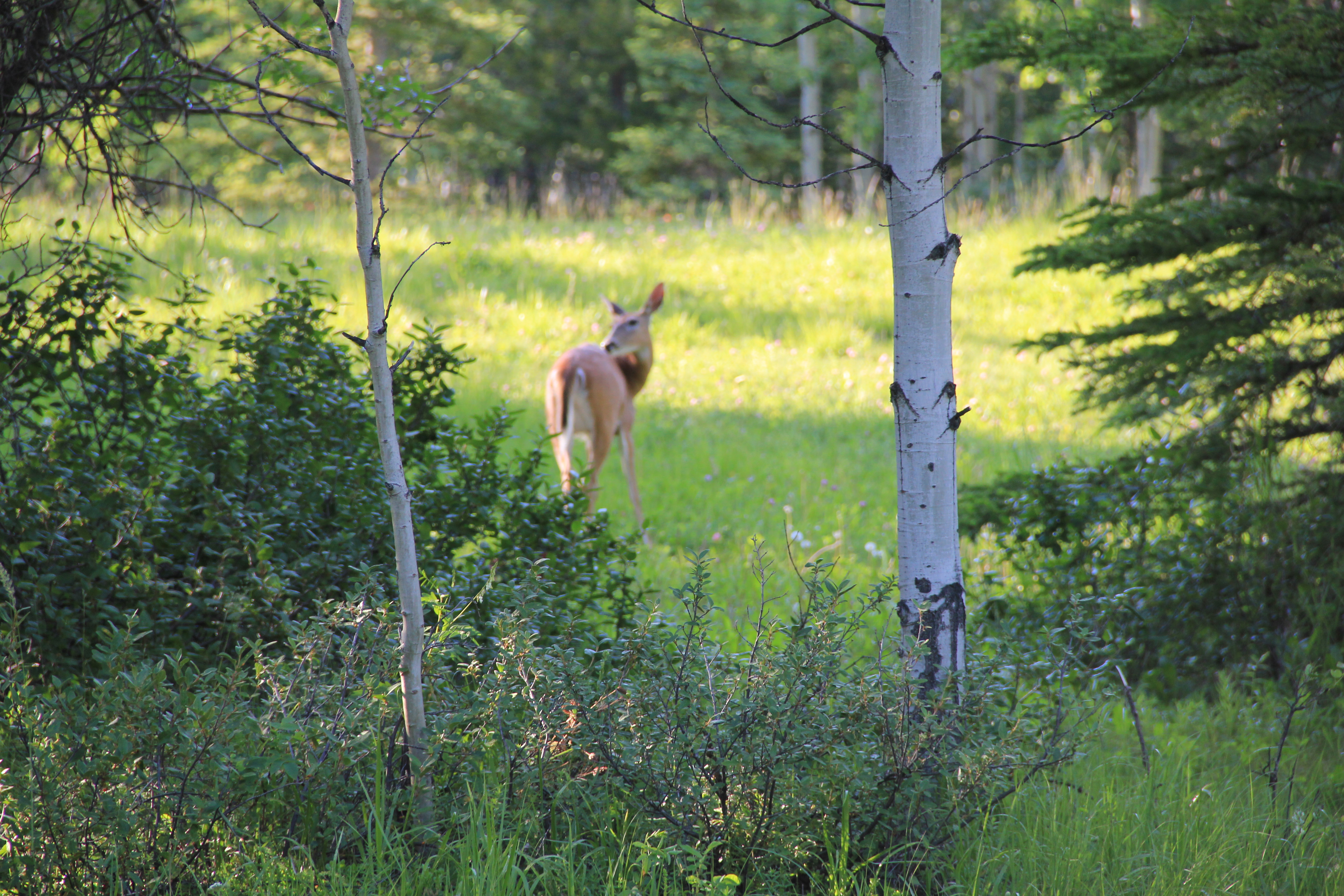
Apparently the “summer snow” comprised of residue from trees, weeds and grass aren’t the only things strong- growing. If you see a bunny or a deer on your lawn, many of us would probably comment on how cute it is or how amazing it is that this stray animal is on your property. Or maybe you’re like my parents, shooing animals away in case they poop on the lawn. But this “Bambi conundrum” (as the Epoch Times puts it) has been reportedly increasing in BC.
The innocence that is Bambi
Some of the incidents in BC regarding deers:
1. A female deer jumping a two-metre fence, up the deck and charging at a child
2. The same deer trampling on a dog
3. Vehicle collisions
4. Agricultural damage such as eating shrubs
5. Some deer carry tisks with Lyme disease
6. Chasing a young newspaper boy until he hid under a vehicle
Reports regarding deer problems have only been increasing in recent years. During the spring, female deer react strongly to protecting their offspring and during the fall male deers become aggressive.
The video below displays the protectiveness of a female deer. WARNING: may not be appropriate for viewers sensitive to violence.
[youtube l0DkEcZ_k8Q]
But what are the people doing about this? At Helena, Montana, deer are euthanized (put to death painlessly), cleaned and taken to a butcher where the meat is processed and donated to Helena Food Share to provide deer burgers for families in need.
Is that the best solution? I don’t know about you, but deer meat doesn’t sound so appetizing. (I’d rather pig out on Stampede foods.) As for any controversy, there are two argumentative sides. One that argues that deer and humans can coexist, and the other that demands reduction in deer population sizes. BC municipalities are considering to resolve the problem by introducing plants/flowers that deer won’t eat and building up fences (higher than two metres?).
But of course, a non-lethal method would be preferrable. Additionally, is the lethal method a good solution? Killing a certain amount of deer will only solve the problem temporarily because the population can maintain itself.
Rodney Wiebe of BC Wildlife Federation suggests culls (removing animals from a particular area). He believes it will be effective in turning deer into nocturnal animals, and that they will learn, behaviourally, to avoid light hours.
He states that members of the Wildlife Federation comprise of members with hunting experience who are willing to take on the culling duty. So…he basically wants to recruit men with hunting expertise and hand out a bunch of permits to kill deer. Will it be as effective as he thinks?
What do you think is the best solution? And furthermore, maybe this has changed your outlook on deer and refuse to watch Bambi from this point on. (That was strictly not intentional.)
Where to Buy: La Poutinerie, right by Nashville North.
Cost: $12
What makes it worthwhile: Fries, gravy, cheese… and then some lamb, red onion, tomatoes and feta?! Heaven’s calling! Alright, alright, before I talk anymore about this poutine, I admit defeat. The Gourmet Pretzel Sticks were impossible to find. No one even knew where to find them, not even the top dogs in the guest services department, so I can’t do much except for complain about the services now! Or call out the Stampede site with false advertising! But then I realised, hey, I’m here to have fun, and not be down about not eating what I couldn’t find! So what other food choice could possibly make up for this little disappointment? I got one very Canadian dish with a very Greek addition. The Greek Poutine! (This is the part where I go back to talking about the poutine, in case you missed that). I love poutine and I love Greek food, so the instant I saw it on the menu, I was salivating. The line was long, and there was a slight confusion because there’s an order window, and then another window to actually get your poutine! Being heavily misled at first, I was thinking to myself, this poutine better make up for it. And it did. The combination of classic poutine flavours with the fresh Greek ingredients, that was truly something else. The onion actually went really well with the fries and they cancelled each other out; the onion was no longer too pungent and the fries were no longer too greasy. The lamb wasn’t bad either! I know I probably sound a bit excited for a poutine, but I’m sorry the Stampede just combined two of my favourite things, I can’t help it. Let me wrap this up before squealing and typing at the same time. For $12, you might cringe at first at the price but take my word for this, it is definitely worth it. Try different flavours too, you will find something you like, guaranteed. Who needs the Gourmet Pretzel Sticks anyways.
^Before I start my rant, did you see the alliteration in the title? I’m so proud of myself. -Hugs myself-. Okie dokie, here we go.
I signed up for summer school because I thought the experience would be comparable to summer camp. Y’know, making new friends, smiling, laughing, and having fun learning experiences.
I was wrong. ^By the way, that picture is mistaken. It’s actually not that cool.
Imagine four hours of Social Studies every day in a room painted entirely white in the basement of a school. There are no pretty, glossy posters on the wall like they had in Elementary. In fact, there are no windows at all. So basically, it’s prison. Heh. No one is enthusiastic (I don’t blame them) and it makes for lots of awkward silences when the teacher asks the class a question. It’s also really awkward when the teacher makes a joke, and the room is so silent that you can hear a pin drop. But hey! On the bright side, there are families of pigeons living in the walls of the school, so when there’s an awkward tension, the cooing and squawking make up for that.
Well, today while we were learning about the French Revolution and Napoleon, I jotted down notes… on how to pass the time.
Draw or Write Something Drawing keeps people awake. Doodle or sketch something elaborate. Visuals are just helpful in keeping your mind occupied. You could probably come up with some deep poetry about your boredom too. I came up with half this blog while my teacher ranted.
Ways to Sleep in Class
1. Rest your head on your left hand. Make sure that your head is tilted slightly downwards so no one sees your closed eyes.
2. Use your right hand to hold your pencil. Make sure to keep the pencil on a sheet of paper just so it looks like you’re making an attempt to write or take notes.
3. Sleep.
Basically, it just looks like you’re deep in thought. Plus, the teacher completely buys it. I see at least three people doing it simultaneously everyday. You could always just flat out sleep with your head on your desk; it’s just a bit riskier.
1. Teacher puts in a video
2. Teacher turns off the lights
3. By all means, sleep
This one’s self explanatory. In my class of 30, I counted 14 people doing this. Me included.
I’ve also made a rule for myself. If more than five people in my class have dozed off, I see it as an invitation to sleep. If you really want to be on the safe side, wait for ten people to go down, then you’re allowed to follow.
Eat or Drink Stuff If you’re trying to stay awake for the lesson or a video, caffeine helps (so go buy a coke from the vending machine, or a coffee or herbal tea from Starbucks). I’m pretty sure everyone knew that one. Another way to stay awake is to eat foods that are high in protein. This may include sandwiches, cheese and dairy products. Chew gum, apparently it can keep you awake.
Fidget Around With Objects Around You I’ve seen people in my class stacking erasers and pencils, braiding hair, reading Harry Potter, make a paperclip necklaces, fold origami, and applying makeup. If it keeps you amused, then great! Time will fly by.
Observe Others I’m not condoning creepy behaviour, but look around the room and find interesting people to observe such as people trying to shoot elastic bands at the roof and hitting someone else in the head instead. Watching sleepy people’s heads roll and suddenly having them jolt up is also pretty entertaining.
Appear Awake When You’re Really Not Classic; draw eyes on your eyelids. Too bad it works best only when you’re Johnny Depp.
Okie dokie. If you’re in summer school, good luck with survival. If you’re not, well then, boo you — enjoy frolicking in the summer air with butterflies.












 Name of Food: Greek Poutine
