-
-
- 1hour
- Set Goals Setting daily goals can significantly reduce pressure and enhance productivity. Whether you jot them down or keep them in mind, having clear objectives helps you stay focused on completing tasks, from homework to extracurricular activities. Personally, I prefer using a calendar to track my goals, as crossing off completed tasks gives me a sense of relief and accomplishment. This method not only ensures I stay on schedule but also allows me to maximize my day while still leaving room for other activities.
- Stop with all the excuses It’s time to put an end to the endless excuses that hold you back, such as the notion that you require external pressure to motivate yourself. It’s crucial to recognize that relying on these justifications only serves to prolong procrastination and hinder your progress. Instead of waiting for the perfect moment or the right circumstances, take charge of your actions and simply get started. Embrace the idea that the best way to overcome inertia is to dive in and take that first step, regardless of the challenges that may arise.
-
- Reward yourself at the end Imagine treating yourself to an hour of video gaming once you accomplish this task, or perhaps enjoying a night out with friends as a reward for your hard work. By setting up these incentives, you create a motivating force that drives you toward your goals. This approach not only encourages you to complete your tasks but also adds an element of excitement, making the journey toward your objectives more enjoyable. The anticipation of a well-deserved reward can be a powerful motivator, pushing you to finish what you started so you can indulge in those delightful experiences. 4. Limit any distractions To minimize distractions, consider activating the Do Not Disturb mode on your phone, restricting access to websites that divert your attention, and organizing your workspace. A clean and orderly environment can significantly enhance your ability to focus and maintain concentration on the tasks at hand. 5. Create a Routine Establish a daily schedule that allocates dedicated time slots for your work tasks. By incorporating these time blocks into your routine, you create a structured environment that makes it simpler to maintain focus and productivity throughout the
5 Tips and tricks on Avoiding Procrastination

What is Neurodiversity?

All of us have encountered a question or problem either situational, emotional, or academic that has perplexed us. But have you ever come down to a concrete solution? Are you always able to navigate you’re way out of the problem with a step-by-step process that leads you to the right answer? Perhaps this may apply to you, but for some, it is a little bit more complicated than that. There may be a student who needs an extra source of facilitation to get to that answer or solve that problem. The student may struggle to resort to their critical thinking skills independently and may need some assistance for them to do it correctly. But when that facilitation or accommodation is absent, they fall behind.
The Learning Disabilities Association of Canadas has coined the definition.“Learning Disabilities (LD) refer to several disorders that may affect the acquisition, organization, retention, understanding, or use of verbal or nonverbal information. These disorders affect learning in individuals who otherwise demonstrate at least average or higher abilities essential for thinking and/or reasoning. As such, Learning Disabilities are distinct from global intellectual deficiency.”
Neurodiversity is the concept that states there are different ways of learning, different avenues, and perceptions in which we approach things and that there is no linear way of thinking. Being “neuro-divergent” means you’re brain just works differently than a “neuro-typical” person. Individuals with ADHD, dyscalculia, dysgraphia, dyslexia, autism, or neurotypical differences all have brains that are hard-wired to work differently. Neurodiversity is diversity in itself just like there is diversity in race, gender, ethnicity, etc. The neurodiverse movements are led by many autistic leaders and advocates and others who identify as neurodivergent. It highlights that different reflections and variations in our brains function and work differently, rather than a disease that needs to be cured. Sometimes people who have learning differences or have a neurodivergent identity are told to mask those differences, and when they shield them, they are often forced into intense environments that are foreign to their way of thinking, therefore it is harder for them to acclimate to those traditional environmentss and can often lead to anxiety, depression, or mental disorders if they do not get the proper facilitation that accommodates to their learning needs.
It is because of these traditional environments, that neurodiverse youth can identify many of their hurdles with environmental factors such as school. For example, rigid school schedules, loud working environments, fast-paced teaching styles, and limited accommodations such as isolation, audio, computers, speech-to-text, extended times, etc, can make it almost impossible for the youth to function well. Now another part of the movement is to encourage change in environments from birthday parties to workplaces to create more inclusive and welcoming environments for neurodivergent folks.
The neurodiversity movement was coined in the 1990s by Australian sociologist Judy Singer, who herself, is on the autism spectrum. It was seen as a social justice movement in response to the stigma targeted towards those with ADHD, dyslexia, and other neurodevelopment disorders. Judy Singher aimed to reject the notion of perceiving learning and neurological differences as deficits, and instead as different variations in our brains, thus empowering individual who possesses these different variations and utilizing them to enhance their strengths and potential. Now this movement reshapes how individuals view neurological development disorders, and how those who are in diverse communities can contribute to society with their uniqueness.
The Trap of Consumerism: A Boxing Day Lesson

I was walking with my mom at Canadian Tire on Boxing Day—everyone’s favorite day of the year because it’s filled with the best deals. We were looking for a shower caddy when something caught my eye: a three-pack of pink pans marked down to $59.99. I was convinced my mom would buy them for me, after all, they were on sale. She told me to only buy what I needed and said no. Thank goodness I didn’t buy them because their regular price turned out to be $69.99! What deal was I missing out on?
This experience got me thinking about the trap of consumerism. Consumerism is defined as the preoccupation of society with buying consumer goods. This has many negative effects on our wallets and the environment. Let’s delve into the increase in advertising, the impact of impulse purchasing on our finances and the environment, and finally, a solution to combat consumerism.
The Rise of Advertising
Around two months ago, it was Christmas time. This time of year is about family, love, and presents. Did you know that 150 years ago, you would not find a wrapped present in sight? However, department stores such as Macy’s advertised this idea that buying tech and trinkets for your loved ones was a way of showing you cared. Christmas shopping has become the perfect example of consumer spending. It is driven by advertising that works not to increase well-being, but to line the wallets of companies.
A 2024 study by Adfuel Inc. found that Canadians see 4,000 to 10,000 advertisements daily. That is nine times more than in the 70s. These ads grab our attention, fuel our fear of missing out, and convince us we do not have enough. Advertisements do not just catch our eye; they have embedded themselves in our minds. Take the Pepto-Bismol jingle: “When you have nausea, heartburn, indigestion, upset stomach, diarrhoea.” Even if you’ve never used Pepto-Bismol, you likely remember it. This is brand recall; it is when advertisements build trust through familiarity, ultimately forcing us to buy it.

The Impact of Impulse Purchasing
In 2021, a study conducted by PVMNTS TV revealed that 60% of millennials earning around $100,000 say they are living paycheck to paycheck. This is because of the modernized culture of impulse purchasing. Impulse purchases make us happy by releasing dopamine into our brains. This joy pressures us to put a value on these objects, ultimately creating a materialistic view.
Skip the Dishes is a prime example of impulse buying. It charges you extra for the convenience of one-click orders. This can quickly become an expensive habit, especially when you factor in delivery fees and tips. Beyond your wallet, food delivery services have a heavy environmental cost. Extra packaging, plastic, and emissions from delivery vehicles all contribute to waste and pollution, making them less environmentally friendly than traditional dining. Impulse purchasing as a whole aggravates this issue by driving excessive consumption and waste. This leads to more stress on the planet’s natural resources and overall sustainability.

Embracing Minimalism
The happiness that comes from buying stuff is short-lived, which puts us in a cycle of buying more and more. As a result, we end up with cluttered homes, empty wallets, and occupied minds. In contrast, minimalism is the intentional decision to own less and live more.
- Freedom from Debt and Clutter: Minimalism frees up physical and mental space, allowing us to focus on what enriches life.
- Embracing What We Have: By appreciating what we already own instead of seeking new possessions, we decouple self-worth from belongings, getting rid of materialism.
- Reclaiming Time and Space: Owning less means reclaiming our time, finances, spaces, and mind.
- Contributing to Communities: With more resources, time, money, and energy, we can give to what truly matters. It’s not about personal gain, but about making room for more experiences, growth, and contentment.
- Individual Values: Minimalism intentionally promotes individual values, simplifying routines and hobbies by focusing on the most important activities.
How to Get the Most Out of Minimalism

- Simplify Routines and Hobbies: Hone in on your favourite activities and the most important ones.
Consumerism might lure us with the promise of happiness through possessions, but minimalism offers a path to true contentment by helping us focus on what truly matters. Let’s break free from the cycle of buying and embrace a more intentional, fulfilling way of life. ¹ ² ³ ⁴ ⁵ ⁶ ⁷ ⁸ ⁹
Guided and Unguided meditation

If you decide you want to pursue a habit of meditation it is important to know the difference between misguided and guided meditation. They may both follow different strategies and techniques but fall under the same umbrella to ensure you follow the journey that comes with these two forms either the journey is independent, or being told to you by an instructor. They both challenge your emotions and force you to dig deep into your sentiments through blistfulness.
Guided meditation
You can think of guided meditation as being a journey. A journey of mindfulness in which you are being told what to focus on and what to look at, just like a tour guide but actually through a trained professional or video. You are told to focus on things such as your breathing and physical movements as you are being provided with images to navigate this journey. These images and visions are meant to challenge your emotions in which you perform or practice specific movements or patterns to help you overcome this challenge. For example, you may listen to a guided meditation to help you sleep or tame your mind because you are thinking about something that is making you anxious.
Unguided meditation
Unguuided meditation is usually performed independently, and you decide what you want to focus on and want to navigate. It is completely self-directed and can usually be done at any time for any purpose. For example, you may integrate this into your morning routine so you are in a subtle state of mind before you start your day. You can create any type of image and visual you want as you don’t have to create the one that is being instructed to you by a trainer. This allows us to set up our goals and freedoms to experience the benefits of this practice anytime, anywhere.
Habits To Implement To Improve Your Life

If you’re looking to improve your life in 2025, whether it be to level up your academics, become a better person, or build discipline, the key isn’t just motivation—it’s consistency.
So in this blog, I wanted to share some habits to implement that will set you up for success.
1. Start Journalling Daily
Whether it’s writing a simple diary entry, a gratitude list, or even a brain dump, journalling has been proven to declutter your brain, reduce stress levels, and increase mental clarity. Regardless of whether you journal for 10 minutes or 30 minutes, simply jotting down your thoughts can help you feel more in control of your emotions and better about yourself.
If you’re unsure what to journal about, conducting a simple Google search or searching on Pinterest for journal prompt inspiration can provide you with some ideas. For me personally, I enjoy journalling about my day, things I’m grateful for, and reflecting on the challenges I’ve faced.
2. Read for 30 Minutes a Day
Most successful people are avid readers, and for good reason! Reading books can expose you to new ideas, perspectives, and knowledge that can transform your thinking.
This applies to both fiction and non-fiction, as fiction enhances creativity, whereas non-fiction can teach you valuable skills and lessons. So, to start reading more, set aside just 30 minutes of your day to read about that interesting story you saw online, or pick up a non-fiction book at the library to learn something new.
If squeezing in 30 minutes of reading time is still challenging, then try listening to Audiobooks instead! Listening to Audiobooks is an easier way to start reading, as you can simply switch them on the bus ride to school or when you’re doing chores around the house.
3. Stretch In the Mornings
Starting your day with a simple stretching routine can do wonders for your body and mind. Morning stretches help improve flexibility, increase blood flow, and release tension built up overnight. Plus, they can give you an instant energy boost, making it easier to start your day feeling refreshed!
Additionally, stretching is an easy way to squeeze some exercise into your day if you don’t like doing an intense workout.
To start, simply search “Morning Stretches” or Yoga on YouTube, and follow the stretches in the video!
4. Meditate for a Few Minutes a Day
Meditation is one of the most powerful habits you can implement to improve your mental clarity, reduce stress, and increase focus. In a world filled with distractions, taking just a few minutes each day to sit in silence and practice mindfulness can help you reset and regain control over your thoughts.
Whether you use meditation to ease anxiety or increase self-awareness, making it a daily habit can help you stay grounded, focused, and more in control of your emotions.
You don’t need to be an expert or meditate for hours to start—just 5 to 10 minutes of deep breathing or guided meditation can make a difference. To start, you can search for guided meditations on YouTube or download meditation apps such as Headspace.
5. Drink More Water
Staying hydrated is a simple yet incredibly effective way to improve your overall health. Water plays a crucial role in maintaining energy levels, aiding digestion, and supporting skin health. Often, fatigue and brain fog can be linked to dehydration, so making a habit of drinking water throughout the day can boost your focus and productivity.
To start drinking more water, try implementing these small habits throughout the day:
- As soon as you wake up, drink a glass of water. You can even add in some lemon and honey, or a tea bag to spice up your drink!
- During the day, keep a water bottle by your desk or in your bag. Whenever you finish a task, take a sip of water. This is a simple way to remind yourself to drink water.
- In the evening, make it a habit to drink a glass of water before bed. This can help your body stay hydrated overnight and support your metabolism.
By the end of the day, you’ll find that you’ve worked through multiple glasses of water without even knowing it!
By consistently implementing these simple actions, you can set yourself up for a year filled with growth, discipline, and success.
Remember, the most important part of habit-building isn’t perfect, but consistency. Don’t be too hard on yourself if you don’t complete all your habits one day, as the most important thing is that you tried in the first place!
So, let’s implement these habits together, taking it one day at a time!
Reconciliation or Resistance: The Urgent Need to Rename John A. MacDonald Junior High

When a country is impacted by colonialism, remnants and reminders of the colonial power will remain until full priority and dedication are given to eradicating them. Each year, the Canadian government claims fault for a past event in history that caused further deterioration to the identity and well-being of the Indigenous community. Locally, our school board is facing the same issue. Late last year, John A. MacDonald Junior High’s school board refused to change the name of their school and allow growth within the school’s identity, which happens to be based on one of Canada’s most infamous prime ministers. In silver letters outside the school reads the name of a man who implemented a system that has disrupted generations of families, causing the death of 5,000+ children, and lasting intergenerational trauma within the Indigenous community. As well as being a contributor to the construction of the Canadian Pacific Railroad, that killed 600-800 Chinese and Japanese workers, and allowed them to work for harsh hours and inhumane conditions. To not address this with a name change, would be absolutely ridiculous and unacceptable. If our society and government truly recognizes their mistakes in the past with the Indigenous community, they would have no hesitation in changing the name but the lack of change or even debate, shows our society is truly ignorant to the harm caused. As we learn from our mistakes, action must be taken, if not the thought alone can not institute any change. By renaming school you not only change the identity, but we publicly acknowledge the harm this man has caused in a position of power.
On the flip side, many admire what he did for Canada as a whole, disregarding his interaction and impact on instituting Residential Schools. They recognize his contributions as Canada’s first prime minister, and being the one of chief architects of confederation. As well as being responsible for developing the Canadian Pacific Railroad, to an extent was symbolic of national unity and even encouraged trade. Hugely, the responsibility for Canada’s British North America Act, and later establishment of Canada as a nation in 1867.
While recognizing his strengths and contribution to Canadian culture and government, we must also acknowledge his role in implementing residential schools in the spirit of reconciliation.
Advocacy Against Bullying: Real Stories and the Fight for Change

Bullying is a widespread issue that affects millions of individuals—youth, teenagers, and even adults. It can take various forms—physical, verbal, emotional, and, with the rise of the internet, cyberbullying—each equally powerful in creating lasting harm to victims. Advocacy against bullying is crucial in raising awareness, shaping policies, and encouraging respect and empathy.

Perhaps one of the most well-known cases of cyberbullying is that of Amanda Todd, a Canadian teenager who committed suicide in 2012 after years of online and in-person harassment. Todd, a 15-year-old high school student, after continuous harassment and after being sexually extorted, was undoubtedly a heartbreaking case that blatantly revealed the danger of cyberbullying. Amanda posted a video on YouTube, telling her experiences with blackmail, cyberbullying, and isolation. Her story sparked international concerns and inspired discussions about the dangers of online exploitation. Through Amanda’s case, it is apparent that we all should be more aware of the urgent need for stronger protections against cyberbullying, especially for youth. As the police got involved with the case, a Dutch man was arrested and found responsible for extortion and child pornography charges. In memory of Amanda, the government of British Columbia and Nova Scotia passed legislation against cyberbullying. In February 2024, a federal law that “would amend the Criminal Code and the Canadian Human Rights Act” was also tabled.

Unfortunately, Todd was not the only victim of cyber abuse. Tyler Clementi, an 18-year-old college freshman at Rutgers University, was cyberbullied by his very own roommate, who secretly recorded and shared footage of Clementi without his permission in violation of his privacy. After being harassed by his homophobic roommates for his sexual orientation, Clementi jumped off the George Washington Bridge on September 22, 2010. Later, Clementi’s roommates, Dharun Ravi and Molly Wei, would eventually receive respective charges that held them responsible for their actions. These charges included invasion of privacy and hate crime. In memory of Clementi, his parents created an organization that advocates for acceptance of the LGBTQ+ communities under his name.

The list goes on: there are countless other stories of people who have suffered greatly due to bullying. For instance, Megan Meier, a 13-year-old girl from Missouri, took her own life in 2006 after being harassed online. Dolly Everett, an Australian teenager, ended her life in 2018 after being cyberbullied. Keaton Jones, a young boy from Tennessee, had his mother posting a video of him crying and describing his painful experiences with school bullying. These stories all shed light on the emotional and physical consequences of bullying.

The point of detailing these heartbreaking stories is to highlight the importance of advocacy against bullying, advocacy against the happening of these various tragedies. Advocacy helps educate people about the different forms of bullying and their consequences—it is not unreasonable to wonder, that had there been more awareness about the gravity of bullying as a social issue, would these individual tragedies even happen in the first place?

Luckily, anti-bullying laws and school policies have become more and more widespread. Many countries have implemented laws addressing cyberbullying, harassment, and discrimination, ensuring that the victims are supported legally. As governments continue to work on strengthening regulations and enforcement of these anti-bullying legislation, we expect and hope to see fewer examples of Amanda Todd and Tyler Clementi.

The individual cases of Todd, Clementi, Meier, Everett, and Jones remind us of the resounding fact that bullying has a profound impact on not only individuals but also their families and communities. It is therefore crucial that we make use of every effort, big or small, to work toward making the world a safer place.
Sources:
https://www.thecanadianencyclopedia.ca/en/article/amanda-todd-case
https://en.wikipedia.org/wiki/Suicide_of_Megan_Meier
Celebrating Holi in 2025: The Inside Scoop
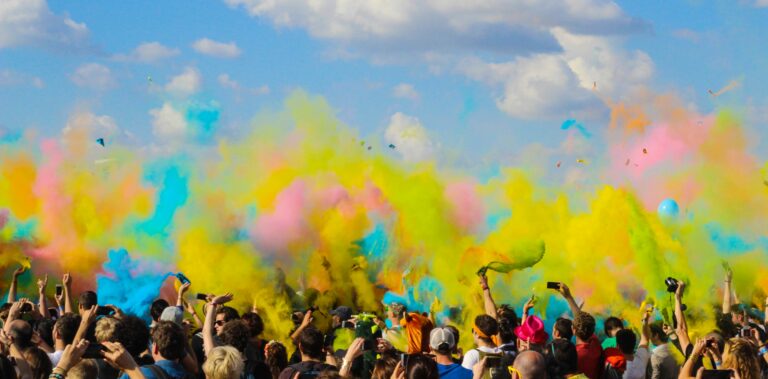
Holi is one of the most vibrant festivals in the world. With roots in the Indian subcontinent, it has been coined as the “Festival of Colours.” During this holiday, families and friends come together to celebrate themes like love, life, and the arrival of spring.
It will be celebrated this year on March 14th, which is only a few weeks away. To prepare for this festival, this blog post will educate you about the history, meaning, and traditions that come with the holiday, and how you can participate!
What is Holi?
Holi is a traditionally Hindu festival that marks the arrival of spring, and also the triumph of good over evil. This theme is common in Hindu mythology, which the festival was created from. It is celebrated with an abundance of colour, music, and delicious food.
During the festival, people throw coloured powders at each other, and even participate in a water gun fight with coloured water! It’s also a common practice to wear white during this celebration, so all the colours that you are hit with show prominently in beautiful patterns.
These coloured powders are usually made up of cornstarch with very small amounts of food dye. According to the Holi Colour Powder website, “Traditionally people used natural, plant based colours from turmeric, Indian lilac, dhak (also called flame-of-the-forest), and kumkum (a combination of turmeric and slaked lime or Calcium hydroxide) but now commercial, water-based, non-toxic, food-grade pigments are used.”
Despite being traditionally celebrated by those who practice Hinduism, today the festival is open and welcoming to people from all backgrounds. I believe that you need to participate in this celebration at least once in your life, since the experience is one you’ll never forget. This is a festival that brings everyone together, and focuses on unity and joy!
The Meaning Behind the Colours
If you look up pictures of the festival online, many images of people covered in bright pigments are seen. Despite celebrating the holiday since I was a kid, I learned through my research online that each colour actually has its own meaning and symbolizes a specific theme. Here are a few listed below:

Yellow: symbolizes happiness and positivity
Red: symbolizes love and passion
Green: represents new beginnings and growth, highlighting key themes of the spring season
Blue: represents calmness and peace
Pink: illustrates affection and compassion
Throwing these colours at each other is fun, but it also symbolizes joy, positivity, and the act of leaving behind all negativity.
Holi Traditions

Despite being popularized for the colour-throwing and water fights, Holi comes with many other traditions.
A ritual called Holika Dahan is carried out the night before, in which people gather around a large bonfire and perform prayers around it for health, prosperity, and happiness. It’s usually a big family gathering, allowing you to bond with other members in your community. Like any celebration, there is almost always food involved. 🙂
What I look forward to the most during this festival (other than the colour fight) are the delicious sweets that are made during this day. A sweet called gujiya is famous for being made on Holi. It is a sweet dumpling stuffed with khoya, dried fruits, and coconut, and is fried and topped with sugar syrup. A traditional drink is also consumed, called thandai. It is a refreshing beverage made with milk, nuts, and spices.
Most people choose to wear traditional Holi attire for the festival, usually all white clothes. It is recommended to choose something old, since the clothing will end up being drenched in colour by the end of the day. After the celebration, the stained clothes are a fun keepsake. Think tie-dye, but Hindu edition.
During the festival, it is common to see people visiting each other’s homes to exchange sweets. This is to wish each other a happy Holi! During the colour fight, lots of dancing will take place, with joyous music playing in the background.
Celebrating Safely: Holi Safety 101
If you are invited to participate in a Holi celebration, here are some tips to help you stay safe!
Protect your skin and eyes: Ensure that organic and natural colour powders are being used, they are gentler on your skin and safer for the environment. Most Holi celebrations will already take this into account, but if you’re someone with a medical condition, it doesn’t hurt to ask the organizers first.
Wear old, comfortable clothes and shoes: Ensure that you’re not too attached to the clothes you wear. Don’t worry about looking good, everyone else will be wearing old, white clothes as well. Make sure you wear comfortable shoes, since it is a festival that requires you to be actively moving!
Hydrate: This festival can be physically draining, which means it’s a good idea to bring a water bottle or find a source of water before you begin participating. It’s also important to take breaks!
Respect boundaries: People who are participating are most likely already aware that they’re going to be drenched in colour, but it doesn’t hurt to ask them first. Try not to throw anything directly into someone’s face!
Conclusion: See You On March 14th!
Holi is a welcoming festival celebrated all over the world in places like New York, Sydney, London, and India. Whether its a celebration in the streets or a small gathering with friends, this holiday (see what I did there?) is incredibly fun to celebrate. Many traditions include throwing coloured powders, eating delicious sweets, and gathering around a bonfire. Holi is an experience that’ll leave a positive impact on those who participate.
It’s also the perfect excuse to go out with your friends, and you’ll get some great pictures out of it. Your Instagram feed will thank you after this one.
Self – appreciation

How much time do we take to heal during the day? Even if it’s for a few moments? For those, who have lives that are in perpetuated cycles of responsibilities and obligations or feel they need to do more to feel more accomplished, have you ever considered reflecting on your behaviours, attitudes, and victories throughout the day? Have you ever considered looking at your accomplishments from a different point of view? What you need is a boost of self-appreciation.
For those who constantly identify themselves with what they do not have and have not achieved, those limiting beliefs, slowly become catalysts for these cycles. We are blinded by others’ advances and their higher status when it comes to things we are good at, but what we don’t do, is align ourselves with the merits that meaningfully transform us into better versions of ourselves. It all comes from reflecting and doing an analysis on how you have changed before you decided to carry on these obligations that had a genuine impact, and who you are now after the journey, omitting any beliefs that you have not advanced because you have not taken grasp of something that someone else has.
The foundation of your journey is the most important element, it is ok to want nicer things, more skills, and it is fine if you want to be better. But without self-love, trust, and appreciation, and your only source of motivation is looking at what others have, there is no room for the weight of meaningful outcomes to create a better you, because when you dream of being someone else you stop valuing yourself. If you find yourself trapped in these cycles, you need to remember what is important, and that the value of your accomplishments is not dependent on the quality or advancements of others. Once we get a better view of how much we have grown, (which is the hardest part) the skills we have inherited from our obligations, and the maturity we have gained, we can come to appreciate ourselves more, solidifying that foundation further.
Easter Island: The True Meaning Behind The Moai


First Of All, What Is Easter Island?
Easter Island, or known as Rapa Nui, is a territory of Chile and is located in the southeastern area of the Pacific Ocean. This island is famed for its hundreds of rocky statues, called Moai. The island was originally inhabited by the Rapa Nui people, indigenous Polynesian peoples who build these structures from around 1200-1500. The distinct features, differing from other structures built around this time, fascinated travellers and archaeologists. Thus, many questions have arised about the representation of these statues and why they were built, which I will be illustrating the answers to.

Why Were These Statues Built?
The Moai are depicted as enlarged heads and towering statues made of volcanic tuff. Moai can range from having only a head, or posessing a full body. Due to oral traditions and Rapa Nui culture, the meaning of these statues is that they were meant to represent respected ancient ancestors. They would build multiple of these to face inland and to protect the Rapa Nui living inside the island. In addition to this, they would also place some facing the ocean, in order to protect travellers. The Rapa Nui did this because they believed that these statues possesed a power called mana, which is a spiritual energy that provides protection to their people.
Debunking Common Beliefs About The Moai
- The Moai Only Consist Of Heads
It may be easy to assume that the Moai mainly consist of heads due to their common appearance in Easter Island. However, due to excavation, some of them have been revealed to actually have full torsos buried underground, with hands and intricate details engraved into them.
2. The Moai Were Built By An Ancient Civilization
Some people believe that the Moai were built by an ancient civilization whom mysteriously dissapeared. Although, as you may already know, the Moai were built by the Rapa Nui people, who still live and thrive to this day.
3. The Moai Statues Are “Eye-less”
From first glance, it may seem that this myth seems to be true. However, the Moai originally had volcanic rocks inserted into their eye sockets. There are some restored statues that have these eyes in order to depict how they may have looked before.
Unseen & Unheard : The Teen Subcultures That Define the Next Generation

In the age of social media, it can seem like the world of teen culture is limited to what we see on Instagram, Tiktok, and Snapchat. From viral trends to the mainstream popularity of certain styles, it’s easy to think that all teens are following a set script. However, there’s another side to teen life, one that thrives in the shadows of the internet and tight-knit, offline communities. These are the hidden teen subcultures, the lesser-known movements and alternative scenes that often don’t get the media attention they deserve, but are just as impactful in shaping the identities and experiences of young people today.
What are Hidden Teen Subcultures?
Hidden teen subcultures are groups of young people who come together around shared interests that fall outside the mainstream. These subcultures can manifest in a variety of ways: from underground music scenes and alternative fashion trends to grassroots activism and DIY art movements. What makes these subcultures “hidden” is that they often operate under the radar, away from the watchful eyes of major media outlets, advertisers, and influencers. They are often built around niche passions, philosophies, or aesthetics that don’t align with the mainstream, but they provide a sense of community and belonging for those involved.
While the world might be obsessed with the newest TikTok dance or viral meme, these subcultures are quietly shaping the youth experience in more meaningful ways. Lets take a closer look at some of these fascinating movements.
- Underground Music Scenes : A world beyond mainstream pop
Music has always been a powerful force in teen culture, but not every teen is following the same chart-topping hits. Some teens are venturing into underground music scenes that thrive outside of the main stream. Genres like vaporware, hyperpop, and lo-fi chillhop are gaining traction among younger audiences, offering a sound that’s experimental, nostalgic, and often far removed from top 40 playlists.
In these subcultures, teens are not just fans; they’re creators. Platforms like SoundCloud and Bandcamp have made it possible for young people to share their own music and art with the world, creating DIY music movements that reflect their personal experience, frustrations and desires. Underground music scenes give teens the opportunity to express themselves in ways that traditional pop music often cannot.
2. Alternative Fashion : Defying Trends & Building Identity
When it comes to fashion, teens are no longer just following the latest trends, they’re creating their own. Alternative fashion scenes are on the rise as teens move away from the thrill of fast fashion towards more individualized, meaningful styles.
Dark academia for example is a fashion trend that celebrates intellectualism, vintage aesthetics, and a moody academic vibe. Cottagecore, on the other hand, embraces a rural, nature-inspired aesthetic with soft, vintage dresses and an idealized vision of pastoral life. Teens in these subcultures use fashion as a way to express their personal identities and counter mainstream beauty standards. These alternative styles often create communities where teens can find their solidarity with others who share similar interests, away from the pressure to conform.
3. Digital Activism : Teens fighting for change in the Virtual World
While many young people are exploring their creative interests online, others are using the internet as a tool for activism. Digital activism has become a powerful force among teens, with movements like #BlackLivesMatter, #FridaysForFuture, and #MeToo gaining momentum through social media. However, there are also lesser-known grassroots movements led by teens who are passionate about issues like environmentalism, LGBTQIA+ rights, and social justice.
These movements often exist in smaller, more localized online communities, where teens organize protests, petition drives, and awareness campaigns. The anonymity and reach of the internet allow them to mobilize quickly and spread their messages without the barriers that traditional activism might face. Teens today are redefining what it means to fight for change, using their platforms to amplify voices and issues that are often overlooked by mainstream media.
4. DIY & Maker Culture : Building a New Generation of Creators
In the world of DIY and maker culture, teens are no longer passive consumers; they’re creators, innovators, and entrepreneurs. Whether it’s designing their own clothing, starting small online businesses, or creating heart that pushes boundaries, DIY culture empowers young people to take control of their creative expression.
The rise of platforms like Etsy, Redbubble, and YouTube has made it easier than ever for teens to share their handmade goods or creative tutorials with a global audience. This subculutre is all about self-reliance, hands-on learning experiences, and breaking free from mass-produced culture.
Why do Hidden Teen Subcultures Matter?
Hidden teen subcultures might not always be in the spotlight, but they play a crucial role in shaping youth identity, and culture. They offer safe space for self-expression, creativity, and resistance against societal norms that may feel restrictive. In these subcultures, teens find belonging, inspiration, and the freedom to explore their passions without fear of judgement.
Understanding these subcultures also helps break down stereotypes about young people. While mainstream media often portrays teens as obsessed with social media trends and consumer culture, these underground movements reveal a different reality, one where young people are deeply engaged in artistic expression, activism, and meaningful subcultures that push boundaries and challenge the status quo.
Teen culture is far more complex and diverse than what’s portrayed in the media. Beneath the surface of viral trends and mainstream influences, hidden subcultures are thriving, offering young people a sense of community, purpose, and identity. Whether through underground music scenes, alternative fashion, digital activism, DIY culture, or urban exploration, teens are constantly reshaping the cultural landscape in ways that are innovative, rebellious, and deeply personal.
These secret worlds may not always be visible to outsiders, but they are undeniably shaping the next generation. By recognizing and appreciating these hidden teen subcultures, we gain a deeper understanding of the dynamic and ever-evolving nature of youth culture today.
Crisis Beneath Our Nose: Violence in Manipur, India

For the 11th time in Indian History, President’s Rule has been enacted in Manipur in hopes of quelling the ethnic violence that has devastated this Indian state for the past 2 years. The polarity between the people of Manipur has been brewing through the region for decades, but in May 2023, it erupted into a two-and-half-year clash that resulted in the deaths of nearly 260 people and over 60,000 people displaced. The people of Manipur have dealt with violence against women and children, and insurgent groups targetting young boys over these last 2 years.

The Conflict
Introduction
North Eastern India, while comparatively small to the rest of India, comprises over 200 different ethnic groups. Within the 8 North Eastern States, these groups are recognized as tribes under the Indian Constitution. Among the eight states of North East India is Manipur, which can mostly be split into three groups. The Meitei, who make up 60% of the population, and the Kuki-Zo and Nagas, who, along with other tribes, make up the rest of the population but live on 90% of the land.
Over the years, tension has begun to grow between the communities within this Indian State for a multitude of issues, ultimately causing an implosion of violence on May 3rd, 2023. The violence began during a peaceful march from the All Tribal Students’ Union Manipur protesting against Meitei people gaining Scheduled Tribal Status.
The Opium Battle
Before the final factor that led to this violent conflict, for decades prior, resentment has grown between the Meitei and the Kuki. One of these reasons is the opium crisis between the India and Myanmar border.
Myanmar is one of the biggest opium producers in the world, and Manipur has become a site for illegal drug trafficking. Illicit poppy growing in Manipur is most commonly found in the hill districts, and from 2019-2020, 1420 acres of poppy crops were eradicated by Indian Law Enforcement.
This war on drugs has greatly destroyed the economy of Manipur by limiting shipments of resources and has targeted the health and safety of youth in Manipur.
Tribal Status
As stated previously, the main conflict in all of this is based on Tribal Status. More specifically, who should be entitled to it?
Certain Meitei felt entitled to Tribal Status, which would provide them protection under the Indian Constitution and certain benefits, such as reserved government seats. The Kuki people, who are majority Christian, did not want the Meitei to gain this status as they are largely Hindu and already hold most power in government positions.
These are 2 of the many factors contributing to this conflict.
President’s Rule Effect
The Manipuri and Indian Governments have been largely criticized during this conflict. Previously, they have utilized internet shutdowns, curfews and deploying thousands of troops throughout the State, but no change has been made. Now, the Indian government has enacted President’s Rule after Chief Minister N. Biren Singh resigned, which gives the President full control over the situation and dissolved the state government.
What Awaits?
Many believe that the enactment of the President’s rule is a step towards peace for this North Eastern Community. After nearly 2 years of death and destruction plaguing this once beautiful state, citizens hope that this ushers in a new era of unbiased politics regarding who will be elected to be Chief Minister after the President’s rule.
While the future has been uncertain for Manipur for a while, it seems that there is a glimmer of hope down in the tunnel and a chance for stability in this state teetering on the brink of destruction.
This blog only grazes the surface of this conflict, and I urge you, if you are interested in this topic, to do your own research, as this multifaceted conflict cannot be summarized in one blog.
Resources
What Do Dreams About Being Chased Really Mean?

Have you ever had that dream where you’re running away from something or someone, and no matter how fast you go, you can’t escape? Being chased is one of the most common and terrifying dreams, often leaving people awake with hearts racing. But what exactly do dreams about being chased signify? Are they a reflection of real-life fears, or might they have a deeper psychological or cultural significance? Let’s dive in and explore what this unsettling dream scenario might have to say.
The Psychological Standpoint
One of the most widely accepted interpretations of being chased in dreams is that it reflects a deep-seated fear. Psychologists believe these dreams can symbolize a desire to escape from something you’ve been avoiding.
When you dream that you’re being chased, your subconscious might be telling you that you’re not facing something that needs your attention. Perhaps you’re running from a difficult conversation, an upcoming deadline, or unresolved trauma. The ‘chaser’ in your dream can represent a person, situation, or issue you don’t want to confront.
Fight or Flight: A Natural Response
From a biological standpoint, being chased in a dream taps into the ‘fight or flight’ response. When we experience fear, our body activates this mechanism to prepare us for danger. In a dream, this can manifest as running away from something, whether it’s a threat or something more abstract like failure or rejection.
However, the dream might also indicate that you’re not confronting issues head-on, further creating a sense of anxiousness. The more you avoid the chase, the more intense the dream becomes, mimicking a cycle of fear and avoidance.
What’s Chasing You? The Significance of the Chaser
In these dreams, the identity of the ‘chaser’ can be essential to understanding the message it may be conveying. Here are some common ‘chaser’s and their possible meanings:
- People (Past partners, friends, authority figures): If someone you know is chasing you, this can suggest unresolved feelings or unfinished business with that individual. An ex-partner might symbolize unresolved emotional attachment while a boss could represent pressure or anxiety about expectations.
- Animals (Predators, creatures): Wild animals or even more fantastical creatures could symbolize primal fears, unprocessed emotions, or a lack of control in your life. The animal chasing you might be a representation of an instinct or raw emotion you’re trying to avoid
- Monsters or Unknown Entities: A dream of being chased by a faceless monster or an entity you can’t recognize might point to an unconscious fear, something unknown that you’re avoiding. This could be a metaphor for uncertainty in your life, such as major life changes or fear of the unknown.
In general, these dreams often reflect the anxieties, fears, and unresolved issues that lurk beneath the surface of our daily lives. These dreams invite us to confront what we might be running from. The next time you find yourself running, take a moment and reflect on what I am really running from? Understanding the answer might just help you outrun the fear, both in your dreams and in reality.
Sources:
Reading Comprehension 101: How to Ace Reading Comprehension

It is one of the main components you will inevitably encounter during high school English, and the only component that doesn’t involve writing. Reading comprehension tests seem to be one of those assessments that leave you either glowing with the knowledge of your adept literature analysis skills, or despondently mourning your GPA.
Despite the common belief that reading comprehension is an inherited trait however, there are ways you can improve your score. As someone who now scores consistently high, I vehemently encourage you to continue reading this article if you are struggling in English. Try something new and watch as your scores skyrocket.
1. Improve your vocabulary.
If my use of longer and more complex vocabulary in the introduction was insufficient for you to infer that I am actively trying to employ foreign words more often as well, return to the beginning and read the passage once more.
One of the most significant (and simple) ways to increase your reading comprehension score is to expand your vocabulary. But how do we do that?
a) Merriam Webster’s Word of the Day
This one is pretty self-explanatory. Learn a new word every day and assiduously integrate it into your speech, your texts, and your emails. Aim to use the word at least 7 times to have a higher chance of remembering it.
Here’s the link: https://www.merriam-webster.com/word-of-the-day
You can even sign up for their newsletter to get the word of the day delivered to your email inbox every day. It’s a perfect bite-sized amount of learning and does wonders if you manage to stay consistent.
b) Flashcards
I like to use spaced repetition software, like Anki, but you do whatever works best for you. The goal of using flashcards is to get a sense of how well you can actively recall the words. Make sure you understand them and you aren’t just memorizing meaningless baloney.
c) Read more classical literature.
Reading classical literature can be thrilling when you do so intentionally. It is less enjoyable when you read it in class and are forced to perform the desolate task of deconstructing each and every sentence, but for your own enjoyment it is a highly efficient way to naturally expand your vocabulary comprehension. Err on the side of caution when choosing books though; it is very important that you balance having a plot that you enjoy and a decent level of vocab complexity. Too complex and you won’t finish, but a fast-paced teen romance is not going to advance your vocabulary at all.
Some suggestions that helped me develop my vocabulary a lot:
- Anne of Green Gables, by Lucy M. Montgomery
- The Lord of the Rings, by J.R.R. Tolkein
- Tom Sawyer, by Mark Twain
- The Adventures of Huckleberry Finn, by Mark Twain
Classical literature does a wonderful job of effectively keeping you engaged while bamboozling you just enough with its complex language. Reading these books will build stronger vocab inferencing skills. This helps immensely when you don’t know what the word on the test actually means, because chances are you’ll be able to make better guesses.
2. Mark up your test.
Also an extremely helpful way to guide yourself through dense reading passages during a novel study.
a) Summarize. Summarize. Summarize.
I’ve been doing a miserable job of staying concise since I’m simultaneously attempting to achieve another goal that I’ll explain later, but as you read through a passage you should attempt to summarize it in chunks. This will help you when you need to go back and answer questions about the piece.
Summarize in your own words. Summarize chunks like passages of parallelism, paragraphs, and stanzas. It will make a world of a difference when you analyze later, because you won’t need context for a specific line anymore.
b) POE
The famous “Process Of Elimination”… but more literal. Here are some tips to make your POE a little bit more effective:
- When you read an obviously incorrect answer, strike it all the way through instead of just crossing out the letter.
- Identify your wrong answers:
- “Half right” (HR) – only one portion of the response is accurate to the question
- “Too specific” (TS) – mentions an irrelevant idea or topic that is not mentioned in the text or in the question
- “Too general” (TG) – an answer that makes a general statement that neglects to fully respond the the question
- “Similar wording” (SW) – an answer that is incorrect but contains a lot of the same words as the question
For example:
Which of the following states the main idea of the article about high school English that you are reading?
a) To express the author’s opinion about the high school English
b) To teach monkeys how to tie their shoelaces
c) To inform the audience about reading comprehension test tips
d) To offer reading comprehension advice to students in Grade 10
The correct answer is clear, if we mark up the page a bit:
Which of the following states the main idea of the article about high school English that you are reading?
a) To express the author’s opinion about the high school English SW, TG
b) To teach monkeys how to tie their shoelaces
c) To inform the audience about reading comprehension test tips
d) To offer reading comprehension advice HR to students in Grade 10 TS
(C) is the correct answer.
3. Write effectively
Now that you’ve learned all this vocabulary in Step 1, it is time to put it into actual use. This is actually one of the reasons I blog. While most of the time, my language is quite plain, blogging provides a plethora of opportunity for me to not only encounter and consume a wider range of words, but also to manipulate them in my own writing.
If you’re not a blogger and you don’t want to become one, here are some other ways you can incorporate writing into your life:
- journaling
- texting… but in a sophisticated way
- essay writing
- debate construction
- writing emails… but in a sophisticated way
- sticky notes and reminders… but in a sophisticated way
It is possible to integrate reading comprehension skills into every aspect in life where understanding something is involved. The more you do it, the better you will become. However, it’s important to note that effective use of vocabulary will actually shorten your writing (most of the time) and make it clearer (most of the time). While it’s exhilarating to experiment, if you find yourself rambling for sake of utilizing every new word you can think of, your writing will not help you improve.
All said and done, it is obviously unnecessary to employ your newly learned vocabulary into writing in order to do well in reading comprehension tests – all you really need to do is have an outstandingly confident sense of inferencing and a decent knowledge of literary devices. But writing does help engrave words and establish deeper memories of them.
TL;DR
No! Go back and read the whole thing, don’t just scroll to the end. An important part of reading comprehension tests is to have a decent attention span. You’ll need it when you’re analyzing Shakespeare, so why not develop it by reading my article from start to finish?
Crossover Between Social Media and Learning

In modern society, social media and learning comes hand in hand. There are many benefits to their connection as there are drawbacks. With this blog, let us explore this fascinating yet harmful crossover.
The Fascinating Part Of The Crossover
Clearly, technological advancements are useful from our day to day lives. As part of a globalized society, social media certainly holds an incredible grasp on us. Because of this, we should be thankful as it allows us to communicate across the world, obtain information quickly, and provide a new dimension to express ourselves in.
Knowing that, social media undoubtedly gives us the opportunity to learn anything. Also, they are a means of a communication with the convenience of typing on a keyboard.
Social Media, such as Instagram, YouTube, and Discord can promote learning. From videos, reels, to voice chat, we are able to learn concepts, and, if provided, visually see its applications. There are many opportunities throughout the digital world that allows us to learn a vast amount of things, a blessing that earlier generations did not possess. On top of that, we are able to communicate with others when studying and when doing a project.

The Harmful Part Of The Crossover
However, social media and learning may not be compatible, especially when it comes to addiction. These are unfortunately many opportunities where social media prevents us from learning new things.
Ranging from negative impacts on mental health to pure addiction on social media, it could cause a setback on our learning. In fact, these setbacks have become very common to the point where actions have been made to take away social media from classrooms.

The Crossover Itself
Depending on how it is used, social media can play well when it comes to learning new things. There certainly are many instances where media encourages us to think about something new; an example of which would be this blog post. However, social media can also derail us from that ability. Sometimes, social media and our ability to learn does not cooperate at all.

Final Thoughts
Personally, I came across this topic because it’s so applicable to our lives that it has become integrated into it. Social media has more or less became part of many people around the world. However, our ability to learn has always been part of us; it has been part of us ever since we learned how to make our first breath.
Although this is a short blog, it should hopefully encourage you to think about how social media relates to learning. Consider those moments like fun facts, instructional videos, or educational Instagram reels, and remember that learning through social media is possible. These moments can expand to the usage of chats and applying what you learned with your peers. However, also consider things like scrolling, comparisons, and even false information; distractions that take us away from the beauty of this crossover.
While this blog is a reminder to be more mindful with social media, it is also a chance for us to recognize that there are many others crossovers where you can learn something new. With our modern world, there are many more opportunities of learning other than through the source of social media. While there are benefits and drawbacks to both, our ability to learn is always enhanced after balancing our exposure to many different sources.