Home Blog Page 31

Interview With Calgary’s Music Scene

On March 27, I had the pleasure of interviewing Gabrielle Cadiang. She is currently pursuing a combined degree at the University of Calgary, studying both political science and communications media studies. Being an avid music lover and contributor to Calgary’s local music scene, she has also been named as one of Calgary’s top 20 under 20.

During this interview, I got to learn so much more about the local music festivals here in Calgary, and gained a much deeper appreciation for the diversity here too.

I really enjoyed learning from her, and I hope you will too! Here’s our Q&A:

  1. Let’s say we’re making a movie about your life. What’s the title, what genre would it be, and what’s happening right now? 

She said that she thought her life as a movie could be classified as a “Romantic Comedy” , but more heavy on the comedy part. She talked about how she had so much going on in her life at the moment, such as a job interview she had that day and just being a university student in general. Although she couldn’t decide on what the title would be, she thought that the first scene opening the movie would be her drinking a matcha (or yellow red bull) and writing in her journal.

2. What’s one thing about you that people wouldn’t expect based on your work?

She said how she observed how when first meeting her, many people thought that she was either a lot older or younger than she actually was. And even though her work is very creative and energetic, she also describes herself as being a very predictable person if you get to know her.

3. If you could have dinner with any musician—dead or alive—who would it be, and why? What would you ask them?

She is not very picky about who she listens to and usually likes listening to a variety of this different music styles. Although there is no musician off the top of her head, she definitely knows what question she would ask. She explained how she would always ask people for life advice and how it doesn’t really matter to her what kind. It could be all the way from how to cook a nice steak dinner all the way to overcoming self depreciation). She really likes understanding why people are the way they are, and sees their answers as ways to get to know them better.

4. Can you tell us what CJSW stands for and what it’s all about – just in case the readers don’t know?

CJSW is a call name for the UofC campus community radio station.

5. You became CJSW’s youngest programmer—how did that happen? Was it intimidating at first?

It turns out that she wasn’t actually the youngest! (even though the “Top 20 under 20” website said so). Gabrielle was part of this organization called “Youth Central”, and in that she was specifically part of the blogging committee. The leader at the time, Emily Donville was one who actually told her about the whole radio station and to check it out! She then started volunteering there (with another motivation to get scholarships in high school) and after show training in 2022 – she got her show in 2023!

6. I believe you used to be part of this thing called Sled Island. It has such an intriguing name, what’s it all about?

Gabrille was curious about the same question and after searching it up, she discovered that Sled Island was actually a place in Northern Alberta, however, she doesn’t think that there is a correlation to that place. She then explained how she learned that the name actually means whatever u want it to mean. Sled Island is an arts and music festival that happens every year at the end of June or so. She really loves this festival and thinks that it’s super cool, and also mentioned how Jack Harlow and more famous performers have performed there!

7. So when you were part of Sled Island, I heard that you helped organize and execute the “All-Ager-Rager” which sounds crazy but super cool at the same time, can you tell us a little bit more about that? 

At the time, Sled island had multiple different shows happening at multiple different venues and she wanted to see all of them and all of the different performers there. As a matter of fact, Sled Island is known for being a discovery festival – as in like you go to one of these shows and maybe find an artist there that you like (along with a whole bunch of undiscovered ones in general). One day, she stumbled across an instagram post to apply for board of directors. Although she was 17 at the time and didn’t get the position, one of the board of directors, Arif Ansari, had given her name to Maud Salvi who is the big executive director. Without this little incident, she doesn’t think that she could’ve collaborated with Sled Island in the ways she did. She had the opportunity to work together with a team and help execute the “All Ager Rager”. It was a 1 day event spread across 3 venues city-wide, where many genres of music were playing with an intent to introduce Calgary’s youth to these bands. They also wanted to give these bands a chance to perform to an interested audience. It was almost like a smaller version of the bigger festivals. Gabrielle says how she wishes she knew about Sled Island before as how she used to not know anything about Calgary’s art and music scene.

8. What’s the wildest or most unexpected thing that’s happened at an event you’ve organized or attended?

Gabrielle had two incidents that she wanted to share. The first one being how back in 2023, she had the opportunity to interview some directors for Calgary’s underground film festival. These interviews happened on a Sunday, and the next day she went to the globe cinema as she heard that some films were being played there. On that day, she noticed how people around her had these really cool lanyards, and as she went up to go ask for one – someone recognized her voice! They said how she recognized her voice from the interviews, and that was the very moment when she thought to herself how it was so crazy and mind-blowing how people knew who she was.

The second incident involves jewelry. Last year, she started making these friendship bracelets for Sled Island and even made some for this Hip-Hop R&B trio that was playing that day. The leader of the trio ended up noticing the bracelets, and the trio all wore them throughout the duration of the performance. They even gave her a shoutout! This was one of her favorite bands from all across Canada and she thought this experience was so amazing, which is why she now makes a lot more friendship bracelets to give to those in the music scene.

9. If you could book any artist for an all-ages show in Calgary, who would it be and why?

Gabrille says how she listens to a LOT of music. However, she narrowed it down to: Japanese Breakfast (who actually played at sled island a couple years ago), Charli XCX (but feels like a lot of these youth would not want to listen to her), Mac Demarco, and Phoebe Bridgers.

10. So I heard you were part of something called, “Reverie”. Can you tell us more about what that is and how you contributed to it?

Reverie was a music blog/ music magazine that she co-founded with her friend a while ago. Even to this day, it is up and running and have recently just released their 3rd issue. The main focus of this was showcasing Canadian artists and music, and just the underground local artists that aren’t as popular. It started out as an “online-music news-blog situation”, but it later morphed into a print-publication during Sled Island last year. After getting busier with university, she stepped out of it – but still does some reviews and interviews. Reverie is kind of like YAA in a way – but for music and if it was a print-version.

11. What’s something about Calgary’s music scene that people from outside the city wouldn’t understand? What makes Calgary’s music scene so unique? 

Gabrielle says how there is just so much to discover music wise. There are many different bands and genres and how there is always something for everyone in each and every part of Calgary’s music scene. She said how there is so much cool stuff happening around the city and how there is so much cool and unique stuff happening around the city, and wishes that she could make it all to be more accessible to youth.

12. You’ve made a big impact on Calgary’s music scene which leads me to ask you, “What would you say has been your driving force behind everything you do?”

The main driving force behind all of her work in the music scene has been driven by raw passion for music in general. Back when she was in grade 8 or grade 9, she wanted to become a journalist and was driven by the idea of how she didn’t want to get stuck doing what she didn’t want to do. She wanted to be happy and decided to turn her love for music and her amazing CJSW experience to dive deeper into her passion. As a matter of fact, she has always been an arts person, liking subjects like english back in high school rather than math which showcases this.

13. If you could host an ideal event or festival, with absolutely no limitations, what would it look like from start to finish?

Gabrielle explained how she would connect her Spotify account and just go off whatever artist(s) and/or song(s) she happens to be listening to the most. Some examples she gave me were “Witching hour”, “Sore Throat”, “True Blue Interlude”. Although I haven’t listened to these songs, the names sound super interesting – which probably means that the event would be exciting and interesting too!

14. If someone wants to support Calgary’s music scene, what’s one simple thing they can do today?

The main idea she gave was to go to shows because it’s one of the best ways to get exposed to Calgary’s music scene. She explained about buying merch from local artists and just talking about and spreading recommendations about these songs. She believes (and I believe too) that just showing up and listening to Calgary’s local bands (and just the overall music scene) is one of the easiest ways to show support.

Acknowledgement

I’d like to thank Ms. Cadiang for giving me this lovely interview opportunity. I hope you enjoyed!

Burnout in Teens: Definition, Causes, Prevention, and Cures

Balancing grades, extracurriculars, and more isn’t easy, and this has been a significant reason for the increase in burnout in teens. Understanding burnout, its symptoms, causes, prevention strategies, and cures, can help improve mental and physical health and prevent burnout.

What is Burnout In Teens?

pixabay

Burnout occurs when a person experiences emotional, physical, and mental exhaustion caused by prolonged stress that exceeds their ability to handle. Unlike temporary stress, burnout develops over long periods and can greatly impact a person’s ability to function academically, socially, and emotionally.

Causes of Teen Burnout

Multiple factors can cause burnout among teens:

  1. Academic Pressure: High expectations from parents, teachers, or themselves can lead to chronic stress due to rigorous coursework and test preparation.
  2. Lack of Balance: Juggling school work, extracurricular activities, social commitments, and personal time often overwhelms teens.
  3. Social Media Stress: Constant comparison and engagement on social platforms increase feelings of inadequacy and anxiety.
  4. Perfectionism: Unrealistic standards for success can push teens toward burnout when they struggle to meet them.

Symptoms of Teen Burnout

pixabay

Burnout in teens occurs differently than in adults. Common symptoms include:

Physical Symptoms

  • Chronic exhaustion that doesn’t improve with rest.
  • Frequent headaches, stomachaches, or other stress-related physical problems.
  • Changes in sleep or eating patterns.

Emotional Symptoms

  • Frequent irritability or mood swings.
  • Feelings of hopelessness or overwhelm.
  • Increased sensitivity to criticism.

Behavioral Symptoms

  • Withdrawal from friends, family, or activities they once enjoyed.
  • Procrastination or avoidance of schoolwork and responsibilities.
  • Risk-taking behaviors as a coping mechanism.

Cognitive Symptoms

  • Difficulty concentrating or staying focused.
  • Decline in academic performance.
  • Negative self-talk or feelings of imposter syndrome.

Prevention Strategies

Preventing teen burnout requires proactive measures that promote balance and resilience. Some strategies include:

  1. Prioritize Self-Care:
    • Encourage regular sleep schedules, nutritious meals, and physical activity.
    • Participate in hobbies and activities that bring joy and relaxation.
  2. Set Realistic Goals:
    • Break down large tasks into manageable steps (milestones).
    • Focus on progress rather than perfection.
  3. Practice Time Management:
    • Use planners or scheduling apps to organize workloads effectively.
    • Take regular breaks to recharge.
  4. Limit Social Media Use:
    • Set boundaries around screen time to reduce stress from online comparisons.
    • Take periodic breaks from social media platforms.
  5. Encourage Open Communication:
    • Talk to parents, teachers, counselors, or other trusted adults when in need of support.

Cure: Managing Teen Burnout

pixabay

Recovering from burnout involves efforts to reverse its effects. Key steps include:

  1. Recognize the Problem:
    • Identify stressors and acknowledge feelings without guilt.
  2. Seek Support:
    • Talk openly with trusted adults or peers about struggles.
    • Professional counseling may be necessary to address underlying issues like anxiety or depression.
  3. Rebuild Resilience:
    • Introduce stress-management techniques such as meditation or journaling.
    • Encourage small victories through achievable goals to rebuild confidence.
  4. Take Time Off:
    • A break from overwhelming responsibilities can help recharge physically and emotionally.

Conclusion

pixabay

Teen burnout is a pressing concern that calls for change. By recognizing what it is, its causes, symptoms, prevention strategies, and cures, and applying effective solutions early on, we can pave the way for better mental health outcomes for teens. Open communication and support are vital in helping them navigate these challenges successfully.

Sources:


Another Historical Figure Who Should Have His Own Hamilton: The Life of John Quincy Adams Part II

For someone who remains as relatively unknown as John Quincy Adams, his impact on how governments across the world run today is enduring. This article serves as a follow-up to an article published several months ago about the life of Frederick Douglas, and serves as an introspect into another influential historical mind who’s life story would potentially make for a decent Broadway adaptation.

Part I of this article covered Adams’ early life and his term as President. This article will cover the Election of 1828 and his later life. This article is a direct continuation of that one, and it is recommended the first part be read beforehand

The 1828 Election

In 1828, Jackson easily received the Democratic nomination to challenge Adams again. With Crawford and Clay behind Adams, the election turned into a two-way rematch of 1824.

All throughout the year, the two sides viciously attacked one another, Jackson using his supporters in the press to paint Adams as an out-of-touch New England elitist who had only gotten his position thanks to his father, while National Republicans attacked Jackson’s marriage and labelled him a murderous tyrant who would destroy the infrastructure developed under the Adams administration.

The 1828 campaign marked the first widespread usage of “mudslinging”, or negative campaigning, in history; a strategy that is still widely used across the world today.

In the end, Jackson prevailed over Adams, taking 178 electoral votes and 55.5 percent of the popular vote. Adams would win only 83 electoral votes, and carry 44 percent of the popular vote.

Not long after entering office, Jackson reversed many of Adams’ initiatives, working to cut funding for infrastructure, dismantle the America System, and remove all Native Americans from the eastern and southern regions of the United States.

Defeated and resentful, with the America System in ruins, Adams considered retiring from public life, but decided instead to keep the fight up against Jackson. In 1830, he was elected to the House of Representatives, becoming the first former President to win an election after their term had ended. In Congress, he fought for the revival of the America System by using his influence to control the government’s tax rate on foreign imports, setting high rates to the dismay of Jackson and the south.

In 1832, he unsuccessfully ran for a non-consecutive second term as President, being denied the nomination due to his perceived unpopularity. The following year, he’d unsuccessfully run for Governor of Massachusetts, ultimately deciding to abandon attempts of winning higher office to focus on his service in the House. 

Later Years

His time in the House strengthened his anti-slavery stances, soon making him one of the countries’ strongest early abolitionists. Adams once said, in a victory speech after a successful re-election campaign, he sought to “bring about a day prophesied when slavery… shall be banished from the face of the Earth.”

In response to his abolitionist views, in 1836, the Democrats introduced a “gag rule”, banning any discussion of slavery from taking place on the House floor and banning any motion or bill which sought to change the government’s policy over slavery.

Adams countered this by publicly ridiculing slave owning southerners and the gag rule, until he eventually led its successful repeal in 1844, at the age of 77. Additionally, Adams became a supporter of women’s rights and continued to advocate against government policies against Native Americans.

Adams would remain in the House until his death on Feb. 23, 1848, at the age of 80. In all, he would serve 16 years in Congress. During his final term, he would meet and befriend fellow U.S. Representative and future President Abraham Lincoln, who would also attend to Adams during his final moments.

Historically, Adams is remembered as an average President, with an ahead-of-its-time agenda that was unfortunately blocked from passage. However, although the America System may not have survived his term, it laid the framework for a large portion of how all modern governments function, including how welfare programs and infrastructure development initiatives work today.

Albeit inconsequential during his time, Adams’ accomplishments are among some of the most impactful in history. The story of his life, and the legacy which he’s left behind, make him more than a suitable adaptation for the big stage, should Lin-Manuel Miranda ever turn again to history for his next play.

Sources:

  1. Historical Abolitionist of the Month: John Quincy Adams – Human Rights First
  2. John Quincy Adams
  3. 1828 United States presidential election
  4. 1832 United States presidential election
  5. 1833–34 Massachusetts gubernatorial election

Canada Votes: 2 Weeks Till the 45th Federal Election Hours:

Two weeks out from election day, and it feels like Canada is holding its breath. The 45th federal election, happening April 28, isn’t just about party platforms or campaign ads, it’s about who we trust to lead us through the mess we’re in right now. From unexpected political shakeups to rising tension with the U.S,  things feel different this time. For once, national unity is actually at the center of the conversation.

Back in January, everything shifted. After nearly a decade in power, Justin Trudeau announced he was stepping down. There was real pressure from within the Liberal Party, plus a storm of backlash tied to foreign interference scandals and rising public frustration. Then came the surprise: Mark Carney, former Bank of Canada and Bank of England governor, was picked to replace him. He had never held elected office before, and yet within weeks, Carney became Prime Minister and the face of the Liberals’ new campaign.

Around the same time, U.S. President Donald Trump reimposed heavy tariffs on Canadian auto exports, 25%, targeting Ontario hard. He also made comments that rattled people, suggesting Canada was weak and even hinting that it should be brought into the U.S. fold. What started as another offhand “Trumpism” snowballed. Canadians took it seriously. Protests broke out. Social media lit up with the phrase “Elbows Up”, a  reference  to hockey fights, but also a sign people were fed up and ready to defend our country.

And then came the poll shifts.

At the beginning of the year, Pierre Poilievre’s Conservatives were leading by over 20 points. People were tired of the Liberals, the scandals, the housing crisis, the rising cost of living. But when Carney stepped in and took a hard line against Trump, people started paying attention. He wasn’t a typical politician. He came off more like a crisis manager, someone who could handle international pressure and financial chaos. The Liberals’ new slogan, “Canada Strong,” fit that mood. Polls now show the Liberals ahead, with around 43% support, while the Conservatives trail at 37%.

Poilievre, for his part, has tried to keep the campaign grounded in everyday concerns: crime, drugs, housing, the cost of groceries. He’s framed his message around “common sense,” promising tax cuts and smaller government. But Trump calling him “no friend of mine” during a Fox News interview made it awkward. Instead of using the U.S. tension as a platform, Poilievre had to spend days explaining that he wouldn’t be a puppet for Trump, even as he tried to distance himself from Trudeau-era policies.

Meanwhile, the NDP and Bloc are still playing their roles. Jagmeet Singh has tried to remind voters that his party fought for dental care and pharmacare through the Liberal confidence deal, and he’s pushed for more social housing and rent control. But with the Liberals rebranded and the Conservatives still strong in their base, Singh’s message hasn’t made major waves, and they are in threat of losing their official opposition status. The Bloc is doing what the Bloc always does: positioning themselves as Quebec’s defenders, especially now that federal-provincial tensions are rising again.

For younger voters, especially Gen Z, this election feels emotionally complicated. A lot of us are worried about climate change, about hate crimes, about how polarized everything is. But there’s also a sense of being stuck, like we’re always choosing between “not as bad” options rather than being excited about who’s on the ballot. Some are voting strategically to block one party, not necessarily support another.

Still, the stakes feel real. The U.S. isn’t just a neighbor anymore, it’s a threat to our economy and maybe even our sovereignty. The cost of living hasn’t magically dropped. Climate disasters are still coming. And this time, more than any election I’ve seen in my lifetime, people are talking not just about policies, but about who we are as a country.

No one knows how it’s going to go. Carney could be Canada’s steady hand. Poilievre could either deliver on change or deepen division. Singh could hold balance-of-power or fade into the background. But what matters is that people are watching, thinking, and , hopefully voting.

April 28 is coming fast. And the choice we make is going to echo long after the campaign signs come down. Get involved with your local campaign, and educate yourself on what matters.

Sources: 1

Why Do Cats ALWAYS Land on Their Feet?

Ever wonder how cats always land on their feet? It’s not luck, or magic. It’s science! Here’s how they do it:

https://pixabay.com/photos/cat-alley-cat-european-cat-animal-8578562/

Cats have a built-in ability to twist and land on their feet when they fall. This is called the righting reflex. Kittens develop this reflex as early as 3 weeks old and perfect it by 7 weeks.


When falling, cats twist their bodies in two parts, they pull in their front legs and rotate their upper body. Next, their back legs push in the opposite direction to finish the twist. This is based on the principle of angular momentum, which is when one part of the body moves, the rest follows to balance it out. This same principle allows a figure skater to spin!


What makes it so easy for cats to always land upright?
  • Flexible Spine: Cats can bend their spine like a rubber band, making it easier to twist.
  • No Collarbone: This gives their limbs more freedom to move.
  • Soft Paws: Cats have padded feet to cushion the landing.
https://unsplash.com/photos/two-cats-standing-on-a-concrete-surface-iqzRQYJvqcs

Cats have amazing reflexes, flexible bodies, and a built-in instinct to land on their feet. Next time you see your cat take a tumble and stick the landing, just know: it’s all thanks to evolution, physics, and their incredible abilities.

Sources: 1

It’s Okay to Not Be Okay: Ending the Stigma Around Mental Health

Let’s be real: Life gets messy. There are days when you wake up feeling heavy for no reason. Or maybe there is a reason–school, stress, family stuff, friend drama, burnout–but you still don’t feel like you can say anything out loud. We’ve all heard “Just stay positive!” or “Others have it worse than you.” But here’s the truth that we don’t say enough: It’s okay to not be okay.


Struggling to Talk about Mental Health

Many people grew up hearing things like “tough it out” or “don’t be so sensitive.” We learned to laugh it off when we were hurting, automatically answer “I’m fine” even when we weren’t. Crying was something done in private. And therapy? That was only for people who were really struggling, or so we were told. But bottling things up doesn’t make anything go away. It just makes people feel more alone, more isolated. That silence can be more harmful than whatever someone may be trying to keep hidden.


What if we stopped pretending we’re fine all the time? We could easily say “I’m not doing great today,” or “I’ve been feeling really anxious lately,” or “I need a break.” 


And what if the response wasn’t awkward silence, but instead: “Thank you for telling me. I’m here for you.” Because the truth is, so many people are struggling silently. Anxiety, depression, burnout–these aren’t rare. They’re real, and they’re common, and the only way we can fight stigma is by talking about them like we’d talk about other health issues. 


There’s this myth that you have to be in crisis to ask for help, but that’s just not true. Therapy is not just for breakdowns. Sometimes, it’s just a space to breathe, to process, to learn. And self-care isn’t selfish. It’s essential. So whether you’re going through something big or just dealing with a series of small things piling up, you deserve support. You deserve to feel better. 


So, even though we’ve made progress, mental health is still a sensitive topic. Others don’t know how to respond, and others don’t even know how to explain what’s going on in our own heads. But pain isn’t a competition, and pretending everything is okay doesn’t help anyone–especially not ourselves.


Benefits of Ending the Stigma

Here’s what can happen when we normalize conversations about mental health:

1. More people get help 

  • When we stop shaming people for struggling, we make it easier for them to reach out. Studies have shown that stigma is one of the biggest reasons people avoid therapy or support groups. Break the stigma, and more people can begin to heal.

2. Stronger communities

  • When people feel safe being honest about how they’re doing, real connections can begin to blossom. Friendships deepen. Workplaces become more supportive. Schools can feel more human. Vulnerability can build trust, and trust can build stronger communities.

3. Less shame and more growth

  • When you’re not stuck in guilt or embarrassment, you can actually focus on healing. You can go to therapy, take care of yourself, set boundaries, and learn new skills without feeling like you’re ‘broken’. Growth happens when shame isn’t in the way.


What Can You Do to Help?

You don’t need to be an expert or start a huge movement. Some of the most powerful actions are the simplest:

  • Talk honestly about your mental health when you need to and when you feel safe to.
  • Listen when others open up.
  • Educate yourself about anxiety, depression, burnout, and trauma.
  • Challenge casual stigma – like when someone says “that’s so crazy” or jokes about therapy.
  • Share resources, such as hotlines, apps, and therapy directories.
  • Support others. Show up and be there for others.


This isn’t about glamorizing struggle–it’s about being honest with ourselves and each other. Life is hard sometimes, and that’s okay. We don’t need to have it all together, we just need space to be real, to be supported, and to heal. So, let’s keep supporting the idea that it’s okay to not be okay.


Sources:

The Myanmar Earthquake: How Calgarians Can Help

0

News of the devastating earthquake that hit Myanmar and neighboring countries is prominent all over social media. Videos of nurses in a maternity ward in China clinging to newborn babies in their arms and falling to the floor as the hospital shook are viral online. With the death toll reaching over 3,000, this earthquake is one of the deadliest in centuries. Homes and buildings have been destroyed, with one victim trapped for more than 30 hours before being spotted by rescue crews.

The citizens of Myanmar have lost their loved ones and their homes, and rescue teams are continuing to work day and night to uncover the rubble for survivors. The country is in a humanitarian crisis, and many are wondering how they can help the residents through this dark time.

About The Earthquake(s)

On March 28, 2025, a devastating 7.7-magnitude earthquake struck central Myanmar, causing widespread destruction and profound loss. The epicenter was near Mandalay, Myanmar’s second-largest city. 12 minutes after the first, a second 6.4-magnitude earthquake struck, with its epicenter near the city of Sagaing. These earthquakes resulted in over 3,300 deaths and injured more than 5,000 people. These numbers are only expected to get bigger, with experts estimating the number of deaths to exceed 10,000. More than 300 people are missing. 

Tremors from both earthquakes were felt in neighboring countries Thailand and China, where additional casualties occurred. At the time of writing this post, we know that 21 people have lost their lives in Thailand, with most deaths occurring inside a high-rise building that fell to the ground. Many families are requesting the government for help in locating missing loved ones, and in retrieving others from mountains of rubble. Some of the most impacted regions in Myanmar are in a state of emergency.

Derek Lee – Unsplash

The disaster has left millions in urgent need of assistance. The United Nations reports that the earthquake affected over nine million people, with thousands of buildings, including hospitals and schools, reduced to rubble. Aftershocks continue to rattle the nearby regions, accentuating the country’s already dire humanitarian crisis.

Additionally, the country’s political conflict is affecting humanitarian aid efforts, since Myanmar is currently under the control of various resistance groups and the military. This means that up-to-date news about the earthquake is hard to acquire due to restrictions on all media entering Myanmar. Aid has been allowed into the country, with many neighboring countries pitching in and assisting in relief efforts. Although, it is taking longer than usual for the aid to arrive due to damaged roads and infrastructure. 

Its safe to say that the country needs all the help it can get.

How You Can Get Involved

As Calgarians, we can try making a meaningful impact on the lives of those affected by this tragedy. Here are some ways you and your loved ones can help:

1. Donate to Reputable Organizations:

  • Samaritan’s Purse Canada: They have set up an Emergency Field Hospital and relief teams to provide urgent care to earthquake victims in Myanmar. Donations support medical assistance and essential supplies.

  • Penny Appeal Canada: This organization has deployed an emergency response to deliver humanitarian aid, including food, water, shelter, and medical assistance to those affected by the earthquake. 

  • World Vision Canada: World Vision is actively assessing the impact and assisting in emergency relief efforts, aiming to support approximately 500,000 people, including at least 200,000 children, with vital aid.

  • Canadian Red Cross: The Canadian Red Cross is fundraising to support relief efforts in Myanmar, providing essentials like water, sanitation equipment, non-perishable food, blankets, household items, and tents.

2. Raise Awareness:

Whether its informing your friends and family or your Instagram followers, sharing news about the tragedy and ways to help will allow you to make an impact. Use your social media platforms to inform people about the earthquake’s impact and the ongoing relief efforts. ​You could even host local events to raise awareness and funds, such as a bake sale in your school. Any donation helps the citizens in need.

Sarah Crego – Unsplash

3. Volunteer Your Time:

You can reach out to local organizations and community groups in Calgary that are organizing support for Myanmar. Furthermore, you can assist with fundraising events or awareness campaigns. Many organizations offer virtual volunteering opportunities, such as helping with the digital marketing to support relief efforts.

4. Advocate for Support:

Advocacy can lead to increased funding and resources for disaster relief. Inform organizations you work with or your school about the tragedy and see how they can take action. Spread information about the earthquake and its impact and foster a sense of responsibility among your peers. This blog post is an example of advocacy! Encourage people to donate and get involved, just like you are. 

Conclusions

Carl Campbell – Unsplash

The earthquake in Myanmar has created a profound humanitarian crisis that requires immediate and sustained support. As Calgarians, we have the means to make a significant difference through donations, awareness-raising, volunteering, and advocacy. By coming together, we can provide essential aid and hope to those affected by this tragedy. We can stand in solidarity with the people of Myanmar while contributing to their recovery and rebuilding efforts.

Sources: 1, 2, 3, 4, 5, 6, 7, 8

Why Are Pokemon TCG Prices Skyrocketing? The Main Factors Explained

First Of All, What Is Pokemon TCG?

Pokemon TCG (Trading Card Game) is a card game based on the “Pokemon” Franchise, developed by Satoshi Tajiri. The first set of the Pokemon TCG was released in Japan on October 20, 1996, featuring many fan-favourite Pokemon such as Venasaur, Blastoise, and Charizard.

Free Pokemon Ash photo and picture

What Gives These Cards Their Price?

In the TCG, the rarities of the Pokemon are divided as Common, Uncommon, and Rare. Rarer Cards are typically harder to pull and because of their exclusivity and low frequency in packs, collectors tend to like the card more. The nature of supply and demand thus takes play and the card gains price.

Througout the years, Pokemon TCG has also released many new rarities of cards, who highly outclass the typical Rare card. These include Secret Rares, Promotional Cards, and Alternate Arts, whose unique aspects highly attract many collectors.

Free Blur Chart photo and picture

Why Are The Card Prices Skyrocketing?

The Pokemon TCG has faced many ups-and-downs in terms of their prices. When it was initially released, the hype for the game exploded and prices were without a doubt at one of their greatest peaks. Thus Pokemon slowly integrated itself into many childrens lives. Now fast-forward to present day, ever since 2020, the start of Quarantine, theres been a Nostalgic-Driven Boom in prices of cards, with influencers such as Logan Paul supporting the hype by auctioning off extremely expensive cards, which sold for thousands of dollars. Most recently, there has also been new sets released with highly sought after cards of Pokemon that people have taken a nostalgic liking to. Such as Surging Sparks or Prismatic Evolutions, with the most expensive cards ranging from $300 to $2,200!

The hype has bled on into 2025 and Pokemon Cards still remain extremely relevant. However, theres been a noticale trend occuring, which is known as scalping. Scalping is the act of buying large quantities of an asset right when it comes out, for example Movie Tickets, and reselling it off for an extremely higher price than what they paid for, due to supply and demand.

Why Is Scalping Relevant?

Due to the massive boom in card popularity, many individuals have caught onto the idea of scalping and have been taking it into action everywhere, from Target, Walmart, Gamestop, etc. This makes finding Pokemon cards in the present day extremely difficult and even if you do find them, the price of the cards will be extremely inflated and difficult to come by. There have been many viral videos circulating on the internet of people waiting in lines of Walmarts or Targets, several hours before Pokemon card restocks. They do this in order to be the first person there to buy all the cards, resell the most cards, and make the most profit in the long run.

Free Woman Ai Generated illustration and picture

Positives and Negatives With Scalping

The most obvious negative outcome of scalping is that people can no longer access Pokemon cards as easily as before 2020, with packs being sold for almost two times their prices in 2019! This can especially ruin the Pokemon TCG for the new generation of children who have become invested in Pokemon as well. Without cards, how will the children satiate their hobby of Pokemon or continue on its “legacy”?

However, one of the more notable positives of scalping is that cards have now gained price tremendously. Cards that were once $1.50 have become worth $30, and cards that were once $20 have become worth $400. In other words, the main benefit of scalping lies in the idea of investment. Many cards that you have at home right now, may be worth from tens of dollars to hundreds of dollars!

Conclusion

Scalping has undeniably changed the Pokemon TCG market permanantly, driving cards to extremely high prices and limiting the stock of cards available. However, putting value and price to the side, it is still important to enjoy the cards themselves. The value of Pokemon cards is much more than just a price tag, it’s about the fun of battling, collecting your favourite pokemon, and reliving nostalgic memories.

Free Pokemon Pikachu photo and picture


Literature & Censorship: 5 Controversial Books To Read ASAP

Censorship and book banning are highly controversial topics in the world of literature. The media challenges many esteemed novels for the themes they present to impressionable youth and the language they use.

People are bringing books and their political impacts to light, with many realizing the political power classical literature wields. Various libraries and schools around the globe are banning novels commonly used in high school novel studies, such as 1984 and Animal Farm by George Orwell, and Fahrenheit 451 by Ray Bradbury.

These challenged books contain political & social themes such as totalitarianism, censorship, social control, and may use profane language. Readers are scrambling to get their hands on copies of these books to add to their personal libraries before it’s too late. After all, it’s ironic how books warning future generations about media censorship are being banned today.

The Importance of Reading Challenged Books

Critics argue that reading challenged books is pointless, claiming that they have no value and are bringing a bad rep to the government. Libraries are attempting to justify the purging of their shelves by stating that these novels are bad for kids. Although, reading challenged books is more than just exploring controversial or taboo topics. It’s about engaging with important conversations, expanding perspectives, and strengthening critical thinking.

Additionally, challenged books tackle complex topics, encouraging readers to think critically about the world around them. Reading these books allows teens to question norms, challenge existing ideas, and form their own opinions. Many challenged books explore underrepresented voices or tell stories from marginalized communities, which allows for readers to become educated on multiple perspectives. Engaging with these stories fosters empathy, helping readers understand the experiences and struggles of others.

Furthermore, literature has been a powerful tool for social change and self-expression throughout history. People often challenge books because they hold up a mirror to our society’s flaws and present important ideas, which can make people uncomfortable. Reading these books helps preserve the use of literature as a form of resistance and as a vehicle for change.

5 Controversial Books For Your Next Read 

1. The Adventures of Huckleberry Finn by Mark Twain

From Goodreads, Penguin Classics cover

Book Description: “A nineteenth-century boy from a Mississippi River town recounts his adventures as he travels down the river with a runaway slave, encountering a family involved in a feud, two scoundrels pretending to be royalty, and Tom Sawyer’s aunt who mistakes him for Tom.” (Goodreads)

“The Adventures of Huckleberry Finn” is a novel that follows the story of two young boys and their varying ideas of freedom. Many students are required to read this book as part of their novel study, which has definitely tarnished its reputation. Teachers and librarians alike criticize the book for its language, using terminology that is considered racist in today’s society.

Although, many people fail to understand the historical context in which this book is set, as it was first published in 1884. The language used by people back then is obviously inappropriate to use today, but the themes that the novel presents are important to gain a deeper understanding of our history and the slave trade. It’s interesting to see the different ideas of freedom presented by the two boys, and their journey is captivating.


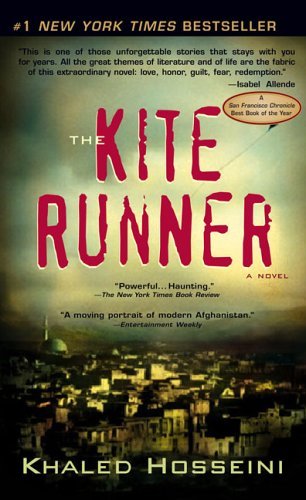
2. The Kite Runner by Khaled Hosseini

From Goodreads

Book Description: “1970s Afghanistan: Twelve-year-old Amir is desperate to win the local kite-fighting tournament and his loyal friend Hassan promises to help him. But neither of the boys can foresee what would happen to Hassan that afternoon, an event that is to shatter their lives. After the Russians invade and the family is forced to flee to America, Amir realises that one day he must return to an Afghanistan under Taliban rule to find the one thing that his new world cannot grant him: redemption.” (Goodreads)

Many U.S. institutions have banned this novel due to the difficult themes it addresses. Along with some mild profanity, the book contains heavy themes like sexual assault and stories of war, with a generous dose of violence.

Although, it also expresses vital themes of friendship, betrayal, and how politics can impact a child’s life. These are important topics for a teenager to learn about, and I believe this novel can significantly impact our understanding of the world and war. It depicts a history that schools often do not teach, making it a great learning opportunity.

At the end of the day, it is recommended by parents and youth online to wait until you are 16 or older to read this novel, so I suggest adding it to your TBR list for later!


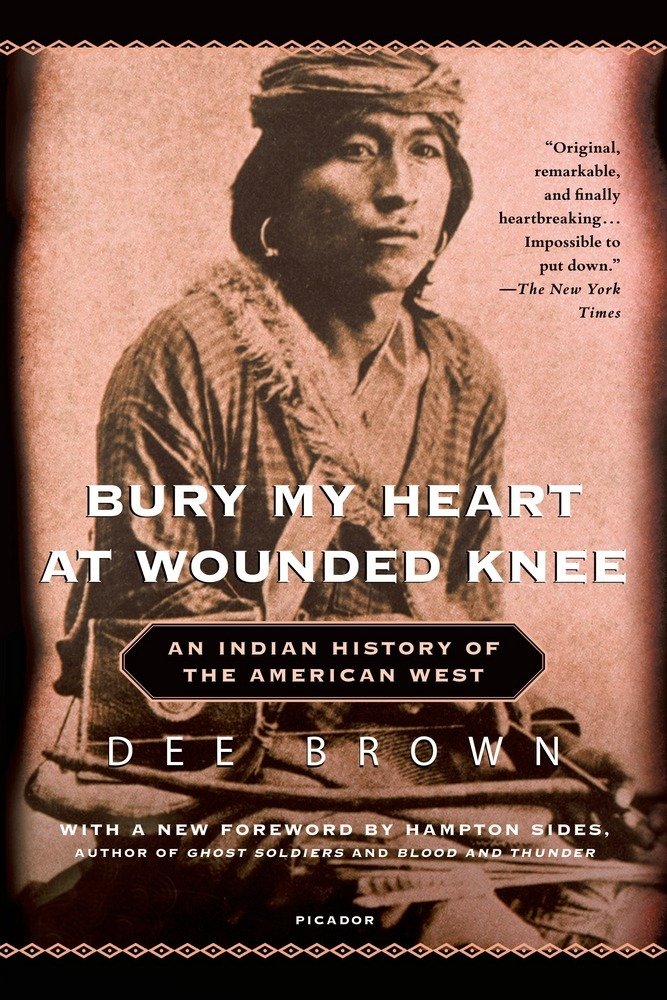
3. Bury My Heart at Wounded Knee by Dee Brown

From Goodreads

Book Description: “Bury My Heart at Wounded Knee is Dee Brown’s eloquent, fully documented account of the systematic destruction of the American Indian during the second half of the nineteenth century. […] Using council records, autobiographies, and firsthand descriptions, Brown allows the great chiefs and warriors of the Dakota, Ute, Sioux, Cheyenne, and other tribes to tell us in their own words of the battles, massacres, and broken treaties that finally left them demoralized and defeated. A unique and disturbing narrative told with force and clarity, Bury My Heart at Wounded Knee changed forever our vision of how the West was really won.” (Goodreads)

Critics have criticized Dee Brown’s most popular work for focusing entirely on the perspective of the Native American peoples, “exploiting” the white settlers, and challenging traditional narratives of colonization. Although, the entire focus of this book is to educate readers on the Indigenous perspective, which is why the novel focuses on the tragedies and crimes committed against this population. In addition to this, the novel deals with violent content and does not suit the weak of heart.

Despite the heavy content turning away many readers, we must remember that this novel depicts a reality that many people had to face because of colonization. High school students will find that this novel deepens their insights into this topic, more so than what they learn in their school’s Social Studies program. “Bury My Heart at Wounded Knee” is a vital piece of literature when it comes to understanding our history, and plays into modern truth & reconciliation initiatives.


4. I Know Why The Caged Bird Sings by Maya Angelou

From Goodreads

Book Description: “I Know Why the Caged Bird Sings captures the longing of lonely children, the brute insult of bigotry, and the wonder of words that can make the world right. Maya Angelou’s debut memoir is a modern American classic beloved worldwide. Sent by their mother to live with their devout, self-sufficient grandmother in a small Southern town, Maya and her brother, Bailey, endure the ache of abandonment and the prejudice of the local “powhitetrash.”

At eight years old and back at her mother’s side in St. Louis, Maya is attacked by a man many times her age—and has to live with the consequences for a lifetime. Years later, in San Francisco, Maya learns that love for herself, the kindness of others, her own strong spirit, and the ideas of great authors (“I met and fell in love with William Shakespeare”) will allow her to be free instead of imprisoned.” (Goodreads)

Maya Angelou’s memoir is facing controversy for its depiction of topics like racism and sexual abuse. Although, the book offers a powerful account of her early life, providing insights into the racial segregation and discrimination that African Americans faced during that time. It helps readers understand the complexities of race, identity, and systemic oppression. Teenagers should read I Know Why the Caged Bird Sings to explore themes of identity, resilience, and overcoming adversity. The book offers hope, inspiration, and valuable insights into difficult topics, helping teens understand and navigate their own challenges.


5. The Perks of Being a Wallflower by Stephen Chbosky

The Perks of Being a Wallflower | Book by Stephen Chbosky | Official Publisher Page | Simon & Schuster Canada
Simon & Schuster Canada

Book Description: “This is the story of what it’s like to grow up in high school. More intimate than a diary, Charlie’s letters are singular and unique, hilarious and devastating. We may not know where he lives. We may not know to whom he is writing. All we know is the world he shares. Caught between trying to live his life and trying to run from it puts him on a strange course through uncharted territory.” (Goodreads)

Some places have banned The Perks of Being a Wallflower by Stephen Chbosky due to its content, including references to drug use, sexual assault, mental health issues, and LGBTQ+ themes. Critics argue that the book portrays inappropriate behaviors for young readers.

However, these same themes make it an important read. The novel addresses crucial topics while offering a raw portrayal of the challenges many teens face. It allows readers to feel seen and understood, especially those experiencing similar struggles. The book encourages open conversations about heavy issues and highlights the importance of self-discovery and resilience in the face of adversity.

Conclusions

In conclusion, people ban books because they fear controversial themes or language. Although, it’s essential to recognize the profound impact these books can have on readers. Challenged novels often provide vital insights into society, history, and personal growth, sparking important conversations and encouraging empathy. By engaging with these works, teens expand their perspectives and develop critical thinking skills for navigating the world around them. Literature is a tool for social change, and by defending the right to read these books, we can uphold the power of storytelling.

Sources: 1, 2, 3,

Between Buffing and Being; Identity and Dreams in a Foreign Land- A Short Story

I’m a nail lady, and I love my job. It might sound mundane but amidst the buffing and the endless coats of polish, I find a way to get through the day. My clients are an integral part of it, they share stories and between insignificant lines, I catch glimpses of their dreams. The desires that linger from childhood, what can be, what could’ve been. From the doctor who got ballerina nails, to the observatory technician who longed to be an astrophysicist. Their dreams are confident and they shine. As for me? It’s just a shadow compared to those of others. It’s a burden to watch people chase dreams that I can barely admit to having in the first place. My passions are luxuries that I simply cannot afford.

 I want to do whatever I can to not be seen as “other”. I listen, and I learn what it means to be human in Western society from my clients. I learn, but I don’t find an answer for people like me. How do you do small talk? What should your idea of happiness look like? How do you roll your “r”s? Every conversation is a lesson for me. I try to bridge the chasm between “Can you repeat that” and misunderstandings.

People light up when they talk, but my voice is dim and unnatural like the bristling noises of a fur throat. With sharp consonants and awkward syllables, expressing myself in a language that doesn’t love me is hard. I find myself in immense jealousy over how people take expressing themselves for granted. For me, every word weighs down on my tongue, and fills my heart with terror when I see an eyebrow go up when pronouncing “t”.  In the back of my mind, I still hope that one day, I too can be a part of the Western world and be allowed to have dreams as comfortably as them. I will allow my clinging past to fade away with each stroke of nail polish.

These innocent dreams that I harbor eventually got crushed by a client of mine. People like her, who instead of seeing me as a person, reduced me to an embodiment of their assumptions. She spoke to me, judging if I even had the right to exist. “Oh, it must be nice to have the chance to live here. I mean, it seems so easy for you to just come and get a job like this. I can’t imagine how much more comfortable your life must be now!”

I was at a loss for words, more than usual. For the first time, I wanted to be loud, I wanted to scream but what would I say? What if I said it wrong?

Her words were laced with privilege. She saw my struggles, and my hardships as a mere “escape” from the so-called atrocities back home. She doesn’t understand what it’s like to yearn for the warmth of homeland, to crave the breeze running through your hair, the laughter shared in a familiar language. When I emigrated, I had nothing but floral dresses; maybe I hoped subconsciously that this place would be warm with love and embrace me as the sun’s shining rays, but now my wardrobe greets me with soulless jackets and the desolate cold. As her words settled into my mind after my anger calmed, I questioned her intentions. Did she truly mean to hurt me by those words? Her eyes were a twisted color between curiosity and judgment. Regardless it sank into my heart like claws.

Despite my disgust towards the statement, I let it pass in silence.  The sting of the words had morphed into something else, my ignorance. I became the thing I hated the most. Trying to blend into Western society, I bought into the very stereotypes that I detested.

To have the right to be angry with my client, I had to acknowledge my struggles, happiness and passions. Being an immigrant is an experience filled with bravery and my client and I both failed to recognize that. Belonging to the Western world is already a privilege on its own, a privilege that often blinds individuals in ignorance and moulds the brave newcomer to be perceived as a monster intruding on their land. In the process, she is alienated from the very society she yearned to be a part of, so the newcomer feels compelled to see herself as a monster. This monster had forgotten that she left the warmth of family, comfort and home in the pursuit of working hard towards a better future. A frightening experience, one that is commendable when overcome. But the client didn’t and will never recognize that because she can’t let her eyes go bare, where comfort is luxury and every letter seems like a battle against misunderstanding. The armour of privilege is thick for those who will never have to fight for their place. However, the struggle for acceptance is not only external but deeply internal. Were the privileged narratives what I allowed to shape me? I had filed away my own identity, believing I had to erase parts of myself that didn’t scream human in the West. And in the process of erasing my vibrancy, I humiliated myself as much as others did. I carved out the mindset that I was the monster for being foreign in a foreign land, and partly it was true. To blame me for existing a certain way had been due to the social norms inflicted by Western society, but to succumb to those very standards was a choice. I had forgotten that I could be my sun in this cold city and that the jackets could be as colourful as my heritage. Every time I sanded down my voice to sound articulate, it came off like a cacophony, that was the reality of covering up my origins with a coat of self-hate.  But I am simply indefinable, shaped by experiences that many could never understand. The Immigrant experience is often viewed through a narrow lens, filled with misconceptions and biases. In that moment of clarity, I lifted the weight of being labelled the monster in someone else’s monstrous night, a darkness created by ignorance and fear.

I’m an Immigrant nail tech, and I love my job. It sounds mundane but amidst the buffing and the permanency coats of polish, there is adventure. My clients are an integral part of it, we share stories and between the lines, we catch glimpses of each other’s dreams. The desires that linger from childhood, what can be, what will be. To the doctor who shared her secret with me about wanting more than just ballerina-shaped nails, I shared that I was now pursuing a PhD in Linguistics. Everyone’s dreams must be confident and should shine. After years of asking what nail colour others wanted, today I decided to ask myself. After the bright orange marigolds in my garden caught my eye, I knew the answer. As I applied the coats of nail polish I unravelled the layers of doubt and I realized that,

 I’m an immigrant, but not just an immigrant. My name is Mai, and I have dreams, and I will give them a voice too.


Behind the Breakfast Table: How Cereal Boxes Are Made

Ever wondered about the story behind the colorful cereal boxes lining supermarket shelves? These packages do more than hold your favorite breakfast—they’re a blend of science, art, and engineering. Here’s how they come to life:

  1. The Design Stage The journey starts with creativity. Designers craft eye-catching graphics, using bold colors, fun mascots, and nutritional information to appeal to both kids and parents. Every element on the box is chosen to make it stand out while conveying the brand’s message.
  2. Material Selection Cereal boxes are typically made from cardboard, a sustainable and recyclable material. Manufacturers choose a type of cardboard that’s sturdy enough to protect the cereal but lightweight enough to keep production and transport costs low.
  3. Printing Process Once the design is finalized, it’s time to print! High-speed printing machines use techniques like lithography to transfer the design onto large sheets of cardboard. These machines can print thousands of boxes in just a few minutes.
  4. Cutting and Shaping The printed cardboard sheets are then cut and folded into the familiar box shape. Machines precisely cut the cardboard to ensure that it folds neatly and securely. Adhesive is applied to seal the box, and voilà—the structure is complete!
  5. Packing and Distribution Empty boxes are sent to the cereal production facility, where they’re filled with that delicious crunch. Finally, they’re sealed and stacked, ready to embark on their journey to grocery stores—and eventually, your breakfast table.

Cereal boxes may seem simple, but they’re the result of a fascinating combination of innovation and design. So the next time you pour yourself a bowl of your favorite cereal, take a moment to appreciate the thought and effort behind the box in your hands! ¹ ² ³

Diversity Through Dance (Part 1)

Different cultures have different styles of dance, each representing a unique purpose. Dance is an integral part of every culture, no matter how versatile it is, because it brings out your culture and differences. A country like Canada is a fortunate place to be in terms of the diversity and uniqueness we get to see in our daily lives. In this series we will explore various dance styles worldwide to better understand other cultures!

India:

First on the list is India. India is known for its diversity in which the country itself has 120 languages with over 270 mother tongues(regional languages depending on the area). With so many different languages and festivals come several dances which can either be folk-based or classical. The 8 classical dance styles in India are Kathak, Bharatnatyam, Mohiniyattam, Kuchipudi, Kathakali, Odissi, Manipuri, and Sattriya. Classical dances in India are a way of depicting stories from ancient history as well as displaying ideas from scriptures and holy books. Furthermore, India is well known for its amazing folk dances, including: Garba, Bhangra, Giddha, Dandiya, Ghoomar, Lavani, and Bihu. Theyyam, Kunitha, etc. Altogether, each of the distinct dance styles has a unique purpose, either through narrating oral stories or representing joy towards religion or festivities.

Pixabay. January 22, 2023. lokeshduraiswami. Bharatnatyam (Classical Dance)

Spain:

Spain is not only known for its popular tourism but also has unique dance styles which have developed over the years through history. The most common dance originating from Spain is Flamenco. Flamecco is a dance, song, and instrumental based on guitar tunes. There are too many specific styles to elaborate on; however, the essence of flamenco lies in: Soleá, Bulerías, Alegrías, Seguiriyas, Tangos, Fandangos, and Sevillana (all are subcategories). Other traditional dances include Sardana- a dance done at a celebration’s hence honouring the Catalan identity. Another Spanish dance is the “Paso doble,” which is centered around fast-paced rhythmic music and the movement of a bullfight replicated in pairs (used in ballroom dances). If I were to describe the dance theme of Spain, it would involve expressing energy and vibrancy.


Pixabay. November 16, 2015.prunkova. Flamenco

Japan:

Japan is an unheard gem when it comes to expressing diversity and culture through dance. The sacred dances done in Japan are based on representing the Japanese mythologies of gods. One well-known sacred dance was the Kagura, in which people would entertain the gods with speedy movement, colorful costumes and fascinating storylines. In addition to sacred dance, Japan has multiple folk dances originating from foreign influences and oral traditions. Bon Odori is a famous dance originally performed for ancestral spirits and the Buddhist religion. Bon Odori is a dance often performed around a Yagura (stage) with drums and regional songs. Lastly, a popular traditional dance in Japan is Kabuki. Kabuki is extremely stylized in which emphasizes drama and makeup, and costume to express stories.

Pixabay. May 26, 2016. gavilla. The Kimono Costume during a Kabuki Dance

Brazil:

Next up on the list is Brazil. Brazil is a country famous for its soccer and carnivals; however, another aspect of Brazilian culture is the dance. Samba is the common dance style in Brazil which became popular in Western nations around the early 1900s. Samba is a dance suitable for ballrooms however, its older African origins were done in groups where everyone would perform in a circle. The dance itself consists of simple back and forth motion with slight tilts according to the rhythm. Secondly, a folk dance called Carimbo is done in the state of Para. Carimbo is an intricate dance which consists of both male and female, usually with the female using her skirt to cover the other performer. The dance is influenced by Portuguese, African and European influences. Here is a list of some other distinct dance styles that should be appreciated as well: Jongo, Carioca Funk, Bumba Meu Boi, Forro, Carimbó, Lundu, Xote, Baião, etc.

Pixabay. September 13, 2015. florianserraille2. Samba


Stay tuned for the next few articles where we will discover more about different dances from around the world!


Sources:

1,2,3,4,5,6

Alcohol On the Brain: What Are Neuroadaptations?

Apart from caffeine, alcohol is probably the most normalized substance in most societies around the world. It is heavily integrated into many cultures and is associated with all social classes, probably because it is so accessible. Most people end up drinking at least once in their lives.

While not inherently harmful in small doses, we need to take a look at the bigger picture. What does alcohol mean in the long term? What are some of the other side effects of drinking? What does drinking actually do to our brains?

There are many risks associated with drinking, including liver and heart diseases. In this article, we will discuss the specific behavioral mechanisms involved in drinking and relapse in those with chronic alcohol abuse.

Please note: I am by no means an expert, and this article was written purely out of my own interests for entertainment and informative purposes. If you are in need of help or rehabilitation, please reach out to a healthcare professional.

What is Relapse?

The effects of addictive substances such as alcohol are well-known; nobody wants [insert any disease name], so it’s common to see people attempt to “quit”. This is often followed by a period of withdrawal, where a person may act irrationally, feel extreme physical and emotional pain, and feel hypersensitive to everything around them.

Relapse is the return to an addictive substance after a period of abstinence. Severity of effect on health depends greatly on the substance, but regardless it is negative.

Relapse occurs for a variety of reasons, including:

  • escape from negative feedback mechanism of withdrawal
  • environmental factors
  • peer pressure
  • habit

In this article, we will focus on withdrawal in the brain and habit, but it’s critical to acknowledge these critical factors when looking at addiction.

Withdrawal in the Brain

Glutamate, one of the most common excitatory neurotransmitters in the brain, is responsible for a lot of action potentials that occur in the brain. Its receptors, alpha-amino-3-hydroxy-5-methyl-4-isoxazolepropionic acid (AMPA) and N-methyl D-aspartate (NMDA), are particularly abundant in the hippocampus (center for memory), the amygdala (center for emotional processing), and the prefrontal cortex (the center for critical thinking).

Alcohol as a Depressant

Alcohol is a depressant, which means that it decreases the effects of the neurotransmitters. In particular relation to the brain, ethanol blocks AMPA and NMDA receptors from receiving glutamate, and so action potentials are not achieved as often as they usually are. This results in the feeling of intoxication.

Decreased excitatory activity in the hippocampus explains why some people wake up the morning after drinking heavily without any memory of the night before. Because ethanol dampens the hippocampus, it may be more difficult to create or retain memories.

Ethanol in the amygdala means that there’s less emotional processing that occurs when a person feels “drunk”. That’s why it’s common to hear people drinking to “numb” themselves from bad feelings – they literally have slower emotional reactions and thoughts.

In the prefrontal cortex, decreased activity is detrimental because it means decreased critical thinking. This is why people who drink often act irrationally or have untrustworthy senses of judgement.

The Brain’s Response:

The brain detects a lack of glutamate reception, and upregulates the glutamate genes. This means that more glutamate is being released, and post-synaptic neurons increase their rate of glutamatergic receptor synthesis.

  • This explains why, as addiction progresses, individuals need to drink increasing amounts and concentrations of alcohol to achieve the same “numbing” feeling.

Withdrawal on a Molecular Level

When a person stops taking in alcohol, the brain suddenly has much more glutamatergic receptors and glutamate than it usually has. It receives a sudden amount of glutamate, leading to hyperactivity. Especially in the amygdala, this hyperactivity can lead to emotional irritability and increase negative emotions easily.

The Good News

This can be reversed! Over time, if ethanol does not enter the brain, it will recognize that it is receiving too much glutamate and will downregulate the genes that form glutamatergic receptors.

Alcohol as a Habit

As mentioned previously, environmental factors often play a major role in relapse. Triggers can cue a habit to form, and over a long amount of time can induce relapse.

LTP: Long-Term Potentiation

LTP, long-term potentiation, is the act of your neurons growing closer together as a result of their synapse being fired often. This occurs as a result of two factors: the initial impact of the memory that the synapse triggers, and the number of repetitions that action potentials were fired.

This essentially means that if a memory was particularly significant, then the neurons would grow closer together, and it would be harder to forget. Childhood trauma is an example of a deeply significant memory that could be difficult to forget. Neurons will also grow closer if their connections are used very often (i.e. you recall this memory very often). An example of that is the memory that you have to turn the lights on if a room is dark.

When you don’t recall a memory often (i.e. the signal between neurons is rarely fired), the neurons will move farther and farther away from each other, resulting in what we call “forgetting”.

Habit Formation

Psychologists have theorized the model for habit formation occurs in three steps: cue, action, and result. Habits follow the second factor of LTP: repetition. The more you repeat a habit, the stronger it becomes.

Within addiction, cues vary, which is why identifying triggers is so important.

The action is always the active intake of alcohol. And the result is a feeling of intoxication that is often followed by guilt.

In order to break habits once they have formed, the easiest step to undertake is to remove the cue. However, this is easier said than done because cues look, sound, and feel different to each individual.

This ultimately makes breaking a habit of addiction incredibly difficult, especially since there is no one-size-fits-all solution.

TL;DR

Chronic alcohol use has detrimental effects on the brain, and can become a vicious cycle of addiction. Habit formation and societal structure makes it very difficult to escape the cycle of addiction. But there is hope: if one is able to abstain from alcohol for long enough, its effects will eventually be reversed. There are also many who have rehabilitated successfully!

If you or someone you know is seeking help or rehabilitation, please reach out to a healthcare professional. The sooner you receive the help you need and deserve, the better.

The Power of Youth Advocacy in Education

0

Education is the foundation of a thriving society, yet many young people across the world face barriers to accessing quality learning opportunities. According to UNESCO, approximately 258 million children and youth were out of school globally in 2018, highlighting significant gaps in educational access. From outdated curricula and unequal resources to rising student debt and lack of mental health support in schools, education reform has become one of the most pressing issues of our time. Youth advocacy is playing a crucial role in pushing for change and ensuring that education meets the needs of today’s generation.

Education is more than just academics—it shapes our futures, opportunities, and personal growth. Advocacy in education means speaking up for better policies, equal access, and meaningful reforms that help students thrive. Young people are using their voices to push for changes that make education more inclusive, equitable, and reflective of real-world challenges.

What’s Happening

Many young advocates are fighting for improvements in education, focusing on issues such as equitable access, mental health support, modernizing curriculums, and affordability. In the United States, projections indicate that public elementary and secondary school enrollment will reach 51.4 million students by 2025, emphasizing the need for systemic reforms to accommodate this growing population. The increasing pressures of academics, social expectations, and global uncertainty have led to rising mental health concerns among students. Studies have shown that youth advocacy programs can enhance participants’ confidence in advocacy, knowledge of resources, and engagement in advocacy behaviors, contributing to improved mental health outcomes.

Many students feel disconnected from what they learn in school because curricula often fail to address contemporary issues, financial literacy, life skills, and diverse perspectives. Youth activists are advocating for educational reforms that prepare students for real-world challenges. Furthermore, the global education market, valued at approximately $7.6 trillion, is primarily funded by governments, which contribute 60-70% of total education spending. Despite this investment, higher education remains financially out of reach for many students due to rising tuition costs and student loans. Advocacy groups are calling for tuition reforms, increased scholarships, and policies that reduce student debt burdens.

Taking Action

You don’t need to be a politician or an educator to make a difference. There are many ways students and young advocates can contribute to education reform. Raising awareness by sharing stories, data, and personal experiences about education challenges on social media and in communities is a powerful powersful way to do so. Engaging with school leaders and policymakers by attending school board meetings, starting petitions, or writing letters to education officials can lead to concrete changes. Supporting student organizations by joining or creating a student-led group focused on educational reform and student rights allows for collective action. Volunteering in education programs by tutoring younger students, supporting after-school programs, or getting involved with nonprofit organizations working on education initiatives is another impactful way to contribute. Pushing for curriculum changes by working with teachers and administrators to advocate for lessons that include diverse perspectives, life skills, and mental health education ensures that learning remains relevant and beneficial for students.

TL;DR

Education shapes the future, and young voices are essential in shaping the education system. Whether it’s advocating for mental health resources, pushing for affordable higher education, or fighting for equal opportunities, every action counts. If we want an education system that truly supports and prepares students for the future, we must be willing to speak up and demand change. What changes would you like to see in education? Now is the time to advocate for a system that works for everyone.

The Rise In Women In Sports!

Over the last couple of decades, women in sports have risen from the sidelines to center stage, breaking barriers and changing the face of athletics worldwide. Among the most exciting developments in recent years, there had been the growth of leagues like the Women’s International National Basketball Association, or WINBA, which showcases the incredible talent of female basketball players. 

While it is still striving to get the same attention as the NBA, WINBA is doing great, building its name and should be more present in media appearances. The face of women’s basketball has dramatically changed due to Lisa Leslie, Diana Taurasi, and Maya Moore, who have given ways to young budding talents coming up the ranks. Despite this, there are apparent gaps in women’s basketball in terms of media attention and sponsorships compared to men’s basketball. Without visibility, it would be really hard for a league like WINBA to take another growth dimension and recognition of sports persons.

In fact, visibility of the WINBA is very important for growth. While women’s sports are on the rise around the world, there is still a need for more exposure through the media. It is time for networks, sponsors, and sports media to give airtime and invest as much money into women’s basketball as men’s sports have received over the years. With better coverage, the WINBA will achieve more substantial audiences and sponsorship deals, bringing additional opportunities for the players.

More representation on screen means more inspiration for young girls who want to play professional basketball. The likes of athletes in the WINBA inspire the next generation to chase their dreams and break barriers. The players of WINBA have already shown skill, passion, and drive, and they deserve the same respect accorded to male athletes.

Furthermore, this is not about mere equality for athletes; it is more about recognizing and appreciating the worth that women bring into the world of sports. Women athletes are not just competing; they are creating culture, challenging norms, and inspiring social change. From using their platform to advocate for gender equality to setting new standards on the court, female athletes continue to prove that their stories are just as compelling and impactful as of men. Giving more screen time to the WINBA is not only celebrating women in sport, but also giving a whole movement of inclusivity and diversity within athletics a lift.

With the WINBA still growing, it is about time the media notice and give greater attention to coverage of women’s sports. It’s time for a change. Women in basketball, like their male counterparts, work hard, train tirelessly, and compete at the highest level and it’s time for the world to watch.