Youth Are Awesome, commonly referred to as YAA, is a blog written by youth for youth.
YAA provides the youth of Calgary a place to amplify their voices and perspectives on what is happening around them.
Youth Are Awesome is a program of Youth Central.
Any views or opinions expressed on this blog belong solely to the author and do not represent those of people or organizations that the blog may be associated with, unless explicitly stated. All content is for informational purposes only.
Preface: Listen to the songs and do a quick read on the lyrics, so we can discuss togther!
Why I love this song:
I loved the song “Like a Tattoo” initially because of Sade Adu’s soulful vocals. The music was full of life and haunting at the same time; the profundity of emotions captivated me, and I felt love, regret, and drama. Exploring the narrative, I began to uncover the answers and questions alike. What happened between the shooter and the lover? Were the scars of emotional pain so intense that they were visible like a tattoo? After entering the rabbit hole of interviews and the mysterious life of the singer, I became attached to and wanted to work on developing my interpretations in relation to the context of the song. The pairing of expressive delivery and intense lyrics had me wanting to research and analyze the lyrics further.
About the song:
The song investigates feelings of guilt and regret of the past and its unremitting consequences on an individual. The theme can be apparent in lines such as “As I reveal my shame to you,” where the vulnerability of revealing past mistakes is directly addressed, or, ambiguous and implied, such as in “Like the scar of age.” which subtly conveys the indelible marks of trials and tribulations of life that leave emotional scars. Overall, the song addresses the intense struggle required in the psychological turmoil stemming from unresolved moral dilemmas. The discussion ranges from guilty avoidance of truth by forming a romanticized notion of reality to regretfully addressing the truth and feeling the intensity like a scar. Sade Adu beautifully captures the essence of what it means to be trapped in a cycle of regret and guilt over past actions and the hardship required to overcome those sentiments.
The history:
As Sade Adu states in an interview with Michael A. Gonzales, “I [Sade Adu] was always Mrs. Soul Woman.” She grew up “quite deprived of music,” but her half-Nigerian heritage (Encyclopædia Britannica) and the late 20th-century British landscape (Encyclopædia Britannica) exposed her to the diverse musical environment of blues, jazz, reggae, rock, and more (Encyclopædia Britannica)(Gonzales). She not only draws influence from jazz and soul legends such as Billie Holiday and Miles Davis but also her own personal conversations.
For the song “Like a Tattoo,” she interpreted a story of a “guy in a bar in New York years ago” (Gonzales). He talked about his experiences, and Sade interpreted them as the emotional turmoil of a “man who has been in Vietnam” (Gonzales). Regardless of the fact that her goal wasn’t to address the effects of the Vietnam War, it still plays a crucial role in providing listeners with context as to what could have possibly happened to influence her perspective. The album Love Deluxe was released in 1992 (Sade). A time period long enough to start seeing post-war effects, the military conflict left war veterans to suffer the consequences of PTSD (Vietnam War). The topic of mental health would have been prevalent and prompted music artists to incorporate the issues. For example, the song “The Final Cut” (1983) by Pink Floyd (Final Cut) also explored veterans struggling with their memories and the moral complexities of war, much like “Like a Tattoo.” In conclusion, Sade Adu’s “Like a Tattoo” carries the contextual roots of emotional turmoil and PTSD post-war. Sanat Pai Raikar. “Roger Waters | Life, Career, Pink Floyd, Trivia, & Facts.”
Citations:
“Biography.” Sade | Official Website for the British Iconic Band, www.sade.com/biography. Accessed 16 Oct. 2024.
I think all of us, having lived in Canada, have tasted one of the best breakfast combinations; pancakes with that distinct sweetness of maple syrup! There is no doubt that maple syrup is an essential part of Canada’s national identity, but I always wondered, why so? If you have pondered upon the same question as me, then keep on reading because this blog is all about why Canada and Canadians love maple syrup so much.
Although Canada is the world’s biggest exporter of maple syrup, exporting more than 70% of the world’s maple syrup, the economic benefits that this industry provides to Canadians is not maple syrup’s only role. Instead, it has deep roots in Canadian history, with origins coming from several Indigenous communities.
Indigenous Origins of Maple Syrup:
Before European colonization, Indigenous groups such as the Anishinaabe, Mi’kmaq, Haudenosaunee, and Abenaki had developed their own tools which they used to tap trees to access what they called “sweet water.”
These Indigenous groups live in the area known as the “Maple Belt,” comprising the hardwood deciduous forests from the midwestern United States across Ontario, Quebec, New Brunswick, Nova Scotia, and Prince Edward Island, and had access to red, black, and sugar maples.
The Anishinaabe and other Indigenous groups in this region start their maple syrup extraction in a season which they call “maple moon” or “sugar month,” when temperatures rise above freezing. The process of tapping a maple tree would be done by cutting a small hole in the tree, and inserting a spile to direct the sap from the tree into a handmade birch-bark bucket placed nearby. The sap would be left in the cold to separate the lighter water from the heavier, viscous sugar syrup.
Maple syrup continues to be a major part of the Indigenous lifestyle. It is used as a sweetener, anesthetic, and for meat preservation in many communities.
Through trade and contact with European settlers, this knowledge of tree tapping was passed on by the Indigenous communities, serving as a start to the maple syrup industry.
A symbol of Canadian Identity:
There is no doubt that the maple leaf and maple syrup are an essential part of the Canadian identity. For example, the maple leaf is at the center of our flag, and bottles of maple syrups are sold in gift shops across the country.
Sugar shacks, small cabins where sap is boiled to process maple syrup, are visited by several Quebecois and French Canadian families, as Quebec is the province that produces the most maple syrup in Canada, and by children in Ontario as part of fieldtrips.
TL;DR
Although maple syrup is important for Canada’s economic growth and global recognition as the world’s largest producer of maple syrup, it also has a rich history stemming from the practices of Indigenous groups. The maple syrup represents Canada’s interconnectedness, and is a symbol of the shared cultural practices that builds Canadian society.
Every July 1st, red and white swirl through our streets as the maple leaf flutters proudly above gatherings, picnics, parades, and fireworks. Yet beyond the festivities, Canada Day invites us to pause—not just to celebrate, but to reflect.
The Land We Share
Before the cheers begin, I find it grounding to acknowledge the truth of the land beneath our feet. Canada’s story didn’t begin in 1867; it reaches back thousands of years, shaped by the deep knowledge, culture, and resilience of Indigenous peoples. Land acknowledgments aren’t a formality—they’re a recognition of ongoing relationships and responsibilities.
This year, I’ve been thinking about what it means to live in a country still learning to walk the path of reconciliation. Canada Day can be an opportunity to listen—to stories, to truths, to voices that are too often sidelined.
What Canada Means to Me
Growing up in Calgary, Canada always felt like a mosaic rather than a melting pot—threads of language, music, and cuisine overlapping in beautiful, unexpected ways. I see “home” in the local library’s multilingual shelves, in the glow of Chinatown lanterns, in a neighbour offering bannock during Stampede week.
Canada, to me, means:
Saying “sorry” even when it’s not our fault 🙃
Tim Hortons runs before sunrise
Ice skating in -30°C and pretending it’s “not that cold”
Having fierce conversations while still holding doors open afterwards
Looking Ahead
There’s a quiet kind of hope in being Canadian. It’s in the way we keep showing up—at polls, at protests, at food banks, and community centers. It’s in our willingness to keep learning, keep growing, and keep questioning the systems around us.
So yes, I’ll wear my red and white. I’ll watch the fireworks with friends, blast The Tragically Hip, and indulge in a butter tart or three. But I’ll also carry the quieter thoughts with me—the ones about history, identity, and building a future we’re proud to inherit.
Because loving Canada doesn’t mean ignoring its imperfections. It means holding space for both celebration and growth—cheering for what we’ve become and committing to what we still must be.
Under the guise of ‘for the people’, democratic institutions operate with the promise of providing power to ALL the people it represents. While in supposed democratic nations such as Canada, the core of the implementation of voting systems such as ‘First Past the Post’ are deeply flawed, prioritizing electing an individual to a riding with relatively the most amount of votes, even if it is less than 50% of the population. Within Canada’s 2021 federal election, a Liberal minority was called, but the liberal received 33.6% of the popular vote. How does this fairly represent and uphold the values of a democracy?
This supposed democratic system pushes for a two-part system, even if there are numerous parties running. Without two parties, the government would never have received 50%+ votes otherwise. This system makes it significantly more difficult for smaller opposition parties to gain traction, and accumulate votes to win a riding, leading to no representation for such parties. In order to combat this, within society, individuals turn to ‘strategic voting’, to avoid wasting their vote they’ll choose between the two opposing, and dominating parties such as within Canada’s 2025 election: the Liberals and Conservatives.
The ‘First Past The Post’ system, unknowing to most people, creates an undemocratic system where only two parties will dominate, and the years following consist of them fighting for power, which minority parties fall from political existence.
This belief is outlined within Duverger’s Law, emphasizing the inevitable rise of two dominant powers from the fear of citizens to split the vote, from a so-called ‘better’ party. This law highlights the inevitable rise and fall of these parties, specifically of a centre-left and centre-right on the political spectrum. The will of citizens can never be represented within a democracy with the FPTP system; there is no democracy within a system that forces fear voting, all to keep a certain party out of power.
This is clearly represented through the outcome of the 2025 Federal Election. Such days signal the unraveling of the democracy Canadians once could have relayed on and enjoyed. By entrenching a two-party system, we sacrifice genuine representation: voters no longer choose the candidate most attuned to their riding’s needs but rather select the “lesser evil” simply to block an opposing party. We witness how the NDP, Bloc Québécois, and Green Party have been marginalized, with even their own supporters vote against them to prevent a more feared outcome. Such dynamics erode the very foundations of democratic freedom. It underscores our duty to encourage a pluralistic system, and to insist that our government remain open to criticism.
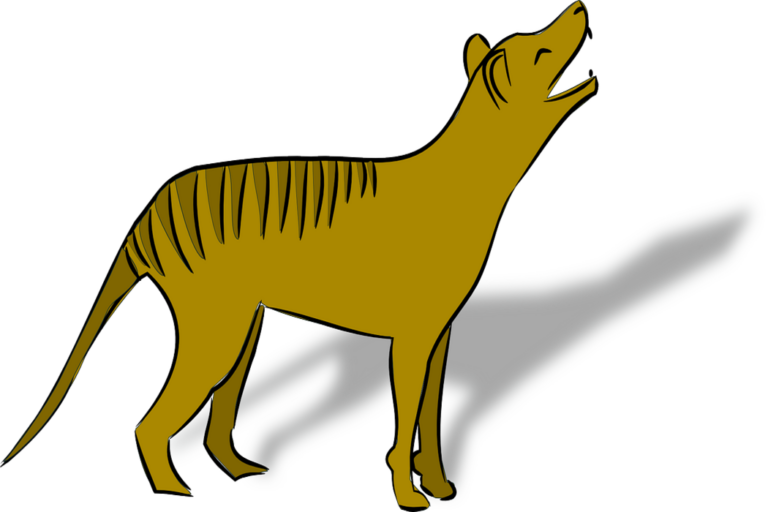
It’s the 18th century. After a long journey, you and your fellow European settlers finally disembark onto a brand-new, elusive, yet exciting island. After exploring the land and taking in everything this new alien land has to offer, you hear a rustling in the bushes behind you. Slowly, you turn around, and a shadowy, swift figure emerges. It’s a tiger-no, a wolf? This yellow-brown dog, decorated with dark black tiger-like stripes, roars at you. You freeze in awe, and name it the Tasmanian Tiger.
Ground breaking tantalizing discoveries in genetic work have led to optimism in de-extinction efforts. Recently, scientists are working to bring extinctic animals such as the woolly mammoth, quagga, and Tasmanian tiger back to life. And no, this idea isn’t some kind of Jurassic Park-style fiction about bringing extinct animals back from the dead. There is actual scientific evidence supporting the possibility of reviving these historic creatures. In this blog I will be exploring everything about the Tasmanian tiger and whether or not scientists can truly bring this animal back from the dead.
The Tasmanian tiger, or thylacine, was an extinct carnivorous marsupial native to Tasmania, Australia, and New Guinea. It was typically found in biomes such as forests, grasslands, and woodlands. Due to its hunting nature, it was particularly drawn to areas with dense vegetation and open plains. Its appearance resembles that of a large dog with tiger stripes, possessing both dog-like and cat-like features. It is the only animal known to showcase a combination of cat and dog traits, leading to a “cat-dog hybrid” comparison.
Videos of thylacine actually exists!
The Tasmanian tiger was one of very few animals that went extinct before 1940 to have been captured on video. This is an extremely impressive accomplishment, as the thylacine was already on the brink of extinction, and video capturing technology was still relatively new. It is thanks to videos like the one above that we were able to confirm the Tasmanian tiger actually existed and gain a much deeper understanding of its anatomy and behavior. This video is an amazing record of a species lost to time and a reminder of just how important species preservation is before it’s too late. Due to footage like this, people are even more optimistic that scientist could, maybe one day, bring this amazing creature back to life.
Extinction of the Tasmanian tiger was primarily due to the rise of humans, combined with the harshness of Mother Nature. Everything just went horribly for these creatures. Overhunting, habitat loss, competition, and disease all contributed to their fall. Once European settlers found their way to Tasmania, they started overhunting them. In some cases, there were even bounties placed on the thylacine’s head. Humanity blamed the thylacine for killing sheep, and the Tasmanian government would place bounties on them. With a bounty, there was very high motivation to hunt them. The rise of farming and industrialization led to lots of habitat destruction. The introduction of humans also led to the introduction of domestic dogs and invasive species directly competing with the thylacine for resources. To add insult to injury, there was evidence that a lot of thylacines were being infected with disease that rapidly spread across the population. All those factors caused a rapid population decline. The last wild thylacine was killed in 1930, and the last captive thylacine died in 1936, with it officially being labeled extinct in 1982. Unfortunately, at the time, there was no global outrage over their extinction. Conservation wasn’t really mainstream, as humanity was very different back then. The last captive thylacine’s death went practically unnoticed. It died due to circumstances that could’ve been prevented, as they were entirely due to human error. Zoos back then had much lower standards regarding the animals’ enrichment or welfare. Nowadays, something like that would never happen, and zoos take conservation and animal welfare seriously. While yes, it went extinct, it’s important we learn from this, as the global and environmental impacts could have been serious, and issues like these still remain in today’s world.
Potential Impacts on The Ecosystem
Since the thylacine went extinct so long ago, us, as humans, weren’t able to properly or fully document the impacts on the ecosystem that the Tasmanian tiger left behind after its extinction. However, based on basic ecology principals, we’re able to theorize many of the lasting impacts that the extinction of the Tasmanian tiger could’ve caused. The thylacine was a tertiary consumer found on the fourth topic level of the ecological pyramid. This classification identifies the thylacine as an apex predator, further evident by its diet, which included small mammals and birds such as black ducks, swamphens, or Tasmanian native hens. Seeing how the thylacine was one of the few predators of these animals, there’s an incredible likelihood that its extinction meant that these species no longer faced natural predation. The extinction of an apex predator in almost all cases directly results into triggering a trophic cascade. With no top predators dictating all the smaller animals, an imbalance of populations amongst the food chain is created. This eventually leads to an effect known as mesopredator release. Essentially, since there is no apex predators, medium sized predators receive a monumental spike in population, which in turn causes a decrease in even smaller animal populations due to the greater food demands of those medium sized predators. Overall an apex predator going extinct such as the thylacine is never a good thing for the ecosystem.
Colossal Biosciences and the University of Melbourne’s Thylacine Integrated Genomic Restoration Lab currently have plans to bring the thylacine back from the dead. A few things to preface before I explain the details: the thylacine they’re creating will not be 100% accurate to the one that went extinct, as this animal has been dead for years, so there is a lot of guesswork. There is also potential for behavioral differences from the original thylacine, as one’s genes don’t necessarily determine their behavior. Besides that, their goals are to pretty much make their own version of a thylacine. The main method is de-extinction, where modern tools will be used to recreate the thylacine’s genome by looking at its closest relatives. Scientists have currently sequenced all of the thylacine’s genome from preserved thylacine specimens, and the closest relative has been identified as the numbat. The plans are to use the numbat as a genetic template, and potentially a surrogate. Using a process known as CRISPR, the goal will be to edit the genome of the numbat to match the DNA of a thylacine. Piece by piece, they will try to reconstruct a functional thylacine genome. Once the genes have been edited and an embryo is created, it will be planted into a surrogate such as the numbat that will carry and give birth to the thylacine. This will be a bit tricky, as marsupials are typically born extremely early, making the artificial womb process more complex. They’re shockingly far along with this process, as they’ve almost completely rebuilt the thylacine genome, with over 300 gene edits made. They expect to finish within 8–10 years, with a high likelihood of it being actually feasible, with most technology barriers passed. Other de-extinction efforts are more far along, such as the dire wolf, woolly mammoth, and northern white rhino, all showing great progress. With all of these de-extinction efforts, a huge morality debate has come along with it.
Should humans bring thylacines back?
The resurrection of any extinct animal raises many morality questions. Should humanity just let them rest peacefully, or should we try to redeem our ecology failures as a humanity? There is a wide range of both pros and cons when discussing if a dead animal should be brought back. On one hand, this is an amazing opportunity for scientific advancement, biodiversity restoration, conservation awareness, and a form of redemption. On the other hand, there’s ecological uncertainty, ethical concerns, fewer resources for other endangered animals, and behavioral inaccuracies. Learning how to bring back an extinct animal will push the limits on what we know about genetics and reproductive technologies, potentially allowing breakthroughs in medicine and further protection against extinction. The previously damaged ecosystem could potentially be repaired with the reintroduction of certain animals. Getting to witness de-extinction efforts will generate a huge public interest in all things conservation. However, we don’t necessarily know how these new animals will interact with the environment. Many things must be questioned, such as where to even put the animal, how the ecosystem will react, and whether or not this could cause any disruptions. It’s also speculated whether it’s even moral to create something in a lab, highlighting the trauma we may be giving to the creation, as well as any other animals involved in the process. Putting all this effort into something niche will take resources away from current ecology issues. Finally, the animal created may not even have the same behavior, essentially introducing an animal that otherwise wouldn’t exist. This entire topic could have huge consequences, where most experts agree it should be used to complement conservation and not try to act as a substitute.
TL;DR
The Tasmanian Tiger was once a marsupial native to Tasmania that ended up going extinct due to the rise of humanity. Videos of it still exist, giving us great insight on it. Scientists are currently trying to bring it back using CRISPR, and they have currently made quite some progress. This topic in general raises some serious questions about ethics, but with great hope for science.
Giving back to our community is a great way to show our appreciation to the people around us. It creates a healthy environment for everyone to be a part of and helps the community as a whole to grow. Studies have shown that giving back to your community boosts your overall mental and physical well-being. Giving back also makes your life more purposeful, while helping you build strong relationships within your community.
Here are a few ways you can show appreciation to others in your community:
1.Volunteering
Volunteering is an excellent way to bring a positive change and impact into your community. As a volunteer myself, I would certainly say that volunteering with numerous non-profit organizations has provided me with the opportunity to help the people in our community directly. Volunteering opens our eyes to the contemporary issues faced by the people in our community.
There are numerous places you can volunteer to donate your time and effort to a meaningful cause such as local food banks, libraries and numerous community events. Joining volunteer organizations is also a great way to show your appreciation to your community. Furthermore, volunteering shapes us into a better person by implanting strong values and skills within us.
2. Donating
Donating to charity organizations is a great way to show support to others in our community. It creates a genuine difference in our community and helps those in need. Donating does not always have to be money. It can be anything from clothing to old books. It is also known that donating develops a sense of belonging with your community. Donating helps build a stronger and healthy community where everyone cares about each other.
3. Buying Local
Buying products from local stores is a great way to show appreciation and support to local businesses in our community. Buying local will help local vendors to compete against the huge international corporations, while reducing your carbon footprint. Purchasing from local stores reduces the transportation time for the goods, which significantly reduces carbon dioxide emissions. Spreading word about these businesses also helps them to grow.
4. Connecting with others in Your Community
Connecting with others in your community is a great way to build relationships and a sense of belonging within your community. Some ways to do this is by attending community events, joining community clubs and associations. Also, simply spreading kindness to others in your community is a great way to boost everyone’s morale.
Overall, Giving back to your community is something everyone should do. It helps us and others in our community grow. Some other ways of giving back include helping organize community events, fundraisers and more. Taking part in a good cause is very fulfilling and makes a difference in our community.
Regardless of what field you may be pursuing, literature and article reading are essential skills if you’d like to cite experts, previous studies, or have any sort of deeper understanding of a topic. That being said, articles can get dense and difficult to read if you don’t understand all the jargon, so here’s a step-by-step guide on how to review literature in an efficient and effective manner.
The Abstract
This is the part of the article that is in plain language, so most people can understand. Make sure to read this portion first in order to gain an idea of whether or not the information is worth investing your time into understanding – if it’s not relevant, find another article. There is no point in floating around the wrong article, hoping the right information will come up.
Abstracts should be concise and to the point. If there’s any jargon in the abstract that you don’t understand and isn’t explained, look it up. It will probably be considered background information that’s necessary to build up new understandings.
The Introduction
As its name suggests, the introduction introduces the topic of the article. It mentions its significance and its application to the real world. This part is really important if you are using the literature as background to your own work; take into consideration how different side effects or scraped data could affect aspects of your work here.
Materials and Methods
If you want a really deep understanding of the article, you’ll have to dive into this section with quite a lot of time on your hands, because oftentimes the processes and machinery used by scientific research are complex and dense. To completely understand the research, you’ll have to know how the scientists got to their results.
However, if you’re looking for broad results or just an informal comparison of your results, a broader understanding of the method will be sufficient. While it’s great to understand everything, do not prioritize materials and methods if you are aiming to get breadth and not depth.
Results
The results of an article tell data as it is. It’s often presented as a collection of data, plots, and graphs, but really, it should be assumption-free and only give the information that was collected.
This is where you’d pull the information to make your own conclusions, if you were using the data as part of a data set. It’s also relatively objective, although graphs may be biased, so when you are creating conclusions, be sure not to make any assumptions that the dataset did not indicate.
Discussion
This is where the authors of the article interpret the results of their data. It’s the same as a Conclusion, except scientists often avoid using that word because it implies that the research has concluded. Most times, it hasn’t and will continue to develop over time with more studies, trials, and experiments.
The discussion breaks down how the data collected answers the hypothesis, which was introduced in the abstract and the introduction. It also dissects the real-world applications of the data and the relevance of the data (like revisiting the introduction!), which is helpful.
References
This is where you’ll find the articles and research that the authors of the articles referenced. It’s useful if you want to understand more about the topic or if you don’t understand the article you just read, because it provides the background information, but its core relevance often comes from seeing the age of the articles. In rapidly developing fields like computer science and psychology, you may not want to use an article that is based on outdated science.
If you grew up in Calgary, you already know once July hits: it’s Stampede or nothing. And if you didn’t grow up here? That’s ok because today I’ll be telling you about the most chaotic, cowboy-coded, deep-fried, boot-stomping event of the year. Stampede.
Stampede 2025 was chaotic.. Here’s what I thought made this year’s version so unforgettable (and why it’s way more than just a rodeo).
The Music:
The music this year was amazing! There were so many different artists performing their hearts out on the co co cola stage, ranging from indie local acts to TikTok-famous performers. At this point, most people went to the stampede, solely for the music. Just to name a few, Don Toliver, Meghan Patrick, Cole Swindell, and Tinashe. I think that Stampede isn’t just a carnival, because at this point it’s a lowkey music festival.
The Food:
I would describe it in 3 words: Deep-Fried Chaos
The food at Stampede this year (and honestly every year), is absolutely mind-boggling. These carts are selling not only a variety of different tasty delicacies, but also creating the most insane combinations. Here are a couple of them:
Deep fried pickle cotton candy
Ramenritto
Fruity Pebble Korean Dog
Dubai Chocolate funnel cake
Deep-fried pickle oreos
Lemonade-in-a-bucket.
Stampede food reminds me of the game Truth of Dare. When I was little, me and my friends would play Truth or Dare a lot and we would dare each other to try crazy food combinations (like Doritos and nutella). Stampede is definitely giving a 10 year olds classic dare turned into an awesome business. .
What to Do (More Than Just Rides)
First of all, the rides were crazy, flipping people up and down and all around. But beyond the spinning and screaming, here’s what else was iconic:
Rodeo
Dog shows
Fireworks
Pancake Breakfast
Parade
A whole lot of food and shopping
Personally, growing up I absolutely loved the rides, but now that I’m older, I’m interested in the other attractions that the Stampede has to offer too!
Conclusion
Stampede is an absolutely amazing experience that really brings countless Calgarians together (both patriotically but also physically as almost 200,000 people showed up on July 9). The crazy food, awesome music, thrilling rides, and entertaining shows all make Stampede so popular and awesome. If you haven’t had the chance to go yet, it’s still open till July 13, so make sure to stop by for some deep fried oreo pickles!
Calgary Stampede season has begun in full swing, with the Stampede Parade a few days ago kicking off the festivities. Stampede’s popularity is continuously growing, with more and more people in attendance as the years go by. The festivities in Stampede Park– such as the rides and infamous weird food combinations (skittle covered hot-dogs, deep fried oreos, watermelon burgers, and worm poutine to name a few)– are enticing to the younger generation, promising days of fun-filled outings and memories made with friends.
Coined the “The Greatest Outdoor Show on Earth”, Calgary Stampede is a 2-week-long spectacle that features rodeo shows, Western culture, and modern entertainment into one exciting celebration. Whether it’s the chuckwagon races and rodeo events or the fun rides, street food vendors, famous pancake breakfasts, or nightly concerts featuring big names like Shania Twain, Stampede offers something for everyone. (Visit the Stampede website for the full list of festivities!)
Local businesses and Calgary citizens get into the spirit, with cowboy hats, boots, and denim becoming the unofficial dress code. For many Calgarians, it’s more than just an event– it’s a cherished annual tradition that brings together communities, showcases our culture, and draws visitors from around the world. Whether you’re there for the rodeo, the music, or the midway food, the Calgary Stampede captures the spirit of summer like nothing else.
More than just fun times, Stampede provides a platform for small businesses, local talents, and even those passionate about veterinary medicine to ensure their interests reach a wider audience. It promotes agriculture and prioritizes animal welfare behind the scenes. Youth are given the opportunity to gain important skills and practice their passions, whether its through volunteering, gaining work experience, or taking part in programs like the Stampede Show Band and science competitions. The Calgary Stampede educates and entertains simultaneously!
The Calgary Stampede is visited by millions of people, which means the crowds can get overwhelming fast. Planning your visit ahead of time gives you a better shot at avoiding the worst of the crowding, allowing you to visit all the attractions you’re most excited about.
Check out the Stampede website and click on the day you’re planning to go, there’s usually a full list of that day’s attractions and events. Pick your top priorities so you have a clear idea of where you want to head next, instead of wandering around the park unsure of what to do and when to do it. Plan on going really early or really late to beat the crowds. Going late is also a good idea if you want to escape the heat, and some vendors offer nightly discounts.
Without a rough idea or plan of how you want your day to go, it’s easy to miss out on events entirely, especially the ones that require tickets. Purchasing tickets online before the show is a smart idea, if possible. Some shows and attractions sell out quickly, so checking online in advance can save you a lot of time and disappointment. A little bit of planning goes a long way in making sure you actually get to experience what you paid for, and not just spend your day lost in a crowd.
You can also give yourself time to wander aimlessly through the park to check out the vendors and rides on your own time, if that sounds the most fun to you! Although, if you’re thinking of attending any shows, planning ahead is the way to go.
Calgary’s chaotic weather conditions can be annoying to deal with, it’ll go from sweltering hot to a full-on hail storm in an hour. Calgarians commonly receive tornado and thunderstorm warnings during the middle of a bright sunny day, Calgarians know just how quick the weather can change.
Stampede week is usually mind-numbingly hot and sunny, but we also get some rainy days as well (like this Thursday!). It’s vital to stay prepared for both extremes and check the weather forecast on the day of your visit. We all know how unreliable Calgary weather forecasts can be, especially if you’re looking into the future.
For warm weather, ensure you go through your usual hot summer day checklist. Carry a water bottle (there’s water stations throughout the Park), lots of sunscreen, and a hat to prevent getting heat stroke or heat exhaustion. Stampede is nothing without cowboy hats, so you’ll blend right in! If you get tired or dizzy, find some shade wherever you can and take a break. Try not to spend too much time in close-knit crowds, but I know how hard it is to avoid them. The best you can do is stay prepared!
For rainy weather, please wear a sweater or coat; your Stampede outfit can wait. Trust me, the mini skirts aren’t worth the week of sickness after. You can re-visit on a warmer day to show off your denim!
Stampede grounds are vast, I’m sure everyone can meet their workout goals just by spending a day there. 10k steps sound easy compared to the amount of walking some people do here. You’ll be on your feet for most– if not all– of the day, so come with proper footwear!
Wearing boots is practically one of the requirements to enter Stampede grounds, meaning making sure you have comfortable cowboy boots is vital. Boots are great if they’re broken in, but if they’re new, I suggest staying away from spending your day in them. Stick to sneakers if you can, and ensure they’re the right fit.
Taking everything above into account, I strongly encourage you to stay away from the heels. Don’t do it. Bring a change of shoes for halfway through the day if you must, for the sake of your own feet.
Conclusions
Calgary Stampede’s energy is addictive, leaving you coming back for more. Ensure you check beforehand on the activities available for the day and plan your visit for the best experience! Calgary’s climate is unpredictable, so stay prepared for drastic weather changes and dress accordingly. Lastly, Stampede wouldn’t be Stampede if you don’t go home with aching feet, so choose your footwear wisely. Boots are a staple, but only if they’re broken in.
Like usual for every carnival/major event, a lot of the food and items available for purchase at the vendors can get quite pricey, so be nice to your wallet and set a budget. Thankfully, Calgary Stampede gives youth the opportunity to see their favourite artists (e.g. Don Toliver, Khalid) for free! Prepare for the crowds and stay safe. Most importantly, have fun!
Unsplash. Serghei Savchiuc. Published December 16th 2023.
The viral chocolate bar has been quite popular due to its discussion on social media, mainly TikTok. This sweet was only available in Dubai until 2024, when US companies started importing it to fulfil the demand of the foreign audience. This chocolate is shaped in a bar and has a pistachio filling inside. The most exciting part of this experience is the crunchiness is its Kataifi Pastry Dough, which is blended into the pistachio cream!
2. Hwachae- Korean Fruit Bowl
Unsplash. VD Photography. Published on March 24, 2022
Similar to the Kunafa Pistachio Chocolate, this recipe has gained recent popularity through TikTok; however, it originated in Korea 600 years ago! The idea is similar to a Fruit salad punch in which strawberry milk, lemonade and lots of fruits are mixed into one bowl. This is the perfect recipe for the summer, in which you can tweak the recipe to add frozen fruits or extra honey.
3. Crinkle Cake
Unsplash. sheri silver. Published on November 20, 2018
The concept of a crunchy cake is a new idea which delights all sweet lovers who prefer crunch in their food. The phyllo dough, which is also used in treats like baklava, is used to make this cake crunchy. Additionally, this cake is creamy due to its custard filling. While the recipe can be adjusted to suit your preferences, it is most commonly used with lemon juice or rose water.
4. Cruffins
Unsplash. Skyler Ewing. Published on May 11, 2022
Another unique dessert is the hybrid of croissant and muffin, the cruffin! This sweet has a layer of cinnamon and sugar that enhances the interesting appearance of this muffin. The dough resembles puff pastry, though the taste of a cruffin is similar to that of a churro. In making a cruffin, bakers pay attention to the make time in which the baking of crescent roll dough or puff pastry must be a perfect brown colour.
5. Coffee Cake
Unsplash. Crazy Cakes. Published on March 8, 2021
Despite not being a recent dessert, the idea of coffee cakes pleases a large audience and has increased its popularity over the years. New coffee cakes use the concept of soaking a cake in coffee to create moisture while also strengthening the flavour of coffee. Spices such as cayenne, turmeric, cinnamon, etc. have achieved widespread appeal due to their compatibility with sweet. Similarly, coffee cakes easily blend in with plain, sweet, cinnamon, or even pumpkin spices. A classic coffee cake includes a base which is a mixture of spices and coffee, while the cream in flavours. Classic coffee cakes often feature coffee-flavoured frosting as well.
In April 2025, a new, geographically isolated species of butterfly, known as the Curiously Isolated Hairstreak butterfly, was identified in Waterton Lakes National Park. This butterfly species was found in a grassland area called the Blakiston Fan.
Physical Characteristics:
This small butterfly has brown wings with black spots surrounded by white rings on the inside. The wingspan of male curiously isolated hairstreaks is 25 mm, while that of the females is slightly larger and paler.
The name “Hairstreak” pertains to the hair-like tails that are present on the forewings of this butterfly species.
Habitat and Niche:
The only known population of Curiously Isolated Hairstreak lives 400 km away from its closest relative, the Half Moon Hairstreak butterfly in British Columbia and Montana. The Curiously Isolated Hairstreak’s habitat is confined to the alluvial grasslands of the Blakiston Fan. An alluvial fan is a cone-like deposit of sediments falling from a steeper, valley-like area to a wider, flat area. The Blakiston Fan is at the edge of the mountains in Waterton Lakes National Park.
Along with occupying a distinct habitat, isolated from other butterfly species, the Curiously Isolated Hairstreak relies upon a different host plant, the silvery lupine. It is also in a symbiotic relationship with an ant species, Lasius ponderosae. The butterfly larvae produce a sugary substance called honeydew for the ants, while the ants protect the larvae from parasites.
Distinct Genetic Patterns:
Previously, this butterfly species was categorized as a subspecies of the half-moon hairstreak butterfly. However, researchers from the Wilder Institute/Calgary Zoo analyzed all the DNA sequences of the insects in the Blakiston Fan region and found that the curiously isolated hairstreak was both genetically and geographically isolated from other butterfly species more than 40,000 years ago.
When a single species becomes geographically isolated, it experiences different selective pressures in its environment. Consequently, they develop different adaptations and are unable to reproduce with each other, leading to the formation of new species.
Significance of this discovery and next steps:
Although the discovery of this new species is a step forward towards biodiversity conservation efforts, the highly specialized niche that the butterfly occupies makes it an endangered species.
As the population of the Curiously Isolated Hairstreak has been critically low throughout history, its genetic pool has low diversity. Low genetic diversity is a result of inbreeding and genetic drift, which can occur in low population sizes. Decreased genetic diversity also reduces the population’s ability to adapt to climatic or habitat changes, making conservation efforts more challenging.
According to the Wilder Institute, tailored, site-specific conservation strategies would be the next step forward in the conservation of this unique species.
As well, Parks Canada and the Wilder Institute/Calgary Zoo are collaborating to better understand the life stages and ecological interactions to make conservation decisions and plans.
What can you do?
According to Parks Canada, these two steps are the best way to stop the spread of invasive species that can affect the butterfly species’ survival.
Ensure your hiking gear is clean and free of plant matter.
Staying on marked roads and hiking trails.
TL;DR
The discovery of the Curiously Isolated Hairstreak is a step forward for Canadians to preserve our biodiversity. Although much more study and care are required to ensure that the newly identified butterfly species thrives, this discovery emphasizes the power of genetic tools and research collaborations in conserving Canada’s rich ecosystems.
Whether is a piano recital, dance competition, or big presentation, performance anxiety makes itself known in every field, whether its sports or music. Performance anxiety can get so severe that it can impact your everyday life and mental health, hindering your ability to do your best. There’s nothing worse than working hard just to get cold feet during your big moment.
Thankfully, there’s many techniques you can use to conquer performance anxiety before your big day. With time and experience, you’ll figure out what methods work best for you, and you’ll know exactly how to prepare for your next performance. Each big moment allows you to do better for the next one!
These tips are what helped me the most during preparations for my performances, so everything below is from personal experience. This means that not all of it will work for you, but it’s important to try everything you can before jumping to conclusions!
News Flash: Deep Breathing and Positive Affirmations Actually Work
I used to think positive affirmations were pointless, but I realized that “fake it till you make it” applies to performances as well. Prior to your performance, if you essentially gaslight yourself into thinking everything will go well, you’ll develop more confidence in yourself and do better. Tell yourself you’re prepared and ready, and that the audience is there to support you and encourage you.
I spoke to a few veterinary medicine students at the University of Calgary, and they told me that their professors would make them hold a superhero pose for a minute before their OSCE exam to boost confidence before the big test. It may feel silly right now, but it truly helps in the long run.
Along with positive affirmations, positive visualization helps some people before their big moment as well. Picture yourself getting on the stage and putting out the performance of your lifetime, receiving a standing ovation from the audience and feeling an immense amount of pride afterwards. This tricks your brain into thinking the moment is real, boosting your confidence and motivation.
Once you start to feel anxious, use methods like box breathing or 4-7-8 breathing to get more oxygen into your system. Studies have shown that these techniques aid your nervous system during times of high-stress. Remember that the anxiety is temporary and is merely your nervous system reacting to stress. By placing the anxiety at the very back of your mind, you can focus on giving the audience your best performance.
Prior to your performance, you may experience patterns of overthinking as you prepare. Negative thoughts, being constantly overwhelmed, and being unable to think about anything apart from the big day are all signs of overthinking. It’s vital to recognize these patterns so you can focus on stopping them.
When you find yourself unable to think about anything but your performance, that’s when you know you need to step back and think about how to divert your attention. Call irrational thoughts for what they are, and show yourself some compassion. Most people worry about making mistakes on stage, but remember that mistakes are a part of being human. Instead, practice making mistakes and moving on smoothly during your performance, ensuring that the mistake doesn’t affect your overall presentation.
Counter your negative thoughts and ensure you stay rational. Dedicate times in your day specifically for mentally preparing yourself for the performance. Remember that your performance is meant to be a gift that you give to your audience, not an opportunity for embarrassment. Ensure you dedicate your time to other hobbies as well, and stop any thoughts of the performance outside of the time slot you give yourself.
The more prepared you are, the less anxious you’ll feel. Being as prepared as possible will ensure that you don’t choke on stage. If it’s something like piano or dance, being extra prepared allows for muscle memory to take over in case you freeze on stage. Ensuring you give yourself a reasonable amount of time each day to practice (not too much, not too little) allows you to be ready. Set goals for what you want to accomplish each day, and work until you meet these goals.
When you practice, mimic the real performance environment. Put on the outfit you’re going to wear, put on your dress shoes, get friends or family to watch you, do anything that’ll allow you to visualize yourself at the venue. Search up the place you’ll be presenting at beforehand and look at pictures of the stage. Doing so will allow the performance to feel less alienating and more familiar, and you’ll feel more comfortable on stage.
If you can’t practice in front of other people, recording your practices is also a great way to both prepare for the anxiety you’ll face on stage and also find weaker sections to improve on. Performance is a skill, and the more you perform, the more you can develop this skill. Knowing how to use the stress and anxiety you feel on stage to your advantage and practicing keeping your calm are both things that need experience to get good at.
TL;DR & Conclusion
Performance anxiety is extremely common, whether it’s a recital, competition, or presentation, and it can be frustrating when nerves get in the way of something you’ve worked hard for. But good news is that it can be managed with the right mindset and tools.
Things like deep breathing, positive affirmations, and visualizing success go a long way.
Overthinking is a huge part of anxiety. Recognize when it’s happening and be kind to yourself. Practice getting over mistakes without hindering your overall performance.
Preparation is the biggest confidence booster. Practicing consistently, stimulating real performance conditions, and recording yourself can help ease your nerves.
I found myself stressed for a month prior to a piano recital, and I regret wasting all that time worrying for something that went really well. I found that distracting myself by putting that energy into doing things I enjoy took my mind off of the nerve-wracking day coming up. It felt like I was walking towards my impending doom, but in reality, I had a great time. I was grateful to have the opportunity to display what months of hard work got me. The performance wasn’t perfect, but if I could do it all over again, I would. Now I have the ability to prepare even better for the next one!
Each performance is a step toward getting better, and you’ll grow with every experience. You’ve got this!
Whether it be birthday parties or theme parks, Disney has shaped our generation’s childhood through its legacy in animation. From Snow White and the Seven Dwarfs to Mufasa: The Lion King, Disney has been creating extraordinary movies for its audience since 1927 when Walt Disney Studio was first established. Disney has a significant role in shaping the childhood of an entire generation while also attracting older audiences with its more recent productions such as Marvel. In this article, we will discuss iconic movies and moments where Disney gained traction!
How it All Started:
Unsplash By kaleb tapp. Published on August 22, 2022.
Disney was an idea Walt Disney had in 1920 when he first entered the animation industry through Kansas City Film ads. In a few years, other animators and friends collaborated to create the first animated/live-action movie by Disney which was Alice in Cartoonland (1923). As soon as they released this movie Disney declared bankruptcy however the movie piqued the interest of the audience and demanded for more. Upon this success, the team made more movies related to the Alice theme in Hollywood. Afterwards, Disney made its first fully animated movie (with the character of Oswald) however, contract issues with Universal Pictures led to the creation of the iconic Mickey Mouse!
Disney’s First Hits:
One of the first successful creations of Walt Disney, after setting up the first impression of Disney Studios with Mickey Mouse was Snow White and the Seven Dwarfs. An animated movie which released in 1937 and was an instant success as it paved the road for future animations. This movie was presented in the new three-strip technicolor technology which essentially made the colours brighter in which the cameras presented red, green and blue. What makes this movie even more iconic is the fact that it received lots of hesitation and hopelessness from Walt’s surroundings. Despite the barriers, Walt never gave up;
“I think [Snow White] is one of the more perfect plots – I mean, basic all the way through. From the very start you have sympathy.” -Walt Disney
Unsplash By Leópold Kristjánsson
Another famous movie from Disney is Pinocchio! The filmmakers started this project as soon as Snow White and The Seven Dwarfs was released. The purpose of Pinocchio was to experiment with 3D models as well as establishing water effects in animation. The production of Pinocchio involved frequent use of the multiplane camera technology ( a camera which adds depth and creates illusions).
Thirdly, Disney released Fantasia in The Broadway Theatre in 1940. Unlike the previous movies, Fantasia focused on sound while also reinstating Mickey Mouse. The audio system which was integrated into theatres was called Fantasound. Fantasound was the building block of modern spatial audio. The sound system incorporates multiple channels of sound rather than one single source hence, producing a realistic experience.
“Fantasia, to me is a whole new opportunity. For my medium it opens up unlimited possibilities. Music has always played a very important part since sound came into the cartoon.” –Walt Disney
While both Pinocchio and Fantasia are classified as iconic in today’s era, the movies did not profit in the 1940s therefore, Disney went into a financial crisis. Upon such difficulties the film Dumbo released in 1941 became the next profit for Disney. Additionally, the production of Dumbo occurred around the time of WW2 in which Disney had a low budget. The success of this movie proved Disney’s animation capabilities even at lower budgets and shorter timespans. Furthermore, the movie’s budget was $950,000 while its grossing was a whopping $1.3 Million
Unsplash By Taha
The Impact of Disney Theme Parks:
Walt Disney’s vision with animation and creativity didn’t stop at theatres in which he felt the need to expand Disney. When taking his kids to entertainment spots he realized how unsatisfied the adults feel. His vision was to create something every age group can enjoy while further establishing Disney characters through tourism. On July 17, 1955 the first Disneyland was opened. The construction of this particular theme park was under the direct supervision of Walt Disney making it authentic. Notably, the opening was supposed to welcome 11,000 people however the park was overcrowded with 28,000 people! The rising fame of Disneyland attracted national tourists but also international political authorities including queens and prime ministers from countries such as India, Nepal, Iran, European nations, Africa and South America! Soon after Walt Disney’s focus shifted towards land in Florida where he initiated the globally recognized EPCOT theme park. Nevertheless, Walt Disney was not the only individual behind the success of Disney in which many famous businessmen and artists were a part of the journey of Disney.
Unsplash By Mauro Lima
TL;DR
Disney was established by Walt Disney and his peers in 1920
Its first film was Alice in Cartoonland (1923)
Soon Disney went into Bankruptcy in which Mickey Mouse was crafted
Disney experienced a rollercoaster of situations in the production of Snow White and the Seven Dwarfs, Pinocchio, Fantasia, Dumbo
The company developed its technology and animation style in this journey
Walt Disney thought of theme parks as a great family experience and established the world’s first Disneyland in 1955
As a second-generation immigrant with a passion for stories, cultures, and human experience, I always saw myself as an avid humanities lover. My heart always leaned toward literature, history, and the messy beauty of human connection. Science? That felt like a world for math geniuses and lab-coat enthusiasts. Yet, that all changed when I started doing science fair five years ago, not just as a thinker, but as someone who discovered a love for psychology, neuroscience, and even machine learning. If you’re a kid (or a parent reading this), I’m here to tell you why science fairs are for everyone, even if you don’t think you’re necessarily “science-brained.”
My Science Fair Journey
Five years ago, I entered my first science fair as a nervous middle schooler. I wasn’t a science kid. I was the exact opposite. I spent my time writing poetry, fiction stories, and I wouldn’t leave the house without a book. My mom encouraged me to try, so I picked a topic that sparked even a little interest, the psychology of mnemonics. That project sparked a curiosity I didn’t know I had. That first project sparked a curiosity that only grew with each fair. Each year, I looked into further research applications of different streams within psychology. Fast forward to 2025, I was analyzing fMRI scans to understand how exactly acculturation, the process of adopting the values of a new culture while still retaining the original culture, shapes brain connectivity. I was even able to build machine learning models to predict cultural stress. A humanities kid coding AI models, that I never thought was possible? I owe that to science fairs.
The pinnacle was competing at the Canada-Wide Science Fair, Canada’s largest youth STEM event, hosted by Youth Science Canada. CWSF was a whirlwind of inspiration, with hundreds of students from grades 7-12 showcasing mind-blowing projects. The energy in the room was electric, with 400 finalists presenting groundbreaking ideas in Fredricton, New Brunswick. I felt part of a vibrant community of curious minds, all united by a drive to explore. This week-long event included lab tours, talks from STEM leaders, and even a long-standing tradition of pin trading, where you trade pins from your regions with other finalists. CWSF wasn’t just a competition; it was a celebration of like-minded individuals, full of creativity and connection.
Why Science Fairs Are for Everyone
You don’t need to love physics or chemistry to shite at a science fair, local or national like CWSF. Here’s why every kid should try one:
It’s About Your Questions: Science fairs are about asking “why” or “how.” My questions asked over the years, from the psychology of suicide, to the analysis of brain scans, came from my own lived experiences and all my interests. Whether you love music, sports, or stories, you can turn your passion into a project. Love history? Looking into how culture impacts mental health. Love art? Explore how colour influences emotions. CWSF’s diversity of projects, from health to engineering, proves there’s a place for every interest.
The Research Process is Magic: I fell in love with research. Digging into studies, connecting ideas, and building something new became part of my life. It’s like solving a mystery, whether you’re analyzing brain scans or survey responses. This skill translates to any field, from writing essays to tackling real-world problems. At CWSF, I saw how my humanities-driven storytelling made my data come alive, earning praise from judges.
You’ll Discover New Passions: Science fairs led me to psychology and neuroscience, then to machine learning. Fields that 10-year-old me would have never dreamt of exploring, but now have become something I do for fun! My project on acculturation revealed just how much integration strengthens brain connectivity, sparking my fascination with the mind. Coding an AI model felt like a dream. You might start with a simple idea and uncover a field that changes your future forever.
Resilience and Creativity Thrive: Science fairs teach you to pivot through setbacks. I spent hours fixing blurry fMRI scans and buggy code, but each challenge only made me sharper. My humanities passions brought creativity to my projects, blending personal narratives with data. The collaborative environment of science and the amazing people, with peer feedback and expert input, amplified this creativity further.
A Community of Curious Minds: CWSF, as well as Calgary Youth Science Fair, connected me with hundreds of finalists from across Canada, all sharing a passion for discovery. We were able to trade ideas, cheered each other on and finally formed lifelong friendships. The fair’s STEM Expo and lab tours showed us just how academia and professionals work, making science feel accessible, exciting, and a reality for driven youth.
How Science Fairs Shaped Me
Science fairs, especially CWSF, helped me understand myself. My projects on acculturation mirrored my bicultural experience, showing how integration fosters neural resilience while marginalization raises stress risks. These findings weren’t just data. They validated my life and the lives of millions. Collaborating with experts at CWSF gave me the tools to turn personal questions into rigorous science.
CWSF was a turning point. Presenting to judges, engaging with peers, and exploring world-class showed me the power of STEm to address human challenges. The fair’s vibrant community and nearly $1 million in awards and scholarships highlighted the value of youth innovation. It taught me that curiosity, not a “science brain,” drives impact. I went from a humanities lover to someone dreaming of a science-based career.
My Advice to Kids (and Parents)
If you think science fairs aren’t for you because you’re not “science-y,” think again. Start with a question that excites you. Maybeit’ss about music, culture, or even your favourite game, whatever it is, start a project. Join a local fair, aim for CWSF, and dive into the research process. You’ll mess up, learn, and grow. Parents, encourage your kids to try, even if they lean towards humanities like I did. Science fair’s mix of competition, collaboration, and celebration will show them they belong in STEM.
Science fairs, especially CWSF, were my bridge from stories to science. They showed me that every question can spark change, and that collaborating with experts can turn ideas into a reality. So take the leap. Your idea might just change your life and the world.
Summer just started; school is finally out; exam marks are in; and the temperature is going wild. With students rushing out of classrooms, a totally new, vibrant presence fills the air. Deadlines are gone, and longer, sunnier days accompanied by free time have finally arrived.
For many students, summertime can act as a reset button. Now that school is over, schedules are more open, which results in everyone scurrying around to find something to do. It’s the perfect time to utilize this new motivation and make the most out of these few months of freedom.
How To Summer Max
When I say summer max, I don’t inherently mean spending the summer looks maxing. What I mean is trying to make the most out of your summertime. It means find something new to do, to better yourself as a person, and find ways to maximize your potential. A lot of us have been in a situation where someone asks, “What did you do over the summer?” Most of the time, people answer with “nothing” because they literally just slept and weren’t all that productive. Trying to make the most out of your summer is a great way to avoid that awkward answer and actually have something meaningful to share.
There isn’t necessarily a set of rules when it comes to trying to make the most out of your summer. Each individual person has different views or ideas on what making the most out of summer actually means. I’ll be providing you with suggestions on what you can do, or what you can avoid doing, to try and be as productive as possible this summer.
Picking up hobbies is a great way to learn something new, build skills, and fill up your free time. There are so many different hobbies you can try with a school-free schedule. You can learn an instrument, start drawing, learn a new language, take on DIY projects, pick up a new sport, garden or plant a small herb, bake or experiment with new recipes, or journal, just to name a few. The potential for new hobbies in the summertime is endless, and for most of them, all you need to get started is some motivation and free time.
2. Volunteer or Work
Volunteering or working is a great way to meet new people, build your skills, and gain valuable experience that you will carry with you for the rest of your life. There are plenty of job opportunities in the summertime so finding a position may not be too difficult. Many different organizations also look for youth volunteers, including some you might not even expect. For those of you already involved in a volunteer organization, it never hurts to volunteer with multiple groups.
3. Start A Side Hustle
Starting a side hustle gives you the opportunity to earn passive income. It gives you full freedom to explore starting your own small business or diving into topics you enjoy. It also allows you to take your hobbies to the next level. Side hustles can be an amazing idea if you’re looking to make money this summer.
4. Social Media Break/Detox
With social media taking the world by storm, it feels nearly impossible to live life without it. Taking a break from social media can provide a much needed cleanse and a reality check. Summertime is the perfect opportunity to try stepping away from social media. It doesn’t even have to be long. Giving it up for just one weekend can be a huge step toward exploring new things.
5. Physically Glow Up
This summer, you could start prioritizing your physical health by trying new workouts or routines. With motivation and free time, who knows, you might even have a glow up.
6. Set Goals and Create A Planner
Filling your schedule with lots of new hobbies or a job can be hard to manage. Without proper planning or setting goals, it is easy for things to slip through the cracks. A simple goal, such as practicing an instrument twice a week for one hour, can help you build habits and prevent you from giving up. Remember, it is okay if you let something go this summer. Just because you did not stick with it does not mean it was a waste of time. Having all this free time gives you room to explore and find out what you enjoy.
If we really want to make the most out of the summertime, it would be helpful to avoid some of these things. However, that does not mean these activities are bad, and you should not feel like a failure if you do them. There is nothing inherently wrong with them, just remember they can interfere with trying new things and being productive.
1. Ignoring Your Goals
Ignoring your goals can cause you to stop trying new things and make you forget why you started in the first place. Trying something new can be challenging so it is important to prioritize creating smart, long-lasting goals that you will follow. These goals can help you overcome the initial obstacles when starting something new.
2. Bed-Rotting
Bed-rotting is when we spend the entire day in bed without doing daily activities or chores. Getting up, experiencing the world, and trying something new can help us make the most out of summer. We all need our sleep, but there is definitely cases of over doing it.
3. Fear Of Missing Out
Avoid letting the fear of missing out stop you from exploring new things or from taking a break. Missing out on social events or gatherings can be scary, and it’s a completely normal feeling to have. Constantly forcing yourself to do things just because you’re worried you’ll miss out can lead to you overdoing it. Remember, it’s extremely important to take time for yourself to recharge. It’s okay to say no if you’re not up for it, you shouldn’t feel guilty for that.
4. Don’t Burn Out
Trying all these different things in the summertime can lead to burnout. When we burn out, we are not fully enjoying our time, and we may end up giving up on some of the activities we started. It is important to take breaks when we need them and to avoid overworking ourselves.
TL;DR
Summer is here so there’s lots of opportunity to build skills and fill our schedules. You can pick up new hobbies, find a job or start volunteering, explore a side hustle, take a break from social media, build new routines to improve your physical health, and create goals to ensure you stick with your new schedule. It is also important to avoid ignoring your goals, letting the fear of missing out hold you back, overworking yourself, or bed-rotting all day.