
Home Blog Page 20

AI in Education – Benefits and Limitations

0


When classrooms go dark, the glow of the screen promises strong learning. But how much of education can AI and the Internet really replace?

With the Alberta Teachers’ Strike going strong on its second week, thousands of students aren’t able to go to school. While it gives a great opportunity for students to take an early fall break, it’s also a massive interruption in their learning. To supplement missed classroom time, the government has provided worksheets for students at home, and left online education platforms like D2L open.

However, this shift toward online learning feels familiar. It’s almost like the COVID pandemic, with students learning from home in a more isolated environment. Video recordings and powerpoint presentations can only go so far, so many are also leaning on AI to assist.

Benefits of AI

Much of classroom learning has been geared toward pulling students away from utilizing artificial intelligence for fear of plagiarism and unreliable information. These worries are for good reason, as will be discussed later on, but AI is meant to be a tool above all. So why not use it as such?

Live-Time Tutoring

AI explains and digresses well. Confusing concepts, especially abstract ones in physics and chemistry, can be easily broken down by a machine model. You can also continue to ask it questions if its’ analogies don’t make sense.

Interactive Reading

If you’ve seen any of my Advice posts before, you’ll know that I’m not the biggest fan of passive reading as a method of revision. But with AI tools, you can read interactively. This makes textbook learning an active endeavor instead of falling asleep and drooling over the page.

Use AI to:

  • define key terms
  •  make summaries
  • identify themes in literary readings

Study Planning and Time Management

Not a new one for us COVID timers who spent the year learning at home, but it’s definitely my favorite use of AI. If you’re new to the structure though, this can take a while to learn because there essentially is no structure. It’s up to students to keep themselves disciplined, and for those of us who haven’t done that before it can be quite difficult.

Use AI to create study schedules that match around your personal productive periods, your afternoon slumps, and sleep schedule. The best part about using AI for this is that it’s fast, efficient, and personalized. It can also prioritize tasks based on importance and deadlines.

AI’s Limitations in Education

That having been said, it’s critical not to rely too much on AI in the process of learning. As the digital age continues to push youth toward ever-shorter attention spans, learning deeply cannot be done in Tik-tok video speed. We need to remain careful with our uses of technology during the rise of AI because it affects how we function and how we see society.

Cognitive Decline

Everyday AI use decreases critical thinking skills. Before AI, when the internet was the main source of information, students would have to actually find the answers they were looking for in the vast digital internet archives. You’d have to comb through the thousands of search results to find the answer you were looking for, and then have the common sense to evaluate whether or not this information was reliable.

Now, we just ask Copilot.

A lot of the critical thinking that goes into searching, identifying, and evaluating resources is lost when we ask for exactly what we need and trust the information given to us immediately.

We can mitigate the effects of cognitive decline using AI by:

  • fact check AI’s information
  • use AI to offer alternative viewpoints or challenge your thinking, rather than to think for you
  • try to solve problems and understand difficult concepts on your own before turning to AI tools

Inability to Communicate

It seems like 2/3 emails that I receive in my inbox are drafted by AI now. I also use AI to help draft emails when I need to improve my tone or clarity (I like to ramble, if you couldn’t tell).

However, an increased use of AI to digitally communicate with others eventually leads to an inability to write a message independently. Not only does it contribute to the cognitive decline mentioned formerly, but it also stops the need to communicate organically. Human connection is reduced even further.

There’s plenty of resources that can teach you to write a decent email. Heck, even use AI to generate an email template. Just don’t let it do the core of the communication; it’s a tool, not a replacement.

TL;DR

Learning to use AI is imperative to keep up with the times. More and more digital reliance is being built on generative bots and the ability to utilize them efficiently. They can help enhance education by explaining concepts, scheduling time, and refining communication. But be careful how you use these tools; if you become too reliant on them, you might eventually rely on AI to think, act, speak, and create for you too.


Protected: The Upcoming Calgary Municipal Election — Top Mayoral Candidates

0

This content is password-protected. To view it, please enter the password below.

How To Compliment Someone In A Genuine Way

1


The purpose of a compliment is to express to someone your genuine admiration, appreciation, or respect for someone or something. However, I’ve felt that as I’ve grown up, especially as a girl, being complimented or complimenting someone has turned into somewhat of a social commission, an obligatory gesture intended to build connection rather than an honest expression. Whilst still very kind, I’ve found that compliments are becoming increasingly more vague, generic, and standard – ultimately taking away from their impact and meaning. In this article, I hope to share with you a couple things (things I am working on myself!) to help you elevate your compliments, and bring more authenticity to your words.

1. Be attentive, notice details

The most meaningful compliments I’ve ever personally received always feel very specific to me, a product of touchingly careful and thoughtful observations. When you compliment a specific detail about someone, it makes them feel seen on a deeper level than if you were to make a broad statement. It also will give them the impression that they are important to you, in the fact that you took that little bit of extra time to say something not only kind, but attentive.

ex.) instead of “nice outfit!”, you could say “I love your [accessory, article of clothing], the color/style/aesthetic really suits you!”

ex.) instead of “you’re so kind”, you could say “I really admire how you make everyone feel welcome, and how you treat everybody with so much patience”

2. Honesty – the truth doesn’t always hurt

I had mentioned briefly before that I felt as though compliments had become more of a social habit, rather than an authentic thought people chose to express. A compliment really doesn’t mean anything at all if you don’t. It’s easy to want to flatter somebody, and tell them what they want to hear, but I urge you to incorporate more sincerity in your character by keeping the things you say as honest as possible. My rule is, I’ll only give compliments I actually believe in to be true. If I have nothing nice to say, I simply won’t say it at all. This may sound like a blunt approach, but I actually find that it not only adds more weight to the words I do say, but also a refreshing clarity in my everyday life.

3. Don’t always default to appearance!

It’s easy to appreciate what you see, but the most meaningful compliments comment on the beauty of what you don’t see. Try and take the time to notice details about the qualities that make up who someone is. Traits like honesty, kindness, strength, courage and patience are often the lesser recipients of casual praise in our relationships and society – something I think we should make an effort to change.

ex.) “you’re such a thoughtful person.”

      “you put so much work and care into what you do.”

      “you’re really insightful, I love hearing your perspective on things.”

       “you bring really good energy into a room.”

So,  the next time you find yourself in the throes of mundane small talk, and you feel the urge to reflexively exclaim, “oh my gosh, you’re so pretty!“, to connect with someone you just met, direct your good efforts into thinking a little bit more, and speaking a little more sincerely. Giving a thoughtful compliment can not only make the receiver feel truly seen, but also provide the giver with quiet moments of appreciating what makes people so special, of gratitude.


Best Ways to Destress this Fall

Falling Leaves Bring Falling Serotonin

For some, the fall season marks the beginning of pumpkin spice lattes, rewatching Gilmore Girls, and spooky songs on repeat, but for others, it can also induce anxious feelings with busy school schedules, the looming pressures of holidays and the lack of vitamin D. In this blog, I hope to reduce some of these stresses by showing you some coping mechanisms and strategies to make sure your only worry this autumn is what your Halloween costume should be. 

Embrace the Chill

As the temperature begins to drop, it may feel tempting to seek the warmth of your house; however, even in the cold, going outside is essential. One of the biggest reasons individuals tend to feel more groggy and worse during the colder seasons is a lack of Vitamin D. Especially living in a place as cold as Calgary, Fall is the perfect time to take advantage of the beauty the city has to offer, as the leaves change colour and before the freezing blizzards approach. 

This fall season, try taking a walk along the Bow River at Bowness Park or one of the other beautiful public parks in the city. Or, venture outside the city and visit nearby U-Pick farms like Saskatoon Farm, located just outside the city, to truly embrace the fall aesthetic.

Creativity in the Creepy

No matter the season, trying out a new hobby or revisiting an old passion that utilizes your creativity is great for your mental health.  Practicing creative skills is a great method for stress relief, boosts self-esteem and is a perfect excuse to hang out with your friends. There are so many ways you can channel your inner artist and your inner and embrace the spookiness of the season through these fall-themed creative activities.

Pumpkin carving is a great way to test your craftsmanship and dabble in spooky activities. Or try printing with leaves to create a beautiful array of natural patterns. 

Indulge In Some Autumnal Eats

Eating well is the key to a healthy mind. Pumpkin is a super food and is extremely high in vitamins like A, C and E, as well as being extremely fibrous and good for your gut health. This autumn, try some new pumpkin-based meals and nourish your body and mind!

Some examples include making a creamy pumpkin sauce for any pasta dish or making a delicious pumpkin oatmeal cookie.

Conclusion

Even if summer is your favourite season, that doesn’t mean the colder seasons should bring you down. Instead, try these fall activities that are sure to be mood boosters!

Robotic Bees: The New Buzz

0

Have you ever thought of life without food? What if animals are replaced with robots? What is the possibility of global extinction of insects? These questions are growing in prominence as we start to notice the decline of bees in our ecosystem, and researchers are investigating robotic solutions. As we address this global problem, we need to begin brainstorming solutions as a society. One of the most discussed solutions as of today is Robopollinators. Through various universities and research facilities, this groundbreaking innovation has the possibility of changing the agricultural system forever. Dive into this article as we explore how one innovation can impact human life.

What is the Role of Bees in Our Lives?

Bees are an essential part of our ecosystem, as they support nearly every aspect of life on Earth. Their key role in pollinating flowers allows for the reproduction of several crops, which turn into the delicious fruits and vegetables we devour. Nearly one-third of the food production globally depends on pollinating bees. Their role is often overlooked, while many people believe they are only important for honey production. Without bees, farmers would struggle to produce enough yield to supply food markets, leading to a rise in grocery prices on a global scale. Unfortunately, the issue of the extinction of bees is aggravated due to increased use of pesticides in agriculture, along with urbanization and uncertain droughts from climate change.

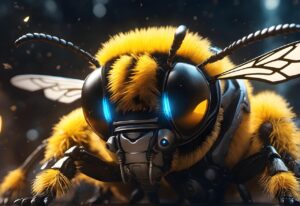
Pixabay. By CharlVera. Published on August 1, 2023

What are Robotic Pollinators?

The structure of a bee is versatile and complex in which enables its ability to maneuver, detect smells and use its visual field to communicate and fly to different flowers. Copying this into a robot is difficult; however, the latest technologies have allowed robotic bees to collect and transfer pollen with a moderate visual field programmed into each autonomous drone. These robotic bees range in size from 3-3.5 cm; however, various robotic pollinators can be much larger depending on the complexity of their mechanical design and computational abilities. In terms of pollination, the robotic bees consist of an ionic liquid gel and gel-coated fibres, which easily pick up pollen and implant it into other flowers.

Pixabay. By Schnapp_schuss. Published on August 15, 2023.

Popular Robotic Pollinators:

MIT’s Robotic Bee:

MIT’s robotic bees are one of the latest robotic bee innovations, which hover for 1000 seconds at a time. This new technology is 100 times better than previous models. One of the key design features is the actuators, which allow the robotic wings to resemble the maneuverability of a bee! The wing structure has artificial muscles, which also contribute to an accurate flight path. For example, the wings flap up to 400 times per second! Unlike previous robot designs, this bee weighs less than a paperclip, which helps increase efficiency and airtime. Some cool functions that this MIT bee can do are spell MIT in the air and perform double somersaults. While these bees are highly talented, they struggle to perform in hazardous environments, for example, harsh wind, severe rain or vertical farm areas. Additionally, the end goal for MIT innovators is to create a bee which can try its best to perform the intricate tasks of a natural bee with the ability to make decisions.

BloomX/BumbleBeeAI:

This robot is created with the help of biomimicry and artificial intelligence to help pollinate crops. This machine uses the cross-pollination mechanism to distribute pollen throughout the crops. The system uses electrostatic forces to move the pollen from different parts of the crops. The main use of this machine was to increase the production of blueberries and avocados, as they are more expensive and limited in the agricultural industry of South America.

Worcester Polytechnic Institute’s Robotic Bee Prototype

This robotic drone uses a lithium battery and 3D printed components to map out what the ideal drone functions should include. This prototype aims to create an independent robot which can last long hours with a battery. The aim of Nitin Sanket, a robotics engineer professor, and their team is to incorporate solar power and biodegradable material; as a result, this can reduce the environmental footprint of the robotic bees. This unique plan, beyond just bee pollination, can inspire other projects to incorporate environmentally friendly components into a multifunctional robotic bee.

Pixabay.By FrederickSnr. Published on January 19, 2023.
Pixabay. By FrederickSnr. Published on January 19, 2023.

What’s Next?

While these robot bees are a great alternative to increase crop production, manufacturers need to consider the environmental implications. For instance, the metal used for these robots has to be mined, which increases pollution. Additionally, products like the lithium battery and waste produced by destroyed robotic bees are not biodegradable. As a result, the material can harm animals and impact the soil.

In summary, robotic bees are a growing technology which can unlock new agricultural systems and facilitate the growing global population. Depending on how they are manufactured, these bees have the potential to replicate natural bees and increase pollination globally.

TLDR;

  • Bees are an essential part of human life: they help grow crops
  • Researchers are trying to innovate a new pollination method
  • MIT has invented a Robotic Bee which stays in the air for up to 1000 seconds
  • Other robotic bees and prototypes are using different strategies to replicate pollination

1,2,3,4,5,6,7,8


Our digital life all based on this!

0

A microchip shape our modern world!

Intro

Every time you unlock your phone or stream a video, a computer chip (as known as Microchip) — smaller than your fingernail — sends millions of signals per second back and forth. Without it, our digital lives simply wouldn’t exist. Why? As all electrical device are more likely to have them. Something big like your vehicle or base stations which is something handle your data. To something detail like genomics, ai, and your phone! Smart consumer tech, data- and telecommunication, home automation, automotive, healthcare, robotics, and more and more! Microchip exist everywhere!

What is microchips

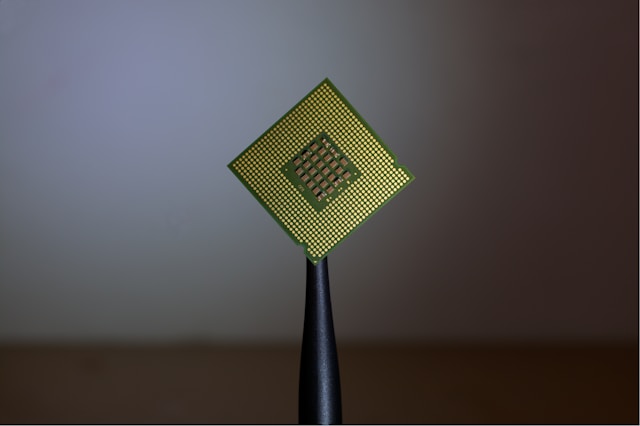
To begin with, what is it actually? There is no way computer chip is just a flat little square metal! So when we talk about a computer chip, we are actually referring to a tiny electronic computer built on a small piece of silicon. Right, the semi-metal we’ve learned in school. And in other word, silicon is a semiconductor, which this property allows it to control the flow of electricity- to switch the circuits on and off.

Of course, a chip isn’t just one simple piece. If you’ve ever read technology news, you’ve probably heard about the development of “2-nanometer” or “3-nanometer” chips, and one nanometer is one billionth of a meter, which is tens of times smaller than a human red blood cell.

At this nanoscale, engineers use advanced techniques to add patterns* on the silicon surface. These tiny structures form the pathways through which electric currents travel, giving the chip its unique abilities. So that means the more patterns or transistors on a chip can fit, the more powerful and capable it becomes!

That’s why companies and researchers are racing to create chips with smaller and smaller nanometer sizes, so that they could have more functions on it and turn our technology becomes faster and more efficient.


————————————————————————————

*: During the production process, manufacturers coat silicon wafer with a radiation-sensitive material, forming a very fine coating called “resist.” When a beam of radiation hits the resist, it triggers a chemical reaction that carves out details such as patterns and circuits on the wafer.


Sources:

https://www.imec-int.com/en/what-we-offer/semiconductor-education-and-workforce-development/microchips/applications

https://www.asml.com/en/technology/all-about-microchips/microchip-basics

https://scitechdaily.com/johns-hopkins-unlocks-new-chemistry-for-faster-smaller-microchips/


Screamfest: You Will Scream

0

Do you like screaming? No, not the screaming you do on amusement park rides..

Imagine that it’s pitch black all around you and all your senses begin to deteriorate, or that you’re being chased by gross zombies who want to eat your “delicious” brain. Or that you’re surrounded by hundreds of possessed dolls, and they’re creepily staring while watching your every move!

I’m talking about Screamfest. Calgary’s most famous Halloween festival that WILL make you scream. In this blog post, I’m going to be talking about what the event is, some tips and tricks to survive (though I can’t guarantee you’ll survive the haunted houses), and all the crazy things you should expect!

Ok, to start us off, what even is Screamfest?

Basically, it’s an event that happens every Halloween (and the days leading up to it) that features a variety of Halloween-related activities. By “activities”, I don’t mean “trick or treating”. I mean everything else that will make you scream your heart out. 

To be more specific, Screamfest features a variety of different activities, such as haunted houses, rides, and a gazillion other attractions too! Don’t worry, there will also be food available to purchase at the event for you to replenish yourself after all that screaming.

What kind of haunted houses are there?

Disclaimer: Nothing in the houses will reach out to touch you or cause you any sort of physical pain (emotional pain is in your hands).

  • Exception: Zombie Outbreak House

There are 7 different thrilling haunted houses for people to choose from, all with a terror-inducing, unique atmosphere.

The Dollhouse: Imagine hundreds of creepy dolls with glassy eyes staring and watching your every move. These dolls aren’t just the typical ones kids would play with, some of them are severed, bloody, and last but certainly not least, possessed. 

Slaughterhouse: As you try to escape this nasty meat locker, participants dodge through hooks while trying to survive the heavy air, where you can almost taste the blood dripping from above you and around the walls.

Clown Town: Me personally, I used to like clowns a lot when I was little, however it turns out that many people are terrified of them. Then again, the clowns I was around made silly jokes and gave me balloon animals. If you choose to go into this house, your fate may not be this lighthearted. In this house, venture into an eerie clown’s basement and hope that you’ll make it out alive.

Bates Motel: Instead of a 5-star luxury resort in the Bahamas, you’ll be staying in a nasty little motel. With blood covering the walls and stenches you’ll never be able to forget, the last sight you’ll probably see is a neon sign saying “no vacancy”– if you have any eyes left to see with of course…

The Clinic: You won’t get any anesthesia here, as your sole purpose in this house is to feel and endure the pain. Doctors will give you procedures that weren’t asked for, and you’ll leave after undergoing an operation you protested against. 

Afraid of the Dark: I don’t think people are scared of being alone in the dark, rather, I think people are scared of not being alone in the dark, and not knowing what’s out to get you. In this house, you’ll step into an abyss of terror and feel your senses deteriorating in seconds. In this black void, you will be navigating sinister twists and turns, hear monsters shrieking in the background, and your hands will probably brush against rotting flesh. I hope you don’t get lost and trapped in the darkness forever! 🙂

Zombie Outbreak: This is the most EXTREME haunted house offered at Screamfest. It’s so extreme that you literally have to sign a waiver to even enter. In this house, the zombies will reach out to grab you, and you must hope that your adrenaline will help you make it out alive (or as dead as a zombie). 

Ok…but what if haunted houses aren’t for you?

Slingshot: Get ready to be launched 200 feet in the air at almost 160 km/h in the dark of night. This will surely induce some screams of terror, won’t it?

Terror in 3D: This is like a level below haunted houses, because you are visually experiencing the terror rather than physically in the haunted house. Hopefully you will make your way through this experience safe and sound (may the odds be ever in your favour).

Area 51 Monster Trucks: In this monster ride, get ready to experience some thrilling bumps and crashes!

Thrills and Rides: The website doesn’t specify, but just assume that there will be some other generic carnival rides. 

Screaming Room: This is level down from “Terror in 3D”, as spooky and scary movies will be screened. 

Midway of Mayhem: There will be a bunch of Halloween themed carnival games, where you’ll have the chance to win a variety of prizes. Get ready to embrace your inner basketball player and toss severed heads into hoops! In order to play these games, you can purchase something called “Killer Cash” along with your ticket. 

Killer Cash: A special Screamfest currency that can be used onsite for games and entertainment

Adults Only Night:If you are above the age of 18 and happen to be reading this post and thinking to yourself, “what if I don’t want to be surrounded by annoying kids and crazy teenagers”? Well you’re in luck as an “Adults Only Night” happens during the festival where you will scream even more!

In 2025, “Adults Only Night” will take place on October 23 2025.

OK, time for some other important information:

Event Dates (in 2025):
October 10, 11, 17, 18, 23, 24, 25, 26, 30, 31 + Nov 1

Time: 7pm-Midnight

Location: Stampede Park 

Address: GMC Stadium, 2200 Stampede Trl SE, Calgary, AB T2G 2W1

Pricing:

On the website only ranges are given, however when you go to book tickets in “Showpass.com” you will see the exact prices (everything below includes tax, however food and etc. are not included): 

General Admission: $38.12

  • One admission to all of the haunted houses (except “Zombie Outbreak”)

General Admission + Killer Cash Combo: $47.66

  • One admission to all of the haunted houses (except “Zombie Outbreak”) 
  • $16 in Killer Cash

General Admission + Zombie Outbreak Combo: $47.66

  • One admission to all of the haunted houses

Speedpass: $57.19

  • VIP Front of Line service (so you can spend less time waiting)
  • One admission to all of the haunted houses (except “Zombie Outbreak”)
  • Two additional entrances to the haunted houses of your choice
  • $16 in Killer Cash 

Speedpass + Zombie Outbreak Combo: 

  • VIP Front of Line service (so you can spend less time waiting)
  • One admission to all of haunted houses
  • Two additional entrances to the haunted houses of your choice!
  • $16 in Killer Cash 

Parking/Transportation:

The nearest train station to the Grandstand is Erlton Stampede station. On the other hand, there is lots of parking located close to the BMO Centre, however there is a $15 parking fee throughout the Calgary Stampede area. 

What to bring vs. what not to bring:

Bring:

  • Your phone
  • ID
  • Any essential items you can’t “live” without

Don’t:

  • Alcohol, drugs, etc
  • Anything that can slow you down when running (ex. big bulky bags)

And ya, that’s pretty much everything you need to know about Screamfest! Good luck trying to survive (because you’re going to need it)!

Sources: 1,2

The Ingenious Invention of the QR Code

0

The Ingenious Invention of the QR Code

The QR code, an invention of an undercover genius, emerged from the manufacturing floors of Japan to become a very important fixture of modern life. It was first developed in 1994 by an engineer called Masahiro Hara and his team at Denso Wave, a subsidiary of Toyota. The “Quick Response” code was designed for one purpose and one purpose only, to solve the inefficiency of traditional barcodes.

What is the QR code?

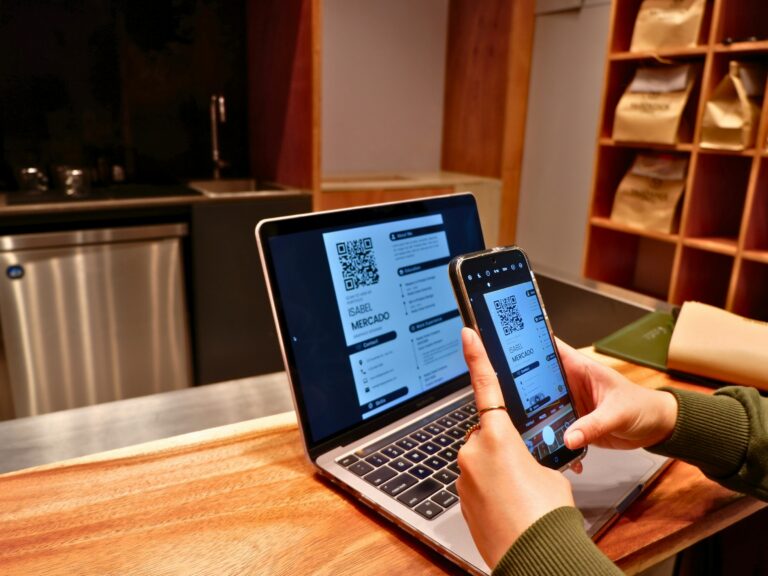
A QR code is a type of two dimensional barcode that is able to store information in a grid of black and white squares, readable by designated scanners, or smartphones. These codes were originally used to track auto parts but now link physical objects (the QR code) to digital content such as websites, contact information, or even WiFi networks.

Why was the QR code invented?

The QR code was invented to improve the limitations of traditional scanning of barcodes. These traditional barcodes had restricted information capacity, and required slow directional scanning. The original barcode was designed to reduce the stress on the wrists of cashiers in Japan during the 1960s which previously required typing prices manually. However, as the use of the barcode spread, their limitations became apparent as well. The most prominent of them all was the fact that a barcode can only hold 20 alphanumeric characters or so of information. Thus the QR code was created to hold 7,089 numeric characters, 4,296 alphanumeric characters, and 2,953 bytes of mixed binary data. But have you ever wondered why QR codes don’t ever run out? Well, the term “QR codes” refers to a pattern-generating system, not a finite number of pre-made codes; the number of possible patterns is astronomically large, essentially infinite, meaning we can always create a new unique pattern by encoding different data. 

How does a QR code work?

How a QR code works is truly fascinating. First, the code is scanned by a smartphone or a dedicated QR code scanner. Then the scanner first identifies the three large, square “finder patterns” in the corners of the code. Then the finder patterns help the scanner determine the code’s orientation, which is the key to being able to read codes that are titled or skewed. Then the scanner breaks down the rest of the QR code into a grid of small squares, and each black or white square is assigned a value of either 0 or 1, which forms a unique pattern corresponding to the data. Finally this binary data is decoded in human-readable information, such as text and so on.

Where is the QR code used?

The QR code is used in a broad array of applications. These can include payments and commerce, directing to websites, applications, and information sharing. You can also find them very useful in healthcare for patient information or contact tracing as seen with COVID-19 apps. Let us know in the comments how you have used QR codes!

The QR code may have started as a simple solution to the limitations of the original barcodes, but over time it has become a powerful and extremely useful bridge between the physical and digital worlds. From its origins in Japanese factories to its widespread use in healthcare, retail, and everyday life, this small square of pixels continues to prove its versatility. What began as a tool for efficiency is now an invention that connects people, information, and technology with just a quick scan.

QR Codes – Wikipedia

QR Code History

How QR codes work

Binary Code – Wikipedia

Will QR codes ever run out?

Can a Vaccine Really Cure Cancer?

0

Every two in five Canadians will be diagnosed with cancer in their lifetime. This statistic is not only shocking to read, but probably means that you know or will know someone in your life with cancer. Millions of lives have been taken by the hands of this deadly, seemingly incurable disease. Fortunately, researchers are under the process of developing vaccines that might cure cancer once and for all. 

Protein (Antigen) Vaccines

A typical vaccine is given before the illness occurs, acting as “preventative medicine.” However, researchers are challenging this idea by trying to make a vaccine that cures cancer even after cancer is found. To understand how it works, it’s important to have a basic grasp on human biology.

Every cell in your body is surrounded by and full of different proteins. Cells constantly die and your body has to make up for that by replacing them; Using a process called “cell division,” the cell divides itself into two. 

Cancer is when a cell mutates from cell division and becomes useless, multiplying in number and spreading across the body. The sheer amount of cancerous cells often lump up and result in tumours, damaging DNA. In a tumour, you’ll find a protein exclusive to the affected area. 

The protein vaccine, (A.K.A. antigen vaccine,) identifies the most common protein found in the tumour and makes a safe copy of it in a lab. The lab-made protein is then injected into the patient, for the immune system to recognize and learn how to attack it. This can be broken down into two parts. The dendritic cells find the lab-made protein to present it to the T-cells, who then learn to attack the real cancerous protein cells. 

Unfortunately, this vaccine has not proven to be 100% foolproof. Side effects sometimes occur in patients such as fever, dizziness, chills, and other flu-like symptoms. 

Personalized Cancer Vaccines

Every tumour is different, containing unique proteins called “neoantigens.” Doctors draw a sample of the tumour to collect the genetic instructions on how to make the neoantigens. They sequence the neoantigens as well as the cell’s DNA to identify the proteins that will react most intensely to the immune system. Afterwards, they inject those neoantigens in the body for the dendritic cells to find, and send the T-cells to attack. This vaccine has proved itself extremely useful especially in pancreatic and skin cancer. 

Conclusion

Everything considered, vaccines prove themselves a highly promising treatment for cancer patients. However, like most other vaccines, there are mild side effects in taking one. What are your thoughts on the topic? Will cancer vaccines truly be the cure to cancer? 

Sources

Cancer vaccines

Cancer statistics

Cancer-busting vaccines are coming: here’s how they work 

What is cancer? | Animation | Minute to Understanding 


My experience volunteering at an Alzheimer’s Center

Youth Central, if you didn’t already know, is a volunteer organization for students to join! It offers a variety of different projects for students to choose and partake in, ranging from volunteering at a peaceful elderly home, serving food at a chaotic stampede breakfast, or even caring for the environment at Weaselhead park. Today, I’m going to be telling you about one of my favorite volunteer projects!!

I’ve volunteered at Club 36 in Seton a bunch of times. The name doesn’t really explain what it is, so it’s basically a day-camp for people over the age of 55 living with Alzheimer’s. You’re probably wondering why they have a day-camp for people with Alzheimer’s, and there is actually a really profound reason behind it. 

When someone has Alzheimer’s or any form of dementia, they may lose the ability to think coherently and take care of themselves, putting immense stress and extra work for their caregivers. Many families like having their loved ones nearby and don’t want to send them to a permanent home, but they may be constantly struggling every day to take care of everything. That’s why Club 36 is there to help. Almost every Saturday, families can drop off their loved one living with dementia, giving them a couple hours to just rest and take time for themselves. At the center, these individuals engage in a variety of activities, including painting, singing, and so much more. 

While I volunteered there I learned about what dementia really is and how it affects the brain, while also learning about effective ways to engage these individuals in uplifting activities. One activity they emphasized was art, and how it is both enjoyable and keeps the mind active. At Club 36, art (and music) is incorporated into a variety of activities, which allows for their minds to not only be active, but to also grant them some simple enjoyment for the day. 

When I volunteered there a couple of times, one of my favorite activities was making a Dreamcatcher. It’s basically an art project where you tape down strings on a piece of paper and then paint over everything. You use bright and beautiful colours while adding glitter and sparkles and anything your heart desires. Once you’re done, you remove the strings and you’re left with a beautiful design. I love this project because not only is the outcome stunning, but I love seeing the people get so happy over little things like this. It kind of reminds me of little kids doing crafts at preschool, and seeing their faces light up with joy when they finish their masterful work. 

Another one of my favorite activities was axe-throwing. I know you’re probably thinking, “ummm are you sure you did that??”, which is a valid question. When I mean axe-throwing, it was just a kids version with small plastic axes, a board, and us standing pretty close to it. Apart from me liking the activity because it’s, well, axe-throwing, I thought it was a good game for the participants to play because it utilized their brain (to aim for the center), and it required some physical movement which is good for everyone. 

Of course this project is great in so many different ways, but I felt that it would be best to tell you some of the challenging aspects too (which actually can be seen as positives if you really think about it). One main thing was it could be a little bit repetitive trying to communicate with these individuals. Like we had to be super patient, annunciate our words, and repeat ourselves a lot. I mean this isn’t necessarily a big issue or anything, and I honestly feel pretty bad because they are facing these issues – but if you ever think of doing this project make sure to be very very patient with them. Another thing to keep in mind was that sometimes they would be very honest and straightforward about what they think. Like they may comment on your hair or say you’re not doing something good enough, and at that moment you just need to keep in mind that they can’t really control themselves and it is your duty to be kind. 

Overall, I really like this project and I encourage all of you reading to definitely give it a chance if you can. You learn so so much about patience, kindness, and seeing them smile can truly light up your day!!

Hope to see you on the next project!!!!!!!!!!

If you wan’t to learn more about Club 36:

https://www.alzheimercalgary.ca/find-support/get-help/club-36

The Rockin’ Future of Diabetes Management

0

For decades, insulin injections have traditionally been the lifeline for millions of people worldwide suffering from diabetes. This seemingly simple, daily routine, while life-saving, may occasionally be invasive, inconvenient, and rather painful. However, in an unexpected turn, with the overlap between science and art, researchers are exploring a revolutionary and rocking approach: rock n’ roll music. Though akin to science fiction, scientists have found a way to stimulate the ways the body reacts to insulin injection without the actual injection part!

The Science Behind the Sound

At the very heart of this idea lies the biological impact of music on the human body. Music, like rock n’ roll, produce strong vibrations that influence brain chemistry, hormone release, and cellular responses unique to high-energy melodies. Research shows that certain sound frequencies can activate the vagus nerve, a nerve primarily responsible for metabolism and blood sugar regulation.

Furthermore, studies on “mechanotherapy” suggest that vibrations can accurately stimulate the pancreas, the organ responsible for the production of insulin. Laboratory experiments have shown that sound waves in the low-frequency range may encourage pancreatic beta cells to release insulin naturally. Rock music, with its powerful bass lines and percussive beats, has shown to be the most effective at encouraging these pancreatic beta cells.

Rock ’n’ Roll Meets Biotechnology

Scientists aren’t just playing random songs and hoping for results. Teams are working with bioengineers to fine-tune music into therapeutic tools. By analyzing the frequency spectrum of rock music—especially guitar riffs, drumbeats, and bass tones—researchers are identifying sound signatures that optimize insulin release. The goal is to create “prescription playlists,” where a doctor could recommend a specific 30-minute rock session as part of diabetes management, a unique and spectacular to minimize the stressfullness of diabetes treatment.

Imagine being told to listen to Led Zeppelin or AC/DC instead of reaching for a syringe. It is more than a fun concept – it’s one that has the power to fully shift the availability and convenience of medicine. Music is accessible, non-invasive, and free of the side effects associated with synthetic drugs or injections, and its intergration into healthcare could leave an impact never felt before.

Possible Challenges

This concept is still in its infancy, meaning clinical trials are required to test whether this musical genre can consistently replace insulin injections for real patients. Not all frequencies are exactly safe, and overstimulation could create unintended effects, depending on the specific patient. Additionally, the approach may work best for type 2 diabetes patients, while those with type 1 will likely still require supplemental insulin.

Conclusion

Rock ’n’ roll has always been about breaking boundaries and rewriting the rules. Now, it may be on the verge of rewriting the future of diabetes care. The shift from the needle to an amplifier is a breakthrough for the ages, and one that could transform diabetes care from a routine of pain and precision into a rhythm of empowerment, accessibility, and hope.

5 Unique Ways to Volunteer in Your Community

0

When you think of volunteering, you may be picturing a large organization (like Youth Central!), or an environment that consists of name tags, a uniform, and team leaders. In reality, you can volunteer in your community completely independent of any organization, or you can even start your own!

For those of you having difficulties finding open volunteer opportunities, here are some unique ways you can make an impact in your community.

1. Tutoring

If you enjoy a particular subject at school or excel in a certain craft, you can offer lessons or tutoring services to teach it to younger kids in your community. From instruments to math, you can get the word out about your speciality by putting up flyers or using social media. Word of mouth is also an underrated way to spread information. Ensure your contact information is clear, and you outline your availability. Remember to make a separate email for your tutoring instead of putting your personal one on blast in public.

Try scoping your close friends’ circle first; maybe they have a younger sibling or a family friend who would benefit from your knowledge. Ensure you know and trust the person before meeting up with them in person. If you’re a teenager, ensure adults are involved throughout the entire process, due to “stranger danger”.

With tutoring, you have lots of flexibility. You can choose to meet up at a library, give your guidance online, have weekly sessions, and more. You can have a parent sign off on hours or track them on your own. It’s surprising how popular tutoring is, and you’ll get an opportunity before you even know it.

Photo by Ralu Gal on Unsplash

2. Dog Walking

If you’re allergic to dogs, I suggest you skip this one for obvious reasons.

Dog walking is an extremely helpful way to give back to your neighbors. Owners may not have time to take their dogs outside due to work constraints or lack of free time, which is where you’ll step in. Similar to tutoring, you can get the word out through flyers and community groups online. Your mom’s Facebook account will come in clutch when you least expect it.

Talk to dog owners who live close by and hand out your contact information. You can get them to sign off on hours if you need it. Since you’re just starting out and not doing this for any commissions, stick to one dog at a time.

Having previous experience with dogs is important for this one. You’ll also need to be prepared for worst-case scenarios, and communicate your comfort level when it comes to large dogs. You’ll need to build rapport with the animal, and you can even get a parent or a friend to join you if you feel like it.

As a bonus, if you want help convincing owners that you’re qualified, you can look into Pet First-Aid courses and show them your certification. Pet First-Aid is a vital skill to have in your pocket. If you already have a First-Aid certification, it’ll be even easier for you to get certified. I found it to be super fascinating in general!

3. Start a Food/Toy/Clothing Drive

This one requires some communication with a larger organization. You can get the word out about your food drive, and either go door to door collecting donations, or set up a specific spot in your community where people can drop off their contributions. You can make posters, take on a leadership role and start an initiative with more people involved, and track your hours based on how much time you put into organizing it.

Once you gather donations, you can drop them off at an organization that will take them. Contact them beforehand to make sure they’re open for donations. You can take a look at their website and look into organizations like the Alberta Children’s Hospital (for toys) and the Women’s Shelter in Calgary.

This may seem obvious, but if you’re donating food, ensure all food is non-perishable. If it’s clothes or toys, do a quick check to make sure they’re in a good state for someone new to use.

4. Write a Kind Letter/Care Card

For those in isolation or facing hard times, a small note of kindness can go a long way. Organizations like the Alberta Children’s Hospital allow you to make and send digital cards to patients in the hospital. You can take the extra step further and deliver the cards yourself!

There are pen pal programs you can look into, and lots of digital opportunities as well. You can widen your scope and start a club or committee that will work with you to brighten someone’s day.

Whether it’s to a senior in your community, a healthcare professional you appreciate, or someone going through difficulties, your kind words can make incredible impacts in someone’s life. I believe that volunteering is about making a meaningful difference in your community, and you can do so by bringing joy to people through small acts of kindness like this one. At the end of the day, the hours are just numbers, and it’s the difference you make that matters.

Photo by Hillary Ungson on Unsplash

5. Start a Club 

If you’re interested in taking on a leadership role, consider starting a club in your school or community dedicated to making a difference. Think of something you’re passionate about and take it to the next level. For example, if you’re passionate about advocating for the environment, start a club dedicated to advocacy, neighborhood clean-ups, fundraising events, and more.

Starting a club requires more people interaction, structure, and organization. This may be a harder way to volunteer more, but it’s extremely rewarding. You can make a bigger impact, and you also get leadership points, which may be useful for college applications or resumes.

Depending on how creative your mission is, your club will gain traction with like-minded individuals. Not many people consider a commitment like this one, making you unique.

TL;DR

Here are five unique ways to volunteer on your own:

  1. Offer tutoring or lessons to kids in your community
  2. Offer dog walking services
  3. Start a food/clothing/toy drive in your neighborhood
  4. Write kind letters or cards to those who need them
  5. Start a volunteering club 

What is economics?

Economics has many definitions in various contexts. The one most often used to describe economics in the context of a simple explanation is “the social science that studies how people and societies make choices to allocate scarce resources for the production, distribution, and consumption of goods and services.”

Economics can be broken down into two main branches:

  • Microeconomics: behaviour of individual consumers and businesses, examining decisions related to supply and demand, pricing, and market competition.

  • Macroeconomics examines the economy as a whole, studying topics such as national income, unemployment rates, inflation, and economic growth.

The field of economics has a rich history that dates back to ancient civilizations. The early study of economics was often referred to as political economy, where scholars focused on understanding how policies and political systems impacted wealth and resources.

16th-18th Century (Mercantilism and the Birth of Classical Economics): During this period, thinkers like Adam Smith laid the foundations of what we now think of as classical economics. His seminal work, The Wealth of Nations (1776), argued that individuals acting in their own self-interest could unintentionally promote the public good through the “invisible hand” of the market.

19th Century (Classical and Neoclassical Economics): Economists like David Ricardo, John Stuart Mill, and Karl Marx further developed ideas about capitalism, markets, and labour. Meanwhile, the rise of industrialization made economic theory even more relevant, as societies grappled with questions of production, distribution, and social welfare.

20th Century (Keynesianism and the Evolution of Economic Thought): The Great Depression in the 1930s led to a major shift in economic thinking. British economist John Maynard Keynes argued that governments should play an active role in regulating the economy, especially during periods of recession. This led to the development of Keynesian economics, which focuses on the role of government spending and monetary policy in stabilizing the economy.

Studying economics offers a wealth of benefits, both personally and professionally. Here’s what you can gain from learning  the subject:

  • Informed Decision-Making
  • Career Opportunities
  • Global Perspective
  • Critical Thinking and Problem Solving


Citations

https://www.investopedia.com/terms/e/economics.asp

https://www.investopedia.com/terms/m/microeconomics.asp

https://www.khanacademy.org/economics-finance-domain/ap-macroeconomics/basic-economics-concepts-macro/introduction-to-the-economic-way-of-thinking-macro/a/lesson-summary-opportunity-cost-and-the-production-possibilities-curve

https://www.cliffsnotes.com/study-notes/19689853

https://www.tutorchase.com/answers/ib/economics/what-is-the-fundamental-definition-of-economics

https://www.sciencedirect.com/topics/economics-econometrics-and-finance/economics

The Power of Volunteering: How Giving Back Changes Lives

0

The Importance of Volunteering

Volunteering is one of the most meaningful ways to contribute to your community and support causes that matter. By giving your time and effort without expecting payment, you help improve the lives of others and strengthen the bonds within your community. Whether assisting at a shelter, organizing events, or mentoring others, volunteering allows you to play an active role in making positive change.

Personal Growth Through Volunteering

One of the greatest benefits of volunteering is the opportunity for personal development. Volunteering helps you build important skills such as communication, teamwork, and leadership. It can also boost your confidence and help you discover new interests or career paths. Many volunteers find a strong sense of purpose and satisfaction knowing their actions have a real impact.

Building Community Connections

Volunteering brings people together from diverse backgrounds who share a common goal. It creates opportunities to meet new people, form lasting friendships, and feel connected to your community. Through volunteering, individuals become more aware of social issues and develop greater empathy and compassion for others.

Supporting Essential Services

Many nonprofit organizations and community programs rely on volunteers to operate. Without volunteers, many important services such as food banks, environmental projects, and educational programs would not be able to function. Volunteering allows you to support causes you care about and contribute to the well-being of your community.

Benefits to Mental and Physical Health

Volunteering is not only good for the community but also has positive effects on your own health. Studies show that volunteering can reduce stress, combat feelings of depression, and increase overall happiness. It provides a sense of purpose and keeps you active and engaged, which improves quality of life.

How to Get Involved

No matter your age or skills, there are many ways to volunteer. You can donate a few hours a week or participate in special events. The key is finding a cause that resonates with you and taking the first step to get involved. Every effort counts and makes a difference.

Conclusion

Volunteering is a powerful way to create positive change and build a stronger, more compassionate society. By giving your time and energy to help others, you not only improve the lives of those in need but also enrich your own life. Volunteering is an act of generosity that benefits everyone involved.

Formula 1: Driving Innovation

0

Formula 1 (F1) is the highest class of international single-seater, open-wheel racing. It is often considered the pinnacle and most prestigious motor racing competition globally 1. Races are held all over the world, and all the drivers (20 drivers, 10 teams) compete for points. Whichever driver and team amass the most points after the entire season are crowned the world champions. Formula 1 is a very competitive sport, all about speed. During the race, the speed can reach up to 372.6 km/h (231.5 mph), to put that into perspective, a blink of an eye is 0.1 seconds, and within that time the vehicle would have traveled more than 10 meters, even under the most severe circumstances. Even a single pound of extra weight can cost up to two seconds, giving other competitors an advantage 2. To be the best of the best, teams spend up to 350 million dollars to develop the most competitive car 3. Formula 1 not only serves as a sport but also as one of the most powerful engines in leading innovation, driving improvements in other fields including automotive, aerospace, and healthcare 4.


Formula 1 fuels innovation in many different ways:

Hybrid Power Technology:

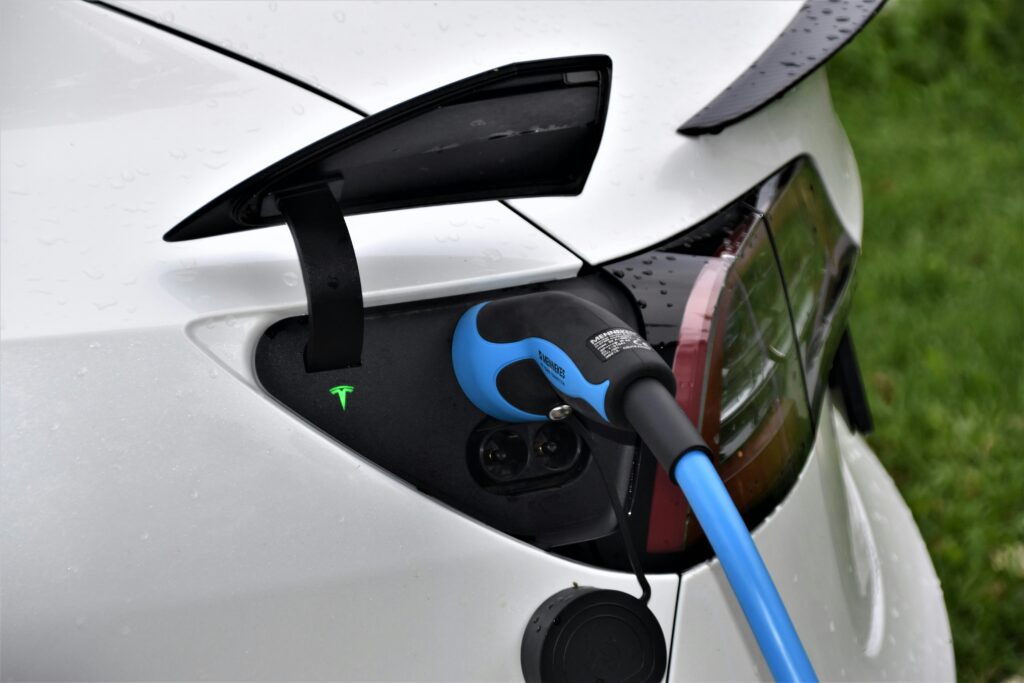
Formula 1 cars consist of a power unit (internal combustion engine and electric motors) that has greatly influenced the development of hybrid cars and electric vehicles (EVs) 5. Formula 1 cars use a system called the Energy Recovery System (ERS), which recaptures kinetic energy under braking. This directly inspired technologies for regenerative braking in EVs as well as energy storage for power grids 6. Furthermore, Formula 1 is focusing on developing sustainable fuels, pushing for a more environmentally friendly alternative in the automotive industry 7.

A Tesla electric vehicle recharging at a charging station
Photo from Unsplash by Waldemar, Published on August 6, 2020


Lightweight Materials and Manufacturing:

Formula 1 uses some of the most advanced materials like carbon fiber and Kevlar, which extend beyond racing to other industries such as aerospace, healthcare, and everyday manufacturing 8. These industries benefit from the lighter, stronger, and more durable materials pioneered in Formula 1.

Close-up of carbon fibre, a strong and lightweight material used in Formula 1 cars
Photo from Unsplash by Komorebi Photo, Published on October 8, 2024


Data Analysis and Simulation:

Formula 1 teams rely heavily on data analysis to optimize car performance. They use machine learning and AI to push the boundaries of what is possible with aerodynamics, materials, and more 9. These methods can also be adopted by other industries, such as aerospace, to produce more effective spacecraft and technology 10.


Safety Innovations:

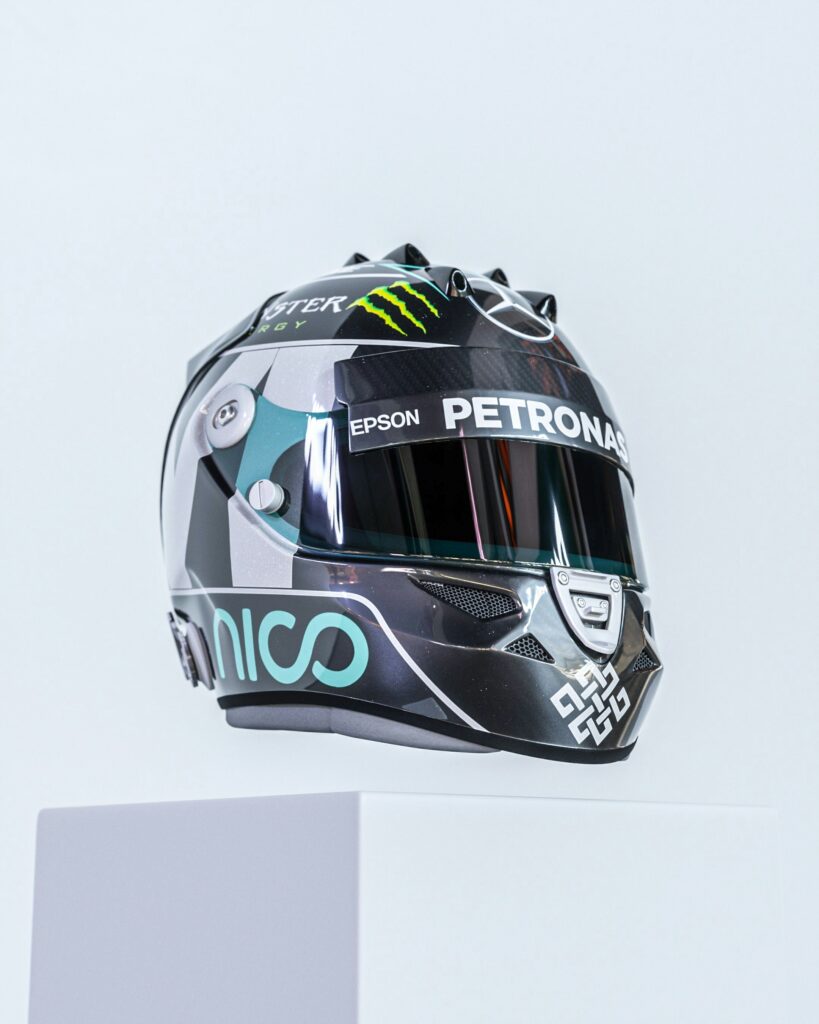
Formula 1 works relentlessly to improve the safety of drivers and others. This is done by combining advanced materials with intricate design. From the development of carbon fiber monocoques to the use of advanced materials in helmets, Formula 1 has pushed the boundaries of what is possible in safety engineering 11.

A Formula 1 racing helmet on display
Photo from Unsplash by Cash Macanaya, Published on May 23, 2025


In essence, Formula 1 isn’t just a sport, but a cutting-edge lab where technologies are developed, tested, and refined to gain an edge for various industries and improve the lives of people around the world 12, 13.


TL;DR:


Sources: 1, 2, 3, 4, 5, 6, 7, 8, 9, 10, 11, 12, 13