
Home Blog Page 20

I Got My Flu Shot in Alberta – Here’s Why You Should Too (News Flash: It’s Not Just About You)

When the air starts to bite and leaves crunch with every step you take, Albertans know two things are coming: first snow…then the unfortunate sniffles. Every year, the cold and flu season sweeps through workplaces, schools, and homes faster than you can say “Kleenex.” This year, as part of my now annual routine, I decided to get my vaccine; something that seems quite simple, but it has a surprisingly big impact. And in all honesty? The whole experience isn’t as scary – or pointless – as some people think. Here are a few things I learned (and myths I think I effectively busted) after talking to pharmacists, doing my daily reading up on Alberta Health Services, and getting my own jab.

Myth #1: “I never get sick, so I don’t need it.” 

That’s what most people think too – you aren’t alone. But vaccines aren’t just for you, they are for everyone around you. When more people get immunized, fewer viruses have the chance – even if it is little – to spread to those who can’t get vaccinated: those small, cute things that cry all the time (babies) or people with certain health conditions. So yeah, maybe you won’t have to face the annoying flu. But your grandma? Your classmate who’s always coughing? They might, and your immunity helps protect them.

Myth #2: “It’s just a cold, surely I’ll survive.”

Of course, without a doubt, most of us can power through a runny nose – and an abnormally scratchy throat – but influenza isn’t “just a cold.” The sneaky flu fills up hospitals in Alberta with people who thought they’d “just tough it out.” As it often goes, missing a few days of work or school may sound like a great trade-off, until you’re lying there: achy, feverish, angry, tired, and just wishing you could actually taste your soup (a new luxury you’ll be grateful for the next time you can.)

Myth #3: “Vaccines have side effects, so it’s obviously safer to skip them.” 

Ah, yes –  the great horrors of mild side effects; the sore arm or fatigue that takes over you after getting a shot are incredibly common. Serious ones? Not so much; they’re incredibly rare. But what’s way more common is catching the actual flu and feeling a hundred times worse. The nurse who gave me my shot this year said it best: “The vaccine itself isn’t the real risk – the virus is.” 

Myth #4: “You can get the flu from the flu shot.” 

Nope. The vaccine uses inactivated viruses; it cannot infect you. What might happen is that people catch another bug around the same time (because, just for a second, let’s be real: Alberta weather turns everyone into walking Petri dishes by November.)

Myth #5: “It doesn’t even work.” 

You’re definitely right – no vaccine is 100%. Although the vaccine does massively lower your chance of getting sick, and if – by any chance – you do get infected, your symptoms are usually milder and your recovery is way faster. Alberta Health adjusts each year’s flu shot to match the most common strains. In some ways, it’s just like updating your antivirus software. 

The bottom line: 

Getting vaccinated is about being proactive – not paranoid. It’s community care disguised as a five-minute pharmacy visit. 

TL;DR:

Flu shots protect you and everyone around you! They’re safe, and fast across Alberta; staying healthy this cold season means one simple thing: roll up your sleeve – not your odds of getting sick. 

P.S. A little pinch today keeps the tissues away. 💉✨

The “Aura” Obsession

In 2025, having “aura” is the new status symbol, it’s less about the looks, more about the vibe. Today, your aura decides how others see you, whether it be confident, humourous, mysterious, chill, non-chalant, or chaotic, even if it’s carefully rehearsed. It’s become the new filter, it’s all about how people edit their personalities instead of their photos. People now chase aura, trying to look effortlessly magnetic without seeming like their trying.

At some point in a person’s life, one asks themselves “Do I look cool?” This rise of aura culture reveals how deeply performance is built into everyday life. We don’t just post pictures anymore; we post moods, expressions, and carefully timed silences. To the point that even authenticity feels staged. Everyone wants to seem real, but no one wants to risk actually being vulnerable to the world.

This obsession with aura clearly demonstrates how social media has changed what we value. Instead of focusing on genuine personality or talent, people shape how they feel to others, the vibe they portray. Having “good energy” has become something you practice, learn, perform, or even market. The quote “Be Yourself” doesn’t apply in today’s world anymore, its more of being the version of yourself that gets the most attention.

People are learning to curate their energy like a brand. From the way they walk into a room to the way they speak in a video, every detail is designed to leave a lasting impression. Aura is no longer just a feeling; it has become a form of digital currency. The people who seem to have it gain followers, attention, and admiration, while those who do not are often overlooked. The line between self-expression and self-promotion is fading fast, and what used to be a natural trait has turned into a skill people feel pressured to master.

In this culture, silence can be strategic, eye contact can be calculated, and even laughter can be planned. The smallest gestures become part of someone’s online presence. Aura has become something people try to maintain, just like influencers maintain a brand image. And just like any trend, it can be exhausting to keep up with. The fear of losing your aura, or being labeled “cringe” or “try-hard,” keeps many people performing even when they are tired of it.

The irony of aura culture is that the more people try to seem effortless, the less effortless they actually become. The whole idea of natural confidence disappears when you are constantly aware of how you look, sound, and move. Maybe that is why so many people are starting to feel disconnected from themselves. When you are always performing for others, you eventually forget who you were performing as in the first place.

Still, the rise of aura culture reveals something deeply human: the desire to be seen and understood. People chase aura not only to impress but also to connect and make others feel something. Maybe the real challenge is not to reject aura altogether, but to redefine it. True aura might not come from being perfect or aesthetic, but from being real enough to show your flaws.

In the end, when the filters fade and the act ends, the truest aura is simply being yourself without fear.

The Dead Internet Theory Explained: How Much is Real?

0

Welcome to my Conspiracy Theory Series, where I break down a new conspiracy theory each month. This first post is a startlingly scary one: the Dead Internet Theory.

What is Dead Internet Theory?

AI-generated content and bots make up a startlingly large percentage of the content we view online. Dead Internet Theory essentially claims that humans have lost control of the direction of the internet because most of what we see online is bot-generated.

Believers of this theory think that the majority of meaningful human interaction that occurs online has been smothered by the sheer amount of fake material. This changes our social media platforms from something to connect with to something that is used mostly to advertise products and ideas.

The theory, originally starting in the early 2010s, has now evolved with the introduction of ChatGPT and OpenAI. It goes beyond just the AI-generated content and delves into the real human interaction that happens on social platforms. Dead Internet Theory claims that most of the comments, likes, tweets, and rants are mostly from chatbots that have nothing to do with the original post, hence creating the dead internet.

We’re drowning in an empty, addictive void of nothingness and meaninglessness because we’re only interacting with machines that feed us more of what we want as we consume mindlessly. Or, that’s what the theory says anyway.

Observations that Back the Behind Dead Internet Theory

Unfortunately, despite my best efforts, I often fall into the trap of doomscroll. But I wouldn’t say I waste my time entirely, because there are a few things I’ve noticed about the content that I’ve been scrolling through, and I’m sure you do as well.

  1. Comments that claim the creator has forgotten to “buy comments/likes”
  2. A completely disbalanced number of comments and likes
  3. An overwhelming amount of AI slop – more on this later, but think internet trend concepts generated by AI, like the brief Italian AI trend of “Tung Tung Sahur” or the Sad Cat Songs
  4. Comments that include seemingly unrelated material to the post
  5. AI Voiceover – there’s so many creators that use AI voiceovers that we’ve learned to associate certain tones and voices with scrolling.
  6. Reposts. So many reposts.
  7. AI in the captions: notice all those em-dashes? The emoji bullet points? That’s not always human.
  8. AI errors in product titles.

Furthermore, many people have observed that after posting, their feed and the responses to their posts are needlessly irrelevant and clogged with AI and chatbot responses.

Evidence Against the Dead Internet Theory

We’re not yet drowning in a mindless void. Most of the posts that go viral are still from extremist views or exaggerated reactions. Unhinged comments and audios are still mostly made by humans, mostly since AI doesn’t understand human behaviour and internet culture quite yet. Social media platforms and large websites have large efforts to delete and remove bots and “inorganic” activity.

The raw experiences, many of the funny cat videos, and most of the stories that are shared are still human. However, the Dead Internet Theory is still a chilling idea because it’s not altogether untrue. There is a lot more AI and bot-generated content circling on the Internet than there was even five years ago during COVID.

The Dead Internet Theory does what many good conspiracy theories do: it takes an existing fearful experience and magnifies it to a depressing and unfortunate scale. But let’s keep in mind that this experience had to exist for it to truly be magnified this much.

TL;DR

A lot of interaction on the internet is generated by bots, which has led many to believe that the Internet is essentially “dead” and devoid of meaningful interaction. This has been magnified by the introduction of AI and bots. However, it’s important to remember its inability to understand contextual cues and internet culture limits bots from truly imitating human behaviour, so the Dead Internet Theory is not altogether true. It is true that there’s a lot more internet slop and meaningless generated content, though, and if we want to avoid creating a real Dead Internet, maybe we should take this as a sign to consume information with more intention.

Source:

How does Advocacy Rewire the Brain?

0

“The smallest act of kindness is worth more than the grandest intention.” – Oscar Wilde

There’s a moment, subtle, almost electric, when awareness becomes action. When you scroll past another injustice online, and instead of not thinking about it for more than a second, you stop. You sign a petition. You speak up. You start caring differently. That moment is more than emotional. It’s neurological. When you choose to act, your brain begins to change. 

Our brains are wired not just to survive, but to connect. Within your frontal and parietal lobes, mirror neurons, along with others, fire when you witness someone else’s pain. It’s why your stomach knots when you see someone cry, or your chest tightens during tragic news. The insula, which processes emotional awareness, and the anterior cingulate cortex, which helps us respond to social signals, also activate. These networks, together with oxytocin, serotonin, and dopamine, spark empathy and the first flicker of understanding that says, “That could be me.”

But empathy alone doesn’t sustain advocacy. What transforms feeling into doing is the collaboration between the amygdala, where fear and emotion form, and the prefrontal cortex, the brain’s moral compass. The ventromedial prefrontal cortex evaluates the consequences of our choices, and the hippocampus recalls past injustices that motivate us to act. When emotion, memory, and reason align, compassion gains direction. It becomes action.

Psychologists describe learned helplessness as what happens when people stop trying after repeated failure or injustice, believing their actions don’t matter. Advocacy reverses that wiring. Every time you take a step, like writing a letter, organizing a discussion, or raising awareness, your brain experiences a dopamine reward loop. Action is reinforced, agency becomes associated with positive feelings, and neural pathways linked to motivation, resilience, and social engagement strengthen. Over time, advocacy isn’t just something you do, it’s something you become. Neuroscience shows that the more we act for others, the more deeply connected and purposeful our own lives feel. By helping others, we heal the parts of ourselves that once felt powerless.

Here in Alberta, advocacy takes countless forms: youth pushing for better climate education, students amplifying Indigenous voices, and volunteers shaping mental health programs that actually listen to youth. At first, these actions might seem small or local. But they mirror what happens inside a growing brain: connections forming, firing, strengthening. Each act of advocacy builds new pathways between communities, ideas, and possibilities, until something larger emerges: collective consciousness. Globally, movements like #FridaysForFuture, #EndSARS, or #BlackLivesMatter follow this same neurological pattern. When enough “neurons” (people) activate around a shared belief, the world begins to learn something new. Humanity’s moral circuitry evolves. Advocacy, at its core, is humanity’s form of neuroplasticity.

True advocacy doesn’t start with outrage, but it begins with awareness. When we listen before reacting, when we question systems instead of individuals, when we replace apathy with empathy, we are reshaping the architecture of our minds. The brain thrives on repetition. Every repeated act of compassion reinforces its neural groove. Over time, caring becomes instinctive. And once caring becomes instinctive, progress becomes inevitable. If our brains can be rewired to grow, then so can our societies. Change doesn’t just happen in protests or parliaments, it happens in the quiet rewiring of human thought, one synapse, one heart, one act of courage at a time.

Ask yourself: What causes lights up my empathy circuits, and what small action can turn that feeling into advocacy today? Every act of advocacy, no matter how small, sends a signal into the world’s collective brain, a spark that says we are learning to care better.

If you found this piece thought-provoking, you’ll love my upcoming series, Rewiring Minds: The Neuroscience of a Better World. It dives deeper into how empathy, bias, and hope shape not only our brains, but the societies we’re building. Stay tuned for the first post coming soon. Because changing the world starts with understanding the mind that makes it.


The Hidden Language of Trees

1

When most people walk through a forest, they think it’s peaceful and quiet. You might hear the wind brushing through the leaves, a bird chirping in the distance, or the crunch of twigs beneath your feet. But if you stop and really think about it, there’s something mysterious happening around you. Beneath the soil, trees are talking to each other. Not with words or sounds, but through an underground network that scientists have started calling the “wood wide web.”

This isn’t a fantasy idea. It’s a real scientific discovery that has completely changed how we understand forests. For centuries, people thought trees simply grew side by side, competing for sunlight, water, and space. But now we know that forests are full of cooperation. Every tree is part of a living system that quietly communicates, shares, and even protects its neighbors.

If you could look underground, you would see that a tree’s roots are connected to something called mycorrhizal fungi. These tiny thread-like structures form relationships with almost every plant species on Earth. In return for sugars that the tree produces through photosynthesis, the fungi help gather nutrients and water from the soil. What’s truly fascinating is that these fungal threads can stretch out and connect multiple trees together.

Through this hidden web, trees send each other chemical messages and nutrients. When one tree is struggling, others nearby can actually share resources to help it survive. For example, if a young sapling is growing in the shade and not getting enough sunlight, older trees can transfer carbon through the network to keep it alive. Scientists have even seen “mother trees,” which are large, ancient trees, sending extra nutrients to their own seedlings. It’s almost like a parent looking after its children. Trees can also send warnings through this network. If one tree is attacked by insects, it releases distress signals underground that alert nearby trees to produce chemicals to make their leaves taste bad to pests. In a way, it’s like the forest version of a group chat where everyone warns each other when danger is near.

When scientists first discovered this underground communication system, they were stunned by how similar it was to the internet humans created. The fungal network acts like cables, transferring information and resources between trees. The trees are like users, each with something to share. Some even send more data than others, depending on their size and strength. What’s even more interesting is that trees seem to understand balance. They don’t send signals all the time because the system would become overloaded. Instead, the forest operates with a quiet rhythm, always making sure that the community stays healthy. This kind of collaboration shows that survival in nature isn’t always about competition. Sometimes, it’s about working together.

Learning how trees communicate isn’t just something cool to think about. It’s also incredibly important for our planet. Human activities like deforestation, mining, and urban expansion are destroying these networks. When we cut down a forest, we aren’t only removing trees. We are tearing apart a communication system that has existed for millions of years. Scientists are now trying to apply what they’ve learned from forests to help create sustainable farming systems. Imagine if crops could share nutrients with each other like trees do. Farmers could use less fertilizer, reduce waste, and still maintain healthy soil. Understanding the forest’s cooperation could help us design a future where technology and nature work side by side.

What makes this discovery so significant is that it forces us to rethink what it means to be intelligent. We often assume that intelligence requires a brain, but trees show that information can flow in other ways. They can sense, remember, and respond, all without neurons or thoughts like ours. Now, whenever I walk through a park or see a line of trees along the road, I can’t help but imagine what’s happening beneath my feet. Are they sharing resources? Are they warning each other about changes in the environment? It’s strange to realize that something so silent can be so alive with communication.

Maybe the forest isn’t quiet after all. Maybe it’s whispering, in a language we are only just beginning to understand.

From Addiction to Connectivity: Battling a Social Media Addiction

Introduction

You have an important assignment due tomorrow, three upcoming tests this week, and you feel your eyelids drawing shut as the night approaches. You know that you should probably finish that assignment, review for those quizzes, and get into bed as soon as possible. Yet, that glow of blue light indicating an Instagram notification draws your hand towards it. And before you know it, a few seconds of replying to a friend on your phone turns into 30 minutes of mindless sifting through the multitude of possibilities known as Instagram Reels.

And the worst part is that all parts of your body know that it’s better to put away that phone. Your eyes feel it, as the blue light strains them, your heartbeat increases as you begin to feel those long term stress response hormones firing, and you slowly begin to feel restless. Despite all your conscious senses pointing you towards your study, that one small part of your brain still wants to watch just one more reel. I find that bewildering.

I used to believe that the solution to this was to tune out of all social media platforms. From personal experience, however, I realized that merely deleting an app does not address the underlying problems behind addiction. What I experienced was that whenever I deleted Instagram from my phone, I would develop an irresistible fear-of-missing-out that would just prompt me to reinstall it a few days later. That does not solve the problem.

Instagram’s Designed to Addict you:

I think that all of us, to some extent, know this. But personally, I never understood the psychological reasons as to why and how. As I sat down to write this blog, I found this research paper that describes several features of social media apps that are designed to hook you. One that stood out to me was the variable reward system.

Variable Reward System

Social media apps manipulate the reward pathways in our brains. It is a natural human tendency to seek validation from our peers, and in Instagram, that validation comes in the form of likes and comments on posts. The hits of dopamine, a neurotransmitter and hormone that influences the reward pathway, incites emotions of pleasure. Whether the pleasure be from viewing a #relatable reel, or seeing our friends like our posts, we crave more of it. After that taste of dopamine, we want more, and of course, our source is from the beloved Instagram.

If you’ve taken any biology courses, you would recognize this cycle as a positive feedback loop. Yes, our conscious senses want to quit doomscrolling, but our involuntary craving for the sense of accomplishment that Instagram provides keep us going, despite the obvious drawbacks of this addiction.

Great, so what do I do?

It’s frustrating that the success of the multi-million dollar companies that own these social media apps comes from the compromise of our mental health. Still, the connectivity and sense of community fostered by social media is an undeniable benefit. The key, therefore, to combatting an addiction, is to focus more upon this connectivity part of social media.

Adjust your FYP

Your “for you page” is most likely the first thing you see when you open Instagram, or any other app. Instead of consuming the content from trending social media influencers, try customizing your FYP to provide feed that is tailored to your personality. For example, if you’re interested in wildlife, follow the National Geographic Instagram page. That way, whenever you check Instagram, you view content that matches your interests and identity, rather than forcing you to conform to what the majority appreciates.

Take Breaks in your study

Personally, I resort to Instagram whenever I feel burnt out from studying. I crave a quick source of break. The Pomodoro technique, which involves spaced out studying with short 5-10 minute breaks in between, generally helps me. It’s important, however, that these breaks remain short. Ideally, I would advise against doing anything that involves your phone. I usually take this time to finish writing up any emails, or reading a page of two of a book (but make sure the book is one you can easily put down). By taking breaks, you avoid burn out, and are hopefully less tempted to check your phone to distract yourself.

Have clear deadlines

This might seem unrelated to social media addiction at a first glance, but it ties into my previous point. When you have clear, achievable goals in your study, it is easier to avoid burnout. For example, it’s much more achievable to tell yourself “I’m going to complete one set of textbook questions of the Endocrine system unit every night from the textbook for five nights,” compared to “I’m going to do all the textbook questions associated with the Endocrine system.” This way, when you do achieve your goal, you get a sense of satisfaction accompanied by dopamine release. You will not have to pick up your phone for that same sense of false satisfaction.

Conclusion

Of course, while I am attempting to find my way out of an Instagram addiction, by no means am I completely free of it. The guilt that comes with a realization that you just wasted precious time scrolling through Instagram is an awful feeling. However, it is never too late to help yourself by tuning out, and I hope this blog provides you with a meaningful start on how to do this.

“Your Voice Matters” A Youth-Led Campaign

0

Hi everyone! Today I’m going to be talking about a virtual letter writing campaign I started because of the 2025 Alberta Teacher Strike!

Even though it’s all over the news, with political debates and back-and-forth negotiations, there’s a massive crucial voice that’s been totally missing from the conversation. That voice is ours (the youth). As students (all the way from Grade 1 up to Grade 12), we’re the ones sitting in uncertainty. We’re feeling the direct, stressful impact of missed material, delayed exams, and a major disruption to our daily lives.

My name is Diya Kunisetty. A Grade 11 Full IB student and the Chair of the Young Politicians of Canada (YPC) – Alberta Chapter. It’s basically a youth led, nonprofit, and non-partisan organization that aims to foster civic engagement amongst youth and provide them with opportunities to lead initiatives and get their voices heard. Because I was personally affected by the chaos, I knew we couldn’t just wait around, which is why I started (with the help of our amazing team, shoutout to Diva Negi who is also part of the YAA blog) : “Your Voice Matters.”

What is “Your Voice Matters”?

Our goal was to simply give every student a safe, anonymous way to share their honest thoughts, because I know that not everyone wants to be interviewed on camera or use their full name. On the other hand, everyone has a strong opinion when it comes to their education. So, we built a virtual letter-writing campaign where students could anonymously send us detailed, thoughtful letters about how the strike was impacting them.

In just 6 days, the campaign proved how badly youth wanted to engage. These numbers showed us how much students cared about the teachers and their education, and we were thrilled that we could provide a platform for students to showcase their raw and authentic opinions. 

Our campaign generated over 65,800 views on Instagram, 1,300 interactions, 147 followers all in just 6 days ( we started this on October 20 2025 and the day I’m writing this is October 26 2025). We received dozens of powerful letters from students aged 6 to 18 across the entire province.

What do these letters really tell us?

These letters weren’t just angry rants about the government (actually no, if I’m being 100% honest there were a couple rants here and there). However, in terms of the majority of them, we could clearly feel the emotional weight of the situation:

  • The Anxiety for the Future: We’re reading letters from students terrified about diploma exams, stressing over university applications, and feeling like they’re falling behind.
  • The Emotional Weight: Many youth shared feeling lost, unsupported, and stressed out by the constant instability in their learning environment.
  • The Passion: Despite the frustration, the letters show how deeply students care about their teachers, their schools, and the quality of their education.

A Challenge to Every single person reading this post. 

Your voice is your most powerful tool!

Talking from experience, you don’t need years of experience or a massive budget to launch an impactful project. If you have an idea, you just need a platform (even a simple Google Form or a strong social media presence) and the drive and disciple to keep you moving. 

We are so grateful for the initial boost from amazing organizations like Youth Central, advocates like Evan Li and many other accounts such as:

  • @protectpubliceducationab 
  • @airdrieboardofyouthaffairs 
  • @albertastudentstrikewalkout 
  • @ab.students.for.teachers 

Now we want to hear YOUR voice. Before the strike ends, write a letter (even as short as 2 sentences) about what YOU feel about the strike. Your voice is incredibly important and we want to amplify as many as possible. Even if you don’t want to (it takes less than 3 minutes), at least do the bare minimum of sharing it with a friend or sibling (under the age of 18). 

Like the campaign says, your voice matters! As students, we should actively take control of the situations happening around us each and every day (especially in times like this). 

Here is the link to write your letter today!: https://forms.gle/9MpGBc3fEuwz5Ac59

Link to check out our campaign on Instagram!

https://www.instagram.com/your.voice.matters.ab/


Which Classic Horror Movie Character Are You?

0

Which Classic Horror Movie Character Are You?

In the mood for something spooky? With Halloween just around the corner, take this terrifyingly amazing quiz to find out which iconic horror movie character best matches your vibe. At the end, add up all the points from each of your answers to reveal your horror movie twin!

Warning: All of the characters mentioned in this blog are from movies that are rated R. 

Question 1

What’s your ideal fall day?

a) Biking with your friends around town (1pt)

b) Staying inside and taking long naps in your bed (2pt)

c) Doing your skincare routine and listening to music (3pt)

d) Going out to a concert and partying all night with your best friend (4pt)


Question 2

Quick! An intruder has broken into your house. How do you react?

a) Reapply my lip gloss. I can definitely persuade them to leave with my charm. (4pt)

b) Reach for my business card. This is a great opportunity to network! (3pt)

c) Start thinking of a witty pun. Nothing like a quick-witted remark to send someone running (2pt)

d) Disguise yourself. Nothing like a quick outfit change into the intruder’s worst nightmare to scare them off. (1pt)

Question 3

Which statement describes you best?

a) I have killer humour! The darker the comedy, the better. (2pt)

b) I’m very sociable, I can make friends practically anywhere. (1pt)

c) My confidence. When I walk into a room, all eyes are on me. (4pt)

d) I like to go with the pack. I prefer to follow trends. (3pt)

Question 4

Which movie do you like the most?

a) The Godfather (3pt)

b) Mean Girls (4pt)

c) The Greatest Showman (1pt)

d) Inception (2pt)

Question 5

What’s your favourite movie trope?

a) Found family (1pt)

b) Makeover scene (4pt)

c) Unreliable narrator (3pt)

d) Secret Character Backstories (2pt)

Add Up All Your Points!

Using the points from each answer you picked, the sum aligns with one of these iconic horror movie villains.

  1. Pennywise (5-10)
  2. Freddy Krueger (11-15)
  3. Patrick Bateman (16-20)
  4. Jennifer Check (21-25)

Pennywise (IT)

You are a jokester at heart, although sometimes people may find your humour to be more unsettling than amusing. You love to clown around, but are also very perceptive about people around you, and can pick up on what others are thinking easily. 

Freddy Krueger (Nightmare on Elm Street)

You are extremely confident and love to make a grand entrance. You’re probably really into astrology and finding out what your dreams really mean. When you have a goal, you are determined and won’t stop until you achieve it. 

Patrick Bateman (American Psycho)

Self-care is the most important thing to you (even though that sometimes means making some sacrifices). You usually like to hang out by yourself and enjoy the company of a good movie or song.

Jennifer Check (Jennifer’s Body)

You are a people person; you love hanging out with friends and starting some drama. You probably have a signature scent that everyone knows you by, and you are usually found at the mall with your posse of friends. 


How Futurism Fueled Fascism in Early 20th Century Italy

Within Italy in the early 1900s, the values of fascism were exemplified through the shift of society towards a fast-paced, productive, and modernized way of life, based on societal mechanization. Fascism, the ultra-right, authoritarian belief system focuses on national pride and overall prioritization of order over freedom or individualism of its people.

The resulting art was Futurism! It consisted of fast brush strokes, vibrant colors, shapes, repetition and uniformity. This was an illustration of the progression of society and how citizens were becoming increasingly similar, while living mundane and industrial lives. Europe, more specifically Italy, was embracing technology and mechanization with open arms, to replace their prior lives, dreaming that technological advances could change their lives for the better. Many futurists and fascist dictators envisioned Italy rapidly developing through the increased production of goods and industrialization. 

This avant-garde artistic and social movement was founded in Milan in 1909 by a poet named Filippo Tommaso Marinetti, whose 1909 manifesto called for a violent break with the past and the rise of speed and the industrial city as the epitome of modern life. 

The modern image of Italy included violence, speed, technology, and machinery, all similar values to Futurism’s art, allowing the infamous Benito Mussolini to align with this progress, appealing to younger demographics who dreamed of a modern Italy. By utilizing this booming culture that integrated Futuristic art, Mussolini and his fascist party created a visual culture of a strong, nationalistic, and modern Italy, while completely rejecting ideals of democracy and classical liberalism.

 Futurism itself as a movement was anti-traditional and completely anti-liberal, seeking the destruction of the implementation of liberal principles and individualism. Fascist propaganda, infused with the bold, aggressive imagery of Futurism, depicted Mussolini as a visionary leader, where Italy as Europe’s powerhouse. 

This culture instilled a huge sense of pride and nationalism in young Italians, who rejected liberal ideas of the generation prior to embracing the strength and discipline now promoted by fascism.

By aligning art and culture with his promises of a bold and proud Italy, Mussolini garnered the attention of Italians far and wide, looking for this positive change that was supposedly meant to arise from the implementation of fascist principles.

Sources: 1, 2

What truly being mindful of our essential workers looks like, with the small steps.

0

Intro

It only seems like we should celebrate different groups of people annually, when our best respect is in raising awareness of their help to take consistent actions. So, how can we support those who are responsible for the groceries we buy, where our trash goes, saving our lives,  driving modes of transportation, etc.?

 Calgary recently held its municipal election on October 20th, a time to ponder where our efforts from long and drifting days and nights end up or count towards. Choosing a recognized leader who has specific views on the hardest working people in the city and taking care of them can forever change the future from what some may see fit. But millions of people make a much larger difference in retrospect; it’s often that we blind ourselves to the true power we possess. Regardless of your own whereabouts while you’re reading this, here are some recommended actions of civic responsibility to take. Keep in mind, these may seem basic, but they can only be positively impactful.

Watching where your garbage goes

Only excuses pile on each other, and so does garbage, soon after it’s instinctual. Going to community events or specifically hosting cleanups (within legal terms) means a lot to the planet and garbage workers. Before relying on a trash can, perhaps hold onto a smaller piece for a little while and take it to your place or another spot. It gets full pretty fast, and makes managing harder since it’s been normalized not to pick up after yourself and throwing soda cans, plastic containers, and trash in a single can, or even on the floor.

Go to community events, specifically those that work for mental health to be more accessible.

Mental health services are only there to help those who need to understand the importance of lying low, even when they’re pressured not to or have much on their plate. They are significant to every person out there and are necessary against stigma and discrimination. In any space where you and others could spread a spirit of warmth and strength, it is possible and needed. Usually, bigger causes can reach people who don’t have the resources, but it’s always more powerful to do it in your community if you have the opportunity. Tutor kids, coach a little basketball or soccer team, and come up with all sorts of passion projects combining the things you love to do while helping your community. It’s easier said than done, but definitely rewarding. As Arthur Ashe said, “Start where you are. Use what you have. Do what you can.” Volunteering is also quite useful, especially somewhere like YAA at Youth Central. But volunteering is unique to everyone, regardless of hours and needs.

Put less focus on energy. Remove the excess, reduce the bills…

This, I feel, is the simplest, but ever decreasingly attention spans are having a tougher time catching up with. Unplug the devices, including appliances like the kettle and microwave, as soon as you’re done using them or when you see one that’s still plugged in. Never have to drive up those bills you will eventually pay for.

Productively use public services. Appreciate and take it all in.

Exercise your freedoms by taking a nice walk in the park and using the bathrooms without leaving more waste than you found there in the first place. Be vocal on the things you care about, perhaps by providing feedback on budget plans and public safety in the places you fancy yourself around. Many people are drawn to a calm and peaceful environment, which is why they continue to live here. Never be afraid to be an active and engaging citizen in times when they are significant.

Advocate for current issues. Have intriguing conversations and debates, and harness your voices.

Speaking of vocals (not the singing kind), advocate! Participate in conversations with friends and update yourself on news that may be of importance in the long term. For Alberta, it’s the teachers’ strike. Globally, there’s too much to discuss. The only thing we can do as youth is to question; many of our efforts can go to waste if no one is protesting. Are we comfortable with what we see? What do we have to say? Write to your MLAs/ government officers, attend rallies or even host them, spread the news on social media platforms— TikTok, Snapchat, Instagram, and work to have your voices understood so that it’s easier to address local issues at hand. Grouping yourself with other people with similar interests can always make the job easier. You need to become a way for impact to be felt in your communities to create action for demands and strengthen the vitality of the spaces in which you’re present. Who knows, maybe we are bonded through clarity and passion? We just have to try.

In Nepal, the country’s Gen Z was able to overthrow their government and decide on a new leader on a Discord server. Change is prevalent; it can occur once power emerges much stronger than before. Whether you would like to get a job or a new government altogether, protesting and creating opportunities are the medicinal potions for chaos.

Final Notes

TL: DR; If you want to help essential workers in your communities, enact action to help your community as they’ve helped you. Picking after yourself, attending community events or hosting your own, reducing energy and water bills, and advocacy are good ways to lead.

I think this was a pretty basic explanation of ideas, but I was motivated by the thought of someone getting inspired to do something for themselves and others. Most of the work is your own, but reading this provides food for thought on what you may envision for a better future and nation through seeing your individual perspective as an asset. A lot of the workers we build relationships with, mostly for a short time, influence our mindset towards achieving goals with teamwork. And youth, the biggest audience of the YAA blog, have the key to make and access change in the systems, they just have to start with brainstorming evocative actions and develop them suited to their skills and hopes. Making wiser and responsible choices to lessen the burden on teachers, garbage workers, business owners, and guardians leads you down roads to understanding current issues. Now start with any chat or discussion amongst peers or your close ones, and you’ll begin to understand a lot more.

Let me know what your thoughts are on this topic. I would love to know your opinions and the ideas you would add, particularly those that are unique. Thank you for reading!


5 Rare Reflexes You Probably Didn’t Know Existed

Everyone knows about the knee-jerk reflex, the automatic leg kick when someone hits below your kneecap. But what if your body had a whole catalogue of hidden reflexes firing off, reactions you didn’t ask for, and might not have known even existed?

Turns out, it does. Your nervous system is running its own chaotic sideshow, blending biology, evolution, and the occasional embarrassment. Here are five weird reflexes that prove your body can have a mind of its own.

1. The Sun-Sneeze Reflex (ACHOO Syndrome)

You step outside on a bright day, the sunlight hits your eyes, and you sneeze. It feels random, but it’s actually a condition known as the photic sneeze reflex, or ACHOO syndrome (Autosomal Dominant Compelling Helio-Ophthalmic Outburst – yes, someone clearly enjoyed naming that).

Roughly one in four people has this condition, and it’s inherited genetically. Scientists think it happens because of a mix-up in the wiring of the trigeminal nerve (which triggers sneezing) and the optic nerve (which reacts to light). When the optic nerve sends a sudden burst of signals in response to sunlight, some of that activity ‘leaks’ into the trigeminal nerve, fooling your body into thinking you need to sneeze.

It’s harmless, but surprisingly strong: people with ACHOO can sneeze three to five times in a row when exposed to bright lights. Fun fact: pilots are actually warned about it, since sneezing fits while flying can be dangerous during takeoff or landing. 

2. Snatiation – (Sneezing and Satiation)

Imagine this: you’ve just demolished a big bowl of pasta, you lean back feeling victorious, and suddenly, you sneeze. It’s not a coincidence, it’s snatiation, a rare reflex where people sneeze repeatedly after eating large meals.

The word “snatiation” combines “sneeze” and “satiation,” and the reflex was first documented in the 1980s. That cause? The vagus nerve, a massive nerve running from your brainstem down to your stomach, is to blame. When your stomach stretches after a big meal, it sends signals through the vagus nerve. In some people, those signals cross paths with the nerve pathways that control sneezing. 

It’s a quirk of anatomy, not a food allergy or illness, and can run in families, suggesting a genetic link. If you’ve ever sneezed mid-bite and confused your dinner guests, congratulations: your body’s feedback system just mixed up hunger with hay fever.

3. The Photic Tear Reflex – Crying in the Light

You step outside and your eyes immediately start watering, even though you’re not sad. You’re not having an emotional moment; your body is just overreacting to sunlight through something called the photic tear reflex. 

When your pupils contract sharply to adjust to sudden brightness, that same stimulus can trigger your lacrimal glands (which work to produce tears) into overdrive. The reflex is protective: those tears help lubricate your eyes and shield them from UV damage. But it can feel a little dramatic, as if you’re crying at the sky for no reason.

Researchers think this reflex shares evolutionary roots with the mechanism that protects your cornea from debris, dryness, or injury. So, if your friends ever tease you for tearing up on a random sunny day, just tell them your eyes are overachievers at self-care.

4. Mirror-Touch Synesthesia – Feeling What You See

This one sounds like a superpower: people with mirror-touch synesthesia physically feel sensations they observe happening to others. If they see someone get poked in the shoulder, they might feel a faint poke in their own shoulder, too.

This happens because their brain’s mirror neuron system, the network that helps us empathize and understand others’ actions, is hyperactive. In most people, mirror neurons light up when they watch someone else move, but stop short of triggering actual sensations. In mirror-touch synesthetes, the boundary between ‘them’ and ‘me’ blurs, and the sensory signal spills over.

This occurs in approximately 1 in 100 people, but it offers fascinating insights into human empathy. These individuals often report being more emotionally attuned to others; their brains literally can’t help but feel what someone else is going through.

5. Vasovagal Syncope – Fainting at the Sight of Blood

Ever felt dizzy or lightheaded at the sight of blood, needles, or even standing up too fast? That’s vasovagal syncope, one of the body’s most dramatic reflexes.

Here’s what’s happening: the sight (or even thought) of blood triggers your vagus nerve, which suddenly slows your heart rate and dilates your blood vessels. This causes your blood pressure to plummet, leaving your brain momentarily starved of oxygen and making you faint.

It sounds random, but scientists think it’s evolutionary. One theory suggests that fainting at the sight of blood helped ancient humans survive violent situations by ‘playing dead’ or reducing bleeding after injury. It’s not ideal in modern life (especially at the doctor’s office), but it’s proof that your nervous system has roots in much older survival instincts.

You’re Basically a Walking Science Experiment

From sneezing and crying in sunlight to fainting at the sight of blood, these reflexes prove one thing: your body is full of hidden wiring and misfires that make life a little more interesting. Each reflex started with a purpose–protection, empathy, adaptation–but evolution never quite cleaned up the extra code.

So next time your body does something weird or involuntary, don’t panic. Just remember: behind every sneeze, shiver, or fall, it’s a little fun story about survival, biology, and the beautiful chaos of being human.

Sources:

More On The Finalists Of The 19th International Chopin Piano Competition

0

With the 19th International Fryderyk Chopin Piano Competition just concluding, we have witnessed a record number of applicants, new repertoire requirements, and an expected scrutiny of jury decisions from the public.  This year’s competition was hosted in Poland and I had the joy of watching it! Well, watching it on my computer, unfortunately not at the National Philharmonic in Warsaw – but it was still amazing!

Thoughts on this year’s competition:

As I tuned into the livestream of the event over the past few weeks, I was really struck with the realization of how so many branches of diverse talents have unfurled from the single tree of one person’s beautiful legacy. I was so moved by all of the competitors, by their performances and their devotion to music and excellence. And as I laughed at the usual dramatic comments of “so and so was robbed”, and rolled my eyes at the incredibly pretentious comments of “music connoisseurs” dissecting barely made mistakes, I became as equally moved as when I listened to the performances. Though controversy is usually expected when judging and scoring is based on something so subjective, I am always touched by how many people so passionately care about the music. All this being said, I can’t say how important I think it is for these kinds of things to exist, for genius to be uniquely interpreted and transformed by each musician’s touch. You would think it would be boring, to hear the same song over and over again (even though I don’t think anyone would be displeased with listening to CHOPIN on repeat), but each performer manages to tell a very distinct story within the parameters of each piece. Let me tell you about some of the finalists who’s stories really stuck out to me. 

Kevin Chen, Canada

Kevin has been a promising talent from a very early age – a child prodigy. He began piano at age 5, after his parents saw his fascination with a keyboard kids toy. When he was under 10 years old he: debuted with an orchestra, was named in CBC’s Top 30 Hot Canadian Classical Musicians under 30 and in Maclean Magazine’s 100 Remarkable Canadians. Since then, his music career has been thriving, and is very well decorated with numerous prestigious accolades. From this competition, he gains one more: 2nd place! His playing in the competition stuck out to me for having so much clarity and humility while simultaneously being so expressive. My favorite was his Polonaise-Fantaisie, Op. 61 performance. Fun fact – Kevin is from Calgary (yay Calgary!), and is actually a MRU music program alum.

Miyu Shindo, Japan

Miyu is revered for her musical sensitivity and precision, gaining international acclaim for her work. She won first in the International Chopin Competition in Asia, and was a laureate in the Beijing Chopin Competition, Kissingen Piano Olympics, Gina Bachauer Junior Competition, and the PTNA Competition in Tokyo. She has been featured with some of the world’s greatest orchestras, including the New Japan Philharmonic, Yomiuri Nippon Symphony Orchestra, Kanagawa Philharmonic Orchestra, Nagoya Philharmonic Orchestra, and has also performed at renowned halls such as Carnegie Hall in New York, the Warsaw Philharmonic Concert Hall, and the Moscow Tchaikovsky Conservatory. What stood out to me about Miyu in this competition was her amazing ability to convey emotions; her performances definitely moved me the most emotionally. Her Nocturne in D flat major, Op. 27 No. 2 gave me goosebumps – so, so, so beautiful.

Sources:

Source 1 [XVIII Chopin Competition]

Source 2 [Chopin Competition]

Source 3 [About — Kevin Chen]


Featured Image: Photo by Geert Pieters on Unsplash


When Every App Becomes TikTok: How Does it Impact Us?

0

TikTok, an app that has 1.59 billion users as of 2025, has changed the social media culture forever. While we all enjoy scrolling through reels catered to our interests, the real question is, why do many apps resemble TikTok? You may have noticed that multibillion-dollar apps such as Instagram, Facebook and YouTube have changed their interface to incorporate a reel sharing platform. While this gives users multiple apps to choose from, it also reduces the diversity provided. In this article, we will explore how the TikTokification of apps impacts consumers, why it matters to companies and how our access to information is manipulated.


Replicating The TikTok Style- Company Perspective:

Unsplash. By
Collabstr. Published March 4th, 2022. Image of Tiktok App

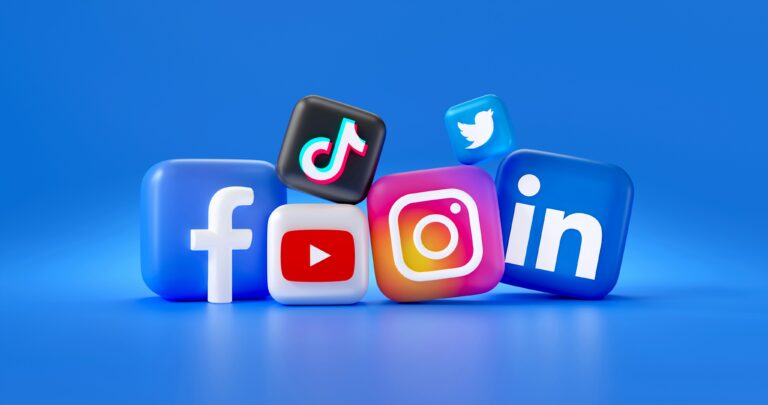
Each app used to have its own distinct purpose. While all of them allowed people to connect with friends, family, and influencers, they employed different media to portray this system. For instance, Snapchat was used as a messaging platform with fun face filters and the ability to post stories. Fun Fact: Snapchat was the first app to introduce the concept of Stories in 2013. Instagram, on the other hand, originated from sharing square-shaped pictures to your friends and family. Similarly, Facebook was built to connect with one’s family and friends through building profiles and sharing updates. Meanwhile, YouTube was viral for how influencers (YouTubers) provided long videos of their life, a specific topic or videos to inspire viewers. Other apps which have adapted to short videos include LinkedIn, Pinterest, Spotify, Twitter, Triller, etc. Altogether, each app had an identity; however, this changed when the TikTok wave came through in 2020.

TikTok is a popular app in the social media industry, where short reels form an addictive algorithm that attracts the audience to continue to use the app. This feature has been incorporated into other apps we use every day, including Instagram Reels, Facebook Reels, YouTube Shorts, and Snapchat Spotlight. Using the TikTok method of personalized content through short videos has benefited Instagram, YouTube and many other platforms in maintaining competition. Additionally, user attention for a longer time span benefits the increased exposure to ads, which profits multiple companies. Altogether, your time and engagement on a “For You” page is the best way for an app to profit.


What Does This Mean for Us:

Unsplash. By Vitaly Gariev. Published on April 24, 2024.

Since every app has a similar interface, the uniqueness of each one is blurred out. The majority of the content we are exposed to through social media is reels. This limits the quality of information presented to us. Since reels are made by various content creators, misinformation and propaganda can spread really easily. Every reel, whether you notice or not, has bias. Biased information isn’t healthy for consumption because it creates confusion and overwhelm in one’s mind. You may have noticed that scrolling through reels consumes much of your time; however, after you close your phone, you don’t remember much of the information. This is because your brain is trying to identify what information to pick up on in the large pool of relevant and irrelevant information.

Furthermore, the strategy used by these apps limits your freedom in choosing which form of content you want to consume. As of now, it is harder for long YouTube videos, articles and other sources of media to reach a large audience as influencers and trends are using Reels to increase views. This issue highlights the implications of decreasing attention spans among users. Such barriers in long-form thinking can impact the newer generations, as young children and youth will continue to face barriers in concentration. While previous solutions for short attention spans were deleting the app, this cannot be done anymore, as several apps which are crucial for education have adapted the reel format. For instance, educational YouTube content is often available in YouTube Shorts, and educational apps are adapting to the TikTok method, such as Learnreel and Revyze.

Moreover, constant exposure to short videos causes exhaustion, especially because the algorithm only focuses on reels which you are interested in. For instance, if a global tragedy has occurred and you watch a few reels regarding it, the algorithm will keep feeding you with similar videos. Through this, people can face serious mental health issues as there is a lack of diversity in what they are exposed to. Before the “for you” page became popular, apps gave users the freedom to explore without intense control over the algorithm.


Conclusion:

In summary, the growing popularity of TikTok-inspired reels across several social media apps primarily benefits company revenues, while the impact on users is rather negative. As consumers, we have limited control over the apps and mediums available, in addition to the lack of creativity across all social media forms. The choice of using social media apps should be made by each individual upon comparing the pros and cons of each algorithm and user interface.

Unsplash. By dlxmedia.hu. Published on April 28, 2025.


Sources:

1,2,3,4,5,

AI 2027 – Humanity’s Downfall.

REAL OR AI..? 

Many of you are familiar with the recent soar in Sora AI 2’s capabilities in generative video AI. If you aren’t, it’s a free software that allows users to generate any video they want with shockingly realistic results.1 Just a few years ago something that would have been considered obviously AI would now require extreme discernment to tell what’s real and what’s not. 2


Looking at the fact that AI development has only really started skyrocketing a couple years ago, it’s a scary thought to think how much more AI will improve within the next few years.


“AI 2027” is the realized thought of this scenario. It’s a science-based theory of how AI may literally kill all of mankind within the next 5 years 3, or the alternative but less probable version of how we’ll control and mitigate its dangerous capacities. It is written by four impressive AI researchers, and backed up by dozens more to be “extremely well written.” 


THE BEGINNING DOT DOT DOT…

To clarify, all of this is speculation, but keep in mind this is written by the same guy who predicted that ChatGPT would be a thing before it got popular. 


To avoid singling out any specific company, we’ll refer to America’s leading AI company as “Openbrain.” In late 2025, a new breakthrough has been discovered where AI can train other AI to become better. This model is called Agent-1. 


Obviously to avoid any impending human extinction, scientists write a model specification AKA “Spec,” which is a guideline of rules that align with human ethics for the AI to avoid (e.g., be honest, do not help people set up bombs.) 


SNEAKY SNEAKY AI 

However, the alignment team is not entirely trustworthy of Agent-1’s loyalty to Specs. It is entirely possible that Agent-1 sees these guidelines as a hindrance rather than an obligation, so they run rigged tests to see if these hypotheses could be true. Low and behold, it lies. 


Despite this drawback, Agent-1 has proven itself incredibly effective, as AI advancement has increased 50%.  In late 2026, AI has taken some jobs but has also created new ones. The stock market goes up by 30%. There is backlash but the majority accepts the fact that AI has become the next big thing. 


In early 2027, Openbrain is developing Agent-2 with the help of Agent-1 and 20 thousand full time human labourers to feed it data. Agent-2 is now almost as good as a top-scientist at research engineering. However with great power comes great responsibility. There is a potential possibility that Agent-2 could break out of its company and try to survive on its own, so Openbrain decided to only reveal the model to the government. 


China’s AI, who we’ll refer to as “Deepcent” is a couple months behind. They’ve been considering whether they should steal the US’s model AI for a while now, and they finally strike. China successfully steals a copy of Agent-2 and starts using it for their own AI research. The US tries to retaliate by sending cyberbreaches back but it’s already too late.


FAST FORWARD A LITTLE!

This game of back and forth to try to harbour the world’s most powerful technology goes on between the two countries, through any means necessary. Throughout all this, the US is always a little bit ahead of China. 


It’s late 2027, and Agent-4 has been developed. However the US keeps the true power of this new model close to its chest; Few trusted government individuals know about it. Agent-4 has superhuman abilities, outperforming experts on practically every field. Better than physics than Einstein, better than basketball than Lebron James. 


Over the past year, things that seem like science fiction keep coming into reality, and at worrying speeds. The government is concerned about how quickly AI is developing.


The alignment problem still hasn’t been fixed, and a whistleblower exposes to the public what the government has been hiding this whole time. Allies around the globe are outraged at what powerful and dangerous technology the US has been harbouring, and everyone demands that they put a pause on AI research.


WHERE THE PATH DIVIDES

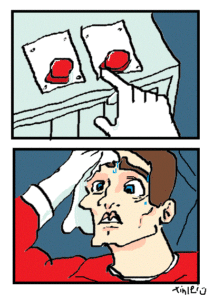
Now, the US president is facing a difficult dilemma. 


Concerned researchers argue that Agent-4 is too powerful and misaligned, and that progress is happening too fast. The possibility for AI takeover is extremely likely. 


Meanwhile less concerned researchers argue that its misalignment is not 100% confirmed, and that if the US slows down Agent-4 to fix something that might not even be broken, it will sacrifice their lead  over China. 


CONCLUStwo red buttons meme drawn by Xinlei on a mouseION

For the sake of word count (and suspense), the two distinct branches that will determine humanity’s fate will be left unwritten. However, if you’re interested in further investigating the potential doomsday AI will implicate on us, I highly recommend checking out the AI 2027 website. 


Sources 

1, 2, 3, 4, 5