
Home Blog Page 2

Introverted, Extroverted…Ambiverted? Deeper Than the Shallow Pool We Understand.

If someone were to ask you, “Are you an introvert or an extrovert?” Do you have an immediate answer? Do you tend to ponder, even for a second, where you fall? Most individuals refer to introverts as quieter and more thoughtful, extroverts as louder and more outgoing and Ambiverts as somewhere in between the two extremes. However, there’s more to these names than eleven letters.

Traits

Before understanding more about these titles that reflect our personality, we need to know which category we may end up in.

Introverts

  • Introverts prefer one-on-one conversations rather than a dynamic group discussion
  • They tend to feel drained after a long day of socializing and need some time to recharge.
  • They are more shy or socially awkward
  • They don’t enjoy speaking up, are thoughtful listeners, and they can often be found overthinking things.

Extroverts

  • Extroverts prefer talking through selective conflicts.
  • They enjoy socializing and feel energized from it.
  • They are constantly seeking new thrilling experiences.
  • They prefer a larger social network group with variety, make decisions quickly and are more outgoing, confident and reckless.

Ambiverts

  • Ambiverts do well in social settings and alone
  • They are more decisive than impulsive,
  • Active listening comes naturally for them,
  • They can adapt well to new situations or experiences, be flexible when it comes to problem-solving and draw others out naturally.

Happiness Levels, Which One is Better?

There isn’t a spectrum for which is better because every sign has its strengths and weaknesses. The same applies to happiness rates. While many might think that introverts would be less happy or optimistic because they overthink everything and are always alone.

Extroverts, who are naturally attracted to socializing, feel utterly devastated when they are alone, even for a school project and feel the need to reach out to someone, causing low happiness rates when they are alone, and to live life, there are several times we are confined to solitude.

Ambiverts, on the other hand, might feel growing doubt that they aren’t enough, that they are too weird, or that they don’t fit in with any group, leading to a lack of self-confidence and joy.

Our Brain

Research shows that extroverted individuals may have higher levels of dopamine, which they are born with, experiencing more of a dopamine release when trying new things, socializing, or simply engaging in activities or surroundings, strengthening those extroverted traits.

The Line

Introverts and Extroverts are polar opposites, and being an ambivert means being somewhere in between. In a way, we are all ambiverts because to achieve a perfect introvert with not even an ounce of extroversion is truly rare and nearly impossible. This is because we don’t have a fixed personality and often grow into new molds that are equally unique; we all have differences which make us, well, us.

Nature vs Nurture

While you can grow into yourself, we are born with specific characteristics, one of them determining our introversion, extroversion, and ambiversion. In this context, nurturing our type may decrease the level of whatever type you are; however, it is ultimately our nature that shapes our introversion, extroversion and ambiversion.


Links: 1, 2, 3, 4

Video Translation: The Backbone of Modern-Day Media

Video translation is a rapidly growing and in-demand field, with the development of new and efficient technologies and methods. It is the process of modifying videos for an audience that speaks another language. It is a complex process that involves altering subtitles, recording and implementing voice-overs, dubbing and much more.

This is commonly used in films, television shows, social media videos and marketing purposes. Video translation plays a vital role by breaking language barriers, allowing content to reach global audiences, and making content more accessible. In this blog post, we will be taking a deep dive into video translation, its history, how it is impactful, and some challenges in this field.

History of Video Translation:

  1. 1900-1930s: The first form of video translation involved inserting cards with written text to act as subtitles inserted between scenes of films, which were all silent.
  2. 1940-1960s: As technology improved, dubbing films began to develop.
  3. 1970-1990s: VHS and DVDs introduced multi-language audio tracks and subtitles, revolutionizing the industry.
  4. 2010s: Social media platforms like YouTube began to introduce auto-generated captions to make content reach globally.
  5. Present: The rapid growth of technology and Artificial Intelligence has introduced voice cloning, lip syncing, and AI translation software.

How Video Translation is Impactful

Today, the world is more connected than ever before, and video translation plays a major role in our society. It helps turn a local story into a global movement. Here are some of the impacts of video translation across today’s society:

  • Breaking Language Barriers and Spreading Information: Video translation enables information to spread rapidly around the world by allowing everyone to understand it. For example, a student from Egypt can watch a lecture video recorded in Germany.
  • Economic Growth: Businesses can use video translation to promote their product and idea to a global audience to enter new markets and gain more clients.
  • Cultural Exchange and Increased Awareness: Shows and films can be watched in another language, allowing people from different parts of the world to learn about other cultures and become more aware of the amazing world we are a part of.

With the recent developments in technology and artificial intelligence, the video translation industry is being revolutionized and evolving. By using AI-based video translation software and processes, creators and businesses can easily translate content into multiple languages with little cost.

Some Challenges in the Video Translation Industry

There are several key challenges and hurdles that the voice translation industry and the development of new technologies are aiming to address. First and foremost, maintaining the emotional intent and tone is difficult. For example, simply translating from one language to another can cause confusion among audiences if the statement is intended to be sarcastic or contains a cultural reference intended for one audience.

Also, the emotional tone and nuance of the statement can be lost when using AI processing. Also, the debate between using human translators or AI-driven tools is ongoing, as while AI-generated tools can be efficient and cost-effective, humans are more effective in maintaining the authentic tone of the content.

Sources: 1, 2

The Wonders of Water

Water feels basic. It’s everywhere, it’s free (sometimes), and it’s usually the last thing people get excited about compared to energy drinks, coffee, or anything with a flashy label. But biologically, water is less of a “drink” and more of a system that keeps your entire body running. You are mostly water (roughly half to two-thirds of your body depending on factors like age). That water isn’t just stored; it’s constantly moving through your bloodstream, your cells, and your organs!

One of water’s biggest roles is helping your blood do its job. Blood plasma is mostly water, and it’s what allows oxygen, nutrients, and hormones to travel through your body. Without enough water, your blood volume drops slightly, which makes your heart work harder to circulate everything efficiently. This is why even mild dehydration can make you feel tired or sluggish because your body is basically running a more “strained” version of its normal system.

How it shows up to help in everyday life

Water is also central to thermoregulation, which is your body’s ability to control temperature. When you overheat, your sweat glands release water onto your skin. As that sweat evaporates, it carries heat away with it. However, it only works properly if there’s enough water available to produce sweat in the first place. If you’re dehydrated, your cooling system becomes less effective, which is why overheating risks go up faster than people realize.

Your brain is especially sensitive to hydration changes. It’s made up of about 75% water, and even small shifts in fluid balance can affect how it functions. Mild dehydration has been linked to reduced attention span, slower reaction time, and poorer short-term memory. You might not feel “thirsty,” but your brain can still be operating slightly below optimal efficiency (which shows up as brain fog, irritability, or difficulty focusing). This is also why hydration can affect mood too!

Why thirst isn’t a perfect warning system

One of the biggest misconceptions about hydration is assuming thirst shows up exactly when you need water. In reality, thirst is slightly delayed. By the time you feel it, your body may already be in a mild state of dehydration. That doesn’t mean you need to constantly obsess over water intake, but it does explain why consistent sipping throughout the day tends to work better than waiting until you feel dry or fatigued. Hydration doesn’t usually give dramatic instant feedback. It’s not like caffeine where you feel a spike or sugar where you feel a rush. Instead, it affects baseline functioning such as energy stability, focus, digestion, and even physical performance. That’s what makes it easy to underestimate. You don’t always notice when you’re properly hydrated, but you often notice when you aren’t! 

Overall, water intake is a crucial part of your diet and it needs to be integrated as much as possible. Drink more water, regardless of how busy you are because it will actually improve so many parts of your everyday life!

Sources: 

https://www.cdc.gov/healthy-weight-growth/water-healthy-drinks/index.html

https://www.medicalnewstoday.com/articles/290814


The 2014 Umbrella Revolution Explained


In 2014, throughout Hong Kong, protest crowds erupted demanding democracy. 

Hong Kong students had began to critique the government, and many began to vocalize concerns about the government’s system. Beijing’s increase in political control over Hong Kong and suffrage means the citizens’ needs are unmet by the government. 

There was a deeply rooted fear among Hong Kong residents that they would lose their autonomy under the rule of the Chinese communist party, and that their rights were growing increasingly scarce with restrictions on freedoms of choice and speech. 

The trigger came when, in 2014, the Chinese government announced that candidates for Hong Kong’s Chief Executive would have to be approved by Beijing before running, a clear abolishment of democratic principles. 

Student leaders and activists began to speak up about the issue, organizing protests. Additionally, the Hong Kong government’s unwillingness to speak to the public about the issue created more outrage and protests. 

After many student leaders spoke out, protests began to spread. Many were influenced by their critiques of the government’s control of emotions and anger towards the Hong Kong government. Peer pressure caused momentum towards protests, making them bigger and bigger, using umbrellas as a symbol of the movement itself. 

The crowd did not turn into a mob or riot; however police took their protest as violent and negative. This resulted in violence and brutality from the police. Many medic volunteers at the protest were then pepper-sprayed or hurt in the chaos.


Police using tear gas against peaceful protestors creates more anger and resistance against the government. Social media and documentation of the protests also spread the word, educating others about the matter as well. 

The decline stage of the protest took place after both Chinese and Hong Kong government officials refused to budge in their stance or compromise upon their prior stated announcement on the 2014 elections, following more arrests of peaceful protesters, the usage of tear gas, and the inability for many to resume daily life, which caused protesters to retreat unsatisfied. 

Today, protests still occur in Hong Kong, and full democracy does not exist, as many of the original demands for greater political freedom and autonomy remain unmet.

Power, Fear, and Obedience in Margaret Atwood’s Gilead

In The Handmaid’s Tale by Margaret Atwood, power is not only enforced through laws or violence. It works because people are afraid, and because they learn to obey without needing to be forced all the time. Gilead is not only controlled by those at the top. It is sustained by the people living inside it.

Water Scarcity – The Next Major Global Concern

Water is the most critical resource for all living organisms on our planet. Canada is blessed to have numerous lakes and freshwater resources. However, water scarcity is a growing problem that affects every living being around the world today. In this blog post, we will be taking a deep dive into the water scarcity issue, the causes of the increase in water scarcity and what we can do to combat this and make a sustainable planet for future generations.

What is Water Scarcity and Why is it such a Big Issue?

Water scarcity is when the need and demand for clean freshwater exceed the available supply. Currently, high water scarcity is experienced by over 25 countries around the world, where industries and households consume more than 80% of their available renewable water supply each year. 

According to UNICEF, approximately four billion people experience severe water scarcity for at least one month every year. Additionally, millions of people, including children, around the world are forced to walk many kilometres every day to collect usable freshwater for their household uses, due to the inaccessibility of clean water in their areas.

What are the reasons?

With the rise and development of technologies, such as artificial intelligence, crucial resources, including water, are being depleted at an alarming rate. Data centres around the world consume millions of litres daily for cooling purposes. Climate change is also cited as a major reason for the increasing water scarcity because rising temperatures disrupt the water cycle, leading to frequent droughts and the melting of freshwater resources like glaciers.

Another reason for water scarcity being experienced in many developing countries around the world is due to poor infrastructure and a lack of water management and treatment facilities. Pollution is also a key reason for water scarcity, as contamination from chemicals and untreated waste makes existing water sources unusable for drinking.

What are some possible solutions, and how can we help?

Current methods of water usage are not sustainable and will create more problems for life on Earth. So, the steps to address this issue are very critical for the survival of future generations. There are many ways and methods to help solve the water scarcity problem. By using advanced electronic sensors and AI, we can help conserve water usage in agriculture, which accounts for 70% of global water withdrawal. By developing and implementing modern technology, we can increase efficiency in existing irrigation methods.

As global citizens, we can help fight for this cause by conserving our water footprint and being mindful of our resource usage. This can be as simple as turning off the faucet when you are not using it, while brushing your teeth. We can also donate our time or money to charity and non-profit organizations like UNICEF to help build technology and make clean water more accessible to others experiencing water scarcity. Additionally, we can also spread the word through social media or by talking about this issue to spread awareness and raise our voices.

Sources: 1, 2

Media Profile: A Series of Unfortunate Events

Media Profile: A Series of Unfortunate Events

Recently, I rewatched a favourite childhood series of mine called “A Series of Unfortunate Events.” However, despite it being labeled a children’s show, it has an incredibly complex commentary on social issues, the imperfect nature of justice, and human optimism. 

A series of unfortunate events is originally a book series by Daniel Handler, which has two TV and movie adaptations. The recent Netflix adaptation is believed to be the most faithful to the source material. 

The first aspect of this adaptation that is very interesting involves its use of humans’ inherent desire for hope, or belief in hope. The literal opening song verbatim says “Look Away” and describes how disappointing this tale is, and just how miserable the circumstances of the Baudelaire orphans’ lives are. The story never lies about its outcome. There is no triumph, there is no satisfying resolution. However, even with that warning, viewers continue to watch and observe the lives of the Baudelaire orphans. We even expect these orphans to be rewarded for their hardships or finally get justice. The question then becomes, why? Why do humans continue to believe in a happy ending despite being explicitly told there is no happy ending? This series seems to argue that hope is an inherent human feature, and in many ways paints the viewers as equally delusional as the adults within the story.  

Additionally, the role of justice and adults within this media is also interesting. In most films and media, adults are portrayed as not only logical but also as safeguarders of the law. This is flipped on its head in a series of unfortunate events, with Mr. Poe, the supposed protector of the children, being incompetent and oblivious. The story portrays justice through a very cynical lens, with justice being used more often than not to harm the children. The tale presents the very flawed nature of the legal system and authority in our real world. Arguing that intelligence, or morality, does not guarantee power or success. Count Olaf repeatedly gets away with crimes not because he is brilliant or clever, but because society is careless and oblivious. 

Overall, this series is incredibly fascinating as it diverts from the stereotypical children’s portrayal in novels and adds an extra layer of gothic humor and whimsy to its tale. While simultaneously establishing an intricate and metaphorical worldview, it also weaves real-world themes into its storyline. A Series of Unfortunate Events is a wonderfully executed book and TV series that continues to be relevant to children and adult viewers alike. 


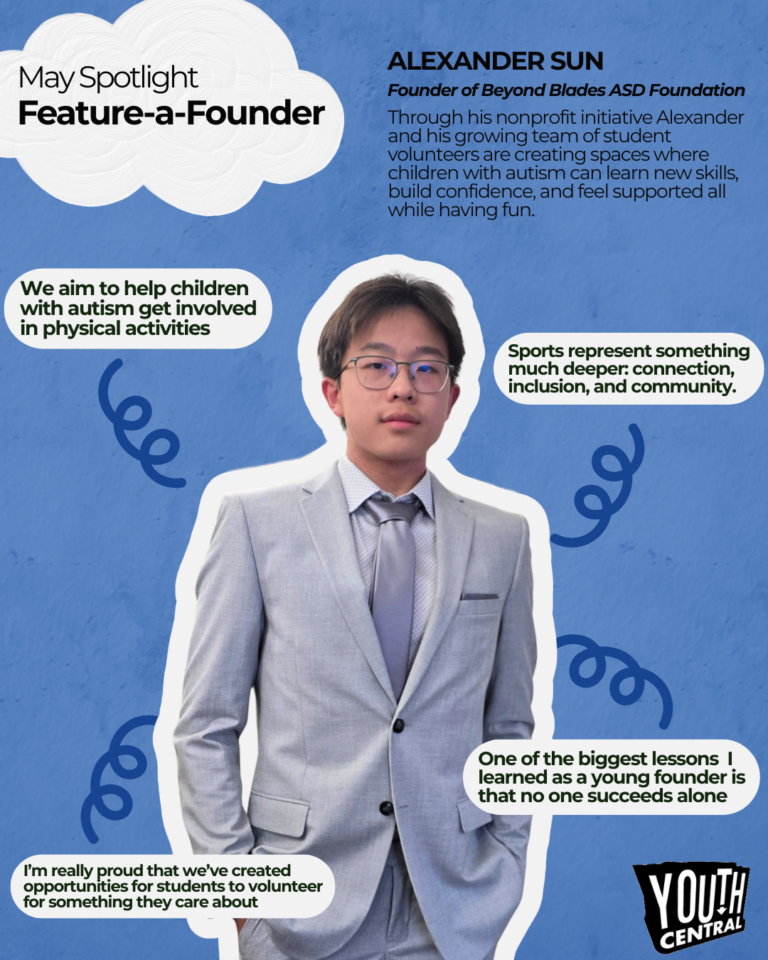
Feature-a-Founder: Skating Toward Inclusion: An Interview with Alexander Sun

Presented by the Mayor’s Youth Council (MYC), our Feature-a-Founder spotlight is designed to highlight youth-led initiatives in Calgary making a positive impact. This month, we’re featuring Alexander Sun, the founder of Beyond Blades ASD Foundation.

When most people think of sports programs, they picture competition, trophies, and packed arenas. But for Alexander Sun, sports represent something much deeper: connection, inclusion, and community. As a grade 10 student, Alexander has already built an organization that is transforming the way children with autism access recreational programs in Calgary.

Through his nonprofit initiative, Beyond Blades ASD Foundation, Alexander and his growing team of student volunteers are creating spaces where children with autism can learn new skills, build confidence, and feel supported all while having fun.

Where It All Began

The inspiration for Beyond Blades started with something simple: noticing a gap.

Alexander had been involved in a research-based skating program designed for children with autism. While the initiative had good intentions, he realized the children weren’t getting enough actual ice time because the focus leaned heavily toward research outcomes rather than the participants’ experiences.

Instead of accepting the situation, Alexander decided to act.

Together with his father and a friend, he began taking five children to outdoor rinks in the Hamptons area of Calgary for extra skating practice. What started as a small effort quickly evolved into something much bigger.

“As we continued, we realized there was so much more we could do,” Alexander explains.

Soon, he began recruiting other students to help with marketing, fundraising, and social media. The initiative rapidly expanded, eventually partnering with Star Hope Autism Care and broadening beyond skating programs alone. Today, Beyond Blades ASD Foundation offers activities like badminton, is developing pickleball programming, and has even partnered with a robotics team to launch a STEM initiative for children with autism.

The name “Beyond Blades ASD Foundation” became symbolic of that growth: a reminder that the organization was no longer just about skating, but about opening doors to new opportunities and experiences.

Building Something Bigger Than Himself

For Alexander, one of the most rewarding parts of the journey has been witnessing how quickly the organization has grown in such a short amount of time.

Founded in late December 2025, Beyond Blades ASD Foundation has already grown to include more than 40 high school volunteers, a six-person leadership team, and multiple community partnerships. In only a few months, the organization successfully launched two programs while simultaneously developing its third and fourth initiatives.

But what makes Alexander most proud isn’t just the numbers, it’s the people.

“I’m really proud that we’ve created opportunities for students to volunteer for something they genuinely care about,” he says.

By involving youth directly in leadership, event planning, outreach, and programming, Beyond Blades has become more than a volunteer organization. It has become a community of students united by a shared desire to make recreation more accessible and inclusive.

The Power of Community

One of the biggest lessons Alexander has learned as a young founder is that no one succeeds alone.

“You really need friends and like-minded people to succeed,” he explains. “A group of people can accomplish things so much faster than one person alone.”

That belief in teamwork has shaped the way Beyond Blades operates. The team holds weekly Tuesday meetings to stay organized, maintain momentum, and continuously brainstorm new ideas. According to Alexander, that consistent communication has allowed the organization to grow at an incredibly fast pace.

He also credits much of the organization’s early success to personal connections. Many of the first volunteers were friends from middle school or people already within his network.

For Alexander, networking isn’t just a professional skill, it’s the foundation of meaningful community-building.

The Hardest Part: Starting

While Beyond Blades now appears highly organized and fast-growing, Alexander admits the hardest obstacle was simply taking the first step.

“I think a lot of people get scared about future problems before they even start,” he reflects.

Instead of trying to solve every possible issue in advance, Alexander focused on building momentum first and handling challenges as they came. That mindset allowed the organization to grow naturally without becoming overwhelmed by uncertainty.

He believes many young people already have strong ideas they simply need the confidence to pursue.

“Sometimes you just need that push,” he says. “That huge leap into actually doing something.”

His journey serves as a reminder that impactful organizations rarely begin with perfect plans. They begin with action.

Looking Ahead

What makes Alexander’s story so inspiring is not just the scale of what he has built, but the mindset behind it. Beyond Blades was created because one student noticed that children in his community deserved more support and decided to do something about it.

Now, through sports, STEM programs, and youth leadership, Alexander and his team are helping create spaces where children with autism feel included, empowered, and celebrated.

At an age when many students are still figuring out their own paths, Alexander Sun is already creating opportunities for others to thrive.

And if Beyond Blades’ rapid growth is any indication, this is only the beginning.

Next Steps

Started a project? Apply to Feature-a-Founder to be featured and share your impact – submit your story here!

Need help getting your idea off the ground? Explore our grants and funding opportunities: youthcentral.com/grants.

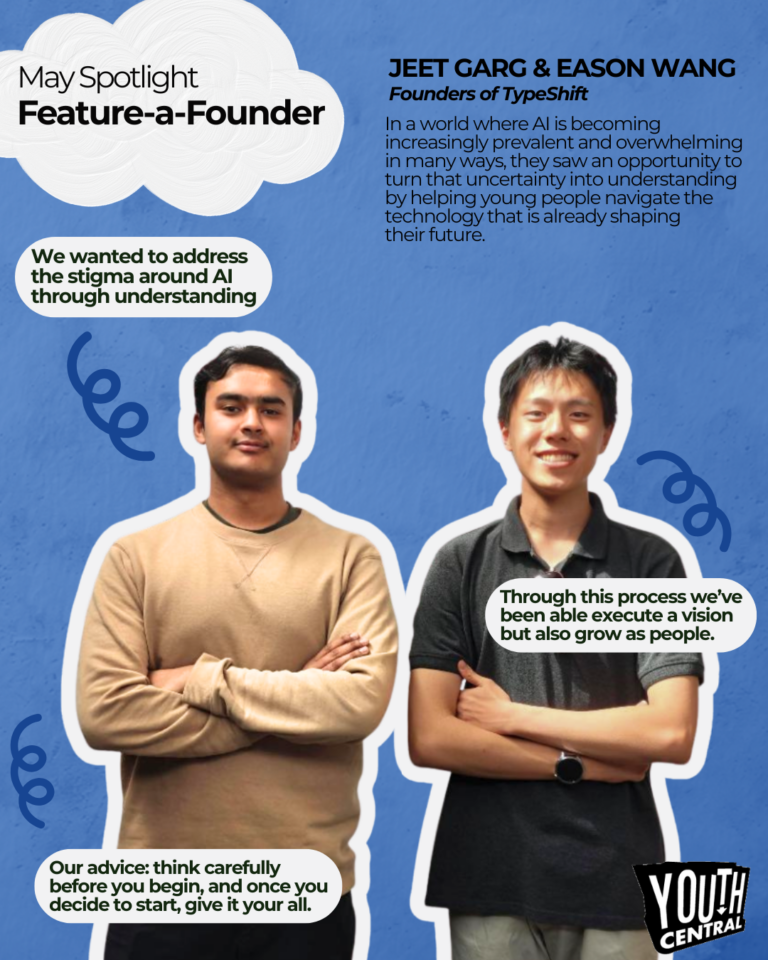
Feature-a-Founder: Shaping the Future of AI Education: An Interview with TypeShift

Presented by the Mayor’s Youth Council (MYC), our Feature-a-Founder spotlight is designed to highlight youth-led initiatives in Calgary making a positive impact. This month, we’re featuring Jeet Garg and Eason Wang, co-founders of TypeShift.

Have you ever noticed how quickly AI went from just being a buzzword to something people use every day? For Jeet Garg and Eason Wang, that rapid shift is exactly why TypeShift matters. In a world where AI is becoming increasingly prevalent and overwhelming in many ways, they saw an opportunity to turn that uncertainty into understanding by helping young people navigate the technology that is already shaping their future.

TypeShift began with a simple but foundational question: how can AI be used to actually benefit people? How can it be leveraged as a tool instead of overtaking the narrative. For the team, the answer was not just to talk about AI, it was about making it accessible. By connecting students to industry mentors and real-world speakers, TypeShift helps youth build a sort of AI literacy that builds confidence and context to help them think more critically about AI.

Curiosity into Action

What started as just an idea quickly grew into a hands-on initiative whose mission was clear, they wanted to show students that AI is more than just a generative tool or a handy headline maker. The team wanted to explore practical applications of AI in the “real world” in fields as broad as cancer detection. At the same time, they want to encourage students to think more deeply about the practicality of AI, shifting from just a “theoretical” knowledge into one that is instead rooted in the real world.

TypeShift’s vision has already reached an audience far beyond the founders themselves, they have hosted over five speakers and impacted more than 200 students through workshops and community events. These sessions have introduced concepts like AI being used in reinforcement learning while also creating a space for meaningful conversations, networking and overall mentorship to occur. 

Lessons in Leadership

Both Eason and Jeet said that building this initiative has taught them invaluable lessons about leadership and personal growth as much as its primary objective is community impact. Throughout their journey, they had to combat challenges such as a lack of motivation and developed their abilities to lead responsibility, as Eason put it “through example.” Jeet also spoke to the importance of having a team that you can trust and reinforced just how important it is to consistently show up.

These lessons became especially real when the team faced one of their biggest obstacles to date: uncertainty. While both within other leadership positions previously in areas such as Business Club and Model UN, as first-time founders, it was their first time building something from scratch. Starting from scratch meant that there was no structure to rely upon; they had to figure out their purpose, their format, and ultimately, their direction in the long-term. With support from mentors like Ben and their volunteers, they were able to refine their vision and turn early doubt into something sustainable and impactful.

The Power of Connection and LinkedIn

Although TypeShift uses Microsoft Teams in order to make events more accessible, the team has found that in-person connection is generally preferred in order to maximize on opportunities. Their workshops consist of a theoretical introduction, a live demo, a Q&A session which is then followed by networking with the speaker and other attendees. 

They also discovered that the most successful outreach can happen in unexpected places. LinkedIn, word of mouth, mentor networks, and even Model UN connections all played a pivotal role in growing their community to what it is today. Outreach does not have to be about flashy promotion and TypeShift exemplifies how building genuine relationships with people who care about the same issues can work just as well.

Advice for Future Founders

TypeShift’s message to other youth who might be looking to start their own initiative is to start now and start big, don’t be afraid to fail, and surround yourself with good and trustworthy people because even if you fall, they’ll help you back up. They believe young founders should be able to build a network upon which they can rely on when necessary and stay adaptable through any sorts of challenges. Their own journey proves just how big ideas can grow into real initiatives when they are supported by collaboration, persistence, and a willingness to learn.

TypeShift stands as a reminder that youth leadership isn’t something that has to wait until later in life. Once they identified a gap within their own communities, they took the step forward to close it. By creating a space for education, mentorship, and a more comprehensive understanding of AI, they are helping to shape a smarter and more thoughtful future for AI. 

Next Steps
Started a project? Apply to Feature-a-Founder to be featured and share your impact – submit your story here!

Need help getting your idea off the ground? Explore our grants and funding opportunities: youthcentral.com/grants.

Learn more about TypeShift here.

Uncovering the Thin Layer Under the Expectant Pressure to Achieve Greatness.

2

The truths embodied in success

A few months ago, a special visitor came to my school and talked to us about how she made a huge mistake, which later resulted in her success. Kesinee was in a highly innovative and financially successful degree program, and everyone greatly admired her. However, Kesinee didn’t feel any exuberance in this topic and decided to switch plans to drama. There, she played in many musicals, plays, and everything in between. Kesinee soon became a renowned actor, and this time she loved her career; however, she felt that vibrancy, the fruit of passion, was becoming dull, and once again she decided to switch to a different career, a career which Kesinee faces with brimming optimism.

Mindset

Like Kesinee, we all have felt the notion of longing and not, and like many other individuals, we all have felt a particular pressure to conform to other people’s thoughts and opinions, and what will bring us acceptance and admiration. This reveals that we might require a different mindset to the perception of certain things.

For instance, we have to recognise that not meeting another individual’s standards is okay and regularly occurs. As Theodore Roosevelt once stated, “Believe you can, and you’re halfway there.” Success is not accomplished by an endless, almost cumbersome amount of desire; it is accomplished by a hopeful and sanguine mindset.

Direction

We as a society ultimately fear straying from the original path; we hate the idea of “failing” and “not finishing.” We hate the fact that starting anew, we would be clueless and have to be taught and improved, and have to be the lower ones and not the ones everyone admires. We don’t realise that starting a new path, switching directions, is like planting a new tree before the other ones grow.

However, if something is planted, it will grow, and eventually all of the trees will grow into a forest, even if some are missing branches. Otherwise, you would only have one big tree and nothing else to rely on. We have to be able to perceive that changing your direction is not foreboding or fearful, it’s brave and right.

Love

To do something without passion is a chore; to follow in a course of direction just because it brings great outcomes is a waste. To spend your lifetime not doing the thing you love and rather the thing that is labelled higher in the economic ranking of society, is a loss. Without love and exuberance, we burn out. We stop seeing the benefits, the point, the outcome. When dawn sets, all we notice is the struggle to keep up, because it’s not about skill; it’s about our passion and dedication to this topic.

As Henry Drummond once declared, “to love abundantly is to live abundantly and to love forever is to live forever.” furthermore, love wins over everything and if you don’t believe or have any hope for your subject and is only willing to do take a subject that wins over the favour of others rather than your own, you stop midway in life and is stuck in a hole deep enough you struggle.

Therefore, always remember to be willing to take risks and always lend an ear to the small voice inside of you that whispers ever so tiny and ever so loud.

Featuring: Kesinee 

Happy Mother’s Day!

0

Why is mothers day special? Why does it get celebrated? The answers to these questions are that mothers are very special for everyone because they provide unconditional love to a child. Mothers are the angels sent by God to take care of us. Kudos to all the mothers on planet Earth for doing such a good job. There are many ways to celebrate the special day such as:

  • Breakfast in bed
  • Spending time with her
  • Buying gifts for your mom

Breakfast in bed

Breakfast in bed is when you make breakfast for someone before they wake up and give it to them in bed. You could give your mother breakfast in bed because it is a kind action that will make her very happy. She won’t have to cook food but she will get food to eat. For breakfast in bed you will most likely want to make something that won’t get messy. Examples are: salad with juice, Tea and biscuit, sandwich and fries with ketchup. All of these things are quick and easy to make and they are yummy and filling.

Spending time with her

People are very busy in their lives and usually take their mothers for granted. Mothers do a lot of things including: cleaning the house, working, cooking, and many more. These are things that kids would have to do every day if it weren’t for their mom. Spending time with your mom would make her happy and that would make her day. You could do many things with her such as: going for a walk, something as simple as making a meal together, and asking each other quality questions that wouldn’t be asked.

Buying gifts for your mom

Often times gifts can show more care and consideration than words alone. From a handmade card with meaningful messages to colorful flower baskets, really anything can do the job. What matters the most is the type of intension you have. Whether you just want to get it over with or have a well thought out surprise; it can really show. A gift can prove a lot more than the words, “I love you mom,” can, it can show when you choose to stop and pay attention or when you choose to listen actively. Most of all it can show how much there presence can mean to you.

CONCLUSION

It is unobjectionable that a mother is a guide, a teacher, a friend, and provides orientation in different phases of life to a person. This helps a person become strong emotionally, physically, socially, and intellectually. Mother’s Day is a way to provide tribute to the mothers for being so helpful, resilient, supportive, and irreplaceable.

The Survival Instinct Behind Gossip

Long before the age of group chat notifications and whispered hallway updates on who’s dating who, human ancestors gathered not just to share stories of hunts and danger, but of each other as well. We have always shared information on who was forming bonds, who could be trusted, and who was drifting away through subtle social exchanges.

Gossip has a bad reputation. It’s often dismissed as trivial or cruel, and while it remains a complicated subject in terms of morality, there is no doubt that the desire to map the social world around us is rooted in one of our oldest survival instincts: the need to understand and belong to a group.

Connection remains a crucial part of the human experience, but why can the need for it manifest in negative ways? Gossip, at its core, exists because humans are defensive and deeply socially attuned creatures. We care about being accepted, understood, and safe. In many ways, gossip increases social cohesion and connection in the same way grooming does in primates; it provides mutual soothing and strengthens relationships. Sharing information about others can also teach group norms, communicating the unspoken rules of acceptable behavior within a society while helping people identify others with similar beliefs and attitudes.

Though the survival value of gossip has diminished greatly, it still remains prevalent. Humans are naturally more likely to believe negative information about someone’s reputation than positive information. In early hunting societies, failing to heed a warning about someone dangerous could have far worse consequences than believing a false compliment. That instinct still lingers today, even when the stakes are much lower.

However, not all gossip is equal. Sometimes it comes from admiration or curiosity, which is far less harmful than spreading rumours to deflect attention from one’s own insecurities. That kind of gossip often becomes a form of bullying. There is both good and bad gossip, and the difference is usually felt afterward. Good gossip leaves a pleasant aftertaste. You feel closer to the person you were speaking with, more connected to the people you spoke about, and more aware of the social world around you. It feels like catching up with old friends or checking in on people you care about. Bad gossip leaves the opposite feeling: drained, uneasy, guilty, almost bitter- like a grapefruit. That unpleasant aftertaste often indicates that your words have crossed a line and done some damage to your own sense of morality.

The healthiest way to approach gossip is to talk with a purpose. Ranting because you are genuinely upset can help you process emotions and strengthen trust with another person. Ranting out of boredom, or simply to poke fun at someone, rarely does. Taking a second to think about your intentions can help you recognize whether your words are meaningful or simply snarky comments made without reason.

It also matters who you confide in. Choosing someone who can offer a balanced perspective and keep your conversations private creates a healthier environment for emotional expression. Complaining should not become a habit simply because it is easy; it should come from a genuine need to express emotion. Ironically, honest vulnerability is what actually brings people closer together.

There are also ways to make gossip less harmful. Focus on behaviors you know happened rather than attacking someone’s entire character or making assumptions about their motives. Avoid gossiping online or sharing screenshots, where conversations can quickly spread beyond their original context. And when someone tells you something negative about another person, resist the urge to rush to judgement. Check the source, question the validity, and remember that widespread belief does not automatically make something true.

Ultimately, gossip reveals something deeply human: our constant attempt to understand one another and secure our place within a social world. The instinct itself is not inherently bad. What matters is whether our words are used to connect, comfort, and understand, or to isolate, embarrass, and tear others apart. Sometimes the healthiest response is simply refusing invitations to pick others apart altogether. After all, the conversations we choose to participate in shape not only how we see others, but also the kind of people we become.

Meal Ideas for the Clueless College Student

0

For those of us graduating and moving onto post-secondary this year, we are about to experience such a massive shift in our lives. One aspect includes learning self-sufficiency, which often consists of learning how to cook. If you’re like me and have had the priveledge of eating food your parents cook every day, chances are food might be a little foreign. Fear not! Here in this post, you’ll find a couple budget friendly options for any cook to get started with.

Breakfast

…is arguably the easiest meal to cook. It’s also my personal favorite. Here are some ideas that would be quick, easy, and cheap:

  • oatmeal (from rolled oats, not instant)
    • sweet or savory, super easy if you’ve got a spare 10 minutes in the morning
    • can add fruits or vegetables from frozen, which is often more budget friendly and nutritious
    • check out r/Oatmeal on Reddit! They have some lovely ideas
  • cereal
    • You’ll want to buy bulk options to lower costs here
    • Can add in yogurt and fruit if your budget allows to make it more nutritious
    • Catch: you need milk, which means access to a fridge
  • toast
    • Staple breakfast item, and so easy to make
    • Catch: you need a toaster.

Lunch

My least favorite meal to make, lunch often poses a challenge between tasting good and being portable because you’re not likely to have a sit-down situation in the middle of the day.

  • Gimbap
    • Sort of like a roll of rice and veggies wrapped in seaweed
    • Easy to meal prep!
  • Bean salad
    • Very nutritious, and beans are cheap
    • Wrap in a tortilla for a bean burrito!
  • Microwave hotpot
    • Place your hotpot materials in a mason jar at the beginning of the week to meal prep, and pour hot water into them when it’s time to eat!
    • A little on the pricier side, but very very tasty.
  • Leftovers
    • This is literally what lunch is for – cleaning up the food from last night.

Dinner

Hopefully you’ll have some time to devote to a hearty, nutritious dinner!

  • Edamame salad
    • Frozen edamame is cheap, but so nutritious and very tasty when seasoned the right way
  • Congee
    • I grew up with this East Asian staple. If you’ve got a crockpot, pressure cooker, or rice cooker, congee is great because you put it all in the pot, forget about it until the timer rings, and dinner is served.
  • Stir Fry/Fried Rice
    • Kimchi fried rice is the easiest thing to make ever – you just need kimchi and rice
    • You can add any kind of vegetable or leftover you like to fried rice and it always tastes amazing
    • easy to pack leftovers for the next day 🙂

That’s all for me today! Best of luck and have fun learning!

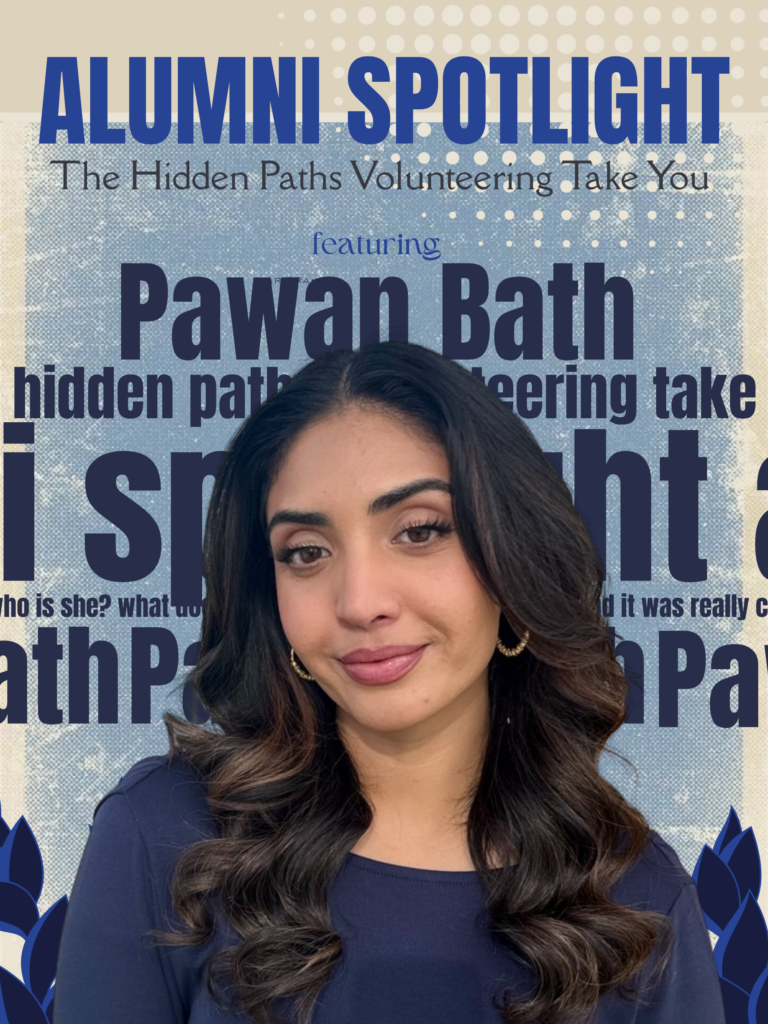
The Hidden Paths Volunteering Takes You: Featuring Pawan Bath

Alumni Spotlights celebrate the journeys, experiences, and impact of Youth Central’s former volunteers beyond their time with the organization. Through interviews conducted and written by youth bloggers from Youth Are Awesome, these stories aim to inspire current youth while reconnecting alumni through shared experiences, lessons learned, and the different paths they’ve taken since their involvement with Youth Central.

Hero’s Journey

Pawan was a “painfully reserved” kid ever since elementary, an academic rat who would rather study than socialize. Outside of school, her time was vacant. As she wanted to give back to her community, Pawan joined the Youth Central community. With time, she accumulated 800+ hours worth of experience and stories. From waking up early for breakfast Salvation Army shifts to helping seniors pick out their grad gowns, the once quiet student grew out of her shell.

But this volunteer journey does not end at “shy girl becomes confident leader, wow!” The seed that Youth Central planted had grown into a grandiose tree, sprouting branches that each produced its own fruit. 


A Sense of Belonging 

Pawan’s love for volunteering naturally drew her to others of the same mindset. By volunteering at the same events, she would keep meeting the same people over and over. They would get ice cream or dinner after events, harboring connections that are still kept alive to this day. The group was diverse, different age groups, different schools, and different parts of the city.

“These are people you wouldn’t have crossed paths with otherwise.”

During her time at the Youth steering committee, Pawan met Ros, the program director. Ros acted as a mentor for her – guiding her through times of doubt, giving life or career advice when she needed it. 

Mentorship is an insane multiplier for personal growth. Pawan characterized a mentor not necessarily as someone who’s older than you, but someone with more life experience. They lead you down life’s path, warning you against the common stumbling blocks that they and many others have tripped over.


Finding a career

How is it possible to be interested in something you’re not aware of? Answer: it’s not. Volunteering introduces you to people of all different walks of life, significantly broadening your horizons. The best way to gain perspective isn’t through personal pondering and reflection, but rather throwing yourself out there and tuning your ears to absorb it. 

For Pawan, she never knew about hackathons before Youth Central, a discovery that opened a whole new world of possibilities. Hackathons are events where participants collaborate to solve a problem by inventing a product, usually using code (explaining the name “HACKathon”) in order to gain a cash prize. Now, she works in a job that requires coding in her everyday life!


The baseline.

While you’re young, it may seem like the only thing that really matters is studying to get into a good university, and work hard to get a good job. However, Pawan emphasizes how none of this is possible without a baseline; your health.

Throughout her high school years and early university, Pawan was able to get by pulling all-nighters and drinking copious amounts of caffeine. After the loss of a loved one due to health complications, Pawan was faced with the harsh truth. Health is not something to be taken for granted, and everyone is responsible for their own. 

From there, Pawan completely turned her life around. She now goes to the gym six times a week, and genuinely enjoys it. Challenging your body inevitably builds discipline, as you’re pushing through discomfort it would’ve otherwise avoided. It also releases happy hormones!  

“It was daunting at first, but it’s been one of the best decisions I’ve ever made for my personal development.” 


Final Thoughts

While I was listening to Pawan’s story, I was thoroughly impressed by how much she’s evolved. It seemed to me that each and every aspect of her life improved significantly. Once shy and antisocial, now able to strike up conversation from nothing with anyone. Once in the doomful pit of poor health, now basically a health genie. So I asked her one more question, what is your biggest piece of life advice? 

“Work hard. Have integrity. Believe in who you are and stand up for what you think is right.

Hard work will take you further than your degree, your family’s background, where you’re from, or how much money you have. Those things can’t replicate genuine effort. And if you say you’re going to do something — follow through. That builds self-belief. If you put your mind to something and do it, you learn that you’re capable of hard things.”

The Final Stretch: Last-Minute Resources For Your AP Exam

It’s that season again– exam season! With AP’s looming around the corner, students taking these Advanced Placement classes may feel panic starting to set in. These exams feel like they’re in another universe when you compare them to your quizzes at school. The stakes feel higher, the questions get harder, and the tests get longer, with students required to follow a strict time limit for each question in order to finish the exam. Preparation for AP exams eats up hours of your time, with some students beginning their studying months in advance.

If test day is starting to feel a little too soon, too close for comfort, here’s a list of resources you can refer to for extra practice or clarification. Most of these resources are general, while others are specific to a certain course.

The Obvious Choice: AP Classroom & Bluebook 

Link: AP Classroom

I know if seems obvious, and most of you may be rolling your eyes right now, but it’ll surprise you to find out about how many new AP students overlook AP Classroom and Bluebook for practice. Bluebook’s comprehensive full-length practice tests are perfect for last-minute cramming before your exam, and may be the most helpful/accurate resource for your studying. Additionally, College Board also posts past papers and free-response questions for you to try. What better place to get AP study materials from than College Board, the organization that creates the exams?

The Godsend: Khan Academy

Link: https://blog.khanacademy.org/khan-academy-is-the-official-practice-partner-for/

Khan Academy is truly a life-saver for every student, no matter how old. With lessons on everything from finances to grammar, it’s no surprising that they offer AP courses too. If you’re feeling swamped with your practice, try some of Khan Academy’s short quizzes, which are usually around 4 questions and perfect for a quick, low-stakes refresher. Unit tests for each unit, as well as videos with detailed explanations on each concept are available for you to access for free as well. As a bonus, you can collect points based on how much practice you do, and level up your cool avatars as well 😉

An Underrated Platform: Knowt

Link: https://knowt.com/exams/AP

A personal favourite of mine, Knowt is a platform that offers the services of multiple study apps and flashcard tools in one place. With lengthy AP reviews and flashcards available for you to browse, Knowt is the Duolingo of studying. They offer resources in most AP courses, from flashcards to cheat sheets, and “must-memorize” lists. If you’re feeling stuck, you can use one of the “Knowt Ultimate Guides” for your AP course for help.

Our Collective Savior: The Organic Chemistry Tutor

Link (YouTube): https://www.youtube.com/@TheOrganicChemistryTutor 

For the average highschool student, the Organic Chemistry Tutor is our go-to YouTuber for anything and everything. With exhaustive videos on mathematics, chemistry, physics, and more, his teaching style and worked-out problems make complex concepts seem manageable. His lessons are detailed and address every potential question you may have, making his videos great for a quick review of concepts.

Everything Science: Bozeman Science

Link: https://www.bozemanscience.com/

Paul Andersen at Bozeman Science may seem familiar to you, as his videos are usually the ones teachers play in class to further explain a concept. He offers thorough videos on AP Biology, Chemistry, Physics, Environmental Science, and content on Statistics as well. I highly recommend his videos for detailed explanations with clarity. His website offers resources on several other non-AP courses as well, which I highly recommend.

Improve Your Writing: Quill

Link: https://www.quill.org/ap

Quill is a great website for those of you writing essays for your AP exam. This tool provides constructive feedback and lots of resources to give you the opportunity to improve your writing. You can stimulate the test environment and practice writing with a time limit using this platform, allowing you to get better at essay writing faster.

For Insider-Advice & Hacks: Reddit

Whether you’re on r/APChem like me, or r/APStats, there’s a Reddit forum for everything. Although it’s not a reliable source of information, lots of gracious students who survived AP exams make posts with advice and resources that helped them with their studying. These Reddit threads can be helpful as they contain personal experiences, allowing you to see what worked for other students like you. Some students post questions they have about the concepts, which are answered by the AP veterans, which can be helpful to read through. As long as you make sure you’re careful with what you post and read, you’ll find Reddit very helpful!

For History, Literature, Psychology, and Geography: Marco Learning

Link: https://marcolearning.com/students/ap-study-guides/

Marco Learning provides free study guides for all the English, Literature, History, and Psychology AP courses. Although an initial step of making an account must be completed

Aesthetic Study Guides: Naeha’s Active Recall Guides

Link: https://www.apactiverecall.com/

I LOVE this website and its aesthetics, everything is super easy to navigate. and the study guides are both clear and comprehensive. This website offers active recall guides for AP courses like AP Gov, APUSH, AP Psych, and AP Human Geography. I highly recommend using the study guides for last minute cramming before your exam!

The Lifesaver: MahadTheMentor AP Guide

Link: https://docs.google.com/document/d/1nciTvBjgy6046nihfJ_URzAzqgJngIuAbJx-jcFx3Ks/edit?tab=t.0

You’ll thank me (and MahadTheMentor) later. No matter what AP course you’re doing, you’ll find something useful from this document!

Conclusion

For extra study resources, refer to the videos and study guides above, but make sure you continue to utilize the AP Classroom resources as well, as they are ultimately the best tools for exam preparation. You’re getting a 5 on this exam, I know it!

Good luck!