
Home Blog Page 10

Desperate Times Call for Desperate Measures: Boredom

0

Have you ever been on a long flight without your earphones, a TV, noise cancelling headphones and a dead phone? I unfortunately have, and it was – interesting. My flight departed in the middle of the day, so sleeping isn’t even an option, nor is there anything I can do to pass the time. It was a fight against me, my patience, and ultimately my sanity. 

Based on this rant, I have decided that I’m going to be telling you how to pass the time in situations like this. 

  1. Think about your school subjects. 

Yes I know that this can sound really annoying but honestly it can pass the time quite quickly as we learn so much every day. You can think about your chemistry notes, history timelines, and literally anything you can remember. Not only does this help pass the time but it also allows you to regurgitate the information in your head, allowing you to remember and explain it better for when you actually need it. 

2. Think about your friends

At first glance yes this sounds cringey, but when I say to “think about your friends” I don’t mean thinking about how grateful you are for them or how you value them in your life. Instead, pick a couple of them and just try and remember everything you know about them. You can also try and analyze why they act the way they do like you’re in English class and they’re a character from your novel study. It can honestly be pretty entertaining and can help you not only just understand them more, but also yourself. Another version of this is just with your classmates in general. However, because you probably aren’t super close with all of them, try and find repeats of people you have in your class or even where they sit in the classroom. This is honestly a pretty good memory exercise at the same time.

3. Play a movie in your head from start to finish

Ok so for this one, try and choose a movie that you really like (or remember vividly because it was so bad) and see if you can “play it” in your head from start to finish while including as many random details as possible. This one can be interesting because sometimes you end up merging details from random movies together and have just created an insanely unique hybrid. 

4. Think about a random country and imagine your life if you lived there

There are so many countries around the world with such a vast range of traditions. Try and imagine yourself either going to school, work, or just a holiday but make sure to choose a country that’s not similar to the one you already live in. Like if you live in Canada don’t choose the USA, instead, choose something like South Korea!

5. People watching

If you’re in an area surrounded by people, look at the people around you (in a discreet way of course) and try and imagine what their life is like. Everyone deals with such different problems and lives a different story, so why not imagine? You obviously shouldn’t “judge” people’s background and story based on how they look or dress, but if you have good intentions and just imagine, I don’t think there is anything wrong in it! This option is honestly my favorite, so I hope you like it too.


So here are 5 things to think about to pass the time! Or hey, you could even read the insane posts on the YAA blog and trust me, the time will just fly by!

Dare to be Bored — Notes on Being Human

0

Personally, for my 2026 bingo card, I have decided that I wish to drown myself in weird, niche hobbies and gain knowledge on very specific things.


What kind of teas have calming effects and which have the opposite? Which birds can I go find on a walk in my little community? What kind of poisons do different plants produce?

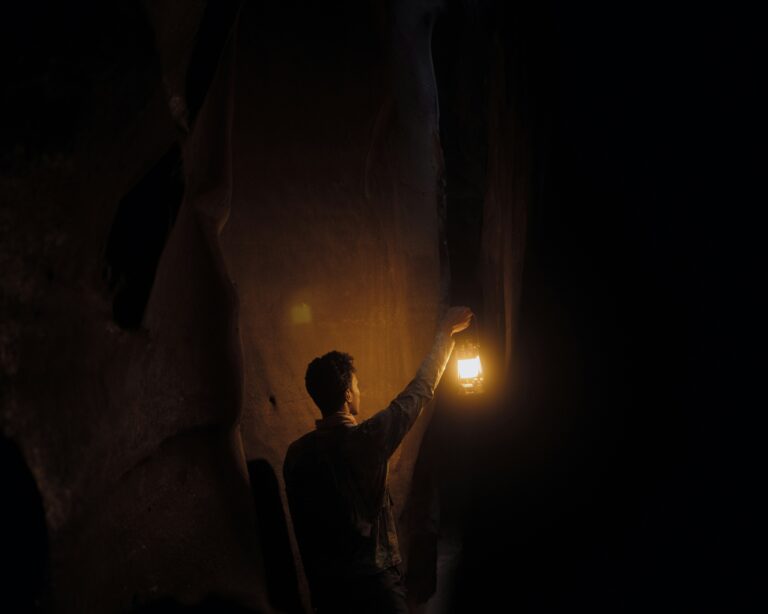
Photo by Ugur Akdemir on Unsplash

Maybe it is weird for me to want to learn such things. But haven’t humans always been inherently weird? With our innate curiosity and natural talent for ending up in situations where perhaps an uninterested person would not have ended up– who am I, to deny such humane desire? That curiosity feels small, almost silly – but it’s part of something much older.

Our world today is fast paced. It does not wait long for quite literally anything. There are deadlines after deadlines after deadlines. And before you know it? You wonder where the last 5 years of your life have gone by. This new era of technology does not appreciate the art of focus. Watching five second reels may bring your brain a rush of dopamine, but it makes you forget your purpose. The only purpose that you are born with, is the one to appreciate the world around you. It is to take deep breaths, close your eyes, lay down on a sunny patch of grass (or, in our case, snow) and just…feel the world for what it is. We pay the price of entertainment with our own lost time.

So therefore, go on side quests, try volunteering, maybe become a writer, or painter, a musician, or a cook. Experience a thousand different careers, a thousand different lives and do not settle down. Remember that being a doctor or an engineer may take humanity forward, but it is art and the desire to create that makes us human. AI is helpful, but do not give it the opportunity to take such a basic right from you. 

It is because we forget to take breaks and let go of our phones that we find ourselves disconnected. From people, from nature, from the world, and from ourselves.
So this year, I implore you, try to challenge yourself. Try to understand why 5 second dopamine hits will not bring you the joy of long term, healthy experiences that reward in the same medium. Read books, dare to be bored, look beyond my tiny 500 word article, and try your best to be uncomfortable. You do not grow in an environment that cradles you. You won’t find the sudden ‘self discovery’ that you seek in the comfort of your home. Maybe it waits in another country. Or another person. Or perhaps, it lies just around the corner waiting for you, hoping that maybe you’ll finally realize your potential lies in time and determination.

Calgary’s Intriguing Holiday Attraction: The BMO lights

0

Sometimes, even during the holiday season, life can feel a little bleak. Nights that start at 5

Photo by Morgane Le Breton on Unsplash

p.m., cold that seems to settle deep into your bones, stress from school (and perhaps university applications for some of my fellow Grade 12 students), and an appetite that loves being unpredictable. (Perhaps the last one is just me…)

However, throughout the many years I’ve spent calling myself a proud Calgarian, I’ve come across an array of holiday attractions. Each and every one our city has to offer is wonderful, but this one was given the title Holiday Wonder for a reason.

In the midst of our bustling city, at the BMO Centre, you’ll find beautiful arrangements of lights and festive décor that instantly brighten the space.

Although there are only a few days left to visit—January 2nd and 3rd—I highly recommend going if you can find the time. From dazzling light displays to art workshops, VR experiences, and even a petting zoo, Holiday Wonder has something for everyone. It’s a great place to visit with family or friends, and perhaps your holiday spirit will feel a little more uplifted too.

Photo by Bryan Dickerson on Unsplash

Similarly, the Calgary Zoo Lights are known to be the largest in the country, and it would be a pity to miss such a display. But maybe admiring lights isn’t your thing. Perhaps watching a live performance of The Nutcracker is more your style, or ice skating at Olympic Plaza in downtown Calgary.

The options have always been endless. In the end, it’s simply up to you to decide what earns a place on your personal bucket list of holiday joy!
Sources: 1, 2, 3,

Rewiring Minds: The Neuroscience of a Better World — Issue 2

0

The Attention Economy: Who Controls the Mind, Controls the Future

The quality of one’s life depends on the quality of attention. Whatever you pay attention to will grow more important in your life.” — Deepak Chopra

If consciousness is the foundation of change, then attention is its currency.

We live in the first era where human attention is not just influenced, but actively engineered. Every notification, algorithm, and infinite scroll is designed to capture and hold the brain’s focus. While previous generations shaped the world with labour and resources, ours is shaping and being shaped by where the mind lingers. The battle for a better world is increasingly a battle for attention.

The Neuroscience of Focus

Attention is not a single process. It is a coordinated system involving the prefrontal cortex, which directs goal-oriented focus, and the parietal networks, which help filter what deserves notice. At the same time, the brain’s dopaminergic reward system reinforces whatever captures attention by associating it with novelty or emotional intensity.

Digital platforms exploit this circuitry expertly. Variable rewards, such as likes, comments, and viral content, activate dopamine pathways in much the same way as gambling. The brain learns that constant checking might yield something rewarding, even if it usually does not. Over time, sustained attention weakens, and the mind becomes conditioned for fragmentation.

This has consequences beyond productivity. When attention is constantly hijacked, reflection becomes harder. Deep thinking, moral reasoning, and empathy all require uninterrupted cognitive space. A distracted brain is not a neutral brain; it is a reactive one.

What Happens When We Lose Depth

Studies show that chronic multitasking reduces working memory capacity and weakens the brain’s ability to switch into reflective modes associated with the default mode network. This network is critical for self-awareness, long-term planning, and understanding others’ perspectives.

When attention is externally controlled, identity formation suffers. Values are not chosen deliberately. They are absorbed passively. Outrage spreads faster than understanding because emotionally charged content activates the amygdala more powerfully than nuance ever could. In this environment, polarization is not an accident, it is a neurological outcome.

A generation that cannot focus cannot fully choose who it becomes.

Reclaiming Attention as an Act of Agency

Yet the same neuroplasticity that allows attention to be captured also allows it to be reclaimed.

Practices like sustained reading, mindfulness, long-form discussion, and intentional digital boundaries strengthen prefrontal control over attention networks. Each moment of choosing depth over distraction reinforces neural pathways for agency. Over time, the brain relearns how to sit with complexity instead of fleeing from it.

This is where consciousness becomes resistance. Choosing what to focus on, what stories to engage with, what voices to amplify, what ideas to sit with, is a form of quiet defiance in an economy built on distraction.

Attention as a Collective Force

On a societal level, attention shapes reality. Issues ignored by collective focus fade, while those consistently attended to gain moral and political weight. History’s turning points often coincide with shifts in public attention, from civil rights to climate justice to mental health.

When millions direct attention toward empathy, accountability, and long-term thinking, collective priorities reorganize. Neuroscientists describe this as attentional synchrony: shared focus that amplifies learning and coordination across groups. It is how movements sustain momentum rather than burn out.

The future will not be decided solely by innovation, but by what we decide is worth paying attention to.

The Minds We Are Becoming

A more conscious generation is not just one that knows more, but one that attends better. Attention determines which neural pathways are strengthened, which values become default, and which futures feel imaginable.

If consciousness is contagious, attention is how it spreads. In a world competing for your focus, choosing awareness is a revolutionary act. To change the world, we must understand not just how we think—but why we feel first.

If you found this post meaningful, stay tuned for the next article in my series Rewiring Minds: The Neuroscience of a Better World.
To build a better world, we must first understand the mind that shapes it.

Stranger Things- The End of an Era

0

This will include spoilers

The Final episode of Stranger Things aired on December 31st, 2025. Marking the end of an incredibly successful and lucrative series. However, after years of buildup, the finale left a lot of people wanting more. 

The poor writing, weak acting, and rushed pacing made this season lackluster and broke the hold that this series had on the general public. The show lacked the previous depth, anticipation, and creativity it once had. 

One of the biggest issues this show had was its bloated cast and inability to “kill” off or risk any major characters. To the point where it is actually laughable how the demogorgans, one of the major antagonists of the series, treat the main characters in comparison to random military members or other very minor characters. We know there is no genuine risk for any characters, so it gives us no anxiety or interest. Additionally, having so many characters doesn’t allow for enough story arcs to be properly portrayed. Even Will, after being given powers, had the potential to become a major figure in this series; however, he was ignored and tossed aside for the remainder of the season. 

Perhaps this inability to kill off or lose any of the cast has to do with the Duffer brothers’ fear of pushback by the fandom. For instance, if they killed a fan favorite, they would have to deal with large criticism from the public.

Throughout season 5, it genuinely feels like nothing happens. There are ten hours of television in that final season, and yet there is nothing actively going on. I cannot remember any events other than Vecna’s eventual demise, the wormhole theory, and the graduation scene. 

Each episode can be summarised by the fact that they try to do something to draw Vecna out of his hiding spot, Dustin is brooding and makes some revelation, and then explains a plan to everyone. 

The series lacks any creativity, and they have written themselves into a paradox of plans and repetitive dialogue. 

Another issue that has arisen, starting in season 4, is that the era of the eighties seems to have been forgotten, and they look too “costumey” to reasonably be in that time period. I caught myself assuming they were in the present while watching the latest season. 

All of the issues with the poor writing, world-building, and acting culminated into an internet fad called “Conformity Gate.” Where fans could not believe how the series ended, and began promoting an idea of a ninth episode to solve the plot holes. 

This was undeniably interesting, and the evidence was compelling. However, I was just constantly thinking, “The Duffer Brothers are not smart enough to pull this off.” 

The fan endings I saw were way better thought out than the actual season finale. When the date came for the release of the secret ninth episode, there was no new episode. It just exposed how lazy the writing was for this show, and how the Duffer Brothers had no intention to explain the many plot holes that existed. 

I feel that the reason Stranger Things saw such a dip in creativity and production is due to the mass attention it initially got. This show was not predicted to be as big a success as it was. This led to enormous expectations to meet and constant criticism. This also gave a sense of security, knowing that there would always be viewers, and the Duffers didn’t have to push themselves or the show as much in order to captivate audiences. The Duffers also had to deal with the reality that not everyone would be happy with their work, and instead of taking a risk, went for the safest and most predictable ending. One that left the audience wanting more, an ending that sure tied everything up, but was not reflective of the story arcs and journey of our main characters.

The Next Decade of AI Innovation!

0

Introduction

We are living in a time where artificial intelligence is changing the world faster than ever! AI now isn’t just about making robots or creating art, it’s now being used for healthcare, schools, transportation, and even customer service. Over the past years, AI technology has gotten much stronger and advanced, and it continues to be part of peoples daily lives too. As this technology grows, the next ten years are expected to bring even bigger changes!

AI and Cybersecurity

As technology improves, cyberattacks are becoming more advanced. In these next ten years, AI is being shaped to help stop these threats by quickly analyzing large amounts of data to spot unusual activity. This allows systems to detect problems faster and respond before serious damage is done. AI is also able to learn from past attacks, making their security system much stronger overtime. This will help protect personal information, banks, and important systems from hackers.

AI and Education

In schools now, AI is mostly recognized as both a tool and a cheating method for students. But for future teachers it will be used as a very useful item, from helping make personalized lessons based on the students needs and giving instant and helpful feedback and help students improve where they struggle most. Many people have had theories on how AI will take over jobs, but no, teachers will not be replaced. Instead teachers will have their lives much easier as AI will also help grade work and organize lessons, giving teachers much more time to focus on their students success.

AI and Healthcare

In the future, AI could be built enough to help doctors diagnose diseases much earlier and create treatment plans tailored to each patients needs. By studying their medical history, genetics, and lifestyle habits, AI can help predict health risks and improve care. Wearable  devices and virtual doctor visits could help make healthcare more accessible, especially for people in rural areas.

Smarter Virtual Assistants

Virtual assistants like Siri and Alexa will become much more high-tech. They will better understand conversations, complete tasks more easily, and respond in more natural ways. These improvements will end up benefitting elderly people and those with disabilities by making technology easier to use.

AI and the Environment

AI can also help fight climate change. It can analyze environmental data to predict weather patterns and natural disasters, helping communities prepare in advance. AI can also improve energy use by supporting renewable energy and making power systems more efficient. In farming, AI can help grow food more sustainably

The Road Ahead of AI

AI is already changing the world, and the next ten years will bring even more exciting developments! Whether in education, healthcare, cybersecurity or protecting the planet, AI had much more potential to make life easier, safer, and more connected. Understanding these changes now helps us prepare for the future ahead.

1

How to Overcome Procrastination, Perfectionism, and Panic (Help)

0

As someone in a rush right now (and perpetually) with the semester wrapping up and way too many extracurriculars on her plate, I have often struggled with managing my time and giving myself space to breathe and process. Even now, I am struggling with the idea that, since I have three tests to study for and also an article due tonight, I might not be able to fit everything in, or my article might be too short for what I expect from myself… A few years ago, this would have felt like the end. Too much to do, too much to think about and not enough mental space for everything bouncing around the walls of my brain. This would lead to my freezing and not doing anything at all, or crying, or spending all my time obsessing over one task without paying any attention to the others. Now, as a high school student, I can experience these stressors and still be composed and efficient, allowing myself time to be upset, but working to reframe my mindset about my worth and productivity. 


Here are some tips to help you manage your stress, time, and being forced into a rush when life already feels like one all the time:

  • Write what you need to remember on a paper, planner or calendar rather than carrying it in your head all day. This stops you from spiralling and assures you that you won’t lose the memo
  • If you are someone who struggles with procrastination and time management (like me), make a schedule with those notes. Make sure to keep them kind but firm, which to me means rewarding myself and rearranging things if needed, but also assuring I am not getting distracted while completing my tasks and homework. 
  • Have someone check in on you. I frequently have one of my parents set a timer on their phones and come check on how I’m doing with my work a bit later, which keeps me motivated and instils a sense of accountability.
  • Build transition periods into your schedule so you can take body breaks (even scrolling breaks, if that works for you) to reset your mind and breathe. Just because sure to set a short timer to prevent your break from becoming a complete break-down of your careful plan!
  • Listen to music you like. Most people struggle with lyrics, but I personally don’t have an issue and am more incentivised to complete my work when I am listening to upbeat music with lyrics.
  • Don’t be afraid to ask for help – communicate with teachers when you need something. They are always happy to help (and if they aren’t, that’s not a problem with you). It can feel vulnerable, but never mistake vulnerability for weakness. Asking for what you need  is a sign of self-reflection, a growth mindset and ambition. 
  • I would also recommend setting time limits and using timers to combat perfectionism and actually finish your tasks. I used to never feel like doing anything because there was one minor section that could be improved in a miniscule way and I would obsess over it. That way you will never get anything truly “done”! This is another area applying the buddy system could work for you and certainly has for me. 
  • When something is overwhelming you, do the next small step rather than deciding to do nothing. It can be hard, but doing one trig problem is so much better than deciding to watch your show and “do it later’. Honestly, you probably won’t.
  • Celebrate your small wins! Eat a yummy snack while you study or do something you enjoy after finishing.
  • Organization = reducing stress, not perfection. Perfection is an unattainable goal, so why set it? You will never have success that way. Striving to improve and do your best fuels growth instead of anxiously obsessing about flawless results.
  • Never think you are alone. I often felt like everyone else had it easy and felt no anxiety around productivity and focus, but I soon realised they hid it better than I realised. 
  • Don’t be afraid to make mistakes, they are a crucial element of learning.
  • Rest is not a waste of time. It took me way too long to learn this. Sometimes waiting to study until 11 at night doesn’t actually help you prepare for the test tomorrow, and what’s best is to sleep then, take the test and then reflect and make an action plan instead of feeling bad for accepting the reality of that night. It’s not giving up, it’s understanding a mistake was made and recharging your brain so that next time you won’t make the same one. 
  • Know what works for you! Many of the tips I have mentioned work for my learning style and strengths/weaknesses, but may not work for yours. Try some strategies out (simple usually beats complex), and learn more about yourself in the process. Always remember you and your abilities are inimitably valuable, and your 100% one day could be the same as your 15% another. You’ve got this (now I’ll go cram for my social studies dissertation)!!

The Musical Mosaic of Band

Band nerds… They have to stay after school and come early, and they need to take hours out of their schedule to practice at home each week. Why would anyone want to do that? For some reason, this is often the reaction I see from non-band kids. The truth is, band is just like any other hobby – it takes time, effort, and practice to develop skills and an appreciation for it. The people who have this attitude toward band are often on a basketball team or love sketching. It isn’t any different in the sense that when you truly like something, you devote yourself to it.

In grade seven band, we watched a TED Talk about the cycle of enjoying something, being good at it, and practicing it. The more you practice (even if it isn’t fun at first), the better you get. The better you get, the more you enjoy it, which makes you want to practice more – and the cycle continues. Karate masters don’t practice just because they’re good at it, but because it gives them something deeper and brings out a new side of life. While this idea applies to many activities, I want to focus on the benefits of one of my own favorite ones: band.

Developing life skills

Countless life skills can be developed in band class. First of all, when every role matters and everyone plays a part, you learn teamwork and collaboration. Everyone has their moment to shine, but in most bands you are often supporting another instrument group – lifting them up while they take the lead, before the spotlight shifts again. This teaches patience and appreciation for other people’s work, abilities, and growth. In a band, no one section is the “best” or “most important” at any given time.

A band is like a mosaic window. One piece of glass can be beautiful on its own and recognized individually, but it gains its true meaning when it becomes part of something larger, coming together to illuminate a powerful image.

Social responsibility and leadership are also prominent in a band or orchestra setting. We depend on each other to practice, to know our parts, and to be there as support when needed. Band gives everyone the chance to step outside their comfort zone and expand their leadership experience. There are louder ways to do this, like taking an improv solo in a jazz jam or volunteering to be an MC at a concert, and quieter but equally important ways, such as practicing consistently or letting someone else take the trombone 1 part. You learn to understand that you are a vital part of the experience you are creating for others, and that comes with responsibility.

Proficiency doesn’t happen in a day, or even in a year – or five. There will always be musicians to look up to, but instead of envying them, you learn to let them inspire you.

Patience is by far one of the most challenging parts of band. Long-term effort can feel tedious or even impossible, but progress appears sooner than you expect. This helps youth understand that dedication leads to improvement, and that perfection is not a realistic goal.

Over time, students learn to accept constructive criticism, look up to older or more experienced musicians and clinicians without feeling inadequate, and improve their listening skills (which, trust me, not everyone is good at). There are also cognitive benefits involved, such as stronger memory, focus, motivation, discipline, and pattern recognition.

Success and belonging

Everyone belongs in a band in their own way, just as every piece of stained glass is different. Band allows a wide range of learning styles and strengths to succeed because it is an open and adaptable environment. Not all students thrive in traditional classroom settings, but band gives people with different experiences and abilities a place to grow together.

Band can also become a “home base” in high school. It is often the most consistent group of people in a student’s schedule, and long-term friendships and memories are formed through shared experiences – camps, concerts, clinic days, and even international trips. Even the people you don’t talk to much still have your back.

Beyond connection, band opens doors to other musical opportunities such as jazz ensembles and experiences outside of school. Music theory, while not necessary for everyday adult life, is still a valuable skill. It can be intimidating when some classmates have played piano since they were five and seem to already know everything, but that challenge can become motivation to adapt and grow. In the end, it is a skill that pays off.

By providing a space where different abilities are valued equally, band helps students feel included, builds self-worth, and reinforces the idea that everyone has something important to contribute and an identity within the community.

A mosaic is only complete when every piece is present – every contribution and every sound. Band reflects this idea: complex, diverse, and whole because of the differences that shape it.

The Intricacies of Monday: A Poem

0


Waking up in the morning next to a device which holds the world within.

Opening the bright screen to unpack the 20 unread messages

But today was different.

You chose to leave your distractions on the bed and proceeded

to open the curtains.

The soft gold light shining in through your window.

Without complaints or frustration, it shows up to lighten your room every single day.

You turn one knob, and fresh water rushes out.

How fortunate is it to be able to have access to fresh water

Downstairs, you chose a pair of shoes from the several pairs you have available.

As you walk onto the bus, you glance at the bus driver

Today was different.

Most days, you walk into the bus looking only at an empty seat, but today you realize what surrounds you.

Instead of plugging in your AirPods, you take a minute to hear the hustled noises coming from all directions.

You hear the blurred chatter of the people behind you.

The engine sounds of multiple cars all waiting for one light to change colour.

Busy.

The perfect word to describe a Monday morning.

As you enter through the school doors, you make eye contact with several familiar faces.

Today was different.

You chose to put on your best contagious smile, not only for your friends, but for every other student who has yet to experience the subtle details in the world.

While you walk through the same old hallways, today you feel disparate.

As if someone else is walking, and you are observing from a bird’s eye view.

Your ears catch the shuffling sounds of backpacks and the clicking lockers.

As you open your own locker your eyes move to the magnetic mirror hanging on the door.

Your eyes stare into you.

Your ears blur the sounds from around.

Today, you have unfolded the niceties of your life.

No complaints.

No expectations.

Only gratitude.


Author’s Note:

The evocative poem reflects the life of a student going to school on a regular Monday morning. My intention in crafting this poem is to show appreciation for the simplicity and details in our everyday lives. Oftentimes, we get so busy in the world around us that we forget to show gratitude towards the ethereal yet impactful elements that surround us. Hope you enjoyed it 🙂

Why “Main Character Energy” Is Tiring and Performative

1

Lately, it feels like everyone online is supposed to have “main character energy.” Everybody knows the cute morning routines, the perfect outfits, the productive days, and the aesthetic little coffees. It looks like everyone is living in a movie, and somehow, we’re all supposed to be the star of it. But honestly? That kind of pressure can get tiring really fast.

Social media makes it seem like you always need to be improving yourself or doing something interesting. If you’re not being productive, glowing up, or chasing some big dream, it can start to feel like you’re wasting your life. Even normal days can feel disappointing because they don’t look exciting enough to post. Sometimes it feels like you’re failing just because your life doesn’t look like a montage with good lighting and background music.

The thing is, most of what we see online isn’t real life. It’s the best parts of someone’s day, edited and posted on purpose. Nobody is showing the boring classes, the bad moods, or the days where nothing really happens. But when that’s all we see, it’s easy to forget that being tired, unmotivated, or just “okay” is completely normal.

This pressure to always feel special can also mess with how we see ourselves. If everyone is supposed to be the main character, then what does that make the rest of us feel like when we’re struggling? It can make people feel behind, invisible, or like they’re not doing enough, even when they’re already dealing with school, jobs, family stuff, and mental health.

We need to normalize not always having it together. You don’t need a “perfect” routine or a big life plan to be doing okay. Some days, surviving your classes and getting home is more than enough. You don’t have to be inspiring every second of your life to be worth something.

Having goals and/or wanting to grow is great, but it shouldn’t feel like a competition or a performance. Life isn’t meant to look good all the time. It’s messy, awkward, boring, and sometimes really hard, and that doesn’t mean you’re doing it wrong. Maybe instead of trying to be the “main character,” it’s okay to just be human.

How Stress Physically Changes Your DNA Expression

0

Stress is usually talked about like a feeling. Anxiety before an exam. Pressure from expectations. That constant sense of being behind. But stress does not stay in your head. It leaves physical marks on your body, right down to how your genes behave.

One of the most surprising discoveries in modern biology is that stress can change how your DNA is expressed without changing the DNA itself. This process is called epigenetics, and it explains how life experiences can literally shape biology.

Your DNA is like a massive instruction manual, but not every instruction is read at the same time. Cells turn genes on or off depending on what the body needs. Stress interferes with this system. When you experience stress, especially chronic stress, your body releases hormones like cortisol. These hormones send signals to cells that something is wrong and those signals can alter how genes are expressed.

One way this happens is through chemical tags that attach to DNA. These tags do not rewrite your genetic code, but they influence which genes are active. Stress can increase a process called DNA methylation, which often silences certain genes. Some of the genes affected are involved in immune response, inflammation, and emotional regulation.

This is why long term stress is linked to real physical outcomes. Studies have found that people under chronic stress show increased inflammation, weaker immune systems, and higher risk of conditions like heart disease and depression. It is not because they are imagining symptoms. Their gene expression has shifted.

What makes this even more fascinating is that timing matters. Stress during early childhood appears to have especially strong effects. Research shows that children exposed to prolonged stress can develop epigenetic changes that affect how their bodies respond to stress later in life. Their nervous systems become more sensitive, reacting faster and more intensely to pressure.

But this is not a hopeless story.

Epigenetic changes are not permanent. Positive experiences can reverse or reduce them. Exercise, sleep, therapy, social support, and mindfulness have all been linked to healthier gene expression patterns. Even something as simple as consistent rest can lower cortisol levels and help restore balance at the cellular level.

This challenges the idea that biology is destiny. Your genes are not a fixed script. They respond to your environment, your habits, and how you care for yourself. Stress may shape your biology, but it does not define it forever.

Understanding this science changes how we should talk about stress. It is not just a mental hurdle or a sign of weakness. It is a biological force with real consequences. And taking stress seriously is not indulgent. It is preventative healthcare.

Your body is always listening to what your life is telling it. The goal is not to eliminate stress completely. That is impossible. The goal is to give your body enough safety and recovery that stress does not become the loudest signal your genes receive.

Sources:

https://jamanetwork.com/journals/jamainternalmedicine/article-abstract/619306

https://www.genome.gov/genetics-glossary/Epigenetics

You’re Not Alone: Gentle Ways to Distance Yourself From the Winter Blues

0

December’s coming! This could mean snow, cheer, holidays, and more! Although, for a lot of us, it means isolation, cold weather, and a deep feeling of sadness that we can’t quite shake from ourselves. Seasonal depression, or just winter blues, can be really hard on yourself, or the people around you. It’s really hard to stay positive and keep your head held high when all you want to do is curl up in your warm bed and head off to sleep. If this resonates with you, stay and relax while you read about 5 ways to keep yourself grounded this winter time.

Stay Connected with Light:

With winter days starting our sunlight a lot later, and ending it a lot earlier, we can see our mood go into a dark place itself. Our body needs sunlight to reduce stress and help us feel calm and focused. When you’re going around the day, try to expose yourself to as much light as you possibly can. Open blinds, sit near windows, or just sitting in a sunny place can be the first step into brightening up your winter season.

Make a Bucket List:

When the cold weather hits, a lot of plans get cancelled and rescheduled to fit the crummy weather. Staying home and relaxing is nice once in awhile, but once it goes into weeks without plans, we can feel isolated and alone.

When you don’t feel well enough to brave the cold weather, you are not alone. Look around your community or neighborhood for any winter events scheduled. With holidays coming up, there are many markets you could find yourself at to support local vendors, or sales going on with fun activities like ice-skating and other fun outside entertainment, or just walking around public places like the library to have a cozy day of reading. With plans in the future, it gets harder to self-isolate and the winter blues are kept at bay.

Stay Creative:

There are many ways to keep your mind flowing when the snow days are keeping us in. Bake or cook a recipe you found online, make a snowman outside and have a competition with some friends or family, or simply make a winter craft. Gingerbread houses are a fun and easy way to be artistic, and have a fun treat afterwards to help yourself to. Keep your mind busy. Winter is designated for fun, creative days when you just feel the need to create something beautiful.

Build a Cozy Routine:

It’s hard to stay in a schedule when the weather is changing it every single day. The little things in a routine matter. Wake up every morning with a cozy playlist, read before bed, or journal about your day! These habits can help us keep grounded. If you miss a day, don’t worry at all. The most important step is being able to start back up again, and stay in your personal routine for as long as you can.

Set Goals for Yourself:

Goals don’t have to be big things that you put yourself to. Having an unachievable goal can make us feel unmotivated and helpless if we don’t succeed. Instead, try setting yourself little goals around the day. Setting a “Read for 10 minutes” goal every day will help you keep motivated for everyday tasks, while also helping you build skills and keep your mind challenged. Some examples of simple goals could be making your bed every day, going outside, reading, journaling, and/or making a healthy meal. These goals aren’t meant to be strenuous, just motivation and good habits to keep your mental health positive.

Seasonal depression can come out of nowhere and attack when you least expect it. Please find help if you are in risk by talking to family, friends, or a counsellor. These habits can help prevent a crisis, and build healthy routines for every day. Hopefully this article just gave you the motivation to help avoid the winter blues, before the seep in.

Why Youth Perspectives Are Often Dismissed

0

Many young people have experienced what it feels like to share an idea and not be taken seriously. This can happen at school, in community spaces, or when talking about social issues. Often, youth are listened to politely but not really heard. While it can feel personal, this happens because of bigger patterns in how society views young people.

One major reason youth perspectives are dismissed is because of age-based assumptions. There is a common belief that being older automatically means being wiser. When young people share their opinions, they are often told they “lack experience.” While it’s true that youth may not have as many years of life experience, they do have real experience living in today’s world. Young people understand current education systems, technology, and social pressures because they deal with them every day. That kind of experience matters too.

Power also plays a big role. Most decisions in schools, workplaces, and government are made by adults. Youth are often called “future leaders,” which sounds positive, but it also suggests that their ideas only matter later. 

This can be extremely annoying, particularly when young people are supposed to be concerned about important issues like mental health or climate change but aren’t given much influence over how those issues are handled. Although youth are frequently encouraged to be informed and involved, their opinions are typically excluded when it comes to actual decisions.

Stereotypes are another reason why young people’s viewpoints are frequently disregarded. Young people are sometimes perceived as being easily swayed by others, lazy, or overly sentimental. Even when young people have obviously thought things through, these presumptions make it more difficult for them to be taken seriously. Many young people feel that they must continually demonstrate the validity of their opinions as a result.

Youth perspectives are important despite these obstacles. If youth voices continue to be dismissed, many will stop speaking up altogether. Taking young people seriously now, not just in the future, is an important step toward creating more inclusive and effective communities.

Feeling Behind Is a Lie Social Media Tells

0


There’s a quiet, growing anxiety that creeps in every time you scroll. Someone just got accepted somewhere, the place of their dreams. Someone else started a passion project. Someone appears to have it all figured out, down to the very last detail. Without actually realizing it, you start measuring your life against highlight reels and milestones that were never meant to be universal. Suddenly, being exactly where you are, taking a scroll break on your phone, feels like being behind, even when no one ever agreed on a timeline in the first place.

However, where does this “feeling behind” sentiment actually come from, and why do we feel the need to run on someone else’s timeline?

Where the Feeling of “Being Behind” Comes From

The idea of being behind often has less to do with reality and more to do with comparison. Platforms encourage us to compare our private, unfinished lives to other people’s public highlights. Research confirms that frequent social comparison on social media is strongly linked to feelings of inadequacy, lower self-esteem, and higher anxiety¹. When everyone’s curated progress is displayed side by side, individuality quietly turns into silent, or not-so-silent, competition.

However, the main issue that continues to perpetuate these comparisons is the lack of context. People grow at different speeds, with various resources, challenges, and priorities, unique to their circumstances. Therefore, two lives may look similar on the surface, but feel completely different behind the scenes, highlighting the distinct journey of the individual.

There Is No Universal Timeline

One of the biggest myths social media sells is that success follows a strict, rigid schedule. Graduate by this age. Achieve this by that year. Have everything figured out early. In reality, identity development is a core task that extends well beyond the teen years into adulthood, involving cycles of exploration and commitment¹. Many people change directions multiple times, pause to recover, or take longer paths that ultimately suit them better.

When you constantly focus on where others are, it becomes harder to notice your own progress. This isn’t just anecdotal; studies show that the “fear of missing out” (FoMO), that anxiety that others are having rewarding experiences without you, drives compulsive social media checking and has links to lower life satisfaction and higher depression². Over time, this comparison drains joy from moments that would otherwise feel meaningful.

How Comparison Steals Joy From the Present

When you constantly focus on where others are, it becomes harder to notice your own progress. Small wins feel insignificant. Rest feels unearned. Even growth can feel invisible if it doesn’t look impressive online, if it doesn’t compare to the heights other brilliant teams can accomplish. Over time, comparison drains joy from moments that would otherwise feel meaningful.

Advice: How to Stop Feeling Behind

Start by changing how you measure progress. Instead of comparing milestones, look at personal growth. Ask yourself what you’ve learned, how you’ve changed, or what feels more stable than it did a year ago. Limiting comparison triggers, such as muting certain accounts or taking breaks from scrolling, can equally help create mental space and further reflection that promotes gratitude and acceptance.

Most importantly, redefine success on your own terms. You don’t need to be ahead or follow agendas found on social media. Instead, align yourself with what truly matters to you.

Conclusion

Feeling behind is not a personal failure: it’s often a distortion born from comparison culture. Life isn’t a race, and there’s no prize for arriving early. Growth happens quietly, unevenly, and differently for everyone. Trust that moving at your own pace is not falling behind, but instead, it’s moving forward in your own way.

Sources: 1, 2

5 Weird Science Facts To Randomly Think About Later

Science doesn’t always look like lab coats and equations. Sometimes it’s just a collection of oddly specific facts that make everyday life feel a little stranger (and more interesting). Here are five quick, quirky science facts you didn’t know you needed.


Your Brain Can’t Tell the Difference Between a Memory and Imagination

When you imagine an event in detail, your brain activates many of the same neural pathways it uses when recalling an actual memory. That’s why daydreams can trigger real emotions, and why remembering an embarrassing moment can make you cringe all over again.

This overlap also explains why eyewitness memories aren’t always reliable. Each time you recall a memory, your brain slightly rewrites it, blending imagination with reality. Over time, memories can change—not because you’re lying, but because your brain is constantly editing.


You Can Smell Rain Before It Starts

That distinctive “rain smell” has a name: petrichor. It’s caused by a mix of plant oils and bacteria in soil that release chemical compounds when rain hits dry ground. One of those compounds, produced by bacteria called actinomycetes, is so potent that humans can detect it in extremely small amounts.

Evolutionarily, being able to smell rain may have helped early humans anticipate weather changes, making it a surprisingly useful sense rather than just a pleasant one.


You’re Glowing (Literally)

Your body emits a faint visible light due to chemical reactions inside your cells. As cells produce energy, tiny amounts of light are released as a byproduct. This phenomenon is known as bioluminescence, but in humans, it’s far too weak for the naked eye to see.

Highly sensitive cameras can detect it, though—meaning that technically, you are glowing right now. Just… very, very subtly.


Time Really Does Feel Faster as You Get Older

Time perception isn’t about clocks; it’s about memory. When you’re young, everything is new, so your brain records more detail. As you age and routines take over, fewer moments stand out, making time feel like it’s speeding up.

This is why vacations feel longer in hindsight, while repetitive weeks disappear. New experiences slow time down—not physically, but psychologically—by giving your brain more moments to hold onto.


You Can’t Tickle Yourself (And Your Brain Planned It That Way)

Tickling relies on surprise. When you try to tickle yourself, your brain predicts the sensation before it happens and cancels out the response. This prediction system helps you distinguish between self-generated actions and external threats.

It’s a survival mechanism: if your own movements felt unpredictable, you’d constantly be startling yourself. Unfortunately, it also means you’ll never win a tickle fight with yourself.


The best part of science is that it explains the small, weird things we experience every day—without making them any less fascinating. If anything, knowing the reason just makes the world feel a little more magical.


Sources: