

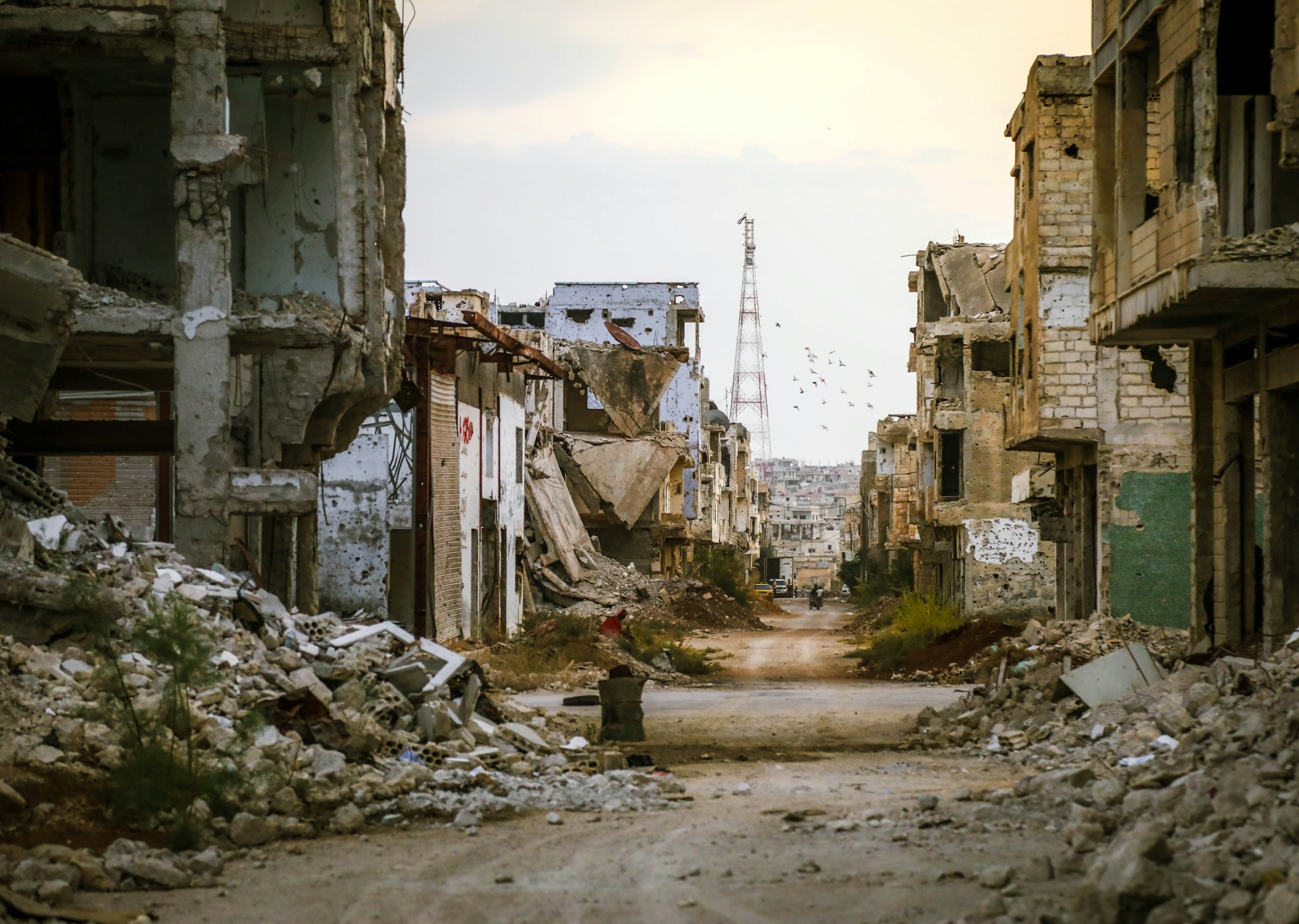
In the echoes of brutal artillery and the chaos of collapsing cities, we measure death tolls and count the displaced. How, what is beneath these broad statistics is a deeper, more specific truth that often goes untold: war is not a gender-neutral catastrophe. When conflict erupts, whether in Gaza, Ukraine, Sudan, or amidst escalating tensions with Iran, women and girls bear a disproportionate and distinct burden. As we observe Women’s History Month, it’s crucial to look beyond the battlefield and recognize that for women, the price of war is paid in everything from lost education and demolished healthcare to the agonizing weight of becoming sole providers in the midst of drastic ruin.
War Is Not Gender-Neutral
It is easy to imagine war as a great equalizer, a tragedy that affects everyone equally, in very similar ways. But the data tells quite a different story. The vulnerabilities that destroy women during conflict are often built into the fabric of society long before the first shot is fired. Pre-existing gender inequalities mean that when a crisis hits, women are both in more acute need of help and harder to reach due to factors like travel restrictions or economic dependence (The IGC, 2024). These structural disadvantages are bound to shatter first when conflict strains or destroys societal safety nets.
Inequality Before the First Shot
The impact of recent conflicts on women’s well-being is staggering. In 2024 alone, over 185 armed conflicts were recorded, with an estimated 676 million women and girls living within 50 kilometers of conflict zones, the highest number we have seen since the 1990s (UN Women, 2025). Unfortunately, in these settings, gender-based violence is customarily used as a deliberate and vile tactic of war, torture, and terror. The United Nations documented a staggering 87% increase in cases of conflict-related sexual violence between 2022 and 2024 (UN Women, 2025).
The destruction of infrastructure also hits women hardest, whereby attacks on healthcare facilities deprive millions of life-saving sexual and reproductive health services. This turns pregnancy into a life-threatening condition for many women (UN Women, 2025). Furthermore, the disruption of education has a gendered impact. Over 85 million children affected by the crisis are out of school, more than half of them girls. In Afghanistan, for instance, four years after the Taliban takeover, 8 out of 10 young women are excluded from education, employment, or training (UN Women, 2025).
The Hidden Costs Women Pay During Conflict
However, to frame women solely as victims is to miss half the story. The very crises that dismantle their safety nets also thrust them into roles of unexpected leadership. When men are killed, displaced, or called to fight, women frequently become the sole heads of households, providers, and community organizers (Global Citizen, 2022). This new responsibility, while heavy, can also be a source of empowerment. Yet, this caregiving role often comes at a severe mental cost, as women are forced to manage the trauma of displacement and loss while supporting their families, frequently with scarce resources and little support for their own psychological needs (PMC, 2006). The stressors are immense, and adequate, culturally-sensitive mental healthcare is rarely available in war-torn regions (PMC, 2006).
From Victims to Leaders
This is why empowering women isn’t just a matter of equality, but instead, it is a matter of survival and effective recovery. Study after study shows that peace agreements negotiated with women at the table are more likely to last. One recent evaluation of peacebuilding efforts in Mali and Niger, for example, found that increasing women’s participation in conflict prevention from 5 to 25% helped resolve more than 100 local disputes (UN Women, 2025). Despite this, women remain largely excluded from formal peace processes. In 2024, available global data indicate that women made up, on average, only 7% of negotiators, 14% of mediators, and 20% of signatories in formal peace processes worldwide, figures far below any target for meaningful participation (UN Women, 2025).
Why Women Must Be Part of Peacebuilding
And yet, the international community continues to sideline them. Less than 1% of peace and security funding reaches women’s organizations (UN Women, 2025). This is a massive strategic failure masquerading as tradition. As crises, including conflict and climate shocks, grow more frequent, development and humanitarian actors must prioritize gender equality. Effective interventions require not just short-term aid, but long-term, coordinated strategies that tackle the root causes of inequality, engage with local women’s organizations, and build systems that are resilient for everyone (The IGC, 2024).
As tensions rise globally, from the Middle East to Eastern Europe and Africa, we must change the way we talk about conflict. We cannot continue to see women as passive recipients of peace, but as active participants in defense and recovery. When war breaks out, women pay the highest price, but they equally hold the most valuable keys to rebuilding what communities are losing. It’s time we let women use them.
Sources
-
The IGC. (2024, March 20). Why conflict hurts women most and the need for coordinated interventions. International Growth Centre. https://www.theigc.org/blogs/gender-equality/why-conflict-hurts-women-most-and-need-coordinated-interventions
-
UN Women. (2025, October 20). Facts and figures: Women, peace, and security. UN Women – Headquarters. https://www.unwomen.org/en/articles/facts-and-figures/facts-and-figures-women-peace-and-security
-
Global Citizen. (2022, March 23). How Do Women and Girls Experience the Worst of War? https://www.globalcitizen.org/en/content/women-and-girls-impacts-war-conflict/
-
PMC. (2006, February). Mental health consequences of war: gender specific issues. https://pmc.ncbi.nlm.nih.gov/articles/PMC1472268/