

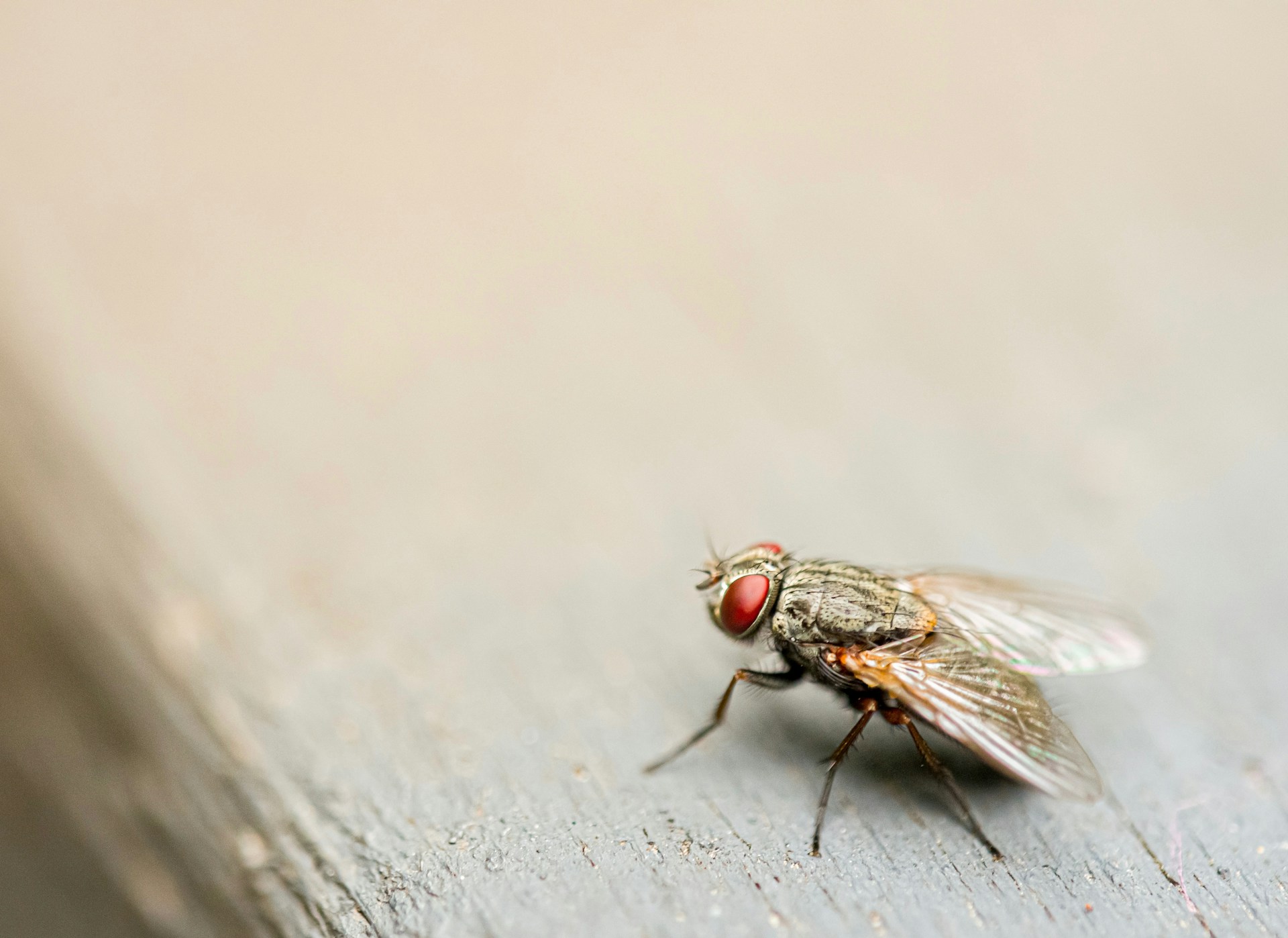
For over a century, the humble fruit fly has been a surprising giant in the world of science, aiding in our quest to decode genetics and behavior. Recently, in 2024, it offered its greatest gift ever: a complete wiring diagram of its entire brain. Scientists have mapped every one of its roughly 140,000 neurons and the staggering 50 million connections between them, creating the largest and most complete brain “connectome” of any adult animal ever. This map of a fly’s mind is now a revolutionary blueprint that illuminates the intricate architecture of a complex brain and provides an unprecedented tool for exploring our own.
How They Built the Ultimate Brain Atlas
The creation of this map was a monumental feat of technology and global collaboration. It began with a minuscule brain smaller than a poppy seed, sliced into over 7,000 ultra-thin sections, and imaged with electron microscopy to generate a mountain of data. An artificial intelligence program performed the initial, Herculean task of tracing the branches of each neuron through this microscopic maze.
However, given AI’s propensity for errors, the global FlyWire Consortium needed to step in. Hundreds of scientists and even trained citizen scientists joined a massive online effort to proofread the AI’s work. They spent an estimated 33 person-years checking and correcting the neural tracings and adding vital labels. This collaborative “crowd-science” approach turned a raw, AI-generated sketch into a finely detailed and accurate atlas.
The Power of the Map: From Street View to Circuit Logic
Thus, the result is far more than a static diagram. It is a dynamic, searchable database that functions like a “Google Maps for the brain”. Now, researchers are able to navigate from a single neuron to the brain-wide circuits behind intricately complex behaviors, including navigation and memory.
The map reveals a brain built with remarkable consistency. It details a hierarchical “parts list” of over 8,400 distinct cell types, providing a standardized catalog for neuroscientists worldwide, acting as an extensive guide. These trailblazing discoveries are letting researchers see not just the “streets” (neurons), but also the “traffic rules”, gaining knowledge on how different types of neurons, using chemicals like dopamine or serotonin, are wired together to process information. Now, we have a complete reference manual for what “normal” wiring looks like in a healthy, functioning brain!
Why a Fly’s Brain Map Matters to Humanity
You might wonder, “Why on earth does a tiny insect’s brain matter to us?”
Well, the answer actually lies in deep biological conservation. The fundamental principles of how neural circuits are built and how genes guide brain development are shared across various species. Therefore, the fruit fly serves as a powerful genetic model, as about 75% of human disease-related genes equally have a counterpart in the fly genome.
Conclusion: A New Chapter for Neuroscience
In conclusion, the completion of the fruit fly connectome marks the end of one extraordinary journey and the exciting beginning of another. One that transforms the fly from a model for studying individual genes or cells into a complete system for understanding how entire networks generate thought and action. It proves that by charting the intricate landscape of even a small mind, we illuminate the path to understanding our very own, one unimaginably larger!