
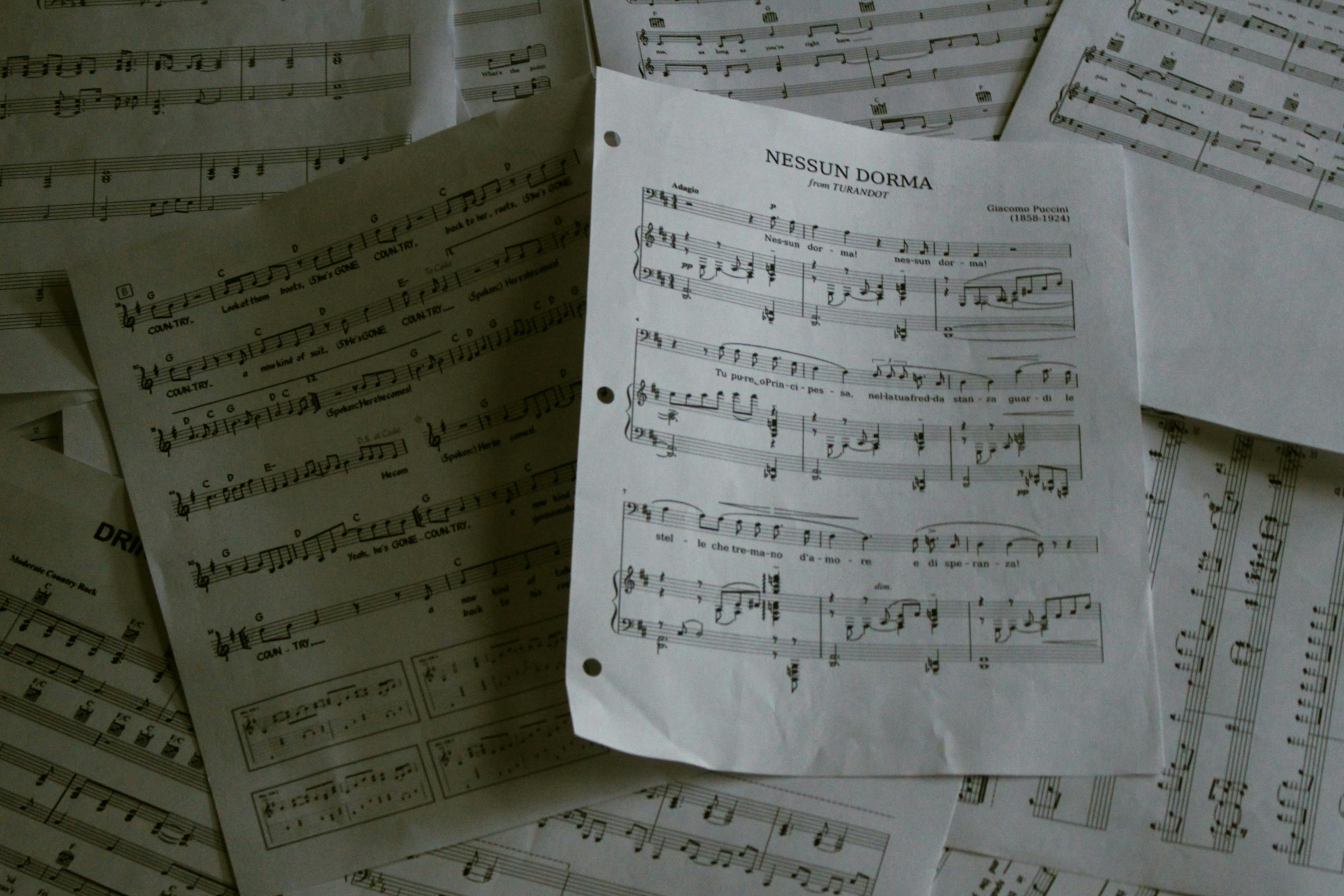

Whether it’s for a performance, music exam, or just for fun, memorizing a piece is the pinnacle of mastering it. It is said that you never fully learn a piece until it’s memorized, but how exactly do you take on an endeavor like that?
From concertos to bagatelles, all music can be memorized no matter how long it is by using efficient memorization strategies and enough effort. If you’re still relying on muscle memory to memorize your pieces, I’m impressed, but also incredibly scared for you.
If you’re looking your stack of sheet music and feeling overwhelmed, keep reading and put some of the tips below into practice!
Memory & The Human Brain
When it comes to the “how” of memory, it’s helpful to think of your brain like a phone with barely any data and a battery that’s constantly at 2%. Most of us try to download a massive 4K movie (your entire concerto) all at once, and then we’re shocked when the download fails and the phone crashes.
The secret to how our memory actually works is “chunking.” Since your short-term memory can only handle about seven tiny bits of info at a time, you have to break that movie into 10-second clips. But the real solidifying of your memory doesn’t happen while you’re staring at the sheet music, but it happens when you’re asleep. Your brain uses that downtime to consolidate everything you practiced, moving those notes from your fragile short-term memory into the vault of your long-term memory.
So, if you want to stop the “I knew it yesterday but forgot it today” cycle, stop trying to memorize the whole piece in a day. Practice in small bursts, take a nap, and let your brain’s background processing do the work for you.
Recognize Patterns/Associations in the Music
This technique is called “Memorizing with Associations” (Huntington Beach School of Music), and it consists of looking through your music and identifying patterns and groups of notes that work together. Take a look at your music and identify the arpeggios, broken chords, and chord progressions you’re familiar with from your technique practice. Find repeating phrases and other patterns, and talk to yourself about each one. For example, you could tell yourself, “Here is an ascending E major arpeggio in 2nd inversion, I notice its a repeating motif at the beginning of each measure”. Saying each pattern out loud as you find it and telling yourself about it is vital, as it forces your brain to remember it faster.
When you play the piece without the score, it’ll be easier to remember each grouping of notes. Instead of memorizing 6 individual notes, you will only have to memorize one “group”.
Say the Notes Out Loud
This one gets tedious pretty quickly, but comes in handy for beginner musicians especially. It’ll train your brain to lock in the notes more securely. If you’re playing piano, always memorize hands separately, and try to say the names of the notes you always seem to make mistakes on or ones that slip out of your memory the most often out loud.
At the end of the day, the goal is to memorize a piece well enough that any mistakes you make on performance day are easy to bounce back from. By saying the notes out loud, you’ll be able to recognize your mistake and move on quickly to the next one during your performance.
Write Out the Difficult Measures
Similar to the previous one, this one is also quite tedious, but has great results. Pick a few measures, or even just one, to memorize completely. Set your sheet music somewhere out of your view, and write out these measures from memory. This tip uses a different medium of communication (pencil and paper) to achieve similar results as the previous one. By the time you write out the hardest parts of your piece, they’ll be burned into the back of your mind, and you’ll be able to master these sections in record time.
Memorize in Tiny Sections
Students who rely on muscle memory for memorization tend to run through their entire piece, stumbling through the notes until they find the one that “sounds the most right”, making mistakes that won’t be fixed on the next run through and will most likely show up on performance day. The problem with running through the entire piece multiple times is that you never actually target your weak areas, and these will prove to be detrimental to your performance.
When you begin to memorize your music, take a few measures at a time to completely master before you move on. This tactic gives you better results faster and prepares you better. Additionally, once the whole piece is memorized, practice starting at random spots throughout the song, and play random sections without looking at the music. This prepares you for quick recovery after making potential mistakes during a performance, while solidifying the notes into your brain.
Repeat, Repeat, Repeat
This one is pretty self explanatory. Take the tiny sections from the previous tip and go through them over and over until they feel secure! Once again, don’t go through your entire piece to try and memorize it.
Change Up the Articulations
If the repetition is getting boring, and you feel like you’re making no progress with your memory, consider changing the articulations of the notes. For example, even if there is no accent written in, play the first note of each group of 16th notes with an accent. Use your sheet music to practice this for a line, and then take the music away and try playing the same line with these new articulations. This way, you’ll remember the first note of each 16th note grouping, and you won’t rush when you play through them without the metronome.
Speaking of the metronome- USE IT!
TL;DR
For that upcoming recital that was once months away and is now approaching faster than you thought, don’t panic and try some of these strategies below to memorize your piece quickly:
- Memorize in Small Sections: 2-4 measures at a time is the golden ratio
- Find the Patterns: Call out arpeggios, chords, and scales for what they are. Talk to yourself about the music
- Say Your Music: Call out the note names out loud (especially the tricky ones)
- Write Your Music: Literally grab a pencil and write out difficult measures from memory
- Stop the “Run-Through” Habit: Don’t just play the whole piece and hope for the best. Target tiny sections, master them, and practice starting from random spots so you can recover if you make a mistake on stage
- Change It Up: Use a metronome and change up your articulations (add accents where there are none) to keep your brain engaged during repetitions
In conclusion, stop praying to the muscle memory gods and start locking in!
Source: 1