Home Blog Page 8

What is OCD?

Many people say, “I’m so OCD” when they like things neat or organized.
But OCD is not a personality trait. It is a serious mental health disorder that can deeply affect someone’s daily life.

1/ What is OCD?

Obsessive-compulsive disorder (OCD) is a condition where a person gets stuck in a cycle of:

  • Obsessions: unwanted, intrusive thoughts, images, or urges

  • Compulsions: repetitive behaviors done to reduce anxiety

This cycle can take up more than an hour a day, cause strong distress, and interfere with school, work, or relationships.

2/ What Are Obsessions?

Obsessions are thoughts that:

  • Keep coming back

  • Feel hard or impossible to control

  • Cause anxiety, fear, or discomfort

  • Do not match what the person truly wants or believes

People with OCD usually know their thoughts don’t make sense, but they still feel very real and scary.

3/ Common types of obsessions:

  • Fear of germs or contamination

  • Doubts (e.g., “Did I lock the door?”)

  • Fear of harming someone by accident

  • Need for things to feel “just right”

  • Unwanted sexual or religious thoughts

  • Fear of making mistakes

These thoughts are called ego-dystonic, meaning they go against the person’s true values and identity. That’s why they feel so upsetting.

4/ What Are Compulsions?

Compulsions are actions people feel forced to do to reduce anxiety caused by obsessions.

They may give short-term relief, but the anxiety usually comes back, and the cycle continues.

5/ Common compulsions:

  • Washing hands over and over

  • Checking doors, stoves, or homework repeatedly

  • Counting in certain patterns

  • Repeating words or prayers silently

  • Arranging things until they feel “right”

  • Asking others for reassurance again and again

Compulsions are not enjoyable. People with OCD often wish they could stop.

6/ OCD Is NOT Just Being “Obsessed”

Everyone has random intrusive thoughts sometimes.
For example, you might briefly worry about getting sick or forgetting something.

The difference is:

  • A person without OCD can move on.

  • A person with OCD feels stuck, anxious, and driven to perform rituals.

OCD affects about 1 in 40 adults and also many children and teens. It can begin in childhood or adolescence.

7/ Is There Treatment?

Yes, and it works. The most effective therapy for OCD is:

  • Exposure and Response Prevention (ERP): a special type of Cognitive Behavioural Therapy (CBT)

ERP helps people:

  • Face their fears slowly and safely

  • Resist doing compulsions

  • Teach their brain that the fear will pass

Doctors may also prescribe medications called SSRIs, which can help reduce symptoms.

With proper treatment, many people with OCD improve greatly.

8/ Why Awareness Matters

Many people misunderstand OCD.
Because of this:

  • It can take years to get diagnosed.

  • People may feel ashamed or embarrassed.

  • They may hide their symptoms.

OCD is not about being neat or liking things organized.
It is a real mental health condition that deserves understanding, support, and proper treatment.

9/ Final Message

If you or someone you know is struggling with repeated unwanted thoughts and rituals that interfere with daily life, reach out to a doctor or mental health professional.

OCD is treatable. You are not “crazy.” You are not alone.

Source: [1], [2], [3]

Falling Asleep: How to Support Our Body Into Mindfulness

0


Have you ever started to count sheep when you couldn’t fall asleep? Did it work? Well, if it didn’t, here are four sleep techniques you could try to support your rest.

  1. Creating a Healthy Sleep Environment

Treating yourself to a comfortable sleep environment could be the solution. Yes, you do not need to go fully overboard with plush king-sized beds and feathered pillows, but you could find a blanket that isn’t itchy and overly uncomfortable. Maybe you could try sleeping in the dark or sleeping with a lamp, depending on how you normally sleep.

  1. Distractions

Trying to read a boring book so boring that you fell asleep in the first sentence is not an unlikely scenario. However, in this case, we want this to happen; boredom is often a main source for sleep, and if you attempt to think about boring things, read boring books, or look at boring things, sleep may occur easily.

  1. Physical activities

Doing more active and physical activities during the day can help your body fall asleep more efficently. When our bodies are more tired, we tend to fall asleep faster, because our energy is all used up, leaving us tired. Better get running!

  1. Limits

Limiting certain things also may be a good idea, such as limiting

– Caffeine,

– Worry/ anxiety,

This can disturb your rest into a fitful sleep.

– Eating and drinking directly before bed.

When fluids and food enter your digestive system as you lie down to rest, your sleep may be disorganized by the active system.

Link: https://www.aarp.org/health/healthy-living/how-to-fall-asleep-fast/

What Would Happen If Earth Stopped Spinning?

It sounds like science fiction, but it is a real physics question. What if Earth suddenly stopped rotating?

Right now, Earth spins at about 1670 kilometers per hour at the equator. We do not feel this motion because everything around us is moving at the same speed. But if the planet stopped instantly, the results would be catastrophic.

The Immediate Effect

If Earth stopped spinning suddenly, the atmosphere, oceans, buildings, and people would keep moving at the original speed due to inertia. According to Newton’s First Law of Motion, objects in motion stay in motion unless acted upon by an external force.

That means everything not firmly anchored to bedrock would be flung eastward at extreme speeds. Winds would exceed the force of the strongest hurricanes ever recorded. Entire cities would be destroyed within minutes.

The Oceans Would Reshape the Planet

Earth’s rotation causes a bulge around the equator. Because of centrifugal force, the equator is about 21 kilometers wider than the distance between the poles. If Earth stopped spinning, that bulge would disappear.

Water would gradually migrate toward the poles, creating massive polar oceans and exposing land around the equator. Entire continents would change shape. Many regions would become permanently dry, while others would be submerged.

Days and Nights Would Change

Currently, Earth completes one rotation every 24 hours, giving us day and night. If the planet stopped rotating but continued orbiting the Sun, one side of Earth would face the Sun for six months while the other side would face darkness for six months.

Temperatures would become extreme. The sunlit side could become scorching hot, while the dark side could freeze. Weather systems as we know them would collapse.

The Magnetic Field Problem

Earth’s magnetic field is generated in part by the motion of molten iron in its outer core. While rotation is not the only factor involved, dramatic changes in planetary motion could affect the geodynamo. A weakened magnetic field would expose Earth to higher levels of solar radiation.

That would increase risks to satellites, power grids, and potentially living organisms.

Could This Actually Happen?

A sudden stop is essentially impossible under known physics. It would require an enormous external force, such as a collision with a massive astronomical object. Even then, total stoppage is extremely unlikely.

However, Earth’s rotation does slow down very gradually due to tidal friction caused by the Moon. Over millions of years, days become slightly longer. Dinosaurs experienced shorter days than we do today.

Why This Question Matters

This thought experiment is interesting because it connects multiple STEM fields at once. Physics explains inertia and motion. Earth science explains planetary structure. Climate science explains atmospheric consequences. Astronomy explains orbital dynamics.

Asking extreme what if questions helps scientists understand why our planet behaves the way it does. Sometimes the most fascinating STEM topics are not about new inventions, but about reimagining the rules that keep our world stable.

Sources:

https://sciencenotes.org/what-would-happen-if-the-earth-stopped-rotating/

Debunking 3 Beginner Misconceptions about the Gym

Disclaimer: All information provided here is based on personal experience and meant for entertainment purposes. Not medical advice or research backed.

As we grow older, physical activity is often less integrated into our daily routines. Especially if you work a sedentary job, study for most of your day, or don’t take transit, movement can be difficult to get. P.E. classes are no more, and suddenly the dreaded gymnasium becomes a nostalgic memory because now it’s difficult to get yourself moving on a regular basis.

Enter, one solution of many, the gym.

Regardless of your gender, size, and strength, there’s a lot of ideas that hold people back from exercising in public spaces. Here, I’d like to address some of those misconceptions.

1. People will judge me

When we’re just starting out, we’re bound to get things wrong. This can feel especially humiliating when we’re in a public space. Especially if you’re not confident about your appearance, fear of judgement can hold you back because you’re afraid that others might make fun of you.

It’s important to note that imperfect movement is better than no movement at all. Exercise has a plethora of benefits, and you won’t be able to reap any of them if you’re afraid of others potentially judging you.

Also, if you’re hesitant to go to the gym because you don’t like how you look, then how will you ever improve that? You can’t change your appearance by losing weight or gaining muscle if you never go to the gym because you want to lose weight or gain muscle or gain strength… it’s a vicious cycle. Your best bet is to start.

Furthermore, this phobia of judgement has only increased since the boom of social media caused people to film in the gym.

I’ve been to a couple gyms before, and most gyms have a no-film policy. If you’re uncomfortable, you can always speak to a staff member, politely ask them to stop, or move out of the frame.

People are really nice

Most gymgoers understand the intimidation of going to the gym the first couple times. After all, we were all beginners once. If you ask questions politely while someone is resting, chances are they will be happy to help you! Be careful not to interrupt them when they’re in the middle of something though, because that could be dangerous.

2. I don’t know how to use the machines

The machines in the gym can look incredibly intimidating at first. There’s so many handles, weights, extra add-ons, and plates. There’s diagrams and labels and really long names for muscles you didn’t know existed, and there’s people who seem to know what they are doing.

To challenge this fear, I’d like you to remember that everyone was once a beginner. Nobody was born knowing how to lift weights with the perfect form, and most people don’t have personal trainers to show them how.

If you’d like to get started lifting, there’s thousands of Youtube tutorials for people of all abilities. You can also install a workout app like Hevy, which will not only track your workouts but also show you the proper form for each machine.

Psst… you don’t have to use the machines or the weights!

I’ve been going to the gym for about 3 years now, and I was so overwhelmed by the buff gymbros in the weight section that I didn’t touch a dumbell until I was about a year and a half in. I rotated between the treadmill and the bicycle because they were the most self-explanatory. Not ideal, not perfect, but better than the alternative which was nothing.

While I have full confidence in your ability to start off lifting and enter the realm of buff gymgoers, you don’t need to lift if you don’t want to or are too scared to. You can always start off small and build a habit, because movement doesn’t have to be perfect. Even a little walking on the treadmill is better than nothing at all.

3. The gym is the only form of exercise to get fit, and I hate it

Sometimes the gym just isn’t for you, and that’s okay. Indoor training is not everyone’s jam.

Going to the gym is one of the more common ways to get fit and stay active, but there are tons of others out there. Perhaps you would prefer:

  • swimming
  • jogging
  • walking
  • jumprope
  • cycling
  • ball sports
  • so many more options!

There’s a plethora of different forms of movement to try, so if the gym isn’t for you or you’d like to build a bit more strength before entering, give some of these other forms a shot. Remember, even a couple baby steps is better than nothing!

A Nobel Prize Refused for the Sake of Justice

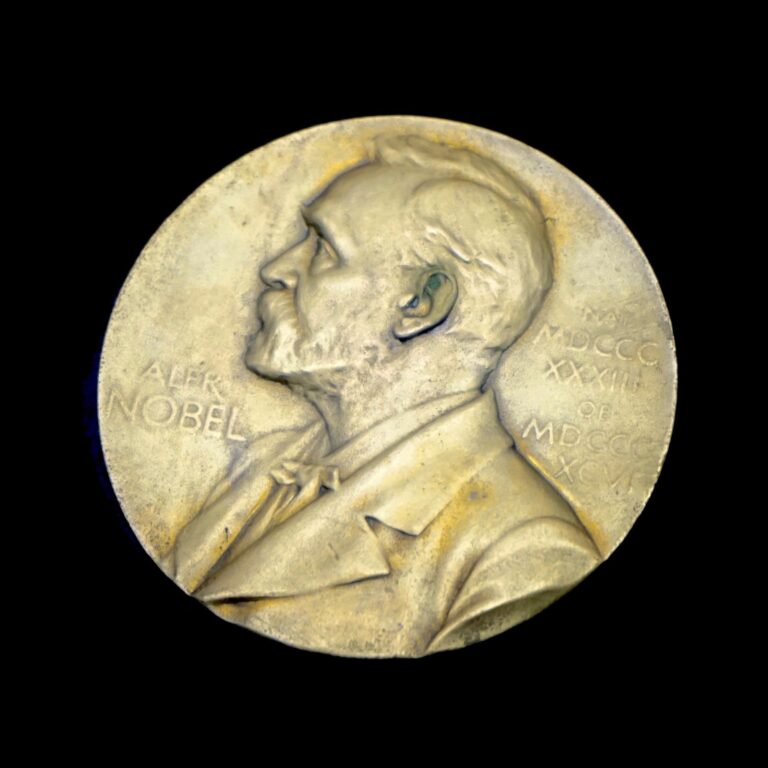
1: Pierre Curie Once Refused the Nobel Prize Without Marie’s Name

In 1903, a significant event occurred in the history of science. Pierre Curie was nominated for the Nobel Prize in Physics. However, there was a problem. His wife, Marie Curie, was initially excluded.

Pierre refused to accept the prize unless Marie received credit too.

He believed that their discovery was the result of both their hard work. He knew that Marie had led the research and worked just as hard as he did, if not more. Because of Pierre’s strong stand, the Nobel Committee changed their decision. In the end, both Pierre and Marie Curie received the 1903 Nobel Prize in Physics, together with Henri Becquerel.

This moment was not only about science. It was about fairness, respect, and recognizing women’s contributions in a time when women were often ignored.

2: Who are Pierre and Marie Curie?

Marie Curie was born in Poland in 1867. She later moved to Paris to study at the Sorbonne University. She was passionate about science and focused on studying radioactivity, a term she actually created. She discovered two new elements: polonium (named after her homeland, Poland) and radium.

Pierre Curie, born in France in 1859, was also a brilliant physicist. Before meeting Marie, he had already made important discoveries in magnetism and crystals. When they met, they shared the same love for science. They got married in 1895 and became research partners for life.

Together, they worked in a small, simple laboratory under very difficult conditions. Despite limited money and equipment, they made groundbreaking discoveries that changed science and medicine forever.

After Pierre’s tragic death in 1906, Marie continued their work. In 1911, she won another Nobel Prize in Chemistry, becoming the first person ever to win two Nobel Prizes.

3: What We Can Learn About Women in Science?

  • Women deserve equal recognition for their work in science.

  • Talent and intelligence are not defined by gender.

  • Many women in history were overlooked: we must not repeat that mistake.

  • True progress in science happens when everyone is given a fair chance.

  • Supporting women in STEM is not just kindness: it is justice.

Pierre’s decision reminds us that equality in science is not automatic. It requires courage, fairness, and people who are willing to speak up.

Source: [1], [2], [3]

Plot Twist to Podium: Alysa Liu

As you know, the 2026 Olympics has officially come to an end! There were so many memorable performances and moments that no one is going to forget anytime soon. Today, I want to tell you about a person who has been become all the rage on social media: Alysa Liu.

Alysa Liu is a 20 year old American figure skater, and is now the 2026 Olympic Champion for women’s figure skating. However, she didn’t just become an insane figure skater now, because when she was just 13 years old the youngest US national champion. She was the first woman to successfully complete a quadruple jump and triple axel in a competition. 

After this win (and many more), people expected her to compete more and win more. What she did next came as the ultimate shock. 

She retired at 16 years of age. 

She explained how even though she loved figure skating, she hated the expectations and pressure that came along with it, so she decided to quit. She experienced life for the first time as a normal student as she went to college and behaved as she wished. 

Unsurprisingly, she returned to the sport. How could someone stay away from something they loved so much? Fast-forward to 2024 and she’s back on the ice! And she didn’t just return, she actually dominated. 

During the 2026 Olympics, people weren’t impressed that she took a break and came back and won, nor that she landed some crazy moves, but just the way she skated was what made everyone’s jaws drop. As she was skating, you couldn’t tell that this was a competition, because it looked more like a performance. She looked calm and excited and just so at-ease as she freely skated for everyone across the world to see. 

However the reason she looked like she was having such a good time being back on the ice was that now she did things her own way. She picked out her costume, songs, and moves and made sure that she was happy and comfortable doing it all. Because she was doing what made her happy in her own way, she was able to truly showcase her true potential and wow the audience. People online have not just been going crazy for her personality, crazy hair and lip piercing, but for her story. Her story shows 2 valuable lessons that everyone should keep in mind. The first of them being that you should not only do what you love, but do it in a way that satisfies you. The second is that it’s ok to take a break and find yourself, because in the end you can come back stronger than ever before. 

So even though the Olympics are finished, Alysa Liu is just getting started once again! 

Sources: 1 


What I Wish I Knew Before Applying to University in Canada

1

Applying to university in Canada sounded simple at first. Fill out some forms, upload transcripts, wait for decisions. Easy, right?

Not exactly.

Looking back, there are so many things I wish someone had told me before I started the application process. If you’re about to apply (or even just thinking about it!) here’s what I wish I knew.


1. It’s More Stressful Than You Expect

People sitting on chair with brown wooden table photo – Free Office Image on Unsplash
Image Taken by Luis Villasmil on Unsplash

No one really talks about how emotionally draining application season can be. You’re constantly checking portals, refreshing emails, comparing averages, and wondering if you’ve done enough.

It’s not just paperwork… it’s your future. That makes everything feel heavier.

I wish I had known that feeling overwhelmed is normal. It doesn’t mean you’re unprepared. It just means you care.


2. Your Average Isn’t Your Entire Identity

When you’re applying in Canada, especially to competitive programs like business, health sciences, or law pathways, everything feels numbers-based.

You start calculating:

  • “If I get an 88 in this class…”

  • “What if my midterm drops?”

  • “Am I competitive enough?”

I wish I had understood earlier that your grades matter, but they don’t define your intelligence, work ethic, or potential. Universities are evaluating you academically, not measuring your worth as a person.

That distinction is important.


3. Deadlines Sneak Up Fast

Between OUAC (for Ontario schools), Alberta Apply, scholarships, transcript submissions,

A calendar with red push buttons pinned to it photo – Free Meeting Image on Unsplash
Image Taken by
Towfiqu barbhuiya on Unsplash

and program-specific requirements, there are more deadlines than you think.

I wish I had created a master document earlier with:

  • Application deadlines

  • Scholarship deadlines

  • Transcript requirements

  • Supplementary application details

Organization reduces stress more than motivation ever will.


4. Scholarships Require Effort (But They’re Worth It)

I used to assume scholarships were mostly for “perfect” students.

They’re not.

Many scholarships look for leadership, involvement, resilience, and community impact, not just a 95% average. But you do have to apply. They don’t just automatically appear.

I wish I had started researching entrance awards earlier instead of assuming I wouldn’t qualify.


5. You Don’t Need Your Entire Life Figured Out

This might be the biggest one.

At 17 or 18, it feels like choosing a program is choosing your entire future. But programs change. Majors change. People transfer. Interests evolve. University is a direction, not a life sentence.

I wish I had given myself permission to see it as a starting point instead of a final decision.


6. Comparison Will Steal Your Peace

Someone will get accepted before you.
Someone will have a higher average.
Someone will seem more “put together.”

If you constantly measure yourself against everyone else, you will never feel secure, even if you get into your top choice.

Focus on your path. It’s the only one you can control.


7. It’s Okay to Feel Both Excited and Terrified

No one prepares you for the weird mix of emotions:

  • Pride

  • Anxiety

  • Doubt

  • Hope

You can be grateful for the opportunity and still scared. Those feelings can coexist.

That doesn’t make you weak. It makes you human.


Final Thoughts

Man delivering speech on graduation photo – Free Uni Image on Unsplash
Image Taken by
Patricia Beatrix Villanueva on
Unsplash

If I could tell my pre-application self one thing, it would be this:

You are more than a portal status. More than a conditional offer. More than a percentage.

The university application process feels like everything in the moment, but it’s just one chapter of a much bigger story.

And you’re going to be okay.

A Doll’s House – Summary and Symbols

Henry Ibsen’s iconic play “A Doll’s House” follows the life of a Victorian age housewife as she discovers and navigates the restrictions of societal expectations. Known for its controversy as one of the first feminist dramas, the play asks important questions about relationships, social norms, and independence.

It’s a short read, but there is so much to unpack. Whether or not you are reading the play for enjoyment, I hope you find this analysis helpful!

Plot Summary

Act 1: The main character, Nora, comes home after Christmas shopping for her family and is visited by her friend, the widow Christine Linde, who is looking for work. She is also threatened by Krogstad, the man who secretly loaned her money years ago when she needed it to save her husband, who was ill at the time. Krogstad threatens Nora to reveal the loan as a way of blackmailing Nora’s husband, Torvald, who is also Krogstad’s employer. This is because Torvald is planning on firing Krogstad and hiring Christine in his place. Krogstad wants to keep his job in order to save his reputation, and by extension, the reputation of his sons.

Act 2: Dr. Rank, one of Nora’s closest friends, confesses to Nora that he is dying and that for the past few years he has loved Nora. Confused, she continues to treat him as a close friend only.

Meanwhile, Krogstad’s threat of exposure continues to terrify Nora because she fears passing on immoral ideas to her children and her home. She desperately confesses to Christine, who tells her to come clean to her husband; begs Torvald not to fire Krogstad, but he does so anyway in order to exert his power over her; and she begs Krogstad not to reveal her secret to Torvald, but having been fired, Krogstad writes a letter exposing Nora and delivers it to their home. In an effort to distract Torvald from the letter in the letterbox, Nora asks Torvald to correct her dance, which she is to perform at a dinner party later that evening.

Act 3: While the couple was at the dinner party, Christine sought out Krogstad to explain why she had left him so many years ago. She needed the money to support her family, and marriage was the only way for her to obtain it. She and Krogstad get together, and she tells Krogstad not to rescind the letter from Torvald and Nora’s home but rather write something else.

After coming home from the dinner party, Torvald reads the letter in the letter box condemning Nora. Enraged, he blames her for the shame he faces and yells that she has ruined his life. He then reads Krogstad’s second letter, with his apologies, and promptly switches to a mild, patronizing, and forgiving mood. He claims to have forgiven Nora and acts as though he had not been screaming at her moments ago. Nora leaves her home, for the first time, after explaining to Torvald that she no longer knew who she was and that she did not love him anymore. After being under Torvald’s control, Nora had lost her sense of self.

Symbols

The Macaroons

At the beginning of the play, Nora brings macaroons home after her day out shopping. She hides them and lies when Torvald asks if she has had any sweets. Torvald does not allow Nora to eat any sugar because he is afraid that it will ruin her teeth and her smile will not be pretty anymore.

Later, when Christine and Dr. Rank are in the living room with Nora, she shares the macaroons with them. In response to Dr. Rank asking where she had gotten them, Nora tells him that Christine brought them, and that she could not have known they were forbidden.

The macaroons represent Nora’s desire for independence from both Torvald’s strict rules and the expectations of society. In a world where she is expected to follow her husband’s every word and act as his pretty accessory, the macaroons are a strong symbol of her own rebellion against the roles prescribed to her. They start off the play’s theme of deceit to gain independence.

The Christmas Tree

Like her Christmas tree, because her relationship lacks authenticity, depth, and roots, Nora is slowly dying from the inside. Regardless of how prettily she dresses and how nicely the tree is decorated, it does not change the fact that it is slowly and invisibly withering away. This foreshadows the ending of the story, where Nora realizes that she has spent so much time altering herself and appealing to Torvald that she hasn’t noticed her own identity slipping away.

The Tarantella

Nora is meant to perform the flirty dance at the dinner party they are attending in the evening, but during the afternoon, Krogstad’s incriminating letter arrives, and she pretends that she has forgotten the entire dance to distract Torvald from opening the letter. Her dancing gets progressively wilder with Torvald attempting and failing to control her rash movements.

Later, she puts on her fancy costume and performs the dance at the dinner party perfectly.

The Tarantella represents the growing tension and realization Nora develops. She begins to realize the true power imbalance; she is incapable of communicating clearly, and she sees how Torvald tries to control her. Her marriage isn’t a partnership, and she’s treated like an object. Wanting more but not daring to ask, her awareness, combined with her feelings of dread toward the moment Torvald inevitably opens the letter cause Nora’s internal state to spiral.

Behind Mexico’s Most Dangerous Cartel – El Mencho

0

South America has been facing political crises, first with the capture of Venezuela’s president, Nicolas Maduro, by U.S. military forces, and now, Mexico is experiencing a brief era of violence. 

As of February 22, 2026, El Mencho or Nemesio Rubén Oseguera Cervantes, a drug lord who led the Jalisco New Generation Cartel (JNGC), has been killed by Mexican security forces.

The cartel had caused political and social unrest through setting vehicles on fire and blocking roads, especially after Mencho’s death. This drew the attention of the Canadian government, in that a new travel warning was sent to caution citizens about dangerous public shootouts. If a flight was not essential, it would be best to be on your way. On Sunday, 14 people, who included members of the National Guard, were killed across the states of Jalisco, Michoacán, and Guanajuato. Now the count has reached 73.


Cartels have stayed put instead of moving out to the United States and control territory inside the nation through force and their own militarization. El Mencho‘s lover lured forces in, and they shot him, dying before receiving medical aid. The plan was to kidnap Cervantes, which crept between secrecy, considering the monopoly it has worked through, but it has denied Mexicans peace in return. The murder has marked a wave of violence intrinsically tied to the quality of life and international affairs. The United States were alongside Mexico on this investigation in the hopes that it would improve cross-border business, but what does this event mean for Brazil and its already built-up partnerships in the world?


The 2026 FIFA World Cup is set on the stage of Guadalajara, a current loophole that deals with the larger world. People hide waiting for an announcement that makes them feel safe. Experiencing it firsthand was a first for Canadians. Vincent La Pointe, travelling back to Calgary, mentioned that it was surreal eating your food at a resort while people are dying. The significance of this statement is more telling of the impact on those who have no other choice than to lie on cardboard in the airport, or to simply stay isolated in their homes, praying that they are not another victim.


El Mencho spent time in between the U.S. and Mexico building an empire by expanding territory and managing to get their way into more illegal activities. Wars were normal for cartels and Mencho, the opportunities he used to cement the reputation of JNGC in terms of danger, crime rate, and threatening public safety. Since Mencho progressively became a rising force, some questions go beyond the surface – will there be another event in the chain reaction, or a completely different reaction, or could this go well for Mexico to settle under control? The death and its purpose entail the rights of the citizens of Mexico as a powerful move. Although unsettling to do, the only thing to say the least, is we’ll have to see.


Tell me, dear reader, what is on your mind when you hear about lockdowns or travel measures regarding international safety, and what about the times have made you think of the same thing, and what was it? Should we just stay in and forget what has happened, once things may finally settle? Share your thoughts respectfully and be more accepting of other views without discrimination. Thank you for reading!


Sources:

https://www.cbc.ca/news/world/mexico-el-mencho-9.7103578

https://www.theguardian.com/world/2026/feb/23/who-was-el-mencho-drug-cartel-boss-killed-mexico

https://www.theguardian.com/world/2026/feb/22/mexican-security-forces-reportedly-kill-drug-cartel-boss-el-mencho

https://www.cbc.ca/player/play/video/9.7103450

https://en.wikipedia.org/wiki/Nemesio_Oseguera_Cervantes

Black History Month: More Than a Chapter in the Past

0

The Past Isn’t as Distant as We Think

Every February, Black History Month invites us to reflect on the past. We see black-and-white photographs of marches, segregated buses, and powerful speeches echoing through crowded streets. These images are importnt. They document courage, resistance, and change, but they also quietly shape how we think about racism.

Because the photos are in black and white, we subconsciously associate this specific kind of injustice as a long time ago. It can begin to feel like racism belongs to another era, something that our great-great-grandparents experienced, not a lived experience of inidivudlas today.

This Black History Month, I challenge you to learn something new. Black history is not distant. It is recent, and it is ongoing.

The Power of the Images We’re Showin

When we learn about the Civil Rights Movement, we often focus on leaders like Martin Luther King Jr. and Rosa Parks. We see powerful black and white images of sit-ins, bus boycotts and speeches. What we dont always pause to consider is how recent this history trule is. The 1960s were not centuries ago. Many of our grandparents today were teenagers during segregation. Some parents even grew up during a time when schools were still struggling to desegregate fully. The injustice captured in those black-and-white photos did not just dissapear as soon as some of our cameras turned to colour.

The Present Is Part of the Story

In 2020, after the killing of George Floyd, millions of people marched around the world demanding justice. These protests were not historical reenactments, but they were current events. They unfolded in full colour, flooded across our social media feeds, on the same phone we use every day.

Black communities today continue to face disparities in healthcare, housing, education, and the justice system. Students still report experiences of discrimination. Conversations about race remain present in classrooms, workplaces, and churches.

Black history did not end with the Civil Rights Movement. It did not freeze in time with a photograph. Instead, it got less easy to spot, and it got easier to slip into the cracks.

Why This Perspective Matters

When we try to convince ourselves that racism is “over” simply because the images that circulate every February are in black and white, we risk becoming complacent. If injustice feels distant, responsibility, accountability, and actions that we can take, feel distant too.

Learning something new this Black History Month means challenging the idea that equality is complete. It means recognizing that progress has been made, but that work remains. It means understanding that history is not just a record of what happened, but it is a foundation that shapes what is happening now.

Black History Month is not only about honouring the courage of the past. It is about developing awareness in the present.

The photos may be black and white.
But the reality has always been in colour.

Spring Is a Better Reset Than January

0

January is supposed to be the month where everyone gets their life together. New year, new habits, new routines, new everything. But if we’re being honest, January kind of sucks. It’s dark early, it’s freezing, and school is already heavy before you’ve even found your footing again. Everyone talks about “fresh starts,” but most days in January just feel like survival mode.

Spring, on the other hand, actually feels like a reset. Not the motivational-poster kind, but the kind that sneaks up on you. The first day you leave the house without your biggest jacket. The first time it stays light a little longer than you expect. The moment you realize you’re not dreading going outside as much. None of this is dramatic, but it changes your mood in a way January never does.

I always notice it in small ways. Walking somewhere and not being mad about it. Wanting to sit by a window instead of hiding under a blanket. Feeling like texting people again instead of ghosting everyone for a week. It’s not that life suddenly becomes perfect in spring, it just feels… lighter. Like there’s more room to breathe.

That’s why spring feels like a better time to try again. Not even in a big, life-changing way. More like trying to show up to things you’ve been avoiding. Starting something you told yourself you’d “do later.” Picking something back up after you dropped it because you were tired or overwhelmed. January asks you to change your whole life when you’re already running on empty. Spring doesn’t ask for that. It just gives you a little energy back and lets you decide what to do with it.

There’s also way less pressure attached to spring resets. No one’s making dramatic resolution lists in March. No one’s expecting you to reinvent yourself because the calendar flipped. You get to make quieter choices. The kind that don’t look impressive but actually stick. Like going for a walk instead of rotting in your room. Or finally joining that thing you said you would. Or just deciding to take one small step instead of promising yourself a whole new personality.

Something about spring also makes it easier to believe that starting late isn’t the same as failing. Winter drags on, and it’s easy to feel behind when you’re tired all the time. Spring doesn’t magically fix that, but it reminds you that timing matters. You don’t have to force change when everything feels heavy. Sometimes you wait for the season to shift, and that’s okay.

I think we put too much pressure on January to be meaningful. As if the only “real” fresh start is the one that happens on January 1st. But most change doesn’t happen because of dates. It happens because something in you finally feels ready to move. Spring just happens to be really good at making that feeling show up.

So if your New Year reset didn’t work, that’s not a failure. Maybe it was just bad timing. Spring is still here. You’re still allowed to start again.

From Stomach Pouches to Pizza: A History of Cheese

Cheese. That glorious, gooey, sometimes stinky miracle we sprinkle on pizza, melt into sandwiches, or snack on straight from the block. But have you ever stopped to wonder where did cheese even come from? 


The Accidental Invention

Believe it or not, cheese might have been ‘discovered’ by pure accident. Around 8000 BCE in the Fertile Crescent or Central Asia, humans were trying to store milk. If you keep milk in a stomach pouch (yes, literally an animal’s stomach), it naturally curdles thanks to an enzyme called rennet. Now you have curds (cheese) and whey (leftover liquid). 

So technically, the first cheesemakers were experimenting with something that sounds disgusting to modern standards, but was a genuine hack for ancient storage problems. 


Cheese Around the World

Once humans realized milk could be transformed into something magical, cheese spread like wildfire.

In Greece, they made feta, salty and crumbly, perfect for topping olives and salads. In France, Camembert and Roquefort were invented: soft, smelly cheeses that may sound scary but taste heavenly. Italy gave us parmesan, mozzarella, and gorgonzola, basically a buffet of cheeses that dominate pizzas and paste dishes worldwide. Cyprus has halloumi, which you can fry without melting (it actually squeaks when you bite it).

Some cheeses were so pungent that European cities actually banned them from public transport. Imagine riding the bus and a wheel of stinky cheese is right next to you…yeah, no thanks.


Medieval Cheese Madness

Fast-forward to the Middle Ages, and cheese was everywhere. Peasants relied on it for survival, and royalty couldn’t get enough. Cheese was sometimes so valuable it was used as currency or given as gifts to kings and nobles (some cheeses are still used today as collateral for bank loans). 

And if you’re the type of person who thinks modern festivals are fun, try cheese rolling in Gloucestershire, England. For centuries, people chased huge wheels of cheese down steep hills, often tumbling after it themselves. 


Weird Cheese Facts

Cheese history isn’t just about the food, it’s full of bizarre, hilarious, and at times gross facts.

  • Some cheeses, like Casu Marzu from Sardinia, require live maggots to ferment. The worms are considered ‘part of the flavour’
  • Cheese wheels are once used as mock weapons or in fun village competitions
  • The world’s most expensive cheese comes from donkey milk, costs hundreds of dollars per pound, and is apparently worth it if you’re extremely rich…and extremely brave
  • The term ‘cheddar’ isn’t just a style of cheese, but comes from the village of Cheddar in England, where cool caves are perfect for aging cheese


Cheese in Pop Culture

Of course, cheese didn’t just stay in history books. It’s everywhere today. 

Pizza wouldn’t exist without mozzarella, mac and cheese owes its existence to cheddar, and who hasn’t had a grilled cheese sandwich straight out of a childhood dream? 

Cheese even sneaks into weird pop culture corners. The “cheese touch” in Diary of a Wimpy Kid? Or infamous scenes where cartoon characters get stuck with stinky cheese? Cheese has wormed its way into both our stomachs and our funniest moments.


Cheese is more than just a food. It’s history, science, culture, and a little bit of chaos rolled into one. From accidental curds in a goat’s stomach to viral TikTok food combinations, cheese has surpassed wars, revolutions, and centuries of changing taste buds. So next time you bite into a piece of cheddar, gouda, or brie, you can take a moment to remember how humans accidentally curdled milk, medieval peasants chasing rolling cheese wheels, and the countless ways people around the world have celebrated this wonderful food. And to think, this all started from an accident.


Sources:

The Backbones of Physics: Newton, Maxwell and Einstein

0

It is always easy to flip through a physics textbook and see laws and concepts as if they were always there. But physics was not figured out from the start. Our current understanding of physics came from centuries of research, theorizing and testing. In this blog post, we will be taking a deep dive into the field of physics and the major contributions made by physicists. This blog post will explore the developments made by the pillars of physics: Isaac Newton, James Maxwell, and Albert Einstein.

Isaac Newton – Universal Gravitation

Universal Gravitation is a fascinating discovery made by Isaac Newton in a time period dominated by plagues and superstition. During his early stages of life, Isaac Newton is said to have observed an apple falling from a tree, which caused him to wonder why objects always fall straight down. He was very curious and determined that there must be a force that causes this. 

He then connected this force to the moon and discovered the idea that the force of gravity is what holds the moon in orbit around the Earth. Using complex mathematics and discovering calculus, Isaac Newton was able to come to the conclusion that this force weakens with distance.

He also came up with Newton’s three laws of motion, which are shown here:

Newton’s First Law of Motion: This law states that “An object at rest stays at rest, and an object in motion stays in motion with the same speed and in the same direction unless acted upon by an unbalanced force.” This law describes the fundamental ideas of inertia.

Newton’s Second Law of Motion: This law states that “The acceleration of an object depends on the mass of the object and the amount of force applied.” Mathematically, this law establishes that force is equal to mass times acceleration.

Newton’s Third Law of Motion: This law states that “For every action, there is an equal and opposite reaction.”

James Maxwell – Classical Theory of Electromagnetic Radiation

Electromagnetic waves are produced by an acceleration of charged particles. This change in the electric field, for example, induces a changing magnetic field perpendicular to the electric field, which induces a changing electric field perpendicular to the magnetic field and so on. These waves propagate in a direction that is perpendicular to both the electric and magnetic fields. 

James Maxwell is the first physicist to discover electromagnetic waves theoretically in the 1860s by combining Gauss’s Law, Faraday’s Law, and Ampere’s Law. He even calculated the speed of electromagnetic waves to be approximately 300,000 km/s. Maxwell also came to the conclusion that light was also a form of electromagnetic waves. Maxwell also used various equations, existing laws and differentiation to create Maxwell’s Laws, which are laws that explain how electric charges create electric and magnetic fields and how they propagate as waves.

Albert Einstein – Quantum Mechanics and Relativity

Albert Einstein contributed immensely to the world of physics in various topics such as quantum mechanics, relativity, thermodynamics, mass-energy equivalence, cosmology and much more. He is most famously known for his discovery of mass-energy equivalence, which is mathematically expressed as E=mc². 

Albert Einstein’s mass-energy equivalence states that mass and energy are equivalent and are different forms of the same thing. He put forth the idea that mass can be converted to energy and vice versa, breaking the classical understanding that they are two different entities. This explains how nuclear fission and nuclear fusion release large quantities of energy, where the products have less mass than the reactants. This missing mass, also known as mass defect, is released as energy.

Sources: 1, 2, 3

The Race to Build Nuclear Fusion on Earth

One of the most fascinating areas of STEM right now is nuclear fusion. Not nuclear fission, which is used in today’s power plants, but fusion. Fusion is the same process that powers the Sun and every other star in the universe. Scientists are working to recreate that reaction on Earth as a clean, high-output energy source that could fundamentally change how we power the planet.

Fusion happens when two light atomic nuclei, usually isotopes of hydrogen called deuterium and tritium, combine to form a heavier nucleus. When they fuse, a small amount of mass is converted into a huge amount of energy according to Einstein’s equation E = mc². The science behind it is elegant. The engineering required to make it happen is extremely difficult.

To get atoms to fuse, they must be heated to temperatures over 100 million degrees Celsius. At that point, matter becomes plasma, a superheated state where electrons separate from nuclei. This plasma cannot touch the walls of a normal container because it would instantly cool down and damage the structure. Instead, scientists use powerful magnetic fields to confine it inside donut-shaped machines called tokamaks.

Facilities such as the National Ignition Facility have made major breakthroughs. In 2022 and again in later experiments, researchers achieved ignition, meaning the fusion reaction produced more energy from the fuel than the energy delivered directly to it. While the total system still consumes more power overall, this was a critical proof that controlled fusion is physically possible.

At the same time, the ITER project in France is building one of the largest and most ambitious fusion reactors ever attempted. It represents collaboration between dozens of countries and thousands of scientists and engineers. The goal is not immediate commercialization, but demonstrating sustained, stable fusion at scale.

What makes fusion so exciting is its potential impact. It produces no carbon emissions during operation. It does not rely on fossil fuels. The primary fuel sources can be derived from seawater and lithium, which are relatively abundant. Compared to current nuclear fission plants, fusion also produces far less long-lived radioactive waste and carries no risk of a runaway chain reaction.

However, there are still major challenges. Containing plasma for long periods is extremely complex. Even small instabilities can disrupt the reaction. The materials used inside reactors must withstand extreme heat, neutron bombardment, and mechanical stress. Scaling from experimental success to commercial power plants will require advances in materials science, superconducting magnets, and energy conversion systems.

Even so, progress over the last decade has been faster than many expected. Private companies are now entering the field alongside government research labs, accelerating innovation. Fusion is no longer just theoretical physics. It is becoming an engineering problem that scientists are actively solving.

If fusion becomes commercially viable, it could provide a stable, high-density energy source without the environmental costs of fossil fuels. That possibility alone makes it one of the most important scientific efforts of our time. It shows how deep physics research can eventually translate into solutions for global challenges like climate change and energy security.

Sources:

https://www.iaea.org/newscenter/news/what-is-nuclear-fusion?utm_source

https://world-nuclear.org/information-library/current-and-future-generation/nuclear-fusion-power?utm_source

https://www.livescience.com/fusion-ignition-scientists-skeptical-explained?utm_source=

ICE: What We Know So Far

The US Immigration and Customs Enforcement, better known as ICE, is a deportation sector you might have heard about recently. This article serves as a brief overview for people new to the concept of ICE’s mission and what they’ve done so far in the US.

Why was ICE created?

ICE was formed as a result of the tragedy on September 11th, 2001 as a way to remove illegal undocumented immigrants from the country and prevent any more disasters from happening. They were heavily reinforced after Trump’s 2025 reelection to carry out his mass deportation initiative and can be found even in major cities in Canada today such as Calgary, Vancouver, Toronto, Montreal, and Ottawa.

What rights does ICE have?

Agents are allowed to arrest and detain people who are suspected of illegal immigration, but these suspects are protected from detainment as long as they don’t interfere with an arrest, assault an agent, or “ICE suspect the person of being in the US illegally.”

Furthermore, law enforcement “can only use deadly force [such as gunfire] if the person poses a serious danger to them or other people, or the person has committed a violent crime.”

ICE reports they have detained 605 000 people between January 20th to December 10th 2025.

When a person is detained, they are either released after questioning or sent to a larger detention facility. During this process, their location is often unknown to their family and lawyers for a matter of days. 

What Has ICE Done? 

Many people have been severely affected by ICE’s administration under ambiguous adherence to law enforcement.

Renee Good

In Minneapolis on January 7th 2026, ICE agents surrounded Good’s SUV and demanded her to exit the vehicle. After an angry exchange with the officers and refusal, Good began to drive away before Jonathan Ross, an agent, released fire. Good was shot three times and didn’t survive.

Homeland Security Secretary Kristi Noem accused Renee of being a terrorist with no evidence to justify that her coworker’s shooting was correct. The US department of justice agrees with her saying that the ICE agent was “justified” in shooting, killing Renee Good.

Alex Pretti

Pretti and a female were ordered to move out of the roadway, to which they refused. An ICE agent was ordered to pepper spray them and attempted to detain Pretti. After realizing Pretti had a gun on his legally gun-licenced person, agents proceeded to shoot him ten times in defense for his gun being “dangerous and unpredictable.” 

Later on national TV, treasury secretary Scott Bessent was asked if he wanted to retract his take on Pretti’s death being “justified because he had a gun on him.” Bessent said no, proceeded to change the topic, and started to deny his original claim after being interrogated more. 

Liam Conejos Ramos

While leaving preschool with his dad, 5 year old Liam was stopped and detained by ICE agents and used as “bait” as more officers pursued his father. 

Department of Homeland Security assistant secretary Tristia McLaughlin says that ICE did not target the child, but rather was performing a “targeted operation” on his father, who was referred to as an “illegal alien from Ecuador.” 

Despite having multiple families who offered to take custody of Liam while his father was away, ICE arrested the preschooler anyways. 

Sources

Sources: 1, 2, 3, 4, 5, 6, 7