Home Blog Page 66

Making The Most Out Of Summer

0

Summer has finally arrived, and there are tons of ways to make the good times last. With the school year coming to an end, it’s time to get out your summer playlist, spend some time in the sun, and fill the summer of ‘22 with good vibes and memories. Let’s take a look at some of the best ways to make the most out of summer.

The Calgary Stampede & other local events

Calgary is home to the “Greatest Outdoor Show on Earth,” and from July 8th-17th, you can experience all of the shows and events that make it so special. In addition to the fun that the Calgary Stampede will bring, artists such as Shawn Mendes, Maroon 5, and The Lumineers are coming to Calgary this summer on tour.

Drive-in movies

It’s often the means by which you watch a movie that makes the entire experience worth it. There are a bunch of great movies coming out this summer, but for a unique and retro experience, consider watching some of the classics at one of Calgary’s drive-in movie theatres.

Sports

The NBA season has come to a close, with Stephen Curry winning his first Finals MVP and the Golden State Warriors winning their fourth NBA Championship in the last eight years. With the Colorado Avalanche and Tampa Bay Lightning battling it out in the Stanley Cup Finals, the NHL season will soon be concluded as well. However, sports fans – especially those in Calgary – will still have much to look forward to this summer. Throughout the next few months, you can cheer on your Calgary Stampeders and Cavalry FC live at the McMahon Stadium and ATCO Field, respectively. Also, beyond watching sports, playing sports is a great way to be physically active during the summer.

The outdoors

Spending time outdoors is one of the best parts of summer, and there is no shortage of ways to do just that. Stargazing, camping, or going for a nature walk are great ways to enjoy the outdoors. Planning a road trip to Banff, Jasper, or somewhere even farther away can also diversify your experience in nature. However, you don’t need to drive elsewhere to spend time outdoors – being a tourist in your own hometown is another great way to do so. Regardless of how you decide to spend your summer, make sure you relax, have fun, and do things that you love in order to recharge for the upcoming school year.

Featured Image

The Truth About Fast Fashion

Fast fashion has recently gained attention on social media as it has become almost inevitable in today’s society while promoting unsustainability. This practice has become increasingly popular among larger fashion corporations but has consequently harmed the planet, exploited workers, and caused deforestation. With that in mind, today, I wanted to talk about the immense influence fast fashion has had on social media and society as a whole.

What is Fast Fashion?

At what cost does one sacrifice the well-being of the environment over fashion? The answer can be found from fast fashion trends and retail practices. Fast fashion is cheap, trendy clothing that quickly gains popularity on social media platforms such as TikTok and Instagram. The main idea behind big corporations marketing fast fashion to the general public comes from creating pieces inspired by runway shows at a lower price to meet consumer demands. However, lower prices also mean lower quality and unsafe working conditions and poor wages for those who work in the manufacturing factories. One example of a fast fashion tragedy is the Rana Plaza incident that occurred in 2013 in Bangladesh, in which many workers were killed due to hazardous working conditions, which led to a building collapse.

Sustainability and Fashion Trends

As you may have probably already noticed, Y2K has become a prominent fashion trend all over social media and has led to more and more people adopting the early 2000s aesthetic. While this was happening on social media, corporations such as H&M got the opportunity to create cheap Y2K inspired clothing and market it to teens. At the same time, H&M also released a “green campaign” for which they claimed many of their products were environmentally sustainable. However, according to The Guardian, 40% of these claims could be misleading to consumers. Other fast fashion trends on social media come from stores such as GAP, Urban Outfitters, and Shein that create low prices for their clothing at the cost of cheap labor. Social media further endorses fast fashion by promoting “haul videos” from creators who unintentionally seem to support these trends that exploit factory workers. Fast fashion is difficult to escape as it is comfortable to conform to the trends influencers and celebrities are participating in. Thus, many of us resort to stores, such as the ones stated above, to get clothing pieces similar to the celebrities we admire at a cheaper cost. Therefore, it can be said that social media quite literally fuels fast fashion.

Other notable fast fashion trends:

  • Crochet sets inspired by 70s and 80s
  • Twilightcore (micro trend from TikTok) 
  • ZARA Hauls
  • “Clean girl” aesthetic

Influence from the TV Shows and Movies

The entertainment industry has always had a prominent and long-lasting effect on the fashion industry and, more specifically, fast fashion. Television shows have the ability to assist with the creation and popularization of a variety of fast fashion trends. Additionally, content from Youtube influencers, TikTokers, and even mainstream celebrities has also heavily influenced how consumers respond to fast fashion trends. For instance, a couple of months ago, fashion seen in Euphoria blew up on social media platforms and garnered attention from people around the world. This led to a revival of vintage and Y2K fashion pieces such as the velvet tracksuits and rhinestones. Currently, people online have tried to recreate fashion seen from the latest Stranger Things season, which is definitely more retro than the other fast fashion trends. People resort to giving into these fast fashion trends as it gives them a way to resonate with the characters and eras they have admired on screen for so long. Additionally, some companies that contribute to the fast fashion crisis end up sponsoring the clothing in some movies or shows, which makes it easier for people to find and sell those pieces of clothing. Due to the short time frame of many fast fashion trends, a lot of the clothes that are impulsively bought end up in thrift stores or landfills. It is evident that these trends are not good for the environment as fast fashion products use cheap, toxic chemical dyes that pollute clean water sources. Also, polyester is a common product used in these fashion items, and it is a contributor to fossil fuels.

In the end, fast fashion has become a huge part of our society, and it is difficult to completely get rid of it. Thus, it is essential to do your research and consider more environmentally friendly options whenever possible.  


feature image/ [1]/[2]/[3]/[4]

A Personal Reflection of Diya Patel (Birthday Edition)

The candles are lit, and my mom gets my family and friends ready to sing a song of joy – happy birthday. At that single moment I only cared about the food and the next game of tag you might play with my friends. It was seen as a day where you are given the presents that you’ve always wanted, and are treated like a princess that you always thought you were. That was me, a little girl that was overjoyed by the little things in life with no clue about the reality despite living in it. I have never taken a second to rewind and see how far I’ve come over the years, yet have stuck in the moment for years. For this reason, I wanted to dedicate this blog to reflecting back through the years, and what I have learned up to this day. By the time this is posted it will be the day of my birthday, and let me tell you that it’s been a roller-coaster. I feel old. I am officially going to be 15, which makes me think I’m halfway to thirty despite it being a reality. I find it interesting to recognize that until the age of 9 I looked up to my birthday as a celebration of getting older, and now as I am getting older it seems sad yet exciting to see myself transform overtime. The older I have gotten, the more I have realized about life, people, and the morals that I should live by. Sometimes I feel as if life is going by too fast, even though I do have to accept that’s a reality. Through my 15 years of existence and living in this generation, I have realized a lot about life. I tend to feel like a 30 years women at times, due to how much I know(or how much my generation knows) compared to my parents. As the generations tend to get more and more competitive, and human characteristics are shadowed we are now seeing huge labels put over the people that we are today. The idea of individuals using others for the money or fame seems like the presence of human decency is still present. Many individuals look for labels, yet don’t seem to look at the “small” qualities that individuals hold. I tend to feel like as time passes our world seems to expand and evolve so far, yet tear apart so delicately at the same time. As my birthday comes closer, I tend to feel grateful for the little things in life. I find that I’ve seen so many stories, and how much so many of my friends are going through, they would wish to have some of the things in my life. I find that being grateful to family and friends is so vital, as you don’t know when you can lose an individual. This year, I am working towards being grateful for what I have, and being kinder to myself. With this reflection, I want you to give your loved one a hug and tell them how much you love them. Life is short, and I am willing to live it to the fullest to some limitations in terms of core values/morals. Do what it takes to make your dreams come true, and I’m manifesting that this is going to be the best year yet. 

I find that gratitude is something many individuals are working on as there are so many factors that play into not feeling that you don’t have enough. I wanted to share a quote(by Oprah Winfrey) that has helped me break through those feelings.

Be thankful for what you have; you’ll end up having more. If you concentrate on what you don’t have, you will never, ever have enough.” – Oprah Winfrey

This quote in specific changed the way I thought, and after hearing this I never took anything for granted. It made me appreciate my loved ones around me for holding on to me, and never letting ago during the worst times. My parents have gone through so much, yet have done so much to provide for me. I love them so much for that, and the amount of thank you’s I could say would never be enough. I feel like many if us could resonate with that. If you have a loved one that has been with you for a long time, thank them. I promise it will be worth it.

On Life in the Universe

It seems like a philosophical question to ponder what life is. Although much of biology informs us of how life operates on Earth, this science also confines itself to Earth.

The only “life” we know of is the life on this planet. It is the product of a suitable environment, a series of serendipitous accidents, and lengthy evolutions spanning millions of years.

Yet looking at potential life outside our current world, astrobiologists can only expand what we know to be life.

For instance, what we call life today centers around water, cells and cellular components, proteins, and sequences of nucleic acids that encode information.

The chemistry of terrestrial life is due to seemingly-random processes. The way life works is just how it came to be, and without any apparent design. For this reason, it is highly unlikely life—should it emerge elsewhere in the universe—would bear these characteristics of terrestrial life.

To Characterize Life

A definition of life that biologists commonly use may consider life a self-sustaining process, with cellular organisms that respond to stimuli and adapt, and can reproduce, grow, and evolve. NASA, along with many astrobiologists, however, frequently use a more nebulous definition. They consider life “a self-sustaining chemical system capable of Darwinian evolution.”

The search for extra-terrestrial life tries to identify biosignatures—molecules that can suggest the existence of life—on other planets and bodies. These signatures, however, are not easy to identify simply because it’s uncertain what they may be.

Water—an important medium for many chemical processes in life—is a good sign. The polarity of water molecules allows many similarly polar molecules to dissolve and interact. Yet researchers suggest other compounds, like ammonia or formamide, could also serve a similar role as a solvent for life.

Similarly, while carbon forms the structure of molecules involved in terrestrial life, silicon could possibly do the same on account of their similar atomic properties.

The nucleic acids, such as DNA, which instruct the production of amino acid chains, may find their analogues in other systems of coding genetic information.

Indeed, overall, in almost all definitions of life, the requirement of evolution is present. Life must be able to change over time in response to external factors, and genetics form the basis of retaining information across time.

Altogether, we can’t be sure of the specifics of life outside of Earth—and, obviously, if it even exists. But there are certain requirements for something to be considered life, as we would recognize it.

Researchers have also speculated that, rather than looking for special signatures, we may find better success looking for patterns in how specific molecules are used and their abundance.

Or perhaps, there are existences outside even the broadest and most abstract definitions of life. Something that could blur lines between inanimate and animate entities.

But all of that is food for thought and speculation.

Further Reading:

Image Sources: Featured

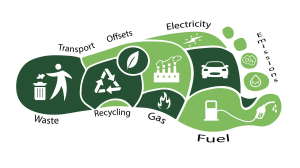
Reducing an Everlasting Footprint

In the present day, climate change is one of the biggest challenges we are facing as a species. Human development over the last 200 years has made it so the world is becoming dangerously close to an irreversible change, so it’s no surprise that the topic as a whole can seem overwhelming. While a real solution to this problem will require action on a global scale, there are still choices that every single person can make in their day-to-day life to minimize the damage. 


What is a carbon footprint?

A carbon footprint is the amount of greenhouse gas emissions that come from both the production and the consumption of goods and services. While carbon dioxide is the gas most commonly emitted, there are still others, including methane, nitrous oxide, and fluorinated gases, which trap heat in the atmosphere, causing global warming. Generally, the bulk of an individual’s carbon footprint will come from housing, transportation, and food. 

Between the seven billion people consuming amounts of the planet’s resources on Earth, the United Nations predicts that the global population will only keep growing at a greater rate. By 2050, there will be 9.7 billion, and over 11 billion by 2100. This rapid increase in population will only drive up emissions and deplete the planet’s resources, and it will have a direct impact on global warming. Thankfully, there are numerous ways your can lessen your carbon footprint to fight global warming, making more eco-friendly choices each day. 


Food

One of the first things you can do to decrease your carbon footprint is to reduce your meat and dairy consumption. At least 32,000 million tons of CO2 is released per year due to livestock and their byproducts, which is also 51% of all worldwide greenhouse gas emissions, and it is significantly more than the combined fumes of all modes of transportation. Incorporating more foods such as fruits, veggies, grains, and beans can go a long way in reducing your own carbon footprint. A few other simple ways to be more climate-friendly are to choose organic and local foods that are in season, buy food in bulk, use reusable bags and containers, as well as buy only what you need to reduce waste. 


Clothing

The clothing sector generates 10% of all global carbon emissions and remains the second biggest industrial polluter, following the oil industry. In addition to the mass amount of CO2 emissions associated with the production and transportation of fast fashion clothing, it also aids in deforestation on a grand scale. Cheaper fabrics such as rayon, viscose, and modal contribute to over 70 million trees cut each year. These emissions do not even include the water pollution caused by pesticides for the cultivation of cotton. Buying more sustainable, environmentally friendly clothing, or even buying second-hand clothing, will significantly reduce your carbon footprint in the years to come. Even just taking good care of your clothing or washing them using cold water will go a long way. 


Transport

As electricity increasingly comes from renewable energy or natural gas, transportation has become a major source of carbon dioxide emissions. Although it varies depending on the car, an average car will produce about five tons of CO2 each year. Something as small as driving less can do much to decrease your carbon emissions, whether it’s by walking, taking public transport, carpooling, or even biking. This is not only a more eco-friendly change, but it also lessens traffic congestion and the idling of engines that accompanies it. Taking care of your car, such as making sure your wheels are properly inflated or the car is maintained can increase your fuel efficiency by 4%. If you are shopping for a new car, I would highly recommend purchasing a hybrid or electric car. Despite the fact that some electric vehicles can cause greater gas emissions, they quickly make up for it in just a few years of use. Overall, experts have broadly agreed that electric vehicles create a lower carbon footprint over the course of their lifetime than do cars and trucks that use traditional engines. 

Whether or not you choose to implement any of these changes is up to you, but these day-to-day habits are how even one person can fight a problem as big as climate change. After all, the process of reducing your own carbon footprint will always start with one small step. 


Featured Image

Sources:

[1] [2] [3] [4] [5] [6] [7] [8] [9]

How Tik-Tok Carefully Curates Your For-You Page

0

As someone who has spent an absurd amount of time scrolling through my for-you page on Tik-Tok, I’ve encountered and watched many different videos from very niche communities throughout the app. I used to spend hours scrolling on the app ( I’ll admit, I was addicted for a few months) and now I usually spend 15-30 minutes looking at all the videos on my for-you page. I’ve been fascinated with how the Tik-Tok algorithm works, how my fyp page is completely different than my friend’s, or how members of content houses have the algorithm in their favour; helping launch their influence careers.

I came across an article by The New York Times back in January (the article was released in early December 2021) and it explained how the algorithm worked. The article goes into depth on a leaked document called “TikTok Algo 101,” which explained how user “retention” (if a user comes back) and how long a user spends time on the app are the two main deciding factors that help the algorithm put the type of subculture content on your for-you page. Every single interaction makes an individual with the app ultimately helps the algorithm figure out what content subcultures a user may enjoy; every like, every comment, every share, and every search one makes helps the app learn about what a user likes. Nobody gets the same for-you page, and nobody watches the same video at the same time. The app’s algorithm is carefully tinkered in order to cater to every user’s wants and needs, which has ultimately led some people to spend an absurd amount of time on the app.

Tik-Tok has granted opportunities for social-media influencers and personas to arise. People such as Addison Rae, Charli D’Amelio, Vinnie Hacker had the algorithm on their side in their rise to internet stardom. As evidenced by their follower counts that skyrocket on a daily basis, posting at specific times and posting content that caters to their audience has ultimately supported their rise into internet stardom. A system designed and engineered in order to cater to its users, a content creator’s posts and how they are received on the platform help the algorithm boom as well.

The amount of time spent and the amount of interactions one has on the app ultimately sets them up for the type of content they see on the app. The careful curation of a user’s for-you page comes down to the two factors previously stated. Many social media platforms in the modern era have realized that they can help control what content their users consume and how it affects their company. Tik-Tok has served as a platform for users to find enjoyment in content that others make, businesses to flourish, and emerging content creators to boom. All thanks to the algorithm, the cycle of content creation on Tik-Tok has helped support many people in their endeavors to discover new niche internet subcultures and show users things that they may find interesting; thus the formation of every Tik-Tok user’s for-you page.


sources | featured, new york times post linked above23,

The Art of Passion Provokes Direct Success

In terms of decision making, society has always been a brick wall that many find has a tendency to fear doing certain things. The thoughts of other individuals, the reactions that many may generate within themselves, or the hour long conversations where one may gossip about you is not ideal either. I feel like we’ve all been there. We may have had a passion in which we are willing to put all our blood, sweat, and tears into yet the thought of judgement may never leave our mind. Although society can be supportive in some cases, it’s important to consider that the opinions that it creates are directly based upon the morals and ethics of individuals as a result of their upbringing. On the contrary, it’s also crucial to consider the general aspects of morality and ensure that you are doing the right thing for yourself and others. Maintaining a sense of right and wrong, as you continue your passion will allow yourself to become not only a successful individual in the industry, yet also as a person. 

Writing a personal blog is an aspect that I haven’t been familiar with, or necessarily ever done. I feel like we tend to compare ourselves with what those around us have, yet we don’t understand what we already have. This mindset of not having what other’s have can poison us entirely, and make us feel like we’re ending up nowhere, despite the actions that we are taking to become better. Despite the scenario, being grateful, and not living up to society’s exceptions is alright! 

There have been various cases where you may want to become a painter/or a musician as a profession, yet your parents or loved ones don’t support you because of your decision. It’s important to consider that at the end of the day you are going to be working in that profession, and you will be playing a role in society for the profession. Whatever the case might be, it will all come down to you. If the individuals around you choose not to support you, it’s important to elaborate on why you want to do it or what it might bring for you because at the end of the day they are also looking out for what’s best for you.

Becoming what you want profession wise is important, as that will be your driving mechanism that will push you to become better at the field you choose to be in. Considering that, if you are wanting to become a popstar and have an angelic voice, yet your parents want you to become a doctor and you’re not good at science, you may be setting yourself up for failure in terms of interest in the subject & desires. That is not to say that if you’re not good at a subject and you have a passion for it you shouldn’t pursue it, yet you should work harder to become better at it. Becoming a popstar with the brilliance of songwriting and singing could end up allowing you to connected to millions of people. The more people like your music (or whatever you choose to do), the more you will be paid for the job. All in all, it’s important to understand what you want to do, and not allow society’s opinions to make your dreams a reality. 

Sources: Feautured Image

Aspiring Careers in the Field of Technology and Computers


It is inevitable that we would be faced with new advancements to our technological resources and prosperous from uprising STEM opportunities in the near future. But with these advancements, new jobs will also be introduced. If you are intrigued to go into the depths of coding, technology, robotics and more, then there are many positions available to pursue your dream career. Below are listed some of the top careers under computer science to get you thinking about your ambitions and understand the guidelines to obtain those goals.


1. Software Engineer

Average Salary (According to Alberta): $100,625.00/per year

Job Description: 

Software engineers develop computer system software and applications software to fix technical problems. They also work on software used in operating systems, information warehouses, databases, and telecommunications. They also cooperate with other developers and engineers to develop new software designs. Software engineers need to have interpersonal skills, communication skills to work appropriately with clients, and an analytical mind to develop technological solutions to computer problems. The work of software engineering can be used further to support businesses, infrastructure designs, computer advancements, and more. 

Education Requirements: 

Most employers recruit software engineers with a minimum of 4-years of bachelor’s degree in software engineering. Although this is required, a degree in computer science, computer engineering, or electrical engineering is also acceptable. It is also mandatory to know how to code, and how to apply it in technical terms. 

A Master’s degree in the field of software engineering can be an asset, as some employers will accept people with more work experience, and practical knowledge. If you want to expand further into research and development a doctoral degree is additionally mandated. 

Taking on courses such as software engineering, computer science, or robotics and engineering in high school can also be an asset to succeed and develop a finer perception of the content. Universities also provide internships and cooperative education opportunities to aid your practical skills.

Additional Resources: 

https://alis.alberta.ca/occinfo/occupations-in-alberta/occupation-profiles/software-engineer/#educational-requirements – This provides you with the career occupations, wages, and many more features about the job from statistics taken from Alberta. 

https://www.careerexplorer.com/careers/software-engineer/ – Want to know what setting you will be working in and the type of work you will be conducting. 

What is software engineering?

Related Jobs

  • Mobile developer
  • Security engineer
  • Video game designer
  • Data scientist 
  • Back-end engineer
  • Quality assurance engineer
  • Software integration engineer
  • Graphics developer


2. Data Scientist

Average Salary (According to Alberta): $84,000.00/per year

Job Description:

Data scientists interpret data or make educated conclusions from statistical reports to solve daily problems. They analyze different patterns and trends in the data that support or deny their hypothesis to either improve the company’s ways or bring change to social systems based on their research. The data a data scientist collects can go towards identifying health issues in a product, creating solutions to social issues, reducing the climate crisis, growing business profits, and many more ways which will positively affect our quality of life.

  • Work with different organizations and companies to identify data-oriented problems and offer newer opportunities and solutions.
  • Applying machine-learned models and unique algorithms to obtain more information from larger sources
  • Create charts, graphs, and other statistical reports to present the data you have collected to the stakeholders 

Education Requirements:

You will need to acquire a bachelor’s degree (4-year) in data science, data analytics, computing science, statistics, computer engineering, or any other competitive related fields for an entry-level position*. Although it is profoundly recommended that more work experience and a master’s degree in the field will lead employers to place you in higher positions. 

  • If you wish to conduct independent research, you will need to obtain a doctoral degree (Ph.D.).
  • Universities provide internships and collective education, which is an asset

* A lower level of the job which does not require any education or practice. 

Skills:

  • How to interpret data thoroughly and accurately
  • Having persistence and dedication to study and work on the course material
  • Having excellence in statistics, mathematics, and calculus
  • Showing or having an interest in data collection and analysis 
  • Great communication skills through verbal and visual 
  • Take on new challenges and expand your thinking 
  • Taking part in marketing or management courses

 Additional Resources:

https://datasciencedegree.wisconsin.edu/data-science/what-do-data-scientists do/-

https://alis.alberta.ca/occinfo/occupations-in-alberta/occupation-profiles/data-scientist/ 

7 Ways a Data Scientist Can Add Value to a Business | SmallBizClub

Related Jobs 

  • Data analyst
  • Data Architect
  • Database Administrator
  • Marketing analyst
  • Data engineer
  • Machine learning engineer
  • Buisness Intelligence Analyst


3. Web Designer

Average Annual Salary (According to Alberta): $69, 140.00

Job Description: 

Web designers create and develop interactive and informative websites for the public and intranet sites (internal to an organization). The websites created work towards marketing businesses, promoting non-profit organizations, spreading crucial information to the public, and many more effective causes. They use their visually organized platforms and persuasive skills to influence others to have opinions over the information presented and eventually agree to it. 

Education Requirements:

  • Minimum Education: 2 years of post-secondary
  • Courses include Computer Science, Marketing and Management, graphic design, and writing.
  • Specific courses include digital marketing, multimedia production, coding and scripting, user experience design, web application, and programming. 
  • Extra initiatives can also be taken for personal development, by doing personal experimentation, creating your own websites, attending seminars, and increasing your experiences in the field. All of these points would lead to a more occupational profile, which most employers prefer, giving you a successful job.  
  • You must upgrade your knowledge of the field continuously as it is a vast and rapid profession where information is changing constantly. (Different software developments and website competitions)

Skills:

  • Comprehensive and visual-oriented creator
  • Organizational skills, and clean and effective performance
  • Great communications skills both through the website and with stakeholders
  • Proficient with different software websites like Adobe Photoshop, Sketch, and Illustrator.
  • Know how to code efficiently with different languages (forming website base, and adding on design elements.)
  • Time management and persuasive language
  • Problem-solving mindset and working collaboratively with your team

Additional Resources:

https://www.coursera.org/articles/web-designer 

https://alis.alberta.ca/occinfo/occupations-in-alberta/occupation-profiles/web-designer/#educational-requirements 

https://www.codemotion.com/magazine/frontend/design-ux/web-designer-skills/ 

Related Jobs 

  • Five Issues Web Designers Should Address - Corporate Vision MagazineUX researcher
  • Game developer
  • Applications developer
  • Multimedia programme
  • SEO specialist
  • UX designer
  • Web content manager 
  • Multimedia Specialist.


4. Video Game Developer 

Average Annual Salary (According to Alberta): $84,210.00/per year

Job Description:

Video game developers collaborate with graphic designers, visual artists, and other people who collect data for them to create resourceful games. They create interactive designs and programs using platforms such as HTML5, mobile, and gaming console applications. Most importantly they write, edit and test their software codes, to develop logical systems through visual representation.

Education Requirements:

  • Most employers are looking for video game developers with at least 2 years of post-secondary education
  • There are no specific course requirements, but it is important to have knowledge of computer science, and graphic design.
  • Knowledge of computer science is constantly changing whether it is video game trends or computer language, so you have to keep up
  • Work experience as a graphic designer or software engineer is an asset
  • Collective education programs and internships are also available at most universities for further development of the topic

Skills:

  • Work logically and abstractly 
  • Pay attention to details and develop error-free games, as many users will be playing at the same time
  • Having research skills and active determination to learn the rapid changing computer languages and audience interests
  • Open to working with a team and contributing ideas, but can work individually
  • Are creative, design-oriented, organized, and professional
  • Communication skills both verbally and visually 
  • To develop captivating storylines, and write interesting scripts for the game
  • Be able to animate and be comfortable working online  

Additional Resources:

https://alis.alberta.ca/occinfo/occupations-in-alberta/occupation-profiles/interactive-media-programmer/ 

https://apps.illinoisworknet.com/cis/clusters/OccupationDetails 

Online Video Game Design and Development from Medicine Hat College

Related Jobs 

  • Graphic designers
  • Computer engineers
  • Computer programmers
  • Art Directors
  • Animators and Multimedia Artists
  • Writers
  • Producers and Directors 
  • Video Game Testors


Sources: Featured Image

The Best Vegan Caesar Salad Dressing

These days, Veganism and vegan foods have been on the rise as people take into account being responsible for the planet. Although I am not vegan myself, I usually try to avoid dairy as I have trouble digesting it. Because of this, I have explored many different alternative vegan dairy options, and have incorporated many vegan options into my everyday meals. While some of the recipes I tried were an absolute disaster, some of them turned out great– even better than its original counterpart if I do say so myself. This vegan caesar salad dressing is one of the best– it is tangy, creamy, and delicious. Whether or not you are vegan, I hope you try this out!

Ingredients 

  • 2 tablespoons tahini
  • ½ teaspoon garlic powder, or 1 clove of garlic
  • 2 tablespoons lemon juice
  • 1-2 tablespoons water
  • 2 tablespoons maple syrup
  • 2 tablespoons mustard

Instructions

  1. In a small bowl, combine tahini, garlic powder, lemon juice, maple syrup, and mustard
  2. 1 tablespoon at a time, add water until desired consistency is reached
  3. Toss with your choice of greens, croutons, and any other toppings, and enjoy!

Images [1][2]

A Secret Lost In The Water – Short Story Analysis

The short story A Secret Lost In The Water implies the impact of losing personal identity due to environmental circumstances and factors that heavily changes the way individuals think about their sense of self when placed with others hence what differentiates them to be different. When children are young, their parents are usually whom they look up to for all the answers and resolutions when challenges and obstacles occur in their lives. The parents act as guides who lead them on the path to a successful life and often the past of children is reflected upon the previous lessons the parents spent their time on teaching them. In the short story A Secret Lost In The Water, Carrier implies that traditional values are at risk of fading away in modern society due to the lack of communication between parents and children thus leading to regrets and guilt throughout generational gaps. 

In the course of the story, relationship divisions between the life experiences of the father and son lead to a sense of segregation impacting the connection of the two individuals present in two cohorts of different generations. Evidence of this was shown in the passage of the short story when the narrator stated that he and his father “scarcely talked anymore” (Pg.1). The son was “very intoxicated by the new game of spelling” (Pg.1) which led to the dispassion of his father’s lessons but rather, he was interested in the world’s way of teaching which involved words and numbers. Generational gaps lead to a disconnection of the father-son relationship and the father’s presence of his strange gifts was no longer inclusive in the life of his son. From the father’s perspective, Arithmetic numbers and English letters are not what he embraces to be the most important when it comes to the importance of living. “But he can never get along without water”(Pg.1).

The son strives for a completely different perspective on what he thinks will lead him to the ideal successful life his mind wanted to shape his future into. The different outcome of standards eventually causes the father to embrace the idea that his son no longer had an initial interest in listening to his personal experiences that he wanted to pass on to the future generation of children. This failure was the first stage of dislocation impacting the relationship, causing a fade of personal identity within the son. When the narrator declares that he was “no longer interested” (Pg.1) and he didn’t want to “hear him [the father] talk about his adventures during the long weeks when he was far away from the house”(Pg.1), the passage evidence illustrated the detachment of the relationship chain between the father and son. The father understood the risk of losing the only inheritance of the secret to his abilities when his son refuses to be taught. His last attempt on getting the interest of his son to reappear is by showing him the secret gift of finding a spring underwater. The father chooses to do this in order to keep his son on the designated path he wanted his son to look towards and pursue forwards. 

Alternatively, the son chooses to pursue his understatement of what success is and was enrolled into school. While he was learning complicated writing and arithmetics, the old traditional lessons taught by his father were carried away by time, and soon they faded away. As years passed by, the narrator had already learnt, adapted and positioned himself in his generation of adults; he no longer understood the significance of his father’s previous lessons and tricks. Simultaneously, the link between his father and him was finally broken when the father encountered death. The presence of this problem was only determined when the son came in touch with the alder branch a farmer handed him. The alder never dried out after his father used it to find water and the motif of this branch indicates the symbolic meaning behind the traditional values passed onto generations after generations. The negligence of the son’s actions in appreciating the valuable lessons once taught by his father showed the once vivid relationship between them has now completely disappeared.

 A Secret Lost In The Water declares the narration of a son growing up in the experience stories his father surrounded him with during the early ages of his childhood. The son lived his whole life failing to realize the importance of those experiences and stories that his father attempted in trying to pass onto him and how much it was worth compared to what the world would give him. After years passed by, the son realized the missed opportunity he had lost in gaining utilized time with his deceased father. “I had forgotten my father’s knowledge” (Pg.2), as many grow up without understanding the heavy amount of importance that occurred in their life until they have lost it and it faded away with time. It reveals the sad truth behind the unavoidable disconnection of relationships as time steps in and creates the risk of losing connection. 

Personal Experience:

Personal experiences connecting to the overall theme of this story introduces my background of having a mixed heritage of both Canadian and Chinese. The harsh reality of having to prioritize one cultural identity over another leads to a difficult process of which one to choose. Having to be fully exposed to two different cultural backgrounds yet still holding a tight grip onto both, creates internal conflict in my life as well as my family. Over the past few years, the development of my Chinese cultural identity started to decrease and the culture itself is starting to slowly lose its position in my sense of self. The little time and effort that has been put into practicing and acknowledging the significance of my Chinese heritage caused that part of me to slowly fade away. Environmental factors persuade my personal thoughts of who I strive to become in order to fit in with the rest of society and how my overall identity should be shaped and structured. As years pass by, English became my dominant use of language either throughout school or at home, the mandatory need of using Mandarin Chinese is rare and often forgotten. The Chinese cultural identity within me no longer holds its high position and the needs to be prioritized. 

The stuttering of words and the difficult process of sentences makes that special part of my identity collapse even further. The fearful thoughts of what the consequences may eventually lead to forces me to form a sense of precautionary and outline the possible attempts to shift myself away from the risk of losing something I value heavily. The numerous video calls with the close ones I have back in China embraces me to face the harsh reality of understanding that part of me losing a connection to my current self. Throughout the current years, breaking the language barrier that’s stopping me from communicating with my family living back in China is what I want my future endeavors to complete and gain success in.  

The History of Eugenics in Canada

While Canada may pride itself on its multicultural identity as well as its reputation of being a country of polite and friendly people, the country has also slowly been coming to terms with the darker parts of its history. Canada’s history with the immoral belief in eugenics is one of these so-called ‘darker parts’ of this nation’s past. However, when the science of eugenics came to prominence in the early 20th century, it affected the world and left a lasting impact that can still be seen today. 


What is Eugenics

Eugenics is the scientifically erroneous set of beliefs and practices aimed at improving the human population through controlled breeding. During its height of popularity, eugenicists worldwide believed that they could ‘perfect’ human beings and eliminate so-called social problems through genetics and heredity. Methods such as involuntary sterilization, segregation, and social exclusion were believed to be able to rid society of individuals deemed by them to be unfit. 

Eugenics as a whole included “negative” eugenics (which focused on discouraging or limiting the procreation of people considered to have undesirable characteristics and genes) and “positive” eugenics (focusing on encouraging the procreation of people considered to have desirable characteristics and genes). 


How did Eugenics begin

The word “eugenics” is actually derived from the Greek word meaning “well-born.” The term was first coined by Francis Galton, an English statistician and ethnologist (and cousin of Charles Darwin) in 1883. Galton defined eugenics as “the study of agencies under social control that may improve or impair the racial qualities of future generations either physically or mentally.” He claimed that issues such as health and disease, as well as intellectual and social characteristics, were based on the concept of race and hereditary. During the late 19th century, discussions on “human improvement” became increasingly common. Many so-called experts used eugenics as a way to scientifically back racist ideologies.

The movement mainly focused on ‘“negative” eugenics, pursuing this through several different methods aimed at limiting the opportunity for procreation, including sexual sterilization, marriage prohibition, and segregation. This, once again, was all based on certain social and scientific assumptions. One such assumption was that certain characteristics were hereditary. Another assumption was that some of these characteristics were believed to be socially undesirable, so eugenicists thought it would be best to reduce the spread of these traits for society’s best interest. Some of these “undesirable” traits were anything from intellectual disabilities, mental illness, and alcoholism, to even poverty and criminality. 


Eugenics across the globe

By the 1920s, eugenics had peaked in popularity becoming a global social movement. There was popular, elite, and government support across the world for the movement in places such as Germany, the United States, Canada, Italy, and many other countries. One of the most well-known applications of eugenics took place in Nazi Germany during the lead up to WWII and the Holocaust, where Nazi German racial state used its resources to “cleanse” the German people and the Nazi state of those they deemed “unworthy of life.” In Germany, Austria, and other occupied territories, Nazis euthanized at least 70,000 adults and 5,200 children. Their campaign of forced sterilization claimed at least 400,000 victims. Not only did this culminate to the near destruction of the Jewish people, but it was done in an effort to eliminate other marginalized ethnic groups, as well as individuals with disabilities. Their justification for the latter was that any individuals that had severe psychiatric, neurological, or physical disabilities were believed to have represented both a genetic and a financial burden on German society and the state and thus should be killed. 

However, while the eugenics movement in Nazi Germany is one of the most well-known, the movement gathered a particularly large following in the United States much before World War II began. Led by Charles Davenport and Harry Laughlin, the Eugenics Record Office (ERO) was created “to improve the natural, physical, mental, and temperamental qualities of the human family.” The movement spread across America and even gave birth to “fitter family” and “better baby” competitions at fairs and exhibitions. Due to the types of legislation that eugenicists were pushing, Nazis even turned to California for advice in perfecting their own efforts. Hitler proudly admitted to following the laws of several American states that allowed for the prevention of reproduction of the “unfit.” Fortunately, the US eugenics movement began to lose power in the 1940s and was wholly discredited following the horrors of Nazi Germany.

Eugenics in Canada

Canada has it’s own dark history involving eugenics, particularly in the provinces of Alberta and British Columbia where, for a number of years, the government sterilized mentally ill men and women without their consent. For the most part, eugenic policies were considered progressive among many Canadians, including some socialists, feminists, farmers, and psychiatrists; they were under the assumption that Canadian society could be improved by encouraging reproduction among certain groups — particularly Anglo-Saxon Protestants — and discouraging or limiting reproduction among other groups, including Eastern European immigrants and, increasingly, Indigenous people. 

Alberta’s 1928 Sexual Sterilization Act created a Eugenics Board that was empowered to recommend sterilization as a condition for release from a mental health institution. An amendment in 1937 even permitted the sterilization of “mental defectives” without their consent. It was only until decades after that this act was eliminated, however, this still remains a dark stain on Canada’s history. 


Modern Eugenics?

While many Canadians may assume eugenics is a thing of the past, this ignores the fact that sexual sterilizations continued in Canada, even after sterilization legislation was repealed in the 1970s. Some experts even warn that the world is sliding into a new form of eugenics in the 21st century. A professor from the University of Victoria, Tanis Doe, argued that prenatal testing of fetuses is akin to Nazi-style eugenics, a purging of the disabled from society. According to the professor, there has been a widespread acceptance among western societies that disabled fetuses should not be brought to term. Many parents nowadays may choose to abort fetuses diagnosed with genetic disorders such as Down Syndrome and spina bifida. With new advances such as the Human Genome Project (HGP) and, more recently, advances in genomic screening technologies, there is some concern about whether generating an increasing amount of genomic information in the prenatal time would lead to new societal pressures to terminate pregnancies where the fetus is at heightened risk for genetic disorders. Of course, whether genetic screening and genetic engineering actually should be labeled as “new eugenics” is a matter of debate, it is a topic that raises pressing questions about human rights, scientific ethics, and (dis)ability. 


“If any one age really attains, by eugenics and scientific education, the power to make its descendants what it pleases, all men who live after it are the patients of that power.” 

– C. S. Lewis


Featured Image

Sources: [1] [2] [3] [4] [5] [6] [7] [8] [9] [10] 

A Quick Rundown Of The 2022 Filipino Election

The 2022 Filipino general election occurred on May 9th, 2022. The general election includes both executive and legislative branches of government in the Philippines. This event was crucial for not only myself but Filipinos all around the world. As the daughter of Filipino immigrants, my parents have been watching every Filipino news outlet for the past two weeks to see who will become the 17th President of the Philippines. The current president, Rodrigo Duterte, is ineligible to run for a second term ( one term in the Philippines is six years ), however; Leni Robredo, the current vice president, is eligible to run for another term but chose the presidential route instead.

Although the informal presidential election results are out, this post is a quick rundown of the four presidents.

Ferdinand “Bongbong” Marcos Jr.

Ferdinand Marcos Jr. is a member of the PFP ( Partido Federalista ng Pilipinas, the federalist party of the Philippines ) and is also a Filipino senator. He is the son of a previous president, Ferdinand Marcos Sr. His father was very controversial because there were many cases of corruption and kleptocracy that the Marcos family were accused of during their 20-year reign in the Philippines. Although the negative past of his parents’ reign exists, Bongbong is the projected president of the Philippines as he has the majority of the votes. He is running alongside the current president’s daughter, and the mayor of Davao city, Sara Duterte.

Leni Robredo

The current vice president of the Philippines, Leni Robredo, and she is running independently. Before entering politics after the death of her husband, Jesse Robredo, she was a human rights lawyer and an economist. She is at the forefront of the “pink revolution”, where all her supporters wear pink in support of her campaign. She is against the current president’s “war on drugs” which influenced the deaths of many Filipinos. She is Bongbong Marcos’ main opponent in the election. She is running alongside Francis “Kiko” Pangilinan.

Isko Moreno

Isko Moreno, the mayor of Manila and a member of Aksyon Demokratiko ( Democratic Action ). Isko Moreno was an actor before entering politics in 1998. He ran as a city councillor and held his spot for three consecutive terms. In 2007, he ran for the position of Vice Mayor of Manila, which he held for another three items. He was elected Mayor of Manila in 2019, winning a landslide victory against previous president, Joseph Estrada, and Alfredo Lim, the previous mayor of Manila. HIs website contains his platform ( which is all in Tagalog ). His running mate is Willie Ong.

Manny Pacquiao

Famous Boxer and Senator of the Philippines, Manny Pacquiao is running for presidential candidacy in the Philippines. Affiliated with PDP Laban, Pacquiao has been a senator since 2016. His main initiative is to start a massive housing program, that could potentially stimulate the economy due to thousands of jobs being created in the construction industry in the Philippines. Manny Pacquiao is running alongside Lito Atienza.

Although I am pretty late to writing about the election, and the vast majority of the votes have been counted ( Bongbong Marcos is the projected winner of this election ), I feel that it is important to note that this event is still evolving everyday, and what I’ve written isn’t the full extent of this political event.

sources | featured image 1 ,212 | 1,212 |


This Week In Entertainment: A Friday Night Doubleheader & A Nostalgic Blockbuster Film

One of the most exciting experiences for an entertainment enthusiast is the arrival of a new season, a new show, or a new movie. This weekend, fans will be getting all three. With both the fourth season of Stranger Things and the new Star Wars series Obi-Wan Kenobi out on Friday, many fans – especially sci-fi lovers – are in for a treat. In addition, Top Gun: Maverick has just hit theatres, and is a sequel to the 80s classic. While Star Wars and Top Gun fans have likely been around for a little bit longer than the flurry of Stranger Things aficionados, all three productions have been long-awaited. After all, Stranger Things does take place in the 80s anyways, so we’ll give them that one. The comeback of the 80s continues to be a source for pop culture buzz with the arrival of these three shows and films, and is already creating excitement for fans on a global scale.

Obi-Wan Kenobi

Perhaps the most exciting thing about this new release is that both Ewan McGregor and Hayden Christensen are returning to play the same roles that many loved watching in the Star Wars prequel trilogy, playing Obi-Wan Kenobi and Anakin Skywalker, respectively. The six-episode series is now streaming on Disney+.

McGregor and Christensen are not the only prequel stars currently making a noise – Natalie Portman, who played Padmé Amidala alongside the other two, is starring in the upcoming movie Thor: Love and Thunder

Obi-Wan Kenobi takes place about a decade after Star Wars: Episode III – Revenge of the Sith, and about a decade before Star Wars: Episode IV — A New Hope.

Stranger Things (Season 4)

Almost three years after the release of season 3, fans finally have new Stranger Things content. While the show’s stars have aged since the last season in 2019, the events of the show itself take place less than a year after, with season 4 starting in the spring of 1986. 

Season 4 has two volumes, with the first already streaming on Netflix, and the second coming out on July 1st. Volume 1 consists of seven episodes, and Volume 2 has two – but those two episodes will be considerably longer in time than a regular TV show episode.

The last time a new season came out, the Calgary Stampede had a Stranger Things themed “Hawkins Fun Fair”. While that probably won’t happen again this year, the hype for Stranger Things 4 will likely be no less, both locally and beyond.

Top Gun: Maverick

Revisiting the idea of past stars returning to iconic roles, Tom Cruise is most notably returning in Top Gun: Maverick as Pete “Maverick” Mitchell. Alongside Cruise, the film features Jennifer Connelly, Miles Teller, Val Kilmer, and more. 36 years after the original, Top Gun: Maverick is back on the big screen and already attracting audiences from multiple generations.

This movie is just one of many that are coming out as we head into the summer. Jurassic World Dominion, Lightyear, and Minions: The Rise of Gru are among the variety of choices that moviegoers will have as summer break draws near. But for now, whether it’s Obi-Wan Kenobi, Stranger Things 4, or Top Gun: Maverick, the world of entertainment has much to enjoy.

Featured Image

Thanks Gen Z!

Before I jumped into my post, I wanted to give you all some information about the Calgary Reads Book Sale! This is a wonderful organization that allows Calgarians to purchase books at accessible prices for all to enjoy. My favorite part about this organization is its goal to improve literacy among young children. The fact that you can even understand what I am conveying right now, is a reason for you to be grateful and appreciative. As our world becomes more reliant on communication and technology, literacy is a must to ensure a successful, innovative, and inspiring future for us, specifically, Gen Z. The sale ended earlier this month, but keep the name in mind for next year!

In this post, I am going to touch on the primary points I find the most relevant to understanding Gen Z (for your reference, Gen Z is referred to as the generation of people born from 1997 to 2012) and looking to the future of our malleable community. Hopefully, this doesn’t feel like too much of a rant, but if it does, then I hope you enjoy it!

An older perspective…

Do you remember when all of those statistics about mental health concerns in Gen Z started to rise? Or maybe articles about how Gen Z is too sensitive? Although there may be a bit of truth to some of these claims, I am often frustrated by the ignorance and lack of understanding we receive. 

The other day, I saw an Instagram post that claimed that Gen Z points out everything that’s wrong with the world, but doesn’t want to change it. From an outside perspective, I can understand this thought process. Our development/enhancement of cancel culture is a perfect example of this. Issues like climate change were, and still are, very important to the younger generation, but it seems like all we do is advocate for these issues instead of actually addressing them. 

As Roe V Wade is being targeted, we are once again seeing the influence of Gen Z regarding societal issues older people may not think involve us. Despite the constant bombardment of degrading and invalidating comments we face from older generations, we continue to advocate for issues we feel passionate about. We foster close knit communities for each other to innovate and share ideas for the future. 


Our dilemma: The stress and obligations of it all. 

Here’s the big question: Contrary to popular belief, if we aren’t spending all our time simply complaining about the “political and socio economic state of the world” (sorry, Jaden Smith reference), what are we doing? If we are really trying to make an impact behind the scenes, why don’t older generations realize this? 

The mental state of Gen Z is more fragile than most, and to some, this is a sign of weakness and laziness for the future. For those of us holding up posters and making angry Instagram posts, millennials, Gen X, and Boomers are to blame.

Rather than spending our teenage years partying and making memories at an arcade every weekend like many of our parents did, we young advocates are busy stressing about the future of our world. 

Instead of worrying about whether our shirt matches our pants, we worry about what changes to Roe V Wade, climate change, imbalances in the Senate, and many more issues will mean for our world. Most of us are literally carrying the weight of the world on our shoulders.

To adults: Forgive us for not running for political office each time we see injustice on the streets. At our age, advocating, addressing, and living normal teenage lives do not easily go hand in hand. 

Boo hoo! We’re Misunderstood. What next?

Wallowing our sorrows isn’t going to do anything. Instead, it will further prove all the doubts and assumptions older generations make about us. I know it’s hard to think about the future of the world and that someday and that we’ll be the ones to run it, but I believe wholeheartedly that we have the potential to make the world a better place than any generations before us. 

In short: a community of anxious teenagers to not make a group of even worse ones. Instead, it fosters a community that values growth, problem solving, and support. These factors, and many more, are why I am so grateful to be a part of Gen Z.

Featured Image

How to Make Perfect Boxed Cake Mix Every Time

All right, all right…

I get it. This may sound crazy, but boxed cake mix is one of the best things to have in your kitchen. Like many other bakers, I used to believe that cake mix pales in comparison to cakes made from scratch. When done right, this is simply not true. Boxed cake mixes are a great way to make fluffy, light cakes in less time and at a fraction of the cost of scratch. Without further ado, here are four tips for how to make the perfect cake from boxed cake mixes every time.

1. Add extra eggs

Most boxed cake mixes call for two or three eggs. Adding one or two extra makes for a richer and moister cake.

2. Substitute water for milk

Boxed cake mixes will always call for a liquid. Using milk instead of water adds fat, improving flavour.

3. Substitute oil for melted butter

Doubling the amount of oil a recipe calls for and replacing it with butter is a great way to add rich flavour, and make it taste more homemade.

4. Add extracts and flavouring

One of the greatest downfalls of boxed cake mixes is that they often lack flavour. A great way to add a kick into your cake mixes is by adding extra flavouring or extracts! (Ex. Adding extra vanilla extract in a vanilla cake).

I hope you give these tips a try!


Sources: 1