
Home Blog Page 492

Which Animal Is Awkward?

0

We all have at some point in our lives experienced or been in a situation that is uncomfortable and downright awkward; some more than others, unfortunately.  Ever wonder to yourself why these kinds of embarrassing moments seem to only happen to you? Don’t worry.

It’s not ‘just you.’

You may have seen the hand gesture or heard the expression ‘awkward turtle’ used to describe an awkward moment. The people at Awkwardturtle feel the same way.  The concept of the website is similar to other well known websites such FMyLife, where people can post and share their stories. The readers can comment and vote: ‘Awkward turtle, or ‘It happens’ for each story. There is also a photo gallery where you can catch a glimpse of an ‘awkward turtle’ moment.

Why is it a turtle instead of a monkey, hippo, giraffe..etc? I don’t know.  Maybe it is because turtles are cute and sometimes wobbly on their legs when they walk making them prone to get in embarrassing situations. Or it’s simply just fun to put your hands on top of the other with your thumbs sticking outward and rotating forward.

(Quick Tip: Sometimes in a situation saying ‘awkward turtle!’ may in fact make things less awkward!  Best thing to do is laugh it off and don’t stress about it, after all this happens to everyone.)

Cheers! =D

We know about adults but what about youth?

1

Every now and then we receive some cool research opportunities from the University of Calgary.  We try to help out and promote what they’re doing as they’re work is often connected to youth issues. This one passed by our email and relates to how youth connect with counsellor’s.  Have a read:


Adolescents between the ages of 14 and 16 are needed to participate in a study exploring the relationship between counsellors and adolescent clients. Most of the information on the counselling relationship is from the adult counsellor’s perspective and it is very important that we understand this relationship from the adolescent’s point of view. Therefore, this study requires the following of its participants:

1. To attend a free, 30 minute, one-on-one counselling session with a PhD counselling student (supervised by a registered psychologist) on the topic of career paths, study skills, and/or exam preparation. This session will be videotaped and used in the next part to the study.

2. Participants will review the video tape with the researcher and use it as a talking point to discuss their engagement in counselling and the working relationship with their counsellor. This should take approximately one hour.

3. Once the researcher has reviewed and analyzed the information across the individual sessions and conversations, the researcher will email each participant the themes found in relation to adolescent engagement in counselling. Participants are asked to respond to the email within 2 weeks and comment on how that information fits with their experience.

Participants can express interest or withdraw from the study at any time without consequence. For more information or to sign up as a participant, please contact Chantelle Quesnelle, at the University of Calgary: c/o 403-606-5206, or clquesne@ucalgary.ca

Dash and Daring! Help! And Rubber Soul (1965)

0

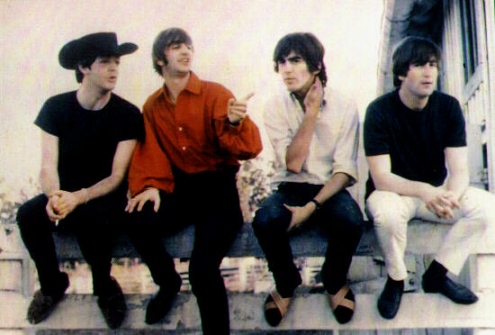
“They were getting more and more interested in unusual sounds, they were trying out new instruments and always coming to me saying, what, what ideas have you got for this.” – George Martin, Music Producer for the Beatles

Beatles 1965

1965 is the year that The Beatles really came out of their previous genre of music and began to experiment with new, different and sometimes even counter-culture music.  The group was also now starting to mature as a band and this can especially be seen  in their lyrics.  In June of 1965, Queen Elizabeth II appointed the Beatles Members of the Order of the British Empire for their musical achievements.

Help! was the second Beatles film. It reached mixed reviews from both the reviewers and the band.  It was, however, a great success overall. The album that accompanied the film, Help!, was dominated by John Lennon’s contribution. Songs such as “Help!” and Yesterday received great responses.  The song “Dizzy Miss Lizzy” on this album also marked the last cover that the Beatles would do on an album, as full blown of originality began.

In August of 1965, the Beatles found themselves touring in the US for the third time.  The Fab Four were introduced to Elvis Presley, a foundational musical influence on them, and were even invited to his home!

Rubber Soul, the last album of the year, was released in early December.  This was seen as a major step towards  complexity and maturity in their music.  It could be seen in “Norwegian Wood (This Bird Has Flown),” the Beatles moved beyond the boundaries of rock. Rubber Soul was ranked number five in 2003 on Rolling Stone The 500 Greatest Albums of All Time.  Overall, the Beatles expanded the limits of their music dramatically in 1965, testing out  new instruments, and more complex and richer lyrics, which of course contributes to them being regarded as one of the greatest band of all times.

Here’s Yesterday from their album Help!. The most recorded cover versions of any song ever written!

[youtube lwS_YDzxH3M]

You can check out the rest of my series on the Beatles here on Youth Are Awesome!

Canada vs. US: Utter Defeat

0

Own the Podium? More like Blown the Podium.

To date in the Vancouver 2010 Olympics, Canada has 10 medals overall, 5 of them gold, placing 4th overall in medal standings. The USA? 25 medals, 9 of them gold.

Canada’s plan was to have the most medals overall in the Olympics. Instead, they watch helplessly as the USA and Germany run away with the race. They conceded defeat and admitted that they would never catch the Americans.

How about Canada’s other slogan: “Let’s Show Them Whose Game  They’re Playing!” Sunday, as most of us watched, Canada’s men’s hockey team lost 5-3 to a young United States team, adding insult to injury.  The Canadians now might have to beat Russia just to make it to the semifinals.  Disappointing news for many Canadians, who were looking forward to a much more golden finish.

It seems like Canadians all over the country are disappointed with their athletes’ competitiveness.  However, the athletes cannot be held fully to blame.  The pressure to succeed and bring home medals cannot be easy to bear.  But, after injecting twice as much money as the US into their national athlete program, more than $110 million dollars, we all expected a little better.

Let’s show them whose game they’re playing? Looks like the USA is showing Canada whose Olympics it really is.

What do you think of Canada’s showing at the Olympics so far?  How about the Own the Podium program?  Leave your thoughts in the Comment section below.

March is almost here!

0

I’m blogging once again about the cool holidays, but this time, for March – a month that isn’t just known for St. Patrick’s Day.  Interestingly, March is National Noodle, Nutrition, and Frozen Food Month.   Check out the dates in March below to see the cool holidays and events.

March 1st – National Pig Day, Peanut Butter Lover’s Day, Share a Smile Day
March 4th – National Poundcake Day
March 5th – Multiple Personalities Day
March 6th – Dentist Day
March 8th – Working Women’s Day
March 9th – No Smoking Day, Panic Day
March 12th – Girl Scout Day
March 14th – Pi Day, Potato Chip Day
March 16th – Everything You Do Is Right Day
March 17th – St. Patrick’s Day, Submarine Day
March 21st – Children’s Poetry Day, National Teenagers Day, Single Parents’ Day
March 22nd – National Goof-off Day, National Sing-Out Day
March 24th – Chocolate Covered Raisin Day
March 26th – Make Up Your Own Holiday Day
March 27th – National “Joe” Day
March 28th – Something on a Stick Day
March 30th – Doctor’s Day
March 31st – Tater Day

So, look forward to March and have fun with these interesting and crazy holidays!

ArtaWEARness X @ ACAD!

1

OK, pause, and rip yourself away from the Olympics for just one second.  Fact or Fiction: Cow-Town-Calgary has no appreciation for the arts.  Answer?  Fiction!  Now, sure, we’re no New York, New York, but Calgary has its fair share of haute-art opportunities.  This upcoming weekend, on the 26th and 27th, Calgary is gearing up to be a prime example of some of our city’s prime creative juices.

Friday the 26th and Saturday the 27th is the ArtaWEARness event put on by the Alberta College of Art and Design (ACAD).  Let’s all pull out our checklist for events worth digging into our moth-bearing wallets to see.  Does it/is it:

1)      showcase something awesome

2)      provoke your interest

3)      have meaning of some form or another

Bonus points:

4)      involve local youth

5)      affordable and accesible

The ArtaWEARness event fulfills ALL of these criteria – and more.  Essentially, and I can not put it in better words, it is a college of crazy spewing from some of the most artistic, analytical, sleep-deprived minds in our city – the students of ACAD.  Everything from sculpture to recycled material to metal working is somehow transfigured into avant-garde pieces that strut down a runway.  Really, it’s better to not try and explain the genius that is birthed out of this. So, I’ll show you an example:

Lydia Karpenko’s collection from last year’s event took place in a not-too-distant future where environmental pollution has become extremely toxic to all living things.  All humans that populate this world must wear biohazard/containment clothing that protects them from their polluted surroundings.  People have adapted their technological research and developed an extremely effective protection “suit” in the form of a living, fungus-like organism.  This organism consumes atmospheric pollution and excretes oxygen as its byproduct.  By entering into symbiotic relationship with the organism, the human is fully protected from environmental toxicity.  The result, human hosts become hybrid organisms or bio-cyborgs that have successfully adapted to their natural habitat.

The pictures are her creations. Mark the dates – this Friday and Saturday at 8pm – on your calendar. Standing tickets are only 15$ (seated is 25$) and ACAD is right off the C-train.  Want more information? See the website!

I won’t be here for it this year, but I wish I had known about it earlier.  Certainly, this is an awesome, youth-showcasing event in the city that should not be missed!

It’s Kind of a Funny Story by: Ned Vizzini

2

As you may have seen, I’m still exploring authors who’s work I’ve never read before.  Read on to find out what I thought of the latest novel…

If you are looking for a cheerful, light hearted story, It’s Kind of  a Funny Story by Ned Vizzini is not what you’re looking for.  Here’s a quote to prove my point “It’s so hard to talk when you want to kill yourself.”   The author uses lines like this in the beginning of the novel to capture the reader’s attention, but I believe such lines may have created a feeling of hopelessness and caused readers to give up on the novel.

However, the novel covers a very important topic for teenagers today.  This is a story that explorers teenage depression through the eyes of a severely depressed teenager.  The novel is shockingly realistic in its interpretation of depression and teenage mentality.  Yet it manages to still be quite funny, which makes the book a less painful read. This is the first novel I’ve read that so openly discusses depression.

Basically, our depressed protagonist (Craig) chooses to seek help over suicide.   As a result, he finds himself in a mental hospital.  And, like in all great teen novels, the plot twist leads to self discovery and newfound love.

I would recommend this novel to readers 15 and older. I give this novel a 4/5.

Scorsese’s New Thriller, Perhaps Not for Everyone

0

Reviews of Martin Scorsese’s psychological thriller, Shutter Island, have been mixed.  The film is of the sort where only the last act brings to light the true understanding of the story you’ve been watching unfold for the last hour. (Read: twist ending.)  The thing about telling stories this way is that the build up to the finale still has to be engaging, or else, who cares what happens in the end?  Whether or not Shutter Island’s first hour is worth watching will likely depend on your personal taste.

It stars Leonardo DiCaprio1 and Mark Ruffalo as U.S. Federal Marshals Teddy Daniels and Chuck Aule, who have been called to Shutter Island to investigate the mysterious and inexplicable disappearance of an inmate from Ashecliffe Hospital for the Criminally Insane.  The year is 1954 and as the two detectives begin their investigation they discover that (as you might have guessed) nothing is as it seems.

What the film does exceptionally well is create a thoroughly Gothic atmosphere which invites comparison to the fiction of H.P. Lovecraft and Mary Shelley.  Shutter Island is a dark, craggy, foreboding place constantly bombarded by heavy rain and strong winds.  There is a fortress on the island constructed during the Civil War that has been converted into a mental hospital.  Shortly after being introduced to the film’s setting you begin to wonder what’s really up with this island.

Shutter Island should also be praised for its excellent performances. DiCaprio possesses an unparalleled gift of looking extremely severe.  His character is troubled by his past and its strange connection to the island and DiCaprio does and excellent job of conveying this hardened-exterior/tortured-interior convincingly.  Also note-worthy is Ben Kingsley as the head of the Ashecliffe staff.  He is positively chilling as Dr. John Cawley and sends shivers down your spine when he smiles.

What audiences may find alienating and bizarre, however, is Scorsese’s dream sequences, flashbacks, and hallucinations.  They occur frequently, intricately complicating the plot and purposefully leading the film’s viewers into a state of confusion.  Some may find it frustrating spending the bulk of the movie only asking questions while receiving no answers. Others (myself included) will enjoy letting Shutter Island take them on a dark journey through Ashcliffe Hospital and the human psyche.

1. Shutter Island is the director’s fourth film with DiCaprio, including Gangs of New York (2002), The Aviator (2004), and The Departed (2006); the last of which was awarded best picture at the Academy Awards.

TED: Ideas Worth Spreading

1

TED is a non-profit organization known for its extraordinary conferences and professional speakers.  Originally intended to bring together the brightest in the fields of Technology, Entertainment, and Design, TED has expanded to include talks on ethics and social justice issues, as well as science and the economy at large.

It’s this variety and quality of content that keeps me coming back, and their award-winning site makes it all the more accessible.  Featuring the ability to browse talks by subject, what’s been most rated with various adjectives (jaw-dropping, funny, etc), or by various indicators of popularity, the site encourages users to constantly explore new content.  And although the official TED Conferences only occur 2-3 times a year, their TEDx Community program – which allows local groups to use the TED logo under license to host their own independent events – has helped to further increase the amount of new content flowing through the site.

We posted a video earlier this week by TED-talker Derek Sivers.  His was one of the first videos I saw on TED, along with a speech by Aimee Mullins.  She is a model, an actress, and an athlete, and has three amazing videos on the site, the most recent of which was uploaded this month.  In “The Opportunity of Adversity,” she addresses the way our language limits the ability of our society to evolve in the way we think about things – particularly ‘disabled’ individuals.  It’s a concept that has relevance in many contemporary issues (sexism and racism come to mind), but I’ll leave that discussion for another post and leave you with the wonder that is the TED world.

Enjoy!

http://thinkostudio.files.wordpress.com/2009/04/ted_logo1.jpg

Perspective Pt. 2: The Basics

Last week, we figured out which camera is right for you. Whether or not you went and splurged on a brand-new Nikon D3X ($14000!!!) or you’re sticking with your family’s  age-old Holga, you’re now probably wondering what to do with this piece of equipment in your hands. First you have to look for the power button… Well, we hope we don’t have to teach you that 🙂

Assuming the reason you’re reading this column is because you want to learn how to take good pictures, we’ll try to stay away from using the “Auto” or “Scene” functions on your camera. The first things you then need to learn are the many settings which affect how a picture will turn out. The three main settings are:

ISO: Determines how sensitive the image sensor is. In film cameras, you had to choose your film depending on what kind of shots you were planning to take. If you were into sports photography, you would buy film with a high ISO. If  you wanted to go out during a sunny day and take pictures of the landscape, you would then get film with a lower ISO.  Really, the only difference in the film was it’s chemical content, each one formulated to react to light differently. Nowadays, ISO changes the gain of the image sensor, or CCD, meaning it tells the camera how much of the picture to guess at. This doesn’t mean someone will be missing a head in your next group photo, but it does mean that if you set the ISO high enoughm you’ll see little flecks of colour that don’t belong. This is where the camera guessed.

To use the ISO: If you’re taking a picture out in the sun or somewhere bright, you can leave the ISO pretty low, near 100 or so. If you’re taking a picture in a dark place, you should raise the ISO so that the picture is brighter. Be warned, however: If you go too high, the picture will be grainy, looking like it’s covered with coloured sand. Test it out first.

Aperture: Have you ever seen an iPhone take a picture? It looks something like this:

That’s not actually a shutter, the way Apple uses it, but the aperture of your camera. It doesn’t snap open and closed when you take a picture, nor does it “click.”  It actually stays stationary until you tell it to change, aka when you’re setting up for a shot. It controls the amount of light that gets to the CCD by widening or tightening, exactly like your iris. Also, it changes your depth of field, meaning how much of the picture is in focus.

Where It’s Art: Please Do Not Taste The Artwork (10/10)

0

Today I have a bit of a hint as to what the next “Where It’s Art” series will focus on. Feel free to try to guess what it is as you gaze at these vegetable masterpieces.

Ju Duoqi’s current art began in 2006 with several kilograms of peas. She now uses all sorts of vegetables (onions, potatos, radishes, carrots, etc.) in all sorts of forms (dried, boiled, fried, mashed, diced, etc.) to create art that is entirely new, yet makes you think that you’ve seen something very similar before…

A)

B)

C)

D)

If you’re interested, the pieces of art that the above are modeled after are as follows: A) Jacques-Louis David’s “Napoleon Crossing the Alps” B) Marc Chagall’s “Birthday” ; C) Gustav Klimt’s “The Kiss” ; D) Leonardo da Vinci’s “Mona Lisa”

Enjoy!

Big Snow Blast

1

As I’m sure many of you have noticed, it snowed here in Calgary yesterday.  What does this mean?  More skiing and snowboarding!  So for you snow-enthusiasts out there, you better mark this date down…

BSB

February 27, 2010!  The 3rd Annual Big Snow Blast will be taking place at Canada Olympic Park from 6pm to 9pm.

This event is brought to you by The Canadian Progress Club – Calgary Bow River and Integrity Wealth Group.  All proceeds from this fundraiser event will be going towards Big Brothers and Big Sisters of Calgary and Area—quite an awesome organization.

BBBS

Just $20 will get you a ticket to this awesome event, which includes refreshments, entertainment, fireworks, and draw prizes!  The grand prize draw?  Two tickets to the upcoming Hedley concert. (This alone makes me want to go, despite my inability to really ski or snowboard, heh…)

To make things even better, AMP Radio will be on site broadcasting live.  COP will be playing the station’s music over outdoor speakers to amp up the fun!  And if that wasn’t enough, Flames defenceman #7, Adam Pardy, will also be at COP joining in the fun!

BSB

Interested? The Facebook Event can be found here. To purchase tickets or to find out more, click here!

Losses Loom Larger Than Gains

2

In the 1970s, two Israeli psychologists at the Hebrew University of Jerusalem, Amos Tversky and Daniel Kahneman, performed an experiment by asking sets of two slightly differently worded hypothetical questions to large sample groups. Their most famous set of questions goes like this:

The United States is preparing for the outbreak of an unusual Asian disease, which is expected to kill six hundred people. Two different programs to combat the disease have been proposed. Assume that the exact scientific estimates of the consequences of the programs are as follows: If program A is adopted, two hundred people will be saved. If program B is adopted, there is a one-third probability that six hundred people will be saved and a two-thirds probability that no people will be saved. Which of the two programs would you favor?

When this question was tested with a large number of physicians 72% chose program A, and only 28% chose program B.  This is to say that the majority of physicians would rather save a certain number of people for sure rather than risking the possibility of saving no one.  However, consider the following adjustments to the above question:

If program C is adopted, four hundred people will die. If program D is adopted, there is a one-third probability that nobody will die and a two-thirds probability that six hundred people will die. Which of the two programs would you favor?

When asked this version of the question, even though programs C and D are identical to A and B, 22% chose option C and 78% chose option D.  Physicians completely reversed their previous decisions, rejecting a guaranteed gain in order to participate in a risky gamble.

The options are the same, yet the sampled group responded very differently depending on how the two options were presented. When the question was described in terms of survivors the physicians made the rational choice and went with the safe strategy, but when the two programs were presented by describing deaths, physicians were suddenly willing to take risks to avoid four hundred deaths, even though it is the same as saving two hundred lives.

What this demonstrates is a concept called loss aversion.  In short, the pain of a loss is more powerful than the pleasure of a gain. We are willing to go to great lengths to avoid losses –much farther than we’ll go to get an equivalent gain.

Loss aversion is an innate flaw rooted in the emotional brain.  When facing a situation where loss seems imminent we experience strong negative emotions which compel us to make irrational decisions to try and avoid the loss at almost all costs.  You might see loss aversion used in marketing and advertising to exploit the emotions of consumers.  For example, an offer may describe avoiding a $10 surcharge rather than gaining a $10 credit.

So how can we avoid being tricked into making illogical decisions by loss aversion?  Everyone who experiences emotions is vulnerable to its effects – the only way to avoid loss aversion is to know about the concept. (“Knowing is half the battle!”)

Day One: An Olympic Wait

1

A few days ago, I packed up everything (including a sewing machine? That one confuses me too..) and headed over to Vancouver with my sister to take on the Olympics first hand.

Now, not only am I very excited for the Olympics, but this is the first time I have ever been to Vancouver.  We decided to take the Sky Train downtown, and taking the train here is so much more organized than taking Calgary Transit (sorry Calgary).  I just couldn’t get over the fact that there is so much room to squish into the car, the doors slide open on their own and have warning bells when they are about to close and the train cars are air conditioned!   As an avid rider of the C-Train I was very excited.

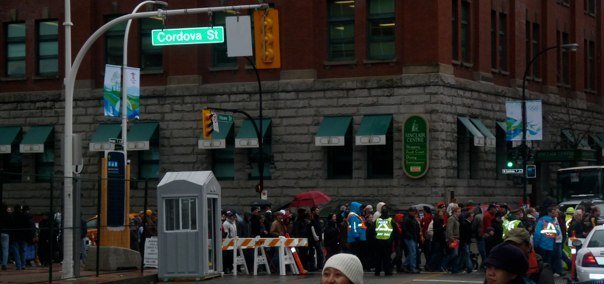
Now, because of how many people are relying on the trains for transport, there were people there to ensure people were let off the train first before everyone squished on and to help us tourists figure out if we were about to board the wrong train.  If you are headed to Vancouver yourself, you will see these lovely people dressed in green sweaters.  Once we surfaced to the street there were SO MANY PEOPLE.  The police have even put barricades up on top of crosswalk lines to ensure that people are staying safe when crossing and staying within the lines.  There was also about 4 cops on each street corner and each train platform; the city of Vancouver is doing a GREAT job at keeping everyone safe around here.

Crossing The Street

We made this trip downtown to pick up our Olympics Tickets at Tourism Vancouver because we were told they would not mail them to us.  We stood in line for TWO AND A HALF HOURS and that line was only to pick up your tickets, not purchase them.  There was a line that zig-zagged all through the building and only two tellers to help us with our tickets. Let me tell you, there was some unhappy people in that line up.  Everything there seemed a tad disorganized, especially when we were told we could leave the line to go to a box office at BC Place to get our tickets; one of us went down there and were told you couldn’t pick up your tickets at BC Place.

So, if you are headed to the Olympics and still need to pick up your tickets there are only two places you can get them at Tourism Vancouver at Waterfront, or Robson Square, so make sure you leave yourself some time to grab those. There were some people in line behind us that we missing their event because they had to wait in the line to get their tickets!

If you are headed to Vancouver and like me, are totally lost, look for people in either a)green sweaters or b)blue jackets. We were walking around downtown trying to figure out where to go when we spotted a lovely lady in her blue Olympics jacket and had a name tag that said “Host,” she helped us figure out where we were going and made our trip a lot less hectic.

I will post some more updates for you guys on how our trip goes; we will be heading to two snowboarding events and two Victory Ceremonies and hopefully I’ll be able to snap some good photos.

Go Canada G0!

Look Over to the Other Side of Truth and Assumptions

1

If you have ever traveled to Japan or shipped stuff to Japan, or even better, just go on Google map and look closely at a random street in Japan, you will find that in Japan, many streets are unnamed.  And if you look a lot closer at the map, you will find that the blocks are identified with numbers.  Street names are mostly left blank except for maybe a couple of highways.

Living in Calgary, we always use street names, and I assumed that this is true for all people around the world.  However, this is not completely correct, as I figured out when I considered the way Japanese have and have had used to address their locations.

One interesting video that discusses and look at this instance of opposites that exist in the world is below:

[youtube q1zh49J5rsg]

You may ask, why would they use the block system? Well, here is an awesome answer by another youtube user:

The reason why they ended up adopting the block system was the during the feudal age, the military made roads and passages as complicated and twisted as possible to prevent the enemy from invading the main castle, and did not give street names as Roman tradition taught europeans. So during modernization they decided to use the block address system because cities were already in a complicated layout with non existent street names.

– GikoSan

Of course, the opposites in the world aren’t limited to the ones introduce in the video.  There are many interesting normal things that are actually the opposite of what we think they are.

Off the top of my head, some that I’ve noticed so far are:

  • The colour of your blue shirt is not a blue shirt, because all the colours that the shirt absorbs are not blue.  The colour that is emitted or reflected from the shirt is blue because the shirt does not absorb blue.  Hence, the blue shirt is made of colours that aren’t blue.
  • If you hit someone, you are actually hitting yourself as well.  Action = Reaction.  Another closely related example is that when you are walking forward, you are actually applying force backward.
  • When you say you are cold, you are actually hotter than your surroundings.  You should really be saying your surrounding is cold and you are hot. And of course, vice verse.
  • We have learned that nucleus of an atom is positively charged and the electrons are negatively charged.  In the world of anti-world full of anti-matter, the nucleus would be negatively charged while positrons orbit around it.

If you have any awesome Opposites that you notice in your life, please share it with us.

Hopefully these examples made you look at the world more objectively.