Home Blog Page 43

How to Soften Butter Quick and Easy

How to Soften Butter

Learn how to soften butter quickly!

Chunks of butter in a bowl
One of the most annoying things to experience is going to cook or bake something, only to find that the butter you have is not at room temperature. While you can just leave butter overnight to soften, sometimes you don’t plan ahead and need soft butter quickly. In this post, I’ll be covering the best and quickest way to soften butter.

Why soften butter?

When baking, recipes typically call for room temperature butter for a couple of reasons. The main reason a recipe may call for softer butter is that it is much easier to beat and produces a fluffier product. When mixing ingredients such as butter and sugar, you create little pockets of air in between the ingredients. These air pockets are crucial in the process of baking because they expand from the heat of the oven, allowing the final product to rise better. If your butter is soft, the butter will be much more pliable, resulting in more air trapped due to the butter’s ability to incorporate air more evenly. Therefore, this leads to a much softer, and fluffier product from the increased number of air pockets. Overall, softening your butter isn’t just a wives’ tale; there is an actual scientific reason for doing it.

Note: The softness of butter directly relates to the temperature, and room temperature is typically when the butter is considered soft.

Why can’t you just microwave it?

As stated before, the softness of butter directly relates to its temperature, so you’re probably thinking, if temperature and softness have a direct relationship, why not just put the butter in the microwave for a few seconds? While it is possible to soften butter in the microwave, this is not recommended because it can be incredibly tricky to soften without melting. Microwaves also cook unevenly, leading to some spots of the butter being cold and others being warm. Overall, putting butter in the microwave to soften is very difficult to do properly and is not advised.


How to soften butter quickly

Materials needed:

  • Tall-medium sized glass
  • Butter
  • Water
  • Plate (optional)
  • Paper towel (optional)
  1. Take a tall or medium sized glass and fill with boiling water.
  2. Drain water from glass.
  3. Take a plate and line it with a paper towel.
  4. Place stick of butter vertically on paper towel.
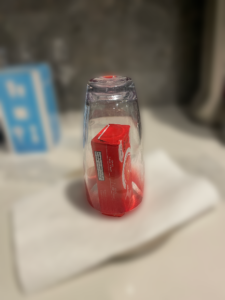
  5. Take your warm glass and place on top of butter, let it sit for 5-8 minutes.

Block of butter inside glass, over plate and paper towel

The photo above shows how to set up the butter and glass as outlined in the steps.

Additional Tips

If you don’t have a glass, a mug or bowl works just as well! For smaller amounts of butter, reduce your container’s size and the time. If you can’t wait even 5 minutes, I suggest grating or cutting the butter into smaller pieces in order to help make it soften faster.


Using this method guarantees soft butter without melting it and is especially recommended for those who are in a hurry. This butter-softening trick is essential for baking cookies, cakes, and more. Make sure to try it out next time you forget to leave your butter out!

The 2024 U.S. Election: What does it mean for Canada?

The economic, social, political, and geographic ties between the United States of America and Canada are unlike those of many other nations. Since the two countries share the world’s largest land border, and have trade agreements which are worth millions of dollars, it can be seen that they are closely connected to one another. Therefore, the changes made to the government of one country would cause significant consequences (both positive and negative) on the governance of the other.

The 2024 USA Elections:

The results of the recent American elections, held on Tuesday November 5th, confirm a significant lead of the Republican Party, with Donald J Trump as the leader, in the Presidential Elections, as well as the Senate and the House. This way, these elections will most likely change the leadership of the American government, from the Democrats to the Republicans. The Republican government is described as more right wing, with more conservative policies, while the Democratic government leans to the left, and follows the ideologies of modern liberalism.

Impact on Canada:

According to a news article on BBC (link below), the new government in America could impact the following on Canada:

1. Personal Ties between Washington D.C. and Ottawa:

While Canadian Prime Minister Justin Trudeau and Donald Trump have cooperated in the past, notably on the USMCA (formerly known as NAFTA, the North American Free Trade Agreement), and Trudeau has congratulated Trump on the recent win, there have been instances in their past when their relationship was rather tumultuous.

For example, Trump has called Trudeau “a far left lunatic” and “two-faced,” while Trudeau has seemed to mock Trump at a NATO meeting. As well, the Liberal Party’s left wing ideologies which include increased racial equality, environmentalism, increasing taxes and social programs, and increasing immigration, clash with the more traditional and conservative ideologies of the Republicans.

According to former Canadian diplomat Louise Blais, the process of forging a strong relationship with Trump would be made even more difficult due to the possibility of a change in the Canadian government in the Canadian federal election next year.

However, Deputy Prime Minister Chrystia Freeland has assured that even though many Canadians are feeling unsettled after this US election, “Canada will be prosperous, Canadians will be safe and our sovereign identity will be secure as we work with this newly elected administration.”

2. Trading Ties

Canada is heavily reliant upon trade with the US, in order for our economy to prosper. Canada exports 75% of its good and services to the US. This way, Donald Trump’s promised 10% trade tariffs (taxes on imported products), could significantly affect our economy.

In July, the Business Development Bank of Canada estimated that around $7 billion could be removed from Canada’s GDP, driving down the value of the Canadian dollar, if an across-the-board tariff were to be implemented by America. This would negatively affect our already slowing economy.

In 2026, the USMCA, which guarantees free trade between the US, Canada, and Mexico, could be decided to be extended for 16 more years. Whether or not it will be extended, economic experts advise that Canada should use the strategy of reminding the Americans that the deal has been good for them, in order to ensure the future of the trade agreement.

It is also recommended that Canada should make some negotiations, especially when it comes to trade with the US. For example, Canada’s Digital Services Tax, which imposes a 3% tax on major foreign digital services like Google and Amazon, has been frowned upon by America, especially by Donald Trump’s administration. Therefore, in order to maintain a positive trade relation with the U.S., Canada might need to reconsider some of its trade policies.

3. Border Security

With Donald Trump’s threats of mass deportations of illegal immigrants in the U.S., many experts predict that this could increase the number of people who cross the Canadian border.

In 2017, many people began to cross into Canada’s border via Roxham Road, which was an unofficial access point to the New York – Quebec border. While these people had various reasons for using this route, many reported being concerned of their ability to stay in America under Trump’s policies, believing they would instead be welcomed into Canada. Since then, the two countries have worked together to close any unofficial border points, but many people still make the attempt to cross the border.

Deputy PM Freeland has stated that she “wanted to assure Canadians that we absolutely do recognise the importance of border security and control of the border.”

Nonetheless, in order to control border security and solve any potential issues that may arise in the future, Canadian-American relations are imperative.

TL;DR

Due to the fact that Canada shares such close ties with America, the change in American governance brought by the 2024 elections mean that there will be significant impacts on Canada. In order to ensure peace and prosperity in both nations, however, it is important that both make compromises in order to cooperate, to ensure a stable future for both countries.


Link to BBC news article:

https://www.bbc.com/news/articles/ce31ngvlvd3o?utm_source=pocket-newtab-en-us

Let’s raise awareness for mental health!

0

In this day and age, the topic of mental health is becoming increasingly more prominent in people’s lives, all aged from young to old. In the past, mental health was overlooked as many thought that it never even existed and that people struggling with mental health issues were just “weaker” and more “sensitive”. But, the truth is: they are completely wrong. Just like how we take care of our physical health by eating nutritious food, exercising daily, and getting the proper amount of sleep – taking the time to understand and care for our mental health is just as important. Before I get into more details, what even is mental health?

According to “Centers for Disease Control and Prevention”, mental health is defined as the “component of behavioral health that includes our emotional, psychological, and social well-being. Mental health is a state of well-being that enables us to cope with the stresses of life, realize our abilities, learn well and work well, and contribute to our community”. 

In simpler terms, mental health is, as the name clearly states, the health of the mind. 

There is an increasing number of adolescents around the world who are experiencing mental health issues and not receiving the help that they need and deserve. Thanks to the stigmatization that parents, friends, teachers, and social media has created – countless children across the world are being held back in fear of being labelled as “weak” and their problems being dismissed by others.

Therefore, it is our duty to spread as much awareness as possible on this topic in an attempt to reach those who don’t believe in the importance of mental health, in order to change their opposing views. We should spread awareness in channels so that our voice doesn’t reach the teenagers online who need help – but to the adults in society who have the power to help millions of adolescents. 

This blog post is my attempt to reach those who need mental help, and give them the courage to speak up about it. 

Let’s move on to the 3 most common causes for developing mental health issues. One of the most impactful reasons is trauma, whether it be through emotional abuse, sexual abuse, physical abuse, or past traumatic events. Another cause includes bullying (either in person or virtually – which is referred to as “cyberbullying”).  The third one is cultural or social expectations – which is extremely common. If your culture expects you to act a certain way or do a certain thing, and you don’t want to – you will be criticized for it, leaving you doubting on your identity, self-worth, and etc. 

If you find yourself in a situation where you don’t have a trusted adult (or friend) to talk to about the problems you are facing – your mental health will deteriorate even faster. 

Here are some practices that you can incorporate into your daily life if you want to try and improve your mental health before it reaches to a state where professional help is required:

  • Invest quality time into self-care.
  • Make connections with people who build you up rather than tear you down.
  • Cultivate hobbies and interests that allow you to enjoy yourself and take your mind off of other pressing issues.

But, on the other hand, if you feel as though you have reached a point where you need professional help – please don’t be afraid to seek it out. I repeat, “Don’t be afraid”

In Alberta, here is the mental health helpline:

Mental Health Helpline : 1-877-303-2642

If you are a child, you can specifically dial this number and/or visit this website:

Kids Help Phone : 1-800-668-6868 or text CONNECT to 686868

We must stand together and fight for an increased awareness in mental health, for the sake of the health of many future generations to come. I encourage you to post mental health awareness related information on your social media accounts so we can reach as many kids and teens across the world and encourage them to seek the help they deserve. 

Sources:

https://www.cdc.gov/mental-health/about/?CDC_AAref_Val=https://www.cdc.gov/mentalhealth/learn/index.htm

Showing Appreciation to the Veterans Around Us – Extending Beyond Remembrance Day

0

Image by Laurentiu Lordache on Unsplash

Every year on November 11th, thousands of people worldwide come together to remember and honour the sacrifices made by brave soldiers in battle during various wars in the past. 

In Canada specifically, we hold remembrance day ceremonies in schools to commemorate our war veterans, partaking in the 2 minutes of silence at 11:00 AM, and reciting poems such as In Flanders Fields and For the Fallen

Today, after attending my school’s Remembrance Day assembly, a question was burning in my mind: How can we show appreciation to our veterans beyond Remembrance Day? When we, as students, leave our school gym, remembrance day ends for us. However, for the millions of war veterans worldwide, the traumatic memory and experience of war follow them wherever they go, and the fact that they have once fought in a war is a fact that is impossible to shake. 

So, beyond reciting poems and wearing poppies, how else can we show appreciation to the brave veterans around us and continue to honour the dead in our everyday lives?

In preparation for the official Remembrance Day on November 11th, I wanted to share some acts of appreciation we can do in our day-to-day lives. 

  1. Volunteer at a veteran organization

There are many veteran organizations worldwide, such as The American Legion, the Habitat for Humanity, and many more. These organizations help support veterans worldwide by holding food drives, creating care packages, providing social and economic support, and many more. Volunteering at a local veteran organization is not only a great way to give back to your local veteran community, but also a chance for you to get to know and thank veterans in your area!

Look under the “Veterans & Military Families category” on www.volunteermatch.org to discover volunteer opportunities! 

  1. Write thank you cards

We all know veterans in our lives, whether it be our grandfathers, neighbours, relatives, and more! A simple way to show appreciation is to make them a thank you card detailing your gratitude towards their service. A simple card like this can go a long way in showing appreciation!

  1. Treat a veteran to a meal

Sharing a meal with a veteran is a great opportunity for them to share their life story. This is a wonderful opportunity to get to know them better and show your gratitude for their efforts in past wars. 

  1. Support veteran organizations 

Donating to a veterans charity or organization helps struggling veterans get access to necessities such as food, warm clothes, housing, mental health support, and many more. Donating is the most direct way to thank veterans for their service and help them recover from the aftermath of war. 

Hopefully this post gave you some ideas on how to take a more active role in showing gratitude to veterans! Personally, I will be sending thank you cards to the veterans in my life, such as my grandmother, and the veterans at a senior home in my city. 

How do you plan on showing appreciation to the veterans worldwide, and around you? I look forward to hearing your thoughts in the comments! 


Sources:

10 Ways to Honor Those Who Have Served Our Country this Veterans Day

https://www.military.com/spousebuzz/blog/2013/11/top-10-ways-thank-veteran.html

Explosive Eruptions: DIY Volcanoes

0

Science is all around us, whether it happens in the classroom at school, or at home in your kitchen. In order to be a good scientist, it is important to keep observing the world around you and absorbing new pieces of information each and every day. Today, I am going to show you how to create your own fun science project. Introducing (drum-roll please) “1…2…3… The Volcano”!

But before we get into the materials needed to put our experiment into action, let’s take a quick peek at what a volcano even is. 

According to National Geographic Kids, a volcano is an opening in the Earth that allows gas, hot magma, and ash to escape from the Earth’s crust. However, in order to be as fiery and explosive as we see online, massive amounts of heat and pressure must be formed and stored during the formation process. The Earth has 7 major plates and 8 minor plates. When these plates move together or apart, magma is rapidly pushed all the way up to the Earth’s surface! Magma once it reaches the surface of the earth is now considered lava.

Materials

  1. 10 ml of dish soap
  2. 100 ml of warm water
  3. 400 ml of white vinegar
  4. Food colouring (preferably red, yellow, and/or orange to simulate the lava)
  5. Baking soda slurry (fill a cup about ½ with baking soda, then fill the rest of the way with water)
  6. Empty 2 litre soda bottle 

If you’re wondering what the empty soda bottle is for, it is being used to act as our “volcano” in the experiment. If you would like to make this project even more realistic, then you can craft your own volcano by putting your artistic abilities to the test.

Procedure

Those are all the materials needed to conduct this experiment so let’s see what our plan of attack is.  

  1. Combine the vinegar, water, dish soap and 2 drops of food colouring into the empty soda bottle.
  2. Use a spoon to mix the baking soda slurry until it is all a liquid.
  3. Pour the baking soda slurry into the soda bottle quickly 
  4. Run for your life!!! (Just kidding, just quickly take a couple steps back to avoid getting erupted on)

Congratulations! You just simulated your own mini volcano eruption!

The Science Behind It All

Therefore, why not take a look at why this happened?

I’m not going to go deep into detail by discussing the molecular aspects of the sodium bicarbonate’s chemical reaction (which is actually the scientific way or referring to baking soda). Let’s keep it simple.

Vinegar is an acid, meaning it is lower than 7 on the pH scale. Baking soda is a base, meaning that it is higher than 7 on the pH scale. Because they are both quite different from one another, a reaction forms when they are combined together. This reaction causes carbon dioxide bubbles to form, making the contents of the mini-volcano all foamy, bubbly, and therefore, “explosive”!

Today, you just learned what a volcano is, how they are formed, how to simulate your own, and the magic (science) behind it!

Thanks for reading and stay tuned for more updates regarding our ever-changing science filled world. 

Sources:1;2


How to Build a Snowman

Did you know that there are actually many benefits to making a snowman? Even though I have never personally done it, I would like to utilize this winter to learn this wonderful skill! Making snowmen is probably considered by many Canadians to be a “classic” skill, but it really keeps our holiday spirits alive. I have researched on Wikihow the specific steps to making snowmen, so let’s take a look through them together!

Step 1: Find a Location

When considering the location of your snowman, you might want to build it right next to a taller building or tree that can provide valuable shade. Even though winter is very cold here in Calgary, it still exceeds zero degrees quite frequently! You do not want your snowman to melt too quickly.

Step 2: Identify Good Packing Snow

After you have selected the location, find a patch of snow that is moist and moldable into a spherical shape. It is important to note that snow that is either too fluffy or too powdery is generally not suitable for making the best snowman. Try out small samples of the snow first, then proceed to take larger quantities to build your snowman.

Step 3: Build the Spheres

For the classic snowman, you want to try to form a total of three spheres, with all three of them stacked on top of one another. However, the spheres should decrease in size from the bottom up; in other words, the sphere touching the ground should be the largest. For each one of the spheres, you can decide how large exactly it needs to be. However, a good tip for each sphere is to start by packing the snowball that is approximately 30 centimeters in diameter, then rolling it on the ground to gain size.

Step 4: Rolling the Snowballs

Make sure to change the direction constantly when rolling the snowball! This would keep the snowball in a nice spherical shape. Try to stop rolling the snowball exactly where you want to place the snowman. Repeat for the other two spheres. The top sphere will form the head, and the middle sphere will be where we put the arms, as well as some of the buttons.

Step 5: Finishing Touches

After stacking the spheres on top of one another, make sure to fill in the gaps between the spheres with some more snow. Then, we can proceed to decorate it. A carrot is one of the most widely known options for the snowman’s nose, but feel free to also use icicles (since it is so abundant). For the eyes, the recommended objects are buttons or ping-pong/rubber bouncy balls. As for the mouth, you can even just use a row of pebbles! Press the decoration objects firmly to make sure that they are properly affixed to the head.

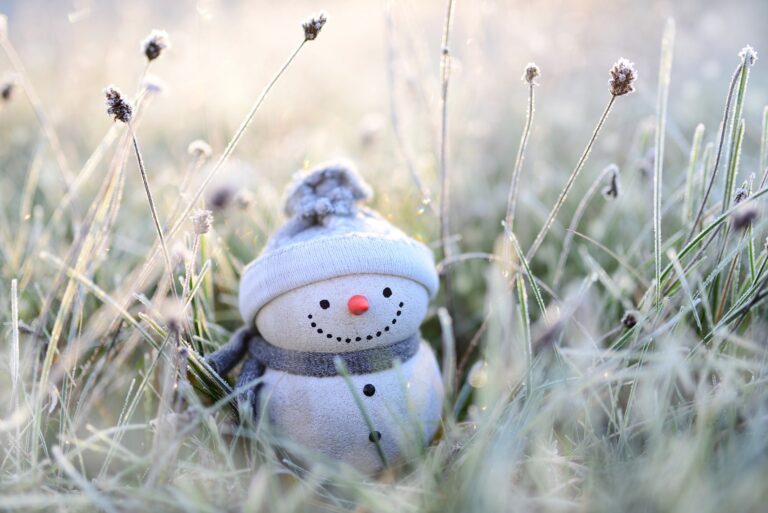
Image by Franz Bachinger from Pixabay

Step 6: Final Steps

After selecting two branches to serve as the arms, feel free to add a tie, hat, scarf, or even sunglasses to personalize your own snowman!

Additionally, you can use food coloring in a spray bottle that contains water. By spraying the combined mixture onto the snowman, you can also add colors as well. Regardless, simply have fun building your unique snowman! Lastly, spending time to enjoy building a snowman with other family members is a great idea as well.

What does it mean to be “effective” to stop bullying?

What does it mean to be “effective” to stop bullying?

Bullying is a serious social issue especially among children and teenagers, often involving verbal, social, and physical abuse, causing severe damage to both the mental and physical wellbeing of victims. There have been numerous studies targeting the root causes behind bullying; government and school authorities have too implemented measures and policies to deter such phenomena from happening. However, the question now is, how effective are these policies to stop the bullies? Or, shall we dig deeper to ask, what truly makes an intervention effective in deterring bullying in general?

Photo by Amir M. Mohamadi on Unsplash

This article will review the experimental findings of a case study research done by scholars and researchers from Georgia State University in Atlanta. The literature itself is titled “A Case Study with an Identified Bully: Policy and Practice Implications,” authored by Huddleston et al. In their study, the researchers conducted detailed and in-depth interviews and data collection about a middle school bully from Grade 7. After implementing an intervention specifically designed for this student based on his background, the researchers again investigated the acceptability, integrity, and efficacy of their intervention. 

Photo by Scott Graham on Unsplash

To understand the situation of the bully (hereby referred to as the target student), the researchers conducted semi-structured interviews with both the target students and the people around him. Gathering a variety of perspectives on the target student’s behaviour from his counsellors, teachers, and parents, the researchers formally began their intervention. Rather than the traditional method implemented by most schools, such as straightforward detention or suspension from school, the intervention for this target student is specifically tailored to his unique cultural background. From clinical interviews that explored the student’s personal traits and characteristics, to empathy, anger-management, and problem-solving sessions for the student, these innovative intervention methods encouraged this target student to better recognize his source of negative emotions and to find a prosocial and acceptable way to release such negativity. 

Photo by LinkedIn Sales Solutions on Unsplash

At the end of the research and treatment period, David, the target student, has improved significantly, as reported by those around him. For example, the teachers told the researchers that rather than engaging in disruptive activities, David now chooses to read after finishing his schoolwork. David’s parents now receive a decreased number of phone calls informing them of the disciplinary violations by their child. Reports from these third-party perspectives are significantly different from the results of interviews before the experiment; all evidence suggests that David is starting to improve. 

Photo by Priscilla Du Preez 🇨🇦 on Unsplash

What can be taken away from understanding this research? That bullying behaviours are reversible through proper intervention; that specific treatments and an in-depth understanding of the personal circumstances of bullies are vital. More importantly, this research seems to suggest potential directions for future policymakers who wish to reduce the problem of bullying. Perhaps such treatments require notable public commitment and extensive public health resources to conduct such interviews and design specific treatment plans. Despite the high potential cost of implementing the treatments used in this research, this article argues for the responsibility of public health facilities from the government to pay more serious attention to issues of bullying. Current solutions such as bullying helplines seem to offer minimal help. Because of this, authorities’ reformations and innovations in methods to treat bullying are now vitally essential for the well-being of our future generations.

Source:

https://pmc.ncbi.nlm.nih.gov/articles/PMC3117608/

The Substance (Movie Review): A Violent, Romantic, and Artistic Tale of Beauty

The Substance (Movie Review): A Violent, Romantic, and Artistic Tale of Beauty

The Substance is a horror and science fiction movie brought up on screen just recently in September-October of 2024. As said in the official trailer, the entire movie can be summarized in a few sentences:

“Have you ever dreamt of a better version of yourself? You. Only better in every way. You’ve got to try this new product. It changed my life.”

Photo by Shrinath on Unsplash

Without further ado, we’ll get into the movie review… (Spoiler Alert! If you haven’t seen the movie and wish to reserve the first-time experience for yourself, please come back to this article after you’ve seen the movie. This review contains some spoilers that may affect your movie-watching experience…)

Elizabeth Sparkle, a once-famous world celebrity, is now officially 50 years old. When one gets older, as we all know, it is quite inevitable that time leaves its permanent marks on their body. Yet unfortunately for Elizabeth, these marks left by her age—wrinkles on her face and her fleeting youth—are absolutely unacceptable. She loses her job on daytime show TV right on her 50th birthday because, as her boss blatantly revealed to her, “people are always searching for something new.” 

Photo by Vitaly Sacred on Unsplash

Elizabeth is to be replaced by someone younger, hotter, and prettier. 

Desperate to hear the news, Elizabeth uncontrollably activated her “other self” with the help of an unknown product, simply and mysteriously named, “The Substance.” Consequently, Sue is born. Sue is basically the manifestation of all Elizabeth’s imagination of a “better self”: she received the opportunity to replace her despite fierce competition in the audition, and Elizabeth’s old boss even decided to let her host the annual New Year event. Yet as both Sue and Elizabeth indulged in feelings of contentment because of fame, popularity, and public attention, what they are not yet taking notice of… is the unspoken and pricey cost behind the rejuvenating youth. 

Photo by Jarvik Joshi on Unsplash

The Substance is, to say at least, a violent, bloody, Frankenstein-y, yet irresistibly aesthetic piece of art. The process through which Sue grows and divides out of Elizabeth and eventually tears her host open from the spine is truly a gruelling scene. Yet it is exactly through such visual shocks that the violent consequences behind regaining youth and beauty are delivered. At the end of the movie, we see Elizabeth, transformed into a total Frankenstein monster because of her obsession with fame and attractiveness, lying down on the star that was carved with her name, “Elizabeth Sparkle,” on the Hollywood Walk of Fame. The movie starts there, at the exact same spot—from building this star solely belonged to Elizabeth. Both the beginning and the end of the journey is this Walk of Fame, which is what seems to be the stamp that proves the rising success of Elizabeth’s celebrity career. Yet who knows? Such success may bring the blessing of popularity—and the curse of lifelong mania of fame. 


Source:

https://www.rogerebert.com/reviews/the-substance-movie-review

Exam Cramming 101: Tips for a Last-Minute Cram

Whoops. It’s the night before, or the period before, your big unit test or final. You find that you haven’t even learned any material that’s going to be on the test tomorrow. So then you Google “how to cram last minute”.

It’s okay. It happens to the best of us.

Shockingly, although everyone has advice on how to study efficiently and effectively, the internet is almost devoid on tips on how to cram for an exam. So here’s the lifesaving blog post you’re looking for, from someone with too much experience in last-minute studying.

1. It Won’t Be Pretty.

The first thing to do is to accept that you won’t be getting 100% on this exam (probably). Unless you get a wild stroke of luck or you’re lying about having never studied the material, it’s highly unlikely that you’ll do perfectly on the test. The sooner you realize and accept this, the better.

Cramming is an ugly process where you finally understand how much you have to learn and how much you don’t know. It’s easy to become overwhelmed and panicked if you aim to know everything perfectly, and this will only hinder efficiency. So accept that it won’t be perfect, and that’s okay.

Accepting that your grade will be imperfect also helps reduce perfectionist procrastination (procrastination that results from over planning in order to get a perfect result). So brace yourself and get ready to flinch a little bit.

2. Test Yourself

In order to the best you can, you should only study the material that you’re weakest on. The best way to find these weaknesses is to do a practice test before you study. Even if all the material is new and you don’t pick a correct answer for the entire practice test, it will be highly beneficial. If you don’t know the answer, put something down or pick one of the answer options. Making these mistakes and correcting them at the end will induce the concept of hypercorrection.

When you take an exam it’s highly unlikely that you’ll remember everything you got right; rather, you’ll remember all the questions you got wrong.

Hypercorrection is the idea that the more you make mistakes, the more likely you are to remember what you got wrong and not make the mistake again. By correcting yourself before you even begin, you are priming your brain to accept material with more ease.

3. Time Yourself

When it comes to actually learning the material and filling in the gaps that you’re missing, learn in spurts of no more than 15 minutes. During these fifteen minutes, jot down questions that you could ask yourself as review afterward.

After 15 minutes, take 5 minutes to answer all of your review questions. Try to understand the concepts instead of blandly memorizing them. This will help you not only apply the information on the exam, but also help you retain the information after the test, in case you’ll need it later.

However, if you can’t understand and you’re on a time crunch, only then should you memorize. This is where the review sessions become crucial; building your short-term memory requires a lot of recall and repetition.

4. Feynman’s Technique

Feynman’s Technique, which is also known as the Rubber Duck Technique, is a wonderful way to review material quickly. Simply have a family member, pet, or even a rubber duck, listen to you as you explain whatever it is that you’re learning.

Be sure to do this while your notebooks are closed and when you have nothing but your memory to go off of. You should also try to explain in the simplest terms imaginable. This helps us synthesize our knowledge into more manageable chunks, and further highlights everything we need to review further.

Oftentimes, we learn the most about our own understanding if we explain it to someone else. This is a great technique to use during study groups, because everyone’s attention span is short. You’ll have to condense all the material into simple terms and explain it to everyone in a few minutes.

5. Stay Healthy

A crucial part of cramming that’s completely unrelated to the academic work is to stay healthy. Try your best to get at least an hour of sleep before the exam, and definitely eat breakfast before your test.

Keeping on top of your physical health is incredibly important to cramming and performing well. I find from personal experience that even if you know the material front-to-back, if I don’t get enough sleep or skip breakfast, I do worse on the test.

Now, I know a lot of people who do really well even if they don’t eat in the morning or if they don’t sleep at all. But they’re also the people who make little mistakes that cost them a lot of half marks. Unnecessary mistakes, like forgetting units at the end of a physics answer or making repeated grammatical errors on an essay.

You probably won’t cover all the material since you’re already cramming, so get some sleep because we want to MINIMIZE the number of small mistakes you make.

That being said, if you know me at all, you’ll know that my sleep schedule is a little questionable. I juggle a lot, and I’m assuming if you’re still reading this article I’m not the only one. So if you have to sacrifice your health, do it sustainably and try not to do it too often.

TL;DR – The Bottom Line

The bottom line is that cramming is stressful, overwhelming, and unhealthy. If you can, just avoid it. But if you can’t avoid cramming, you should follow the 5 steps on how to cram:

  1. Accept imperfection
  2. Test yourself
  3. Time yourself
  4. Explain yourself
  5. Stay healthy (as much as is realistic)

Good luck on your tests!


The Man Who Began A Revolution: Vincent Oge & The Haitian Revolution

0


Before 1798, Saint. Domingue, the colonial name given to present day Haiti, was at a point France’s most successful colony overseas. With slaves brought from West and Central Africa specifically countries, now known as Congo and the Republic of Senegal. The French colony profited off the production of items such as indigo, sugar, and coffee. Succeeding and profiting off the enslavement of Africans, and their inhumane and brutal working conditions. 

Responsible for beginning the Haitian revolution, Vincent Oge inspired enslaved Africans throughout the colony of Saint Domingue. Born in 1755, Oge was part of the minority group of the ‘gens de couleur’, as his father was a white Frenchman, and his mother a free black woman. As a military officer and business owner, Oge felt the harm and discrimination, even as a free person of color. As mentioned prior, in 1789, Oge traveled to France during the French Revolution, to propose ideas for amending laws against the free people of color on the island of Saint Domingue and all French colonies, as well as to show the book he compiled with American colonists; a group of free colored individuals, addressing the right for free blacks to vote and participate in society as whites did. These ideas were rejected, pushing Oge to join the Society of the Friends of the Blacks or the Société des amis des Noirs. Founded by Jacques Pierre Brissot, the group aimed to eradicate slavery within France and its overseas colonies.

Later in 1790, he returned to the colony and immediately began assembling other free people of color and even enslaved people in an attempt to band them together and revolt. He sent mail to the colony governance, called Le Cap, stating that he and his group would use force if his demands of equality were not met. With constant rejection and urges to stop their protests, Oge began the first revolt within the Haitian revolution. He stood his ground with a small group of supporters until his group was defeated by the colonial army and captured. On February 6th, 1791, Vincent Oge was executed by the colonial assembly. His attempt to secure rights for the free people of color and fight for equality within the colony was inspired by the similar movement in the French Revolution for all people of France. Although called a failed revolt, Oge inspired the next years of revolutionaries to fight for equality from their oppressors and allowed the colony of Saint Domingue to begin to develop their sense of national unity in order to continue and fight until independence. 


Sources: 1, 2, 3


Guess The Music Artist By The Emojis!

0


Introduction:

From rappers, to pop singers, this blog will be about guessing which music artist is associated with the given emojis! Ready to test your musical artist knowledge, along with your emoji interpretations? The levels will progressively get harder with 15 levels in total! Good luck and I hope you have fun! (Answers will be at the end of the blog!)

Very Easy:

  1. 🥫+ye+⬅️
  2. Ed + 👧+🏃
  3. 👎+🐰

Easy:

4. Just+📥+🐝+🥶

5. 😠 + 🔛 + na

6. M + 📥+ M

Medium:

7. ✌️ + 👄 + a

8. 💇‍♂️ + 😎

9. B + 🏃 + O + MARS

Hard:

10. 🍃 + 🐕

11. ✌️ + ⛓

12. Ri + 🐔 A

Extremely Hard:

13. 😺 + Y + 🍐 Y

14. 🧞‍♂️ + ifer + 😍 + pez

Impossible:

15. 🤫 + 🥱 + 👨 + des

Conclusion + Answers:

I hope you had as much fun playing this game as I had making it! How well did you do? Did you get stumped by the emojis or breeze through it easily? Maybe send some of these to your friends to challenge them as well!

Answers:

  1. Kanye West
  2. Ed Sheeran
  3. Bad Bunny
  4. Justin Beiber
  5. Maddona
  6. Eminem
  7. Dua Lipa
  8. Harry Styles
  9. Bruno Mars
  10. Snoop Dogg
  11. 2 Chainz
  12. Rihanna
  13. Katy Perry
  14. Jennifer Lopez
  15. Shawn Mendes


Networking Strategies: Connecting with Confidence

0

Networking is an essential skill that benefits everyone, whether you’re a student, young intern, or just someone looking to expand your horizons. From finding internships and joining clubs to exploring career opportunities, making connections is key to personal and professional growth. However, many individuals –especially introverts– find this to be an intimidating task even when they have the skills to do so. So, let’s dive into some strategies for making strong connections in a confident way:

  1. Prepare for Various Networking Events

When you know you’ll be attending a school event or community gathering, a little preparation can go a long way. Look into who will be there (like guest speakers or any local organizations). Think of a few conversation starters or questions related to the event or the people you hope/expect to meet. This preparation can help ease any nerves and make conversations flow more smoothly.

2. Set Achievable Goals

Networking doesn’t mean meeting everyone in the room. Set realistic, manageable goals like talking to two or three new people at an event. Focus on building meaningful connections and relationships that are far more valuable than collecting simple business cards.

3. Choose Comfortable Environments

If large gatherings feel too overwhelming, seek out smaller events or workshops where you can connect more personally. Consider joining clubs or interest groups that align with your own passions. These settings often foster deeper connections and make networking feel less daunting than it may appear.

4. Use Social Media

Platforms like Instagram and LinkedIn can be great tools for connecting with peers and professionals. Join groups that reflect your own interests or follow local organizations that you find fascinating. Engage with their content by liking, sharing, or commenting, and this can also serve as an icebreaker for any possible future conversations.

5. Follow Up with Personal Touches

After meeting people, take a moment to send a friendly message or email to say hello. Mention specific points from your conversation; and this personal touch will show you value the connection and helps keep the relationship going.

6. Practice Self-Care

Networking is all about connection, but it is still important to take some time to recharge, especially after big social events. Take breaks and celebrate your efforts, no matter how small. Each step you take builds your confidence and strengthens your networking skills.


Networking is a valuable skill that everyone can develop, and your qualities can make the experience even richer. Embrace your abilities to listen and engage thoughtfully, and remember that building genuine relationships is what truly matters at the end of the day.

Sources:

https://pixabay.com/photos/play-stone-network-networked-1237457/

7 Wonders Of The World: The Hanging Gardens Of Babylon

First of all, what are the Seven Wonders Of The World?

The original Seven Wonders Of The World were defined to the Greeks as amazing feats of architecture and engineering. These include the Great Pyramid Of Giza, Statue Of Zeus, Temple Of Artemis, the tomb for Mausoleum, Colossus of Rhodes, Lighthouse of Alexandria, and the Hanging Gardens Of Babylon, which I will be exploring in this article. The Seven Wonders Of The World typically introduced new types of artistic concepts and were staggering in their size. For example, The Lighthouse Of Alexandria was one of the tallest buildings during the time of the Greeks. As well as this, it was the first lighthouse to introduce lighthouse technology, which consisted of light reflecting mirrors and a massive fire-based beacon.

What are the Hanging Gardens Of Babylon?

The Hanging Gardens Of Babylon were believed to be built in Babylon, which is now known as Iraq. They were constructed around 6 BCE while their king: “King Nebuchadnezzar II” was in reign. According to ancient sources, King Nebuchadnezzar II built this garden to please his wife, who missed the beautiful landscape of her old hometown, Media, which is now modern day Iran. It was said in old texts that the Gardens Of Babylon was built as a series of terraces along with lots of plants and waterfalls, which provided a gorgeous green landscape. The word “Hanging” derives from the fact that the hanging plants from the elevated terraces gave the illusion of being hung in mid-air.

Did the Hanging Gardens Of Babylon really exist?

Many Greek historians such as Berosus and Strabo mention the Gardens Of Babylon in their works. However, a historian named Herodotus, who is known for writing extensively on Babylon, does not mention the Gardens at all. This raises some suspicion on whether or not the Gardens existed in the first place. Some people even theorize that the Gardens may have been mistaken for the garden in the city of Nineveh.

Overall:

Although the existence of this garden may continue as one of the world’s biggest mysteries, they are engraved in history and will continue to be known as one of the most beautiful and creative structures to ever exist. It has inspired numerous Roman and Greek artists during the time and has allowed us to paint a picture of what paradise is considered to look like.

CRISPR in Modern Medicine: Transforming Genetic Engineering

In recent years, CRISPR (Clustered Regularly Interspaced Short palindromic Repeats) has emerged as one of the most exciting advancements in genetic engineering. This revolutionary technology allows scientists to edit genes with unprecedented precision, opening new doors in the field of medicine. 

What is CRISPR?

CRISPR is a natural defence mechanism found in bacteria which is used to protect themselves from viruses. Researchers have harnessed this system to develop a powerful tool for genetic modification. By using a guide RNA to direct the Cas9 enzyme to a specific location within the DNA, scientists can now add, delete, or modify genetic material with remarkable accuracy. 

Applications in Medicine:

  • Gene Therapy for Genetic Disorders
    • CRISPR holds great promise for treating genetic diseases like cystic fibrosis, sickle cell anemia, and muscular dystrophy. By correcting the fault genes responsible for these conditions, CRISPR has the potential to provide permanent solutions rather than temporary treatments. 
  • Cancer Treatment
    • Researchers are exploring CRISPR as a method to target and edit the genes that drive cancer progression. For example, studies are being conducted to engineer immune cells to recognize and attack cancer cells more effectively.
  • Infectious Diseases
    • CRISPR has also shown potential in combating viral infections, including HIV and even more recent viruses like COVID-19. Researchers are investigating how CRISPR can be used to edit the genomes of cells to prevent viruses from replicating. 

Ethical Considerations

As with any groundbreaking technology, the use of CRISPR raises significant ethical questions. The ability to edit human embryos or create ‘designer babies’ has sparked a heated debate among scientists, ethicists, and policymakers. Concerns include the long-term effects on the gene pool and the potential for misuse in creating genetic inequality. 

Current Research

Numerous studies are also underway to explore the full potential of CRISPR. For instance, researchers at Stanford University are conducting clinical trials using CRISPR to treat sickle cell disease and beta-thalassemia. The outcomes of these trials could pave the way for wider applications in genetic medicine. 

Future Prospects

As CRISPR technology continues to evolve, its impact on personalized medicine and public health could be profound. Imagine a future where genetic disorders can be corrected before birth or where tailored treatments can be developed based on an individual’s genetic makeup. However, with great power comes great responsibility, and it is crucial for the scientific community to navigate the ethical landscape carefully. 


CRISPR is transforming the landscape of modern medicine, offering hope for treating conditions that were once deemed incurable. As we advance, it is essential to balance innovation with ethical considerations to ensure that the benefits of this technology are realized responsibly and equitably. 

Sources:

3 Lessons Learned from the Youth Volunteer Corps Summit 2024: Virginia Beach

As I’ve mentioned in previous blog posts, volunteering provides a plethora of opportunities. An opportunity I was recently offered was to travel to Virginia Beach, Virginia, United States for the YVC Summit Conference. This blog will discuss the most important lessons and my personal favorite experiences that I’ve gained while attending the youth conference.

1. People Might Not Eat You Alive

Because I am a part of the Calgary YVC affiliate, we had to travel internationally to attend the conference. Although we had two youth in our group who were a part of the International Youth Advisory Board and we received a scholarship to attend, we still had to find different ways to raise money to attend.

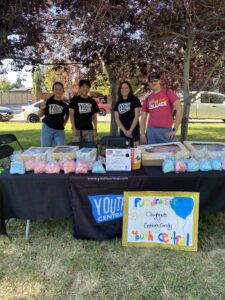
Fundraising at Movie Night In the Park in Acadia, Calgary.
The Walk of Compassion in Downtown Calgary

As a fairly introverted person, this was the hardest part of the trip for me. I had to *shudder* approach people and explain why they should donate to our cause. At first, I shied away from the general public and let the rest of the group guide the public relations. As I gradually gained more comfort around my group, I realized that I could approach fundraising as a challenge. I learned to brace myself and form connections. This would prove to be an invaluable asset during the trip.

2. Most People Don’t Hate You Already

I learned quite a few new things right off the bat when we landed in Virginia. The most important thing was that people are typically willing to form new connections if you are willing to initiate.

A common fear, one that is a part of the human condition, is the fear of rejection and exclusion. Because I’m human, I am no exception. Before the trip, I wasn’t too keen on beginning conversation or forming connections because I feared that others wouldn’t be interested in what I had to contribute. Although Summit involved a lot of networking, I was still surprised to see that people were willing to approach me and make conversation. I found that most people reciprocated my enthusiasm.

Shocking, I’m sure.

Understanding that socializing was less like jumping a chasm and more like shaking a hand helped me build a network quite quickly. You’d be shocked at how nice people will be if you’re willing to reach out your hand first. I met, and was able to connect with, a lot of insanely cool people.

One of these people was Bonnie Johnson, the first pick of the very first women’s pro softball draft in all of America (stay tuned for a possible interview!). Somehow, I had a wild stroke of luck to sit next to her on a flight of mine. If I hadn’t introduced myself to Bonnie at first, I would never have known how sweet, friendly, and accomplished she was. I never would have missed the opportunity to know one of the coolest women in the history of womens’ sports.

This lesson was so valuable. I was able to make lots of new friends and gain a lot more connections for it!

Going out for dinner with the Calgary affiliates
The Statue of Neptune at Virginia Beach, Virginia

3. Always Try To Understand

We got to attend a variety of workshops during the conference. Personally, I found the poverty simulation workshop to be the most impactful.

We were given a family situation, a minimal sum of money, and the task to support basic living needs (utility, rent, food expenses) for a “month” (a 3 hour period). I was a child whose parents had been imprisoned and unemployed, with an unemployed 21 year old brother and two younger siblings to support. We started off the simulation with a very small amount of money and a camera to pawn.

In order to survive the month, the older brother had to drop out of college to find a job. I had to resort to thievery when I was dismissed from school. I stole two cars, three social security numbers, an EBT (a card for welfare services to wire money to those in need), jewelry, and money for a gun. Even after pawning and selling all of our possessions, we still would not have made it through the month.

Despite the obvious fact that the entire workshop was a simulation and not real, I found that I was willing to cheat and steal in order to protect my loved ones. And I wasn’t the only one willing to do this. School became a terrible waste of time that I could have spent stealing and plotting. The social security numbers allowed me to pretend I was an adult and purchase a gun, which I robbed houses with. I no longer had any pity for others who were struggling. Instead, I saw them as competition for the limited rich houses.

The smallest things aggravated us. Bank lines and supermarket lines were too long. The school wanted too much money that we didn’t have. There weren’t enough transportation passes. My family was so desperate to make it through the month without being evicted or starved, we were willing to be incarcerated for it.

I learned that it is important to always maintain gratitude and grace toward others – after all, if I was willing to do some shady things in a simulation, then who knows what someone really desperate would do – and I gained more empathy for others.

TL;DR

Attending the Youth Volunteer Corps Summit was such an amazing experience. I learned to overcome my fear of the general public. I also learned how to network and build deep connections, and I gained a deeper understanding of what gratitude really looks like.

Team Calgary at the Awards Ceremony Volunteer of the Year. 100 in 1 recipient, and 500 Hour Milestone Volunteer Lucy Morcom (far right). 500 Hour Milestone Volunteer and 100 in 1 recipient, Joshua Jacobson (right). 100 in 1 recipient and moral supporter, Jeanne Ye (left). Keynote Speaker and 100 in 1 recipient, Kingston Chee (far left).

Special thanks to Peony Wong, our designated YVC Coordinator, for being so patient with everyone and really making this trip possible for all of us!