Home Blog Page 40

Malala Yousafzai: One Voice That Changed the World

0

Malala Yousafzai is a Pakistani activist and UN Messenger of Peace who advocates for girl’s rights to education around the world. Born and raised in Mingora, Pakistan, her life changed in 2008 when the TTP (Pakistani Taliban) invaded her hometown, banning numerous freedoms, including girls attending school. Refusing to accept this, Malala and her father publicly spoke out against the Taliban’s oppressive policies, making her a target. At just 15 years old, she was shot in the face by a Taliban gunman while on a school bus. Remarkably, she survived the assassination attempt and emerged even stronger, continuing her fight for education rights.

In 2014, at the age of 17, Malala became the youngest recipient of the Nobel Peace Prize, honored for her advocacy for children’s rights. After relocating to the UK for safety, she founded the Malala Fund. Her organization supports emerging activists and breaks barriers preventing girls from accessing education. As outlined on its website, “Malala Fund believes that real change for girls’ education happens at the local level.” The fund provides resources to countries like Afghanistan, Brazil, Ethiopia, India, Lebanon, Nigeria, Pakistan, and Turkey, ensuring girls receive 12 years of free, safe, and quality education.

Malala’s story highlights resilience as her defining leadership quality. Despite facing death threats and unimaginable fear as a teenager, she refused to let fear dictate her life. Instead, she transformed her personal tragedy into a global movement for change. Her resilience not only enabled her to recover and advocate for others, but also inspired countless girls worldwide to stand up against those who suppress their rights. Through her efforts and the Malala Fund, she has empowered millions to demand the education they deserve, proving that resilience can create lasting, impactful change.

Sources: 1


First Impressions: Does It Really Matter?

Whether it be the first day of school or a job interview, first impressions greatly influence how people will behave around you and what impact you may bring. Humans naturally assume people based on apparent details, even if they want to be unbiased. Some important attributes will always be observed, no matter how hard one tries to ignore them. Our solution towards our bias and assumption is to go based on someone’s personality or features that make them unique rather than the negativity. As they say, “You should never judge a book by its cover”. In reality, we face the crisis of first impressions quite often, especially considering that we are in a phase in life where opportunities are limitless and interactions become a crucial part of our day-to-day lives.

Though we cannot prevent bias or change the way a person thinks about us, our approach should focus on understanding the reason behind the first impression, so that the next time you come across a first impression situation, you are far more prepared!


Why do humans have first impressions?

Humans use the first piece of knowledge we have to create a viewpoint. First impressions tell us about a person’s character traits, way of communication, preferences, and other aspects. These elements then go into concluding whether or not the individual is typical or unusual. Peter Mende-Siedlecki gives a great example of this in his TED-ED video. He asks to pretend that you are in a football game and the unknown person beside you starts acting obnoxious. After a few days, you encounter the same individual at a park. However, this time, they offer you an umbrella because it’s raining. Here, you would likely hold a negative stance about this person because offering an umbrella is a typical gesture in comparison to the obnoxious behaviour at the football field. The human brain is inclined towards negativity over positivity, likely creating a negative impression. The same goes for an interview or the first day of school in which you build preferences based on your current knowledge!

The Halo Effect

Even though the human brain is prone to negativity, it doesn’t always have to be that way. Scientists explain the flip side of first impressions through The Halo effect. The Halo effect is the “mental shortcut” that makes someone assume positive things about someone based on one good thing. In other words, because you like one trait of that individual, you tend to associate other positive traits about them too! For instance, if a new kid offers you a seat on the first day of school, you would be more likely to start a conversation with them because you think they are trustworthy, polite, and easygoing.


What elements are most commonly noticed in a first impression?

The answer to this question is based on the person. However, humans are far more likely to focus on non-verbal/visual cues in comparison to the content you are communicating. A Forbes article explains that the human brain develops and processes a first impression in the first seven seconds of a new interaction! (When I first read this, I was shocked) Can you believe it? Only 7 seconds. 

So the next question is what can be seen in the first 7 seconds? Well, most of it will be your appearance; this includes your posture, the level of confidence shown through body language, whether or not your clothes match the occasion, and how you choose to approach the person.

How to Prepare for your next first impression:

After understanding the brief reasons of how and why first impressions exist, we also want to be prepared for future job interviews or interactions that could determine your future. Make sure to keep in mind that the most important thing beyond all of these aspects is being yourself. Nobody wants to meet someone who switches personalities on the second interaction. Thus, you must be true because no matter what you are awesome!

Here are some other things that you should keep in mind:


  1. Posture: As I mentioned above, posture portrays your mindset. If you have a bad posture, people will associate you with being lazy, slow, and uninterested, whereas a good posture reflects confidence and affability.
  2. Eye Contact: Eye contact is hard to develop and it takes a lot of courage and effort, especially as a youth. With correct eye contact, you can assure the other person that you know what you’re doing and can be trusted.
  3. Calm: Even though you want to be approachable, you must make sure that you are not oversharing. This can make it harder to start a conversation and may raise slight concern for the opposing person.
  4. Cleanliness: Cleanliness can be seen in several ways: good breath, neutral outfit colors, body odor or combed hair. Every individual has different ways of maintaining purity, but the overall goal is to be presentable. For instance, you would probably not want to come on the first day of school without doing your hair or taking a shower.
  5. Smile Please: Multiple reputable sources claim that smiling makes you feel positive about yourself because it releases endorphins. Similarly, smiling at someone can make them feel better about themselves too!
  6. Handshakes: This one is more focused towards formal interactions, such as an interview, though it is equally as important as the rest of the factors. A good and firm handshake shows your confidence, engagement and commitment.


Conclusion:

“ You never get a second chance to make a first impression.” -Will rogers

A first impression is a skill that can only be mastered with experience and time. Nevertheless, understanding why and how first impressions are created gives you a head start toward success. This can be seen in the creation of new friendships or a job interview. Our goal is to develop a stronger skill set to become the best versions of ourselves. 

Sources:

https://thedecisionlab.com/biases/halo-effect

https://ed.ted.com/lessons/should-you-trust-your-first-impression-peter-mende-siedlecki

https://medium.com/personal-growth/the-art-and-science-of-making-great-first-impressions-ea702280e5c3

https://lovethatsmile.com/dental-articles/benefits-of-smiling-8-unbelievable-reasons-to-smile-more

https://www.forbes.com/sites/carolkinseygoman/2011/02/13/seven-seconds-to-make-a-first-impression/#97d26b8645aa

https://medium.com/personal-growth/the-art-and-science-of-making-great-first-impressions-ea702280e5c3

https://www.forbes.com/sites/carolkinseygoman/2011/02/13/seven-seconds-to-make-a-first-impression/#97d26b8645aa


https://institute.uschamber.com/what-makes-a-good-first-impression/#:~:text=We%20have%20all%20heard%20the,words%20you%20say%20(verbal).


Beauty and the Beast: Diana’s death. Blood on Charles’ hands..?

0

A tale, a conspiracy, and a plotted murder—all at the hands of those she once called family. In today’s post, we’ll take a look into the death of Princess Diana. One that has never been truly witnessed by anyone other than those in the vehicle. This tragedy sparked curiosity among the people of England. It led to a huge question that has lasted decades: “Was Diana’s death a murder plotted by the royal family?”

Let’s dive into the evidence suggesting that Princess Diana’s death was not the accident it appeared to be.

1. Who is Diana?

Diana, Princess of Wales, born on July 1, 1961. She was the first wife of King Charles, whom she married on July 29, 1981.

Adored in England for her charity work, which included becoming president of more than 100 charities. She raised awareness about initiatives aimed at supporting those struggling with homelessness, disabilities, HIV/AIDS, drug addiction, etc.

Unfortunately, Diana met the end of her life on August 31, 1997.

2. Official Reason for Princess Diana’s Death

In Paris, France, after she and her partner, Dodi Fayed, were rudely interrupted by paparazzi while dining at a restaurant, they decided to have dinner in their suite. The two were later escorted into a Mercedes by their driver, Henri Paul, along with Diana’s bodyguard, Trevor Rees-Jones. At around midnight, in the Pont de l’Alma Paris tunnel, the car crashed, resulting in the deaths of Diana, Al-Fayed, and the driver, as well as serious injuries to Diana’s bodyguard. It was later revealed that Henri Paul had been speeding and under the influence of alcohol. None of the passengers, except the bodyguard, were wearing seatbelts at the time of the crash.

3. Dodi Fayed: Diana’s Lover

Dodi Fayed, the Egyptian son of billionaire businessman Mohamed Al-Fayed, was Diana’s partner at the time of her death.

Al-Fayed strongly believed that MI6 (British Secret Intelligence Service) and the royal family were behind the “accident,” claiming that Diana was pregnant with Dodi’s child. He argued that the royal family could not accept the possibility of a Muslim Egyptian becoming the stepfather of the future king of England.

The royal family has a history of racism, as seen with Prince Harry’s wife, Meghan Markle, who confessed to facing racism from members of the royal family due to her being half African-American.

4. The Bodyguard (Trevor Rees-Jones)

Let’s examine the bodyguard who accompanied Diana the night of the accident and somehow managed to be the only survivor. As the sole witness of the crash, Rees-Jones stated that he didn’t believe the conspiracy theory that Diana’s death was planned. Al-Fayed, however, thought otherwise.

Al-Fayed did not trust Rees-Jones, knowing that he was a former member of the British Army, leading Al-Fayed to suspect that Rees-Jones was an MI6 agent.

A former MI6 officer claimed that Diana was killed by people he used to work for. This officer alleged that MI6 planned to use strobe lights to blind the driver and cause a crash, a method taught in MI6 training.

5. Diana’s Butler (Paul Burrell)

Six years after the accident occurred, Paul Burrell leaked a letter Diana had sent to him predicting her death. The letter stated:

“This particular phase in my life is the most dangerous. My husband is planning an ‘accident’ in my car, brake failure, or some serious head injury in order to make the path clear for him to marry.”

Burrell claimed that he and Diana spent a day at her home moving furniture and pulling up carpets to search for hidden MI6 bugs, tying into the theory that MI6 plotted her death.

The letter also mentioned how Diana believed that a former bodyguard with whom she had

fallen in love—who died in a motorbike accident—was “bumped off” (killed). This adds to the narrative of the suspicious demises of Diana’s lovers (including Dodi Fayed).

6. At the Scene

For some reason, the cameras, which worked perfectly moments before the accident, had inexplicably turned away from the crash. Additionally, on the road leading to the tunnel, a white car caused Diana’s driver to swerve sharply to avoid a collision. This white car was never found. The driver accidentally made contact with the white car, causing its taillight to break, before the white car sped away seconds before the crash. This raises the question: could the driver have been trying to prevent anyone else from entering the tunnel?

Conclusion

In today’s article, we’ve explored the evidence supporting the conspiracy surrounding Princess Diana’s death. From her relationship with Dodi Fayed, allegedly disapproved of by the royal family due to racism and Islamophobia, to the survival of her bodyguard—who was potentially linked to MI6—this mystery remains controversial. We also examined a former MI6 officer’s claims, a letter predicting her death, and the mysterious driver.

However, keep in mind that this article is meant purely to highlight a conspiracy. Take it with a grain of salt.


How To Change Your Music Listening Habits

0

We all have our favorite songs. Unfortunately, if we continue to listen to those songs, it is inevitable we will eventually grow sick of them, requiring us to find new songs we like to avoid this problem. Here are five habits to develop which could help you find more songs you enjoy

  • Listen to Albums, Not Songs

Instead of finding an enjoyable song and solely listening to that, once you find a song you like, look up the album it’s a part of and listen to that instead. If it’s a single release, take a listen to one or two of the artists’ other albums. By focusing on albums themselves, you open yourself up to more songs which are likely to be similar to the song you like.

  • Repeat Listening

Listening to a song is easy. Being able to appreciate it is harder. If you only give a song a single pass, you may fail to truly understand the song and its contents. By listening to a song multiple times and getting familiar with it, you may find that a song you previously thought was a “skip” is your new favorite.

  • Listen for the sake of listening

For many of us, listening to music isn’t an activity on its own. Whenever we do listen to music, it’s because we’re trying to pass the time while studying, or driving, or walking, etc. But by putting music on in the background, it’s easy to tune it out and potentially skip over songs you may enjoy. If you have some free time, simply just sit down and listen to music on its own. By giving the full focus of your mind to the music itself, you can better engage with and appreciate the intricacies of every song.

  • Use Headphones

Lots of songs are stereophonic, meaning that two separate audio channels (for example, two separate ears of a headphone) are used to create a more realistic listening experience. By using headphones which can pick up these stereophonic sounds, such as audio coming from different directions in a room, you can unlock the true composition of the song that the artist intended. 

  • Go to concerts

Although the hefty price of concert tickets may discourage even the most avid of fans, listening to an artist live is probably the best way to experience their work. Live performances bring back all of the emotions, energy, and power of a song that are often disconnected from the listener when they listen online. By listening to music live, you reconnect that lost power, and not only get to see your favourite artists but also truly ‘experience’ their work.

Sources:

  1. Do You Follow These Tips For Better Music Listening?
  2. Expand your music listening skills, before targeting your songwriting for artists
  3. Your Brain Feels Better When Music Is Live, Not Recorded: Study

Warm Up This Winter: A Guide to Banff’s Best Hot Chocolates!

As the winter chill settles over Banff, there’s no better way to warm up than with a steaming cup of hot chocolate. Nestled in the heart of the Canadian Rockies, Banff transforms into a winter wonderland, offering breathtaking snowy landscapes, cozy fireside retreats, and, of course, some of the best hot chocolates you’ll ever taste. Whether you’re a local or a visitor, embarking on a hot chocolate trail through Banff is a delightful way to experience the season’s magic.

The Winter Season in Banff


Winter in Banff is nothing short of enchanting. The town is blanketed in snow, creating a picturesque scene straight out of a fairy tale. The crisp mountain air, the twinkling lights adorning the streets, and the festive atmosphere make it a perfect destination for winter enthusiasts. From skiing and snowboarding to ice skating and snowshoeing, there’s no shortage of activities to enjoy. Even so, after a day of outdoor adventures, nothing beats the comfort of a rich, velvety hot chocolate.

The Hot Chocolate Trail


Banff is home to several charming cafes and eateries that serve up some of the most decadent hot chocolates. Here’s a guide to some must-visit spots on your hot chocolate trail:

1. Wild Flour Bakery

Start your journey at Wild Flour Bakery, a beloved local spot known for its artisanal baked goods and cozy ambiance. Their hot chocolate is made with high-quality cocoa and topped with a generous dollop of whipped cream. Pair it with one of their freshly baked pastries for the ultimate treat.

2. Evelyn’s Coffee Bar

Next, head to Evelyn’s Coffee Bar, a quaint cafe that offers a variety of hot chocolate flavors. From classic milk chocolate to spicy Mexican hot chocolate, there’s something for everyone. The cozy seating and friendly staff make it a perfect place to relax and warm up.

3. Whitebark Cafe

Whitebark Cafe is another gem in Banff, known for its commitment to quality and sustainability. Their hot chocolate is made with organic ingredients and can be customized with various milk options, including almond and oat milk. Enjoy your drink while taking in the stunning views of the surrounding mountains.

4. The Juniper Bistro

For a more upscale experience, visit The Juniper Bistro. Their hot chocolate is a luxurious blend of dark chocolate and cream, served with a side of homemade marshmallows. The bistro’s cozy fireplace and panoramic views make it an ideal spot for a winter afternoon.


Fascinating Facts!

  • Hot Chocolate Passport: Some cafes offer a “Hot Chocolate Passport” that you can stamp at each location. Collect all the stamps to win a special prize!
  • Unique Toppings: Cafes top their hot chocolates with creative and Instagram-worthy toppings, from toasted marshmallows to edible glitter.
  • Secret Recipes: Many cafes use their own secret hot chocolate recipes, passed down through generations, making each cup unique.
  • Local Ingredients: Cafes make some hot chocolates with locally sourced ingredients, including Canadian maple syrup and Alberta dairy, adding a local twist to the classic drink.
  • Hot Chocolate Flights: A few spots offer hot chocolate flights, allowing you to sample mini versions of different flavors in one sitting.
  • Themed Decor: Many cafes decorate with winter-themed decor, creating a cozy and festive atmosphere that enhances the hot chocolate experience.

Embrace the Winter Spirit

As you sip your way through Banff’s hot chocolate offerings, take the time to embrace the winter spirit. Wander through the snow-covered streets, visit the local shops, and enjoy the festive decorations. Banff’s winter charm is sure to leave you with lasting memories and a newfound appreciation for the season.

So, bundle up, grab your favourite mug, and embark on a hot chocolate adventure in Banff. It’s the perfect way to warm up this winter and indulge in the simple pleasures of life. ¹ ² ³  


Is Public Transit Truly Safe for Youth?

0


Public transit is a vital method of transport for Calgarians. The fare is relatively affordable (although adult tickets may be getting more expensive) and transit stops are widely spread throughout the city. Students have been using these services frequently to get to school and other locations throughout the city.

Safety has been a matter of discussion between the City of Calgary and transit users for a while now, and the City has attempted to do their part and alleviate these worries.

Although, with incidents involving youth on transit going unreported, it stirs questions in the minds of parents and teenagers alike. Is Calgary transit safe for youth?

Background Information: Issues with Safety on Transit Services in the Past

The City of Calgary enforced new safety measures last year due to complaints about the increase in crimes on public trains and buses. The sharp upwards trend in dangerous incidents began during and after the pandemic.

According to Elise Stolte from CBC news, around 47% of Calgarians who participated in a City of Calgary survey claimed that they felt unsafe taking transit last year.

To respond to this, the City strengthened safety measures. They increased the number of peace officers present at stations, introduced transit security guards, placed more CCTV cameras into place, and more. They even have a special phone number that riders can call or text to report an incident.

Their efforts were not put to waste! Data from the City of Calgary shows a downwards trend at the start of 2024 in transit incidents, specifically in overdoses, graffiti, and broken glass.

When CBC News surveyed a small selection people at the start of 2024, most found Calgary transit to be improved from the past. They felt it was clean and safe. Most felt more comfortable using it during the daytime, with only 34% feeling safe waiting for the train or bus after dark.

Focusing on the Younger Population: Recent Cases Causing New Questions to Arise

Reading articles on the internet, I found that youth had not been surveyed on how they felt using public transportation. It is bizarre seeing all the positive reviews about Calgary transit by reliable sources online. Especially when I frequently hear reports from my peers involving crimes they saw being committed against them or someone else on these transportation vehicles.

Just a few weeks ago, multiple sexual assaults were reported by the riders of a Calgary transit bus.

Last week, our teacher informed us about his neighbor who had been brutally assaulted on his walk home from the bus stop. The man was arrested and the young adult was hospitalized, but the anxiety induced by this incident is a burden on the shoulders of the youth. The people living in the community where this took place remain unaware.

There have been other incidents where my female friends spoke to me about older men approaching them on the bus. They became angry and even violent if they didn’t share their personal information. These situations are not reported to higher authority and take place frequently.

These recent cases are a stark contrast to the positive data displayed by articles online from the beginning of the year. Is it possible that this data is now outdated, and Calgary transit is becoming decreasingly safe for the younger population?

Different Perceptions of Safety: Mixed Opinions from Younger Riders

I asked youth in my community about how they felt using public transit in 2024. The biggest differences in opinions were between people who were frequent users of transit and new riders.

My friends who began to use transit recently claimed that they felt unsafe on the trains and buses. They’re exposed to a whole new side of the city that they had been almost ‘sheltered’ from before.

They see Calgarians suffering from addiction and people without homes sleeping on the benches at stations. They never truly feel safe with the other riders present, especially at nighttime. For some of my friends, their parents do not allow them to use public transportation services after 6 p.m. This is believed to be the most incident-prone time period.

On the flip side, my friend who has been using transit for a couple years now claimed that the environment on the public vehicles was getting better. Not completely perfect, but better than usual. She has witnessed the state of Calgary transit during the pandemic and expressed enthusiasm about the improvements she has seen.

The youth also stated that it made no sense to fear the entire system due to a few outstanding incidents. She witnessed a few minor incidents but was never part of any. She stressed the fact that the people you see around the stations are usually harmless.

This longtime rider feels safe using public transit because of all the people around her. She trusts that the peace officers are there to help in the case of an emergency.

These conflicting opinions are difficult to make solid conclusions from. Youth perceive safety differently due to their different experiences. For someone who has witnessed worse conditions, our public transportation system is doing well in terms of safety. For newer users, there is a long way to go before they are accustomed to this environment.

Conclusions

Despite the starkly contrasting perspectives, most people can agree that there is always room for growth and improvement. The City of Calgary’s public transportation services have come a long way in terms of safety.

Looking at more recent cases, some tweaks could be made to the strategy currently in place. A few examples include incorporating youth-led initiatives that focus on this issue and safer bus stops with more surveillance.

By getting youth involved in an issue regarding their safety, their past experiences can aid the City, making public transport safer for the upcoming generation. The younger riders will know which solutions will work the best, and major improvements could be made.

Since it is a public service, Calgary transit is not 100% safe. There will always be outstanding incidents that take place.

I believe that with a focus on proper safety measures for youth, public transit can become a more sought-after method of transport for students in our city– rather than being the ‘last option’ that a student has to be anxious of.

Sources: 1, 2, 3, 4

Is AI Taking Over Our Jobs? How New Generations can Prepare for the Future Workforce

0

Artificial intelligence (AI) is no longer something we only see in sci-fi movies. It is already reshaping some industries, from automating customer service to analyzing data. With AI rapidly advancing, many are asking: is AI taking over our jobs? 

Jobs at Risk: What’s Changing?

AI is expected to have a significant impact on several industries, and some jobs are more vulnerable than others. 

  • Manufacturing/Warehousing: Robots and automation are replacing manual labor in factories and warehouses, doing tasks like packing or sorting
  • Customer Service: AI chatbots and virtual assistant are handling basic customer inquiries, leading to a decline in call center roles
  • Data Entry and Admin: AI can help process large volumes of data much faster than humans, making traditional admin tasks–such as scheduling or filing–increasing automated
  • Transportation and Delivery: Self-driving vehicles and drones are being tested for deliveries which could impact those who are delivery personnel 

Adapting to a World with AI

While some jobs may start to disappear, AI is also creating new opportunities. The key for future generations is to adapt and develop new skills that will be valuable in an AI-driven world. Here are some ways to do so:

  • Focus on lifelong learning: The ability to learn new skills is essential. The most-in-demand fields are constantly evolving, especially with the growth of AI programming. Therefore, continuous learning through courses, certifications, and workshops should be prioritized to stay ahead of the curve. 
  • Creativity and Critical thinking: AI excels at repetitive tasks but struggles with creativity and problem-solving. Skills like creative thinking, innovation, and critical analysis will remain in high demand since they require human judgement. The ability to think outside the box will be a valuable asset.
  • Collaborate, don’t compete: AI is not here to replace us, but to work alongside us. Many jobs will involve collaborating with AI to enhance productivity and efficiency. Learning how to work with AI instead of against it will give you an edge in any field looking for greater AI incorporation. 
  • Master emotional intelligence: While AI may be able to crunch numbers at lightning speed, it cannot replicate emotional intelligence–the ability to recognize, understand, and manage emotions within yourself and others. Jobs that involve lots of human interaction will always require high levels of EQ, and future generations can develop these skills with better communication, empathy, and conflict resolution. 
  • Get comfortable: You don’t want to become an expert in AI programming, but understanding the basics of technology and its applications in various fields will be increasingly important. Learning how AI tools function and how they may change industries will allow you to leverage them to your advantage. 
  • Be ready for new roles: AI will also create new jobs that don’t exist. Think about how roles like social media manager or data scientist didn’t exist 20 years ago. People need to stay flexible and open to new fields that may involve AI counterparts, and they can utilize these fields to their advantage in the future instead of working directly against AI.

The Bottom Line

AI will undoubtedly change the landscape of the workforce over time, but it is unlikely to actually replace humans entirely. Instead, it will create new opportunities and transform existing jobs. For newer generations entering the workforce, the key to thriving in a world with AI is to embrace change and develop skills that AI won’t be able to replicate. Creativity, emotional intelligence, critical thinking, are all skills people will need to be able to work with AI.

Sources: 

https://www.weforum.org/ 

https://www.forbes.com/sites/ianshepherd/2024/12/08/how-top-creators-will-leverage-ai-to-10x-their-output-in-2025/ 

https://www.forbes.com/sites/geruiwang/2024/12/08/why-embodied-intelligence-is-the-next-frontier-of-ai/ 

https://www.technologyreview.com/2024/07/10/1094475/what-is-artificial-intelligence-ai-definitive-guide/ 

A Symphony of Justice: The Role of Music in Political Movements

Since the beginning of time, music has been not only a vessel for creativity but also a window into the nature and inner workings of humans. Music has united communities by transcending boundaries and creating emotional bonds that defy the dividers of everyday society through universal struggles and beliefs. Music has been pivotal in moving political and cultural movements throughout history and modern culture. From Joni Mitchell to Kendrick Lamar, many different genres and artists have used their voices to express their opinions on current issues plaguing our world. This blog will delve into the role of music in activism and advocacy.

The Civil Rights Movement

In the 1950s, music as a tool for political advocacy rose in popularity due to the Civil Rights movement in America. Songs like “Blowin’ in the Wind” by Bob Dylan and “Mississippi Goddam” by Nina Simone became anthems of power and unity in the fight for racial equality. 

While these songs are beautiful to listen to, they weren’t made just for entertainment but also to spread awareness and inspire change and solidarity for the movement. The emotional story conveyed through songs like these lent to the success of abolishing segregation because they shared the profoundly personal messages and stories that the artists and activists of the time felt.

Environmental Activism

At the beginning of the 21st century, attention grew to the rapid depletion and contamination of resources because of literature such as “Silent Spring” by Rachel Carson and “The Population Bomb” by Paul R. Ehrlich. With that, the growing environmental movement, songs centred around environmental conservatorship, also arose. For example, Michael Jackson, the “King of Pop,” wrote many songs about social justice and human rights, such as his 1991 song “Black or White.” However, he also dabbled in composing songs about environmental issues, such as “Earth Song.” 

Another iconic song inspired by “Silent Spring” is “Big Yellow Taxi” by Joni Mitchell, my personal favourite of the songs mentioned. This song has become a staple for environmental activists worldwide. Joni famously uses imagery such as a parking lot replacing a beautiful ecosystem. It is a simple yet impactful representation of the repercussions of the exploitation of our planet, which empowered many people to fight for sustainable practices. 

Modern Political Anthems

Through platforms like Instagram and TikTok, the usage of music and other artistic forms in political/cultural movements has gained even more importance. In 2020, the Black Lives Matter movement grew nationally after the tragic death of George Floyd on May 25, 2020, though the movement was established in 2014. Songs like “Alright” by Kendrick Lamar have been used as an anthem for the movement and the beliefs that they stood by during these protests. The song is often sung at demonstrations and sit-ins, and the lyrics portray the startling truth of systemic oppression in America, which rallied protesters with resistance, resilience, and hope for a better future.  

Additionally, the song “Take Me to Church” by Hozier is another modern song that highlights the struggles the LGBTQ+ community faces, especially within the context of religious institutions. In the song, Hozier tells the haunting commentary of the persecution of same-sex relationships and how the ideologies of societal prejudice and institutionalized homophobia affect women and the LGBTQ+ community.

Conclusion

Music is a universal language that surpasses the boundaries of societal dividers. Music empowers people by connecting them and evoking emotions to help drive people to catalyze change. It’s important to remember that change does not necessarily only happen in Parliament and on Election Days, but that as citizens of the world, we can express our opinions artistically to spark change. If you have something that you want to speak up about, let this blog be a reminder that maybe using your creativity is the solution you need to manifest change. 


All About Hurling: A Traditional Irish Sport

A unique field sport 

Hurling is likely a sport that many have not heard of! However, it is an outdoor game played with sticks and balls, that is also quite similar to field hockey. Historically, this game was referenced in Irish manuscripts dating back to the 13th century B.C.E.! This means that this sport already existed more than three millennia ago. It is entirely possible that hurling is the oldest field game to ever exist in this world. Originally, hurling was played for competition between “neighboring clans” in Ireland, and in fact, you could have as many people as you wanted on each side, before the modern rules came into place.

Modern Hurling

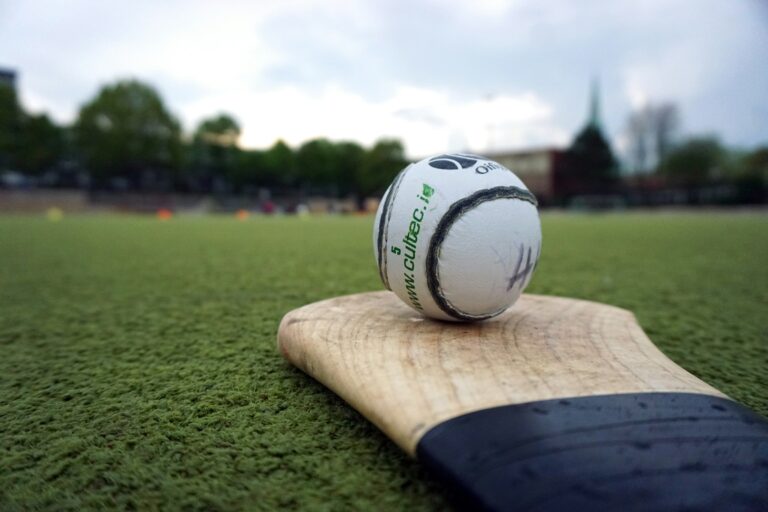
In 1884, the Gaelic Athletic Association was formed, to “revive and standardize…traditional Irish pastimes.” This would include hurling as well. The stick used to play hurling is shaped like a hockey stick, but the average field is about 137 by 82 meters. To score a goal, players must use the stick to drive the ball (silotar) into the goal’s net (shown in the picture below) for three points, or above the net for one point.

Image by Elsupero from Pixabay

Teamwork and strength

It is quite straightforward to know which team wins a game of hurling; at the end of the game, whichever team has the most points will claim a victory. Hurling can be quite demanding for the players; the silotar can travel “up to 180 kilometres per hour” after being hit! Because of the risk of injury,  the players must wear protection around their head and face. Hurling is a game that tests the courage of everyone involved. 

How can players move the silotar through the field?

Here are the actions a player can do to move the silotar toward the net:

  • They can hit the silotar with the stick, either through the air or along the ground
  • They can kick the silotar along the ground
  • They can lift the silotar from the ground with their stick and then hit it
  • They can run with the silotar, as long as they balance it on their stick
  • They can hand pass the silotar to a teammate, but they must pass the silotar by slapping it with an open palm.

As you can see, the game of hurling has elements of field hockey, soccer, and even handball, all combined together! This sport reminds me of Australian rules football, where players can also use a variety of methods to advance toward the goal.

If you would like to discover more about the sport of hurling, be sure to check out this video! As I researched more about this sport, I must say that I find hurling to be extremely fun! Hurling is an important part of the Irish culture, and it is widely viewed by the Irish as Ireland’s national sport. 

EdTech in Action: Innovative Tools Revolutionizing the Classroom

0

Education is changing fast, thanks to technology. Traditional classrooms are being transformed as digital tools make learning more engaging, personalized, and accessible. From virtual classrooms to interactive platforms, technology is revolutionizing how teachers teach and students learn. Let’s explore some of the coolest and most innovative tools that are making waves in classrooms today.

Virtual Classrooms: Learning from Anywhere

One of the most exciting changes in education is the rise of virtual classrooms. Tools like Google Classroom, Zoom, and Microsoft Teams have made it possible for students and teachers to connect online, no matter where they are. Whether you’re in a classroom, at home, or even on vacation, you can still join lessons and stay connected with your classmates and teachers.
For example, Google Classroom makes it easy for teachers to post assignments, share lessons, and give feedback, all in one place. This has been a game-changer, especially when schools switched to online learning. Virtual classrooms have made education more flexible and accessible than ever before.

Interactive Learning: Making Learning Fun

Learning doesn’t have to be boring. Thanks to interactive platforms like Kahoot!, Quizlet, and Nearpod, learning is more fun than ever. These tools turn quizzes and lessons into games, making students more excited to learn.
Kahoot! lets students compete in real-time quizzes, making it feel like a game show. It’s a great way to review what you’ve learned and challenge yourself and your friends. Quizlet is another tool that uses flashcards to help students study in a more engaging way. These interactive learning platforms help students stay focused and have fun while learning new things.

Personalized Learning with AI

Artificial Intelligence (AI) is making learning more personalized. Tools like Duolingo and Socratic are changing the game by tailoring lessons to the student’s needs. Instead of everyone following the same path, these apps adjust based on how well they’re doing.
For example, Duolingo is a language-learning app that adapts to your level. If you’re struggling with a particular word or phrase, it will give you more practice. On the other hand, if you’re breezing through, it will move you ahead faster. This kind of personalized learning helps students learn at their own pace, making it easier for them to succeed.

Collaborating with Technology

Group projects can be difficult, but tools like Padlet, Trello, and Miro make collaboration much easier. These tools allow students to work together on projects, even if they’re not in the same room or time zone.

Padlet lets you create digital bulletin boards where everyone can add ideas, photos, or links. It’s a great way for teams to brainstorm together. Trello is perfect for organizing tasks, while Miro is an online whiteboard where students can share ideas and diagrams in real-time. These tools help students communicate and collaborate more effectively, making group work more fun and productive.

Augmented Reality (AR) and Virtual Reality (VR): A Whole New World

Imagine being able to explore the pyramids of Egypt or take a 3D tour of the human body without leaving your classroom. With Augmented Reality (AR) and Virtual Reality (VR), these experiences are becoming a reality.
AR and VR bring lessons to life in ways traditional textbooks can’t. Google Expeditions, for example, lets students go on virtual field trips to famous landmarks or deep into the ocean to explore marine life. Merge Cube allows students to interact with 3D objects, like planets and animals, as if they were right in front of them. These technologies make learning more immersive and exciting, helping students understand complex concepts through hands-on experiences.

Looking Ahead: The Future of EdTech

The future of education is bright, and technology will continue to play a huge role. As new tools like AI, Blockchain, and IoT (Internet of Things) emerge, the possibilities for transforming classrooms are endless. From creating even more personalized learning experiences to connecting students around the world, EdTech is shaping the future of education.

Technology has already made a huge impact on education, and as it continues to evolve, the way we teach and learn will keep getting better. Whether it’s through virtual classrooms, interactive learning platforms, or cutting-edge AR and VR tools, EdTech is changing the classroom for the better. It’s an exciting time to be a student, and the future looks even more promising.

Bibliography:

https://builtin.com/edtech

Top 5 Apps for Staying Productive

0
  1. Google Calendar
    Google Calendar is a super helpful tool that makes it easier for people to manage their time and stay organized. It has cool features like setting up events, getting reminders, and repeating events, so you never forget important things. Plus, it works well with other Google apps like Gmail and Google Meet, which helps you plan meetings and work with others smoothly. You can also access your calendar from any device, whether you’re using a phone or a computer. With smart suggestions, easy sharing, and customizable options, Google Calendar is great for getting things done both personally and professionally.
  2. Notion
    Notion stands out as a top-tier productivity tool, offering a comprehensive workspace that merges notes, task management, databases, calendars, and project planning into a single platform, tailored to meet both individual and team requirements. Its adaptable interface empowers users to craft intricate plans, monitor tasks, and maintain organization effortlessly, while its collaborative features facilitate real-time document sharing, task assignments, and feedback among team members. With an intuitive design and seamless synchronization across devices, along with integration capabilities with tools like Google Drive, Notion enhances workflow efficiency and consolidates all essential resources in one place, significantly elevating productivity.
  3. Toggl
    Toggl stands out as an exceptional productivity tool designed for effective time tracking, enabling both individuals and teams to enhance their work hour management. Users can effortlessly monitor the time allocated to various tasks and projects, gaining crucial insights into their time usage. With its user-friendly interface, Toggl simplifies the process of starting and stopping timers or manually logging hours, ensuring precise work records. The app’s robust reporting capabilities empower users to analyze their time data, pinpoint inefficiencies, and implement changes to boost productivity. Furthermore, Toggl seamlessly integrates with other tools, including project management applications, and is compatible with both mobile and desktop devices, making time tracking a smooth experience. Its emphasis on simplicity and usability makes it the perfect choice for freelancers, teams, and businesses aiming to improve focus, accountability, and overall time management.
  4. Akiflow
    Akiflow is an innovative productivity application crafted to enhance how users handle their tasks, time, and schedules with remarkable efficiency. By merging task management, calendar organization, and time-blocking capabilities into one cohesive platform, Akiflow empowers users to effectively prioritize and structure their responsibilities, thereby streamlining their daily routines. It seamlessly integrates with widely-used calendar and task management applications, ensuring that tasks, appointments, and deadlines are synchronized effortlessly across different platforms. The time-blocking feature encourages users to dedicate uninterrupted work sessions, while timely reminders and notifications guarantee that crucial tasks and meetings are never overlooked. With its user-friendly design and emphasis on minimizing task overload, Akiflow stands out as a powerful tool for enhancing productivity and sustaining focus throughout the day.
  5. Click up
    ClickUp is an incredibly effective productivity app because it helps you stay organized and on top of all your tasks. Whether you need to keep track of homework, projects, or even personal goals, ClickUp allows you to create detailed lists and set deadlines, making it easy to prioritize your work. The app also lets you break large tasks into smaller steps, which makes them less overwhelming and easier to manage. One of the best features is how you can customize it to fit your needs, whether you’re working alone or with a team. Plus, ClickUp syncs across all devices, so you can check your tasks anywhere, anytime. With its user-friendly design and helpful tools, ClickUp is perfect for staying productive and getting things done on time.

Glowing Waters: Exploring Bioluminescent Bays

1

Have you ever looked at the northern lights and felt mesmerized by the iridescent beauty? Or perhaps you looked at the glowing moon on a clear night and wondered how? Nature has many mysteries that have an ethereal presence in the world around us. These natural attractions and surreal scenes add a glow to the world and help us understand the science of the earth.

As some of us may already know, the fascinations of the oceans are far beyond the surface water. The ocean is a huge part of the world and within every body of water, we can find something new and unique. One of the rare beauties of the ocean is seen in Bioluminescent Bays. You may have heard of Mosquito Bay in Puerto Rico, Jervis Bay in Australia, or the Luminous Lagoon in Jamaica. Believe it or not, there are only around 35 Bioluminescent Bays in the world! Unlike other bodies of water, these bays appear with a glowing blue light every night, which resembles a dream. After understanding this natural phenomenon, the question then comes to our minds of how?

Well, the beauty of blue glowing lights comes from the magical sea organisms called dinoflagellates. These eukaryotic planktons create chemical reactions through photosynthesis, which allows them to produce a bioluminescence effect. Many scientists classify these species as both animals and plants. This is because of their ability to absorb chlorophyll to create food while also being able to move around like animals. Dinoflagellates release the light when they feel “agitated” (a sense of nervousness) from the water around them. The vast quantity of these organisms in the ocean come together to form a strong bright light that makes a severe difference in the environment around them. 


Why are Bioluminescent Bays across the world different?

While most of the oceans contain Dinoflagellates, the cause of its bioluminescence varies depending on the location. For instance, Mosquito Bay in Puerto Rico was given the Guinness World Records as the brightest bioluminescent bay in the world in 2006. The reason was that the dinoflagellates were in much larger quantities in that specific water, hence making the water extremely bright blue. Conversely, other glowing waters may be known for other species. Tomaya Bay, for example, is known for its bioluminescent firefly squids and jellyfish! Research shows that some of these organisms obtain the bioluminescence naturally while other aquatic life feeds on bioluminescent creatures, which then passes on to them.


Interesting Facts:

  • Many say that Dinoflagellates create light as a defence adaptation. They use the bright lights to scare predators away or shift the attention of predators toward other predators who are eating these microorganisms.
  • While the lights may seem uninterrupted, the organisms are flashing these lights at an incredibly fast speed (nearly 1/10 of a second)
  • There are roughly 700,000 Dinoflagellates Per Gallon of Water in Puerto Rico’s Mosquito Bay!!!
  • Bioluminescent organisms can also glow in colours apart from the typical Green-blue (e.g. railroad worms)

Robert Charley, a microbiology PhD, describes the science of this natural phenomenon with, “The most incredible thing to me is to think that when you see a shimmering bay or witness bioluminescence yourself by swimming or standing in the shallow water, is that it is the result of billions of these microorganisms producing an enzyme-driven reaction.”

This statement briefly touches on the complex and in-depth science behind bioluminescence, particularly in organisms. The purpose of this article was to introduce one of the thousands of mysteries that the ocean holds. If you would like to learn more about these Bioluminescent creatures, you can read this national geographic article (click here.)

Bioluminescent Bays

Sources:

1, 2, 3, 4, 5, 6,

The Different Types of Investment

0

Many Different Options Are Available

In general, the word “investment” refers to somebody putting their money into a project, business, etc., that allows them to gain additional profit on top of their principal amount. There are many types of investments available, ranging from low-risk to high-risk. Today, I have researched some of the most common types of investments for you! Keep in mind, this article is not meant to give advice about how certain investments are better than other investments, nor should any information included in this article be taken as professional financial advice. 

Cash

It might not seem obvious, but a cash bank deposit is actually an investment! Cash bank deposits are commonly regarded as being one of the simplest types of investment, virtually always guaranteeing the “investors” that “they’ll get their capital back.” However, cash bank deposits generally yield lower interest compared to some of the other types of investments. 

Bonds

A bond is defined as “a debt instrument representing a loan made by an investor to a borrower.” Generally, the borrower would pay back to the investor the money they owe. Bonds very often involve a company or a branch/agency of government, allowing these “groups” to “finance operations, purchases, or other projects.” Bonds are often seen as having higher risk compared to cash bank deposits, but bonds are generally considered to be of lower risk than stocks!

Mutual Funds

According to Investopedia, “most mutual funds have a minimum investment of between $500 and $5,000.” A mutual fund involves multiple investors “pooling” their money together to purchase securities. Mutual funds are generally valued after each trading day, so that means that transactions (i.e. selling or buying mutual funds) typically occur after the closing of the market each day. 

Exchange-Traded Funds, commonly known as ETFs

ETFs were introduced in the mid-1990s. ETFs are quite similar to mutual funds; however, they can be traded when the markets are open each day. This is unlike the mutual funds described in the previous section, which are usually traded after the closing of the market each day. ETFs are similar to stocks, in terms of the buy-and-sell behavior. 

Stocks

When investors buy stock shares, one could say that they also “participate in a company’s success via increases in the stock’s price and through dividends.” The investors who buy stocks don’t own the assets of the company, but if the company were to go bankrupt, they do possess a claim on the company’s assets. 

Other Investments

There are many other types of investments as well! Real estate, commodities, and private equity funds are all investing options. You can learn more about them here in this Investopedia article. Personally, I am not at all an expert in investing; for each individual, it would probably be best for them to decide for themselves how they would manage their capital. Investing could bring profits, but there will always be risks associated with it as well. 

Calgarian Teen Rocks with the Arkells

0

“It was the most insane night ever”

As many students return back to school after a much deserved November Break, we can’t help but reminisce about our days of rest and relaxation. While catching up with my friends, we talked about the shows we binged, new fall recipes we experimented with, and all the studying we (did not) accomplish. However, one specific story stood out from the rest. 

Read on to discover how this Calgarian teen got the chance of her lifetime after she was plucked out of the crowd to perform alongside a famous band. She turned fantasy into reality thanks to her passion, perseverance, and talent.

Ainsley at the Soundcheck before the Arkell’s Calgary Show | Photography by Nathan Nash

Years in the Making: Ainsley’s Journey 

Meet Ainsley Frasca. Like most teens, she enjoys hanging out with friends, reading books, and over-quoting the newest Kurtis Conner video. Unlike most teens, however, she spends her free time performing at an almost sold-out stadium in front of an audience of over 5,000 people while rocking out on the drums. 

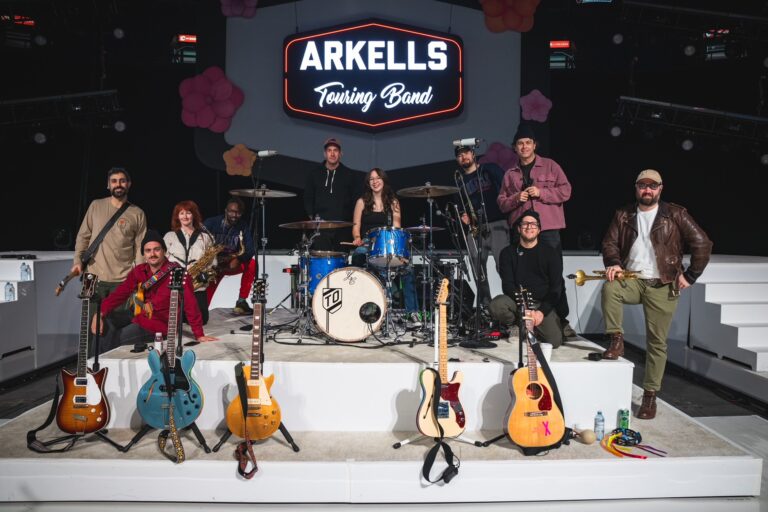
Ainsley started her journey as a drummer 5 years ago. Inspired by her and her dad’s favourite band, The Eagles, she picked up the drums after seeing Don Healy (drummer for the Eagles) live in 2014. Now, at age 16, Ainsley has wowed people across the world by performing alongside the Canadian Rock Band, The Arkells, at Prospera Place in Kelowna on November 16, 2024, for the Big Feelings Tour.

One Thing I Know: How to Rock with the Stars

As a gift for her 16th birthday, Ainsley and her mom got tickets to see the Arkells perform in Calgary, her hometown. Before attending the concert, with determination in their hearts, they reached out to the Arkells on Instagram, hoping to get Ainsley on that stage to perform with the band.

Despite all odds, they got a response! Before the concert, the band ran through their sound check and invited Ainsley to run through their song “Oh! The Boss is Coming”. Exhilarated with the memory of playing with the Arkells, the young drummer was content and enjoyed a memorable concert, singing and dancing the night away.

But the story doesn’t end there. 2 weeks later, Ainsley’s family was in Kelowna to see the Arkells again! While waiting in a cafe for a quick snack, Ainsley spotted a familiar face. Max Kerman, singer for the band, was waiting at the same cafe, and, much to her astonishment, recognized her. The pair reconnected and recalled the unforgettable sound check.

Ainsley and Max Kerman (Lead Singer for the Arkells) | Credits, Ainsley Frasca

Flash forward to the concert. Pushing up against the barricade, singing her heart out, the band had just finished playing “Oh! The Boss is Coming” when Kerman spotted Ainsley and beckoned her to come up to the stage.

In our interview, Ainsley recalled her adrenaline rush as the crowd cheered for her as she made her way up to the stage. With a little help from security, she crossed the barricade and soon was standing beside Max, introducing herself to the crowd. After her unbeatable performance, she returned to the crowd, met with high fives and cheers all around.

After a video the Arkells posted with Ainsley went viral with over 800,000 views, Ainsley is booked and busy with interviews from notable journalists such as the CBC Eyeopener, CTV, and now Youth Are Awesome 😉

Ainsley and Her Family at the Prospera Place Concert | Credits, Ainsley Frasca
Ainsley After the Concert with the Setlist and Drumsticks | Credits, Ainsley Frasca

You Can Get It: Advice from Ainsley

“If you’ve started playing an instrument but aren’t connecting with it, don’t be afraid to try something else. You don’t have to be tied down to one singular instrument. I played many different instruments before the drums, and even now, I still like to branch out and try different things.”

AP vs IB – 10 Year Update

Ten years ago on this blogging program, a student compared the Advanced Placement and International Baccalaureate programs that are available here in Canada. Ten years later, I’m going to give you a more current update on the two.

If you’re in Grade 9 or even Grade 8, and you’re considering taking a more rigorous courseload in highschool, this is for you.

Personally, I struggled a lot choosing between the International Baccalaureate (IB) Program and the Advanced Placement (AP) Program. At first, I was set on the IB program because it seemed so prestigous and it sounded like a fancier line on a university application. All of my middle school friends also chose to take IB. However, when I looked into my own personal learning styles and my future goals, I found that the AP program suited my needs a little better.

I don’t regret my choice one bit, and I’m still in touch with those friends who took IB instead. They’re loving their choice as well. Both programs are excellent, and the ultimate difference lies in which program suits you best.

After doing some thorough research on both programs and having now experienced half my highschool career, I’d like to share some advice that will help you decide.

Without further ado, here are some major questions you can ask yourself to make the decision a little easier.

1. Where Might I Go to Post-Secondary?

Yes, it’s too early to decide absolutely for sure where you’d like to go, or even if you want to go to post-secondary, if you’re in late middle school. But this is one of the primary differences between the programs.

IB is an international standard of academic achievement (“international” in the name!). It’s more recognized across other countries for its academic rigor and holds quite a lot of prestige internationally.

AP is a program developed by the American College Board, and it’s primarily recognized in North America. It’s also quite known for its academic rigor, and most Ivy League applicants have at least a few AP courses under their belts.

If you’re looking to study outside of North America, IB may make you more competitive than AP. However, both programs are valued similarly within North America.

2. Am I Willing to Be a Jack of All Trades?

Both AP and IB allow you to choose which courses you’d like to take to a higher level. However, the consequences of doing so are different.

In Advanced Placement, the different AP courses are completely separate. Post-secondaries consider each AP grade independently from other grades. This way, you gain full recognition for each AP course you choose to take. You are also able to give more attention to the subjects that you like more. For example, if you’re great at math, but not so confident in social studies, taking the AP exam for math will still be fully recognized by universities, regardless of whether or not you took AP World History.

In the International Baccalaureate program, it’s easier for students to get penalized for only taking partial IB. In order to get your IB diploma, you must take a minimum of 5 IB courses each year in addition to a second language course. That means that you’ll likely have to take an accelerated course that you don’t like or that you aren’t good at.

While there’s definitely perks to taking partial IB, you ultimately won’t get the IB diploma unless you take full IB. And without the diploma, many institutions may not give full credits or recognize your work as an IB student. This can feel incredibly frustrating after putting in all of the extra work.

3. How Do I Handle Pressure?

The last major difference between IB and AP programs is that the pressure for the IB program stretches throughout the full year that you take those IB courses.

In IB, you are consistently assessed against the IB standards on IB material. Tests, quizzes, and assignments over the entire semester count for the same marks as the regular marks that regular students are getting. It’s very much possible that if you do poorly in the IB program, your grades will be significantly lower than someone who is taking regular courses, even after the standard grade boost. This is the same grade that will be recorded on your transcript that you show to universities.

In AP, you gradually learn the material over the year. However, assessments on AP material do not count toward your regular grade that’s shown on your transcript. The only time your AP knowledge is officially assessed is during a single AP exam for each subject in the early spring. This one exam will determine your entire AP mark.

It’s worth noting that you can choose not to disclose an AP exam mark to post-secondaries, but you cannot change the grade on your transcript.

If you are able to handle consistent pressure well and don’t like having a single exam that your accelerated learning is assessed on, then IB may be better for you. If risking your transcript is too much and you’d rather have the option to take a high-pressure exam at the end of the year, then AP might be better.

TL;DR

At the end of the day, AP and IB are both prestigious programs that will help you learn and grow as a person. But if you’re struggling to decide, you might want to ask yourself these 3 questions:

  1. Where do I want to go to post-secondary?
  2. Am I willing to invest my time and efforts into maintaining all my subjects, or would I rather have the option to focus on a few?
  3. Does long-term, constant evaluation or short-term high pressure improve my performance more?

These questions will help you understand your goals and your current learning style better.

Good luck, and have fun!