Youth Are Awesome, commonly referred to as YAA, is a blog written by youth for youth.
YAA provides the youth of Calgary a place to amplify their voices and perspectives on what is happening around them.
Youth Are Awesome is a program of Youth Central.
Any views or opinions expressed on this blog belong solely to the author and do not represent those of people or organizations that the blog may be associated with, unless explicitly stated. All content is for informational purposes only.
We are inviting Junior and High School students (Grades 7-12) to showcase their photography talent. The photography contest encourages students to consider the environmental community that surrounds them and to take action to protect it.
Tell your story through your lens and have a chance to win a GroPro Camera, a Tri-pod and more.
Over fifty photos were submitted by Calgary students in the 2012 contest. “The images captured by these young photographers make strong environmental statements about how they perceive the world,” explains Natalie Young, contest judge. “The artistic quality and creativity this year was truly remarkable.”
This year’s themes include:
1) cradle to cradle
2) the story of stuff
3) you are what you eat
4) photo DJ (mix it up!)
Enter today! The contest closes at 4:00 p.m. on April 19, 2013.
~~~~~~~~~~~~~~~
The Mayor’s Environment Expo is a fun educational interactive event for youth, aimed at creating environmental stewards for Calgary. The 2013 Expo takes place June 4-6 at the Municipal Building.
April 20th-27th is coming your way. This is an important week for all of you to mark on your calendars because it’s…YOUTH WEEK 2013.
What is Youth Week?
Youth Week is a week of free or reasonably cheap events dedicated to youth all around the Calgary. The point of these events is to celebrate and advocate youth empowerment, achievement and involvement throughout the city. It connects young people to their communities and it unites us all as we recognize the awesomeness of youth. We want this week to be a spotlight on us ;D
Check out this video with all these outstanding Calgarians as they tell you a bit more about Youth Week.
We’ll be there. WILL YOU?
What events are there?
Oh hey, we have a calendar conveniently dedicated to all the events happening throughout the week. There are discounts, free events, youth-themed activities, educational sessions, and opportunities to try new things and meet other youth. For example, some organizations on board with Youth Week are the Calgary Comic Book Expo , Laser Trek, Epcor Center, Telus Spark, Tutti Frutti and more! Like how can you not want to meet Tom Felton (Draco Malfoy) and Stan Lee, play $5 games of paintball and laser tag, watch a free show at the Epcor center, with a discounted visit to the science center all while enjoying discounted yummy froyo? I know you want to.
Youth Central volunteers meeting the Phelps twins aka Fred and George Weasley. I can’t deal with how awesome this is. My inner Potterhead is screaming.
Schools are even hosting their own events! My school, Queen Elizabeth is organizing a Carnival Week where a week-long Super Smash Bros. Brawl tournament is happening all while we’re selling cotton candy, ice cream floats, and Texas donuts! Get your school to set up an event because all this energy from sugar youth-oriented events can only make everyone’s day more positive and peppy. If you need ideas for a school Youth Week event, check ‘er out here!
How do I make an event?
Simple! Follow this link, and fill out all the required information. Send us a picture of your event to youthweek@youthcentral.com. Go fill one out! Submit your event before Youth Week begins. We’re excited for what you guys come up with.
Youth Week decor last year ;D
So tell your friends and come on out to enjoy a week dedicated to YOU(th). Punny. Haha.
During the spring break, I was charged with the daunting task of creating a poster for the school play, Dorothy Meets Alice. I was stumped. How do you create something that is both aesthetically pleasing, and will get your message across?
I spent a lot of time researching effective poster design and general art composition, and I learned a lot. Here are a few tips for spectacular poster creation, and few examples for inspiration.
1. Get straight to the point.
If your poster is too busy, the viewer will have too much trouble finding a focus. The result? It’s unattractive and won’t create an impression on your viewer.
This poster works because there is plenty of empty space. There is one focal point which grabs your attention and keeps it.
Additionally, leave space. Rests are to music as space is to composition. If you want something to stand out, leave some space around it and see how much more effective it is!
2. Let it flow.
The poster is like a work of art. The viewer’s eye should travel along the page in the order that you want them to. One way I test flow is to walk away from my composition for a while, then come back and remember how my eyes travel. Alternately, you can ask someone else to do this for you.
In the IDEAS example poster above, you are drawn to the IDEAS text, then the “onemanysmallbigany”, then to the bolded “Innovation Awards 2006”, then finally to the smaller headings and information. It is all as the designer intended.
3. Colour palette.
Contrast and bright colours are the biggest eye grabbers that you can use. Use them, because contrast makes your poster nice and bright colours makes people look at your poster.
Also, use a nice colour palette – not too many colours, which will give your poster a messy, muddy, “kaleidoscope” feel. Instead, stick to a few main colours which you will use throughout the poster.
Pink, purple, gray. Effective.
The colours should also match your theme. I needed to create a poster for Dorothy Meets Alice, which is based off of two children’s stories. So I opted for a softer palette, with pink, light blue, light yellow, and gray.
As a side note, I love the pink/turquoise or pink/light blue combination, especially with yellow, gray, or brown. It’s so cute and soft, and it’s also extremely versatile.
here’s my poster! How do you like it? 🙂 I feel it’s a bit too cluttered, but I think it’s time to abandon ship on this project
4. Say what you want to say. No more, no less.
The text part of your poster is your message. Don’t say too much, or none of it will get across. Instead, ask yourself what the main point of your poster is. If it’s a non-smoking poster, your main text should be, “Don’t smoke.” or something of the sort.
5. keep it simple
Too many graphics just causes eyestrain. Stick to a few.
6. Take a step back.
Finally, when you think you are done, take a step back and look at the whole thing. If it hurts your eyes, make changes. Usually I squint a little, just to check the spacing, colours, and if it is too cluttered. This helps to see if your poster is too empty/cluttered or if it attracts focus to the wrong point.
Thinking of visiting South Korea in the future, though uncertain of the threat of North Korea? Well, the attitude South Koreans generally have is one of “flying kites.”
Despite the previous Korean threats of burying South Korean under a sea of fire, according to Simon and Martina, a couple residing within South Korea and are well known Youtube Korean culture bloggers, that “…if we want to count the threats-to-action conversion rate, North Korea’s not doing too well.” Western media has the tendency and frequency to sensationalize the North Korean-South Korean conflict.
Chances are, you would have a greater probability of being run over by a taxi in South Korean than experience North Korean militarism.
Truly, for the first few years of grade school, science was my worst, detested and most hated subject. Despite the primitive learning, with gigs of excitement like classroom demonstration, explosions and goo, I truly did not understand how science was interesting. That was before I met the science fair.
It was the Cold December of 2010. (I know it sounds like a grandpa story, but please, bear with me). I had just received my brutal science test and was aching over the things I was grounded for. When my hate for science was just so unbearable, my teacher decided to give us another scientific task, the Science Fair. I was not interested at all. Why would you be interested? Right? Why would you want to do extra science work if you didn’t have to?
First of all, the science fair is not be symbolized as WORK. The science fair is supposed to be a fun event where you gain so much more than you lose. Many people who enjoy science fair actually enjoy using their minds and researching. It feels rewarding to know that you have creativity and a scientific mind. Your end result is a reward enough. You meet interesting people who seem to know lots of things on so many subjects. They are all of a similar mind set and everyone has something to share. It sets a common ground for everyone to share and interact on.
You work on your project for months and you can show pride and effort in your work. You develop a never-ending knowledge on your subject. You gain information and constantly have the urge to improve your database. The things you learn help you explore science with your interest from there on.
You build work ethic and the determination to do well. Your attitude towards science changes as everything you learn seems to contribute to your science learning for science fair. Other than these life lessons and ethics, you can, potentially win cash prizes as well.
Well-funded, the CYSF is the largest science fair in Canada. I encourage you to join it as I did. That year I participated in my school science fair, but didn’t get chosen. I was depressed, but I loved the experience. I tried again last year and I did pretty well.
Okay, I know that’s a bit much of a homework assignment, but you better keep up with this one! How does a contest to combat poverty sound?
Xtreme Action Poverty Destroyers (X.A.P.D), an inspirational group of Youth who are based in the community of Acadia, is collecting Visual Arts or Video entries in their Youth > Poverty campaign. Develop originality in this battle with a whopping $7500 in the prices you CAN win!
On their webpage, you will see four guiding questions.
Watch their video too –
Everyone has their own way to express – the works you present certainly need to fit either the Art Piece guidelines or the Video ones, but as they say in their examples page, all of the works are valuable whether they win or not. I also applaud them for their links for Youth in Crisis!
Stayed tuned for updates from them also through Facebook and Twitter; I hope this campaign turns out GREAT. 🙂
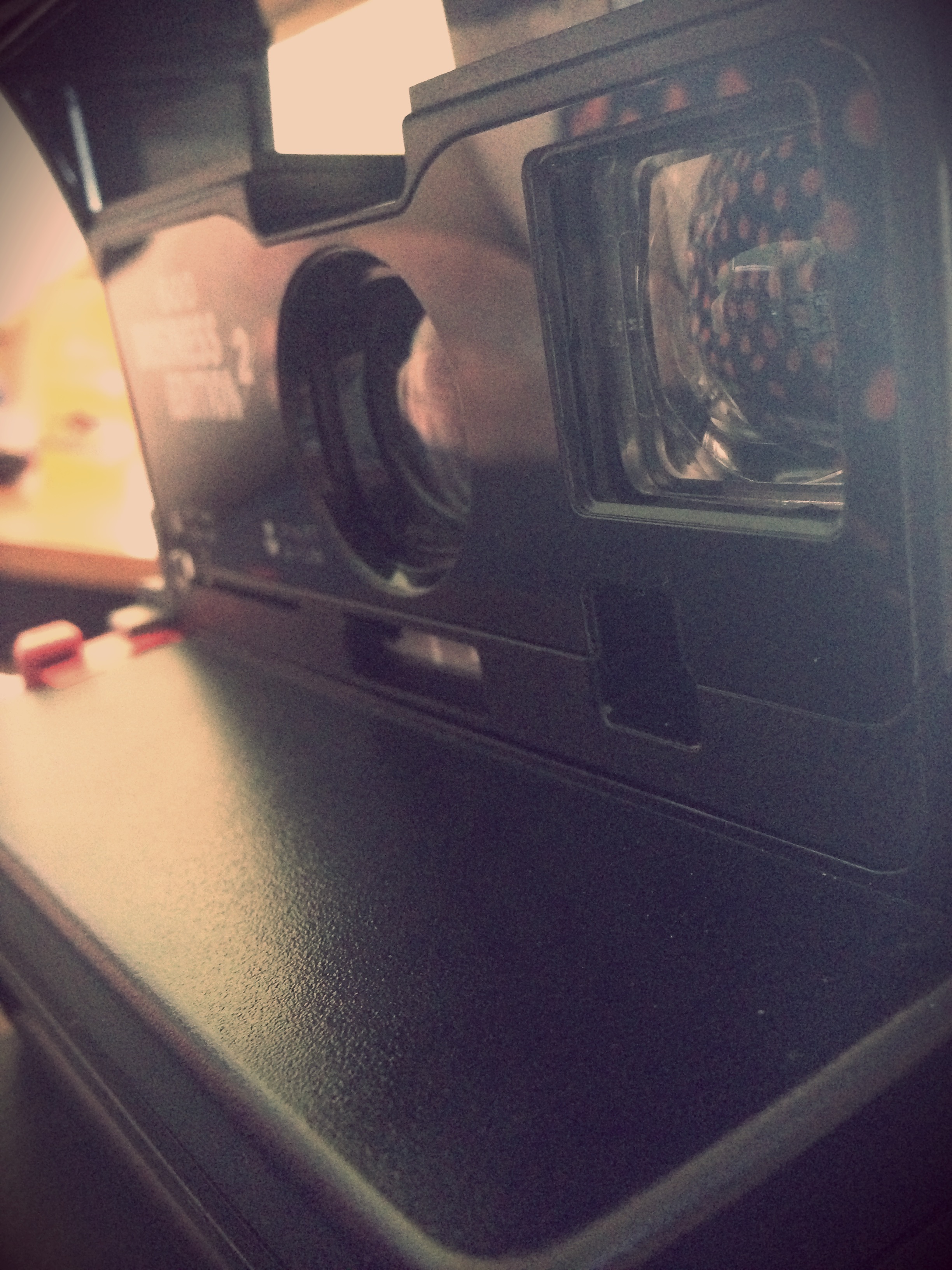
Since I got my polaroid camera I have been taking pictures non stop. However at the beginning, it took awhile for me to get it to work to it’s full potential.
Loading the film into the camera
So first of you open up the cameras film cartridge by moving the button underneath the front trigger (the red button that takes the photo)
Then you take your film pack (the only brand to make film is called the impossible project), and insert it with the pink sticker on the bottom.
When you close the film cartridge and open up the flash unit, a black piece of paper will come out of the camera, this means that you are ready to take some photos!
Taking pictures
Bear in mind all pictures aren’t going to turn out perfectly, but that is why it’s fun! First move the lighten/darken control to choose the exposure. If you slide it darker that means it is lighter where you are taking the picture, if you put it on light that means where you are taking the picture it is dark.
Then decide weather or not you need the macro setting, which is for close ups. These cameras are old so the close up is anywhere from 2-4 feet.
When you are ready to take your photo hold down the trigger flash halfway to use the flash, if you don’t need the flash just press down all the way. Hold the trigger until the photo is entirely out of the camera.
Quickly pull the photo out and place it blue side down somewhere dark for about half an hour. If you are outside, put it in a pocket or bring a box along. It needs to be dark for it to process. Do not shake the photo like the old polaroid’s, it won’t work with these new ones.
Unlike most modern television interviews where the interviewer presents questions that coincide with points that the interviewee wishes to address, this interview demonstrates anything but cooperative questioning. Although slightly long, as soon as the video starts running and you’re absorbed into the heated debate between renowned physicist Brian Greene and Mathematics Professor Amir Aczel. I guarantee you will wish to stay for the entire conversation just to see how professionals truly handle arguments in public.
In Moneysense’s Best Places to Live in Canada 2013, Canadians saw a surprising revelation – Calgary topped the list. For both the best large city and best overall city, Calgary was first. Moneysense arrived at this conclusion using numerous factors, including unemployment, crime, and weather. After seeing Ottawa take the top spot for the last three years in this survey, it was a shock to many that Calgary took first place. Before we all start cheering, however, are we really in a place that is setting us all up for success?
Before we look at Calgary as a good place to live, we should probably look at the viability of just living in Canada, and if our country is in a good position for success. According to the Economist Intelligence Unit, Canada ranks ninth out of eighty countries for the highest quality of life, and for the optimal place for children born in 2013 to be born in. This study used a variety of economic factors, and states that the top countries on this list have the greatest amount of potential and will have the greatest amount of growth from now until 2030. Another affirmation of Canada’s ‘goodness’ is in the OECD rankings of the top 25 best countries to live in right now. On this ranking system, Canada was fifth, behind countries such Australia, which was ranked first, and the United States, which was ranked second. Canada is near the top in all of these rankings, with the fact that all have Canada in such a high position proving that we are living in a country which has a great amount of consistency in its value, scoring highly in every ranking system.
As all those studies have shown and the pride of many Canadians indicates, Canada is one of the best countries in the world – but is Calgary near the top of that list, or is it lounging near the bottom? As Moneysense’s report showed, at least one organization believes that we deserve the top spot. Though our weather isn’t the greatest, with Calgary being one of the cities with the fewest days above 0°C, we have a low amount of crime severity, especially for a city as large as ours, as well as a high average income, thanks to the prosperity created by the energy sector. Calgary’s overall amount of opportunities for jobs, as well as our culture, were again proven in another study, done by the Economic Intelligence Unit, which ties Calgary in fifth with Adelaide in Australia, with Calgary receiving a 96.6 out of 100 on our city’s liveability.
With Canada and Calgary both having a great amount of stability and coming out of the recession in a better position than other developed countries, we are in a position where we can grow and succeed, and continue on the path that many believe we are on. That doesn’t mean we are without issues, however – we still must remain vigilant and ensure that we have steady growth and success.
Have you ever spent a week living with 120-something other people? That was me before spring break, at Encounters With Canada.
Encounters is a program that brings together youth from all across Canada to live under the same roof (between the same teal and orange walls) for a week, in the cute little city of Ottawa (home of the original BeaverTails!). Every week is focused on a different career theme, covering everything from politics to arts to sports to ecology. I went for health & medicine.
Encounters was a ridiculous experience. Every morning, our dorm of 30-ish girls woke to a lovely bilingual wake-up call followed by Ottawa’s worst radio station. Then everyone piled into the single washroom to fight for the sinks. The row of plugs in front of the mirror, filled with phone chargers and hair curlers, is quite a sight. But you don’t want to spend too long getting ready, or risk being last in line for breakfast (and this line wraps all the way around the cafeteria).
Strange as it sounds, I miss those things.
At Encounters, everyday was filled with a flurry of activities, from guest speakers to career panels to hands-on workshops. I met a truly awesome professor who made me reconsider nursing, and helped a midwife deliver her “baby” (no worries, it was plastic). One thing in common was that all of the guests were so obviously passionate about what they do – it was so contagious! I really liked the medical ethics discussion, and all those open conversations about abortion, euthanasia, and genetic engineering. And I loved hearing the Hippocratic Oath (even more beautiful than waking up to birds in the morning).
We also toured many places around Ottawa. Some people had the chance to visit a cancer research lab, while others went to the Agricultural Museum of Canada, CSI workshops, or a tour of U of Ottawa. More touristy locations include Parliament, Byward Market, and the Civilization and Nature Museums. (Lesson: do not fall asleep during question period, even if you can’t understand a word of the French debate. Do NOT. The security guards are there for a reason.)
But just as much if not more, Encounters is about Canada. A visit to a veteran’s cemetery and a mini candlelight ceremony in the snow made me realize, yet again, just how lucky we are to be where we are. And never has one single week made me more aware of how much my French needs improvement – all the announcements were in both languages. What I really, really loved though, was the skits everyone did in their province/territory teams – no one was shy about making fun of their own homes.
That was what was really special about that week – the people. Everyone was incredibly open and accepting, and hilarious and easy to talk to. I didn’t get to meet everyone, but those I did, were really fun people. I loved hearing cougar stories from BC and listening to maritime accents. And for the first time in my life, I met someone from Yukon and the Northwest Territories. When we weren’t busy folding proteins or napping, Encounterers were making music with trash cans, watching Mean Girls, playing pingpong, or dancing in the cafeteria ;D
It was only a week, but I definitely won’t be forgetting Encounters anytime soon.
Looking at the title of this blog post, I may have lead some of you astray. If this post was really the “best” then I wouldn’t have titled it in a questioning manner. Rather, I would have come out confidently and titled this post “The Best Blog Post Ever”. The fact that I wasn’t too sure about how good my post was, indicates that the answer to the questioning headline is most likely no. This is in accordance with Betteridge’s law of headlines, which states that; any headline, which ends in a question mark, can be answered by the word no.
This is also known as Davis’ law. Essentially if a journalist did not have any substantial reasoning to be able to back up a claim they wanted to make, then, through a question mark they can protect their credibility while stirring up some interest. Often these stories are the byproducts of sensationalism in which the writer poses a question, that many people would want to know the answer to, as the headline to the story. This results in a very average article being over-read. Ian Betteridge, uses the following example to make his point.
“Have we found a cure to Cancer?” – The answer is probably no, because if a cure was actually found, “We found the cure to Cancer!” is a much better headline and would have been used instead. I would hypothesize that any objective articles (the article leading itself to a final yes/no answer) that end in a question mark can be answered with a no.
So the next time you guys come across an article of the sort, test and apply this law and see how effective it is. It could save you time from reading, frankly, pointless articles.
In my first post I ended with thinking of your hair as a piece of paper, that is to colour over it, it needs to be as close to white as possible (without sacrificing the health of your hair). Now it’s time to get technical! Your hair is not just one long strand; it is made up of cuticles, which on healthy hair are smoothed and closed. That’s why “fried” hair gets frizzy; the cuticle has been roughed up
Hardly blue Fishbowl Blue.
and is no longer closed. What you want to achieve is a happy medium. The unopened cuticle of unprocessed hair will not hold unnatural colour on it’s own, as such colours of hair-dye normally do not contain ammonia (this is what is responsible in “regular” dyes for opening the cuticle). If your hair is not processed the dye will just sit on top of the hair, and wash out quickly. While, if the cuticle is slightly open from processing the dye will go into the hair, rather than just sitting on top, and last much longer. Alternately, if the cuticle is over-processed, and wide open, the dye will enter the cuticle, but the hair will not be able to hold it there. It’s a delicate process, which is why I recommend making hair processing a salon trip.
bought at malls (try Culture Craze or Sally’s Beauty Supply) or online. There is tons of debate over which brand is better, loads of blogs and sites give testaments which conflict one another. Personally, I don’t think one is better then the other. I
Atomic Turquoise; much better!
think they’re different, one brand or one colour may work better on one person than on another. For example, I had Special Effect’s “Nuclear Red” hair dye (see photo from last post) which lasted super well and was super vibrant. When I dyed my hair blue I used their “Fishbowl Blue,” which faded quickly and was dissapointing. Using Manic Panic’s “Atomic Turquoise” gave me a much more bright and long lasting blue. Oftentimes with finding the right brand it is simply necessary just to hunt around until you find what you’re looking for.
Once you have bought your dye it’s time to dye your hair! You can get a hair-dresser to apply the dye for you, or you can apply it at home. Many websites have helpful tips and steps on do it yourself unnatural colours, and for me dying my hair at home has always turned out well. As neither Manic Panic or Special Effects contains ammonia, I usually
keep my dye on for 12-15 hours (overnight in a shower cap). Once your hair is dyed, pour a 50/50 mix of vinegar and water on it to balance the pH. Wash your hair as little as possible to keep the colour fresh, and when you do wash, wash with cold water. Avoid heat styling your hair as much as possible, this opens the cuticle and takes out colour. If you do heat style, use a protective spray.
I hope your hair-colour is a big success, good luck!
I love baking, and there’s nothing greater than the feeling of perfecting a classic recipe. Okay, so maybe this recipe isn’t exactly perfected, but by experiment, it’s the closest I’ve gotten so far.
For this recipe, you’ll need:
– 2 1/2 cups all purpose flour
– 1 teaspoon baking soda
– 1/2 teaspoon salt
– 1 1/2 teaspoons vanilla extract
– 2 eggs
– 1/2 cup white sugar
– 1 1/2 cup brown sugar
– 1 cup softened butter
– 2 cups chocolate chips
1. Start by pre-heating your oven to 350 degrees F.
2. Combine the flour, salt, and baking soda in a bowl.
3. In a separate bowl, cream together the butter, brown sugar, and white sugar. Whisk the eggs into the mixture one by one and mix the entire combination until creamy and smooth. Then, add in the vanilla and mix everything together.
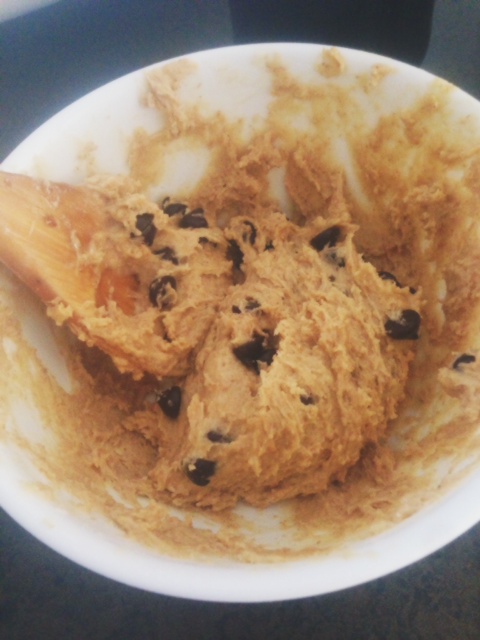
As a side note, be sure to use an electric mixture for this step- I didn’t, resulting in my wet ingredients to turn out looking a bit like throw-up. Not exactly the most aesthetically pleasing sight for me to photograph for a blog, so thus there isn’t a picture for this step. But don’t worry- your mixture should turn out to look like a combination of butter, sugar, eggs, and vanilla (if that’s any help).
4. Slowly add portions of the wet ingredients to the dry, mixing as you go. Then, toss in the chocolate chips and voila!- your mixture is complete.
5. Drop uniform spoonfuls of the mixture onto an ungreased baking sheet and bake at 350 degrees F for around 10-12 minutes.
What ever you do, the most important thing to do is to not over bake, or you’ll end up with a cake-like cookie. I made this mistake on the first batch, which unfortunately was the only batch I took photos of. Good thing the above image is super zoomed in to conceal most of the evidence that the cookie was, in fact, cake like…D:






 As all those studies have shown and the pride of many Canadians indicates, Canada is one of the best countries in the world – but is Calgary near the top of that list, or is it lounging near the bottom? As Moneysense’s report showed, at least one organization believes that we deserve the top spot. Though our weather isn’t the greatest, with Calgary being one of the cities with the