
Home Blog Page 30

Literature & Censorship: 5 Controversial Books To Read ASAP

Censorship and book banning are highly controversial topics in the world of literature. The media challenges many esteemed novels for the themes they present to impressionable youth and the language they use.

People are bringing books and their political impacts to light, with many realizing the political power classical literature wields. Various libraries and schools around the globe are banning novels commonly used in high school novel studies, such as 1984 and Animal Farm by George Orwell, and Fahrenheit 451 by Ray Bradbury.

These challenged books contain political & social themes such as totalitarianism, censorship, social control, and may use profane language. Readers are scrambling to get their hands on copies of these books to add to their personal libraries before it’s too late. After all, it’s ironic how books warning future generations about media censorship are being banned today.

The Importance of Reading Challenged Books

Critics argue that reading challenged books is pointless, claiming that they have no value and are bringing a bad rep to the government. Libraries are attempting to justify the purging of their shelves by stating that these novels are bad for kids. Although, reading challenged books is more than just exploring controversial or taboo topics. It’s about engaging with important conversations, expanding perspectives, and strengthening critical thinking.

Additionally, challenged books tackle complex topics, encouraging readers to think critically about the world around them. Reading these books allows teens to question norms, challenge existing ideas, and form their own opinions. Many challenged books explore underrepresented voices or tell stories from marginalized communities, which allows for readers to become educated on multiple perspectives. Engaging with these stories fosters empathy, helping readers understand the experiences and struggles of others.

Furthermore, literature has been a powerful tool for social change and self-expression throughout history. People often challenge books because they hold up a mirror to our society’s flaws and present important ideas, which can make people uncomfortable. Reading these books helps preserve the use of literature as a form of resistance and as a vehicle for change.

5 Controversial Books For Your Next Read 

1. The Adventures of Huckleberry Finn by Mark Twain

From Goodreads, Penguin Classics cover

Book Description: “A nineteenth-century boy from a Mississippi River town recounts his adventures as he travels down the river with a runaway slave, encountering a family involved in a feud, two scoundrels pretending to be royalty, and Tom Sawyer’s aunt who mistakes him for Tom.” (Goodreads)

“The Adventures of Huckleberry Finn” is a novel that follows the story of two young boys and their varying ideas of freedom. Many students are required to read this book as part of their novel study, which has definitely tarnished its reputation. Teachers and librarians alike criticize the book for its language, using terminology that is considered racist in today’s society.

Although, many people fail to understand the historical context in which this book is set, as it was first published in 1884. The language used by people back then is obviously inappropriate to use today, but the themes that the novel presents are important to gain a deeper understanding of our history and the slave trade. It’s interesting to see the different ideas of freedom presented by the two boys, and their journey is captivating.


2. The Kite Runner by Khaled Hosseini
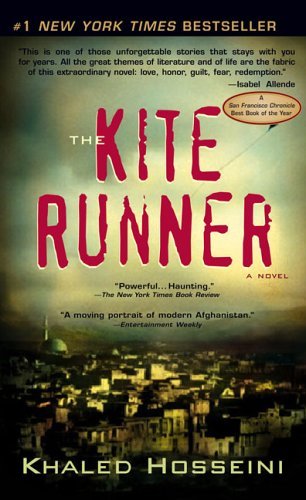
From Goodreads

Book Description: “1970s Afghanistan: Twelve-year-old Amir is desperate to win the local kite-fighting tournament and his loyal friend Hassan promises to help him. But neither of the boys can foresee what would happen to Hassan that afternoon, an event that is to shatter their lives. After the Russians invade and the family is forced to flee to America, Amir realises that one day he must return to an Afghanistan under Taliban rule to find the one thing that his new world cannot grant him: redemption.” (Goodreads)

Many U.S. institutions have banned this novel due to the difficult themes it addresses. Along with some mild profanity, the book contains heavy themes like sexual assault and stories of war, with a generous dose of violence.

Although, it also expresses vital themes of friendship, betrayal, and how politics can impact a child’s life. These are important topics for a teenager to learn about, and I believe this novel can significantly impact our understanding of the world and war. It depicts a history that schools often do not teach, making it a great learning opportunity.

At the end of the day, it is recommended by parents and youth online to wait until you are 16 or older to read this novel, so I suggest adding it to your TBR list for later!


3. Bury My Heart at Wounded Knee by Dee Brown

From Goodreads

Book Description: “Bury My Heart at Wounded Knee is Dee Brown’s eloquent, fully documented account of the systematic destruction of the American Indian during the second half of the nineteenth century. […] Using council records, autobiographies, and firsthand descriptions, Brown allows the great chiefs and warriors of the Dakota, Ute, Sioux, Cheyenne, and other tribes to tell us in their own words of the battles, massacres, and broken treaties that finally left them demoralized and defeated. A unique and disturbing narrative told with force and clarity, Bury My Heart at Wounded Knee changed forever our vision of how the West was really won.” (Goodreads)

Critics have criticized Dee Brown’s most popular work for focusing entirely on the perspective of the Native American peoples, “exploiting” the white settlers, and challenging traditional narratives of colonization. Although, the entire focus of this book is to educate readers on the Indigenous perspective, which is why the novel focuses on the tragedies and crimes committed against this population. In addition to this, the novel deals with violent content and does not suit the weak of heart.

Despite the heavy content turning away many readers, we must remember that this novel depicts a reality that many people had to face because of colonization. High school students will find that this novel deepens their insights into this topic, more so than what they learn in their school’s Social Studies program. “Bury My Heart at Wounded Knee” is a vital piece of literature when it comes to understanding our history, and plays into modern truth & reconciliation initiatives.


4. I Know Why The Caged Bird Sings by Maya Angelou

From Goodreads

Book Description: “I Know Why the Caged Bird Sings captures the longing of lonely children, the brute insult of bigotry, and the wonder of words that can make the world right. Maya Angelou’s debut memoir is a modern American classic beloved worldwide. Sent by their mother to live with their devout, self-sufficient grandmother in a small Southern town, Maya and her brother, Bailey, endure the ache of abandonment and the prejudice of the local “powhitetrash.”

At eight years old and back at her mother’s side in St. Louis, Maya is attacked by a man many times her age—and has to live with the consequences for a lifetime. Years later, in San Francisco, Maya learns that love for herself, the kindness of others, her own strong spirit, and the ideas of great authors (“I met and fell in love with William Shakespeare”) will allow her to be free instead of imprisoned.” (Goodreads)

Maya Angelou’s memoir is facing controversy for its depiction of topics like racism and sexual abuse. Although, the book offers a powerful account of her early life, providing insights into the racial segregation and discrimination that African Americans faced during that time. It helps readers understand the complexities of race, identity, and systemic oppression. Teenagers should read I Know Why the Caged Bird Sings to explore themes of identity, resilience, and overcoming adversity. The book offers hope, inspiration, and valuable insights into difficult topics, helping teens understand and navigate their own challenges.


5. The Perks of Being a Wallflower by Stephen Chbosky

The Perks of Being a Wallflower | Book by Stephen Chbosky | Official Publisher Page | Simon & Schuster Canada
Simon & Schuster Canada

Book Description: “This is the story of what it’s like to grow up in high school. More intimate than a diary, Charlie’s letters are singular and unique, hilarious and devastating. We may not know where he lives. We may not know to whom he is writing. All we know is the world he shares. Caught between trying to live his life and trying to run from it puts him on a strange course through uncharted territory.” (Goodreads)

Some places have banned The Perks of Being a Wallflower by Stephen Chbosky due to its content, including references to drug use, sexual assault, mental health issues, and LGBTQ+ themes. Critics argue that the book portrays inappropriate behaviors for young readers.

However, these same themes make it an important read. The novel addresses crucial topics while offering a raw portrayal of the challenges many teens face. It allows readers to feel seen and understood, especially those experiencing similar struggles. The book encourages open conversations about heavy issues and highlights the importance of self-discovery and resilience in the face of adversity.

Conclusions

In conclusion, people ban books because they fear controversial themes or language. Although, it’s essential to recognize the profound impact these books can have on readers. Challenged novels often provide vital insights into society, history, and personal growth, sparking important conversations and encouraging empathy. By engaging with these works, teens expand their perspectives and develop critical thinking skills for navigating the world around them. Literature is a tool for social change, and by defending the right to read these books, we can uphold the power of storytelling.

Sources: 1, 2, 3,

Between Buffing and Being; Identity and Dreams in a Foreign Land- A Short Story

I’m a nail lady, and I love my job. It might sound mundane but amidst the buffing and the endless coats of polish, I find a way to get through the day. My clients are an integral part of it, they share stories and between insignificant lines, I catch glimpses of their dreams. The desires that linger from childhood, what can be, what could’ve been. From the doctor who got ballerina nails, to the observatory technician who longed to be an astrophysicist. Their dreams are confident and they shine. As for me? It’s just a shadow compared to those of others. It’s a burden to watch people chase dreams that I can barely admit to having in the first place. My passions are luxuries that I simply cannot afford.

 I want to do whatever I can to not be seen as “other”. I listen, and I learn what it means to be human in Western society from my clients. I learn, but I don’t find an answer for people like me. How do you do small talk? What should your idea of happiness look like? How do you roll your “r”s? Every conversation is a lesson for me. I try to bridge the chasm between “Can you repeat that” and misunderstandings.

People light up when they talk, but my voice is dim and unnatural like the bristling noises of a fur throat. With sharp consonants and awkward syllables, expressing myself in a language that doesn’t love me is hard. I find myself in immense jealousy over how people take expressing themselves for granted. For me, every word weighs down on my tongue, and fills my heart with terror when I see an eyebrow go up when pronouncing “t”.  In the back of my mind, I still hope that one day, I too can be a part of the Western world and be allowed to have dreams as comfortably as them. I will allow my clinging past to fade away with each stroke of nail polish.

These innocent dreams that I harbor eventually got crushed by a client of mine. People like her, who instead of seeing me as a person, reduced me to an embodiment of their assumptions. She spoke to me, judging if I even had the right to exist. “Oh, it must be nice to have the chance to live here. I mean, it seems so easy for you to just come and get a job like this. I can’t imagine how much more comfortable your life must be now!”

I was at a loss for words, more than usual. For the first time, I wanted to be loud, I wanted to scream but what would I say? What if I said it wrong?

Her words were laced with privilege. She saw my struggles, and my hardships as a mere “escape” from the so-called atrocities back home. She doesn’t understand what it’s like to yearn for the warmth of homeland, to crave the breeze running through your hair, the laughter shared in a familiar language. When I emigrated, I had nothing but floral dresses; maybe I hoped subconsciously that this place would be warm with love and embrace me as the sun’s shining rays, but now my wardrobe greets me with soulless jackets and the desolate cold. As her words settled into my mind after my anger calmed, I questioned her intentions. Did she truly mean to hurt me by those words? Her eyes were a twisted color between curiosity and judgment. Regardless it sank into my heart like claws.

Despite my disgust towards the statement, I let it pass in silence.  The sting of the words had morphed into something else, my ignorance. I became the thing I hated the most. Trying to blend into Western society, I bought into the very stereotypes that I detested.

To have the right to be angry with my client, I had to acknowledge my struggles, happiness and passions. Being an immigrant is an experience filled with bravery and my client and I both failed to recognize that. Belonging to the Western world is already a privilege on its own, a privilege that often blinds individuals in ignorance and moulds the brave newcomer to be perceived as a monster intruding on their land. In the process, she is alienated from the very society she yearned to be a part of, so the newcomer feels compelled to see herself as a monster. This monster had forgotten that she left the warmth of family, comfort and home in the pursuit of working hard towards a better future. A frightening experience, one that is commendable when overcome. But the client didn’t and will never recognize that because she can’t let her eyes go bare, where comfort is luxury and every letter seems like a battle against misunderstanding. The armour of privilege is thick for those who will never have to fight for their place. However, the struggle for acceptance is not only external but deeply internal. Were the privileged narratives what I allowed to shape me? I had filed away my own identity, believing I had to erase parts of myself that didn’t scream human in the West. And in the process of erasing my vibrancy, I humiliated myself as much as others did. I carved out the mindset that I was the monster for being foreign in a foreign land, and partly it was true. To blame me for existing a certain way had been due to the social norms inflicted by Western society, but to succumb to those very standards was a choice. I had forgotten that I could be my sun in this cold city and that the jackets could be as colourful as my heritage. Every time I sanded down my voice to sound articulate, it came off like a cacophony, that was the reality of covering up my origins with a coat of self-hate.  But I am simply indefinable, shaped by experiences that many could never understand. The Immigrant experience is often viewed through a narrow lens, filled with misconceptions and biases. In that moment of clarity, I lifted the weight of being labelled the monster in someone else’s monstrous night, a darkness created by ignorance and fear.

I’m an Immigrant nail tech, and I love my job. It sounds mundane but amidst the buffing and the permanency coats of polish, there is adventure. My clients are an integral part of it, we share stories and between the lines, we catch glimpses of each other’s dreams. The desires that linger from childhood, what can be, what will be. To the doctor who shared her secret with me about wanting more than just ballerina-shaped nails, I shared that I was now pursuing a PhD in Linguistics. Everyone’s dreams must be confident and should shine. After years of asking what nail colour others wanted, today I decided to ask myself. After the bright orange marigolds in my garden caught my eye, I knew the answer. As I applied the coats of nail polish I unravelled the layers of doubt and I realized that,

 I’m an immigrant, but not just an immigrant. My name is Mai, and I have dreams, and I will give them a voice too.


Behind the Breakfast Table: How Cereal Boxes Are Made

Ever wondered about the story behind the colorful cereal boxes lining supermarket shelves? These packages do more than hold your favorite breakfast—they’re a blend of science, art, and engineering. Here’s how they come to life:

  1. The Design Stage The journey starts with creativity. Designers craft eye-catching graphics, using bold colors, fun mascots, and nutritional information to appeal to both kids and parents. Every element on the box is chosen to make it stand out while conveying the brand’s message.
  2. Material Selection Cereal boxes are typically made from cardboard, a sustainable and recyclable material. Manufacturers choose a type of cardboard that’s sturdy enough to protect the cereal but lightweight enough to keep production and transport costs low.
  3. Printing Process Once the design is finalized, it’s time to print! High-speed printing machines use techniques like lithography to transfer the design onto large sheets of cardboard. These machines can print thousands of boxes in just a few minutes.
  4. Cutting and Shaping The printed cardboard sheets are then cut and folded into the familiar box shape. Machines precisely cut the cardboard to ensure that it folds neatly and securely. Adhesive is applied to seal the box, and voilà—the structure is complete!
  5. Packing and Distribution Empty boxes are sent to the cereal production facility, where they’re filled with that delicious crunch. Finally, they’re sealed and stacked, ready to embark on their journey to grocery stores—and eventually, your breakfast table.

Cereal boxes may seem simple, but they’re the result of a fascinating combination of innovation and design. So the next time you pour yourself a bowl of your favorite cereal, take a moment to appreciate the thought and effort behind the box in your hands! ¹ ² ³

Diversity Through Dance (Part 1)

Different cultures have different styles of dance, each representing a unique purpose. Dance is an integral part of every culture, no matter how versatile it is, because it brings out your culture and differences. A country like Canada is a fortunate place to be in terms of the diversity and uniqueness we get to see in our daily lives. In this series we will explore various dance styles worldwide to better understand other cultures!

India:

First on the list is India. India is known for its diversity in which the country itself has 120 languages with over 270 mother tongues(regional languages depending on the area). With so many different languages and festivals come several dances which can either be folk-based or classical. The 8 classical dance styles in India are Kathak, Bharatnatyam, Mohiniyattam, Kuchipudi, Kathakali, Odissi, Manipuri, and Sattriya. Classical dances in India are a way of depicting stories from ancient history as well as displaying ideas from scriptures and holy books. Furthermore, India is well known for its amazing folk dances, including: Garba, Bhangra, Giddha, Dandiya, Ghoomar, Lavani, and Bihu. Theyyam, Kunitha, etc. Altogether, each of the distinct dance styles has a unique purpose, either through narrating oral stories or representing joy towards religion or festivities.

Pixabay. January 22, 2023. lokeshduraiswami. Bharatnatyam (Classical Dance)

Spain:

Spain is not only known for its popular tourism but also has unique dance styles which have developed over the years through history. The most common dance originating from Spain is Flamenco. Flamecco is a dance, song, and instrumental based on guitar tunes. There are too many specific styles to elaborate on; however, the essence of flamenco lies in: Soleá, Bulerías, Alegrías, Seguiriyas, Tangos, Fandangos, and Sevillana (all are subcategories). Other traditional dances include Sardana- a dance done at a celebration’s hence honouring the Catalan identity. Another Spanish dance is the “Paso doble,” which is centered around fast-paced rhythmic music and the movement of a bullfight replicated in pairs (used in ballroom dances). If I were to describe the dance theme of Spain, it would involve expressing energy and vibrancy.


Pixabay. November 16, 2015.prunkova. Flamenco

Japan:

Japan is an unheard gem when it comes to expressing diversity and culture through dance. The sacred dances done in Japan are based on representing the Japanese mythologies of gods. One well-known sacred dance was the Kagura, in which people would entertain the gods with speedy movement, colorful costumes and fascinating storylines. In addition to sacred dance, Japan has multiple folk dances originating from foreign influences and oral traditions. Bon Odori is a famous dance originally performed for ancestral spirits and the Buddhist religion. Bon Odori is a dance often performed around a Yagura (stage) with drums and regional songs. Lastly, a popular traditional dance in Japan is Kabuki. Kabuki is extremely stylized in which emphasizes drama and makeup, and costume to express stories.

Pixabay. May 26, 2016. gavilla. The Kimono Costume during a Kabuki Dance

Brazil:

Next up on the list is Brazil. Brazil is a country famous for its soccer and carnivals; however, another aspect of Brazilian culture is the dance. Samba is the common dance style in Brazil which became popular in Western nations around the early 1900s. Samba is a dance suitable for ballrooms however, its older African origins were done in groups where everyone would perform in a circle. The dance itself consists of simple back and forth motion with slight tilts according to the rhythm. Secondly, a folk dance called Carimbo is done in the state of Para. Carimbo is an intricate dance which consists of both male and female, usually with the female using her skirt to cover the other performer. The dance is influenced by Portuguese, African and European influences. Here is a list of some other distinct dance styles that should be appreciated as well: Jongo, Carioca Funk, Bumba Meu Boi, Forro, Carimbó, Lundu, Xote, Baião, etc.

Pixabay. September 13, 2015. florianserraille2. Samba


Stay tuned for the next few articles where we will discover more about different dances from around the world!


Sources:

1,2,3,4,5,6

Alcohol On the Brain: What Are Neuroadaptations?

Apart from caffeine, alcohol is probably the most normalized substance in most societies around the world. It is heavily integrated into many cultures and is associated with all social classes, probably because it is so accessible. Most people end up drinking at least once in their lives.

While not inherently harmful in small doses, we need to take a look at the bigger picture. What does alcohol mean in the long term? What are some of the other side effects of drinking? What does drinking actually do to our brains?

There are many risks associated with drinking, including liver and heart diseases. In this article, we will discuss the specific behavioral mechanisms involved in drinking and relapse in those with chronic alcohol abuse.

Please note: I am by no means an expert, and this article was written purely out of my own interests for entertainment and informative purposes. If you are in need of help or rehabilitation, please reach out to a healthcare professional.

What is Relapse?

The effects of addictive substances such as alcohol are well-known; nobody wants [insert any disease name], so it’s common to see people attempt to “quit”. This is often followed by a period of withdrawal, where a person may act irrationally, feel extreme physical and emotional pain, and feel hypersensitive to everything around them.

Relapse is the return to an addictive substance after a period of abstinence. Severity of effect on health depends greatly on the substance, but regardless it is negative.

Relapse occurs for a variety of reasons, including:

  • escape from negative feedback mechanism of withdrawal
  • environmental factors
  • peer pressure
  • habit

In this article, we will focus on withdrawal in the brain and habit, but it’s critical to acknowledge these critical factors when looking at addiction.

Withdrawal in the Brain

Glutamate, one of the most common excitatory neurotransmitters in the brain, is responsible for a lot of action potentials that occur in the brain. Its receptors, alpha-amino-3-hydroxy-5-methyl-4-isoxazolepropionic acid (AMPA) and N-methyl D-aspartate (NMDA), are particularly abundant in the hippocampus (center for memory), the amygdala (center for emotional processing), and the prefrontal cortex (the center for critical thinking).

Alcohol as a Depressant

Alcohol is a depressant, which means that it decreases the effects of the neurotransmitters. In particular relation to the brain, ethanol blocks AMPA and NMDA receptors from receiving glutamate, and so action potentials are not achieved as often as they usually are. This results in the feeling of intoxication.

Decreased excitatory activity in the hippocampus explains why some people wake up the morning after drinking heavily without any memory of the night before. Because ethanol dampens the hippocampus, it may be more difficult to create or retain memories.

Ethanol in the amygdala means that there’s less emotional processing that occurs when a person feels “drunk”. That’s why it’s common to hear people drinking to “numb” themselves from bad feelings – they literally have slower emotional reactions and thoughts.

In the prefrontal cortex, decreased activity is detrimental because it means decreased critical thinking. This is why people who drink often act irrationally or have untrustworthy senses of judgement.

The Brain’s Response:

The brain detects a lack of glutamate reception, and upregulates the glutamate genes. This means that more glutamate is being released, and post-synaptic neurons increase their rate of glutamatergic receptor synthesis.

  • This explains why, as addiction progresses, individuals need to drink increasing amounts and concentrations of alcohol to achieve the same “numbing” feeling.

Withdrawal on a Molecular Level

When a person stops taking in alcohol, the brain suddenly has much more glutamatergic receptors and glutamate than it usually has. It receives a sudden amount of glutamate, leading to hyperactivity. Especially in the amygdala, this hyperactivity can lead to emotional irritability and increase negative emotions easily.

The Good News

This can be reversed! Over time, if ethanol does not enter the brain, it will recognize that it is receiving too much glutamate and will downregulate the genes that form glutamatergic receptors.

Alcohol as a Habit

As mentioned previously, environmental factors often play a major role in relapse. Triggers can cue a habit to form, and over a long amount of time can induce relapse.

LTP: Long-Term Potentiation

LTP, long-term potentiation, is the act of your neurons growing closer together as a result of their synapse being fired often. This occurs as a result of two factors: the initial impact of the memory that the synapse triggers, and the number of repetitions that action potentials were fired.

This essentially means that if a memory was particularly significant, then the neurons would grow closer together, and it would be harder to forget. Childhood trauma is an example of a deeply significant memory that could be difficult to forget. Neurons will also grow closer if their connections are used very often (i.e. you recall this memory very often). An example of that is the memory that you have to turn the lights on if a room is dark.

When you don’t recall a memory often (i.e. the signal between neurons is rarely fired), the neurons will move farther and farther away from each other, resulting in what we call “forgetting”.

Habit Formation

Psychologists have theorized the model for habit formation occurs in three steps: cue, action, and result. Habits follow the second factor of LTP: repetition. The more you repeat a habit, the stronger it becomes.

Within addiction, cues vary, which is why identifying triggers is so important.

The action is always the active intake of alcohol. And the result is a feeling of intoxication that is often followed by guilt.

In order to break habits once they have formed, the easiest step to undertake is to remove the cue. However, this is easier said than done because cues look, sound, and feel different to each individual.

This ultimately makes breaking a habit of addiction incredibly difficult, especially since there is no one-size-fits-all solution.

TL;DR

Chronic alcohol use has detrimental effects on the brain, and can become a vicious cycle of addiction. Habit formation and societal structure makes it very difficult to escape the cycle of addiction. But there is hope: if one is able to abstain from alcohol for long enough, its effects will eventually be reversed. There are also many who have rehabilitated successfully!

If you or someone you know is seeking help or rehabilitation, please reach out to a healthcare professional. The sooner you receive the help you need and deserve, the better.

The Power of Youth Advocacy in Education

0

Education is the foundation of a thriving society, yet many young people across the world face barriers to accessing quality learning opportunities. According to UNESCO, approximately 258 million children and youth were out of school globally in 2018, highlighting significant gaps in educational access. From outdated curricula and unequal resources to rising student debt and lack of mental health support in schools, education reform has become one of the most pressing issues of our time. Youth advocacy is playing a crucial role in pushing for change and ensuring that education meets the needs of today’s generation.

Education is more than just academics—it shapes our futures, opportunities, and personal growth. Advocacy in education means speaking up for better policies, equal access, and meaningful reforms that help students thrive. Young people are using their voices to push for changes that make education more inclusive, equitable, and reflective of real-world challenges.

What’s Happening

Many young advocates are fighting for improvements in education, focusing on issues such as equitable access, mental health support, modernizing curriculums, and affordability. In the United States, projections indicate that public elementary and secondary school enrollment will reach 51.4 million students by 2025, emphasizing the need for systemic reforms to accommodate this growing population. The increasing pressures of academics, social expectations, and global uncertainty have led to rising mental health concerns among students. Studies have shown that youth advocacy programs can enhance participants’ confidence in advocacy, knowledge of resources, and engagement in advocacy behaviors, contributing to improved mental health outcomes.

Many students feel disconnected from what they learn in school because curricula often fail to address contemporary issues, financial literacy, life skills, and diverse perspectives. Youth activists are advocating for educational reforms that prepare students for real-world challenges. Furthermore, the global education market, valued at approximately $7.6 trillion, is primarily funded by governments, which contribute 60-70% of total education spending. Despite this investment, higher education remains financially out of reach for many students due to rising tuition costs and student loans. Advocacy groups are calling for tuition reforms, increased scholarships, and policies that reduce student debt burdens.

Taking Action

You don’t need to be a politician or an educator to make a difference. There are many ways students and young advocates can contribute to education reform. Raising awareness by sharing stories, data, and personal experiences about education challenges on social media and in communities is a powerful powersful way to do so. Engaging with school leaders and policymakers by attending school board meetings, starting petitions, or writing letters to education officials can lead to concrete changes. Supporting student organizations by joining or creating a student-led group focused on educational reform and student rights allows for collective action. Volunteering in education programs by tutoring younger students, supporting after-school programs, or getting involved with nonprofit organizations working on education initiatives is another impactful way to contribute. Pushing for curriculum changes by working with teachers and administrators to advocate for lessons that include diverse perspectives, life skills, and mental health education ensures that learning remains relevant and beneficial for students.

TL;DR

Education shapes the future, and young voices are essential in shaping the education system. Whether it’s advocating for mental health resources, pushing for affordable higher education, or fighting for equal opportunities, every action counts. If we want an education system that truly supports and prepares students for the future, we must be willing to speak up and demand change. What changes would you like to see in education? Now is the time to advocate for a system that works for everyone.

The Rise In Women In Sports!

Over the last couple of decades, women in sports have risen from the sidelines to center stage, breaking barriers and changing the face of athletics worldwide. Among the most exciting developments in recent years, there had been the growth of leagues like the Women’s International National Basketball Association, or WINBA, which showcases the incredible talent of female basketball players. 

While it is still striving to get the same attention as the NBA, WINBA is doing great, building its name and should be more present in media appearances. The face of women’s basketball has dramatically changed due to Lisa Leslie, Diana Taurasi, and Maya Moore, who have given ways to young budding talents coming up the ranks. Despite this, there are apparent gaps in women’s basketball in terms of media attention and sponsorships compared to men’s basketball. Without visibility, it would be really hard for a league like WINBA to take another growth dimension and recognition of sports persons.

In fact, visibility of the WINBA is very important for growth. While women’s sports are on the rise around the world, there is still a need for more exposure through the media. It is time for networks, sponsors, and sports media to give airtime and invest as much money into women’s basketball as men’s sports have received over the years. With better coverage, the WINBA will achieve more substantial audiences and sponsorship deals, bringing additional opportunities for the players.

More representation on screen means more inspiration for young girls who want to play professional basketball. The likes of athletes in the WINBA inspire the next generation to chase their dreams and break barriers. The players of WINBA have already shown skill, passion, and drive, and they deserve the same respect accorded to male athletes.

Furthermore, this is not about mere equality for athletes; it is more about recognizing and appreciating the worth that women bring into the world of sports. Women athletes are not just competing; they are creating culture, challenging norms, and inspiring social change. From using their platform to advocate for gender equality to setting new standards on the court, female athletes continue to prove that their stories are just as compelling and impactful as of men. Giving more screen time to the WINBA is not only celebrating women in sport, but also giving a whole movement of inclusivity and diversity within athletics a lift.

With the WINBA still growing, it is about time the media notice and give greater attention to coverage of women’s sports. It’s time for a change. Women in basketball, like their male counterparts, work hard, train tirelessly, and compete at the highest level and it’s time for the world to watch.


The Heat Death of the Universe: The Ultimate Fate


Introduction:

Depending on your knowledge of the cosmos and the laws of thermodynamics, you may or may not have heard of the fascinating concept of Heat Death. Nevertheless, this article will cover almost all the fundamental ideas associated with the universe’s Heat Death and how this may impact the world.

Before we dive into heat death, we must discuss the second law of thermodynamics. The law states that: “in any natural process, the total entropy of a system and its surroundings always increases.” Entropy is commonly termed as disorder; however, this does not have to do with how organized something is but rather how many possible states there are. For example, if you have 4 different colored marbles in a box, each placed in one corner, that is one state. Now, how many possible states/rearrangements can you organize these marbles into? In such a case, having more possible states means you have more entropy.

What is the Heat Death?

The simple way of putting the heat death is an occurrence where the universe can no longer function in which no processes will occur. Keep in mind this process happens gradually and will take place in 10^100 to 10^1000 years.

The Science Behind It:

April 18, 2022. Placidplace. Pixabay

When entropy is applied to the real world, we are referring to how disordered the universe can be as a system. As we complete our everyday tasks, every person adds heat to the overall system. On the larger scale, the universe increases its entropy as stars burn their fuel and cosmic expansion occurs. Such behaviors will decrease the efficiency of heat transfer in the entire universe. In previous grades, you may have heard of things naturally going from hot to cold; a hot cup of coffee cooling down upon sitting on the table. This transfer from hot to cold is crucial in regulating natural processes, hence maintaining lower entropy. Conversely, when galaxies continue to spread out, the universe will lose its ability to transfer heat. This inability to transfer heat will result in isolation and equilibrium of temperatures everywhere. When equilibrium and isolation occur, the entropy of the universe will be at its maximum (extremely disordered). In conclusion, as stars burn, the universe expands, releasing heat, and when the universe reaches thermal equilibrium, the universe will have to face the Heat Death of the Universe.

What Does This Mean For Earth?

March 1, 2021. NASA. Unsplash

As I stated earlier, the Heat Death of the Universe is 10^100-10^1000 years away, and therefore no concern will arise for humanity or even Earth! The human population has evolved for 6 million years, and it will continue to evolve, considering that we are nowhere near the last species on earth. The more tangible question should be what will happen to Earth?

In terms of the next billion years, Earth will no longer remain a habitable place for any life as the sun will evolve into a red giant, which will eventually have the capacity to engulf earth. Additionally, the sun’s escalating radiation will make the planet torrid, and the oceans will ideally evaporate, leaving nothing but an abiotic environment with extreme temperatures.

Takeaway:

December 18, 2016. Jeffrey Wegrzyn. Unsplash

While the destruction of life on Earth may seem haunting, science assures you that humanity is nowhere near destruction, hence there is no need for concern. The main takeaway from this article should be centered around obtaining knowledge about the marvellous capabilities of science to determine the future. The next time your coffee cools down, be grateful for the heat transfers and natural phenomena!

1,2,3,4,


10 Organs You Can Live Without!

Your Organ May Be Gone, But You’re Still Here!

Have you ever met somebody that only has 1 kidney? It may be surprising, but many people don’t have every single organ they were born with. In fact, 1 in 1000-2000 babies are born without a kidney. It’s even estimated that 1 in 100 people end up losing one of their kidneys throughout their lifetime. You may be wondering how it’s possible for certain people to live without specific organs. This phenomenon is due to multiple reasons. Firstly, evolution has altered how our bodies handle change. Our body’s basic functions have allowed us to adapt when an organ goes missing. In short, the human body has a wonderful ability to adapt to changes that occur inside of it. This allows for survival in situations where an organ is lost. It also turns out that being able to live without an organ isn’t entirely unique to the kidney. There are actually multiple organs in the human body that are not fully required for life. So what organs are you able to live without? Today, I’ll be covering 10 different organs that aren’t required to live. However, to fully understand what organs aren’t required to live, it’s important to look at some unanswered questions like what an organ even is, or why we have them if not all of them are needed.

 

More on Organs

No, I’m not referring to the musical instrument when I say there are organs we’re able to live without. An organ, by definition, refers to part of an organism’s body that has a particular vital purpose, such as the heart or the brain. Organs are specialized structures in our bodies that handle specific jobs, allowing our body to function. Some commonly known organ functions include the heart pumping blood throughout the body, or the kidneys filtering waste to create urine.

Human body with analytics next to it
Image by PublicDomainPictures from Pixabay

So why do we have them if we don’t need all of them? To put it simply, it’s believed that over time, through evolution, many organs have either lost their function or are no longer as vital as they used to be. This is primarily due to how long the process of evolution takes. Simple evolution, such as a bird’s beak changing shape or the changing color of a moth’s wings, can take up to 30-50 years. Due to this long process, some of these “useless” organs in modern times are believed to be simply remnants of past functions that we have yet to get rid of, with the prime example of this being wisdom teeth in humans. Knowing this, it’s safe to say that almost every organ in our body at one point in time was either necessary for survival or way more important than current times lead us to believe.

Note: Before you continue reading, please note that I am not a doctor, and this blog should not be taken as medical advice. Instead, consider it as entertainment and an opportunity to learn something new, rather than as a source of serious medical guidance. It’s also important to note that every human being is different, meaning that while someone may be able to live without a specific organ, it doesn’t mean the entire population is able to.


Organs You Can Live Without

1. Kidney

As previously mentioned, you can live with just one kidney. The kidneys are incredibly efficient and are made up of millions of nephrons. Due to us having two super-efficient waste management machines, when one kidney goes, the other increases its filtration capacity, essentially allowing it to do the job of two kidneys while still acting as only one. It’s because of the incredible efficiency that we’re able to live with just one. The kidney, specifically, has done wonders for the world of organ donating. If almost everybody has two, and you’re pretty much fine to live with one, it makes an incredibly easy decision for some people to donate one of their kidneys, saving thousands of lives and making the availability of fresh functional organs vast.


2-dimensional illustration of the kidneys
Image by OpenClipart-Vectors from Pixabay

2. Lung

Not only is the lung incredibly tough and adaptable, but just like the kidney, the fact that we have two of them means we’re able to lose one while the other takes its place. Many people have even gone on record to live with only one lung. However, unlike the kidney, losing a lung is much more serious. While it is possible to live and thrive with only one, significant lifestyle adjustments must be made. That doesn’t mean it’s all bad though. In recent years, the world has been catering to people with shortness of breath through more accessibility features and adjustments, such as stricter air pollution guidelines, a significant increase in public resting spaces, designated smoking areas away from the general public, and reserved parking spaces. In the medical world, portable oxygen devices and breathing aids are on the rise, and unions have even ensured flexible working hours for those with conditions such as this.

Black + white clipart of the lungs
Image by M Youri Alkayyis from Pixabay

3. Appendix

The appendix is a small structure attached to the large intestine. For years, this digestive organ was considered completely useless, and many people have gone on to live without it. However, more recent research suggests that it may serve an immune function. It’s believed that, due to the appendix containing lymphoid tissue, it has the ability to help fight infection. What was once deemed useless now has a potential purpose, highlighting the incredible way science and the scientific methods are constantly evolving.


4. Gallbladder

The gallbladder is a small organ located under the liver. Its main function is to store bile, a waste product produced by the liver. While the gallbladder plays an important role in the digestive system, the body can adapt if it’s removed. Without a gallbladder, the body simply reduces the amount of bile produced and delivers it to the small intestine in much smaller doses. Losing the gallbladder is a common occurrence, and while the surgery to remove it is serious, the loss of the gallbladder does not significantly affect daily life. After the surgery, most people are able to manage through slight dietary modifications.


5. Spleen

The spleen is a small organ inside your left rib cage that filters blood and makes white blood cells as a part of your lymphatic system. The main reason we’re able to live without a spleen is because many other organs, such as the liver, can take over its main function. Losing your spleen does not mean death. However, you’re more at risk to infections in the future.


6. Tonsils

Removing your tonsils is an incredibly common thing, especially amongst children. The tonsils are two oval shaped lymph nodes in the back of your mouth. Their main function is to filter out bacteria that comes through your mouth and nose. We’re able to live without them because other organs are able to take over, and simply filtering bacteria doesn’t mean life or death.


7. Adenoids

Very similar to tonsils, the adenoids are a patch of lymphoid tissue that sits at the back of the nasal passage. We are able to live without them due to them being more a safety measure, and other organs, such as tonsils, do a very similar job. Unlike tonsils, the general public is a lot less familiar with the adenoids. If you’ve never heard of the adenoids before reading this blog, we’d love to hear from you! Comment down below!


8. Large Intestine and Specific Parts of The Small Intestine

Your small intestine primarily absorbs nutrients from digested food, while the large intestine absorbs water and forms stool for excretion. Both are integral to the digestive process. While in some cases the removal of the entire small intestine can be problematic, specific portions of the intestines and even the entirety of the large intestine can be removed without being fatal. However, just like most organs, the loss of these require a significant change in life style.
clipart of the intestine with a magnified glass looking into the intestine showcasing bacteria

Image by OpenClipart-Vectors from Pixabay

9. Reproductive organs

Many reproductive organs such as testes, ovaries, uterus, and prostate aren’t required to live. However, losing these also means losing the ability to reproduce.


10. Pancreas

The pancreas actually has two different roles in the body! One in the digestive system, where it produces enzymes to help digest food, and another in the endocrine system, where it plays an integral role in regulating hormones. While it is possible to live without a pancreas, its crucial functions make it vital for digestion. Without it, proper medication are required to manage blood sugar levels and aid in the digestive process.


Summary

While many organs serve vital roles, not all of them are required to live. For example, we can live with one singular kidney and lung. A lot of the reproductive and digestive organs are also not vital. Even some previously deemed useless organs may have more of a use than we initially thought. It’s honestly really fascinating just how well the human body is able to adapt to change.


Sources: 1, 2, 3, 4, 5, 6, 7, 8, 9, 10, 11, 12, 13, 14, 15, 16, 17, 18, 19

Why You Should Participate in the Calgary Youth Science Fair

Nothing feeds the mind like a good trip to a science fair. Especially if you’re participating as a contestant!

There are truly so many aspects of the world that are being explored, and I feel astonished at the sheer number of young aspiring scientists and children with the drive to explore their inquiries. I think it’s truly amazing how creative youth are, and it’s truly so lucky that we have this opportunity.

I’ve participated in the Calgary Youth Science Fair twice before, and I’ll be returning for a third time in a few days. The reason I keep going back is because I find it so rewarding. In this article, I’ll discuss 5 of the biggest benefits.

1. Overcoming the Imposter Syndrome

For those who don’t know, the imposter syndrome is an effect where you feel like you are less qualified to be in the environment that you’re in. This makes you feel like an “imposter”, as if you’re a secretly inadequate individual hiding among people who know more and are more capable than you. Funny enough, this feeling of secret isolation is a syndrome, which means it happens to many people.

It’s particularly relevant at the Calgary Youth Science Fair, where you are greeted with thousands upon thousands of giant trifolds set up in the Calgary Olympic Oval. Most students spend months, if not years, researching, experimenting, and innovating, so this is often quite intimidating. You’re faced with research and work that has taken so long to do, from so many individuals, that your own project sometimes seems to diminish.

Fear not. You can do this!

It’s such a humbling experience, knowing that so many other people have worked incredibly hard to get their work out there. But attending the fair will also teach you that even when you feel overwhelmed, you can’t forget that you have worked incredibly hard as well. You deserve your spot in the forest of trifolds, and constant exposure to the excellence of others will remind you of the importance of overcoming the imposter syndrome.

2. Experiencing Research

For many of us exploring career fields, we don’t get too much first-hand experience. The CYSF is one of the best ways to get experience in doing research (or as close as you can get when you’re still a grade-level student most of the time).

You have to do background research, come up with a meaningful topic, research and experiment, analyze your data, and then find a way to present all your work within five minutes to a judge on the spot. Oftentimes you’ll also have to cold-email professors and experts in the field, which is time-consuming and frustrating when response rates are low.

But it’s also an incredibly rewarding way to explore your passion. And if you think you might want to go into research, or if you’re wondering about a career direction, consider participating in the CYSF for the experience. It is one of the only research-resembling experiences for elementary to high school students available.

3. Learning to Explain

Learning to explain a complex topic that has taken months, if not years, to learn and explore within the five minutes in which you have the judges’ attention is crucial. And so, the science fair helps you learn to explain complex ideas in simple terms so that even a fifth-grader would be able to somewhat understand what your project is about.

Explaining and speaking at the CYSF requires more than just condensing and abstraction; it also requires confidence and public speaking skills. If you don’t have any – good news! Now you have an opportunity to develop some. If you’re already confident, now you have another opportunity to practice. Either way, these interpersonal skills are crucial to any career and will make a huge difference in your career path.

4. Connecting with Like-Minded People

Even if you’re not interested in STEM, there’s going to be something at the science fair of interest to you. Project topics range from genetic engineering coral reefs to patterns of speech and language.

You’ll meet others just as interested in your project topic, your career field, and your interests. You’ll also meet judges who are professors, teachers, principals, and researchers. Not only is it wonderful to nerd out over your passions, but you might just meet someone who’ll be willing to dish out a future opportunity to do research in their lab. It’s a great way to network.

5. Learning About Innovation

The scientific community is ever-evolving, and so are its theories and ideas. You wouldn’t believe how outdated our textbooks are, even the ones that were only published a few years ago. It’s so difficult to print and teach at the pace of scientific innovation, so you’ll find that you’re actually several decades behind on research in some cases. It’s fascinating to learn more about the different ways that science has progressed to solve the worlds current events: climate change, global disease, mental health, aging, sociocultural globalization and trade, and robotics applications in almost everything.

TL;DR

If you take away anything from this article, it should be that the CYSF is an incredible place to learn about yourself, your potential future in science and research, as well as your surroundings and how they are evolving as we speak. Isn’t that so exciting?


The Power of Minimalism: How Decluttering Your Life Can Lead to Greater Happiness

The Power of Minimalism: How Decluttering Your Life Can Lead to Greater Happiness

In a world filled with excess, minimalism offers a refreshing way to find peace and happiness. It’s not just about owning fewer things—it’s about simplifying your life to focus on what truly matters.

Decluttering for Mental Clarity

Cluttered spaces often lead to cluttered minds. A clean, organized environment helps reduce stress and promotes mental clarity. Letting go of items that no longer serve you can create a sense of calm and allow space for more meaningful pursuits.

Embracing Digital Minimalism

In addition to physical clutter, digital overload can also impact our well-being. Digital minimalism encourages reducing screen time, organizing your devices, and prioritizing real-life connections. This can help decrease anxiety and free up time for the things that matter most.

Simplifying Time and Commitments

Minimalism also applies to how we spend our time. By evaluating your commitments and focusing only on what aligns with your values, you can reduce stress and create more time for meaningful activities. It also a

Letting Go of Perfectionism

Minimalism teaches us to embrace imperfection. Letting go of unrealistic expectations and appreciating what we already have leads to greater contentment and happiness.

Getting Started

You don’t have to overhaul your life overnight. Begin with small steps—declutter your home, reduce digital distractions, or evaluate your schedule. Over time, these simple changes will lead to a more peaceful and intentional life.

TL;DR: Less is More

Minimalism is about making space for the things that truly bring you joy and fulfillment. By focusing on what matters most, you can unlock greater happiness and live more intentionally.

Earth Day and Your Mental Health

Introducing the Mayor’s Youth Council Health and Well-Being Column! Each month, we’ll share fun, relevant, easy-to-follow mental health tips through the Youth Central newsletter, giving you the tools and support to prioritize your well-being with new topics and advice every month!graphic of hands holding the earth


Every year, you may notice green posts begin to fill up your feed on April 22, the world turns green for just a single day. “save the planet” posts, companies promote themselves as a sustainable brand, and people suddenly remember that recycling exists. But for many young people, Earth Day isn’t just another post in their feeds, it’s their future. Climate change is more than real, and we’re in the middle of it. The planet is heating up, forests are disappearing, and natural disasters are getting worse. But what doesn’t get talked about enough is how all of this affects youth mental health. How does it feel to know that the world you’ll inherit is on fire, literally? This eco-anxiety is something more and more young people are dealing with.

Eco-Anxiety

When youth begin to understand the true detrimental harm of climate change it comes with a sense of dread and fear. It’s not like the stress about a test or anxiety, it’s a crisis youth must deal with. It’s scrolling through news about melting glaciers and realizing that this isn’t some distant problem, it’s happening now.

But here’s the thing: this anxiety doesn’t change the world, it helps us solve the problem, and is a crucial step but it isn’t the final step. Action does. And that’s why Earth Day matters,  not just for the environment, but for our own mental well-being.

Why Earth Day Can Actually Make You Feel Better

Feeling alone in your worries makes them heavier and 10x worse. That’s why community is so important. Earth Day events bring people together, whether it’s a local cleanup, protests, or a sustainability fair, you’ll find others who care about the same things you do. There’s power in collective action, and there’s comfort in knowing someone else acknowledges the destruction in our world 

Earth Day is a chance to shift the narrative, not just “the world is doomed,” but “we still have a chance.” It’s a day to learn, to take action, to find solutions. And when you start focusing on what can be done instead of just what’s going wrong, something shifts. That’s not just good for the planet, it’s good for your mental health too! 

There’s a reason people say “touch grass.” Studies have proven that being in nature helps lower stress and improve mood. But in a world of endless screens and constant bad news, it’s sooo easy to forget that. Earth Day encourages people to step outside, not just to help the planet, but to reconnect with it. Whether it’s through a hike, a gardening project, or even just sitting under a tree for a while, each day we benefit from the vast earth around us. 

What Happens After Earth Day?

Here’s the problem, April 22 ends, and the world moves on. The corporations stop pretending to care, and most people go back to their usual routines. But if you really care, if you want to make a lasting impact, both for the environment and for your own well-being, Earth Day has to be more than just a single day. 

Instead you could join a local sustainability group like Green Calgary, or Earth Rangers to stay involved with people who are working on solutions year-round. Learn to advocate for change. Write to your city officials, push for policy changes, and hold fast fashion companies accountable for unethical practices. Make nature a part of your daily routine! Spend time outside, not just as an activist, but as someone who genuinely enjoys the world we’re fighting to protect.

Think about it, every civilization, every culture, every tradition started with the same land. The rivers dictated where cities were built. The soil decided what food we ate. The mountains, the plains, the oceans, shaped the way people lived, worked, and even thought.

The land still influences us. Some of our best memories are tied to nature, summer hikes, bonfires on the beach, playing in the snow, or just lying on the grass and staring at the sky. Most likely your favourite memory  doesn’t even involve a screen or any technology. Even if we don’t realize it, the land teaches us patience, resilience, and connection. 

Earth Day isn’t just about saving the environment, it’s about saving ourselves too. Because the truth is, we need the planet more than it needs us. The planet has been here before us and will be after us. 

So this Earth Day : 

  • We can reconnect. Go outside. Please, we need the land, it doesn’t need us, use it while we have it. 
  • We can use it wisely. Instead of draining the land dry, we can give back. Grow something. Protect green spaces. Support sustainable practices. 
  • We can learn from it. The land teaches patience, the way a tree grows slowly but surely. the way flowers bloom even in the harshest conditions. If we paid attention, we’d realize that the lessons we need most are in front of us

The Final Question: What Will We Leave Behind?

One day, we’ll be gone, but the land will remain, or at least, what’s left of it. What kind of Earth are we leaving behind? A thriving, beautiful world that future generations can walk through, explore, and love? Or a wasteland of what could have been?

How to Learn French With Success! (From a French Immersion Student)

1. Education Apps/Websites

Whether you’re a teenager, an adult, a student, or a parent, education apps will be your best friend when it comes to learning a new language! Many of us do not have the time, nor the available resources to learn a new language from a tutor or a teacher. This is where language apps come into play: they allow you to learn at your own pace, anywhere at any time. I personally use Duolingo to sharpen my French skills while I’m not at school. However, there are plenty of other language apps to help you get started. These include:

  • Memrise
  • Busuu
  • Babbel
  • HelloTalk
  • Pimsleur
  • FrenchPod101
Charlesdeluvio. (2018, November 22). black Kobo eBook reader turned-on. Unsplash. https://unsplash.com/photos/black-kobo-ebook-reader-turned-on-XeBljzhTcws

2. French Media

Living in a place where the main language isn’t French can be especially challenging if you’re trying to learn the language. One important thing that comes with language learning is surrounding yourself with speakers of the tongue. Lucky for you, the internet has numerous resources to help you progress your experience with French! Delving into French media will allow yourself to more easily learn the language, as they offer a more authentic exposure to the language–unlike any classroom, teacher, or learning app can. You will also receive the added skills of an enhanced listening and reading comprehension, a broader vocabulary, and more cultural understanding. You can easily find French podcasts, movies, TV shows, and books online. I prefer listening to podcasts, as I can easily listen to them on the go! My favourite podcast is LearningFrench on Spotify. It’s hosted by a French professor based in Poland, who designed it for beginner-intermediate learners of French.

3. Goals

The next stop on your French journey is goals! Without having a destination in sight, it can be hard to maintain momentum, and commit to learning a new language. It’s good to start small. You can aim to memorize 20 French words/phrases, master verb conjugations, or simply practice the unique sounds of French. As a French student, my goals are catered more towards my success in school. I strive to improve my listening and writing comprehension, but this is definitely a goal that any other French learner can commit to as well.

4. Practice, Practice, Practice

Perry, K. (2023, May 12). a sign that says start somewhere next to a calculator. Unsplash. https://unsplash.com/photos/a-sign-that-says-start-somewhere-next-to-a-calculator-OTxJu2rxw

The key to success in French is, ultimately, practice! How can you expect to be good at anything without trying to get better? Focus on consistent and varied practice, so that you don’t get bored. Plus, you could even find yourself a language partner, and practice speaking French with them. Remember that regular practice is essential to making progress. Don’t be afraid to make mistakes–allow them and grow from them. Most importantly, have fun. Learning a new language should be enjoyable!


With these tips, soon you’ll be able to call yourself a French superstar!

The Interconnection of Physics – Part 2

Welcome to part 2 of our exploration into the Interconnection of Physics. Here, we will explore some fascinating connections across surprising Physics concepts. If you haven’t already, make sure to read part 1 of the exploration, especially because this part takes a leap over the introductory concepts and exposes some university content. Without further ado, let us explore three more awesome interconnections in Physics!

4. Linear and Rotational motion

As their names suggests, linear motion is translational, meaning that the object physically moves in a certain direction, and rotational motion is based on rotations, where the object itself is rotating about an axis. To create a visualization, imagine that you are driving a car. The car is translationally moving in whatever direction you wish, whereas the wheels are rotating about the axle (that rod that connects the center of the wheels in the back or in the front). Therefore, the car is physically undergoing linear motion and its wheels are experiencing rotational motion. Another example would be Earth, where we are orbiting the sun (though it is circular motion, we are still translationally moving), and rotating about our own axis (which is responsible for our day and night cycles).

Although these are two different kinds of motions, they are very closely related in terms of the Physics formulas. In fact, their formulas between many other concepts, like kinematics, forces, momentum, and energy, essentially have the same structure, just with different symbols (of course, to differentiate between linear and rotational calculations). Besides the actual content, the difference between the linear and rotational motions is that rotational motions concerns the radius of the object. Because rotational motion is university content and can be confusing, the important thing is that the similarity between the formulas reveals that these everyday motions still fall under the universal laws of Physics, especially Newton’s laws.

Car moving forward
Image by Ahmed Alkhalidi from Pixabay (Car moves forward)
Car tire rotates
Image by Hanne Hasu from Pixabay (Car tire rotates)


5. Waves and Springs

Diving deeper into the more theoretical parts of Physics, waves are recognized as a disturbance in a medium that carries energy without moving particles and springs are a medium that can push or pull an object. The connection between these two would be the concept of oscillations, which are referred to repetitive movements (without an external assistance).

Generally speaking, waves have an amplitude (power) and a wavelength (distance between two successive waves). A couple examples of waves are sound waves and electromagnetic waves (includes infrared, visible light, and x-rays). Oscillations occur in waves because these amplitudes and wavelengths are constantly repeating one another. This explains why we usually experience a constant amount of light from the sun; the waves do not change in power or frequency.

When it comes to springs, there are compressed springs and expanded springs. Compressed springs result from objects compressing springs beyond their equilibrium point, and expanded springs have objects pulling springs from that point. For springs, when the spring is allowed to expand or compress back to their equilibrium point, their energy and momentum make it so that they pass that point, compress or expand again, pass the point again, resulting in a repetitive, oscillating motion.

This unexpected connection into oscillation infers that the energy and momentum between waves and springs are the same, allowing them to follow their own repetitive pattern. Along with that, the applications of oscillations include musical instruments (strings can act as waves), alternating current, and understanding the beating of the heart (just imagine that a point in the spring example creates a heartbeat).

Waves
Image by Gerd Altmann from Pixabay
Springs
Photo by Suzi Kim on Unsplash


6. Stars and Time

Stars, those large, bright celestial bodies that shine high in the sky, and time, a measurement between two events. It takes time for its emitted light to travel around. Did you know that the stars that we see in the night sky had been dead for such a long time? Yet we believe it is still there because the light is just reaching us now. This not only justifies that stars are astronomically far away, but also that the speed of light is constant.

Because speed depends on distance and time (from the formula, v = d/t). If the speed is constant, then the only variables that could change would be distance and time (ex: 4m/s can be calculated with either 4m ÷ 1s or 12m ÷ 3s). We had just seen the star’s effect on time, but this formula reveals that they affect distance.

Imagine a star releases a certain wavelength. A Physics concept, known as the Doppler Effect, suggegs that if the star is in relative motion compared to Earth, we measured that wavelength differently. Referring back to that v = d/t formula, we had just seen that time changed; the distance, which is the wavelength, must also change. If you recall hearing the terms, red-shift and blue-shift, then this is where it came from. Red-shifts are evidence that the star is moving away from us, whereas blue shifts are for stars moving closer to us.

Of course, Einstein’s theory of special relativity is directly connected between stars and time, especially because stars can move close to the speed of light. Though his theory itself is fascinating, the application of it is confusing. Therefore, it is at your discretion to find this connection yourself.

Stars in the night sky
Image by Nicole Rose from Pixabay
Time
Image by Gerd Altmann from Pixabay


Closing Statement

Congratulations on making it to the end of this series! Of course, these six connections are amongst an astonishing amount of connections and applications. We have explored through quick glimpses of the high school Physics content with sprinkles of some university content. Remember, each connection progressively became harder to understand and more reliable on imagination and application. However, what makes this amazing Physics journey possible is that almost every time, everything is held under universal laws. The consistency and interconnection of Physics makes the world make more sense.


Albert Einstein
Image by Παῦλος from Pixabay (Albert Einstein)


Source: 1 , 2 , 3 , 4 , 5 , 6 , 7 , 8

10 Canadian Bands That ROCK!

Canadian Music: More Than Just O’ Canada

Home of the beaver, maple syrup, and excessively apologizing. These are all staples of the Canadian brand that may come to mind when you think of the Great North; however, if you’re like me, then you may have also thought of the amazing music scene Canada has to offer. With the 2025 Juno Awards fast approaching (March 30, 6:00 p.m. MDT), I wanted to provide a list of some of my favourite Canadian bands. From punk music you can thrash to, to laid-back indie rock, here are 10 of some of the best Canada has to offer.

  1. Alexisonfire

This hard-core rock band formed in 2001 in St. Catherines, ONT. Though they broke up in 2012 after performing their Farewell Tour, in 2022, the band reunited and released their album Otherness, a more refined version of the music they made when they were younger, which the band claims to be the best music they’ve ever released. Alexisonfire is known for their explosive and aggressive yet still melodious music. If you want to dip your toes into the ocean that is Alexisonfire, I would suggest starting with their song Boiled Frogs from their 2006 album, Crisis.

2. Metric

Even if you didn’t realize, you’ve probably heard one of Metric’s songs before, specifically Black Sheep from the film, Scott Pilgrim vs the World, 2010. In the movie, the song is sung by the talented Brie Larson. The band wrote the song specifically for the soundtrack, which consists mostly of extraordinary Canadian music artists. Metric has a unique sound that exists at the intersection of electronic music and rock, but my favourite component of their music is the lyricism. Additionally, I had the amazing opportunity to watch them perform at the 2024 Stampede, and lead singer, Emily Haines has an unapologetic stage presence that provides even more eccentricity to their music. Some of my favourite songs of theirs include: Gimme Sympathy, Wet Blanket and Stadium Love.

Metric headlining the Coca-Cola Stage at the 2024 Calgary Stampede

3. Arkells

Hailing from Hamilton, Ontario, the Arkells are Canada’s Rock band sweetheart. Formed in 2006, the band is still going strong nearly 2 decades later, with 9 JUNO awards under their belt and holding the record for most wins in the best group/duo category with six wins. Arkells’s sound combines alternative rock with some soul/Motown influences. Less than a week ago, tickets to their hometown concert, The Rally, went on sale. Along with other musicians, the Arkells will be putting on a highly anticipated show dedicated to the city where it all started, Hamilton. If you’re interested in this band, listen to songs like Oh, The Boss is Coming! and 11:11.

Arkells Concert

4. The Beaches

My personal favourite on this list. I have seen them in concert twice, and they have been my number one artist since 2020; I can proudly say I am a certified Beaches expert. Contrary to popular belief, the band’s name is not a play on words, but rather originates from the Toronto neighbourhood where 3/4 of the members grew up. The band is known for their indie-pop rock music, with relatable lyrics revolving around love (and heartache) as well as other universal experiences of girlhood. Their song Gold is great for when you need to amp yourself up, whereas If a Tree Falls is an emotional ballad that never fails to make me ponder the meaning of life. But, without a doubt, my favourite song of theirs is Edge of the Earth, a perfect mix of lyrical genius and a beautiful melody that will get stuck in your head.

Leader singer of the Beaches, Jordan Miller
Kylie Miller, The Beaches Guitarist

5. Peach Pit

Peachpit is a cultural phenomenon that has amassed 2.3 million monthly listeners from Vancouver. Peach Pit is known for their ethereal, dreamy guitar accompaniments to heartfelt lyrics. Peach Pit has a distinctive sound that brings a fresh new look to the indie-rock genre. By far, my favourite part of the Peach Pit discography is the guitar tracks, which often play a prominent role in their songs. Personal standouts from this band are Drop the Guillotine and Shampoo Bottles.

Peach Pit performing at the Calgary Stampede 2024

6. Tokyo Police Club

In March of 2024, Tokyo Police Club released their last and final single, Just A Scratch/ Catch Me If You Can, as they announced their disbandment in January earlier that year, but nonetheless, the band had still solidified their place in the Canadian Indie-rock hall of fame of the 2000s. Tokyo Police Club is known for their catchy melodies, instrumentals reminiscent of the post-punk genre and overall fast-paced, energetic vibe. If this band from New Market, ONT interests you, I would suggest listening to Nature of The Experiment and Your English is Good.

7. Mother Mother

If you had an alt phase in 2020, you’re definitely familiar with this band from the small city of Quadra Island in British Columbia.  Mother Mother was formed in 2005 and has released nine studio albums since. While they were very popular in the 2000s, their prominence skyrocketed in 2020 thanks to TikTok and their viral songs like Verbatim, Hayloft and Burning Pile. In February of this year, the band embarked on their Canadian tour with openers Cavetown and Winnetka Bowling League, making stops in cities across Canada. This summer, Mother Mother is heading out on their EU/UK tour, as well as performing at Lollapalooza. If you somehow missed the craze that was Mother Mother five years ago, you should definitely check out their album O My Heart.

Mother Mother concert at Scotiabank Saddledome 2025

8. PUP

PUP, AKA Pathetic Use of Potential, is a punk rock band from Toronto, trademarked by their dysfunctional and chaotic music. Initially, I was introduced to this band by their music video for their song, SLEEP IN THE HEAT,  featuring a young Finn Wolfhard (fellow Canadian) and was immediately hooked. Even now, I still hold a soft spot for that song, especially knowing it was written about the untimely passing of lead singer Stefan Babcock’s pet chameleon, and I definitely encourage you to either watch the video or listen to the song.

9. Tegan and Sara

This twin-sister duo from Calgary, Alberta, are known for their synth-pop sound, but most importantly for their contribution to the 2014 film, The Lego Movie.  That’s right; you’ve probably danced to this band when you were 5 years old listening to Everything is Awesome. Tegan and Sara hold a special place in my heart because so many of their songs were frequently played on Canadian radio in the 2010s during my childhood. From songs like Closer to Where Does the Good GoHowever, despite their prevalence in my childhood, I did not realize they were Canadian or from the same town as me until I watched their TV show, High School, based on their lives growing up in Calgary. Highschool tells the story of how Tegan and Sara came to be, and their journey navigating the qualms of high school and their growing passion for music.

10. Fade Awaays

Last but certainly not least is the band, Fade Awaays. In all earnestness, I only found out about this band while researching for this blog post, but while I only just discovered them, they have already found their way into my daily playlist. Unfortunately, this discovery also led to the realization that the band released their last EP, Material Things, as an homage to the passing of their late founding member Reid Macmaster, who suddenly passed away in 2022 while the band was working on the song. In 2023, the band released a statement saying they would continue their journey as a band with Reid in their hearts. However, they have not posted since 2023 on their Instagram. Still, I am excited to see what lies in the future for this band.

Conclusion

Congratulations! You made it to the end of my long list of bands, and hopefully, you’ve found some new music that resonates with you. If you have some time during your day, give some of these bands a listen and channel your inner Canadian patriotism. And, if you want to discover more Canadian artists, tune in on March 30th for the JUNO awards, the biggest night for Canadian Music. (Some of these bands are nominated/ performing!)

All of the photos in this blog (minus the featured image) are from me and my amazing friends attending concerts. Remember to support local artists if you can, big and small!