Youth Are Awesome, commonly referred to as YAA, is a blog written by youth for youth.
YAA provides the youth of Calgary a place to amplify their voices and perspectives on what is happening around them.
Youth Are Awesome is a program of Youth Central.
Any views or opinions expressed on this blog belong solely to the author and do not represent those of people or organizations that the blog may be associated with, unless explicitly stated. All content is for informational purposes only.
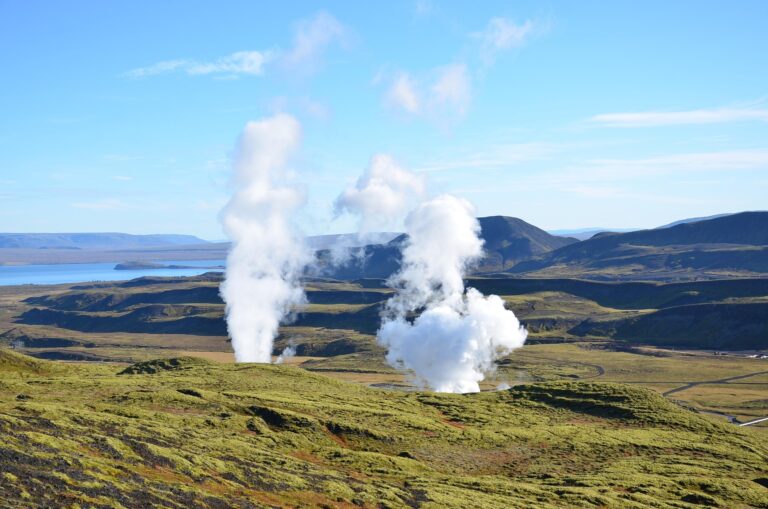
The definition of geothermal energy is “heat energy stored beneath the earth’s surface”, according to this webpage from the Government of Canada webpage. As it is a renewable form of energy, geothermal energy can be replenished and generally does not get used up.
According to the Government of Alberta, the first time that geothermal energy was harnessed for industrial use was in 1818, when a French engineer, François Jacques de Larderel, developed a brand new method to “extract boric acid from hot springs.” Since then, many more power plants have emerged all around the world. Check out this webpage for some more information about geothermal energy!
There are three main different types of power plants using geothermal energy: dry steam plants, flash steam plants, and binary cycle power plants. The dry steam plants directly utilize the steam coming right out from a geothermal reservoir in order to push its generator turbines and generate energy. This type of power plant was first built in 1904 in Italy.
Now, the flash steam plants “take high-pressure hot water” from underneath Earth’s surface, in order to convert to steam to generate electricity. This type of power plant is the most abundant around the world, because after the steam cools, the water it turns into can be “injected back into the ground” for reuse.
The binary cycle power plants still utilize the heat from the hot water below the ground, but do so by transferring this heat into a secondary fluid, which then evaporates into steam and turn the generator turbines.
For all of these types of power plants, the heat of a geothermal reservoir is used to generate steam; this step is very important, as electricity can only be generated if the turbines are spinning. However, this only occurs if the force from the steam pushes the turbines.
Geothermal Energy in the Canadian Context
In Canada, the highest temperature geothermal resources are in Western Canada, specifically in “British Columbia, Northwest Territories, Yukon, and Alberta.” Although Canada possesses large geothermal energy resources, the Government states that “more data is required” to learn about many regions’ land’s features and characteristics. Currently, several geothermal power generation projects are under development.
Conclusion
Geothermal reservoirs truly provide great potential for the production of energy. Renewable types of energy, like geothermal energy, are more sustainable. Geothermal energy is especially prevalent in the regions that are close to tectonic plate boundaries.
Have you ever realized that something you learned is incorrect or inaccurate? For many youth, this could be some simple lies from parents, like the “fact” that they always have eyes on you. Additionally, this could also be from school, namely sciences, especially Chemistry. Lastly, our bad habits and mistakes, which could be an influence from others or simply a gap in knowledge, are also evidence that what we learn is not always right.
How do we know that we are learning the right things? What can we do about it?
Unfortunately, we will always fall victim to learning incorrectly. There is no guarantee that we will always get the truth, especially in this complex world where there are numerous ways to approach a single problem. However, where’s the fun in knowing everything? As humans, we inevitably make mistakes, but the beauty of learning comes from knowing that you can grow from these mistakes for the better; part of learning is to understand what to unlearn.
Making constant mistakes is a sign that you repeatedly grasp something incorrect. It could be as simple as arithmetic to be as complicated as mixing up parts in a system (like how a car, brain, or titration works. They are a relatively easy signal for you to recognize and adjusting that pattern of mistakes could simply be fixed by revision.
Similarly, bad habits are repeated actions that may be inappropriate, depending on the situation. On the contrary, they are harder to recognize without receiving acknowledgement from others, as well as the fact that what seems appropriate in one scenario may not be in another. To unlearn bad habits, challenging it little by little (in other words, using less of that bad habit) is usually better compared to tackling it all at once.
Here, things become complicated if you do assume that everything that you learn is correct. In the ever-expanding universe and diverse societies, there is always new content that may seem to violate previous ones. The reason why things can become complicated here is because unlike bad habits and mistakes, it is unclear what to unlearn: forget about the old information or disregard the new ones? Nevertheless, the good news is that oftentimes, both sides contain some element of the truth, which is why being adaptable is essential to further develop yourself.
To be innovative is to be inventive of new things. In order to achieve that, new ideas must be created, but they usually oppose the ideas of others or what you’ve been taught before. Without the courage to try something new, innovation wouldn’t exist, which introduces another dilemma on what to unlearn: an old feedback (or something else from the past) or the new idea. Innovators are often challenged as to what’s right, but they always discover new things by unlearning old ones.
Lastly, constructive feedback is a suggestion on how to improve/unlearn something. They are uncomfortable to receive, but similar to bad habits, they can provide great insight that has been overlooked. In the end, it is your choice to follow the feedback or not, as well as what to unlearn.
As much as learning is necessary for us to grow, unlearning ensures that we develop away from the “bad” stuff. Unfortunately, because we don’t know everything, the assumption that everything taught to us is correct takes away the reality that unlearning brings us closer to the truth. In terms of society, being adaptable to what you learn contributes to who you are and what you strongly believe in. Everyone is challenged everyday to decide what to unlearn and what to remember, but every result from that strengthens how much you value your opinion and independence.
TL;DR
What we learn in life may not always be incorrect. Instead, there are many things from our life, both external and internal, that would benefit you more if you unlearn them. Some signals for this could be the following: constant mistakes, bad habits, new information contradicts old ones, innovative goals, and constructive feedback. Sometimes, unlearning is simple, but other times, it can be complicated and depend heavily on the situation. Regardless, how you approach those dilemmas builds who you are and enhances how much you believe in your values and independence.
Summer is all about keeping things simple, light, and deliciously refreshing. Whether you’re planning a picnic, lounging by the pool, or just avoiding the stove on a hot day, these recipes are here to make summer cooking a breeze.
Here are 10 easy and refreshing recipes that you’ll be making again and again, no sweat (literally).
Watermelon Feta Mint Salad
The ultimate sweet-salty combo. Just cube some watermelon,crumble feta over it, and toss with fresh mint and a drizzle of olive oil or balsamic glaze. It’s the flavor of summer in every bite.
2. Lemon Herb Pasta Salad
Toss cooked pasta (try rotini or orzo) with olive oil,lemon juice, chopped cucumbers, cherry tomatoes, parsely, and a handful of crumbled feta. Chill and serve. Perfect for a picnic or potluck!
3. Cucumber Yogurt Dip (Tzatziki-Inspired)
Mix Greek yogurt with grated cucumber, lemon juice, garlic, dill, and a splash of olive oil. Serve with pita, raw veggies, or as a topping for grilled meats.
4. No-Bake Berry Cheesecake Cups
Crush graham crackers into the bottom of small jars or glasses, top with mix of cream cheese, Greek yogurt, and honey, then pile on fresh berries. Chill and enjoy!
5. Coconut Mango Smoothie
Blend frozen mango chunks with coconut milk, a banana, and a splash of lime juice. Creamy, tropical, and totally addictive.
6. Grilled Corn with Lime and Cotija Cheese
Brush fresh corn with a little oil, grill until slightly charred, then sprinkle with lime juice, chili powder, and cotija cheese. Finish with chopped cilantro.
7. Avocado Chickpea Salad
Mash chickpeas and mix with diced avocado, red onion, lemon juice, and a pinch of salt. Great as a side dish, in a wrap, or on toast.
8. Peach Caprese Salad
Swap tomatoes for juicy peach slices and layer with mozzarella, fresh basil, and a drizzle of balsamic glaze. Sweet, savoury, and stunning.
9. Zucchini Noodle Stir-Fry
Use spiralized zucchini as a base, and toss with sesame oil, soy sauce, garlic, and whatever summer veggies you have on hand. Light, fast, and super customizable.
10. Homemade Lemonade with a Twist
Make a classic lemonade, but add muddled basil, lavender, or a few smashed raspberries for refreshing twist. Serve over lots of ice and maybe a splash of sparkling water.
Final Thoughts
Summer meals should be low-effort, high-reward – and these recipes deliver on both. Whether you’re feeding a crowd or just yourself, you’ll find these dishes easy to whip up and impossible to resist.
Did you know honey can be stored for eternity? There’s so much more to honey than its sweet taste. Many institutions recognize honey for its amazing health benefits and versatility, from relieving sore throats to mending surgical wounds. This seemingly innocent food has taken the medical and dieting communities by storm. From being prized by ancient civilizations to being eaten for breakfast every morning, this food has a lot going for it. In this post, I’ll delve into all the amazing properties that this magical food has to offer, taking a look at everything including its healing powers to its role in the environment.
Healing Properties
Honey has countless heath and medical related benefits, some of which include antibacterial, and anti-inflammatory properties, as well as digestive heath, and wound healing. In fact, it is especially common for doctors and other health care professionals to recommend honey as a medical treatment for things like wounds or a sore throat. There is even special medical grade honey used to help treat more serious burns or cuts. By taking a closer look at how honey is able to do all these incredible things, we can uncover the science behind what makes this food so amazing.
Antibacterial
Honey has low moisture content, high sugar concentration, and a high acidity, all of which causing a very poor environment for any bacteria to thrive in, giving honey it’s antibacterial properties.
Anti-inflammatory
With the ability to reduce swelling and soothe irritation, honey can act as the perfect anti-inflammatory response, it contains many antioxidants that can help neutralize harmful molecules that trigger inflammation. It also acts as a sort of protective barrier on the inflamed or irritated area, protecting it from any further damage and reducing the pain the injury has caused.
Digestive health
Not only can honey coat the lining of your digestive system, easing pain and reducing issues like acid reflux, but it also contains prebiotics. Raw honey in particular contains oligosaccharides that act as prebiotics. A prebiotic is a type of fiber that has the ability to feed the good bacteria in our gut. Our guts are full of both good and bad bacteria. The good bacteria we call probiotics and prebiotics are kind of like food for our helpful probiotics. Taking care of the probiotics in our gut helps to strengthen and support our immune system, as well as aid digestion and promote general bowel movements.
Wound healing
With a mix of antibacterial and anti-inflammatory properties, honey has great wound healing capabilities. As mentioned earlier, medical-grade honey is a very common substance used to treat wounds. Medical-grade honey differs from regular honey as it is sterilized and processed to ensure there are no contaminants. It typically undergoes a lot of testing to meet specific medical standards. Manuka honey is one of the most popular and well-known types of medical-grade honey. Native to New Zealand, it contains unique compounds that give it even stronger healing properties.
Honey has an incredibly long shelf life. When stored properly, it can last for centuries. There have even been reports of archaeologists finding pots of honey in ancient Egyptian tombs that were estimated to be over 3,000 years old. That being said, you’re probably wondering how a food product can last that long. There are actually many scientific properties found in honey that give it such a long lifespan. Firstly, honey has a very low moisture content. Honey is considered hygroscopic, which is a term that refers to substances that typically absorb moisture from the air. This, combined with its incredibly low water content, creates a very harsh environment for any bacteria or yeast to grow. As a result, its shelf stability increases because the chances of it rotting or souring become almost impossible. In addition, honey has a high sugar concentration, which, paired with its high acidity, increases its overall defense against bacteria. This creates a harsh environment for bacteria or mold to thrive due to the osmotic pressure and the acidic nature of the honey. As mentioned, one of the main reasons honey can last forever is because of its low water content. However, if water does get in, yeast can start to grow and ferment, causing it to go bad. In order to preserve it for as long as possible, it is important to keep it tightly sealed and stored in a cool, dry place. So, if honey can last a long time, then why does the honey you buy from the store typically have an expiration date? Food items are always required to have a best-before date for legal and marketing reasons. Typically, a label from the store will say best before 1 to 2 years. However, if you store it properly and have pure, real honey, it can last for basically forever.
Not only is honey notably good for humans, but it’s also amazing for the ecosystem. While honey does not directly affect the ecosystem, it plays a huge part in pollination across the entire environment. Honey is the bee’s primary food source. Being a food source for such a beneficial insect makes honey important by association. Bees pollinate plants, allowing said plants to reproduce and provide more food for animals that feed on those plants. Many plants and crops rely heavily on pollination. If you’ve ever tried to grow a houseplant, you know that in order for it to grow indoors, you need to manually rub the pollen from flower to flower because there are no bees inside your house. This shows just how important bees are for nature, since if they were not there, nothing would be able to grow as no pollen would be spread around. While you could argue that birds can spread pollen too, they are much less specialized for the pollination role and are only secondary to bees as primary pollinators. Honey, acting as a food source for the bees, allows them to do their job, which in return does wonders for the ecosystem.
Overall TL;DR
Overall, honey is a powerful food with antibacterial, anti-inflammatory, and wound-healing properties. It can last for nearly an eternity and supports the ecosystem by nourishing bees.
On June 12th, 2025, at 8:09 GMT, 230 passengers and 12 crew members took off from Ahmedabad’s Sardar Vallabhbhai Patel International Airport, heading to London Gatwick. Less than a minute later, the plane crashed into the hostel of BJ Medical College in Ahmedabad.
The result? 229 passengers, 12 crew members, and dozens of locals and bystanders were killed.
Survivors? Just one.
Let’s take a look into the horrific and unexpected crash of Air India Flight 171.
HOW did the plane crash happen?
Moments after takeoff, the aircraft rapidly lost altitude and slammed into a building used as accommodation for doctors at Byramjee Jeejeebhoy (BJ) Medical College and Civil Hospital, triggering a massive explosion.
Reports indicate the plane broke in half upon impact, with the rear section catching fire.
WHY did the plane crash?
Based on video footage, aviation experts speculate that improper positioning of the wing flaps during takeoff may have contributed to the crash. However, a definitive cause has yet to be determined.
One of the plane’s two black boxes (flight data recorder) has been recovered. India’s Civil Aviation Minister, Ram Mohan Naidu Kinjarapu, stated, “This marks an important step forward in the investigation. It will significantly aid the inquiry into the incident.”
WHO survived, and HOW?
One man, referred to as the “miracle in seat 11A”, was the sole survivor: 40-year-old British national Vishwash Kumar Ramesh.
“I don’t believe how I survived,” Ramesh said. “For a while, I thought I was going to die. But when I opened my eyes, I realized I was alive. I unbuckled myself from the seat and tried to escape.”
He made it out through a small opening near his side of the wreckage. Ramesh said he suffered impact injuries to his chest, face, and feet.
WHAT happened to the bodies?
Dr. Minakshi Parikh, Dean of BJ Medical College and Civil Hospital, stated they were “relying only on DNA matching to identify them”.
As of June 15th, 32 bodies have been identified, but many families are still awaiting DNA results. And identification has proven extremely difficult, as most of the remains were charred beyond recognition.
TL;DR
On June 12, 2025, Air India Flight 171 crashed less than a minute after takeoff from Ahmedabad, killing 229 passengers, 12 crew, and dozens on the ground. The plane struck a medical college hostel, causing a massive explosion. Only one person, 40-year-old British national Vishwash Kumar Ramesh, survived. The cause is still under investigation, with one black box recovered. Most victims are being identified through DNA, as the bodies were badly charred.
Father’s Day is a special occasion to honour the men who have played important fatherly roles in our lives. Whether it’s your biological dad, stepdad, grandfather, uncle, or mentor, this day is a chance to show gratitude for their guidance, support, and presence.
If you want to go beyond the usual card or gift this year, here are some thoughtful ways to show appreciation that can deepen your connection and make Father’s Day truly memorable.
1. Spend Quality Time Together
Time is one of the most valuable gifts you can give. Instead of rushing through a quick visit or call, plan to do something together that allows for genuine connection. This could be a walk in the park, cooking a meal together, or simply sitting down to watch a favourite movie or sports game. Shared experiences create lasting memories and show your dad that you value his company, not just the day itself.
2. Express What You Appreciate About Him
Many dads don’t hear enough about the impact they’ve had. Take a moment to tell him what you admire—whether it’s his work ethic, sense of humour, kindness, or the lessons he’s taught you. A sincere conversation or a handwritten note can be powerful. Be specific; mentioning particular moments or qualities makes your appreciation feel authentic and heartfelt.
3. Help Out With Something Practical
Actions often speak louder than words. Consider helping with tasks your dad usually takes care of—like yard work, fixing something around the house, or running errands. These acts of service not only ease his load but also show your respect and care. It’s a way of saying “I notice and appreciate all you do,” without needing to spell it out.
4. Listen and Ask Questions
Sometimes, what dads need most is someone who will truly listen. Many fathers aren’t comfortable sharing their feelings or stories unless invited. Use Father’s Day as a chance to ask about his life experiences, his hopes, or his challenges. Active listening can deepen your relationship and give him space to open up in ways that don’t happen every day.
5. Organize a Family Gathering or Virtual Meet-Up
If your dad values family time, bringing everyone together can be a meaningful gift. Whether it’s a small barbecue, a dinner, or a virtual video call with relatives who live far away, including extended family, shows appreciation for the role he plays in connecting everyone. It’s a celebration of both him and the family bonds he helps nurture.
6. Celebrate His Interests and Passions
Showing you pay attention to your dad’s hobbies or passions goes a long way. If he loves fishing, plan a day out by the water. If he enjoys cooking, try making a favourite recipe together or gift him a new kitchen tool. Recognizing and honouring what brings him joy shows that your appreciation is about him as a whole person, not just the role he plays.
7. Give the Gift of Relaxation
Many dads spend so much time caring for others that they neglect their own needs. Consider giving him a day off to relax, whether that means spending a quiet afternoon with a good book, getting a massage, or simply having time without obligations. Encouraging him to take care of himself is a meaningful way to show you care about his well-being.
Father’s Day isn’t about perfection or grand gestures. It’s about acknowledging the consistent effort, patience, and love fathers offer every day. When your appreciation is genuine and thoughtful, even the simplest acts can mean the world.
So whatever you choose to do this Father’s Day, focus on making it real. That’s the kind of appreciation every dad deserves.
With finals coming up and the end of the school year approaching, it’s gift-giving time for a lot of students. And since nobody wants to add to their teacher’s cupboard filled with mugs, or to their best friend’s drawer of gift cards, finding the perfect gift is hard!
If you’re like me and you feel lost when it comes to heartfelt presents, or if you’re stuck on what to get someone you don’t know too well, this article for you.
You might even tackle the hardest people to send gifts to – fathers.
The Ultimate Tip: The Master of Presents
The most helpful tip that I’ve found is keeping a list in my Notes app that I’ve named “Master of Presents.” Inside, I’ve kept track of the names of each significant person that I might send a present to. Under each of their names I keep a checklist of possible things that I could get for them as a present. It’s a running, evolving list; every time someone talks about something they wish they could have, or when someone is complaining about something that could be easily fixable, I note it down.
It sounds like a lot of work, but it is ultimately such a lifesaver when birthdays seem to come out of nowhere or graduations spring up out of the blue. Time passes fast, but if you can keep a list running, you’ll never be lost for gift ideas. The best part is, the presents will seem extra thoughtful because you’ll have remembered something that they said they wanted or could have had.
Last Minute Gifts
Obviously since you’re reading this article, you don’t have a Master of Presents list and you’re in dire need of some last minute gifting ideas. Here are some generic presents by category; hopefully you’ll find something useful!
For Teachers
DO NOT ADD TO THEIR MUG/WATER BOTTLE COLLECTION. THEY HAVE ENOUGH MUGS TO STOCK EVERY SHELF IN THEIR HOUSE AND USE AS FLOWERPOTS.
gift card (yes, generic, but useful.)
try something a little more original than Starbucks. Indigo, perhaps?
jewelry
stationery (especially whiteboard markers)
funny pointers
baked goods
chocolate (careful with this one, they receive a lot of chocolate so at least get something nice)
thoughtful notes – they really do appreciate these when they’re heartfelt
For Graduating Students
nothing that says “Class of …” – they look so tacky when the year is over
tech (tablets, headphones, etc.)
tote bag
water bottles
stationery (also especially whiteboard markers)
gift cards for cafes or for coffee
snacks!
any compact “college essentials”
For Youth
headphones
wireless earbuds
tablet/iPad pencil
jewelry
books
gift cards
stationery (Japanese pencils are particularly popular gifts)
something that may align with one of their hobbies (ex. crochet hooks or yarn for a crocheter)
makeup
an analog watch (we need these for exams!)
a computer mouse
gadgets
an alarm clock
For Parents
…shame on you. Why are you even looking here? You should know what your parents like. JK. Sometimes I’m not sure what my parents want either.
be present. We often take our parents for granted; sometimes the best thing you can do is treat your parents for a meal and enjoy some time together.
food – cook for the people who cooked for you growing up
replace things that look worn.
This is the ULTIMATE Dad gift idea – a lot of fathers are quite practical and the only reliable thing to get them is to replace something that they already have, but looks old.
Plus, it shows you’ve been paying attention to what they’ve been up to!
Summer is fast approaching – for many of us it’s only a few exams away! – and many of us are looking to polish up those resumes. Whether for a part-time job or for university, here’s a comprehensive list of ideas you could take on this summer and the skills they show.
1. Volunteer
Always a lot of fun, volunteering is a classic resume builder that helps you contribute to the community while also learning interpersonal skills. So long as you choose a cause you’re passionate about, volunteering during the summer is incredibly rewarding.
Skills:
Leadership
Interpersonal communication
Customer Service (this is a big one!)
Peer Support
Community awareness
Advocacy
2. Passion Project
Such a broad idea, yet that’s what makes it so worthwhile. You can tailor a passion project for any person – pick a topic, research, conduct experiments – because it’s completely up to you. That having been said, you’ll need some discipline to stick to your own schedule, because it’s also very easy to give up on passion projects.
Skills:
Passion – especially if your project has to do with the job/position you’re applying to!
Discipline
Time management
Organization
Self-drive
Eagerness to initiate and take action
3. Intern/Work
This one is if you already have a position (unfortunately it’s too late to apply for most summer positions now). Take on those extra hours, make a bit of extra cash, and show your employers how valuable you are as an employee. You never know when you might need that reference!
Skills
Dedication
Discipline
Willingness to initiate
Time management
Ambition
Interpersonal communication
4. Pick Up (Or Continue) a Hobby
This one often surprises a lot of my peers, but a lot of employers and universities have seen the generic extracurriculars and want to see an activity that showcases who you really are as a person. Enter contests. Compete with other people who have the same niche hobby. Show who you are through your actions. Does this sound like a college brochure? Yes. But it really is true though (otherwise why would the admissions team put “be yourself” in every single brochure?), so you could take the summer to dive deeper into a hobby you already love!
Skills:
Excellence in [hobby] area
Passionate
Hardworking
Unique personality skills associated with your hobby (i.e. creative if you’re into pottery, logical and critical thinking if you’re into code or robotics, etc.)
5. Study
Every single top student I know does this at least a few weeks before school starts. Will you recall all the material during the school year? Probably not. But pre-studying material will give you a rough idea of what is hardest (i.e. which days you should not take bathroom breaks during class) and what is easiest (i.e. days it might be okay to doze off a little or pull an all-nighter before).
On June 7, 2025, thousands of students across the world signed up to take the SAT exam. This exam is well known all across the world, as it is one of the key components that are required for admission into many US universities.
What’s on the SAT?
So basically, the exam consists of an English section and a math section, with 2 modules in each. On the English section, its module has 27 questions – for a total of 54 in total. You get 32 minutes for each module, so test takers have about 1.5 minutes or less for each question. For math, it’s 22 questions, for a total of 44 in total. However, you get more time for math with actually 35 minutes per module. Test takers start off with the first English module and are tested on a variety of topics including vocabulary, comprehension, and etc. Depending on how good/poor you do on the first module, the second module will adjust it’s difficulty. Specifically, if you do really good on the first module (or above half of the questions right), then you will get the harder second module, and the same goes for vice versa. After you have finished both modules in the reading section, you fortunately have a 10 minute break. During the break you can use the bathroom, get some water, eat a snack, and just rest your brain before you begin math. The SAT prohibits you from accessing your phone, so unfortunately you can’t scroll on TikTok during the break.After the break is over, the math section begins. You are tested on a diverse range of high school maths topics ranging from algebra, to probability, to trigonometry and etc. Many people believe the first math module section is extremely easy, while the second one is notoriously difficult at times. 35 minutes quickly pass by, and you find yourself taking the last module. If you do well on the first one, get ready for a challenge now (and if you don’t, it’s still ok and you can catch a nice break even if you get a lower score).
After 2.5 hours have passed, you have successfully completed the SAT! Usually, you have to wait about 2 weeks for your scores to be released (so if you wrote it on June 7, 2025, the scores are said to be released on June 20, 2025).
How does scoring work?
The maximum score you can get on the SAT is a 1600, which is extremely rare and amazing. In fact, only about 1000 test takers out of a million each year, achieve this astonishing feat. The English section is out of 800 and the math section is out of 800 as well, therefore totaling up to 1600. Each question right/wrong is worth a little more/less 10 points. Getting harder questions right is worth more than getting easier questions right. For example, you would gain more points for getting long analysis questions in English section or complex geometry questions right, in comparison to grammar rules or basic linear algebra. Therefore, many people say to focus more on getting the hard ones right if you know you can do them, rather than spending extra time on easier ones.
Difference between the Paper and the Digital SAT:
So recently, during 2024, College Board (the company that administers the SAT), made a major change in its method of administration. In the past, it used to be fully on paper, and the reading passages used to be much longer with more than one questions dedicated to each passage. Math problems were also a little different too, but mainly touched on the same concepts. However in the past, there was a calculator section and a no-calculator section, but now students can access the computerized calculator, “Desmos” whenever they desire. The digital version of the SAT also has other features such as a line reader, highlighter, cross-our option, and zoom in/out option, making it very accessible and easy to maneuver around the test. Along with many others, I think these changes are very beneficial to test takers.
How to prepare:
If you are aiming to attend Canadian universities then no need to fear, as the SAT isn’t required for any post-secondary institutions in Canada. However if you are aiming to attend university in the USA, then many schools require you to submit your score. The average score that most universities would like to see is somewhere between 1000-1400, because it proves that you are ready to handle coursework. However if you aiming for prestigious universities, such as the Ivy Leagues, then a score of 1500~1600 is pretty much mandatory. Unless you have something extraordinary about your life (such as being a nationally ranked athlete or your parents are billionaires), this SAT score is crucial to stand a chance in the competitive admissions field.
Let’s say you are considering to take it, how would you prepare? Luckily, the SAT only covers topics learnt in a high school classroom. Therefore, by the time you reach grade 11 or grade 12, you automatically would know all the math concepts necessary to take the test. In terms of the reading section, it doesn’t necessarily matter what grade you are in, because you can’t necessarily learn much for this section. To prepare, consider setting aside extra time every day/week, depending on how far/close your test day is.
Unless you believe that they will truly help you, I would advise staying away from test-prep programs that cost $1000s of dollars, as there are many free resources out there that do practically the same thing. For example, Khan Academy is the guru for school, and along with helping you understand your homework, it also has a separate dedicated section towards sat English and math prep.
Yes, this is a huge standard exam and it is very common to feel scared, so here are some tips that will help calm you down before test day!
Tips before Test Day:
Prepare early: nothing will help reduce anxiety more than the feeling of being prepared and knowing that you can crush this exam to the best of your ability. Make a BlueBook account on your computer or iPad (after making a College Board account and registering for the SAT). On BlueBook, you will have access to many practice tests, so you can get a better understanding on where your strengths and weaknesses lay.
Get the help you need: some of the SAT concepts are pretty challenging, and there is nothing wrong asking for help; whether it be through a tutor, a friend, or a parent. Getting the help you need will ultimately aid you in reaching your target score.
You can take this test more than once: there is no set limit on the number of attempts one can take for the SAT, meaning that you don’t have to take too much pressure if it’s your first time. Many people take it 2-4 times, as it can be pretty challenging to hit your target score during your first attempt.
On the night before the test, relax: you worked hard, and now you deserve to rest. Don’t spend all night cramming because for starters, it’s unhealthy, and on top of that- the test starts at 8 am the next day (usually). In my personal opinion, you will do much better if you have slept the night before rather than cram all the information into your head.
So there you have it folks, that’s practically everything you need to know about the SAT! For more specific information, make sure to visit the College Board website, and familiarize yourself with the test format using Blue Book. If you took the June 7, 2024 SAT, I hope you hit your target scores and don’t worry – as you can always take in again when you feel ready! If you haven’t taken it yet, don’t worry. I’m sure you will be ok!
This article is written by Shreya, a member of the 2024-25 Mayor’s Youth Council. Shreya is part of the Careers and Opportunities committee, who wanted to highlight different career opportunities for youth.
Improving HR from the Inside: An Interview with Jasmin Ivaturi
Human Resources might not be the first field that comes to mind when you think of innovation, but it can be where strategy, communication, and smart technology come together.
Why Does it Matter?
Jasmin works behind the scenes to help HR teams run more smoothly. Her role focuses on improving internal processes, solving everyday challenges, and supporting tools like her company’s HR chatbot, which helps employees find information quickly and easily. It’s a practical, thoughtful job that makes a real difference in how people experience work.
Her Career Journey
Jasmin’s interest in business started back in the 1990s, when she decided to pursue a degree in International Business. Over the years, she built on that foundation with additional certifications in Project Management, CPHR, Change Management, and leadership development programs specific to her organization.
“I knew I wanted to learn more about how the business world worked,” she said.
That curiosity led her to Human Resources, where she now supports data and analytics related to her company’s HR chatbot. She collaborates with other teams to make sure the information provided is accurate and relevant—making the tool more useful for employees across the organization.
A Day in the Life
Jasmin’s day typically includes a mix of problem solving, communication, and process improvement. Whether she’s working with internal teams or looking for ways to streamline HR tasks, she’s focused on making systems work better for everyone.
Advice for Future Leaders
For teens interested in leadership, business, or HR, Jasmin recommends getting involved in programs that build real-world skills:
Junior Achievement Company Program – a hands-on way to learn how businesses operate
Volunteering (ex. Youth Central, Animal Shelter, Hospital, etc)– a chance to engage with community and build leadership skills
“These programs give you practical experience and help you figure out what you’re passionate about,” she shared.
What I Took Away
What stood out to me most in this conversation is how Jasmin combines technical know-how with people skills. Her work might not always be in the spotlight, but it has a strong impact on how a company functions day to day. It’s a great reminder that meaningful careers don’t always follow the same path—and sometimes, making things better behind the scenes is where the real value lies.
Final Thought
As Jasmin put it, “HR isn’t just about hiring—it’s about making work better for everyone.”
We’re often told to avoid the Seven Deadly Sins at all costs—as if simply naming them will keep us safe from their grip. Pride, Greed, Lust, Envy, Gluttony, Wrath, and Sloth: these aren’t just old religious warnings—they’re timeless reflections of human nature. But instead of just treating them like red flags, maybe we can learn something deeper from them.
Sometimes, the best advice doesn’t come from ignoring our flaws. It comes from understanding them.
Here’s what each of the Seven Deadly Sins can teach us—if we’re willing to listen.
1. Pride: Don’t Build a Throne on Sand
Unsplash Image by mariel reiser
Pride tells us we’re better than others. It whispers that we don’t need help, that we’re above criticism. But the truth? Pride builds walls between people—and worse, it isolates us from growth.
Advice: Be proud of yourself, not above others. Confidence and humility can coexist. Ask for feedback. Celebrate wins, but stay grounded enough to learn from your losses. You’re not always right—and that’s okay.
Pride unchecked becomes arrogance. But pride understood becomes strength tempered with empathy.
2. Greed: The Trap of “Just One More”
Unplash Image by fikry anshor
Greed is the insatiable hunger for more—more money, more success, more likes, more everything. But “just one more” never satisfies. It leaves us emptier than we started.
Advice: Ask yourself: When is enough actually enough? You don’t have to chase every opportunity. Sometimes, peace is found not in accumulation but in contentment.
Wanting more isn’t evil. But when your wants eclipse your values, it’s time to pause. Let your ambition be guided by purpose, not by possession.
3. Lust: Passion Without Purpose
Unsplash Image by Kenny Eliason
Lust isn’t just about sex—it’s about intense desire without depth. It craves connection, but only at the surface. It promises fulfillment but often delivers emptiness.
Advice: Learn the difference between chemistry and connection. Passion is powerful, but it needs direction. Wanting someone or something is natural—using that desire to build something real is mature.
Don’t chase fire for its heat alone. Build fires that keep you warm, not ones that burn your bridges.
4. Envy: The Green-Eyed Mirror
Envy makes you look at someone else’s life and ask, “Why not me?” It convinces you that someone else’s success is your failure. It turns admiration into resentment.
Unsplash Image by Ben Iwara
Advice: Use envy as a mirror. When you feel jealous, ask yourself what it’s trying to reveal. Do you want what they have? Or do you just wish you had their confidence? Their freedom? Their drive?
Envy can be a clue about what you value. Instead of letting it poison you, let it point you toward your own goals.
5. Gluttony: Filling the Void
Unsplash Image by J E S U S R O C H A
Gluttony isn’t just about food. It’s about overconsumption of anything—bingeing distractions, relationships, attention—because you’re trying to escape something. It’s numbing instead of healing.
Advice: Slow down. Ask yourself why you need so much of something. What are you tryingto silence?
Sometimes, it’s okay to indulge. But if you can’t be alone with your thoughts, if you always need more to feel okay, then it’s time to do the hard inner work.
Consumption without consciousness is a slow kind of self-destruction.
6. Wrath: The Volcano Within
Wrath doesn’t just explode—it simmers. It builds up from pain, from feeling wronged, from
Unsplash Image by Andrea Cassani
being unheard. But when we let wrath speak for us, it destroys everything in its path—sometimes including ourselves.
Advice: Don’t bottle it up, but don’t let it spill everywhere either. Find safe ways to process anger—talk, write, scream into a pillow if you must. But don’t use your pain to cause more pain.
Anger can be justified, even righteous. But it needs a direction that heals, not harms. Use your fire to forge, not burn.
7. Sloth: The Quiet Decay
Sloth isn’t just laziness—it’s disengagement. It’s apathy. It’s knowing you have more in you
Unsplash Image by – Kenny
but choosing not to try, not to care. It can look like rest on the outside, but it feels like regret on the inside.
Advice: Motivation isn’t constant—discipline bridges the gap. Start small. Clean your room. Send that email. One step is enough to break inertia.
Rest is vital. Avoidance is not. Learn the difference.
Sometimes, sloth is a symptom of burnout or depression. If that’s the case, don’t shame yourself—get help. But don’t confuse inaction for peace. It’s okay to want more from yourself.
Final Thoughts: Sin as a Signal
We’re human. We mess up. We crave, we rage, we slack off, we get jealous. But these “sins” aren’t just moral failings. They’re signals. They show us where we’re off balance, where something deeper needs attention.
Instead of trying to be perfect, try to be aware. When you feel the tug of one of these sins, don’t just fight it—understand it. Let it teach you something.
Advice isn’t always about telling someone what to do. Sometimes, the best advice is just helping someone ask the right questions. And if you ever find yourself deep in one of these sins, here’s a simple piece of advice:
You’re not alone. You’re not broken. You’re just human—and that’s the starting point for real growth.
TL;DR: The Seven Deadly Sins aren’t just red flags—they’re lessons in disguise. Don’t ignore them. Study them. Learn from them. And then use that knowledge to live with more intention, depth, and grace. ¹²³⁴⁵⁶⁷
Let’s be honest – cheap stuff is awesome. As long as it tastes/looks good, the lower the prices, the more our faces light up. In today’s world, companies like Shein and Temu are profiting off of this mindset insanely – but what’s the catch? Sure the quality may not be amazing, but we can’t spend practically nothing to get an item we desire?
This is called “Fast Fashion”
Fast Fashion is this concept that is infecting many large transnational clothing companies all around the world, such as H&M, Zara, Shein, and Joe Fresh. It’s basically when these companies undergo mass production of items and materials to get as much as they can into the market. However, they also spend extremely low amounts to start this mass production process as well. “Fast Fashion” relates to this other concept called “Free Trade”, which is when there is little to no government intervention in the marketplace, and companies (both big and small) fend for themselves. Because there is little to no government intervention, bigger, transnational companies are given a much larger advantage when compared to smaller domestic companies – leading everyone to go to extremely low lengths to ensure competitiveness. What I mean by this, is that in order to be the most competitive in the market, you must produce the most, gain the most profit out of it, and spend the least to make the product in the first place. To expand on this, large companies even resort to unethical methods to gain this much valued dominance and competitiveness in the market.
What are these unethical methods?
One main example of this is sweatshops. A sweatshop, in simple terms, is a place where laborers are paid extremely low amounts and have to work in horrible working conditions. These sweatshops are very common in developing countries across the world, and they are one of the main drivers of “fast fashion”. Basically, large companies pay factories in developing countries extremely low amounts and force workers into atrocious working conditions to make large quantities of products. This practice is especially common in the fashion industry. These workers in developing countries work in such horrible conditions, that for example in Bangladesh, an 8 story textile factory collapsed – killing more than 1000 trapped inside. Overall, these sweatshops are very bad, yet they are the driving forces in the fashion industry – that leads consumers like us to make decisions regarding the ethics of what we are spending money on.
Another example of an unethical method is child labor. In developing countries, child labor is extremely common – and even though it’s so horrible to think about, it’s desperately necessary. Ok I know I sound like a villain saying this, but child labor in developing countries is necessary for families to survive and thrive (to some extent). Basically, wages are so low in developing countries, that parents need their kids to go to work too instead of school. A study was conducted in Bangladesh where textile factories banned employing children, and it found out that the majority of these children did not go back to school, and instead resorted to even worse forms of employment – often earning even lower wages that earned in the factories, and even resorting to illegal practices such as prostitution.
In addition to the clothing factory, children are also forced to work in mines to get cobalt – which is majorly used in everyday electronic devices.
Overall, child labor pushes the fashion industry greatly, and although it is extremely bad, it also leads to some sort of stable salary for the children and their families.
Environmental concerns:
Along with the countless ethical concerns that arise in regards to fast fashion, there are many environmental issues that arise too. As a result of mass production, many harmful fumes such as CO2 and greenhouse gases are being released into the atmosphere. This leads to air pollution, tarnishing the atmosphere. As explained above, mass production is a result of the requirements for fast fashion to occur. This mass production leads to a reduction in quality, which ultimately makes consumers throw away their products after 1 or 2 uses. These thrown out products often land up in landfills, oceans, and in other developing countries (such as Ghana). Overall, fast fashion not only raises ethical concerns – but is also harmful to the environment at the same time.
So what do we do?
Ok so now that we know this information, it is our job to make a difference. Of course we still love clothes at H&M, but we should also take the chance once in a while and support ethical brands (even if we are not madly in love with the clothes). We should also make an effort to buy less clothes, even resorting to thrift shops once in a while too. As a matter of fact, sustainable brands and thrift shops can often be trendy too! To conclude, fast fashion is very prominent in our world and it doesn’t look like it will go away any time soon, and it is important for us to acknowledge the fact of where our clothes come from and to what extent it is reasonable to both the makers and the environment too!
Introducing the Mayor’s Youth Council Health and Well-Being Column! Each month, we’ll share fun, relevant, easy-to-follow mental health tips through the Youth Central newsletter, giving you the tools and support to prioritize your well-being with new topics and advice every month!
Hello everyone! June is here, which is our month of the “last push.” Congratulations to students who have successfully completed IB and AP exams! While those difficult exams are behind us, there are still final exams and diploma exams ahead. Our Mayor’s Youth Council Health and Wellbeing Committee wanted to dedicate this month’s newsletter to help you stay balanced, focused, and well — physically, mentally, and emotionally — during one of the most intense academic times of the year.
Enroll yourself in diploma prep classes!
Did you know that collaborative learning improves retention? A 2020 study published in Cognitive Research: Principles and Implications showed that reviewing material with expert guidance and peers boosts understanding and long-term memory. Benefits of diploma prep classes include reinforcing key concepts with expert instructors, gaining more experience with practice exam-style questions, learning test-taking strategies, and feeling supported by peers who are going through the same thing. Check with your school or school board for diploma prep opportunities in your area!
Space Out Your Study Sessions (The Spacing Effect)
Cramming is tempting, but harmful. The brain retains information best when we review it over time. A study from Psychological Science found that longer intervals between study sessions led to better long-term retention. This is called the Spacing Effect, and it helps your brain form long-term memory. When studying for exams, try to break big topics into smaller sections, schedule review days, and mix up subjects to keep your brain engaged. We recommend utilizing a flashcard application called Anki, which helps you practice spaced repetition.
Pomodoro Techniques
Have you ever stared at a page for 2 hours and remembered nothing? The Pomodoro Technique may help you!
How it works:
Study for 25 minutes
Take a 5-minute break
Repeat 4 times, then take a 15–30 minute break
This rhythm keeps your focus sharp while giving your brain time to recover.A study titled “Understanding effort regulation: Comparing ‘Pomodoro’ breaks and self-regulated breaks” investigated the effects of systematic (Pomodoro-style) versus self-regulated breaks on mental effort, task experiences, and task completion during real-life study sessions. The findings suggested that taking systematic breaks during study sessions had appeared to offer efficiency benefits—achieving similar task completion in shorter time—compared to self-regulated breaks.
Make sure to eat properly (especially breakfast!)
A study published in Physiology & Behavior investigated the effects of breakfast consumption on cognitive function in adolescents aged 12 to 15. Participants completed cognitive tests after consuming breakfast and after skipping it. The results showed that breakfast consumption improved accuracy on complex tasks like the Stroop test and visual search tasks, as well as faster response times on memory tasks. Additionally, participants reported higher energy levels and lower feelings of tiredness after eating breakfast.
Brain-friendly foods:
Whole grains (oats, brown rice, whole wheat toast)
Fruits and veggies (especially berries and leafy greens)
Healthy fats (avocados, nuts, olive oil)
Lean proteins (eggs, yogurt, beans)
Make Time for Creativity and Community
Art and connection support your emotional well-being and help prevent burnout! A 2019 study in Art Therapy found that just 45 minutes of creative activity (drawing, painting, journaling, music) significantly reduces cortisol, the body’s main stress hormone. Art also helps express emotions such as empathy, friendship, and support. Try joining an art club with your friends, doodling in your notes, or taking “creative breaks” instead of meaningless screen scrolling.
These exams will pass, but your health and well-being are long-term investments. Every time you choose to study smarter, eat better, take a walk, or pause for art or connection, you’re investing in yourself. Remember, you are capable, resilient, and supported. We believe in you — you’ve got this!
References:
Tullis, J. G., & Goldstone, R. L. (2020). Why does peer instruction benefit student learning? Cognitive Research: Principles and Implications, 5(1). https://doi.org/10.1186/s41235-020-00218-5
Biwer, F., Wiradhany, W., Egbrink, M. G. A. oude , & Bruin, A. B. H. de . (2023). Understanding effort regulation: Comparing “Pomodoro” breaks and self‐regulated breaks. British Journal of Educational Psychology, 93(S2). https://doi.org/10.1111/bjep.12593
Cooper, S. B., Bandelow, S., & Nevill, M. E. (2011). Breakfast consumption and cognitive function in adolescent schoolchildren. Physiology & Behavior, 103(5), 431–439. https://doi.org/10.1016/j.physbeh.2011.03.018
This article is written by Bella, a member of the 2024-25 Mayor’s Youth Council. Bella is part of the Careers and Opportunities committee, who wanted to highlight different career opportunities for youth.
What do robots, construction sites, and oil rigs have in common? They’re all a part of Carlos’s workday. Believe it or not, his story might change the way you perceive certain careers. The title “Cost Controller” is way more exciting than the title must suggest. From surveying numbers to keeping million dollar oil projects on track, his journey calls to youth, reminding them that you don’t need to know exactly what you want to do outside of high school.
As a teenager, Carlos never imagined his job would one day involve GPS-guided trucks and daily walks through construction zones. “I thought I would be working in an office my whole life”, he admits. Instead, his career has taken him from Venezuela to Canada, and from accepting spreadsheets to Alberta’s oil and gas industry.
Carlos’s story begins in Venezuela, where he majored in accounting and earned his CPA certification. He started his professional life in public accounting, working at an audit firm. While the work was stable and familiar, he started to notice something that sparked his curiosity: many of the people in his professional network were involved in oil and gas. “I built a local network where I got inspired to work in oil and gas,” he says. That inspiration pushed him to rethink his path.
Realizing that oil and gas projects involved much more than office work, Carlos made a bold decision: he went back to school to earn a masters degree in project management. This move gave him the skills to manage the complex logistics and planning involved in these large industrial projects.
When the economic state of Venezuela declined, Carlos took a huge step. He immigrated to Canada, landing in Alberta, a province known for its strong energy sector. There, he began working in cost control for oil and gas construction projects.
So.. What does a cost controller do? When you think of a construction site, a cost controller might not be the first role that comes to mind, but it’s a critical one. Carlos explains “ I make sure the price of the project does not exceed the budget. I do this by implementing controls to monitor the spending and efficiency of vendors on site.” He starts his day bright and early at 7 am, heading out to project sites around Edmonton. His mornings are often spent meeting with vendors to review progress on the job. “Then I compare that with our budget to see if we’re on track,” he says.“Then I present updates to the project managers.” Every day is different, sometimes Carlos is focused on numbers and reports, other days he’s walking in the site to see how the construction is unfolding in real time. “Its’ a very dynamic job” he says.
One of the most fascinating parts of Carlos’s job is the technology he gets to use and witness firsthand. He’s particularly proud of helping implement a real time construction dashboard that makes project management much more efficient. “ It gives us up to miniature information, which is a huge improvement”, he says.
And that’s just the beginning. Carlos has worked on projects where massive trucks used to transport materials from mines were turned into fully automated driverless vehicles. “These trucks used to require three drivers working 8 hour shifts to operate 24/7,” he explains.”Now, thanks to AI and GPS, they can drive themselves.”
It’s a glimpse into the future of the industry, and Carlos believes it is only the beginning. “AI will provide more concise information on how to execute construction tasks. Eventually, more robots will do the duties that are currently done by people,” he predicts.
Carlos also notes that his field isn’t typically full of young professionals yet. “The people who work here are pretty old,” he says with a laugh. But that is why he thinks now is a great time for young people to get involved and stand out. “If you’re interested in this kind of work, get the project Management Inspire Certification,” he advises. “It only takes about six months and gives you a solid foundation,” He also recommends online certifications, like those offered by Google. “Don’t overlook google certifications. They make you an evolving applicant.”
Whether you’re passionate about numbers, technology, or building things, Carlos believes there’s room for new voices in the oil and gas world.
Talking to Carlos made me rethink what it means to build a career. His story isn’t about knowing exactly what you want to do when you’re 18, it’s about being curious and open to change. From Venezuela to Canada, Carlos has followed opportunities wherever they led. If you’re feeling unsure about your future, his journey is proof that you can find your way, and most importantly have fun doing it.
Does anyone else constantly learn what we celebrate in a certain month? For instance, we have Black History Month in February, Women’s History Month in March, and National Family Caregivers Month in November. While these are well-known celebration months, there are always a lot more that people celebrate for a selected month. In fact, there are a lot of celebration months as more are spreading around through social media and family traditions; there are always new celebrations being marked to a certain month that it is difficult to state how many celebration months we have around the world. In my opinion, after a quick exploration throughout the internet, my guess would be over 500 at this point.
Note: Celebration Months generalize between celebrating famous events to simply bringing awareness to certain things
As there are a lot of celebration months in June, only a handful will be tackled in this blog post. However, you are free to explore a short list of June celebration months by clicking this hyperlink.
1. Pride Month
Beginning with an exercise of right to peacefully protest, an event called The Stonewall Uprising was a tipping point for the Gay Liberation Movement back in 1969. The celebration began as “Gay Pride Day” on the last Sunday of June in the U.S. , but it grew to today’s Pride Month for all of June. Nowadays, June marks the official month for celebrating people’s rights of expressions around the world, spreading the awareness through parades, parties, to concerts.
June also marks the Cancer Survivors Month. The celebration exhibits the reality that life can exist after a Cancer diagnosis. It acts as a wellspring of support and hope to Cancer patients and their families around the world. Along with these goals, it is also a reminder for everyone that Cancer does not necessarily mark the end of lives and that an incredible amount of work is being done to search for the cure.
In the Northern Hemisphere, June has been considered an ideal month for roses. At this time, more than 150 species of roses bloom around the world. Because they symbolize romance, beauty, and loyalty, roses have been the symbol of poets and artists. Additionally, they are a popular choice of flowers in weddings, further celebrating the month and smelling the roses. As a matter of fact, the month was first observed in the U.S. in 1959 when efforts were made to make roses the national flower; this had not been done until President Ronald Reagan came in office and made it official in 1986.
Also, June marks the Gun Violence Awareness Month, reminding people to be alert against Gun Violence. According to Sandy Hook Promise, guns are the leading cause of death among American children and teens. From school shootings to suicides, this awareness month reminds everyone to come together and limit the dangerous usage of deadly weapons in their homes and civilizations. On top Gun Violence Month, campaigns have also been launched to the point where people are encouraged to wear orange on June 6, 2025 to acknowledge unfortunate events and enhancing voices against gun violence.
Caribbean-American Heritage Month also occurs in June and celebrates the Caribbean contributions to American history, life, and culture. It is among many American celebration months meant to honor America’s rich and diverse culture. Additionally, it is a reminder that not only did the Caribbeans promote such diverse cultures in America, but also made great developments into science and medicine. June is also dedicated to recognizing these amazing actions and to teach people more about the culture and the people.
There Are A Lot Of Celebration Months Around The World!
As we have just explored, there are at least 5 celebration months being celebrated in the month of June. Every celebration month has a purpose, whether to initiate celebrations or bring awareness, and there are always more things to celebrate as time goes on. Hopefully, this short exploration was able to bring some insight that there are many things and events to be proud of around the world and to celebrate at least some of them from time to time!