Home Blog Page 19

5 Rare Reflexes You Probably Didn’t Know Existed

Everyone knows about the knee-jerk reflex, the automatic leg kick when someone hits below your kneecap. But what if your body had a whole catalogue of hidden reflexes firing off, reactions you didn’t ask for, and might not have known even existed?

Turns out, it does. Your nervous system is running its own chaotic sideshow, blending biology, evolution, and the occasional embarrassment. Here are five weird reflexes that prove your body can have a mind of its own.

1. The Sun-Sneeze Reflex (ACHOO Syndrome)

You step outside on a bright day, the sunlight hits your eyes, and you sneeze. It feels random, but it’s actually a condition known as the photic sneeze reflex, or ACHOO syndrome (Autosomal Dominant Compelling Helio-Ophthalmic Outburst – yes, someone clearly enjoyed naming that).

Roughly one in four people has this condition, and it’s inherited genetically. Scientists think it happens because of a mix-up in the wiring of the trigeminal nerve (which triggers sneezing) and the optic nerve (which reacts to light). When the optic nerve sends a sudden burst of signals in response to sunlight, some of that activity ‘leaks’ into the trigeminal nerve, fooling your body into thinking you need to sneeze.

It’s harmless, but surprisingly strong: people with ACHOO can sneeze three to five times in a row when exposed to bright lights. Fun fact: pilots are actually warned about it, since sneezing fits while flying can be dangerous during takeoff or landing. 

2. Snatiation – (Sneezing and Satiation)

Imagine this: you’ve just demolished a big bowl of pasta, you lean back feeling victorious, and suddenly, you sneeze. It’s not a coincidence, it’s snatiation, a rare reflex where people sneeze repeatedly after eating large meals.

The word “snatiation” combines “sneeze” and “satiation,” and the reflex was first documented in the 1980s. That cause? The vagus nerve, a massive nerve running from your brainstem down to your stomach, is to blame. When your stomach stretches after a big meal, it sends signals through the vagus nerve. In some people, those signals cross paths with the nerve pathways that control sneezing. 

It’s a quirk of anatomy, not a food allergy or illness, and can run in families, suggesting a genetic link. If you’ve ever sneezed mid-bite and confused your dinner guests, congratulations: your body’s feedback system just mixed up hunger with hay fever.

3. The Photic Tear Reflex – Crying in the Light

You step outside and your eyes immediately start watering, even though you’re not sad. You’re not having an emotional moment; your body is just overreacting to sunlight through something called the photic tear reflex. 

When your pupils contract sharply to adjust to sudden brightness, that same stimulus can trigger your lacrimal glands (which work to produce tears) into overdrive. The reflex is protective: those tears help lubricate your eyes and shield them from UV damage. But it can feel a little dramatic, as if you’re crying at the sky for no reason.

Researchers think this reflex shares evolutionary roots with the mechanism that protects your cornea from debris, dryness, or injury. So, if your friends ever tease you for tearing up on a random sunny day, just tell them your eyes are overachievers at self-care.

4. Mirror-Touch Synesthesia – Feeling What You See

This one sounds like a superpower: people with mirror-touch synesthesia physically feel sensations they observe happening to others. If they see someone get poked in the shoulder, they might feel a faint poke in their own shoulder, too.

This happens because their brain’s mirror neuron system, the network that helps us empathize and understand others’ actions, is hyperactive. In most people, mirror neurons light up when they watch someone else move, but stop short of triggering actual sensations. In mirror-touch synesthetes, the boundary between ‘them’ and ‘me’ blurs, and the sensory signal spills over.

This occurs in approximately 1 in 100 people, but it offers fascinating insights into human empathy. These individuals often report being more emotionally attuned to others; their brains literally can’t help but feel what someone else is going through.

5. Vasovagal Syncope – Fainting at the Sight of Blood

Ever felt dizzy or lightheaded at the sight of blood, needles, or even standing up too fast? That’s vasovagal syncope, one of the body’s most dramatic reflexes.

Here’s what’s happening: the sight (or even thought) of blood triggers your vagus nerve, which suddenly slows your heart rate and dilates your blood vessels. This causes your blood pressure to plummet, leaving your brain momentarily starved of oxygen and making you faint.

It sounds random, but scientists think it’s evolutionary. One theory suggests that fainting at the sight of blood helped ancient humans survive violent situations by ‘playing dead’ or reducing bleeding after injury. It’s not ideal in modern life (especially at the doctor’s office), but it’s proof that your nervous system has roots in much older survival instincts.

You’re Basically a Walking Science Experiment

From sneezing and crying in sunlight to fainting at the sight of blood, these reflexes prove one thing: your body is full of hidden wiring and misfires that make life a little more interesting. Each reflex started with a purpose–protection, empathy, adaptation–but evolution never quite cleaned up the extra code.

So next time your body does something weird or involuntary, don’t panic. Just remember: behind every sneeze, shiver, or fall, it’s a little fun story about survival, biology, and the beautiful chaos of being human.

Sources:

More On The Finalists Of The 19th International Chopin Piano Competition

0

With the 19th International Fryderyk Chopin Piano Competition just concluding, we have witnessed a record number of applicants, new repertoire requirements, and an expected scrutiny of jury decisions from the public.  This year’s competition was hosted in Poland and I had the joy of watching it! Well, watching it on my computer, unfortunately not at the National Philharmonic in Warsaw – but it was still amazing!

Thoughts on this year’s competition:

As I tuned into the livestream of the event over the past few weeks, I was really struck with the realization of how so many branches of diverse talents have unfurled from the single tree of one person’s beautiful legacy. I was so moved by all of the competitors, by their performances and their devotion to music and excellence. And as I laughed at the usual dramatic comments of “so and so was robbed”, and rolled my eyes at the incredibly pretentious comments of “music connoisseurs” dissecting barely made mistakes, I became as equally moved as when I listened to the performances. Though controversy is usually expected when judging and scoring is based on something so subjective, I am always touched by how many people so passionately care about the music. All this being said, I can’t say how important I think it is for these kinds of things to exist, for genius to be uniquely interpreted and transformed by each musician’s touch. You would think it would be boring, to hear the same song over and over again (even though I don’t think anyone would be displeased with listening to CHOPIN on repeat), but each performer manages to tell a very distinct story within the parameters of each piece. Let me tell you about some of the finalists who’s stories really stuck out to me. 

Kevin Chen, Canada

Kevin has been a promising talent from a very early age – a child prodigy. He began piano at age 5, after his parents saw his fascination with a keyboard kids toy. When he was under 10 years old he: debuted with an orchestra, was named in CBC’s Top 30 Hot Canadian Classical Musicians under 30 and in Maclean Magazine’s 100 Remarkable Canadians. Since then, his music career has been thriving, and is very well decorated with numerous prestigious accolades. From this competition, he gains one more: 2nd place! His playing in the competition stuck out to me for having so much clarity and humility while simultaneously being so expressive. My favorite was his Polonaise-Fantaisie, Op. 61 performance. Fun fact – Kevin is from Calgary (yay Calgary!), and is actually a MRU music program alum.

Miyu Shindo, Japan

Miyu is revered for her musical sensitivity and precision, gaining international acclaim for her work. She won first in the International Chopin Competition in Asia, and was a laureate in the Beijing Chopin Competition, Kissingen Piano Olympics, Gina Bachauer Junior Competition, and the PTNA Competition in Tokyo. She has been featured with some of the world’s greatest orchestras, including the New Japan Philharmonic, Yomiuri Nippon Symphony Orchestra, Kanagawa Philharmonic Orchestra, Nagoya Philharmonic Orchestra, and has also performed at renowned halls such as Carnegie Hall in New York, the Warsaw Philharmonic Concert Hall, and the Moscow Tchaikovsky Conservatory. What stood out to me about Miyu in this competition was her amazing ability to convey emotions; her performances definitely moved me the most emotionally. Her Nocturne in D flat major, Op. 27 No. 2 gave me goosebumps – so, so, so beautiful.

Sources:

Source 1 [XVIII Chopin Competition]

Source 2 [Chopin Competition]

Source 3 [About — Kevin Chen]


Featured Image: Photo by Geert Pieters on Unsplash


When Every App Becomes TikTok: How Does it Impact Us?

0

TikTok, an app that has 1.59 billion users as of 2025, has changed the social media culture forever. While we all enjoy scrolling through reels catered to our interests, the real question is, why do many apps resemble TikTok? You may have noticed that multibillion-dollar apps such as Instagram, Facebook and YouTube have changed their interface to incorporate a reel sharing platform. While this gives users multiple apps to choose from, it also reduces the diversity provided. In this article, we will explore how the TikTokification of apps impacts consumers, why it matters to companies and how our access to information is manipulated.


Replicating The TikTok Style- Company Perspective:

Unsplash. By
Collabstr. Published March 4th, 2022. Image of Tiktok App

Each app used to have its own distinct purpose. While all of them allowed people to connect with friends, family, and influencers, they employed different media to portray this system. For instance, Snapchat was used as a messaging platform with fun face filters and the ability to post stories. Fun Fact: Snapchat was the first app to introduce the concept of Stories in 2013. Instagram, on the other hand, originated from sharing square-shaped pictures to your friends and family. Similarly, Facebook was built to connect with one’s family and friends through building profiles and sharing updates. Meanwhile, YouTube was viral for how influencers (YouTubers) provided long videos of their life, a specific topic or videos to inspire viewers. Other apps which have adapted to short videos include LinkedIn, Pinterest, Spotify, Twitter, Triller, etc. Altogether, each app had an identity; however, this changed when the TikTok wave came through in 2020.

TikTok is a popular app in the social media industry, where short reels form an addictive algorithm that attracts the audience to continue to use the app. This feature has been incorporated into other apps we use every day, including Instagram Reels, Facebook Reels, YouTube Shorts, and Snapchat Spotlight. Using the TikTok method of personalized content through short videos has benefited Instagram, YouTube and many other platforms in maintaining competition. Additionally, user attention for a longer time span benefits the increased exposure to ads, which profits multiple companies. Altogether, your time and engagement on a “For You” page is the best way for an app to profit.


What Does This Mean for Us:

Unsplash. By Vitaly Gariev. Published on April 24, 2024.

Since every app has a similar interface, the uniqueness of each one is blurred out. The majority of the content we are exposed to through social media is reels. This limits the quality of information presented to us. Since reels are made by various content creators, misinformation and propaganda can spread really easily. Every reel, whether you notice or not, has bias. Biased information isn’t healthy for consumption because it creates confusion and overwhelm in one’s mind. You may have noticed that scrolling through reels consumes much of your time; however, after you close your phone, you don’t remember much of the information. This is because your brain is trying to identify what information to pick up on in the large pool of relevant and irrelevant information.

Furthermore, the strategy used by these apps limits your freedom in choosing which form of content you want to consume. As of now, it is harder for long YouTube videos, articles and other sources of media to reach a large audience as influencers and trends are using Reels to increase views. This issue highlights the implications of decreasing attention spans among users. Such barriers in long-form thinking can impact the newer generations, as young children and youth will continue to face barriers in concentration. While previous solutions for short attention spans were deleting the app, this cannot be done anymore, as several apps which are crucial for education have adapted the reel format. For instance, educational YouTube content is often available in YouTube Shorts, and educational apps are adapting to the TikTok method, such as Learnreel and Revyze.

Moreover, constant exposure to short videos causes exhaustion, especially because the algorithm only focuses on reels which you are interested in. For instance, if a global tragedy has occurred and you watch a few reels regarding it, the algorithm will keep feeding you with similar videos. Through this, people can face serious mental health issues as there is a lack of diversity in what they are exposed to. Before the “for you” page became popular, apps gave users the freedom to explore without intense control over the algorithm.


Conclusion:

In summary, the growing popularity of TikTok-inspired reels across several social media apps primarily benefits company revenues, while the impact on users is rather negative. As consumers, we have limited control over the apps and mediums available, in addition to the lack of creativity across all social media forms. The choice of using social media apps should be made by each individual upon comparing the pros and cons of each algorithm and user interface.

Unsplash. By dlxmedia.hu. Published on April 28, 2025.


Sources:

1,2,3,4,5,

AI 2027 – Humanity’s Downfall.

REAL OR AI..? 

Many of you are familiar with the recent soar in Sora AI 2’s capabilities in generative video AI. If you aren’t, it’s a free software that allows users to generate any video they want with shockingly realistic results.1 Just a few years ago something that would have been considered obviously AI would now require extreme discernment to tell what’s real and what’s not. 2


Looking at the fact that AI development has only really started skyrocketing a couple years ago, it’s a scary thought to think how much more AI will improve within the next few years.


“AI 2027” is the realized thought of this scenario. It’s a science-based theory of how AI may literally kill all of mankind within the next 5 years 3, or the alternative but less probable version of how we’ll control and mitigate its dangerous capacities. It is written by four impressive AI researchers, and backed up by dozens more to be “extremely well written.” 


THE BEGINNING DOT DOT DOT…

To clarify, all of this is speculation, but keep in mind this is written by the same guy who predicted that ChatGPT would be a thing before it got popular. 


To avoid singling out any specific company, we’ll refer to America’s leading AI company as “Openbrain.” In late 2025, a new breakthrough has been discovered where AI can train other AI to become better. This model is called Agent-1. 


Obviously to avoid any impending human extinction, scientists write a model specification AKA “Spec,” which is a guideline of rules that align with human ethics for the AI to avoid (e.g., be honest, do not help people set up bombs.) 


SNEAKY SNEAKY AI 

However, the alignment team is not entirely trustworthy of Agent-1’s loyalty to Specs. It is entirely possible that Agent-1 sees these guidelines as a hindrance rather than an obligation, so they run rigged tests to see if these hypotheses could be true. Low and behold, it lies. 


Despite this drawback, Agent-1 has proven itself incredibly effective, as AI advancement has increased 50%.  In late 2026, AI has taken some jobs but has also created new ones. The stock market goes up by 30%. There is backlash but the majority accepts the fact that AI has become the next big thing. 


In early 2027, Openbrain is developing Agent-2 with the help of Agent-1 and 20 thousand full time human labourers to feed it data. Agent-2 is now almost as good as a top-scientist at research engineering. However with great power comes great responsibility. There is a potential possibility that Agent-2 could break out of its company and try to survive on its own, so Openbrain decided to only reveal the model to the government. 


China’s AI, who we’ll refer to as “Deepcent” is a couple months behind. They’ve been considering whether they should steal the US’s model AI for a while now, and they finally strike. China successfully steals a copy of Agent-2 and starts using it for their own AI research. The US tries to retaliate by sending cyberbreaches back but it’s already too late.


FAST FORWARD A LITTLE!

This game of back and forth to try to harbour the world’s most powerful technology goes on between the two countries, through any means necessary. Throughout all this, the US is always a little bit ahead of China. 


It’s late 2027, and Agent-4 has been developed. However the US keeps the true power of this new model close to its chest; Few trusted government individuals know about it. Agent-4 has superhuman abilities, outperforming experts on practically every field. Better than physics than Einstein, better than basketball than Lebron James. 


Over the past year, things that seem like science fiction keep coming into reality, and at worrying speeds. The government is concerned about how quickly AI is developing.


The alignment problem still hasn’t been fixed, and a whistleblower exposes to the public what the government has been hiding this whole time. Allies around the globe are outraged at what powerful and dangerous technology the US has been harbouring, and everyone demands that they put a pause on AI research.


WHERE THE PATH DIVIDES

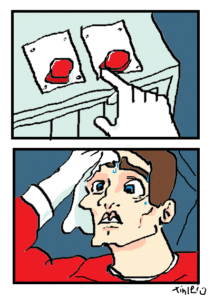
Now, the US president is facing a difficult dilemma. 


Concerned researchers argue that Agent-4 is too powerful and misaligned, and that progress is happening too fast. The possibility for AI takeover is extremely likely. 


Meanwhile less concerned researchers argue that its misalignment is not 100% confirmed, and that if the US slows down Agent-4 to fix something that might not even be broken, it will sacrifice their lead  over China. 


CONCLUStwo red buttons meme drawn by Xinlei on a mouseION

For the sake of word count (and suspense), the two distinct branches that will determine humanity’s fate will be left unwritten. However, if you’re interested in further investigating the potential doomsday AI will implicate on us, I highly recommend checking out the AI 2027 website. 


Sources 

1, 2, 3, 4, 5

Myths about journaling

Journaling is an effective strategy to gain emotional clarity and intelligence in your daily life. It is a practice that not only puts you in tune with your emotions but also allows you to identify where your negative ones stem from, so that you can take the next steps to heal your limiting beliefs and anxieties. It is a powerful tool that encourages you to write down your goals on paper to make them seem even more real and aspirational.

There are numerous ways to journal, but the most important thing you can do when starting your journaling journey is to find the one that best fits you and helps you prioritize your mental health. There is no perfect way of journaling; it is a completely personal process that empowers you to not become a victim of your emotions but to observe and take the next steps in regulating them. Starting a journal can feel overwhelming, especially when the first thing you say to yourself is, “I don’t know what to write.” In this case, structured journals and ones with prompts are recommended, so the more you write, the more you can study the thoughts and feelings you want to unload and challenge. 

Myth #1: You need to be a good writer. 

Spending time perfecting your work or journaling as if you are going to get graded on it creates the narrative that you always need to have perfect insight into things. Journaling is a time to navigate your sense of thinking, to ask yourself important questions even when the answer is not clear, and take your limiting beliefs and negative emotions as information. In order to unload and feel lighter, you simply just need to write what comes to mind.

Myth #2: You need to journal every day.

Do not cling to the idea that to be effective in journal writing, you need to do it every day, morning and night. Please do not feel guilty; what matters is that you are consistent with it over time and journal when you need it the most. It can also take as long as only five minutes! For starters, you can practice gratitude and write one thing you are grateful for today. Gratitude journaling is a good practice for beginners, and if you are stuck looking for prompts. 

Myth #3: You need to spend money on a fancy-looking notebook.

Journaling comes in all shapes and sizes! Some people prefer the idea of sitting down with a cup of tea and writing down on paper, writing digitally in their notes app, on a doc, etc. You do not need to have a visually appealing journal to master it. It’s a piece of emotional expression and a source of reflection with insight into your mind. This outweighs any instant gratification you get from purchasing an aesthetically acceptable notebook. 

Conclusion 

Do not let extravagant journal entries, perfect writing or the idea that you need to be good at writing rob you of the emotional rest and ease that you long for through this practice. It is supposed to be messy and vulnerable. The most exciting part is that there are so many different worlds of journaling, such as manifestation, self-growth, and gratitude.

What matters is that you are ready to embark on your journey to mastering your emotions, and that is worth being celebrated. Scribble, misspell words, take up space on your paper or doc. What matters is that you find information about your mind in sequence with your feelings.

Sources: 1, 2

I Learned to Cook Without a Recipe for a Week: Here’s What Happened

Honestly, cooking? It doesn’t come naturally. A recipe is essential – even then, things get dicey. I once used a teaspoon to measure salt, yet freaked out over “season to taste.” Still, I tried going rogue last week, making everything from scratch, completely freeform. This week involved a lot of guessing – no recipes, no online help, simply relying on what felt right alongside a chaotic collection of spices. It wasn’t pretty, though thankfully non-fatal!

Cooking? It’s a total crapshoot, really – utter mayhem in the kitchen

That first night, the lone chicken wing felt like a failed test – one right answer followed by an obvious mistake. Fortunately, I had some gumption, so I pressed on, sprinkling paprika then adding garlic (perhaps a generous pour of olive oil too). It wasn’t a triumph when I gave it a shot afterward, yet definitely not a disaster either. Perhaps the point is this: few folks possess natural kitchen talent – they simply follow feeling instead of recipes.

Don’t get demotivated down by imperfections; learning takes off when you let go.

The second time I scorched supper, I didn’t bother searching for fixes. Instead, I tossed it then began anew. Dates became a rhythm after a couple tries – by day five, anticipating what he’d enjoy felt almost playful. Soon, meals tasted less like copied recipes yet more…like me.

Lesson 1: Salt, Spices, and Acids Are a Cook’s Love Language

A tiny tweak – a dash of salt, a splash of vinegar, some pepper – completely alters things. It struck me how cooks constantly adjust flavors while preparing food. So, I ditched following recipes exactly, instead trusting what my palate told me.

Keep things uncluttered – it’s how to succeed.

Homemade pasta sauce? Yeah, I tried that. Two hours later, it was…fine. Next time, amazing flavors were on their way! Scrambled eggs, done quick – a minute flat – with chili oil then green onions. Seriously good. Sometimes food just nails convenience.

Sharing food – it builds connections. A meal draws folks together.

Sunday dinners at my place often meant throwing things together – a skill Mom declared “genuine.” It wasn’t fancy, just food. But her approval? That felt like winning something. Cooking without instructions forced imagination, bolstering a little self-assurance along the way.

TL;DR

Ditching recipes showed me striving for flawless isn’t what matters – trusting your instincts does. Letting go of instructions means discovering what you like, both in food and life.

P.S.

Kitchen wisdom? Embrace chaos. A splatter here, a spill there – it usually signals you’re onto something good. Forget neatness; seek exploration.

How Humans Predict Weathers – The Breakthrough of Technology

Whenever we need to check the weather for the next day, we can simply look it up on the internet. It is as simple as that. However, have we ever thought about how scientists and experts use technology and other methods to accurately predict the weather for over 5 days? 

That is what we are going to be looking at in this blog post. You will learn the history of predicting weather, how we predict weather today, and the overall weather forecast prediction process using a wide array of technology.

Why did we need to predict the weather?

Before we had the advanced technology to predict the weather, farmers, sailors, and everyone else had to rely on observations of their environment and current weather conditions to make decisions. This is an inaccurate way of predicting the weather forecast, as the current weather and environmental conditions are constantly changing. 

Another reason we needed to predict the weather is the lack of warnings to sailors and travellers. Before predicting the weather, we had no means of reliably and accurately predicting whether a catastrophic event like a storm or hurricane would take place. This posed a significant threat and was the reason for numerous deaths and destruction across history. Farmers also needed to know accurate weather forecasts to plan activities like planting crops, irrigation and harvesting and make changes if a storm is coming.

How can we predict the weather?

Though we could reliably predict the weather using instruments available in the 17th century, it was not until the 1960s, with the rapid growth and innovation of technology, that we could predict it to high levels of accuracy. In the modern-day world, we are able to accurately predict the weather using a combination of advanced technologies placed at various locations in and outside Earth. The weather prediction process is very complex and involves the use of many technologies and scientists. 

This process begins with the first stage of collecting data. Many ground-based weather stations across the world measure the surface conditions like temperatures, atmospheric pressure, humidity, wind speed, etc. Two weather balloons are launched from different locations on Earth every day to observe and measure the conditions in the upper atmosphere. Then various radars, satellites orbiting Earth and sensors are used to accurately determine the cloud cover, location, and intensity of precipitation, atmospheric moisture at various regions across Earth and much more. All of this collected data from various regions across the world is input into powerful supercomputers and artificial intelligence to run complex math models that simulate the atmospheric behaviour. These models and simulations are then analyzed by experts, along with their knowledge, to accurately form a weather forecast.

TL;DR

Humans needed a way of accurately predicting the weather to warn everyone about the possibility of natural disasters. The rapid development of modern technology paved the way for accurate weather predictions and standardized weather prediction processes to evolve. Numerous weather stations, radars, satellites and other technologies are used to collect lots of data about weather conditions. These data are then fed into supercomputers to simulate atmospheric behaviour models, which are then used by skilled experts to make accurate conclusions about the weather forecasts.

Sources: 1, 23

Ghost Avenue (ゴーストアベニュー) Song Analysis+ Explanation 


Viewer discretion: This article will include themes related to depression, death, and guilt. If you’re uncomfortable with these topics, feel free to click off and read another one of Xinlei Lu’s wonderful articles.


Introduction

Ghost Avenue is a song produced by the popular Japanese music artist, Eve, who’s most well known for his contribution in creating Jujutsu Kaisen’s anime intro. Now, reading the first sentence, you’re probably thinking; “Wow. This is way too anime weeb core for me, and I barely understand anything!” 


Well, do not fret! No knowledge of anime or even Japanese culture will be needed to have a basic understanding of this song. What I recommend is watching the music video at least once with subtitles, which is important to understand this universe better.  


 ゴーストアベニュー(Ghost Avenue) – Eve Music Video 


Welcome back, unless you didn’t watch it. Ghost Avenue is not only a song but also a hand drawn animation that contains a lot of media to debrief. Therefore, I’ll break down the music video into two parts; storytelling and cinematography. 


Storytelling

The video follows a red haired man named Hiruma Mahiru, who we’ll call Mahiru. 


Throughout the story, we learn that Mahiru isn’t a very honourable guy. He sleeps with several different girls night after night, and steals their money for a living. Furthermore, Mahiru constantly seeks attention and affirmation through his position as a social media creator, maintaining an energetic happy composure outwardly. He also has a bad habit of drinking and smoking, which can be observed through the state of his room if you pause the video. 


In short, it’s clear that Mahiru has something that he wants to escape from, possibly a former trauma that he distracts himself with using these substances.  


There’s another character that appears quite often in Mahiru’s personal spaces where only he can see her; in his bedroom and in the hallway of his apartment. This girl, who has a similar colored hairstyle to Mahiru is named Lilin. 


Lilin acts primarily as a source of comfort for Mahiru when he’s alone, and has an appearance that’s rather irrealistic compared to other characters in the video. She wears a nurse outfit and appears as if her legs were sewed on. This hints at the possibility that Lilin is just a figment of Mahiru’s imagination, existing in the sole purpose to provide company for him. But this raises the question, where did this girl come from? What inspired her existence? 


To understand Lilin’s character, you need to know about an entity that exists in the Eve universe called Zingai. Zingai are supernatural creatures that appear only to certain individuals, and manifests as the personification of a person’s heart – what they feel, their thoughts, their beliefs.  For Mahiru, his Zingai is Lilin. Between 1:56 and 2:03, we get a look into Mahiru’s heart using Lilin’s silhouette, her being is replaced by alcohol, money, cigarettes and gives a representation of loneliness. 


During the flashback with young Mahiru, he runs to a girl with brunette hair who has a hairstyle similar to Lilin’s, and gives her a bunny plush – the same bunny plush that appears in the hallway walking sequence during the chorus. 


This girl’s name is Suzuki. It’s clear that they have a close sister-brother relationship by the way they interact with each other, and it’s stated outside of the video that Suzuki was Mahiru’s first love. Not in a romantic way, but in a way that Mahiru didn’t have anyone else to label what affection and care looks like, so he labeled Suzuki as the definition of love. 


Very quickly, the scene cuts to Suzuki’s implied death. Blood surrounds the ground she lays on and a couple police officers investigate the situation. Young Mahiru is there to witness the entire situation, picking up the red-stained bunny he gave her not long ago. This scene is the peripeteia of Mahiru’s life, the point when everything changed for him for the worse. 


This bunny plush is actually one of Lilin’s forms. She can transform from her human form to the bunny form if she gets a bit of Mahiru’s blood to accompany him when he feels lonely. Funny thing is though, Mahiru doesn’t know that Lilin’s taking his blood. Only when Lilin takes so much blood that he wakes up is when he realizes who the culprit behind all his bandages are. 


Then comes the scene where Mahiru’s bleeding out on the pavement, in the same place Suzuki did. This is likely a hallucination, and a manifestation of his guilt for her death.


Lilin obviously isn’t a good character to benefit Mahiru’s mental and physical health – she hypnotizes Mahiru in a way to make him think that she’s the only one he’ll really need. Yes, he goes out on fun one-off date nights with random girls and occasional hang outs with his few friends, but the only person that is with Mahiru every single day is Lilin. 


Towards the end of the video, Mahiru has realized to what degree this unhealthy habit of fake companionship has taken advantage of him – he is literally dying because of it. Mahiru stumbling to the exit could symbolize him finally taking control of his own life and walking away from his previous lifestyle of pretense.  


Cinematography

Ghost Avenue follows a unique style of showing the audience different representations of Mahiru’s mental state, using a videogame editing style mixed with real life. 


The very first scene of the MV is shown in a horror-esque style, setting the tone of underlying anxiety that Mahiru carries but hides. 


The bar of eight hearts on the top right represents how much blood Mahiru has left, as during the day he barely loses any, but loses hearts actively when dripping blood in his hallway walking scenes. There’s also a significant drop when Mahiru finds Lilin almost killing him. 

Mahiru’s energy he has left to play his happy facade can also represent the heart bar, for he had the most hearts in his appear-to-be-most-happy era, and is surviving on half a heart when the anagnorisis of his situation is felt. 


Notice how the video ratio is 4:3, a ratio commonly used for video computer displays. Since the story is told through Mahiru’s perspective, this gives us an insight on the derealization he feels; Only when the focus turns on the black and yellow hoodie guy does the video use its entire screen capacity. 


Mahiru’s flashbacks are also presented in the 4:3 ratio, which could point to him not being able to distinguish the past and the present – which is very probable considering his overreliance on drugs and quick dopamine. 


Furthermore, there’s a clear distinction between Mahiru’s online persona and what he seriously feels. Two separate but identical versions of him act out the two characters, Digital Mahiru always has some sort of static going on (walking in the hallway, his interaction with Lilin) contrasting to Real Mahiru. 


In the hallway walking scenes, Digital Mahiru always drips blood from a heart shaped wound from his chest, with each scene increasing the size of the heart. The two versions of him merge together when the heart wound is too big to survive, and Mahiru’s forced to take into account what reality is. 


Ghost Avenue is written on Mahiru’s apartment door, which can be interpreted that Mahiru is figuratively a living ghost. According to Google, a ghost’s definition is “an apparition of a dead person which is believed to become manifest to the living.” The lyrics “Wandering around and living like a corpse” further supports this idea. Lilin can also be interpreted as a ghost, therefore there’s multiple ghosts living in this avenue. Wooow. 


As a person who isn’t Japanese, I’d assume that this is a pretty happy uplifting song without reading the lyrics. The lyrics would disagree. This common dissonance between the music and the lyrics in Japanese culture is what makes their songs so deceiving but interesting. This upbeat rhythm contrasting to the depressing lyrics reflect Mahiru’s person in the way where at first glance he appears content, but reading into it more you can tell something’s wrong. 


Conclusion

It’s not a surprise that there are dozens of other details I left uncommented in this song, but I’d need to ask for three more extensions for this article before that happens. Feel free to leave any observations down in the comments, I’d love to hear your take! 


Have I convinced you that this is a very intriguing, very cool, very deep song yet? If not, that’s okay. Thanks for reading anyways. If I have, I definitely recommend Eve’s other music videos if you want more analyzable pieces of media, especially インソムニア (INSOMNIA) – Eve Music Video, which is directly related to Ghost Avenue.  

 

Why We Get Déjà Vu: The Truth Behind That Eerie Feeling

0

Photo by Aliaksei Lepik on Unsplash

Ever entered a new location, say a restaurant, and immediately thought, I’ve been here before? That peculiar sensation that you just experienced is called déjà vu, which translates to “already seen” in French. It’s a mystery of the mind that nearly everyone experiences, with an estimated 97% of people having reported experiencing déjà vu, yet very few truly understand. Recent studies have uncovered the cloak of these false memories, revealing more concrete answers to a traditionally abstract phenomenon.

What is it?

“Déjà vu,” as explained by neurologist Dr. Jean Koury, “is a false sense of familiarity.” It occurs when the brain triggers a sense of recognition once in a certain situation, even when the experience is entirely novel. The main indicator for proving that the experience has never happened before is the inability to retrieve it from your memory, adding to the overall ambience of mystery.

Why does it happen?

For a long time, people saw déjà vu as a mystical occurrence, possibly a glimpse of a past life or a psychic experience. However, modern neuroscience reveals that déjà vu arises from misfiring connections in the brain in the regions responsible for memory recollection and familiarity. The main part of the brain that plays a major role in déjà vu is the temporal lobe. Usually, it can easily tell the difference between what’s new and what’s remembered. But sometimes, the temporal lobe can accidentally confuse a past memory as a situation you are currently experiencing.

Likelihood of Déjà Vu

Interestingly, déjà vu is more prone to occur in young people than in older adults. That’s because younger brains are more active in building and storing memories, as the brain stops developing at around the age of 25. It also tends to occur when we’re tired or stressed, which can make the brain’s processing a little fuzzy. Even virtual reality experiments have been able to trigger déjà vu by showing people similar but not identical scenes, showing proof that it’s all about pattern recognition.

Conclusion

Even though déjà vu can feel a bit spooky, it’s actually a great sign that your memory system is working well. It demonstrates the fact that your brain is constantly checking for patterns, comparing new information with stored memories to make sense of the world around you. Think of it as your brain’s way of saying, “Wait, this feels familiar,” even if it’s a mistake.

Sources: 

  1. What Causes Déjà Vu? – Scientific American
  2. That Strange Feeling of Déjà Vu — Explained – Cleveland Clinic

5 Thoughtful Ways to Thank Your Teachers

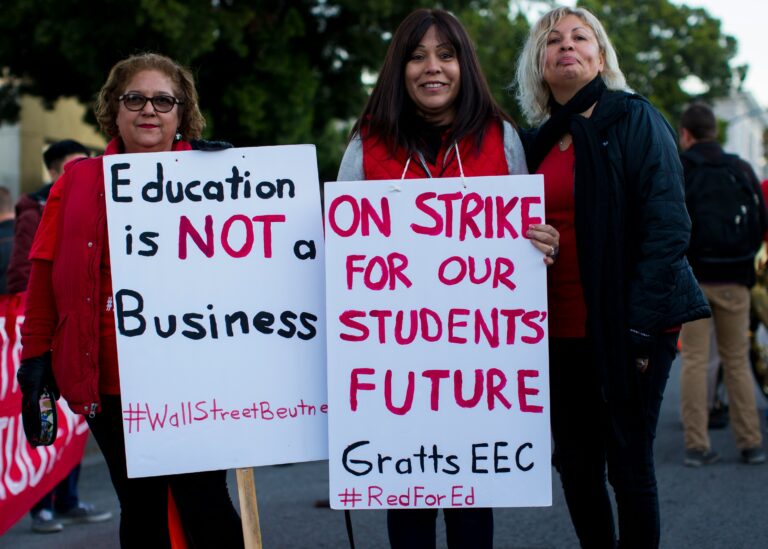
With recent news of Albertan teachers going on strike due to things like unfair wages and difficult working conditions, it shows us how our society tends to underappreciate all that our teachers do for us. As youth in Calgary, we rely on our teachers the most and count on them to support us through our education. In light of all that’s going on right now, it’s time we put some effort into thanking our teachers this Thanksgiving season.

Teachers have one of the biggest impacts on a child’s life, being a child’s trusted adult, counselor, mentor, and educator all in one. Oftentimes, their pay doesn’t reflect all the roles they take on in the classroom, and their passion for their job is admirable. From helping you choose a career path to teaching you important skills, teachers set you up for success. The least we as students can do is show them our gratitude!

If you’re stuck on coming up with ways to show your teacher how much you appreciate them, here are some thoughtful ways to thank your school staff!

Photo by Trung Duong on Unsplash

Kind Cards

Even if they seem like the most basic way of giving thanks, a kind card can go a long way! You’d be surprised at how rare card-giving has become in recent times, especially as we grow older. Instead of giving your teachers cards for just Christmas this year, turn card-giving into a year-round affair rather than just for the holidays. Consider making them a personalized card with a small note inside! You can mention a specific time the teacher helped you out, give them a compliment, or just recognize their work in the classroom in general. It doesn’t have to be a letter or a whole soliloquy, but a silly card with a teacher joke/pun is a great way to bring a smile to your teacher’s face.

You could also customize the message and theme the card based on the class they teach. So far, the most creative one I’ve seen is someone who wrote the words “Thank You” by using physics formulas! At the end of the day, even a simple doodle can brighten someone’s week during hard times.

Enough With the Mugs! Choose Markers Instead

The amount of mugs teachers receive as gifts needs to be studied! If you want to make your gift more thoughtful, replace the mugs for markers or other meaningful alternatives that they can use in the classroom. Teachers spend an unfathomable amount of money out of their own paychecks on stationery and classroom supplies every year. Giving them a gift like whiteboard markers, desk organizers, school supplies, or even a pack of those really good Amazon pens shows you put some thought into selecting a gift they can use. Trust me, you’ll become their new favourite student after this one.

If you’re confused about what your teacher would benefit from, you could also get them a gift card to a stationery store, or even Walmart! You can also go above and beyond and consider teaming up with your friends to create a mini gift basket, or Teacher Survival Kit featuring stationery, snacks, coffee, and teacher puns. Most of the time, the thought you put into the gift means more to your teacher than the actual gift itself.

Photo by Taylor Daugherty on Unsplash

A Short & Sweet Message/Email

This one is similar to the kind cards, but more simple and quick. Whether its on a sticky note, at the top of an assignment, or a short message at the end of an email, tell your teacher you appreciate them! You can thank them for their help in a specific class and provide an example, or leave to a simple “Thank you for all that you do!”

When emailing them for things like help on an assignment or an extension, ensure you are polite and end off the email with a message of gratitude. These small messages/acts of kindness can make a big impact in anyone’s life– not just your teacher’s.

Make A Thank-You Video

If you have the time, resources, and enough people willing to participate, you can make a short Thank-You video for your teachers. Ask your friends for permission to record a short clip of them saying thank you, or speaking about a specific memory with a teacher that they are grateful for. You can compile all these videos into a montage, and include some humor in it as well. Whether its a short clip of them saying a funny quote or an iconic Halloween costume of theirs (is it universal for Physics teachers to dress up as Gandalf?), your teachers will appreciate the time and effort you put into appreciating them.

Create A Class Collage/Poster

If your favourite teacher is leaving, or even if you just want to do something nice for a teacher you appreciate, consider making a collage or a poster with pictures of you and your classmates. You can collect signatures and get everyone to write small comments of gratitude on it as well, or even put it in a picture frame and gift it to your teacher that way. A group photo of your class with your teacher with signatures on the back is a great gift also. If your classmates/friends are willing to, you could all decorate a picture frame (or sign it) and put the poster in it, or just make it online and print it out like a card. This will become a heartwarming keepsake for your teacher to look at!

TL;DR

With Alberta teachers striking over low pay and tough working conditions, it’s a reminder of how underappreciated educators are, especially since they do so much more than teach. This Thanksgiving season, take time to thank your teachers for their impact on your life. Small acts of gratitude can go a long way! Here are some ideas:

  • Write a kind card: Share a heartfelt note or doodle to show appreciation.
  • Instead of mugs, gift supplies: Give meaningful gifts like markers, pens, or gift cards instead of another mug.
  • Send a short message: Add a quick thank-you at the end of an email or assignment.
  • Make a thank-you video: Gather friends to record clips of appreciation or funny memories.
  • Create a class collage: Collect signatures and photos for a thoughtful keepsake to give to your teacher.

Teachers shape our futures, let’s show them how much they mean to us!

What No One Tells You About Studying Effectively

Imagine this…

You have a biology exam tomorrow. Sheets and sheets of vocabulary and concepts to memorize lay before you, calling your name. “[Y/N!]*, [Y/N]! Study me!!!” You give in to their cries, and sacrifice the hours of the night studying like never before. 


The next day rolls around, with a new 7 hours of sleep debt weighing down your eyes. You ask around your peers if they’ve studied, scoffing at their pathetic 2-3 hour study times. The test is written and you wait for the results. 


Results come in, and the letter grade gazing back at you is challenging to comprehend. How is this possible? You look over at the puny 2-3 hour studiers. They got a higher grade than you. A fiery pool of volcanic rage overcomes you, how could this be?! 


Obviously, this situation is slightly exaggerated, but very possible. Fortunately, there is a way to fully avoid this spine-shuddering route. “The solution may not be to work harder, but more strategically.” 1


The Art of Studying

“Victorious warriors win first and then go to war, while defeated warriors go to war first and then seek to win.” 2 – Sun Tzu, The Art of War 


Before the day of the exam, make sure all your gaps in knowledge in the subject are completely conquered. In this way, the exam will not be a piece of guesswork but rather a simple acknowledgement of your highly developed brain. 


The key to finding out what you don’t know is assessment.

  • Test yourself
  • Try explaining the topic to someone else
  • Review past papers
  • Use learning apps such as Quizlet

If you find yourself lacking knowledge in a certain area, focus on repairing that part. Don’t waste time excessively reviewing material you already understand. 


The Learning Pyramid

To ensure complete confidence over your knowledge, the Learning Pyramid 3 suggests that certain ways of testing your knowledge are more effective than others. Here is the list from most to least effective. The percentages represent how much the method will solidify the knowledge.

  1. Teaching Others (90%) 
  2. Practiced by Doing (75%)
  3. Group Discussions (50%) 
  4. Demonstration (30%)
  5. Audio Visual (20%) 
  6. Reading (10%)
  7. Lecture (5%)


The Grade 9 Humanities Teacher 

In grade 9, I had this incredible humanities teacher. She would give us fun projects, teach the class in an engaging way, make us exercise when nobody knew the answer, but most importantly remind us to review material every single day. 


As you’ve probably heard many times before, the brain is like a muscle. Without letting it rest, limited gains will be made, as rest time is peak time for muscle growth. Your muscles don’t grow while you’re exercising. 


Review is a healthy dose of intensity for your brain to effectively remember things without spending a crazy amount of time. Doing it regularly builds more long-term knowledge than a late night cram would. In other words, spacing out your study sessions will improve long term memory. 6


TL;DR 

There are many tricks and strategies to improve studying efficiency that few are aware of. To become an elite student, follow these tips. 

  1. Master your knowledge. Leave no room for guesswork on your exams.
  2. Follow the Learning Pyramid to make the most of your study time.
  3. Review daily. 

With these secrets now passed down to you, I wish you luck, student. I hope your upcoming biology exam will return wonderful and glorious. 

*Y/N stands for Your/Name

Sources

1, 2, 3, 4, 5, 6

The Alberta Teacher Strike

Overview/ Why it matters

The Alberta teacher strike is affecting many Albertans including parents,students,teachers, and government officials. In October 2025, Alberta saw its first-ever provincewide teacher strike, with more than 51,000 teachers walking off the job and nearly 740,000 students affected across public, Catholic, and francophone schools. The Alberta Teachers Association (ATA) led the strike after teachers overwhelmingly rejected a tentative deal from the provincial government. Educators voiced frustration over frozen wages, overcrowded classrooms, and insufficient supports for students. This strike is important because it reveals the growing tension between teachers and the government regarding working conditions and the quality of education. It also reflects broader national concerns about teacher burnout, lack of funding, and the long-term stability of Canada’s education system.

Timeline

The strike began on October 6, 2025, after 89.5 percent of teachers voted against the government’s latest offer. In the days that followed, thousands of teachers across the province participated in picket lines and rallies. The government quickly called for mediation, but the ATA rejected the proposal because class size limits were excluded from the discussion. By mid-October, Premier Danielle Smith announced plans to form an education commission to review the school system once the strike ended. On October 17, the government made November diploma exams optional for high school students due to missed classes. As of mid-October, negotiations remain stalled, with the ATA refusing to return to work until class size caps and working environments are included in talks.

Issues and Demands Proposed By Teachers

The teachers main concerns center around wages, classroom sizes, and the lack of support for students with more learning needs. Teachers argue that their pay has not kept up with inflation or the rising cost of living, leaving many struggling to manage financial pressures. They also demand enforceable limits on class sizes, claiming that overcrowded classrooms make it harder to give students individual attention. Another key issue is the lack of educational assistants and mental health supports, which makes it challenging for teachers to meet diverse student needs. The ATA’s goal is to secure not just a fair compensation but also structural changes to improve the learning environment for all students and teachers.

Developments Following The Teacher Strike So Far

Since the strike began, both sides have faced a lot pressure to find a solution. Teachers have missed multiple pay periods, and the ATA has begun covering limited benefits for striking members. The government offered a 12 percent wage increase over four years, but the union rejected it, saying it does not address class complexity. Talks have since reached a standstill. The government’s proposal for mediation was also declined, as it excluded key teacher demands. In response to disruptions, the Ministry of Education made November diploma exams optional, aiming to reduce academic stress on students. Premier Smith has promised to review the education system after the strike ends, suggesting longer-term changes may be considered once the conflict is resolved. Although, teachers want their needs to be talked about before they go back to work.

Student Risks

Students are among the most affected by the ongoing strike. Many have lost valuable instructional time, which could affect their understanding of core subjects and their preparedness for exams. Students who rely on classroom structure or additional support services face even greater challenges. In high school, the uncertainty surrounding diploma exams and missed coursework has caused significant stress. Younger students may also experience disruptions in learning routines, potentially affecting literacy and numeracy development. If the strike continues, gaps in learning may widen, particularly for those who require consistent, specialized support.

Students also now have an overly large amount of free time, which can disrupt their schedules and leave them without productive activities to stay occupied. This excess free time may lead some students toward unhealthy habits or risky behaviour. Grade 9 and Grade 6 students, in particular, may feel anxious and unprepared for their Provincial Achievement Tests (PATs), while high school students do not have enough time to properly learn the material they need for diploma exams, whether those exams are optional or not. Some students may need to pay for private tutoring to catch up, which can create extra financial stress for families.

In addition, the loss of daily social interaction with classmates and teachers can negatively affect student’s mental health and overall wellbeing. Social interaction at school plays a key role in emotional development and confidence. The cold weather during this time of year also limits outdoor activities, and some parents, especially those working full-time, may prefer their children stay indoors for safety. This reduced activity and isolation can harm student’s physical and mental health. For high school students (especially those in Grade 12) these disruptions could mean missing out on the education they need to successfully complete their diplomas and prepare for future careers.

Risks for Teachers

Teachers face financial, emotional, and professional risks during the strike. With no salary during the job action, many are experiencing financial strain. Although the ATA is covering some benefits, it is not enough to replace lost income. Teachers also face stress from being away from their students and uncertainty about when classes will resume. Additionally, prolonged strikes can strain relationships with parents and the public, as some may blame educators for the disruption. However, teachers believe the long-term benefits of improved classroom conditions outweigh these short-term risks.

Comparing to Other Canadian Teacher Strikes, How Is this Different?

Teacher strikes have occurred in several Canadian provinces, but Alberta’s 2025 strike stands out for its scale and timing. In Ontario’s 2019–2020 strike, teachers protested against larger class sizes and mandatory online learning, eventually reaching a partial agreement. In British Columbia’s 2014 strike, teachers fought for class size limits and later won a Supreme Court case that restored those rights. Quebec’s 2023 strike focused primarily on wage increases and workload relief. Alberta’s strike is unique because it combines both financial and structural demands, such as teachers wanting fair pay and change to address the classroom environment . It is also the first time in Alberta’s history that all public, Catholic, and francophone teachers have united in a single, provincewide action.

Conclusion

The 2025 Alberta teacher strike marks a major turning point in the province’s education system. It has exposed deep frustrations among educators about underfunding, oversized classes, and inadequate amount student supports. While the government emphasizes responsibility, teachers insist that the quality of education is at stake, and that if the government agrees with their terms, there will be a long term difference for student’s learning in the near future. There are many concerns the government will also have to overcome to achieve these negotiations. Although, the outcome of this strike will likely shape future negotiations not only in Alberta but across Canada. Whether through compromise, mediation, or legislation, the resolution will influence how governments and educators work together to maintain both fairness for teachers and stability for students

Citations

Biodiversity Loss – A serious problem Earth is Now Facing

0

Our beautiful planet Earth is known for its variety of rich ecosystems where a diverse range of species are found and coexist peacefully. Did you know that it is estimated that there are more than 8.7 million different species on our planet? That’s wild! The majority of these species are undiscovered, meaning they are unknown to us. The extreme amount of biodiversity is what makes ecosystems healthy and our planet functional. However, in recent years, there have been species that have become endangered or completely extinct, threatening our planet’s diversity. This is known as biodiversity loss.

What is Biodiversity Loss?

Biodiversity loss is the decline in the variety of life on Earth. According to the UN Convention on Biological Diversity, it is estimated that up to 150 different biological species are lost every day. Biodiversity loss happens in the form of the extinction of a species due to a variety of reasons. 

What are the reasons for this to happen?

The majority of the causes for biodiversity loss are human-made. Reasons include habitat loss, climate change, pollution, the introduction of invasive species and much more. Habitat loss is one of the leading causes of biodiversity loss as it involves using natural habitats for human use. Many forests and natural lands, home to a variety of animal species, are being destroyed for human use, such as infrastructure. 

Climate change, a cause for many global issues, is also a major reason for biodiversity loss. Rising temperatures cause major disruptions in the lifestyle of many different species, which slowly forces them out of their natural habitats.

Pollution, another cause of biodiversity loss, is produced from various human sources like pesticides and plastics, which contaminate the air, soil and water that is used by many endangered species. Another major reason for biodiversity loss is invasive species. This is when non-native species are introduced to an ecosystem, which disrupts natural ecosystems and causes competition among species for resources. Other human causes for biodiversity loss include overfishing, overhunting, deforestation and much more.

How does Biodiversity loss affect us and the planet?

Biodiversity loss is a serious issue that affects not only the natural ecosystems but also us humans. First and foremost, biodiversity is the key for ecosystems to run safely in many aspects. For example, biodiversity is vital for soil health as there are various species which help keep soil fertile and rich in nutrients for others to use. Biodiversity loss also affects the medicine industry significantly, as many vital medicines are created from various niche herbs and plants that are slowly becoming threatened. Biodiversity helps the environment in various ways, and it is important to maintain it and take steps to prevent biodiversity loss.

What can we do to prevent Biodiversity Loss?

There are lots of ways we can help promote and increase biodiversity. Here are the main ways we can help prevent biodiversity loss:

    1. Advocating for sustainable energy production: Choosing renewable and safer alternatives for producing energy, like solar and wind, will significantly help prevent the biodiversity loss we are facing now.
    2. Spend your time volunteering at local animal shelters and projects that aim to promote biodiversity.
    3. Reducing your carbon footprint: Pollution and carbon emission is a major reason for biodiversity loss. So taking steps like using public transportation and shopping locally reduces the amount of harmful gases we emit into our atmosphere.

Sources: 1, 2

A Guide to Journalling

The digital world has become an incredible and expansive source of communication for anyone. To truly seek the innovative technologies and inventions that have the power to define a society to an individual’s understanding of their relationships or ability to cultivate them, social media apps have become the go-to. But for those who are easily overwhelmed by scrolling through their snaps, 99+ notifications, or fall victim to doomscrolling, they would naturally need to find a hobby or creative outlet that readily stabilizes their dopamine levels. And myself, I came across journalling. 

The branches of journalling….

Journalling doesn’t have an exact structure, it could be writing thoughts of gratitude or reflection in the morning and evening, or combining scrapbooking and drawing to remember a highlighted memory. But it does wonders for the mood-thought-action process in day-to-day lives. I bought a creative journal from Michael’s and started decorating from October of last year, investing my time into printing images and photos, or just having check-ups with myself. The Stream of Consciousness is in fact, very useful, to have a brain dump when you’re truly exhausted. You dip your toes in mindfulness and acknowledgment of things you may have been uncertain of for all this time.

It sometimes may not be directed to yourself in an unsent letter, but another person whom you haven’t raised questions about and still have yet to confess or confirm your thoughts about in the present or past that came over. All people sometimes need is closure, but are also likely to deny it in case of getting your feelings hurt. A lot of what’s stored in our bodies are connected to the psyche through events that cause negative emotions or trauma. Being the first to step forward and strive in accountability is what it takes to truly move on from things that block us from reaching our potential in any area of life. We just have to pick ourselves up.

It’s an activity that you can easily define for whatever interest (s) you have, you may keep a journal for hidden recipes or your fashion wishlist, making it a lot more personal and closer to who you are. Your journal can consist of accomplishments or be where your internal monologue shines. It never has to feel complete or feel like anything, it stores what you’d like to keep away from others or a blueprint for the life you want. Starting over and flipping a new page is supposed to arise an unfamiliar feeling with a weight to it.

Personally I like doing everything written. That way it feels more comfortable and real to me, I like to call it the journey to personal growth, but also as a reminder that growth does not exist everyday. Writing about how my day went to documenting shopping for snacks and delicious drinks is perfect for where I am and boosts the nostalgia factor either way. I journal to explore my personal voice in my writing or to practice it for like at most 5 minutes.

Journalling might not be for everyone and that is okay. However, don’t just give up after a day but maybe after a week to see whether or not you rather try something else. You can still come back even after months of not doing it, and then you still start. Therefore no linear or ideal path exists.

Journals over time have also improved our understanding of historical events, such as The Diary of a Young Girl by Anne Frank during the holocaust, and the window to an individual’s life and mind with Frida Kahlo’s personal diary. 

How to get started – if you decide to go for it

  1. Understand the purpose of your journal and write it down on the first page or wherever you can see it first when you open it up
  2. Write down any goals or aims for journalling on the first page, or just some of your personal goals
  3. Plan how often you would write (every day, every weekend, etc.) – being consistent is integral to any growth or progress made
  4. Decorate the journal so it feels that it belongs to you, or find a way to be able to have fun with it.
  5. Set reminders on your calendar or with someone else at certain times (Morning > evening for me, but any time is fine!)
  6. Take inspiration from things to partake in like scrapbooking days (maybe getting something off your bucket list?) or journalling prompts for an entire month
  7. Enter a state of calm and meditation to get rid of as much outside noise as possible, but still continue to write down even with the occassional distractions
  8. Give yourself time and then just write about anything – something that has been on your mind or how your day is going so far