Home Blog Page 17

From Armistice to Remembrance: How November 11 Became a Day of Honour

0

November 11th, a day many of us celebrate to commemorate the sacrifices made by soldiers. People symbolize their respect by wearing a poppy, or taking a moment of silence; but what do we truly know about WHY we celebrate Remembrance day?

The history of Remembrance day starts back in 1918, when the armistice was signed between the Allied Forces and Germany to officially stop the first World War. The peace began after that agreement was signed on November 11th, 11AM, 1918. Millions of soldiers and civilians died during WW1, sacrificing their lives willingly or unwillingly, all for our safety.

This ceasefire prevented many more deaths that could have occurred, and started a tradition in many countries, in which we take a second and just remember how many lives have been taken due to wars. The first Remembrance day was recorded in November 1919, when King George V hosted a “Banquet in Honour of the French Republic”.

Armistice day, later renamed Remembrance day, was originally used to commemorate only World War 1 soldiers and the life they lost in battle. The big push was made in 1928, where many citizens including veterans, grieving families, and many people who just wanted a change, fought for greater recognition and acknowledgement and to separate the sacrifice of wartime deaths away from Thanksgiving holidays.

It was only in 1931, when the federal government proclaimed that freshly renamed Remembrance day would take place on the 11th month, of the 11th day, on the 11th hour. Remembrance day would now honour any fallen soldiers instead of specifically the World War 1 veterans.

You may be asking yourself “What now?”, the truth is there are many possibilities. I know how busy life can get, especially on a Monday this year no-less. You may not be free at 11AM on November 11th, and that’s okay. There’s absolutely no restrictions on recognizing the many deaths and sacrifices made throughout history to make the world a bit safer. 

The only thing that I can possibly ask is just to try. You don’t need to throw a huge celebration party, or do anything big, but doing something small like taking a moment of silence, wearing a poppy (which you can find in many stores at this moment), or just thinking about the lives lost can mean a lot.

If everybody took a moment of realization and appreciation, the world could be a bit kinder that day. Just like how it was just for a moment back on November 11th, 1918.

I Tried to Let AI Predict My Health: Here’s What I Learned

My initial thoughts: 

Honestly, the thought of machines in medicine felt like pure movie stuff. Picture robots figuring out illnesses? Machines bossing around physicians? I imagined a high-tech room full of flashing panels and lab folks in clean suits glued to monitors. Yet, after digging deeper, it hit me – this tech isn’t waiting in the future; it’s inside clinics now, working behind the scenes to boost human choices.   Not taking over MDs either – it’s closer to a sharp helper that runs 24/7.

       AI is like a machine mind acts like a super-aware helper, quietly watching everything. Instead of waiting around, it dives into loads of info, finding hidden links people often skip. Think about your fitness band warning you your pulse is off – now stretch that idea across every lab result, X-ray, or file in a clinic. While some people struggle with piles of stats, this tech sorts through them fast, no drama. No alarms go off, nobody shouts updates, yet it’s always on, spotting red flags way ahead of time.  The first moment I looked deep at real cases, spotting cancer through tech totally shocked me. Computers go over images quicker than doctors trained for years, while occasionally flagging hidden signs no one would’ve seen on time.

      Catching it sooner might actually keep people alive – yeah, it feels intense, yet weirdly cool too. Think about a machine catching a speck on an X-ray that gives someone more months to battle illness. Mind-blowing stuff. I couldn’t help but wonder: my device messes up basic words, yet artificial brains out there could be stopping deaths. Now that’s a shift. It’s not only about tumors. With diabetes dangers or heart issues – or even what might go wrong post-op – AI spots warning signs early. Certain tools recommend care plans built around your unique needs, shaping therapies just for you. Think of it as a mix between a medic, a sleuth, plus a numbers expert, piecing together hints you never noticed before. The thought of software spotting trends in data from countless people and actually making treatment fit you better? Truth is, it feels pretty reassuring. 

      For sure, it’s got flaws. AI ain’t some wizardry – things go sideways when its training data’s skewed or missing pieces. What about privacy? Huge concern. Medical centers hold your private details, so folks are constantly asking, “How do we protect this?” But here’s the thing: physicians stay in charge. The tech doesn’t run things – it chips in, kind of like a sharp buddy who knows shortcuts. Picture leaning on Waze rather than guessing turns: the app won’t steer for you, yet it cuts out the confusion. The thing that really stood out? Healthcare’s getting quicker, sharper, less generic – thanks to AI. Patients receive improved care earlier, while physicians gain help with critical calls, so things work out better all around. Then I began picturing how subtly it might weave into my daily routine. 

       That alert from my wrist gadget? Out of nowhere, it seemed less like a pest – and more like a mini sidekick for well-being, perhaps a glimpse into what’s coming with smarter tech down the road. I started seeing a bit of hope in how AI picks things up. At first it’s all over the place – codes go off track, info’s missing – but slowly, it finds its way. Like tossing ingredients together with no guide, it tries stuff, tweaks each round, and ends up nailing it more often than not. Because of those stumbles and fixes, people end up okay when they might’ve been lost. Clumsy? Sure. Flawed? Definitely. But weirdly cool too.

TL;DR

 A medical robot takeover? No. Think of it more as a brainy helper inside clinics – slipping under the radar, catching details people miss, nudging doctors toward smarter choices. This tech lifts up human effort instead of swapping it out. Perhaps – even without noticing – your fitness watch already gave you a small taste of what’s coming.

The Chemistry Behind Caramel

0

Do you like caramel? I absolutely love it in practically any dessert I eat. It’s so sweet and gooey, and makes every treat so much better, but do you know the science behind it? Today I’ll be telling you the chemistry behind making caramel, because it’s not as easy as it may seem at first glance. Most people think that it’s a super simple reaction: add granulated sugar in a pot, add water, and heat it up to eventually form caramel. But what’s the science behind it?

Step 1: The sugar splits up into smaller pieces of sugar

Basically, table sugar (the sugar you get at the grocery store) is made up of these two compounds called “fructose” and “glucose”. When heated up, the table sugar (also known as sucrose) breaks up into these two compounds. This is called “hydrolysis”, and you can think of it as breaking 1 big Lego tower into two smaller ones (but submerged in water). 

Step 2: The water eventually leaves and the sugar reacts

As we continue to heat up the sugar, the water molecules inside the sugar eventually start to evaporate (which is called “dehydration”). This allows the sugar molecules to stick and react with one another in more ways more effectively, and form other compounds such as “difructose-anahydride”. That’s just a fancy molecule that helps the plain sugar turn more golden and have a more complex flavour. 

Step 3: Sugars break down 

The sugars react even more with the heat. Basically, with more heat, sugar molecules break apart even more and increase the number of molecules that react with one another. They essentially rearrange and combine into bigger molecules. This is where the caramel color deepens from light golden to amber to dark brown. It’s also when the flavors start to get nutty, toasty, or even slightly bitter if you cook it too long.

Step 4: Fragmentation

At this point, the sugar molecules are under some serious heat pressure, which causes a process called “fragmentation”. So along with splitting into even smaller parts than before, there are 3 compounds that are further emphasized. Diacetyl: which gives it a buttery flavour; Furan: which adds a nutty flavour; and Maltol which gives it a toasty warm vibe (like Christmas). 

Step 5: Polymerization

Yes, the name sounds complicated, but this final process is actually pretty simple and pretty important too. So in step 4 we talked about “fragmentation” where the sugar molecules broke up, but now some of those same molecules join up again. But instead of joining up to how they were before, they link in an entirely new way forming these 3 large brown molecules: Caramelan (C12H18O9) , Carmelen (C36H50O25), and Caramelin (C125H188O80). These molecules along with the other compounds mentioned in step 3 all make caramel so gooey, sweet, and delicious!

Now that you know the science behind caramel, stay tuned for more sweet facts just like this in the STEM section of the YAA blog. 

Don’t Let Seasonal Depression Take Control Of You

0

Understanding Seasonal Depression

Winter can be a tough season for many people. The days get shorter, the nights longer, and it is easy to feel more tired, unmotivated, or down than usual. Seasonal depression, also known as seasonal affective disorder or SAD, affects a lot of people, and it can sneak up quietly. Recognizing it early and taking proactive steps can make a huge difference. The first thing to remember is that it is normal to feel a change in mood during winter, but you do not have to let it control your life. Awareness is the first step toward managing your mental health effectively.

Get Sunlight and Stay Active

One of the most effective ways to fight seasonal depression is to prioritize sunlight and outdoor activity. Even though the days are shorter, try to spend time outside during daylight hours. Natural light has a powerful effect on your mood and energy levels, so even a short walk or sitting by a window can help. Combining sunlight with gentle exercise, such as walking and running, can boost endorphins and reduce stress. Indoor light therapy lamps are another option for days when going outside is difficult. These lamps simulate natural sunlight and have been shown to improve symptoms for many people experiencing SAD.

Keep a Consistent Routine

Maintaining a consistent routine is essential. During winter, it is tempting to stay in bed longer or skip meals, but irregular sleep and eating patterns can worsen mood swings. Try to go to bed and wake up at the same time each day, and plan meals that are nutritious and balanced. Including physical activity in your daily routine, even if it is just a short stretch or home workout, helps your body maintain energy and your mind stay sharp. Keeping yourself engaged with hobbies, schoolwork, or social activities can also prevent feelings of isolation that often worsen seasonal depression.

Stay Connected

Connecting with others is another important aspect. Even when it feels easier to withdraw, talking to friends, family, or mentors about how you are feeling can help you feel supported. Online communities or local groups can also provide connection when in-person interaction is limited. Sharing experiences and seeking advice from others who understand can make the winter months feel less isolating.

Be Kind to Yourself

Finally, it is crucial to be kind to yourself. Winter can be challenging, and it is okay to acknowledge that. Give yourself permission to rest when you need it, but also set small, achievable goals to stay motivated. Journaling or reflecting on what you are grateful for can help shift focus from what feels heavy to what is positive in your life. If symptoms of seasonal depression feel overwhelming, it is always okay to reach out to a counselor, therapist, or healthcare professional. Asking for help is a sign of strength, not weakness.

Finding Joy This Winter

Winter does not have to be a season of struggle. By prioritizing sunlight, exercise, routine, connection, and self-care, you can manage seasonal depression and even find moments of joy in the quieter months. Preparing ahead, knowing your limits, and taking small, consistent steps can make the difference between surviving winter and truly enjoying it.

Watermelon Watch

Introduction

Back in January, the Calgary Zoo/ Wilder Institute announced that their tapirs, Sempurna (Female, 5 years old) and Tanuck (Male, 23 years old), were pregnant, marking the beginning of a huge milestone in conservation.

The Malayan tapir is one of the most unique mammals, famous for its easily identifiable pattern and prehensile nose and other appendages. Additionally, tapirs are considered prehistoric animals because they haven’t undergone extensive evolutionary changes for the past 20 million years, meaning their ancestors would’ve looked very similar to a modern tapir.  Malayan tapirs are native to Southeast Asia, and due to overdeforestation in Malaysia and Thailand, the tapir has been identified as an endangered species since the 1970s.

Photo by Jeffrey Hamilton on Unsplash

Why Watermelons?

Throughout Sempurna’s gestation period (pregnancy), the period was lovingly deemed “Watermelon Watch.” This adorable name stems from the appearance of baby tapirs. Unlike their older counterparts, who are black with a white middle section, younger tapirs are instead black with vertical stripes, similar to a watermelon!

Image by Ercole Sartori from Pixabay

The Exciting Day!

Tapirs have a gestation period of 13 months, meaning the zoo was expecting a summer birth. However, animal care wasn’t able to pinpoint an exact due date, so for the months from June to August, the entire zoo and everyone else in Calgary were waiting with bated breath all summer.

On September 3rd, the Calgary Zoo announced that Sempurna successfully delivered the baby on August 28. Later in the month it was announced that the female baby tapir’s name is Nyawa, meaning “Life” in Malay. The Calgary Zoo is known to choose names for their animals based on the culture and language from the region the animals originate from, honouring their homes.

What now?

If you head over to the zoo and visit the “Gateway to Asia” exhibit, you may be lucky enough to catch a glimpse of this adorable new family. Not only is Nyawa adorable, she is also an amazing example of the benefits of the Species Survival Plan (SSP) Program. The SSP is a breeding program utilized by zoos across the world to introduce individuals from endangered species to procreate to help rebuild their species’ population. Nyawa’s birth is a victory not just for the zoo, but for animal lovers across the world.

Sources

1,2,3,4


Pinterest 101: For the Absolute Beginner

0


Today I’ll be discussing the ins and outs of this popular app. It’s nothing new, but I recently discovered how novel and how useful Pinterest can be.

I’m still quite new, but I know that Pinterest can appear quite intimidating to the newest users, so I’ll just share what I know about it after using it for about 4 months now.

A Structureless Structure – How to Consume on Pinterest

I love how Pinterest is a way to create as you consume. To use Pinterest, you scroll through the different images that other people have uploaded to Pinterest and you “Pin” them to your own profile. Within your profile, you can sort these Pins into Boards with different topics, and within these Boards you can create Sections. The beauty is that you pick the topic, whether or not you’d like to share it with the world, and if you want anyone else to be able to Pin ideas to your Boards. As someone who positively adores folders inside folders inside folders and hyper organizing information, I loved this customization.

The organization also creates barriers. Sometimes you come across something trendy and funny, but as you reach to pin it into your boards you’ll realize that you haven’t created a category for something fleeting that serves you no purpose. Gone are the days of saving things “just in case” because it forces you to realize there is no “case” in which you use this information.

There’s also options to create your own collages, your public (or private profile), and promote products this way. I don’t own a business, but I’ve heard the Pinterest audience is a great market because its consumers come ready to buy. Anyone who stumbles upon your content will have intentionally done so.

Pros

A New Second Brain System

A lot of productivity hacks include creating what’s called a “second brain”. A second brain is essentially a system you rely upon to keep track of your life and your tasks. This is especially useful in the current age of constant information bullets shot through your screen. All those Tiktoks and Instagram reels filled with recipes that you’ll never make, movies and shows you forget to watch – that gets sorted into your second brain.

What differs Pinterest from a regular second brain system like Notion however, is that it’s relatively easier to Pin things. Pinning things saves them to your profile, your boards, your personal digital space. Pinterest is a blank canvas, which makes it both intimidating and exciting. You can Pin webpages, Pin short videos; there’s so many options and all of them are fast. Also, it builds much faster since you’ll be building it as you scroll, whereas something external like Notion has to have intentional navigation every time you find something cool you’d like to save.

There’s Something for Everyone

Pinterest has so many users, and like most popular social platforms, can become incredibly niche. The central concept behind Pinterest is to give people ideas, and therefore it has to appeal to all sorts of people with all sorts of ideas. You will find something that suits you.

Create as you Consume; Intentional Consumption and Consciousness

Since you’ll be looking at things that interest you, and you intentionally pick the things that you’ll look at later, you are consuming intentionally. Unlike scrolling, when you usually can’t remember the video you watched two Tiktoks before the one you’re watching at the moment, Pinterest narrows categories down so well you’ll know to pick the best ideas in each category because you’ve looked at them so long.

Creating boards and sections as I scroll is probably the most productive I’ve ever been while scrolling, because I’m not just mindlessly recognizing novelty; I’m actively making connections between what I see and its relevance to my own life. This makes it a wonderful alternative to doomscrolling; it’s still scrolling, but it can be more productive and genuinely useful.

Cons

No Novelty

Pinterest likes to show a lot of what you tell it you’re interested in. For example, if you only search “morning routine” it’s likely to only show photos of people drinking ice water while it’s dark outside, motivational quotes about working hard, and lists discussing the “most” efficient morning routine. It won’t show you anything else much, even related topics like closet options or morning commute podcasts.

This often dulls the novelty aspect of scrolling through the app. But is that really a con? I think we all need a little less scrolling anyway.

Potentially Toxic

Because at the end of the day, extremist points of view get the strongest reactions. Like any other social media platform, it’s important to stay out of the rabbit hole. A lot of Pinterest is focused on self-improvement, wellness, and fitness; these are great, but since Pinterest tends only to show more of the same category you’ve already shown interest in it’s easy to get lost in a narrow point of view.

  • Try to research multiple different topics of interest; it helps the algorithm push a variety instead of extremist content
  • Take content with a grain of salt; most of the content is created by people who are willing to do a lot to make money off of your consumption

Too Many Notifications

When I had my notifications on default mode for Pinterest, they spammed my inbox regularly with a ton of ideas for each of my boards. My phone was positively seizing, and it annoyed me greatly. Luckily, they do have an easy fix; just change up your Notifications Settings manually and alter notifications to your preferences. If you just leave it though, you will also be lost in a sea of endless pinging.


Rebelling Against Burnout Culture

0

Do you feel overworked? Does school, work, and every moment of your life feel rushed? Well, you are not alone! In today’s era, working hard is honoured while taking it slow and resting is seen as inefficient. Specifically for Gen Z, the struggle in hustling 24/7 has brought several concerns which have not been addressed in the past. In this article, we will address the concerns of Burnout and look through a new perspective, which may inspire you to try something new.

Issue:

Burnout is an umbrella term for all the pressure faced by youth and working individuals in society. In reality, burnout is a combination of constant external pressure, stress, anxiety and no time to relax. Frequently, the media tells us to learn time management; however, the real issue lies in the struggle we face to keep up despite organizing our time. When you don’t do your work or take time to relax, they say, “you are lazy or a procrastinator”. The idea of being busy and productive has been treasured, and while it is important to be efficient and effective, life should not feel like you are running on a treadmill until you retire.

Unsplash. Tony Tran. Published on March 5, 2019.


Impact:

CNN, supported by research from the Harvard Graduate School of ECD, surveyed to find “81% of teens ages 13 through 17 feel pressure that leaves them feeling badly about their game plans, achievements, appearances, social lives, friendships and/or how informed they are about issues”. Considering that this issue is only rising in severity, there needs to be action taken by society to modify the toxicity of expectations placed on young generations. As we move into adulthood, there is increased stress in meeting deadlines, sustaining well-paying jobs, and working to our full potential. The change we need to make is to redefine a slow life as an intentional way to balance life and limit stress.

A Maclean’s article by Stephanie Bai, a Gen Z Canadian, expresses the reality of how Gen Z is being judged for wanting work-life balance. The article highlights how high school is increasingly competitive, while getting accepted into university feels like a rat race. On top of that, getting a job as a new grad is nearly impossible, considering the amount of experience required for entry-level jobs. Altogether, the issue of not succeeding among the hustle forces youth to constantly grind to secure a spot in the busy economy.

The key takeaway from the research and opinions of youth experiencing burnout is that work has become the center of one’s life, in which there is no time and space to balance. This crisis traps the young and makes people like us question how we will be able to experience the beauty of life beyond working endless hours to keep up.

Unsplash. By Nubelson Fernandes. Published on
December 11th, 2021

Advocacy for High School Students:

While the issue of burnout is spread across all young generations, the hustle starts in high school, where students today experience excessive stress of juggling extracurriculars and academics to increase the possibility of getting into post-secondary education. Despite high school being the hustle phase, we can still promote rest and balance with well-being strategies.

  • Get Sleep!
    • While it is easier said than done, building a habit of going to sleep at the same time every day can help train your brain to finish all work before that time. Getting sleep helps refresh students, especially when their minds are stressed about deadlines and upcoming events all day long.
      • The Harvard Graduate School of Education surveyed students on self-care care and among them 45% did not meet the minimum 7-hour sleep threshold
  • Communicate with Teachers:
    • If you cannot meet deadlines, ask for extensions and explain your situation instead of pulling all-nighters. Clear communication can reduce the burden. We must normalize expressing our opinions and situations instead of suffering in silence.
  • Reduce Social Media Usage when Stressed:
    • Viewing the highlight reels of other people only makes you feel less confident of your situation. Never compare yourself with others because only you can understand the effort you have put forth.
Pixabay. By Mohamed_hassan. Published on May 25, 2022. Picture on Burnout

Slow Living:

We must promote slow living as a way of refreshing our minds consistently between our busy lives. Promoting slow as a way to boost efficiency and maintain balance will help set a new trend in the overwhelming expectations of work culture today. Even though the change will take time, we can always start by implementing it ourselves. For instance, instead of working nonstop for an entire week, organize your calendar to have one evening where you do something that makes you happy. Whether it be watching a movie, catching up with friends, or taking the time to read your favourite book. Prioritize your breaks in the same way you prioritize work. Building in time for yourselves is extremely hard, especially when there is a lot on your plate; however, pushing back a few tasks for a few hours of enjoyment will help you appreciate yourself and the hard work you are putting in to achieve your short-term and long-term goals.

Unsplash. By Hanin Abouzeid. Published on August 21, 2025

TLDR;

  • Burnout culture has been glorified, while slowing down has been associated with laziness
  • Gen Z faces overwhelming amounts of stress from the current work culture and expectations
  • Burnout starts in high school; therefore, students should adjust their schedules to fit in wellness time
  • Small acts of “taking it slow” will ultimately set new trends; the change starts with you

1,2,3

Why Do We Follow The Crowd Most Of The Time?

Have you ever wondered why you are always subconsciously doing something that surrounding people are doing without a question? The answer is simple, it’s Conformity.

1. Definition:

Conformity or conformism is the act of matching attitudes, beliefs, and behaviours to group norms, politics or being like-minded. Norms are implicit, specific rules, guidance shared by a group of individuals, that guide their interactions with others.

For example, in a group of friends going to watch a movie, if the majority chooses to watch “Demon Slayer: Infinity Castle” instead of “Chainsaw Man – The Movie: Reze Arc”, the other friends will agree to watch “Demon Slayer”.

2. How does it work?

In 1953, Professor Solomon Asch did a research on conformity. He performed a lab experiment with 50 male students from Swarthmore College. He put a participant to form a group of seven people inside an enclosed room and presented them a line test, which basically provided a target line and many comparison lines. The task was to identify which comparison line is most likely as long as the target line. Each of them had to state the answer out loud consecutively.

In fact, the answer is very obvious to almost everybody. However, in the experiment, six out of seven people in the group were Asch’s confederates a.k.a “the actors”. This made the participant believed that the other six were just mere participants like him.

In the first few trials, the confederates gave the correct answers. This boosted the participants’ confidence in doing the test. Later, “the actors” gave the wrong answers. The participants was hesitant, then, eventually gave in and answered the same as the group despite knowing the right answers. However, when one of confederates gave the right answer first, the participants told the right answer, which they already knew, right away without hesitation.

The experiment shows that people tend to “follow” the crowd in order to feel belonged to a group. They can only feel this sense of belonging when they have the “same” beliefs, attitudes, and behaviours to others. Therefore, they are often afraid to show their differences whether they are right or wrong just to try to be the “same” as everybody else. Some even think that the crowd is always right, which is not always the case, and completely disregard their own opinions. The major causes are the “expectation” to fit in and the fear of being rejected from the society due to their differences.

3. Conclusion:

“Conformity” addresses the actions of trying to have the “same” mindsets and behaviours as the surrounding people due to the fear of rejection and the pressure of trying to fit in. Anyone can have this psychological response in our society as a part of human nature.

If you have different thoughts, it doesn’t always mean that you’re right or wrong as well as other people’s opinions. Sometimes being aware of what others think is very helpful, but innovations are only possible with your own independent voice. The balance between individual thinking and conformity is important in our life.

Here’s the question for you, “Have you ever agreed to your friends or family just not to feel being left out?”

Sources: 1, 2

More Than Letters: The Value of Knowing Your MBTI Type

“Who am I?” a question we’ve all asked ourselves. Personality presents this age-old question, a complex subject with layers society has spent centuries puzzling over, only for a seemingly magical framework, the Myers-Briggs Type Indicator, to be created in 1944. The MBTI allows us today to take a half-hour test and suddenly unlock a world where we feel validated in our quirks, empowered to work on our weaknesses, and guided by resources to do so. Through introspection and personality insight, we are fostering self-awareness, building empathy for others, and learning strategies for reaching our goals.

When I found out my personality type in sixth grade Health, I felt a mixture of validation, connection, and understanding. I soon went down a rabbit hole of researching the other types, their traits, strengths and weaknesses, among other things. Being a nerd in one of the weirdest ways (I enjoy and spend way too much time analyzing my own and others’ emotions, opinions, behaviors and characters), I adored the idea that there could be a structure as simple as this to help people understand one another, because most people lacking empathy don’t understand any ways of being other than their own.

Of course, there are as many personalities as people, and none can be defined in such a linear way. Personalities change with life experiences, so you won’t be the same person you are now in ten years. However, there are certain characteristics that are more likely to remain constant. The Myers-Briggs Type Indicator assesses you on four subjects, each of which corresponds to two common possibilities:

How you gain energy

Mental energy is essential for anything, from taking out the trash to socializing with friends. In general, there are two ways most people recharge: through their internal world (introversion) or through their external surroundings (extroversion). The letter of your personality type will be an I or an E, reflecting where your energy is directed. Remember that how your energy bar is replenished does not necessarily reflect your leaning toward either solitude or company.

How you process information

This section explains how people automatically gather information: through physical sensations (sensing) or through “gut feelings”, patterns and possibilities (intuitive). These attributes correspond to an S or an N (given that I is used to mean introversion).

How you make decisions

Decision-making is a major aspect of your personality, reflecting your values and shaping your actions. People with a T (thinking) typically favor logic and analysis with a penchant for objectively weighing pros and cons, whereas those with an F (feeling) are deeply considerate people and base their decisions on the emotional impact on others and their own moral compass.

How you approach structure

Somebody who is judging (J) when it comes to structure enjoys organization and closure, preferring to have plans, checklists, and calendars laid out, and get their work done on time (though they can still struggle with organization…ahem). In contrast, people with a P (standing for perceiving) in its place are happy with an open schedule and feel free and flexible without a strict structure to their lives.

Confidence and reactions

The final two, A (assertive) and T (turbulent), are additions to the MBTI spectrum introduced by 16Personalities, not Katharine Briggs and Isabel Myers themselves. To make this distinction, the last letter is separated by a dash (-). Assertive individuals are laid back, easygoing, and not prone to crumbling under stress or anxiety (completely different from apathy). They are not too bothered by mistakes and are largely self-confident. On the flip side, turbulent people (like myself) are inclined to be more anxious and self-doubting perfectionists. This makes them hard workers who push themselves a lot, but are often left with feelings of dissatisfaction and insecurity.

Now that you know what the MBTI is all about…

How can you use this knowledge as a tool?

I can almost guarantee that your personality type description will resonate with you. Almost everything I read, from the strengths and weaknesses of an INFJ-T to career paths we thrive best going down, made me feel like I had a community– not one I could visibly see but one that existed. I promise, if you have ever felt alone, or like you’re “just a little different”, realizing that “wait– I’m actually not the only one who’s like that!” is super powerful, and will help you appreciate the beauty and diversity of all the wonderful people on our planet. These types of sources can help you pin down your shortcomings and work on them with realistic expectations, appreciate your strong points, and know how you learn, love, and think. With a better sense of who you are, you can help your peers do the same by treating them with empathy and emotional intelligence.

Understanding yourself isn’t about finding all the answers—it’s about learning how to use your own map. The hope is only that you will recognize your radiance, move through the day spreading a bit more positivity, and do what you need to take care of yourself and others. So clip your personality to your tool belt, light your lantern, and go see how bright the world looks when you let your light shine.

Sources:

Things I Wish Someone Told Me Before High School

0

High school. Just saying it evokes a range of emotions in many people, and it can seem like stepping into a whole new world where everyone seems to have a secret that you don’t. Looking back, there are a few things I wish someone had actually told me before.

  • Everyone is figuring it out.
    • No one has all the answers, not the seniors, not your classmates, not even your teachers. It’s totally normal to feel lost sometimes (maybe even all the time). It’s okay not to have everything all sorted. You will figure it out, one step at a time. Even those who seem like on top of everything are just as confused as the rest of us.
  • Friendships change, and that’s normal.
    • Some friends will stick around, some will drift away, and some will surprise you by returning later. I had friends that I wouldn’t go a day without talking to at the start of Grade 10, who are now on a different path than me. It can feel confusing at the time, but it’s just part of growing. Focus on the people who make you feel understood, not on trying to make every connection permanent.
  • Grades matter, but not as much as you think.
    • Tests and assignments are important, but they don’t define your worth. High school is also about discovering what you enjoy, developing skills, and learning to navigate challenges. Being a perfectionist, going into high school, the stress of maintaining perfect grades overtook everything else that I wanted from my high school experience. Sometimes the lessons you learn outside the classroom matter more than the grades on your paper.
  • Awkward moments are unavoidable and forgettable.
    • You’ll probably say something weird, trip in the hallway, or send a text to the wrong person. It will feel huge in the moment, but most people move on quickly. Laugh at yourself and let it go, because it’s part of learning and growing.
  • Try new things
    • Clubs, sports, electives, please please please don’t be afraid to step into the unfamiliar. You might discover something you enjoy, meet people you connect with, or realize you’re better at something than you expected. High school is the perfect time to experiment.
  • Pause and notice the small moments.
    • Between assignments, exams, and social pressures, it’s easy to get caught up in stress. But take a moment to notice the small victories, the jokes in the hallways, or the time spent with friends. These are the memories that stick.

High school isn’t perfect. It’s messy, awkward, and sometimes frustrating. But it’s also a place to learn, grow, and discover who you are. The challenges, mistakes, and surprises are part of the experience, and they’ll make the victories that much sweeter.

The Rise of the Performative Male: Tote Bags, Matcha, and Mild Feminism

We need to talk about the performative male. You’ve seen him. You’ve probably liked his post. He’s that guy who casually drops a quote from The Bell Jar in between his Spotify screenshots and mirror selfies. He’s a feminist—at least between the hours of 9 a.m. and whenever he logs into his private account.

The performative male is not your average dude. No, no. He’s different. He’s self-aware. He owns a tote bag with an ironic print, probably “The New Yorker” logo or some blurry picture of a jazz musician. There’s a Labubu keychain pinned to it. He drinks matcha instead of coffee because “coffee’s too harsh,” and he listens to Clairo unironically. He might post feminist quotes on his story, but don’t ask him to name three female philosophers—he’ll start buffering like a Windows 98 computer.

What sets the performative male apart is his commitment to the aesthetic of caring. He reads We Should All Be Feminists in a café, knowing full well someone will walk by and think, wow, he gets it. He’s not fighting the patriarchy—he’s accessorizing with it.

Now, don’t get me wrong. We appreciate that he’s trying. It’s cute. Society’s bar for men is literally underground, so seeing one hold a book by a woman is practically revolutionary. But there’s something hilarious about how rehearsed it all feels. He’ll post a wholesome “men should cry more” tweet at 3 p.m., then at 3:05 p.m. retweet something that gives off “emotionally unavailable with a vinyl collection” energy. Duality of man, I guess.

The performative male is like if Pinterest became a person and started overanalyzing Normal People. He’s all for “soft boy energy” but only in daylight—at night, his Notes app looks like a war zone of unsent texts and playlist names like “she was the sun.”

And the thing is… he’s kind of winning. He’s charming, he’s curated, and he knows exactly how to look emotionally intelligent without actually processing a single emotion. He’s the kind of guy who says, “I’m not like other men,” and unfortunately, he’s right—he’s a little worse and a little better at the same time.

So yes, let him have his tote bag. Let him post about self-love and then ghost you for three weeks. Let him sip his matcha like it’s a political statement. Because deep down, he’s not hurting anyone. He’s just performing—performing sensitivity, self-awareness, and the illusion of moral superiority.

And honestly? We’ll still double-tap the story.

Want to Age Faster? Try Space!

0

We often talk about muscles and bones weakening and aching as we grow older — but it seems there’s a way to speed-run that process if you take a trip to outer space.

Photo by National Cancer Institute on Unsplash

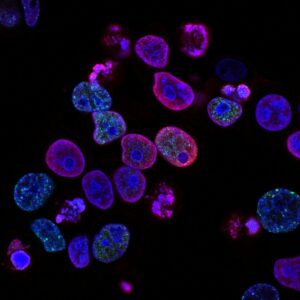
A new study conducted at the University of California, San Diego, led by Dr. Catriona Jamieson — a professor of medicine and director at the Sanford Stem Cell Institute — provides evidence that stem cells, which are crucial for regeneration, repair, and aging, struggle under space conditions.

At the genomic level (which, simply put, means your DNA), scientists found that under extreme stress, cells activate something called the “dark genome.” This causes parts of the DNA to become repetitive and awaken ancient viral fragments known as retroelements. The study observed that cells exposed to spaceflight for around 45 days showed clear activation of this previously dormant region of the genome.

The research used human hematopoietic stem and progenitor cells (HSPCs) — derived from bone-marrow donors here on Earth. These cells are essential for maintaining blood cell balance and play a key role in the immune system. The samples were sent aboard SpaceX Commercial Resupply Service (CRS) missions to the International Space Station (ISS) between December 2021 and March 2023.

The project, partly funded by NASA, involved collaboration between UC San Diego and several research partners.


This discovery has become a hot topic in the STEM world, since scientists still don’t fully understand the dark genome or its role in aging and disease. The findings raise big questions about human spaceflight — what does this mean for our dreams of building homes beyond Earth? Could long-term missions to Mars or the Moon accelerate aging or compromise health?

But as always, there’s a silver lining. “Space stem cells” are prompting scientists to study the dark genome more closely, which could deepen our understanding of diseases such as leukemia and pre-cancers, where stem cell regeneration fails. In the long run, what we learn in space could help us develop new therapies back on Earth.

Source: 1

Reading – An Amazing Form Of Entertainment

0

Reading is one of the most popular forms of entertainment worldwide. Many people love reading as it reduces stress and enables us to escape reality and immerse ourselves in the fictional world the author creates. There are several genres of books, from science fiction to historical. In this blog post, I will be explaining the benefits of reading, how to pick a book and some of my favourite novels to read.

Reasons to Read Books:

  • Reading strengthens your brain: Studies show that reading helps improve memory and critical thinking skills. Reading also helps improve your vocabulary as you are constantly encountering challenging words and learning more about their meanings. Reading is also a great way to effectively improve your creativity and imagination.
  • It is a free form of entertainment: Having a library card allows you to access many books, ranging in numerous genres. Many people read to help pass the time when they are bored.
  • Reading expands your knowledge: The more you read, the more you will be exposed to new ideas and perspectives, which can improve your cognitive thinking skills. Whether fiction or non-fiction, reading exposes you to new ways of thinking and diverse experiences.
  • Reading Reduces Stress: Studies have proven that reading helps reduce stress by a huge factor. Experts suggest reading at least 30 minutes a day to relieve stress.

How to Pick a Book:

One of the major barriers to reading is actually picking the book. Here I have listed some tips that help me choose novels to read.

  • Ask for recommendations from your friends and family. This is a great way to choose a novel, as these people know you really well and can suggest books according to your unique tastes. Asking for book recommendations is also a really amazing way to start conversations with new people and helps you increase bonding.
  • Choose a book in a genre that you love reading or something you are genuinely curious about.
  • Read about something in a genre that is new to you. It is always a good idea to step out of your comfort zone to read something new. Who knows, you might end up discovering a novel you really enjoy. Reading books from other authors is also a good idea, as you will be exposed to new perspectives.

My Favourite Novels:

Here I have listed some of my favourite novels that I recommend in no particular order.

  1. The Maze Runner Series by James Dashner – I really loved this book series because its plot is very unique and filled with mysteries. This is a dystopian series which involves fast-paced action and will always keep you on the edge of your seat.
  2. The Hunger Games Series by Suzanne Collins – I really loved this book series for its plot and amazing characters. This is a dystopian series which is filled with suspense, and it is written in first-person, meaning we get a full understanding of the internal feelings of the main character.
  3. The Loop Trilogy by Ben Oliver – This trilogy is an excellent novel series filled with suspense and is a wonderful page-turner. I loved reading it as the author had done an amazing job of portraying the characters’ emotions throughout the journey. It is science fiction set in the future, where the world is controlled by robots and artificial intelligence.

Sources: 1, 2

2025 Alberta Teachers’ Association Strike summary

0

Across Alberta classrooms, something important is happening to all Youth: starting at October 6, 2025, teachers represented by the Alberta Teachers’ Association (ATA) began a province-wide strike. In this strike, more than 51,000 teachers stopped working, affecting roughly 700,000- 750,000 students in public, separate and Francophone schools. But why all these happen?

What’s driving the strike?

There are three major issues that cause to this strike:

  1. Classroom conditions: Teachers argue that class sizes have grown and student needs (especially students needing extra support) are more complex and difficult than ever, which making effective teaching harder.
    • The total number (from grade 1 to grade 12) of students enrolled in 2020/2021 academic year is 734,794 to the total number of students enrolled in 2024/2025 academic year is 825,817, which the number increased by 12.39%
    • While the growth rate of the number of teachers only increased by 4% in these 4 years.
  2. Compensation: The ATA reports that teachers felt their proposed increases and workload didn’t reflect the realities of the job
    • The salary growth of the teacher in Alberta is 3.8% while our Consumer price index increase (2019-25) is 20.8%, our salary growth rate is far lower than other province like B.C. (Vancouver) 25.1%, Saskatchewan 15.9%, Manitoba 17.6% which they consumer price index increase similar than Alberta (~20%)
  3. Government funding and policy choices: While the government offered a 12% salary increase over four years and the hiring of 3,000 more teachers, the ATA rejected that offer as inadequate relative to the scale of change needed.

How student and schools are affected?

As a high school student, I am directly experiencing the ripple effects of the ongoing situation. Schools are paused, classes cancelled, and extracurricular activities put on hold. For senior students, diploma exams have become especially stressful, with schedules now filled with uncertainty. This instability can disrupt our learning rhythm, motivation, and overall well-being.

At the same time, it’s important to recognize that these suspensions and teacher absences are not without reason. Teachers have the right and freedom to stand up for fair working conditions, and their actions reflect the challenges within the education system. While this creates difficulties for students, it also helps us understand that education is shaped by more than classroom lessons — it’s influenced by policies, budgets, and the values our society places on teaching.

However, the challenges are real. Reduced instructional time, uncertainty about schedules, and potential impacts on university applications all create genuine concern. This situation calls for empathy and understanding, as it affects not only teachers but also students, families, and everyone connected to education.

A wider impact on education and society?

This strike raises an important question about how we invest in public service. If teachers are stretched thin and classrooms are crowded, what does that mean for the quality of education future generations receive? The government’s move to introduce back-to-work legislation (Back to School Act, Bill 2), to force teachers back as a political dimension. The use of emergency law to end labor action.


Sources:

https://teachers.ab.ca/news/ata-challenge-bill-2

https://www.alberta.ca/supporting-our-teachers-and-students

https://www.cbc.ca/lite/story/1.7632720

https://www.cbc.ca/news/canada/calgary/alberta-teacher-strike-funding-formula-class-size-data-9.6932618#:~:text=That%20gap%20has%20persisted%20through,by%20just%20eight%20per%20cent.

https://www.alberta.ca/student-population-statistics

https://teachers.ab.ca/news/watch-news-conference-historic-strike-hits-province

https://globalnews.ca/news/11487084/alberta-government-back-to-work-legislation-teachers-strike/

All on the Quantum Technology Breakthrough – 2025 Nobel Prize in Physics

0

Introduction

The recent winners of the 2025 Nobel Prize in Physics category presented efforts to apply the quantum mechanical effects on a larger scale that could lift barriers to revolutionizing technologies. Quantum tunnelling is the process by which a subatomic particle moves through a barrier based on its wave-like behaviour, with probability distributions, and ends up on the opposite side. The regular stuff you hear about motion is taught in classical physics. However, quantum mechanics raises the question of the nature of subatomic particles, to have what’d be needed to move across a barrier.

Recipients John Clarke, Michel H. Devoret, and John M. Martinis used the experiment of taking an electronic circuit made of superconductors that don’t experience resistance in producing a current that was separated by a layer of non-conductive material, called the Josephson junction. The system was designed to reveal its quantum nature, which, in tunnelling, made it possible to use voltage by changing from a state where no voltage was required for current flow. A system in a quantized state, as it’s able to absorb/emit certain amounts of energy. This discovery, although recognized relatively recently (experimented with in 1984-85), is a new stepping stone for the kinds of technologies that apply quantum mechanics and those that rely on them completely, known as quantum technologies.

But what is the subsection of physics, and why is it of any significance to technological developments?

Quantum mechanics has to do with anything subatomic, electrons, protons, neutrons, whose reactions have been later applied to areas of mass productivity in technology. The minuscule processes make for much bigger chain reactions, as used in GPS, MRI scanners, lasers, solar cells (converting light energy into electricity in solar panels), and quantum computing. Scientists have worked to find their own area of research, given the name for a technology that solves problems with higher capabilities than anything classical. Computers may reach unexpected heights in problem-solving and processing through concepts of superposition and entanglement. Typically, these quantum computers are suitable for complex work, as opposed to the usual MacBook or Windows. AI enhancement is an important part of modelling benefits and appropriate uses to speed up processes.

Connections to AI and what’s in store for it right now

Most top companies are all into quantum research that could take their inventions a step further. AI in the past three years has risen in your Google search tool, homework help, and social media. Digital technologies have been presented with the use of artificial intelligence in navigating systems faster and more easily, but issues with perhaps a built-up domination and keeping up with the job market can provide news of tools and a generation of devices second looks. The world of quantum technology offers an economy booming with quantum computing and other applications, as well as solutions to mitigate climate change and cryptography. Of course, we know that the best way to utilize technology is to put its power and development in the hands of ethical power. As of now, there’s more to be analyzed and experimented with before a reveal to the public, and occasionally searching up progress might make use of that innate curiosity instead of soaking up your screentime.

An interpretation of cultural impacts

The social culture of a humanistic way of living is threatened by the ecosystem created through innovative technologies. Homogenization of social culture that does not support the complexity of the human brain to form connections with others impacts mental health. A government may choose to override a system with AI, deeply influencing the beliefs and lifestyles of citizens around the world, but ignoring those in third-world countries that still have unresolved conflicts due to inequality and wealth, which you’ve seen in your news channels often. But I believe that no society, or world in general, will change for the better unless problems are effectively worked out. For youth, AI has affected our communication and humour, from emojis to AI-generated pictures, making it difficult to blend the components that made talking and making friends for well-being, with our economies, people, and quality of life in jeopardy. So, opening the discussion to these kinds of topics can be very useful in the critical analysis of technological innovation.

Final Notes

TL: DR; Discovery applying quantum tunnelling on a macroscopic scale that won a Nobel Prize will help revolutionize fields of human innovation and achievement, such as medicine, navigation, and digital technology. 

This was a completely new topic for me, so researching a bit was my best bet at writing a decent blog. Expanding the mind means many good things for your memory and cognitive development! Let me know if you’re curious about quantum technology and what exactly you hope it may give to humanity, or predictions on how it may be led in the opposite direction, as in implications for culture and the future of human innovation, etc.. I personally think that there’s so much newer tech can do, but it doesn’t need to be settled with the massive companies or necessarily free to the public for any action.

Thank you for clicking and reading. Stay tuned for the next one!

Sources:

https://www.nobelprize.org/prizes/physics/2025/press-release/

https://www.ibm.com/think/topics/quantum-computing

https://www.weforum.org/stories/2024/07/explainer-what-is-quantum-technology/

https://www.csis.org/analysis/quantum-technology-applications-and-implications

https://www.nature.com/articles/s41598-024-83995-z