Home Blog Page 140

8 Songs That Will Make You Cry

I like to think that I am a generally happy person– if you disregard the moments of school-induced stress and misery– and wish to spread this positivity to others. However, when it comes to music, movies, and literature, the ones that I cherish above all else are the ones that are able to evoke a level of sadness.

Here are my top 8 songs that I guarantee will make you tear up… or at least a little bit emotional.

8. Wasn’t Expecting That- Jamie Lawson

“Wasn’t Expecting That” by Jamie Lawson has been a favourite of mine since I first heard it in 2014. This song illustrates the story of a pure and loving relationship from the moment the couple meets, to the moment the partner passes away. The simple composition of the song, consisting solely of a guitar, piano, and vocals, gives the song a sweet and authentic vibe which is sure to charm the listener.

Then you closed your eyes, you took my heart by surprise…
I wasn’t expecting that.

7. The Fault in Our Stars- Troye Sivan

Before Troye Sivan’s music was being played on radio station’s worldwide, he was composing music on his own in his bedroom in Perth, Australia.  The song, “The Fault in Our Stars,” was written in 2013 after Sivan read John Green’s popular novel about two teenagers who meet at a cancer support group and fall in love.  The ending of the book, “The Fault in Our Stars” (I won’t spoil it), left Sivan heartbroken and he decided to channel this emotion into his songwriting. Sivan produced the song, uploaded it onto Tumblr, and later contacted his local hospital to film a music video that featured strong and brave cancer patients. The lyrics of the song not only helps to give strength to those who are battling cancer, but also to those who are struggling to overcome any obstacle or hardship.

I just want to see the stars with you.

6. Trapdoor- Twenty One Pilots

“Trapdoor” is a song from Twenty One Pilots self- titled album from 2009.  The song tells a story of an individual who, during the day, puts on a facade to fool people that he is okay, but at night, is consumed by darkness and suicidal thoughts. The story of this man is not uncommon. Although not all may be suicidal, many individuals go through their day-to-day lives “[throwing] on a mask” in order to conceal their unhappiness or in attempts to change their identity to try and be more liked by others. This song is a reminder of how important it is to treat everyone with kindness and respect because it is impossible to know what anyone is going through.

Everyone gather around for the show. Watch as this man disappears as we know.

5. This Isn’t the End- Owl City

Owl City’s song, “Fireflies,” has a very special place in my heart as every listen always brings me back to my grade 5 year in Toronto–a city and time that holds some of my fondest memories.  Owl City’s song, “This Isn’t the End,” is just as moving. Although the song has a dark and painful subject matter, the chorus sheds some light on this darkness with a positive and uplifting message.

He told her he loved her and then he was gone.

4. Supermarket Flowers- Ed Sheeran

Earlier this year, Ed Sheeran once again captivated the world with his new album, “Divide.” Although I had the entire album on repeat for months, my personal favorite song was “Supermarket Flowers.” Sheeran wrote this song for his grandmother who passed away, and he shares this loss through his music.

You were an angel in the shape of my mum.

3. When You Love Someone- James TW

“When You Love Someone,” tells the story of a child who is struggling with the consequences of his parent’s divorce. James TW shares that “[his] parents are happily married“, but wrote this song about a student he used to teach drums to who found out his parents were getting a divorce.

You got to believe us, it’s all for the best.

2. I Don’t Like Mondays- The Boomtown Rats

Brenda Spencer leaves court in Santa Ana, California after pleading guilty to two counts of murder.

“I Don’t Like Mondays,” was inspired by a tragic event that took place in San Diego, California in 1979. Sixteen-year-old Brenda Spencer lived in a house directly across the street from Grover Cleaveland Elementary School. On the morning of January 29, 1979, Brenda Spencer pulled out her rifle– a Christmas gift she had received from her dad– and started shooting at the children waiting outside the school. After firing thirty rounds of ammunition, eight children and a police officer were injured, and the principal and custodian were killed. When a journalist asked Spencer  about the reasoning behind this atrocious act, she simply responded with, “I don’t like Mondays.”

You are sure to feel shivers as you listen to this song and imagine the amount of pain and loss that was experienced by countless children and families on that fateful Monday morning.

And the lesson today is how to die.

1.Tea & Toast- Lucy Spraggan

This song speaks for itself. Simply press play and prepare yourself for a rollercoaster of emotion.

After dawn there will be sunshine, and all the dust will go.

 Image Source 1

From Sea to Sea: The Origins of Canada from Confederation

0

Although Canada is as vibrant and thriving a nation as ever in its history, its past should not be disregarded in lieu of prospects of the future – and at the core of all Canada stands for today is its founding from a single Act of legislation, from a tiny fraction of the landmass it now has.

Timeline of Canada’s territorial changes

Initially comprised of scattered British and French colonies, with 80% of people living a rural life, history sees Canadians at that time living a relatively passive life. Unlike its neighbor, the United States, Canada didn’t endure a civil war to stabilize. However, witnessing America’s violent and brutal civil war was arguably one of the most crucial reasons for our country’s making: British colonies saw the chaos as a result of a weak and divided government and advocated for a unified central authority. This would also protect the colonies collectively from American expansion, a perfectly rational fear given the recent radical movements of the States.

In the Civil War, the North defeated the South, who possessed British support. With a strong military after the war, the victorious faction harbored resentment towards the British – and, by extension, their colonies in North America – and there was talk of annexing parts of Rupert’s Land (a part of Canada). Harsh restrictions were imposed on previously free trade between the two bodies; unification of the colonies would offer a balance to the hit that the economy would inevitably take.

Delegates at the signing of the British North America Act

On 1 Sep. 1864, a conference was planned to discuss the proposal of Confederation, in which the Maritime colonies and the Province of Canada (in the general area we now know as Quebec and Ontario) participated. Any progress, however, was scarce: many colonies showed a disparity in perspective, but also suffered internal conflict between the passionate looking for a better future, and the already prosperous who viewed Confederation as risky and dangerous. It took a total of 3 conferences between 5 eastward colonies (the Province of Canada, Nova Scotia, New Brunswick, Newfoundland and PEI) to form a lasting unification – and only between the first 3. Regrettably, no First Nations parties were invited.

(In case you’re wondering, the Province of Canada later separated into Ontario and Quebec because of dissent among the English-speaking and Francophone communities.)

The original BNA Act

On 30 March 1867, America purchased Alaska from the Russians, validating colonial concern for America’s expansionist desires. There was also a growing opinion that Britain felt less and less inclined to defend its colonies, pushing delegates towards action. On 1 July of that same year, Nova Scotia, New Brunswick, and the PoC followed John A. MacDonald’s practical suggestions on how Confederation would be achieved to become the foundation of Canada, signing the British North America Act that would consolidate their territories.

All in all, Confederation would be the first step towards true independence from European origins, spurred along as much by domestic interests and nationalism as by external influence.

Sources: 1/2/3

Images: 1/2/3/4

This post explored the years 1867-1972 of Canadian History.

History of “O Canada”

0

Nothing is more patriotic to a country than its national anthem; for Canada, this is no different with our national anthem “O Canada”. Whether it is being sung at the start of a hockey game, before the start of an assembly, or after a Canadian wins a gold medal at the Olympics, the song is an important symbol of Canada for Canadians. Despite this, “O Canada” has only been the official national anthem for our country for less than 40 years.

Since Confederation, “God Save the Queen” (the national anthem of the United Kingdom) and “The Maple Leaf Forever” competed for the unofficial national anthems of Canada. However, both were unpopular among French Canadians, who searched for another national song. This is how “O Canada” came to be.

The tune to “O Canada” was written in 1880 by Calixa Lavalléeby and the lyrics were written by Sir Adolphe-Basile Routhier commissioned by the Lieutenant Governor of Quebec for Saint-Jean-Baptiste Day.  Originally called “Chant National”, the song was first performed on June 24, 1880, to a banquet in Quebec City.

After that, the song continued to gain popularity within Quebec. The first known performance of the song outside of Quebec occurred in 1901 by a group of school children for the Duke and Duchess of Cornwall on their tour of Canada.

The first English version was translated in 1906 by Thomas Bedford Richardson, and the lyrics were as follows:

O Canada! Our fathers’ land of old
Thy brow is crown’d with leaves of red and gold.
Beneath the shade of the Holy Cross
Thy children own their birth
No stains thy glorious annals gloss
Since valour shield thy hearth.
Almighty God! On thee we call
Defend our rights, forfend this nation’s thrall,
Defend our rights, forfend this nation’s thrall.

The most popular English translation of “O Canada” was created by Robert Stanley Weir in 1908. The current and final version was based on his translation, which was originally:

O Canada! Our home and native land!
True patriot love thou dost in us command.
We see thee rising fair, dear land,
The True North, strong and free;
And stand on guard, O Canada,

We stand on guard for thee.

Over the following decades, “O Canada” was believed to have become the de facto national anthem of Canada, however, regional bylaws and practices continue to vary.

In the mid-1960s, Prime Minister Lester B. Pearson created a committee to begin the process of establishing one song as the official national anthem of Canada.  The proposed motion was to establish “O Canada” as Canada’s national anthem, and “God Save the Queen” as the Royal Anthem of Canada. Despite this, it was not until July 1 of 1980 that the National Anthem Act was passed, which finally established “O Canada” as Canada’s national anthem.

Unknown to most people and rarely sung, there are three additional stanzas to “O Canada”, they are as follows:

O Canada! Where pines and maples grow.
Great prairies spread and lordly rivers flow.
How dear to us thy broad domain,
From East to Western sea.
Thou land of hope for all who toil!
Thou True North, strong and free!

Chorus:
God keep our land glorious and free!
O Canada, we stand on guard for thee.

O Canada! Beneath thy shining skies
May stalwart sons, and gentle maidens rise,
To keep thee steadfast through the years
From East to Western sea.
Our own beloved native land!
Our True North, strong and free!

Chorus

Ruler supreme, who hearest humble prayer,
Hold our Dominion in thy loving care;
Help us to find, O God, in thee
A lasting, rich reward,
As waiting for the better Day,
We ever stand on guard.

Chorus

“O Canada” has played a critical role in shaping Canada’s identity for the last 150 years, despite only officially being the national anthem for less than a third of that. In the future, “O Canada” will continue to be a symbol of Canada. You can enjoy our national anthem below.


Information Sources: 1/2

Image Sources: 1

This post explored the years 1877 – 1882 of Canadian History.

5 Superb Quotes Everyone Should Live By

0

Stressed out about an overwhelming amount of work? Perhaps an extremely close deadline that just makes you feel like giving up? Or maybe you’ve recently just had something drive a wedge between you and someone you really care about. Whatever it may be, we’ve all had those times; when you’re just completely at a loss of what to do and feel like you might as well stop trying. Speaking from experience, it feels pretty miserable to be stuck in any of these sorts of situations. That’s why, I’d like to share some of my favorite inspirational quotes with everyone! Uplifting quotes can really have an impact on people, and help them on their way out of the gloomy fogs in their heads. Even if you may not be in a difficult situation right now, some of these quotes may provide some motivation and a positive different outlook on life. (I know they do for me!) Anyways, enjoy!


1.”With the new day comes new strength and new thoughts.” – Eleanor Roosevelt

Some wise words from a great woman who has indeed experienced many losses and unfortunate events in her life. Think of every new day as an opportunity to have a fresh start in something. Don’t let the troubles of one day affect what happens in the next!


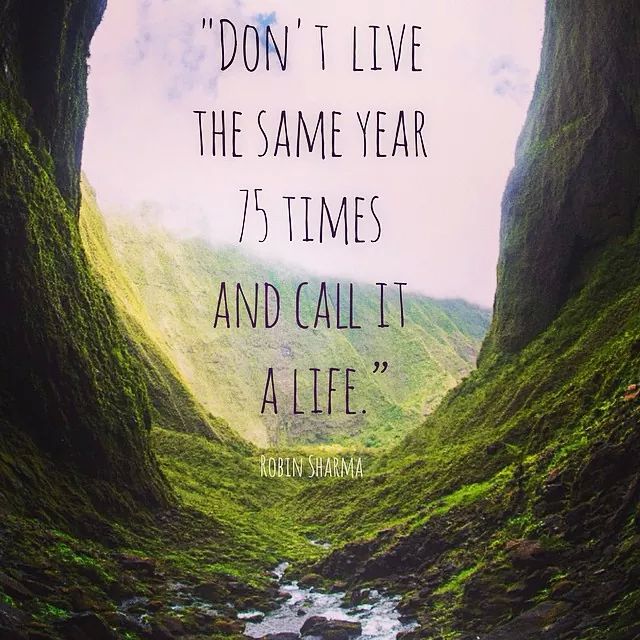
2. “Don’t live the same year 75 times and call it a life.” – Robin Sharma

A quote that speaks to how short our lives really are and how we need to make the most of it. Our lives are not meant to just be wasted. Don’t just stick to the familiar things in life all the time, try different things! Expand your boundaries!


3. “Build your own dreams, or someone else will hire you to build theirs.” – Farrah Gray

Don’t let others influence the important decisions that you make. Live the life YOU want to live. Achieve what YOU want to achieve.


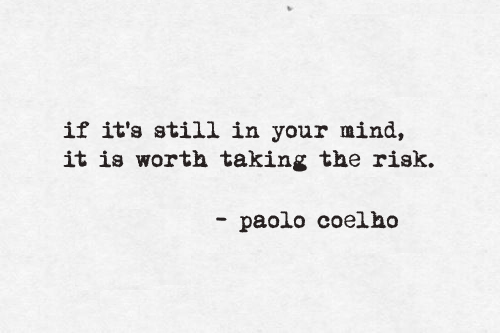
4. “If it’s still in your mind, it’s worth taking the risk.” – Paulo Coelho

Again, go for it! Don’t be afraid of stepping outside your comfort zone.


5. “When I was 5 years old, my mother always told me that happiness was the key to life. When I went to school, they asked me what I wanted to be when I grew up. I wrote down ‘happy.’ They told me that I didn’t understand the assignment, and I told them they didn’t understand life.” – John Lennon

Wow, that’s one sassy kid hey? But if you think about it, it does make sense. Why would you want to spend your entire life unhappy? You’d just end up regretting it in the end.


Image Sources 1/2/3/4/5/6.

Motivation

0
Too many times have I tried to get myself to work, only to fail because of lacking motivation. I question- do I really have to finish now? Is it possible to do this later, when I feel like it? A lack of motivation can be a problem in anything, from not wanting to finish an assignment to questioning why it is we do anything. Often times, we don’t do any sort of work until we feel motivated, so in a way our productivity is totally dependent on our often fleeting motivations.


But there is one thing I want to question- do we dwell too much on the matter? That is to say, are we overthinking our need for motivation?


This isn’t to say I believe we don’t need motivation; quite to the contrary, I myself need a lot to continue working. To be truly motivated though- that really is a great thing, leading you not only to achieve your desires, but also making you feel purposeful in what you’re doing. In the end, all of us want to feel we’re fulfilling some sort of purpose, whether it be great or small. Thus, there is no question as to how wonderful it is to be motivated- a great many of us can attest to that.


But what about when we don’t feel motivated at all? After all, when we feel there’s no reason to do something, it’s only natural that we don’t do it. What about when we realize the great amount of work we have to get done, and blame our desire to avoid it on a lack of motivation? Rather than doing any work, we sometimes begin to question why we would have to do it at all, and we often reach the conclusion we hope for- that we really don’t have to do our work and thus, we can push it away for the time being. This could be highly detrimental, as it encourages the procrastination we’re only too well acquainted with and we could avoid doing a lot of important work.


In that sort of situation, perhaps it would be interesting to think of motivation as… something we will find later, something we will work to find. Perhaps it is better to continue working at what we’re doing even if we don’t feel motivated at the time, possibly even for the sake of finding motivation later.

But this in turn introduces the possibility of wasting your life looking for motivation in places where it’s not to be found. This idea seems scary, but it could be avoided- here’s how:
Imagine you do work at a task that you were once motivated to do, and though you’re no longer as motivated ,you remember how great it was when you were and thus, you continue to work at it, hoping to once again find the passion and resulting motivation you once had. In this situation, the passion may be gone, but is the motivation truly ever gone? I’d argue no, because now rather than being motivated to work at whatever you’re doing for the sake of passion, you’re motivated to work to find another passion that you’d in turn find motivation to work for once again. ‘Seek and you shall find;’ continue motivating yourself, and you’ll even find a new passion. Thus, it can be seen that in the event that one loses a passion, they needn’t lose their motivation too- all they need to do is work to find a new passion, which will in turn bring motivation to their lives.


Perhaps to excuse avoiding work on a lack of motivation isn’t a good idea, but it is important to recognize it’s importance. After all, anything humanity has accomplished has been fueled by some sort of motivation. All in all, it’s always a good idea to find something you’re passionate about and will be motivated to work for!
1/2/3/4/5/6/7

Billionths

0

“Three days before I toss your raggedy behind on the streets!” A slam of the creaky front door punctuated the end of the landlord’s cry. When his footsteps faded down the staircase, she lifted the blanket of scribbles from her desk, revealing an intricate web of yarn attached to pictures and silhouettes. Opening the drawer to her left, Tally retrieved her leather-bound notebook and flipped to a dog-eared page. She flipped through a few more before finding a list of names, then frowned over the intricate map on the desk. In the pocket of her slacks, her phone pinged.

Tally unlocked the message. Nothing, it read. Not even a glance. She locked the phone and pocketed the device.

The footsteps were so soft she didn’t hear them at first. It was only midway up the stairs that the famous old step groaned under someone’s weight. She immediately straightened. Tally had had just enough time to shuffle her papers before a tentative knock sounded at her door. Reaching behind her, she flicked off the safety of her handgun, tucked into the waistband of her pants.

A click, and the door revealed a young woman, perhaps in her mid-twenties, with wavy brown hair and fresh unmade cheeks. Her eyes were puffy and bright from the glare of tears. By her sides, the young woman’s hands shook.

“Can I help you?”

“M-Ms. Rohm you have to help me! Please!” she cried, and promptly reached out to clutch Tally’s arm. She sidestepped the lady just in time, gesturing for her to enter. The woman did, folding herself into the chair directly across Tally’s desk.

Settling herself in, Tally opened her notebook to a fresh page. “Name and date of birth, please,” she said.

“Wait,” the woman sniffled. “I’m not sure if I want to hire you yet.”

“It’s an outdated business, sure. But as a private investigator I must keep a record of all visitors for safety reasons. Name and date of birth, please.”

“Jocelyn Hassan. November 22nd, 1992.”

“Start from the very beginning, Jocelyn.”

“It -” Before she’d even gotten to the second word, Jocelyn burst into tears. Great, wracking sobs shook her small frame. She blubbered something, but it was lost in the onslaught of wave after wave of grief. Tally rose, her impatience rising, and retrieved the box of tissues from her nightstand. It took Jocelyn a good ten minutes before she collected herself and her bouncy brown curls.

“Last night, my fiance told me that she was heading to the bar with ‘an old friend’. I should have known that something wasn’t right when she said that. So, I told her I’d go for a little bit, see if she’s okay, all of that. She’s innovating something ultra cutting-edge, and recently her competitors have been giving her a lot of pressure. I figured she might be meeting the old friend who just happened to be her biggest competitor, and I just didn’t want to leave her vulnerable in a place like that. She avoided me as soon as I drove her there, and I lost her in the crowd, so I texted her later on to text me if she’s alright. We’d agreed in the car that I would be her driver. I went home, fell asleep on the couch, and the next day, she still wasn’t home. I then saw that I had multiple missed calls from an unknown number, which turned out to be the bar owner’s, and I called back only to find that she’s – that she’s…” Tally sighed when the girl broke down again.

She couldn’t deny, however, that it was an interesting case. A fascinating one, if she could rule out alcohol poisoning or drug abuse. Perhaps a real, live murder. One that could get her the paycheck she needed to save her raggedy behind. Under her desk, beyond the scope of Jocelyn’s eyes, she shot a text.

It seems there must have been at least one glance, she retorted. Body of a woman came in from a bar last night, correct? Send autopsy report asap.

“There’s no way she could have died from a medical condition? Or poisoning or drug use of some kind?”

Jocelyn shook her head vehemently. “It’s that damned ‘old friend’, I’m telling you! Oh, Ms. Rohm, you have to help me!”

“And…what is this invention?”

The girl’s entire demeanour retracted inward at her question. “It’s highly classified,” she whispered. “I’m not sure if I can tell you. Scratch that, I don’t even know if I understand it. But if it helps, my fiance was a specialist in nanotechnology. If she had gotten that developed and patented, she would have made billions.”

“Using technology at the billionth of a metre.”

“That’s right, Ms. Rohm.”

“What else can you tell me, Jocelyn?”

“Well…”

Her phone vibrated. Tally quickly glanced down at the unlocked message.

On it.

Winter Footprints

Winter officially starts in about a month, but snow is everywhere in Calgary right now. The first snow of the year is so enchanting, but slowly and surely, with dirt and melting, the snow turns into a grey nasty slush that does nothing but gets your socks wet and cold. However, just after it first falls, and before it degrades, you can see footprints in the snow. Single footprints, many footprints, it doesn’t really matter to us. But these footprints mean something to the ones who made them. This poem is about those footprints.


Walking, waiting

Waking in the winter wind.

To a sight seen before.

Fresh snow on the ground.

Soft, smooth, sweetly soothing

Like a blanket, on the floor.

A gentle cold touch,

Drifting down from the sky,

Cast off from the heavens,

Flowing in the wind’s sigh.

Covering things we wish to cover

Sins that have been seen.

All the times we fell and failed.

Or faded to a dead brown, from a lush green.

Some patches of snow

Are marked with sets of footsteps

Some with many, some with one.

But even alone, steps tells a story.

A tragedy? A comedy?

Who knows which way this will run?

Some steps stand in solitude

Their partners long faded away.

Some are overrun by the feet of others.

Never to go as far as they.

Slow saddened steps,

A leaden brush, painting the snow

Center stage, with the tale of the broken.

Played out for all to know.

Struggling steps

Raging, fighting, racing against fate.

Finally at the finish line,

to be met with a closed gate.

Looking, longing, and at the places that rejected them.

The places they were never meant to go.

The places where the steps are happy.

Leaping through the snow.

Huge strides and bounds!

Easily reaching above the rest

So fast! So far!

Soaring above the winter drifts,

That bury the bodies of those who fall.

Or footprints that struggle,

But still, they seek.

Climbing higher and higher

Until they reach the peak.

Starting as one pair.

Joined by another.

There are hard times

Through it all, they stay together.

New little footprints

They run around and play.

Growing larger and larger.

Until they go their separate ways.

And, some patches of snow.

Have no footprints at all.

No story. No journey.

No rise. No fall.

No risk, and no reward.

Like thinking a sentence

Without saying a word.

The perfect snow may be beautiful.

No struggle or sadness to be found.

It is far more lovely

Than the sad steps.

Or even the happy steps.

But, the blank snow.

Is just that,

Nothing lost, and nothing gained.

But in the end

Why does perfection matter.

When all the snow melts away.


You can fight. You can struggle. You might fail. You might succeed. But first, you have to start. Every corpse of Mt. Everest was an extremely motivated person. That corpse made it infinitely closer to reaching the top than the living person who never even tried.

Fear of failure might stop you from start things, but that’s just one possibility. The other is succeeding.


Marcus Chung

What to See in YYC: November 25-26, 2017

Here are some of this weekend’s event listings— lots of performances and shopping sprees, just in time for the weekend after Black Friday! Shall we splurge to our heart’s content?

Calgary Expo Holiday Market

When: November 25 from 10:00 AM-6:00 PM and November 26 from 10:00 AM-5:00 PM

Where: Hall B/C, BMO Centre, Stampede Park

Cost: $10 admission

Let’s kick this list off with the event that I’m personally the most excited for— and if you’re a fellow nerd who loves the whole Calgary Comic Expo merchandise experience, you will want to check this out! Local artists, retailers, and vendors are selling their goods at this huge holiday shopping event. If you missed out on other comic-related markets during conventions like the Calgary Expo and Otafest, then this is a great opportunity for a cheap admission fee. Whether you need to buy some holiday gifts for your other geeky friends or you need to treat yourself, there is bound to be something you’ll want to purchase from the list of artists/vendors on the event website!

Mary Zimmerman’s Metamorphoses

When: November 24 -25 at 7:30 p.m. and November 26 at 2 p.m.

Where: Reeves Theatre, University of Calgary, 210 University Court NW

Cost: $21 for Adults and $16 for Students/Seniors


The University of Calgary’s School of Creative and Performing Arts is performing their fall production, which leads the audience through some myths from Ovid’s quintessential poem. If Greek and Roman mythology strikes your fancy, check out this performance and support the university’s young actors— expect figures like Midas, Orpheus & Eurydice, Narcissus, and Eros & Psyche to make their appearance!

It is a play about renewal and perception — a stunning testament to how we, as a society, have come to ignore our mythic side despite the fact that humanity has changed very little since the beginning of time.” 

Curated Holiday Market

When: Fridays 10:00 AM to 9:00 PM, Saturdays 10:00 AM to 6:00 PM, Sundays 11:00 AM to 5:00 PM starting November 24, 2017

Where: Deerfoot City, 901 64 Ave. NE

Cost: $4 admission

Rounding out the list with another holiday market with a cheap admission fee, this time in the North area of the city. Deerfoot City (formerly Deerfoot Mall) hasn’t been receiving a lot of love during its total renovation into an open-air campus, but this event draws in entrepreneurs and their creative, handmade products available for purchase. This market runs for four weeks starting November 24, 2017 with 85 different curators each week, so it is a new experience every time you attend. Check out the list of vendors on the event website, among categories like jewelry, home decor, hygiene, clothing, and edibles!

Happy [controlled] spending!

Image Sources: 1/2/3/Featured

Nervous

A poem about that inevitable feeling

A knot twists at your insides

Pulling this way, tugging that way.

Your hands quiver

Like frozen leaves.

The tip of your nose is frozen

But your heart tries to break out

Of its bone and ligament enclosure.

That essential, blood-pumping organ

Is pounding

Like a bread maker nearing the end of its life

… Wait, what?

Your thoughts scatter all over the place.

You try to focus

Breathe in…

Breathe out…

Then the leg-jittering begins again

And the clicking of the pen

Calms you

While also irritating you.

Clickety clack

Clickety clack

Clickety clack click clack click clack

Let’s try that breath again.

Breathe in…

Breathe out…

Breathe in, Breathe out

BreatheinbreatheoutbreatheinbreatheoutBREATHEINBREATHEOUT


…And now you’re exhausted from being so nervous


Image source: 1

Procrastination: Possibly Beneficial?

0

I can still recall the glorious days when I thought procrastination was, for me, impossible. How naive I was back then…

I remember, once, when my Grade 9 teacher assigned us an essay to be handed in a week later, and also gave us in-class time to work on it. I remember my friends exchanging grins with one another, all sharing in the same not-so-secret joke that they hadn’t been given a week to write the essay, but only the night before. I remember working hard in class that first day to finish the essay, while my friends guiltily enjoyed the ‘free time’ they had been given by opening a word doc, saving it, and pushing their laptops aside so as not to disturb the circle they sat in, on the fluffy carpet we used to have in our class. Flash-forward to the next day — I came into class with a finished essay, and without looking at it again, I joined my ring of friends, telling them, to their surprise, that I was done. Thus I, too, was able to enjoy time with friends after getting my work over and done with, and I’ll confess I did find it amusing when the night before it was due, they came to me to proofread their papers.

The thing is, my essay wasn’t the best either. I wanted to finish too quickly, and thus used the first ideas that came to mind, rather than reflecting and structuring the best ideas before writing the essay. But in any case, I was done, and at the time I thought reaching this finish line, and getting there first, was all that mattered. Quality? Nah, and not quantity either- just to be done was what I thought of as good.

So it’s funny that while extreme procrastination led to a bad essay, as expected, the other extreme of rushing to finish my work ASAP also stopped me from writing the best essay. I’m not here to tell you extreme procrastination is good — all of us are familiar with the failure of last-second attempts to do anything. Especially since beginning high school, especially over this past year, I’ve begun to fall for procrastination again and again, to my enormous shame, and I would never go about promoting the misery I feel every time I procrastinate.

It’s not just me (and I’m not sure if this is a comfort), but procrastination appears to simply be a part of human nature. No matter what, there will always be something we leave to do later. But I want to ask: is it so bad?

To what extent (pardon the use of this generic social studies phrase) do our procrastinatory tendencies actually allow us to later excel?

There has actually been research to indicate the most successful of us tend to procrastinate a little (definitely watch this TED Talk below!) while others with zero or extreme procrastination tend not to be as successful… So there’s hope for we who procrastinate! This is in part due to moderate procrastination leaving a bit of time between receiving and doing a task, and allowing an idea to ‘settle’ a little in your mind before taking action can result in these ideas maturing and gaining more potential in this time. Hesitating a bit and leaving some work for later actually leaves room for inspiration, and so procrastinating a little and allowing for there to be time to reflect really can help with developing the best ideas.

Perhaps this is a little bit extreme… but you get the point!

Procrastination doesn’t have to be extreme to be considered procrastination- it’s just that extreme procrastination has grown to be the most famous, as it is often seen as ‘relatable’ and ’tis quite amusing to think others are in the same or worse situation than ourselves. Moderate procrastination is kind of like procrastination’s half-brother — the one who works more behind-the-scenes while the famous sibling gets all the attention.

Funny then, that though I used to think getting work done as early as possible was best, this isn’t exactly the case. What happened in Grade 9 reflects the two extremes — no procrastination on my part, and extreme procrastination on my friend’s part. Perhaps the best thing for all of us to have done was to let the topic of the essay sink in for a day and then to finish it in the next couple days. My wanting to finish it immediately left me no room for creative thought; my friends’ leaving the essay to the last minute left them no room for creative thought either. Rather, the most successful students with the best essays aren’t those who rush to finish or leave it to the last minute — they’re actually the ones who first take a moment to think, then write in good time. Thus, one may call this ‘limited’ or ‘moderate’ procrastination, and in any case, it’s been the method that yields the most success in my experience.

Procrastination is inevitable — that, we know. However, we can all work to limit the extreme version of procrastination by planning out our work, while at the same time realizing that there is value to be found in procrastinating a little. That being said, don’t procrastinate too much — trying to find inspiration at 3:00 AM doesn’t work out well, trust me!


Image sources: 1/2/3/4/

TV Recommendation: The Office (US)

0

This has been a long time coming. For as long as I continue to appreciate television, The Office will always hold a special place in my heart.

Is it weird to get sentimental over a TV show? Probably. But hear me out. For 9 seasons, I’ve seen the characters of The Office develop. I’ve seen their characters grow. And of course, throughout all that time, they would make me laugh, sometimes nearly to the point of tears.

If you have never watched this show, do yourself a favor and start it right now. Don’t think too much about it. After you finish reading this, just search it up on your Netflix page and click play. I guarantee you won’t regret it.

What’s it about?

There is a stereotype of office jobs being some of the most boring occupations in existence, often with a crazy, narcissistic boss to top it off. That stereotype is the entire premise of this show, however the lives of the characters are anything but boring.

Set in Scranton, Pennsylvania, the series depicts the day-to-day of a regional branch of Dunder Mifflin, a fictional paper company. The series essentially revolves around the antics of the branch’s manager, Michael Scott. Michael is incredibly lacking in practically any sort of real management or business skills, and is basically only in his position because of the amount of time he has remained with the company. At first glance, he’s essentially a two-dimensional imbecile; crude, ignorant, sexist, and more than a few times racist. Of course, this often plays out on the screen in hilarious fashion.

But there is more to Michael than meets the eye. Despite his often hurtful and offensive behavior towards his employees (where he himself is unaware that his actions are hurtful and offensive), Michael genuinely cares about the success of his branch and the quality of life of his workers. Behind his ignorance is a good heart, and by the end of the series, the entire office comes to realize this, with Michael forming close bonds with his co-workers who initially despised him.

Yet the series is far more than a character study of Michael Scott. The entire Scranton branch of Dunder Mifflin is filled with interesting characters. We witness the personal growth of all of these individuals, and come to love them for their very distinct personalities. One such character, Dwight Schrute, is quite possibly one of the greatest fictional characters of all time. I won’t reveal too much as to why I think that. I promise you that upon starting the series, you will quickly learn why.

Why is it good?

There are so many reasons why I love this show.

Maybe most importantly, it’s funny. I totally understand that comedy is somewhat subjective from person to person, but I have yet to find a single person who does not laugh when I show them some of my favorite Office scenes. The absurdity of some of the events that take place in an otherwise normal office space, in conjunction with what we know about the characters involved, makes for one hilarious show. I also wouldn’t doubt that people with jobs who find The Office enjoyable at least partially base this on the fact that they can relate to some of the aspects of corporate life in North America.

The above also makes the show oh-so-quotable. Some of my personal favorites are:

But beyond simple comedy, I love the show because it has heart. You really see the relationships of this closely-knit office branch develop, and as the series progresses, you really get to know some of the subtleties and idiosyncrasies of their characters. I know that sounds cheesy, because they are fictional television characters, but the writing of the show is truly top-notch in making this true.


Seriously, watch this show.


Image Sources:

[Banner] [1] [2] [3]

The Invention of the Telephone

0

It’s a Saturday morning. I’m in my bed, snoozing away. All of a sudden, I’m startled and I wake up due to a terrible ringing sound. I pick up the phone with annoyance, and I’m appalled when they ask for an appointment at Chatters hair salon. Turns out it was the wrong number. I grumpily go back to sleep.

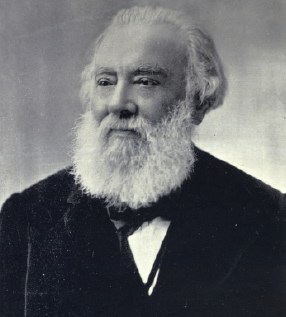
When reading that small excerpt, one thing that nobody usually thinks about is the origins of the telephone – one of the great sources of Canadian pride. In 1873, Alexander Graham Bell disclosed the invention of the telephone for the first time – a massive innovation that would change the world as we know it.
Alexander Graham Bell was born on March 3, 1847, in Edinburgh, Scotland. When visiting North America, Bell’s father discovered its robust environment and decided to move along with his entire family to the USA. Mr. Bell spent his time split between research in the USA and in Canada. He became a Professor of Vocal Physiology in Boston. He avidly studied sounds and how deafness worked, and this lead to the famous experiment that inspired the first practical telephone.

On June 2, 1875, Bell and his assistant, Thomas Watson conducted an experiment that involved sound waves when a reed on one end of a line got stuck and could not transmit the current. Watson plucked the reed to fix it, and to Bell’s astonishment, he could hear the plucking sound from his side of the line. This inspired him to look deeper, and he found that by placing the reed in a specialized magnetic field, he would be able to capture and transmit vocal sounds effectively.

He tested the telephone by setting the receivers up in different rooms, linked by a cord, and spoke into it. Bell asked, “Do you understand what I say?” and Watson responded “Yes” in a different room. This was the first successful test of a telephone. Clearly, this model had its limitations, as it was only able to transmit signals short range, and it often broke. Nonetheless, this innovation by a Canadian scientist sent shock waves throughout the world, and the telephone technology from Bell would be improved upon continually to reach the modern day telephone.

When we look around us today, we see the phone in many forms. Although today’s telephones do not even remotely resemble Bell’s original invention, we as Canadians should feel pride in knowing that a Canadian inventor started developing this technology that would go on to revolutionize the world.

Information sources: 1/2

Image sources: 1/2

This post explored the years 1872-1877 of Canadian history


1885: The Establishment of Banff National Park

In the mid-1880s, a series of events that would crucially influence the preservation of Canada’s natural beauty happened right here, in the province of Alberta. It is the establishment of Banff National Park, the first of many of its kind that would be found across Canada. Our province’s national parks are little gems to enjoy front and backcountry camping, hiking, skiing, wildlife photography, and many other activities. But how did it all start?

The area where Banff National Park is today was inhabited by First Nations tribes such as the Kootenay, Stoney, Blood, Peigan, Siksika and Tsuu T’ina. The Rocky Mountains were a plentiful area for hunting and the flora held several medicinal properties, along with the natural hot springs. Not only that, but the Aboriginals served as guides to the Europeans who explored the land. The handling of the land by the Aboriginals is too often overlooked— the respect that they paid to the land ensured that the European settlers and future generations could fully enjoy the beautiful landscape. 

Finding the Cave and Basin Hot Springs ft. the original ladder

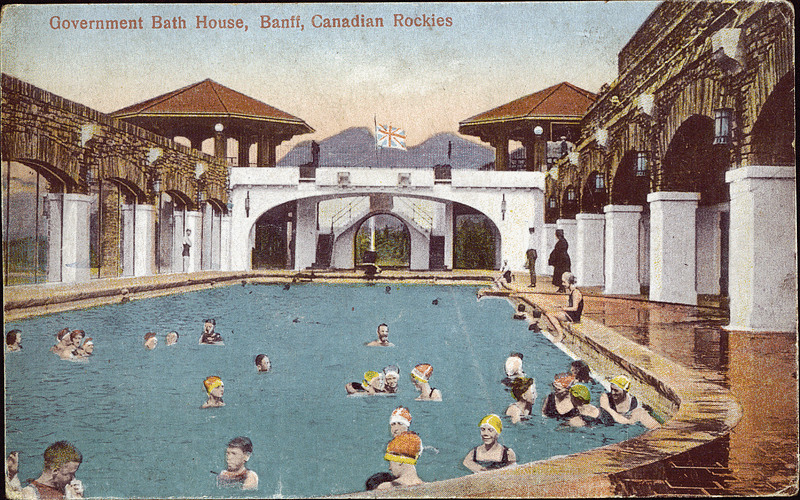
The establishment of Banff starts in 1883 when three Canadian Pacific Railway workers (William McCardell, his brother Tom McCardell, and Frank McCabe) stumbled on hot springs on Sulphur Mountain. Understandably, these hot springs were acknowledged as a potential hot tourist attraction — I mean, who wouldn’t be able to resist sliding into steaming hot waters after a long day of work? These railway workers saw a great opportunity to make some money out of the soothing and warm mineral water, but they were denied ownership of the land and instead, the Canadian Government declared that the hot springs and the surrounding 26 square-kilometre land could not be claimed in 1885. Banff National Park was officially established in 1887 after the Rocky Mountains Park Act, with the reserve expanding to encompass 665 square-kilometres. Today, these hot springs are known as the Cave & Basin National Historic Site, the birthplace of eventually all of Canada’s National Parks.

A postcard from the 1920s of people swimming in Government Bath House. This was later shut down in 1992.
Been hiking since I was 4! Born and raised adventurers.

Personally, Banff National Park has become a cornerstone of my life. Ever since early childhood, my family has gone camping in Banff and neighbouring national parks every summer. Admittedly, I wasn’t ecstatic all of the time — hiking to a mountain summit every consecutive day can get boring AND exhausting for a child— but over the years, I’ve truly realized how lucky us Albertans are to have this beautiful, accessible stretch of land. Many of my fond memories come from Banff, whether it was playing cards with family in front of the campfire, the tradition of hiking up Sulphur Mountain every year, exploring new trails (and revisiting previous ones), eating fudge and ice cream from The Fudgery and COWS, or frantically running around in Banff and Lake Louise playing Pokemon Go just last summer (at the peak of its popularity, the temptation was too hard to resist…). NOT following my previous example, going on a trip to Banff National Park is a great way to escape city life and just enjoy spending time with family, without the distraction of technology and social media.

Family at Lake Louise: 2005 vs. 2016!

Banff National Park, simply put, has so much to offer; if you don’t fancy hiking, there are many other activities to do in Banff. Banff is home to sightseeing tours through the icefields, national historic sites and museums, hearty dining, horseback riding, fishing, climbing, and several winter sports. Since it is Canada’s 150th anniversary of Confederation, it is crucial that we reflect on the past to acknowledge what we have in the present. As a society, we don’t typically take the liberty to educate ourselves about WHY and HOW an aspect of our lives came to be. If your family members aren’t particularly outdoorsy people, it can also be the time to appreciate something that is so close to our city. Furthermore, Parks Canada is welcoming all visitors to its National Parks with free admission in 2017 for the 150th anniversary, so it’s a great time to join in with the celebration and explore the wonders of Banff!

Sources: (1) (2) (3) (4) (5)

Images: (1) (2)

This post explored the years 1882-1887 of Canadian history

A Pet Project: The Criminal Code of Canada

0

I’ll bet Sir John Sparrow David Thompson, Minister of Justice of Canada in 1892, could never have imagined that a small, personal project could one day become the code upon which justice is determined in Canada.

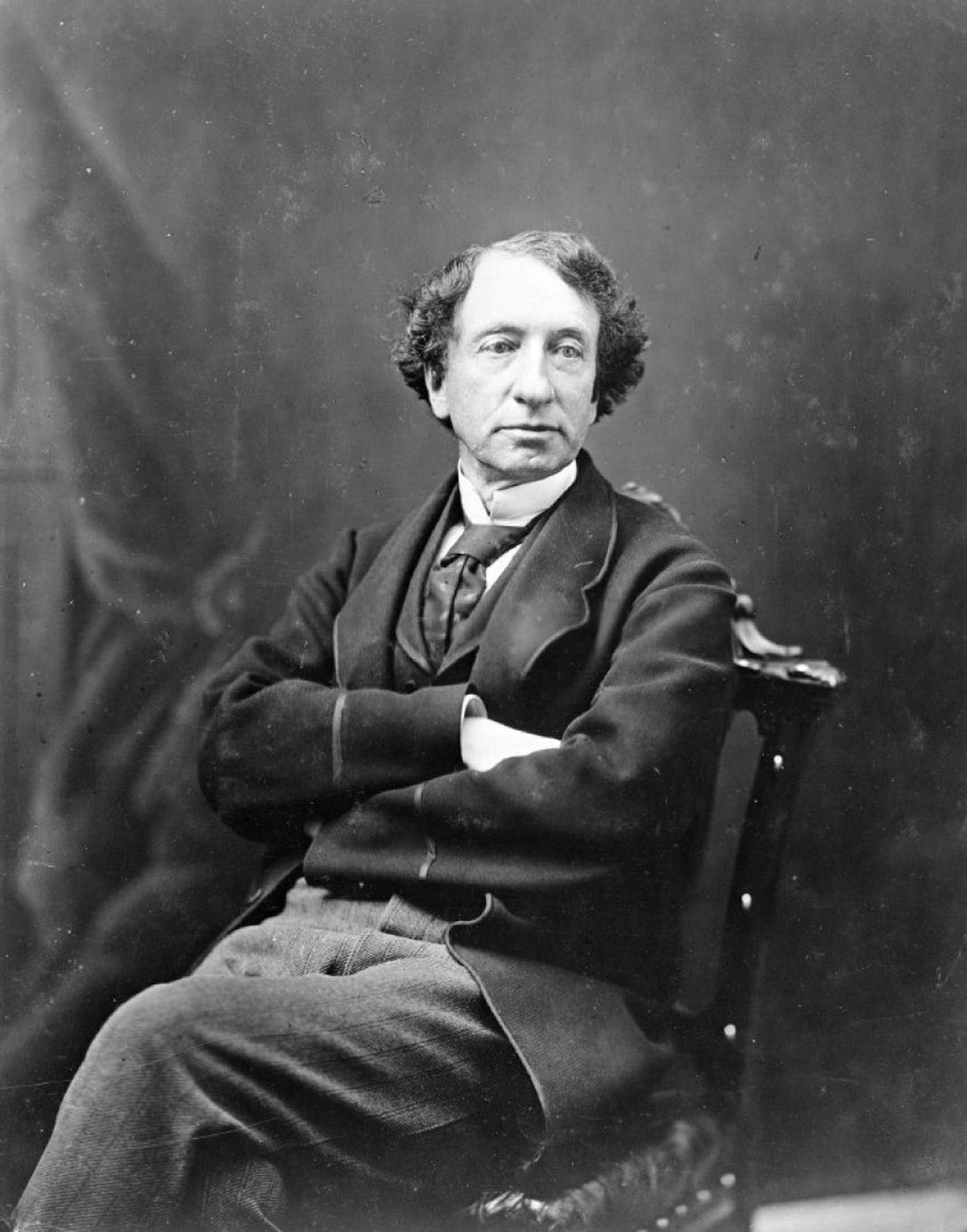
After its confederation in 1867, Sir John A. Macdonald (photo below), then Prime Minister of Canada, was determined not to let the justice system in Canada fall to disparity. Initially based off of the Stephen Code in Britain, the Criminal Code of Canada began as a set of nine statutes in 1869, dealing with coinage offences (counterfeits), forgery, offences against the person, larceny (theft), malicious injury to properties (in other words, vandalism), perjury (lying under oath), and procedure (the process of judging someone who has committed a crime).

File:Macdonald1872.jpg

In July of 1892, the Criminal Code of Canada was finally published. It addressed many more areas than the nine statues above, including laws against animal cruelty and the definition of cattle, for instance. Death sentences and whipping were still appropriate punishments, however, the code was kind enough to wait for pregnant women to give birth before executing them. After its publication, the criminal code was just the sort of document that Prime Minister Macdonald had needed, and its contents united the country together in a common pursuit of justice.

It’s evident that we’ve come far from the criminal code written in mid-1892. The death sentence is no longer acceptable in our society. However, progress in time also means that there are much more complexities in today’s criminal code than those simple nine statutes stated in the code’s conception. Expanding technology and globalization means that cyber-security, terrorism, and narcotics have gotten their own section within the system. As the youth of today’s world, we should recognize that we are next to inherit the world and to call it our own. As such, the responsibility lies in our hands to ensure that our actions and our beliefs should change this code to further empower others, and not add to the list of never-ending crimes.

Image Sources 1/2

Information Sources: 1/2/3

This post explored the years 1887-1892 of Canadian history

The Klondike Gold Rush

When most people think of the Yukon Territory, they think of a barren land of ice and snow which few people want to live in. However, there was a time in history, especially between 1896-1899, when people flocked to the Yukon in the thousands from around North America.

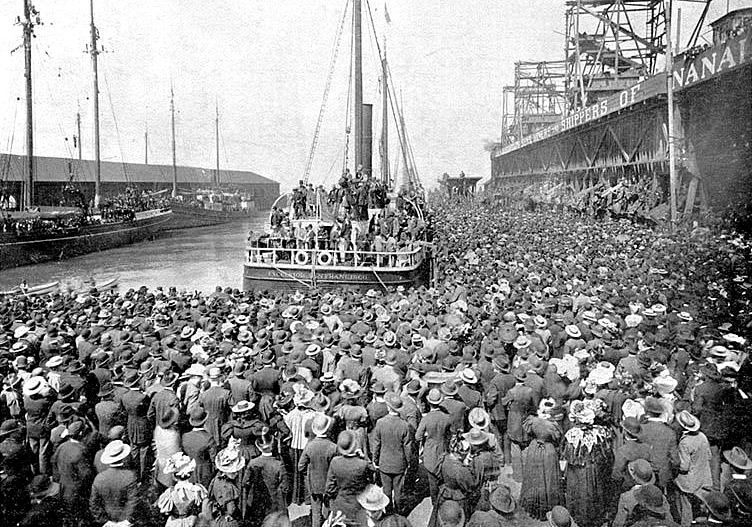
San Francisco, July 1897. The steamship Excelsior leaves San Francisco on July 28, 1897, for the Klondike
A ship bound for the Klondike departing San Francisco

This event is known as the Klondike Gold Rush, which began on August 16, 1896, when local miners in a region known as the Klondike (a region of what is now Yukon) discovered gold. The next year, news reached Seattle and San Francisco which sparked a mass migration of an estimated 100,000 people who flocked to the Klondike in hopes that they could strike rich.

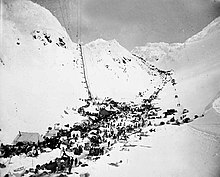
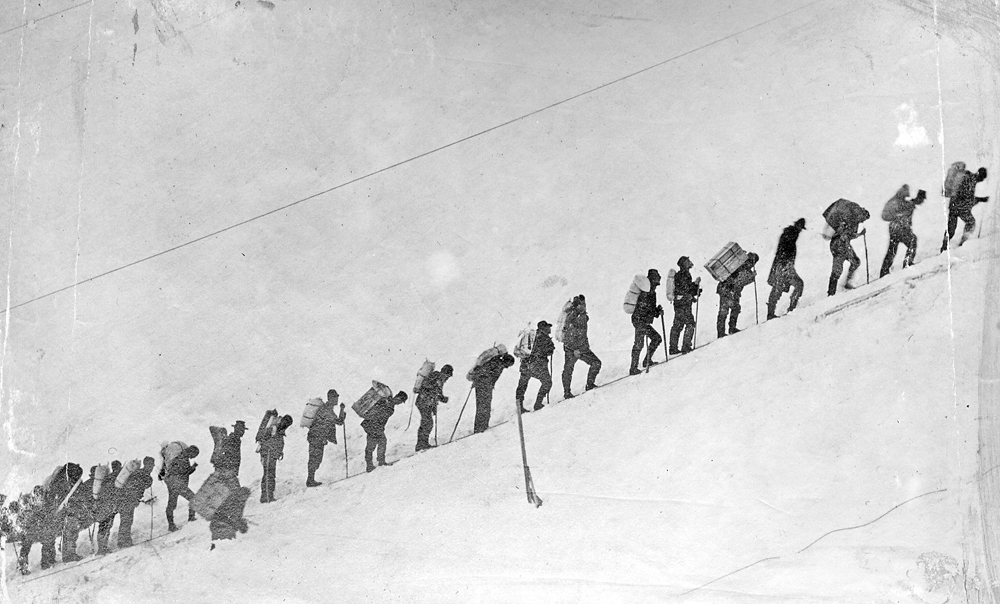
There were a few ways of reaching the Klondike; the most popular was to board a ship headed for the Alaskan ports of Skagway and Dyea, where they would travel a further 48 km over the mountain ranges into Canada, and then ride the Yukon River downstream into the heart of the gold rush, Dawson City.

Prospectors with supplies at The Chilkoot Pass. In front: The Scales. Left: Golden Steps, right: Pederson Pass. March–April 1898
An example of a boom town where prospectors would gather

Along the way, many boom towns were created where many prospectors would gather. These towns were often chaotic, crowded, disorganized, and filthy. Within proper cities, such as Skagway and Dawson City, the situation was better. Although in the US cities, corruption and disorganization were present, in Dawson City, the NWMP kept the city relatively lawful. However, the remoteness caused high prices in food (eggs went up to $81 each in today’s dollars), and the high demand led land to be scarce and extremely expensive. Although, many of the richer people continued to live lavish lifestyles with heavy drinking and gambling.

Ultimately, of the tens of thousands of people that reached Dawson City, only a few thousand ever found any gold and only a few hundred of those became rich. However, only a handful of people kept their fortune. Many lost their fortune with future poor investments, gambling, or alcohol.

People leaving Dawson for Nome, Sep. 1899
People leaving Dawson City for Nome, Alaska

By 1899, the Klondike region had advanced immensely. A telegraphy system was established between Skagway and Dawson City, and a railway was constructed between Skagway and Whitehorse. Unfortunately, by this point, most people were finished with looking for gold in this region. The final straw occurred in 1899, when gold was discovered elsewhere in Canada and deeper in Alaska. This prompted another mass migration of people, this time away from the Klondike, marking the end of the Klondike Gold Rush.

The population of Dawson City decreased from its peak of 30,000 around 1898 to 2,000 people in 1912. In the 1970s, only 500 people remained, this number has since grown to about 1,300 people. Dawson City remains a tourist destination where one can discover the history of the gold rush.

The Klondike Gold Rush did have major impacts on Canadian society that is still present today. Prior to the gold rush, the economy of North America was in a depression, with high unemployment rates. The lavish spending caused by the gold rush sparked the economy of all North America.

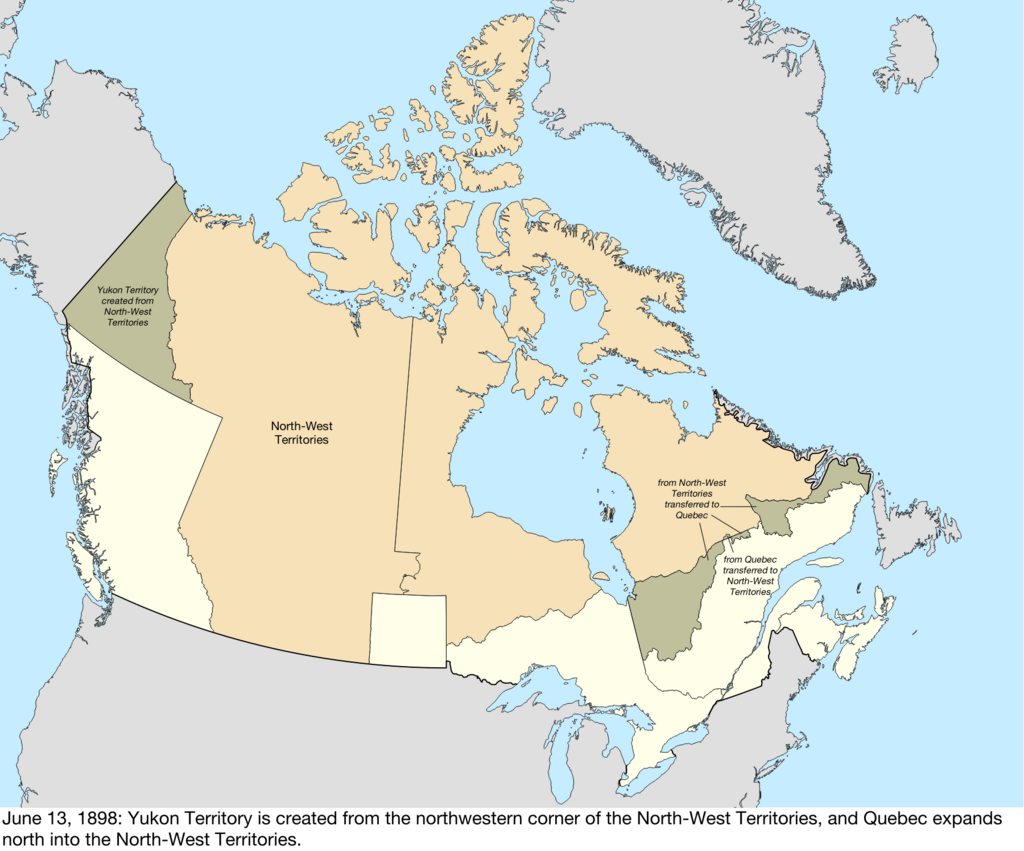
Map of the change to Canada on June 13, 1898
The creation of Yukon Territory in 1898

Furthermore, at the start of the gold rush, the Klondike was part of the Northwest Territories; however, the sudden influx of people called for the need for a local government in the region. As a result, in 1898 Yukon Territory was split from the Northwest Territories. Without the Klondike Gold Rush, the need to establish a separate government in the area may not have been necessary. The gold rush also established infrastructure and an economy in the area, which helped the drive the development of Yukon since then. Even now, the economy of the Yukon benefits from its mining industry. However, the gold rush also pushed indigenous people out of the area, whose land claims have only been addressed recently.

In short, the Klondike Gold Rush had a tremendous impact on how Canada is today and is immortalized in literature such as poet Robert Frost, as well as in various other places, such as the Klondike ice cream bar.


Information Source: 1/2

Image Sources: 1/2/3/4/5

This post explored the years 1892-1897 of Canadian history