Home Blog Page 135

American Youth Say #NeverAgain To Gun Violence

On March 14th 2018, students across America participated in a nationwide walkout that was both a memorial and protest against the deadly Marjory Stoneman Douglas school shooting that occurred a month previously on February 14th 2018.
The shooting marked the deadliest high school shooting in American history and has prompted many to press lawmakers to impose stricter gun control laws, which were among the demands of participants of the walkout. The gun control debate, previously thought to be impervious to most displays of protest, has quickly become a topic of worldwide debate since the horrific mass shooting and with this status, unlikely heroes have risen to the national limelight: the nation’s youth.

Marjory Stoneman Douglas students David Hogg and Emma Gonzalez, along with their fellow survivors, have become synonymous with this tragedy and have used the media attention to advocate against gun violence, sparking a movement for stricter gun laws. Admittedly, my optimism for stricter gun control following the attack was dismal. With the lack of substantial reform in recent years despite the more than 1,500 mass shootings that have occurred since the mass shooting at Sandy Hook in 2012, I can’t help but feel defeated every time the NRA helps knock down a gun control bill.

In the weeks following the shooting, I found my previous notion to be slowly but surely contradicted by the movement in the US and now I’m hopeful for the future of America. I turned to some friends south of the border and reached out to ask them about it.

“Why do you think the reaction to the shooting at MSD has been different than the reaction to other school shootings that have occurred in recent years?”

“My best guess is because it was a sort of breaking point for the youth of America. Even if you put aside the horrifically large number of 17 killed, there was something about this scenario that enticed the shock and large scale reaction the country has been lacking for past shootings. The Stoneman Douglas shooting put a magnifying glass to the emotion of anger and frustration many of us have at the government for making almost no changes since Columbine in 1999.”

Rose G.

Still, some are quick to discredit youth and the movement to end gun violence. In a post compiled of letters penned by everyday Americans published by the San Diego Union Tribune, one reader wrote “While watching the nationwide student walkout, I had the feeling I was watching the disintegration of democracy in America. It seems we are teaching our children that creating chaos is the preferable way to express yourself and that even a minority can effect change if it makes enough noise.

After I read this I was baffled. How could someone equate the empowerment of youth and the pursuit of safety to the disintegration of democracy? I read an article a few months ago titled “The Dying Art of Disagreement” and came to the realization that without disagreement, there is no room for the evolution of ideas and no room to question principles that threaten our freedom. America’s lack of gun control threatens that very freedom. Should the youth of America be expected to sit idly by while they entertain fears of being gunned down in an institution that is supposed to be safe? I don’t think so, and many youth share this exact same sentiment.

“At my school, the middle school students stood by us in protest and it made me cry. Twelve year olds protesting for their lives instead of being in class getting an education… No one should have to grow up in a world where this is necessary.” – Kyla R.

My friend Isadora G., along with her classmates, found themselves at the White House on March 14th as part of the national school walkout, which she described as an empowering experience. “We took up part of the road we were walking on and as we were walking, cars would honk at us in approval and [people would] wave out the windows of their cars giving us a thumbs up or a wave. This made me feel like I am on the right side of history, that I am doing the right thing. Everyone held up their carefully crafted signs and talked to each other encouragingly and all of a sudden my large school became a close knit family.”

“We have had enough. We are tired of seeing more and more children our age die in a place where they should feel safe.” – Rose G.

The national school walkout was organized by Women’s March Youth Empower and among their demands, participants wanted Congress to:

  • Ban assault weapons.
  • Require universal background checks before gun sales.
  • Pass a gun violence restraining order law that would allow courts to disarm people who display warning signs of violent behavior.

These are perfect places for congress to start, which my friends agree with, but only time will tell if Congress will finally do the right thing.

“What should America specifically implement in order to end gun violence in America?”

“Increased gun control is key. Everyone has heard this before, but I will say it again. The Constitution was written in 18th century, where, yes, the Right to Bear Arms would have been reasonable and necessary. At that time, guns took several minutes to reload, and the thought that we have the same rules now as we did then is ridiculous, considering we have very advanced automatic guns. A much, much deeper background check is necessary, as well as more help/funding for people with mental illnesses, since they are the most likely to commit a shooting.” – Rose G.

“There should be much stricter background checks, as well as a ban on AR-15 style weapons. It it plain to see that these types of guns are way more than one person would ever need to defend themselves. Stricter background checks are important because of how easily people like Nikolas Cruz were able to buy these guns that were obviously not fit to have them based on their past or their history. Obviously these two things will not stop all possibility of mass shootings, but I believe it is a strong start and if it can save even one life, then it’s worth it.” – Isadora G.

But will all of this finally culminate in tangible reform or is America set in its ways? That’s a question that leaves me at a loss for words. I’d like to think yes, it’s possible, but examining history leaves me doubtful. I distinctly recall sitting through an 80 minute discussion about gun control in my AP Comparative Government class that left me exhausted and dismayed. The fact of the matter is that the second amendment has become so intertwined with America itself that its nearly impossible to generate any substantial reform in America pertaining to guns. However, if I’ve learned anything from Social Studies, it’s that real change doesn’t come to fruition by sitting idly waiting for change to occur. Change is only ever implemented by the people who demand it.

“Do you think any real change will come to fruition as a result of the global public outcry?”

“I think this has brought awareness, but as for things changing very soon, it is unlikely. Considering who holds office in America at the moment, it is hard for me to imagine a large change for the better occurring, but I hope for the best and that we begin to take the small steps.” – Rose G.

My comparative government teacher likes to remind us that we are living through a tumultuous time that our children will be reading about in their textbooks, and I always imagine an excerpt illustrating a triumphant movement spearheaded by teens who influenced stricter gun laws. Right now, it’s a work of non-fiction but in time I hope it becomes a work of fiction.In conclusion, someone I know summed up America’s current situation very well: “Guns are math. It’s a problem but no one wants to solve it.” and for their sake and the sake of all those who have ever been affected by gun violence, I pray they solve it. Nobody deserves to fear for their lives whilst staring down the barrel of a gun. The world has spoken.

#EnoughIsEnough


Thank you to Rose G., Isadora G., and Kyla R. for sharing their views and experiences with me. Want more info on the March 14th walkout as well as future walkouts? Click here.


All Washington, DC walkout photos courtesy of Isadora G.

[thumbnail] [1] [2]


Iranian New Year!!

A new year is just around the corner! Tuesday, March 20 2018 at 10:15 AM (mountain time), will be the official start of the year 1397, or the moment of  ‘saal tahvil.’ It’s kind of funny to consider the western calendar, and how 1397 would be considered part of the medieval times… so are we somehow living in an extension of those times, despite our delusion that we live in a modern society? Now that would be interesting… but nah, it’s just a different 1397.

The time of Nowruz could not be more fitting: the first day of spring. A time of new growth, new beginnings, and hope reflected in the newly growing flowers (ahem – and Calgary is still snowy).

‘Nowruz,’ literally means ‘new day’ in farsi, and its importance essentially parallels that of the western calendar’s new years. But with this celebration comes a lot of work to prepare for it, and everything has to be perfect and ready for the transition into the new year. In this article, I wanted to go over some of these, and let’s pretend I did all the new year’s cleaning so you guys can think highly of me :P.

Khaneh Tekani (خانه تکانی)

Literally meaning ‘shaking the house,’ this is essentially a new year’s cleaning that everyone has to take part in. It’s rather similar to spring cleaning, and it embodies the idea of turning over a fresh leaf  for the new year to ensure the best start possible. I’m the kind of person who is usually too lazy to clean, but when it comes to new years, I really have no choice. That may actually be a good thing. …but still…

Haft Seen! (سفره هفت سین)

As much as I love cleaning, my favourite part of new years is actually setting up the ‘Sofre Haft Seen.’ This is essentially a table (‘sofre’ means table cloth and Persians really like nice table cloths, not just rugs XD) on which seven (haft = 7) items are arranged, all of which start with ‘seen,’ or the Farsi equivalent of ‘s.’ Or one of them, anyways. For some reason, there are three kinds of ‘s’ (ث، ص، س) in Farsi, even though they all have the same sound… but the Sofre Haft Seen only uses this s: س.

My family’s Sofre Haft Seen this year 🙂

A few of the most common things arranged on this table are:

  • seeb (apples)
  • sabzeh (green shoots often grown from lentils, which we have to start growing a few weeks before)
  • serkeh (vinegar)
  • sekkeh (coins)
  • seer (garlic- to ward away vampires! …no, sorry.)
  • somagh (or aka sumak, a spice)
  • samanoo (a pudding-like food made solely from wheat. I don’t like it, but I appreciate how hard it is to make it)
  • sombol (hyacinth flower)
Sabzeh
Samanoo

The tradition of Haft Seen has existed for a long time, and way back in the day, there was more meaning associated with setting up these items due to cultural beliefs to do with seven creations and seven holy immortals which protected them. I don’t completely understand what the original purpose was beyond that vague idea, and most other Iranians don’t quite get it either. These days, Haft Seen is just something everyone does for fun, and it’s a culture so firmly implanted in Iran that not setting up a Sofre Haft Seen would be weird.

The seven seen’s make up the core of the table, but another few items are also commonly added. For example, many place mirrors and candles on their sofre haft seen, apparently to do with representing reflection. It’s also tradition to place a book of importance on the table, often the Quran as a means of blessing the new year. Many families also add goldfish to the table, and though my family did do that a couple years ago, the death of the fish a few days after new year’s discouraged us from getting them this year. Again, I’m not completely sure about the purpose of each little component, but Persian families insist on setting up a perfect Haft Seen every year, and setting up the table always gets me excited in any case.

Saal Tahvil (سال تحویل)

This is the moment the year changes, same as 12:00 AM of the western new year. In our culture, the moment is regarded with great importance and we have to plan for it to be perfect, as there is a superstition that whatever you’re doing then will reflect what you do for the rest of the year. Naturally, this means we want to be doing something good in that moment, something we hope to carry forward in the new year. As for me, I’ll be in class at 10:15 on Tuesday… hopefully doing something good :).

Eid Didani

Persians are always looking for an excuse to visit each other, and with New Years they find yet another reason. Eid didani specifically refers to new years visits, where friends and family visit one another, eat plenty of new years sweets, and share light conversation. Plenty of tea is brewed throughout the day to accommodate the many guests, as it is Persian tradition to serve tea immediately upon their arrival. Another snack you can find served in an Iranian’s household is ‘Aajil,’ which refers to a variety of mixed nuts and dried fruits. Though we always have a large bowl of it on the counter, the best is always saved for new years. And then, of course, there are the sweets. These are super fun to make, but always run out far too fast. This year, my mom and I made three types. They’re largely nut-based and have only a little sugar, so I don’t feel too bad about eating more than a couple each day ;).

Sweets we made this year! Photos by Nikoo Givehchian

Another perk of visiting friends for new years is, of course, the new years money. This is often kept in a book (the Quran or whatever other book is important to the family) by the host, and when guests get up to leave, children are gifted this money to appreciate their visit.

Sizdah Beh Dar (سیزده بدر)

The 13th day of the new year is spent outdoors, a break to reconnect with nature after the first few days of sweets and celebrations. Families prepare a large picnic and enjoy the day taking in nature, laughing and playing and enjoying the last bit of new years celebrations. On this day, families also bring their sabzeh (the lentil sprouts they had grown for Haft Seen) and throw them away, as 13 is auspicious in Iranian culture (as it is in a lot of cultures), and throwing away the sabzeh and spending the day outdoors is thought to ward off any bad luck in the new year.

Though this new year isn’t as big in Canada as it is in places like Iran, it is still important to families like mine, who hold on to old cultures despite having moved into a new country. This is a festive time of year for us especially, but for everyone, spring is about to start! Spring is always associated with new beginnings: growth, renewal, hope, and even a new year in some people’s case. And my goodness, do I hope Calgary will decide to recognize this and end winter on time… Anyways, I hope this was an interesting read and I wish you all the best in the new year, whenever that starts for you!

Eid-e shoma mobarak, sad saal be in saalha! (Happy new years, and wishing you 100 more!)

1/2/3/4/5/6/7/


Thoughts on Duolingo

I’m sure many of you have heard of Duolingo, an online program to learn languages. As of this moment, there are 27 languages available for English speakers, the most popular of which are Spanish, French, and German. Duolingo makes learning like a game, with points, “lingots” you can use to get power-ups, and streaks. It can send you reminders for daily practice so that you can maintain your streak. This can give you motivation to consistently keep up with your language practice. However, it’s easy to reach the point where your goal isn’t to learn a new language but to win the game.

I recently lost my 65-day Japanese streak. But for the last month or so, I’ve been doing the bare minimum in order to maintain the streak. For the last couple of weeks, I haven’t even been strengthening the skills that I have recently acquired because learning new skills on the Japanese course takes less time than strengthening exercises. I know that this is not the way to successfully learn a language. I’ve been in French immersion since kindergarten. Reading, writing, listening, and speaking the language you’re learning for a few hours a day is how you can learn a language successfully. Five minutes on Duolingo really doesn’t suffice. It’s too easy to cheat. To passively look at the definitions of words you don’t know. To use Google translate to form a sentence because you don’t want to have to redo it at the end if you get it wrong. You speed through exercises because you have other things to do, but you don’t want to lose your streak. You can even freeze your streak in exchange for a few lingots. Eventually, you might move on to something different because you’re bored of the game and forget most of what you’ve learned.

Now, I’m not saying that Duolingo is bad. Not too long ago, “Duolingo Stories” was created, which allows language learners with a grasp of the basics to practice their reading and listening comprehension through the use of very short stories. This feature is currently available for English speakers learning Spanish, Portuguese, French, and German. This allows people to practice language as it would be used in the real world, as opposed to the short, unrelated sentences in the Duolingo exercises. Those words and short sentences are a good starting point. However, if you’re serious about learning a language, you should use other resources to supplement your learning, or even be the primary source of your learning. Remember, it takes a lot of time and dedication to master a skill.  With consistent, focused learning and time, you will be able to achieve your goal.


Image source: 1

An Opinion: Mass Shootings in the United States

0

The story is so old it could be considered a cliché at this point.

A mass shooting occurs. Dozens are injured or killed. The public expresses outrage. They demand change in gun control from policymakers, who themselves pocket change from the NRA. The political climate remains charged for about a month, but eventually people move on. Until the next shooting.

In the wake of the February 14 mass shooting in Parkland, Florida that killed 17 individuals and wounded over a dozen others, the satirical news source The Onion ran one of it’s most noteworthy articles for the umpteenth time:

“‘No Way To Prevent This,’ Says Only Nation Where This Regularly Happens.”

The article headline is infuriating, darkly humorous, and downright depressing all at the same time.

One of the world’s most developed and influential countries is also “where over half of the world’s deadliest mass shootings have occurred in the past 50 years, and where citizens are 20 times more likely to die of gun violence than those of other developed nations.”

33 people died at Virginia Tech in 2007. 15 at Columbine in 1999. And jumping forward: when Adam Lanza massacred 27 teachers and Elementary-school children just six years ago, we were positive that change was going to happen.

It didn’t. There have been 294 School Shootings in the United States since 2013. That comes out to an average of roughly one per week. And that’s not even counting the out-of-school incidents. The Las Vegas Strip. The Pulse Nightclub in Orlando. The movie theatre in Aurora.

I don’t even live in the United States, but I still feel horror and frustration every time the words “MASS SHOOTING” are splayed across the front page of CNN. So why has nothing changed?

The usual debate has been going on between those who argue for stricter gun control laws, and proponents of gun rights who believe that gun-free zones are a “bulls-eye” for would-be mass murderers. Apparently, the only way to stop these people is therefore to arm the “good guys.”

To me personally, this is probably one of the worst arguments I’ve ever heard.

If every teacher in America starts carrying a handgun to school, what kind of atmosphere does that bring? One of safety and comfort in an environment of learning, or further fuel for the culture of fear and paranoia that has been breeding in the States ever since the election of Donald Trump? Is the role of an underpaid, underrepresented public schoolteacher to educate his students, or to be a bodyguard for them?

And the argument that further gun control will “decrease safety because it doesn’t do anything to prevent criminals from obtaining weapons” is debunked simply by looking at literally any country with gun control. Lower crime rates, lower shooting rates, and most importantly, far lower gun-related deaths.

My honest opinion is that America may be beyond saving at this point, and that the status quo is practically cemented by now. I’m pretty sure that the real reason no change has come from American policymakers is because the National Rifle Association has practically every Republican senator and congressman in their pockets. And don’t forget the President himself.

For the students of Marjory Stoneman Douglas who lost their best friends, and will probably spend the majority of the coming months – if not years – struggling to return to a sense of normalcy, the inaction of the United States government is unacceptable. For everyone in Florida rallying or participating in the walk-outs, I wish I could tell them “I couldn’t agree more with your message.” Change has to happen. But, can it?

Enough is enough. That is, until the next time.


Image Sources:

[Banner] [1] [2]

Event Listing, Calgary : March For Our Lives

0

On February 14th 2018, The United States had their 18th school shooting this year in Parkland, Florida. Yet here we are, a little over a month later it seems like the government is considering everything but gun reform – from more security guards to barricading schools, and even looking at the possibility of not allowing backpacks anymore to improve safety. Since the Parkland shooting, where there were  17 fatalities, the students of Marjory Stoneman Douglas High School have banded together to seek out stricter gun laws.

February 17th, Students protest for stricter gun laws.

This shooting got people talking. Debates over gun laws are all over the media as the activism from those students spark more and more awareness of the issue. On March 24, 2018, marches are happening all over North America. Here in Calgary, at 1PM that same day, we march in support of the students affected and who are vying for the change they deserve. Other Canadian cities paricipating can be found here , included are the times/dates and the location. For more information for the one in Calgary, click here.

These are students. Going to school shouldn’t be a life or death situation, these students are there to learn, to be with friends, not to be targeted by anybody with access to a gun. Sign up for the march – show your support for the survivors of every single school shooting, every teacher, every kid who goes to school in fear, every parent who’s lost their child to a shooting, and for everybody fighting for what’s right.


Images : FI  

What’s On My Phone

0

Disclaimer: I don’t have an iPhone X. Instagram and Snapchat are the obvious apps, but what else do I have on my phone? I don’t know about you, but I’m always interested to see what’s on other peoples’ phones. How they organize apps and which ones they use in general. Consider yourself lucky because I’m going to show you just exactly what’s on mine!


Lock screen

My lock screen is fairly simple, just a picture of some snowy trees. I don’t like winter all that much, but this shot seemed pretty enough to be made a lock screen background. I always put my battery on low power mode even if it’s as high as 90%. I just always want to conserve battery. My least favourite thing to see is when my wifi has only one or two bars out of three. Fun fact: my favourite day of the week is Thursday.


Home Page

This page is dedicated to all the pre-installed iPhone apps. First off, there’s Messages where I constantly lose games of 8ball and cup pong. I don’t usually text many people on it because I find Snapchat a better texting app, but I do use it sometimes. Next is Calendar, which is very self-explanatory. I put all my upcoming events in the calendar app like every other normal person. Reminders to write blogs, test dates, etc. Camera, I don’t think I need to say much about what it is. I don’t like taking pictures with the camera app because I take them on Snapchat. Also, my phone has low storage so I don’t like having a ton of photos in my camera roll. The Reminders app isn’t one I use frequently, only when I need to remember something very important or when I’m packing (because I create lists with it). I’m going to skip the settings app because everyone knows what it is. Health is a waste of space on my phone since I rarely use it. Time to time I’ll check it to see how many steps I’ve taken but other than that, it’s collecting dust on my home page. Contacts and Weather are pretty useful apps I use daily, App Store is essential, FaceTime is whatever, Notes is actually kinda important and I use it a lot. I mainly use Clock for the stopwatch or when I’m travelling to see the different times. The only thing I hate about the Calculator is when I want to turn it sideways to input more numbers but the screen won’t turn. Maps is really useful and so is Find iPhone, but Wallet is honestly the worst app installed on my phone. First of all, I don’t even use it, it takes up space and I can’t even delete it!

On the bottom, I have Phone, which is obviously necessary, and Photos, which is also just as valuable and needs to be easily accessed. If you’ve read my other blogs, you probably know that I’m an avid fan of Netflix, thus earning its place on the bottom next to Snapchat, the next most important app. Snapchat I use on a regular basis. I am loving the new update that lets you have different fonts and gifs, but I’m only starting to get used to the new layout. Netflix is literally the best thing that ever existed. I’m in the middle of a million and one shows right now and I’ve still got so many titles in my list. Netflix is the one thing that I’ll never get tired of, like, “are you still watching?” uhm, of course, where else would I be? I’m in the middle of Gossip Girl, Girls Incarcerated, Shameless, Suits, Riverdale, Anne, The End of the F***ing World, and Bob Ross. STILL, I want to make room for Babylon Berlin, The Keepers, TURN: Washington’s Spies, 1922, Dark, Land Girls, The Office, RuPaul’s Drag Race, WW2 In Colour and various documentaries, but I just don’t think I’m going to have that kind of time! By the time I’ll have watched everything on my list, I’d be 60.


First Page

Safari: I’m not a big fan of Safari. I’d much rather prefer the Google app, but seeing as how you can’t delete Safari, having two search engine apps on your phone is a waste of storage to me. That’s the only reason I don’t have Google on my phone. If I could get rid of Safari, I’d definitely do that and download a better app.

Tumblr: For those of you who don’t know what Tumblr is, it’s basically a social media platform for blogs. You can create one of whatever you’d like and you can post/reblog pictures, gifs, videos, texts, etc. It’s not a blog like YAA, but much rather like Instagram where you have a profile and followers and messages. You can design your blog however you want and post totally random things according to your interests. I mainly have it because there are hilarious memes and beautiful photography. It’s like Twitter but better, plus there are screenshots of funny tweets on Tumblr, so I don’t even need Twitter. (I personally just don’t like Twitter’s design and organization; it’s confusing and kind of messy in my opinion.)

Calgary PL: That’s just the Calgary Public Library, I have it to keep track of when upcoming books are due and to follow up on my holds.

Gmail: I deleted the Mail app for Gmail because I think Gmail has a much neater organization. Also, you can have multiple accounts signed in in Gmail, and I really make good use of that.

YouTube: I love YouTube. I watch it all the time (not as much as Netflix, but still). Buzzfeed Unsolved is one of my favourite things to binge watch on YouTube (it’s also on Amazon Prime now, but I’ll talk about it later). My “watch later” list is always full of makeup tutorials, Liza Koshy videos, Meredith Foster’s vlogs, and various Buzzfeed videos.

Starbucks: I haven’t used this app in the longest time because I’m proud to say I’ve been overcoming my Starbucks addiction from the 8/9th grade. I still have it to keep an eye on my Starbucks cards’ balances and my rewards.

Duolingo: The eyes of that green owl haunt me every time I open my phone because I tell myself I’m going to learn German and Italian but I never do. I even get e-mails from Duolingo reminding me to continue working on my German but I don’t and it makes me feel so guilty. I do go on it and practice German sometimes, but nowhere near the schedule Duolingo expects me to have. I don’t want to lose my progress, so I don’t think I’m going to delete it anytime soon. Don’t worry, I’ll still use it.

Music: I don’t have much music in the actual music app, but I do have a One Direction album and a 5 Seconds of Summer album downloaded. I don’t listen to those albums much anymore because they’re old. (One’s from 2013 and the other is from 2014.)

Instagram: Fairly self-explanatory. I mainly go on the explore page rather than my home page since there’s more to see on the explore page. My favourite types of posts consist of slime videos, textposts/memes and throwback vines.

VSCO: VSCO is practically an artsier Instagram. It’s also an editing app for pictures. I do most of my editing on VSCO before I send the picture off to Instagram.

Prime Video: Amazon Prime contains an abundance of nice movies/tv shows. I think it’s kind of underrated. I’ve been rewatching a couple episodes of Buzzfeed Unsolved here and there. As for shows, right now I’ve finished watching The Man In The High Castle and gave up on Mr. Robot, so I was thinking of starting The Marvelous Mrs. Maisel when I get the time to.

Spotify: I love, love, love Spotify! I don’t have premium so I get ads often, but it’s tolerable. I have so many playlists on it and I LOVE their Discover Weekly and Daily Mix playlists. Spotify is a win.

Translate: Being a French Immersion student, having Google translate is vital. They say don’t use it, but I do and 90% the translation is correct. I’ve found that it works best with small sentences, but always read the translated sentence to yourself after to ensure it makes sense.

Sandbox: I think this game is a little overrated, but I still play it. It’s a colour-by-number game where all the pictures are pixilated. I find it quite calming to play and they frequently update the app with new pictures every day so you’ll never run out of anything to colour.

Buzzfeed: I don’t care what you say, I love Buzzfeed. I’m in it mostly for their quizzes (they’re so much fun please try them) but I read their posts sometimes as well.

SkyVPN: Most schools block social apps such as Instagram and Snapchat, but everybody always finds a VPN to unblock it. Though schools often block VPN apps as well, there are simply too many out there. As of now, SkyVPN is the only one working at my school, so let’s hope they don’t block it.

Dictionary: I’m in English this term and I’m always in need of a portable dictionary/thesaurus.


Second Page

This is my last slide filled with apps I don’t like enough to put on the first page. It consists of games, Followers + (the app that lets you know who’s unfollowed you on Instagram; lets you catch those snakes) and Bitmoji (an avatar basically) for Snapchat.


Games

Word Cookies: They have scrambled up letters and you have to make different words with them.

Toy Blast: It’s kind of like Candy Crush in the sense that there are levels and the fact that most of their game designs are the same. I’m on level 500 right now, so I think it’s much easier than Candy Crush.

Puzzledom: Puzzledom is essentially a large collection of all sorts of puzzles. It’s like 10 apps in one.

I don’t have a lot of games because I find that I don’t really play them a lot.


That was my entire phone!

featured

5 Board Games To Try With Friends!

Since technology is so prevalent nowadays, board games don’t receive as much appreciation as they deserve— from myself included. However, it’s a great activity to unwind with your friends and family, and a nice chance to detach yourself from staring at the computer screen all day. The realm of board games is vast and daunting at times, but I had a great time playing some of these games over Christmas break and I’m here to share some of them with you:

1. Innovation

No. of Players: 2-4

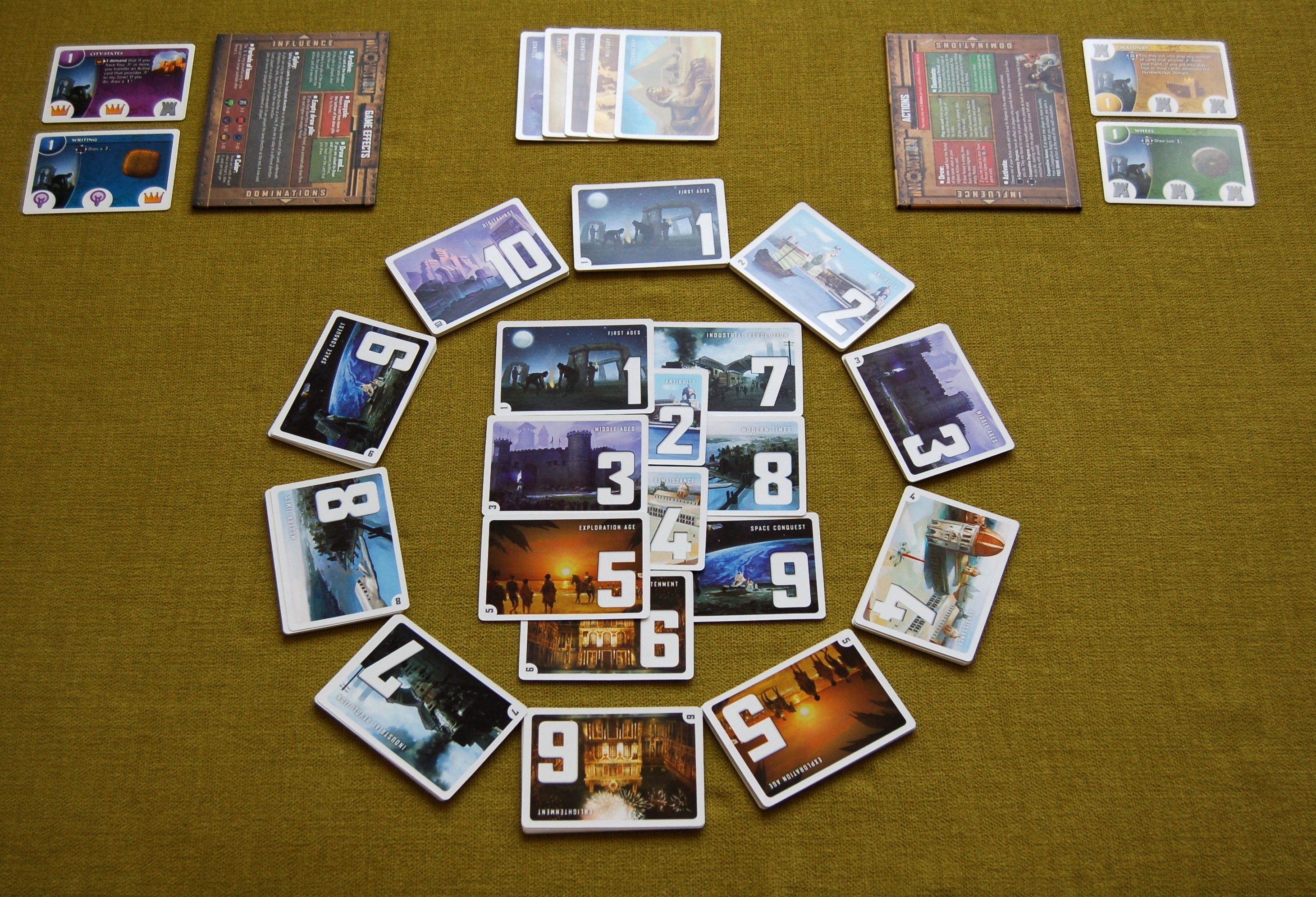
I started this list with the game that is the hardest to explain but my favourite to play: Innovation! It’s a card game where there are 10 decks simulating ten different periods progressing through history (from prehistoric to digital age). One card from each deck is reserved for “dominating”, in which players pay a certain number of influence points (starting from 5 points for prehistoric and increasing by increments of five for each successive age). Each player has two actions per turn, which could be playing a card, drawing a card, activating a card, or dominating one of the ten periods. Each card has a unique effect that can help you “advance” your civilization through the ages with more powerful cards, score influence points, or attack other civilizations. There are numerous ways to win this game, but the standard objective is to obtain a certain number of dominations, depending on the number of players. I love this game because there are so many things to keep track of and no two games will be carried out in the same way. That being said, I can’t cover all of the rules in this small description so it takes a few games to get used to the gameplay. Nevertheless, I highly recommend anyone who likes a highly strategic game involving resource management to try Innovation out when you get the chance!


Image result for innovation board game
The ten different ages in Innovation, with the nine cards set aside to dominate in the middle.


2. Sushi Go Party

No. of Players: 2-8

A competitive point-acquisition game with adorable pictures of Japanese food? What’s not to like? Sushi Go Party is an expanded version of the card game Sushi G. Players progressively play cards from their hands before HAND-ing over the leftover cards to the player next to them, as they receive a new hand from a different player so they can choose another card to play (“Pick and Pass”). Each food type (such as nigiri, maki rolls, tempura, dumplings, and miso soup) have different ways to award the players points at the end of the round (ex. the player with the most maki rolls earn 6 points after all of the cards have been played). Essentially, you want to play the best sushi combo without giving your opponents too many points! Although Sushi Go Party is more expensive than the original Sushi Go, there are many more types of food cards for slightly different gameplay each round. The artwork makes the game that much better, and now I’m craving Japanese food…

Image result for sushi go party

3. Coup

No. of Players: 2-6

If you like playing bluffing games like Cheat, then this game is definitely for you! Coup is a card game where every player receives two character cards from five possible “roles” (Duke, Captain, Contessa, Assassin, and Ambassador) that dictate your turn’s possible actions. Each of these cards is one life, so the objective is to eliminate everybody from the game; there are multiple ways to do this, but one possible option— that cannot be blocked by players — is to acquire 8 coins from the treasury to “coup” a player of your choice. The catch that makes the game interesting is that you can fake your actions as if you had different character cards; however, you don’t want to be called out for cheating, or you lose one of your lives. It’s not as fun with two players but this game is portable and fun to play with friends, as everyone is deceiving everyone else (or you’re like me and you’re incapable of bluffing convincingly)!

Image result for coup cards
The five character cards for Coup

4. Dixit

No. of Players: 3-6

Time to put your inner art connoisseur to work! I compare this game to the likes of Apples to Apples and Cards Against Humanity, where each player has to match one of their own cards to the green or black cards. Dixit is similar, only you match an illustration to a potential title for an artistic piece, which is chosen by one player every round. This player, the “storyteller”, picks one of the six cards from their hand, gives it a title, and every other player must select one of their own cards that match that title. Afterwards, the players vote on which card they believe is the storyteller’s card, and you receive points based on the results of the voting; even if you’re not the storyteller but pick a card that fooled the other players, those points are awarded to you. What I love about this game is the amount of effort put in by the game creators to draw the artwork and form a deck of individually unique cards. Each game played with friends is also unique since the players have the freedom to say any title that resonates with them.

Image result for dixit cards

5. Hanabi

No. of Players: 2-5

This last game is a little different than the others; it is a cooperative card game with simple rules but a challenging objective. Essentially every player has five cards, but they can only see everyone else’s cards and not their own. The objective is to build piles of cards for each of the 5 colours, in the order from 1 to 5. For their turn, each player has the choice to use a hint token to give information about another person’s card, play a card, or discard a card. If a played card is successful or a card is discarded, then a hint token is replenished.  Finally, your team has three “lives”, so one has to be sure they’re playing the right card in the right order. This game is relatively cheap, portable, and engaging— if you like cooperative games, this is great to pull out with friends because strategy is required for hint-giving but the rules are relatively easy to explain.

Related image
Hanabi gameplay setup

Image Sources: 1/2/3/4/5/6/7/8/9/Featured


Event Posting: Operation Med School 2018

0

Are you interested in pursuing a career in the health sciences? If so, check out Operation Med School! This Saturday, the one-day conference which aims to inspire and inform youth who are interested in a future career in medicine will be held at the U of C Health Sciences Building.


Last year, OMS inspired many with its demonstration of how exoskeletons and other current technologies were allowing paraplegics to walk again.


Through speakers, workshops, and panels, Operation Med School(OMS) provides unique opportunities and the knowledge you need to succeed in your journey towards a medical career. Medical students and physicians alike will be present to talk about their lives and careers, offering insightful information about medical school and life beyond it. Attendees also get to experience an exciting clinical case challenge and network with other determined students aspiring to become doctors.


The Opportunity Fair, which is present at every OMS conference, offers many opportunities related to the health sciences with organizations like the Canadian Cancer Society.



 

OMS is the perfect opportunity to enhance your leadership, communication, teamwork and problem-solving skills, each of which is crucial to the pursuit of a medical career. Tickets are going quick, so be sure to purchase yours soon! If you’re interested, be sure to check out the OMS website at http://operationmedschool.com/calgary/


*All photos in this article can be found on Operation Med School Calgary’s public Facebook page.

Recapping the Olympic’s and the great success of Canada!

0

This year Canadian athletes from around the world represented their nation at the 2018 Pyeongchang winter Olympics. This year’s Olympics were composed of many ups and downs but in the end, the game’s united a nation and gave us many reasons to cheer for our country. Here are some of the highlights that went down over the course of February in Pyeongchang…

Image result for canada pyeongchang

In Bobsled, Justin Kripps and Alexander Kopacz led Canada to gold with their fantastic runs in two-man bobsled. In the two-woman event, Kaillie Humphries and Phylicia George won bronze.

Image result for canadian bobsled pyeongchang

In Mixed doubles curling, Kaitlyn Lawes and John Morris brought home Olympic gold.

Image result for kaitlyn lawes and john morris 2018 pyeongchang


In Ice dance, Tessa Virtue and Scott Moir also brought home Olympic gold after their amazing performance in ice dance at the Gangneung area. Kaetlyn Osmond brought home bronze in Ladies Single Skating, and Meagan Duhamel and Eric Radford also won bronze in pair skating.


Image result for tessa virtue and scott moir

On the ski hill, Mikael Kingsbury won gold in Men’s Moguls, Brady Leman won gold in Men’s Ski Cross and Kelsey Serwa won gold in the ladies ski cross. Also on the podium finished Justine Dufour-Lapointe and Brittany Phelan with their silver medals in Ladies’ moguls and Ladies ski cross respectively. In the halfpipe, Cassie Sharpe won gold in ladies ski halfpipe, and last but not least Alex Beaulieu-Marchand won bronze in the Men’s ski slopestyle.


Over on the ice, the Canadian women’s hockey team suffered a devastating defeat against the United States of America to give them a silver medal in Ice Hockey, and the men’s team managed to claim a bronze medal after missing out on a spot in the finals.

Image result for canada women's hockey team 2018

In Luge, Canada claimed a silver in the team relay, and Alex Gough won bronze in the Women’s singles.

Image result for alex gough pyeongchang 2018

Back on the Ice, Canada won a plethora of speed skating awards with Samuel Girard winning gold in Men’s 1000m, Kim Boutin winning silver in Ladies’ 1,000 m and bronze in both Ladies’ 1,500 m and 500m. Canada also won gold in the Men’s 5000m Relay. Ted-Jan Bloemen also won gold in the individual 10,000 m and silver in the Men’s 5,000m.

Image result for ted jan bloemen pyeongchang 2018


On the ski hills, Sebastien Toutant won gold in Men’s big air, and Max Parrot won silver in the men’s slopestyle. Laurie Blouin won silver in the Ladies slopestyle and Mark McMorris won bronze in the men’s slopestyle.

Image result for sebastien toutant 2018 olympics


Overall the Olympics were a great success for Canadian athletes from around the country. The hard work they put in training for the Olympics paid off, and it makes Canada proud!

Image source 1/2/3/4/5/6/7/8/9

Featured Image Source: http://toronto.citynews.ca/2018/02/09/gtha-athletes-pyeongchang-olympics/

Information Sources:

https://www.pyeongchang2018.com/en/game-time/results/OWG2018/en/general/noc-entries-canada.htm

https://www.pyeongchang2018.com/en/game-time/results/OWG2018/en/bobsleigh/athlete-profile-nbobmteam2-can01-canada.htm

https://www.pyeongchang2018.com/en/game-time/results/OWG2018/en/bobsleigh/athlete-profile-nbobwteam2-can01-canada.htm

https://www.pyeongchang2018.com/en/game-time/results/OWG2018/en/curling/athlete-profile-ncurxteam2-can01-canada.htm

https://www.pyeongchang2018.com/en/game-time/results/OWG2018/en/figure-skating/athlete-profile-nfskxicedancecan01-virtue-tessa-moir-scott.htm


Music

It’s interesting how people often surprise you with their unexpected preferences, and one example I’ve been reflecting on lately is music. It’s not uncommon to see people walking around wearing earbuds, living in a world of music that the rest of us cannot hear or understand. But I do often wonder what it is people listen to, and many times, I’ve been surprised to realize people are into genres of music I would never have expected them to be into. You may think you know a person, but it’s little things like this that remind me I cannot assume I know everything about someone- something I’ve been guilty of doing on too many occasions.

On the one hand, what you listen to can say a lot about your tastes, your personality, and even your attitude. On the other hand, what you listen to can be the exact antithesis of your outward appearance. It’s interesting to notice this in other people, and to realize that while some do enjoy the kind of music that ‘fits’ their personality, there are many people who listen to music that quite contrasts the person they seem to otherwise be.

There are definitely people who fit into the former category, people who listen to the beautiful sort of soundtrack one would expect as they study. There are also those who listen to the last thing you would expect them to, people who may look like they listen to peaceful soundtrack, but who actually listen to something else. For example, I recently found out a friend is into rap, which I never would have guessed having always subconsciously associated the genre with the ‘cool, mainstream’ type of person that is quite the opposite of the intelligent character that is my friend.

I suppose I myself am an example of this category. It’s interesting to ask people to guess what I listen to, and ever since 8th grade, I’ve found some sort of amusement in realizing people generally don’t expect me to listen to what I listen to. For really, when one looks at me, it is easy to see a nerd, a kid who can be shy but quite forward about ideas as well, and a character who is always dedicated to their work- at times, too much so. Back when I was younger, people would have seen a sweet character (ahaha that’s faded since XD). So I found it funny when people would guess- classical? Definitely not. Instrumental? Sometimes. I do like some movie tracks. I went through a Pirates of the Caribbean phase for sure, and I do respect Hans Zimmer. But for the most part? I’m kinda into metalcore. Before you start judging, know that I’m quite picky and won’t just listen to anything heavy… but I have to say, Of Mice and Men’s Restoring Force has got to be my favourite album. I’m also currently getting into The Amity Affliction… so yeah, not exactly what you’d expect me to listen to.

Personally, I’m into bands that explore human suffrage, bands that allow head banging and jumping to their music but also express misery and allow me to feel I’m letting out any sort of pain or hurt that has accumulated within me. It’s interesting to tap into this almost angry side of me, and I personally feel it is far better for me to explore it in music than to express it in my person. In any case, it is interesting to realize that it’s not just me, but that there are also others who enjoy playing different personas. Isn’t that something commonly done these days, what with all the characters people assume while gaming, or in the vast face of the internet and different media platforms? We all enjoy playing different roles, being different avatars, imagining a world where we are not ourselves. I suppose for me, that’s something I accomplish by listening to my music. The songs I listen to paint a world of suffrage, a world in which we are all alone, abandoned and miserable. To feel I can tap into a world of pain and anger, and yet to be able to leave it so easily, by means of hitting pause- that makes me feel empowered. I suppose that’s the goal of personas in general, to some extent: to make us more sure of our own person by the means of exploring alternate realities, trying out different characters, and yet easily returning to our selves. In any case, I like my music.

It’s generally interesting to note how people like to explore different realms and personas. We are not simple beings to be limited to one overall character, and to see how people tap into different parts of themselves through different means is fascinating. And it’s not alway music or art either; it’s interesting that as you get to know a person, you begin to realize different parts of them that they express in different places, and under specific circumstances. To see people’s hidden strengths is always amazing, but it’s also interesting to realize that people are more than you expect in ways other than their strengths, in their little preferences and tastes as well. To be aware that people are not simple and straightforward- that people are not necessarily what you expect- really is valuable in realizing the limitations of how we judge them. Taste in music is but a small example, but even as we get to know a person, we must keep in mind that we do not know everything about them, and cannot judge every detail in their person as what they are. Rather, we have to realize that every one of us is made up of good and bad, of normal and strange. In the end, we all have something worth contributing to this world, and we all have to be aware that despite everyone’s oddities, we should not judge a person based on their appearance. Instead, we ought to allow everyone their contributions to this world, and not judge them for little aspects of their personality which we may find strange or odd. For after all, aren’t we all odd in one another’s eyes? 🙂

1/2/3

(finished this article listening to ‘Pittsburg’ by The Amity Affliction, if you were curious)

The Unique Appeal of Dystopian Fiction

0

You’ve probably encountered dystopian fiction before, whether it be Huxley’s Brave New World, Atwood’s The Handmaid’s Tale, or the cleverly disguised Animal Farm. And despite depicting surreal and seemingly inconceivable circumstances – by today’s standards – this category of literature has the profound ability to reveal hidden relationships and explore the truths of the modern world.

The appeal of dystopia isn’t straightforwardly discernible, as is with romance or comedy or the archetypal hero’s journey. After all, nobody wants to read about such a detached and tragic world that seems to bear no relation to our current society… right? Maybe not. I’d argue that dystopias not only warn of the dangers of pursuing certain ideologies, but deeply resonate with a human desire to explore the continuity of suffering and consequent growth as well.

I’ll explain. Take, for instance, Kurt Vonnegut Jr’s Harrison Bergeron. It’s a relatively modern work and still under copyright, which is why I can’t link the original work – but I’d highly recommend reading it, or listening a short audio version which you can find on YouTube. (It’s 12 and a half minutes.) The novella depicts a world in which those born with greater mental ability are forced to have a device implanted in their heads, which emits a distracting noise at regular intervals to ensure the limitation of said mental ability, to equal that of everyone else’s. Similarly, the more athletic have weights bound to their bodies, and ballerinas wear masks so the ones with more appealing facial features don’t evoke more emotion than lesser beauties. The text, by utilizing clever language and tyrannical implications passed off as reasonable, satirically criticizes the concept of equality of outcome – and Vonnegut’s unique dystopia is, arguably, the ultimate equality of outcome.

When the ends of ideologies are exposed in their fullest, we become more sensitive to the subtleties of their goals. It’s not always easy to taste the minerals in tap water, until they’re present in such extreme concentrations that it’s glaringly obvious to your tongue – and similarly, the circumstances in dystopias are such extreme stretches of belief structures that they expose the underlying outcomes of the ideology where they wouldn’t have been evident previously. Perhaps this unique approach to developing insight reverberates with the human approach to learning, and our tendency to find patterns in life – the tendency to seek order and structure as a precursor to navigating the chaos of the unknown and unexplored.

In filth it will be found

A profound concept mentioned by a philosopher (I forgot who specifically) noted that even if a utopia did somehow exist, the first things that humans living in it would do is destroy it: the utopia possesses too much order, akin to being in an overly tidy house, which is done a disservice by your imperfect and unpredictable human presence. (This latter concept is that of Jordan B. Peterson of the University of Toronto, who points out that being in such a house would make most people sick and tired of it very quickly.) Just as humans can’t deal with overwhelming chaos and create hierarchies of value to organize the world that can be interpreted, too much order is unbearable as it neglects the intrinsic necessity of the unknown – and exploring the unknown – in our lives. In more simple terms, a utopia can be boring –insufferably so. And so, utopia and dystopia are inexorably linked, like two sides of the same coin; texts that present dystopian societies caution of the peril – and ironic fruitlessness – of pursuing utopia.

Yin and yang, the symbol representing many things – but most significantly, the presence of chaos in order and order in chaos, and the necessity of balance between the two for a meaningful life.

Just as failure is the only reliable way to build success, confronting the suffering in the world voluntarily is, perhaps, the sole reliable method to grow and mature. A parallel to this theme would be psychoanalyst Carl Jung’s statement “in filth it shall be found”, which roughly means “what you seek the most is where you least want to look”: developing as a person is probably the predominant aspect to living a meaningful life, but it requires a confrontation of the tragedy and malevolence of the world – which many avoid. By exposing the faults in common modern perspectives and through questioning the implications of certain actions, dystopian fiction ultimately allows us to simultaneously develop and challenge our own views.

Sources: 1/2

Images: Featured/1

Note: Under the Copyright Act of Canada, Sections 29, 29.1, and 29.2, the fair dealing exception to copyright law applies to articles with the intent of criticism or review. I do not own any rights to works mentioned in this article. Please support the original publications.


Fortnite Battle Royale – Hit or Miss?

1

If you “keep up with the times”, so to speak, then you would know what Fortnite is. Kids and teens alike all over North America are obsessing over this game, and some may think, “Why?”

Well, I’m here to teach you. Welcome!

Fortnite is a completely free to play multiplayer game developed and published by Epic Games. Now, I’ve played many multiplayer games before (Overwatch or Destiny 2, anyone?) but Fortnite is definitely something that stands out.

Before we get started, let’s talk about how the game is completely free to play (maybe you noticed how I bolded and italicized it before? maybe not). One of the reasons Fortnite is so wildly successful is due to the fact that it’s free to play on PS4, Xbox, and desktop (MacOS and PC!). It supports a wide variety of players, and the only money the game makes is from cosmetic upgrades like skins that players can purchase. Awesome, right?

Anyway, let’s talk about the basics. Fortnite is a battle royale game.

According to Wikipedia, “Battle royale games challenge a large number of players, starting with minimal equipment, to search for weapons and armor and eliminate other opponents all while avoiding being trapped outside of a shrinking “safe area”, with the winner being the last competitor in the game.

In Fortnite Battle Royale, you’ll drop down from a flying bus along with 99 other players and have the choice of where you’ll land on the map.

You land with nothing but a pickaxe. Your objective at the beginning is to “loot” and find guns and other weapons/items around the map which you’ll need to survive.

Epic Games said that Fortnite is a lot like the game Minecraft in the way that you can break trees, buildings, and more to gain wood, bricks, and steel which you can use to build. One huge thing that sets Fortnite apart from other battle royale games is the ability to build structures. These structures go on to become incredibly useful in the game, where you can build forts and more to access places where you can find rare loot.

As the game progresses, a “storm” begins to surround the area and the safe zone (a thin, white circle randomly generated on the map) continuously shrinks. If you’re caught in the storm, you’ll take damage and potentially die. The reason battle royale games incorporate “safe zones” into their games is to eventually force the players to fight one another.

As the 100 players start being eliminated (killed), the game comes to the last two players who must battle each other- with whoever winning receiving a “Victory Royale”.

Now, getting started on Fortnite can be difficult. Mainly because there’s no tutorial when you first start. You can learn a lot by watching livestreams, gameplays, and I think there’s a couple “beginner’s tips” you can find online too! But at the end of the day, as cliche as it sounds, practice makes perfect.

I wish you all luck in your future Fortnite endeavours!

sources: featured image/1/2/3

Attempting to Answer Philosophical Questions

0

I think about life a lot, often having an existential crisis every day. Who are we? What are we even doing here? Do we even have a purpose?  The greatest philosophers haven’t thought up an answer to those questions, what makes me fit to answer them? Absolutely nothing! But that’s why it’ll be interesting!

Image result for philosophy


  1. Does Time Have A Beginning or End: yes and no. Time has always been around, but it only began when there were things to document its presence. First there was nothing, then there was everything, and of course, that took time to happen. And far off into the future, there will be everything then there will be nothing. We’ll only say time started when things started to happen and say it ends when there’s nothing left to happen. But when the world comes to an end, there will be nobody to even remember what “time” was.
  2. What Is Love: love is a feeling. It’s strong and powerful. It’s a feeling of joy and happiness and all things good.
  3. Is Our Universe Real: yeah, of course. I mean, what are we living in? Unless we’re not real. Then nothing’s real. But today, I’m leaning more towards the “we exist” side, so yes. The universe is real. If we’re real, we need something real to live in, am I right?
  4. Is There More Than One Universe: yes. There’s definitely some parallel universe with another version of us in it living some double life. There’s no doubt, we’re not the only universe.
  5. What Gives Life Its Meaning: what you decide to do in it. Life only has a meaning if you give it one. You can live your life however you want, you can choose how to live it. If you want to live your life every day doing something important, that’s what you’re giving back to life. You spend every day painting, you’re leaving behind beauty for the rest of world and that was your life’s meaning. If you spent every day murdering people, that’s the type of meaning you’re giving your life; a negative one. To shorten it up, what gives life its meaning? You do.
  6. Do Animals Have Souls: of course! Animals have souls and feelings and everything us humans have.
  7. Why Do We Experience Emotion: we experience emotions because we have a need to feel. We want to feel happy or need to feel angry and we will. Emotions make us who we are, it controls our thoughts and actions. Without experiencing any type of emotion, we’d be living in a cold and dark world.
  8. How Do You Explain Consciousness: I think it’s being aware. When you’re unconscious, you’re unaware of your surroundings. Being conscious, you have access to more things within yourself than when you are asleep.
  9. Why Do We Dream: we dream because we have all these images stored in our head with nowhere to go! They put memories to good use. We dream because why not? Our mind is so great, it can even make mini-movies. We dream because we can.
  10. Why Do We Create Art: we create art because we want to express ourselves. We want beauty to be shared with the world.

Think about it tonight while you’re trying to go to sleep. Do we exist? What is time? What is life? Give it a nice deep thought. Who knows, maybe you’ll figure out the answer to everything.

Image result for philosophy

image1 image2

featured


Samsung’s newest addition to its Galaxy family

0

On February 26 2018, Samsung announced its newest installment of its galaxy phone line with the addition of the Samsung Galaxy S9. The newest phones by the South Korean manufacturer boasts new additions to its Galaxy Line, which aims to help it compete with the popularity of Apple’s iPhone X.

One of the newest most promising features of the Samsung Galaxy S9 is the newly developed camera, which Samsung claims to operate just like the human eye. The camera lens adjusts its aperture size to welcome incoming light for shaper-less grainy photos in low light. This dynamic adaptation means that the Samsung Galaxys S9’s lens can adapt to whatever light conditions, meaning that the lens can create the best conditions possible regardless of the time of day. However, alongside the dynamic aperture lens, the Galaxy S9 also boasts an incredibly fast slow motion camera which shoots at 960 frames per second, compared to the previous Galaxy S8 which only shot at 240 frames per second. All in all this means that the camera can capture more frames when compiling a video, meaning that the user can get more definition and a higher quality, “slower”, slow-motion video.

Image result for samsung galaxy s9 camera

Alongside the plethora of increased Camera benefits which the S9 was given this year, it has also improved certain aspects of its Augmented Reality to give its a deeper user experience. This year Samsung introduced AR focused emoji’s which aim to act in direct competition with Apple’s “animoji.” The built-in Camera in the S9 scans the users face and builds a 3D emoji character which is meant to resemble the users real-life appearance. Users can use the 3D emojis in text messages in a fashion similar to the already popular “Bitmoji,” or they can send live videos which mimic their facial expressions. Moreover, AR allows for other purposes that individuals can use on a daily basis to make their lives more simple. For example, Bixby – Samsung’s smart assistant, can now utilize the camera to render translations of street signs in different languages to the user’s language of choice.

Image result for samsung galaxy ar emoji's

Relative to the Galaxy S7 and the difference it had to the Galaxy S8, the Galaxy S9 has not changed very much in regards to design compared to its older sibling. It still features Samsung’s beautiful infinity edge display which has Samsung’s in-house produced OLED technology. However, one change which has occurred, is the repositioning of the fingerprint reader from beside the camera, to underneath it. This repositioning addresses the issue which caused a lot of people to get smudges on their camera versus touch the fingerprint sensor. With this new repositioning,  it makes it easier and more accessible to find the fingerprint reader.

Overall Samsung’s newest phone is sure to create some media attention. It has added a lot of desirable features which are sure to keep loyal Samsung enthusiasts in the Samsung ecosystem, however as a result of software optimization, and improved hardware, Samsung may also be creating some new fans.

Image Source 1/2/3

Information Sources:

http://www.samsung.com/ca/smartphones/galaxy-s9/

http://www.samsung.com/ca/smartphones/galaxy-s9/camera/

http://www.samsung.com/ca/smartphones/galaxy-s9/augmented-reality/

http://www.samsung.com/ca/smartphones/galaxy-s9/design/

http://www.samsung.com/ca/apps/bixby/vision/

Featured Image Source: https://timedotcom.files.wordpress.com/2018/02/galaxy-s9_3colors.jpg

The Early-February Stock Market Dips: Should You Be Worried?

0

On Monday, February 5th, the Dow Jones Industrial Average experienced the worst single-day point decline in history, plunging by almost 1,600 points. As the day progressed buyers were able to staunch the bleeding, but at the time of closing the Dow was still down 1,175 points, its worst closing point decline on record.

So, what does this mean? Are we about to plunge into another nightmare scenario, another 2008-era scourge of unemployment, bankruptcy, and billions in losses? Is it time to succumb to paranoia?

Well, not exactly.

Not every market plunge is cause for alarm, although it is true that most financial crises have begun with a market plunge. So how can we tell whether this little hiccup in the markets is an isolated incident, or the start of something much worse?

The answer lies, surprisingly, in the field of psychology.

Recessions occur when a little slowdown in spending in an economy feeds on itself. One drop in the index, and businesses are a little more cautious in their hiring, and vulnerable workers do a little more precautionary saving. This causes businesses to become even more cautious, and so on, and so on, until you eventually have a recession on your hands. They don’t magically appear out of nowhere, but rather, occur when everyone is worrying and saving all their money, the banks run out of money, and the economy itself gets stuck in a downturn. The recession is essentially an outbreak of collective fear.

Governments and economists have been aware of these trends for years. They have also realized that these outbreaks of fear can be fought, by persuading everyone that their worry is unsubstantiated, and that things are actually fine. To convince citizens that they should go back to being cheerful and optimistic (and freely spending their money, in order to keep the economy rolling), governments can replace the lost spending directly by increasing their own spending, or the central bank can set public policy targets that they aim to hit, such as changes in interest rates.

In other words, keeping an economy out of recession is just as largely a matter of psychology as it is based on actual policy. It’s about coordinating everyone’s expectations, so that everyone believes the economy will adapt to minor hiccups and continue chugging along.

So, if governments and banks know how to keep people optimistic, why do recessions even happen? Certain unexpected events can drastically change the mood for the worse. A bank failure that people didn’t see coming. Or a spike in the price of oil. Or… a dramatic drop in stock prices. But in the case of the latter, additional extenuating circumstances are often necessary, such as the common notion that the economy is “due” for a downturn after an extended period of prosperity, or the idea that the government or central bank might not quite be prepared to swing into their usual “mood-elevating” activity.

If the people lack trust in the government in some of these crucial times, then by the time these institutions realize the shift in mood it is too late, and the economy is already in a downturn. This is at least partially what happened with the mortgage boom of the 2000s, leading up to the 2008 subprime mortgage crisis.

But, going back to Monday’s drop, thankfully it is hard to conceive that such a plunge could shake economic sentiment enough that we would actually be facing any real problems. This is also particularly true for us in Canada; we aren’t as tied to the fate of the markets as our Southern neighbours. If you were to ask me personally, I’d predict that within a few more days the events of the 5th will practically be forgotten by the resurgence of the usual ups and downs of the Dow Jones.

These stock market dips are probably nothing. But then again, they usually are, except for the times when they aren’t.